4:00 p.m. (c)

The dragon is associated with Buddhism, Shinto and a wealth of legends as a harbinger of fertility, bliss and imperial power.

The Dragon King of the Sea lives in a palace in the depth of the ocean from which he controls the weather and tides.

The dragon is often described to be the most powerful mythical creature.

In esoteric Buddhism, the dragon and double-edged sword, entwined together as the kurikara, symbolize the spiritual lasso and sword of the deity Fudo Myoo (Sanskrit, Acala "The Immovable One"), in Japanese especially revered by the samurai.

The dragon is an imperial symbol and foremost of the four divine animals.

For a similar work by the same artist in the collection of the British Museum, see Harada Kazutoshi, ed., Jizai Okimono / Articulated Iron Figures of Animals, Rokusho 11, special edition (2010), no. 6.

: )
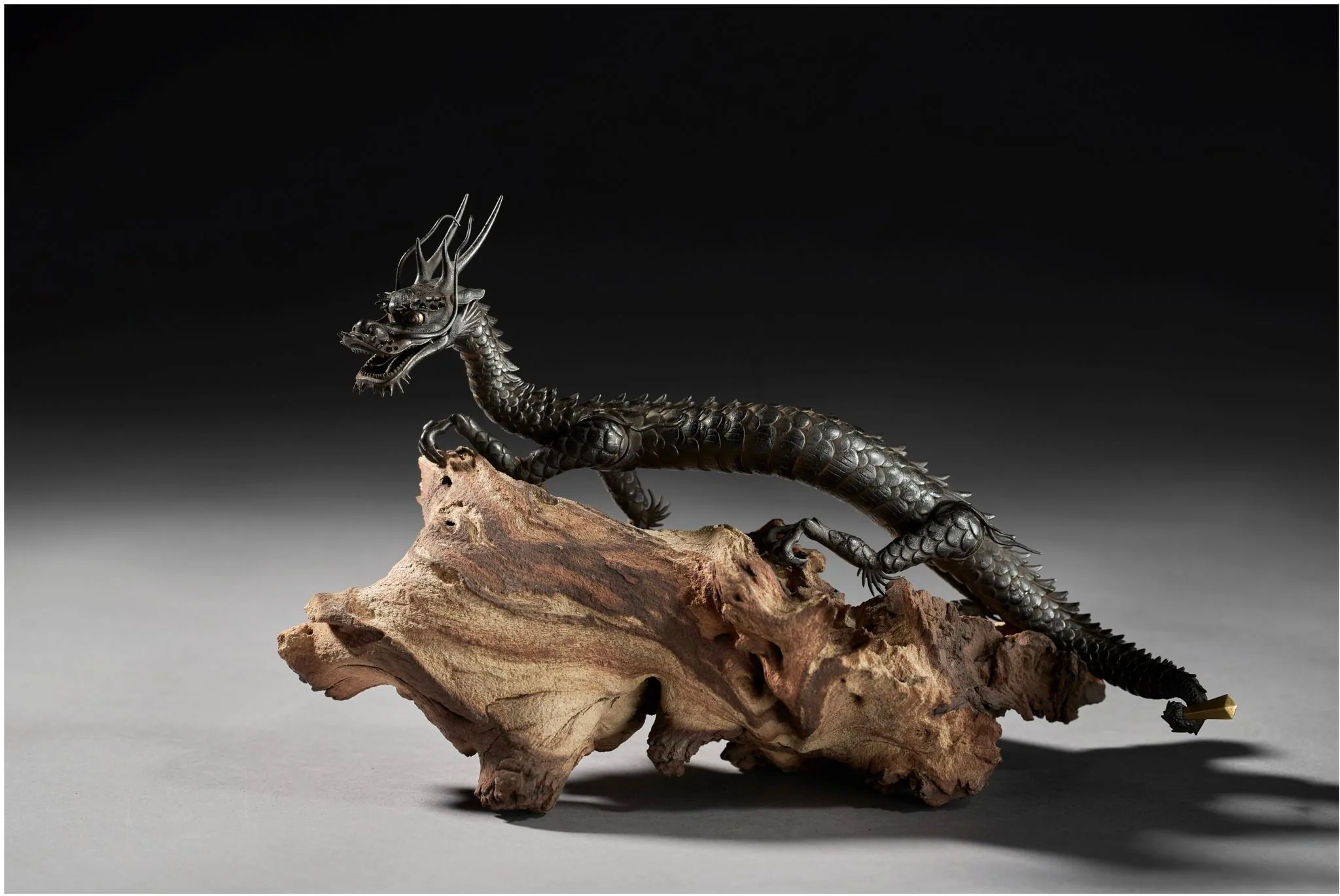
The image features a detailed sculpture of a dragon, artfully crafted to stand on a piece of driftwood or similarly textured wood. The dragon is intricately designed with a long, sinuous body covered in scales, which gleam under the lighting, highlighting the artistry of the piece. Its head is fierce, with sharp horns and a snarling expression, capturing a sense of movement and life as it appears to crawl over the wood beneath it. The dragon's claws are extended, gripping the wood as if in motion. The sculpture is set against a neutral, dark background, which contrasts with the lighter hues of the wood and the metallic sheen of the dragon, emphasizing the creature's form and details. The lighting is subtle yet effective, casting shadows that add depth and drama to the scene, enhancing the visual impact of the dragon's dynamic pose. The overall composition suggests a theme of mythical or fantastical art, focusing on the elegance and power of the dragon motif.
California, USA Written, published, and designed in California, USA