Crisps, California

January 8, 2024

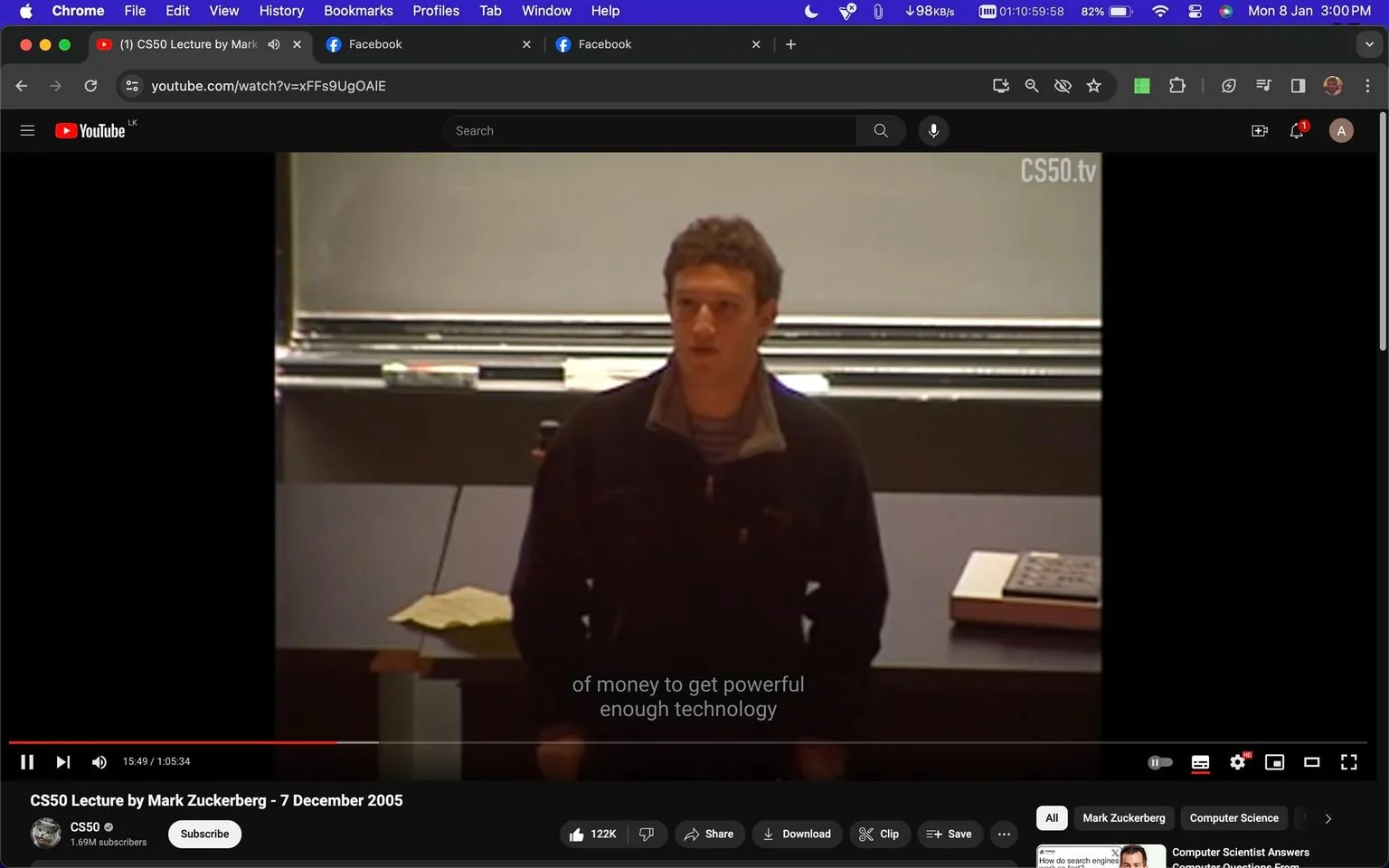
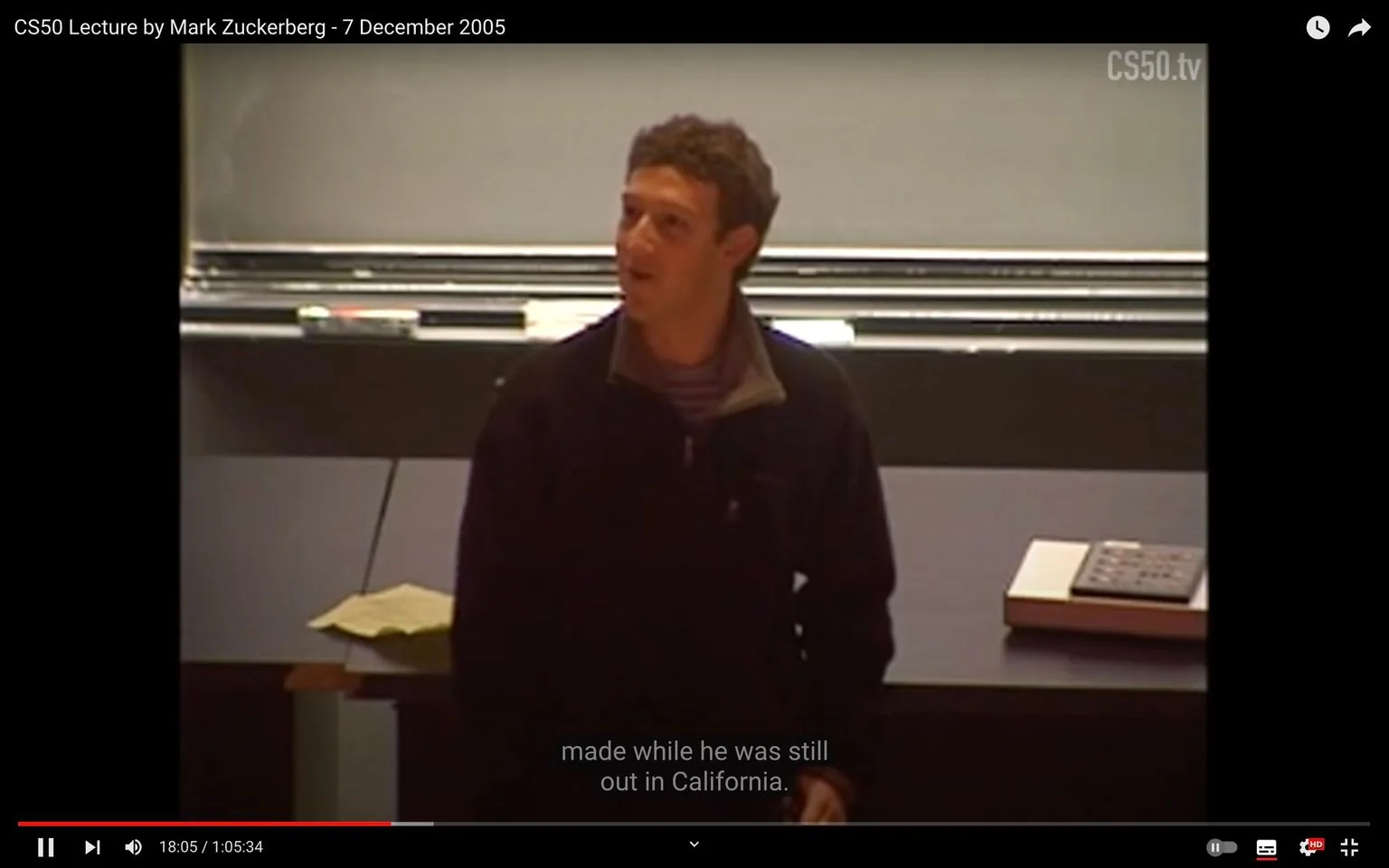
In this video frame, Mark Zuckerberg is giving a lecture as part of the CS50 course on December 7, 2005. He is positioned at the front of a classroom, likely at a university setting, as suggested by the lecture environment. The room features a chalkboard behind him and a desk with papers and possibly a book or electronic device resting on it. Zuckerberg is dressed casually in a dark jacket over a striped shirt, and his posture is relaxed as he looks slightly to his left, suggesting engagement with an audience or looking towards a screen or board. The lighting is bright enough to illuminate him clearly against the darker background of the classroom. Subtitles from the video indicate he is discussing something related to "California," hinting at the context of his speech. The lecture likely covers topics related to technology or business, given Zuckerberg's background and the educational setting.
- Title: "CS50 Lecture by Mark Zuckerberg - 7 December 2005"
- Channel / profile: "CS50.tv"
- Site / app: "YouTube"
- Captions / subtitles: "made while he was still out in California."
3:00 PM (b)

3:00 p.m. (c)

Phantom Planet - California

https://youtu.be/wq-S8CIU7VA

[Verse 1]

We've been on the run

██████████████████

██████████████████████████

[Refrain]

California, here we come

████████████████████████████████

[Verse 2]

████████████████████████

████████████████████████

████████████ the 101

[Refrain]

████████████████████████

████████████████████████████████

[Chorus]

California!

Here we come!

[Verse 3]

█████████████

███████████████

███████████████████████████

[Refrain]

████████████████████████

████████████████████████████████

[Verse 4]

██████████████████

████████████████████

████████████████████████

[Refrain]

████████████████████████

████████████████████████████████

[Chorus]

███████████

█████████████

██████████████████████

█████████████

█████

[Bridge]

██████████████████████

█████████████

[Outro]

██████████████████████

█████████████

██████████████████████

█████████████

██████████████████████

█████████████

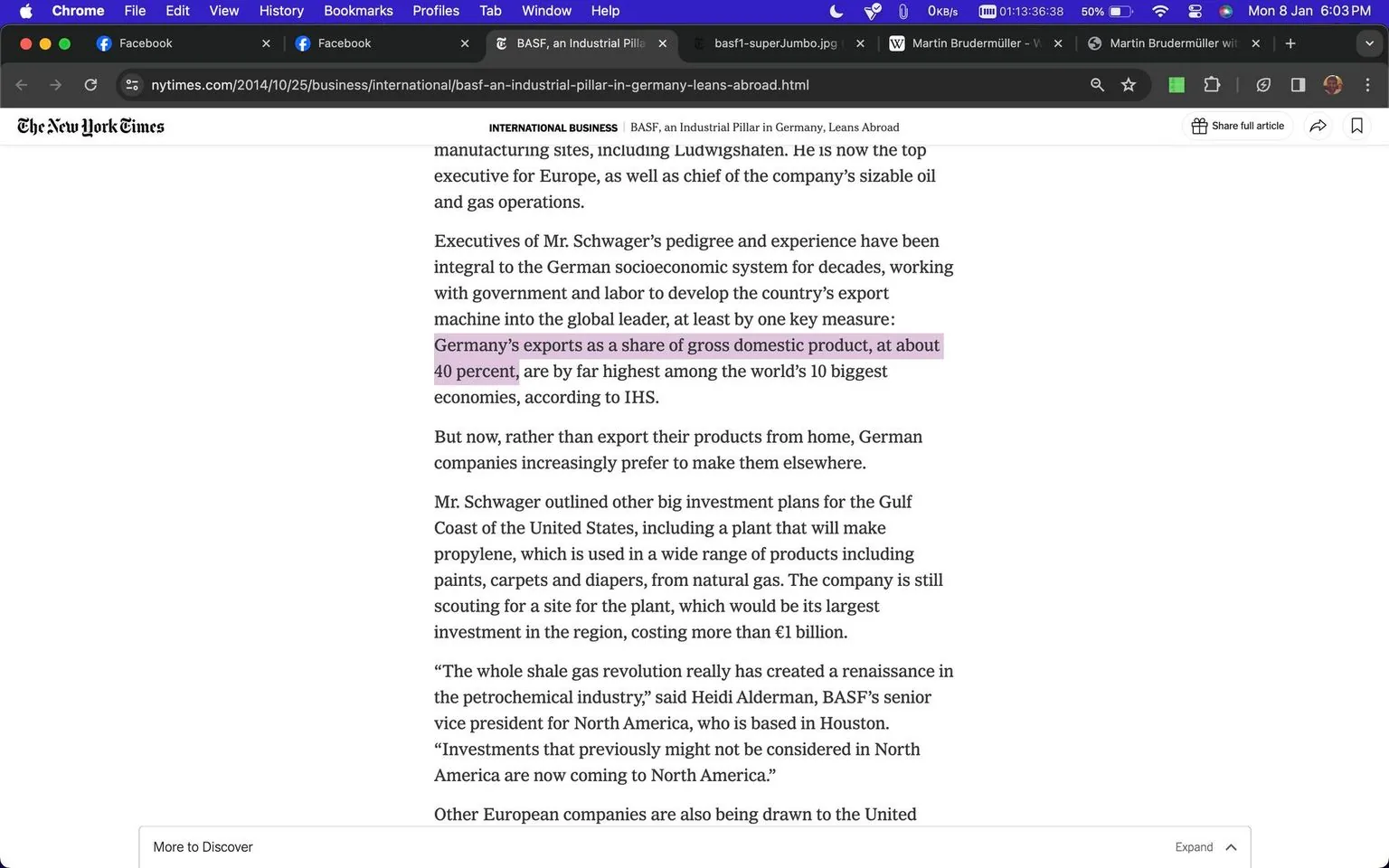
The screenshot captures a New York Times article titled "BASF, an Industrial Pillar in Germany, Leans Abroad," displayed on a browser window. The article delves into the role of executives like Mr. Schwager in Germany's economic system and highlights Germany’s significant export share of about 40% of its GDP. The piece discusses the strategic shift where German companies, instead of exporting products, prefer to manufacture abroad. Mr. Schwager is noted for his plans to invest in the Gulf Coast of the United States, capitalizing on the shale gas boom to produce propylene. Heidi Alderman, BASF’s senior vice president for North America, comments on the petrochemical industry's revival due to shale gas. The article emphasizes the global economic strategies and investments of German firms, highlighting their adaptation to new market dynamics. The web page is seen in a Chrome browser, with typical browser tabs and controls visible, suggesting a dynamic and engaged reading experience.
6:00 PM

6:00 p.m. (c)

Wow, 40 percent of Germany's GDP are exports

Very cool

Yes, we do have an export led growth strategy as well

The businesses, whom we partner with, will be playing a more central role, in determining the academic curriculum, training systems and modes of verification of intellectual ability

This is because it takes a lot of work

This is a more intelligent system, than to let teachers decide

I think that the owners and managers, plus our own, will be cooperating very closely with the unis here to do so

██████████████████████████████████████████████████████████████████████████████████████████████████████████

████████████████████████████████████████████████████████████████

█████████████████████████████████████████████████████████████████████████████████████████████████████████████████████████████

We're likely to have equal schools, but the curriculum can be studied and kids can compete aggressively if they choose

Our formula is going to be 50/50, so if they go Singaporean, they can, they can study like Asians, but otherwise, if they go American, and they can prize problem solving, critical thinking or creativity

This is a better approach, where for once, we wouldn't depend on the US for creativity and innovation, like everyone else does