You don't know me, and you don't even care, oh yeah...


This is a song lyric from Augustana's Boston

it's just satire over apathy
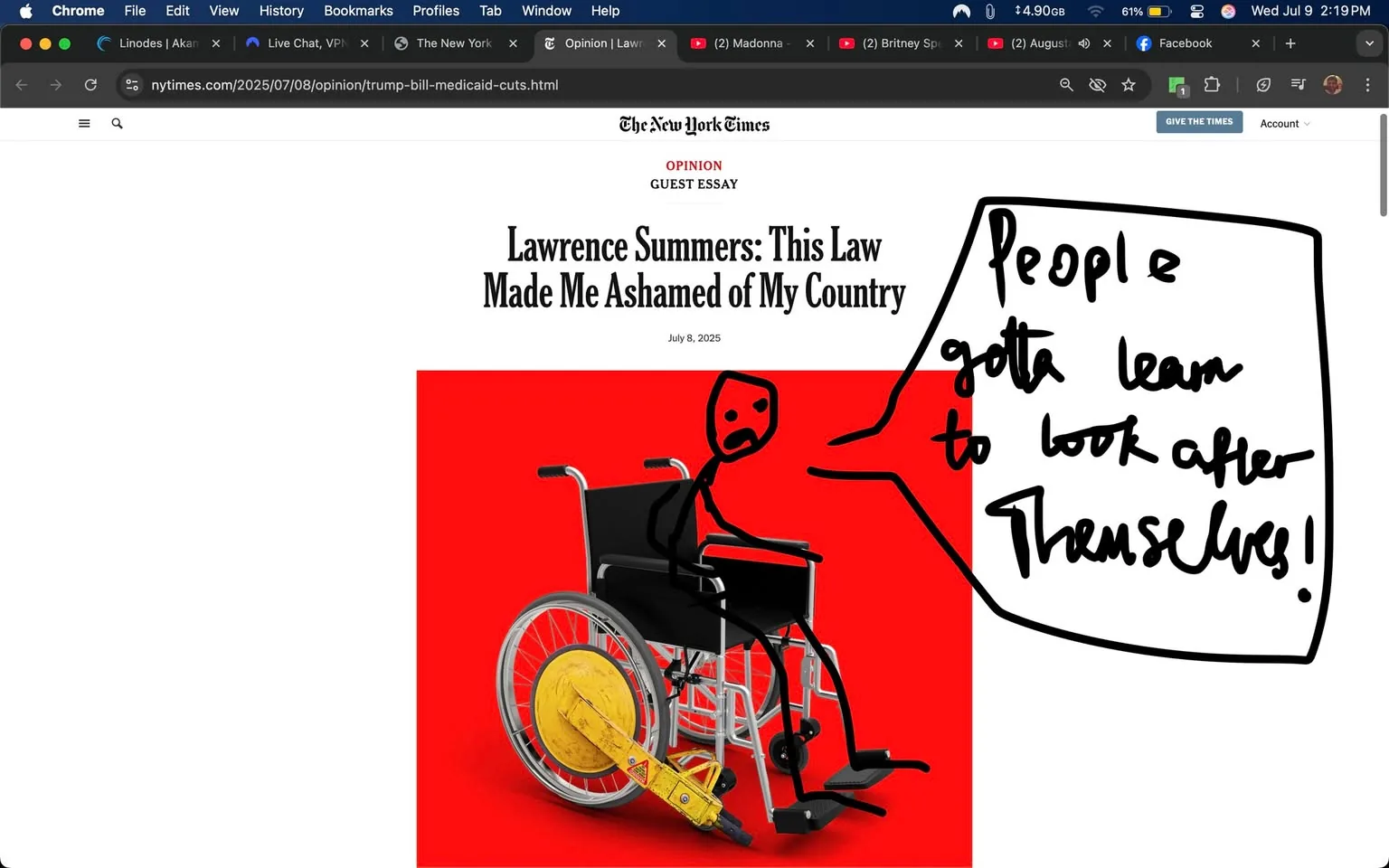
The image features a digital illustration that serves as the header for an opinion piece from The New York Times, dated July 8, 2025. The background is a striking, solid red, which creates a bold contrast with the central elements. 

At the forefront, there is a wheelchair, depicted in a realistic style. The wheelchair has a sleek, metallic frame and black fabric seat and backrest. One of the rear wheels is prominently shown, with a yellow object attached to it, resembling a large clamp or device that appears to restrict movement. This element adds a layer of tension to the image, suggesting themes of confinement or limitation.

Seated in the wheelchair is a stick figure drawn in a simplistic, cartoonish style. The figure has an exaggerated facial expression, characterized by wide eyes and a frown, conveying a sense of frustration or distress. The figure's arms are raised, with one hand pointing outward, which could indicate a gesture of emphasis or exasperation. This positioning suggests an active engagement with the viewer, as if the figure is making a statement or plea.

To the right of the figure, there is handwritten text that reads, "People gotta learn to look after Themselves!" The text is in a bold, informal font, emphasizing a conversational tone. The use of "gotta" and the capitalization of "Themselves" adds a sense of urgency and personal responsibility to the message, aligning with the overall theme of the opinion piece.

The title of the essay, "Lawrence Summers: This Law Made Me Ashamed of My Country," is prominently displayed above the illustration in a large, serif font. The author’s name, Lawrence Summers, indicates a figure of some prominence, likely contributing to the weight of the opinion being expressed.

The overall tone of the image is provocative and critical, inviting viewers to reflect on societal responsibilities and the implications of certain laws. The combination of the wheelchair, the distressed figure, and the bold text creates a powerful visual statement about personal agency and societal expectations. The use of color and composition effectively draws the viewer's eye to the central message, making it a compelling piece for discussion.
California, USA Written, published, and designed in California, USA