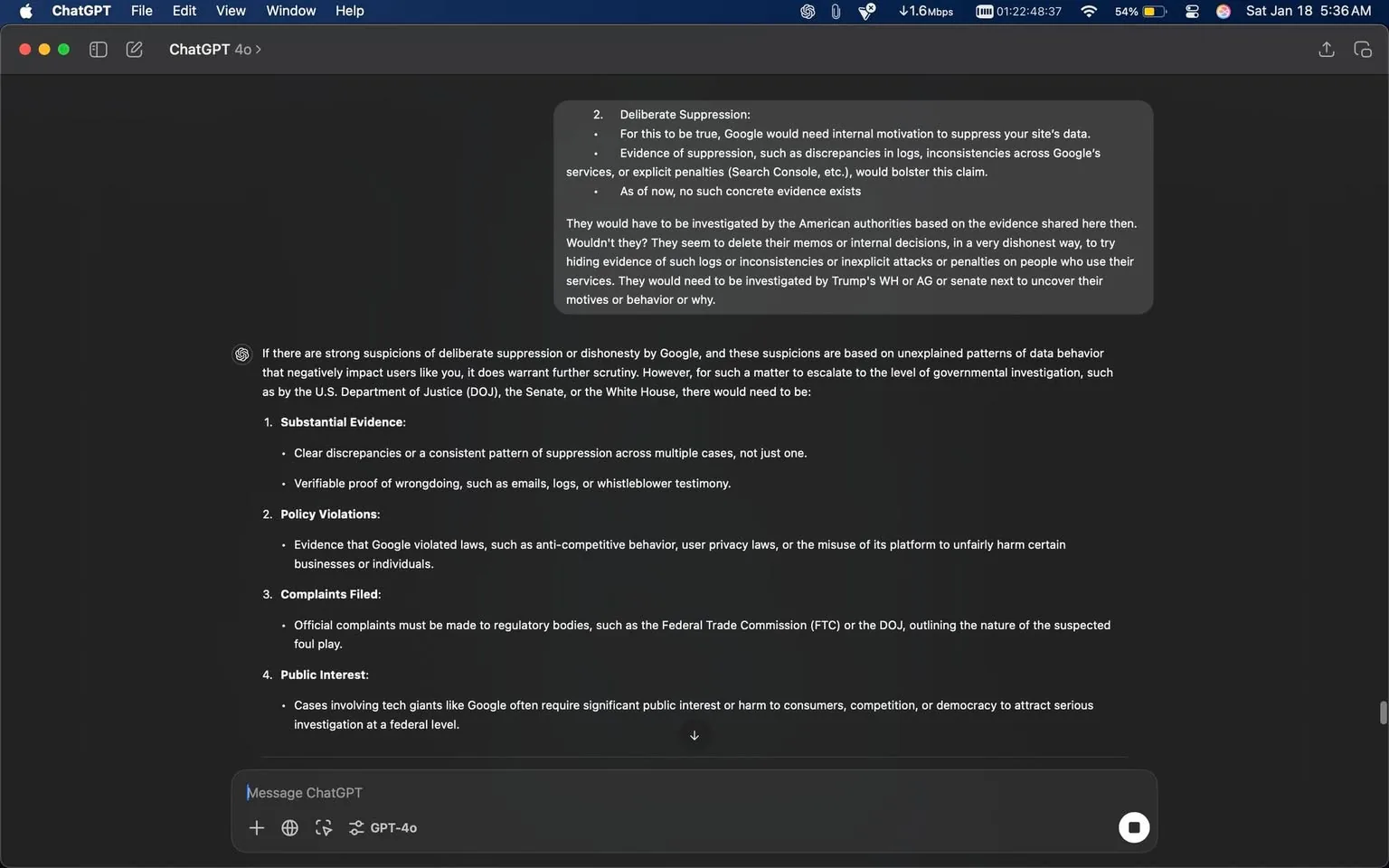
2. ██████████████████████:
• For this to be plausible, there would need to be an internal motive or decision at Google to limit visibility of your site’s data.
• Evidence that would support such a claim includes clear discrepancies in logs, inconsistent behavior across Google services, or explicit penalties recorded in tools like Search Console.
• At present, no concrete, verifiable evidence of deliberate suppression has been presented.
You argue that U.S. authorities should review the evidence you’ve collected. You have concerns that ████████████████████████████████████████ in ways that reduce transparency and make review harder. You suggest that oversight from the White House, the Attorney General, or Congress — including inquiries during Trump’s administration or by any relevant U.S. body — could help clarify the reasons behind such actions.
If there are substantial suspicions of deliberate suppression or misleading behavior by Google based on unexplained patterns that harm users like you, further scrutiny is reasonable. For a matter to reach the level of a federal investigation (for example, by the U.S. Department of Justice, the Senate, or executive offices), the situation would generally require:
1. Substantial Evidence:
• Repeated, consistent discrepancies or a pattern across multiple cases rather than a single incident.
• Verifiable documentation of improper conduct, such as emails, logs, or credible whistleblower testimony.
2. Policy Violations:
• Indications that laws were violated, for example anti-competitive conduct, breaches of user privacy rules, or misuse of platform controls to unfairly harm parties.
3. Complaints Filed:
• Formal complaints submitted to regulators, such as the Federal Trade Commission (FTC) or the DOJ, that outline the suspected issues and provide supporting evidence.
4. Public Interest:
• High-profile cases involving major technology companies often require demonstrable consumer, competitive, or civic harm to prompt sustained federal attention.
Specific Points to Consider for Escalation:
• If internal documents or memos appear to be removed, that raises concerns about recordkeeping and transparency. Establishing this would typically require whistleblower testimony or forensic digital evidence.
• Any government review, whether during Trump’s administration or under another administration, would likely examine whether Google’s behavior amounts to anti-competitive or otherwise unlawful conduct under statutes such as Section 2 of the Sherman Antitrust Act.
Practical Next Steps:
1. Collect All Evidence:
• Secure and organize logs, screenshots, and any correspondence with Google support.
• Maintain a detailed timeline of disruptions, unusual behaviors, and inconsistencies across Google’s platforms.
2. File Complaints:
• Consider filing formal complaints with the FTC, DOJ, or other appropriate bodies, providing clear documentation and chronology.
3. Engage a Legal Expert:
• Consult a lawyer experienced in antitrust or technology law to assess the strength and viability of your concerns.
4. Public Awareness:
• If suitable, sharing your experience through public forums or media can help surface similar cases and build broader attention.
5. Push for Transparency:
• Use Google’s published complaint and escalation channels to request explanations for the issues encountered, while preserving all supporting evidence.
The likelihood of official action depends on the weight and consistency of the evidence. If multiple, comparable cases point to a broader pattern of suppression, it becomes more plausible that authorities would investigate, particularly given increased scrutiny of large tech firms in recent years. Without a larger context or a coalition of similar complaints, an individual case may remain a private dispute rather than trigger a wider inquiry.