10 மே, 2026
மே 10, 2026 Lehan Edirisinghe
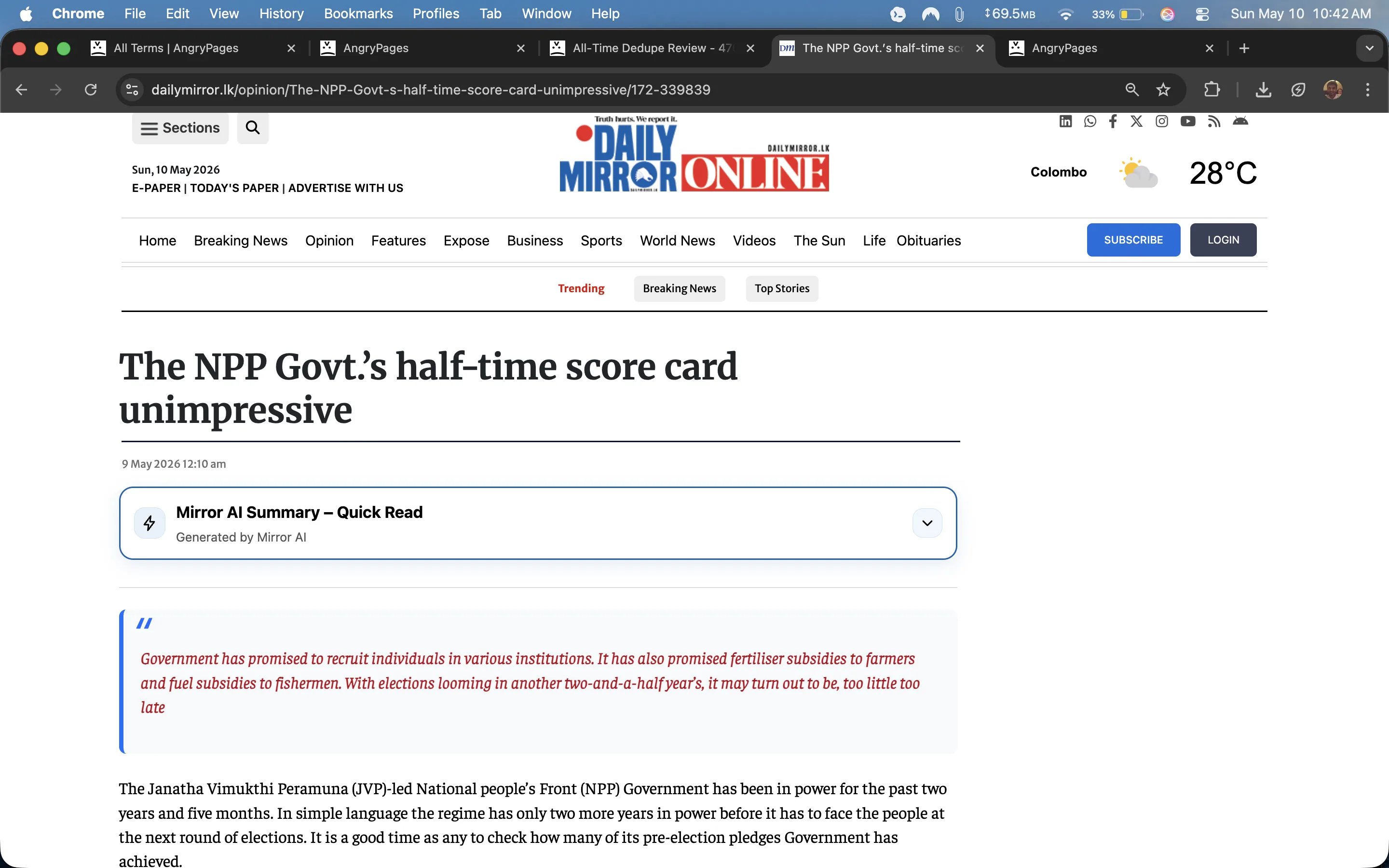
NPP: in power for 1 & 7/12 years, not 2 & 5/12!
This is a useful article Daily Mirror (Sri Lanka) because the cost of living, medicine shortages, child nutrition, public-sector scams, suspicious deaths, and corruption investigations all deserve serious public attention.
One small timeline point may need clarification. As at 10 May 2026, AKD has been President since September 2024, and the NPP parliamentary government followed the November 2024 election. So the period is closer to about one year and seven months at the presidential level, and about one year and six months at the parliamentary level, rather than two years and five months.
That clarification does not reduce the importance of the wider issues raised. The public still deserves clear answers on prices, wages, medicine availability, nutrition, fraud investigations, and accountability.
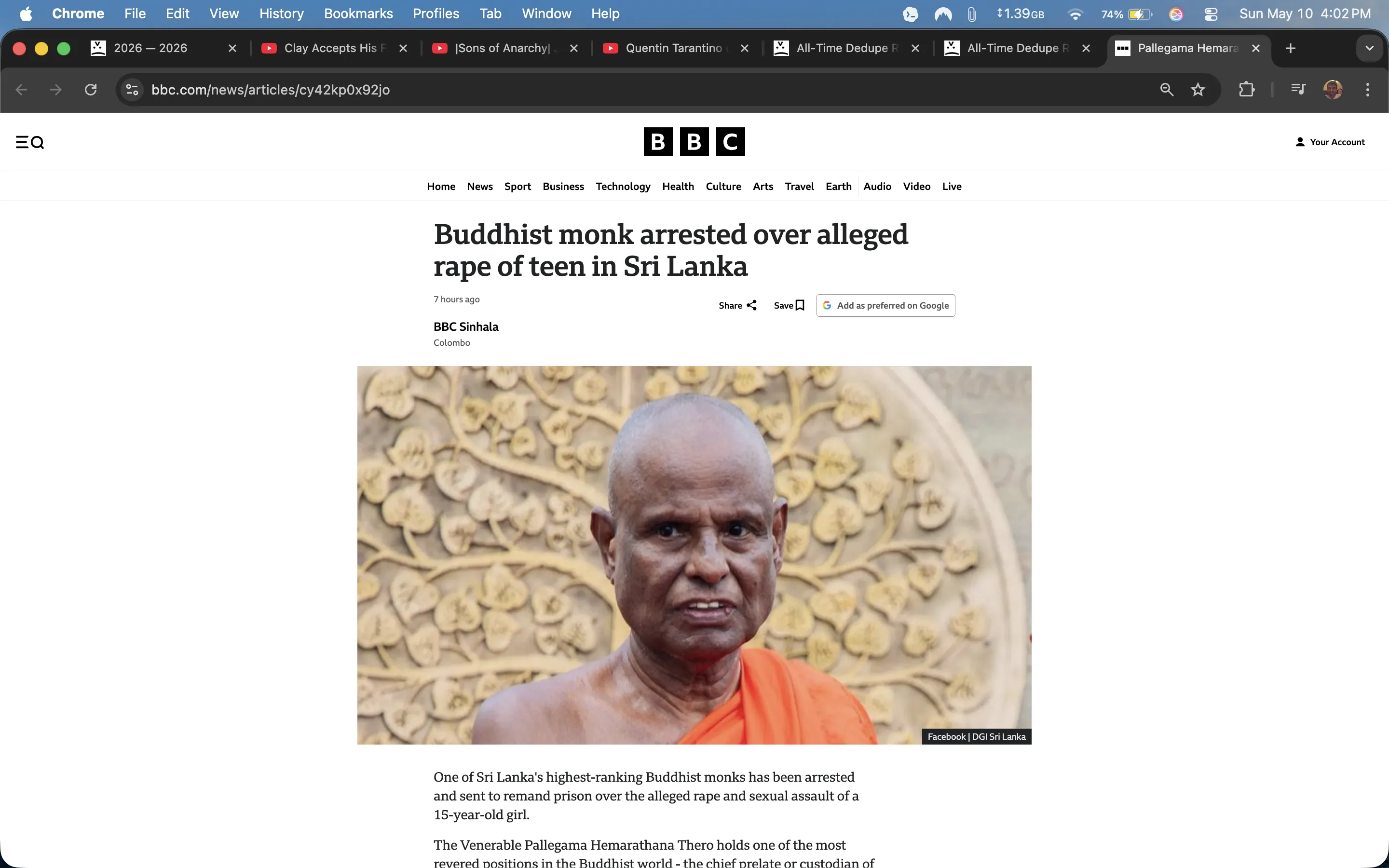
The robe deserves respect. It does not deserve immunity.
Ven. Pallegama Hemarathana Thero, the Atamasthanadhipathi and one of the most senior Buddhist figures connected to the sacred sites of Anuradhapura, has been arrested and remanded in connection with allegations involving the sexual abuse of a minor girl.
This must be said with discipline.
He is accused, not convicted. A court must decide guilt. Evidence must matter. Rumour must not become judgment. The public should not turn an allegation into a social-media execution.
But due process is not the same as silence.
Due process does not mean the powerful should be handled softly. It does not mean police should hesitate because the accused person is senior, famous, religiously important, politically connected, or socially untouchable. It does not mean a child’s voice becomes smaller because an adult’s title is large.
That is the real issue here.
Pallegama Hemarathana Thero is not being discussed because he is Buddhist. He is being discussed because he is a public religious authority accused in a child-protection case. Naming him is not an attack on Buddhism. Protecting a child is not an insult to the Sangha. Asking for equal law is not hatred of religion.
There are two dangerous reactions to a case like this.
One is to use it as an excuse to insult Buddhism, monks, or ordinary devotees. That is cheap, cruel, and intellectually lazy. No religion should be judged by allegation alone.
The other is to rush into institutional defence so quickly that the child disappears from the story. That is just as dangerous. Reverence must never become a wall around power. Respect must never become a weapon against victims. A sacred office must never become a private courtroom where the vulnerable are expected to stay quiet.
The centre of this story is not outrage. It is protection.
Protect the child’s privacy. Protect her dignity. Protect the legal process. Protect the accused person’s right to a fair trial. And protect the principle that no robe, title, temple office, family connection, political friendship, or social status can place a person beyond investigation.
A religion that teaches discipline should not fear accountability.
A temple that teaches compassion should not fear child protection.
A society that respects Buddhism should be mature enough to say: the robe deserves honour when it carries humility, restraint, and moral responsibility. But the robe cannot be allowed to become immunity.
This is not anti-Buddhist.
This is pro-child.
This is pro-law.
This is pro-truth.
And if we are serious about moral life in Sri Lanka, then the standard must be simple: no child is too powerless to be heard, and no adult is too sacred to be investigated.
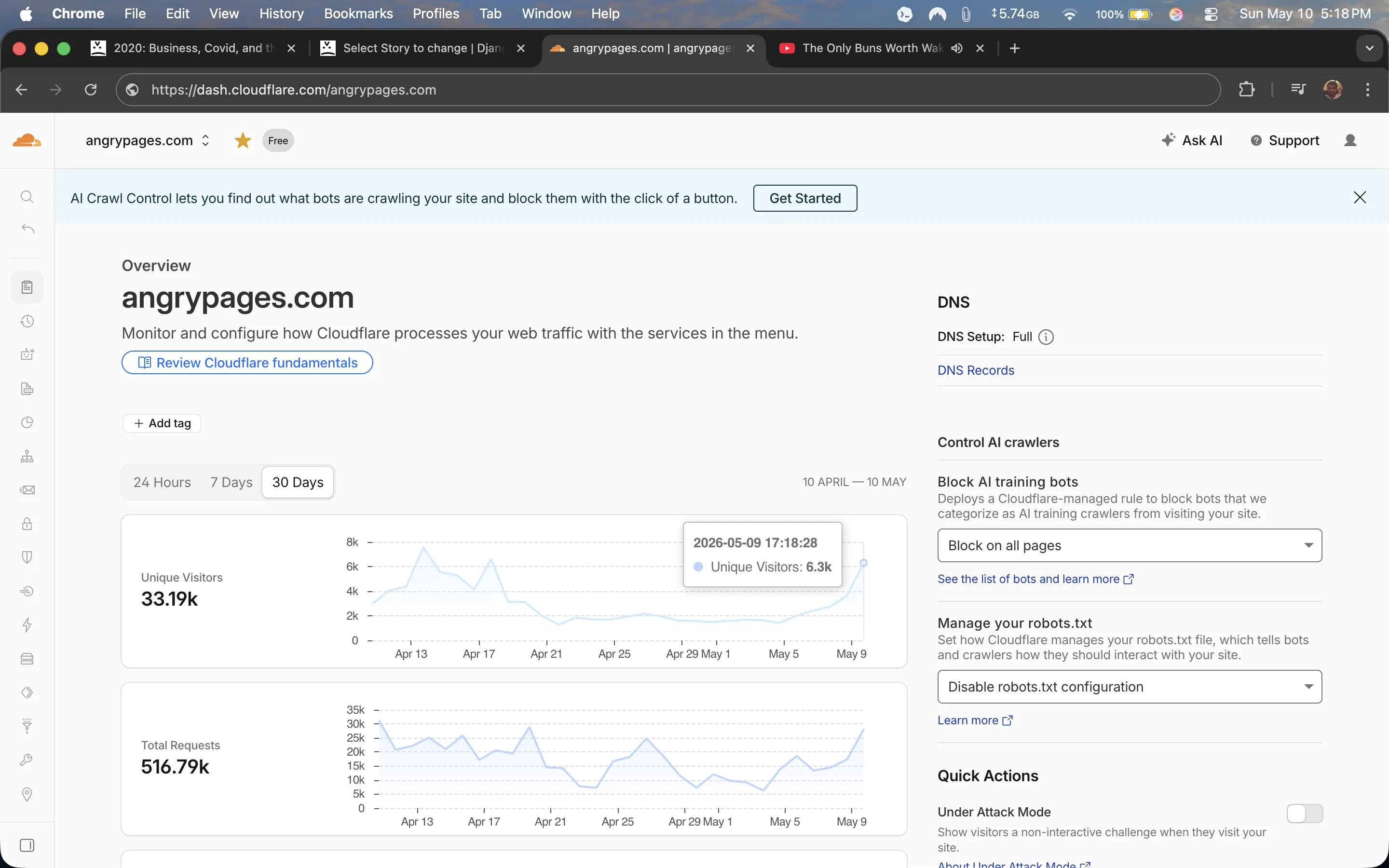
You can't keep a good man down
We got knocked offline. Because some content (which was contained to my account because of cautious data design security foresight), passed through our technology, and even OpenAI's AI technology.
I'm manually auditing and performing necessary repairs.
I was shocked by Cloudflare, you can see how, it was high up, and because AngryPages was down, the site's traffic was low 1,000s.
Now, again, cause people want to read what I write, even if new ideas, it's recovering again and spiking upwards.
Sri Lanka Has Stability. But Does It Have A Future?
A fair-use commentary by Lehan Edirisinghe / AngryPages, responding to Harsha Gunasena’s Colombo Telegraph article, “Confused Macroeconomic Policies Of The Government.”
Harsha Gunasena’s article is useful because it separates two things Sri Lanka keeps mixing together: punishment politics and economic repair.
I understand why people want punishment. Sri Lanka was not simply “mismanaged” in some clean academic sense. It was abused, looted, lied to, over-borrowed, over-promised, and then handed a bill ordinary people had to pay. So yes, corruption matters. Justice matters. Political accountability matters.
But corruption cannot be the whole diagnosis. If the country says “corruption caused everything,” then the solution becomes theatre: arrest a few enemies, hold a few press conferences, call it national recovery. That is not enough.
The crisis was built over many years: deficit budgets, weak exports, state-owned losses, energy subsidies, expensive borrowing, bad tax policy, money printing, exchange-rate manipulation, the fertilizer disaster, delayed IMF engagement, and a political culture that preferred slogans to arithmetic. That is the harder truth. It is less emotionally satisfying than blaming one camp, but it is more useful.
The government deserves some credit for not gambling with the IMF programme. After 2022, no serious government had unlimited room for drama. Sri Lanka needed stability first. The IMF itself says recent reforms have supported recovery, with 2025 growth, reserve accumulation, and revenue performance exceeding expectations; but it also stresses the need for continued reform, resilience, and inclusive growth. (IMF)
That is the central point: IMF compliance is not a national development strategy. It is a floor, not a future.
A country can pass fiscal targets and still fail its people. It can stabilise the exchange rate and still have households crushed by food prices. It can show good numbers and still produce too few exports, too few productive jobs, and too little hope for young people.
The World Bank has made a similar warning: Sri Lanka’s recovery remains incomplete, poverty is still elevated, food prices remain high, and many households have not recovered livelihoods lost during the crisis. (World Bank)
That is what macroeconomic debate often misses. People do not experience the economy as a table of indicators. They experience it as school fees, rent, eggs, bus fares, electricity bills, medicine, and whether their child has a reason to stay in the country.
Gunasena is also right to focus on exports and trade. Sri Lanka cannot tax and ration itself into prosperity. We need to earn from the world. That means exports, services, tourism, investment, logistics, digital work, better productivity, and cheaper inputs.
Protectionism is often sold as patriotism, but it can become a tax on poor people. If food, energy, and raw materials are kept expensive to protect narrow interests, then workers need higher wages just to survive, businesses lose competitiveness, and exporters struggle before they even reach the world market. The poor pay first. The productive economy pays next.
The Economic Transformation Act may not be perfect. But its export ambition matters. It set targets for exports of goods and services to reach 25% of GDP by 2025, 40% by 2030, and 60% by 2040, and created trade and investment institutions intended to push the country outward. (Lanka Law) If the government dislikes parts of that framework, it should amend it. But freezing the transformation agenda while meeting only IMF targets is not enough.
Sri Lanka needs an outward-facing economic plan. Not seminars. Not slogans. Not patriotic speeches against imports while everyone secretly wants dollars. A real plan.
On anti-corruption, my view is simple: investigations must be independent, boring, procedural, and credible. If anti-corruption looks party-coded, even legitimate cases lose moral force. The country does not need revenge dressed as reform. It needs institutions that people can trust even when their own side is investigated.
At the same time, growth should not be treated as magic trickle-down. I do not believe ordinary people should be told to wait politely while elites discuss GDP. Growth has to become real wages, productive jobs, cheaper living costs, better social protection, and rules businesses can plan around.
That is the balance Sri Lanka needs now: fiscal discipline without cruelty, trade without surrender, anti-corruption without political theatre, and growth that reaches households instead of only reports.
This is also why I am publishing this on AngryPages. I do not want AngryPages to be only a diary archive or a publishing experiment. I want it to become a place where Sri Lanka can be discussed from the inside: emotionally, politically, economically, and honestly.
The country has already paid the price for fantasy politics. Stabilisation bought Sri Lanka time. The question now is whether the government will turn that time into exports, investment, cheaper essentials, credible institutions, and real recovery for ordinary people.
Sri Lanka does not need another heroic slogan.
It needs a working economy.
And it needs people willing to say that before the next crisis arrives.
The Smile And The Machine
Netiwit Chotiphatphaisal’s article begins in Thailand, but it does not stay there. That is why it hurts.
He writes about a Buddhist country where children are taught prayer, chanting, meditation, merit, compassion and loving-kindness. Then those same children grow up under a state that can pull young men into military service by lottery, pressure, fear, masculinity, and class power. The article describes Thailand’s conscription system, the red-card/black-card lottery, the pressure on boys to join reserve training, and the moral contradiction of monks and Buddhist society living beside compulsory militarism. (Colombo Telegraph)
That is not only Thailand’s mirror.
It is ours too.
Sri Lanka also knows how religion, school, flag, anthem, history, army, fear and national pride can be mixed until people stop noticing the mixture. A society can chant compassion in the morning and rehearse suspicion by evening. It can call itself peaceful while teaching children who to fear. It can speak of civilisation while quietly preparing the next generation to obey the old wounds.
This is the drama of the article.
Not “Buddhism bad.”
Not “soldiers bad.”
Not “country bad.”
The real question is worse:
What happens when a religion of compassion becomes the decoration on a machine of obedience?
The Smile And The Machine
Netiwit Chotiphatphaisal’s article begins in Thailand, but it does not stay there. That is why it hurts.
He writes about a Buddhist country where children are taught prayer, chanting, meditation, merit, compassion and loving-kindness. Then those same children grow up under a state that can pull young men into military service by lottery, pressure, fear, masculinity, and class power. The article describes Thailand’s conscription system, the red-card/black-card lottery, the pressure on boys to join reserve training, and the moral contradiction of monks and Buddhist society living beside compulsory militarism. (Colombo Telegraph)
That is not only Thailand’s mirror.
It is ours too.
Sri Lanka also knows how religion, school, flag, anthem, history, army, fear and national pride can be mixed until people stop noticing the mixture. A society can chant compassion in the morning and rehearse suspicion by evening. It can call itself peaceful while teaching children who to fear. It can speak of civilisation while quietly preparing the next generation to obey the old wounds.
This is the drama of the article.
Not “Buddhism bad.”
Not “soldiers bad.”
Not “country bad.”
The real question is worse:
What happens when a religion of compassion becomes the decoration on a machine of obedience?
Defence Is Not Militarism
A serious country has security needs. That should be admitted honestly.
Borders exist. Violence exists. Predators exist. States have duties. A country cannot survive only on soft language, incense, ceremony, memory, and beautiful slogans.
But defence is not militarism.
Defence is reluctant. Militarism is hungry.
Defence protects life because life is precious. Militarism trains people to obey violence and then calls that obedience virtue.
Defence should be accountable, civilian-controlled, limited, disciplined, and morally burdened by the harm it may cause. Militarism turns the uniform into a sacred costume. It turns suspicion into wisdom. It turns young men’s bodies into national property. It turns refusal into shame. It turns war preparation into manhood.
That distinction matters in Sri Lanka.
We cannot pretend every security concern is fake. But we also cannot pretend every appeal to security is clean. Power loves hiding inside emergency language. It loves saying “nation” when it means obedience. It loves saying “unity” when it means silence. It loves saying “heritage” when it means hierarchy.
The danger is not the existence of defence.
The danger is when defence becomes a religion of its own.
Then the state does not merely ask citizens to protect life.
It asks them to worship the machinery of harm.
Defence Is Not Militarism
A serious country has security needs. That should be admitted honestly.
Borders exist. Violence exists. Predators exist. States have duties. A country cannot survive only on soft language, incense, ceremony, memory, and beautiful slogans.
But defence is not militarism.
Defence is reluctant. Militarism is hungry.
Defence protects life because life is precious. Militarism trains people to obey violence and then calls that obedience virtue.
Defence should be accountable, civilian-controlled, limited, disciplined, and morally burdened by the harm it may cause. Militarism turns the uniform into a sacred costume. It turns suspicion into wisdom. It turns young men’s bodies into national property. It turns refusal into shame. It turns war preparation into manhood.
That distinction matters in Sri Lanka.
We cannot pretend every security concern is fake. But we also cannot pretend every appeal to security is clean. Power loves hiding inside emergency language. It loves saying “nation” when it means obedience. It loves saying “unity” when it means silence. It loves saying “heritage” when it means hierarchy.
The danger is not the existence of defence.
The danger is when defence becomes a religion of its own.
Then the state does not merely ask citizens to protect life.
It asks them to worship the machinery of harm.
The Poor Boy Pays First
One of the sharpest parts of Netiwit’s article is class.
Conscription is never only about patriotism. It is also about who has exits.
The article describes how young men in Thailand face the possibility of military service, while many with money, connections, education or family advantage can find ways around the burden. Netiwit also writes of being told, through his father, that money could help him avoid the system. (Colombo Telegraph)
That is where the moral language cracks.
If military service is sacred national duty, why do the poor carry more of it?
If sacrifice is noble, why is privilege so good at escaping sacrifice?
If obedience is character-building, why do powerful families quietly prefer alternatives for their own sons?
This is not unique to Thailand. Many countries romanticise sacrifice only after deciding whose children will be placed closest to it. The poor boy becomes the body of the nation. The rich boy becomes its future. One is told to endure. The other is told to advance.
That is not Buddhism.
That is class power wearing patriotic perfume.
And it damages the conscript too. The young man in uniform is not always the villain. Often he is another captive of the system. He is told that manhood means obedience. He is told fear is maturity. He is told hesitation is weakness. He is told conscience is cowardice.
A society that does this to its young men is not only preparing for war.
It is manufacturing wounded citizens.
The Poor Boy Pays First
One of the sharpest parts of Netiwit’s article is class.
Conscription is never only about patriotism. It is also about who has exits.
The article describes how young men in Thailand face the possibility of military service, while many with money, connections, education or family advantage can find ways around the burden. Netiwit also writes of being told, through his father, that money could help him avoid the system. (Colombo Telegraph)
That is where the moral language cracks.
If military service is sacred national duty, why do the poor carry more of it?
If sacrifice is noble, why is privilege so good at escaping sacrifice?
If obedience is character-building, why do powerful families quietly prefer alternatives for their own sons?
This is not unique to Thailand. Many countries romanticise sacrifice only after deciding whose children will be placed closest to it. The poor boy becomes the body of the nation. The rich boy becomes its future. One is told to endure. The other is told to advance.
That is not Buddhism.
That is class power wearing patriotic perfume.
And it damages the conscript too. The young man in uniform is not always the villain. Often he is another captive of the system. He is told that manhood means obedience. He is told fear is maturity. He is told hesitation is weakness. He is told conscience is cowardice.
A society that does this to its young men is not only preparing for war.
It is manufacturing wounded citizens.
The Robe And The Uniform
The most dangerous religion is not religion that disappears.
It is religion that becomes socially successful while morally empty.
It fills the calendar. It fills the school. It fills the funeral. It fills the speech. It fills the television screen. It fills the constitution. It fills the parade. Everyone knows the words. Everyone knows the gestures. Everyone knows the proper reverence.
But when the real moral test comes, it kneels before power.
That is the problem with fake Buddhism.
Fake Buddhism is proud of the robe but silent about cruelty.
Fake Buddhism protects identity but forgets conscience.
Fake Buddhism can bless war, revenge, racism, censorship, humiliation, hierarchy and fear — as long as the correct symbols are present.
Real Buddhism should be more dangerous than that.
Not violent. Dangerous to delusion.
It should ask whether the nation has become an idol. It should ask whether the uniform has replaced the robe. It should ask whether memory has become permission. It should ask whether compassion stops at the border. It should ask whether the enemy image has replaced the human being.
This does not mean every soldier is immoral. It does not mean every monk is political. It does not mean every state concern is invented.
It means religion cannot be used as moral camouflage.
If Buddhism cannot question organised hatred, then it has become decoration.
The Robe And The Uniform
The most dangerous religion is not religion that disappears.
It is religion that becomes socially successful while morally empty.
It fills the calendar. It fills the school. It fills the funeral. It fills the speech. It fills the television screen. It fills the constitution. It fills the parade. Everyone knows the words. Everyone knows the gestures. Everyone knows the proper reverence.
But when the real moral test comes, it kneels before power.
That is the problem with fake Buddhism.
Fake Buddhism is proud of the robe but silent about cruelty.
Fake Buddhism protects identity but forgets conscience.
Fake Buddhism can bless war, revenge, racism, censorship, humiliation, hierarchy and fear — as long as the correct symbols are present.
Real Buddhism should be more dangerous than that.
Not violent. Dangerous to delusion.
It should ask whether the nation has become an idol. It should ask whether the uniform has replaced the robe. It should ask whether memory has become permission. It should ask whether compassion stops at the border. It should ask whether the enemy image has replaced the human being.
This does not mean every soldier is immoral. It does not mean every monk is political. It does not mean every state concern is invented.
It means religion cannot be used as moral camouflage.
If Buddhism cannot question organised hatred, then it has become decoration.
The State Wants Your Conscience
Netiwit’s most powerful idea is not simply that conscription is unfair.
It is that refusal can be moral courage.
He frames conscientious objection as a refusal to let the state define killing as duty, and says he became Thailand’s first conscientious objector even though he may face jail. (Colombo Telegraph)
That is the part authoritarian systems hate.
A state can command the body. It can summon the body. It can number the body. It can dress the body. It can train the body. It can punish the body. It can imprison the body.
But conscience is harder.
Conscience does not salute easily.
That is why the conscientious objector is frightening. He exposes the gap between obedience and truth. He stands in front of the state and says: you may control the paperwork, the court, the uniform, the barracks, the punishment and the prison, but you do not own my moral agreement.
That is a small sentence.
It is also explosive.
Because every violent system needs more than bodies. It needs moral surrender. It needs people to say yes inside themselves. It needs people to believe that whatever the state names as duty has become clean.
The conscientious objector interrupts that ceremony.
He says: no.
Not because he hates his country. Because he refuses to let his country become a machine that eats conscience and calls it service.
Sri Lanka Knows The Mirror
The comments under the Colombo Telegraph piece immediately pulled the article toward Sri Lanka. One commenter compared Thailand’s hostility toward Burmese people with Sri Lankan attitudes toward Tamils; another said he saw parallels to Sri Lankan life. (Colombo Telegraph)
That instinct is correct.
Sri Lanka knows how history can be kept alive as a wound rather than studied as a warning. We know how schoolbook memory can harden into social instinct. We know how ethnic fear can be taught without admitting it is being taught. We know how religion can become national identity, and national identity can become a permit for cruelty.
We also know how quickly grief can be organised.
Public grief can become public obedience. Public trauma can become permanent suspicion. Public insecurity can become a political economy. Once that happens, every generation inherits not only the past but the emotional machinery built from it.
This is why the Thailand article belongs in a Sri Lankan conversation.
Not because the histories are identical.
Because the moral mechanism is familiar.
The enemy is named early. The wound is repeated. The uniform becomes reassurance. The dissenter becomes suspicious. The citizen is told that compassion is beautiful in theory, but dangerous in politics.
That is how societies train themselves to betray their own religion.
Not all at once.
Ceremony by ceremony.
Slogan by slogan. Enemy by enemy.
The Test
So the question is not whether Buddhism and militarism can exist in the same country.
Obviously they can.
Thailand proves it. Sri Lanka proves it. History proves it.
The harder question is whether they can coexist honestly.
Can a society worship compassion and train hatred without admitting the contradiction?
Can it praise non-violence while glorifying domination?
Can it teach loving-kindness while deciding that some lives are less grievable?
Can it call refusal cowardice when obedience may be the easier path?
That is the test.
Does this reduce hatred, or does it organise hatred?
Does this protect life, or does it prepare people to worship harm?
Does this make the weak safer, or does it make the powerful feel holy?
That is why this belongs on AngryPages. Not as a safe little opinion. Not as polite decorative speech. Not as another soft paragraph about peace.
Sri Lanka has enough decorative speech.
We have enough speeches about heritage, civilisation, sovereignty, unity, discipline and religion.
The harder work is to ask what those words are hiding.
Not Buddhism as branding.
Buddhism as confrontation.
Not peace as costume.
Peace as courage.
Not the robe blessing the uniform.
The conscience standing in front of it.
Why I Am Watching Vijay From Sri Lanka
I am not watching Vijay’s rise as a distant Tamil Nadu story.
I am watching it from Sri Lanka because it feels close.
We know this kind of politics. We know the pull of a familiar face. We know what happens when people get tired of the old parties and begin looking for someone who feels new, clean, strong, and outside the usual room.
Vijay matters because he is not only a film star entering politics.
He is a test.
Can a person who carries feeling become a person who carries a state?
That is the question.
Sri Lanka should watch carefully because we have made the same mistake many times. We fall in love with the entrance. We enjoy the fall of the old villain. We celebrate the new face.
Then comes the hard part.
Prices. Jobs. schools. hospitals. debt. courts. police. corruption. promises. files. delays. anger.
The crowd can cheer a hero.
A country needs more than that.
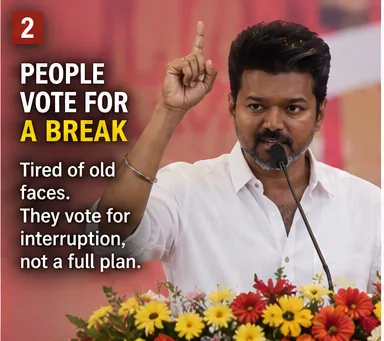
People Vote For A Break
Voters do not always vote for a full plan.
Sometimes they vote for a break.
They vote because the old faces have become unbearable. They vote because the usual speeches sound dead. They vote because the same parties keep asking for trust after wasting it.
That is not stupidity.
That is how people behave when politics has disappointed them for too long.
Vijay gave voters a break from the old room. He gave them a face they already knew. He gave them a story they could understand. He gave them the feeling that something could move again.
Sri Lanka knows this feeling too.
We have seen voters turn to strongmen, reformers, rebels, technocrats, outsiders, insiders pretending to be outsiders, and anyone who looked like a door out of the old mess.
The first lesson is simple:
A tired country will vote for interruption.
But interruption is only the opening scene.
It is not the whole film.
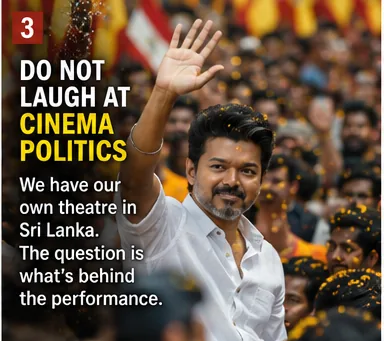
Do Not Laugh At Cinema Politics
Sri Lankans should not laugh at Tamil Nadu’s cinema politics.
We have our own theatre.
We have flags, songs, war memories, religious robes, family names, village stages, television speeches, strongman poses, funeral politics, and saviour stories.
Cinema is only one kind of theatre.
Politics everywhere uses performance. The question is not whether a leader performs. All leaders perform.
The question is whether there is anything solid behind the performance.
A poster can make people look.
A speech can make people clap.
A song can make people cry.
A film hero can make people hope.
But none of that fixes a broken school. None of that pays a debt. None of that makes a corrupt office honest. None of that brings down the price of food.
The image can open the door.
The work begins after that.
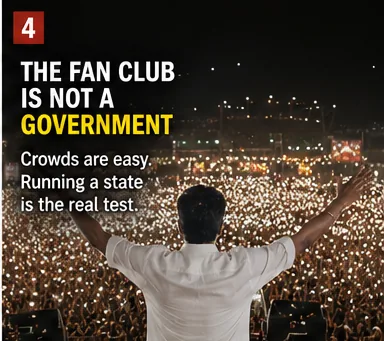
The Fan Club Is Not A Government
A fan club can move fast.
It can fill a street. It can defend the leader online. It can spread a clip. It can make a man look unstoppable.
But a fan club is not a government.
Government is slower. It is heavier. It is less exciting.
Government is files, budgets, officers, laws, contracts, courts, tenders, taxes, schools, hospitals, buses, police stations, angry voters and promises that come due.
That is where the hero meets the wall.
In a film, the hero knows who the villain is.
In government, the villain may be delay. Or debt. Or bad data. Or a lazy department. Or a corrupt ally. Or a promise made too easily.
That is why Vijay’s real test is not whether people love him.
They already do.
The test is whether love can be turned into work.
That is much harder.
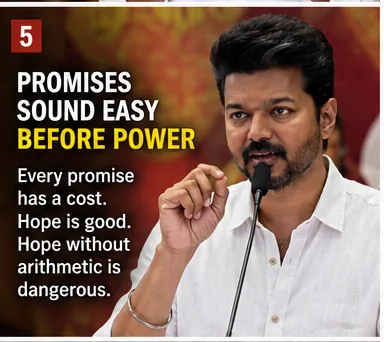
Promises Sound Easy Before Power
Promises are beautiful before power.
Help for women. Help for graduates. Cheaper gas. Loans. Jobs. Clean government. New industries. A better future for young people.
Who would not want these things?
The problem is not that people ask for help. People need help. Families need relief. Young people need work. Women carry the household economy in ways politics often ignores.
The problem is that every promise has a cost.
Someone has to pay.
Someone has to deliver.
Someone has to stop theft.
Someone has to decide who gets help first.
Someone has to explain what cannot be done yet.
That is where many leaders fail. They speak like poets during the campaign and count like cowards after victory.
Sri Lanka knows this very well.
We have heard promises without price tags.
We have paid for them later.
Hope is good.
Hope without arithmetic is dangerous.
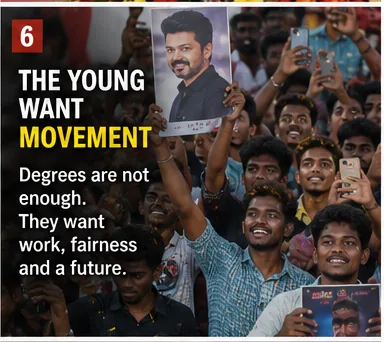
The Young Want Movement
Vijay’s appeal is not only about poor people wanting welfare.
It is also about young people wanting movement.
A degree is not enough if there is no decent job. A phone is not freedom if the future still feels blocked. Education is not dignity if the only choices are waiting, leaving, or begging someone with power.
Young voters want to feel that life can move.
They want work. They want fairness. They want less corruption. They want a state that does not waste their time. They want leaders who speak to the world they live in, not only the world their parents endured.
Sri Lanka should listen to this part most closely.
Our young people are also tired of waiting. Many are not asking for luxury. They are asking for a reason to stay.
That is why new leaders can rise quickly.
When old politics cannot offer movement, people look for a new face that can.
But a face is not a future.
A future has to be built.
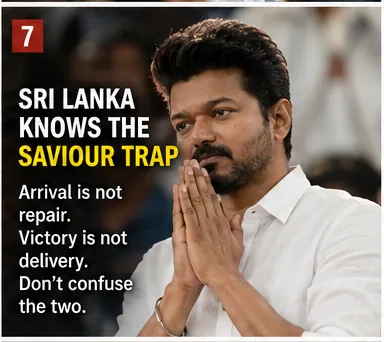
Sri Lanka Knows The Saviour Trap
Sri Lanka knows the saviour trap.
We have seen leaders arrive as rescuers. We have seen people place discipline, justice, honesty, strength, patriotism or kindness onto one person.
For a while, it feels good.
The old order looks frightened. The crowd feels alive. The country feels as if it has turned a page.
But a page is not a system.
A new leader can punish the old mood. That does not mean he can build a better one.
A new face can look clean. That does not mean the offices under him become clean.
A leader can speak for ordinary people. That does not mean ordinary people will see results.
This is the trap.
We confuse arrival with repair.
We confuse victory with delivery.
We confuse the fall of the old villain with the birth of a working country.
That is why Vijay’s story matters to us.
It reminds Sri Lanka to ask harder questions earlier.
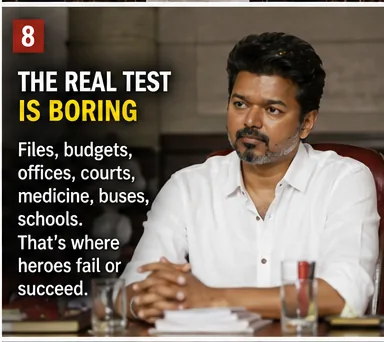
The Real Test Is Boring
The real test of Vijay will not be the rally.
It will be the boring things.
Can he choose good people?
Can he control his own side?
Can he say no to bad friends?
Can he keep promises without damaging the state?
Can he handle criticism without calling everyone an enemy?
Can he make offices work?
Can he keep young voters hopeful after the first year?
Can he turn public love into public service?
That is where politics becomes real.
Crowds are easy to admire. Systems are harder to build.
A country is kept alive by boring things done well: medicine arriving, buses running, schools opening, police behaving, courts moving, money being counted, contracts being watched, and citizens feeling that the rules are not only for the weak.
The hero must learn the boring work.
Or the hero becomes another memory.
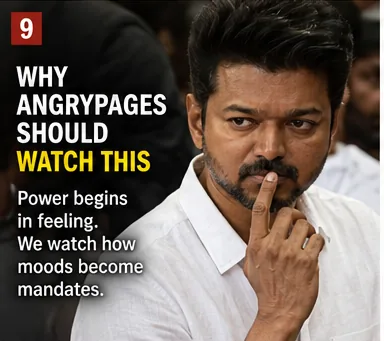
Why AngryPages Should Watch This
This is the kind of story AngryPages should hold.
Not because it is about one election.
Because it teaches something about power.
Power does not begin only in parliament. It begins in feeling. It begins in memory. It begins in songs, faces, anger, jokes, films, promises, wounds and hope.
By the time people vote, the story has already been forming inside them.
That is why AngryPages matters.
We are not only watching leaders. We are watching how people come to believe. We are watching how a public mood is made. We are watching how private frustration becomes a political wave.
Vijay’s rise is useful because it shows that politics is not cold.
It is human.
People do not only want a policy paper. They want a reason to believe the room can change.
But belief is not enough.
The best political question is still simple:
What will change in real life?
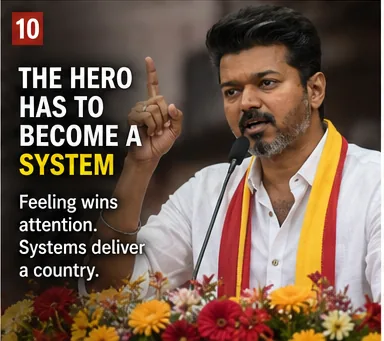
The Hero Has To Become A System
The line I keep coming back to is this:
The hero has to become a system.
A hero can gather feeling.
A system has to deliver.
A hero can make people believe.
A system has to make life work.
A hero can speak against corruption.
A system has to make corruption harder.
A hero can promise jobs.
A system has to create the conditions for jobs.
A hero can stand with ordinary people.
A system has to make food, fuel, school, medicine, transport, courts and work more bearable.
That is why I am watching Vijay from Sri Lanka.
Not as a fan.
Not as a hater.
As someone trying to understand what happens when a public mood becomes power.
The trailer is over.
The crowd has become the public.
Now the hero has to govern.
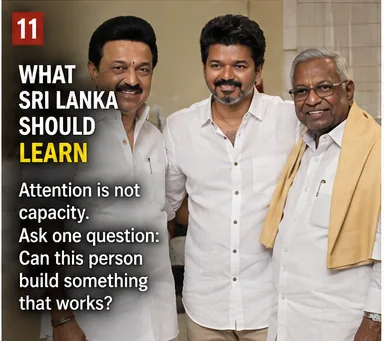
What Sri Lanka Should Learn
Sri Lanka should not ask only whether Vijay succeeds or fails.
We should ask what his rise teaches us.
It teaches us that voters still want emotional leadership.
It teaches us that old parties can look permanent until the public finds a new vessel.
It teaches us that culture can move politics faster than official speeches.
It teaches us that young voters may choose freshness before detail.
It teaches us that welfare promises still matter when daily life feels insecure.
It teaches us that anti-corruption language still has power when people believe the old system protects itself.
But it also teaches the danger.
Attention is not capacity.
A crowd is not a government.
A mood is not a plan.
A new face is not a new state.
Sri Lanka will face this again. New people will rise. New slogans will come. New platforms will appear. Some will be useful. Some will be empty.
The public should ask one question:
Can this person build something that works?
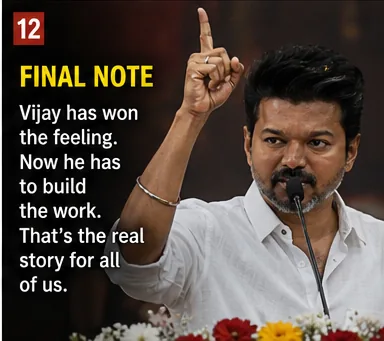
Final Note
I do not see Vijay’s rise as a small Tamil Nadu story.
I see it as part of a larger pattern around us.
People are tired of stale rooms. They want fresh faces. They want a break. They want leaders who feel closer to real life. They want someone to punish arrogance and open a door.
That desire is understandable.
But the next stage is harder.
After the victory speech, there is the file.
After the crowd, there is the budget.
After the slogan, there is the department.
After the hero image, there is the institution.
That is where the story becomes serious.
For Sri Lanka, the lesson is not that cinema politics is silly.
The lesson is that all politics has theatre.
The real question is whether the theatre can produce a working state.
If not, the public wakes from one dream into another disappointment.
Vijay has won the feeling.
Now he has to build the work.
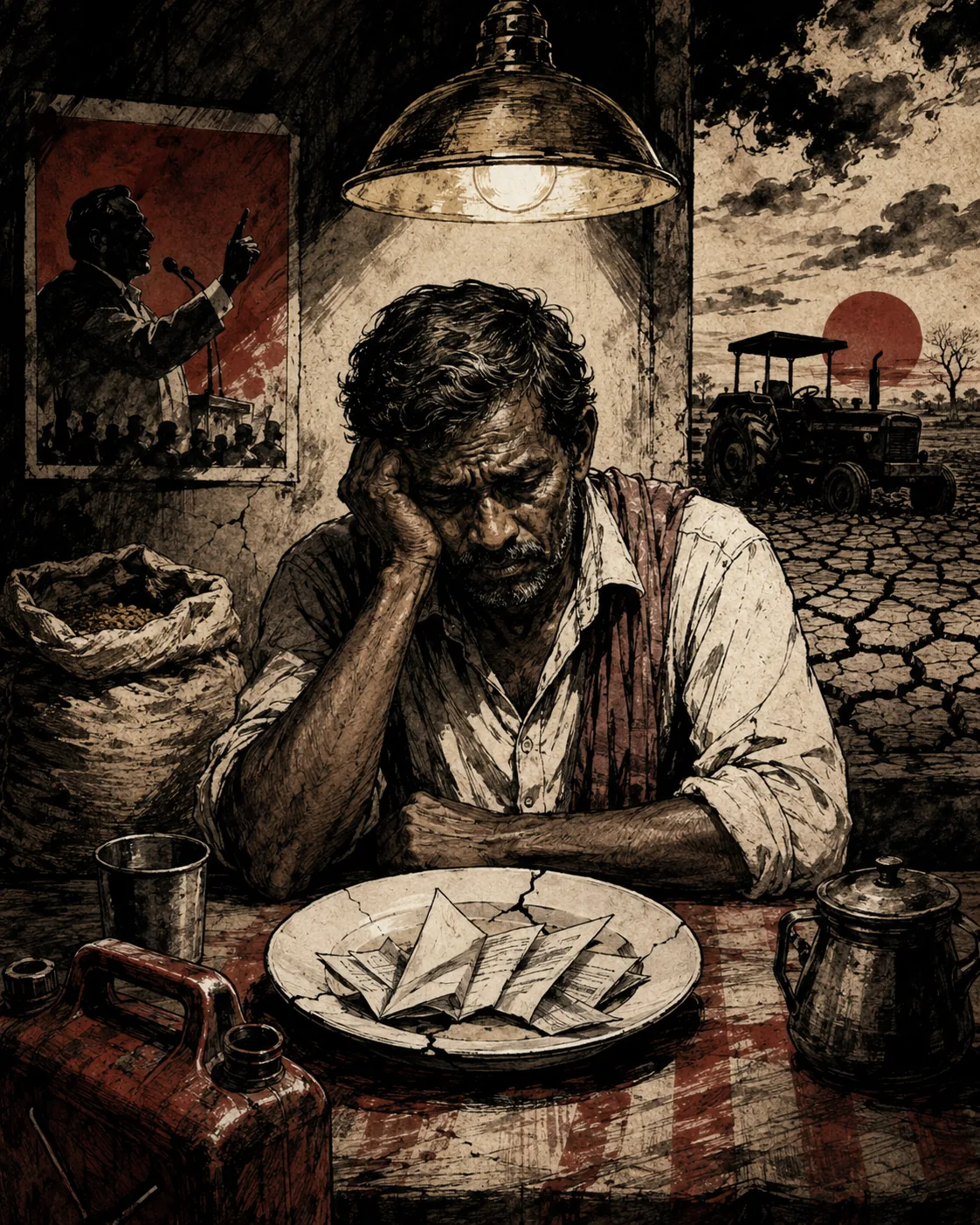
The Bill Comes Due
Vishwamithra’s article is aimed at AKD and the NPP, but the real target is bigger than one government. It is aimed at the dangerous little habit Sri Lanka has of turning public pain into campaign property. Aragalaya was not a logo. It was not a slogan. It was not an election backdrop. It was not a convenient moral costume for the next group of rulers to wear while asking everyone else to wait. People did not stand in queues, cook in darkness, watch their savings rot, march under fear, and shout a president out of office so that a new political class could learn the old trick with better vocabulary. The article says the country began a “journey of correction and transformation.” Fine. Then correct. Then transform. Do not inherit the fire and sell the ashes as progress.
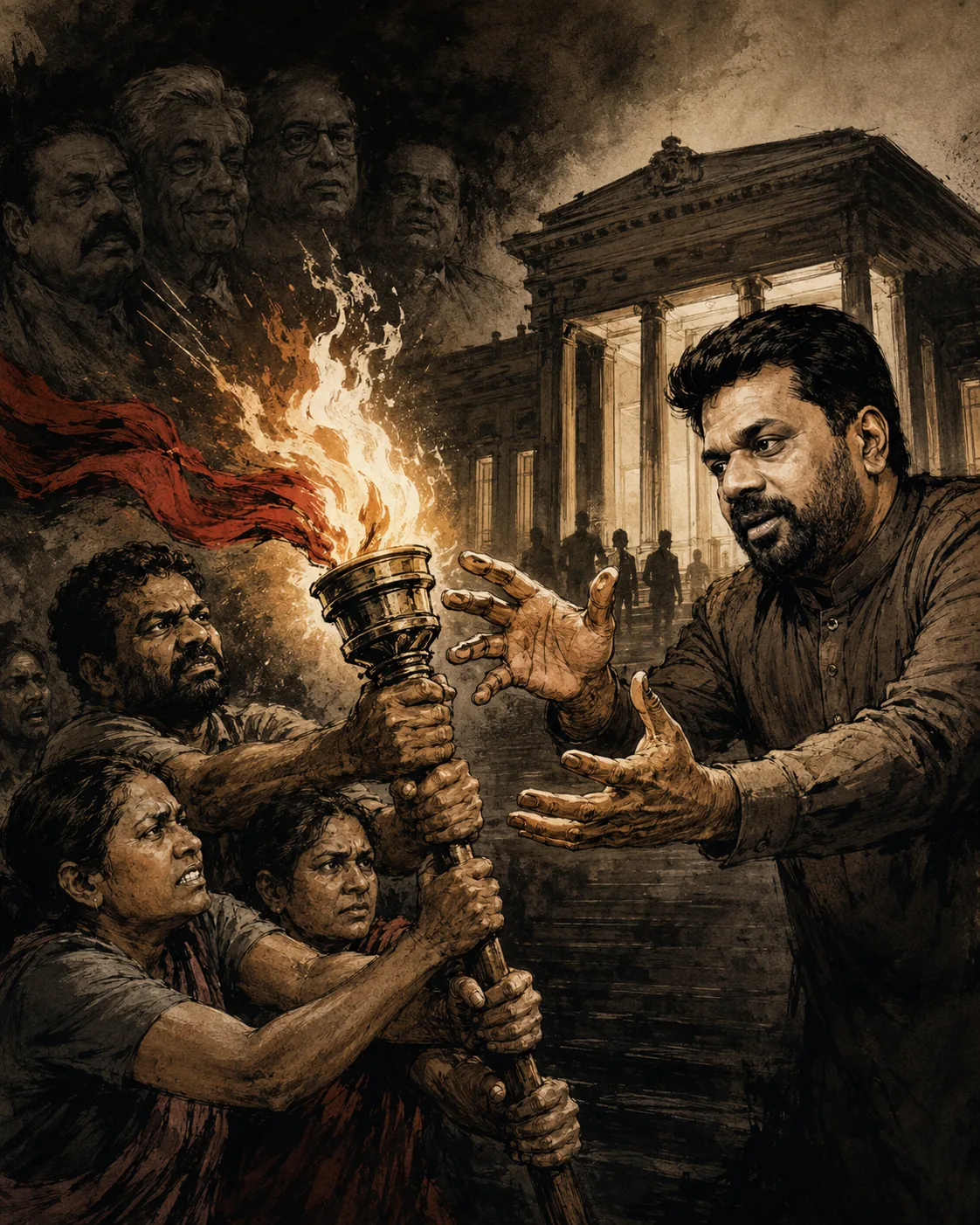
Do Not Touch The Glory With Dirty Hands
The article ends with a warning: “The glory of Aragalaya-22 should not be denied.” That line matters because glory is not owned by the people who came after. It belongs to the citizens who made power afraid. It belongs to the people who discovered, for one short season, that the throne was not made of iron. It was made of public permission. That is the part every government hates. The public can withdraw permission. The public can remember. The public can say: no, you do not get to use our uprising as your decoration. That is the danger for AKD and the NPP now. They were not elected to become a cleaner-looking management company for the same old national exhaustion. They were elected because people wanted a different standard. Not a different accent. Not a different poster. Not a different set of loyalists sitting in the same warm chairs. A different standard.
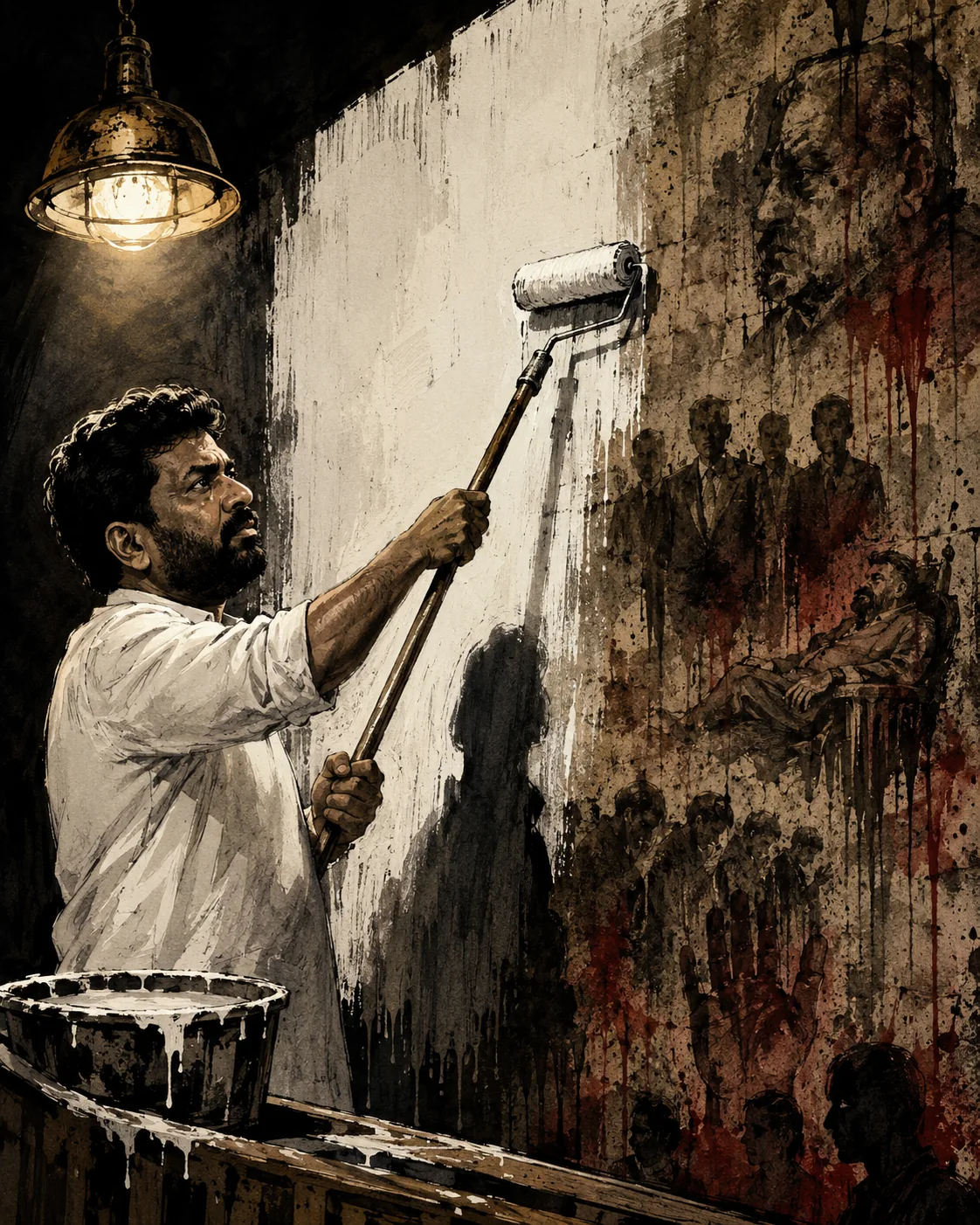
The New Vocabulary Problem
The danger now is not that people expected perfection. That is a lazy defence. Nobody serious expected paradise in eighteen months. Nobody expected the economy to become Switzerland by Monday. Nobody expected every court case, every file, every debt, every school, every hospital, every farm and every department to be fixed overnight. People are not that stupid. The danger is colder. People expected a different moral temperature — and may slowly discover only a different vocabulary. That is how political betrayal usually begins in Sri Lanka. First, the words change. Then the excuses return. Then the appointments become “necessary.” Then the silence becomes “strategic.” Then the delay becomes “responsible.” Then the loyalists say: give them time. Then the public realises time is exactly what every ruler asks for while the country bleeds interest. This is the old Sri Lankan magic trick. Change the language. Keep the habits.
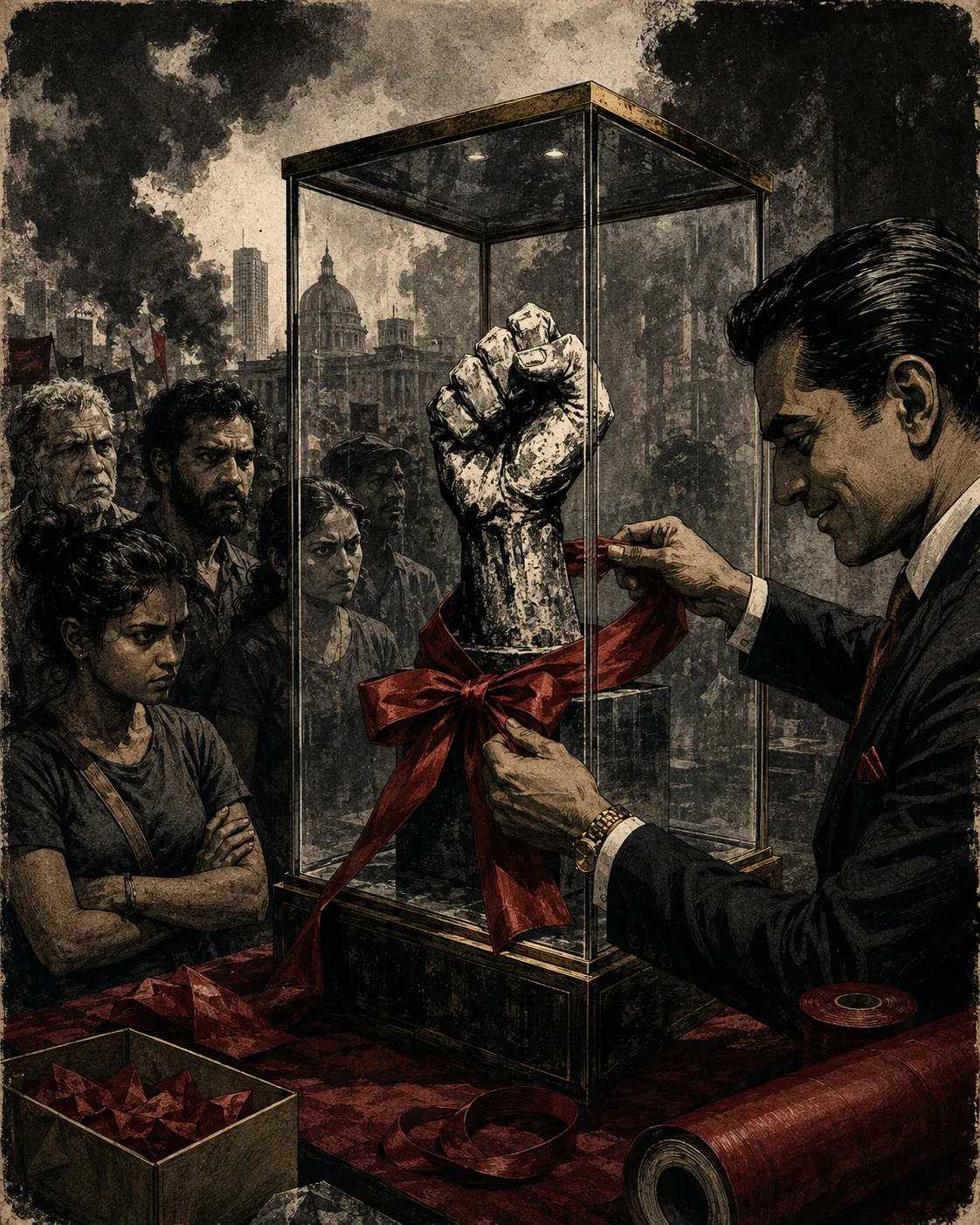
Aragalaya Was Not A Party Asset
Aragalaya was not merely anti-Rajapaksa. That is the cheap version. The deeper demand was this: public power must stop behaving like private property. That standard does not expire when your preferred party wins. It applies to the Rajapaksas. It applies to Ranil. It applies to AKD. It applies to the NPP. It applies to ministers, secretaries, police, monks, judges, state chairmen, friends, funders, activists and every newly holy person who thinks history has given them a pass. Nobody gets a private entrance into public power. Nobody gets to say: corruption was evil when they did it, complicated when we do it, and sabotage when you ask about it. That is the line. If the NPP wants to prosecute the old order, good. But the same light must fall on the new order. Otherwise it is not justice. It is recycling.
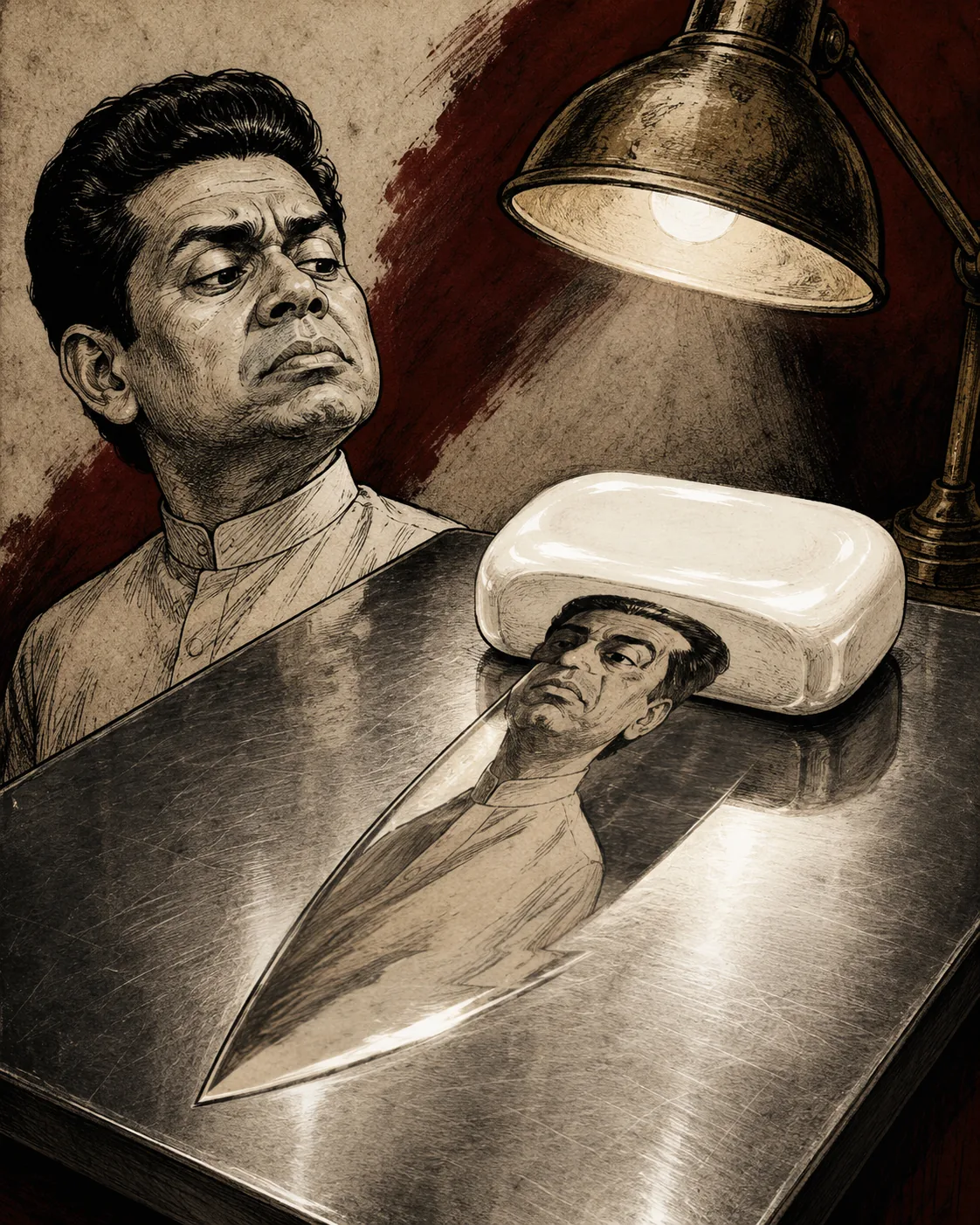
Purity Is A Knife That Cuts Back
The article calls the NPP’s pre-election posture “puritanical.” That is the problem with purity politics. It wins because it sounds clean. Then it governs, and the knife turns around. If you campaign like saints, you cannot govern like ordinary operators and act shocked when people notice the smell. The NPP did not come to power saying: we are just another party, please lower your expectations. No. They came as the moral correction. They came as the audit. They came as the file-openers. They came as the punishment of arrogance. They came as the end of the dirty room. So now they must live under the light they switched on. That is not unfair. That is the contract. If you sell yourself as soap, do not complain when people ask why the water is still brown.
The Farmer Does Not Eat Speeches
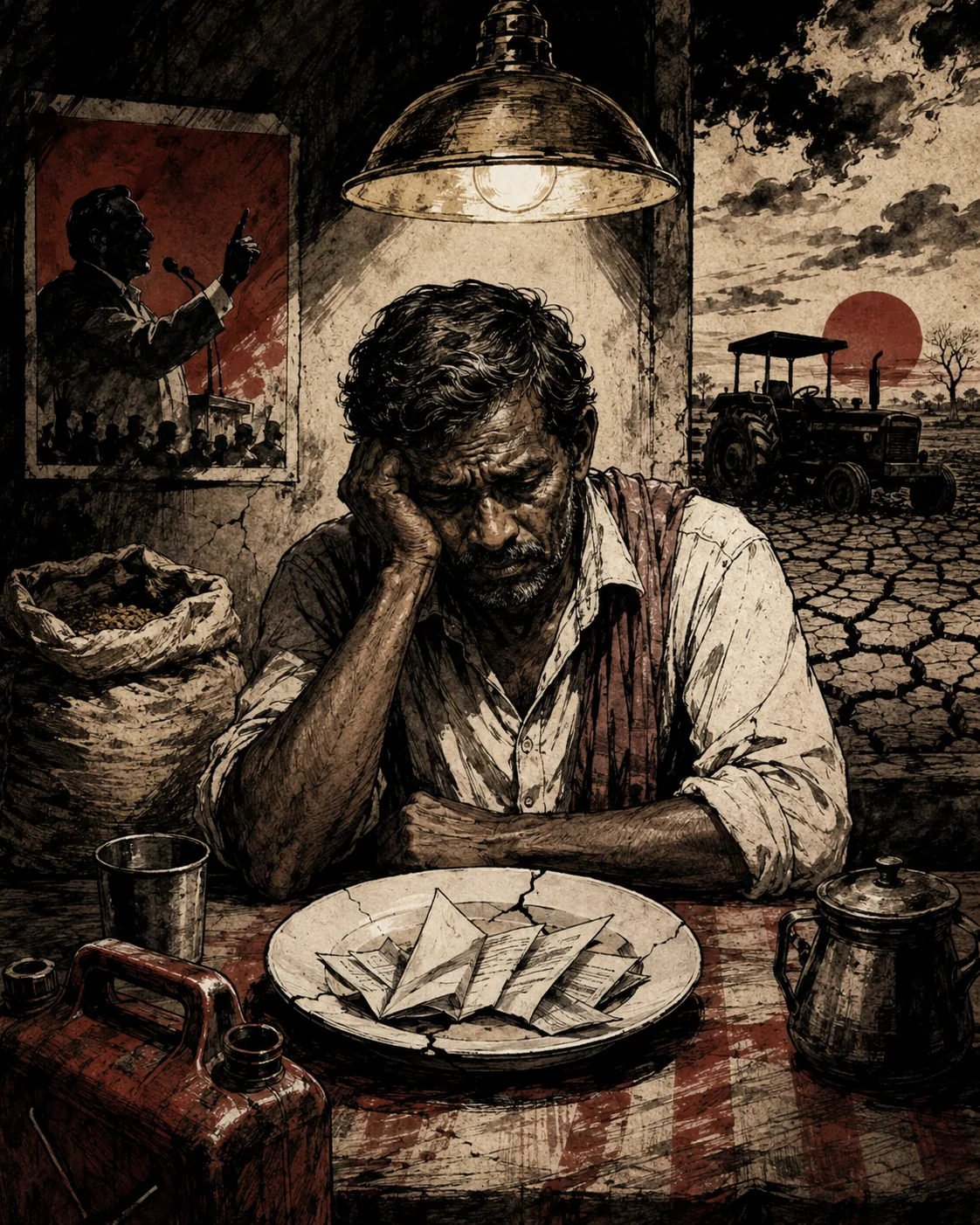
The article is right to drag the argument back to the ground. The average voter is not living inside a think-tank paper. He is living inside fuel prices, diesel, fertilizer, transport, food, debt, school costs, medical bills and the daily insult of survival. A farmer does not eat speeches. A mother does not cook with reform language. A bus driver does not run on moral mandate. A shopkeeper does not pay rent with anti-corruption theatre. This is where governments die: not in the grand theory, but in the kitchen. Petrol. Diesel. Rice. Eggs. Gas. Medicine. School shoes. Fertilizer. Transport. Electricity. These are not small things. These are the republic. When the price of ordinary life becomes unbearable, every slogan starts to sound like a joke told by someone who ate already.
Memory Is Short Only When Nobody Keeps It Alive
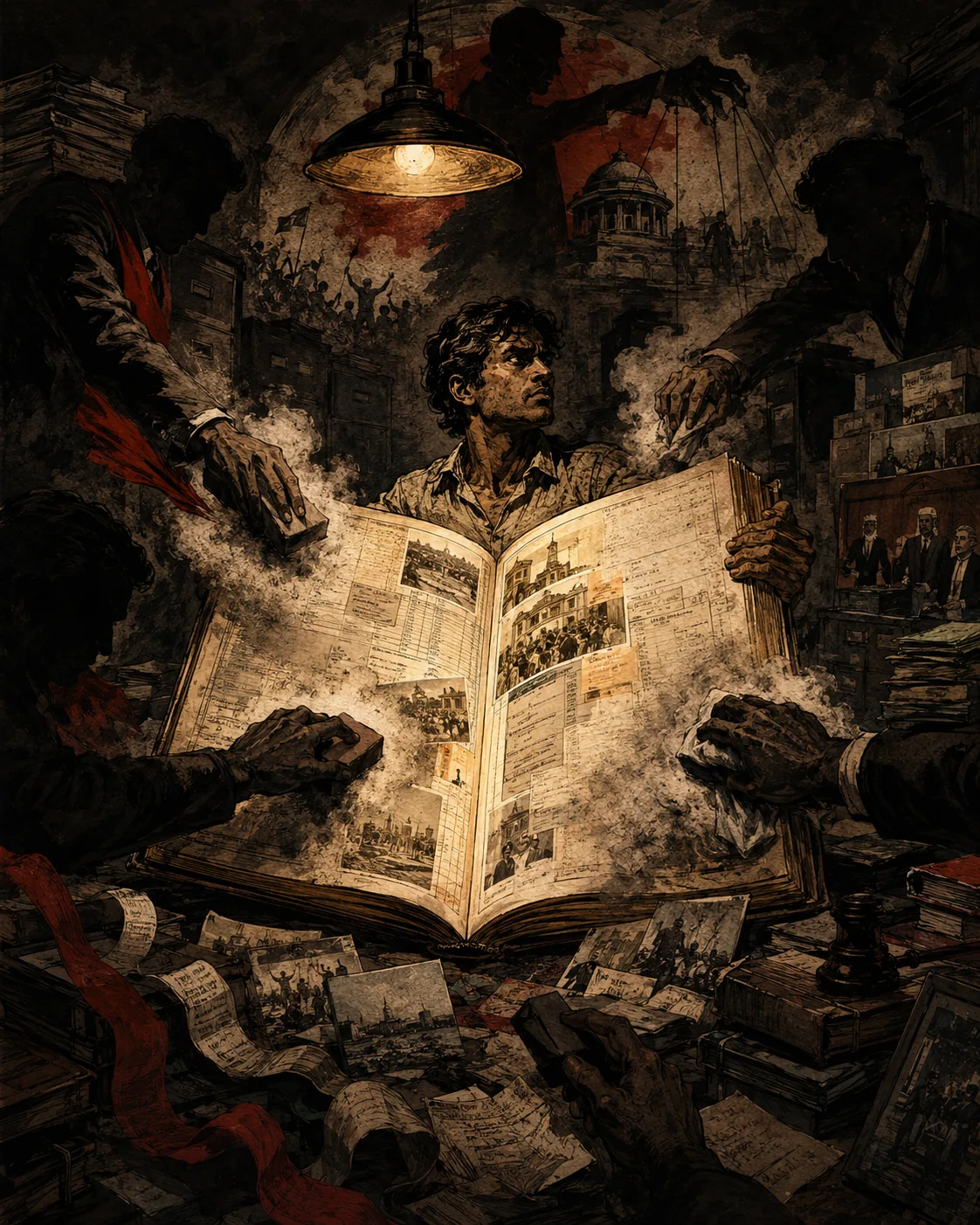
The article says the voter’s memory is short. That is partly true. But memory is also murdered. It is murdered by propaganda. It is murdered by boredom. It is murdered by new scandals. It is murdered by party men shouting over facts. It is murdered by television panels turning national theft into team sport. That is why records matter. Dates matter. Receipts matter. Files matter. Names matter. Screenshots matter. Court cases matter. Promises matter. The country forgets because every ruler benefits from fog. AngryPages should not join the fog. The job is to keep the memory alive long enough for the lie to rot in public. Aragalaya should not become an emotional blur. It should become a ledger. Who promised what? Who delayed what? Who protected whom? Who changed after power? Who asked the public to wait while insiders adjusted comfortably to the new room?
Do Not Worship The File
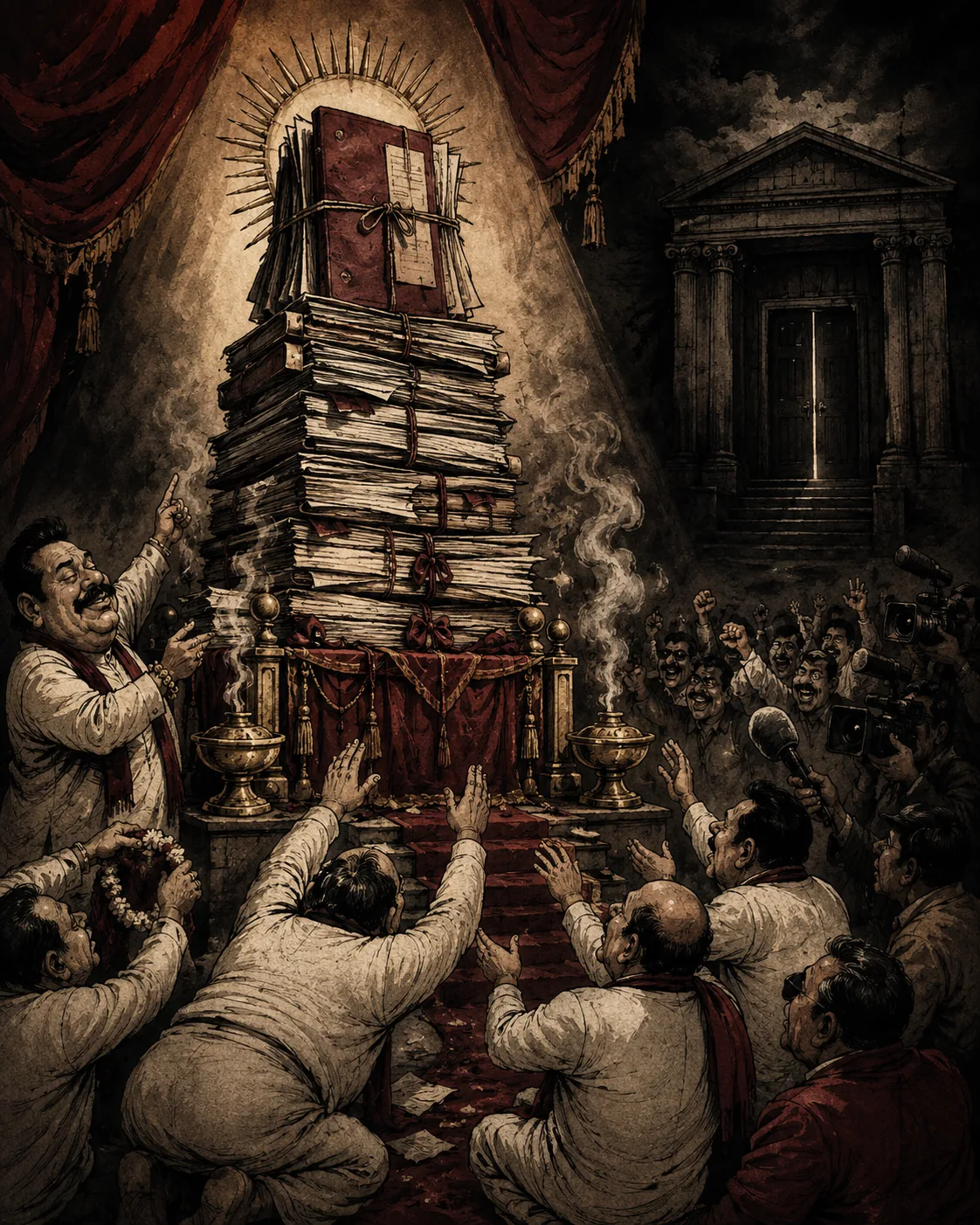
The “400 files” language has power because people want proof that someone is finally opening the drawers. Good. Open them. But do not worship the file. A file is not justice. A press conference is not justice. A leak is not justice. A threat is not justice. A slogan about thieves is not justice. Justice is evidence, procedure, court, conviction, recovery, reform and prevention. Justice is not merely dragging an old villain onto the stage so the new crowd can clap. Sri Lanka has seen too much theatre already. If corruption cases are real, make them clean enough to survive court. If appointments are wrong, correct them fast. If a minister fails, remove him without drama. If a policy hurts people, admit it before the damage becomes permanent. The country does not need revenge cosplay. It needs public power that can count, confess, correct and continue.
The Old Order Is Waiting
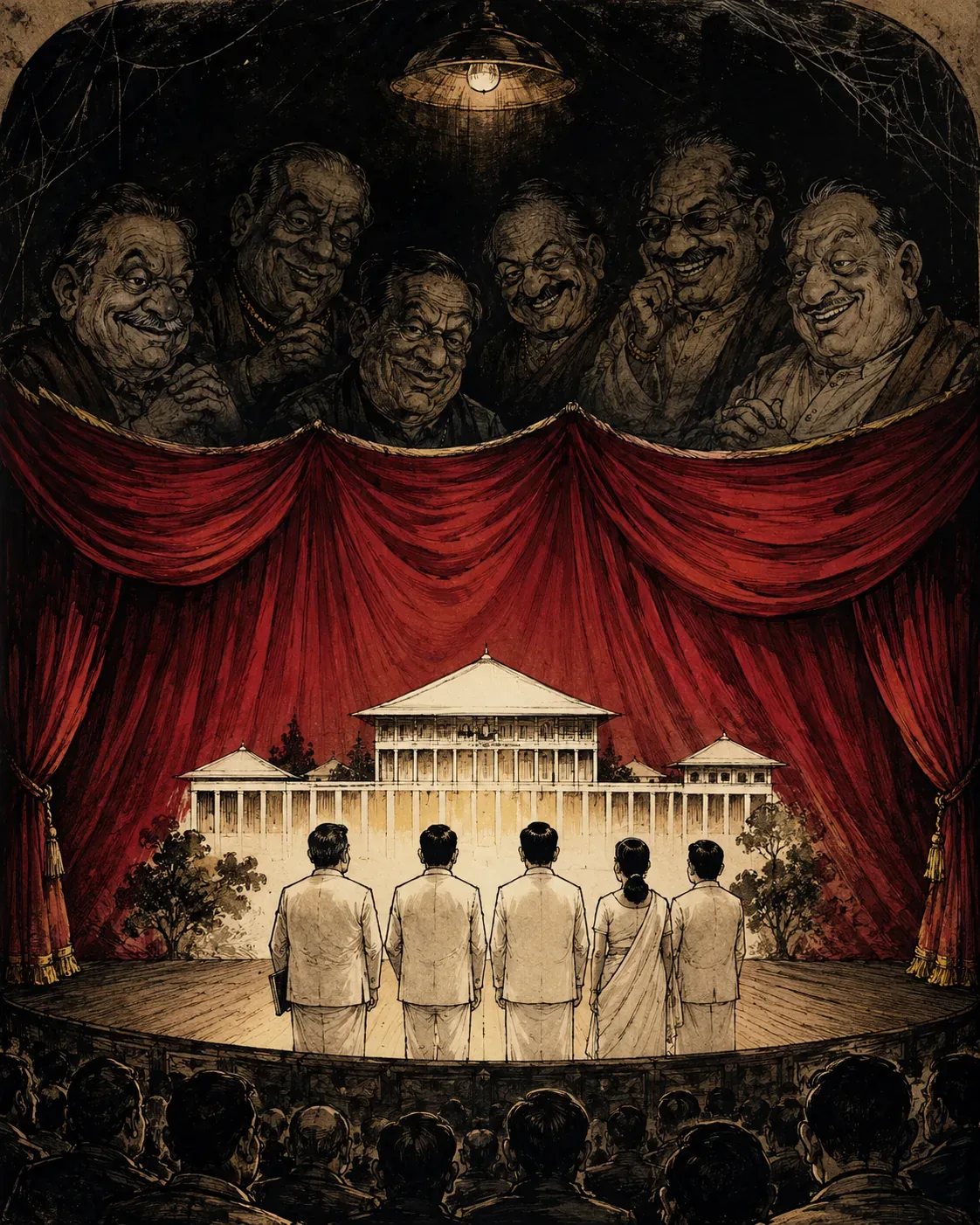
The old order is not dead. It is waiting. It is watching every delay, every appointment, every confused explanation, every fuel shock, every fertilizer complaint, every death, every rumour, every arrogant answer, every loyalist excuse. That is how the old order returns. Not because people love it. Because the new order disappoints badly enough for memory to become negotiable. Sri Lanka has a filthy talent for this. Yesterday’s disgrace becomes tomorrow’s “experienced hand.” Yesterday’s thief becomes today’s “stability.” Yesterday’s disaster manager becomes tomorrow’s elder statesman. That is why AKD and the NPP cannot afford moral laziness. If they fail, they do not only fail themselves. They reopen the door for the people the country nearly broke itself trying to remove. That is the black comedy of Sri Lankan politics. The old monster does not need to become good. The new promise only needs to become weak.
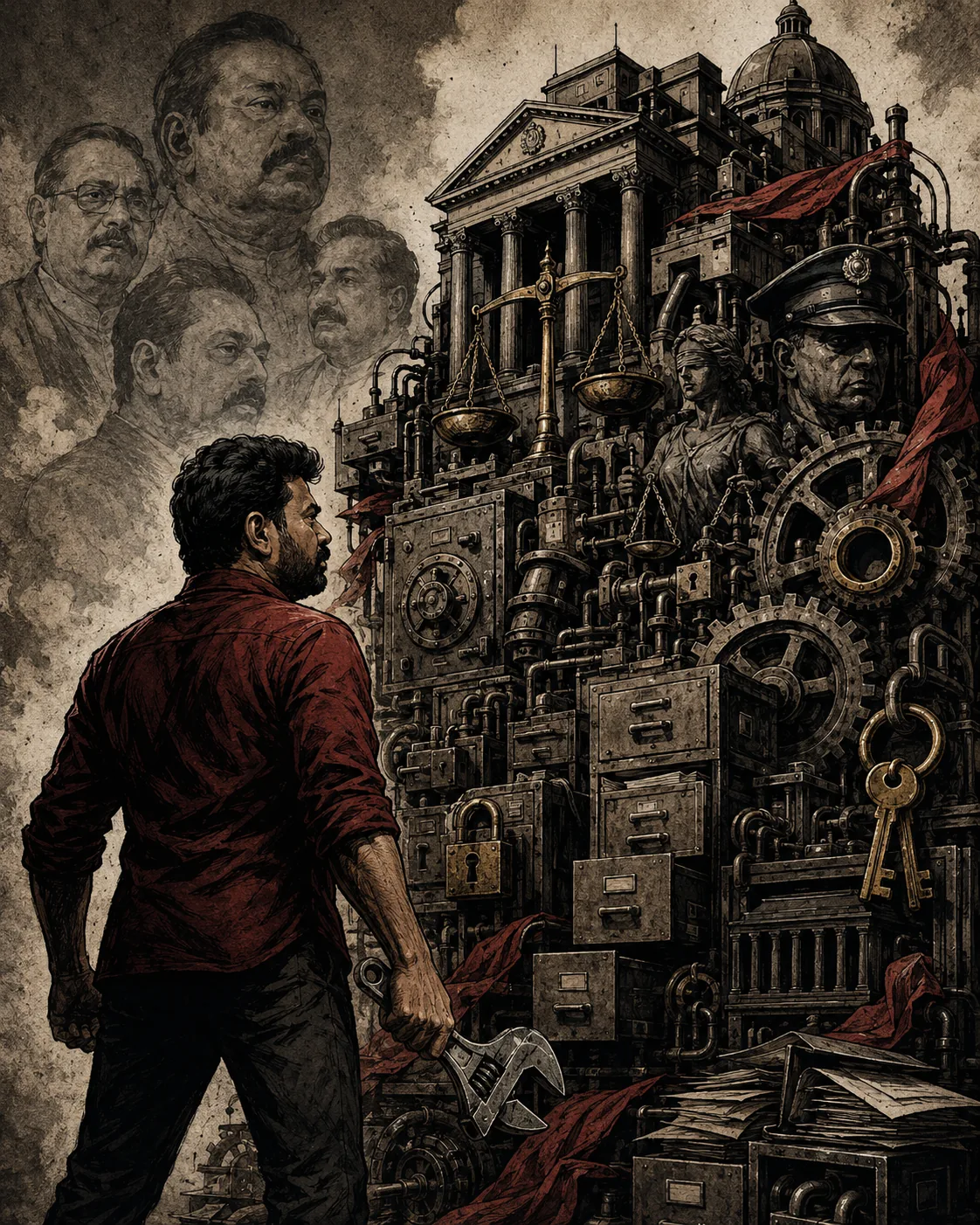
The Real Test Is Not Hatred Of The Rajapaksas
Anyone can hate the Rajapaksas now. That is easy. The real test is whether Sri Lanka can build a system where the next Rajapaksa cannot grow so easily. That means institutions. That means procurement rules. That means asset declarations. That means independent investigations. That means courts that move. That means state media that does not behave like a house servant. That means police that do not bend for party colour. That means no sacred families, no sacred parties, no sacred robes, no sacred uniforms, no sacred revolutionaries. That is the test. Not whether one family is punished. Whether the conditions that produced that family are dismantled. If the NPP only prosecutes the past but leaves the machinery ready for future abuse, then the country has not changed. It has only changed the names on the doors.
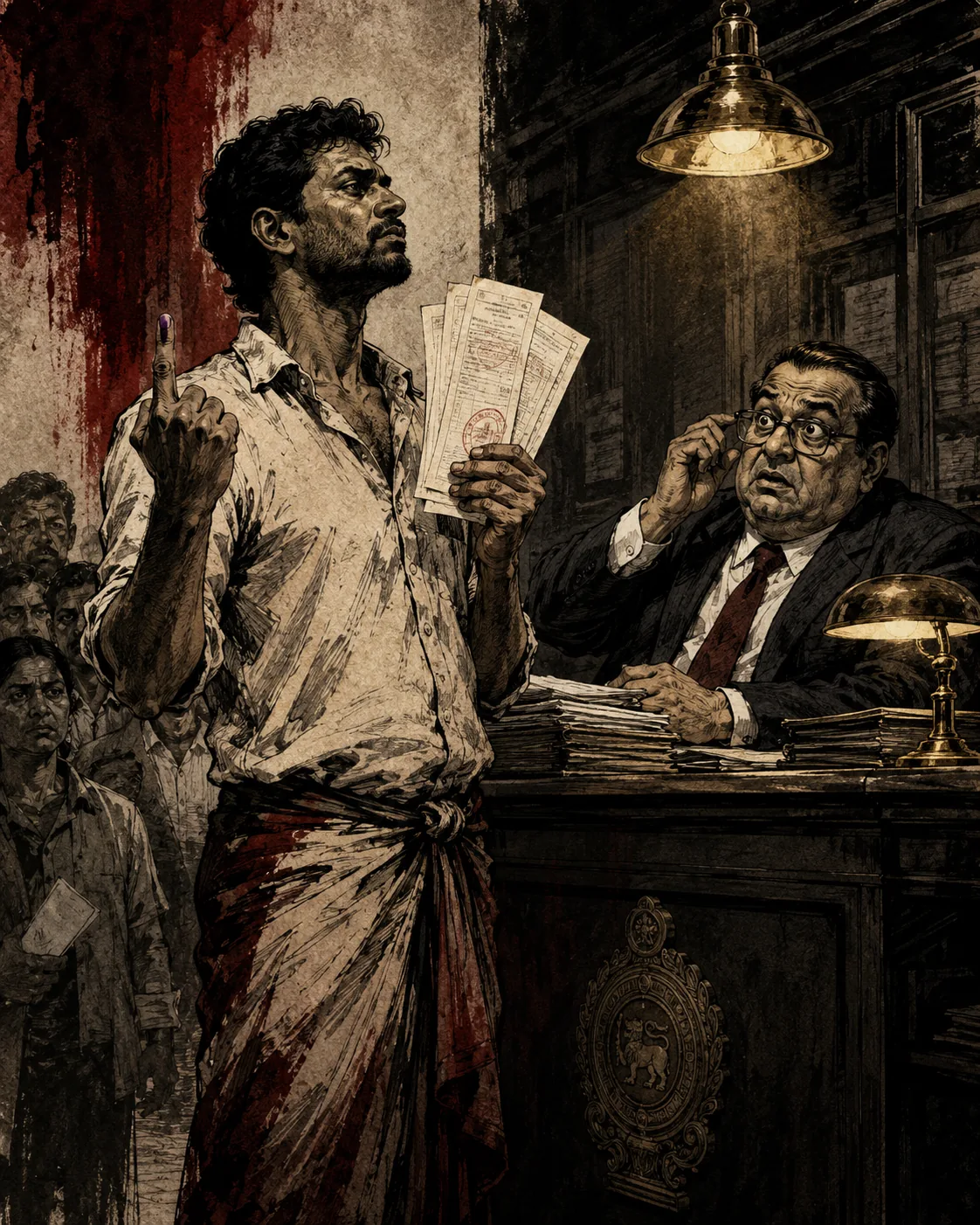
The Public Is Not A Beggar
The public should stop being spoken to like a beggar asking rulers for kindness. The public is the owner. The state belongs to the people who pay for it, suffer under it, vote inside it, and bury their lives beneath its failures. When citizens ask for records, they are not being impatient. When citizens ask about appointments, they are not sabotaging change. When citizens ask about fuel, fertilizer, prices, corruption and court cases, they are not serving the opposition. They are doing the job a republic requires. A government that cannot tolerate questions is already rotting. A movement that calls every critic an enemy is already becoming what it replaced. That is why the article matters. It is not asking for perfection. It is asking whether the people who inherited the mandate still understand who gave it to them. The answer cannot be a speech. It has to be conduct.
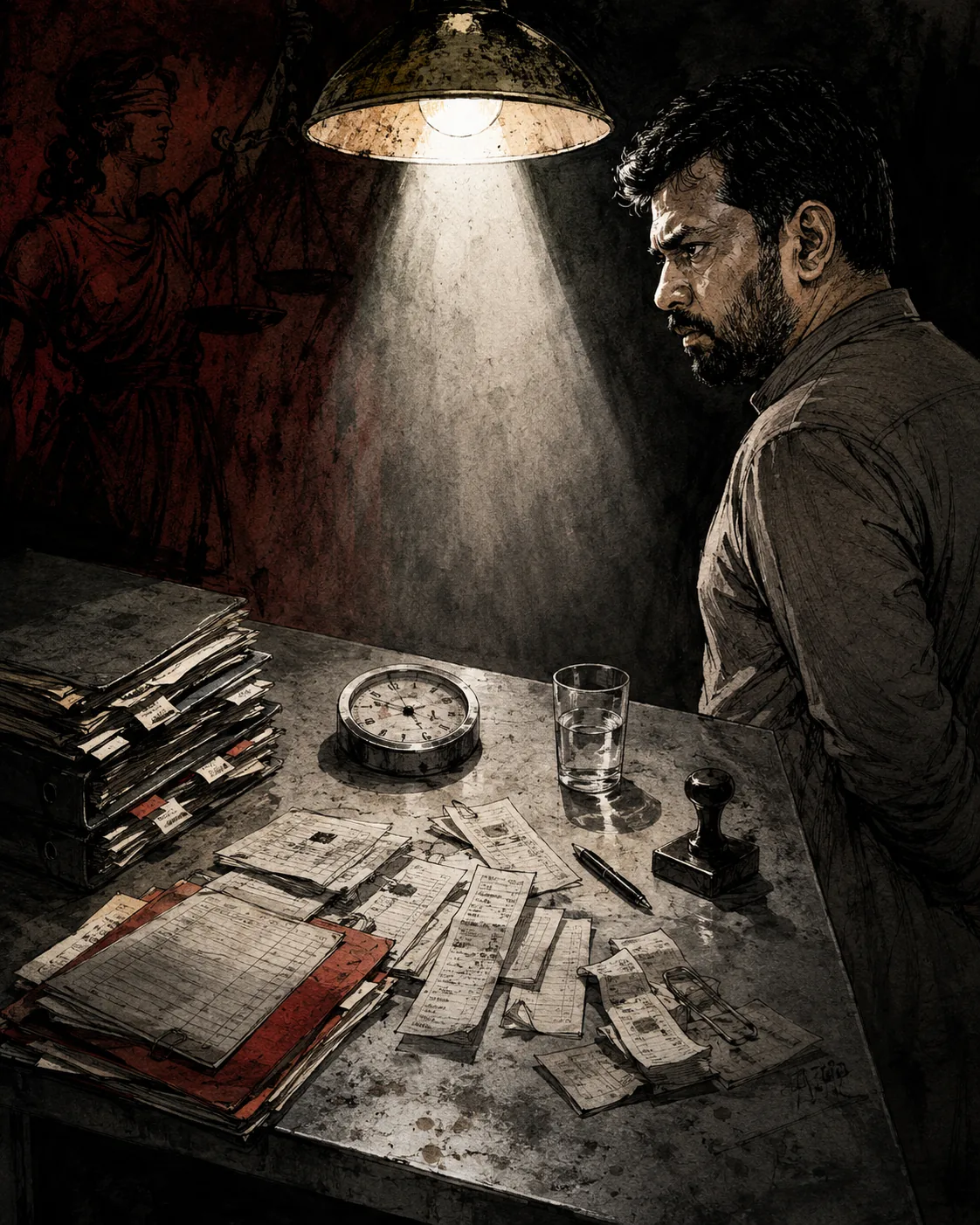
Cold Standard
Here is the cold standard. Keep records. Publish facts. Name failures. Correct fast. Stop hiding behind the past. Stop treating criticism as betrayal. Stop asking citizens to be patient with things that insiders would never tolerate in their own lives. Stop using Aragalaya as a shrine while governing like it was only a ladder.
The glory was not yours to spend. That glory belongs to the people who made fear change direction. If AKD and the NPP want to protect it, they must do the boring, brutal work of government: discipline, honesty, delivery, correction, transparency and law. Not theatre. Not martyr poses. Not purity speeches. Not “trust us.” Sri Lanka has trusted too many people already. The next stage is not trust. It is proof. That is the line. Proof, or move.
Cold Standard
Here is the cold standard. Keep records. Publish facts. Name failures. Correct fast. Stop hiding behind the past. Stop treating criticism as betrayal. Stop asking citizens to be patient with things that insiders would never tolerate in their own lives. Stop using Aragalaya as a shrine while governing like it was only a ladder.
The glory was not yours to spend. That glory belongs to the people who made fear change direction. If AKD and the NPP want to protect it, they must do the boring, brutal work of government: discipline, honesty, delivery, correction, transparency and law. Not theatre. Not martyr poses. Not purity speeches. Not “trust us.” Sri Lanka has trusted too many people already. The next stage is not trust. It is proof. That is the line. Proof, or move.
Status: 992,304 words done, another 475,650 to go
I'm busy editing and reviewing close to 500k words. I am also running synchronously our operations. So we're unsure.
We want AI passes on the work, too.
I did up-to 2023. But I found from AI, that 2020 had mistakes. So we'll be on May 12th, working on that, 2021, and 2022. To review it for safety.
I'm devastated, with how our hard work, censor tags were somehow, erased, removed or broken that way.
This work, is very easy to misread, without those, as a movie or book is mostly in the editing, really, final presentation product/layer.
I think it's not possible to release it by today. It'll take about I'm going to say, around about, 10 days.
We can put up stuff.
I also, did work hard on the about pages or Pages App, where our user facing pages were all updated.
So that's good, it's done. I should slowly read, focus and finish it up.