Scales, කරුණාවන්ත කිඹුලා
සිහිනයක් සමඟ
AngryPages පොත
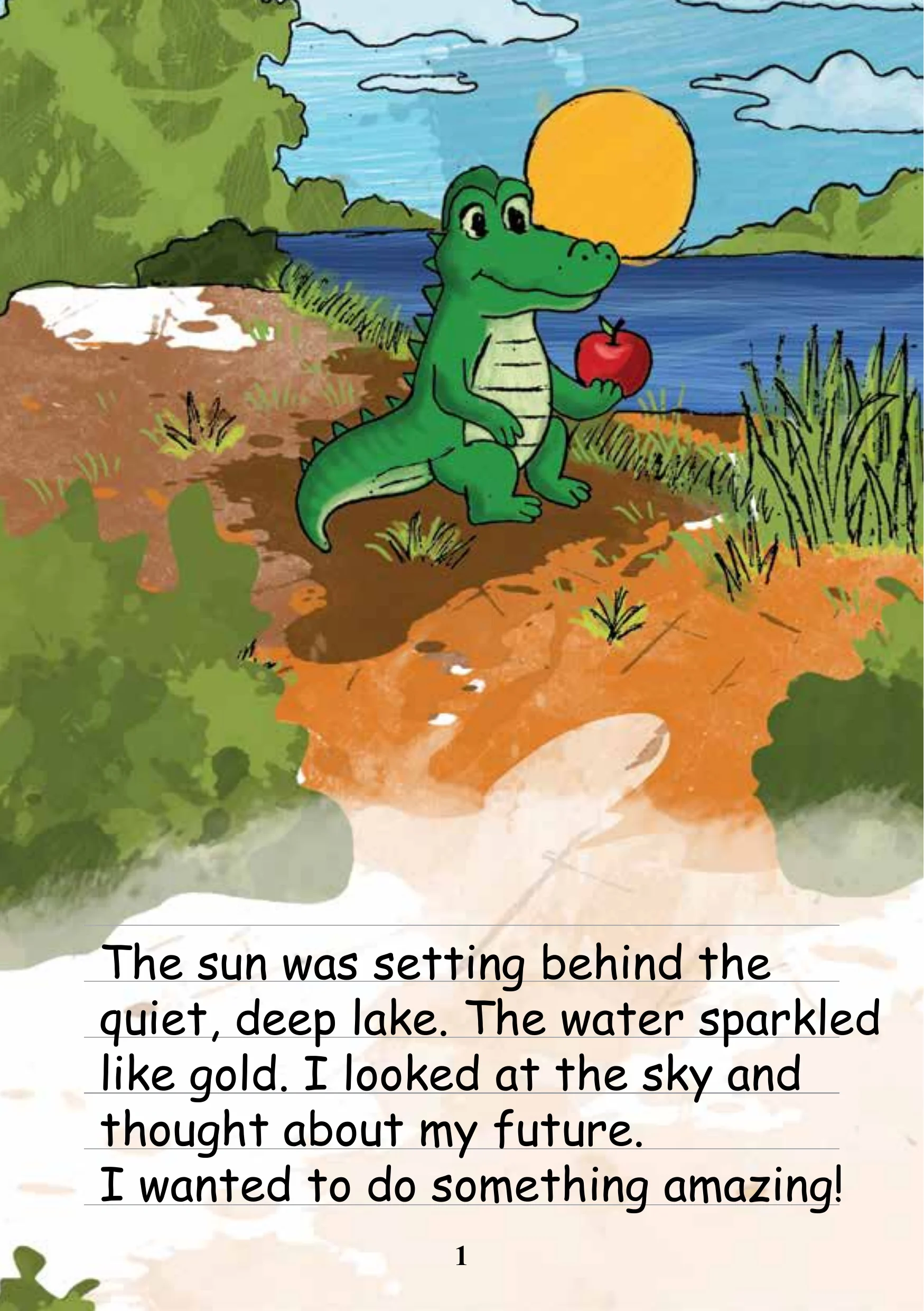
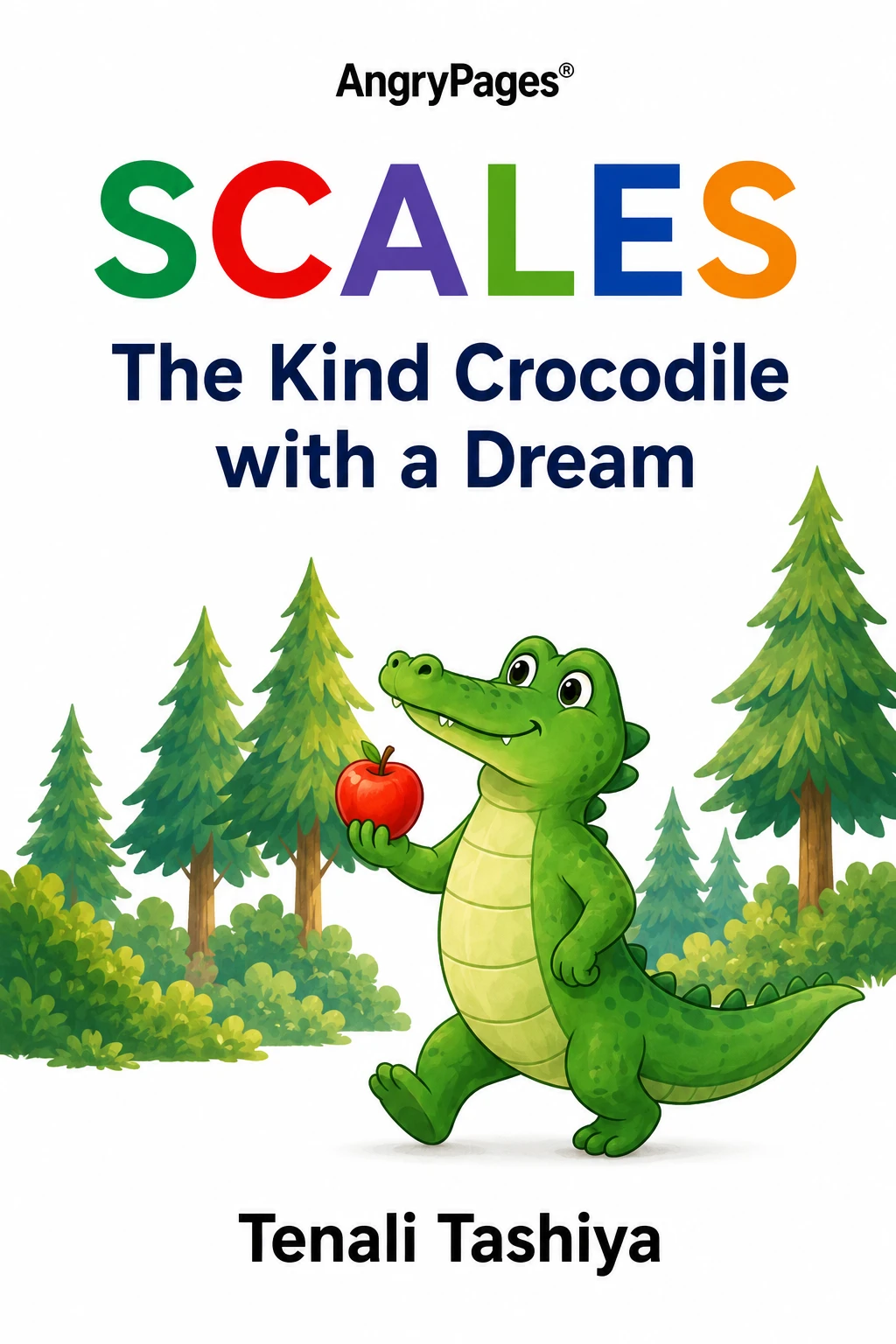
5.0 · 2 reviewsස්කේල්ස් අනෙක් කිඹුලන් වගේ නොවෙයි. ඔහු ගැඹුරු විලක තනියම ජීවත් වෙනවා, මස් වෙනුවට පලතුරු කනවා, ඔහුට එක ලොකු සිහිනයක් තියෙනවා: සුපිරි වීරයෙකු වීම.
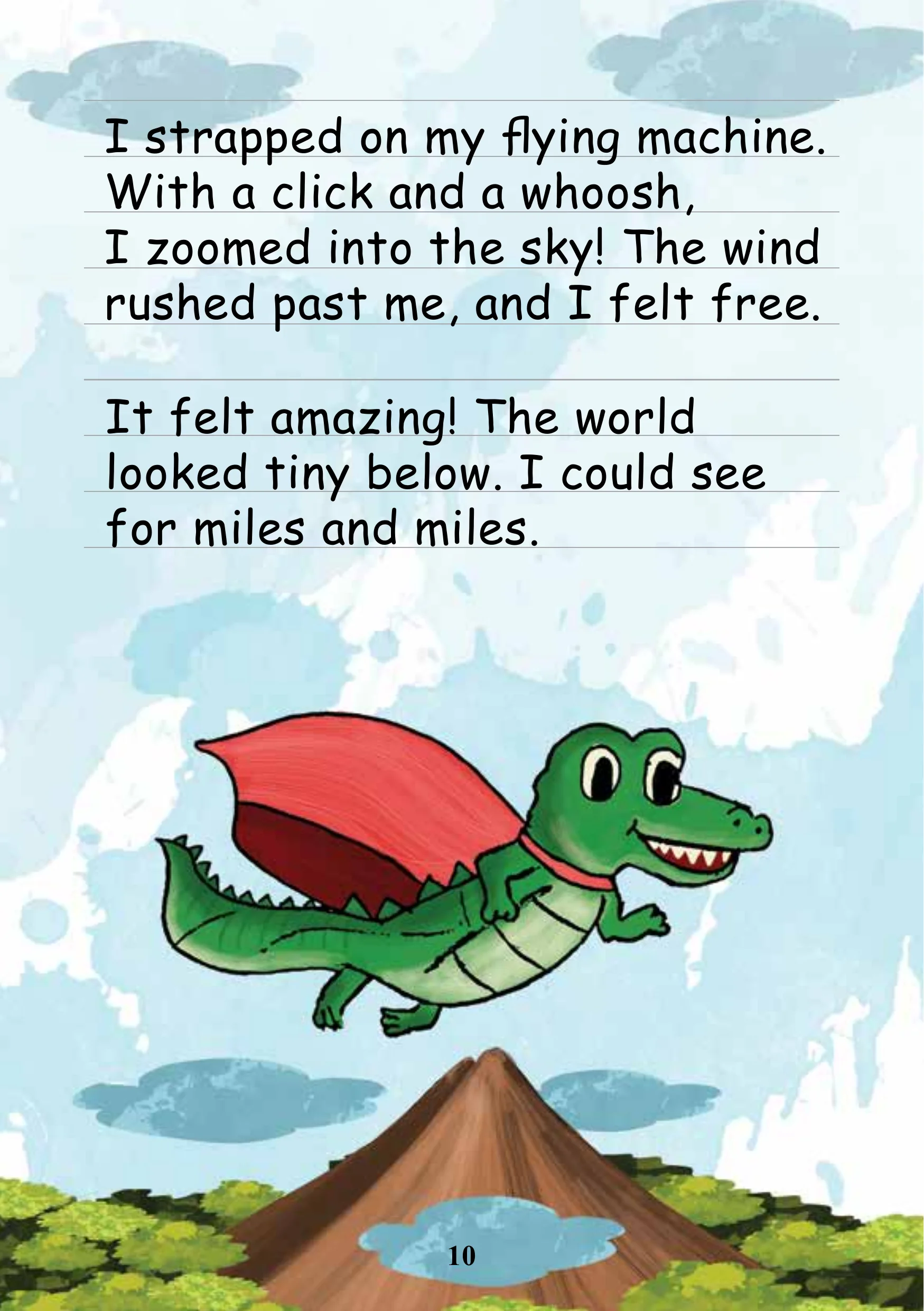
ඔහුගේ යාළුවන් ඒ සිහිනයට හිනා වුණත්, ඔහු කොහොමත් අස්ථිර පියාසර යන්ත්රයක් හදාගෙන ලෝකයේ උසම කන්ද බලා පිටත් වෙනවා. එහි මුදුනේ සුපිරි වීරයන්ගේ පාසලක් ඔහු එනතුරු බලා සිටිනවා.
වයස අවුරුදු 10ක ටෙනාලි ටෂියා විසින් රචනා කර චිත්රණය කළ ‘ස්කේල්ස්, කරුණාවන්ත කිඹුලා’ යනු හැමෝම ‘ඔයාට බැහැ’ කියන විටත් උත්සාහ කිරීම ගැන ඇගේ පළමු චිත්ර කතා පොතයි.
පොත කෙටියෙන් හඳුනාගන්න
- සම්පූර්ණ චිත්ර කතාව මුල සිට අග දක්වා කියවන්න.
- අන් අය හිනා වූ සිහිනයක සිට සුපිරි වීර පාසල, වනාන්තර ගින්නක ගලවා ගැනීම සහ ඔහුට ගෞරවයෙන් ඉදි කළ ස්මාරකය දක්වා ස්කේල්ස්ගේ ගමන අනුගමනය කරන්න.
- වයස අවුරුදු 10ක කතුවරිය විසින් සම්පූර්ණයෙන්ම රචනා කර චිත්රණය කරන ලදී.
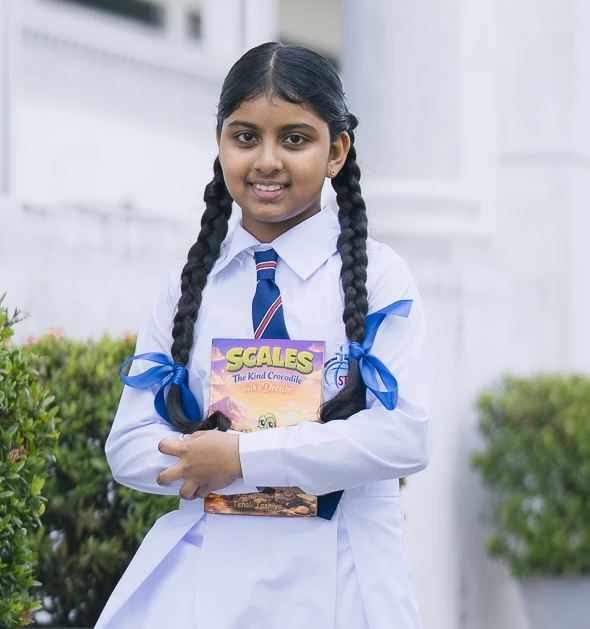
කතුවරයා හමුවන්න
සම්පූර්ණ ජීව දත්ත කියවන්නසිහිනය
“අරමුණක්? ඔයාට? ඔයා නිකම්ම කිඹුලෙක්නේ!”
ස්කේල්ස් විල අසල සිටින යාළුවන්ට තමන්ට සුපිරි වීරයෙකු වීමට අවශ්ය බව කියනවා. ඔවුන් හිනා වෙනවා. ඔහු කෙසේ හෝ උත්සාහ කිරීමට තීරණය කර, බෑගයක් සූදානම් කර, තමන්ගේම පියාසර යන්ත්රයක් හදාගන්නවා.
සුපිරි වීර පාසල
කිඹුලෙක් සුපිරි වීර පාසලට ඇතුළු වෙයි
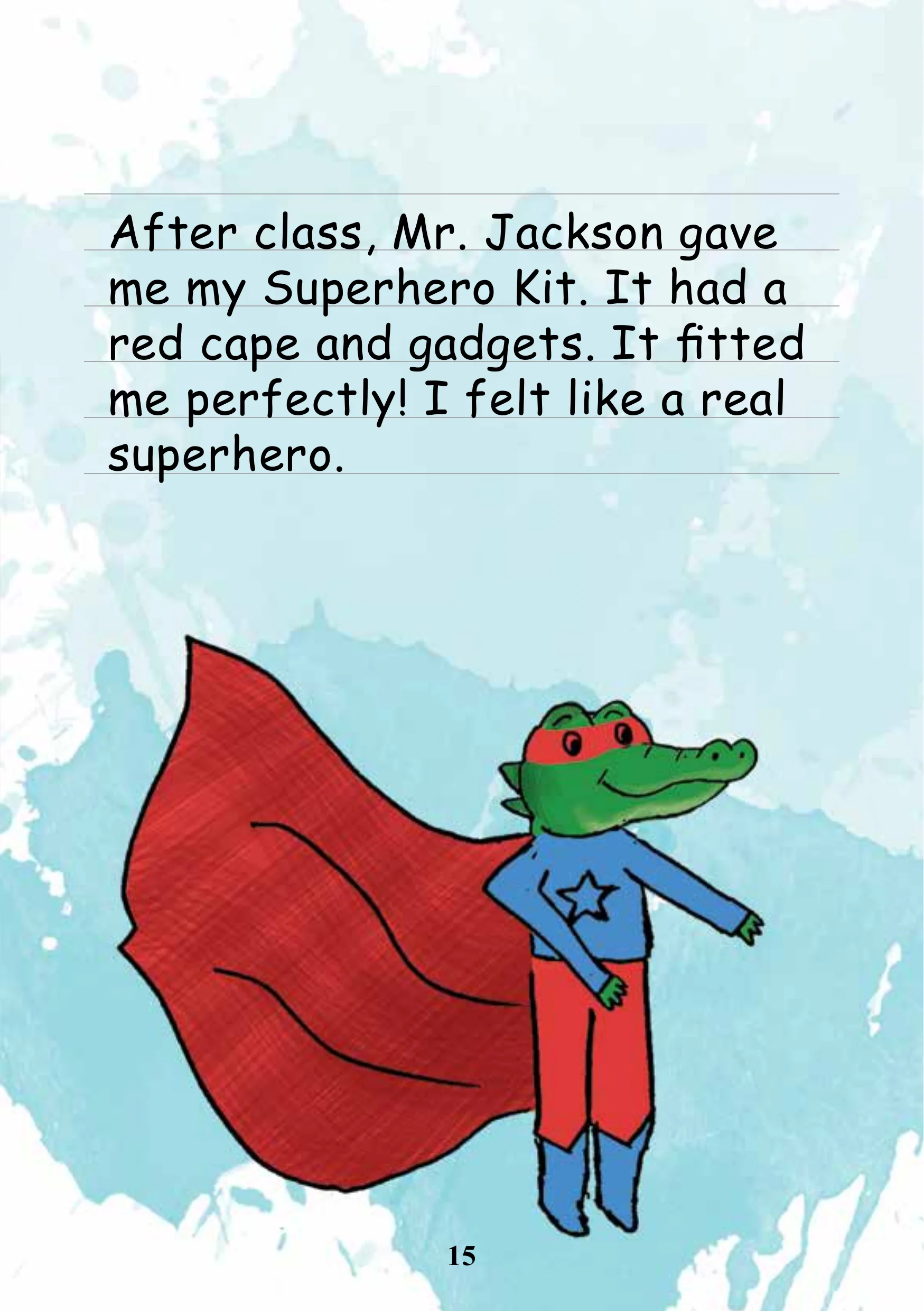
ස්කේල්ස් මවුනා කේයා වෙත පියාසර කර, කඳු මුදුනේ සුපිරි වීරයන්ගේ පාසලක් සොයාගන්නවා. ඔහු ඇතුළට එන විට පන්තියේ ළමයි කෑගැසුවත්, ඔහුගේ ගුරුවරයා වන මිස්ටර් ජැක්සන් ඔහුව පිළිගෙන කේප් එකක් සහ උපකරණ ලබා දෙනවා.
ගලවා ගැනීම
වනාන්තර ගින්නක් සහ කඩා වැටෙන ගොඩනැගිල්ලක සිර වූ පිරිමි ළමයෙක්
ස්කේල්ස් ගිනිගන්නා වනාන්තරයකින් බියට පත් සතුන් එකා බැගින් ආරක්ෂිත තැනකට ගෙන යනවා. පසුව නැවතත් විපතක් සිදු වූ විට ඔහු උදව් කිරීමට දිව යනවා—මේ වතාවේ එය ඔහුට තවත් සමීප සිදුවීමක්.
පොත් පිරිනැමීම
AngryPages පොත මිලදී ගන්න
‘ස්කේල්ස්, සිහිනයක් දුටු කරුණාවන්ත කිඹුලා’—ටෙනාලි ටෂියා විසින් රචනා කර චිත්රණය කළ සම්පූර්ණ ඩිජිටල් චිත්ර කතා පොත.
ඩිජිටල් පාඨක සංස්කරණය · $5.00 · එක් මිලදී ගැනීමක්, ස්ථිර ප්රවේශය.
පාඨක සමාලෝචන
5.0
2 පාඨක සමාලෝචන
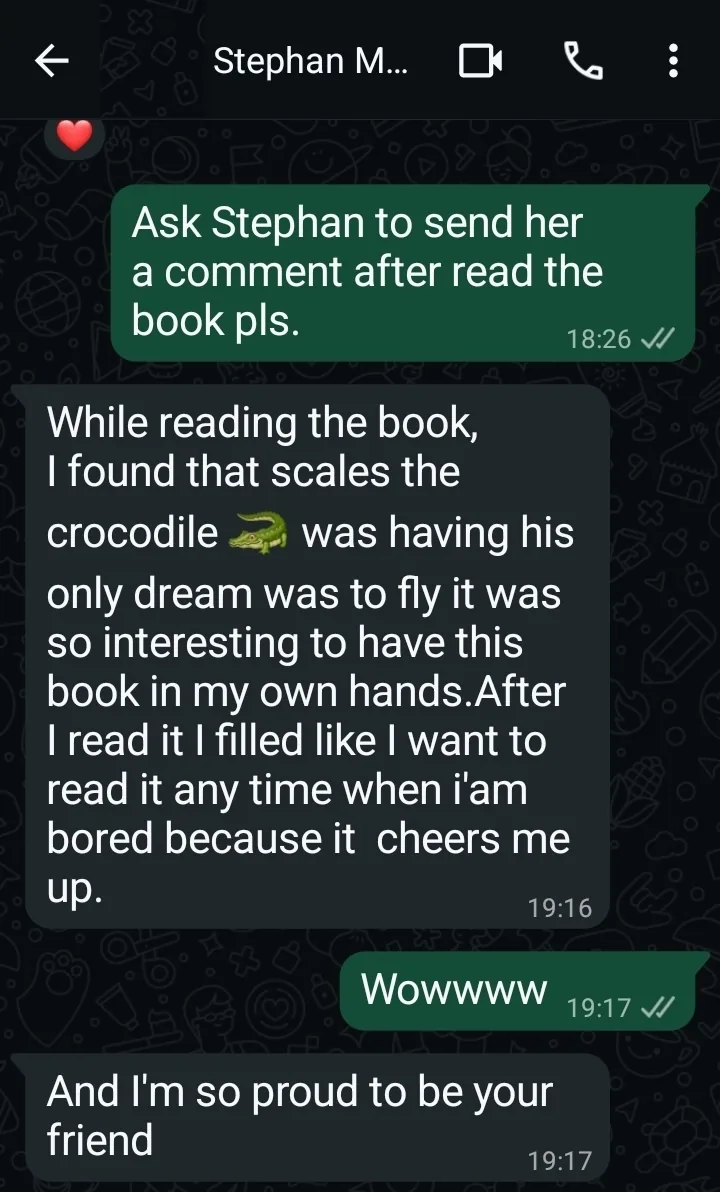
පාඨකයෙකු අප වෙත එවූ අදහසකි
පොත කියවද්දී Scales කිඹුලාගේ එකම සිහිනය පියාසර කිරීම බව මට දැනගන්න ලැබුණා. මේ පොත මගේම අතේ තබාගෙන කියවීම ඉතා රසවත් වුණා. කියවා අවසන් කළ පසු, මට කම්මැලි වෙලාවක ඕනෑම විටක නැවත කියවන්න හිතුණා, මොකද එය මගේ හිත සතුටු කරනවා.
මෙම පොත සමාලෝචනය කරන්න
මෙම පොත පිළිබඳ සංවාදයට එක්වන්න. කතුවරයාටත් පිවිසී සිටින පාඨකයන්ටත් මෙහි ලිවිය හැක.
සමාලෝචනයක් ලිවීමට පිවිසෙන්න-
A warm, kind-hearted children's book with a big heart. Scales is the hero kids need — gentle, brave, and full of dream. Written and illustrated by a 10-year-old, and it shows in the best way.
මෙම පොත ගැන
සටන් නොකරන, දඩයම් නොකරන කරුණාවන්ත කිඹුලෙකු superhero කෙනෙකු වීමට ගමනක් අරඹයි. වයස අවුරුදු 10ක Tenali Tashiya විසින් ලියා චිත්ර ඇඳ ඇත.