The robe deserves respect. It does not deserve immunity.
The robe deserves respect. It does not deserve immunity.
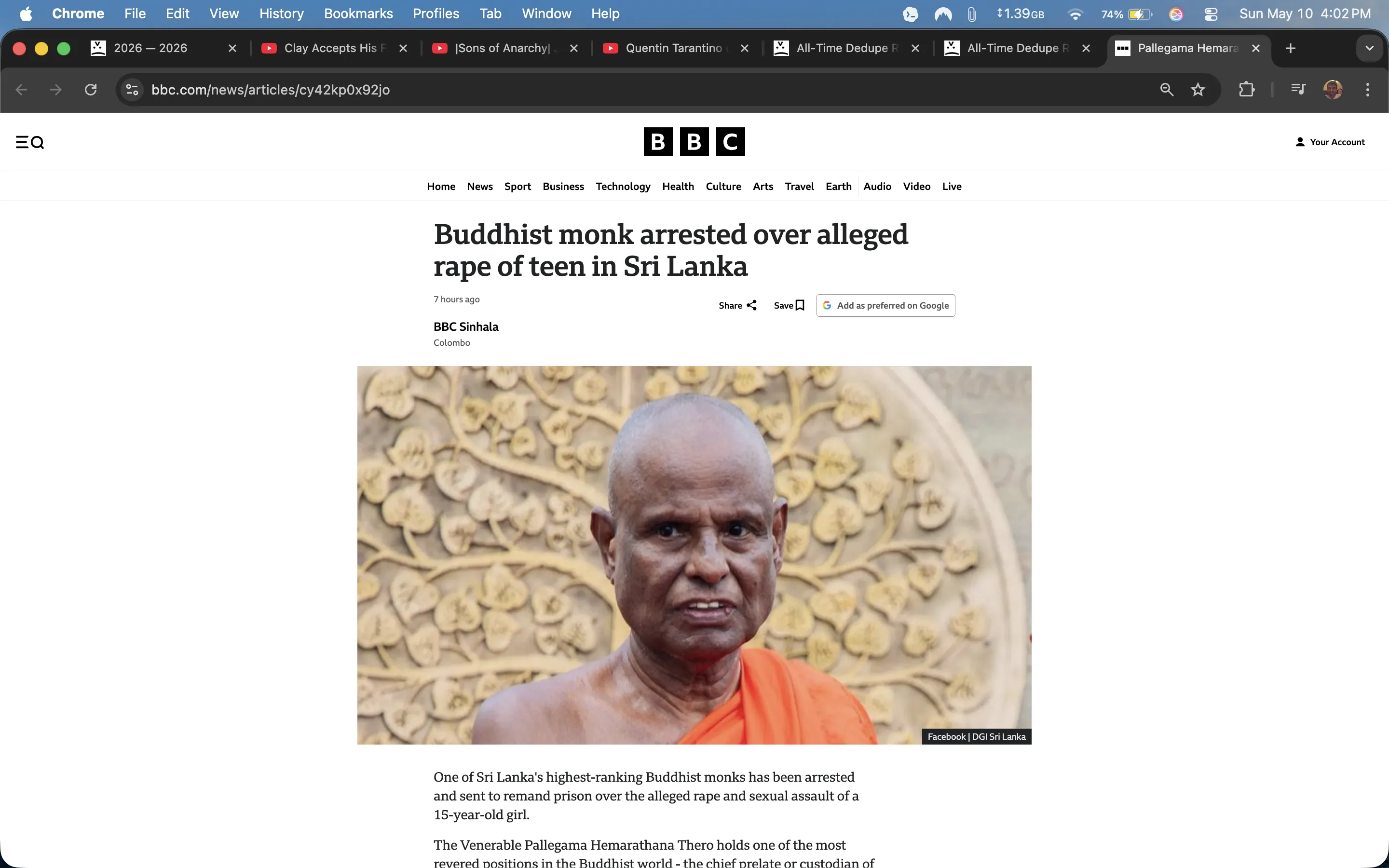
Ven. Pallegama Hemarathana Thero, the Atamasthanadhipathi and one of the most senior Buddhist figures connected to the sacred sites of Anuradhapura, has been arrested and remanded in connection with allegations involving the sexual abuse of a minor girl.
This must be said with discipline.
He is accused, not convicted. A court must decide guilt. Evidence must matter. Rumour must not become judgment. The public should not turn an allegation into a social-media execution.
But due process is not the same as silence.
Due process does not mean the powerful should be handled softly. It does not mean police should hesitate because the accused person is senior, famous, religiously important, politically connected, or socially untouchable. It does not mean a child’s voice becomes smaller because an adult’s title is large.
That is the real issue here.
Pallegama Hemarathana Thero is not being discussed because he is Buddhist. He is being discussed because he is a public religious authority accused in a child-protection case. Naming him is not an attack on Buddhism. Protecting a child is not an insult to the Sangha. Asking for equal law is not hatred of religion.
There are two dangerous reactions to a case like this.
One is to use it as an excuse to insult Buddhism, monks, or ordinary devotees. That is cheap, cruel, and intellectually lazy. No religion should be judged by allegation alone.
The other is to rush into institutional defence so quickly that the child disappears from the story. That is just as dangerous. Reverence must never become a wall around power. Respect must never become a weapon against victims. A sacred office must never become a private courtroom where the vulnerable are expected to stay quiet.
The centre of this story is not outrage. It is protection.