Dragon lore, ocean king
June 12, 2023 Lehan Edirisinghe
Admired an intricate dragon sculpture and wrote a compact explainer linking dragons to Buddhism, Shinto, and imperial symbolism. Noted the Dragon King of the Sea controlling tides and weather, plus the kurikara motif tied to Fudo Myoo
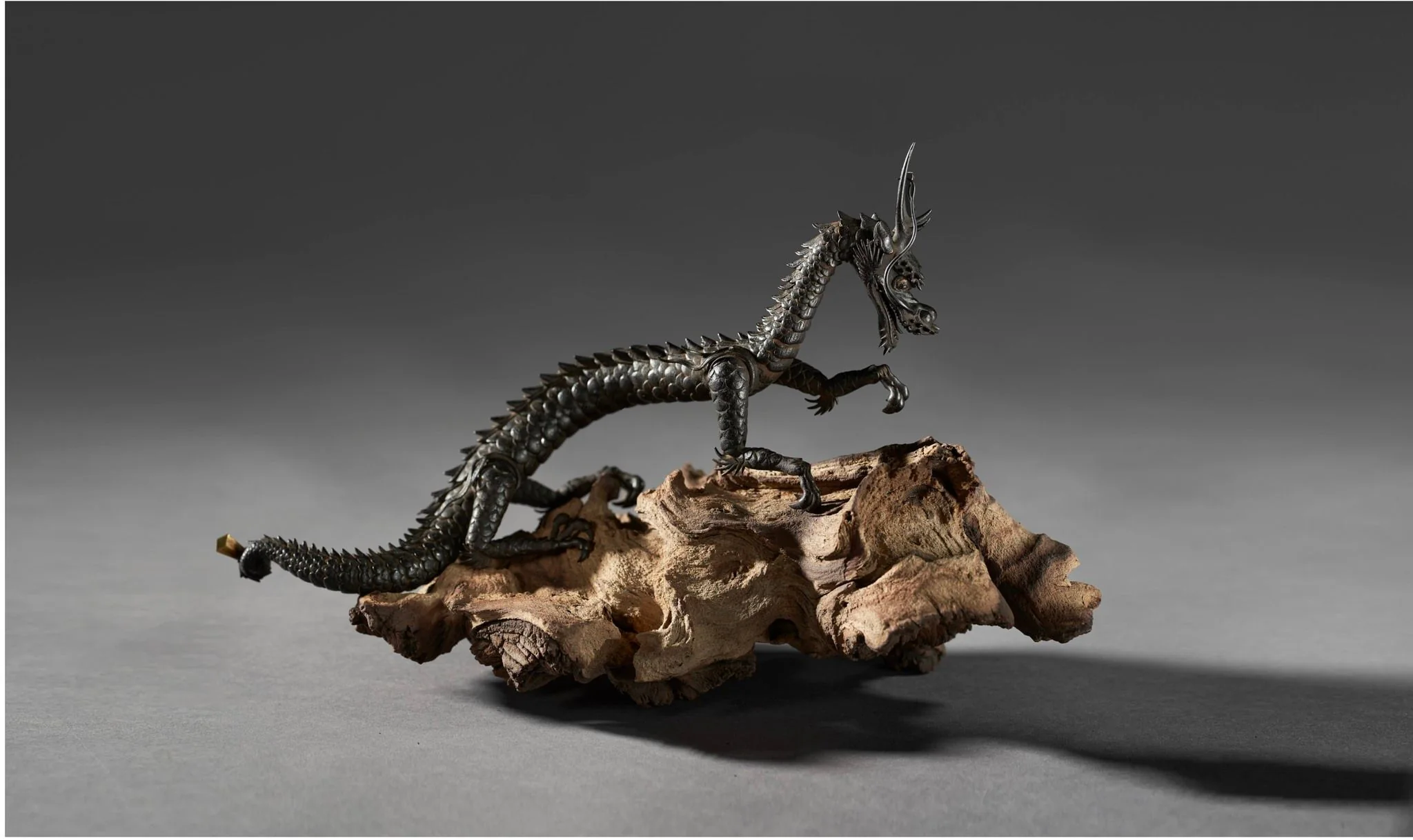
A Signed Edo-Period Articulated Iron Dragon
4:00 p.m. (b)
AN IRON ARTICULATED SCULPTURE OF A DRAGON
EDO PERIOD (19TH CENTURY), SIGNED KIYOHARU (MYOCHIN KIYOHARU)
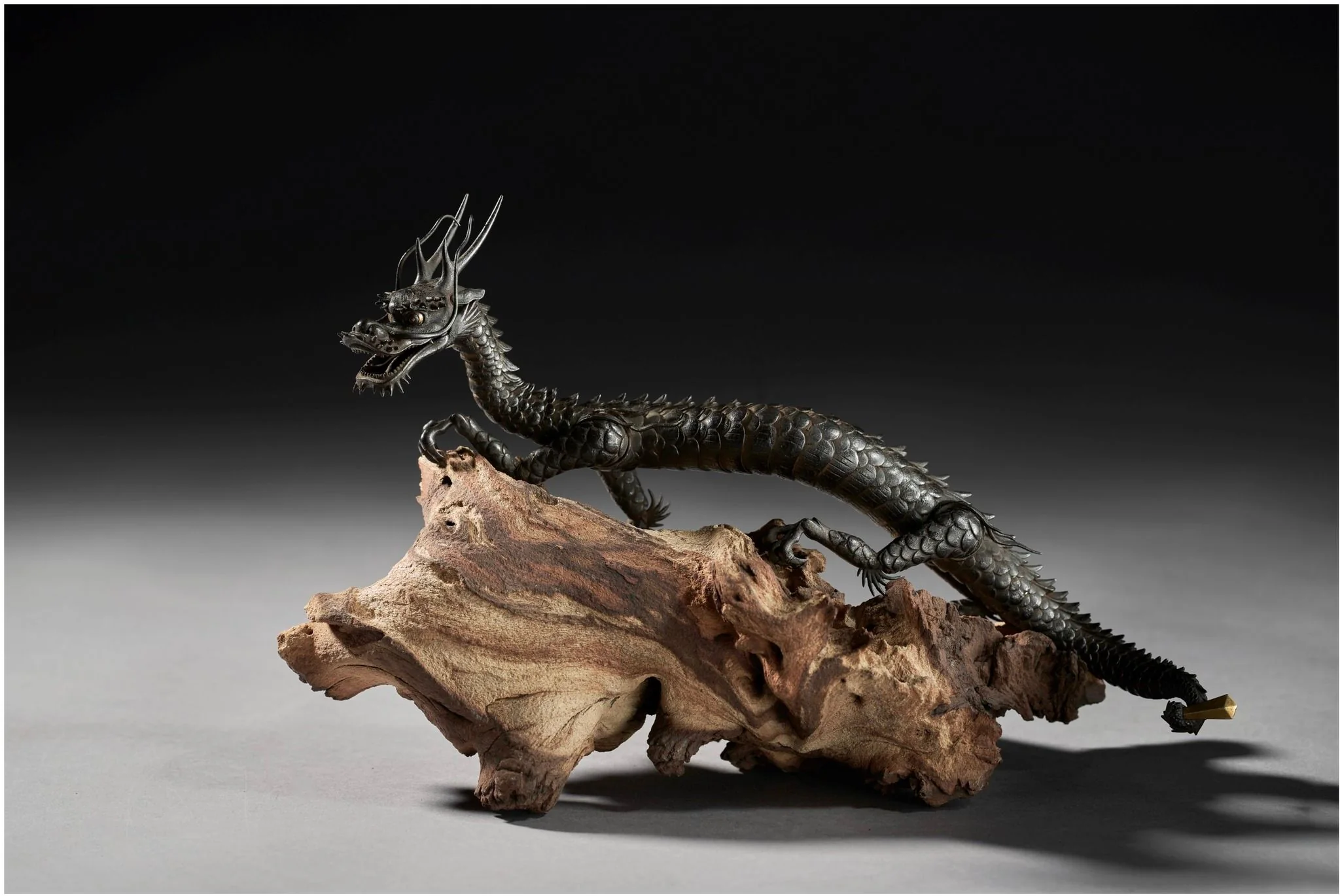
The Dragon’s Meaning in Japanese Religion and Imperial Symbolism
4:00 p.m. (c)
The dragon is associated with Buddhism, Shinto and a wealth of legends as a harbinger of fertility, bliss and imperial power.
The Dragon King of the Sea lives in a palace in the depth of the ocean from which he controls the weather and tides.
The dragon is often described to be the most powerful mythical creature.
In esoteric Buddhism, the dragon and double-edged sword, entwined together as the kurikara, symbolize the spiritual lasso and sword of the deity Fudo Myoo (Sanskrit, Acala "The Immovable One"), in Japanese especially revered by the samurai.
The dragon is an imperial symbol and foremost of the four divine animals.
For a similar work by the same artist in the collection of the British Museum, see Harada Kazutoshi, ed., Jizai Okimono / Articulated Iron Figures of Animals, Rokusho 11, special edition (2010), no. 6.
: )
Andrea Bocelli’s “Con Te Partirò” Live in 1997
2:00 a.m.
Andrea Bocelli - Con Te Partirò - Live From Piazza Dei Cavalieri, Italy / 1997