-
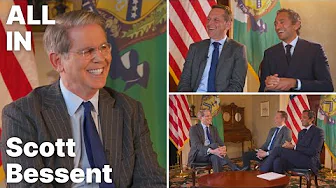
Bessent’s key role in the 1992 sterling trade was spotting that Britain could not defend the pound with high rates without crushing floating-rate mortgage borrowers. He said Druckenmiller wanted the whole fund in the bet, Soros pushed for more, and the fund gained 20%-plus in a day and another roughly 20% that year. (Bloomberg)
-
Bessent said Trump’s first question in a private Mar-a-Lago meeting was how to cut debt and deficits without causing a recession. His answer was gradual tightening toward roughly a 3–3.5% deficit-to-GDP ratio by 2028; he had approached Trump about joining the campaign around 18 months earlier after knowing the family for 30 years.
-
The administration’s economic plan, as Bessent described it, is a coordinated swap: government deleveraging paired with private-sector releveraging. Spending and federal payroll cuts are intended to coincide with financial deregulation, while tariffs, lower predictable taxes and cheaper energy are meant to draw investment and manufacturing back into the private economy. (U.S. Department of the Treasury)
-
Bank deregulation is one of Bessent’s most concrete levers for lowering borrowing costs and reviving Main Street credit. He said small banks provide 70% of agricultural loans and 40% of small-business loans, and estimated easing the supplementary leverage ratio could cut Treasury-bill yields 30–70 basis points; he separately backed Fed monetary-policy independence. (ABA Banking Journal)
-
Bessent said DOGE’s speed is deliberate because lobbying and other vested interests become harder to dislodge once they mobilize. He said he was “completely aligned” with Musk, expected contractor cuts to produce major savings, and cited Booz Allen’s roughly 98% government-revenue dependence while discussing entrenched federal contracting. (The Wall Street Journal)
-
The proposed U.S. sovereign wealth fund was being designed to mobilize federal assets, not revalue the government’s gold. Bessent cited a Ukraine economic deal, Fannie Mae and Freddie Mac stakes, energy leases and federal land as possible inputs, while Treasury studied global funds and aimed for returns above government borrowing costs. (U.S. Department of the Treasury)
-
Bessent said national security unexpectedly consumes 40–50% of his day at Treasury. He described CFIUS, sanctions, anti-money-laundering and OFAC work, and said Treasury had spent weeks targeting Houthi finances before U.S. missile strikes; contemporaneous Treasury actions targeted Houthi leaders and Iran-linked oil networks. (U.S. Department of the Treasury)
-
On affordability, Bessent’s most specific proposals focused on expanding housing supply and reducing insurance risk. He proposed more standardized factory-built housing, federal guidance across fragmented building codes, and a possible federal backstop above private California wildfire insurance conditioned on risk-reduction rules; he also said an affordability czar would target quick supply-chain fixes. (cbsnews.com)

All-In Podcast
-
Friedberg said researchers are nearing a form of IVF in which ordinary body cells could be reprogrammed into stem cells and then egg cells, potentially avoiding egg harvesting. He argued that this could make fertility treatment less invasive and extend viable egg production beyond the limits of a woman’s existing eggs.
-
Speakers argued that the biggest tariff risk is unpredictability: companies make five- and ten-year investments that cannot be reversed every time policy changes. They also warned that case-by-case exemptions would push firms toward political access rather than stable rules, concentrating influence around whoever controls the waivers.
-
Friedberg proposed turning the Social Security Trust Fund into a broad equity owner rather than leaving it concentrated in Treasuries. By his calculation, investing in the S&P 500 since 1971 would have produced roughly $15 trillion instead of $2.7 trillion, and a $500 billion recapitalization could make the fund self-sustaining under his return assumptions.
-
Chamath argued that housing affordability could improve through lower government borrowing costs and changes around Fannie Mae and Freddie Mac, and he floated a 30–40% home-price decline. His case was that current guarantees and financing structures help sustain prices that shut younger and middle-class buyers out.
-
Chamath said he first learned ownership at 14 or 15, while on welfare in Canada, after a startup executive taught him how equity worked and he bought a few shares. Decades later, he said a roughly $4 billion drawdown left him ashamed for years and forced him to separate net worth from self-worth.
-
The episode recounted that Warren Buffett, advising Arnold Schwarzenegger during his California gubernatorial run, recommended repealing rules that let inherited homes retain favorable property-tax treatment. According to the story, the proposal was so politically toxic that Buffett was gone from the advisory role two days later.
-
Schultz described YouTube as the mechanism that rebuilt his stand-up career: weekly clips sold out clubs and proved he could monetize audiences directly rather than depend on television. That leverage later let him buy back an Amazon special over two requested joke changes, self-release it, and accept a Netflix deal with no creative notes.
-
Before that breakthrough, Schultz said he was living on roughly $5–$10 a day, renting out his bedroom and sleeping in a closet while trying to make comedy work. He reached about $700 in the bank before paid gigs, touring and television finally began to sustain him.
-
Tariffs are already changing corporate behavior, even though the speakers disagreed on Trump’s underlying objective. Lonsdale said some of his companies were shifting more production to the United States, while Friedberg framed tariffs, lower income taxes and lower federal spending as a coordinated reindustrialization strategy.
-
Chamath warned that sweeping IRA repeal could directly undermine the AI power buildout. He cited renewables at about 91% of incremental U.S. generation, roughly 35,000 projects awaiting FERC approval, a five-year gas-turbine lead time and nuclear not arriving before 2035.
-
Lonsdale gave a striking example of how defense procurement can protect incumbents even when challengers claim better performance. He said an 8VC-backed system beat L3, Raytheon and Northrop by 9.5 times on drone range, yet an Air Force leader told him the requirements appeared shaped around Raytheon’s approach.
-
CoreWeave’s IPO case rests on whether its borrowed GPUs stay economically useful long enough to repay the debt. The company was described as having 250,000 Nvidia GPUs, $1.9 billion of 2024 revenue, nearly $8 billion of debt and 60% customer concentration in Microsoft, while hyperscalers are rapidly adding competing capacity.
-
Chamath’s most consequential market thesis was that Washington may tolerate weaker stocks if that helps lower long-term interest rates. His mechanism was falling asset values reducing consumption, investors rotating into Treasuries and yields falling before roughly $10 trillion of federal debt needs refinancing, with Bessent’s “Main Street” rhetoric offered as supporting context.
-
Sacks said the new policy deliberately separates a permanent Bitcoin reserve from a broader digital-asset stockpile. He said roughly 200,000 federal Bitcoin may remain pending an audit, reserve Bitcoin cannot be sold, additional purchases must be budget-neutral, and Treasury may rebalance non-Bitcoin holdings in the stockpile.
-
Sacks said he divested aggressively before joining the administration to eliminate crypto conflicts, not merely disclose them. He put total crypto sales around $200 million, about $85 million attributable to himself, said he exited crypto-related funds before day one, and described his White House role as unpaid.
-
The AI discussion argued that distribution is becoming more important than benchmark leadership as top models converge. Chamath said Claude 3.7 was strongest for coding and Grok 3 had become his consumer choice because it is embedded in X, while warning that model makers are increasingly overfitting benchmark tests.
February 28, 2025
Epstein Files Flop, State of the Market, Autonomous Robots, Trump's Gold Card, Friedberg on Jeopardy
-
Pam Bondi said the FBI gave her about 200 Epstein-related pages while its New York field office held thousands more, then ordered Kash Patel to obtain the full files. She also demanded an investigation and personnel-action report within 14 days, making this a chain-of-command dispute, not merely a disclosure story. (Department of Justice)
-
Figure moved its home-robot beta timetable forward by two years, targeting mid-to-late 2025, but the hosts saw physical dexterity as the real near-term bottleneck. The demo showed two robots sorting groceries unsupervised and coordinating semantically, while weak actuators still limited delicate manipulation.
-
Stripe’s report showed how unusually fast AI companies were monetizing: the top 100 reached $5 million in annualized revenue in 24 months versus 37 months for average SaaS. Chamath added that his 8090 venture reached $5 million in three months, while Stripe’s billing product was already about $500 million ARR.
-
Chamath said enterprise AI demand is being driven less by panic over missing the trend than by frustration with expensive legacy-software renewals. His firm sees the opportunity in replacing large software bills, but he said hallucinations remain a serious blocker in healthcare, finance, construction, power and aerospace.
-
Chamath turned notably bearish, saying tariffs, slower immigration and DOGE-style spending cuts could push second-half growth from roughly 2.5% to 1.5% and trigger a significant correction. He paired that forecast with a concrete financing concern: roughly $10 trillion of U.S. debt needed refinancing within six months.
-
The panel’s sharpest Gold Card insight concerned startup financing: Chamath predicted foreign founders would take $5 million of secondary liquidity in funding rounds to buy U.S. residency. They argued demand could range from tens of thousands upward depending heavily on how strictly existing KYC and anti-money-laundering rules applied. (Reuters)
-
David Friedberg deliberately sandbagged Celebrity Jeopardy’s practice round—answering incorrectly and pretending he could not buzz—before winning the televised game. In a remarkable coincidence, friends had quizzed him on African geography the night before, then he successfully went all-in on Mount Kilimanjaro.
-
Jeff Bezos explicitly narrowed The Washington Post’s opinion section around “personal liberties” and “free markets,” saying opposing views should be published elsewhere. Chamath interpreted the move as an attempt to influence ideas circulating around Washington’s political class, while criticizing the narrower range of permitted opinion. (washingtonpost.com)

-
Stripe has largely returned to its pre-pandemic operating model: most employees work from offices, with a meaningful remote cohort. John Collison said remote hiring expands the talent pool and helps dual-career couples when one partner cannot relocate.
-
Stripe’s own pre-COVID productivity data showed remote work was a poor fit for early-career employees, even though some remote workers are exceptionally productive. Collison warned against designing company policy around the worst 5%; the harder problem is giving inexperienced staff the mentoring they lose outside an office.
-
Jamie Dimon’s objection to remote work centers on diluted attention and lost apprenticeship, not merely where people sit. He said employees multitask through Zoom meetings and younger workers miss social exposure, idea exchange, and in-person contact that help them develop.
-
Dimon wants managers to assume they can remove about 10% of headcount and run better. He cited a wealth-management process requiring 14 committees as evidence that large organizations often create work, meetings, and approvals that do not need to exist.
-
Chamath Palihapitiya argued that enterprise software can create bureaucracy by turning flexible work into rigid, tool-defined roles and workflows. He pointed to JPMorgan’s roughly $16 billion annual IT spend, while explicitly speculating that much deeper staffing cuts might be possible if those systems were simplified.
-
Shopify’s Tobi Lütke used a zero-based approach to meetings, deleting recurring meetings company-wide instead of asking teams to trim them. John Collison said Shopify measured the aftermath and the meetings did not simply reappear; Stripe has not copied the tactic.
February 21, 2025
The Stablecoin Future, Milei's Memecoin, DOGE for the DoD, Grok 3, Why Stripe Stays Private
-
Stripe now processes more than $1 trillion a year and is expanding far beyond checkout into lending, card issuance, treasury and cross-border money movement. The Collisons said the deeper opportunity is that nearly every form of money movement is becoming software-controlled, making payments only the first layer.
-
Stripe’s stablecoin thesis is primarily international: cross-border treasury, remittances and dollar savings where local currencies are unstable. They contrasted the old eurodollar system’s roughly $1 million minimum with stablecoins letting someone in Ecuador hold about $10, and said Bridge is being built around that use case.
-
Stripe increasingly sees its real moat as a reputation network against fraud, not merely a payment rail. It has already seen the card in 93% of purchases, says businesses often lose more to fraud than transaction fees, and reported Stripe fraud metrics down 80% while industry fraud worsened.
-
Stripe’s pre-COVID productivity data found remote work worked poorly for early-career employees, even while some experienced remote workers were exceptionally productive. The Collisons therefore reject blanket return-to-office rules, favoring empirical, role-specific policies rather than designing around either bad anecdotes or ideological “shoulds.”
-
ARC Institute was built around the claim that grant bureaucracy is distorting basic science: surveyed researchers said 40% of their time went to grant overhead, and 79% would materially change their research if funding were freer. ARC instead gives investigators broad freedom to pursue their own research agendas.
-
Patrick Collison said ARC’s Evo 2 was trained unsupervised on nine trillion DNA base-pair tokens, with only one human genome, yet achieved state-of-the-art mutation-pathogenicity prediction. Its performance implies the model learned transferable biological structure across species rather than simply memorizing labeled human disease examples.
-
xAI’s Colossus build was less about abundant capital than extreme execution under a time constraint. The team reportedly concentrated 100,000 GPUs in an old Memphis factory, acquired roughly a third of America’s portable liquid-cooling capacity, and rewrote Tesla Powerpack firmware onsite to reach the needed power envelope.
-
Stripe is profitable on fully loaded GAAP net income and still sees no compelling reason to go public while private markets can supply capital and liquidity. The Collisons said their test is simple: choose the structure that best compounds value over a decade and lets them spend the marginal hour on customers, not markets.

February 14, 2025
JD Vance's AI Speech, Techno-Optimists vs Doomers, Tariffs, AI Court Cases with Naval Ravikant
-
Naval said AirChat failed as a social product, but he repaid outside investors, placed the team in new jobs, and is now building a harder hardware-software-network company. He said the lesson was to prefer technical risk—something difficult to build but clearly wanted—over market risk.
-
Naval traced his public “philosophy” period to AngelList’s most stressful years, when its original matching model stalled and the SEC challenged him as an unlicensed broker-dealer. He said he went to Washington to change the law, while using Twitter as “notes to self” about science, philosophy, money and survival.
-
Naval homeschools his children around agency rather than obedience: some math or programming, daily reading, then broad freedom guided through persuasion. He said his oldest can spend roughly nine hours on an iPad, and he would rather raise children who control their own lives than children shaped to his preferences.
-
David Sacks said he did not workshop JD Vance’s Paris AI speech and that Vance wrote it, or at least directed it, himself. Sacks summarized its governing line as American AI leadership, lighter regulation, ideological neutrality and worker-focused growth, paired with pressure on Europe to reduce regulatory barriers.
-
Naval said AI’s main danger is not the technology itself but concentrated control, because frontier training naturally favors centralized compute and a small number of firms. His preferred counterweight is openness: if companies train on the open web, he argued, their models should be open rather than privately enclosing the result.
-
The strongest employment claim was not that AI has proved mass job destruction, but that it is already compressing hours of knowledge work into minutes and increasing organizational throughput. Friedberg described that effect inside his company, while Naval said both AirChat and his new non-AI product could not exist without AI.
-
Naval argued that classical free-trade logic breaks down in industries with network effects, scale economies or strategic dependence, where subsidized foreign firms can become effectively unchallengeable. Friedberg added that renewed China trade retaliation could again require large US farm support, recalling more than $20 billion in first-term payments.
-
The copyright discussion moved toward a licensing-or-openness settlement: closed AI systems that ingest copyrighted material may face growing pressure to compensate rights holders. Calacanis disclosed that Microsoft is paying him $2,500 for three years to index his Harper Business book, while Naval argued open-web training should produce open models.

-
David Friedberg highlighted a VA study comparing roughly 215,000 GLP-1 users with 1.2 million untreated diabetics and about 600,000 patients on other diabetes drugs. He said the GLP-1 group showed lower risks across several conditions, including roughly 30% lower cardiac-arrest risk, while the main increases were gastrointestinal and related side effects.
-
Friedberg’s main takeaway was that GLP-1 drugs may do more than cause weight loss. He pointed to emerging evidence of direct biological effects—such as changes in inflammation, gene expression and cellular repair—and said researchers are beginning to see benefits in non-obese users that cannot be explained simply by losing fat.
-
Despite the promising data, Friedberg said he would not put his children on GLP-1s and would only consider them for himself or his wife. His hesitation centers on muscle and bone-density loss, which is why he wants to increase protein intake and establish a stronger weightlifting routine before deciding whether to take one.
-
Friedberg is deliberately trying exercise and higher protein first so he can separate their effects from any later GLP-1 treatment. He said he wants to build more muscle before adding the drug, rather than change both variables at once and lose the ability to tell what actually improved his health.
-
Chamath Palihapitiya said the modern health-optimization industry became so complicated that even having doctors in Los Angeles and San Francisco made his care worse. He spent heavily comparing competing protocols and concluded he would rather follow one simple, coherent plan than constantly reconcile advice from doctors, podcasters and supplement advocates.
-
Chamath’s intense focus on preventive health is personal: he said his father and his best friend both died from poor health. That history helps explain why he repeatedly experiments with monitoring, supplements and protocols even while acknowledging that the search for optimization can itself become obsessive.
-
The group saw simplicity—not just efficacy—as a major reason GLP-1s could keep expanding. They contrasted complicated lifestyle and supplement regimens with a drug that can reduce weight and potentially improve other health markers with little daily decision-making, especially as oral versions approach the market.

February 7, 2025
DOGE vs USAID, Crypto Framework, Google's $75B AI Spend, US Sovereign Wealth Fund, GLP-1s
-
USAID became DOGE’s first major target after the White House said agency leaders were trying to evade Trump’s January 21 foreign-aid pause. Jason Calacanis said Musk later described DOGE’s initial method as checking which agencies were violating executive orders most, with USAID ranking first.
-
Antonio Gracias said the Twitter takeover became the operating template for DOGE: freeze payments, see what breaks, then rebuild spending from zero. He recalled unused software, enormous food waste and roughly 80% staff cuts, while Twitter/X bank debt later traded near 98 cents on the dollar.
-
Gracias said federal spending is harder to audit than Twitter because agencies can request Treasury payments without the purchase-order reconciliation common in companies. He said his team initially struggled to trace the full money flow and described the system as lacking a controller-style function, while acknowledging his own understanding was incomplete.
-
David Sacks said all four congressional chairs overseeing crypto had jointly committed to legislation, with stablecoins first and market-structure rules next. He said passage was targeted within months, building on a previous House market-structure bill that received 71 Democratic votes before dying in the Senate.
-
Sacks said crypto founders told him meetings with Gary Gensler’s SEC often produced no compliance guidance but were followed by enforcement scrutiny. His proposed replacement is explicit rules distinguishing securities, commodities, currencies and collectibles, allowing legitimate projects to operate onshore under defined disclosure requirements.
-
The panel split over what a U.S. sovereign wealth fund should actually do. Chamath Palihapitiya and Gracias favored professionally managed strategic investment, while David Friedberg argued it should mainly monetize assets such as TikTok stakes, federal land or seized Bitcoin and return proceeds to Treasury.
-
Friedberg argued Google’s planned $75 billion 2025 capital program is a confidence signal rather than evidence of AI overspending. Using Google’s six-year depreciation and a 20% return target, he estimated it would need roughly $27 billion of additional annual operating profit for the investment to meet that hurdle.
-
Friedberg highlighted a large Veterans Affairs database study associating GLP-1 drugs with lower risks across several conditions, including roughly 30% lower cardiac-arrest risk, alongside more gastrointestinal problems. He still favored testing weightlifting and higher protein first because muscle and bone loss complicate the decision, while benefits beyond weight loss remain under study.
-
DeepSeek’s R1 materially narrowed perceptions of China’s AI lag, because it became the first widely released reasoning model after OpenAI’s o1. The speakers said industry estimates shifted from China trailing by roughly 6–12 months to perhaps 3–6 months after R1 matched a model OpenAI had released only months earlier.
-
The viral claim that DeepSeek built R1 for just $6 million badly confuses one training run with the total cost of creating the system. Even accepting the figure, the comparable American final-training costs were described as tens of millions, while billion-dollar estimates often include hardware, research, failed experiments and years of development.
-
DeepSeek was not a tiny laboratory working with almost no computing power. Semiconductor analyst Dylan Patel was cited estimating access to roughly 50,000 Nvidia Hopper GPUs—about 10,000 H100s, 10,000 H800s and 30,000 H20s—with the cluster’s hardware value alone estimated above $1 billion.
-
DeepSeek’s most consequential achievement may be technical efficiency rather than simply cheaper replication of Western models. The discussion highlighted its GRPO reinforcement-learning approach, which uses less memory than conventional PPO, and low-level PTX programming that bypassed much of Nvidia’s CUDA abstraction to extract more from constrained hardware.
-
Restrictions on Chinese access to top-end chips may have unintentionally encouraged engineering choices Western labs had little reason to pursue. The speakers argued that abundant capital and compute can reduce pressure to optimize, while DeepSeek’s constraints forced approaches that better-funded teams had not discovered or prioritized.
-
DeepSeek’s founder had accumulated substantial Nvidia hardware through his AI-driven hedge fund before later export restrictions tightened. The speakers stressed that known H100 and H800 holdings did not by themselves imply sanctions violations, while also acknowledging outsiders cannot reliably determine DeepSeek’s complete inventory.
-
If powerful models become rapidly cheaper and interchangeable, the durable economic value may migrate away from the model makers themselves. The discussion compared AI with electricity: enormous productivity gains could accrue chiefly to applications, users and businesses throughout the economy rather than to the companies producing the underlying intelligence.
January 31, 2025
DeepSeek Panic, US vs China, OpenAI $40B?, and Doge Delivers with Travis Kalanick and David Sacks
-
CloudKitchens is moving restaurant automation out of the lab and into five customer rollouts. Its Bowl Builder assembles, bags and locks customized meals after staff prep food in the morning, avoiding the two-to-three-month shutdowns Kalanick says make retrofitting human-designed fast-food kitchens uneconomic.
-
The episode’s biggest DeepSeek correction is that the famous $6 million figure was not its total development cost. Sachs said it covered a final training run and cited an estimate that DeepSeek plus its founder’s hedge fund controlled roughly 50,000 Hopper GPUs, a cluster costing more than $1 billion.
-
DeepSeek’s achievement was presented as real engineering plus likely use of OpenAI outputs, not simple copying. Sachs said everyone he consulted believed some distillation occurred; V3 sometimes identified itself as ChatGPT, while R1’s paper left the origin of about 800,000 reasoning samples unclear.
-
Kalanick’s Uber China experience convinced him China has moved from hyper-fast copying into genuine product leadership. Uber kept about 400 Chinese nationals in San Francisco and saw features copied within one or two weeks; he now says American delivery products often trail Chinese practices by three or four years.
-
Kalanick says he repeatedly refused Masayoshi Son’s money because he expected SoftBank to invest in rivals and reuse information learned through the investment process. He later reconsidered as SoftBank capital subsidized Uber’s competitors, making access to capital a strategic weapon whether a founder wanted the relationship or not.
-
Jason Calacanis said HarperCollins offered him $2,500 to license his book Angel to Microsoft for three years under a blanket AI deal. The payment reportedly ignored sales or title desirability, providing a rare concrete benchmark for how publishers were beginning to price broad AI-training rights.
-
Kalanick thinks electricity, not self-driving software, may become the bottleneck for autonomous ride-hailing. He said Waymo already feels routine and estimated that converting all California vehicle miles to electric ride-sharing would require roughly doubling state power capacity, making combustion-engine autonomous vehicles a plausible bridge.
-
After the Reagan National crash, an anonymous commercial pilot told Chamath that the airport is the “sketchiest” he flies into and requires constant alertness around helicopters. Wisk CEO Brian Yutko argued commercial aviation needs automated collision intervention and modern data links because current air-traffic-control communications still rely heavily on VHF radio.
-
Dalio’s historical case is stark: of roughly 750 currency-and-debt markets since 1700, only about 20% still exist, and every survivor has devalued. He uses that record to reject the idea that reserve-currency status makes the United States exempt from debt-cycle mechanics.
-
For Dalio, the key crisis signal is forced selling: bondholders dump existing debt, long rates rise despite easier short rates, and money weakens against hard assets. He says recent U.S. bonds, gold and Bitcoin behavior resembles that warning pattern, although the full crisis dynamic is not yet underway.
-
Dalio’s “3% solution” is to cut the federal deficit from an expected roughly 7.5% of GDP to 3%, an improvement of about $900 billion a year. He says doing it while the economy is strong matters because compounding interest makes delay increasingly expensive.
-
Dalio says governments ultimately have four debt-crisis levers: taxes, spending cuts, restructuring, or central-bank debt purchases. None is painless; monetization relieves the immediate funding squeeze by creating money but shifts losses to bondholders and savers through inflation and currency depreciation.
-
Dalio owns Bitcoin, but far less than gold; gold is his preferred monetary diversifier, while he also favors productive businesses. He notes central banks and sovereign funds have reduced bond exposure and accumulated gold, which he sees as internationally accepted and harder to target than digital assets.
-
Dalio treats the U.S.-China AI contest as strategic, not merely commercial: losing the technology race could mean losing military power. He says China trails in advanced chips but leads in many applications and manufacturing scale, predicting cheap chips embedded in goods and robotics.
-
Dalio does not expect AI productivity to repair the budget soon enough; job displacement and transition costs may arrive before the revenue gains. That creates a sequencing problem: government may face new support demands while already trying to shrink deficits, even if AI eventually expands output.
-
Friedberg says he spent inauguration weekend meeting many members of Congress and most of the new cabinet, and came away convinced the debt issue was not getting serious attention. That matters because Dalio’s proposed fix requires coordinated, near-term political commitment rather than relying on the Fed alone.
January 24, 2025
Trump's First Week: Inauguration Recap, Executive Actions, TikTok, Stargate + Sacks is Back!
-
Friedberg’s strongest Washington takeaway was that DOGE’s real obstacle is political incentives, not identifying waste. Officials and lawmakers are rewarded for bringing jobs and spending home—he cited Mitch McConnell pressing for a delayed $60 million Kentucky agriculture lab—so meaningful cuts collide directly with reelection incentives.
-
Thomas Laffont said TikTok’s breakthrough was simple: every uploaded post gets an audience before follower count matters. He described content being shown to one user and then progressively distributed according to engagement, and estimated the U.S. business could plausibly be worth about $100 billion despite its regulatory uncertainty.
-
Laffont said China stopped being the straightforward technology-investment opportunity his firm had exploited for two decades once technology became a national-security issue. U.S. and Chinese regulatory regimes changed, innovation and new listings slowed, and he described the Chinese policy environment as a “black box” whose ultimate motives he would not pretend to know.
-
As an OpenAI investor, Laffont argued that Stargate’s proposed $500 billion cost is less important than whether the infrastructure can earn an adequate return. If the economics work, he said, equity, debt and facility-level financing can supply the capital; OpenAI itself announced a four-year, $500 billion infrastructure plan led by OpenAI and SoftBank. (OpenAI)
-
The group identified electricity—not simply better chips—as a potential binding constraint on America’s AI ambitions. Laffont and Friedberg argued that China’s rapid power buildout and America’s long-stagnant nuclear expansion could overwhelm a U.S. chip advantage unless permitting accelerates and substantial new nuclear generation is built.
-
Chamath proposed that taxpayers should receive equity or royalties when government grants, land or permitting create large private gains. He cited Tesla’s $465 million federal loan and his own battery-materials company’s $150 million grant; Laffont agreed upside-sharing can make sense but warned that government ownership could distort competition by effectively choosing winners.
-
David Sacks joined directly from the White House and explained that he had been given formal responsibilities across crypto, AI and presidential science advice—but was still constrained by ethics onboarding. He would chair the digital-assets working group, help develop the AI action plan and co-chair PCAST, while saying he could listen but not yet fully shape policy. (The White House)
-
Laffont offered a revealing example of Broadcom CEO Hock Tan’s negotiating discipline: Tan allegedly received a price concession for retaining the Broadcom name, while the sellers forgot to negotiate the stock ticker. The combined company therefore kept Avago’s “AVGO” symbol—a tiny detail Laffont used to illustrate the mindset behind one of technology’s most successful acquisition machines.
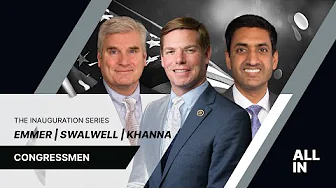
January 19, 2025
Inauguration Interviews: Trump's Talent, Dem Rebrand & more w/ Whip Emmer, Reps Swalwell & Khanna
-
House Majority Whip Tom Emmer said Republicans had privately assembled possible savings and offsets he described as reaching $5–$7 trillion on a ten-year horizon. He outlined an aggressive reconciliation schedule culminating, if everything held, in a bill reaching Trump by Memorial Day.
-
Emmer said only about 40% of House Republicans would simply follow Speaker Mike Johnson, leaving roughly 60% who had to be actively brought into the process. His whip operation privately mixed hard-right and swing-district members so each could explain what it could and could not accept.
-
Emmer said one Social Security idea under discussion was a voluntary, federally constrained private option for younger entrants, loosely modeled on Australia’s superannuation system. He simultaneously stressed honoring existing promises and Trump’s pledge not to cut Social Security, Medicare, or Medicaid.
-
Emmer said he had “no problem” with Trump launching a meme coin immediately before taking office, despite the hosts raising ownership and influence risks. Jason Calacanis argued buyers should know who controlled the coins and warned that foreign adversaries could potentially use purchases to seek influence.
-
Eric Swalwell said Democrats had developed a “purity” problem: voters felt they had to check ideological boxes, while Republicans welcomed people who agreed only partly with Trump. He also called Mark Cuban one of the party’s best thought leaders and said he personally consults Cuban frequently.
-
Swalwell said he opposed the TikTok ban because he had not seen evidence convincing him that TikTok itself posed the asserted national-security threat. He said Intelligence Committee ranking Democrat Jim Himes, who had Gang of Eight access, also opposed the ban, which influenced Swalwell’s judgment.
-
Ro Khanna said he personally asked Bob Iger about running for mayor of Los Angeles but would not disclose what Iger told him privately. Khanna later said Los Angeles needed a new mayor and that he could support someone like Iger.
-
Khanna said 1.3 million people signed his petition to keep TikTok operating, including creators who depend on it for income. Instead of banning the platform, he proposed criminalizing foreign-government interference in recommendation algorithms and restricting American data from reaching the Chinese government.
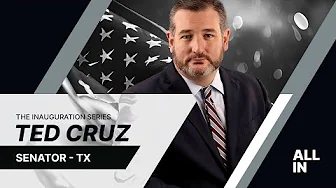
-
Ted Cruz said Elon Musk was already calling him periodically for help understanding how the federal government works, giving Cruz a direct advisory channel into DOGE. Cruz backed the project but warned that real cuts anger beneficiaries and ultimately require Trump himself to embrace spending restraint.
-
Cruz said White House officials once sent him onto Air Force One to persuade Trump not to enlarge COVID stimulus checks, but he failed. According to Cruz, Trump brushed him off with the argument that “no one ever lost an election by spending too much money,” illustrating why Cruz doubts fiscal restraint comes naturally to him.
-
Cruz said serious spending cuts face a bipartisan congressional obstacle, with essentially all Democrats and roughly half of Republicans supporting major spending bills. He estimated only about 20 senators regularly oppose trillion-dollar packages and said meaningful restraint therefore requires unusually strong presidential pressure.
-
Cruz treated acquiring Greenland as a serious policy project, not Trump trolling, and said he had personally raised it with Denmark’s ambassador. When the ambassador told him Greenland was not for sale, Cruz replied that “everything’s for sale”; he also discussed the idea with incoming Denmark ambassador Ken Howery and planned to push negotiations from the Senate.
-
Cruz said Trump spent part of a two-and-a-half-hour breakfast with Republican senators, the day before inauguration, discussing the Panama Canal and alleged disadvantages facing American shipping. Cruz interpreted Trump’s posture less as a realistic attempt to retake the canal than as leverage for lower U.S. transit costs and reduced Chinese influence.
-
Cruz said Matt Gaetz’s attorney-general nomination was withdrawn because multiple Republican senators were prepared to vote against him. He regarded Gaetz as the major confirmation failure but expected the remaining Trump nominees to survive, with figures such as Marco Rubio receiving substantial Democratic support.
-
Cruz said he discussed with Robert F. Kennedy Jr. a proposal that could dramatically shorten U.S. drug and medical-device approvals. His “RESULTS Act” would give the FDA 60 days to approve products already cleared in Canada, Japan or the EU, after which approval would become automatic; Cruz said Kennedy agreed with the approach.
-
Chamath Palihapitiya disclosed that he donated to Cruz’s first Senate campaign in 2012 even though he considered himself a Democratic donor at the time. He said the decision followed an encounter around a Peter Thiel event where Cruz impressed a largely Democratic group, showing their relationship predates Palihapitiya’s later political realignment.

-
Mark says his political break began with stories he initially dismissed as implausible later appearing in mainstream reporting, then hardened after he rewatched Trump’s Charlottesville remarks in 2024. He concluded he should rely more on primary sources and original speeches than on media framing.
-
The practical turning point was personal: Mark’s chief of staff of nine years left in April 2024, removing the person who routinely stopped him from posting political opinions. He began tweeting more freely, found a new techno-optimist audience, and publicly backed Trump two days before the election after his daughters urged him to say what he believed.
-
Reid Hoffman was already receiving worried messages that Mark was “becoming a Trumper,” but he did not treat the disagreement as a rupture. He opened a FaceTime call with “I’m team Mark,” then spent four hours at dinner trying to understand Mark’s principles and persuade him otherwise.
-
One host said his Philippines-based assistant from Athena costs about $3,000 a month and is the most effective administrative support he has ever had. His larger point was that chiefs of staff can become opinionated gatekeepers, filtering a founder’s real views instead of merely handling logistics.
-
Mark now sees direct communication as a strategic defense against being defined by press, competitors, or internal handlers. He recalls Reid warning that unless he chose a simple public narrative, others would create one for him, and credits social media and long-form podcasts with making that constraint easier to escape.
January 17, 2025
Red-pilled Billionaires, LA Fire Update, Newsom's Price Caps, TikTok Ban, Jobless MBAs
-
Mark Pincus said he wrote Napster’s first $100,000 check, helped fund Friendster, and joined the first financing rounds of Facebook and Twitter. He and Reid Hoffman also bought SixDegrees patents for $750,000 to prevent their use against the industry; Pincus says he still owns half, with Microsoft owning the rest.
-
Pincus said he and Reid Hoffman both met Biden and donated in December 2023, before Pincus publicly backed Trump two days before the 2024 election. Despite their political split, Hoffman opened a FaceTime call with “I’m Team Mark,” then spent four hours over dinner trying to understand and persuade him.
-
The central Los Angeles rebuild dispute was the separate price cap on rebuilding goods and services, not merely the 90-day restriction on unsolicited below-market property offers. Friedberg argued the cap could deter scarce contractors from relocating to Los Angeles, while Chamath acknowledged that disincentive even as he defended temporary protections for distressed homeowners.
-
The episode’s sharpest reconstruction example was the Northridge earthquake: I-10 was rebuilt in 66 days, with contractors offered $200,000 for each day they beat a 144-day deadline. The hosts used it to argue that disaster recovery can be accelerated dramatically when regulation, deadlines and financial incentives are aligned.
-
CoreLogic figures cited on the show put roughly 1.26 million California homes at moderate-or-greater wildfire risk, representing about $750 billion in value. Comparable exposure cited for Colorado, Texas, Oregon and Arizona framed the Los Angeles fires as part of a much larger western property-risk problem.
-
Pincus argued that banning TikTok outright could push some of its roughly 170 million American users toward other Chinese apps rather than solve the underlying problem. He favored American divestiture, while Chamath highlighted ByteDance’s Monolith recommendation paper as evidence of unusually sophisticated engineering inside the company.
-
Pincus argued elite MBAs were built as a career “risk-off” trade just as the safest corporate paths are shrinking. Chamath connected that shift to AI, arguing that middle managers built around enterprise-software workflows may be disrupted before frontline engineers or designers, leaving graduates trained for roles companies increasingly need fewer of.
-
Pincus described an unverified encounter with a former Defense Department contractor who claimed certain war-game conditions repeatedly “summoned” UAP-like drones and sought $1.5 million to recreate the phenomenon on film. Pincus did not fund it; after meetings involving him and Reid Hoffman, the contractor stopped responding, leaving the claim unsupported.

-
California’s wildfire-insurance system emerged as the episode’s clearest structural problem. Friedberg argued that rate controls pushed carriers out, citing roughly 1,600 State Farm non-renewals in Pacific Palisades and a FAIR Plan carrying billions in concentrated exposure that could ultimately shift losses toward taxpayers. (Los Angeles Times)
-
The wildfire discussion became personal when Friedberg’s parents were ordered to evacuate his childhood home as the Kenneth Fire approached. He left the recording to call them, then returned describing his mother packing jewelry while he repeatedly urged her to save the family photographs.
-
The panel explicitly rejected DEI as the cause of the Los Angeles fires, despite criticizing government priorities elsewhere. Their discussion instead centered on extreme dryness, Santa Ana winds, preparedness, land management, building standards and insurance, with Chamath arguing that similar fires in 2018 made the danger foreseeable.
-
Meta’s retreat from third-party fact-checking was interpreted mainly as adaptation to a changed political environment, not a proven ideological conversion by Zuckerberg. Chamath called it shareholder-value maximization, while Calacanis argued the timing after Trump’s victory and threats toward Zuckerberg reflected political expediency. (About Facebook)
-
Cyan Banister disclosed that she discovered Thumbtack, Density and Uber through Jason Calacanis’s early startup events. The episode also places her among early investors in SpaceX, Anduril, Postmates and Niantic, illustrating how a small Silicon Valley network produced several unusually valuable deals.
-
Banister said AI is making seed investing harder because dozens of startups can now attack the same idea almost simultaneously. She is reconsidering the old rule against backing competitors and has favored underlying infrastructure such as compute, power and lithography while application markets remain difficult to distinguish.
-
Nvidia’s $3,000 Project DIGITS was treated as potentially more important for local industrial AI than ordinary desktop computing. Friedberg argued that low-latency edge compute could power warehouse robots, machine vision, biotech research, cars and farm equipment without constantly sending data to distant cloud servers. (NVIDIA Newsroom)
-
Years earlier, Calacanis, Chamath and Banister filmed an approximately $500,000 NBC accelerator pilot connected to Harvey Weinstein’s production operation. Producers later approached Chamath and Banister about proceeding without Calacanis; they declined, and the entire project disappeared after the Weinstein scandal erupted.

-
Chamath’s strongest payments thesis was that dollar stablecoins had already crossed from crypto speculation into business infrastructure. He cited roughly 1.1 billion Q2 2024 transactions worth $8.5 trillion—more than double Visa’s volume—and said switching his own payment rails could save hundreds of thousands of dollars.
-
Freeberg’s “year of the robot” call rested on hardware already cheap enough to deploy, not distant prototypes. His group had just ordered China’s Unitree Go2, a $1,600 API-enabled robot they wanted on test farms for imaging and data collection; the humanoid G1 was discussed at about $16,000.
-
Gavin Baker argued that reasoning AI will increasingly reward companies rich enough to own compute, widening the gap between large and small businesses. He imagined a firm spending $1 million to let an AI reason for six weeks, and separately argued that renters of cloud compute cannot beat providers’ internal services on cost.
-
Baker’s clearest picks-and-shovels AI bet was high-bandwidth memory, which he viewed as a tighter bottleneck than the headline GPU makers. He said HBM represented more GPU cost than TSMC fabrication, named Hynix and Micron as the two current producers, and noted the category had been sold out for two years.
-
Gavin and Chamath converged on enterprise application software as a major AI casualty because agents attack both labor and software economics. Chamath said his roughly 30-person engineering team did the work of 300 and could profitably bid $10 against a legacy vendor’s $100 because AI-native costs were about an order of magnitude lower.
-
The autonomy discussion contained one unusually concrete adoption signal: Waymo was said to have reached 22% of San Francisco rides only 15 months after launch, matching Lyft. The investor making the case expected major financing, an IPO or tie-up as expansion broadened, while explicitly disclosing significant exposure to almost all the companies discussed.
-
Chamath treated a major-bank failure as unlikely but serious enough to justify buying credit-default-swap protection. His rationale was that roughly $70 trillion of combined government, corporate and mortgage debt makes 5% rates economically much heavier than they look; he described the hedge as usually losing but potentially paying 100–1,000 times.
-
Jason Calacanis’s most persuasive AI demo was a research task that assembled a bank-risk report from 162 websites using a $20 product. He compared the output to weeks of expensive consulting work, while also admitting he was not qualified to judge whether its conclusions were correct.

-
David Sacks said he recruited Chamath Palihapitiya to co-host a June 6 Trump fundraiser after being told they needed at least $5 million, with the pair prepared to cover any shortfall themselves. Chamath had never supported Republicans before; Sacks said commitments ultimately reached $13 million.
-
Palantir’s 2024 surge was tied not just to AI enthusiasm but to a customer-heavy operating model that had previously been mocked. Sacks cited a roughly fivefold stock rise from $16 to $76 and a market value surpassing Lockheed Martin, while Chamath emphasized how deeply Palantir worked alongside customers.
-
Two separate arguments pointed toward cheaper AI and greater pressure on OpenAI: Meta can subsidize models with advertising, while competitors controlling proprietary data and enormous compute may gain an edge. Aaron Levie highlighted Meta’s ability to give AI away; Chamath specifically cited X’s data and Musk’s massive Nvidia purchases.
-
Friedberg’s friends disclosed that none of them had managed to invest in his agriculture startup Ohalo except Founders Fund. They complained that Friedberg offers them opportunities only after a financing round closes and a new valuation has been established, an unusually candid glimpse into allocation even inside a close billionaire-investor circle.
-
The group sees Anduril benefiting from a possible reshaping of U.S. defense procurement, particularly as people connected to the company move closer to the incoming administration. Jason Calacanis linked Boeing’s troubles, China’s military development and pressure for more merit-based purchasing to his view that Anduril could become a major defense incumbent.
-
Chamath described MicroStrategy as essentially a highly leveraged Bitcoin investment vehicle under Michael Saylor. He said Saylor is focused on the company’s Bitcoin position rather than daily operations and has been borrowing at extremely low cost to amplify its exposure, producing extraordinary returns while obviously increasing risk.
-
The friendship behind All-In has come much closer to breaking than its public chemistry suggests. Sacks said he had become so annoyed with Jason Calacanis that he questioned continuing, while Friedberg separately admitted considering quitting many times because he disliked Calacanis; both nevertheless said the friendship had become deeply important to them.

-
Chamath Palihapitiya said SpaceX already uses stablecoins to move Starlink revenue out of smaller foreign markets without taking wire or currency-exchange friction. He argued that the same rails could eventually challenge card networks charging roughly 3%, making payments—not speculative tokens—the clearest near-term crypto use case.
-
The episode framed DOGE’s first real source of power as public pressure rather than formal government authority. Aaron Levie said Musk and Ramaswamy demonstrated that exposing disputed provisions online could make congressional support uncomfortable, while AI tools now let ordinary readers digest enormous bills far faster than before.
-
Levie described a government rule that forced one unnamed agency to use contractors costing roughly 2.5 times what comparable employees would cost. He said the arrangement also reduced accountability, offering a concrete example of how procurement rules can increase spending while producing worse operational control.
-
OpenAI’s latest financing created a major structural deadline: the episode says its $6.6 billion round at a $157 billion valuation requires a for-profit conversion within two years or investors can seek their money back. Musk is challenging the conversion in court, while Meta separately asked California’s attorney general to oppose it.
-
Palihapitiya and Levie expect foundation models to become increasingly interchangeable, with companies routing different tasks across several providers instead of committing to one. Levie argued that research spreads rapidly and open-source models cap pricing, eventually pushing token economics toward compute cost plus a modest margin.
-
Their deeper disagreement was over whether AI destroys the existing software market or expands it into work previously performed by people. Palihapitiya predicted today’s roughly $5 trillion software-and-IT economy could shrink toward $500 billion; Levie countered that AI agents could absorb service budgets and create entirely new software categories.
-
Friedberg said Ohalo already trained non-programmers with Cursor and ChatGPT to build internal software, but deploying it safely remains the harder problem. The group agreed that production integration, permissions, security, testing and regulatory approval—not generating interfaces or code—remain major barriers to companies replacing established enterprise systems themselves.
-
Google emerged as the episode’s strongest competitive threat to OpenAI because its AI progress now combines models, infrastructure, browser control and visual data. Friedberg argued Google’s long-built infrastructure and data advantages are compounding, while Levie said the company has shifted from protecting its existing business to launching aggressively because losing the AI race became the greater risk.

-
Rabois contrasted Khosla Ventures with Founders Fund: Khosla invests mostly at seed or Series A and helps build companies, while Founders Fund usually enters later and expects founders to run independently. He said almost every successful Founders Fund investment across eight funds entered at valuations above $500 million.
-
His ideal investment is a founder with only a deck, no product and no metrics, because he believes founder judgment matters most before data exists. When consulting experts, he asks only what makes the idea “metaphysically impossible”; absent a concrete constraint, he ignores the objections and invests.
-
Rabois said he would stay in venture because a two-to-five-year government stint could permanently damage his network, even as his husband Jacob Helberg was nominated as a State Department undersecretary. From his limited time with Trump, Rabois said he had watched him solicit views individually around a roughly 28-person dinner table before deciding. (The American Presidency Project)
-
Google’s Willow milestone was not the “10 septillion years” benchmark but error correction improving as qubit arrays grew from 3×3 to 5×5 to 7×7, a prerequisite for useful logical qubits. Friedberg saw cryptographic risk within years, while Rabois argued commercial quantum computing could still be a decade away.
-
The panel’s strongest Apple diagnosis was organizational: vertical integration still creates a formidable moat, but quality can decay when elite “taste” disappears and the company also resists data-driven UX measurement. Rabois argued that without Jobs/Ive-level judgment, Apple lacks the analytical backstop Meta or Google would use to catch obvious failures.
-
Rabois’s strongest TikTok case was about data access, not proven feed manipulation: he cited ByteDance’s 2022 misuse of journalists’ data and acknowledged he did not know whether TikTok’s content was being manipulated. His claim that TikTok might contain a Pegasus-like spying backdoor was explicitly an inference from congressional behavior, not public evidence. (Reuters)
-
Friedberg argued the venture exit drought is mainly a valuation-overhang problem, not a lack of public-market demand: investors who funded 2021–23 rounds resist IPOs that would crystallize 60–70% losses. Rabois agreed and added that billion-dollar venture funds generally need IPOs, because ordinary acquisitions are too small to return them.
-
Rabois said Stripe’s founders invert the normal IPO question: instead of asking why they should stay private, they ask what going public would actually give them. He believes they have recreated many public-company advantages privately, but public stock would still provide superior acquisition currency and strategic flexibility.
December 6, 2024
New SEC Chair, Bitcoin, xAI Supercomputer, UnitedHealth CEO murder, with Gavin Baker & Joe Lonsdale
-
David Sacks was named Trump’s White House AI and crypto czar, giving an All-In co-host direct influence over two industries the podcast regularly covers. Trump’s announcement said Sacks would guide AI and cryptocurrency policy and lead the President’s Council of Advisors on Science and Technology.
-
xAI’s Colossus reportedly linked more than 100,000 Nvidia GPUs into one coherent training cluster, far beyond the roughly 30,000-GPU limit many engineers had assumed. Investor Gavin Baker called Grok 3 the first meaningful test of whether training-scale gains were stalling, while disclosing that his firm owns xAI.
-
Baker argued that AI already has measurable economic returns, especially where it replaces labor rather than merely adding software features. He said some foundation-model “wrappers” rapidly reached profitability and estimated comparable startups now employ roughly 50% fewer people than three years earlier.
-
Friedberg said non-programmers at his company used Cursor to build and deploy working internal applications during a hackathon. He estimated AI-assisted development had improved from roughly 60% complete to 70–80% in two months, with debugging and production work still requiring humans.
-
Joe Lonsdale expects defense-tech consolidation around roughly seven to ten new major contractors rather than hundreds of lasting startups. He said about 95% of current defense spending still goes toward legacy systems, while disclosing that he founded three and backed three of what he described as nine defense-tech unicorns.
-
Baker warned that MicroStrategy’s debt-funded Bitcoin strategy eventually collides with the earning power of its underlying business. He estimated roughly $75 million in convertible-note interest against about $400 million of company revenue, arguing that heavy overcollateralization would ultimately destroy the strategy’s apparent “magic money” economics.
-
The sharpest regulatory disagreement concerned whether wealth should determine who may invest in private funds. Atkins had questioned a proposed $2.5 million threshold; Baker and Lonsdale favored broader access with stronger safeguards, while Friedberg warned that private markets’ weaker disclosure could expose ordinary investors to serious fraud.
-
Friedberg framed electricity generation—not merely chips—as a central constraint on American AI, manufacturing and strategic competitiveness. He cited projections of U.S. capacity rising from roughly one to two terawatts while China rises from about two to eight, and argued that accelerated nuclear construction should be a national priority.
-
Musk and Ramaswamy’s DOGE strategy was framed as an 18-month attempt to bypass congressional gridlock, not wait for new legislation. The plan discussed combines executive action, court rulings, procurement audits, temporary payment suspensions and scrutiny of roughly $500 billion in spending not specifically authorized by Congress.
-
The hosts thought DOGE’s most achievable early victory was radical transparency rather than abolishing entire federal departments. They proposed publicly exposing waste, auditing payments and using leaderboards to reward savings, while Sacks explicitly rejected Milton Friedman–scale expectations and argued that merely bending federal finances toward sustainability would matter.
-
Musk’s political machinery was presented as a potential enforcement arm for DOGE inside the Republican Party. Chamath proposed combining public transparency with a well-funded PAC and primary challengers against resistant incumbents, while Sacks argued that old-guard Republicans protecting existing arrangements could prove a larger obstacle than Democrats.
-
The group disagreed over whether DOGE should first build public consensus or simply exploit its short political window and act. Calacanis wanted obvious waste targeted first and savings visibly connected to ordinary taxpayers; Chamath and Sacks argued opposition was inevitable and implementation should not be constrained by attempts to satisfy everyone.
-
The Ukraine discussion centered on Biden’s late-term decision allowing U.S.-supplied long-range weapons to strike inside Russia and the resulting escalation risk. Sacks connected it to Russia’s subsequent use of the hypersonic, multiple-warhead-capable Oreshnik missile, while stressing that Trump would inherit the conflict without owning the preceding policy. (Reuters)
-
A Nature study supplied the episode’s strongest scientific finding: adipose tissue can retain a biological “memory” of obesity after substantial weight loss. Human and mouse tissue retained transcriptional changes, while mice showed persistent epigenetic alterations and faster rebound weight gain, providing a plausible biological mechanism for why maintaining weight loss can be difficult. (nature.com)

November 16, 2024
Trump's market impact: Bitcoin, M&A, IPOs + transition picks; Polymarket CEO raided by FBI
-
Chamath said selling Bitcoin in his funds became a $3–4 billion opportunity-cost mistake, driven by partners who wanted to distribute the holdings. He still views Bitcoin today as a dollar-denominated, correlated risk asset rather than an independent store of value, making macro conditions crucial for risk management.
-
The post-election rally carries a warning: credit spreads collapsed while the 10-year Treasury stayed near 4.5% despite 75 basis points of Fed cuts. Friedberg saw aggressive risk-taking or declining Treasury confidence, while Chamath said persistent 8%-of-GDP deficits could ultimately push the 10-year toward 7–8%.
-
Sacks argued Republicans were close to giving crypto the regulatory line the industry wanted: decentralized networks treated as commodities under the CFTC, non-decentralized ones as securities. He pointed to FIT21’s House passage with 71 Democratic votes and said Republican Senate control materially improved its prospects.
-
Despite hopes for an IPO and M&A boom, Chamath expects major deals and listings to remain subdued through at least early 2025 because safe yields remain unusually competitive. Jason added that private SaaS secondary discounts he sees narrowed from 70–90% last year to 20–30%, indicating materially firmer valuations.
-
Sacks expects Google, rather than Meta, to face the more serious breakup threat under the incoming administration. He described search, advertising and YouTube as three monopolies and considered investigation or similar action highly likely, while arguing Meta’s speech controversies should be addressed without breaking up the company.
-
The FBI raided Polymarket CEO Shane Copeland’s home at 6 a.m. and seized his phone eight days after the election, amid an investigation into alleged U.S. trading. Polymarket remained bound by its 2022 CFTC settlement restricting U.S. users even as Kalshi had separately won a court fight enabling election markets.
-
Freeberg’s most revealing reading of Trump’s cabinet was that the controversial picks are meant to stress-test agencies, not simply administer them. He called the approach an “extinction event” for bureaucracy, while Chamath noted DOGE’s stated 2026 deadline; both expected government to look materially different afterward.
-
Sacks described Trump’s appointments as a coalition rather than a single ideological faction, combining health, libertarian, populist and hawkish constituencies. He singled out Tulsi Gabbard as a dovish counterweight because he regarded an unnecessary war as the largest risk of a second Trump term.
-
David Sacks said election-night insiders at Mar-a-Lago had no secret result; they were watching returns like everyone else, while Trump appeared unusually calm. Confidence hardened only after Pennsylvania was called, after which Sacks joined the larger gathering for Trump’s victory speech.
-
The panel’s clearest campaign-operations contrast was money versus direct reach: they cited roughly $900 million in Harris campaign spending against about $350 million for Trump, alongside a much larger Democratic super-PAC spend. They argued Trump’s podcasts and other “earned media” reduced his dependence on paid advertising.
-
The most concrete Musk story was his narrow focus on Pennsylvania and young male voters, backed by a PAC that built turnout and transportation operations in only a month or two. The hosts described his $1 million sweepstakes primarily as a way to acquire supporter information for subsequent outreach.
-
Sacks said a 53- or 54-seat Republican Senate would materially widen Trump’s freedom on appointments, including a possible Robert F. Kennedy Jr. confirmation. On spending, he treated Musk’s proposed $2 trillion cut as an opening target rather than a likely outcome because major reductions would require Congress.
-
The transition fight, in Sacks’s telling, was already shifting from campaigning to personnel control: he feared establishment figures would flood Mar-a-Lago once Trump had won. He wanted reform-minded outsiders and said he would consider a part-time advisory role, but not leave Craft Ventures for full-time government service.
-
A proposed governing strategy was “radical transparency”: mass declassification, faster FOIA access, and a government-wide “Twitter Files” exercise before deeper bureaucratic reform. Chamath and Sacks framed RFK Jr. as useful to that agenda, while Friedberg explicitly warned that Kennedy has made statements he considers factually wrong.
-
Chamath gave a revealing personal reason for reassessing Trump: among major politicians he had known, he said Democrats contacted him mainly for money, while Trump alone had called simply to talk and thank him. He described that private treatment as one reason he reconsidered his previous assumptions.
-
The hosts did not treat Trump’s largest promises uniformly literally: Sacks said “day one” on Ukraine meant urgent effort and viewed deporting 500,000–1 million serious offenders as meaningful even without removing 15 million people. Calacanis, by contrast, said mass removal of the broader population could be disastrous.

November 1, 2024
Inflated GDP?, Google earnings, How the media lost trust, Rogan/Trump search controversy, Election!
-
All-In said it planned to spend about $1 million on its December 7 San Francisco holiday event even though it expected to lose money. Athena had already bought VIP tickets for top employees and customers, effectively turning the show’s event into its own company holiday party.
-
The panel’s biggest economic concern was the failure of long-term rates to fall after Fed cuts, creating refinancing pressure across households, commercial property, banks and federal debt. They cited 10-year Treasuries near 4.3%, large bank unrealized losses and nearly $10 trillion of federal debt needing refinancing.
-
Google’s quarter showed how far YouTube and Cloud have become standalone-scale businesses inside Alphabet. The hosts calculated roughly $15 billion of YouTube’s trailing $50 billion revenue came from non-ad products, while Google Cloud posted $11.4 billion revenue, 35% growth and $1.9 billion operating profit.
-
Chamath argued Alphabet’s breakup value could exceed its conglomerate valuation, while Jason countered that YouTube, Cloud and Waymo were built with years of cash generated by search. Their disagreement boiled down to whether public capital markets could have financed those businesses independently at comparable scale.
-
Sacks proposed ending free legacy broadcast-spectrum licenses for local TV stations and auctioning the frequencies instead. He argued the spectrum is unusually valuable and preserved by broadcasters’ lobbying; Chamath said private-equity-backed bidders could include Rogan or even All-In.
-
All-In described itself as an unusually early access point for 2024 candidates, saying Trump was its second presidential podcast guest and it was first to host RFK Jr., Dean Phillips and Vivek Ramaswamy. The hosts said Harris was the one major candidate they sought but never secured.
-
The most revealing Google discussion came from Friedberg, who said he contacted several Google employees about the missing Trump–Rogan episode and received no clear answer. He heard mass user flagging may have automatically hidden it, while also saying people inside Google were actively concerned about perceptions of political bias.
-
The voter-fraud segment produced an unusual agreement: Jason argued documented fraud was far too rare to swing a presidential election, while Sacks rejected that certainty if verification rules weaken. Despite that dispute, the panel converged on early voting plus voter ID and proof of citizenship as preferred safeguards.
October 25, 2024
Markets turn Trump, Long rates spike, Election home stretch, Influencer mania, Saving Starbucks
-
The panel’s clearest macro point was that markets were simultaneously pricing inflation risk, strong nominal growth and expensive money: 10-year yields had jumped above 4.25%, gold to about $2,750 and equities remained near records. Chamath tied part of that move to election positioning; Sacks instead emphasized the Fed’s 50-basis-point cut and fiscal deterioration.
-
Freeberg framed the deeper problem as leverage: roughly $68 trillion across U.S. household, corporate and government debt, with about $4 trillion a year in interest under his assumptions. He also noted China had sharply reduced Treasury holdings from their peak while buying gold, increasing concern that the Fed may ultimately absorb more debt.
-
The investors were unusually cautious about conventional fixed income but not eager to trade the macro story aggressively. Paul Tudor Jones was cited as long gold, Bitcoin and commodities with “zero fixed income,” Druckenmiller as short Treasuries, while Chamath said election-driven trading creates false precision and he would mostly keep building.
-
The most revealing labor discussion was that some younger workers no longer see a job as their primary route to financial independence. Jason described side hustles, creator income and trading as protection against layoffs and return-to-office mandates; Chamath countered that an easy escape hatch can prevent people from enduring the difficulty that produces mastery.
-
Private-company liquidity still looked brutally uneven: Sacks said he was trying to sell SaaS holdings in secondary markets and finding essentially no bids. Jason, by contrast, said he had received three or four recent secondary offers, with discounts improving from roughly 80% below prior marks to about 25%.
-
Chamath said his view of January 6 had changed after he personally got to know Trump, and he no longer believed Trump had incited much of it. Jason pushed back by recalling their strongly condemnatory Episode 16 discussion, making the exchange a rare on-air record of how personal access accompanied a major change in one host’s interpretation.
-
Starbucks CEO Brian Niccol suspended 2025 guidance after same-store sales fell 7% and EPS fell 25%, then promised a simpler menu, better staffing, less mobile-order congestion and a return to the “community coffee house.” The hosts split on diagnosis: experience decay, business maturity, and possible GLP-1-driven changes in sugary-drink consumption.

October 18, 2024
Dueling Presidential interviews, SpaceX’s big catch, Robotaxis, Uber buying Expedia?, Nuclear NIMBY
-
SpaceX’s booster catch matters less as spectacle than as a step toward radically cheaper launch economics. Freeberg cited estimates of ~$90 million current hardware cost, a path toward ~$35 million, ~$1 million propellant and 200-ton payloads, arguing repeated reuse could eventually approach $10 per kilogram.
-
The proposed Uber–Expedia tie-up can be justified financially even if its product logic is weak. Freeberg modeled roughly $22 billion enterprise value and Expedia EBITDA potentially rising from ~$3 billion to ~$6 billion through cost cuts, while Sacks argued Uber users are unlikely to cross-shop planned travel.
-
Chamath’s stronger objection is that AI agents could make Expedia’s interface—and similar travel aggregators—far less valuable. He described Perplexity testing agentic checkout that can compare flights and transact directly, arguing Uber could spend $20–30 billion on a front end whose underlying data may eventually be accessed far more cheaply.
-
The headline that Big Tech is “funding nuclear” is less advanced than it sounds. Chamath said many announced SMR arrangements remain conditional on technology and regulatory approvals, signaling future customers without yet supplying the billions in risk capital required to prove and build the reactors.
-
The nuclear debate identified local consent as a bottleneck potentially as important as reactor technology. Sacks argued communities may block plants despite economic benefits, while Freeberg argued rising electricity demand will eventually force countries to choose between expanding nuclear capacity and accepting weaker energy-cost competitiveness.
-
Chamath said Tesla’s self-driving software finally converted him after years of being unimpressed by the company’s cars. After a two-week test he bought a Model S Plaid, said he now uses FSD daily, and identified the software rather than the car’s traditional quality as the decisive selling point.
October 11, 2024
Hurricane fallout, AlphaFold, Google breakup, Trump surge, VC giveback, TikTok survey
-
Florida’s housing problem is becoming an insurance-and-balance-sheet problem, not just a storm problem. Friedberg contrasted a $17 billion state reinsurance cap with a then-estimated $40–50 billion Milton loss and $454 billion in Florida mortgages, arguing that repeated disasters could force repricing, federal support, or major household-equity losses.
-
Cleaner shipping fuel may have removed an unintended brake on ocean warming. Friedberg cited research arguing that sulfur-dioxide cuts since 2020 reduced reflective ship-track clouds, allowing more solar energy into the ocean and potentially accelerating warming alongside broader atmospheric warming and climate cycles.
-
AlphaFold has already moved from scientific breakthrough to an investable industry. Friedberg said DeepMind’s work led to AlphaFold 3 and Isomorphic Labs, while dozens of companies and several billion dollars have pursued AI-designed drugs and industrial biotech—the shift is from predicting proteins toward designing useful molecules.
-
The Google breakup debate is partly a fight over whether monopoly-scale profits subsidize valuable long-term research. Friedberg pointed to DeepMind and Waymo as projects sustained by Google’s scale, while proposed DOJ remedies discussed included ending default-search agreements and separating Chrome or Android—the same integration funding moonshots can also reinforce distribution power.
-
A private ad-tech anecdote explains why smaller consumer platforms struggle to challenge dominant advertising systems even with cheaper inventory. Chamath said three major public-company CEOs had spent years building ad tools, yet CMOs still preferred incumbents for superior tooling, scale and breadth, creating a self-reinforcing barrier to competition.
-
CRV’s move to return or not call about $275 million may say more about fund structure than a blanket retreat from growth investing. The firm cited high late-stage valuations and weak exits, but Sacks noted that an opportunity fund might simply have lacked enough existing portfolio winners requiring additional capital.
-
Venture fund size now creates a brutal arithmetic problem for managers and LPs. The panel calculated that a $1 billion fund owning 10% of its best company needs roughly a $30 billion outcome to return 3×, while LPs are increasingly concentrating capital in fewer managers rather than spreading it broadly.
-
TikTok has become a major news-distribution layer for young adults without becoming primarily a political-content app. Pew data cited on the show said 40% of U.S. adults aged 18–29 regularly get news there and 52% of users do, yet 95% use TikTok for entertainment and only 10% of followed accounts post political or social issues.
-
Adyen sees Stripe less as its principal enemy than banks and legacy payment processors, where co-CEO Ingo Uytdehaage says most new volume is actually won. Adyen’s single global platform is designed to lower merchants’ payment costs while improving authorization rates, attacking incumbents on both economics and performance.
-
Adyen is deliberately moving beyond payment processing toward owning more of the financial infrastructure itself. In the U.S. it has direct infrastructure access and a banking license, reducing dependence on commercial banks while positioning the company to provide broader financial products through software platforms.
-
Adyen has no intention of sacrificing its unusually high profitability simply to become the cheapest processor. Uytdehaage argues that merchants willingly pay premium prices for measurable value and that aggressive price-cutting would destroy economics; the company will instead reinvest selectively when credible growth opportunities appear.
-
The U.S. has become more than one-third of Adyen’s revenue after the company learned that serving America remotely from Amsterdam was insufficient. It now employs more than 800 people there, and Uytdehaage says traction improved materially once product and engineering teams were placed close to U.S. customers.
-
Adyen seriously considered a U.S. listing in 2018 but concluded Europe could deliver equal or better economics. Roughly 60–65% of its investors at listing were American, while scarcity as a major European technology stock helped Adyen command a premium rather than the valuation penalty management had feared.
-
Entering India required roughly six years of infrastructure and regulatory work rather than a conventional market launch. Adyen rebuilt its data architecture around localization rules, established Indian data centers and obtained licenses, leaving it among very few international providers able to serve both domestic and cross-border needs there.
-
Adyen already has commercially meaningful AI in production: its U.S. debit-routing system can cut merchant costs by more than 20%. The system dynamically chooses payment rails while balancing authorization performance, has been deployed with customers including eBay and Microsoft, and reflects Adyen’s preference for proven production applications over speculative AI spending.
-
Adyen sees stablecoins as potentially useful for cross-border payments and reducing dependence on aging systems such as SWIFT, but not as necessary for ordinary domestic payments in developed markets. Uytdehaage said Adyen would more likely integrate with stablecoin providers than issue its own coin.
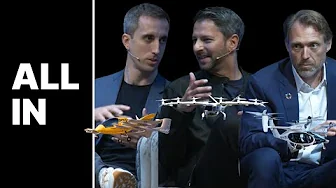
-
At the time of the panel, executives expected the first real eVTOL passenger services to launch abroad before the United States, with Archer targeting Abu Dhabi and Joby Dubai. Goldstein said U.S. regulation made domestic launch harder; both firms were meeting UAE aviation officials, while Joby planned four Dubai vertiports and 2025 commercial service.
-
The near-term product is airport transport on a few dense routes, not thousands of flying cars over cities. Airports were described as the easiest initial operating bases, Archer designed around 20–50-mile “hero routes” such as Manhattan-to-airport trips, and Brian Yutko said even bullish deployment would not soon replace existing helicopters.
-
eVTOL became financeable largely because the 2021 public-market window supplied capital traditional venture investors would not. Goldstein said roughly $1 billion upfront scared off most VCs; Archer said it raised nearly $1.5 billion, Stellantis invested almost $300 million, and United ordered up to $1.5 billion of aircraft.
-
No battery breakthrough is required for initial service. Archer uses commercial Molicel lithium-ion cells and designed Midnight mainly for repeated 20–50-mile trips, while Joby said its certification cells are about 300 Wh/kg, nearly double the roughly 170 Wh/kg available when it began in 2009.
-
Joby’s core urban-acceptance claim is that its aircraft can be quieter than ordinary city background noise while adding redundancy unavailable in conventional helicopters. JoeBen Bevirt said Joby achieved below 65 dB around takeoff and landing and 45 dB in overflight, with six propellers driven by separate motors, inverters and battery packs.
-
Initial service will still have real weather limits: Joby does not plan to certify its first aircraft for known icing. Bevirt said the fleet would simply be grounded in certain icing conditions, meaning service in colder northeastern markets could be unavailable a few percent of the time.
-
Wisk is taking the slower but more radical path: certifying passenger flight without an onboard pilot. Brian Yutko traced its lineage from Larry Page through Kitty Hawk and a joint venture to Boeing ownership, while acknowledging Joby and Archer would launch first because piloted certification comes sooner.
-
The hardest regulatory problem is not simply “approval”; autonomous aircraft force aviation rules themselves to be rewritten. Yutko noted existing rules repeatedly specify what “the pilot shall” do, while retired FAA expertise and frontier technologies leave regulators and manufacturers learning the safety case together rather than applying a ready-made standard.
-
Lilly is betting that tirzepatide can become far more than an obesity drug. Ricks said Lilly has 105 studies underway across other chronic diseases, while a three-year study in overweight adults with prediabetes produced 94% fewer new diabetes diagnoses.
-
The biggest constraint on GLP-1 growth is increasingly manufacturing, not demand. Lilly has approvals in more than 40 countries where it has not launched because it cannot supply enough injectable drug, making its phase-three oral GLP-1 orforglipron potentially crucial for mass-market scale.
-
For most patients, today’s obesity drugs remain long-term treatments rather than temporary cures. Ricks said weight typically returns after stopping therapy, although Lilly is researching mechanisms that might reset the body’s defended weight and studying easier maintenance approaches after initial weight loss.
-
Insurance coverage remains the main barrier between GLP-1 demand and widespread use. Ricks estimated only about half of employer plans cover obesity drugs; Lilly Direct now combines telehealth with mail fulfillment, while discounted Zepbound options cited in the interview ranged from roughly $399 to $600 monthly.
-
Lilly’s economics depend on reinvesting unusually large profits into unusually large scientific bets. Ricks said the company would spend more than $11 billion on R&D that year and expects mature net GLP-1 pricing around $3,000–$4,000 annually, despite much higher headline prices.
-
Lilly is building its future through many small external bets rather than a few giant acquisitions. Ricks said its venture arm makes hundreds of investments and Lilly bought roughly 24 companies for about $3 billion in one year, aiming to buy promising science before major de-risking events sharply increase valuations.
-
Ricks has made development speed a measurable competitive advantage. Lilly cut its average first-human-dose-to-FDA timeline from about 11 years to 6.1, while work that once took 120 days between receiving trial data and submitting to the FDA can now routinely be completed within two weeks.
-
Ricks does not expect AI to replace experimental drug development anytime soon. Lilly works with OpenAI, Microsoft, Amazon, Google and others, but he sees near-term value mainly in optimizing specific steps and killing low-probability ideas early, with wet-lab and clinical feedback remaining essential.
-
Cuban said his opposition to Trump came after unusually direct access: Trump called him roughly 10–15 times during the 2015–16 campaign, but Cuban said attempts to discuss policy rarely became substantive. Even after criticizing him publicly, Cuban later advised the Trump White House on healthcare and worked with Peter Navarro on pandemic PPE production.
-
Cuban said he has discussed crypto regulation directly with Kamala Harris, including his complaint that Gary Gensler’s SEC relies on “regulation through litigation.” His practical example was Lazy.com: he said a roughly $100,000-revenue NFT business found the SEC process too expensive and unworkable to register a token.
-
Cuban sold three-quarters of the Mavericks but kept 27.7%, largely because future growth required real-estate and casino expertise he did not want to learn and because he wanted to spare his children succession pressure. He said a Venetian-style Dallas casino around the American Airlines Center could push the franchise valuation to $20 billion.
-
During the NBA’s lean years, Cuban exploited other teams’ financial stress by buying first-round picks for $3 million and acquiring players from clubs that could not afford them. He credited that spending advantage with the Mavericks’ 15-year run without a losing season and roughly a decade of 50-win seasons.
-
Cost Plus Drugs’ clearest pricing example was droxidopa: Cuban said a friend losing insurance was quoted $110,000 per quarter elsewhere, while Cost Plus initially charged $64 per month and later about $20. He said falling acquisition costs are passed directly through rather than preserved as margin.
-
Cost Plus is still losing money, Cuban said, largely because he funded a robotics-driven factory for scarce sterile injectables, but he expects rapid growth. Its deeper weapon is transparency: the company publishes weekly prices for about 2,500 drugs, letting employers compare costs that Cuban says PBM contracts obscure.
-
Cuban has slowed his AI investing despite owning Groq and indirect OpenAI exposure, because he sees foundational models as an expensive race with uncertain winners. He expects tens of millions of specialized models and believes many standalone AI “agents” will become features that smarter models can create for users themselves.
-
Cuban flatly rejected a presidential run, saying his wife and children hated the idea because their lives are already difficult to keep normal. That concern also fits his Mavericks decision: reducing pressure on his children, not simply cashing out, was one of his stated reasons for selling control.
-
Juan Carlos Belmonte’s central result is that short pulses of Yamanaka factors rejuvenated accelerated-aging mice without correcting the mutation causing their disease. The intervention changed the epigenome instead, producing healthier animals that lived longer despite retaining the underlying genetic defect.
-
The effect was not confined to one disease model. In leptin-mutant mice, treatment reduced liver fat and restored youthful glucose responses despite continued overeating, while Belmonte reported similar results in laboratory models of kidney, skin, liver and muscle disease.
-
The crucial safety distinction is partial reprogramming: prolonged Yamanaka-factor exposure can erase a cell’s identity, impair organ function and permit cancer, while brief pulses preserve identity. Belmonte described the pulse as a temporary chromatin “shock” after which cells retain their type but function better.
-
Belmonte’s team says it can restrict reprogramming to unhealthy cells instead of exposing healthy tissue. Using markers associated with dysfunctional cells, the researchers targeted Yamanaka factors selectively and reported longer lifespan, prevention of gray hair and dramatically improved wound healing in very old mice.
-
Rejuvenating organs outside the body may be the safest first bridge to human medicine. Belmonte described treating old donor kidneys with a short ex-vivo pulse before transplantation, which improved recipient survival and could eventually make some currently discarded organs usable.
-
Human rejuvenation has not yet been demonstrated in whole people; Belmonte said the work has reached isolated human cells, with animal-to-human translation still requiring caution and replication. He identified severe acute diseases and organ transplantation as plausible early targets because the risk-benefit case is clearer than treating ordinary aging.
-
Belmonte said exercise produces surprisingly similar gene-expression changes to short Yamanaka-factor pulses, linking ordinary lifestyle interventions to the same cellular-resilience pathways under study. He nevertheless offered no precise exercise prescription, saying much of this biology remains unresolved and human translation is only beginning.
-
Altos Labs is pursuing this as both fundamental science and drug development, backed by billions of dollars and searching beyond the original Yamanaka proteins. The longer-term goal is to find proteins, peptides or small molecules capable of producing comparable epigenetic effects safely enough to become an ordinary medicine, potentially even a pill.
-
Gecko began because a power-plant manager told Jake his best friend had died doing a rope inspection in the exact spot where Jake stood. The same boiler reportedly lost 40% uptime to tube explosions at $2 million per day, and Jake says his first wall-climbing ultrasonic robot saved the plant $30 million that year.
-
Gecko turned inspection from a shutdown expense into an operating tool. At one Georgia facility, robots gathered terabytes of tank data in 12 hours instead of about a month offline; across 50 assets, Gecko says it extended useful life by ten years on average, created $15 million in value, and lifted margin about 4%.
-
The commercial upside is now large enough to support enterprise-scale contracts. Jake said the world’s 12th-largest oil-and-gas company identified 100,000 tanks and about $122,000 of ROI per tank, leading to an initial $30 million contract that he expects to grow to $100 million.
-
Gecko’s defense work has moved from pilots into meaningful programs. Jake said its Navy work is now worth tens of millions after cutting flight-deck inspection labor 85% and turnaround by about a month; Gecko is also helping scope Air Force missile-silo modernization and the Columbia-class submarine program.
-
The company deliberately sells software, not robots, even though robots collect the data. Customers buy a software implementation and recurring license, with robots treated as the data-gathering layer; the sales conversation has moved from plant managers toward CTOs and CFOs because the product affects depreciation, throughput, and capital allocation.
-
Jake rejected advice to build the robots in a lab and instead developed them inside customer facilities, sometimes soldering on site. That forward-deployed approach let Gecko sell directly to plant managers, fail and repair in real conditions, and become profitable in 2017, one year after its 2016 YC launch.
-
Gecko’s strategic moat is the first-party industrial data, not ownership of every robot. Jake said third-party machines such as ANYbotics can plug into Gecko’s API, and he would happily buy Optimus robots; the company wants whatever machines can collect useful data for its operating platform.
-
Jake’s broader bet is that first-party data companies will beat standalone SaaS as software becomes commoditized. Gecko’s robots, sensors, and fixed monitors create proprietary datasets from infrastructure that often still relies on paper records or missing asset lists, giving its software information competitors cannot simply license.
September 27, 2024
OpenAI's $150B conversion, Meta's AR glasses, Blue-collar boom, Risk of nuclear war
-
OpenAI’s proposed restructuring would remove the 100× investor profit cap, leave the nonprofit as a minority shareholder, and reportedly give Sam Altman 7% equity—about $10.5 billion at a $150 billion valuation. The round was described as roughly $6–7 billion and contingent on completing the corporate conversion, with the exact structure still under negotiation.
-
The OpenAI conversion also reopens a founder-money dispute: Sacks said Elon Musk put in the first $50 million as a nonprofit cofounder yet would receive nothing in the reported restructuring. Reid Hoffman’s counterargument, as relayed by Sacks, was that Musk later had the chance to invest in the for-profit entity and declined.
-
The hardest question around OpenAI is not growth but durability: the company had lost multiple senior figures while open-source rivals and platform giants were closing in. Chamath’s bear case combined model commoditization, Meta and Google distribution, the cost of synthetic training data, and executive churn—an unusual mix for a company priced for dominance.
-
Friedberg said o1 was already eliminating analyst work inside his company, turning projects that took days into answers produced in minutes. Calacanis described his investment team using AI across 20,000 annual applications and legal documents, while OpenAI had told investors that reasoning models would be followed by agents able to execute multi-step work.
-
Marc Benioff personally called David Sacks to push back on claims AI will make systems of record obsolete, arguing enterprises still need exact records, security, compliance and integration. Chamath countered that agents can increasingly work directly on raw data, which he expects to weaken per-seat pricing and force cheaper renewals or usage-based models.
-
Meta’s Orion prototype was presented as a serious step toward post-phone computing: about 1,000 pairs existed, with a wristband reading finger and wrist movements while the glasses overlaid information on the real world. The panel agreed voice, eye tracking and gesture control are converging, but disagreed that glasses will be the final mass-market form.
-
The labor-market discussion focused on which skills will command value: developer postings were cited as down more than 30% from February 2020, while teens increasingly favored trades and work experience. Friedberg argued that as AI cheapens standardized output, human service and craftsmanship may become premium products rather than residual jobs.
-
The episode’s most specific geopolitical call was Friedberg’s estimate of greater than 30–40% odds of a multinational Middle East war before the 2024 U.S. election if Israel’s Lebanon operation widened. Sacks separately argued that a deteriorating Ukraine war could increase pressure for direct Western intervention, making escalation—not battlefield outcomes—the central risk.
-
Venture capital has a liquidity crisis despite healthy fundraising, with distributions to LPs near financial-crisis lows. Coatue counts roughly 1,500 private companies last valued above $1 billion, leaving an enormous backlog of unicorns still waiting for exits.
-
The IPO drought is historically extreme, not merely slow. Coatue said 2022, 2023 and 2024 each produced fewer IPOs than 2008–09 or 2001–02, while post-2020 IPOs destroyed about $225 billion in value against only $84 billion created.
-
Weak companies are increasingly surviving through defensive financings rather than clean new rounds or exits. Bridge and down rounds have risen from roughly 30% to almost 63% of financings, while the 2021 cohort’s refinancing-or-exit rate fell nearly by half versus 2016 and 2022 is tracking worse.
-
The venture model’s holding period has effectively doubled, sharply damaging returns even when eventual outcomes remain similar. Thomas described the old expectation as seven-to-ten-year liquidity; a leading Series A firm told him comparable fund performance stretched over twice the time cuts the resulting IRR roughly in half.
-
Bill Gurley privately told Thomas that investors themselves helped create the IPO blockage, and Thomas agreed. Their critique was that private capital and founder secondaries let mature companies remain private longer, while venture-backed boards also tolerated the behavior instead of forcing companies toward public-market discipline.
-
Late-stage startups now compete for capital against investments that can offer far better liquidity and proven economics. Thomas noted public investors could take roughly 5% risk-free, buy trillion-dollar technology companies growing above 15%, or choose AI companies growing 50–100%, forcing new listings to deliver profitability, growth and scale simultaneously.
-
Databricks CEO Ali Ghodsi privately gave Thomas a striking operating number: a cloud business at roughly $500 million ARR that was near zero only a few years earlier. Ghodsi also asked him to emphasize that Databricks was growing above 60% while becoming more efficient despite continuing to burn cash.
-
One panelist said mishandling his Slack direct-listing exit cost him roughly $1.2–$1.24 billion. His lesson was painfully specific: he distributed his shares too late and, knowing the eventual price path, would have sold every share immediately rather than assuming waiting would produce a better outcome.
-
NASA’s Artemis strategy is to build a sustained human presence at the Moon’s south pole, not repeat Apollo-style visits. The plan includes rovers, bases and nuclear power, with the Moon explicitly treated as a proving ground for Mars under NASA’s dedicated Moon to Mars directorate.
-
SpaceX’s Starship was central to NASA’s first planned Artemis lunar landing, serving as the human landing system from lunar orbit to the surface. NASA required an uncrewed demonstration first; its SpaceX contract covered the Moon, while Elon Musk’s proposed near-term Mars missions remained separate.
-
A storm damaged a Guam ground station shortly before Woody Hoburg’s spacewalks, creating long periods when he could not talk directly to Mission Control. Frank Rubio and Sultan Al Neyadi created an onboard command post, operated the robotic arm and relayed procedures through the communications gaps.
-
ISS researchers exploit microgravity because heart tissue ages much faster there, turning orbit into an accelerated model for studying heart disease. Hoburg’s mission also biofabricated a section of human meniscus, illustrating the station’s unusual value for biomedical experimentation.
-
Polaris Dawn’s planned spacewalk required depressurizing the entire Crew Dragon because it had no airlock, forcing every occupant into a spacesuit. Hoburg had months to acclimate to weightlessness before his first EVA; the Polaris crew would face that experience after only days in orbit.
-
The Space Shuttle’s retirement left Russian Soyuz as NASA’s only crew transport to the ISS until SpaceX restored a U.S. launch option in May 2020. Hoburg later piloted Crew Dragon Endeavour, the same capsule used by Bob Behnken and Doug Hurley on that breakthrough test flight.
-
Life aboard the ISS is dominated by maintenance and physical countermeasures almost as much as science. Crew members exercise about 2½ hours daily, repair toilets, CO₂ scrubbers and spacesuits, and dispose of trash by loading cargo vehicles that burn up during atmospheric re-entry.
-
Sinema says party discipline collided with her immediately: on her first Senate vote, Chuck Schumer personally asked her to oppose an Israel measure for party unity, and she refused. She presents that call as an early example of why she ultimately left Democrats and became an independent. (U.S. Senate)
-
Sinema describes campaign money as a practical enforcement mechanism: follow the party line and “the machine” helps line up funding; dissent and you must build your own network. After her filibuster stand, she says regular political money sources stopped calling; she estimated a competitive Arizona Senate race costs about $150 million.
-
Sinema says the bipartisan infrastructure law began with her and Republican Rob Portman quietly building a plan before assembling five Democrats and five Republicans. That ten-senator group was real and the Senate passed the bill 69–30, making it a concrete example of her coalition-first approach. (Susan Collins)
-
On Build Back Better, Sinema says she tried to remove ambiguity early: she publicly declared she would not support it, then gave the White House a spreadsheet of tax policies she would consider. She says it took roughly 14 months for party leaders to accept that her stated limits were fixed.
-
A small bipartisan group including Sinema, Bill Cassidy and Angus King tried to address Social Security and Medicare finances, but colleagues on both sides told them to wait until after the election. Sinema’s explanation was blunt: fixes require short-term sacrifice, while incumbents focused on reelection avoid immediate costs.
-
Sinema says a viable third party is not yet realistic despite her close relationship with No Labels. Her explanation is strategic: voters may dislike both parties, but fear of the other side winning keeps them inside the two-party system; No Labels ultimately abandoned its 2024 presidential bid. (Reuters)
-
Sinema says she is leaving electoral politics for private industry because she expects Washington gridlock to worsen and sees more room to solve problems outside government. That followed her March 2024 decision not to seek reelection, closing a Senate career marked by repeated breaks with party leadership. (Reuters)
-
Sinema says she has taught at Arizona State University for 21 years and studied genocide academically, including Rwanda. ASU confirms she began teaching there in 2003 and earned a PhD in Justice Studies, giving useful context to her unusually detailed discussion of universities, ideological conformity and uncomfortable debate. (search.asu.edu)
-
Arora says his rise at Google followed a measurable result: Europe grew from 24% to 49% of global revenue and briefly exceeded the U.S. Eric Schmidt then called him while he was in Russia opening an office and asked him to move to America to replace his retiring boss.
-
At SoftBank, Masayoshi Son taught Arora to stop spending time rescuing a bad investment and put that effort into the winner. Son’s logic was that helping a company grow from 3x to 6x could repay the mistake far better than dragging a laggard from 0.5x to 1x.
-
Arora joined Palo Alto Networks because cybersecurity was a roughly $180 billion market whose leader had only about 1.5% share, leaving room for a true platform. He says it then bought 19 companies to build for cloud and AI; the host noted market value rose from about $20 billion to $110 billion.
-
Palo Alto’s acquisition rule is to buy the best product, not the cheapest company or a customer base it already reaches. Arora says paying 8–10 times revenue for customers makes little sense when Palo Alto can buy technology and use its own enterprise sales engine to distribute it.
-
Palo Alto deliberately pays acquired founders to stay: Arora says it can give them 1.5 times their cashed-out equity if they remain for three years. After an early integration dispute, he also made a jointly agreed product strategy with the founder a condition before any acquisition closes.
-
Arora describes ransomware as an industrial supply chain, with separate specialists finding access, running “ransomware as a service,” negotiating, and clearing payments. He said about $2 billion had been paid over the previous year and that demands often cluster at $30 million or less because insurance can cover that range.
-
Arora expects AI agents to reorder the app economy by controlling the customer interface while existing services are reduced to APIs. He predicts roughly five million apps will be redesigned over the next decade, with new agent-native companies willing to take smaller margins in exchange for owning the transaction.
-
The near-term AI security problem, in Arora’s view, is employees feeding proprietary data into external tools while companies deploy internal models vulnerable to prompt injection. He estimated 20–30% of companies already have younger employees using AI apps for work, and said Palo Alto has products designed to police both risks.