-
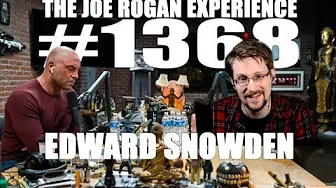
After 9/11, Dick Cheney and his lawyer David Addington helped establish warrantless mass surveillance through a secret legal interpretation. Snowden says intelligence chiefs were denied the underlying justification, while only a handful of lawmakers knew about the program that became Stellar Wind.
-
The New York Times withheld its warrantless-wiretap investigation before the 2004 presidential election following White House pressure. Snowden says publication came in December 2005, as reporter James Risen's book approached, and Congress subsequently passed laws protecting cooperating telecommunications companies and preserving expanded surveillance powers.
-
Snowden discovered crucial evidence almost accidentally while performing a routine NSA computer-security search in Hawaii. A misplaced classified Stellar Wind inspector general report identified senior officials involved and, he says, contradicted a substantially rewritten public account, convincing him the government had deliberately concealed wrongdoing.
-
US intelligence chief James Clapper denied collecting data on millions of Americans while testifying under oath to Congress. Senator Ron Wyden had supplied the question 24 hours earlier and subsequently requested a correction; Snowden says the refusal to correct the record helped convince him that internal accountability had failed.
-
Snowden deliberately gave classified documents to journalists rather than releasing the archive publicly. He required independent public-interest judgments and advance consultation with the government about possible harm, arguing that exposing unlawful surveillance did not justify indiscriminately revealing legitimate intelligence secrets.
-
Snowden says he would return to America for trial if jurors could consider the public-interest reasons behind his disclosures. He argues that Espionage Act prosecutions prevent defendants from presenting those motivations, and negotiations with the Obama administration failed because the government would not accept that condition.
-
Snowden says the US government stranded him in Russia by canceling his passport while he was traveling toward Latin America. By 2019 he held renewable permanent residence, publicly criticized Putin and Russian surveillance laws, and denied receiving Russian government money, instead earning income through speaking engagements.
-
Snowden identifies ordinary smartphone activity as a powerful surveillance mechanism, even when devices appear inactive. Cellular and Wi-Fi records can reconstruct personal movements, while the US third-party doctrine, rooted in a 1979 telephone-records case, weakens privacy protections when companies hold information about their customers.