Spending the Whole Day Planning My Armed Forces
August 7, 2023 Lehan Edirisinghe
Jonathan, gold, Obama-in-Honolulu ambition, and family joking all pass through, but the real work is military planning: aircraft, small arms, artillery, and the conviction that Sri Lanka could become a force the US can count on.
Old Things, Rust and Gold’s Lasting Value
7:45 p.m.
What's old isn't always gold. Sometimes it's rust. However, the reason why we value gold so much is that, it's survived 1,000,000s of years in the earth's crust or in mines or wherever you find it. There's got to be some truth, some value in it, to have survived for so long.
Remembering Honolulu, Obama and Wanting to Serve Sri Lanka
7:45 p.m. (b)
I remember growing up in Honolulu in Hawaii, with Obama. He was somewhere there. I think that one day, I can serve my country too. If a black man could be president of Americ, I know, as a Sri Lankan, a brown guy, I could also.
Dinner Soon and Working on Armed Forces Plans
9:00 p.m.
It's time for dinner soon
I'm working out our armed forces stuff
Jonathan, PR Firms and Deciding to Be Patient
11:00 p.m.
I'm busy doing my work
Jonathan's okay
He's my best friend
And he's getting fifty
I told a few other pr firms, that he's 50 owner
█████████████████████████████████████████████████████
but i think the message was ugly, and clear, and sank through
He's kind of gotten the point
I'll just be patient
Ranil, Defense Ministry and Armed Forces Plans
11:00 p.m. (b)
I can't imagine myself being defense minister, or why Ranil thinks he should be the defense minister. It's crazy.
I have a lot of plans for our armed forces
████████████████████████████████████████████████████████
A Full Day Working on Armed Forces Plans
11:15 p.m.
I spent all day, working out my plans for our armed forces. I did quite a lot of work. I work rapidly. A lot faster than most people. If you study myself, and my political alternatives' activity, processing speed, strategies. You'll see massive differences. You can judge it very quickly.
I today, figured out what aircraft I want for our armed forces, through Air Force. Separately, we're getting weapons for our other areas.
I'm tired now.
I did my daily 11 minutes on elliptical machine.
I feel great.
It's a bit of stress.
I'm going to rest or watch TV or movies.
I did do some stuff on army.
We picked the small arms required.
Got to artillery.
I'm thinking on it.
Reflecting on a Private-Lifestyle Rumor
11:15 p.m. (b)
███████████████████████████████████████████████████████████████████████████████████████████████████████████████████████████████████████████████████████████████████████████████████████████████████████████████████████████████████████████████████████████████████████████████████████████████████
██████████████████████████████████████████████████████████████████████████████████████████████████████████████████████████████████████████████████
Phil, a Film Reference and Trading Autographs for an Actress
11:15 p.m. (c)
Phil can go in my foreign ministry
I like Emmanuelle
██████████████████████████████████████████████████████████████████████████████████████████████████████████████████████████████████████
I've been meaning to trade the Humphrey Bogart autograph that Jonathan Hirshon got, and gave me as his friend, in exchange for Kristel's autograph

Courtney Lane Spaulding, Jonathan and Family Bullying Jokes
11:30 p.m.
Courtney Lane Spaulding :
"Make it nasty!"
***
Hehe Jonathan's niece
Jeez
Jonathan's like my family member
Fun fact. I bully all of my family members.
Feel at home?
It's like the guy is pretty much living with me

Jonathan, Courtney and the Lehan Rocket Ship’s Cool Factor
11:30 p.m. (b)
Jonathan's so cool, even the niece is pretty cool: Courtney
Apparently, the big jet fuel that fuels the Lehan rocket ship is my cool factor
There's like nothing healthy, okay or good about me
But I'm cool
I can rip you off, with my Apple products, build a big Apple HQ
Show it to you
Claim you built that
You'll clap
Billy Bob Thornton, Goliath and Rudolph’s Sleigh
11:30 p.m. (d)
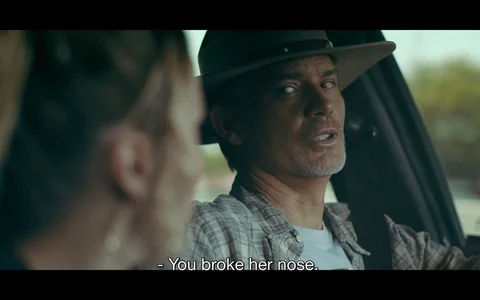
I prefer, and hate how, Billy Bob Thornton's not on this. I feel they cheaped out, cheaped out on quality. I identify with skinny Billy Bob Thornton. And here I am taking out the Goliaths. And hidden in my coat's a red right hand. With my david's shepherd boy sling.
***
Rudolph, with your nose so bright :
Won't you guide my sleigh tonight?
Liking Billy Bob Thornton as Jim Courtright
11:45 p.m.
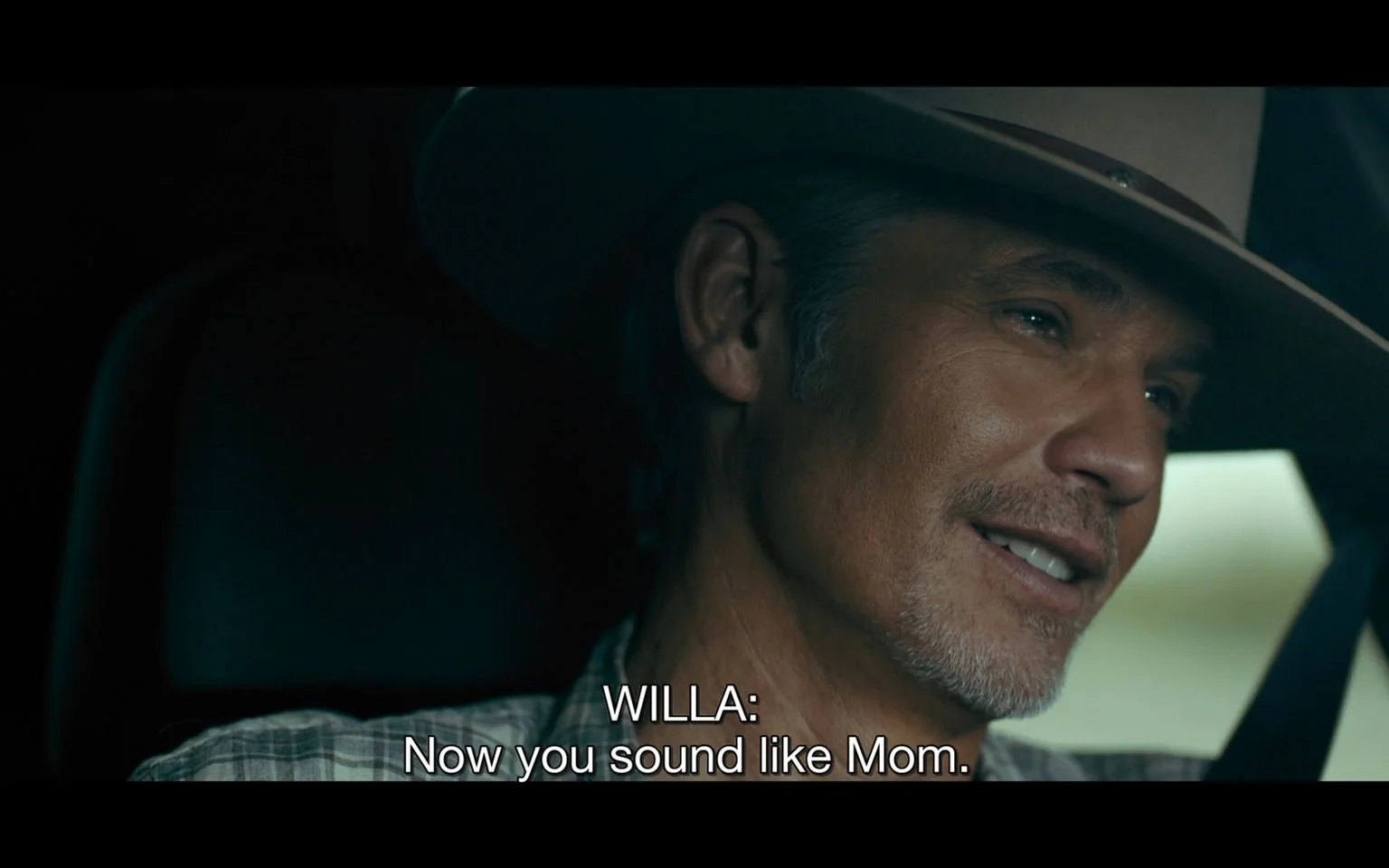
I liked Billy Bob Thornton in 1883 as Jim Courtright, the sheriff
He's so cool
This guy f***ing sucks and I don't give people a chance
The White Stripes’ “Seven Nation Army”
Tuesday, August 8th.
12:00 a.m.
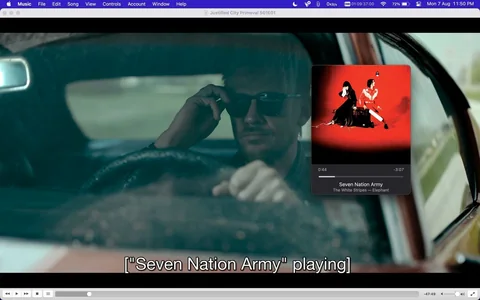
The White Stripes - Seven Nation Army (Official Music Video)
Explaining Jack White’s “Seven Nation Army” Riff and Rage
12:00 a.m. (b)
Jack White uses an effects pedal to make his guitar sound like a bass and howls about a rage so intense, he could take on an army all by himself. Result: the greatest riff of the decade and a massive, career-changing hit that every college marching band in the nation plays to this day.
Jack White told Rolling Stone that the riff was composed while they were soundchecking before a show at the corner hotel in Melbourne. He said “There’s an employee here at Third Man named Ben Swank, and he was with us on tour in Australia when I wrote that song at soundcheck. I was playing it for Meg and he was walking by and I said, ‘Swank, check this riff out.’ And he said, ‘It’s OK.’ [Laughs] He added: "I didn’t have lyrics for it until later on and I was just calling it ‘Seven Nation Army’ – that’s what I called the Salvation Army when I was a kid. So that was just a way for me to remember which one I was talking about, but it took on a new meaning with the lyrics.”
***
Verse 1:
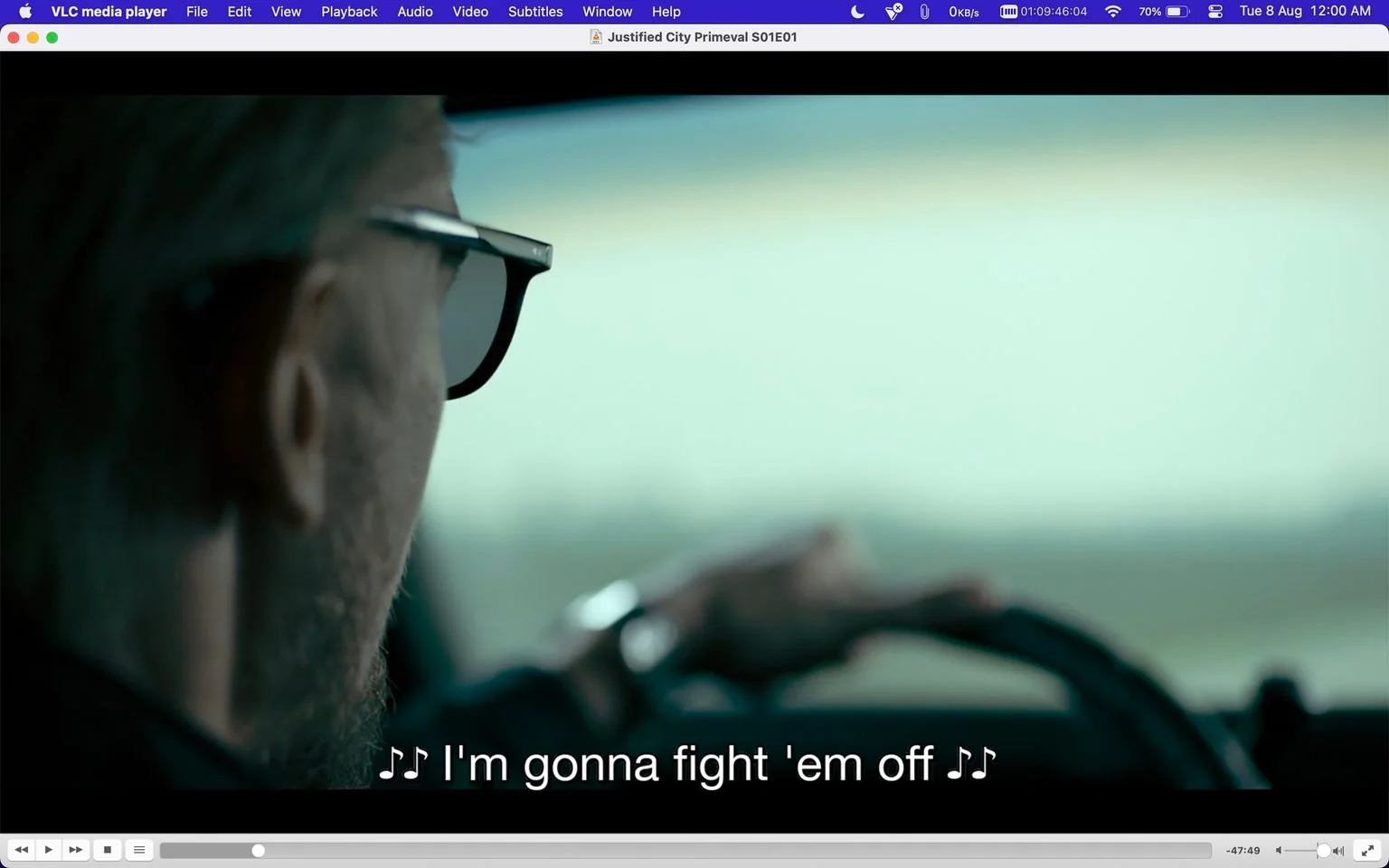
"I'm gonna fight 'em off"
Jack is trying to set up a story that is similar to what The White Stripes were experiencing at the time. They had started to build up a little fame, and then came back home to hear everyone talking about them. The same is happening to this story’s protagonist, and he wants to take action.
Everyone in this case seems to be doubters, haters, people out to get him etc. He’s pissed off enough at them that there’s no more holding back. He’s just going after them.
Also, it was recently discovered that Jack and Megan were exes, not siblings as they had previously claimed. Everyone wanted to hear more about this and Jack doesn’t wanna talk about it. He will fight them off.
"A seven nation army couldn't hold me back"
As a child, Jack White called the Salvation Army, the “Seven Nation Army”. When he first created the riff for this song, he named it “The Seven Nation Army Song”
The meaning for this is that the protagonist’s rage against all these people who are out to get him is stronger than the force of a seven nation army.
"They're gonna rip it off
Takin' their time right behind my back"
According to Jack, himself:
“The song’s about gossip. It’s about me, Meg and the people we’re dating.”
Jack narrows his rage from everyone down to people who go behind his back, especially all the fake friends that enjoy this gossip.
Although Jack and Meg were divorced by this time, “the people we’re dating” could refer to their relationship, or else their other relationships.
"And I'm talkin' to myself at night because I can't forget"
The protagonist can’t get over the fact that the people he trusted crossed him like that. Even if he wants to.
"Back and forth through my mind, behind a cigarette"
The protagonist keeps trying to forget about all the gossip going on around him, or act like it wasn’t a big deal but it’s not working. So he turns to drugs to try and wipe this memory out. Which makes sense since Jack White is a notorious smoker.
Explaining “Seven Nation Army,” Gossip and Jack White’s Divorce
12:00 a.m. (c)
[Pre-Chorus]
And the message comin' from my eyes says, "Leave it alone"
When The White Stripes first broke out onto the scene it was thought that Jack White and Meg White were brother-and-sister. Later on it was revealed that they are not related but, in fact, ex-husband and wife!. It is a subject Jack White does not like to talk about in interviews, so this line could be hinting at his reluctancy to discuss it.
[Instrumental Chorus]
“Seven Nation Army” is dominated by its iconic main riff, played incessantly throughout the song (with the exception of the two-bar pre-Chorus that immediately precedes the instrumental chorus).
Throughout each verse, starting with its respective intro, the riff is repeated on simulated single bass note – which is actually Jack White’s electric guitar filtered through an effects pedal that sounds the notes an octave lower. The familiar tones of the electric guitar are not heard until the brief chords in the pre-chorus build up to the riff/chorus, which is loudly played in all of its six string slide guitar glory.
Ironically, this is not only Jack White’s most famous riff, but is his most sung chorus, as millions of sports fans worldwide demonstrate throughout the year.
***
[Verse 2]
Don't want to hear about it
Every single one's got a story to tell
"Everyone knows about it
From the Queen of England to the Hounds of Hell"
This could be speaking to how Jack started to feel a little irritated when news started to spread about his divorce with Meg. He feels like everyone knows about it, and it’s all they ever talk about when it comes to The White Stripes, even though they put their differences aside to focus on the music.
In an interview Jack claimed that his relationship with Meg was an open secret. They claimed to be siblings to keep the focus on the music rather than the couple’s relationship:
“When you see a band that is two pieces, husband and wife, boyfriend and girlfriend, you think, "Oh, I see…” When they’re brother and sister, you go, “Oh, that’s interesting.” You care more about the music, not the relationship—whether they’re trying to save their relationship by being in a band"
"And if I catch it comin' back my way, I'm gonna serve it to you
And that ain't what you want to hear, but that's what I'll do"
He’s going to kick the ass of the next person who brings up the topic referenced in the prior verse. This verse also introduces the theme, continued to the end of the song, of feeling he is without a home and retreating from his current situation to a safer world.
[Instrumental Chorus]
[Guitar Solo]
Explaining Wichita and Going Home in “Seven Nation Army”
12:00 a.m. (d)
[Verse 3]
"I'm goin' to Wichita"
Wichita is a town in Kansas. Considering the upcoming line about “bleeding” this is a possible reference to Bleeding Kansas, where abolitionists clashed with supporters of slavery as to whether Kansas would enter the Union as a free or slave state.
However, in the context of the song the speaker is more likely answering the need he feels to “find a home,” (from the previous verse) as he considers hiding away from all of the drama.
Wichita is a smaller city, smack in the center of a U.S. map, the middle of nowhere, and it’s somewhere that the speaker could get lost and “work the straw.”
"Far from this opera forevermore
I'm gonna work the straw"
He is contemplating leaving the music business and entering a more “normal” life on a farm due to the overwhelming stress in his life.
The word “straw” combined with “Wichita” may also be a reference to the Grateful Dead song “Jack Straw” and its titular character: “Jack Straw from Wichita.”
"Make the sweat drip out of every pore" (Genesis 3:17-19)
Jack would rather go out into the fields and do hard manual labor instead of dealing with the bullshit that comes with even the small modicum of fame he’d achieved at this point in his career.
"And I'm bleedin' and I'm bleedin' and I'm bleedin' right before the Lord
All the words are gonna bleed from me and I will think no more"
[Pre-Chorus]
And the stains comin' from my blood tell me, "Go back home"
The speaker has considered hiding away from the drama (“going to Wichita”) and living a life with a normal job (“work the straw”).
However, he also realizes that this choice would crush his creativity and leave him worthless. He would “sing no more.”
Instead, he resolves to “go back home,” away from Wichita, and take on the bullshit. To further reinforce his resolve, that guitar-riff pops in now louder than ever.
Note also the “bleeding before the Lord” language calling to mind images of Christ’s crucifixion, including the imagery of profuse bleeding. This, in turn, harkens back to “The Ballad of John and Yoko” in which John Lennon sings about how the press will “crucify him” about his marriage to Yoko Ono. The idea that this bleeding leads to a message to “go back home” could also be a reference to Christ’s subsequent ascension to heaven following his crucifixion.
[Instrumental Chorus]
Air Force Trainer Crash and Safer Pilot Training
12:30 a.m.
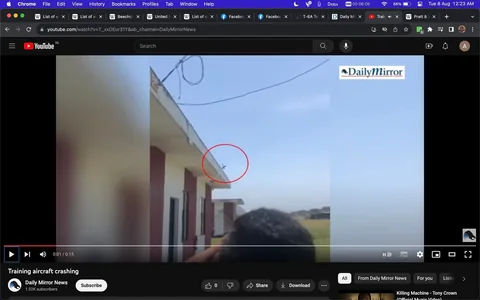
I'm sorry to hear an Air Force trainer aircraft crashed, killing two pilot officers. It's very sad. I think that a good solution is to use computers to first train the pilots, then they try to fly. We need new, safer purpose built planes as well. It's very sad. I hope we study it, to learn what happened, study the blackbox, then make sure that this can't happen as easily again. A lot of accidents happen in air.
T-7 Red Hawks, Ukraine and Planning Pilot Training
12:30 a.m. (b)
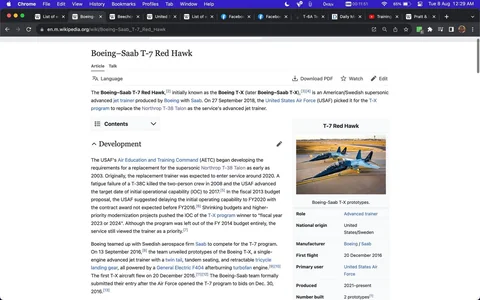
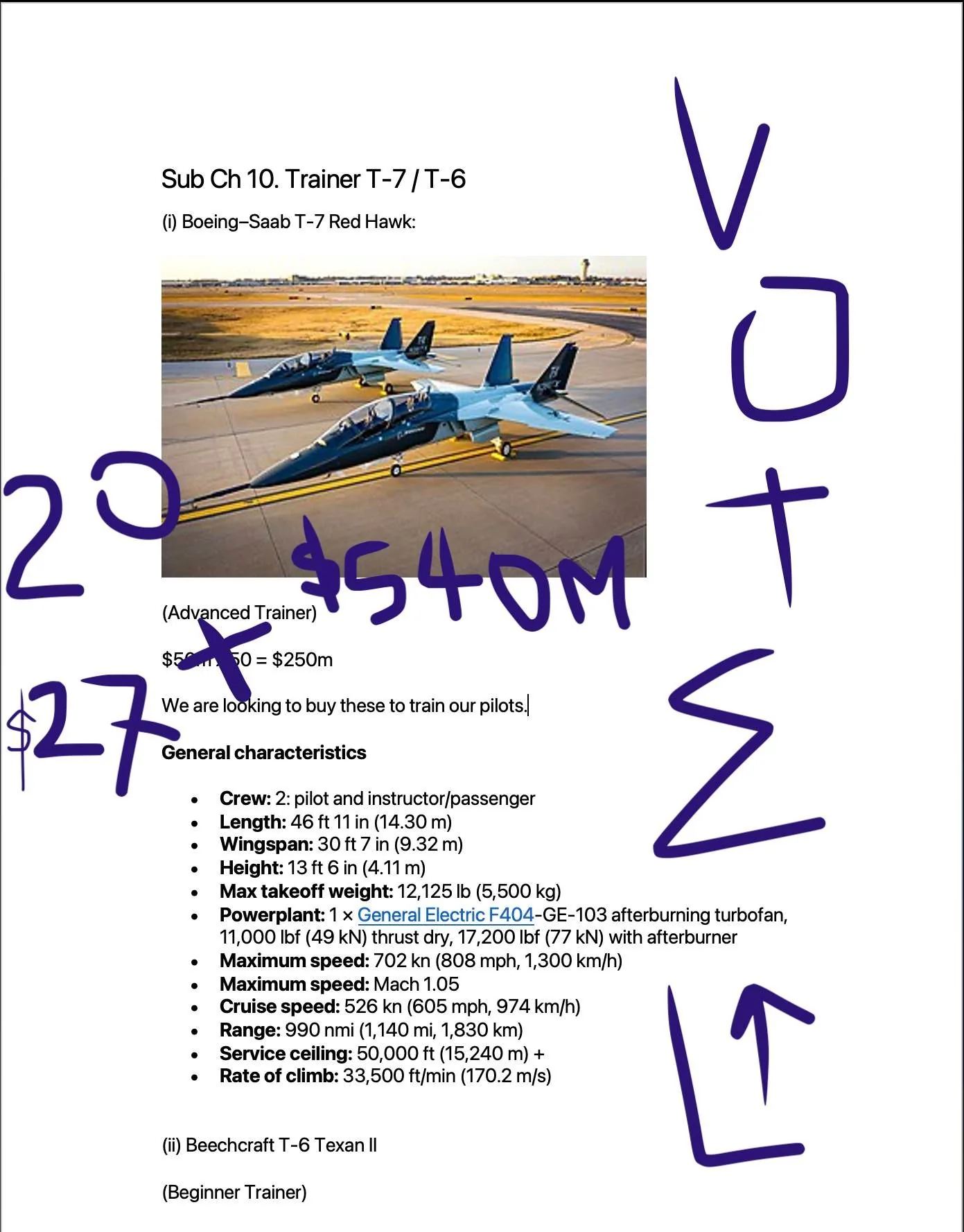
My gov't's buying Boeing-Saab (Swedish firm) T-7 Red Hawks for our trainer aircraft as like Anthony Blinken (secretary of state for Biden administration) says to Fareed, the Ukraine air force, seeking F16s, they need time to train.
We're planning ahead for this eventuallity
Blinken says Ukraine has reclaimed about half of land Russia seized
Japan Striking British Bases During World War II
12:30 a.m. (c)
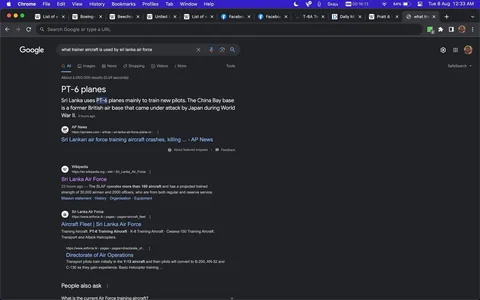
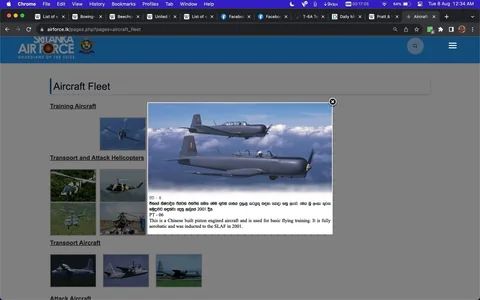
I see Japan's struck British bases during WW2, not really us

Criticizing Sri Lanka’s Air Force to Shavendra
12:30 a.m. (e)
I think you can see what a████████████████████████████████████████, Shavendra
Sri Lanka Air Force Plans and Big Smoke’s Order
12:45 a.m.
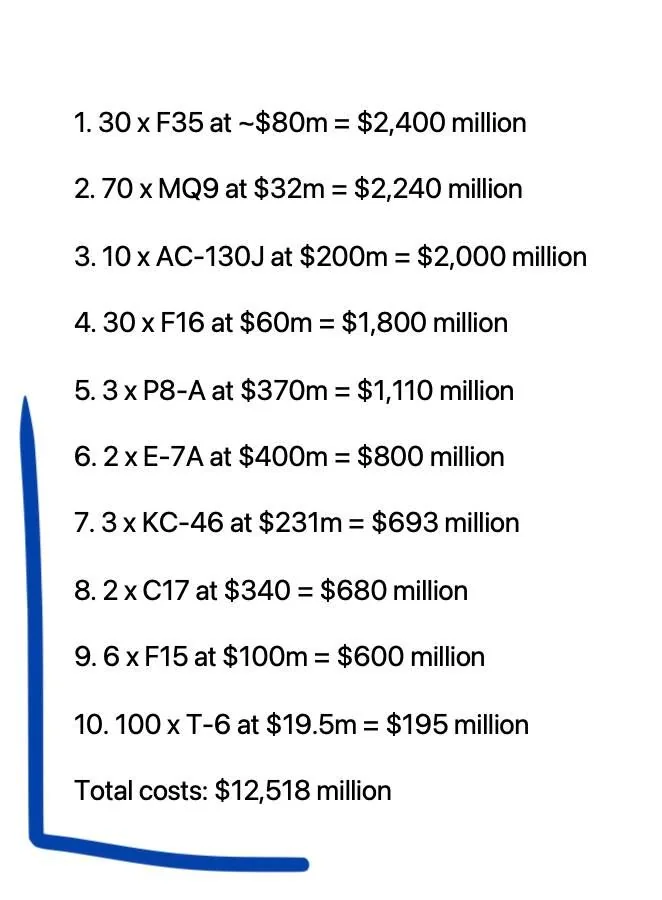
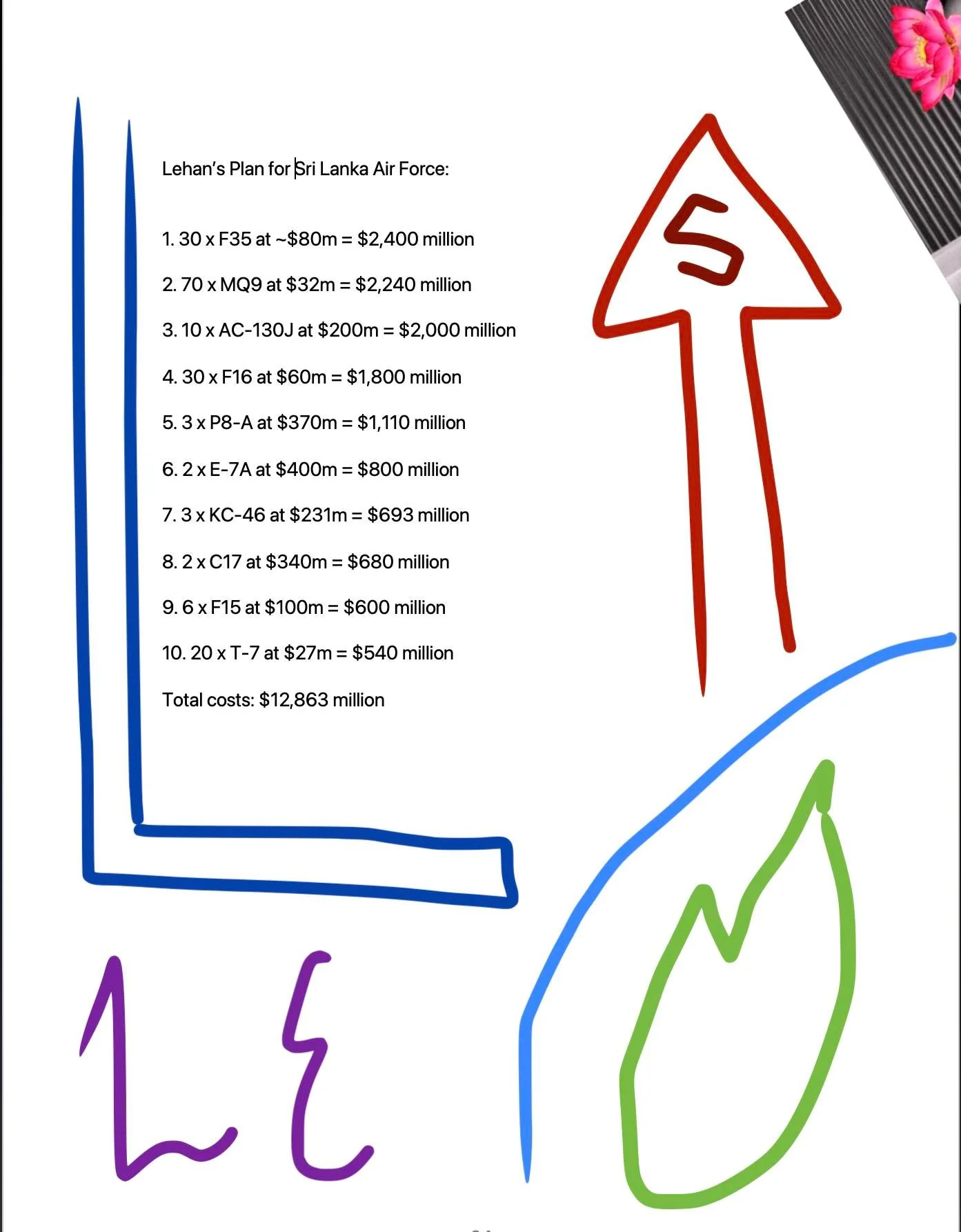
This is my plan for Sri Lanka Air Force
***
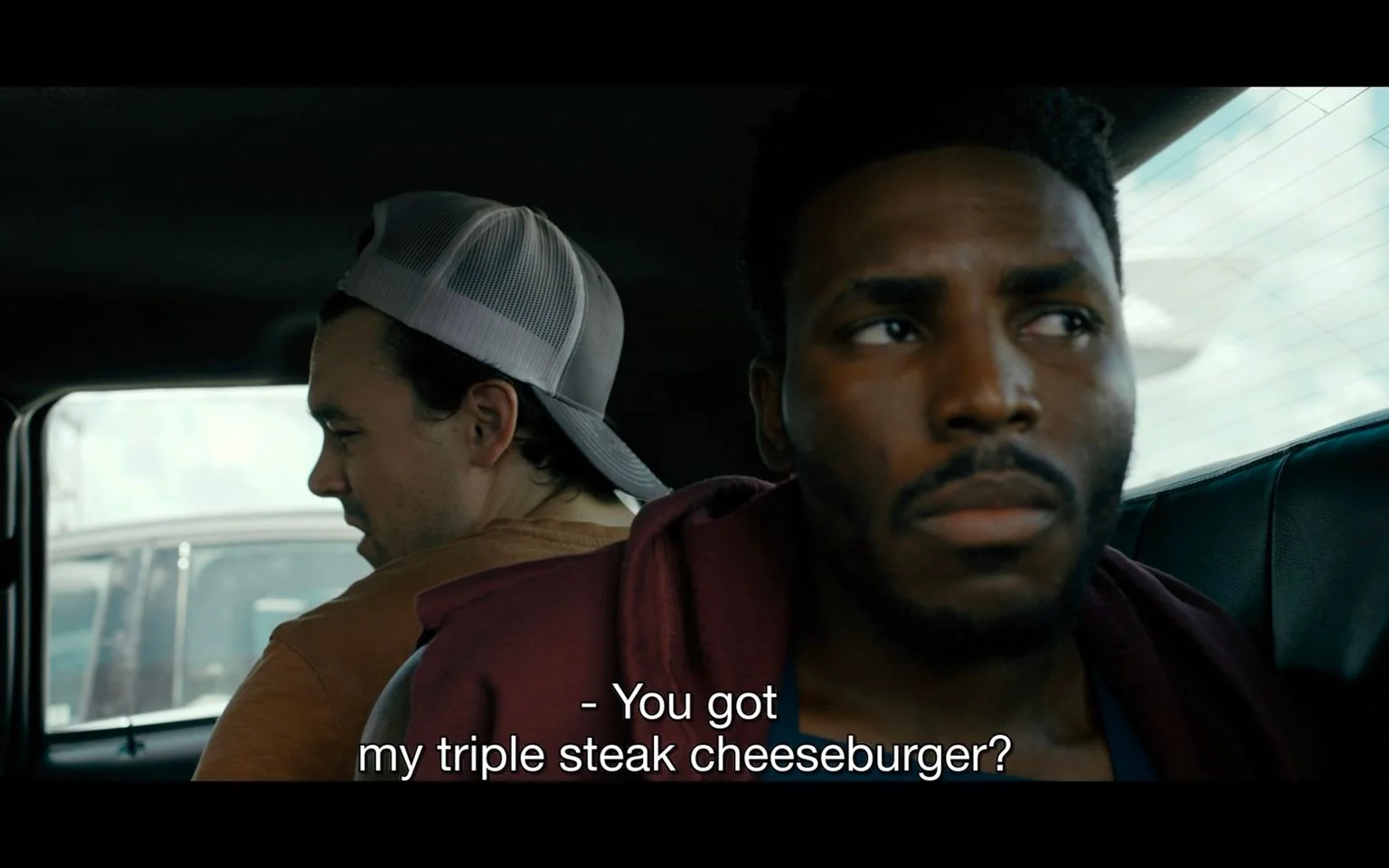
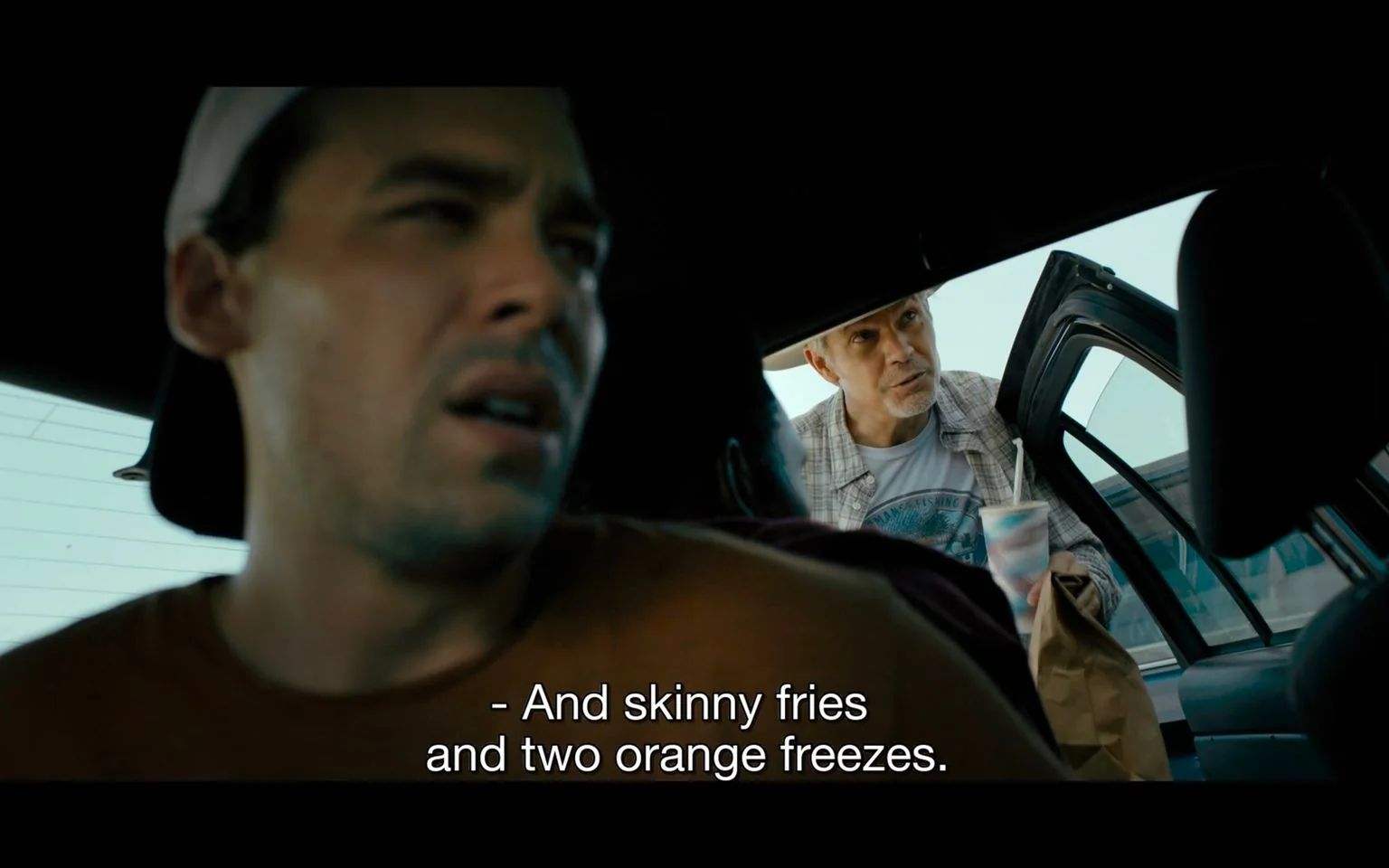
GTA:SA - Big Smoke's Order
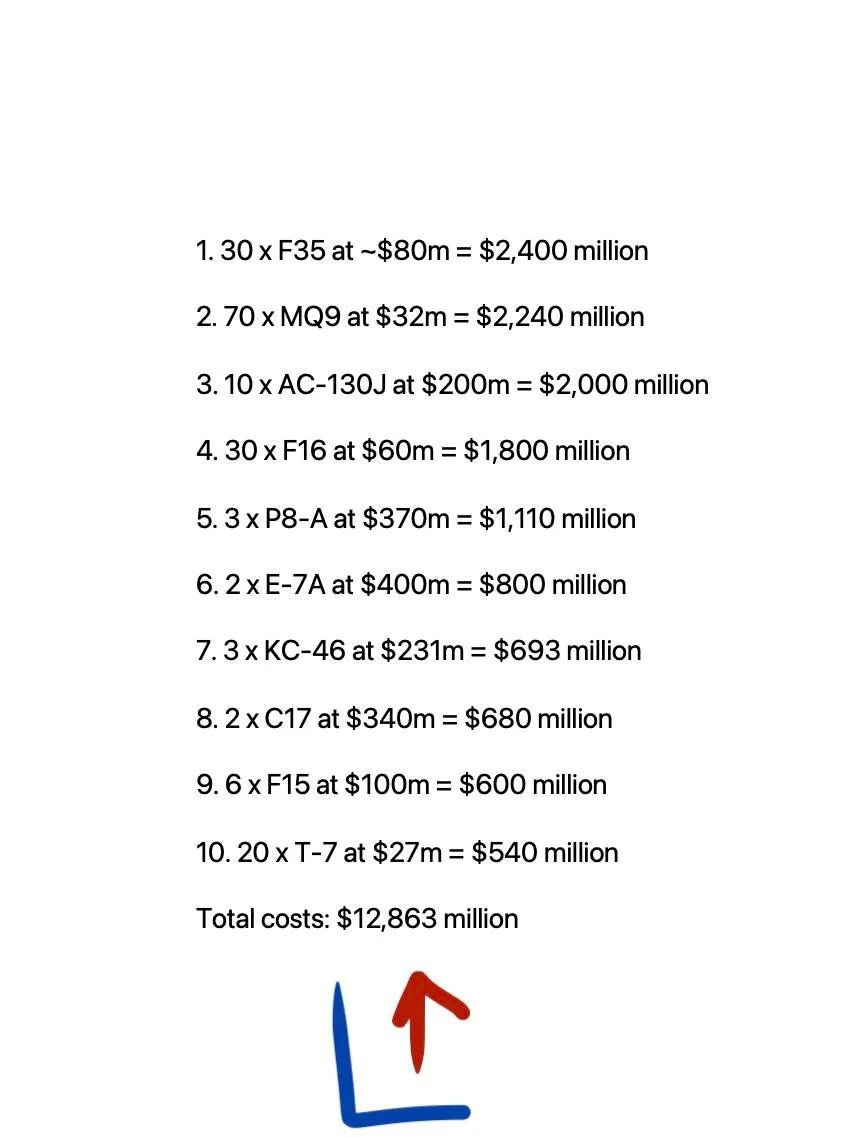
A $12.863 Billion Sri Lanka Air Force Shopping List
1:00 a.m. (d)
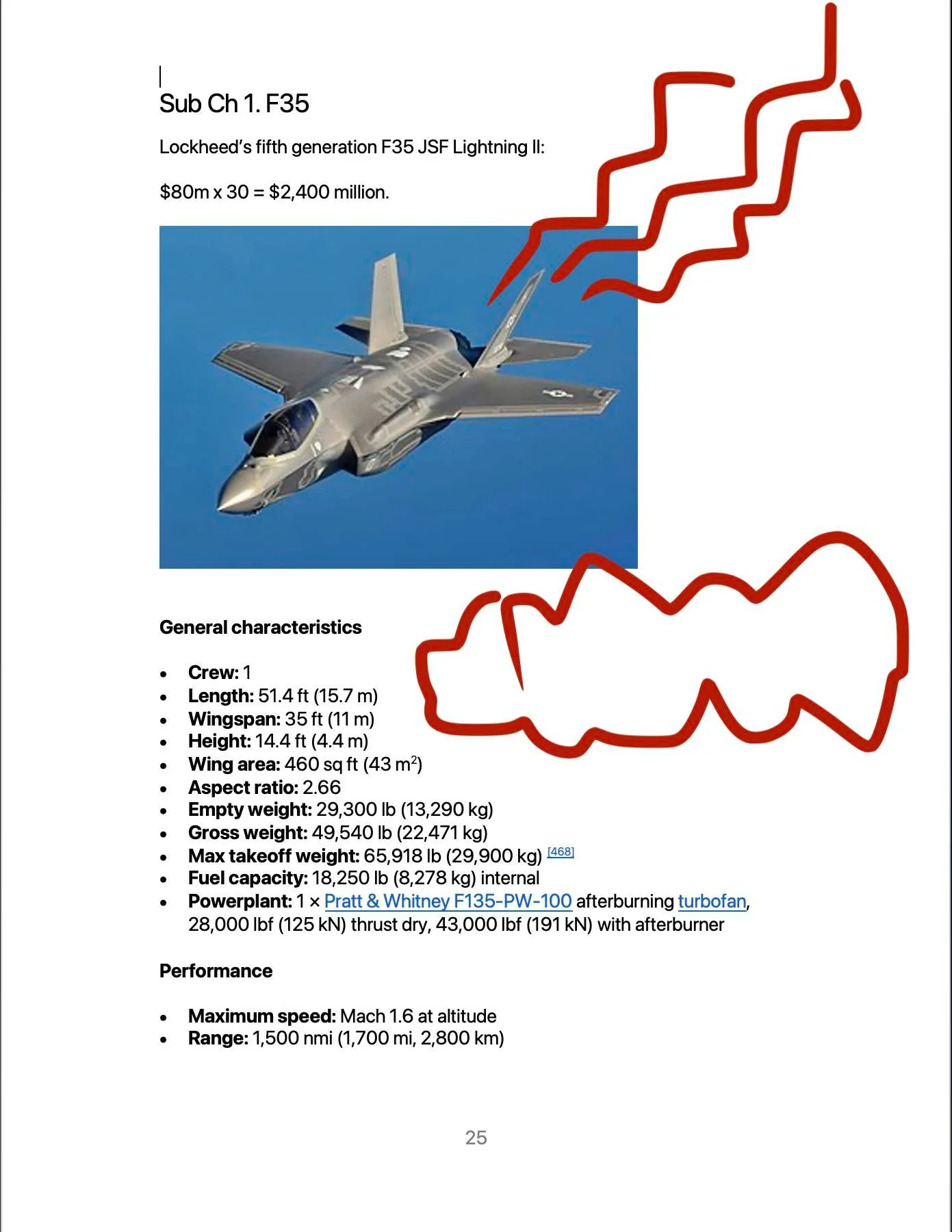
1. 30 x F35 at ~$80m = $2,400 million
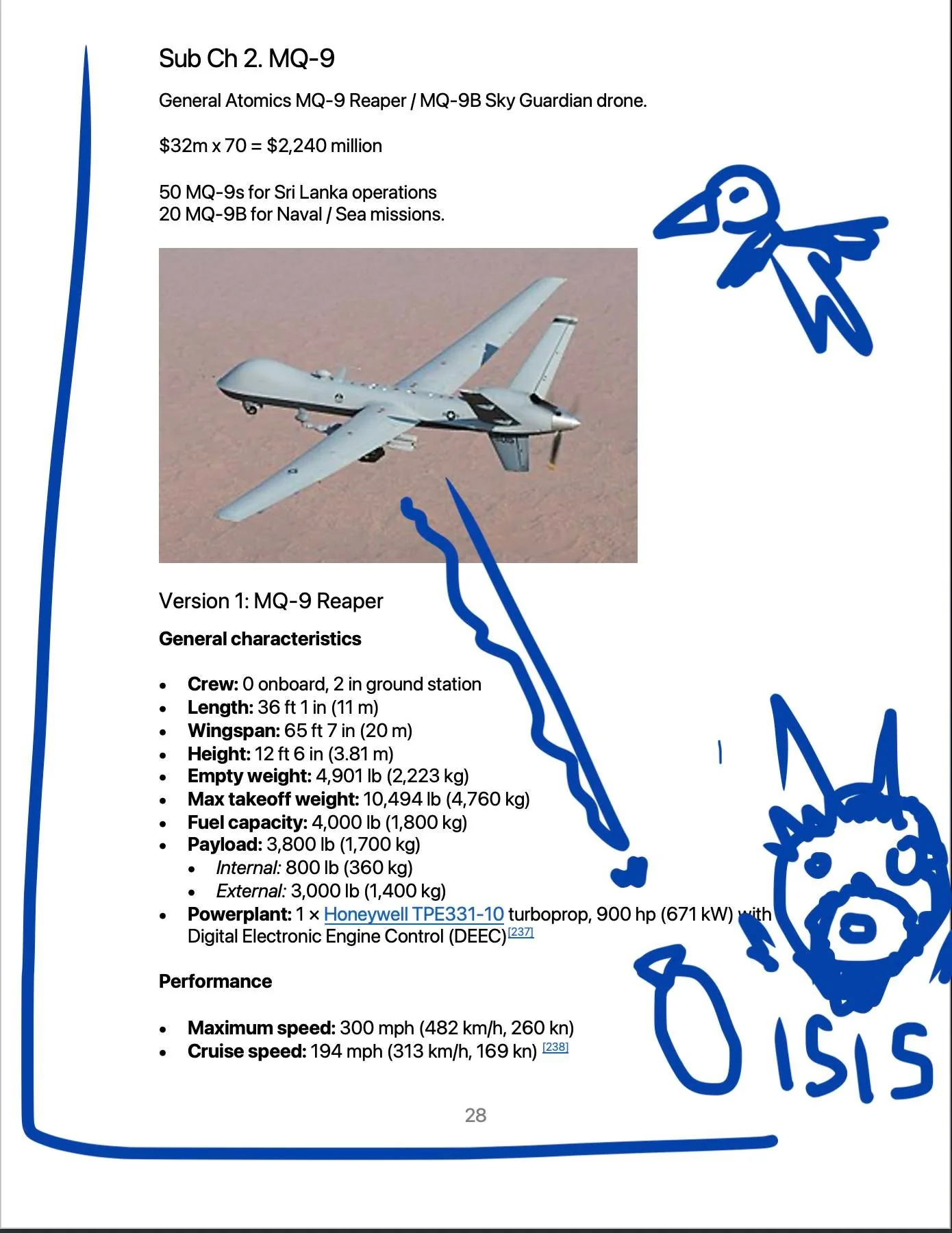
2. 70 x MQ9 at $32m = $2,240 million
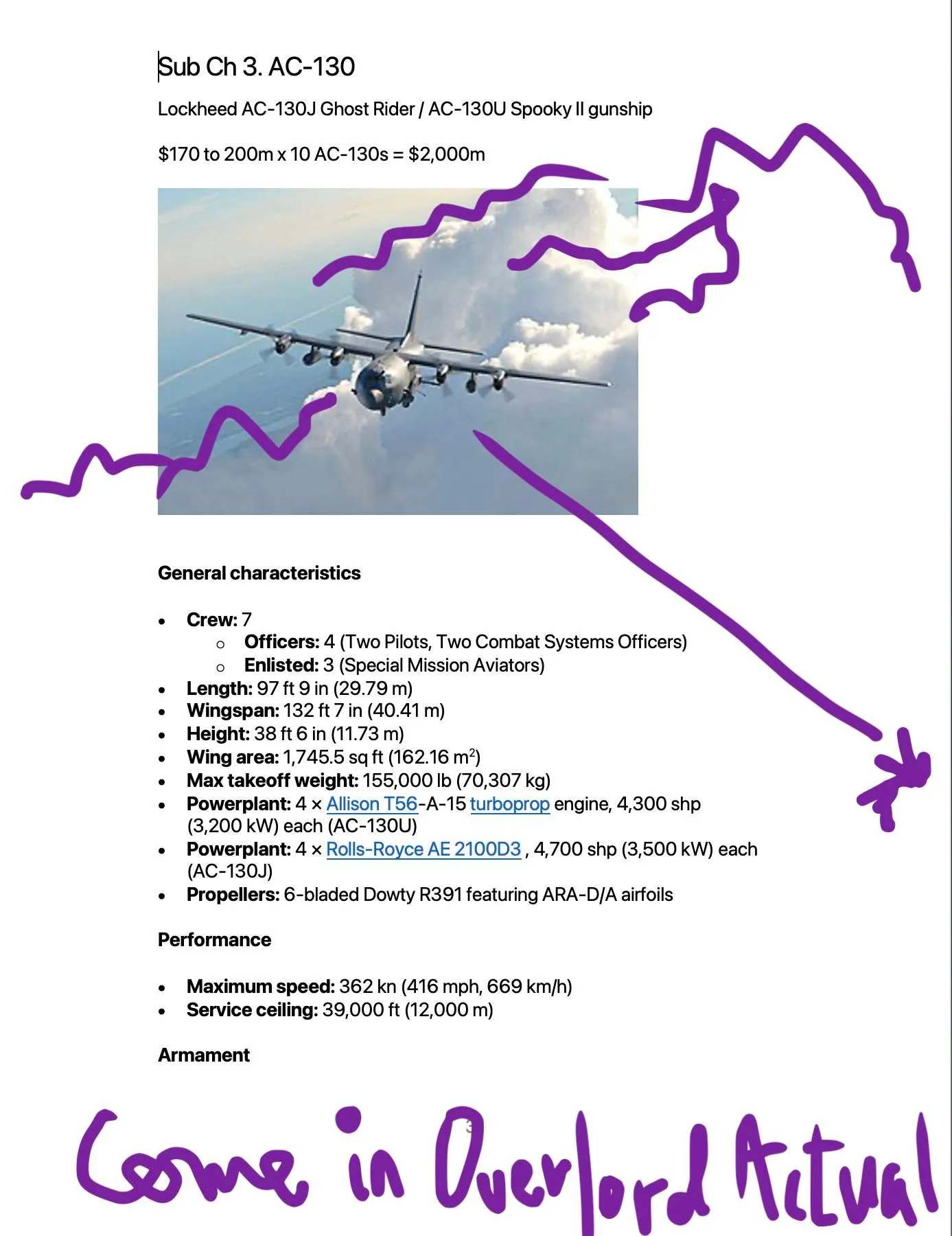
3. 10 x AC-130J at $200m = $2,000 million
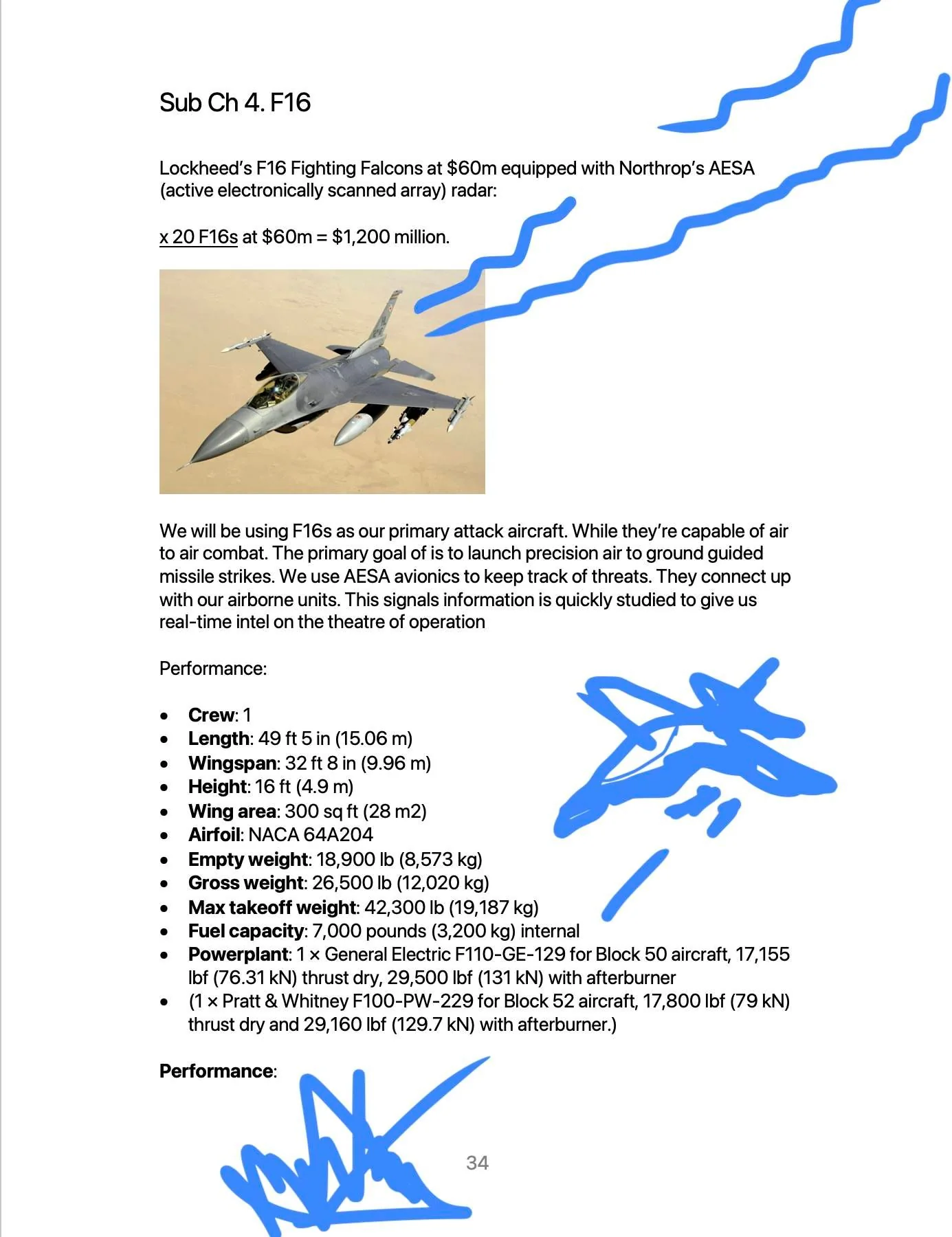
4. 30 x F16 at $60m = $1,800 million
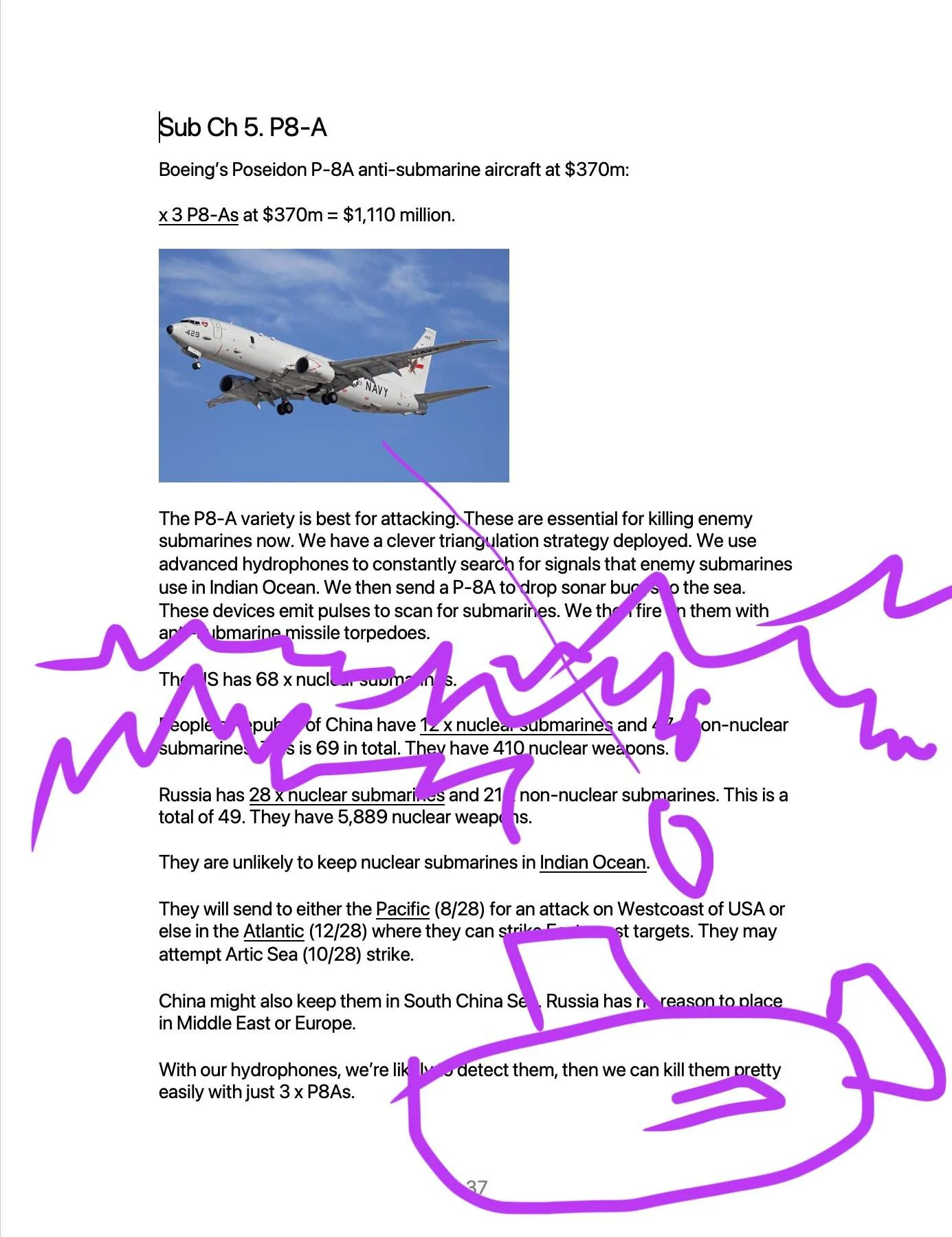
5. 3 x P8-A at $370m = $1,110 million
6. 2 x E-7A at $400m = $800 million
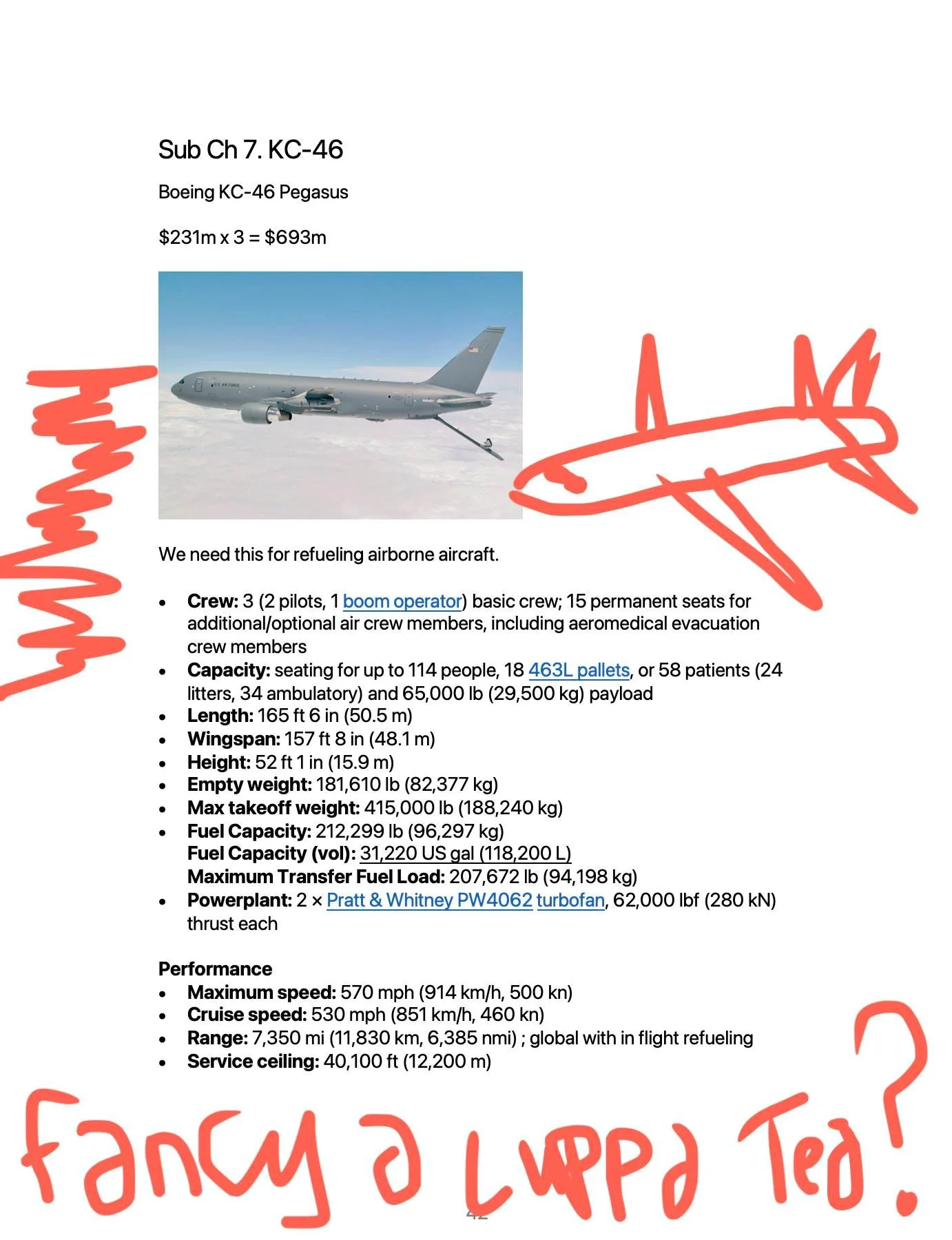
7. 3 x KC-46 at $231m = $693 million
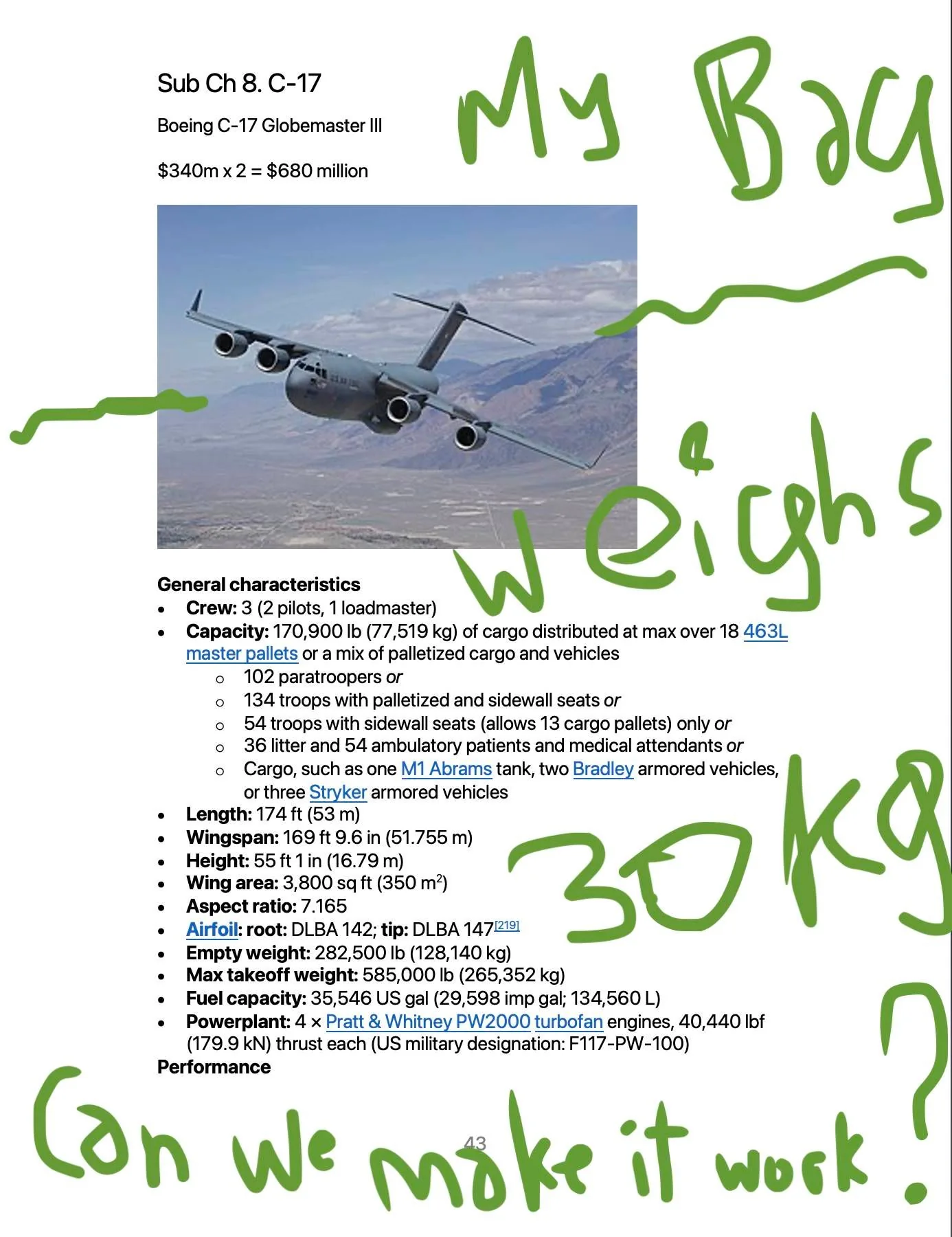
8. 2 x C17 at $340m = $680 million
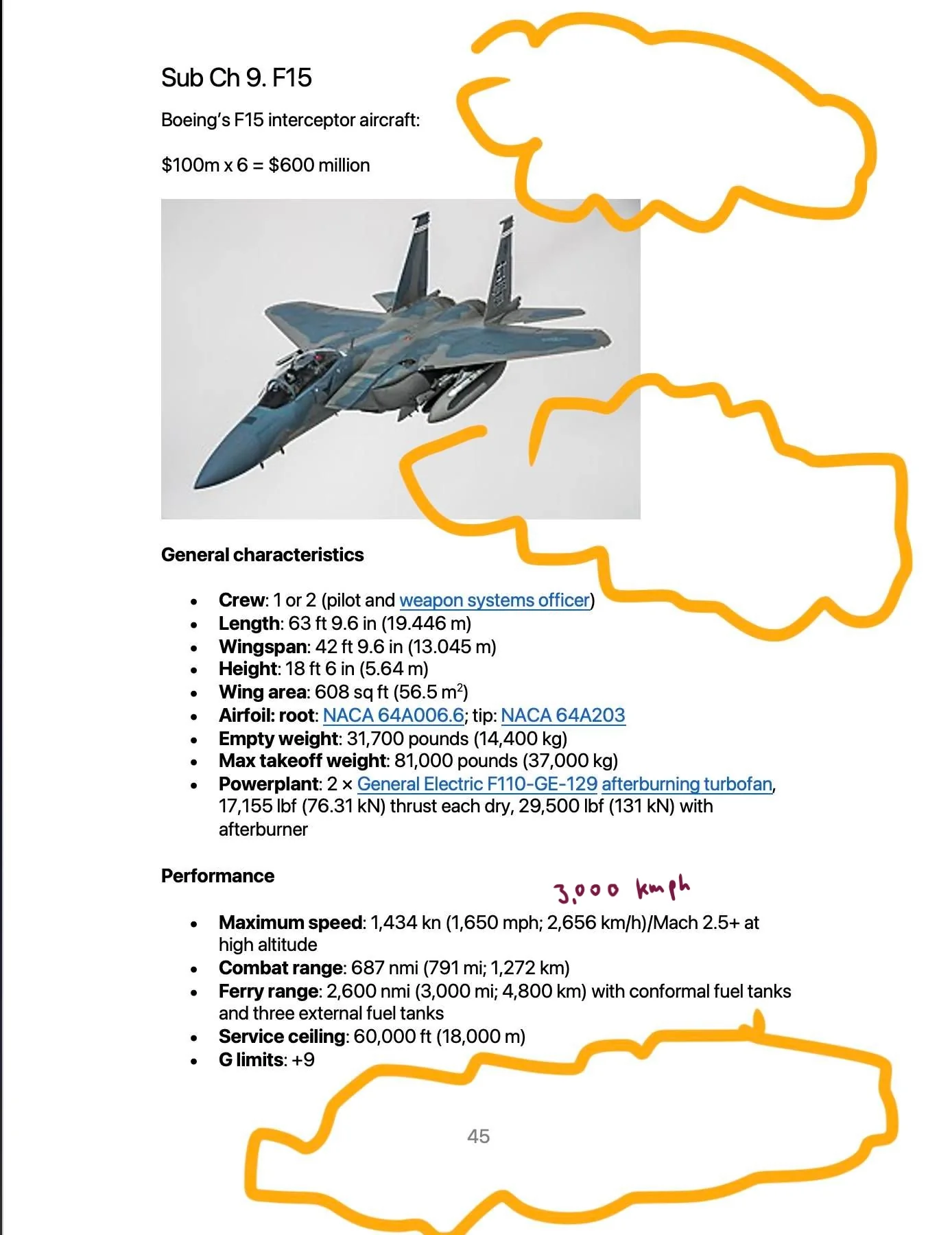
9. 6 x F15 at $100m = $600 million
10. 20 x T-7 at $27m = $540 million
Total costs: $12,863 million
: )
Ordering Three Versions of Number Six
1:30 a.m. (b)
I'll have a number 6
A number 6 large
And a number 6 no ice
A Chorus About Being More Than a Bird or Plane
4:30 a.m. (g)
[Chorus]
I'm more than a bird, I'm more than a plane
█████████████████████████████████████████████
██████████████████████████
A Fragment About Finding a Way
4:45 a.m.
[Verse 2]
███████████████████████
██████████████████
Find a way██████
███████████████████████████
A Chorus Fragment About Heroes Dreaming
4:45 a.m. (b)
[Chorus]
███████████████████████████████████████
Even heroes have ██████████████████
█████████████████████████████████████████
████████████████the right to dream
██████████████████████████
A Bridge Fragment About Sleeping Sound Tonight
4:45 a.m. (c)
[Bridge]
Up, up, and ██████████████████
██████████████████
███████████ sleep sound tonight
█████████████████████████
A Verse Fragment About Clouds Between Knees
4:45 a.m. (d)
[Verse 3]
████████████████████
██████████████████
█████████████████████████
████ clouds between their knees
A Chorus Fragment About Looking Inside Myself
5:00 a.m.
[Chorus]
███████████████████████████████████
██████████████████████████████ one way street
███████████████████████████████
Lookin' for special things inside of me
An Outro Repeating “Inside of Me”
5:00 a.m.
[Outro]
████████████
████████████
██████████████████
Inside of me
A Fragment About Looking for a Dream
5:00 a.m. (b)
███████████████████████████████████
██████████████ lookin' for a dream
███████████████████████████████████
████████████████████████████████
Names on this page
3 matched names linked to the Names index.