Dr Zaius, Orwell Detention

Lehan Edirisinghe

Dr. Zaius and Planet of the Apes cues sparked thoughts on old films, lawgivers, and Hammurabi. Animal Farm memories, school punishments, and a Peaky Blinders joke landed as regret and dark humor
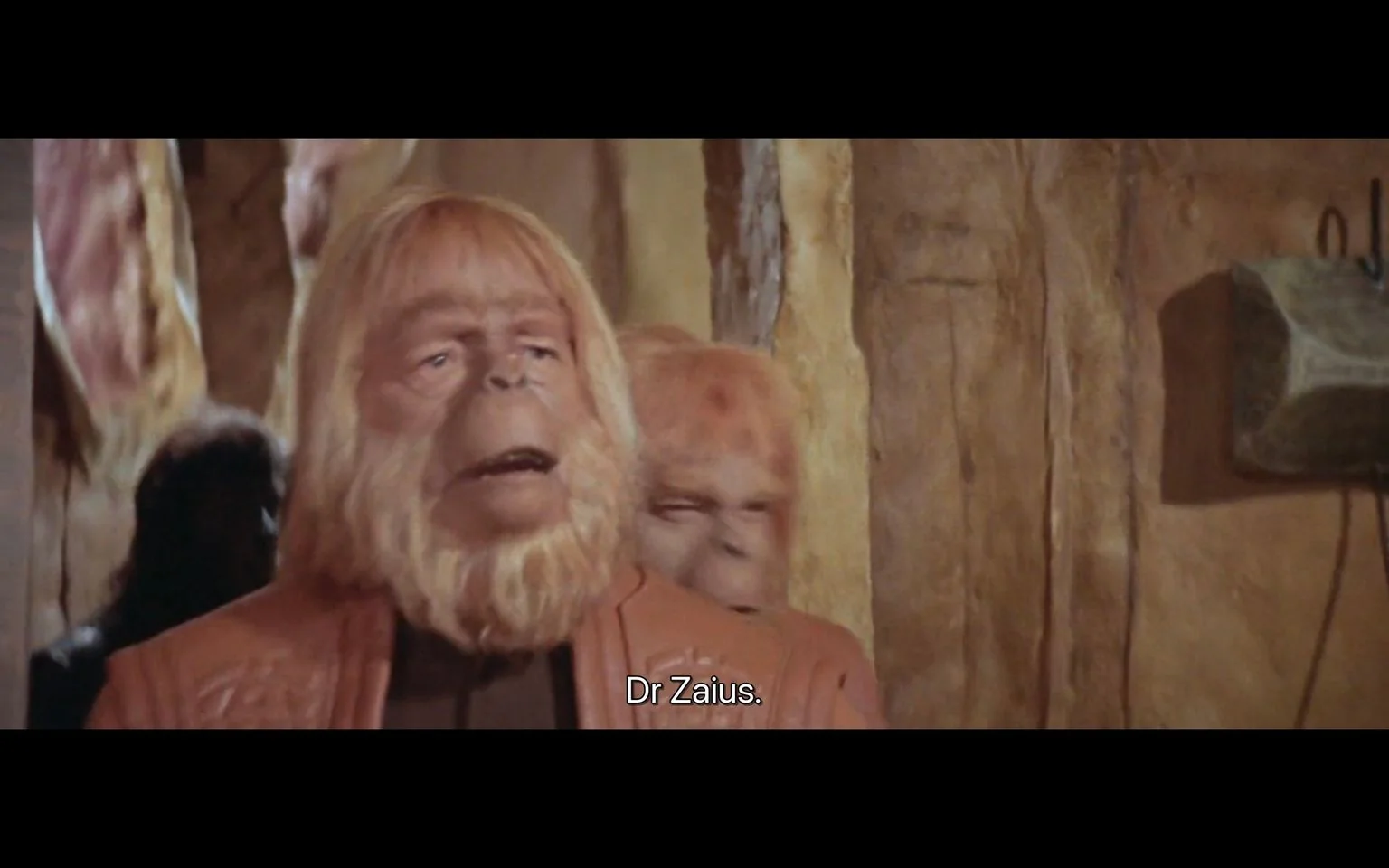

In this scene from the classic film "Planet of the Apes," the character Dr Zaius is shown prominently in the foreground. He has an orangutan-like appearance, characterized by his distinctive makeup and costume design, which includes a light brown robe. His face is expressive, with detailed prosthetics giving him a realistic ape-like look. The background features earthy tones, suggesting a primitive or cave-like setting typical of the movie's aesthetic. Another character, also resembling an orangutan, is partially visible behind Dr Zaius, adding depth to the composition. The lighting is warm and natural, highlighting the intricate details of the makeup and set design. The scene's mood is serious and contemplative, fitting the sci-fi genre's exploration of complex themes. The caption "Dr Zaius" confirms the character's name, grounding the viewer in the narrative.

Woz

9:00 p.m.

Woz.

The image shows an older man with a white beard and gray hair, smiling broadly. He appears to be engaged in a conversation or an interview, suggested by his expression and the visible gesture of his hand, which is partially clenched. The lighting in the image is warm, casting a pleasant glow on his face, and the background is softly blurred with a purple hue, indicating an indoor setting, likely at an event or conference. He is wearing a dark colored shirt or jacket, and a watch is visible on his wrist. The atmosphere of the image is lively and positive, with the man looking relaxed and approachable. There is no visible text or branding in the image.

Gina Smith Writing His Biography

9:30 p.m.

Gina Smith wrote his biography

: )

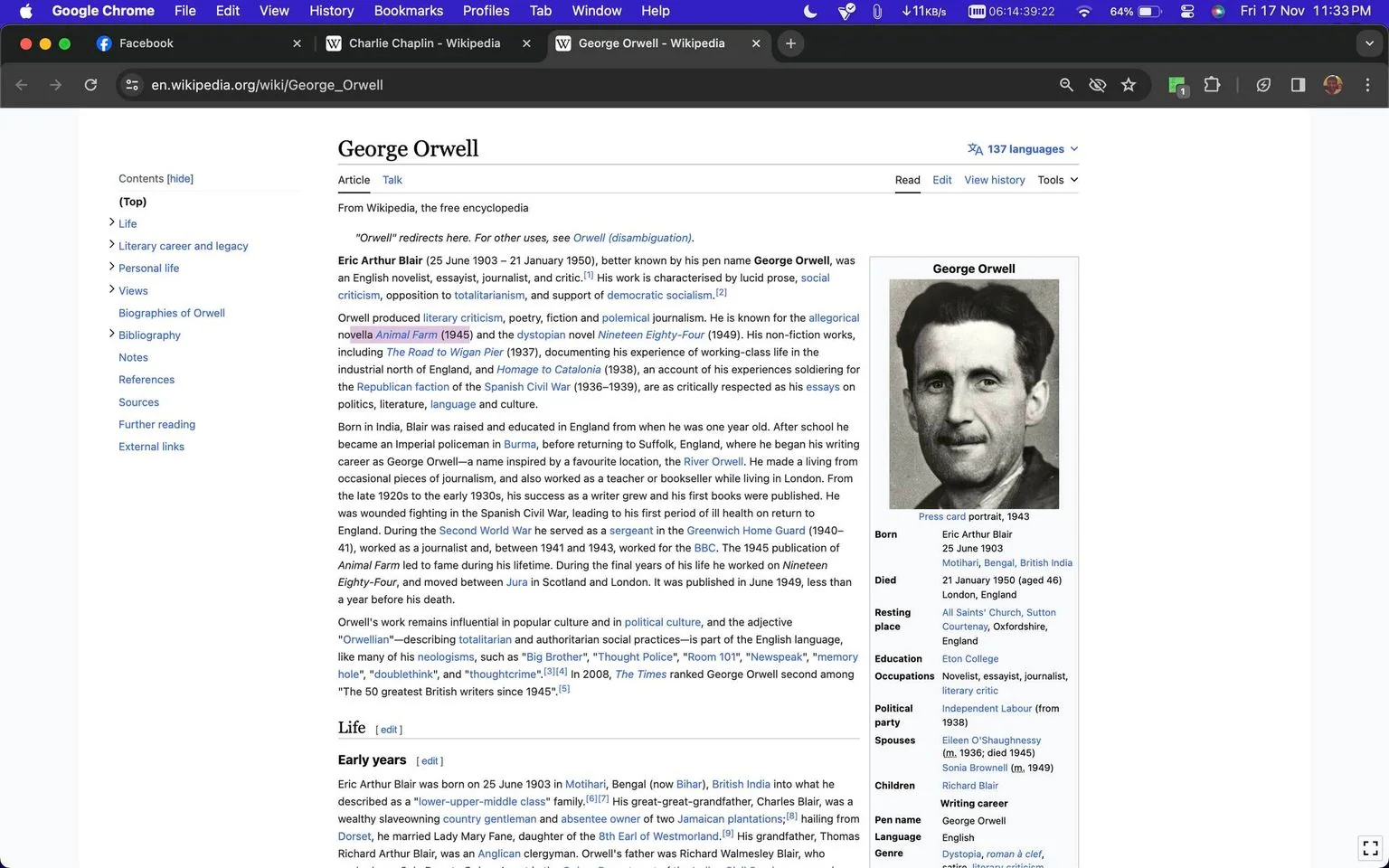
The screenshot depicts a Wikipedia page about George Orwell, a renowned English novelist, essayist, journalist, and critic. The page features a black and white portrait of Orwell, identified by his real name, Eric Arthur Blair, along with his birth and death dates (25 June 1903 – 21 January 1950). This image appears in a sidebar on the right, which also includes key personal details such as his birthplace, resting place, and educational background. The main text provides an overview of Orwell's work, highlighting his notable allegorical novella "Animal Farm" (1945) and the dystopian novel "Nineteen Eighty-Four" (1949). Other works mentioned include "The Road to Wigan Pier" (1937) and "Homage to Catalonia" (1938). The page describes Orwell's influence on political and cultural thought, including the adjective "Orwellian," which describes his critiques of totalitarianism and social practices. The page is structured with sections on his life, career, personal life, and bibliographies, typical of Wikipedia's layout. The background is a simple white, ensuring the text is readable, with navigation options visible at the top for other Wikipedia articles and functionalities.

Animal Farm, School Punishments and Regretting Mistakes

12:45 a.m. (d)

I read Animal Farm, not 1984 in school.

My English teacher was Guruge, reading that book, I was mischievous, they asked me to stay outside as punishment for another crime

I was a very bad, horrible kid

Shocking how I was never expelled despite never going to school and having so many detentions and suspensions

█████████████████████████ █████████ 's house with █████ for no reason

I went to say sorry to her the next day, I didn't really do anything, I was in the dude's jeep--he's done it

I regret every mistake I ever make

██████████████████████████████████████████████████████████████████████████████████████████████████████████████

█████████████
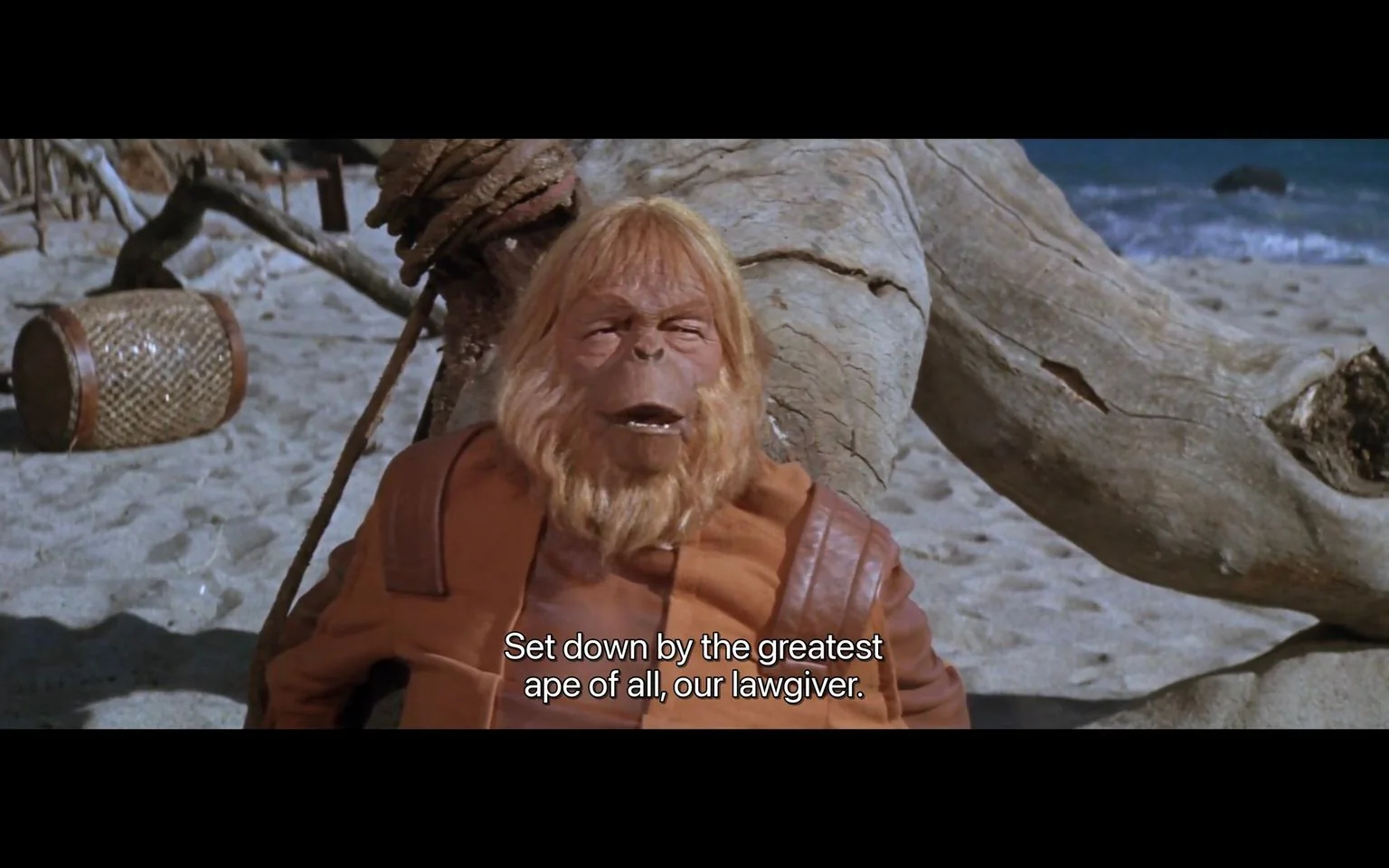
In this image from the film "Planet of the Apes," a humanoid ape character is prominently featured on a sandy beach. The setting is outdoors, during the daytime, and includes a backdrop of driftwood and the ocean. The character has long, light brown hair and a beard, wearing a brown leather-like garment, which adds to the film's science fiction aesthetic. The expression on the character’s face appears to be serious, as if delivering an important statement. The subtitle at the bottom of the image reads, "Set down by the greatest ape of all, our lawgiver," indicating a moment of dialogue that suggests a reference to a significant figure within the film's narrative. The composition focuses on the character, with objects like a rope and a woven basket visible in the background, enhancing the scene's immersive quality.

Hammurabi

12:45 a.m. (f)

Hammurabi

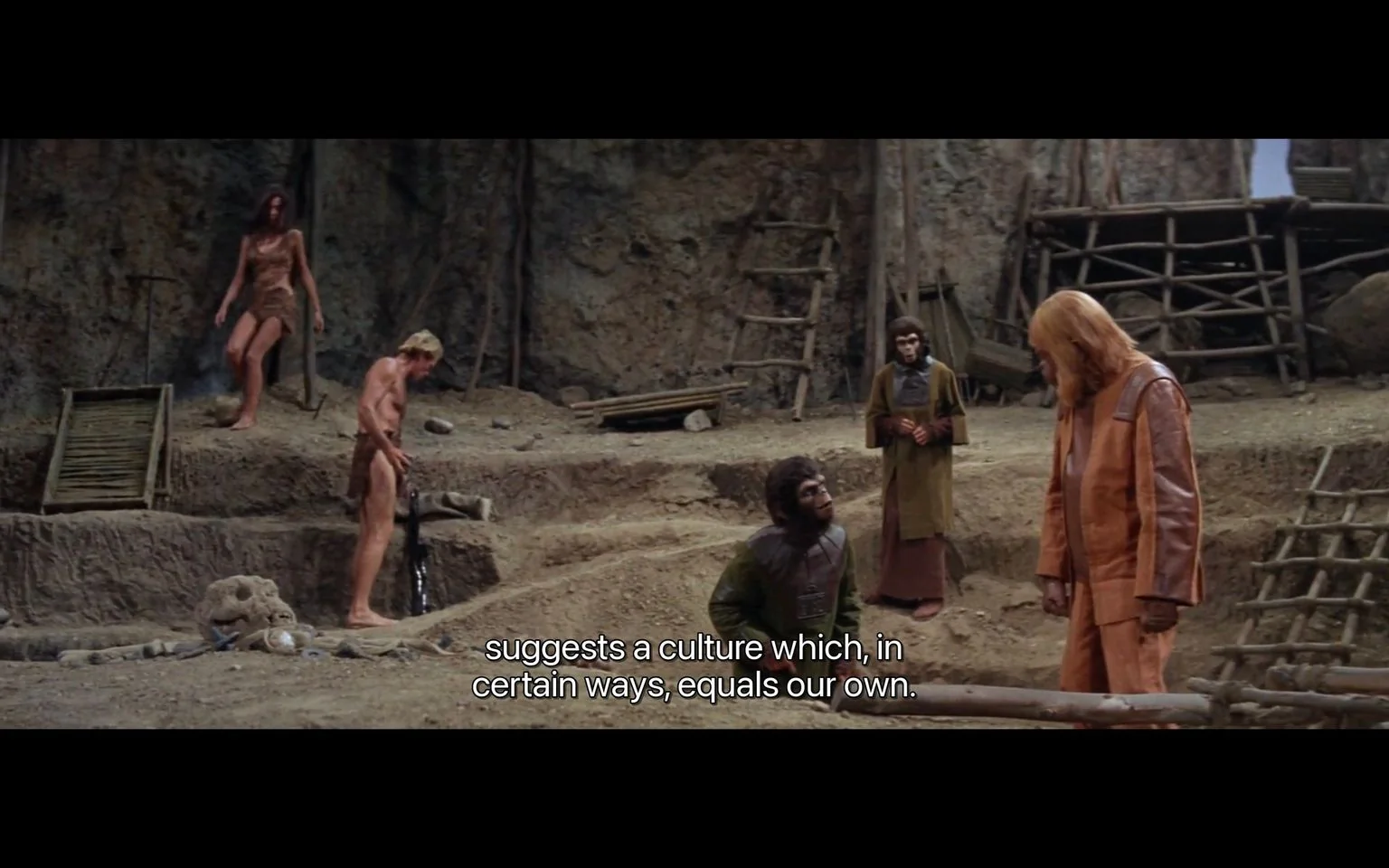
The image is a frame from the film "Planet of the Apes." It depicts a scene set in a rustic, outdoor environment, likely an archaeological dig site. Several characters are present, including humans dressed in primitive clothing and apes in more sophisticated attire. The apes are standing and interacting with the humans, suggesting a power dynamic or cultural exchange. The background features a rocky terrain with wooden structures like ladders and platforms. The lighting is natural, highlighting the earthy tones of the surroundings.
One ape, dressed in an orange and brown outfit, stands in the foreground conversing with another ape, who is lower and looking upward. A human male, also in primitive garb, is interacting with the environment to the left. The mood of the scene reflects a mix of curiosity and tension, as suggested by the subtitle: "suggests a culture which, in certain ways, equals our own." This indicates a thematic exploration of cultural parallels between the apes and humans.

Planet of the Apes and the Golden Era of Film

1:30 a.m. (b)

This is from Planet of the Apes (1968) which is a terrific film. I personally love movies from this time period, I feel the 70s, which produced The Godfather, was the golden era of film.
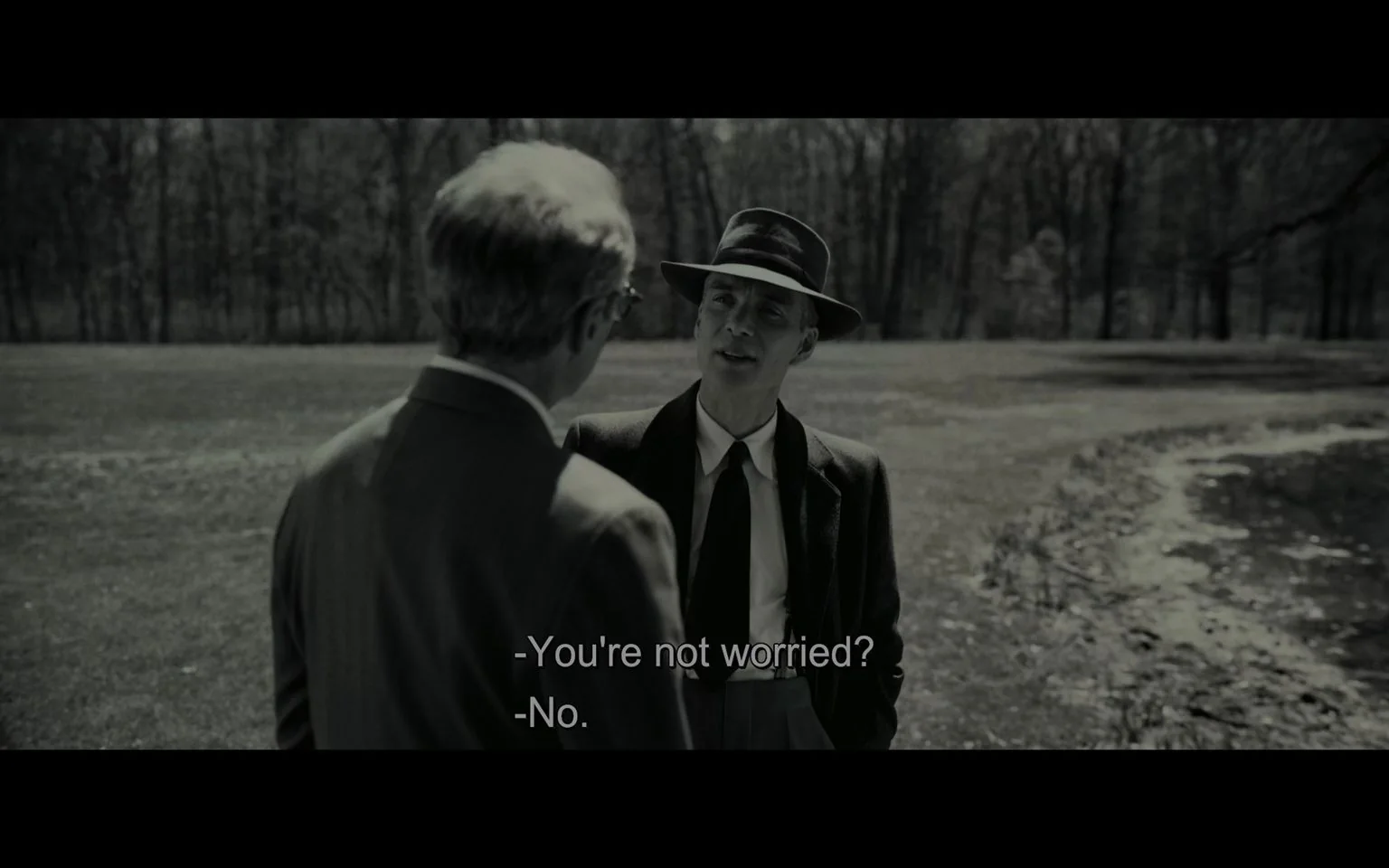
In this black-and-white image, Cillian Murphy is portrayed as Oppenheimer, engaged in conversation with another man. The scene is set outdoors, possibly in a park or open field, with trees in the background adding to the serene yet tense atmosphere. Cillian Murphy, dressed in a classic suit and tie, also wears a fedora, giving him a distinct mid-20th-century appearance. He stands with one hand in his pocket, displaying a calm demeanor as he responds to the other man's concern. The other man, seen from the back, is also in formal attire, suggesting a professional or serious discussion. The lighting is natural, emphasizing the shadows and contrasts typical of black-and-white cinematography. The subtitles reveal part of their dialogue: "-You're not worried?" "-No." This exchange suggests a conversation about a potentially serious matter, with Murphy's character displaying confidence or nonchalance. The overall composition and attire reflect the historical setting of the film "Oppenheimer."
- Captions / subtitles: "-You're not worried?" "-No."

Quoting “Red Right Hand” as a Joke

3:15 a.m.

I remember quoting Nick Cave's red right hand as a joke to Pauline in my coat once; she didn't get it apparently

Peaky Blinders is very cool