60 Minutes
...

September 21, 2026

Data center opposition a rare issue uniting Americans across the political divide | 60 Minutes

- Amazon Web Services sought up to 90% in property-tax rebates from Hood County for 30 years, after initially concealing its identity. Commissioner Dave Eagle rejected the deal, but AWS moved to the neighbouring county, which granted the requested concession.

“They wouldn't tell us exactly what they wanted to do.”

— Dave Eagle

“I can't do that. There's no way I'd do that.”

— Dave Eagle

- AI data centers are approximately 200 times larger than major facilities built just two years earlier. University of Texas professor Michael Webber contrasts 5-megawatt facilities with new 1,000-megawatt installations, while Meta, Amazon, Google and Microsoft are expected to spend $1.5 trillion on data centers through next year.

“A new data center for AI might be 1,000 MW. It's like 200 times larger.”

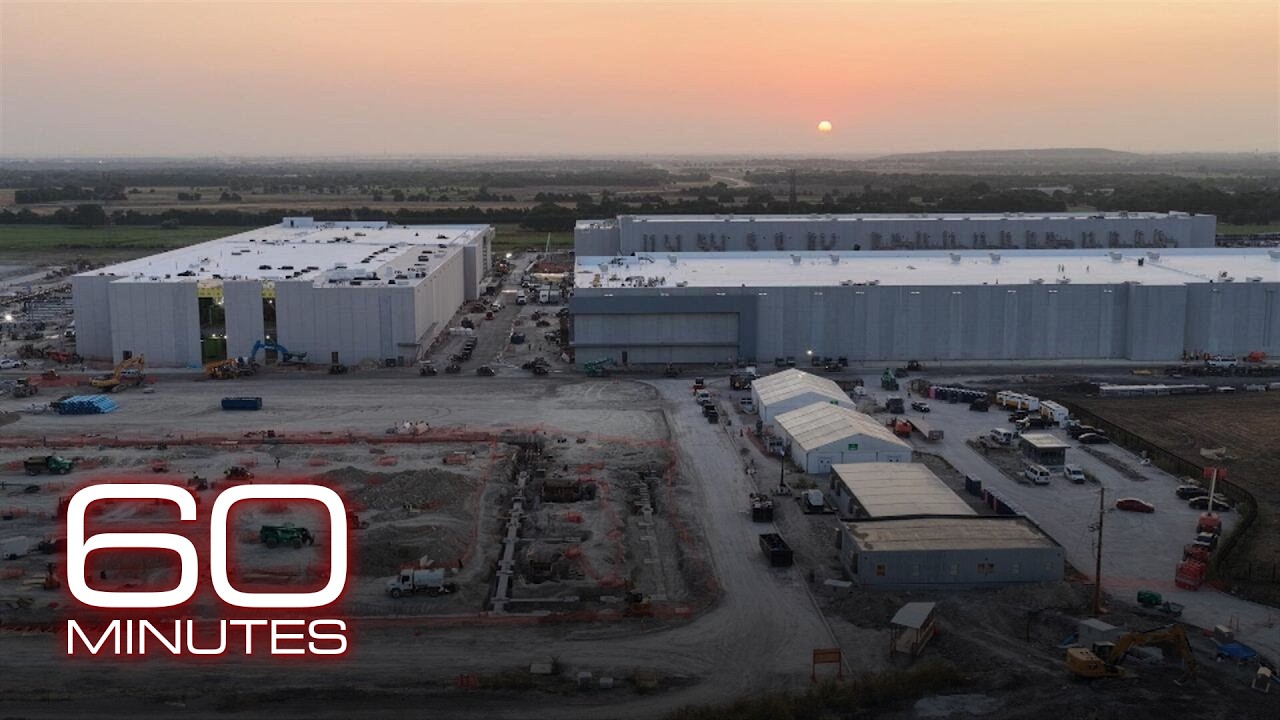
- Seven proposed data-center campuses could cover more than a quarter of Red Oak, Texas. The town has approximately 20,000 residents, and Compass alone proposes ten two-story buildings on agricultural land comparable in size to Manhattan's Central Park.

“We need to know what feasibility studies the city of Red Oak has done before inviting the data centers in.”

- Rural America is becoming the principal destination for the data-center expansion. Approximately two-thirds of proposed American facilities are planned for rural areas, while Hood County alone faces nine proposals covering roughly 8,000–10,000 acres, threatening traditional ranching and agricultural land.

“We're stewards of this land. We're here to take care of it and pass it on to the next generation of Texans.”

— Blake O'Quinn, third-generation rancher

- Texas Governor Greg Abbott has shifted from aggressively courting data centers to restricting their expansion. Democratic challenger Gina Irizarry called for a moratorium and alleged Abbott received $20 million in donations from data-center executives and companies; in August, Abbott paused approvals for new facilities drawing from the state's electricity grid pending an audit.

“Abbott took 20 million in campaign donations from data center executives and companies.”

— Gina Irizarry

- Opposition to data centers is crossing America's traditional political divide. More than 60% of Republicans, independents and Democrats reportedly oppose having one in their neighbourhood, while lifelong Republican Dave Lowe says the issue has changed how he will vote.

“I'm not going to vote red or blue. I'm going to vote for the candidate that is willing to speak up and put up and do something to help us with this issue.”

— Dave Lowe

- The environmental and infrastructure costs are already becoming local political issues, although the evidence requires context. Electricity bills have surged in data-center-heavy Loudoun County, partly because of growing demand, while Arizona residents worry about cooling-water consumption; CBS found golf courses nationwide use more than twice as much water as data centers.
...

September 14, 2026

Brokers are offering felons a path to Trump pardons — at a steep price with no guarantees

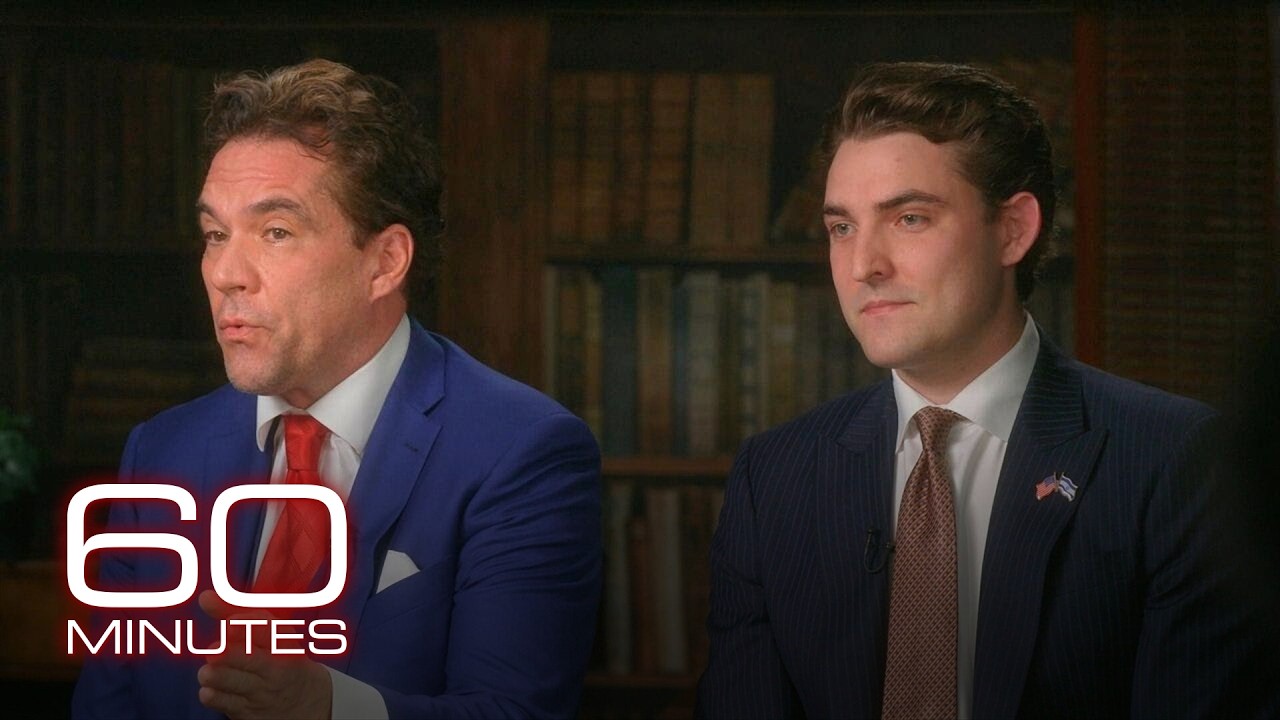
- Pardon brokers charge up to $3 million for claimed access to Trump. Jack Burkman and Jacob Wohl offered Ammon Covino a $300,000 campaign involving Mar-a-Lago events and congressional pressure; his rejected DOJ application had cost a postage stamp, yet he said he would pay if he could afford it.

“We literally want to put the pen in his hand and get him to sign it because he's tired of hearing about it.” — The brokers

- Rapper Boosie Badazz paid Burkman and Wohl $600,000 upfront and received no pardon. His contract promised half back if unsuccessful, but they dispute its validity and deny sending messages naming Laura Loomer, Erica Kirk, Mike Johnson and Natalie Harp; the four denied involvement, and Boosie is suing.

“If you come with this money, you will get a pardon.” — Boosie, describing what he had been led to believe

- Most of Trump's second-term clemencies bypassed the Department of Justice. The investigation found approximately 70% had not gone through the department, rising to 92% when January 6 rioters were included, while 16,000 applications awaited decisions.

“He relies very little on DOJ. So with Trump DOJ is an afterthought.” — The brokers

- Several pardons followed major financial benefits involving Trump-related interests. Examples included nearly $2 million in re-election donations before a fraudster's pardon, Binance backing a Trump family cryptocurrency venture before its founder's pardon, and a $1 million Mar-a-Lago fundraiser payment before a healthcare executive's pardon; the report did not establish a quid pro quo.

- The brokers coached Covino to present his conviction as political persecution rather than seek mercy through remorse. They urged him to describe his illegal wildlife-trafficking prosecution as an Obama-era weaponised prosecution, matching Mark Osler's observation that blaming prosecutors has become a potentially successful pardon strategy.

“The people who were wrong were the people who accused me.” — Mark Osler, describing the strategy

- Mark Osler says the pardon market is shutting out applicants without money or connections. After 15 years helping indigent felons, he says applicants increasingly believe they need million-dollar intermediaries, although conventional clemency petitions once cost lawyers only a few thousand dollars.

“That's not a system. That's something different entirely. It's anarchy.” — Mark Osler

- The administration disputes the brokers' claims that paid lobbying can secure pardons. Former DOJ pardon-office head Ed Martin said he had seen no evidence of a broker-driven system, while the White House insisted Trump acts ethically and dismissed paid pardon lobbying as a waste of money.

“Anyone spending money to lobby for pardons is foolishly wasting their money.” — White House statement

...

September 10, 2026

The 28 pages of 9/11 intelligence that were in a secret vault | 60 Minutes Archive

- Omar al-Bayoumi became al-Hazmi and al-Mihdhar's principal benefactor after a supposedly chance meeting in Los Angeles on February 1, 2000. Bob Graham considered him a Saudi agent; FBI files reportedly identified him that way before 9/11, and he held a no-show job with a Saudi aviation contractor while drawing a Saudi-government paycheck.

- Bayoumi provided the two hijackers with substantial assistance establishing themselves in San Diego. He found them housing in his apartment complex, advanced their deposit, co-signed their lease, hosted a party and connected them to people who helped obtain IDs, English lessons and flight training; investigators found no proof he knew their plans.

- The hijackers' California contacts included Saudi diplomat Fahad al-Thumairy and imam Anwar al-Awlaki. Witnesses placed them with Thumairy at a Los Angeles mosque; Bayoumi was in regular contact with the diplomat and made four calls to al-Awlaki on the day he welcomed the hijackers to San Diego, before they later joined al-Awlaki in Virginia.

“I don't believe in coincidences.” — Bob Kerrey

- The 28 pages are preliminary investigative leads, not a definitive finding of Saudi government complicity. Former officials described a working draft containing evidence both verified and unverified, including possible official Saudi assistance to two hijackers; the material went to the 9/11 Commission, which resolved some questions but not all.

- The 9/11 Commission did not exhaust the Saudi line of inquiry. Commissioner Bob Kerrey said it lacked time and resources and did not pursue every lead, leaving unresolved questions that its published report cannot be assumed to have settled.

“We didn't have the time. We didn't have the resources.” — Bob Kerrey

- The commission's finding did not rule out lower-level Saudi assistance, central to the victims' lawsuit. It found no evidence that the Saudi government as an institution or senior officials individually funded al-Qaeda; families allege Saudi institutions knowingly financed the group while it waged war on the US, and Washington backed Riyadh's sovereign-immunity defense.

“That is the essence of the family's lawsuit.” — Sean Carter

- Former investigators and a solid majority of 9/11 commissioners wanted the 28 pages released after 13 years of secrecy. Graham and Porter Goss asked FBI Director Robert Mueller to declassify them, but he gave no substantive reason for refusing; John Lehman said the material did not warrant continued secrecy.

“because we said so and it needs to be classified.” — Porter Goss, recalling the FBI's response.

“those 28 pages in no way fall into that category.” — John Lehman

- The programme distinguishes assistance by Saudi-linked individuals from formally authorised Saudi state policy. The commission identified wealthy citizens and charities as a primary al-Qaeda funding source, with significant government sponsorship; Lehman believed some senior officials knew of assistance but not that it was official policy, citing Wahhabi outreach and the fact that 15 of the 19 hijackers were Saudis.

...

June 23, 2026

Former Federal Reserve chairman Alan Greenspan | 60 Minutes Archive

- Greenspan admitted he did not understand the scale of subprime mortgage abuse until late 2005 or 2006. He knew questionable lending practices existed but had rejected former Fed governor Ed Gramlich’s proposal to investigate, arguing that the Federal Reserve was not capable of the suggested intervention.

“I had no notion of how significant they had become until very late.”

- Greenspan kept interest rates historically low for roughly three years while the housing bubble formed. The Fed made 13 rate cuts during that period, earning him Wall Street's nickname “Easy Al” for making credit cheaper whenever markets weakened.

“We raised interest rates at every meeting from June of 2004 till I got out of office.”

- Greenspan defended Federal Reserve independence against presidential pressure but accepted an unusually close advisory relationship with Bill Clinton. He condemned George H. W. Bush's public demands for lower interest rates, yet visited Clinton's White House as often as monthly and hoped his private advice would influence government policy.

“We are one government. The Federal Reserve is not the foreign enemy.”

- Greenspan deliberately used complicated language to avoid giving clear answers during congressional hearings. He called the technique “Fedspeak,” acknowledging that he engineered statements that sounded responsive while revealing little, sometimes producing opposing newspaper headlines from the same hearing.

“Syntax destruction, which sounded as though I were answering the question, but in fact had not.”

- Greenspan's testimony was interpreted as support for George W. Bush's tax cuts, although he denied explicitly endorsing them. He favoured a reduction because he feared the projected budget surplus would become excessive, but after the surplus disappeared and deficits returned, the administration ignored his recommendation to trim the cuts.

“I would not change a word of it.”

- Greenspan's intellectual allegiance to Ayn Rand's unfettered capitalism preceded his appointment as America's leading banking regulator. Rand considered him one of her prominent disciples, nicknamed him “The Undertaker,” and criticised his ambition for social approval.

“The undertaker.”

- Greenspan expected the immediate credit crunch to pass but predicted further housing-price declines. He considered resurgent inflation the greater long-term economic threat and anticipated higher interest rates even while maintaining that the broader economy remained resilient.

“Our problem over the long run is the reemergence of inflation.”

- Greenspan's economic predictions continued moving markets after his retirement. His warning of a one-in-three chance of recession rattled investors and forced Ben Bernanke to reassure markets, while Greenspan rejected calls to restrict his public economic commentary.

“How am I going to pursue my profession without doing precisely that?”