60 Minutes

60 Minutes

Watch Facts Elle's
...

October 13, 2025

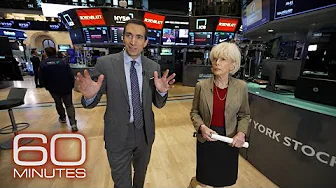
Andrew Ross Sorkin on worrying similarities between Wall Street today and 1929's pre-crash market

- Andrew Ross Sorkin predicts another major stock-market crash is inevitable. After spending nearly ten years researching the 1929 collapse, he says he cannot predict when it will happen or how severe it will be, but believes it will happen.

“The answer is we will have a crash. I just can't tell you when.”

- The artificial intelligence boom may be propping up an otherwise weakening economy. Sorkin points to hundreds of billions of dollars flowing into AI and questions whether the investment represents sustainable technological growth or speculative excess that could eventually collapse.

“This is either a gold rush or a sugar rush.”

- Financial speculation and borrowing are increasing while investor protections are being dismantled. Sorkin identifies weakening SEC rules, the diminished Consumer Financial Protection Bureau and growing market debt as a dangerous combination resembling conditions that preceded previous financial crises.

“There's speculation in the market today. There's an increasing amount of debt in the market today.”

- The Trump administration is opening retirement accounts to riskier private-market investments. BlackRock CEO Larry Fink, whose company manages approximately $12.5 trillion, supports allowing 401(k) investors to access startups, AI companies and data centres, despite private companies having fewer disclosure obligations than publicly traded businesses.

“We are going to allow in our 401k products the opportunity to invest in these private markets.”

- The proposed democratization of private investing could expose ordinary Americans to risks previously concentrated among wealthy investors. Fink argues that long investment horizons and diversification can manage the risks, but the proposal potentially places retirement savings into less-transparent investments that can be difficult to evaluate.

- The 1929 market boom was fuelled by extraordinary leverage. Stocks rose 90% between 1928 and September 1929, while investors could purchase shares with only 10% of their own money and borrow the remaining 90% from brokers, magnifying losses when prices collapsed.

- A joke on television triggered a spectacular cryptocurrency speculation episode involving Sorkin's name. Two hours after Larry Fink jokingly suggested creating a Sorcin coin, somebody launched one; its trading reached $170 million in a single day before collapsing to approximately $20–$21 in daily trading.

“The Sorcin coin peaked at $170 million worth of trading in a day.”

- Sorkin says American CEOs are increasingly afraid to criticize the Trump administration publicly. Executives fear political retaliation, regulatory pressure and the possibility of losing approval for pending mergers, creating powerful incentives to remain silent.

“They are so nervous about criticizing anything that's going on with this administration.”
...

October 13, 2025

China hacking America’s critical infrastructure, retired four-star general warns | 60 Minutes

- China's cyber operation reached a 10,000-person Massachusetts town with no obvious military or federal significance. In November 2023, the FBI told utility manager Nick Lawler that Littleton was one of 200 affected entities; officials said China had been inside some utility networks for at least five years.

“I still can't answer that question. No, I can't think of one reason.”

— Nick Lawler

- The Littleton breach exposed how a cyberattack could threaten drinking water. The plant's chemical tanks were remotely controlled, although investigators found no operational takeover; federal agents monitored the intruders with Lawler's permission, and the utility spent more than $50,000 rebuilding its network.

“You can poison the water.”

— Nick Lawler

- Chinese operators entered Littleton through a firewall weakness, stole employee credentials and impersonated legitimate staff. Rather than install malware, they appeared to stay dormant, preserving access without the obvious warning signs of a conventional attack.

“They are just gaining access to that system and then attempting to lay dormant.”

— Tim Hawk

- Hawk believes China is pre-positioning access to American infrastructure for use in a future crisis or war. He argued that disrupting US water, power, transport or telecommunications during an Indo-Pacific confrontation could force Washington to divert attention and resources to the homeland.

“The only value would be for use in a crisis or a conflict.”

— Tim Hawk

- The suspected target set includes major transport, energy and communications systems. The programme named New York City's MTA, 13 gas pipeline operators, the Port of Houston and major phone companies; Hawk acknowledged that officials lack a complete picture of China's access.

- Senator Mike Rounds warned that China could use cyber access to threaten markets and everyday services. He said even millisecond delays in financial transactions could unsettle Wall Street, while electricity disruptions or blocked airline reservations could serve as additional pressure.

“Threatening to be able to cause chaos on Wall Street would be something that they would love to do.”

— Mike Rounds

- President Trump removed Tim Hawk, the 33-year Air Force intelligence veteran leading the NSA and US Cyber Command, in April after Laura Loomer met with Trump and called him disloyal. Loomer publicly cited his appointment by Biden; the White House declined to explain the firing, and Hawk later retired from the Air Force.

- Hawk says America's cyber-defence capacity is shrinking as experienced officials resign or are fired, even while China's capabilities grow. He believes substantial US expertise remains, but says the administration must deploy it effectively and strengthen partnerships with private industry.

“Our overall capacity is getting smaller.”

— Tim Hawk

...

October 13, 2025

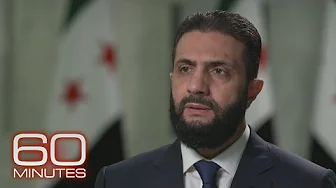
Syrian President Ahmed al-Sharaa: The 60 Minutes Interview

- Al-Shara's forces ended 54 years of Assad-family rule in just 11 days. They launched a surprise offensive against Aleppo in November 2024, advanced towards Damascus and forced Bashar al-Assad to flee to Moscow.

- Al-Shara's rise followed a long career in jihadist organizations: he joined al-Qaeda in Iraq and founded its Syrian affiliate. After six years in American and Iraqi prisons, his group carried out suicide bombings; he renounced al-Qaeda in 2016, while Washington designated him a global terrorist and maintained a $10 million bounty until months before the interview.

“I was 17 or 18 years old.” — Ahmad al-Shara

- Syria's human toll and reconstruction burden are extraordinary. Approximately 13 million Syrians are displaced or refugees, more than 500,000 died, many receive electricity and water only a few hours daily, and al-Shara estimates rebuilding will cost $600–900 billion.

“All these were direct targets with one objective to displace the people in these areas.” — Ahmad al-Shara

- Syria's recovery depends on sanctions relief and foreign investment that remain politically uncertain. Trump announced a provisional move to end US sanctions in May, but some lawmakers resist permanent repeal; China and Russia must also vote to lift terrorism sanctions against al-Shara.

“Anyone who obstructs the lifting of sanctions on Syria is an accomplice to those who committed this crime.” — Ahmad al-Shara

- The government faces allegations of atrocities against Alawite and Druze minorities. March saw allegations that security forces and allied militias participated in the killing of 1,500 Alawite civilians; in summer, forces and Bedouin militia were accused of executing unarmed Druze in Sweida, while al-Shara dismissed UN findings as exaggerated but promised prosecutions.

“I believe this is an exaggerated description.” — Ahmad al-Shara

- Israel's occupation and airstrikes have become a major obstacle to a Syrian security agreement. It seized strategic border positions, struck military headquarters and the defence ministry, and bombed the presidential palace grounds twice; al-Shara demands withdrawal from all positions taken after December 8 as US envoy Tom Barrack seeks an agreement.

“Israel must retreat from any point taken after December 8th.” — Ahmad al-Shara

- Al-Shara wants Assad prosecuted but is deliberately avoiding confrontation with Russia, whose air force helped destroy Syrian communities. He welcomed a high-level Russian delegation while insisting that Assad face legal accountability, acknowledging that military confrontation with Moscow would be too costly.

“We will use all legal means possible to demand that Bashar al-Assad be brought to justice.” — Ahmad al-Shara

“engaging in a conflict with Russia right now would be too costly for Syria” — Ahmad al-Shara

- Syria's promised democratic transition has no immediate timetable for nationwide elections. The March interim constitution gives al-Shara a five-year presidency; recent parliamentary elections admitted only a limited electorate, and nationwide voting must wait for rebuilt infrastructure and citizens' identity documents, although he promises one vote per person.

“General elections will be held once the infrastructure is rebuilt and once the population has IDs and proper documents.” — Ahmad al-Shara

...

October 6, 2025

Where Americans go if they believe they've suffered a rare vaccine injury | 60 Minutes

- The vaccine court was created to protect vaccine manufacturing while compensating people harmed by rare injuries, in a public-health system credited with saving 154 million lives globally. After DTP lawsuits drove all but one manufacturer from the market and caused shortages, Congress partially shielded manufacturers and funded compensation through a 75-cent tax on recommended childhood vaccines.

“A compassionate government will assist them in their hour of need.” — Senator Ted Kennedy

- The no-fault program has paid almost $5 billion to approximately 12,000 Americans. Claimants must show that a vaccine more likely than not caused their injury, not prove negligence; manufacturers are excluded from proceedings, lawyers are paid hourly, and roughly half of all claims are dismissed.

“It would be better to compensate somebody that wasn't injured than to miss somebody who was.” — Renee Gentry

- Jacob Thompson's family secured a $2.1 million judgment and lifetime annuity after a special master found his DTaP vaccinations more likely than not aggravated an underlying genetic mutation. He began seizing hours later; by age two he suffered up to 700 seizures daily, and at 13 spoke only a handful of words and needed help walking.

“We had this perfectly normal, happy, little baby.” — Jacob's father

- The vaccine court rejected the alleged vaccine-autism link after a nearly decade-long evidentiary proceeding. Three special masters considered testimony from dozens of medical experts and hundreds of scientific articles; eight additional federal judges unanimously upheld their conclusion that the evidence did not establish causation.

“Ultimately concluded there simply was not the evidence.” — Denise Vowell

- RFK Jr. now has authority to reshape the vaccine injury table and wants broader definitions of seizures and encephalopathy. The table covers 16 vaccines, including annual flu but not COVID, and excludes autism; Kennedy argues that expanding neurological injury definitions would make compensation easier.

“Its effective function is delayed denial and systematic cruelty.” — Robert F. Kennedy Jr.

- Ryan Farrell waited six years for a ruling that his 2017 tetanus vaccination more likely than not caused his autoimmune disease, yet his damages remain undecided. The former power-company lineman remains unable to work; his wife discovered the compensation program online and filed his claim in 2019.

“I didn't want to live for a long time, you know?” — Ryan Farrell

- The court has a backlog exceeding 3,000 cases despite four consecutive years of requests for additional resources. Its chief special master has repeatedly appealed to Congress, which has yet to act; the report identifies political polarization surrounding vaccination as a contributing reason for legislative inaction.

“It becomes more difficult each year to resolve the huge number of case filings in the expedient fashion they deserve.” — Chief Special Master

...

September 29, 2025

Undersea cable cutting in the Baltic Sea | 60 Minutes

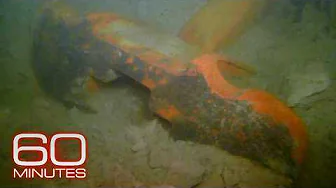
- Finnish investigators traced the Eagle S's anchor across approximately 100 kilometres of seabed and past five damaged cables. The anchor had dragged for more than six hours, leaving a continuous track from the first damaged cable to where the tanker was stopped; it was so badly damaged that it snapped off when hauled up.

“The track mark was continuous until the location when the vessel was stopped.” — Risto Lohi, National Bureau of Investigation

- The captain's accidental-drag explanation faces a serious technical challenge. Coast Guard commander Miko Simola cited three anchor safety mechanisms and said a captain should know whether the anchor was deployed; prosecutors charged the captain and two senior officers, who pleaded not guilty, while repairs cost $70 million.

“Certainly a captain of the vessel must always know whether the anchor is hoisted or in the sea.” — Miko Simola

- Finland's interception was its first military boarding of a vessel since the Second World War. Prime Minister Orpo authorized the operation, and armed special forces arrived by helicopter just after midnight because authorities feared further damage to cables threatening Estonia's electricity and gas supplies.

“You can trust that you have my and my government's full support. Use all the tools you have.” — Prime Minister Orpo

- The Eagle S's opaque ownership linked it to a major Russian oil company. A seven-month investigation found an Azerbaijani woman owner with a Dubai office, an Indian manager, and a lease to a Russian oil major financing tankers used to evade sanctions; the EU, UK and Canada later restricted the Eagle S's port access.

- The cable damage is part of a wider pattern in a strategically important shipping corridor. At least 11 cables have been cut in two years, mainly off Finland, while approximately 40% of Russia's commercial traffic passes through the Baltic; such incidents were extremely rare before Russia's invasion of Ukraine.

- Orpo linked the incidents to Russia's shadow fleet but did not establish who ordered the Eagle S's actions. He described a clear connection between the fleet and the cable incidents, but the investigation documented ownership and commercial relationships rather than identifying who directed the damage.

“I can only say that there's clear connection between Russian shadow fleet and these incidents.” — Prime Minister Orpo

- NATO launched Operation Baltic Sentry after the Eagle S incident, deploying ships and aircraft to protect undersea infrastructure. Deputy Supreme Allied Commander Keith Blount called the tanker case a triggering event and said NATO had recorded no further incident since the operation began.

“We haven't seen another incident since we established Baltic Sentry.” — Admiral Keith Blount

...

May 19, 2025

What China's spies are doing in the U.S., and what happens when they're caught | 60 Minutes

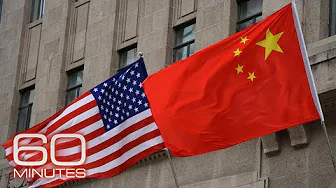
- China is identified by US intelligence as America's most active and persistent cyber threat. Chinese hackers have penetrated government agencies, private companies and critical water and power infrastructure, while Beijing continues to rely on human agents alongside cyber operations.

“there's still no substitute for on the ground human intelligence.” — Jim Lewis

- China's Ministry of State Security (MSS) is described as a vast instrument of domestic control and foreign espionage. Former US diplomat Jim Lewis cites one estimate of 600,000 employees and says the United States is its second target, behind China's own population, which Xi fears could threaten Communist Party rule.

“Target number one is China's own people.” — Jim Lewis

- China operated an unauthorized police station in Manhattan's Chinatown. Discovered in 2022, it offered document services but prosecutors said its main purpose was harassing dissidents; two Chinese Americans were charged, while the Justice Department indicted more than 140 people over five years for China-related harassment, hacking and spying.

- Shu Jun Wong spent 17 years reporting on New York's pro-democracy community to China's MSS. A former Columbia visiting scholar, he became a trusted organizer in Flushing and allegedly supplied activists' names, contact details and private conversations.

- Wong was convicted of lying to federal agents, possessing activists' identification and acting as an unregistered Chinese agent. In 2021, he welcomed an undercover FBI agent posing as an MSS operative who offered to delete potentially incriminating communications; a judge later gave him three years' supervised release because of cognitive and other health problems.

- Wong's lawyers portrayed him as a fall guy with no classified access. They said he passed only public information and was targeted after refusing to identify senior handlers, but his luggage contained the names and contact details of Anna Young Chung and 63 others, and Chung testified she began securing her door chain at night.

“you never know.” — Anna Young Chung

- Hong Kong activist Anna Quac has a $130,000 bounty on her head and receives threats of abduction in the United States. Her father and brother were arrested in Hong Kong, she is seeking US asylum, and Washington sanctioned officials accused of targeting her and 18 other overseas activists.

“you can leave the country, you can leave the territory, but you can never actually leave their governance.” — Anna Quac

- A former senior aide to New York Governor Kathy Hochul is accused of accepting millions to influence the governor's China-related meetings and statements. Linda Sun and her husband pleaded not guilty; the couple owned a multimillion-dollar Long Island home and a Hawaii condominium.