The Strait of Hormuz Is Not a Fifth of the World's Oil Supply — And 60 Minutes Never Proves How Much Is Actually Lost
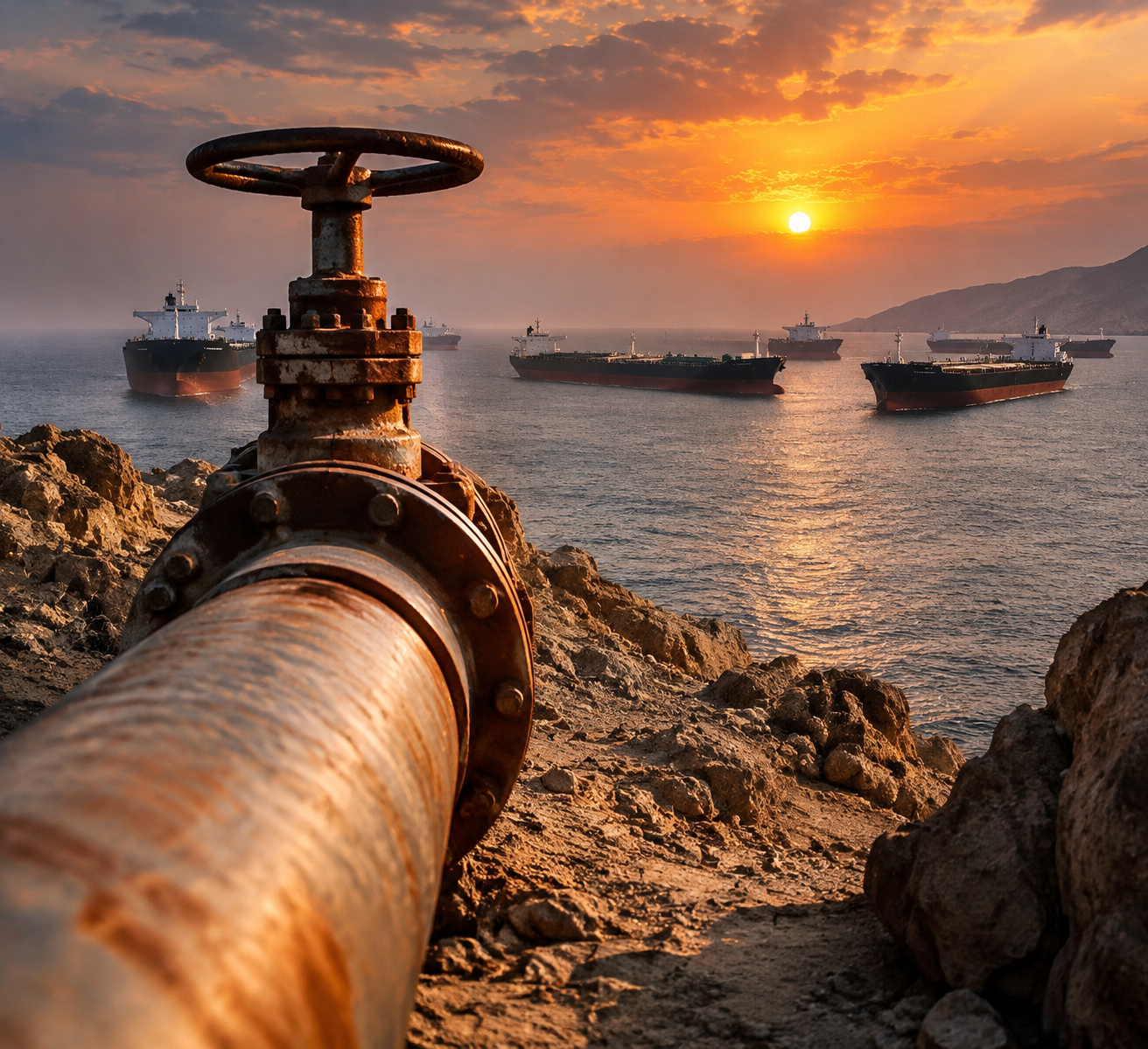
There is a serious difference between controlling a route that carries one-fifth of the world's oil and removing one-fifth of the world's oil supply. The distinction matters enormously when governments, businesses and households are trying to understand the economic consequences of a war.
In its report on the Strait of Hormuz, 60 Minutes documents a genuine maritime emergency. Ships are stranded, sailors are being attacked, oil tankers are barely moving and shipping companies are unwilling to risk their crews. Captain Silke Lena Custer's testimony and the vessel-tracking evidence from Kepler give the report considerable substance.
But the programme makes a much larger economic argument without doing the necessary accounting. It repeatedly invokes the enormous importance of Hormuz without establishing how much oil has actually become unavailable, how much can travel through alternative routes, how much is still moving, and how much of the disruption is a delay rather than a permanent loss of supply.
That is not a minor technical omission. It is the difference between measuring a supply crisis and describing one.
Correction to the headline above: The one-fifth figure is accurate. The EIA confirms that approximately 20 million barrels of oil and petroleum products passed through Hormuz daily in 2024, equivalent to about 20% of global petroleum liquids consumption. The problem is not the statistic; it is what the programme asks viewers to conclude from it.
U.S. Energy Information Administration (EIA)+1
60 Minutes Showed the Strait Closing. It Never Counted the Missing Barrels.
The alternative routes the report left out
The report calls Hormuz the only route connecting Persian Gulf oil producers to the rest of the world. That is incorrect.
Saudi Arabia operates its East-West pipeline, transporting crude across the country to Yanbu on the Red Sea. The UAE operates another pipeline from Habshan to Fujairah, bypassing Hormuz altogether.
The International Energy Agency estimated in February 2026 that these two systems had between 3.5 million and 5.5 million barrels per day of available bypass capacity. That is not enough to replace the approximately 15 million barrels of crude and condensate and five million barrels of refined products that normally pass through Hormuz daily. The IEA also warns that the logistics of redirecting such large volumes have not been robustly tested.
IEA+1
So the pipelines are not a solution to the blockade. But they are essential to calculating its actual consequences. A viewer should have been shown how much could still move, through which infrastructure, at what cost, and what remained stranded.
There is an even bigger omission: liquefied natural gas.
Approximately 19% of global LNG trade passes through Hormuz. Around 93% of Qatar's LNG exports and 96% of the UAE's LNG exports use the strait, with no alternative export routes capable of delivering those volumes to international markets. This is a separate energy-security crisis, not merely another consequence of expensive crude oil.
IEA+1
The programme spends considerable time predicting higher American gasoline and grocery prices. It never gives comparable attention to the international gas supply disruption that would affect electricity generation, industrial production and heating markets.
The missing barrels were measurable before the programme aired
The strongest criticism is not that 60 Minutes exaggerated a harmless disruption. The disruption was real, enormous and independently measurable.
On March 12, three days before the broadcast, the International Energy Agency published its March Oil Market Report. It estimated that oil flows through Hormuz had fallen from approximately 20 million barrels per day to a trickle, that Gulf producers had cut production by at least 10 million barrels per day, and that global oil supply would fall by approximately eight million barrels per day during March.
More than three million barrels per day of regional refining capacity had already shut down because of attacks and the inability to export products.
IEA
Those are the numbers the programme needed.
Instead, viewers received vessel counts, the volume of oil supposedly sitting aboard tankers, gasoline-price predictions and Bob McNally's assessment that there were no meaningful policy solutions.
The distinction matters. Oil sitting aboard a tanker is not necessarily permanently lost supply. Oil that cannot be exported may eventually be stored, redirected, refined locally or transported through another route. Conversely, production that has been shut down because storage facilities are full represents a genuine supply loss, even if the oil itself remains underground.
These are different economic events. The programme does not adequately separate them.
Later evidence established just how serious the crisis became. In June, the IEA reported that cumulative Middle Eastern oil supply losses had exceeded 1.3 billion barrels, while average flows through Hormuz had fallen to 2.7 million barrels per day between March and May. The emergency was real; the accounting should have been better.
IEA
Iran's oil exports expose a problem with the programme's numbers
Matt Smith tells viewers that Iran was exporting 100,000 more barrels of oil per day than before the war, mostly to China. It is a remarkable claim, but the programme does not identify the precise prewar comparison period or explain how it distinguishes oil loaded onto tankers from oil that actually departed or reached buyers.
Reuters investigated the same issue on March 11 using Kpler and TankerTrackers data. It reported Iranian exports of approximately 1.1–1.5 million barrels per day after February 28, compared with Kpler's February average of 2.17 million barrels per day. Kpler had also recorded an extraordinary prewar loading surge of approximately 3.79 million barrels per day during the week of February 16.
Reuters+1
Those figures use different measurement windows and should not be treated as directly interchangeable. But they expose precisely what is missing from the television report: a defined baseline and a reproducible calculation.
Iran continuing to export while its neighbours' shipments collapsed is a significant discovery in its own right. The programme should have established how much of that oil was newly produced, how much came from previously loaded cargoes, and how much actually reached China.
Without that distinction, the headline finding is interesting but not sufficiently explained.
The market had buffers that McNally barely acknowledges
McNally's argument is that naval escorts, strategic stock releases and other government interventions are sideshows. His central point—that nothing can permanently substitute for reopening Hormuz—is sound. His dismissal of the other measures is not.
The IEA's subsequent accounting found that the global oil market entered the conflict with a surplus of approximately 3.7 million barrels per day forecast for 2026 and 8.2 billion barrels in observed inventories. Those existing buffers helped absorb the initial shock. China also reduced crude imports by approximately 4.6 million barrels per day between February and May, drawing on stocks and adjusting demand.
IEA
The emergency response was not merely symbolic. By May, the IEA's 400-million-barrel reserve release was supplying approximately 2.5 million additional barrels per day to the market. Saudi exports through Yanbu rose from around two million barrels per day before the war to more than five million in early June. UAE exports also recovered substantially through its bypass pipeline, storage facilities and alternative shipping arrangements.
IEA+1
The United States, Kazakhstan, Brazil and Venezuela increased exports as buyers searched for replacement supplies. Refiners in the United States and Europe also increased aviation-fuel production to compensate for disrupted Middle Eastern supplies.
IEA
None of this restored normal conditions. The IEA explicitly maintained that reopening Hormuz was essential and warned that emergency stock releases were temporary.
But there is a world of difference between saying that government measures cannot solve a prolonged blockade and dismissing them as sideshows. The measures bought time, moved real volumes of oil and prevented a much worse demand shock. Viewers deserved to know that.
The American gasoline story needs a more careful explanation
The programme correctly explains that oil is traded globally, so Americans can face higher prices even when their own physical supplies are not passing through Hormuz.
But the missing context is important. In 2024, the United States imported approximately 500,000 barrels per day of crude and condensate through the strait. That represented just 2% of American petroleum liquids consumption and 7% of its crude oil imports.
U.S. Energy Information Administration (EIA)
This does not protect American motorists from a global price shock. It does mean that a price increase should not be confused with a direct loss of one-fifth of America's oil supply.
There is also a problem with the programme's historical price comparison. CBS's accompanying article calls the increase the fastest weekly spike in 20 years, while its published transcript says 10 years. AAA's March 5 and March 12 releases recorded weekly increases of approximately 27 cents and 35 cents respectively. The roughly 65-cent increase was cumulative, not the increase in a single week.
CBS News+3
The price shock was real. But a historical superlative should come with a defined measurement period and a verifiable comparison, particularly when it is used to support a prediction of record-breaking fuel prices.
The grocery argument also remains largely predictive. McNally explains how fuel costs can travel through farming, manufacturing and transportation, but the programme supplies no calculation of the expected increase in food prices or the time required for those costs to reach consumers.
The bigger energy story was happening beyond oil
The programme's focus on oil also obscures a separate vulnerability.
Qatar supplied more than 112 billion cubic metres of LNG in 2025. Almost all of its export shipments pass through Hormuz. The UAE's LNG exports use the same route, and the IEA identifies no alternative export route capable of replacing these shipments.
IEA
The subsequent consequences were substantial. The IEA reported that Qatari and UAE LNG loadings fell by 35 billion cubic metres between March and June compared with the previous year. Increased production elsewhere offset approximately three-quarters of that decline, but global LNG production still fell by 4% year-on-year over the period. Asian and European gas prices reached their highest monthly averages since January 2023 during March.
IEA
This is exactly the kind of independent research that could have elevated the report beyond its immediate shipping story. It would have shown viewers that Hormuz threatens not just crude oil prices but a major part of the world's natural gas supply, with different infrastructure constraints and different replacement options.
The verdict: A compelling crisis report is not the same as a complete investigation
I am not disputing that Iran demonstrated its ability to disrupt one of the world's most important shipping routes. The attacks, stranded crews, collapsing tanker traffic and production shutdowns are supported by substantial evidence.
I am disputing the quality of the economic explanation.
The report gets the central danger right but leaves important questions unanswered:
- How much oil was genuinely lost, rather than delayed?
- How much could Saudi Arabia and the UAE redirect?
- How much could emergency stocks and alternative suppliers replace?
- Why was Iran continuing to export, and what was the correct prewar comparison?
- Why did the programme largely overlook the separate LNG crisis?
- What did the market actually do to absorb the disruption?
McNally's warning that reopening Hormuz is essential deserves serious consideration. But his assertion that other interventions are sideshows should have been tested against the evidence, not simply accepted as the final economic explanation.
60 Minutes delivered a powerful account of ships and sailors trapped by war. It did not deliver an equally rigorous account of the global energy market.
That is the failure worth investigating. Not exaggerating the danger, not dismissing the human suffering, but demanding the numbers necessary to understand who actually loses, who finds another route, who profits, and who pays.
References
1. Cargo and tanker ship crews trapped, stranded by Strait of Hormuz closure — 60 Minutes, CBS News, March 15, 2026. Original broadcast. The primary work under examination, including the shipping interviews and economic claims.
2. Amid regional conflict, the Strait of Hormuz remains critical oil chokepoint — U.S. Energy Information Administration, June 16, 2025. EIA analysis. Establishes actual oil flows, alternative pipelines and the United States' relatively small direct import exposure.
3. Strait of Hormuz Factsheet — International Energy Agency, February 2026. IEA factsheet. Provides the 2025 oil and LNG figures, pipeline capacity, operational limitations and alternative-route analysis.
4. Oil Market Report — March 2026 — International Energy Agency, March 12, 2026. IEA report. Supplies the quantitative estimates of production cuts, disrupted exports, refinery shutdowns and emergency reserves available before the broadcast.
5. Iranian oil flows through Strait of Hormuz even as Gulf neighbors' exports shut — Reuters, March 11, 2026. Reuters investigation. Compares Iranian exports during the conflict with February and 2025 figures using Kpler and TankerTrackers data.
6. Strait of Hormuz watch amid Iran conflict risk — Kpler, February 28, 2026. Kpler analysis. Documents Iran's exceptional prewar loading surge, inventory movements and crude already at sea.
7. How global oil supplies have readjusted to help fill the huge gap left by the Strait of Hormuz shock — International Energy Agency, June 22, 2026. IEA retrospective analysis. Quantifies inventory drawdowns, emergency releases, alternative exports, Saudi and UAE pipeline use, and replacement supplies.
8. Gas Market Report, Q3-2026: Executive Summary — International Energy Agency, 2026. IEA gas market report. Documents the LNG supply disruption and the extent to which alternative producers compensated.
9. Jump at the Pump as National Average Goes Up Nearly 27 Cents — AAA, March 5, 2026. AAA March 5 figures; Rising Pump Prices, Higher Gas Demand as Spring Break Begins — AAA, March 12, 2026. AAA March 12 figures. Establishes the contemporaneous weekly gasoline-price changes and seasonal qualifications.
10. CBS's accompanying report and published transcript — CBS News, March 15, 2026. Accompanying article; Published transcript. Exposes the conflicting 20-year and 10-year descriptions of the gasoline-price increase.