The $100,000 Promise of Living Longer: Where Is the Evidence, Dr. Attia?
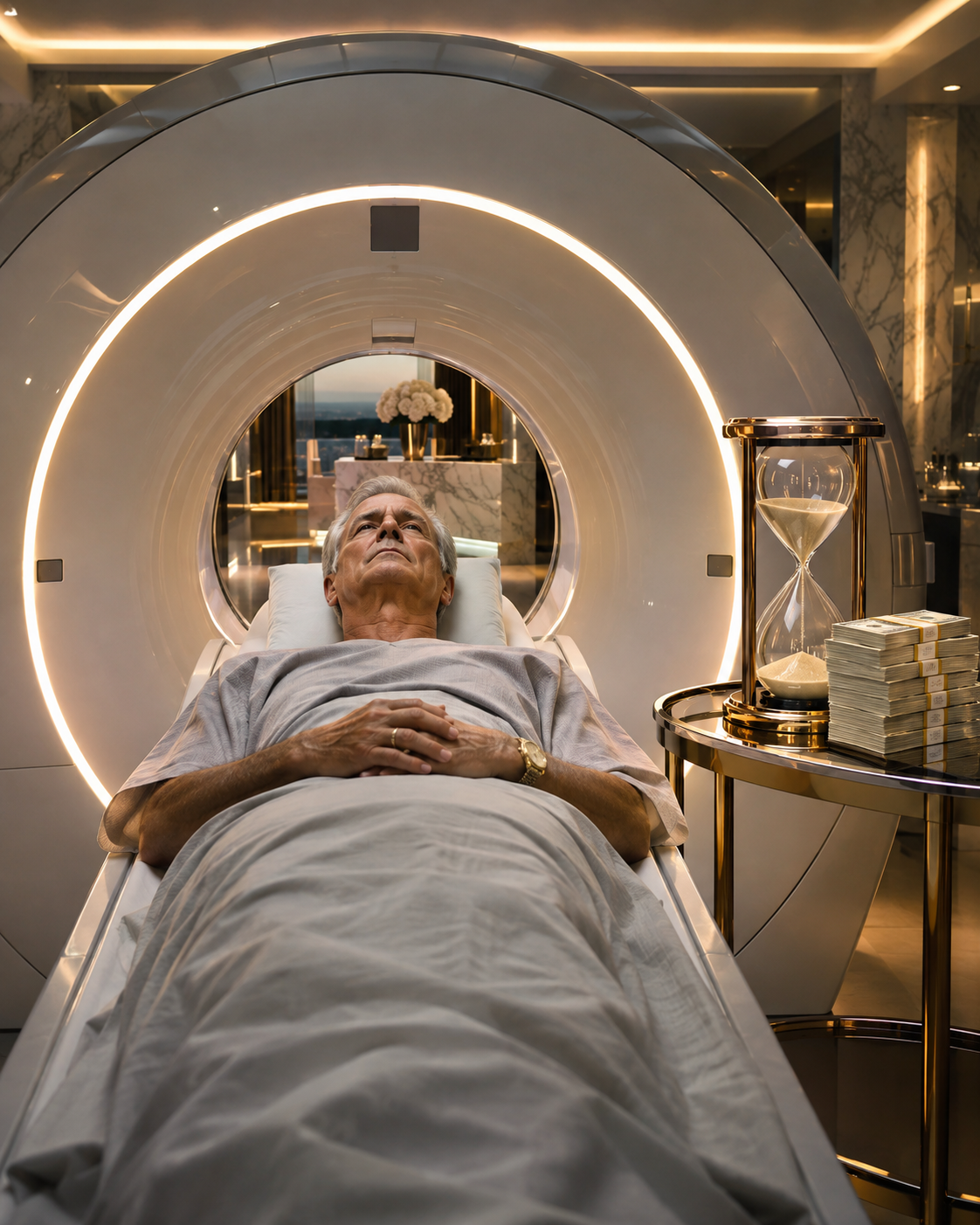
Dr. Peter Attia has built an extraordinary business around a frightening proposition: your final decade of life could be substantially better if you start preparing early enough. His programme costs close to $100,000, his book has sold nearly three million copies, and his podcast has attracted more than 100 million downloads. Yet the 60 Minutes report never establishes the most important thing a prospective patient needs to know: whether Attia's particular programme actually delivers the additional years of healthy life it promises to pursue.
That is not a minor omission. It is the difference between a persuasive medical philosophy and a treatment programme supported by demonstrated results. Exercise, preventive healthcare and healthy relationships have substantial scientific foundations. But evidence that these things are beneficial does not automatically validate every expensive scan, genetic test, dietary prescription or experimental drug bundled into a premium longevity service.
The report omitted businesses selling the same tests Attia recommends
Three months before the broadcast, on July 11, 2025, Spa Business reported that Attia had co-founded Biograph, a preventive-health diagnostics company. Its services included whole-body MRI, VO₂ max testing, nutrition and exercise consultations, and more than 1,000 health measurements. Its annual memberships cost $7,500 and $15,000.
spabusiness.com news
That relationship matters. Attia recommended regular preventive full-body MRIs during the 60 Minutes interview, while also being a co-founder of a business selling whole-body MRI screening. The report never disclosed this connection, investigated his financial interest, or asked whether the commercial availability of these tests influenced his recommendations.
I am not alleging that his recommendations were motivated by financial gain. I am saying that viewers deserved to know about a business relationship directly relevant to the medical advice being presented.
There was another important omission.
In May 2025, a David Protein funding announcement identified Attia as both an investor and the company's Chief Science Officer. David sells high-protein nutrition bars.
businesswire.com
Attia's own website, in an August 2025 article, recommended approximately 1.6–2.2 grams of protein per kilogram of body weight daily, roughly two to nearly three times the standard adult recommended allowance.
Peter Attia MD
Thirteen days before the 60 Minutes broadcast, Attia discussed his involvement with David Protein on his own podcast. He said:
"I don't own the company."
But the company's May funding announcement had already identified him as an investor and Chief Science Officer.
David Allison, Ph.D. Transcript and Discussion
businesswire.com
The relationship does not invalidate his nutritional arguments. It does make its omission from a report discussing his high-protein recommendations difficult to justify.
Strong evidence for exercise is not evidence for the entire programme
Attia's strongest argument is also his least controversial: physical fitness matters enormously.
A 2018 study published in JAMA Network Open followed 122,007 patients who underwent exercise treadmill testing. Researchers recorded 13,637 deaths and found a strong association between cardiorespiratory fitness and lower long-term mortality.
JAMA Network
That is substantial evidence for the importance of fitness. But it was an observational study involving patients referred for testing, not a randomized trial demonstrating that Attia's particular training programme extends life by 15 years.
There is another important distinction. The study's comparisons with traditional risk factors included coronary artery disease, smoking and diabetes. It did not establish the specific superiority over cholesterol and blood pressure that Attia asserts during the interview.
The 75-year-old cliff deserves similar scrutiny.
A US study of 6,783 community-dwelling older adults identified six different trajectories of physical capacity. Approximately 43% maintained high physical performance over six years, while others experienced moderate or more substantial decline.
PMC
This does not mean ageing is harmless. It means there is considerable variation in how people age, rather than one universal biological cliff at 75.
Attia also tells patients that without intervention they could lose approximately half their physical and cognitive capacity during their final decade. The broadcast supplies no underlying dataset, definition of capacity or clinical measurement supporting that striking figure.
A frightening statistic should not become medical evidence simply because it makes an effective opening.
Full-body MRI: finding abnormalities is not the same as saving lives
Attia acknowledges that full-body MRI screening can produce false positives and psychological distress. That qualification is important, but the report stops short of examining the medical evidence behind the practice.
The American College of Radiology issued a clear position in April 2023: there was insufficient evidence to recommend total-body MRI screening for people without symptoms, relevant risk factors or concerning family histories. It also found no documented evidence that such screening was cost-effective or prolonged life.
acr.org
An especially relevant systematic review appeared on October 1, 2026, after the broadcast.
Researchers examined 18,043 people across 17 studies of whole-body MRI screening without an evidence-based indication. They found:
- 78% had some finding reported.
- 14.8% had actionable non-cancer findings requiring further investigation.
- Of those with actionable non-cancer findings, 58.2% underwent additional laboratory testing or imaging.
- 20.8% underwent a subsequent procedure.
- The prevalence of detected malignancy was 1.4%.
Most importantly, the researchers could not determine whether finding these abnormalities improved clinical outcomes. They also acknowledged that the underlying studies were heterogeneous and generally low quality.
PubMed
This is the central problem with the early-detection argument: identifying something is not necessarily the same as preventing a death.
A scan can find an abnormality that would never have harmed the patient. It can also trigger further testing, invasive procedures, anxiety and substantial expense.
Attia acknowledges part of this problem. What 60 Minutes fails to investigate is whether the benefits of routine screening outweigh those consequences.
Even the DEXA argument needs correcting
Attia calls it almost criminal negligence that most women do not receive DEXA scans until age 65.
But the US Preventive Services Task Force's January 2025 recommendation is to screen all women aged 65 and older for osteoporosis, and younger postmenopausal women when a clinical risk assessment establishes increased fracture risk.
www.uspreventiveservicestaskforce.org
United States Preventive Services Taskforce
That does not mean earlier DEXA testing is never appropriate. Nor does it settle the separate question of using DEXA to measure body composition.
It does mean Attia's sweeping condemnation of conventional practice needs evidence that the established screening approach is failing women. The broadcast supplies none.
APOE testing: knowing a risk factor is not knowing your future
Attia recommends testing patients for the APOE gene associated with Alzheimer's disease. The programme highlights Chris Hemsworth, who reportedly learned in 2019 that his genetic profile placed him at eight to ten times the average risk.
But relative risk is not the same as an individual's probability of developing the disease.
The 2025 Alzheimer's Association clinical practice guideline distinguishes probabilistic genetic risk factors such as APOE from rare, deterministic genetic mutations. It says the evidence does not support broad clinical utility for APOE testing in diagnostic evaluation. Its established clinical role includes helping determine treatment risks when patients are considering certain amyloid-targeting Alzheimer's drugs.
alz-journals.onlinelibrary.wiley.com
Wiley Online Library
The 60 Minutes report does not explain these distinctions.
It does not tell viewers what an APOE result can reliably predict, what it cannot predict, or what preventive intervention becomes available specifically because someone discovers an increased genetic risk.
Genetic information can be valuable. But a risk estimate without an effective intervention can also create years of anxiety without changing the eventual outcome.
Rapamycin: the mouse experiment is not a human longevity result
Attia and some patients have experimented with rapamycin, a drug approved for transplant recipients that has extended the lifespan of mice.
Attia stopped taking it after developing mouth sores.
The biological research is interesting. The human evidence is much less conclusive.
A 2025 review of rapamycin use in healthy adults concluded that available human evidence had not established that the drug delays ageing or extends lifespan.
PMC
There is also a relevant randomized trial worth examining rather than dismissing the drug outright.
The 2025 PEARL trial studied intermittent rapamycin over 48 weeks. Only 114 participants completed the study. Its primary outcome, visceral adiposity, did not improve significantly, although selected secondary measurements showed improvements among women receiving particular doses. The study did not establish longer human lifespan or reduced age-related mortality. Its authors were affiliated with AgelessRx, a commercial longevity provider.
PMC
This is early research, not proof of a successful longevity treatment.
The broadcast mentions the mouse results and Attia's personal experience, but never gives viewers the human clinical evidence needed to evaluate the intervention.
The protein recommendation is not a prescription for longer life
Attia's protein recommendation deserves the same distinction between an established physiological benefit and an unproven longevity outcome.
A 2018 meta-analysis published in the British Journal of Sports Medicine examined 49 studies involving 1,863 participants. Protein supplementation improved muscle strength and fat-free mass when combined with resistance training. However, the analysis found no additional fat-free mass gains beyond approximately 1.62 grams per kilogram daily.
British Journal of Sports Medicine
That supports protein intake for people seeking to build or maintain muscle.
It does not establish that consuming twice the recommended allowance adds years to human life.
There are also important medical qualifications. The 2024 KDIGO kidney disease guideline recommends approximately 0.8 grams per kilogram daily for adults with moderate-to-advanced chronic kidney disease and advises avoiding high protein intake above 1.3 grams per kilogram in patients at risk of disease progression.
KDIGO
The appropriate intake therefore depends on the patient.
For a programme charging six figures, viewers should have been told how these recommendations are individualized and what evidence supports the proposed targets beyond muscle development.
The price is clear enough. The results are not.
Attia has fewer than 75 patients and a waiting list. His programme costs six figures, which he tells Norah O'Donnell is much closer to $100,000 than $500,000. Patients receive access to physicians, nutrition specialists and strength and conditioning professionals.
CBS News
But what does that investment actually produce?
The broadcast provides no independently verified patient outcomes showing that his programme:
- Extends average lifespan.
- Reduces the incidence of cardiovascular disease.
- Prevents Alzheimer's or other forms of dementia.
- Reduces cancer mortality.
- Preserves physical independence into advanced age.
- Produces better outcomes than less expensive preventive healthcare.
I found no published clinical trial of Early Medical's own patient cohort establishing those outcomes in the research reviewed for this article.
This is not a demand that a physician guarantee immortality. Attia himself explicitly says that the marginal decade cannot be eliminated.
It is a demand that an extraordinarily expensive medical programme be evaluated against measurable results rather than the sophistication of its testing equipment.
There is another weakness in the journalism itself.
60 Minutes introduces a respected professor of public health who questions whether Attia's regimen can deliver an additional decade of healthy life. But the transcript does not identify the professor or explain the evidence behind the criticism.
Attia responds that he received zero hours of formal education in exercise and zero hours in nutrition during medical school.
That may be an interesting observation about medical education. It is not an answer to the professor's actual scientific objection.
The audience never receives enough information to evaluate the disagreement.
A serious examination would have identified the critic, presented the strongest objection, and asked Attia to address the specific evidence.
Instead, the report gives viewers an anonymous sceptic and a highly articulate celebrity physician.
That is an interview, not a meaningful test of the claims.
The verdict: Medicine 3.0 needs evidence, not expensive theatre
Attia is right that physical fitness, strength, preventive medicine, mental health and meaningful relationships matter. Those principles deserve serious attention.
But their scientific credibility cannot automatically be transferred to every intervention sold under the longevity label.
A strong case for exercise does not establish the value of routine whole-body MRI. A legitimate argument for maintaining muscle does not prove that very high protein intake extends lifespan. A drug that extends the lives of mice has not thereby become a human longevity treatment.
And a physician who co-founds businesses selling the very diagnostics he recommends should have those relationships disclosed when a major television programme presents his medical advice.
The most important failure of this 60 Minutes report is not that it interviewed an unconventional physician. It is that it gave an expensive commercial model the credibility of established preventive medicine without adequately separating the two.
Attia's ambition is understandable. His programme may help individual patients improve their health.
But the difference between helping someone live better and demonstrating that a $100,000 programme makes them live longer is enormous.
The final decade of life deserves better medicine. Patients paying six figures deserve better evidence. And viewers deserve journalism that knows the difference.
References
Original reporting
1. Billionaires seek out this doctor's help preparing for advanced age. Here's what he prescribes — CBS News, October 26, 2025. The original 60 Minutes profile and the claims examined here.
Business relationships and commercial interests
2. Peter Attia-backed diagnostics clinic Biograph reveals plans to scale — Spa Business, July 11, 2025. Establishes Attia's co-founder relationship and Biograph's MRI, fitness testing and membership business before the broadcast.
3. David Closes $75 Million Series A Funding Round — Business Wire, May 29, 2025. Identifies Attia as an investor and Chief Science Officer of David Protein.
4. The Protein Debate, Episode 368 — The Peter Attia Drive, October 13, 2025. Attia's own discussion of protein science and commercial relationships with David Protein, published before the 60 Minutes broadcast.
5. Determining Optimal Protein Intake From Data, Not Dogmatism — Peter Attia MD, August 23, 2025. Documents Attia's own recommended protein intake of 1.6–2.2 g/kg daily.
Medical evidence
6. A Systematic Review and Meta-analysis of Protein Supplementation During Resistance Training — British Journal of Sports Medicine, 2018. Examines muscle and strength outcomes rather than lifespan.
7. Association of Cardiorespiratory Fitness With Long-term Mortality — JAMA Network Open, October 19, 2018. Provides substantial observational evidence for the relationship between fitness and mortality, with important limitations concerning causation and patient selection.
8. Trajectories of Physical Capacity Among Community-Dwelling Older Adults in the United States — Archives of Gerontology and Geriatrics, 2022. Documents substantial variation in physical decline among older Americans.
9. ACR Statement on Screening Total Body MRI — American College of Radiology, April 17, 2023. Explains why routine whole-body MRI screening lacks established evidence of cost-effectiveness or extended survival.
10. The Diagnostic Yield of Whole-Body MRI as a Multi-disease Screening Modality — Journal of General Internal Medicine, October 1, 2026. Provides recent pooled findings on abnormalities, follow-up procedures and the absence of established clinical outcome benefits.
11. Osteoporosis to Prevent Fractures: Screening — US Preventive Services Task Force, January 14, 2025. Establishes the evidence-based age and risk thresholds for osteoporosis screening.
12. Alzheimer's Association Clinical Practice Guideline for Diagnostic Evaluation and Testing — Alzheimer's & Dementia, 2025. Explains the limitations of APOE risk testing and its distinct role in treatment decisions.
13. What Is the Clinical Evidence to Support Off-label Rapamycin Therapy in Healthy Adults? — Aging, August 7, 2025. Reviews the limitations of human evidence for rapamycin as a longevity treatment.
14. Influence of Rapamycin on Safety and Healthspan Metrics After One Year: PEARL Trial Results — Aging, April 4, 2025. Reports randomized human trial results, including the absence of a significant effect on its primary endpoint.
15. KDIGO 2024 Clinical Practice Guideline for Chronic Kidney Disease — Kidney Disease: Improving Global Outcomes, April 2024. Establishes important protein-intake qualifications for patients with chronic kidney disease.