Hong Kong's Censorship Story Has a Missing Link: Who Actually Ordered the Silence?
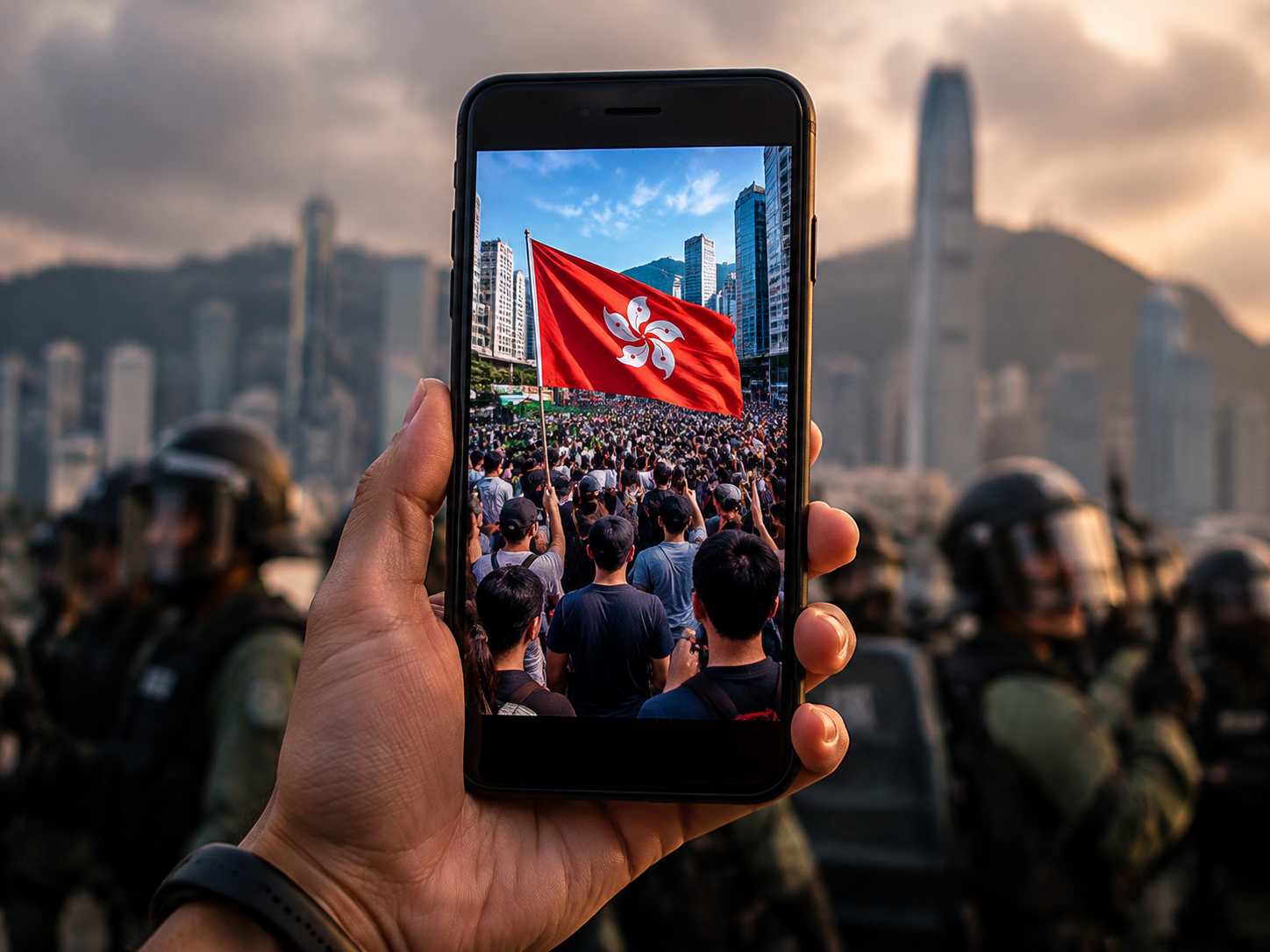
The 60 Minutes report makes a powerful case that Beijing's influence reaches far beyond Hong Kong's borders. But it repeatedly places documented corporate decisions, allegations of political intimidation and suspected surveillance alongside one another without establishing that they share the same chain of command.
That distinction matters. A government that pressures businesses, a corporation that makes a commercially motivated decision and a journalist who suspects surveillance are three different stories. They should not become one accusation simply because they fit the same political narrative.
Apple: Political pressure was real, but the safety dispute disappeared
Apple's decision deserves scrutiny. Less than a day after Chinese state media attacked Apple's approval of HKmap.live, Apple removed it from its App Store. That timing provides legitimate grounds to investigate political pressure, but it does not establish that Beijing ordered the removal. (TechCrunch, October 9, 2019).
Apple offered a specific explanation: it said it had received complaints and verified with Hong Kong's Cybersecurity and Technology Crime Bureau that the crowdsourced application had been used to target police officers and endanger residents. The developers disputed that allegation, saying there was no evidence supporting it.
Neither side's account was independently established by the 60 Minutes report. Instead, viewers heard that Apple removed an application that could help protesters evade police. That describes one use while omitting the company's stated safety concerns and the developers' rebuttal.
There is another important qualification: Apple removed the application from its own store, not the entire service. Its website remained available, and the application was still available through Google's Android store. (Contemporaneous reporting).
The proper conclusion is that Apple acted under a combination of public pressure and a stated safety rationale whose underlying evidence remained disputed. CBS left viewers to resolve that dispute themselves.
Google: The report omitted a direct denial
The Google example is more damaging to the programme's presentation.
Google removed The Revolution of Our Times, a role-playing game based on the Hong Kong demonstrations. But on October 11, before the 60 Minutes broadcast, Google explicitly denied that the removal resulted from a request by Hong Kong police or any other outside party.
Its explanation was that the game violated a longstanding policy against developers making money from ongoing conflicts and tragedies through games. (AFP reporting, published by the Taipei Times, October 12, 2019).
There was another relevant detail. The game's developer, using the pseudonym Spinner of Yarns, said 80% of its earnings would go to Spark Alliance, a group helping arrested protesters with legal expenses. (TheWrap, October 10, 2019).
That charitable intention does not automatically invalidate Google's policy decision. Nor does Google's explanation prove that its policy was applied consistently. Those are questions worth investigating.
But CBS omitted Google's explicit denial and its stated policy rationale. It presented the removal as another example immediately following the assertion that China was pressuring foreign companies.
That is not a minor missing detail. It changes the apparent explanation for the decision.
The NBA: A conciliatory statement became an apology
The NBA incident involved genuine and substantial Chinese pressure, but 60 Minutes misrepresented an important part of the response.
Houston Rockets general manager Daryl Morey tweeted support for Hong Kong protesters. Chinese broadcasters, sponsors and basketball organizations reacted with hostility. China's state broadcaster cancelled planned broadcasts, Tencent stopped showing Rockets games, and the Chinese Basketball Association suspended cooperation with the team. Tencent's five-year NBA streaming agreement was worth $1.5 billion. (Associated Press, October 8, 2019).
Morey subsequently issued a conciliatory clarification, saying he had not intended to offend Chinese fans and had considered other perspectives.
But the NBA's position was more complicated than an apology. Its October 6 statement expressed regret that Chinese fans had been offended while affirming individuals' right to express their views. Commissioner Adam Silver subsequently stated explicitly:
We are not apologizing for Daryl exercising his freedom of expression.
(Official NBA statement and Silver's October 8 remarks).
The programme describes the incident as an NBA team executive apologizing. That wording turns a conciliatory clarification into an apparent surrender.
The actual story is more revealing: the NBA was trying to preserve an enormous Chinese commercial relationship while defending an employee's right to political expression. It faced substantial economic consequences and did not entirely abandon its stated position.
Jimmy Lai's advertising losses: The evidence is stronger than the report explains
Lai's claim that Chinese political pressure was damaging his newspaper financially should not be dismissed. There is substantial historical evidence worth examining.
A 2014 report by the U.S.-China Economic and Security Review Commission documented claims that HSBC and Standard Chartered had stopped advertising in Apple Daily following pressure from Beijing's liaison office in Hong Kong.
Next Media executive Mark Simon estimated that the two banks had previously spent approximately $3.8 million annually on advertising. The company also reported that additional advertising boycotts by businesses dependent on Beijing cost it at least $26 million annually.
These were company-reported estimates, not independently audited measurements. Nevertheless, they provide specific financial context absent from the television segment. (USCC report, Chapter 3).
There was also a more recent development. In March 2019, former Hong Kong Chief Executive Leung Chun-ying, a prominent pro-Beijing political figure, publicly campaigned against Apple Daily's advertisers, posting photographs of advertisements and encouraging consumers to boycott those businesses.
The Committee to Protect Journalists documented this campaign in December 2019. Importantly, it also noted that HSBC and Standard Chartered maintained that their advertising withdrawals were commercial decisions. CPJ could not establish whether the banks had received direct political instructions or independently decided that their commercial interests were better served by distancing themselves from Lai. (CPJ investigation).
That distinction is fundamental.
Direct government instructions, public political intimidation and businesses anticipating political consequences are different mechanisms of influence. All can damage press freedom, but they require different evidence.
CBS simply tells viewers that Beijing pressured advertisers, costing Lai millions annually. It gives no company names, dates, calculations or distinction between those mechanisms.
The underlying story is credible enough to deserve investigation. The programme did not do enough to establish its precise financial claims.
Surveillance: An unidentified photographer is not proof of state surveillance
The treatment of Lai's home is another serious evidentiary weakness.
Lai said his property was under constant surveillance and suggested that the purpose was to frighten away visitors. The television crew filmed an unidentified man who declined to explain whom he represented and a woman who also refused to answer questions.
The woman subsequently appeared at a protest, photographing people around Lai.
That footage establishes that unidentified people were taking photographs. It does not establish their identities, employers, affiliations, instructions or motives.
Most importantly, it does not establish that they represented the Chinese government or that their purpose was to intimidate visitors.
Yet the programme narrates the sequence as an apparent attempt to frighten people away from Lai's home.
The distinction between a witness's allegation and independently verified surveillance should be obvious to an investigative newsroom. Here, the visual sequence makes an unverified allegation feel established.
Lai's additional claim that relatives in mainland China had been threatened with arrest unless he moderated his criticism is also attributed to him, but the programme provides no documentary corroboration or testimony from those relatives.
These allegations may be true. The footage does not prove them.
Even Lai's broadest political claims go unchallenged
There is another revealing moment in the interview.
Lai says Britain's legacy gave Hong Kong the rule of law, free markets, private property rights and a free press. Williams then asks:
And they have none of those in mainland China?
Lai answers that they have none.
That is an unnecessarily sweeping description.
China's own Constitution recognizes private businesses as part of its socialist market economy under Article 11, lawful private property under Article 13, and a socialist market economy under Article 15. Its Property Law also formally protects private ownership.
Those provisions do not establish that property rights are independently enforced, that businesses are free from political interference or that China has an independent judiciary. They certainly do not establish a free press.
But the existence of private property and markets is not the same question as whether those rights are protected against political interference.
(Official Chinese constitutional text).
A serious interviewer should have made that distinction. Instead, the question reinforces an absolute claim that obscures the actual institutional differences between Hong Kong and mainland China.
Closing verdict
There is no shortage of evidence that Beijing used political and economic pressure against organizations and individuals whose actions it disliked.
The state-media attack on Apple, the NBA broadcasting dispute, the public campaign against Apple Daily's advertisers and the broader commercial pressure documented by independent press-freedom organizations are real developments.
But they do not all establish the same thing.
Google explicitly denied outside intervention. Apple presented a disputed safety rationale. Morey issued a conciliatory clarification, while the NBA commissioner defended his right to speak. Lai's advertising difficulties have substantial historical evidence, but the precise financial losses and mechanisms of pressure require qualification. The surveillance footage identifies no government agents.
60 Minutes had a legitimate story about Beijing's growing influence. Its weakness was allowing the strength of that broader story to substitute for proof in individual cases.
A journalist should not have to choose between exposing authoritarian pressure and demanding evidence. The two responsibilities reinforce each other.
When a programme merges documented coercion, corporate policy decisions, commercial calculations and personal allegations into one seamless narrative, it makes its own conclusions harder to trust.
That is the failure here. Not an absence of wrongdoing by Beijing, but an absence of sufficient investigative discipline in demonstrating exactly who did what, under whose pressure, and with what evidence.
References
1. What keeps the months-long, massive Hong Kong protests going? — CBS News, October 13, 2019. The original report and transcript, including the surveillance sequence and corporate-pressure montage.
2. Apple pulls HKmap from App Store — TechCrunch, October 9, 2019. Establishes the timing of Chinese state-media criticism, Apple's safety explanation and the developers' rebuttal.
3. Google pulls Hong Kong protester role-playing app — Taipei Times/AFP, October 12, 2019. Records Google's explicit denial of external takedown requests and its policy explanation.
4. Google Purges Hong Kong Protester Video Game — TheWrap, October 10, 2019. Provides the developer's stated intention to donate 80% of game earnings to legal support for arrested protesters.
5. NBA statement — NBA Communications, October 6, 2019. The league's original response, which expressed regret while affirming the right to political expression.
6. Adam Silver says he still plans to visit China — NBA.com/Associated Press, October 8, 2019. Establishes the commissioner's position, Chinese broadcasting retaliation and the commercial consequences for the NBA.
7. One Country, One Censor — Committee to Protect Journalists, December 16, 2019. Documents the advertiser campaigns against Apple Daily while distinguishing direct political pressure from commercial self-interest.
8. China and the World — U.S.-China Economic and Security Review Commission, 2014 Annual Report. Provides historical financial estimates and the attribution behind claims of advertiser boycotts against Next Media.
9. Constitution of the People's Republic of China — State Council of China. The original legal text establishing the distinction between formally recognized private property and market activity and the separate question of their practical protection.