60 Minutes Let Marjorie Taylor Greene’s Threat Timeline Go Unchecked
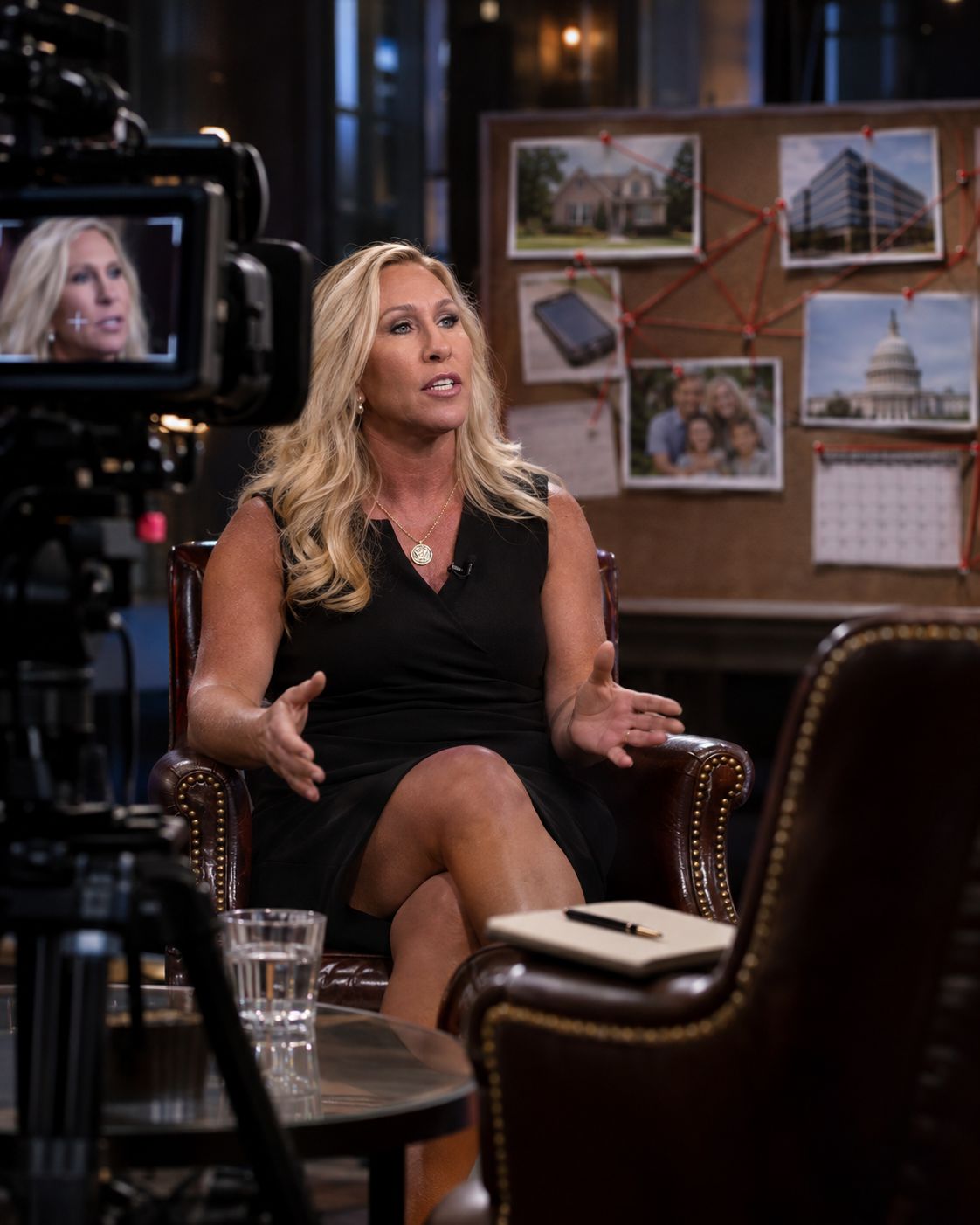
Marjorie Taylor Greene may be right that Donald Trump's public attacks helped expose her family to danger. Trump publicly called her a traitor, withdrew his support and dismissed her safety concerns. But when Greene told 60 Minutes that a pipe-bomb threat had followed his attack, the programme failed to establish which incident she meant, when it happened or what the police records showed.
That is not a minor omission. The threat allegations became a central part of Greene's explanation for leaving Congress. They deserved more than an interviewer's expression of surprise.
Two pipe-bomb threats, two different timelines
On November 15, 2025, Trump publicly labelled Greene a traitor. The following day, Greene reported hoax pizza deliveries to her home and family members, but specifically located the new pipe-bomb threat at her construction company's office building. ABC News reported her contemporaneous statements.
There was also an earlier pipe-bomb threat at Greene's home. Rome police received an email on December 6, 2024, claiming an explosive had been placed in her mailbox. Police discovered the email on December 9, determined there was no active threat and traced its origin to a Russian IP address. An officer responding to the incident was involved in a collision that killed motorist Tammie Pickelsimer.
That incident occurred almost a year before Trump's November 2025 attack.
Yet in the 60 Minutes interview, Greene said: "After President Trump called me a traitor, I got a pipe bomb threat on my house." She did not explain whether this was another home threat, whether she was referring to the earlier incident, or how it related to the November threat at her company. Stahl never clarified the discrepancy.
If there was a second home threat, CBS should have established its date and obtained the relevant documentation. If Greene was referring to the 2024 incident, the chronology materially changes her account. The broadcast leaves viewers unable to distinguish between these possibilities.
The same problem applies to the alleged death threats against Greene's son. She said their subject line repeated Trump's description of her as a traitor and concluded that the threats were "directly fueled" by him. That wording is evidence of an echo, but it does not establish the sender's identity, motivation or the full causal chain. The programme showed viewers neither the messages nor independent confirmation of their contents.
I am not suggesting the threats were invented. Greene has been the genuine target of serious threats. The criticism is that 60 Minutes made a consequential allegation without showing the evidence needed to assess it.
The threat history began long before the Trump feud
The subsequent criminal record makes the story more complicated. In June 2026, the Justice Department sentenced former Voice of America employee Seth Jason to 30 months in prison after he pleaded guilty to making eight threatening calls to Greene's congressional offices between October 2023 and January 2025. The threats targeted Greene, her family and her staff.
One October 2023 voicemail contained an especially revealing detail. The caller claimed that he and his friends had followed Greene's "great advice" about stocking and stockpiling ammunition before threatening to attack her and her staff.
This case predates Trump's November 2025 attacks by months or years. It does not establish who sent the later threats against Greene's son, and it does not absolve Trump of responsibility for his own language. But it demonstrates that Greene's exposure to political threats was already serious before their relationship collapsed.
It also gives the programme an important question it never asked: how had Greene's own aggressive political language contributed to the environment she was now condemning?
A threatener invoking her ammunition rhetoric is not proof that Greene caused the threats. It is evidence that her own words had become part of the political vocabulary surrounding them. That deserved examination.
The Epstein story was already at a different stage
The programme's central narrative is that Greene's support for Epstein survivors broke her relationship with Trump. That is a reasonable account of the original conflict, but 60 Minutes omitted a crucial development.
The timeline is decisive:
- November 15: Trump withdrew his support for Greene and called her a traitor.
- November 16: Trump reversed his previous position and urged Republicans to vote to release the Epstein files, saying there was nothing to hide.
- November 18: The House passed the Epstein Files Transparency Act by 427 votes to one. Greene voted in favour.
- November 19: Trump signed the legislation into law, requiring the Justice Department to release its Epstein-related records.
- November 21: Greene announced her resignation.
- December 7: The 60 Minutes interview aired.
Paramount itself advertised the interview as Greene's first since announcing her resignation. The Epstein legislation had therefore already been signed when this interview took place.
This does not mean the files had been released or that the transparency dispute was over. The administration still had to implement the law. But the political battle had moved from whether Congress would compel disclosure to whether the administration would comply.
The programme never tells viewers about Trump's reversal, the 427–1 vote or his signature.
That omission leaves an outdated picture of the dispute. Greene's confrontation with Trump was real, but the legislative outcome was also real. A serious interview should have asked why their relationship remained broken after Trump had ultimately signed the legislation she had fought for.
Did Trump run her out of Congress?
Stahl asked Greene directly whether Trump had driven her out of Washington.
Greene answered: "No, not at all."
But her own resignation statement provides a more complicated account. She explicitly said she did not want her district to endure a hostile primary challenge backed by the president she had spent years supporting. Trump had withdrawn his endorsement and threatened to support another candidate.
There is an important distinction between choosing to resign and being forced out. Greene may genuinely regard her departure as an exercise of self-respect rather than surrender.
But leaving because the president threatens to finance a primary challenge is not the same as leaving without political pressure.
Stahl had the evidence in Greene's own public statement. She should have asked her to reconcile the two accounts instead of allowing the denial to stand.
Greene's political conversion deserved tougher examination
The interview presents Greene as someone who has begun rejecting the toxic political culture she once helped create. Yet the examination of her own record was surprisingly limited.
Stahl mentioned Greene's conspiracy theories, her confrontation with Joe Biden and an insulting remark about someone's fake eyelashes. She also challenged Greene about her contribution to political hostility.
When Greene accused Stahl of being equally toxic, the exchange became an argument about the interviewer's questioning rather than an examination of Greene's conduct.
There was a much stronger line of questioning available.
In her November 16 CNN interview, Dana Bash specifically confronted Greene about her 2020 photograph holding a gun alongside the Democratic congressional group known as the Squad, encouraging people to go on the offensive against socialists, and her previous Facebook activity supporting comments advocating the execution of Nancy Pelosi and Barack Obama.
Greene responded that she had addressed the posts in 2021 and stood by what she had said then.
Those are substantially more serious examples than a personal insult during a congressional speech.
Why didn't Stahl ask whether Greene had withdrawn those positions, what she had changed since 2021, and why her opposition to toxic political language had become such a priority when she became its target?
Greene's apology deserved to be taken seriously. It also deserved to be tested.
Private political claims were presented without corroboration
Greene made several consequential allegations about the Republican Party and the Trump administration.
She claimed Republican colleagues privately mocked Trump before his 2024 primary victory, then abruptly embraced him and began wearing MAGA hats. She said colleagues were terrified of becoming targets of his Truth Social attacks.
She also accused Trump of serving cryptocurrency donors, pharmaceutical companies and Israeli interests rather than ordinary Americans.
These are potentially important claims. But the interview supplied no names of Republican colleagues, no corroborating private accounts, no specific donor relationships and no examination of the legislation or financial arrangements she criticised.
The difference between an allegation and an established finding matters.
A journalist should ask which colleagues, which donors, which legislation and what evidence. Instead, Greene was allowed to deliver a sweeping indictment of political influence without demonstrating its particulars.
The verdict: A dramatic interview, not a sufficiently tested account
Trump's public attacks against Greene are documented. His use of the word traitor was real, and his public dismissal of her safety concerns was disgraceful. The threats against Greene were also real, including threats that predated their political breakup.
But those facts do not automatically establish every causal claim Greene makes.
60 Minutes failed to distinguish the different bomb-threat incidents, establish the chronology of the alleged threats against her son, examine the evidence behind her accusations and confront her own political history with sufficient specificity.
It also left out the outcome of the Epstein legislation, despite conducting its interview after Trump had signed the law.
Greene may have undergone a genuine change of heart. She may also have recognised the political and personal cost of remaining in Trump's firing line. The interview did not do enough to distinguish those explanations.
I have no difficulty condemning Trump's attacks while demanding accountability from Greene. Political intimidation is not acceptable when directed at her, and it was not acceptable when directed at her political opponents.
The central failure is that 60 Minutes treated Greene's personal account as the organising truth of the story without doing enough to test it.
A journalist's job is not to choose which politician deserves sympathy. It is to establish what happened, when it happened and what the evidence actually proves. On the most consequential parts of this interview, 60 Minutes did not meet that standard.
References
1. Marjorie Taylor Greene: The 2025 60 Minutes Interview — CBS News, December 7, 2025. Original interview and the claims, questions and omissions examined in this critique.
2. Trump, Marjorie Taylor Greene engage in war of words over Epstein investigation — ABC News, November 16, 2025. Documents Greene's contemporaneous account distinguishing pizza deliveries to her home from the pipe-bomb threat at her construction company.
3. Rome police say hoax bomb threat targeting Marjorie Taylor Greene came from Russia — Atlanta Journal-Constitution, December 9, 2024. Establishes the earlier home threat, police response and finding that no active bomb threat existed.
4. Woman killed in crash as officer responds to threat at Rep. Marjorie Taylor Greene's home — Associated Press, December 2024. Documents the fatal collision involving an officer responding to the earlier home threat.
5. Former Voice of America Employee Sentenced for Making Threats Against Rep. Marjorie Taylor Greene — U.S. Department of Justice, June 18, 2026. Provides the criminal case chronology, eight threatening calls, sentencing and the recorded reference to Greene's ammunition rhetoric.
6. CNN State of the Union: Interview With Rep. Marjorie Taylor Greene — CNN, November 16, 2025. Shows the specific questions about Greene's previous violent political rhetoric and her response to them.
7. Rep. Marjorie Taylor Greene says she is resigning from Congress — Associated Press, November 21, 2025. Provides Greene's own explanation that she wanted to avoid a hostile primary backed by Trump.
8. Trump calls for Republicans to vote to release Epstein files — ABC News, November 16, 2025. Documents Trump's reversal on the proposed release before the House vote.
9. House Roll Call 289: Epstein Files Transparency Act — U.S. House of Representatives, November 18, 2025. Official voting record establishing the 427–1 result and Greene's affirmative vote.
10. Congressional Bill H.R. 4405 Signed into Law — White House, November 19, 2025. Confirms Trump's signature and the enactment of the Epstein Files Transparency Act.
11. Lesley Stahl sits down with Rep. Marjorie Taylor Greene — Paramount Press Express, December 5, 2025. Establishes that the interview was conducted after Greene announced her resignation.