The Lyme Disease Breakthrough That Hadn't Been Tested on Lyme-Infected Blood
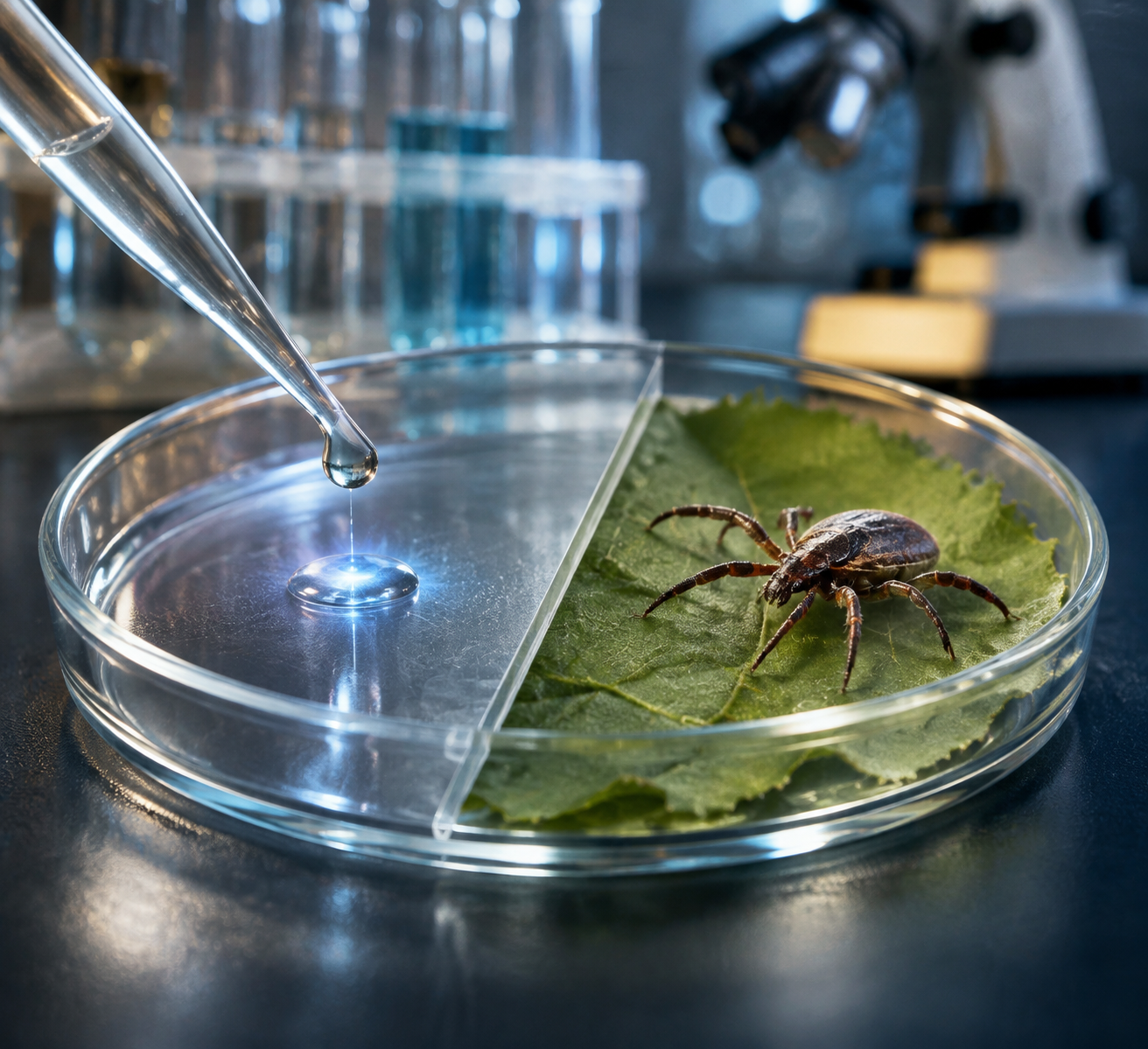
Lambert High School's students built an ingenious diagnostic experiment. But the distinction between detecting a deliberately introduced protein and diagnosing an actual Lyme infection is enormous. The most important detail missing from the 60 Minutes presentation is that the students had not tested their system on blood from an infected human or animal. They used cow's blood spiked with synthetic protein. That is a legitimate proof of concept. It is not yet a Lyme disease diagnostic.
Global Health NOW+1
The two-day claim is a mathematical prediction
Lambert's own research records explain where the headline figure came from. The students estimated that blood would contain approximately two million CspZ molecules per microlitre two days after infection, using published mouse data and an assumed 1:1 ratio between CspZ and the bacterial flagellar protein FlaB. They explicitly acknowledged that this ratio had not been quantified.
Proximity-Dependent Ligation (PDL)+1
The underlying mouse study creates another problem. Its day-two bacterial count came from immunodeficient NOD-SCID mice, which were injected with one million cultured bacteria; in its immunocompetent mice, researchers detected no B. burgdorferi DNA in blood throughout the observation period. The study therefore does not establish the expected CspZ concentration in an ordinarily infected human.
Springer Nature Link+2
The students then introduced commercially produced CspZ into bovine blood at concentrations calculated from their model. They demonstrated that their assay could detect the deliberately introduced protein, including at concentrations representing different hypothetical infection stages. Their experiments did not demonstrate that naturally infected blood contained those concentrations.
Proximity-Dependent Ligation (PDL)+2
The distinction matters enormously: detecting a known quantity of synthetic protein is not the same as detecting an infection. The more-than-200-day experiment demonstrated persistence of the detectable signal in prepared samples, not persistence of CspZ in infected patients.
60 Minutes did acknowledge that the work was a first step and that further testing was necessary. Its failure was not omitting every qualification; it was presenting the two-day figure without explaining the chain of assumptions that produced it.
CBS News+1
The biological target remains unproven
There is another gap between the experiment and the disease. The scientific research Lambert cited describes CspZ as a protein expressed on the surface of Borrelia bacteria, with production increasing when the bacteria encounter human blood. It does not establish that free CspZ circulates in human plasma at the concentrations assumed by the students.
PubMed+1
The students selected two previously published aptamers, Apta11 and Apta4, to recognize CspZ. But the original aptamer research found that Apta11 bound purified CspZ while failing to recognize accessible CspZ on intact B. burgdorferi; Apta4 showed some surface recognition, although other candidates performed better. The team's purified-protein experiments did not resolve whether its chosen pair could reliably detect the naturally presented target.
Proximity-Dependent Ligation (PDL)+2
The treatment experiment did not treat Lyme disease
The treatment claims are even further removed from clinical reality. Lambert's own experimental records show that its CRISPR-interference system was tested against artificial DNA constructs representing two Borrelia genes, Bb0250 and Bb0841, using a cell-free system that measured changes in fluorescent protein production. The combined experiment produced approximately 76% fluorescence repression. That demonstrates gene-silencing activity in a laboratory reaction, not the killing of Lyme bacteria.
CRISPR-interference+2
The students then tested a live-bacteria version using E. coli, not Borrelia burgdorferi. Their laboratory operated at biosafety level 1, which did not permit them to work with the disease-causing organism, so they targeted an essential E. coli gene called rpsL instead. Their results showed reduced bacterial viability, but they did not demonstrate a CRISPR treatment for Lyme disease.
CRISPR-interference+1
Even the proposed delivery mechanism remained unfinished. The team designed lipid nanoparticles to carry the CRISPR components, but its own documentation says the experimental protocol was intended for future testing with more time and resources. No successful delivery into infected animals or treatment of human Lyme disease was demonstrated.
Lipid Nanoparticles
This makes the broadcast's description of Claire Lee's results as promising results in treating Lyme disease particularly problematic. The students had promising results in a surrogate bacterial experiment and a cell-free model. Those are legitimate research steps, but they are not evidence that their system can treat the infection.
The published aptamer study also identified a specificity concern. Apta11 showed binding to FhbA, a related protein from Borrelia hermsii, while Apta4 showed weaker interactions; the researchers suggested that more stringent selection conditions could improve specificity. Lambert's reported negative controls did not establish how the complete test performs against related organisms. That is an important false-positive question, not proof that the test fails.
Communications Biology+1
60 Minutes misdescribed how the diagnostic works
The broadcast explained that CRISPR cuts away genetic material surrounding the protein to expose it. That is not the workflow described in Lambert's own technical documentation.
The actual process is more complicated:
- Two DNA aptamers bind different locations on CspZ.
- Proximity-dependent ligation joins the aptamers into a DNA sequence.
- Recombinase polymerase amplification (RPA) multiplies that sequence.
- Cas12a recognizes the amplified sequence and cuts fluorescent reporter DNA.
- A lateral-flow strip provides the visible result.
CRISPR is being used to generate a detectable signal, not to remove genetic material hiding a protein. The distinction matters because the success of the test depends on protein recognition, amplification and signal specificity.
Proximity-Dependent Ligation (PDL)+2
The comparison with existing medical practice is incomplete
The report presents early Lyme disease as a problem of patients waiting for antibody tests to become positive. That is a genuine problem, but the existing diagnostic process is more sophisticated than the broadcast suggests.
The CDC warns that antibody tests can be falsely negative during the first four to six weeks after infection. However, infectious disease guidelines recommend diagnosing patients with a characteristic erythema migrans rash and appropriate tick exposure clinically, without waiting for laboratory confirmation.
CDC+1
A rapid diagnostic could still be valuable for patients without the characteristic rash or with ambiguous symptoms. But the report never establishes which patients would benefit, how frequently the new test might produce false positives, or whether it would improve clinical decisions compared with existing practice.
There is also no comparison with the actual treatment outcomes. The CDC says most patients treated appropriately with antibiotics during early Lyme disease recover rapidly and completely. A proposed CRISPR treatment therefore needs to demonstrate a meaningful advantage in effectiveness, safety or delivery. Lambert has not done that.
CDC+1
The most relevant expert assessment came later
The broadcast gave considerable weight to Stanford professor and iGEM co-founder Drew Endy's endorsement. His assessment is relevant to the scientific ambition and engineering quality of the project, but it cannot establish clinical diagnostic performance.
A subsequent September 14, 2026 investigation by Global Health NOW identified Nicole Baumgarth, a leading Lyme disease immunologist at Johns Hopkins, as the specialist who had advised the students on selecting CspZ.
More importantly, that report described what still needed to happen: testing the diagnostic using blood from mice infected with live Borrelia. The Global Lyme Alliance's chief scientific officer had expressed interest in funding that next phase, and Baumgarth was prepared to host the work in her laboratory if funding materialized.
Global Health NOW+1
Nearly a year after the Paris competition, the decisive biological validation was still ahead.
What the students genuinely achieved
There is a substantial accomplishment here, and it deserves to be identified correctly.
Lambert won iGEM's Best Software Tool award for CASPER, software designed to generate compatible RPA primers and CRISPR-Cas12a guide sequences. Addgene's May 2026 technical review reported that the students' combined designs experimentally outperformed sequences generated separately by other tools in a head-to-head comparison.
and a Tool for CRISPR Researchers+1
That is a genuine engineering achievement. It demonstrates that the students developed something useful to other synthetic biology researchers.
But a successful software tool is not a clinically validated Lyme test. A competition award cannot bridge that gap.
The verdict
I have no difficulty recognizing the students' ambition, technical ability or genuine laboratory accomplishments. The problem is what happens when those accomplishments are translated into a medical breakthrough story.
The diagnostic's two-day performance rests on a modelled protein concentration, assumptions about bacterial abundance and experiments using synthetic protein in bovine blood. The therapeutic work relies on cell-free gene-expression experiments and a separate experiment involving E. coli, not Lyme-causing bacteria. Its proposed delivery system remained untested.
60 Minutes did include qualifications. It described the work as an early step and acknowledged that further testing was necessary. But those warnings were not accompanied by the scientific detail needed to understand just how much remained unproven.
The correct story is not that teenagers have discovered a way to diagnose and treat Lyme disease. It is that teenagers have developed an interesting diagnostic prototype, a useful software tool and an ambitious therapeutic concept that deserve further investigation.
The difference between a promising experiment and a medical breakthrough is not a technicality. It is the difference between something that might save lives and something that has demonstrated that it can.
References
1. Lyme disease often goes undetected when it's most treatable. These teens are working to change that. — CBS News / 60 Minutes, November 30, 2025. The original report and its claims about two-day detection, treatment potential and scientific endorsements.
2. Lambert-GA 2025 iGEM research — Lambert High School, 2025. The students' own technical documentation, including their assumptions, diagnostic experiments, treatment results and proposed delivery system. Particularly important pages: PDL experiments, results, CRISPR interference and lipid nanoparticles.
3. Rapid clearance of Borrelia burgdorferi from the blood circulation — Liang et al., Parasites & Vectors, April 21, 2020. Establishes the differences between bacterial blood concentrations in immunodeficient and immunocompetent mice, challenging the extrapolation behind Lambert's two-day estimate.
4. Blood treatment of Lyme borreliae demonstrates the mechanism of CspZ-mediated complement evasion — Marcinkiewicz et al., Cellular Microbiology, January 7, 2019. Demonstrates increased CspZ production on blood-treated bacterial surfaces, not the assumed concentration of free protein in human plasma.
5. Selection and characterization of DNA aptamers targeting the surface Borrelia protein CspZ — Guérin et al., Communications Biology, April 18, 2025. Examines the aptamers Lambert selected, including their binding characteristics, recognition of native bacteria and interactions with related proteins.
6. They Had Nothing to Lose: How a High School Science Club Landed on Promising New Lyme Diagnostic — Annalies Winny, Global Health NOW, September 14, 2026. Provides the bovine blood experiment details, identifies Nicole Baumgarth's scientific involvement and establishes the proposed next stage of testing.
7. Students Invented a New Diagnostic for Lyme Disease — and a Tool for CRISPR Researchers — Emily P. Bentley, Addgene, May 12, 2026. Explains the actual diagnostic mechanism and the experimentally demonstrated achievement behind CASPER.
8. Clinical Testing and Diagnosis for Lyme Disease — Centers for Disease Control and Prevention, May 15, 2024. Establishes the limitations of early antibody testing and the requirements for recommended diagnostic tests.
9. AAN/ACR/IDSA Guidelines for the Prevention, Diagnosis and Treatment of Lyme Disease — Infectious Diseases Society of America, American Academy of Neurology and American College of Rheumatology, November 30, 2020. Establishes clinical diagnosis and standard antibiotic treatment recommendations against which the proposed technology must be evaluated.