
Kurzgesagt – In a Nutshell

Kurzgesagt – In a Nutshell

Watch Facts Elle's
...

September 22, 2026

This Is What a Godlike Civilization Would Look Like

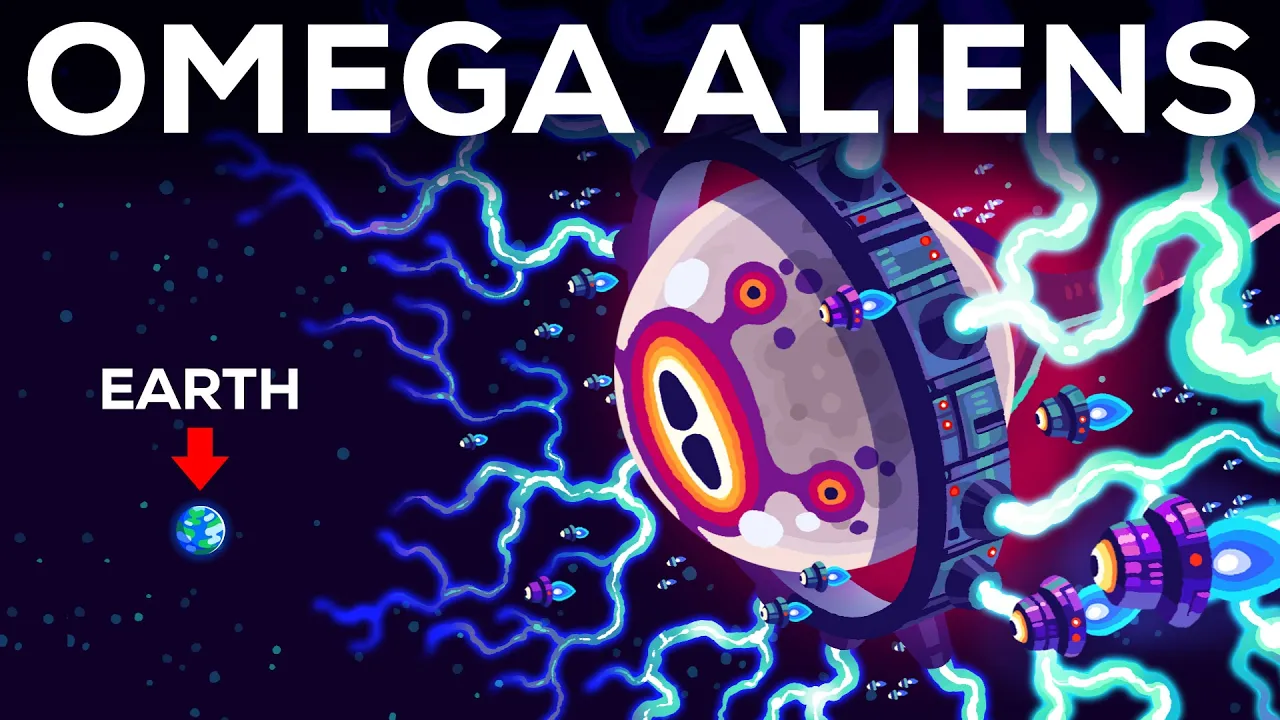
- Advanced alien civilizations might become more powerful by mastering microscopic reality rather than conquering space. Humanity assumes progress means bigger structures, greater energy consumption, and galactic expansion, but sufficiently advanced civilizations might achieve extraordinary capabilities without leaving their home systems.

- The Barrow scale offers an alternative to the Kardashev scale for measuring civilization's technological advancement. Kardashev measures energy control from planetary to galactic levels, while Barrow measures mastery of progressively smaller structures, reflecting how writing, chemistry, genetics, and transistors transformed humanity without requiring territorial expansion.

- A Type 2-minus civilization could potentially overcome biological aging and radically redesign living organisms. Building on genetic engineering and processes observed in the rejuvenating jellyfish Turritopsis dohrnii, such a civilization might eliminate diseases, grow replacement organs, enhance human abilities, and create entirely new species.

- Genetic engineering might eventually allow civilizations to reshape entire ecosystems and address environmental problems. The episode imagines plants engineered to absorb atmospheric carbon dioxide rapidly and permanently store the carbon, alongside organisms designed to repair damaged ecosystems or perform functions unavailable in nature.

- Type 3-minus and Type 4-minus civilizations could turn ordinary matter into programmable technology. Precise manipulation of molecules and atoms might produce self-repairing infrastructure, adaptive buildings, microscopic surgical robots, and swarms of nanomachines capable of assembling into everyday objects.

- Atomic-scale recycling could make material scarcity largely disappear and reduce the need for interstellar expansion. If civilizations could rearrange discarded materials into useful products repeatedly, conquering distant planets for raw materials might become unnecessary, while extraordinarily dense information storage could enable immensely powerful computers.

- Type 5-minus civilizations could harness atomic nuclei for extraordinary energy production and potentially revolutionary computing. The episode claims that fusing hydrogen from a medium-sized lake could theoretically power present-day humanity for millions of years, while nuclear processes might enable computers operating far beyond conventional transistor speeds.

- The highest hypothetical Barrow stages extend to manipulating fundamental particles and potentially creating new universes. Type 6-minus civilizations might control quantum-scale physics, while Omega-minus civilizations could conceivably generate universes through the quantum vacuum; the episode acknowledges that these possibilities remain speculative and may still require large-scale resources.
...

August 4, 2026

Why Humanity Will Never Leave The Solar System

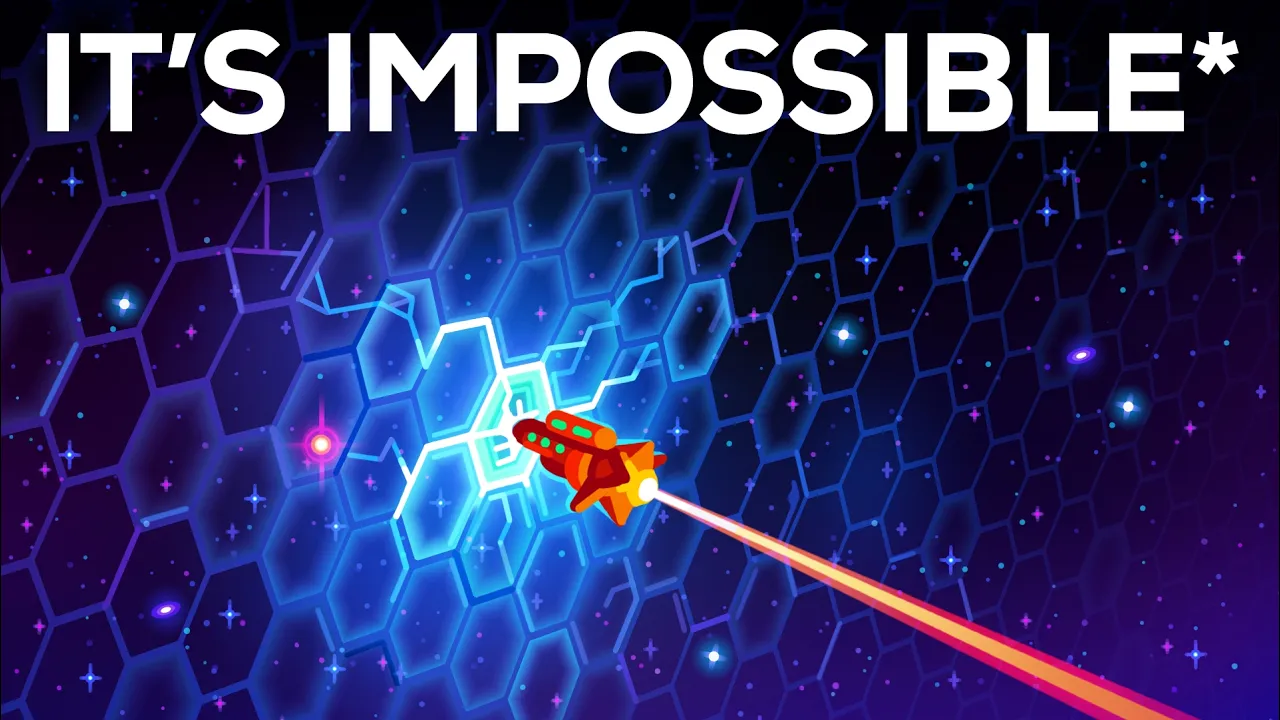
- Even humanity's fastest spacecraft would take approximately 2,500 years to reach the outer edge of the solar system. At the Parker Solar Probe's cited speed of 635,000 km/h, Mars would take just two weeks, but the distant Oort cloud creates an enormous barrier before interstellar travel even begins.

“The barrier of nothingness that might trap us in the solar system forever.” — Kurzgesagt

- Nuclear fusion or antimatter propulsion could theoretically make nearby stars reachable within a human lifetime. Kurzgesagt imagines a spacecraft traveling at 20% of light speed, or 216 million km/h, capable of reaching the outer Oort cloud in eight years and Alpha Centauri in approximately 20 years.

- Interstellar dust could make extremely fast spacecraft dangerously vulnerable. At 20% of light speed, a single dust grain could strike with grenade-like energy, while a golf-ball-sized rock could release more than twice the energy of the Hiroshima atomic bomb, requiring extraordinary shielding.

“We might have reached our natural speed limit here” — Kurzgesagt

- A 40-year journey at 20% of light speed would reach only eight light-years, with no known destination clearly suitable for human settlement. Astronauts could spend decades traveling through deadly conditions only to discover scientifically fascinating but uninhabitable planets.

“Imagine traveling your entire life and then arriving at a Mars.” — Kurzgesagt

- Our stellar neighborhood offers surprisingly few promising destinations. Kurzgesagt describes a region 25 light-years across containing 34 stars and six brown dwarfs, with only three Sun-like stars, including our Sun and Alpha Centauri A; most neighboring stars are red dwarfs.

- Being inside a star's habitable zone does not mean a planet can support humans. Mars provides a nearby warning, while potentially promising planets such as GJ 1061 d remain uncertain; genuinely habitable worlds could lie dozens or thousands of light-years away.

“But, Mars is also in the habitable zone of the Sun and it is really bad.” — Kurzgesagt

- Future interstellar expansion may depend on changing how humans travel rather than merely building faster engines. Kurzgesagt considers eliminating biological aging, sending AI-controlled spacecraft carrying embryos, and developing advanced telescopes to identify suitable planets before committing to voyages lasting centuries.

“Maybe they could send AI spaceships with embryos or some version of that into space.” — Kurzgesagt

- Kurzgesagt acknowledges that its pessimistic predictions could be overturned by revolutionary technology. The video cites a 1903 New York Times prediction that powered flight was millions of years away, followed by the first successful flight 69 days later and the Moon landing 66 years afterward.

“We genuinely don’t know.” — Kurzgesagt