Bulgaria May Be Europe's Oldest Country. The Ranking Doesn't Prove It.
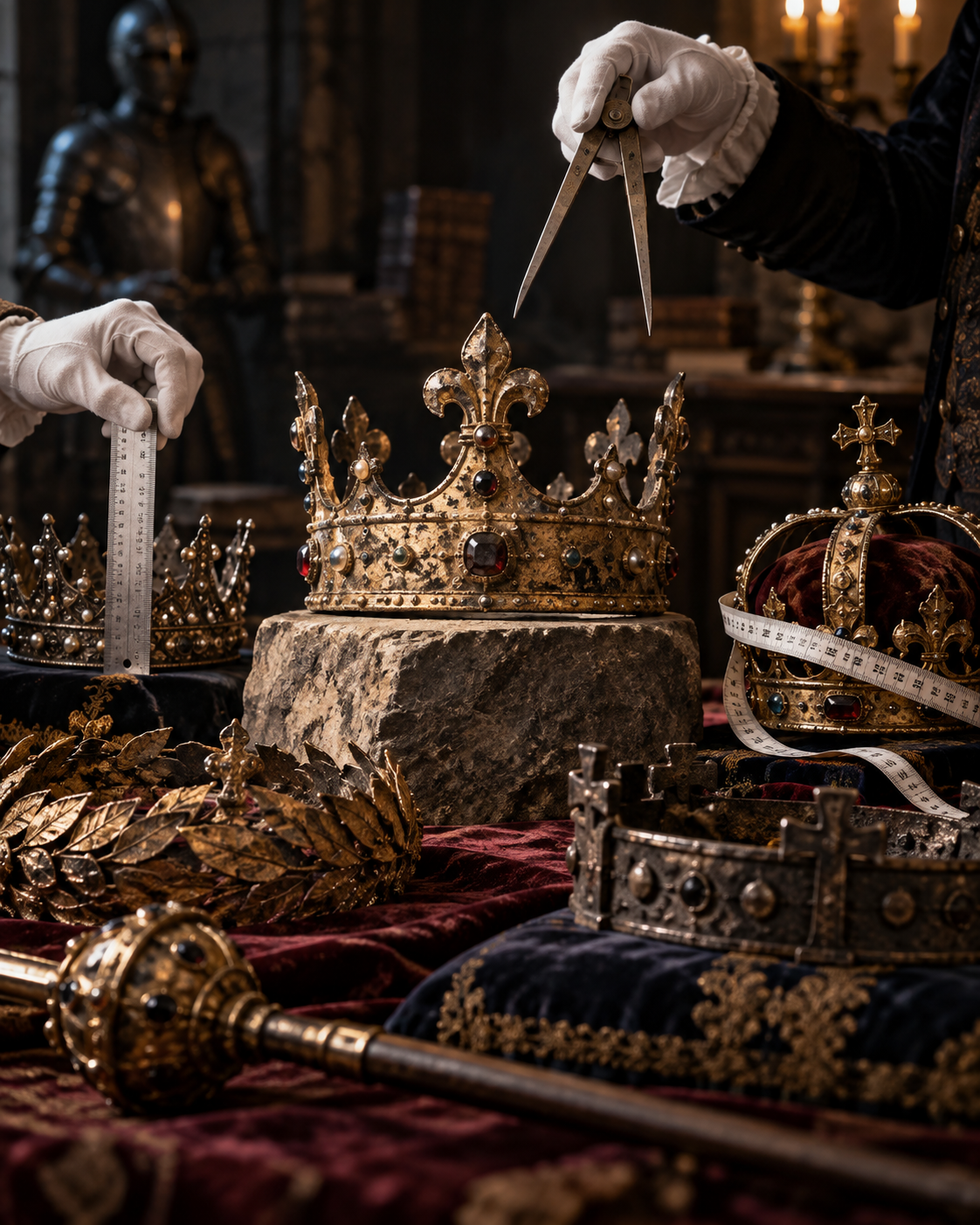
A country can survive the destruction of its government, the loss of its independence, centuries of foreign rule and the disappearance of its original borders. But how far can that historical continuity stretch before the country we recognize today becomes something different from the state that existed a thousand years ago?
UsefulCharts attempts to answer that question in What Is the Oldest European Country? The video names Bulgaria, founded in 681, as the winner. France becomes the alternative if uninterrupted independence is required.
The problem is not Bulgaria's founding date. It is the inconsistent treatment of political continuity, independence and national identity across the countries being compared.
England receives a date associated with a kingdom that did not yet govern all England. Spain receives a date marking the existence of separate kingdoms rather than their unification. France and Germany inherit a treaty that divided a Frankish dynasty's territories. Scotland faces scrutiny over a disputed founding date, while other questionable dates survive.
The creator acknowledges that the answer depends on definitions. That concession is reasonable. What follows is less convincing: a ranking whose rules change from one country to another.
Bulgaria's 681 Date Is Credible. Its Claim to Continuity Is More Complicated.
The strongest part of the video's argument is Bulgaria's early history.
In 680–681, Bulgar forces crossed the Danube and established themselves in the former Roman province of Moesia. The Bulgarian state associated with Khan Asparukh emerged in this period, and 681 is an established historical reference point.
Historian Alexander Angelov, writing in the Wiley Blackwell Encyclopedia of Empires, describes the development of the First Bulgarian Empire beginning in 680–681. Bulgaria's own government uses 681 as the beginning of the Bulgarian state. Wiley Online Library
There is no compelling reason to dismiss that date merely to challenge UsefulCharts.
But the country's subsequent history exposes a fundamental difficulty.
The First Bulgarian Empire fell to Byzantium in 1018. Bulgarian independence was restored through the rebellion of Peter and Asen in 1185, creating the Second Bulgarian Empire.
That second state eventually disappeared under Ottoman conquest. Bulgaria did not regain autonomy until 1878, followed by a formal declaration of independence in 1908.
Bulgaria's government describes the Ottoman period as one in which its state institutions ceased to exist. Council of Ministers
Using the conventional dates of 1018–1185 and 1396–1878, these two major interruptions amount to approximately 649 years without an independent Bulgarian state.
The Bulgarian people, language, religious traditions and historical identity did not disappear. Political sovereignty did.
UsefulCharts openly acknowledges the Byzantine and Ottoman periods. This is an important qualification, not a fact the creator concealed.
Nevertheless, a ranking based on Bulgaria's first emergence establishes something narrower than the title promises: Bulgaria has one of Europe's oldest identifiable traditions of statehood.
Whether that makes the present Bulgarian Republic the oldest country remains a question about the meaning of continuity.
A historical connection is not necessarily an uninterrupted political existence.
Spain's Supposed Founding in 1065 Exposes the Weakest Rule
The most consequential contradiction appears in the treatment of Spain.
UsefulCharts explains that Spain developed through the union of Castile and Aragon in 1479. Rather than use that date, the video follows Castile's history backward.
It eventually selects 1065 because four Spanish kingdoms—Castile, León, Aragon and Navarre—existed at that point.
Consider what this means.
Spain is assigned a founding date because several separate kingdoms existed, even though the stated qualification for inclusion was that a country had been unified and independent.
The distinction is not trivial.
The Metropolitan Museum of Art's historical chronology identifies separate Iberian kingdoms throughout the medieval period. It also records the Muslim states of al-Andalus, including the taifa kingdoms that developed after the collapse of the Umayyad Caliphate in 1031. The Metropolitan Museum of Art
In other words, the Iberian Peninsula of 1065 was not a united Spain. It was a politically divided region containing competing Christian and Muslim powers.
Even the familiar date of 1479 requires care.
Ferdinand of Aragon and Isabella of Castile governed through a dynastic partnership, but their joint rule did not immediately produce a single, fully unified state. The Metropolitan Museum describes their reign as a major step toward Spanish unification rather than its completion.
Its chronology identifies the Kingdom of Spain under Habsburg rule from 1516. The Metropolitan Museum of Art
This creates a serious inconsistency.
UsefulCharts excludes modern Italy because it was not a unified, independent medieval country.
Yet Spain receives a medieval founding date that explicitly describes a collection of separate kingdoms.
One can legitimately trace Spain's origins through Castile and León. But then the criterion is ancestry through a predecessor state, not the existence of a unified Spain.
Those are different tests.
The distinction matters because the creator uses both without establishing when each should apply.
England Was Not United in 886
England presents a cleaner factual problem.
UsefulCharts dates its foundation to 886 under Alfred the Great, while acknowledging that Alfred's grandson Æthelstan was the first to use the title King of the English.
The choice of 886 is associated with Alfred's recovery of London and the development of his authority over significant parts of Anglo-Saxon England.
But Alfred did not govern all the territory that would become the English kingdom.
English Heritage explains that Alfred's successors continued conquering territories controlled by Scandinavian rulers. His son Edward, daughter Æthelflæd and grandson Æthelstan extended the kingdom until Æthelstan became the first ruler of a unified England.
Historic England places Æthelstan's control over all the English in 927, following his conquest of the Scandinavian kingdom of York. English Heritage
The difference between 886 and 927 is 41 years.
That gap does not necessarily destroy England's claim to an earlier political origin. Alfred's kingdom was plainly a major predecessor.
It does, however, expose another change in the video's method.
Where the ranking calls for a unified medieval state, England is allowed to begin before its unification.
Where the ranking calls for the earliest identifiable political predecessor, the treatment of other countries becomes harder to explain.
The video repeatedly moves between these definitions without distinguishing them.
France and Germany Did Not Suddenly Become Countries in 843
The Treaty of Verdun is one of the most important events in medieval European history.
In 843, the Carolingian Empire was divided among the heirs of Louis the Pious. West Francia and East Francia subsequently became central to the histories of France and Germany.
UsefulCharts therefore assigns both countries a starting date of 843.
There is a defensible historical argument for treating Verdun as a major turning point.
There is a much weaker argument for treating it as the actual birth of two countries.
EBSCO's historical examination of the treaty makes the distinction explicit: France and Germany, as recognizable political entities, did not exist in 843.
Verdun settled a dynastic conflict and divided territory among Frankish rulers. It did not create two modern national states through an agreement between French and German peoples. EBSCO
The distinction is particularly important because the empire was divided into three kingdoms, not two.
The middle kingdom subsequently underwent further divisions and territorial rearrangements.
The recognizable political identities of France and Germany developed through later processes involving royal dynasties, territorial consolidation, institutions, languages and competing forms of authority.
Treating 843 as their shared starting date is a historical convention.
Presenting the date as if it establishes two countries' precise ages turns a complex development into a false moment of creation.
It also permits an unusual form of historical inheritance.
The Frankish Empire is treated as too broad to count directly as France or Germany. But its successor kingdoms qualify immediately, despite the absence of the national identities that would eventually distinguish them.
The rule is understandable as an illustration of political ancestry.
It is inadequate as a universal measurement of national age.
Norway's Traditional Founding Date Does Not Establish a Unified Kingdom
The video shows greater skepticism toward Scotland than toward Norway.
Scotland receives the traditional date of 843, associated with Kenneth MacAlpin. UsefulCharts acknowledges scholarly doubts about whether Scotland had actually become united at that point, mentioning 900 as an alternative.
France and Germany consequently receive precedence over Scotland in the ranking.
Norway, meanwhile, is assigned 872 under Harald Fairhair.
The creator acknowledges that this date comes from semi-legendary sources, but retains it.
Norwegian historical scholarship provides good reasons for greater caution.
According to Store norske leksikon, the traditional date for the Battle of Hafrsfjord is 872, but scholars have proposed later dates, including the 880s and approximately 900.
More importantly, Harald's victory did not establish control over everything that constitutes Norway today.
The territory he consolidated was concentrated in southwestern Norway. The image of Harald as the ruler who united all Norway developed substantially in historical writing centuries later. Store norske leksikon
This is not merely uncertainty over a year.
It concerns the central question of whether a unified country existed at all.
If Scotland's disputed unification affects its position in the ranking, Norway's disputed unification deserves comparable scrutiny.
Historical uncertainty cannot be a tiebreaker applied only when convenient.
The Oldest Republic Is Dismissed, Then Given a Legendary Founding Date
San Marino creates a different problem.
UsefulCharts excludes microstates from the main competition because the creator considers them historical anomalies.
The video then offers San Marino, supposedly founded in 301 CE, as the oldest European country if microstates are included.
There are two separate questions here.
First, why should a country cease to qualify because its territory is small?
San Marino has institutions, laws, territory and a long tradition of self-government. Its size does not invalidate its political history.
Excluding microstates is a legitimate choice for a comparison of larger countries. But it is not evidence that microstates are less authentic countries.
Second, the date of 301 requires a qualification the video does not adequately provide.
San Marino's own civil aviation and maritime authority describes the account of Saint Marinus, whose death is traditionally dated to 301, as legendary.
The authority explains that the community remained under ecclesiastical political control and developed autonomous governing institutions during the late thirteenth century. caa-mna.sm
UNESCO likewise recognizes San Marino's exceptional institutional continuity, dating its independent republican tradition to the thirteenth century rather than treating 301 as a verified date of sovereign statehood. UNESCO World Heritage Centre
The distinction is substantial.
A founding legend may explain a national tradition without establishing the historical existence of an independent country at that moment.
San Marino remains an extraordinary example of political continuity.
It does not need an unverified claim of uninterrupted independence since 301 to deserve that recognition.
Medieval Rus' Cannot Be Divided Neatly Among Three Modern Countries
UsefulCharts applies another founding rule to Russia, Ukraine and Belarus.
All three trace important parts of their history to Kyivan Rus', traditionally dated in the video to 882.
The creator rejects 882 as their shared founding date and instead uses approximately 1200, when the earlier political order was fragmenting.
The successors are then associated with particular medieval principalities: Galicia-Volhynia with Ukraine, Vladimir with Russia and Polotsk with Belarus.
These connections are historically relevant.
But a medieval principality cannot automatically be treated as the original version of a modern nation-state.
Historian Serhii Plokhy's The Origins of the Slavic Nations examines precisely this problem: the shared medieval inheritance of Russians, Ukrainians and Belarusians, and the development of their distinct identities.
The history of Kyivan Rus' has also been contested by later national historiographies seeking to establish exclusive claims to an earlier political tradition. Cambridge University Press
UsefulCharts does not advance such an exclusive claim. Indeed, its decision to distinguish the three successor histories avoids one obvious historical mistake.
Yet the proposed date of approximately 1200 still implies a precision that the political and cultural development of those communities cannot sustain.
The existence of distinct medieval centers of power does not establish that three modern countries were founded simultaneously.
The more defensible statement is that their political traditions developed from overlapping medieval histories.
That is informative history.
Assigning three countries the same approximate birthday is a considerably weaker conclusion.
France's Claim to Continuous Independence Needs Its Own Definition
At the video's conclusion, UsefulCharts offers France as the oldest continuously independent European country.
The argument rests largely on two comparisons.
Bulgaria spent centuries under Byzantine and Ottoman rule. Germany experienced a period without national unification between the Holy Roman Empire and the German Empire.
France, the creator argues, therefore has the stronger claim to continuous existence.
But the distinction between state continuity and effective independence becomes important again.
France was defeated by Nazi Germany in 1940.
Under the armistice of June 22, Germany occupied much of the country. The Vichy government retained authority in the unoccupied south but operated under restrictions imposed by Germany.
In November 1942, German forces occupied the southern zone as well.
The United States Holocaust Memorial Museum documents both the military occupation and the Vichy government's extensive dependence on Nazi Germany. Holocaust Encyclopedia
That occupation did not necessarily extinguish France's legal existence as a state. France also retained an alternative claim to legitimate national authority through the Free French movement.
But it demonstrates why continuous independence requires careful definition.
Does independence mean the survival of a recognized state?
The continuing existence of national institutions?
A government exercising effective sovereignty over its territory?
Or an unbroken constitutional and political order?
These conditions are not interchangeable.
France can plausibly claim a long history of state continuity, despite occupation, revolution and changes of regime.
Whether that amounts to uninterrupted independence under a rule applied consistently to other European countries is another matter.
UsefulCharts does not establish the distinction carefully enough to make France's alternative victory decisive.
The Verdict: A Historical Ranking Without a Consistent Measure
The video succeeds in one important respect: it makes clear that modern European states have complicated origins.
It also avoids the simplistic assumption that a country's modern independence date necessarily marks the beginning of its political history.
Those are reasonable foundations for an educational video.
The failure lies in what happens next.
A discussion that begins by acknowledging uncertainty gradually converts different kinds of historical evidence into one seemingly precise ranking.
An early medieval kingdom, a dynastic partition, a legendary unification, a collection of separate kingdoms and a surviving republic are all measured through different rules.
The dates are then placed beside one another as though they describe equivalent events.
They do not.
Bulgaria's founding in 681 is well supported. Its position as Europe's oldest country is conditional on definitions that the video does not apply consistently throughout its ranking.
This investigation does not establish that another country should replace Bulgaria at the top.
It establishes something more fundamental: UsefulCharts has not demonstrated that its comparison measures the same historical quality for every contender.
A defensible ranking would have to distinguish the earliest recorded predecessor, the first unified state, the establishment of effective sovereignty and the continuity of modern political institutions.
Those different questions would produce different answers.
Bulgaria might still win one of them.
But the historical strength of its claim deserves better than a competition in which the rules change between contestants.
The oldest country in Europe cannot be identified reliably until the meaning of “oldest” is settled first.
References
1. Original work — What Is the Oldest European Country?
UsefulCharts, YouTube. Publication date not independently established.
Watch the original video
The primary work examined, including its criteria, founding dates, treatment of political continuity and final preference for Bulgaria or France.
2. Bulgarian Medieval Empire (First and Second)
Alexander Angelov, Wiley Blackwell Encyclopedia of Empires, January 11, 2016.
Read the academic reference
Establishes the historical foundation of Bulgaria in 680–681 and distinguishes the First and Second Bulgarian Empires, including their interruption by Byzantine conquest.
3. History
Council of Ministers of the Republic of Bulgaria, official government history, undated.
Bulgaria's official historical chronology
Documents the foundation in 681, periods of Byzantine and Ottoman control, restoration of autonomy in 1878 and formal independence in 1908.
4. Treaty of Verdun
EBSCO Research, historical reference article, undated.
Read the historical analysis
Explains the Carolingian dynastic division of 843 and distinguishes it from the subsequent emergence of France and Germany.
5. The History of the Vikings in England
English Heritage, undated.
Read English Heritage's account
Establishes the continuing territorial consolidation after Alfred's reign and identifies Æthelstan as the first true ruler of a unified England.
6. Iberian Peninsula, 1000–1400 A.D.
The Metropolitan Museum of Art, Heilbrunn Timeline of Art History, approximately 2001.
Examine the medieval Iberian chronology
Documents the separate Christian and Muslim political entities of medieval Iberia, undermining the interpretation of 1065 as the foundation of a unified Spain.
7. Iberian Peninsula, 1400–1600 A.D.
The Metropolitan Museum of Art, Heilbrunn Timeline of Art History, approximately 2002.
Examine the formation of Spain
Distinguishes the dynastic partnership of Castile and Aragon from the later development of a unified Spanish monarchy.
8. Slaget i Hafrsfjord
Store norske leksikon, Norwegian historical encyclopedia, undated.
Read the Norwegian historical assessment
Explains the disputed date and significance of Harald Fairhair's victory and the limitations of treating it as the definitive unification of Norway.
9. About San Marino
Civil Aviation, Maritime Navigation and Homologation Authority of San Marino, undated.
Read San Marino's historical account
Identifies the traditional account of Saint Marinus as legendary and describes the medieval development of the republic's actual institutions of self-government.
10. San Marino Historic Centre and Mount Titano
UNESCO World Heritage Centre, inscribed 2008.
Read the UNESCO assessment
Recognizes San Marino's exceptional continuity as an independent republic from the thirteenth century, providing a historically grounded alternative to the traditional founding date of 301.
11. The Origins of the Slavic Nations: Premodern Identities in Russia, Ukraine, and Belarus
Serhii Plokhy, Cambridge University Press, 2006.
Read the academic source
Examines the contested inheritance of Kyivan Rus' and the historical development of distinct East Slavic national identities.
12. France
United States Holocaust Memorial Museum, Holocaust Encyclopedia, undated.
Read the historical account
Documents German occupation, Vichy administration and restrictions on French political autonomy during World War II, illustrating the difficulty of defining uninterrupted independence.