The Surveillance Back Door: How ICE Reached Communities That Refused to Cooperate
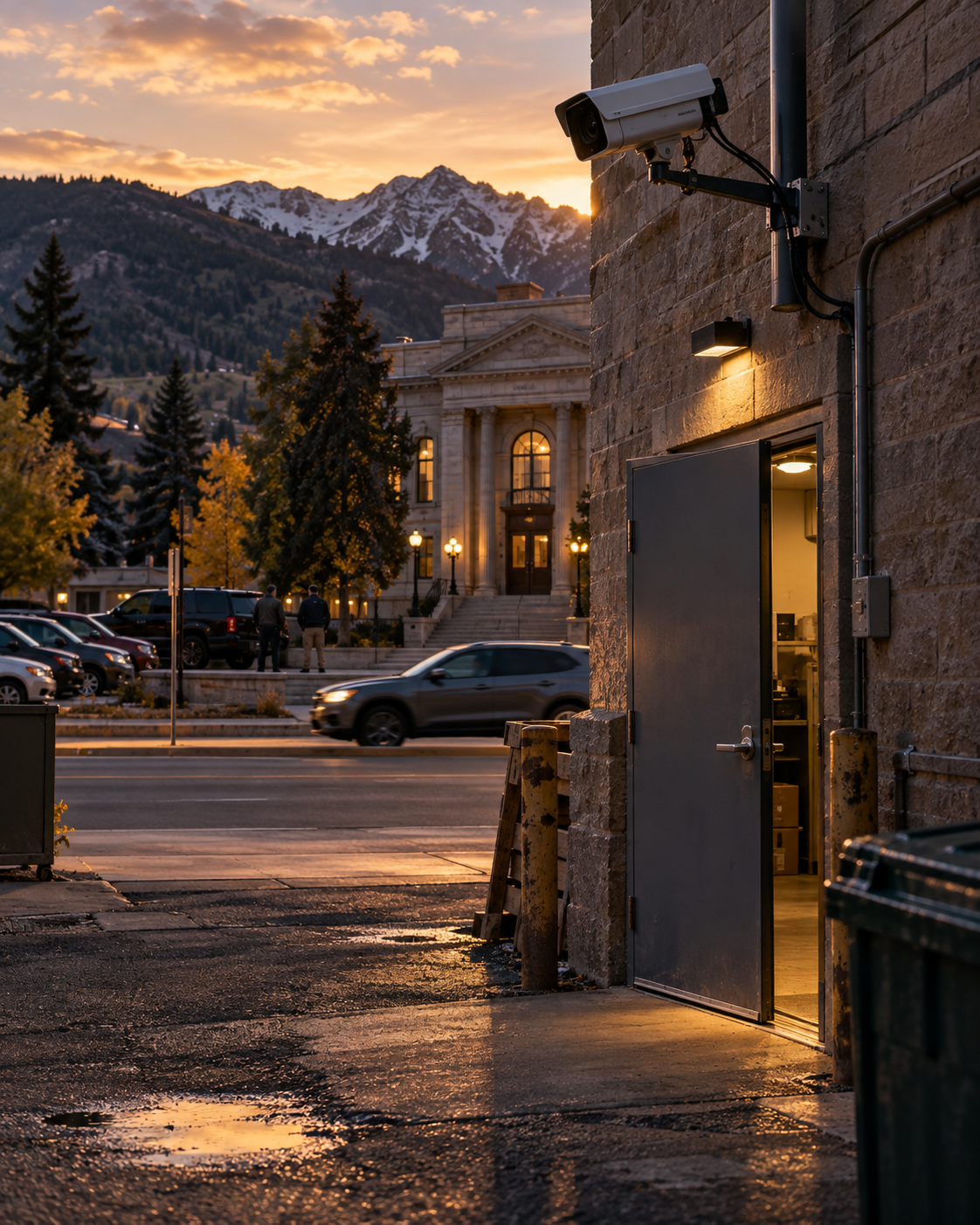
A town can refuse to cooperate with federal immigration enforcement. Its police department can follow state law, restrict information sharing, and promise residents that their movements will not be monitored for immigration investigations.
But what happens when the town's surveillance cameras belong to a network connecting thousands of other police departments?
Wendover Productions' How ICE's Surveillance System Works exposes an uncomfortable answer: a community does not necessarily control who can benefit from its surveillance data simply because it controls who operates the cameras.
Independent reporting, public records, company admissions, and subsequent investigations substantiate that concern. They also establish something more consequential than the video fully explores.
The weakness is not confined to Immigration and Customs Enforcement. It lies in a surveillance system where one organization collects information, another supplies the technology, and thousands of potential users operate under different laws, policies, and standards of accountability.
I would defend Wendover's central warning. But the strongest evidence calls for a more precise conclusion than the claim that ICE can access everything, everywhere.
The documented failure was that police information-sharing arrangements allowed immigration-related searches to include data from jurisdictions that had not authorized their surveillance systems for that purpose.
And the problem did not stop at one Colorado town.
A Town's Cameras Became Part of a National Search Network
Glenwood Springs, Colorado, offers an unusually revealing case.
The community has a substantial immigrant population and exists within a state whose laws restrict cooperation with federal civil immigration enforcement.
Its police department began using Flock Safety's automated license plate readers in 2022.
The cameras record passing vehicles, license plates, vehicle characteristics, locations, and times. Investigators can search historical observations or receive alerts when particular vehicles appear.
The town has a legitimate interest in this capability. Interstate 70 runs through Glenwood Springs, making its cameras useful for tracking vehicles associated with crimes committed elsewhere.
But connecting those cameras to Flock's broader network created a second function: police departments across the country could include Glenwood Springs' records in their investigations.
Wendover reports that outside agencies conducted 516,892 searches involving the town's surveillance network in January 2025 alone.
The more revealing finding came from independent reporting.
In April 2026, Aspen Journalism and Aspen Public Radio reported that 78 outside agencies, including U.S. Border Patrol, had included Glenwood Springs data in searches carrying immigration-related descriptions.
The investigation examined records spanning January 2025 through January 2026. Search explanations included immigration violations and references to federal enforcement agencies.
Glenwood Springs' own officers had not recorded searches for immigration enforcement.
That distinction matters enormously.
The available evidence does not establish that the town's police actively participated in those federal investigations. It establishes that their surveillance network was available to outside agencies conducting them.
There is also an important limitation to the numbers.
A nationwide database search can query thousands of participating camera networks simultaneously. A record showing that Glenwood Springs was included does not necessarily mean that the search returned a matching vehicle or disclosed a specific resident's movements.
Nor should 516,892 searches be mistaken for 516,892 immigration investigations.
But the distinction does not erase the underlying problem.
A town seeking to restrict immigration surveillance had permitted broad network access without sufficient safeguards to ensure that outside searches respected its restrictions.
The relevant failure was not the number of successful matches. It was the availability of the data for purposes the community had not agreed to support.
Colorado's Restrictions Did Not Automatically Follow Its Data
Colorado has made a legislative choice about immigration enforcement.
Its restrictions on state and local government participation were strengthened by Senate Bill 25-276, signed into law on May 23, 2025.
The legislation extended requirements limiting the disclosure and access of personal identifying information to local governments and their employees.
It did not abolish federal immigration enforcement. Nor did it prohibit every exchange of information between Colorado police and federal authorities.
The restrictions concern specified uses of personal information, particularly assistance with civil immigration enforcement.
This qualification prevents an important misunderstanding.
A search mentioning ICE is not automatically proof of illegal conduct. Federal agencies also investigate trafficking, organized crime, and other criminal offenses.
Likewise, an outside agency searching a national database does not by itself establish that a Colorado department knowingly violated the law.
Yet the records reveal how difficult these legal distinctions become once information crosses jurisdictions.
In February 2026, The Colorado Sun reported that police around the country had conducted nearly 1,400 ICE- or immigration-related searches involving Denver's Flock data during 2024 and 2025.
Denver had removed its information from the national directory in April 2025, following opposition from city council members.
Nevertheless, Denver continued sharing information within Colorado. The report described an account associated with Loveland police through which a federal agent conducted 26 ICE-related searches.
The restriction on nationwide access had not eliminated every possible route through another department.
Glenwood Springs ultimately responded more decisively.
After reviewing its audit logs, the police department disabled external sharing entirely.
By April 2026, City Manager Steve Boyd said only approved Glenwood Springs police personnel could access the system, and officials were checking that restriction regularly.
This is a meaningful correction to any interpretation of Wendover suggesting that ICE necessarily retains access to Glenwood Springs' municipal cameras today.
I found no independent evidence establishing that outside agencies continued successfully searching that particular municipal network after its complete shutdown.
The historical failure remains documented.
But a defense should distinguish a demonstrated vulnerability from a vulnerability proven to remain open.
Flock's Own Admissions Make the Case Stronger
Flock Safety disputes the idea that it provides unrestricted access to federal immigration authorities.
Its position deserves to be represented accurately.
The company states that it has no ICE contract, does not sell customer data, and does not independently decide to share customer information with federal agencies.
It maintains that customers own their data and control permissions.
Those are substantive claims, not details to dismiss merely because the company has a commercial interest in defending its business.
But they must be examined alongside Flock's earlier admissions.
In an August 2025 statement, subsequently updated, Flock acknowledged conducting pilot projects with Customs and Border Protection and Homeland Security Investigations.
It also conceded that its public communications had contained inaccurate information and that it had failed to establish distinct permissions and protocols sufficient to protect local compliance during federal access.
The company said it paused the pilots and would introduce clearer distinctions between federal and local users.
Flock's subsequent published timeline identifies an HSI pilot running from March 3 to May 1, 2025, and a CBP pilot from May 9 to August 24, 2025.
The company says those programs have ended and that federal agencies are no longer included in broad statewide or national lookup networks.
The sequence is revealing.
First, surveillance information became accessible through arrangements whose implications were inadequately understood or controlled.
Then controversy and investigations exposed the problem.
Only afterward did the company introduce stronger technical safeguards.
That is a different story from a company deliberately selling municipal surveillance data to ICE.
It is also a more defensible one.
The existence of contractual restrictions and customer ownership did not prevent earlier failures in practical access control.
Flock has since acknowledged another significant weakness.
In an October 2026 statement concerning California agencies, the company admitted that some customers' networks had inadvertently remained accessible to out-of-state law enforcement.
More strikingly, Flock said limitations in earlier technical logging sometimes made it impossible to determine precisely why that access occurred.
The company announced stronger restrictions, standardized search categories, and permanent logging of changes to sharing settings.
A system cannot reliably demonstrate that its permissions have been respected if it cannot reconstruct how those permissions changed.
This is not a theoretical objection.
It comes from the company explaining why its own safeguards needed improvement.
The Contractual Distinction Nobody Should Ignore
Wendover emphasizes that Glenwood Springs does not own its Flock cameras.
But ownership of the hardware and ownership of the information are different questions.
Flock's published customer terms explicitly state that customers retain ownership of their data.
The company also receives a contractual license to use that information to deliver and improve its services.
Its published explanation says unauthorized sharing outside the agreement would constitute a contractual breach.
That weakens any argument suggesting Flock simply owns every recorded movement and can freely distribute it.
It does not resolve the operational problem.
Ownership is a legal right. Access is a technical capability.
A municipality can legally own information while misunderstanding which agencies have permission to search it.
It can prohibit a particular purpose without successfully preventing another organization from pursuing that purpose.
And it can rely on contractual safeguards that are difficult to verify without complete, trustworthy logs.
The central question is not only who owns the information. It is who can reach it, under whose authority, and whether an independent observer can establish what happened.
That is where Wendover's argument becomes particularly valuable.
The Private-Camera Problem Is More Complicated—and More Important
The video identifies Flock cameras at a Lowe's store in Glenwood Springs.
That example deserves more attention than a passing reference.
A municipal police department is subject to public-records requirements and political oversight. A private retailer operates under a different collection of legal obligations and internal policies.
Lowe's confirms in its published privacy statement that some stores use automated license plate readers.
The company says those systems support security, fraud prevention, theft investigations, and property protection.
It also permits disclosures to law enforcement under specified circumstances.
Its stated retention period is generally no longer than 90 days, subject to exceptions and shorter periods required in some jurisdictions.
Compare that with Glenwood Springs' municipal system, which identifies a 30-day retention period unless information is preserved for an active investigation.
The difference does not prove misconduct.
It establishes that surveillance information collected in the same community can be governed by materially different retention and access policies.
More importantly, there is documented evidence that retail camera information can become available for police searches.
In May 2026, CT Insider reported that police departments in Connecticut had obtained access to Flock cameras operated by Lowe's and Home Depot stores.
Public records showed that police in Waterford requested automatic access to cameras at a local Lowe's in 2024.
The request was granted.
A Flock spokesperson also confirmed that private customers could share information with local and out-of-state law enforcement agencies.
This establishes a real mechanism.
Private surveillance systems can contribute information to law enforcement networks without being owned or operated by police.
It does not establish that ICE accessed the Glenwood Springs Lowe's cameras.
Nor does it establish that Lowe's knowingly supplied immigration surveillance information to federal authorities.
Those claims would require access records or other direct evidence that I have not found.
But the possibility is not imaginary.
The broader mechanism exists, and documented examples show that retailers have granted police continuing access.
An additional distinction has emerged since Wendover's original analysis.
In October 2026, Flock explained that its new seven-day default retention period applies to new law enforcement customers—not private businesses.
It also stated that certain enhanced law enforcement safeguards, including mandatory case codes and abnormal-activity monitoring, are specific to public-sector accounts.
Offense-type filtering for private customers was not yet available, although the company said it planned to introduce it.
Private clients retain control over whether to authorize law enforcement access.
This is the most important conclusion I draw from comparing the company's recent policies.
Strengthening safeguards for police-owned cameras does not automatically provide equivalent restrictions for privately owned cameras.
That distinction is especially consequential when public and private camera systems operate in the same communities.
The evidence warrants scrutiny of those arrangements.
It does not justify claiming that every private camera is secretly feeding ICE.
This Was Not Just a Flock Problem
The Colorado evidence extends beyond one company.
Aspen Journalism examined surveillance records from five law enforcement agencies in the Roaring Fork and Colorado River valleys.
Among Flock users, it identified immigration-related network searches involving data from Glenwood Springs, Garfield County, and Silt.
The number of outside agencies involved was substantial:
Glenwood Springs had 78 agencies, Garfield County 74, and Silt 65.
These figures represent participating agencies identified within the respective records; they should not be added together as though every agency were unique.
But another finding was especially revealing.
Snowmass Village and Pitkin County used license plate recognition systems supplied by Motorola Solutions, not Flock.
Their records also contained outside searches related to immigration enforcement.
Snowmass officials said they had attempted to restrict ICE access but had not initially recognized that other federal immigration enforcement organizations, including HSI and Enforcement and Removal Operations, could remain separately identifiable within the system.
The town subsequently suspended external sharing while reviewing its policies.
This changes the interpretation of the entire controversy.
If similar problems occur across different vendors, then replacing Flock alone cannot guarantee that a community's surveillance restrictions will be respected.
The underlying issue concerns network design, access permissions, institutional oversight, and the ability of outside agencies to search locally collected information.
By October 28, 2026, Axios reported that at least a dozen Colorado communities had dropped Flock or moved toward replacing it.
Some had switched to competing license plate reader systems.
Denver's replacement arrangement with Axon reportedly shortened data retention and restricted access more tightly. But the cameras continued collecting license plate information.
A change of supplier can improve safeguards.
It does not necessarily eliminate the surveillance capability.
That is why the most useful distinction is between restricting a vendor and restricting the collection, retention, and exchange of location records.
The Strongest Objection: These Cameras Solve Real Crimes
The case against uncontrolled surveillance becomes weaker if it pretends the technology has no legitimate purpose.
It does.
Glenwood Springs police credit Flock with helping identify violent suspects, recover stolen vehicles, and investigate serious crimes.
The city's own published account includes a vehicular homicide investigation and the recovery of three kidnapped girls from North Carolina.
These are departmental accounts rather than independently established measurements of the technology's overall effectiveness, but they illustrate consequential uses.
Aspen Journalism also reported a kidnapping investigation in which Pitkin County authorities used license plate recognition information from another Colorado county to locate a vehicle.
Police said that information helped officers intercept the vehicle in New Mexico and rescue the victim.
There is a genuine public safety argument for cooperation between jurisdictions.
The serious question is whether that cooperation requires indiscriminate access to records of people who have committed no crime.
A system designed to locate a kidnapped person may justify rapid, targeted information sharing.
That does not automatically justify allowing thousands of outside agencies to search the same records for unrelated purposes with insufficient oversight.
Nor does it establish that continuous, broadly accessible databases are the only way to deliver the demonstrated benefits.
The strongest defense of Wendover is therefore not that license plate readers are inherently illegitimate.
It is that the legitimacy of a particular investigation cannot substitute for accountability over the entire surveillance system.
The capability to solve crimes and the capability to misuse information are not competing theories.
They are characteristics of the same technology.
Surveillance Misuse Has Produced Criminal Charges
There is another reason to reject the suggestion that internal policies alone provide sufficient protection.
In September 2026, prosecutors in Indianapolis charged five police officers with offenses connected to alleged misuse of Flock's license plate reader system.
The prosecutions followed investigative reporting by The Washington Post.
One officer had reportedly searched license plates associated with his wife and acquaintances 3,759 times over approximately ten months.
The department's subsequent investigation uncovered additional suspected misconduct.
The charges are allegations, not convictions.
Nevertheless, the investigation exposed serious weaknesses in the department's earlier oversight practices.
The Washington Post reported that, nationwide, at least 100 police employees had been accused of or charged with unauthorized license plate reader use.
This evidence matters because it identifies a different failure from federal immigration access.
Even when information remains within a police department, authorized users may access it for improper purposes.
Flock has responded by strengthening its auditing systems and introducing tools intended to identify unusual search patterns.
Those improvements deserve recognition.
But the Indianapolis investigation demonstrated why a recorded search is not the same as an appropriately supervised search.
A log is useful only if someone examines it, understands the activity it records, and acts when the explanation fails.
The Legal Safeguards Have Not Kept Pace
Colorado lawmakers considered stronger restrictions during 2026.
Senate Bill 26-070 proposed limits on government access to databases containing historical location information.
Its provisions included restrictions on sharing location records beyond the collecting jurisdiction, subject to specified exceptions.
The measure failed.
Another proposal, Senate Bill 26-071, sought broader regulation of surveillance technology.
It would have imposed additional requirements concerning collection, storage, sharing, and oversight.
That bill was postponed indefinitely on May 6, 2026.
These legislative outcomes matter because the existing restrictions do not amount to a comprehensive system for controlling every use of automated license plate readers.
They also demonstrate the practical difficulty of turning public concern into consistent rules.
Cities can introduce stricter local policies.
Vendors can strengthen permissions.
States can restrict specified uses.
But a nationwide network still brings together organizations operating under different legal and institutional expectations.
A safeguard becomes effective only when it governs the relevant access pathway.
If restrictions apply to one customer account but not another, the protection is incomplete.
If they apply to public agencies but leave private-sector information sharing largely to company discretion, the protection is different rather than universal.
And if they are enforced primarily through reviews conducted after searches have occurred, misuse may be discovered only after the information has already been accessed.
The Federal Government Is Interested in Expanding Access
The wider direction of federal surveillance also deserves attention.
In May 2026, the FBI published a procurement request seeking nationwide access to license plate recognition information.
The proposed service would provide near-real-time searches across the United States and its territories.
The requirements included access to law enforcement or commercial license plate records, geographic searches, vehicle descriptions, and information about camera coverage.
The potential contracts were valued at up to $36 million across multiple regions and years.
This was an FBI procurement proposal, not evidence of an ICE contract or completed deployment.
It nevertheless establishes an important institutional reality.
Federal authorities have an identifiable operational interest in obtaining broad access to vehicle surveillance information.
That interest exists whether the cameras belong to municipalities, retailers, or other organizations.
The distinction between buying cameras and buying access to information gathered by cameras is becoming increasingly important.
A federal agency does not necessarily need to operate the infrastructure to benefit from its records.
Wendover's investigation identifies one version of that problem.
The FBI procurement documents demonstrate why the underlying question will remain relevant even as individual platforms change.
What Wendover Gets Right—and Where Its Argument Must Stop
Wendover's video advances a broader criticism of ICE surveillance, including facial recognition, cell-site simulators, and digital investigative systems.
Its central contention is that expanding federal capabilities can weaken privacy and expose people to monitoring or detention without adequate safeguards.
Those broader claims deserve separate examination.
But its account of networked license plate surveillance withstands the most important challenges.
Independent reporting confirms that immigration-related searches included records from communities that restricted cooperation with federal immigration authorities.
Flock's own admissions confirm that earlier access controls and communications were inadequate.
Public records establish that private camera operators can grant police access to their information.
And subsequent investigations demonstrate that surveillance abuse is not confined to hypothetical scenarios.
There are limits to what the evidence establishes.
It does not prove that every immigration-related search was unlawful.
It does not establish that every network query returned a matching vehicle.
It does not demonstrate that ICE currently has unrestricted access to Glenwood Springs' municipal cameras.
And it does not establish that Flock deliberately supplied unauthorized access to federal immigration authorities.
Those qualifications are essential.
They also leave the central finding intact.
The evidence supports a failure of surveillance governance that is more specific—and more useful to understand—than a generalized accusation of a secret national database.
The Verdict: The Network Is the Problem That Must Be Solved
I would defend Wendover's investigation because its most important warning survives independent scrutiny.
The danger is not simply that ICE possesses advanced technology.
It is that information collected for one legitimate purpose can become available for another through networks whose permissions, contracts, and oversight are difficult for the public to examine.
That is not a hypothetical concern.
It happened in Colorado.
The investigation also reveals a more constructive lesson than demanding the removal of every camera.
Technology companies should be judged on whether their restrictions are technically enforceable and independently verifiable.
Police departments should be judged on whether they can explain who searched their information, for what purpose, and with what result.
Private companies should face serious scrutiny when their surveillance records become accessible to law enforcement, especially where public agencies would face stricter requirements.
And governments should distinguish between permitting a narrowly justified investigation and authorizing broad access to an entire community's movements.
The reforms announced by Flock are meaningful. They show that stronger controls are technically possible.
Their effectiveness, however, must be demonstrated through actual access records, independent audits, and consistent enforcement—not merely through updated policies.
The most significant discovery is that surveillance restrictions can fail without anyone physically bypassing a security system.
They can fail because an authorized organization shares access too broadly, because users have different permissions than administrators realize, or because the people responsible for oversight do not know what their systems are doing.
A community cannot meaningfully control its surveillance information unless it can control—and verify—every route through which that information becomes available.
That is the argument Wendover deserves to have defended.
And it is a standard that should apply regardless of which political administration, police department, or private company happens to operate the system.
References
Original work
Wendover Productions — How ICE's Surveillance System Works.
Watch the original video
The original investigation examines ICE's surveillance capabilities, including Flock license plate readers, Mobile Fortify facial recognition, and cell-site simulators. Its central claims were assessed against independent evidence.
Independent reporting
Eleanor Bennett, Aspen Journalism and Aspen Public Radio — Law enforcement from Aspen to Silt considers changes to street-camera surveillance in response to immigration concerns. April 16, 2026.
Read the investigation
Examines audit logs from five Colorado law enforcement agencies and documents immigration-related network searches involving both Flock and Motorola systems. Search inclusion does not necessarily establish that matching local vehicle records were returned.
Cassis Tingley, The Colorado Sun — Have Denver's Flock cameras been used for immigration enforcement? February 6, 2026.
Read the fact-check
Documents approximately 1,400 immigration-related searches involving Denver's surveillance records and explains the continued access concerns after nationwide sharing restrictions.
Ella Napack, CT Insider — Cameras are scanning license plates at some Lowe's and Home Depot stores in Connecticut. May 6, 2026.
Read the investigation
Provides documented examples of police departments obtaining access to privately operated retail surveillance cameras. It does not establish ICE access to the Glenwood Springs Lowe's system.
Douglas MacMillan, Aaron Schaffer, and Drew Harwell, The Washington Post — Five Indianapolis officers charged following The Post's reporting on Flock misuse. September 23, 2026.
Read the report
Documents criminal charges arising from alleged unauthorized police searches and identifies weaknesses in departmental auditing practices. The allegations must not be treated as convictions.
Jon Brodkin, Ars Technica — FBI seeks US-wide access to license plate cameras, wants data in near real time. May 19, 2026.
Read the report
Examines federal procurement documents describing proposed nationwide access to commercial and law enforcement license plate information.
Alayna Alvarez, Axios Denver — Flock cameras are disappearing in Colorado, but police surveillance isn't. October 28, 2026.
Read the report
Documents Colorado communities replacing Flock with competing systems and explains why changing vendors does not necessarily eliminate surveillance risks.
Official documents and company disclosures
City of Glenwood Springs — Flock Safety Cameras. City public-information resource, accessed October 2026.
Read the city's statement
Describes the municipality's surveillance practices, retention policies, access restrictions, and reported investigative successes.
Colorado General Assembly — SB25-276: Protect Civil Rights Immigration Status. Enacted May 23, 2025.
Read the legislation
Establishes the scope of Colorado's restrictions on government handling of personal identifying information and cooperation with federal immigration enforcement.
Colorado General Assembly — SB26-070: Ban Government Access Historical Location Information Database. 2026 legislative session.
Read the legislative history
Documents an unsuccessful proposal to restrict access to historical location databases.
Colorado General Assembly — SB26-071: Use of Surveillance Technology by Law Enforcement. 2026 legislative session.
Read the legislative history
Documents a broader surveillance accountability proposal that was postponed indefinitely.
Flock Safety — Ensuring Local Compliance. Originally published August 25, 2025; subsequently updated.
Read Flock's statement
Acknowledges earlier federal pilot programs, inadequate permission controls, and inaccurate public communications.
Flock Safety — Does Flock Share Data With ICE? Updated October 1, 2026.
Read Flock's position
Presents the company's denial of a current ICE partnership, its federal pilot timeline, and its claims concerning customer control and federal access restrictions.
Flock Safety — Flock Implements Enhanced Guardrails Across California to Ensure Lawful and Responsible Use of LPRs. Updated October 13, 2026.
Read the safeguards announcement
Describes earlier failures in interstate access controls and technical logging, alongside newly announced restrictions.
Flock Safety — Data Ownership. Updated August 21, 2026.
Read the contractual explanation
Explains customer ownership, Flock's licensed uses of customer information, and contractual restrictions on unauthorized sharing.
Lowe's — U.S. Privacy Statement. Accessed October 2026.
Read the privacy statement
Discloses the retailer's automated license plate recognition practices, law enforcement disclosure provisions, oversight policies, and general retention limits.
Flock Safety — What Flock's Privacy and Security Updates Mean for Private Sector Customers. Updated October 27, 2026.
Read the private-sector policy explanation
Clarifies which new safeguards apply to law enforcement customers, which apply to private customers, and which private-sector controls remain under development.