All-In Podcast

All-In Podcast

Watch Facts Elle's
...

February 20, 2021

E23: Radical DAs, breaking down FB/Google vs. Australia, sustained fear post-vaccine & fan questions

  • The Robinhood interview nearly fractured the podcast: David Friedberg tried to kill the episode and threatened to quit after concluding it had become a PR exercise. The group moved toward giving each host veto power over future episodes, while revealing that Vlad Tenev’s PR representative had sat in on the recording.

  • David Sacks openly acknowledged the conflict created when investors interview founders they financially support. He said he naturally gives portfolio founders the benefit of the doubt and could not authentically “trash” his own investment, even while concluding that Tenev’s strategy was largely to avoid saying anything damaging or quotable.

  • The sharpest media-policy distinction was between linking to journalism and reproducing enough of it to replace the publisher. Jason Calacanis argued that URLs and headlines should remain free while photos, abstracts and substantial snippets should require licenses; Sacks opposed Australia’s government-set payments and warned against effectively taxing hyperlinks.

  • Friedberg argued that America’s early vaccine bottleneck was administrative rather than primarily a shortage of doses. He cited production of roughly three to four million doses daily, criticized California’s eligibility and scheduling rules, and predicted that supply would overwhelm those restrictions by May, forcing broader access.

  • Their long-term investment theses were unusually specific: Friedberg chose biomanufacturing, Sacks bottom-up viral business software, and Chamath Palihapitiya inequality-reducing businesses and climate technology. Sacks said seeing PayPal reach roughly $200 billion and Slack achieve a $27 billion outcome convinced him that his bigger mistake was abandoning good ideas too early.

  • Calacanis disclosed that his investing syndicate had grown to 7,000 accredited investors and was running at roughly $60 million of annual capital deployment. He said the syndicate received access to about 60% of his deals, while his fund retained access to all of them, making the crowd vehicle several times larger than the fund.

  • Chamath said selling Bitcoin too early cost him “many tens of billions” in unrealized gains after he once controlled a low-to-mid-single-digit percentage of the available supply. He also spent 2,800 bitcoins on a $1.6 million Tahoe property in 2014—coins he estimated during the episode would then have been worth roughly $140–150 million.

  • Friedberg and Sacks also disclosed misses that illustrate the cost of underestimating compounding winners. Friedberg passed on investing $50,000 in Square at roughly a $10 million valuation, while Sacks said a failed early Twitter secondary transaction probably cost him “a couple hundred million” dollars.
...

February 13, 2021

E22: Robinhood CEO Vlad Tenev breaks down the GameStop situation

  • Robinhood says the GameStop buy freeze was driven by DTCC collateral demands, not pressure from Citadel, Sequoia, or the SEC. Vlad Tenev said Robinhood Securities received the deposit requirement, restricted 13 stocks to sell-only, and otherwise risked violating clearing rules.

  • Robinhood had already met its deposit requirements before raising $3.4 billion; Tenev said the new capital was needed to loosen restrictions and build a larger cushion. That distinguishes the episode from a conventional insolvency crisis, even though collateral requirements still forced the firm to restrict trading.

  • Robinhood’s decision to self-clear made its own subsidiary responsible for post-trade settlement and collateral, leaving no outside clearing firm to blame when requirements surged. Tenev noted brokers using third-party clearers faced similar constraints, indicating the immediate problem came from market infrastructure rather than Robinhood alone.

  • Tenev’s main structural fix was real-time settlement, which he argued would reduce collateral demands and make ownership and short-selling more transparent. He called 140% short interest “pathological,” describing how shares can be lent, sold short, bought, and lent again through successive transactions.

  • Robinhood allowed roughly four-times exposure on some lower-volatility stocks, while meme stocks were moved to 100% cash requirements and options could not be bought on margin. Gold users needed $2,000 to borrow, paid $5 monthly, and Robinhood had cut its margin rate to 2.5%.

  • Asked how many Robinhood accounts eventually fall to zero, Tenev provided no number and said only that it was a “very small percentage.” He said most customers were neither leveraged nor active options traders and pointed to recurring investments, fractional shares, and dividend reinvestment as evidence of a longer-term-investing push.

  • Tenev acknowledged that Robinhood’s avoidable failure was communication: automated restriction emails lacked enough explanation, allowing hedge-fund conspiracy theories to fill the gap. By Friday, the firm had replaced Thursday’s blunt sell-only restriction with adjustable intraday position limits across as many as 50 stocks.

  • David Sacks argued that the restrictions mattered even if Robinhood had no choice, because cutting off buys disrupted the retail side of the short squeeze while sells remained available. He also acknowledged the counterfactual is unknowable; Tenev declined to endorse claims about how hedge funds used the interruption.

...

February 6, 2021

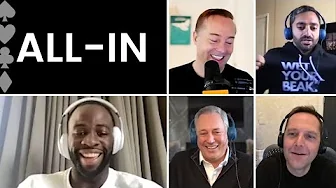
E21: Media misalignment, subjects controlling narratives & more with bestie guestie Draymond Green

  • Andreessen Horowitz’s media push was described as a competitive weapon, not marketing. Chamath said owning newsletters, podcasts, Substack and Clubhouse could squeeze venture firms without a strong brand or distribution, forcing them to pay more for deals and hurting returns.

  • Jason Calacanis said journalists often publish with only 10–20% of the information and may reach just 40–50% after five versions. Drawing on his own reporting experience, he used that gap to explain why insiders increasingly prefer direct channels where they control the full context.

  • Draymond Green said pandemic protocols turned a normal 4–6-hour NBA day into 10–12 hours. An 11 a.m. practice required arrival at 8:45, another test later, and only about two hours of actual work, while daily facility visits removed the short trips he normally used to reset.

  • Green said his shooting problem had become mental rather than technical. He could still shoot “lights out” alone after once hitting about 39% from three, but game pressure blocked him; he had started using meditation while trying to rebuild confidence.

  • Lockdown made Green feel he was back in childhood Saginaw, where “nothing was accessible.” The difference, he said, was that in San Francisco he knew where his next meal was coming from and had better housing; as a child he felt trapped and unaware of a larger world.

  • Green described NBA players’ leverage in blunt economic terms: “this don’t sell without us.” He credited Adam Silver’s willingness to back players’ public positions rather than muzzle them, arguing that this alignment gave players unusual institutional power compared with leagues where commissioner-player conflict is stronger.

  • Green is already planning a broadcasting career built around teaching basketball, not hot takes. He said his model is Tony Romo—explaining formations before plays happen—and that positive reaction to his TNT breakdowns convinced him he could make the game easier for viewers to understand.

  • The pandemic pulled Chamath Palihapitiya back to the vulnerability of arriving as a refugee. He recalled another family giving his family two mattresses, clothes, plates, a frying pan and a pot; retelling it made him cry, and he said the memory had resurfaced as the pandemic reconnected him with his past.

...

February 3, 2021

E20: Robinhood wrap up, Insiders vs. Outsiders, California's failing report card & how to fix it

  • Robinhood’s GameStop restrictions were framed as a clearing-capital crisis, not a regulator ordering trades shut. The hosts said DTCC initially demanded about $3 billion in collateral; Robinhood raised billions and restricted trading rather than risk failing its capital requirements.

  • The episode separated a proven conflict of interest from an unproven Citadel conspiracy. Citadel bought Robinhood order flow while helping back Melvin Capital, but the speakers said there was no evidence Citadel directly ordered Robinhood to halt purchases; DTCC influence remained an open question.

  • Chamath Palihapitiya’s preferred structural fix was immediate, T+0 trade settlement rather than restricting short selling. He argued that eliminating the settlement delay would remove much of the collateral uncertainty that helped create Robinhood’s crisis while preserving legitimate shorting.

  • The hosts flagged Robinhood’s emergency financing as a major unresolved cost of the crisis. They did not know the terms of the roughly $3.4 billion infusion, but Chamath expected employee shareholders to suffer dilution and questioned what protections emergency investors had received.

  • Friedberg argued that California’s fiscal problem was structural, citing concentrated tax revenue, a roughly $250 billion public-pension shortfall and about $30 billion in fraudulent unemployment claims. His point was that changing governors alone would not unwind liabilities, voter-mandated spending rules and operational failures accumulated over decades.

  • Chamath said he would consider serving as California governor only as a short, policy-driven assignment. He described an 18-month tenure focused on five or six laws, contingent on conflict-of-interest rules not forcing him to abandon his businesses or battery project; he later backed away from running. (Los Angeles Times)

  • The group’s emerging California platform combined denser housing, school choice and a radically different tax structure. Chamath favored vouchers with higher teacher pay, zero personal income tax and progressive corporate taxation, while others stressed housing deregulation and reforms to education and healthcare spending.

  • The podcast had moved from political commentary into direct participation in the Newsom recall effort. David Sacks said he had donated $50,000 and urged listeners to sign and fund the recall; public records later showed both Sacks and Chamath among major pro-recall donors. (fppc.ca.gov)

...

January 30, 2021

E19: Robinhood's GameStop decision: Why did it happen and how can it be prevented in the future?

  • GameStop’s squeeze began as a genuine value thesis before becoming a mass momentum trade. DeepFuckingValue put $50,000 into long-dated calls in 2019, Michael Burry disclosed a 3% stake, Ryan Cohen later bought nearly 10%, and WallStreetBets identified short interest above 120%.

  • By January 2021, the trade was no longer simply retail versus Wall Street. Short interest reached about 140%, retail piled into calls, quant and momentum funds joined the long side, more than $100 billion of GameStop traded in seven sessions, and Citadel and Steve Cohen injected nearly $3 billion into Melvin Capital.

  • Robinhood’s January 28 buy restriction turned a liquidity problem into a market-structure crisis. Users could sell but not buy, GameStop fell 44%, and the speakers largely agreed Robinhood faced margin pressure; their dispute was whether this was unforeseeable hypergrowth or negligent undercapitalization that should have been stress-tested months earlier.

  • The episode raises a serious Citadel conflict question but presents no evidence of a coordinated “fix.” Citadel was a major buyer of Robinhood order flow while also helping rescue Melvin; Sacks explicitly wanted the relationship investigated and estimated a 99% chance no direct pressure had occurred.

  • The sharpest internal conflict was between investor loyalty and accountability to customers. Jason Calacanis, a Robinhood investor, argued investors should support founders through crises; Chamath Palihapitiya countered that investors owe duties to users and employees too, and that Robinhood’s known clearing obligations made the failure a governance problem.

  • Even panelists sympathetic to WallStreetBets warned that late GameStop buyers were likely to be left holding the bag. Sacks called the original squeeze strategy brilliant because it exploited overextended shorts, but said hedge funds had regrouped and newcomers buying at extreme prices were unlikely to fare well.

  • Chamath’s reform agenda targeted leverage and opacity rather than banning short selling or options. He proposed preventing shares from being lent multiple times, imposing hedge-fund leverage limits, requiring frequent position disclosure, preserving open trading, and replacing capital-gains taxes with a 0.1% transaction tax intended to discourage short-term turnover.

...

January 23, 2021

E18: Inauguration talk, breaking down the $1.9T stimulus, the case for recalling Gavin Newsom & more

  • Friedberg said a Climate Corp data scientist copied the company’s nitrogen-model code onto a thumb drive and was intercepted by the FBI at the airport while taking it to the Chinese government. Wray’s 2020 FBI data gives that anecdote scale: nearly half of roughly 5,000 active counterintelligence cases involved China. (FBI)

  • Facebook sent Trump’s suspension to its new Oversight Board, backed by a $130 million trust, effectively making a private body the appeals layer for a global speech platform. Alternatives discussed included universal standards, First Amendment-like protections and common-carrier regulation. (The Oversight Board)

  • Friedberg’s most concrete policy proposal was to redirect part of the $160 billion COVID-response budget into modular biomanufacturing rather than near-term testing and protective gear. He estimated 500,000-liter plants at a few hundred million dollars and claimed 10% of that budget could produce vaccines for the country within 30 days. (Congress.gov)

  • Sacks said every company he had invested in was struggling to hire across engineering, sales, marketing and HR while granting options to those workers. He called this “entrepreneurial labor”: employees sharing ownership, with the real divide becoming access to the new economy rather than founders versus everyone else.

  • Political arguments had strained the hosts’ friendship enough that Sacks said he was “starting to hate” Jason, prompting Chamath to organize a reconciliation dinner. They agreed to repeat the dinner at least quarterly so podcast conflict would not overtake their real-world relationships.

  • At recording, Newsom-recall organizers said they had collected about 1.2 million signatures against a requirement of roughly 1.5 million valid signatures, with about 2 million viewed as a safer target. The hosts tied the campaign to pandemic restrictions, vaccine-rollout complaints and fears that California was becoming less hospitable to innovation. (latimes.com)

...

January 11, 2021

E17: Big Tech bans Trump, ramifications for the First Amendment & the open Internet

  • David Sacks objected to Jason Calacanis repeatedly branding him “the Trump guy,” and Calacanis apologized for pigeonholing a close friend. Sacks instead described himself as “anti-hysteria,” combining free-speech liberalism, opposition to foreign wars and conservative politics.

  • Sacks unequivocally condemned the Capitol attack and Trump’s public turn against Mike Pence, calling it demagoguery and an “ignominious end” to the presidency. He stressed Pence’s prior loyalty and refusal to claim power over the electoral count, which Congress ultimately completed after the violence. (National Archives)

  • The group largely agreed that temporarily suspending Trump could be justified, while several argued that permanent, cross-platform exclusion was a serious escalation. Twitter permanently banned Trump, while Apple, Google and Amazon also acted against Parler after January 6. (Reuters)

  • Chamath Palihapitiya and Sacks argued that the permanent bans were strategically counterproductive because they shifted attention from Trump’s conduct to Big Tech’s power. Calacanis, despite believing Trump posed an imminent risk, likewise said he preferred a temporary suspension rather than an indefinite one.

  • The deeper dispute became “who decides”: private platforms were making consequential speech decisions without the transparency or appeal mechanisms associated with government. The speakers proposed variants of an internet court, an online bill of rights and legally defined moderation standards rather than ad hoc corporate judgment.

  • Palihapitiya estimated that 70–80% of the immediate pressure for tougher platform action came from employees, while Sacks also pointed to pressure from incoming lawmakers. Their argument was that executives were responding simultaneously to internal workforces and political threats, not merely written moderation policies.

  • They split sharply over Big Tech’s structure: Sacks and Palihapitiya moved toward breaking companies up, while Friedberg argued their scale benefits consumers and favored regulation instead. Palihapitiya also warned that foreign governments could resist allowing American platforms to control essential political communication.

  • Palihapitiya closed with a major business disclosure and a personal one: his SPAC had just struck the SoFi deal, and he compared his childhood on welfare with CEO Anthony Noto’s. The January 2021 transaction valued SoFi at $8.65 billion, turning the anecdote into a concrete story of upward mobility. (sofi.com)

...

January 8, 2021

E16: Reflecting on the riots at the US Capitol, plus: Georgia runoffs, vaccine distribution & more

  • All four hosts agreed Trump bore major responsibility for the Capitol attack because he spent two months telling supporters the election had been stolen. Sacks said Trump had effectively “loaded the gun” and aimed it, even if proving criminal incitement would be legally difficult.

  • The panel split 2–2 on whether Trump should be prosecuted after leaving office. Sacks and Friedberg favored de-escalation and doubted the legal case; Chamath Palihapitiya and Jason Calacanis argued accountability mattered because ordinary rioters could face years in prison while the person who incited them escaped consequences.

  • Sacks argued Trump’s post-election conduct cost Republicans the Georgia Senate runoffs. He noted David Perdue had beaten Jon Ossoff in November, then lost the runoff after weeks of fraud claims and Trump’s call asking Georgia officials to “find” enough votes.

  • The Atlanta Dream players openly campaigned against their own team owner, Senator Kelly Loeffler, and backed Raphael Warnock instead. The hosts described players wearing “Vote Warnock” shirts after Loeffler opposed the WNBA’s Black Lives Matter messaging, turning an ownership dispute into a direct political intervention.

  • The vaccine bottleneck was distribution, not supply: the hosts cited more than 21 million U.S. doses distributed but only 5.9 million administered. They blamed elaborate eligibility rules and fear of vaccinating the “wrong” person for leaving roughly three-quarters of available doses unused.

  • Friedberg proposed treating vaccination like a 24-hour wartime logistics operation rather than a clinic-by-clinic medical program. His plan used stadiums, the National Guard, 500,000 nurses, temporary priority for people over 65, then open access and immediate use of leftover doses, with a goal of vaccinating the country in about 90 days.

  • Sacks used the death of 27-year-old Hannah Abe to argue that San Francisco DA Chesa Boudin’s decarceration policy had concrete costs. He said the driver had been released in a plea deal, arrested five more times, and most recently avoided charges before stealing another car and causing the fatal hit-and-run.

  • Boudin’s own family history was central to the panel’s explanation of his criminal-justice philosophy. His parents were imprisoned for involvement in a Brink’s robbery that killed two police officers and a guard, and Boudin had publicly said childhood prison visits shaped his political outlook.

...

December 18, 2020

E15: “The Besties” All-In’s inaugural award show covering the best, worst & most memorable of 2020

  • Airbnb survived a 67% quarterly revenue collapse and reached an $88 billion public valuation roughly five months after major cuts. It laid off 1,900 of 7,500 employees, cut $800 million from marketing, and the panel said it also spent about $250 million cushioning cancellations for guests and hosts.

  • Chamath Palihapitiya said he sold only a small portion of his Virgin Galactic stake to fund nearly $2 billion of planned 2021 investments. He framed the sale as liquidity and tax management, not a retreat from the company, saying he remained a significant committed shareholder.

  • The sharpest crisis trades discussed were Silver Lake’s Airbnb financing and Bill Ackman’s credit hedge. The panel said Silver Lake’s $1 billion, 12% debt-and-warrants package grew to roughly $4 billion of value, while Ackman turned $27 million of credit protection into $2.6 billion and then bought stocks near the bottom.

  • Moderna entered COVID without a marketed product and, according to the discussion, rose from roughly a $4–5 billion 2019 valuation to about $60 billion. Friedberg’s broader point was that mRNA technology had existed for years; the emergency compressed regulatory barriers and finally pushed the platform into mass-market use.

  • Jason Calacanis, a former Slack board member, said he would have bought the company rather than sell it to Salesforce if given the chance. He argued Slack’s network effects were unusually valuable and that its equity should have been used to acquire adjacent companies instead of surrendering independence.

  • David Sacks singled out Jim Clyburn’s late South Carolina endorsement as the strategic turning point in Joe Biden’s 2020 primary comeback. Biden had finished fourth in Iowa and fifth in New Hampshire; South Carolina revived his campaign before Super Tuesday, while exit polling found Clyburn’s endorsement mattered to many voters. (NPR Visuals)

  • Friedberg’s strongest institutional criticism was that congressional tech hearings drifted into partisan content complaints while lawmakers struggled with ad networks, targeting, and monopoly mechanics. His point was not that scrutiny was unnecessary, but that Congress lacked enough technical understanding to interrogate the problems it had convened the hearings to examine.

  • Calacanis’s 50th birthday was overshadowed by the death of his friend Tony Hsieh the day before, after Hsieh had spent about 10 days in a coma. He connected the loss to the podcast’s emphasis on friendship, urging listeners struggling through 2020 to call someone rather than isolate.

...

December 4, 2020

E14: Salesforce acquires Slack, DeepMind’s AlphaFold breakthrough, Trust Fund Socialists & more

  • Social Capital’s original Slack thesis was not revenue growth but “intercompany edges”: Slack channels crossing company boundaries could replace email. Chamath Palihapitiya said he and partner Ray Ko built the investment memo around that single idea, treating cross-company communication as Slack’s deepest network effect.

  • David Sacks argued Slack’s biggest strategic miss was delaying enterprise sales, leaving a bottom-up product without enough machinery to close large organizations. He recalled his former Yammer CRO interviewing at Slack around 2014, while Salesforce later offered the cross-selling capability Slack lacked.

  • Sacks disclosed that Salesforce explored buying Yammer for about $250 million around 2010, but internal engineers pushed to build the product themselves. Salesforce then put roughly 300 engineers on Chatter; when it ultimately made Chatter free, Yammer chose to sell to Microsoft for about five times the earlier Salesforce price.

  • DeepMind’s AlphaFold breakthrough had reached protein-structure predictions roughly within experimental measurement error, turning a decades-old biology problem into a tractable machine-learning task. Friedberg emphasized the practical chain: DNA can be ordered in about 48 hours and microbes can produce encoded proteins in roughly a day.

  • The episode’s more consequential AlphaFold point was proliferation: DeepMind said the model used only about 100–200 GPUs over a few weeks, making replication plausible. Friedberg predicted copycat systems within a year and roughly 50 protein-design startups funded 12–18 months later, while warning that easier digital biology would expand biosecurity risks.

  • Coinbase’s sharpest response to a New York Times investigation was to announce the story before publication, changing the information battle before the article appeared. Sacks said reporters complained this was unfair and threatened to stop calling if Coinbase kept front-running stories; the panel believed the tactic blunted the piece’s impact.

  • Sacks called selling winners too early one of his biggest investing mistakes, using PayPal as the example: it sold for $1.5 billion in 2002 and was worth about $250 billion during the discussion. His practical takeaway was not “never sell,” but keep a lasting stake—he floated retaining at least 20%.

  • Palihapitiya connected his defense of capitalism to a stark childhood memory: in Sri Lanka, he said his family used well water, an outhouse, and even coal to brush their teeth. That background made inherited-wealth critiques personal because he saw market opportunity as the route out of deprivation.

...

November 25, 2020

E13: SPACsgiving Special! Vaccine news, innovation vs regulation, fixing higher ed, challenge trials

  • David Friedberg had chaired Metromile since founding it in 2011 and invested in every round; in 2020 he chose a SPAC as the final capital step toward profitability, while Chamath Palihapitiya joined the PIPE. Friedberg and Palihapitiya said it was their first project together.

  • Metromile’s insurance thesis was that mileage matters more than driving style: Friedberg said about 70% of price variation comes from miles driven and 30% from behavior. He said low-mileage customers saved 47% on average, with connected cars increasingly sending mileage directly instead of through plug-in hardware.

  • David Sacks described his prolific angel portfolio as largely early 2012–13 checks of $50,000, $100,000, or $250,000, with limited ongoing work when he held no board seat. He also said he personally co-led an Addepar Series B or C, showing some individual bets were substantially more hands-on.

  • Operation Warp Speed’s central acceleration was financial: vaccine manufacturing began before trials finished, accepting the risk that unsuccessful production would be discarded. GAO documented this strategy across six candidates, matching Friedberg’s explanation that successful doses could therefore be ready immediately after authorization. (GAO)

  • Moderna deliberately slowed Phase 3 recruitment to increase representation of people of color, sacrificing some speed for a more representative trial. Contemporaneous reporting confirms the slowdown; the hosts, discussing a New York Times account, said the decision delayed Moderna by roughly three weeks. (STAT)

  • Income-share schools change the school’s incentive because repayment depends on students earning: one operator told Calacanis it spent roughly half its effort on education and half on placement. He argued this makes weak admissions and poor placement financially costly to the school rather than leaving students alone with the downside.

  • The Dave Chappelle dispute became the episode’s clearest example of creator leverage: Netflix removed Chappelle’s Show after Chappelle asked, despite his complaints that the original deal left him without meaningful control over the work. The hosts used it to distinguish signing a legal contract from retaining long-term economic power over one’s creation.

  • Palihapitiya called the pandemic the most psychologically stressful period of his life and said isolation forced him to confront recurring behaviors from his teens and twenties. Calacanis separately said 2020 was the first time, at 49, he personally understood depression and anxiety rather than viewing them from a distance.

...

November 11, 2020

E12: Biden wins, Pfizer vaccine, markets rip, Trump's next act, COVID endgame scenarios & more

  • David Sacks regarded Trump’s election challenges as legally weak but strategically useful for preserving his image as a winner. Trump needed to reverse results in several states rather than hundreds of votes in one, so Sacks expected litigation to generate “smoke” without changing the outcome. (sos.ga.gov)

  • Friedberg argued that political campaigns were becoming too sophisticated for crude demographic blocs such as “Latino,” “Black,” or “college-educated.” He expected campaigning to move toward the behavioral and psychographic targeting already used in internet advertising; later validated-voter data confirmed meaningful variation within Hispanic voting patterns. (Pew Research Center)

  • Coinbase’s decision to discourage unrelated political activism at work produced far less employee attrition than the controversy implied. Brian Armstrong reported that about 5% of employees—60 people—accepted the generous exit package, leaving roughly 95% willing to remain under the mission-focused policy. (Coinbase)

  • The panel treated Pfizer’s post-election vaccine announcement primarily as an institutional-risk problem rather than evidence of a conspiracy against Trump. Friedberg argued that announcing either spectacularly good or bad results before voting would invite accusations of interference; Pfizer says its independent monitoring committee conducted the first interim efficacy analysis on November 8. (Pfizer)

  • Pfizer’s vaccine news immediately changed what investors were paying for: reopening rather than lockdown. The speakers noted a sharp rotation from work-from-home stocks such as Zoom toward airlines, cruise lines and theme parks, while warning that stimulus-fueled reopening spending could eventually produce inflation.

  • Calacanis predicted Trump would leave office and build a media business that could preserve his influence over Republican politics. He envisioned a Fox News competitor combined with a Tea Party-style grassroots operation, while Chamath Palihapitiya argued instead that lawsuits and reputational damage would destroy Trump’s post-presidential leverage.

  • The San Francisco discussion became personal when Sacks said he would never build another company in the city. The speakers connected new business and high-value property taxes, declining revenues and a large projected budget deficit to entrepreneurs relocating elsewhere, arguing that the city risked shrinking the tax base it was trying to extract more from.

...

November 4, 2020

E11: Election Night Special featuring Phil Hellmuth, Bill Gurley, Brad Gerstner & more!

  • The night’s biggest analytical error was treating betting markets as smarter than vote-count mechanics. Trump swung from underdog to roughly a 3-to-1 favorite while major Philadelphia, Detroit and Milwaukee counts remained outstanding; as that became clear, the panel moved back toward a toss-up and slight Biden edge.

  • SurveyMonkey’s John Cohen said its main 2016 polling repair was more precise education weighting. Separating postgraduates from bachelor’s-degree voters removed about 1.5 points of prior error, while its 2020 polling showed a closer race than many public polls and stronger Trump support among Black and Hispanic men than women.

  • Chamath Palihapitiya disclosed $1 million in 2020 political giving, with $750,000 directed to Senate races and $250,000 to Biden. He said the split reflected uncertainty about the presidential electorate and a desire for institutional checks, then warned future Democratic donations could reach tens of millions only after serious root-cause analysis.

  • Brad Gerstner said Democratic insiders were already despondent despite no final result, and expected party leaders to call major donors afterward. His diagnosis centered on resentment of coastal condescension and lockdowns, illustrated by his 84-year-old Michigan mother refusing to disclose her vote because it was “not your business.”

  • Gerstner argued the Federal Reserve and interest rates mattered far more to markets than election-night theatrics. He estimated rates explained 80–90% of the year’s market behavior, while the NASDAQ rally reflected expectations of no tech breakup, no large tax increase and, increasingly, no Democratic “blue wave.”

  • California’s Prop 22 became the episode’s clearest policy case study. Bill Gurley described AB5 as union-driven regulation that accumulated more than 100 industry exemptions, while Gerstner argued Prop 22’s independent-contractor-plus-benefits model could become a national template for gig work if its projected victory held.

  • The panel’s clearest immediate risk scenario was Trump declaring victory before outstanding votes were counted. Near the end, Biden publicly urged patience and said every ballot should be counted, while Trump tweeted that he would announce a “big win,” leaving the hosts expecting additional counting and possible litigation.

...

October 16, 2020

E10: Twitter & Facebook botch censorship (again), the publisher vs. distributor debate & more

  • The Hunter Biden laptop story became less important than Twitter and Facebook’s decision to restrict it. The panel considered the New York Post’s sourcing suspicious and its evidence limited, but argued that suppressing distribution transformed a weak story into a larger fight over platform power and Section 230.

  • Chamath Palihapitiya argued that algorithmic feeds make platforms active distributors because their code decides what users see. He estimated that switching to reverse chronology could cut monetization by roughly 90%, making algorithmic curation an economic choice tied directly to engagement, advertising revenue, and market value.

  • The panel’s sharpest legal distinction was between neutral hosting and platforms that actively rank, amplify, suppress, or monetize content. Sacks warned that simply abolishing Section 230 could backfire by making companies remove far more speech to avoid lawsuits, while others favored liability tied specifically to editorial intervention.

  • Friedberg described the core social-media business model as giving users whatever most reliably keeps them engaged, including emotionally activating material. Because personalized systems learn from clicks and repeatedly serve similar content, he argued that the same mechanism that improves the product can also harden beliefs and reinforce informational bubbles.

  • Jason Calacanis said the Hunter Biden story exposed parallel information bubbles in legacy media as well as social platforms. He described struggling to find coverage on left-leaning television while Fox focused heavily on it, leaving readers in the middle to search across several outlets simply to understand why the story was causing such controversy.

  • Sacks argued that California property-tax reform should be negotiated alongside broader fiscal changes rather than enacted in isolation. Discussing Proposition 15 and Zuckerberg’s reported $11 million support, he said reassessing long-held commercial property could hit established small owners while surrendering leverage for pension, spending, and public-sector-union reforms.

  • Sacks said Amy Coney Barrett’s rise within conservative politics was accelerated by Senator Dianne Feinstein’s questioning of her Catholic faith during an earlier confirmation hearing. He also emphasized that lifetime-appointed justices can behave unpredictably once confirmed, citing John Roberts and Neil Gorsuch as examples of judges who later departed from expected ideological patterns.

  • The panel strongly favored replacing effectively unlimited Supreme Court tenure with fixed 18-year terms and regular appointments. Under the proposal they discussed, one justice would rotate off every two years and each presidential term would normally produce two nominations, reducing how much judicial power depends on deaths, retirements, or strategically timed vacancies.

...

October 3, 2020

E9: Trump has COVID, First debate reactions, Coinbase letter response & more

  • Trump received an experimental eight-gram Regeneron antibody cocktail almost immediately after his COVID diagnosis, treatment then available only through trials or compassionate use. Friedberg believed presidential doctors had likely prepared and repeatedly updated a treatment protocol beforehand, making the response unusually preplanned rather than improvised. (Regeneron Pharmaceuticals Inc.)

  • The hosts treated Trump’s ability to resume rallies as strategically more important than merely testing negative. Sachs argued that rallies were central to Trump’s direct connection with supporters, while prolonged fatigue—even after recovery—could remove a campaign tool he had used intensively in 2016.

  • Sachs argued that Trump’s constant interruptions in the first debate undermined his own strategy by preventing Biden from making unforced mistakes. His explanation was simple: Biden’s vulnerability was supposed to emerge when speaking freely, but Trump repeatedly interrupted him before that could happen.

  • Brian Armstrong’s Coinbase policy was not simply “no politics”: it explicitly allowed political engagement tied to Coinbase’s mission while excluding unrelated activism from company work. Sachs defended the boundary; Chamath agreed with the underlying focus but argued Armstrong’s poorly framed announcement unnecessarily turned a management principle into a cultural confrontation. (Coinbase)

  • Calacanis said his own companies permitted political discussion face-to-face but discouraged it in Slack, email, and internal forums. His distinction was practical: digital arguments create permanent records, consume company attention, and can turn ordinary disagreement into downstream HR disputes.

  • Friedberg viewed Coinbase’s severance offer as deliberate cultural sorting: people who disliked the rules could leave, while recruits attracted to mission-first work could self-select in. The larger lesson was that a clearly defined culture—even a contentious one—creates less organizational drag than ambiguous expectations that leave employees unsure what behavior is acceptable.

  • The investors described unusually abundant capital as compressing decision-making across startups, public markets, and customers. Friedberg said zero interest rates and fast-moving money had made funding, IPOs, and purchasing decisions dramatically easier, while Sachs argued venture capital had shifted from scarce founders chasing money toward investors competing for promising ideas.

...

September 30, 2020

SPAC talk with Chamath Palihapitiya, David Friedberg, David Sacks & Jason Calacanis | from Episode 7

  • Public-market liquidity was described as creating a dramatic valuation premium over private rounds, especially for fast-growing SaaS companies. The speakers contrasted roughly 20× ARR privately with 30–40× after listing, attributing the jump to a far broader investor pool.

  • The argument for earlier listings rests partly on a shrinking supply of public companies. Chamath said U.S. exchanges fell from about 8,000 listed companies in 2000 to 4,000 in 2020 even as capital and investor participation expanded.

  • Chamath said companies doubling revenue should consider going public around year five or six, at roughly $50 million in revenue. His rationale was practical: earlier public capital can reduce dilution, preserve founder control, and let companies raise money gradually.

  • SPACs were pitched as a founder-friendly hybrid of a late-stage private round and a direct listing. Instead of an uncertain IPO roadshow, the founder negotiates valuation and capital raised with the sponsor first, making the process feel closer to a Series D.

  • Chamath framed his SPAC program as “IPO 2.0” and said he had reserved IPO A through Z on the NYSE. He expected only a few sponsors to dominate because successful deals require both operating judgment and deep public-market credibility.

  • Chamath said he personally commits at least $100 million to every SPAC deal he does. He presented that capital at risk as an alignment mechanism and urged founders to understand exactly what the sponsor gains from the transaction.

  • Despite the SPAC boom, Chamath emphasized that executing one is difficult rather than mechanically easy. He said his first took two and a half years and warned of numerous “landmines,” even as Kevin Hartz, Reid Hoffman, Bill Ackman and others launched vehicles.

...

September 19, 2020

E8: TikTok + Oracle, how privacy loss will impact society, economy & COVID outlooks for 2021

  • Sacks argued the proposed Oracle–TikTok compromise did not solve the security problem because Chinese ownership, engineers and control would largely remain. He described Ellison’s proposed 20% stake as “political protection money,” while the broader group treated TikTok as a trigger for a much larger privacy debate.

  • Palihapitiya’s economic thesis was that near-zero rates could persist for five to ten years, making capital abundant and pushing companies to invest rather than sit on cash. He argued cheap debt and lenient ratings would support hiring, rejecting the idea of a permanent post-COVID unemployed class.

  • Friedberg expected rapid antigen testing to become a practical bridge back to public life before vaccines alone normalized behavior. He cited $200–$300 handheld readers, $10 swab cartridges and venue testing, imagining reusable proof of a recent negative test rather than repeated swabbing everywhere.

  • The wildfire discussion rejected the climate-versus-forest-management binary and treated both as contributors to California’s fires. Friedberg said 3.5 million acres had burned and estimated the fires had released roughly a year’s worth of California car emissions, while decades of fuel accumulation had worsened the hazard.

  • On climate technology, the most concrete claim was that much of the science exists; the missing pieces are capital, incentives and markets. Examples included cattle feed said to cut methane burps 30–40%, ocean kelp for carbon removal and nuclear projects whose regulatory costs Friedberg described as increasingly prohibitive.

  • Sacks disclosed that Peter Thiel is a friend and that their private group chat includes unnamed participants he described as “very far right.” He presented that ideological mix as useful rather than disqualifying, arguing that association and conversation do not imply endorsement of another person’s views.

  • Palihapitiya disclosed on-air that Social Capital had filed three more SPACs and confirmed Opendoor as the second SPAC transaction. He argued the structure could give companies around $50–$150 million in scale a clearer route to public markets, countering the long decline in listed U.S. companies.

...

September 9, 2020

E7: California's collapse, how SPACs are opening the markets for growth stocks & more

  • Friedberg said a private call with Governor Gavin Newsom and roughly 18 participants changed his view on leaving California. Newsom argued the “exodus” narrative is cyclical and said the much-discussed wealth-tax proposal came from one assembly member and never reached committee.

  • Chamath Palihapitiya said he was not leaving California partly because his tax affairs were structured so the state could not reach most of his assets. The disclosure came as the group discussed higher taxes, remote work and prominent venture figures relocating from California to Austin.

  • On AB5, Palihapitiya argued the real fight was over who captures Uber and Lyft’s economic surplus, not whether part-time drivers can still work. He said employee treatment could cut market values 60–70%, while Sacks argued union-backed regulation would reduce flexibility and make service uneconomic in some places.

  • The group said Uber was considering a franchise model in which local operators could control territories such as the East Bay while supplying rides to the wider network. Palihapitiya and Friedberg saw franchising as a potentially asset-light answer to transportation’s fundamentally local economics.

  • Palihapitiya argued that near-zero rates and public-market liquidity had weakened the traditional return advantage of private investing. He contrasted private SaaS valuations near 20× ARR with public multiples of 30–40× and said fast-growing companies around $50 million in revenue should consider listing by years five or six.

  • Palihapitiya said he personally commits at least $100 million to every SPAC deal and that his first vehicle took two and a half years to execute. He argued successful sponsors need operational credibility plus public-market expertise, and expected only a small number of operators to dominate the category.

  • Despite the recessionary backdrop, the investors said their venture activity accelerated during COVID. Calacanis said he had invested in roughly twice as many companies as during the comparable pre-pandemic period, while Sacks called some pandemic-era opportunities among the best deals he had seen.

  • Jason Calacanis said pandemic isolation made him wonder whether he was depressed, but three days away from Twitter while camping made him feel markedly better. He connected his distress to relentless coverage of deaths, riots and fires while his investments were thriving, capturing the surreal divide between financial markets and everyday suffering.

...

July 31, 2020

E6: Big Tech antitrust aftermath, potential effects of an M&A clampdown on Silicon Valley & more

  • Chamath Palihapitiya argued that Facebook’s integration of Messenger, WhatsApp and Instagram makes a breakup technically harder, potentially turning divestiture into a five-to-ten-year engineering project. He framed Zuckerberg’s shared-codebase push as strategically useful against antitrust pressure, while Friedberg said separation might require internal “Chinese walls” rather than clean divestitures.

  • The group saw the bigger near-term effect of antitrust pressure as a freeze on Big Tech acquisitions, not immediate breakups. Palihapitiya said removing giant buyers would hit late-stage startup valuations because investors often price rounds expecting a richer acquisition, while Sacks warned many useful startups are not viable standalone IPOs.

  • Friedberg gave the episode’s clearest firsthand account of Amazon’s power: companies he works with sacrifice margin to sell there because the volume is hard to replace. He said Shopify and retail can be cheaper channels, while Amazon’s fulfillment, shipping, advertising costs and best-price requirements can squeeze sellers despite its demand.

  • Friedberg’s Google example showed why tech M&A can create enormous value: Google bought Applied Semantics for roughly $100 million and turned its technology into AdSense. He said AdSense later generated tens of billions in revenue, illustrating how a large platform can scale acquired technology far beyond a startup’s original reach.

  • Amazon’s sharpest antitrust problem was Bezos’s inability to guarantee that employees had never used third-party seller data to compete against those sellers, despite company policy forbidding it. Sacks argued that scrutiny is valuable precisely because it can deter such conduct before regulators reach for far more disruptive remedies such as a breakup.

  • The most practical speech-policy idea was identity verification, not government control of political content. Several speakers favored a verified tier based on phone, email or payment credentials, arguing that neutral identity rules could reduce bots and sock puppets without requiring platforms or regulators to decide which viewpoints are acceptable.

  • The discussion exposed a hidden reason the federal $600 unemployment supplement was so blunt: Palihapitiya said state systems could not technically calculate individualized top-ups. He said changing the benefit again could take four to eight weeks across 50 state agencies, making legislative delay economically consequential well before Election Day.

  • Amazon’s scale was presented as both its competitive danger and its strongest defense: the same profits that expand its reach also finance bets smaller firms cannot attempt. Friedberg pointed to Amazon’s planned $10 billion satellite network and Alphabet’s self-driving investments as projects that depend on enormous internal R&D capacity.

...

July 11, 2020

E5: WHO's incompetence, kicking off Cold War II, China's grand plan, 100X'ing American efficiency

  • Friedberg argued Bayer’s looming Roundup liability stemmed from a politicized WHO/IARC process, not settled science. He said he vetted glyphosate before selling Climate.com to Monsanto, claimed IARC excluded contrary studies, and estimated the resulting lawsuits would cost Bayer $10–15 billion.

  • Friedberg’s strongest example of Chinese industrial strategy came from Monsanto’s failed Syngenta bid. Monsanto offered about $44 billion, ChemChina won at roughly $47 billion, and Friedberg tied the broader buying spree to a 2007 CCP agricultural policy that supplied capital and strategic direction without dictating each transaction.

  • The panel treated semiconductors—not TikTok—as the more consequential U.S.-China pressure point. They highlighted Taiwan’s concentration of advanced chip fabrication and framed U.S. restrictions on Huawei’s access to TSMC as exposing a strategic dependency that would require years and major capital to unwind.

  • Chamath’s answer to China’s manufacturing scale was an Americas-wide production bloc, not U.S. autarky. The speakers cited 2.8 million Chinese factories and 83 million factory workers versus 250,000 and 12 million in America, while Friedberg argued competition with China still requires international partners.

  • Calacanis described a doxxing episode that moved an online feud into his home life. He said a man reverse-image-searched a photo of his treeline to find and publish his address, then removed it and apologized after Calacanis traced professional connections to the man’s boss and confronted him directly.

  • Friedberg’s most concrete technology thesis was that programmable microbes could turn fermentation tanks into flexible factories for food, pharma and materials. He said biomanufacturing can cut energy and production costs by orders of magnitude, pointing to Perfect Day’s $300 million and Impossible Foods’ $400 million raises as evidence capital was already moving.

...

June 20, 2020

E4: Politicizing the pandemic, Police reform, Twitter vs Facebook with David Sacks & David Friedberg

  • Friedberg said vaccine manufacturers were already scaling production before safety and efficacy testing finished, deliberately risking billions to save months if a candidate worked. He expected frontline doses could arrive in Q4 2020 because manufacturing, downstream processing and packaging were being built in parallel with trials.

  • Sacks recalled that after Peter Thiel backed Trump in 2016, other Facebook board members wanted Thiel removed, but Zuckerberg kept him. He framed that less as evidence of Zuckerberg’s politics than as a willingness to keep Facebook open to political views unpopular inside Silicon Valley.

  • Chamath argued that Facebook, Google, Microsoft, Apple and Amazon were adopting “no position” politics mainly to protect their businesses as regulation, taxation and breakup risks grew. His contrast was Twitter: small enough, in his view, to take visible editorial positions without facing the same existential regulatory exposure.

  • The clearest warning about online vigilantism came from the Maryland cyclist case: a police officer was wrongly identified, then doxxed, threatened and harassed before the actual suspect was found. The hosts argued that crowds can identify people rapidly, but errors can keep punishing an innocent target even after correction.

  • Sacks identified police unions as unusually protected politically: Republicans defend police, Democrats defend unions, leaving neither side naturally positioned to challenge their contracts. He cited research linking collective-bargaining rights to more violent misconduct, while the group paired union reform with ending qualified immunity and demilitarizing policing. (University of Chicago Law School)

  • Despite their political differences, the panel converged on a concrete COVID strategy: reopen, require masks, and treat indoor exposure as the main danger rather than trusting six-foot spacing. Friedberg cited tracing data putting 97% of transmission indoors; Sacks argued mask mandates were compatible with liberty because infection imposes risk on others.

...

May 21, 2020

E3: Modern Cold War, politicizing the pandemic & more with David Sacks & David Friedberg

  • David Sacks said Craft Ventures had already closed four or five investments entirely over Zoom, without meeting the founders in person. The firm’s existing Zoom-and-Yammer workflow made the transition easy, proving remote venture deals were workable even though Sacks still expected teams to value an office.

  • David Friedberg said the shutdown split his portfolio sharply: lab and hardware companies stalled, while food-supply and human-health businesses were thriving. He also reported consistent mental-health strain across roughly a dozen boards and said his own sleep and mood improved after creating a daily routine outside the house.

  • Friedberg conceded that he had badly overestimated the lockdown’s effectiveness, after predicting an April 7 return to work and fewer than 20,000 U.S. deaths. Seeing maskless fraternity parties across Berkeley convinced him that formal shelter orders could not substitute for targeted measures such as masks, nursing-home protection and screening.

  • Chamath Palihapitiya argued that the stock-market rebound was not an economic recovery but a liquidity-driven concentration in large software companies. With about 30 million Americans unemployed, he pointed to the gap between market-cap-weighted and equal-weighted S&P performance as evidence that Fed-supported asset prices were diverging from the physical economy.

  • The group saw remote work as a threat to Silicon Valley’s location advantage, not just an office-policy change. Sacks said tech jobs were the main reason people tolerated San Francisco’s costs; Jason Calacanis estimated remote hiring and smaller offices could cut 30–40% of a company’s cost base, weakening the region’s network effect.

  • Palihapitiya said he had gone roughly three months without investing and returned with a credit deal rather than equity, reflecting a deliberate shift toward survival. He described his horizon as 50 years and said his ideology had to remain fluid enough to adapt to markets—“don’t go out of business” was the governing rule.

  • Friedberg argued that full reshoring from China was unrealistic without reinventing manufacturing. He cited roughly 112 million Chinese factory workers and said copying that labor system in America could multiply costs; automation, 3D printing and biomanufacturing were, in his view, the plausible route to reducing strategic dependence.

  • Friedberg highlighted a then-new paper reporting that 40–60% of people never exposed to SARS-CoV-2 already had reactive T cells, apparently from prior common-cold coronaviruses. He offered cross-reactive immunity as a possible explanation for widespread asymptomatic infection, while stressing that it would not prevent people from becoming infected and spreading the virus.

...

April 11, 2020

E2: Rebooting economy, understanding corporate debt, avoiding a depression & more with David Sacks

  • Sacks said a roughly 20-person poker-group chat became an early COVID intelligence network, often putting members a week or two ahead of public understanding. He had already shifted Craft Ventures to work-from-home around March 1 after alarming signals circulated through tech Twitter and that private network.

  • Their sharpest institutional criticism centered on masks: Sacks said CDC guidance initially limited them to caregivers before later reversing. The hosts argued cloth face coverings had obvious upside and little downside, making the delay a test case in how official incentives can obstruct low-cost action.

  • Sacks wanted reopening managed as a separate “version 2” project, not as an extension of the emergency-response team. His replacement for blanket lockdowns centered on masks, ubiquitous same-day testing, contact tracing, and keeping the highest-risk groups isolated while lower-risk people resumed activity.

  • Chamath pushed far beyond that, proposing a “biological Patriot Act” with immunity cards, green and red zones, and rapid local re-quarantines. He also entertained regional travel controls and wristband-style access, explicitly treating privacy and civil-liberty costs as acceptable if they accelerated economic reopening.

  • Chamath argued that nearly $10 trillion in federal and Fed support had been deployed while only about three cents of each dollar reached individuals directly. He wanted far more direct household support, saying companies could receive near-limitless lifelines while ordinary people had only a few weeks of cash.

  • His alternative rescue model relied on structured bankruptcy rather than preserving every existing claim. He proposed shifting equity toward employees, pensions, and secured creditors while wiping out legacy equity and unsecured debt, then pairing that reset with income support to preserve consumer spending.

  • Chamath used Ford to argue that government should negotiate direct rescue loans with conditions, not simply buy distressed corporate bonds in the market. He wanted taxpayer warrants and pension protections so public money could gain upside and enforce terms instead of absorbing losses without leverage.

  • The final philanthropy discussion praised Jack Dorsey’s $1 billion COVID pledge less for its size than for its radical transparency. The speakers focused on the public Google Sheet tracking grants, seeing it as a near-zero-overhead alternative to traditional giving structures where commitments and outcomes are harder to inspect.

...

March 19, 2020

E1: US Response to COVID-19 & Impact on Startups, VC & Public Markets with David Friedberg

  • David Friedberg’s central argument was that COVID policy was being made with the wrong denominator because large numbers of infections might be asymptomatic. He pushed population-level antibody testing and said private Silicon Valley contacts were already buying unapproved Chinese kits and exploring bulk purchases for university research.

  • Startup financing was already freezing in real time, forcing founders to treat survival—not growth—as the objective. Jason Calacanis had seen an investor withdraw a commitment and founders cut their own salaries 80% and staff pay 50%, while Friedberg had portfolio companies lose financing offers before closing.

  • Chamath Palihapitiya argued the venture downturn would deepen because collapsing public markets would force institutional investors to rebalance, pressure VC funds to mark down holdings, and reduce follow-on investment. He therefore considered 18 months of startup runway inadequate and urged companies to secure roughly three years of cash.

  • The financial crisis was not theoretical for the hosts: Chamath briefly left the recording to deal with market trades and liquidity. He described repo-market dysfunction and repeated margin calls as mechanisms capable of transmitting losses through hedge funds, sovereign funds, foundations and banks, eventually constricting capital throughout the economy.

  • The hosts opposed rescuing shareholders of companies that had entered the crisis without adequate financial buffers, focusing particularly on airlines’ heavy stock buybacks. Chamath favored wiping out equity and even temporary nationalization, with eventual resale proceeds returning to the Treasury rather than preserving existing owners.

  • Chamath expected the pandemic to reverse decades of optimization for cheap, just-in-time globalization in favor of national resilience. He argued governments and companies would accept higher costs and lower profits for domestic or diversified supply chains, including potentially moving more Apple production back to the United States.

  • Friedberg saw America’s inability to deploy tests and treatments rapidly as evidence that healthcare regulation could impose lethal costs through inaction as well as protect against harmful action. He expected broader right-to-try policies and less regulatory friction for diagnostics and drugs, while opposing government-directed pharmaceutical R&D.

  • For Chamath, quarantine produced a surprisingly personal conclusion: deals, status and possessions suddenly mattered far less than health, family and close friends. He said the group’s weekly poker game had helped him through difficult periods of his life, making the enforced separation from those friendships one of the crisis’s hardest effects.