
-
Musk said Twitter had cut its cost structure three- to fourfold and was no longer on a fast track to bankruptcy, while still running with roughly 2,000 employees and nearly 5,000 contractors. He said most trust-and-safety work remained contractor-run and the core service itself could operate with only hundreds of people.
-
Musk described Twitter’s new operating model as speed over perfection: swing for the fences, accept mistakes, and recover quickly. He said exceptional, trusted, hard-working employees should stay, and later told the team that if roughly 10% of changes are not rolled back, they are not pushing hard enough.
-
Musk said Twitter’s old focus on monetizable daily active users created an incentive to treat fake accounts as real, so the new team was attacking bots while expanding paid verification. He framed organization-affiliation badges as both identity infrastructure and a revenue product, not merely cosmetic verification.
-
The clearest business consensus was that the cheap-money era had ended and survival now mattered more than growth at any price. Sacks urged founders to cut burn immediately; Chamath said his portfolio companies should be cash-flow break-even or funded through Q1 2025, allowing time to survive recession and raise later.
-
ChatGPT was treated not as a novelty but as the first product showing generative AI could reshape search, software, media, games and enterprise tools. Calacanis argued answer-first search conflicts with Google’s ad-click model, while Friedberg called the emerging behavior a “narrator economy” in which users describe products and software into existence.
-
FTX was framed as a failure of investors and governance as much as a fraud story. Friedberg argued hot-money competition led investors to skip diligence, boards and controls, while Calacanis praised investors who still demanded governance—making FTX a case study in what easy capital had normalized.
-
The most consequential science story was a 13-year-old British leukemia patient whose cancer became undetectable after base-edited donor T cells, according to Chamath’s account. By contrast, Friedberg called fusion’s net-energy result a major milestone rather than a finished breakthrough; Chamath argued private capital may be premature until government labs solve more of the physics.
-
The market winners exposed how completely 2022 reversed the prior decade’s playbook: oil-and-gas equities rose about 47%, while major defense names gained roughly 20–40% as the S&P fell about 20%. The hosts tied those returns to energy scarcity, war-driven demand and a higher-rate regime that punished long-duration growth assets and rewarded cash-generating sectors.

All-In Podcast
-
The fusion breakthrough was real, but it was not net electricity production. The National Ignition Facility delivered about 2 megajoules to a deuterium-tritium target and got roughly 3 back, while its 192-laser system consumed about 322 megajoules overall.
-
Thoma Bravo’s $8 billion Coupa deal became the panel’s clearest benchmark for the SaaS valuation reset. It priced Coupa at about 8.4× forward revenue and 10.4× trailing revenue despite a bidding war, versus roughly 5.5× for median public SaaS and about 8× for higher-growth names.
-
Coupa’s headline cash generation looked much weaker after accounting for stock compensation. Friedberg cited about $170 million of stock-based compensation over nine months against roughly $210 million of operating cash flow over twelve months, leaving the business near break-even once employee equity pay was treated as a real cost.
-
Late-stage private valuations had already collapsed far more than early-stage valuations. Citing roughly 1,000 Cooley-tracked deals, Sacks said Series D valuations fell from $3.5 billion to $527 million, Series C from $520 million to $130 million, Series B from $164 million to $90 million, and Series A from $58 million to $45 million.
-
Sacks’s operating advice was to preserve cash because software demand could deteriorate on three fronts at once. His rule of thumb was 50% less new business, small-business logo churn rising from about 15% to 25–30%, and fewer paid seats as customers froze hiring or cut staff.
-
Chamath argued that inflated venture marks could hand future upside to private equity instead of founders and VCs. Using historical gaps between paper marks and realized returns, he estimated roughly $1 trillion of global venture value—and about $600 billion in the U.S.—could disappear if recent marks regress toward older norms.
-
Friedberg admitted he removed his claim that Google could cut roughly 75% of staff because Google is a partner and investor in his company and he has friends there. The panel criticized the edit because the remaining material made his position appear closer to the opposite of what he had actually said.
-
Calacanis said five webinars produced about $45 million in commitments from hundreds of investors for his current fundraise. He said institutional LP conversations had shifted toward secondary-sale strategy, earlier entry, larger ownership positions, governance and board seats—signs that cash realization and control now mattered more than paper marks.
December 10, 2022
E107: The Twitter Files Parts 1-2: shadow banning, story suppression, interference & more
-
Twitter’s internal tools, as described in the episode, quietly reduced visibility for accounts including Dan Bongino, Charlie Kirk and Jay Bhattacharya without telling them. The central dispute was whether this was covert ideological censorship, as Sacks argued, or ordinary editorial curation by a private platform, as Friedberg argued.
-
The strongest shared prescription was transparency: users should know when reach is limited, why, by whom and how to appeal. Chamath and Calacanis argued that such disclosure should become a legal requirement because moderation can shape public debate even when no post is deleted.
-
The episode says Twitter suppressed the New York Post’s Hunter Biden story under its hacked-material policy despite internal doubts about whether that rationale held. Sacks called that election interference; Calacanis agreed the story should not have been blocked but stressed the 2020 context of fears about foreign hacking.
-
Former FBI lawyer Jim Baker had become Twitter’s deputy general counsel and was involved in handling access to documents sought for the Twitter Files. According to the hosts, Bari Weiss discovered his role after document requests stalled; Twitter then fired Baker, and she subsequently received the second batch of files.
-
Kevin O’Leary received $15 million to act as an FTX spokesperson, making him the episode’s clearest example of how widely Sam Bankman-Fried paid for credibility. The hosts noted that payments traceable to fraudulently obtained funds could potentially be clawed back under fraudulent-conveyance rules.
-
Friedberg’s broader FTX insight was that crypto companies could manufacture legitimacy by spreading money among celebrities, politicians, regulators and other influential figures. His point was not that every recipient was complicit, but that purchased credibility can make a weak underlying business appear established and trustworthy.
-
Chamath rejected the idea that one Foxconn letter caused China’s retreat from zero-COVID, arguing that reopening fit Xi’s post-consolidation strategy and mounting public pressure. Friedberg’s broader conclusion was that even authoritarian governments may change course when unrest becomes costly enough to threaten stability.
-
Sacks interpreted Kyrsten Sinema’s move from Democrat to independent as a preemptive defense against a progressive primary challenge. His strategic reading was that leaving early could force Democrats to support her or risk splitting their vote in a three-way Arizona Senate race.

-
Sam Bankman-Fried’s post-collapse media blitz was interpreted as an effort to recast potentially intentional misconduct as catastrophic negligence. David Sacks argued that SBF’s sudden “I wasn’t in control” posture could muddy public perception and improve his odds of avoiding a Madoff-scale sentence.
-
The strongest case against calling FTX’s collapse “a bank run” was that customer terms barred using deposits this way, while Alameda received a special exemption from normal auto-liquidation. The hosts argued that customer dollars were removed while internally controlled tokens stood in as collateral, leaving ordinary users exposed to Alameda’s losses.
-
FTX’s collapse was also presented as a governance failure: no normal board, no CFO, weak investor diligence and unresolved regulatory oversight. The hosts fought over who deserved most blame, but ultimately agreed that SBF, capital allocators, regulators and the press had each failed in different ways.
-
The hosts argued that SBF’s elite credentials, political giving and relationships with media and regulators helped him win unusual trust before the collapse. They emphasized that he was simultaneously participating in crypto-regulation discussions that, in their account, could have favored FTX while disadvantaging competitors.
-
Chamath Palihapitiya argued that U.S. coverage was overstating China’s lockdown protests as a democratic uprising. Comparing CNN with Al Arabiya and BBC coverage, he saw the immediate grievance as burdensome zero-COVID restrictions, while Friedberg interpreted subsequent easing as evidence that Beijing could respond when social and economic pressure became costly.
-
The episode identified ChatGPT’s biggest near-term disruption as search, not merely writing automation. Instead of returning links, a conversational model could synthesize direct answers, potentially attacking Google’s core interface while also automating coding, copywriting, customer support and other knowledge-work tasks.
-
Chamath’s more durable AI thesis was that models themselves would commoditize and proprietary training data would become the real moat. He predicted a shift from SaaS toward “models as a service,” with multimodal systems becoming more valuable once they could combine text, voice, video and specialized private datasets reliably.
-
The SaaS warning was unusually concrete: Sacks cited Salesforce net-new ARR falling roughly two-thirds quarter-over-quarter while similar sales spending pushed estimated CAC payback to 155 months. He expected layoffs and seat contraction to reverse the old 120–150% customer-expansion dynamic, making even 2× annual growth unusually strong.
-
FTX’s collapse was described as a corporate-control failure beyond even Enron, and one speaker said his investment team was denied financial statements during diligence. New CEO John J. Ray said he had never seen such absent controls or unreliable financial information in 40 years of restructuring work.
-
FTX reportedly loaned Sam Bankman-Fried about $1 billion and its engineering chief roughly $500 million from company funds, illustrating how extraordinary the internal transactions had become. The panel contrasted that with the prestige of FTX’s investor roster and questioned how much meaningful diligence many investors performed.
-
Alphabet had reached roughly 187,000 employees after increasing headcount about 25% in a year, while activist investor Chris Hohn argued its average employee cost of roughly $296,000 was unsustainably high. Freeberg’s deeper point was that large companies can reward successful projects without imposing meaningful consequences when expensive projects fail.
-
The clearest criticism of Alphabet was not that it experiments too much, but that it lacks Amazon’s discipline in killing failed experiments. Freeberg contrasted Google with Jeff Bezos’s practice of rapidly ending projects such as the Fire Phone while continuing to fund successes like AWS.
-
Twitter’s employee base had grown roughly 7.5-fold while monthly users increased only about 50%, making Musk’s severe downsizing a live test of how much staffing large software companies actually need. Employees who stayed after the initial layoffs were later offered three months’ severance if they rejected the new high-intensity culture.
-
Nearly half of 627 non-SPAC, non-finance IPOs since 2020 were worth only about 20 cents for every dollar of lifetime capital they had consumed. Those companies had burned roughly $107 billion yet carried only about $26 billion in aggregate market value, while just 9% of the full sample had produced positive cumulative earnings.
-
Venture returns remained brutally concentrated even among supposedly de-risked growth companies: one large portfolio generated 85% of its returns from just 10 of roughly 180 investments. The same power law persisted after IPO, meaning reaching the public market was far from proof that a venture-backed company had created economic value.
-
The panel argued that venture-board incentives can discourage investors from confronting weak founders because being difficult may hurt future deal flow. Sequoia was cited as the opposite model: its willingness to replace founders reflected the view that preserving the company should outrank preserving the founder’s job.
November 12, 2022
E104: FTX collapse with Coinbase CEO Brian Armstrong + election results, macro update & more
-
Armstrong’s account: Alameda likely suffered major losses, then SBF used or lent FTX customer assets to prop it up instead of letting the hedge fund fail. He said customer assets should be held one-for-one and segregated; mixing them with an affiliated trading firm was, in his view, where probable fraud began.
-
Armstrong said the warning sign he missed was FTX’s unexplained liquidity. In 2021, Coinbase had about $7B revenue while FTX had about $1B, yet SBF was buying 9% of Robinhood and deploying roughly $1B elsewhere; Armstrong accepted assurances that Alameda was “printing cash.”
-
Chamath Palihapitiya said his firm rejected FTX’s $17B financing round after asking for basic governance protections and getting a hostile response. His team proposed a board and safeguards around related-party transactions; Palihapitiya said an FTX representative replied “go fuck yourself,” a stark pre-collapse warning that outside investors could already see governance risk.
-
The immediate danger was broader than FTX customers: Armstrong said Coinbase was already getting calls from firms seeking emergency financing. He described several contagion channels—assets trapped on FTX, loans involving Alameda, and leveraged crypto positions being liquidated as prices fell—while saying Coinbase had no material FTX, Alameda, or FTT exposure.
-
Palihapitiya argued that FTX could expose a wider Silicon Valley token business model, not just one fraudulent exchange. He said some venture firms taught startups to create tokens, bought locked equity while receiving liquid tokens, then sold those tokens publicly; he expected serious FTT scrutiny to spread toward prominent VC firms.
-
Friedberg’s deeper criticism was that crypto’s “decentralization” can disappear at the user-access layer. Even if the network itself is decentralized, users often cluster around a dominant exchange or wallet; FTX showed how custody at that gateway can recreate the same centralized power and failure risk crypto was meant to avoid.
-
Chamath told startups to plan for enough cash to survive through the first quarter of 2025—roughly eight or nine quarters from the episode. He expected higher rates, another recessionary leg, and delayed VC recovery, estimating that $500B of roughly $1T invested in venture from 2018–2022 could ultimately be destroyed.
-
Sacks said his failed “red wave” forecast underestimated abortion’s electoral importance and overcorrected for earlier polling misses. He contrasted pre-election polling around 15% with exit polling around 27–28%, and argued Trump’s re-entry also shifted the midterms away from a pure referendum on Biden. (prod.transcripts.cnn.com)
November 5, 2022
E103: Tech layoffs surge, big tech freezes hiring, optimizing for profits, election preview & more
-
Sacks said he and Jason Calacanis were only part-time helpers at Twitter, while Musk remained the sole decision-maker. Their access was real enough that they met trust-and-safety chief Yoel Roth during the racist-spam incident, when Sacks said Musk ordered Roth to shut it down.
-
Sacks attributed the post-takeover spike in racist tweets to a coordinated 4chan bot attack rather than a moderation-policy change. He said hundreds of thousands of spam posts were quickly suppressed, after which reports of a 500% spike reached news outlets and advertisers and contributed to the boycott.
-
The fake “Ligma Johnson” Twitter layoff stunt became the episode’s clearest example of reporting failure. Several outlets repeated the prank before verification, while the panel split on why: Sacks emphasized confirmation bias, and Calacanis emphasized gutted fact-checking, live-news pressure, and the race for social clicks.
-
Sacks said his portfolio deteriorated from roughly two-thirds of companies hitting plan after Q1 to two-thirds missing after Q2, then almost the entire portfolio reforecasting after Q3. Even its strongest companies were seeing major headwinds, giving him unusually direct evidence of an economy-wide private-company slowdown.
-
One panelist described a private software unicorn whose estimated value had fallen below the total capital it had raised, making an employee’s options effectively worthless. He warned this could become systemic among scaled unicorns needing another round after their valuations fell beneath the preferred capital already invested.
-
Sacks argued founders were still mentally valuing cash at 2021 prices: $50 million remaining from a $1 billion financing looked like 5% dilution, but his current-value example treated it as 20%. With 4% T-bills and 6–8% corporate bonds available, money-losing growth companies suddenly faced much stronger alternatives for capital.
-
Chamath said he gave $1 million to a Senate PAC because he wanted Democrats to retain the Senate while Republicans took the House, producing divided government. He described the donation as an attempt to create political stasis through 2024 while he expected economic conditions to deteriorate.
-
Meta’s AI team predicted structures for 617 million proteins from metagenomic data, compared with AlphaFold’s roughly 200 million proteins from known genomes. Friedberg cautioned that Meta used a different, faster technique and said only about one-third were high quality, but the approach could expand discovery of medicines, antibiotics, fertilizers, and other engineered products.
October 29, 2022
E102: Elon closes Twitter deal, $META uncertainty, Zuck's historic bet, big tech decline & more
-
Twitter’s board secured $54.20 a share by holding Elon Musk to the signed acquisition despite a collapsing tech market. Chamath Palihapitiya’s point was that whatever one thought of management, the board’s legal strategy protected shareholder value when many major tech stocks were down sharply.
-
The most concrete Twitter business idea was to separate verified real identities from anonymous accounts, giving verified users full distribution and making anonymous users pay to amplify. The speakers paired that with paid verification and a longer-term payments roadmap, turning identity, reach, and transactions into revenue.
-
Chamath said his support for temporary social-media lockouts during mental-health crises came from a family member’s manic episodes, which could produce 60–80 emails and roughly 100 texts a day. He argued access should return after stabilization, framing moderation as reversible crisis management rather than permanent exile.
-
Meta’s real problem, in their view, was not VR itself but the scale of Reality Labs spending relative to visible progress. Chamath extrapolated roughly $4 billion a quarter toward a possible $200–250 billion cumulative bet by 2030, arguing consumer products need measurable iteration, not a decade-long trust-me moonshot.
-
The governance discussion exposed a sharp contrast: Musk chose one class of stock for Twitter, while Silicon Valley’s dual-class model gives founders lasting control. Chamath argued that model spread partly because bankers used founder control to win IPO mandates after Google, not because it had been proven superior governance.
-
Thirty House progressives urged Biden to pair continued support for Ukraine with direct diplomacy toward a negotiated settlement, then withdrew the letter the next day. The episode focused less on the proposal itself than on how quickly backlash and election timing made even a parallel diplomatic track politically costly. (Congressional Progressive Caucus)
-
The Biden administration’s October 2022 chip controls went far beyond blocking finished semiconductors, restricting advanced manufacturing equipment and certain support by U.S. persons for Chinese chip programs. The speakers agreed the policy was strategically significant but differed over whether limiting China’s technological rise justified additional escalation risks. (Commerce.gov)
-
Freeberg highlighted research linking a specific gut bacterium to rheumatoid arthritis through molecular mimicry, where bacterial proteins resemble human joint proteins and trigger autoimmune attack. The practical implication was a new therapeutic path: identify and suppress the microbial trigger rather than only treating downstream inflammation, though the discussion concerned emerging research.
October 22, 2022
E101: Ye acquires Parler, Snap drops 30%, macro outlook, VC metrics, valuing stocks & more
-
Snap’s collapse was not a usage collapse. Snap fell 91% from its peak while daily users rose from roughly 265 million to 360 million; Brad Gerstner argued Apple’s IDFA changes damaged monetization across social platforms far more than user demand.
-
Snap’s governance became a central explanation for why growing usage failed to translate into investor confidence. Chamath Palihapitiya attacked its effectively non-voting public shares as eliminating meaningful shareholder pressure, while Gerstner said governance and management responsiveness were reasons he had never owned the stock.
-
The zero-rate era left major technology companies carrying far more employees than their businesses required. Gerstner argued they could produce similar revenue with substantially fewer people, noting that even a 20% Meta workforce reduction would merely return personnel expense to roughly 2021 levels.
-
Venture capital’s reported paper returns may conceal hundreds of billions of dollars in future markdowns. Cambridge Associates data showed unusually high TVPI since roughly 2011–2012; Gerstner expected significant mean reversion, while Palihapitiya estimated roughly $500–700 billion of invested capital could ultimately be impaired.
-
Crowded venture portfolios may be especially vulnerable because firms repeatedly bought the same fashionable companies at elevated prices. Palihapitiya’s portfolio-overlap analysis argued that high correlation increases drawdown risk, while Gerstner said venture remains power-law driven, with roughly 90% of gross profits concentrated among 10% of deals and investors.
-
The funding boom had not entirely disappeared: Stability AI reportedly raised $101 million at a $1 billion valuation before having meaningful revenue or a finished product. The panel treated such deals as asymmetric venture bets but noted that entering at $1 billion sharply compresses returns when successful companies commonly exit around only several billion dollars.
-
Public-market investors were rapidly shifting from rewarding growth stories to demanding demonstrable earnings and cash generation. Friedberg said managers across SaaS, consumer, hardware and other sectors were being pressed to show a credible path to profits, because a roughly 5% cost of capital made indefinite future-growth promises far harder to finance.
-
The strongest investing lesson was that a compelling thesis is insufficient without valuation, portfolio sizing and time. Friedberg argued most stock-picking commentary ignores financial statements and hidden risks; Gerstner described holding roughly 90% of his portfolio in five to ten companies and using multi-year holding periods as a source of advantage.
October 14, 2022
E100: Reflecting on the first 100 shows, fan questions, nuclear threat, markets, Amazon & more
-
The downturn was framed as a major opening for strong startups, not merely a funding crisis. Weak companies without product-market fit were shutting down, releasing talent to proven businesses while scarce capital forced founders to replace growth-at-any-cost with margins, discipline, and real unit economics.
-
The hosts argued that venture capital’s boom years produced paper wealth and investors who had never learned to generate cash returns. They contrasted TVPI with actual distributions and said experienced operators such as Bill Gurley become disproportionately valuable when companies must manage cost of capital rather than simply raise another round.
-
Their clearest wealth lesson was to own something that compounds rather than live entirely from transactions or wages. They also acknowledged how much their own fortunes benefited from timing—PCs, the internet, mobile computing and near-zero interest rates—while emphasizing equity, technology and growing capabilities as sources of leverage.
-
David Sacks disclosed that he was already building an unreleased B2B software company he described as “Yammer 2.0,” and had not yet raised outside money. Chamath and Jason immediately pushed to invest, turning a hypothetical “start from nothing” question into an unusually candid glimpse of a live project and their investing relationships.
-
Sacks was seriously considering taking roughly four to ten weeks off the podcast to return to unfinished business writing and a planned SaaS book. He said the recording itself takes only hours, but following issues, preparing arguments, writing articles and absorbing days of messages and criticism consumes far more cognitive energy.
-
The hosts believed the podcast’s advantage came from friendship plus disagreement: controversial arguments could be challenged and “steel-manned” inside a group whose relationships survived the conflict. Chamath said he was repeatedly surprised by how many influential people outside Silicon Valley used the show to understand technology and current affairs.
-
On Ukraine, Sacks explicitly said the United States should be willing to threaten withdrawal of weapons support unless Ukraine negotiated, with Crimea excluded from a Western-backed attempt at reconquest. His argument was that American support should serve a negotiated settlement and avoid creating an open-ended commitment that could draw the United States into direct war with Russia.
-
Amazon’s hiring freeze and renewed emphasis on frugality were treated as evidence that Silicon Valley’s decade-long competition through headcount, compensation and perks was ending. Friedberg expected a structurally leaner operating model, while Chamath interpreted Amazon’s shift as an attempt to become more cash-generative rather than continue maximizing expansion.
October 7, 2022
E99: Cheating scandals, Twitter updates, rapid AI advancements, Biden's pardon, Section 230 & more
-
Musk’s return to Twitter’s $54.20 offer was framed as a contract problem, not a fresh valuation decision. Chamath said the specific-performance clause left few exits, while the banks were roughly $1–2 billion underwater on committed debt and could not freely walk until the financing deadline.
-
Chamath’s case for making the Twitter price work depended heavily on radical cost reduction. He estimated Twitter’s stand-alone value at $32–35, argued roughly $10 a share could be recovered through operating cuts, and floated cloud migration as another multi-billion-dollar lever.
-
Chamath said Facebook’s growth team created the “data scientist” title almost accidentally while recruiting a Google PhD in 2007–08. The candidate rejected “data analyst” as beneath his self-image as a scientist; Facebook changed the offer, hired him, and the title then spread internally.
-
The strongest AI thesis was that computing progress had shifted from transistor density to brute-force scale in GPUs, power and capital. Chamath argued this keeps effective compute compounding despite Moore’s Law slowing, while multimodal systems push toward intelligence whose marginal cost approaches zero.
-
Friedberg’s most concrete prediction was that AI moves people from creators to “narrators.” Instead of manually producing blueprints, films or games, users would describe and iterate on what they want while software performs the creation—turning knowledge work into direction rather than execution.
-
Tesla AI Day was described less as a product launch than a recruiting demonstration of an integrated AI stack. Tesla showed early Optimus robots with a stated $20,000 target and emphasized Dojo, custom chips and simulated driving scenarios, placing robotics atop much of the same autonomy infrastructure.
-
The Section 230 argument became more interesting when the speakers separated content platforms from the infrastructure beneath them. Sacks softened his case for treating Twitter or YouTube as common carriers, but argued payment rails, banks, ISPs, cloud hosts and similar “pipes” should not discriminate by viewpoint.
-
Their most original compromise was “algorithmic choice”: platforms could expose recommendation systems like an app store rather than impose one feed. Users could choose family-safe, educational or other third-party filters, separating hosting from editorial ranking and creating a market for algorithms instead of one platform-controlled default.
October 1, 2022
E98: Big tech starts making cuts, Fed incompetency, global debt, Russia/Ukraine & more
-
Big Tech’s austerity marked a structural end to Silicon Valley’s 18-year employee boom, not just another round of cuts. Meta planned a smaller workforce, Google questioned productivity and Apple faced weaker iPhone demand; the panel expected tighter compensation, fewer perks and less job-hopping as growth companies become cash-flow businesses.
-
The technology downturn had already reached Hollywood, where lavish competition for creative talent had abruptly stopped. A showrunner told David Sacks that buyers had effectively disappeared as Netflix and its rivals reassessed huge talent deals, illustrating how falling growth-stock valuations were withdrawing real money from writers and producers.
-
For surviving startups, the same contraction could dramatically improve access to talent and lower operating costs. Engineers previously receiving $300,000 salaries and million-dollar equity packages from Big Tech were becoming available, failed startups were releasing workers, advertising demand was weakening, and remote hiring had widened the talent pool beyond expensive technology hubs.
-
The central market disagreement was timing: several speakers expected a hard recession, while Chamath Palihapitiya believed equities could already be near their lows. He argued stocks historically bottom early in tightening cycles and estimated markets might be within 3–5% of the lows; others remained concerned about unemployment, mortgages and collapsing demand.
-
The panel’s most concrete institutional proposal was to modernize central banking around real-time data rather than lagging economic reports. They discussed opening Federal Reserve models to public scrutiny and feeding payments, rents and sensor data into software that could adjust rates continuously in tiny increments, with human oversight.
-
David Sacks treated Ukraine as the episode’s largest unresolved market risk, while Chamath and Freeberg questioned how much further escalation would still transmit economically. Sacks argued that disappearing diplomatic “off-ramps” increased tail risk; the counterargument was that markets had already spent months rerouting energy, commodities and financial exposure.
-
Chamath Palihapitiya shut down two SPACs rather than force deals into a market he thought offered bad risk-reward, accepting an estimated $10–20 million personal loss. He said late-stage companies were typically pricing 50–60% below their last private valuations, while boards preferred staying private to accepting the markdown.
-
Palihapitiya said he began selling roughly $100 million of assets in late 2021 and continued systematically reducing exposure through 2022. He tied the move to record asset prices, rising inflation and heavy selling by Elon Musk and Jeff Bezos, treating those signals as reasons to protect liquidity.
-
The panel described a venture market where some investors skipped basic diligence and simply copied prior investors, allowing social proof to substitute for evidence. They recalled founders using friends’ small checks to manufacture credibility, and one case where investors requested a data room only to discover none existed.
-
The headline claim that U.S. venture funds held $290 billion of “dry powder” was challenged as potentially badly overstated. Funds can be announced months after fundraising, while one Tiger fund was reportedly two-thirds deployed before announcement; slower post-boom deployment also means far less capital reaches companies each year.
-
The Fed’s September 2022 forecast shift mattered more than its 75-basis-point hike: expected additional tightening rose by roughly a full percentage point in two months. The panel interpreted that revision as evidence inflation was proving stickier than expected and expected substantially tighter financing conditions for growth companies.
-
The Magnus Carlsen–Hans Niemann dispute exposed a deeper vulnerability in competitive games: computer assistance can be decisive even if used on only a few critical moves. The panel noted Niemann’s past online cheating, Carlsen’s extraordinary withdrawal and two-move resignation, and tournament moves toward delayed broadcasts and tougher screening.
-
Palihapitiya said Peter Thiel introduced him to DeepMind founder Demis Hassabis around 2011–12, when Hassabis explained the company through game-playing AI. The underlying idea was that mastering games could produce a general problem-solving system, an early framing Palihapitiya recalled finding extraordinary.
-
The panel’s sharpest energy point was the disconnect between cheaper renewable generation and rising household utility bills in California. Palihapitiya claimed renewable generation costs had fallen about 90% while electricity rates had doubled, and argued household solar, batteries and backup systems could provide greater resilience than relying solely on utilities.

September 17, 2022
E96: Adobe acquires Figma for $20B, TPB SPAC, FedEx CEO's recession warning, macro picture & more
-
Figma spent roughly five years without revenue, then became one of the fastest-growing SaaS businesses the panel had seen. David Sacks said unconfirmed Silicon Valley figures put ARR at $700,000 in 2017, $210 million in 2021, about $450 million in 2022 and an $800 million 2023 forecast.
-
Adobe structured the Figma acquisition partly to avoid a shareholder vote while paying to neutralize a major strategic threat. The panel said its cash-stock structure stayed below the voting threshold, while Adobe’s market-value drop signaled concern that buying Figma exposed weakness in Adobe’s existing franchise.
-
Sacks warned that bundling Figma could destroy the sales engine that made it valuable. He said Yammer faded after Microsoft removed independent pricing and sales: promotion stopped, incentives disappeared and the product lost direct market feedback, helping leave room for Slack to emerge.
-
Google made YouTube work by rebuilding its infrastructure and turning copyright enforcement into a revenue-sharing system rights holders could control. The panel said Content ID let owners block, claim or monetize detected material, converting a crippling takedown problem into a scalable licensing mechanism standalone YouTube likely could not have built.
-
David Friedberg’s SPAC agreed to merge with Lavoro at about a $1.2 billion valuation, alongside a $100 million investment from TPP’s balance sheet. Two-thirds of the sponsor promote would vest only if the stock reached $12.50 and $15 within three years, explicitly tying sponsor economics to shareholder performance.
-
Friedberg’s real Lavoro thesis was distribution: agricultural retailers and their agronomists control how new farm technology reaches growers. He argued Brazilian corn yields were little more than half U.S. levels and Latin America lagged roughly 15 years in data-driven retail services, creating a large productivity opportunity.
-
FedEx’s warning was not a clean recession signal because structural competition was already eroding its position. The panel noted Amazon had reached roughly 25% delivery market share by end-2020, ahead of FedEx and UPS, while FedEx had lost share for eight or nine years alongside continuing substitution toward digital transactions.
-
Friedberg argued the food crisis was already measurable, not merely a future famine scenario. Citing the UN World Food Programme, he said 345 million people in 82 countries faced acute food insecurity—about 2.5 times the pre-pandemic figure—while European fertilizer plants were shutting as natural gas was diverted to heating.

September 10, 2022
E95: Winter is Coming, Europe's energy crisis, Kim Kardashian's new PE firm & more
-
The podcast had become a meaningful business asset even without ads: representatives told the hosts they were leaving about $7.5 million a year in advertising unsold. Jason Calacanis said 1,200 people registered for his Fund IV webinar, enough demand that he was considering increasing the fund’s size.
-
The hosts deliberately refused several profile requests because they saw established media outlets as competitors for influence, not neutral intermediaries. Calacanis would appear with independent journalist Eric Newcomer only if discussion of All-In stayed below 10% of the interview.
-
Europe’s energy shock was already severe before winter: the episode cited Russian gas shipments down 89% year over year and natural-gas prices above €200 per megawatt-hour versus roughly €20 historically. The speakers expected heating costs, industrial shutdowns and subsidies to transmit the shock into inflation, debt and unrest.
-
Friedberg’s concrete endgame was a negotiated trade: Ukraine cedes some territory or assets, Russia withdraws from others, Western governments provide major financial support, and sanctions ease enough to restart gas flows. He argued the alternative was worsening European unrest and industrial damage as winter tightened energy demand.
-
Sacks argued that the diplomatic failure predated the invasion, especially around NATO expansion and refusing to negotiate Ukraine’s membership or missile deployments near Russia. Citing former Defense Secretary William Perry, he framed the crisis as partly rooted in a European security order built when Russia was weak.
-
The strongest business thesis was that consumer brands increasingly need owned audiences because paid distribution is becoming economically punishing. The hosts cited Kardashian, MrBeast and Barstool as creator-led distribution models, while Friedberg said Facebook-and-Google acquisition costs for D2C companies had doubled or tripled in a year.
September 1, 2022
E94: NFT volume plummets, California's overreach, FBI meddling, climate change & national security
-
OpenSea’s NFT trading volume had fallen from $406 million on May 1 to roughly $5 million on August 28—down 99%—only nine months after a $13.3 billion valuation. The panel’s useful conclusion was that NFTs behaved less like a new economic category than another narrative-driven speculative market.
-
The California fast-food bill under discussion targeted chains with 100+ nationwide locations through a 10-member council empowered to set sector-wide standards, including wages up to $22 an hour. The panel’s central forecast was that higher mandated labor costs would accelerate automation rather than merely redistribute profits to workers. (Civil Rights Department)
-
The strongest concrete automation example was Cafe X: two robotic-coffee units at SFO reportedly generated $73,000 in one month after the company struggled during the pandemic. That made the automation argument tangible: machines were already becoming commercially viable substitutes for repetitive service labor, not merely a distant possibility.
-
Chamath Palihapitiya relayed Adam D’Angelo’s framing that Moore’s Law had effectively “shifted to GPUs,” with parallel computing enabling machine-learning problems CPUs could not economically handle. Combined with cloud computing and huge training datasets, that acceleration also created an unresolved commercial question: ownership of AI-generated derivatives trained on copyrighted work.
-
Zuckerberg said Facebook reduced distribution of the New York Post’s Hunter Biden laptop reporting for roughly five to seven days after an FBI warning about a prospective Russian-information operation, calling the reduction “meaningful.” Crucially, he said he did not remember the FBI specifically naming that story, a distinction the episode’s broader accusations sometimes blurred. (theregister)
-
Friedberg connected extreme weather directly to economic bottlenecks: Sichuan hydro shortages were shutting factories, China had endured 70 consecutive days of record temperatures, and roughly one-third of European ammonia plants had shut. His point was practical rather than ideological—the immediate climate risk was disruption to food, energy and manufacturing supply chains.
-
The energy crisis was already forcing a reassessment of nuclear power: California moved to extend Diablo Canyon, while Japan announced plans to restart more reactors and explore next-generation plants. The episode treated this as evidence that energy security and grid reliability were beginning to override post-Fukushima assumptions about nuclear generation. (Investing.com)
-
The strongest Gorbachev insight was that perestroika was driven partly by the Soviet economy’s need for restructuring and reduced military burdens, not simply an ideological conversion to Western democracy. Reagan nevertheless recognized him as a negotiating partner, and their summits produced the 1987 INF Treaty eliminating an entire class of nuclear missiles. (history.state.gov)
August 26, 2022
E93: Twitter whistleblower, cloud security vulnerabilities, student debt forgiveness & more
-
Peter “Mudge” Zatko alleged that Twitter executives—not its board—blocked fuller security reporting, ordered cherry-picked presentations, and tried to soften an outside consultant’s findings. Jack Dorsey had hired Zatko to report directly to him; after Parag Agrawal became CEO, Zatko was fired two months later.
-
Zatko’s bot evidence was more complicated than a clean case against Twitter: he said it did a “decent job” excluding spam from mDAU while also alleging it avoided measuring total bot prevalence. The speakers therefore disagreed over whether his disclosures materially strengthened Elon Musk’s acquisition case or primarily created separate security and disclosure problems.
-
The most serious security allegation was that Twitter put an Indian government agent on its payroll with direct, unsupervised access to internal information. The panel distinguished this from ordinary warrant-based government access: if accurate, a foreign state had effectively obtained privileged access from inside an American technology company.
-
The panel’s most substantive student-debt proposal was allowing loans to be discharged in bankruptcy, forcing lenders to price the risk that particular degrees will not produce enough income to repay them. They argued this would pressure universities to demonstrate economic value because weak programs would become harder or more expensive to finance.
-
They also pointed to alternatives that shift education toward measurable employment outcomes rather than expensive credentials. Google was offering short professional certificates in fields such as data analytics and UX, while an income-share model for nursing financed tuition upfront and tied repayment to later earnings.
-
A 120-person microbiome study discussed on the show found saccharin and sucralose worsened glucose control, while aspartame and stevia were comparatively benign. The proposed mechanism was not simply sweetness: different compounds altered gut bacteria differently, which in turn affected metabolic responses.
-
The broader microbiome lesson was that identical foods can produce very different effects in different people, making universal “best diet” claims unreliable. Researchers observed responders and non-responders, leading the speakers to favor experimentation and balanced diets over claims that keto, veganism, probiotics, or any single intervention works for everyone.

August 20, 2022
E92: Adam Neumann's second act, a16z's $350M bet, housing policy, Inflation Reduction Act & more
-
The podcast itself has become a business problem: Friedberg said the four friends now treat it as a job, fight over its direction, and he apologized for being contemptuous toward Calacanis. Calacanis said Sacks was his first LP and pushed him to start his first venture fund, explaining why the relationships outlast the fights.
-
Adam Neumann’s Flow was framed less as a tech startup than as a branded apartment REIT whose success should be judged by higher rents and lower vacancy. Andreessen Horowitz invested $350 million after Neumann reportedly committed about $300 million himself; unlike WeWork, Flow would own buildings rather than inherit risky long-term lease obligations.
-
Chamath Palihapitiya argued Andreessen Horowitz’s $350 million Flow check makes more sense as capital deployment than as ordinary startup picking. With roughly $30–35 billion under management, he said a16z wants to become “Blackstone for technology,” making giant checks and growth of the management company strategic objectives in their own right.
-
The housing debate’s practical conclusion was about scale: fighting over a few Atherton parcels cannot solve a California shortage measured in millions of homes. The hosts pointed instead to Redwood City’s transit-oriented buildout, arguing dense housing works better where roads, transit and services already exist; Atherton lacks even basic infrastructure such as sidewalks.
-
The strongest Saudi point was financial, not geopolitical: Aramco had just reported $48 billion in quarterly profit while the kingdom was diversifying oil wealth into global assets. The discussion cited nearly $100 billion in equities and more than $160 billion in U.S. Treasuries, making diversification a simpler explanation for Saudi Arabia’s widening economic ties.
-
The Inflation Reduction Act was already changing climate-tech economics by turning some previously marginal projects profitable through production subsidies. Friedberg cited a clean-fuel credit of $1.25 per gallon, plus another cent for each percentage point of emissions reduction beyond 50%; the panel warned that businesses viable only while subsidies last remain structurally weak.
-
The most concrete healthcare alternative discussed was Civica Rx: hospitals collectively backing nonprofit drug manufacturing instead of relying solely on price regulation. Chamath said Civica was building a Virginia facility intended to supply enough insulin for the entire United States at no more than $35 per dose, using new supply to create competition.
-
Palihapitiya disclosed that selling his Golden State Warriors stake was a roughly six-month process, beginning in November and closing around June or July with a large private-equity buyer. The deal also triggered a rift with Phil Hellmuth over public credit for the introduction; Palihapitiya later reconciled after his wife pressed him to respond.

August 13, 2022
E91: SoftBank's $21B+ Vision Fund loss, signals of a bubble, macro picture, Trump raided by FBI
-
SoftBank’s Vision Fund had just lost $21 billion in one quarter, while Masayoshi Son said six trillion yen had disappeared across two quarters. Son admitted he became “somewhat delirious” during the boom, as capital deployment plunged from roughly $20 billion to $600 million year-over-year.
-
Chamath argued the fund’s deepest structural mistake was forcing a $100 billion vehicle through roughly five years of new investments. That implied about $20 billion annually, ballooning check sizes and compressing diligence; he argued a 10-year investment period would have allowed far greater selectivity.
-
SoftBank often gave startups far more capital than they sought, turning money itself into a company’s main competitive weapon. Freeberg argued this pushed acquisition costs upward, damaged unit economics and encouraged businesses such as WeWork to expand beyond what their underlying models could economically absorb.
-
Saudi Arabia and Abu Dhabi were described as unusually protected Vision Fund investors because much of their capital sat in preferred equity paying roughly a 6% coupon. Chamath’s point was that those investors could earn substantial returns even if the underlying fund merely broke even, leaving SoftBank with more downside exposure.
-
The clearest bubble signal they identified was “valuation trophy hunting”: founders and investors celebrating markups and unicorn status instead of business quality. Sacks added that median public SaaS valuations rose from roughly 6× forward revenue historically to 15× in 2021, while high-growth companies moved from about 8× to 35×.
-
Freeberg saw rising consumer debt, rather than the recession label itself, as the macro risk worth watching. Household debt exceeded $16 trillion as variable-rate borrowing became costlier; he argued defaults could become dangerous if rising debt service began outpacing household income and asset gains.
-
Chamath said he began selling in November 2021 and believed that decision “saved my ass” over the following six to eight months. He resisted confident macro forecasts, arguing that interacting risks across energy, housing, rates, credit and inflation made precise predictions unreliable.
-
On the Mar-a-Lago search, the panel’s shared concern centered on institutional trust rather than a settled judgment about Trump’s conduct. Sacks repeatedly said he lacked enough evidence to judge whether the search was warranted, while Freeberg focused on how distrust of federal institutions could deepen polarization regardless of the eventual facts.

-
David Sacks said Twitter subpoenaed roughly six months of his communications after citing tweets and media appearances about bots, layoffs and the Musk deal, despite his having no role in the transaction. He said his commentary came from public information, denied coordinating with Musk, and called the broad discovery request a costly fishing expedition.
-
Several hosts described Twitter’s bot problem as a concrete product failure, not merely a dispute invented for the Musk litigation. They said replies were routinely flooded by new, low-follower accounts pushing abuse, politics, stocks or crypto, while Chamath Palihapitiya said disabling replies preserved his reach without the spam.
-
Falling oil and gasoline prices were interpreted mainly as evidence of weakening demand rather than a major supply breakthrough. The hosts noted US gasoline demand had fallen below summer 2020 levels, while housing prices and inventory were also weakening—signs that higher interest rates were already suppressing consumption.
-
The market rebound was treated as potentially deceptive because major bear markets can contain powerful rallies before falling again. Sacks noted the Fed’s “near neutral” language helped sentiment, but argued inflation data—not Fed guidance—would determine whether tightening stopped, while Chamath cited past 32–45% rallies during the dot-com decline.
-
Friedberg’s central economic concern was not one forecast but the unusually large collection of possible shocks capable of destabilizing markets. He pointed to European energy shortages, food insecurity, war, emerging-market instability and record post-2008 credit-card account openings, arguing that enough individually uncertain risks can make some major disruption increasingly plausible.
-
The hosts argued deglobalization could structurally raise costs even if it improves national resilience. Rebuilding semiconductor, energy and supply-chain capacity domestically means replacing cheap global labor and inputs with more expensive redundancy, leading them to expect persistently higher input costs, inflation and interest rates than during the previous globalization era.
-
On Nancy Pelosi’s Taiwan visit, Sacks distinguished between defending her right to go once China objected and believing the trip itself was wise. He said Biden administration and Pentagon officials had reportedly opposed the timing, while other hosts noted the visit drew bipartisan congressional backing and left unresolved whether its strategic benefits justified the escalation.
-
Taiwan’s importance was framed less as symbolism than geography: it sits near the center of the first island chain constraining China’s access to the Pacific. Sacks argued control of Taiwan affects America’s ability to project power and China’s ability to operate a blue-water navy, making the island central to any long-term US-China containment strategy.
July 29, 2022
E89: GDP growth negative in Q2, $SHOP layoffs, Alzheimer's fraud, Ginkgo acquires Zymergen & more
-
The clearest business lesson was that many companies mistook a temporary COVID demand spike for a permanent shift. Shopify cut about 10% of staff after Tobi Lütke admitted that bet was wrong, while Amazon paused buildings and backed away from roughly 15 warehouse projects after overexpanding.
-
Remote work widened hiring pools but broke old management signals, forcing companies to invent better ways to measure output. Jason Calacanis described writer pods, shared Zoom or Slack sessions, and a “write-first” culture using Notion or Coda change logs so managers could see actual deliverables rather than office presence.
-
Telehealth looked like one COVID behavior that retained a substantial post-lockdown gain. Friedberg cited 36% of patients using telehealth in 2021—about 420% above 2019—with women around 60% of users, arguing that many consultations never required an in-person visit.
-
The most consequential discussion concerned how science can lock onto a weak premise when careers, grants, and prestige reward extending it rather than retesting it. The panel centered on alleged image manipulation in a landmark 2006 Alzheimer’s paper and argued that replication offered little career upside even as amyloid research absorbed enormous funding.
-
They used the serotonin theory of depression as a second warning against confusing an entrenched research narrative with settled evidence. Friedberg cited a large review spanning 17 studies and hundreds of thousands of patients that challenged the low-serotonin explanation, while emphasizing how large commercial markets can reinforce research built around accepted ideas.
-
Zymergen became the business case for what happens when a compelling scientific story outruns industrial economics. After raising about $1.5 billion and reaching a multibillion-dollar public valuation, it agreed to be acquired for roughly $300 million; Friedberg blamed scale-up problems, facility choices, product strategy, and assumptions that proved weaker in production than in the pitch.
-
Zymergen’s collapse did not invalidate synthetic biology; it showed that a real technology can still be years ahead of a viable business model. Friedberg contrasted failed industrial-biology ventures with Genentech’s recombinant insulin and a biologics drug industry he put at roughly $350 billion annually, arguing that product choice and timing determine whether science becomes economics.
July 22, 2022
E88: First principle politics, China chaos & outlook, state of private/public markets & more
-
Chamath Palihapitiya said his Democratic donations had one overriding purpose: defeating Donald Trump, and he was glad his money may have helped elect Biden and balance the Senate. He also described himself as an independent who would vote Republican for a fiscally conservative candidate who supported gay marriage and abortion rights.
-
China’s stress was concrete: mortgage boycotts covered 301 unfinished projects in 91 cities, about 70% of household wealth was in property, and fertility was 1.15. Friedberg cited a plan for 400 nuclear plants to power higher-value automation, but that transition could displace factory workers while Beijing’s tech crackdown weakens replacement job creation.
-
Friedberg saw DALL-E 2 as the beginning of a production collapse in creative work, where natural-language instructions could eventually generate and edit complete films. His larger point was not that creativity disappears, but that tools once available only to expensive studios could let thousands of people produce high-end work.
-
Chamath said much of his own investment success came from being in tech at the right time while central-bank liquidity lifted market beta, not purely from superior stock picking. That admission reframed BlackRock’s $1.7 trillion asset decline as largely a function of market exposure and scale, rather than evidence of extraordinary active-management failure.
-
Friedberg said term sheets were being pulled or repriced, some LPs were asking venture funds to stop deploying, and Series B–D investors were fighting to avoid 30–70% down-round marks. The market’s blockage was therefore not just lower prices; existing investors were actively using bridges and insider rounds to postpone recognizing losses.
-
Private SaaS valuations had reset from roughly 100× ARR in the boom to about 20–23× current ARR for strong growers, while public SaaS traded near 6–7×. The founders in the worst position were those who had raised at $50–100 million valuations before turning on revenue and now could not raise.
-
An Altimeter colleague’s LP feedback, relayed on the show, was stark: funds older than five years that failed to distribute during 2018–2021 were a “hard no” for re-ups. Jason Calacanis said he distributed Robinhood and sold secondary stakes in winners about four times out of five, locking in prices that later disappeared.
-
Amazon’s $3.9 billion purchase of One Medical was read as a Prime ecosystem play, not merely a clinic acquisition. The panel’s thesis was that Amazon can combine doctors, telehealth, prescriptions, pharmacy delivery and Whole Foods while using its existing customer base to slash acquisition costs and deepen subscription lock-in.
July 14, 2022
E87: Emerging markets, Sri Lanka, 9.1% CPI, market sentiment, NASA's Webb telescope & more
-
Sri Lanka was presented as the leading edge of a wider emerging-market debt crisis, not an isolated collapse. The panel cited a one-third fall in agricultural output, a 43% drop in rice production, 1.65 trillion rupees printed over two years, and 19 developing countries with sovereign debt already trading at distressed levels.
-
Chamath Palihapitiya said political infighting killed a Google Loon project that could have provided internet access across Sri Lanka. Google’s balloons already crossed the country, he said, so spectrum was the key requirement; accusations that the project was improperly acquiring or monetizing licenses caused both Google and Chamath to abandon it.
-
Chamath said well-known Sri Lankan contacts were considering reforms that would sharply reduce presidential power and strengthen Parliament, the prime minister, and private enterprise. Their proposed direction, as he described it, included reducing defense and public-sector emphasis while using the political crisis as an opportunity for a broader institutional reset.
-
Large investors had moved from panic toward selective opportunity, but venture activity remained dramatically slower than during the boom. Friedberg said managers overseeing trillions were again examining investments, while Sacks said his firm had completed only two deals in four months and founders were shifting from nine-month fundraising cycles toward roughly two years.
-
Chamath disclosed that he personally invested $125 million in ProKidney as part of roughly $500 million committed to advance its kidney-cell therapy through clinical trials. He described removing a patient’s kidney cells, expanding selected cell lines and reinjecting them in an attempt to improve kidney filtration in patients facing chronic kidney disease or dialysis.
-
James Webb’s real scientific power is spectroscopy, not the spectacular photographs released to the public. Friedberg explained that Webb’s infrared measurements can reveal distant objects’ chemical composition and motion, giving researchers better data on planet and star formation, dark matter, dark energy and the accelerating expansion of the universe.
-
NASA manager Greg Robinson was credited with turning the delayed, troubled Webb program into a successful scientific mission. The transcript quotes NASA science chief Thomas Zurbuchen calling Robinson “the most effective leader of a mission” he had seen in NASA’s history, making the turnaround itself a notable management story.
-
Friedberg adopted one of 4,000 beagles rescued from a Virginia breeding and testing facility after welfare investigations led to its shutdown. He argued that some cosmetics and pesticide companies default to beagle testing even when it is not legally required, distinguishing those uses from animal research intended to develop treatments for human disease.
July 8, 2022
E86: Macro outlook: jobs, housing, inflation + Dutch farmers protests & EU climate missteps
-
The labor market was splitting rather than simply weakening. The episode cited roughly two openings per job seeker and more than four million monthly quits, while white-collar openings fell by 325,000 and manufacturing by 200,000 as hospitality and retail kept adding demand.
-
San Francisco’s office downturn threatened to become a banking problem as leases rolled over. The panel cited a projection of 30 million vacant square feet—about 40% of the city’s office stock—and argued lower replacement rents could breach debt-service ratios and push buildings into lender hands.
-
The panel’s central economic thesis was a two-stage downturn: unresolved supply damage followed by demand destruction. They expected depleted savings, rising credit delinquencies and weaker labor participation to mark the transition, with housing and corporate earnings becoming the next major pressure points.
-
Chamath Palihapitiya said he began reducing risk in November 2021, sold part of his Warriors stake in December, finished selling it that week, and also sold a large SoFi position. He tied those moves to seeing Musk and Bezos collectively sell more than $11 billion of holdings.
-
The energy discussion emphasized how little spare oil capacity separated the market from a severe shortage. Chamath cited JPMorgan/Credit Suisse scenarios in which a Russian cut of three million barrels daily pushed oil toward $180 and five million toward $380, while major Saudi capacity expansion would take years.
-
The Dutch farm dispute was presented as a real environmental problem with less destructive technological alternatives. The episode described a proposed 50% emissions reduction by 2030 and 40,000 protesting farmers, while Friedberg pointed to nitrogen-fixing seed microbes and timed fertilizer application as ways to reduce ammonia use.
-
Turkey’s enormous rare-earth announcement was much less decisive than the headline implied. Although the episode cited a government claim of nearly 700 million metric tons, Chamath stressed that element mix, concentration and extraction economics matter more, estimating the disclosed processing plan implied only about 1.75–2% grade.
-
Phil Hellmuth personally introduced Chamath Palihapitiya to Warriors owner Joe Lacob, giving him a genuine connection to the investment Chamath later sold. After the sale, Hellmuth immediately complained that Chamath had not credited him enough; Chamath confirmed the introduction while disputing how decisive it was.
June 30, 2022
E85: SBF's crypto bailout, Zendesk sells for ~$10B, buyout targets, US diplomacy, AlphaFold & more
-
Three Arrows Capital’s collapse exposed a tightly linked crypto credit chain already forcing emergency rescues. The fund owed Voyager $650 million; FTX/Sam Bankman-Fried extended Voyager $200 million and BlockFi $250 million, with the BlockFi deal described as potentially wiping out existing shareholders.
-
The deeper failure was opaque, off-chain leverage that made ownership and systemic risk nearly impossible to verify. Exchanges, lenders and DeFi platforms recycled customer deposits through custodial accounts without clearinghouses or reporting, so users who thought they owned Bitcoin could discover they merely held a claim on an insolvent intermediary.
-
The panel’s strongest crypto conclusion was that stimulus inflated prices faster than real adoption while the supposedly transparent system recreated an unregulated securities market. Sacks said valuations detached from usage, customers and revenue; Chamath described tokens trading privately and reaching retail investors before the underlying companies had products.
-
Zendesk’s $10.2 billion sale after rejecting roughly $17 billion months earlier became the clearest example of public markets switching from growth toward cash flow. Zendesk still had $1.3 billion in revenue, 30% growth and $1.55 billion in cash, but shrinking SaaS multiples and activist pressure radically changed its options.
-
Stock-based compensation emerged as a substantial cost to shareholders even when a software company reports positive cash generation. Zendesk was issuing roughly $250 million annually in employee stock, diluting holders about 2.5% each year; the panel said many Silicon Valley IPOs also authorize evergreen grants around 4% annually.
-
Private equity can profit from mature software without restoring high growth: cut costs, tolerate slower expansion and harvest cash. The panel estimated Zendesk could fall from roughly 30% growth to 15–20% while potentially producing $300–500 million in annual free cash flow, aided by layoffs, lower R&D spending and financial leverage.
-
The market debate reduced the 2022 outlook to three unresolved forces: inflation and rates, recession risk, and the Ukraine war’s effects on energy and food. Sacks argued diplomacy over Ukrainian neutrality could have prevented or shortened the war; Calacanis disputed that certainty and emphasized Ukraine’s sovereignty and deterring further aggression.
-
The episode’s most concrete scientific advance was AlphaFold helping researchers construct a far more detailed 3D model of the nuclear pore complex. Combining predicted protein structures with cryo-EM data mapped machinery controlling traffic into and out of the nucleus, opening new avenues for studying cancer, viral disease, gene regulation and therapeutics.
-
After a month-long hiatus, the four All-In hosts formalized the podcast as a 25%-each partnership rather than Jason Calacanis’s media company. Calacanis had asked for 10% more equity to act as de facto CEO; the others declined, and they agreed to keep it essentially a weekly podcast.
-
The sharpest startup warning was that “three to four years is the new two years” of runway, based on a Coatue forecast that venture-capital availability could fall about 75%. Sacks said founders understood the recession intellectually but still resisted major cuts, often returning months later with only routine 10% reductions.
-
Private-market discipline had already returned: top SaaS companies growing 3× annually were being discussed at roughly 20–30× ARR, far below the 200–300× revenue environment founders had recently expected. Calacanis said even seed and angel investors were suddenly asking about valuation and burn multiples before investing.
-
Chamath’s strongest market signal was Meta falling on a broad up day: institutions were no longer treating its low P/E as cheap, but assuming the earnings denominator was too high. He argued similar earnings revisions would spread through equities, meaning profitable companies could reprice lower even after speculative technology stocks had already collapsed.
-
The hosts treated crypto’s collapse as a leverage-and-governance failure, not evidence that the underlying technology was worthless. They pointed to 5–10× leverage, Three Arrows Capital’s distress, Terra/Luna’s collapse, and a Binance investor reportedly struggling even to identify the entity to sue as signs litigation and regulation would follow.
-
The strongest concrete evidence behind the hosts’ argument that Russia had blunted Western sanctions was its $95.8 billion current-account surplus in January–April 2022, more than triple a year earlier. Higher energy-export prices and collapsing imports drove the surge, which the hosts used to argue sanctions were failing to force rapid economic capitulation. (euronews)
-
Sacks identified Lithuania’s restrictions on sanctioned goods transiting to Kaliningrad as a dangerous escalation point because Lithuania is a NATO member. His argument was that the restrictions offered little battlefield benefit yet could turn a Russia–Lithuania confrontation into an Article 5 crisis, giving a narrow transit dispute much larger stakes.
-
Friedberg’s institutional criticism was unusually specific: inflation policy still relied on sampled, delayed data while payment networks already observed prices at transaction scale. He proposed structured feeds from Visa, Mastercard, banks and Stripe to estimate inflation faster, even suggesting software-guided one-basis-point rate adjustments; the others agreed on better data but disputed daily rate-setting.

-
Palmer Luckey used the summit to confront host Jason Calacanis over years of personal attacks, saying the backlash surrounding his $9,000 political donation helped make his Oculus position untenable. Luckey said he spent six months on leave before being pushed out; Calacanis later replayed his 2017 remarks and stood by their basic criticism.
-
Luckey’s move into defense was not a sudden post-Oculus reinvention: before founding Oculus, he worked as a lab technician on an Army-affiliated VR program treating veterans with PTSD. He said that early exposure showed him slow procurement, outdated technology and misaligned incentives, planting the roots of what eventually became Anduril.
-
Anduril deliberately reverses the traditional defense-contracting model by spending its own money to develop working products before asking the government to buy them. Luckey argued that cost-plus contracts reward contractors for larger staffs, pricier components and longer programs, whereas Anduril approaches customers with technology already built and demonstrated.
-
That model had already produced major commercial validation: Luckey said Anduril had won a roughly $1 billion U.S. Special Operations Command contract for counter-drone work. He presented drones as evidence that inexpensive autonomous systems can threaten enormously more expensive traditional platforms, forcing militaries to rethink how they defend tanks, ships and bases.
-
Anduril had grown to roughly 1,000 employees, about one-third of them U.S. military veterans, while explicitly hiring people who know they are joining a defense company. Luckey described an intentionally politically mixed culture—he identified himself as Republican and CEO Brian Schimpf as Democrat—where managers attacking colleagues over political affiliation would be removed.
-
Luckey argued that Taiwan, unlike Ukraine, could not count on weapons continuing to arrive after a conflict began because China could attack its ports and airports or impose a blockade. Speaking in 2022, he said Taiwan lacked sufficient deterrent capability and described U.S. aircraft carriers as dangerously vulnerable to mass missile attacks.
-
Despite leaving Oculus, Luckey remained convinced VR would ultimately become the dominant computing medium; he blamed its slow adoption on content, weight, quality and cost rather than the underlying idea. He predicted that realistic virtual conference-room experiences could become effectively indistinguishable within about ten years, well before harder experiences requiring motion, touch and scent.
-
The confrontation ended without resolving the central dispute over Luckey’s departure, but Calacanis acknowledged one particularly personal attack and offered a conditional apology. After the event he added a 2017 clip showing his original criticism centered on Luckey’s anonymous political “shitposting,” while saying he still considered those remarks fair in context.

-
Antonio said his firm made a career-level bet on Tesla in 2008, adding capital and embedding staff in supply chain, factory operations and sales while the company neared collapse. They later helped lead a convertible round and invested in cash-strapped SpaceX, but he said Tesla was the truly existential situation.
-
Jason Calacanis said his first $10 million venture fund was effectively assembled through the poker network in one night. David Sacks offered $250,000 as anchor, friends joined, and Bill Lee’s introduction ultimately led Jeff Skoll’s money manager to commit $5 million—half the fund.
-
Chamath said he put $25–30 million of a $300 million fund into Bitcoin at about $50, then distributed it after it rose to roughly $150 despite his conviction. He called that a leadership failure: he had voting control but yielded to internal pressure instead of holding the position.
-
The hosts had already taken a formal first step toward an All-In media company: Friedberg’s team drafted an LLC agreement for the four partners. Nobody signed it after a chaotic first meeting, but they were considering a 3,000–4,000-seat college tour and discussed eventually hiring figures such as Tim Urban and Nate Silver.
-
Antonio said his biggest investing mistakes came from backing strong ideas while misjudging the people behind them, sometimes overriding “yellow flags.” His firm responded by hiring a Caltech PhD in emotion neuroscience to help assess founders’ emotional states and by tightening its assumptions about bad actors.
-
Early-stage pricing had reset sharply: product-in-market startups were back near $6–15 million valuations after $15–50 million prototype rounds during the boom. For SaaS Series A, Sacks cited about $1 million ARR, 15% monthly growth, retention and capital efficiency as his firm’s basic screen.
-
The most concrete recession advice was to engineer roughly 2.5 years of runway, not to guess when markets recover. Their logic: companies should begin fundraising about six months before cash runs out and retain roughly two years of cushion because a downturn could remain choppy that long.
-
Chamath said a test of “capital as a service” showed how broken small-business funding can be: sending $50,000 to an Indonesian fishery cost $125,000 in overhead. The business tripled the money, yet the transaction still barely broke even, making distribution costs—not just investment quality—the bottleneck.
-
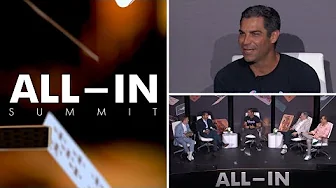
The podcast had already grown far beyond its COVID-era origin as four friends killing time in isolation. The hosts said it remained a 90-minute Zoom between meetings, yet fans flew more than 10 hours to Miami and the show had recently reached No. 26 in Apple’s podcast rankings.
-
Suarez framed Miami’s governing strategy around three levers: low taxes, public safety, and high-paying jobs. He said the city kept taxes near 1960s lows while its budget doubled, expanded police staffing, and saw homicide fall 23% one year and another 40% the next.
-
Miami’s crypto push was presented less as a bet on Bitcoin than as a deliberate economic-development hack. Suarez said crypto helped differentiate Miami quickly, bringing conferences, exchanges, funds and jobs; he treated token prices as secondary to the ecosystem and attention the strategy attracted.
-
Suarez openly acknowledged that Miami still lacks Silicon Valley’s university flywheel. Asked about Stanford, Berkeley and UCSF, he said Miami needs an institution of comparable caliber and argued that disruption in higher education could let the city leapfrog rather than slowly imitate older innovation hubs.
-
Miami’s homelessness system was described as a tax-funded treatment network, not simply a housing program. Suarez said a hotel-bed tax raises about $50 million annually for facilities combining addiction treatment, mental-health care and job training, helping cut homelessness roughly 90% and leaving 510 people in the city at the time.
-
The city’s final-mile homelessness strategy combines individual intervention with enforcement of public conduct. Suarez said Miami continuously counts homeless residents down to the person, investigates why each remains on the street, and still expects basic behavioral rules—such as prohibitions on public urination—to apply equally.
-
The hosts openly floated Suarez as a future presidential candidate, placing his possible window eight to twelve years away. He brushed off the prediction but immediately translated Miami’s approach into a national agenda built around low taxes, safety, high-paying innovation jobs and aggressive adoption of new technologies.

-
Joe Lonsdale argued that Austin’s homelessness system rewards visible crisis and institutional spending more than recovery. He said a jobless man seeking training was repeatedly steered toward housing, while Austin’s shift toward encampments and “housing first” coincided with larger funding flows and eligibility rules that could favor people with addiction or criminal histories.
-
Lonsdale’s strongest concrete policy example was Texas vocational education, where funding was tied to graduates’ earnings rather than enrollment or graduation. He said salaries of students leaving those schools rose 117%, arguing that measurable outcomes changed institutional behavior more effectively than traditional funding formulas.
-
Lonsdale is helping build a new nonprofit university in Austin designed explicitly as a competitor to elite universities. He said the project had raised about $100 million, secured 500 acres near Tesla’s factory, targeted a fall 2024 opening, and received 44,000 student inquiries for an 80-person seminar plus 4,400 professor applications.
-
The proposed university would deliberately mix academics with entrepreneurs and organize teaching across interdisciplinary centers rather than conventional ideological departments. Lonsdale said it would teach the history of ideas and free societies while bringing in innovators who, in his view, increasingly find more intellectual freedom in startups than in academia.
-
On school choice, Lonsdale rejected universal vouchers and instead proposed giving choice specifically to poor children. He argued that universal choice could drain public schools of resources, whereas targeted choice would help disadvantaged families while still creating competitive pressure on weak schools.
-
Lonsdale attributed part of America’s post-1970 economic shift to both globalization and the end of gold-linked money, saying finance gained relative to labor. His argument was that expanding credit boosted returns to finance while globalization exposed highly paid American workers to direct competition from much lower-paid workers abroad.
-
A later panelist framed America’s central political divide as institutional power versus numerical power: college-educated professionals run major institutions while the larger working class holds more votes. He argued that the parties are realigning around that split, with Democrats increasingly representing professionals and Republicans increasingly becoming a working-class populist coalition.
-
Despite his broader attack on “victim” politics, Lonsdale acknowledged that different groups have suffered very different levels of discrimination and deserve corresponding empathy. He cited his Jewish grandfather’s promotion ceiling at Abbott, agreed Black Americans faced greater historical burdens than Irish Americans, but argued that sympathy should not exempt policies or movements from scrutiny.

-
The core customer-service failure in U.S. healthcare is an incentive problem: patients consume the care, but employers and insurers usually pay for it. In fee-for-service medicine, physicians are rewarded for patient volume rather than experience or outcomes, leaving practices little economic reason to optimize around patients.
-
Bad service can directly worsen medical care because rushed doctors and frustrated patients exchange less useful information. The speaker cites research that doctors prescribe antibiotics more often later in the day as decision fatigue builds, while unpleasant experiences also cause patients to postpone visits until problems become harder to prevent or treat.
-
The strongest financial argument for better primary care is prevention: patients with a primary-care physician reportedly spend 33% less overall. The speaker also cites estimates that preventable chronic disease drives 75% of healthcare spending and that 40% of deaths from America’s five leading causes could be prevented with better preventive care.
-
She sees two practical ways to realign healthcare incentives: make patients direct-paying customers or pay providers for outcomes rather than appointment volume. Direct-consumer care restores ordinary price and service pressure, while value-based reimbursement allows insurers to remain the payer but rewards quality instead of throughput.
-
Her proposed operating model is borrowed from hospitality rather than medicine: communicate delays, listen closely, remove unnecessary barriers and make patients feel remembered. At The Lanby, staff are explicitly trained to act as “agents, not gatekeepers,” including bending internal rules when a reasonable patient request can legally and safely be accommodated.
-
The Lanby was raising a seed round after initially financing itself largely through its own members, turning customers into investors. Its scaling model assigns each patient a three-person team—a physician, nutritionist and concierge manager—so administrative and lifestyle work can be distributed rather than forcing everything through one doctor.
-
Mental-health care remains difficult to integrate profitably into ordinary primary care because therapy requires far more clinician time per patient. The speaker said The Lanby had explored integration but could not yet make the economics work, contrasting therapy’s high-touch model with an average primary-care physician panel of roughly 2,300 patients.
-
The speaker argues that America’s rising healthcare spending cannot compensate for increasingly unhealthy lifestyles. She points to heavy drinking, processed food and weak preventive habits as major upstream drivers, with expensive medical treatment arriving later after those risks have already accumulated.

May 31, 2022
#AIS: MP Materials CEO James Litinsky on rare earths, supply chain, and energy independence
-
Jim Litinsky turned a bankrupt rare-earth mine that nearly disappeared into a $6.5 billion public company producing about $450 million in run-rate EBITDA. His fund spent a few million dollars keeping just eight employees and the permits alive, then acquired assets he says would cost roughly $2 billion to replace.
-
MP Materials is now trying to build a complete American rare-earth magnet supply chain rather than remain merely a miner. Material from Mountain Pass, California, is intended to feed its Fort Worth magnet factory, backed by a GM agreement that is deliberately non-exclusive so other automakers can join.
-
Electrification sharply increases dependence on minerals at the same time China dominates much of the relevant supply chain. Litinsky said electric technologies require roughly seven times more copper, nickel, lithium, rare earths and related materials than the fossil-fuel system, while four of the ten largest EV makers by share were already Chinese.
-
The expected mineral shortage is fundamentally a capital-allocation problem, not simply a geological one. Litinsky cited estimates requiring roughly 40–50 new copper and nickel projects and about $200 billion of investment, while another estimate put the broader electrification buildout near $3 trillion over a decade.
-
Litinsky expects downstream manufacturers eventually to buy upstream resource companies because access to materials may become more valuable than financial efficiency. Mining firms were generating high free-cash-flow yields yet resisting new capacity because capital was expensive, leaving automakers exposed to shortages they cannot solve with vehicle engineering alone.
-
He made an unusually stark prediction: within five years, a household-name automaker could require a bailout because it cannot secure a critical material. His broader argument is that electrification creates strategic dependence similar to oil, except reserves may be harder to build because projected demand is already overwhelming available supply.
-
The biggest American constraint may be permitting speed: Litinsky said a new mine can take about a decade even when capital and expertise already exist. He argued for a bargain in which environmentalists accept more domestic extraction while industry accepts stringent environmental standards, rather than outsourcing pollution and strategic dependence abroad.
-
Rare-earth industrial policy has unusually broad political support because the supply-chain risk crosses normal partisan lines. Litinsky said both the Trump and Biden administrations issued executive actions concerning rare-earth magnets, while local officials supported MP’s Texas expansion, making domestic magnet production one of the clearer bipartisan industrial priorities discussed.

-
Hershenson’s investing model is that only about 60% of startups are meaningfully influenceable by investors. In her rough ten-company breakdown, two fail regardless, two succeed regardless, and six can be pushed toward better outcomes—making founder development, not investor heroics, the real leverage point.
-
Her broader thesis is that entrepreneurship is socially contagious: peers reshape ambition and self-belief more than coursework does. At Stanford she sees proximity to ambitious builders as transformative, and she points to Rappi—whose former employees have created more than 100 companies—as another example of a founder-producing culture.
-
Her strongest evidence comes from two deliberately engineered peer environments. The Stanford class produced one to three companies a year, two unicorns and $600 million raised; a separate women’s program turned 78 high-potential non-founders into 45-plus incorporated companies, with 35 raising more than $1 million.
-
Those outcomes do not show that any random group can be transformed into founders, because selection is doing substantial work. The Stanford class accepts about 20% of applicants, while the women’s program screens hundreds of applicants for high potential before peer pressure, role models and coaching begin.
-
David Sacks said the PayPal “mafia” began as friendship-network recruiting because almost nobody else wanted to join the risky startup. The culture was highly contentious, but prior trust let colleagues argue bluntly about truth and risk; Peter Thiel even hired Sacks partly because he wanted someone he could yell at.
-
The panel’s most useful contrast was that difficult companies may produce more founders than effortless winners do. They argued PayPal forced employees to learn through adversity, while Google’s explosive early success favored safer execution hires; one panelist said more unicorns came from the much smaller pre-IPO PayPal cohort than from early Google.
-
Repeated public failure was presented as a training mechanism, not merely a side effect of entrepreneurship. Hershenson makes teams report weekly and sometimes assigns a one-week 10× sales goal, while a panelist who ran Facebook’s growth circle recalled thousands of weekly experiments and hours of failed tests that made risky ideas feel normal.
-
Hershenson treats sales and storytelling as core founder skills that can be trained rather than fixed personality traits. She described narrative as selling the company to employees, investors and customers, said higher education largely neglects sales, and uses repeated practice and coaching in her accelerator.

-
Daniel Negreanu told Silver he rebuilt his game around computer solvers after realizing the “solver kids” were better than him in some formats, and the change improved his results. Silver’s broader point is that elite intuition is trained by thousands of repetitions and must keep adapting as opponents and tools improve.
-
Professional betting rewards tiny, repeatable edges: Silver says a strong sports bettor might win about 55% of bets when roughly 52.5% is needed just to beat the house cut. That margin explains why poker and betting punish small mistakes far more relentlessly than fields where the average investment can still make money.
-
Silver distinguishes permanent contrarianism from being early: a sports bettor wants a mispriced line to stay wrong, while a venture investor eventually needs the market to agree. In VC, the useful edge is often anticipating a founder, sector, or company roughly six to twelve months before broader capital catches up.
-
Silver had interviewed Sam Bankman-Fried, who told him he would take opportunities with only about a 50% chance of success when the payoff was high enough. Silver used that mindset as an example of extreme “shot-taking,” while warning that studying only spectacular winners creates severe survivorship bias.
-
Silver argues that good risk-takers judge decisions by the information and reasoning available at the time, not by hindsight or whether one bet happened to win. In poker or investing, the real test is whether you can lose badly, reset emotionally, and make the next decision with the same process.
-
Silver says the very best gamblers often care less about money than outsiders assume; they chase competition, mastery, and the game itself, and may quit when bored. Repeated swings between being rich and broke can also make money feel temporary, which he says helps explain their generosity and willingness to spend freely.
-
Before the 2016 election, Silver says FiveThirtyEight put Trump around 30% when markets were near 15%, yet liberals attacked the model for being too favorable to Trump. He later described forecasting as asymmetric work: correct calls earn little credit, while actual or perceived misses bring heavy punishment, helping drive him beyond election forecasting. (ABC News)
-
Silver says polling has little clear effect in two-candidate elections but can change behavior in crowded primaries, where voters may switch toward a stronger second choice as viability shifts. His example was a Warren voter moving to Sanders over Biden after Warren weakened, which helps explain why multi-candidate election models are much harder. (ABC News)

-
Homeownership matters less as shelter than as Americans’ most accessible leveraged wealth-building tool. Mortgages combine cheap leverage, forced principal repayment, tax advantages and asset appreciation; homeowners had roughly 75 times renters’ net worth, while the bottom half of households owned almost none of the stock market.
-
Housing affordability was being crushed simultaneously by higher prices, larger down payments and rising mortgage rates. Adina estimated every $10,000 increase in home prices excluded about one million families, while each one-point mortgage-rate increase excluded roughly five million; the share able to afford an average mortgage could fall below 15%.
-
The housing shortage originated partly in the financial crisis, when builders cut annual construction from about 1.5 million homes to 750,000 and never fully recovered. COVID then produced a demand shock after years of underbuilding, while permitting, regulation and supply-chain constraints made new supply unusually slow to respond.
-
Adina expected housing to cool much later and more slowly than financial markets, not repeat the 2008 collapse automatically. She expected supply and higher rates to restrain price growth over roughly 12–18 months, noting that housing bottomed in June 2012—about three years after stocks—because transactions, defaults and foreclosures move slowly.
-
Divvy was designed to substitute gradual equity accumulation for the down payment and underwriting barriers blocking would-be homeowners. Divvy buys the chosen house with cash, requires only 1–2% upfront, lets customers build ownership through monthly payments up to 10% over three years, then refinance into a mortgage or cash out.
-
Among Divvy customers reaching the end of the three-year term, 51% had bought back their homes, while roughly another 20% were being allowed more time to build equity. About 30% exited instead, and Adina said customers accumulated nearly 25 times the savings of an average renter through embedded home equity.
-
Divvy had raised a $200 million preemptive round from Tiger before the market turned, and Adina regarded taking abundant capital at low dilution as the rational move. By the interview, the company had about 300 employees, burned under $5 million monthly, and maintained an explicit “off-ramp” plan to reach cash-flow profitability if financing conditions worsened.
-
Former Fannie Mae COO Kimberly Johnson reportedly told Adina that government-backed mortgage institutions were deliberately reluctant to expand risk after the financial crisis. Adina said banks had become even more conservative through underwriting overlays, meaning meaningful credit expansion would likely require Fannie Mae itself to change incentives without threatening lenders with penalties.

May 28, 2022
#AIS: Glenn Greenwald & Matt Taibbi discuss the new political divide, moderated by David Sacks
-
Greenwald and Taibbi argued that Donald Trump, more than ideology itself, reordered American media and political alliances. Both said they kept many long-held civil-liberties and anti-establishment positions while mainstream liberals increasingly treated dissent from anti-Trump orthodoxy as evidence of being “far right.”
-
Taibbi said the decisive break in his journalism came when explaining Trump’s appeal became professionally suspect. Reporting from Trump and Sanders rallies, he saw overlapping economic anger and former union voters, but said newsrooms increasingly preferred a simpler explanation centered on racism and white supremacy.
-
Both described Trump as financially transformative for institutions that opposed him. Greenwald said struggling outlets and groups such as MSNBC and the ACLU gained audiences, money and organizational incentives from becoming explicitly anti-Trump, while Taibbi recalled reporters knowing Trump coverage was lucrative even when they worried it distorted journalism.
-
Greenwald argued that audience economics now discipline political coverage as strongly as editorial judgment. He recounted an MSNBC host saying segment-level ratings dropped when guests criticized Democrats, creating an immediate financial incentive for hosts and networks to avoid material their partisan audiences disliked.
-
Taibbi’s broader explanation for political realignment was class: Democrats became more affluent and college-educated while losing an organic connection to working-class voters. He cited Democrats holding 41 of the 50 richest congressional districts and connected that shift to the party’s long move away from unions toward business-friendly fundraising.
-
The speakers viewed Trump’s 2016 success as partly a rebellion against bipartisan consensus on wars, trade and economic policy, not merely conventional left-versus-right politics. They argued that Democrats largely avoided a comparable internal reckoning after losing, instead emphasizing Russia, racism and other external explanations.
-
Taibbi said Fox News pioneered the profitable model of choosing a political audience and feeding it coverage optimized for that audience, which competitors later copied. Both saw independent media’s growth as partly a reaction to predictable partisan outlets, pointing to Joe Rogan as powerful precisely because his views do not fit neatly into one party.
-
Greenwald’s final argument was that the two parties disagree less than political media implies, especially on major foreign-policy and economic assumptions. In his view, Trump’s disruption mattered most when he questioned elements of that bipartisan consensus, while the establishment wings of both parties remained broadly comfortable trading power within it.
-
Palmer Luckey’s confrontation with Jason Calacanis at the All-In Summit was not staged. Luckey publicly accused Calacanis of helping derail his career and attacking his family; Calacanis then walked onstage, shook his hand, argued with him, and ultimately hugged him.
-
The Summit deliberately filtered for builders rather than people seeking customers or access. About 300 attendees could offer $500, $1,000 or $2,500 instead of the $7,500 ticket; Calacanis said brokers, money managers, salespeople and business-development executives were deprioritized, while builders and artists received preference.
-
The venture market had repriced with extraordinary speed: founders were already accepting terms they had rejected weeks earlier. Calacanis said some fundraising expectations had fallen 50%, while founders who resisted board seats and information rights were suddenly volunteering CFO access because they needed capital.
-
High-quality operating results were no longer enough to protect technology valuations because future earnings had become the real uncertainty. Snowflake was 67% below its November peak despite 85% revenue growth and 174% net retention; the panel argued another leg down would come if slowing spending forced widespread earnings revisions.
-
Chamath Palihapitiya described a private-market choice between admitting large losses and financing companies in ways that delay those markdowns. He said growth funds could mark portfolios down 50–60%, or use instruments such as unpriced converts that might let auditors preserve much higher carrying values while waiting for markets to recover.
-
The technology compensation reset was colliding with lifestyles built around boom-era stock gains. Brad Gerstner described a company paying engineers roughly $1 million in cash plus stock historically worth another $1 million annually; after the stock fell, management refused to replenish the lost equity value despite employee pressure.
-
The panel’s central startup advice was to sacrifice growth early rather than discover too late that the company cannot finance itself. Sequoia’s example showed a company halving burn and doubling runway immediately; Sacks argued excessive cuts can be reversed with rehiring, while insufficient cuts can leave a company unable to survive.
-
On mass shootings, the speakers converged most clearly on earlier identification and targeted intervention rather than one broad gun-control measure. They focused on red-flag systems, school reporting and social-media warning signals, noting that the Buffalo shooter had received psychiatric evaluation in New York yet was never entered into the state’s red-flag process.

-
Tim Urban’s useful distinction is not left versus right, but “high-rung” versus “low-rung” thinking: truth-seeking, self-correcting debate versus identity-protective tribalism. He argues polarization worsened because tribal energy became concentrated into one national divide while social media rewards emotionally potent, conformity-producing content.
-
Jason Calacanis said ideological pressure directly affected the All-In Summit’s speaker pool. Some invitees declined because Sacks, Rabois, Glenn Greenwald or Matt Taibbi were involved, and he said a group also tried persuading others not to attend before he intervened.
-
Keith Rabois said he had made essentially no new investments in 2022 after leading 13–14 the prior year, because he believed tech valuations still needed to reset. His last three or four new checks were about $1.5 million each, aimed at unusually capital-efficient founders; he continued funding existing portfolio companies.
-
Founders Fund was outsourcing valuation discovery to the market rather than anchoring to peak private marks. Rabois said he would send founders to top-tier firms and match credible terms, yet often prefer passing entirely to repricing a company from, say, $300 million to $120 million because cap-table conflict is costly.
-
The financing environment had already turned enough for liquidation preferences to reappear, while Rabois called a flat round “the new up-round.” He warned that preferences can put investors ahead of founders and employees in payouts, although a founder with superior information about imminent growth might rationally accept them.
-
Rabois’s main objection to token-heavy crypto investing was not missing venture protections but giving teams liquidity before they had earned product success. Founders Fund, he said, cares relatively little about protective terms; the deeper problem is teams becoming rich before users, traction or a finished product create discipline.
-
The downturn creates a career conflict inside venture firms: senior partners can wait, but junior investors are promoted by making investments that become iconic companies. Rabois said three of his first five became public companies; Sacks said two of his first four became unicorns, helped by backing former PayPal colleagues.
-
At PayPal, David Sacks contained Rabois’s disruptive feedback without silencing it by requiring him to send criticism privately to Sacks rather than broadcast it internally. Sacks would filter, debate or act on it, a system Rabois says let him influence decisions without derailing colleagues.
May 25, 2022
#AIS: Antonio Garcia Martinez & Glenn Greenwald debate Ukraine, moderated by David Sacks
-
García Martínez explicitly called U.S. involvement a “proxy war” with Russia, while David Sacks supported arming Ukraine but rejected broader U.S. objectives. Sacks cited Biden and Defense Secretary Lloyd Austin to argue Washington was drifting from helping Ukraine toward weakening Russia, regime change and potentially dangerous escalation.
-
García Martínez said visiting western Ukraine convinced him American debate had underestimated Ukrainian resolve. He described millions fleeing west while men, weapons and supplies moved east, with civilians and workers repeating “we will win”; that near-total mobilization made Russian control of a country Ukraine’s size look implausible to him.
-
García Martínez wanted the war’s endpoint determined by Ukrainians themselves and opposed an American-led peace push unless Kyiv wanted one. Sacks challenged that position by noting Washington controls crucial weapons flows and warning that maximal objectives around Crimea and Sevastopol could create nuclear-escalation risks.
-
Greenwald grounded his case for restraint in earlier Washington assessments rather than denying Russian aggression. He cited Barack Obama’s 2016 view that Ukraine was a core Russian rather than American interest and William Burns’s 2008 warning that Ukrainian NATO membership crossed a major Russian “red line.”
-
Greenwald argued the central question was not whether Ukrainians were suffering, but whether Washington’s motives matched its humanitarian rhetoric. He invoked Iraq, Vietnam, Yemen and U.S. support for authoritarian allies to argue that Ukraine could be defended for Ukrainians—or sacrificed to the separate goal of weakening Russia.
-
Greenwald challenged the idea of worldwide consensus behind Washington by pointing to UN voting on Russia’s Human Rights Council suspension. He said 15 of the 20 most populous countries abstained or opposed the measure, using India, Brazil and other large states to distinguish Western unity from global agreement.
-
Greenwald countered that García Martínez’s western-Ukraine experience could illuminate the war without establishing what the entire country believed. He compared it to sampling Kurdish Iraq before 2003: a region with unusually strong views can provide genuine firsthand evidence while still misrepresenting national political diversity.
-
The NATO dispute reduced to opposite causal stories: García Martínez argued Russian aggression drives neighboring states toward the alliance, citing Finland and Sweden’s moves toward membership. Greenwald replied that smaller countries naturally want a U.S. security guarantee, so enlargement alone cannot establish whether NATO deters Russian aggression or contributes to Moscow’s threat perceptions.

May 24, 2022
E82: All-In Summit: Claire Cormier Thielke on China + Q&A with Flexport's Ryan Petersen
-
Hines’ China strategy is not “copy the West”; it pairs Western real-estate formats with Chinese digital behavior. Claire described rental housing where institutional landlords are still uncommon, WeChat-enabled office towers, and six-story cold-storage buildings near 45 million people, in a market she said has only one-quarter of U.S. cold-storage capacity per capita.
-
The Greater Bay Area is being built as a single economic system, not just branded as one. Claire cited roughly $300 billion of connecting infrastructure, about 2,000 miles of high-speed rail built in four years, 70 million residents and a $1.7 trillion economy, with universities and industry incentives layered onto transport.
-
Claire said China’s five-year plans matter because national priorities are translated into local officials’ career metrics. She described local leaders being promoted for hitting goals or removed for missing them, with real-estate approvals tied to outcomes such as greener buildings, public space and historic preservation.
-
From Hines’ vantage point, China’s property correction was producing acquisition and rental-housing opportunities rather than a felt system-wide collapse. Claire said authorities were focused on protecting buyers’ deposits and delivering promised homes, while new policies were making rental development easier and reducing dependence on condominium sales.
-
Flexport’s numbers captured the logistics shock: China-to-U.S. transit times stretched from about 50 to 120 days, and container rates rose from a 2016 low near $600 to $10,000–$20,000. Ocean carriers responded by ordering 25% more ships over three years, creating the risk that today’s shortage becomes tomorrow’s glut.
-
Petersen’s sharpest business warning was for direct-to-consumer brands, hit simultaneously by freight inflation, broken ad economics and fading pandemic demand for goods. He linked soaring shipping costs with Apple’s privacy changes hurting Facebook/Instagram acquisition and consumers returning to travel, restaurants and nightlife—leaving many brands with bad inventory and weaker funding access.
-
SHEIN’s advantage, in Petersen’s telling, is speed: test huge numbers of products, produce only what gets demand, and collapse the lag between trend and delivery. He said the company was launching about 1,000 SKUs a day and argued that shorter logistics cycles can be worth more than simply buying the cheapest freight.
-
Supply chains were already starting to regionalize: Petersen said Mexican labor had become cheaper than Chinese labor, while 120-day China-U.S. transit times were pushing brands toward production closer to home. His conclusion was that China can no longer compete mainly on cheap labor; it must keep moving into more sophisticated manufacturing.

May 23, 2022
E81: All-In Summit: Bill Gurley & Brad Gerstner on markets, downturns & investment cycles
-
Venture capital is structurally prone to slow booms and sudden crashes because funds have low barriers to entry but 10–15-year commitments that are hard to unwind. Bill Gurley said the 2009–2022 “risk-on” period built gradually, while the 2022 reversal happened within months, forcing an unusually fast reset in valuations and behavior.
-
The panel argued that the previous generation of startup valuations was gone, not temporarily unavailable. Brad Gerstner estimated every one-point rise in interest rates can cut valuation multiples 15–20%, while public SaaS companies were already being valued around 5.6 times revenue, or roughly 8.5 times for exceptional 50%-plus growers.
-
The headline hundreds of billions in “dry powder” did not mean venture firms would automatically spend it. Much of that capital was committed but uncalled; Gurley noted funds returned commitments after the dot-com crash, while Gerstner said LPs would resist financing new deals before valuations fully adjusted after a poor 18-month vintage.
-
For genuinely early-stage founders, the downturn could improve company-building conditions even while later-stage financing deteriorated. Gurley expected cheaper talent, less competition and more rational decision-making, contrasting the post-correction environment with boom years when founders sometimes had only hours to evaluate competing term sheets.
-
The software boom erased distinctions between extraordinary companies and ordinary ones, and that indiscriminate pricing was reversing. Gerstner counted only 21 public software companies above $2 billion in revenue, while Gurley said investors were again examining retention, margins, cash flow and stock compensation rather than mechanically assigning revenue multiples.
-
Both investors concluded that venture funds should generally return liquid gains to LPs rather than behave like permanent stock-picking vehicles. Gerstner called holding roughly $120 million of Affirm stock a roughly $100 million mistake and said his firm distributed more than $6 billion the prior year; Gurley described systematic post-lockup distributions over three to six quarters.
-
Years of abundant capital let companies buy growth by subsidizing customers, sometimes delaying the economics that should determine winners. Gurley said SoftBank-era competition effectively gave Uber’s potential profit margin to consumers for years; he judged negative-unit-economics strategies viable only when companies can later withdraw subsidies, something he estimated most founders attempting would fail to do.
-
Gurley said his next investing chapter would likely involve smaller angel bets and public stocks rather than another full venture partnership. Still serving on ten boards, he said he had “played that game,” would consider roughly $500,000 checks without taking board seats, and found newly repriced public equities increasingly attractive.
-
Musk said the Twitter acquisition could be repriced or abandoned if spam accounts materially exceeded Twitter’s reported figure, because the buyer had relied on public filings. He put a rough lower bound near 20%, argued brand-ad revenue depends on real human reach, and said a lower-priced deal was “not out of the question.”
-
His end-state was bigger than Twitter: a trusted WeChat-like super-app combining conversation, video, creator revenue sharing and payments. Musk said he could either transform Twitter into it or build the product from scratch, which he described as his natural preference.
-
Tesla’s advantage, in Musk’s account, comes from doing work traditional automakers outsource: sales, service, charging, software, batteries, power electronics, AI and chips. He said this vertical integration arose from speed, because adopting legacy suppliers also meant inheriting their cost, technology and development constraints.
-
Tesla survived 2008 only after Musk and a small group of existing investors put in emergency capital while the company was near collapse. Musk said he invested everything he had left and was staying in a spare bedroom; he also said Tesla and SpaceX would have failed if suppliers had been paid promptly.
-
SpaceX’s business model is a financing ladder: launch services fund Starlink, and Starlink is intended to fund permanent lunar infrastructure and, ultimately, Mars. Musk defined success on Mars as a settlement that survives even if resupply from Earth stops, making self-sufficiency—not simply arrival—the real threshold.
-
Musk argued fusion is technically achievable but likely economically inferior to solar and wind by roughly an order of magnitude. His reasons were scarce fuels such as deuterium and tritium, conversion losses, difficult maintenance and the low-maintenance solar resource already available from the sun.
-
Tesla cut a roughly 120-piece body assembly to a single casting, shrinking the newer Model Y body shop by about 60% versus Model 3. Musk said the idea came from toy manufacturing; five of six major casting-machine suppliers rejected the concept, while the sixth said “maybe,” which Tesla treated as enough to proceed.
-
Musk’s recession playbook is simple: assume financing can vanish almost overnight, preserve cash and push toward positive cash flow before conditions worsen. He recalled X/PayPal raising $100 million in March 2000, then finding capital markets effectively shut a month later, and expected the 2022 downturn to last roughly 12–18 months.
May 13, 2022
E80: Recession deep dive: VC psychology, macro risks, Tiger Global, predictions and more
-
The panel framed the selloff as a wholesale repricing of capital, putting lost global market value at roughly $35 trillion, or 14% of global wealth. Public SaaS multiples had already collapsed from above 15× revenue to 5.6×, making many private-company marks untenable.
-
The new fundraising bar was brutally concrete: strong growth, at least roughly 50% gross margins, CAC payback within a year, and a burn multiple below two. Founders unable to meet it were told to cut spending enough to survive two to three years without another round.
-
The supposed $230 billion venture “dry powder” did not mean startups still had easy access to capital. Much was merely uncalled LP commitments, while Tiger Global had reportedly already deployed about two-thirds of a freshly closed $12.7 billion fund and other crossover investors had largely gone risk-off.
-
Startup employees can own options that become effectively worthless even when investors recover money, because preferred shareholders sit ahead of common stock in the liquidation stack. The panel urged employees to ask about total preferences, shares outstanding, strike price and revenue; boards can reprice options or create employee carve-outs after severe resets.
-
Roughly one-third of publicly traded biotech companies were said to be worth less than the cash on their balance sheets. Forty percent reportedly had under 20 months of cash and 60% under 30 months, meaning financing risk could erase market value even when the underlying technology still worked.
-
Venture dealmaking had already swung from frenzy back toward actual diligence. Calacanis said seed deals that previously closed in two or three days were taking four to six weeks again, with repeated founder meetings and customer checks replacing the period when some founders refused diligence and still demanded allocations.
-
Chamath argued that giant investment funds are structurally much harder to return than the boom years implied. He cited 1,276 billion-dollar-plus private-equity, growth and venture funds since 1994, claiming only 22 returned more than 2.3×, while contrasting them with Benchmark’s roughly $450–550 million fund discipline.
-
Friedberg’s sharpest forward warning was a consumer-credit crisis rather than another leg down in technology stocks. The discussion cited $60 billion of new consumer credit in one month and a 2.6% fall in real wages; Friedberg expected the strain to surface within roughly nine to twelve months if recession hit.
-
Alito’s leaked draft would overrule Roe and Casey not by banning abortion nationally, but by holding that abortion is not constitutionally protected. His reasoning was historical and precedent-based: no “deeply rooted” right, insufficient reliance, and an unworkable undue-burden test, leaving legislatures to act.
-
Overruling Roe would not simply “return abortion to the states”; Congress could still attempt a federal protection or ban, creating a separate constitutional fight over federal power. Meanwhile, at least a dozen states already had trigger laws poised to restrict abortion immediately if Roe fell.
-
The Politico document was only Alito’s February first draft, not proof that five justices had signed his opinion. Five had apparently voted to overturn Roe, but Roberts was pushing a narrower route and Kavanaugh or Barrett could still have altered how far the Court went.
-
The leak itself created an institutional trap for the Court. Goldstein said an earlier Wall Street Journal leak appeared aimed at locking in conservative votes, while the Politico disclosure may have sought to mobilize abortion-rights supporters; any retreat could then look like evidence that leaks and protests sway decisions.
-
The draft’s logic reached beyond abortion because contraception and same-sex marriage also rely on unenumerated privacy or substantive-due-process rights. Alito explicitly distinguished abortion because it involves fetal life, while Goldstein argued the broader reasoning could invite challenges; others in the discussion questioned whether those challenges would ultimately succeed.
-
The episode traces Roe’s vulnerability to a 50-year political project that finally gained the necessary Court votes after 2016. Howe emphasized Trump’s pre-election list of potential justices and abortion’s importance to single-issue conservative voters, while many abortion-rights supporters assumed Roe was too entrenched to disappear.
-
Ruth Bader Ginsburg had criticized Roe’s sweeping reach despite supporting abortion rights. In a 1992 article discussed on the show, she argued Roe halted a reforming political process and prolonged divisiveness, preferring a narrower ruling that allowed legislatures to continue working through the issue.
-
The hosts’ cited Gallup figures showed that binary pro-choice/pro-life labels concealed substantial support for conditional legality. They reported 48% favored abortion being legal only under certain circumstances, 32% under any circumstances, and 19% never, making specific limits the more informative dividing line.
April 30, 2022
E78: VC fund metrics that matter, private market update, recession, student loans, Bill Hwang arrest
-
Prenuvo’s CEO told the hosts their earlier mention of its full-body MRI service had led to 11 “life-saving diagnoses” among listeners. He cited brain, stomach and other cancers found after scans, while the hosts said they had no financial stake in the company.
-
The sharpest investing lesson was that venture-fund IRR can be flattered without returning investors any cash. Chamath described late-stage funds using credit lines to delay capital calls and boost IRR, arguing that gross/net IRR, TVPI and especially DPI must be shown together.
-
The panel treated cash distributions, not paper marks, as the real test of venture performance. Chamath said it took 11 years to return 2× and $2.5 billion across his funds, while Friedberg described a 2006 fund that was still distributing 16 years later.
-
By spring 2022, the private-market fundraising regime had already flipped from valuation maximization to survival math. Founders were being asked about break-even and customer growth, and Sacks said he was telling boards to keep rounds open and accept extra capital at still-available old terms.
-
The public-market crash was already forcing a hidden repricing of private tech assets. The hosts noted 45% of Nasdaq stocks were down at least 50%, while private marks updated only on transactions; their practical test was whether company growth had outrun the collapse in revenue multiples.
-
The Archegos collapse exposed a visibility gap in equity derivatives, not merely one trader’s leverage. The show cited an SEC complaint describing $1.6 billion growing to $36 billion of capital and $160 billion of exposure, while separate banks could not see aggregate swap risk through a central clearinghouse.
-
On student debt, the most substantive proposal was to reform underwriting before forgiving balances. The hosts favored linking lending to program earnings outcomes, making bankruptcy relief easier, and cited Waterloo’s paid co-op model; Chamath said it helped him graduate with work experience and quickly clear roughly $28,000 of debt.
-
Their strongest Twitter proposal separated what people may say from what algorithms should amplify. Sacks argued moderation should borrow from established First Amendment exceptions, while Chamath emphasized identity, authority and ranking systems; Jason added that every moderation action should leave a transparent audit trail.
April 23, 2022
E77: Tech work culture, crypto regulation, stablecoins, $NFLX & more w/ Coinbase CEO Brian Armstrong
-
Coinbase’s mission-first reset cost about 5% of staff, but Brian Armstrong says the pain was temporary and the long-term result was better focus and recruiting. Some teams were briefly shorthanded, and Armstrong said he would repeat the policy but set the expectation at company formation rather than force a later cultural realignment.
-
Coinbase redesigned internal communications after company forums began behaving like social media. Armstrong said open-mic Q&As worked at 150–200 employees but became “us versus them” around 500–700; large Slack rooms above roughly 500–1,000 people are now often read-only except for senior posters.
-
Remote work materially changed Armstrong’s leverage with employees by expanding Coinbase’s available talent pool “100x.” He said pre-pandemic hiring scarcity made leaders unusually accommodating, while remote-first access to global applicants reduced the fear that every departure was irreplaceable.
-
Armstrong wants crypto regulation split by function rather than forcing every token into securities law. He put commodity-like assets under CFTC oversight, fundraising tokens under the SEC, stablecoins potentially under Treasury, and said crypto companies should draft proposed legislation themselves and circulate it to policymakers.
-
Armstrong backed financial literacy, rather than wealth, as a possible gatekeeper for risky crypto and startup investing. He endorsed testing investor sophistication and using safe-harbor “sandbox” rules for smaller experiments, while warning that utility tokens cannot function if ordinary users must clear securities-style KYC hurdles merely to use a network.
-
The episode’s strongest consumer-protection point was that crypto’s problem extends beyond KYC: hacks can erase hundreds of millions without corporate-style accountability. The panel cited roughly $200 million lost at Beanstalk and nearly $600 million at Axie Infinity, arguing that venture-funded rescues cannot become the default safety net.
-
Netflix’s first net subscriber decline in a decade triggered a 35% stock drop, cutting its market value from about $155 billion to $98 billion; Bill Ackman exited with a $430 million loss. Netflix had expected roughly 2.5 million subscriber additions, while suspending service in Russia removed about 700,000 accounts.
-
Netflix’s weakness looked structural, not merely Russian: even adding those subscribers back, the panel calculated roughly $600 million of acquisition spending would have produced only about 500,000 net subscribers. They linked that deterioration to rising acquisition costs, stronger streaming rivals, Netflix’s roughly $20 billion content budget, and limited customer lock-in beyond programming.
April 16, 2022
E76.5: Food shortage, China's grand plan, inflation, French election plus an All-In Summit preview
-
Friedberg’s central warning was a 9–18 month food squeeze as acreage fell and fertilizer use dropped. He said China held food equal to roughly 150% of annual consumption and predicted Beijing could turn that surplus into leverage over import-dependent states such as Sri Lanka and Somalia.
-
Chamath cited a report saying Americans had extracted and spent $427 billion of home equity since 2020, on top of stimulus and unemployment payments. He argued that this temporary cash cushion helped explain weak labor-force return and higher asset and vehicle prices, but would fade as households exhausted it.
-
The recession risk, in Chamath’s view, was that household cash could run out just as the Fed’s delayed tightening finally hit demand. He expected one or two contracting quarters around late 2022 or early 2023 and said rates could reach roughly 3–3.5%, deepening the slowdown.
-
Sacks distinguished falling inflation rates from falling prices: year-over-year CPI could improve simply because comparisons would be against already-high 2021 readings. He estimated roughly 12–13% cumulative CPI inflation over two years and argued consumers would still feel squeezed because food, fuel, travel and other price levels would remain elevated.
-
Chamath saw Visa and Mastercard’s fee increases as an invitation to disrupt the card duopoly rather than a durable pricing win. He pointed to Senate scrutiny of merchant fees, talk of expanding Zelle into a broader payment rail, and an early look at Solana Pay as simultaneous pressure from regulators, banks and crypto.
-
The All-In Summit was designed to bypass traditional press and turn the podcast’s own distribution into the media channel. Talks would be released after the event, while the live format paired short 10–20 minute position statements with host questioning, data slides and audience questions for about 700 attendees across the main and simulcast rooms.
-
Jason Calacanis said he was receiving private criticism for remaining close friends with David Sacks despite their political disagreements, and he refused to treat disagreement as disqualifying. He argued that the show’s distinctive value comes from four genuine friends who can fight publicly without ending the relationship, rather than from manufactured panel chemistry.
-
Twitter’s poison pill was designed to stop Elon Musk from building a controlling stake after his roughly $43 billion takeover bid. Crossing 15% would let other shareholders buy discounted shares, diluting Musk and making a hostile acquisition far more expensive.
-
The central governance dispute was whether Twitter’s board should take Musk’s premium or trust its own plan to create greater value. Friedberg argued directors could reasonably reject cash today if credible internal plans justified higher future value; the others stressed Twitter’s long record of weak stock performance.
-
Chamath Palihapitiya’s preferred solution was a competitive sale process followed, if necessary, by a shareholder vote on Twitter’s standalone plan. He argued the board should test Musk’s offer against the market rather than simply block it, while letting shareholders judge any claimed superior strategy.
-
The group saw few plausible rival bidders because the companies with the clearest strategic fit faced regulatory or practical obstacles. Chamath named Apple, Meta, Google, ByteDance and Amazon as effectively blocked or unlikely, while Comcast or Disney were considered possible but improbable alternatives.
-
A striking disclosure was that Chamath had previously approached Twitter with another large investor and proposed David Sacks as the operator who would overhaul it. Chamath said the meeting became heated and Twitter’s VP of engineering and CTO quit the following day; Sacks said he was now finished with operating roles.
-
Twitter’s unusually dispersed ownership became a major part of the debate over whether its board was sufficiently aligned with shareholders. The speakers noted Vanguard’s passive ownership, Jack Dorsey’s roughly 2% stake and Musk’s more than 9%, arguing that large economic ownership can create stronger incentives than status-driven directorships.
-
The market price itself was treated as evidence that investors doubted Musk’s bid would close. The speakers compared Twitter with normal merger-arbitrage situations, where shares quickly approach the acquisition price; Twitter remaining well below Musk’s offer implied substantial perceived risk that the board would reject or derail the transaction.
-
The episode’s deepest disagreement was whether the takeover was primarily a financial transaction or a struggle over control of online speech. Sacks framed Musk’s bid as a free-speech challenge to institutional power, while Friedberg repeatedly separated that ideological preference from the board’s narrower obligation to maximize shareholder value.
April 9, 2022
E75: Fast shuts down, board culpability, Elon buys 9% of Twitter, deplatforming's evolution & more
-
Fast’s collapse looked preventable, not merely cyclical. The checkout startup had 450 employees, about $600,000 in revenue and roughly $10 million monthly burn after raising $124 million; Sacks argued that cutting spending three months earlier could have preserved about $30 million instead of ending in shutdown.
-
PayPal offered the opposite case: change the model before cash disappears. Sacks said PayPal was burning $10 million monthly with $40 million left after the dot-com crash, then added paid accounts and transaction fees and cut costs, stretching four months of runway until it could raise again.
-
The fundraising boom shrank venture diligence from weeks to days. Calacanis said processes that historically took four to six weeks fell to four to six days; Sacks said the hardest signal to fake is an “off-sheet” customer reference found independently rather than supplied by the founder.
-
The panel traced weak startup governance partly to venture firms chasing more assets and deals. Friedberg said partners can now sit on a dozen boards, while Chamath argued asset-gathering firms increasingly optimize for LP fundraising rather than company-building, leaving less attention for spending, strategy and financial discipline.
-
At the time of recording, Elon Musk’s 9% Twitter stake was seen as a governance intervention more than a financial bet. With Musk set to join the board as Twitter’s largest shareholder, the panel expected concentrated ownership to push management toward a more speech-permissive posture despite pressure from employees, regulators and shareholders.
-
Chamath Palihapitiya said his view on platform bans changed after recognizing his own political bias. He admitted he initially supported Trump’s Twitter ban partly because he feared reelection, then moved toward a broader free-speech default after what he regarded as escalating deplatforming.
-
Friedberg’s food warning centered on rigidity: calories are theoretically interchangeable, but real supply chains are not. Wheat mills cannot simply switch to corn or soy, US corn planting had fallen from 93 million to 89 million acres, and he expected import-dependent countries such as Sri Lanka and parts of Africa to face greater shortages.
April 1, 2022
E74: Market update, inverted yield curve, immigration, new SPAC rules, $FB smears TikTok and more
-
Chamath Palihapitiya argued the headline yield-curve inversion was less decisive because the Fed’s 3-month/18-month forward spread remained positive. He expected earnings season to sharply separate strong operators from structurally weak businesses, with even modest misses punished after inflated valuations.
-
The investors were already telling portfolio companies to slow spending and extend runway, while acknowledging that widespread caution could itself deepen the slowdown. Sacks argued policymakers had little room to respond because renewed stimulus or rate cuts risked worsening inflation.
-
Their preferred immigration fix was to separate border security from labor policy and treat high-skilled entrants as national “talent acquisition.” Sacks cited immigrant co-founders in roughly 40% of Silicon Valley startups, while the group argued lower-skilled immigration creates different wage pressures and should be handled separately.
-
Palihapitiya expected tighter SEC rules to collapse the SPAC market from hundreds of sponsors into roughly six or seven dominant players. His preferred safeguard was unusually concrete: force sponsors to risk substantial personal capital, noting that he had invested at least $100 million in every SPAC deal he sponsored.
-
The climate-disclosure debate exposed a practical weakness: the speakers broadly liked measuring environmental costs but doubted current Scope 3 and offset accounting could do it reliably. Palihapitiya warned poorly drafted rules could instead create lucrative consulting, auditing and litigation industries built around estimates whose underlying physical measurements remain difficult to verify.
-
Facebook reportedly hired a Republican lobbying firm to shift political scrutiny from Meta toward TikTok, a tactic the hosts called distasteful even while sharing concerns about TikTok. Palihapitiya favored reciprocity—Chinese platforms could operate in America if U.S. platforms received comparable Chinese access—alongside security audits for sufficiently large networks.
-
Friedberg’s food-warning rested on three concrete bottlenecks: blocked Black Sea shipping, potentially drastic reductions in Ukrainian planting, and fertilizer prices making some farming uneconomic. He cited Illinois corn economics of roughly $810 in costs for $243 of return before average rent of $227, illustrating why farmers elsewhere might simply plant less.
-
Sacks expected any Ukraine settlement to center on neutrality, Western security guarantees, Russian control of Crimea and a negotiated outcome for Donetsk and Luhansk. He favored internationally supervised referendums in disputed territories and argued Biden’s “cannot remain in power” remark unnecessarily strengthened Russian claims that Washington sought regime change.