...

September 14, 2026

The Home Depot: The best-performing stock in the S&P 500 since IPO (Audio)

- Home Depot began after Daylin's turnaround CEO fired the executives running its strongest division. In 1978, Sandy Sigoloff dismissed Bernie Marcus and Arthur Blank three months after buying out Ken Langone's nearly 19% minority stake; Langone had warned Marcus that selling would remove his protection.

- Marcus adapted Saul Price's warehouse-club model into a one-stop hardware store with expert advice. The founders planned 25,000 products, gross margins near 30% instead of 45%, skilled tradespeople to teach shoppers, and supplier payment terms that effectively financed roughly half their inventory.

- Ross Perot nearly acquired 70% of Home Depot for $2 million, but a dispute over Marcus's old Cadillac killed the deal. Marcus rejected Perot's attempt to dictate his car and management style; Langone instead raised $2 million from 40 investors who took only 50%.

- Home Depot turned ordinary retail employees and early investors into substantial equity owners. At its 1981 IPO, the four-store company was valued at just $32 million; hourly employees could buy discounted, downside-protected shares, and a $1,000 IPO investment with reinvested dividends grew to approximately $17 million by 2026.

- Home Depot's scale was powered partly by American houses getting older and requiring more work. The median U.S. home's age rose from about 23 years in 1980 to 42 in 2026; Home Depot came to control roughly 51% of the home-improvement-store market, with Lowe's holding another 29%.

- CEO Bob Nardelli grew Home Depot's reported revenue and profits while damaging its defining customer-service culture. From 2000 to 2006, average staffing fell from 200 to 170 employees per store, experienced tradespeople were replaced by part-timers, and Nardelli received roughly $200 million while comparable-store sales and the stock stagnated.

- Frank Blake revived Home Depot by stopping rapid store expansion and concentrating on its existing business. After becoming CEO in 2007, he sold HD Supply for about $8.3 billion, repurchased roughly 30% of outstanding shares during his tenure, and raised average store sales from about $30 million to $65 million annually.

- Home Depot's modern advantage is specialized fulfillment for contractors, not just a nationwide store network. Professional customers now account for more than half of its $165 billion in annual sales, while the $18.25 billion SRS Distribution acquisition expanded large job-site deliveries that are difficult for Amazon's standard parcel network to match.
...

June 23, 2026

The Walt Disney Company: The most successful enterprise for monetizing human nostalgia (Audio)

  • Disney nearly collapsed in 1928 because Universal owned Oswald the Lucky Rabbit, even though Disney created him. Distributor Charles Mintz secretly recruited nearly all Walt's animators and demanded a $500-per-cartoon price cut; Disney survived by creating Mickey Mouse and introducing synchronized sound in Steamboat Willie.

  • Disney's merchandise royalties overtook its film-rental revenue by 1934, years before Snow White. Licensing agent Kay Kamen expanded Mickey Mouse merchandise into approximately $70 million in annual retail sales by 1935, while Disney was spending more on individual cartoons than distributors initially advanced.

  • Walt gambled $1.5 million on Snow White and the Seven Dwarfs, which became the highest-grossing film of its time. Released in 1937, it earned approximately $8 million in initial film rentals, but Disney's subsequent investment in a new Burbank studio and three simultaneous animated features created another financial crisis.

  • Disney discovered in 1944 that old films could generate substantial new profits without being remade. Re-releasing Snow White earned approximately $3 million at relatively little additional cost, establishing a roughly seven-year release cycle that introduced existing stories to new generations while preserving their appeal.

  • ABC financed Disneyland in exchange for Disney programming, investing $500,000, guaranteeing $4.5 million in loans and agreeing to pay approximately $5 million annually for television content. Disney's television program became ABC's first top-25 hit, while its three-part Davy Crockett series helped generate approximately $300 million in retail merchandise sales.

  • Walt personally owned Disneyland's railroad, monorail and certain name rights through WED Enterprises, separate from the public Disney company. WED and its successor Retlaw collected approximately $75 million in attraction payments and $46 million in name royalties; Disney consolidated the remaining rights through a $43 million stock transaction in 1982.

  • Walt's original EPCOT was a planned working city for 20,000 residents, not a theme park. His Florida proposal included a climate-controlled city center, monorails, underground roads and an industrial research campus, but following his death in 1966, Roy abandoned the experimental city and prioritized building Walt Disney World's Magic Kingdom.

  • By 1984, Disney's parks and consumer businesses generated approximately $250 million in operating profit, while film and television produced just $2.2 million. The imbalance concealed Disney animation's deterioration and helped make the company a target for Saul Steinberg's attempted breakup, preceding the Eisner–Wells–Katzenberg turnaround.

...

October 6, 2025

Google Part III: The AI Company. Google is amazingly well-positioned... will they win in AI? (Audio)

  • Google invented the transformer technology behind the AI companies now threatening its search business. All eight authors of its groundbreaking 2017 paper eventually left, and Google later reportedly spent $2.7 billion on a Character.AI licensing and hiring arrangement that brought researcher Noam Shazeer back to lead Gemini.

  • Google acquired DeepMind for $550 million in 2014, despite Facebook reportedly offering up to $800 million. Founder Demis Hassabis chose Larry Page because Google promised research independence and computing resources, while Elon Musk, an early investor who also wanted DeepMind for Tesla, was angered by the acquisition.

  • Musk's frustration with Google helped create OpenAI, which later partnered with Google's longtime rival Microsoft. At a 2015 dinner, Musk and Sam Altman recruited Google researcher Ilya Sutskever despite a reported doubled compensation offer from Google; in 2018, Reid Hoffman connected Altman with Microsoft for a $1 billion financing and cloud partnership.

  • ChatGPT became a consumer phenomenon that OpenAI had not anticipated, forcing Google to reorganize its AI operations. OpenAI assembled the chatbot interface in approximately one week and reached 100 million registered users within two months, prompting Sundar Pichai to merge Google Brain and DeepMind under Demis Hassabis and concentrate development on Gemini.

  • Google has an AI infrastructure advantage that no major competitor fully matches. It combines frontier models, an estimated 2–3 million proprietary TPUs, consumer distribution, and Google Cloud's $50 billion-plus annualized revenue, potentially allowing it to produce AI responses more cheaply than companies dependent on Nvidia hardware and outside financing.

  • Google's greatest financial strength is also its biggest obstacle to replacing search with AI. It controls roughly 90% of search and earns an estimated $400 annually per American user, but has not demonstrated that conversational AI can match those advertising economics, despite generating $370 billion in annual revenue and approximately $140 billion in earnings.

  • A federal court found Google illegally maintained its search monopoly but stopped short of ordering its most disruptive remedies. Google retained Chrome and its major distribution-payment arrangements partly because the court recognized emerging AI competition, even though the hosts questioned whether investor-funded AI startups could challenge Google sustainably.

  • Waymo has become a substantial commercial opportunity after approximately $10–15 billion in investment. By 2025, it had completed more than 10 million paid rides and 100 million fully driverless miles, reporting 91% fewer serious-injury crashes than comparable human driving and potentially giving Alphabet another major business beyond search.

...

June 30, 2025

Google Part I: Origins of Search. How the Best Business in Human History Happened (Audio)

  • Google's original breakthrough was ranking websites by their authority rather than simply matching keywords. Larry Page and Sergey Brin turned a Stanford annotation project into PageRank, treating hyperlinks like academic citations and using anchor text to understand how other websites described a page.

  • Excite reportedly rejected Google's search technology for approximately $1 million because it worked too well. BackRub quickly directed users away from Excite, threatening the banner-ad impressions that generated its revenue; Yahoo also rejected an early opportunity to acquire the technology for roughly $1 million.

  • Google built its technical advantage using inexpensive computers instead of costly enterprise servers. Engineers including Urs Hölzle and Jeff Dean developed distributed systems that tolerated hardware failures, processed enormous indexes and delivered fast results, giving Google infrastructure economics its competitors struggled to match.

  • Yahoo helped Google survive the dot-com crash after previously rejecting its technology. In June 2000, Yahoo invested $10 million and adopted Google's organic search results, then paid $7.2 million for search services in 2001, providing crucial revenue while Google's advertising business remained immature.

  • Google borrowed its search-advertising model from Bill Gross's GoTo.com, then made it substantially better. GoTo pioneered self-service keyword auctions and pay-per-click advertising; Google's AdWords added click-through relevance and second-price auctions, helping revenue jump from $86 million in 2001 to $440 million in 2002.

  • Google risked bankruptcy to win AOL's search business in 2002. It guaranteed AOL $100 million despite lacking that amount in cash and surrendered 85% of advertising revenue, but the partnership paid AOL approximately $200 million in 2003 while bringing its search advertisers into Google's marketplace.

  • Google discovered that scale could simultaneously lower costs per search and increase revenue per search. More advertisers meant stronger auctions and monetization of obscure queries, allowing Google to outspend competitors on distribution through browser defaults, software bundling and Google Toolbar, whose users performed seven times as many searches.

  • Google expanded beyond search advertising with AdSense, turning independent websites into advertising inventory. Jeff Dean reportedly built its initial system in six weeks in 2003, allowing publishers to earn most of the advertising revenue from their pages; by year-end, AdSense was generating more than $1 million daily.

...

January 27, 2025

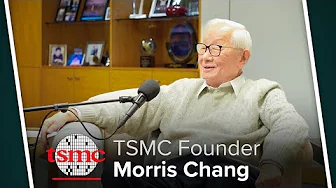
TSMC founder Morris Chang

  • Morris Chang anticipated the rise of chip companies that designed semiconductors without owning factories before founding TSMC in 1987. Entrepreneur Gordon Campbell convinced him of the opportunity after reducing his startup funding requirement from $50 million to $5 million by abandoning plans to build a fabrication plant.

  • Jensen Huang rescued Nvidia’s manufacturing prospects by writing directly to Chang in 1997 after TSMC’s sales office ignored him. Nvidia had approximately 50–60 employees and faced bankruptcy, but its next successful chip helped make it one of TSMC’s five largest customers within three years.

  • Chang resolved TSMC’s 2009 manufacturing dispute with Nvidia through a settlement exceeding $100 million. After weeks investigating Nvidia’s losses, he presented Jensen Huang with a nonnegotiable offer during dinner at Huang’s home, imposed a 48-hour deadline, and secured acceptance without arbitration.

  • Chang retook TSMC’s CEO position partly because his successor dismissed approximately 600–700 employees using subjective performance ratings. Protesters gathered outside Chang’s home, where his wife brought breakfast to overnight demonstrators; Chang subsequently offered the workers reinstatement while reassigning the former CEO without reducing his compensation.

  • Chang committed 8% of TSMC’s revenue to research regardless of recessions and nearly tripled annual capital spending to $6 billion in 2010. Despite board resistance, he pursued 28-nanometer manufacturing based on technical forecasts and market analysis, positioning TSMC to benefit from the smartphone boom.

  • Apple’s manufacturing relationship with TSMC began through Foxconn founder Terry Gou, a relative of Chang’s wife, who brought Apple executive Jeff Williams to dinner. Apple requested an unplanned 20-nanometer process, but Chang accepted only half its proposed production volume, borrowing billions rather than issuing shares or eliminating dividends.

  • Tim Cook reassured Chang that Intel could not replace TSMC as Apple’s manufacturing partner because Intel did not understand the foundry business. Intel had approached Apple in 2011, but Chang believed TSMC enjoyed advantages in manufacturing execution and customer trust, particularly its willingness to accommodate demanding customers.

  • Winning Apple’s 20-nanometer business temporarily cost TSMC technological leadership at 16 nanometers. Samsung developed the next process first and secured Apple's initial orders, alarming Chang after TSMC’s enormous investment; Jeff Williams promised future business, and TSMC recovered most Apple orders approximately six months later.

...

October 28, 2024

Meta (Audio)

  • Meta reached roughly 4 billion monthly users by 2024, but Facebook's growth began by deliberately restricting membership. Within two weeks of its 2004 Harvard launch, more than half of undergraduates had joined; its densely connected campus networks sustained approximately 70% daily engagement during its early expansion.

  • Sean Parker helped Zuckerberg secure permanent board control, allowing him to resist investors and potential buyers. Zuckerberg initially entertained Yahoo's $1 billion acquisition offer in 2006 but walked away after Yahoo's share price fell 20%, reducing the all-stock deal's value to approximately $800 million.

  • Facebook saved its business by abandoning its profitable desktop advertising model for mobile. After its 2012 IPO, shares fell from $38 to $17.68, but Zuckerberg and Sheryl Sandberg redirected engineers toward mobile News Feed advertising, which generated 53% of advertising revenue by late 2013.

  • Zuckerberg used acquisitions to neutralize emerging competitors and buy time to adopt their successful features. A 2012 internal email described this strategy; Facebook acquired Instagram for approximately $1 billion that year and WhatsApp for $19 billion in 2014, preserving both as major products.

  • The Cambridge Analytica scandal exposed Facebook's earlier willingness to give developers extensive access to personal information. A quiz completed by approximately 320,000 people enabled collection of data associated with up to 87 million users; Facebook subsequently paid $5 billion to settle broader US privacy violations.

  • Zuckerberg prioritized countering TikTok even as Meta's market value collapsed 72% in 2022. Apple's tracking restrictions threatened approximately $10 billion in annual revenue, but Meta simultaneously promoted less-profitable Reels, accepting further short-term financial pressure to prevent TikTok from capturing its users.

  • Meta was profiting from artificial intelligence a decade before the generative-AI boom. Zuckerberg recruited Yann LeCun in 2013 and invested heavily in recommendations and advertising algorithms; its later Llama strategy seeks to prevent proprietary AI suppliers from controlling Meta's technology costs and product decisions.

  • Meta's Reality Labs accumulated approximately $60 billion in operating losses by 2024 as Zuckerberg pursued independence from Apple and Google. The hosts calculate that even a hypothetical glasses business matching the iPhone's extraordinary success from 2024 would not recover those losses before 2035, illustrating the enormous financial risk of owning a future computing platform.

...

April 22, 2024

Microsoft Volume I: The Complete History and Strategy of founding through Windows 95 (Audio)

  • Bill Gates and Paul Allen recognized the personal computer revolution years before established computer companies. Rare access to computers at Seattle's Lakeside School in 1968, paid programming work, and Allen's understanding of exponential improvements in microprocessors convinced them that computing would eventually become cheap enough for every home.

  • Microsoft's first major contract taught Gates that controlling software distribution mattered as much as writing it. MITS received exclusive rights to sell Microsoft's BASIC interpreter in 1975, with payments capped at $180,000; widespread copying and MITS's refusal to license competitors pushed Gates toward selling software directly to computer manufacturers.

  • Microsoft acquired the foundation of DOS for just $75,000 after IBM's negotiations with Digital Research failed in 1980. Seattle Computer Products' Tim Paterson had developed QDOS for Intel's 8086 processor; Microsoft acquired the rights, hired Paterson, and adapted his work into the operating system that would generate billions in revenue.

  • Gates accepted just $430,000 in fixed payments from IBM while retaining ownership and unrestricted licensing rights to DOS. IBM owed no royalties on subsequent sales, but Microsoft could license the same software to competing manufacturers, allowing IBM's enormous market influence to establish a standard that Microsoft—not IBM—ultimately controlled.

  • Compaq and other IBM-compatible manufacturers turned Microsoft's operating system into an extraordinarily profitable business. Compaq independently recreated IBM's BIOS functionality, enabling compatible computers; Microsoft then collected licensing fees on each machine sold, increasing revenue from approximately $25 million in 1982 to $98 million in fiscal 1984.

  • Microsoft reached its 1986 IPO with its founders retaining extraordinary ownership because the business required almost no outside capital. Its only conventional venture round raised approximately $1 million for 5% in 1981; at the IPO, Gates owned roughly 49%, Paul Allen 28%, and Steve Ballmer 7.5%.

  • Microsoft protected itself against IBM's attempt to regain control of personal computing through the proprietary OS/2 operating system. While publicly supporting IBM, it developed Windows and Macintosh applications, including Excel; Windows 3.0 succeeded in 1990, and Windows 95 subsequently sold seven million copies in its first month.

  • Word and Excel gave Microsoft access to corporate customers before it had established a substantial enterprise sales business. Ballmer used employees' existing reliance on Microsoft applications to approach company executives, while Dave Cutler's Windows NT established the technical foundations for Microsoft's later Windows Server and Azure businesses.

...

February 20, 2024

Hermès (Audio)

  • Hermès began in 1837 as Thierry Hermès’s Parisian harness workshop, then survived the automobile by reinventing its leather goods. After seeing Henry Ford’s assembly lines in 1916, Émile-Maurice Hermès bought out his conservative brother in 1919 and expanded from saddlery into bags and accessories for modern travel.

  • Silk scarves, introduced in 1937, once generated most of Hermès’s revenue. They accounted for 55% of sales in 1988, versus just 9% from leather; each scarf requires individually prepared printing screens for its colors, and a new design can take two years to reach customers.

  • Jean-Louis Dumas revived Hermès by making traditional products fashionable to younger customers without changing their craftsmanship. After taking over in 1978, he advertised classic scarves worn with jeans and expanded internationally, growing annual revenue from well under $100 million to approximately $2 billion by his retirement in 2006.

  • The Birkin bag originated from a chance encounter between Jean-Louis Dumas and actress Jane Birkin on a flight. Her impractical wicker basket and need to carry children’s belongings inspired a larger, two-handled bag, launched in 1984; it took about five years to gain commercial momentum before becoming a global status symbol.

  • Hermès’s handbag scarcity is rooted in deliberate manufacturing constraints, not simply restricted sales. One artisan makes each leather bag, training takes at least two years, and workshops are limited to approximately 250–300 craftspeople; Hermès expanded by opening small French workshops rather than adopting assembly-line production.

  • Hermès deliberately leaves money on the table by limiting availability and maintaining comparatively restrained handbag prices. An outside estimate placed annual Birkin and Kelly production near 120,000 bags, while some resell above retail; customers cannot simply purchase these products through ordinary online checkout.

  • Bernard Arnault quietly accumulated Hermès shares through derivatives, bringing LVMH’s stake to 22.6% in 2011. The Hermès family responded by pooling 50.2% of the company into the H51 holding structure and locking those shares for at least 20 years, effectively preventing a hostile takeover.

  • Arnault profited despite failing to acquire Hermès, while Hermès became an exceptionally profitable independent company. The hosts describe transactions that increased Arnault’s LVMH ownership from 36% to 46%; by the episode, Hermès had approximately €14 billion in annual revenue, a 44% operating margin and a valuation exceeding $200 billion.

...

October 16, 2023

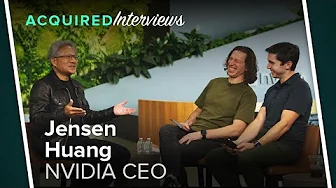
NVIDIA CEO Jensen Huang

  • Nvidia survived near-bankruptcy in 1997 by manufacturing the RIVA 128 without testing a physical prototype. With roughly six months of cash remaining, Huang used hardware emulation to test the chip and software before committing to production, despite the finished processor supporting only eight of DirectX's 32 blending modes.

  • Nvidia invested years in CUDA before AI became a major commercial market. Huang's confidence grew from scientific computing experiments and breakthroughs such as AlexNet; by the 2023 interview, CUDA had an estimated 250–300 million active GPUs, all architecturally compatible, making its developer ecosystem difficult to displace.

  • Huang personally delivered Nvidia's first DGX AI computer to OpenAI after developing relationships with leading researchers. He knew Ilya Sutskever, Geoffrey Hinton, Yann LeCun and Andrew Ng through Nvidia's scientific computing work, but confirmed he was not involved in OpenAI's founding in 2015.

  • Nvidia's data-center dominance grew from investments made long before the AI boom. GeForce NOW led to enterprise graphics and supercomputing, while the Mellanox acquisition added networking technology essential for training AI models across enormous numbers of processors; Huang called Mellanox one of his best strategic decisions.

  • Huang deliberately spends approximately a decade developing what he calls “zero-billion-dollar markets.” Nvidia entered gaming, supercomputing, automotive computing and AI before their full commercial potential emerged; Omniverse was his contemporary example, with roughly 40 customers and years of investment still potentially ahead.

  • Huang manages more than 40 direct reports through a structure designed to minimize hierarchy and privileged information. Nvidia organizes employees around specific missions, while important decisions are shared simultaneously across ranks; Huang described a robotics meeting where new graduates and senior executives received the same information together.

  • Nvidia's founding investors remained unusually close to the company three decades later. LSI Logic's chief executive helped Huang obtain backing from Sequoia's Don Valentine, while Sequoia's Mark Stevens and Sutter Hill's Tench Coxe remained on Nvidia's board in 2023, providing continuity through repeated financial crises.

  • Huang said he would not start Nvidia again if he knew how difficult building it would become. The company endured multiple share-price collapses exceeding 80%, yet longtime colleagues and investors stayed; Huang described his greatest fear as letting employees down and credited unwavering personal support with helping him continue.