
-
Dave Goldberg was the anonymous “Fake Chamath” Twitter account, a secret Sandberg and Goldberg’s brother chose to reveal nine years after his death. Goldberg wrote many posts himself, while friends from their poker circle helped workshop jokes mocking Chamath Palihapitiya’s public persona.
-
After Goldberg’s sudden death, Sandberg said Palihapitiya handled immediate logistics and then stayed involved with her children for years. He taught them poker because Goldberg would have, and on the ninth anniversary of their father’s death they were still playing together.
-
Sandberg said she made Screams Before Silence because she believed sexual violence from October 7 was being denied despite eyewitness accounts. Philanthropist Joey Lowe and his wife financed the trip; Sandberg interviewed first responders, a Nova survivor and released hostage Amit Sasana.
-
The evidence Sandberg described was unusually dependent on witnesses rather than standard forensic records. She said no rape kits were done amid the mass-casualty chaos, many first responders avoided photographing bodies, and privately funded researcher Kochav Levy was compiling hundreds of interviews.
-
Sandberg said several feminist organizations privately told her they believed sexual violence occurred but feared speaking publicly because employees or younger supporters would object. She contrasted that with groups that publicly condemned the violence, making internal political pressure—not simple disbelief—a key part of her account.
-
The documentary’s lack of the most graphic photographs was partly a distribution constraint, not simply an editorial choice. Sandberg said first responders holding the images had vows against sharing them, while the film’s free YouTube release would not have passed platform standards with those images included.
-
Sandberg’s position was not a blanket defense of Israel’s war conduct: she backed two states, Palestinian peace and prosperity, and a permanent ceasefire. Her fixed line was that those positions could coexist with condemning and documenting sexual violence, which she treated separately from broader arguments over Gaza.
-
Friedberg said ProFluent trained a protein language model on 26 trillion base pairs to design novel CRISPR-Cas proteins, then open-sourced one called OpenCRISPR-1. He said it was roughly 400 mutations from known natural proteins and outperformed Cas9 in lab tests, potentially reducing patent barriers for researchers and startups.
All-In Podcast
Explore the collection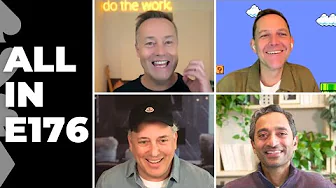
April 26, 2024
Meta's scorched earth approach to AI, Tesla's future, TikTok bill, FTC bans noncompetes, wealth tax
-
Meta’s AI strategy is less about selling models than making models cheap enough to protect its existing app empire. The panel argued that open-sourcing Llama and Horizon OS, then embedding AI/search inside Facebook, Instagram and WhatsApp, could commoditize foundation models while giving Meta a new route into search.
-
Chamath’s criticism of Meta’s spending was not the AI investment itself, but what he saw as excessive reliance on Nvidia for inference. He argued inference will dwarf training and can use cheaper infrastructure, making Meta’s capital allocation—not its open-source strategy—the weakness behind the market’s negative reaction.
-
Chamath’s energy thesis is to turn American homes into competing mini-utilities, and he said Palmetto is his largest investment. He believes rooftop solar, batteries and net metering could erode roughly 1,700 incumbent utilities burdened by enormous future capital spending and debt.
-
The autonomy discussion’s most useful caveat was that “driverless” can still depend heavily on humans behind the scenes. Calacanis cited Cruise workers intervening every 2.5–5 miles and argued constrained robotaxis already work, while meaningful automation across perhaps 5–10% of rides could still take five to ten years.
-
Chamath said his only job interview after leaving Facebook was for a prospective “head of iPhone” role at Apple in 2011. He was willing to work for Steve Jobs, but said the process ended when the reporting line became Tim Cook; he subsequently founded Social Capital.
-
Before iTunes’ 99-cent store, Friedberg’s AOL team had built a 99-cent music-download beta using 25–30 million stored credit cards and Warner’s catalog. He said it performed well and was demonstrated to Steve Jobs and Eddy Cue, but AOL’s internal politics blocked expansion; iTunes launched nine months later.
-
The TikTok discussion identified its recommendation algorithm—not the video inventory—as the asset that makes the product exceptional. Chamath argued a U.S. version without that algorithm would resemble Shorts or Reels, while Friedberg cited reports of roughly $14 billion in revenue, 170 million U.S. users and 40%-plus growth.
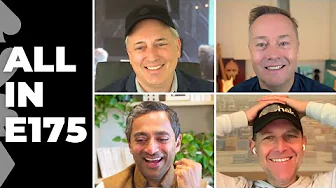
April 19, 2024
Google fires protestors, NPR chaos, Humane's AI Pin, Startup tax crisis, sports betting scandal
-
Google’s Project Nimbus dispute moved from internal activism to job losses: 28 employees were fired after sit-ins, with nine arrested after refusing to leave. (Reuters) The protest targeted the $1.2 billion Israel cloud contract; Friedberg also relayed an executive-level Google contact saying company all-hands were dominated by employee demands for bonuses and benefits.
-
At the time of the episode, Section 174 forced specified domestic R&D costs to be amortized over five years, creating taxable income for some near-break-even businesses. (Congress.gov) Friedberg said a House fix had stalled in the Senate, while foreign R&D remained on a 15-year schedule, leaving software-heavy small firms exposed to cash-tax pressure. (Tax Foundation)
-
The Porter scandal showed how legal sportsbooks can expose player manipulation: an $80,000 bet that a Raptors reserve would underperform triggered scrutiny, followed by an NBA lifetime ban. (NBA Official) The league found Porter limited participation, shared confidential information and used an associate’s account for NBA bets, while licensed betting operators flagged the abnormal wagering. (NBA Official)
-
Humane had raised roughly $250 million before launching a $700 AI Pin that reviewers found slow, often wrong, hot, battery-starved and no better than a phone. The sharper diagnosis was strategic: it tried solving ambient AI and phone replacement simultaneously, when the more plausible opportunity may be AI layered onto the existing phone.
-
The most revealing anti-phone anecdote came from Chamath’s child’s school, which uses locking pouches and then “graduates” students to sealed envelopes they carry themselves. That approach treats self-control as a skill to rebuild; separately, one host said deleting TikTok felt liberating and that weaker Shorts and Instagram recommendations failed to replace its pull.
-
All-In Summit demand exceeded capacity within 72 hours, but the hosts said last year’s event cost more per attendee than ticket revenue covered. This year’s higher price was framed as an attempt to reach break-even, with scholarship tickets retained and alumni receiving their own registration window.
-
Chamath said he ran a high-school blackjack house game, while Jason Calacanis said he sold pirated tapes and software, fake IDs and counterfeit Manhattan parking placards. Friedberg said he bought underpriced used electronics and resold them, making early arbitrage and rule-bending a recurring theme in the hosts’ teenage money-making stories.
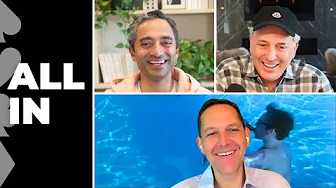
April 12, 2024
E174: Inflation stays hot, AI disclosure bill, Drone warfare, defense startups & more
-
Jonathan Ross said his inference-chip roadmap could supply 50% of available inference compute by the end of 2025, using less power and delivering more tokens per second. Chamath said NVIDIA’s dependence on HBM and specialized optical components creates a supply-chain opening for architectures designed around different constraints.
-
Friedberg said nearly every large-company CIO or CTO he met at Google Next was running multiple clouds rather than locking into one provider. Enterprises shifted spend across AWS, Azure and GCP by service and price, leaving commodity infrastructure under margin pressure while models, inference and engineering support carry more value.
-
The panel’s most concrete macro risk was the refinancing wall, not simply the monthly inflation print. They cited $7.6 trillion of federal debt rolling within 12 months from roughly 2% toward 5%, implying about $210 billion in added annual interest expense before new deficits.
-
Higher-for-longer rates also threaten the commercial-real-estate strategy banks have been using to delay losses. The hosts described “extend and pretend” restructurings that capitalize unpaid interest until refinancing improves; without rate cuts, they expect more foreclosures, fire sales and regional-bank stress.
-
The AI-copyright fight was framed less as “creators versus AI” than as a market-structure question. The panel saw three end states: training treated as fair use, restrictive rules that entrench incumbents with existing data, or a standardized licensing clearinghouse that pays rights holders while keeping training possible.
-
Cheap drones are already breaking air-defense economics, and Sacks has invested directly in the countermeasure. He cited roughly $2 million interceptors against $2,000 drones and said he led Allen Control Systems’ seed round; its Bullfrog pairs an M240 machine gun with computer vision to detect and shoot drones.
-
A drone-heavy military could create a strategic dependency on China because batteries become ammunition. Friedberg said China produced 79% of lithium-ion batteries versus 6.2% for the U.S., while China could scale drone manufacturing far beyond current American industrial capacity.
-
Chamath’s eight-year-old Saildrone investment has become a concrete example of Silicon Valley’s quiet military integration. The U.S. Navy is a customer, former Joint Chiefs chairman Mike Mullen chairs the company, and the Iranian Navy previously intercepted two of its autonomous surveillance vessels in the Middle East.

-
Ray Dalio argued that the global order is entering a structural shift as China rises, the United States defends its position, and India becomes more important. His central warning was that serious danger emerges when a rapidly rising power threatens to displace the dominant one.
-
One speaker predicted that within 25 years AI could make human labor largely unnecessary, creating abundance while making meaning a bigger problem than employment. The striking claim was not simply automation, but a society forced to rethink purpose once work is no longer economically required.
-
A fusion entrepreneur described the commercial goal as putting the reaction that powers stars into a machine that can be built quickly on Earth. The emphasis was therefore not merely achieving fusion scientifically, but engineering a repeatable, manufacturable system rather than a one-off experiment.
-
A creator said there was little pressure to reduce the conspicuous giveaways that drive his entertainment model. He cited giving people $10,000, Lamborghinis and houses—and even tipping a pizza delivery worker with a house—because audiences enjoy watching recipients experience the windfall.
-
A biotechnology speaker claimed the rare DEC2 mutation allows some people to feel fully rested after roughly four hours of sleep and suggested gene therapy could potentially reproduce that trait. The segment presented human enhancement—not only disease treatment—as an immediate technological ambition, although the transcript does not independently substantiate the therapy claim.
-
Jenny argued that poker gives players practical training in strategy, capital allocation, risk-taking and recovering from failure, skills she believes many boys acquire earlier than girls. She said learning poker made her realize she had effectively been using the same decision-making framework throughout her business career.
-
One speaker proposed a package of congressional reforms: term limits, eliminating corporate and PAC money, restricting lobbyist funding, and barring lawmakers from becoming lobbyists afterward. The proposal focused on reducing entrenched incentives and the revolving door rather than debating a specific party or election.
April 5, 2024
E173: Google buying HubSpot? FTX depositors not made whole, AI job fears, Ukraine joining NATO
-
All-In hired Jon Haile to turn the podcast into a broader media-and-events business, not merely manage the show. Friedberg said hundreds applied and Haile’s live-event experience won out; Chamath described creators as demand generators and offline community as the brand’s next extension.
-
FTX customers were not being restored their crypto; claims were fixed in dollars at November 11, 2022 prices. The hosts used Solana to show the distortion: roughly $16 per token in the claim versus about $188 during the episode, while the estate could sell recovered tokens after the rebound.
-
Trump Media sought to strip co-founders Andy Litinsky and Wes Moss of their 8.6% stake while Trump stood to receive 36 million extra shares. Separately, Michael and Gerald Shvartsman pleaded guilty to insider trading in DWAC before its Trump Media merger, earning about $22 million illegally. (Reuters)
-
Friedberg said Google had considered linking advertising directly to CRM for roughly 20 years, including discussions about buying Salesforce and meetings with NetSuite. His case for HubSpot was not its software revenue alone, but closing the loop from Google ads through lead management to customer conversion.
-
Friedberg said Google saw roughly $500 million in incremental AdWords spending after advertisers installed Google Analytics following the Urchin acquisition. Better conversion data let customers spend more profitably on ads, providing his clearest economic case for Google owning HubSpot.
-
The episode cited 30–50% productivity gains in some white-collar roles and Klarna’s claim that one AI support system matched 700 employees while adding $40 million in profit. Friedberg argued the likely effect is cheaper knowledge work and higher output, not a one-for-one elimination of jobs.
-
The robotics discussion exposed a sharper uncertainty: consumer humanoids may be technologically impressive, but safety and economics still favor industrial deployment. Jason predicted $1,000-a-month household robots within several years, while Friedberg argued narrower machines such as Gecko’s inspection robots will reach useful scale first.
-
During recording, Antony Blinken reiterated that Ukraine “will become a member of NATO,” abruptly shifting the episode toward escalation risk and Article 5. Sacks and Chamath treated membership as potentially war-expanding; Calacanis emphasized Blinken’s “bridge” language, which implied a pathway rather than an immediate timetable. (Reuters)
March 29, 2024
E172: SBF gets 25 years, Trump's meme stock, RFK Jr picks VP, Biden's 2025 budget & more
-
FTX’s collapse was not a case where every underlying asset was worthless; Bankman-Fried had built valuable positions and still stole customer money. He received 25 years, while the bankruptcy estate was already expecting full customer repayment and selling most of FTX’s Anthropic stake for about $884 million. (Department of Justice)
-
David Sacks said he confronted Bankman-Fried at a private tech conference over a California tax initiative funding a pandemic-prevention center that SBF’s brother was expected to run. Sacks told him he would publicly oppose it; according to Sacks, the initiative was dropped about a month later after mounting resistance.
-
Trump Media’s market value was far larger than its operating scale would ordinarily imply at the moment discussed. TMTG reported $4.13 million in 2023 revenue and no plans to publish standard platform KPIs, yet its market capitalization approached Reddit’s despite Reddit generating roughly $800 million in revenue.
-
Nicole Shanahan entered RFK Jr.’s ticket not only as a running mate but as a major financial backer. She had previously given $4 million to a pro-Kennedy super PAC for the Super Bowl ad, and the hosts viewed her health, criminal-justice and environmental focus as broadening Kennedy’s coalition leftward. (Reuters)
-
The fiscal discussion’s hardest number was that federal interest expense was nearing the scale of the entire defense budget. The episode cited a $7.3 trillion FY2025 proposal, a $1.78 trillion deficit and roughly $965 billion in interest; CBO separately projected a $1.8 trillion 2025 deficit. (Congressional Budget Office)
-
Cocoa’s jump from roughly $2,000 to $10,000 a ton was traced to a real supply shock, not just speculation. Heavy West African rains spread black-pod disease, Ghana’s output fell sharply, and the resulting shortage plus a futures squeeze was expected to mean higher prices and smaller chocolate bars. (Reuters)
-
David Sacks said he is open to making a sequel to Thank You for Smoking if director Jason Reitman wants to do it. The remark followed Elon Musk’s public recollection of how the PayPal-era group obtained the film rights and helped produce the movie nearly two decades earlier.
-
The $418 million NAR settlement threatens the traditional 5–6% residential real-estate commission model by forcing buyers to negotiate compensation with their own agents. Friedberg expects flat-fee and à-la-carte services to replace percentage commissions, and is already buying property himself using standard forms, AI disclosure tools and escrow services instead of an agent.
-
Microsoft effectively absorbed Inflection AI’s key talent without buying the company, hiring most of its team and making co-founder Mustafa Suleyman CEO of Microsoft AI. The panel viewed the licensing-and-hiring structure as a way to acquire talent while protecting Inflection’s investors, with foundational-model economics becoming increasingly difficult for independent startups.
-
Of $36 billion in office loans that matured in the commercial mortgage-backed securities market, only about one quarter were reportedly repaid in full. The remaining distress is being delayed rather than resolved, leaving landlords and lenders dependent on falling rates and improving occupancy; prolonged high rates could expose significant losses, including at regional banks.
-
Apple was reportedly discussing using Google or OpenAI technology for AI features on iOS despite spending roughly $30 billion annually on R&D. Because Google already pays Apple about $20 billion a year for default-search placement, the panel saw a Gemini deal either as a temporary bridge or evidence that Apple had fallen strategically behind in AI.
-
Chamath’s most distinctive proposal for Saudi Arabia’s planned $40 billion AI fund was to reserve half the capital for follow-ons and use roughly $15 billion to buy startups’ compute. Founders would receive free GPU capacity on their preferred cloud or model in exchange for roughly 6–7% equity, giving the fund exposure across thousands of experiments.
-
The panel’s strongest AI-investment consensus was that applications and traditional industries adopting AI may capture more durable value than crowded foundation-model markets. Friedberg specifically highlighted manufacturing, medicine, food and labor automation, while robotics attracted interest because enterprises can justify machines when they produce measurable productivity returns.
-
A genetically modified pig kidney was transplanted into a 64-year-old man with end-stage kidney disease after researchers removed selected pig genes and added useful human ones. Chamath emphasized the human significance from his father’s experience with prolonged dialysis: successful xenotransplantation could turn pigs into a practically scalable source of replacement organs.
-
James Webb observations independently confirmed the Cepheid measurements that had produced an unexplained discrepancy in estimates of the universe’s expansion rate. That removes a suspected Hubble measurement error as an easy explanation and leaves a fundamental unresolved problem in cosmology rather than merely an instrument problem.
March 16, 2024
E170: Tech's Vibe Shift, TikTok ban debate, Vertical AI boom, Florida bans lab-grown meat & more
-
OpenAI’s CTO would not say whether YouTube, Facebook, or Instagram videos were used to train Sora, repeatedly saying she was unsure. Chamath and Sacks interpreted the hesitation as legal caution amid training-data lawsuits and treated YouTube use as plausible rather than established.
-
The House TikTok bill went beyond TikTok, covering certain apps and websites and defining foreign-adversary control to include persons “subject to the direction or control” of specified foreign actors. Sacks said that breadth risked abuse, while Chamath backed divestiture; the House had passed the measure 352–65.
-
Sacks disclosed an investment in Sourcegraph and argued that Devin’s agent-first approach is easier to showcase on new projects than existing codebases, where context-first tools matter more. With Devin’s cited benchmark at 13%, the group’s stronger prediction was experts supervising many AI agents, not developers disappearing.
-
Chamath said one of his children was tested for ADHD after struggling at school, and the family rejected medication and removed the iPad, apps, and video games instead. Over roughly six to eight weeks, he said grades rose from 60–70% to about 90% and the child’s engagement changed sharply.
-
Calacanis said his founder program accepts 10% of applicants and funds only 10% of those, putting the effective funding rate below 1%. His first test is whether a founder can recruit two or three people without funding; asking for money to find a cofounder, he said, means failing that test.
-
At recording, Florida’s cultivated-meat bill had cleared the legislature; Friedberg framed it as ranchers using regulation to block a future competitor. He said the technology was still about a decade from competitiveness and predicted similar state bans could ultimately provoke a federal-preemption fight. (flsenate.gov)
March 8, 2024
E169: Elon sues OpenAI, Apple's decline, TikTok ban, Bitcoin $100K?, Science corner: Microplastics
-
OpenAI’s own released emails complicate Musk’s lawsuit by showing he had accepted the need for a for-profit vehicle to raise billions. The sharper unresolved questions are whether value was fairly transferred from the nonprofit and whether the nonprofit still performs meaningful charitable work.
-
OpenAI’s investment agreement explicitly puts its mission ahead of investor profit and says the partnership may never make a profit. The hosts viewed that structure—not OpenAI’s technical achievements—as the unusual feature most likely to create legal, tax, governance, and investor conflicts.
-
Definitive Intelligence merged with Groq after months of jointly building Groq’s cloud and API offerings. Sandeep Madra said the platform already had more than 16,000 developers, over 1,000 applications and a 3,000-person Discord community, making the deal more than a financial acquisition.
-
Apple faces pressure from both regulators and a maturing iPhone business while its next major growth engines remain uncertain. The episode paired Epic’s terminated EU developer account and antitrust pressure with Apple’s abandoned $10 billion car project, flattening iPhone revenue and increasingly long upgrade cycles.
-
The TikTok debate exposed agreement on divestiture but disagreement over the evidence and rationale for it. Sacks wanted proof before treating CCP access as established, while Chamath argued from reciprocity and presumed intelligence infiltration broadly; both supported separating TikTok from Chinese control rather than simply banning it.
-
Bitcoin’s new US ETFs materially changed access to the asset, with BlackRock’s fund becoming the fastest ETF to reach $10 billion. Despite the renewed price surge, Friedberg noted that Bitcoin still showed little meaningful growth as a commerce or transaction system, leaving its dominant role as a store-of-value asset.
-
A study discussed on the show found micro- or nanoplastics in carotid plaque were associated with roughly 4.5 times the risk of heart attack, stroke or death over 34 months. The 304-patient study did not establish causation, but the combination of widespread plastic accumulation and inflammatory mechanisms made it the episode’s most concrete health finding.
March 1, 2024
E168: Can Google save itself? Abolish HR, AI takes over Customer Support, Reddit IPO teardown
-
Friedberg said Google’s Gemini failure has triggered a real internal shift: employees who previously feared being branded racist for challenging Responsible AI decisions now feel able to question that team’s authority. He said investors care less about the politics than what the episode implies about Google’s ability to defend Search, its dominant profit engine.
-
Google’s vulnerability is unusually concentrated: the panel put Search revenue near $50 billion a quarter and argued its margins account for most of Alphabet’s true operating profit. That makes even modest search-share losses strategically important, while Cloud is the clearest internal hedge if AI weakens Google’s search dominance.
-
AI companies are beginning to pay meaningful sums for proprietary training data: Reddit disclosed about $203 million of AI licensing deals over two to three years, including Google’s roughly $60 million-a-year agreement. The panel’s key uncertainty was durability—fresh, continuously generated data may command recurring value, while static archives can depreciate quickly.
-
Klarna’s AI support assistant had already handled 2.3 million conversations, about two-thirds of support chats, while doing work equivalent to 700 agents and cutting resolution time from 11 minutes to two. Klarna projected a $40 million profit lift, and Teleperformance promptly lost roughly 20% of its market value.
-
Chamath said none of the companies he controls has a traditional HR department: managers own hiring, employee committees design benefits, serious complaints go to outside employment lawyers, and the bottom 5–10% are managed up or out annually. His model deliberately removes HR as an internal gatekeeper while keeping legal investigations independent.
-
Reddit’s IPO filing showed a business with strong engagement but weak monetization: 2023 revenue was $804 million, gross margin 86%, net loss $91 million, and daily active uniques about 76 million. Recent user growth accelerated to 27% year over year, but ARPU remained only $3.42 and had slipped 2%.
-
A former Reddit CEO’s old account described a possible step-by-step effort to regain independence from Condé Nast by creating a separate cap table, bringing in an outside investor, and eventually spinning Reddit out. Whether premeditated or not, Condé Nast’s parent still owned about 30%, potentially worth $1.5 billion at a $5 billion IPO.
-
Apple finally killed Project Titan after roughly a decade, billions of dollars of investment and about 2,000 employees, abandoning plans for a roughly $100,000 self-driving electric car. The report said many staff would move into generative AI while others would be laid off, marking a sharp reallocation toward AI.
February 23, 2024
E167: Google's Woke AI disaster, Nvidia smashes earnings (again), Groq's LPU breakthrough & more
-
Nvidia’s AI boom is already a cash machine: Q4 revenue hit $22.1 billion, up 265% year over year, with $12.3 billion net income and 76% gross margins. Data-center demand drove the surge, and management was already guiding toward about $110 billion revenue for the new fiscal year, nearly double the prior year.
-
The strongest challenge to the Nvidia story is not demand today, but whether AI applications can earn enough to justify the hardware binge. Chamath argued the buyers are mostly cash-rich incumbents pre-purchasing capacity, while most current AI products remain demos or proofs of concept rather than large, proven profit engines.
-
Big Tech can accelerate AI infrastructure spending because GPU purchases are capitalized and depreciated, rather than hitting earnings immediately. Friedberg added that cash-rich platforms also face antitrust limits on acquisitions, making data-center buildout one of the few large-scale ways to deploy balance-sheet cash toward future growth.
-
Groq went from essentially no customers two months earlier to a sudden rush of Fortune 500 companies and developers testing its inference hardware. Chamath said users were finding Groq’s LPUs meaningfully faster and cheaper than Nvidia-based inference, after an eight-year build that survived failed pitches to Tesla, traders, agencies, and earlier vision workloads.
-
Chamath’s deep-tech filter is simple: fund hard engineering, not businesses that require a new law of physics to be true. He said Groq’s first roughly $7–10 million was aimed at a bounded chip-and-compiler problem on mature 14-nanometer technology, unlike fusion concepts whose feasibility may depend on unavailable fuels or breakthroughs.
-
Two famous companies were nearly steered into safer, smaller businesses by investors: Tesla into selling drivetrains and Uber into selling software to taxi fleets. Jason Calacanis said a prominent VC offered to preempt Uber’s Series A only if Travis Kalanick abandoned the consumer marketplace; Calacanis never passed the investor along.
-
Gemini’s image failures exposed a harder problem than one bad launch: AI turns Google from an information-retrieval company into an information-interpretation company. The panel’s sharpest point was that chatbots must choose a single answer, making tuning, citations, uncertainty, and user controls far more consequential than search’s familiar list of links.
-
If handed Google, Chamath said he would cut 50–60% of the workforce and redirect savings into roughly $100 billion a year of proprietary data licensing. His proposed moat was a product marketed around fewer errors and “defensible truth,” using exclusive data access to make AI answers more trustworthy than competing models.
February 17, 2024
E166: Mind-blowing AI Video: OpenAI launches Sora + Is Biden too old? Tucker/Putin interview & more
-
SoftBank’s ARM bet had become a spectacular paper gain: it bought ARM for $32 billion, and its 90% stake was worth about $125 billion at the episode’s quoted $140 billion valuation. But ARM’s tiny public float and 12.5 million shares short may have amplified the surge through a short squeeze.
-
Some $100 million AI rounds were being driven less by proven demand than by compute bills, with the panel estimating $70–80 million could go to compute. If equivalent throughput soon cost $7–8 million, those startups could become overcapitalized and repeat the overhiring and misallocation seen in earlier funding cycles.
-
Sora’s near-term bottleneck was not image quality but editability: it could generate striking one-minute clips yet could not preserve objects or layers while changing a small detail. The panel’s likely production path was a hybrid where generative models create scene elements and deterministic engines such as Unreal handle placement and rendering.
-
Gemini 1.5 Pro’s one-million-token context window, with Google discussing up to 10 million, opened the door to analyzing whole books, transcripts, or large private corpora in one pass. The key caveat was that larger context does not automatically produce proportionally better answers; model quality gains were described as much slower than raw scaling.
-
Meta’s TestGen offered a concrete AI productivity gain: traversing codebases and automatically generating unit tests, work developers frequently postpone. The panel contrasted that with magic.dev’s more ambitious claim of coding like a human coworker, explicitly noting that claim had not yet been verified.
-
Bolt’s “employee-friendly” option-loan program became a cautionary case: about half of 600-plus employees borrowed to exercise at an $11 billion valuation, versus a later $300 million buyback valuation. Breslow also confirmed selling $10 million of his own shares; employees could still face AMT and ordinary-income tax if exercise loans were forgiven.
-
AI-generated media may create a new talent pipeline around existing intellectual property rather than simply making every viewer a filmmaker. The panel cited a fan who AI-reworked Luke Skywalker and was subsequently hired by Disney and LucasArts, arguing that a small creator minority could produce sophisticated remixes for much larger passive audiences.
February 9, 2024
E165: Vision Pro: use or lose? Meta vs Snap, SaaS recovery, AI investing, rolling real estate crisis
-
Friedberg’s most concrete Vision Pro case was not entertainment but replacing handheld tools in his company’s greenhouse workflow. After doing the work himself, he said cameras, QR scanning, task guidance and spatial training could be folded into the headset, and his engineering team was already evaluating software for it.
-
Snap’s core problem was spending and dilution, not collapsing revenue. From 2021 to 2023 revenue rose $4.1B to $4.5B, but 2023 produced only $35M free cash flow against $1.3B stock compensation; Snap’s share count rose 4%, while Meta’s fell 0.5% after buybacks.
-
SaaS demand appears to have bottomed, but the old pricing power has not returned. Sacks cited Q4 reacceleration after six or seven weak quarters, while Calacanis described million-dollar deals shrinking to $200,000 and Friedberg said in-house engineering now creates a credible build-versus-buy alternative.
-
Chamath’s AI thesis is that foundation models trained on the same public data will be commoditized toward zero economic value. He expects value to accrue instead to proprietary data and high-speed inference infrastructure, especially providers controlling their own hardware rather than merely reselling Nvidia capacity.
-
Sacks argued OpenAI can still defend itself through a consumer-and-developer flywheel even if models commoditize. Chamath supplied the counterweight from experience: he built a useful custom GPT for Hustle but said latency, workflow integration and production reliability still made it unusable as a core tool.
-
YouTube may be Google’s most important AI moat because the asset compounds every day. Friedberg estimated 2,000–3,000 petabytes of multimodal data versus roughly 10 petabytes in Common Crawl, growing another 1–2 petabytes daily, making Google’s advantage potentially much harder to copy than a model architecture.
-
The office-property problem is being delayed, not resolved. The discussion used a $3T book-value office market versus a $1.8T estimate and described banks avoiding foreclosure through “pretend and extend,” because taking buildings back would force loan write-downs and expose losses.
-
Even fully occupied multifamily buildings can fail financially when cheap debt rolls off. Sacks’ example was a property earning a 6% yield but refinancing near 10%, turning leverage negative; because loans mature at different times, he described real estate as a rolling crisis rather than a single crash.
February 2, 2024
E164: Zuck’s Senate apology, Elon's comp package voided, crony capitalism, Reddit IPO, drone attack
-
Jason Calacanis says Travis Kalanick invited him to Uber’s IPO bell-ringing, but Kalanick was barred from joining Dara Khosrowshahi onstage amid the controversy around his ouster. Calacanis skipped the event because plans became unclear and now calls that a regret, offering a rare first-hand detail about Uber’s strained IPO moment.
-
Chamath Palihapitiya read the Senate child-safety hearing as bipartisan momentum for changing Section 230 so platforms could face greater liability. Sacks predicted more lawsuits and stricter moderation, while Chamath argued that the enormous economics available to trial lawyers could become a major force behind such legislation. (Senate Judiciary Committee)
-
The hosts focused on the Delaware court voiding Elon Musk’s 2018 Tesla pay package despite shareholder approval and compensation tied entirely to extraordinary performance milestones. Chamath said he originally assigned Musk only low-single-digit odds of reaching those targets, making their eventual achievement central to his objection to the ruling.
-
Chamath said the Tesla ruling has already changed his own behavior: newer companies he has started are incorporated in Nevada rather than Delaware. He said Delaware’s courts have become less predictable, turning his criticism into a concrete example of how governance rulings can influence where founders choose to domicile companies.
-
Reddit was discussed as an unusually under-monetized IPO candidate, with a reported $5 billion target versus a $10 billion 2021 financing and roughly $800 million in annual revenue. Chamath identified user monetization and advertiser brand-safety as the key valuation questions, while Sacks saw AI licensing of Reddit’s data as an additional revenue opportunity.
-
After the Tower 22 drone attack killed three U.S. service members, Sacks argued that striking Iran could rapidly widen the conflict across several Middle Eastern fronts. The Pentagon confirmed the deaths at the Jordanian base near Syria; the episode’s debate centered on retaliation, withdrawal and the vulnerability of exposed American bases. (Department of Defense)
-
Chamath argued that Tower 22 exposed a defense-procurement problem as much as a foreign-policy one, citing reports that U.S. defenses confused the hostile drone with a returning American drone. He said Saildrone, backed by his firm years earlier, took years to penetrate Navy procurement despite its technology, illustrating the barriers facing defense startups.

January 26, 2024
E163: Market rips, Media RIFs, Texas defies Biden, Fintech reckoning, ARkStorm 2.0 & more
-
The episode’s most consequential macro number was interest expense: with roughly $34–35 trillion of federal debt and an average rate near 3%, annualized interest was approaching $1 trillion. At that debt load, every additional percentage point in borrowing cost adds roughly $340–350 billion a year, making sustained non-zero rates a major fiscal constraint.
-
Chamath’s “melt-up” thesis was that weaker consumer demand could paradoxically lift stocks. He argued cooling demand would reduce inflation, bring rate cuts, and release trillions of dollars sitting in cash into risk assets, leaving markets materially higher 18–24 months later.
-
The clearest explanation for media layoffs was unit economics: a $100,000 reporter can cost $200,000–$300,000 fully loaded, putting each story near $1,000. At a $10 CPM, that requires roughly 100,000 reads to break even; a low-overhead subscription outlet can instead survive on a few thousand paying readers.
-
Two private-company leaks exposed very different economics: Brex was reportedly burning $17 million monthly on $280 million net revenue, while Anthropic’s gross margin was put at 50–55%. Brex then cut 20% of staff—300 jobs—to extend runway two years; Anthropic’s margin sat well below the 70–80% SaaS benchmark discussed.
-
Calacanis said 90–95% of leaks during his Engadget years came from inside the company, making press leaks as much an internal power tool as a reporting mechanism. The panel split on who usually does it: frustrated investors seeking cost cuts versus lower-level employees with less to lose.
-
The fintech discussion argued that “tech” advantages disappear unless they survive scale and transaction costs. Friedberg described CAC rising from $4 to $30–$60 while monthly gross profit fell from $12 to $2–$4; Sacks showed $1 billion of payment volume could yield only about $2.5 million of true gross profit.
-
The Supreme Court’s January 22, 2024 order let federal agents resume cutting Texas’s razor wire while the litigation continued, escalating the Eagle Pass dispute rather than settling it. The 5–4 order vacated a Fifth Circuit injunction; Governor Greg Abbott responded two days later by invoking Texas’s claimed constitutional right of self-defense. (Supreme Court)
-
The viral “ARkStorm” panic was explicitly rejected as an imminent forecast. Friedberg said meteorologists expected a very wet California spell, not the modeled megaflood; the USGS scenario he cited uses the 1861–62 flood as an analogue and estimates more than $1 trillion of damage if such an event recurred today.
January 19, 2024
E162: Live from Davos! Milei goes viral, Adam Neumann's headwinds, streaming's broken model & more
-
Adam Neumann repeated WeWork’s core financial mistake at Flow: a good product could not overcome a bad capital structure. Flow’s apartments were reportedly well occupied and commanded modest premiums, but properties bought near the market peak with floating-rate debt became stressed as borrowing costs jumped.
-
Chamath Palihapitiya argued that Andreessen Horowitz’s roughly $300 million Flow investment reflected mega-fund economics as much as conviction in real estate. His argument was that large deployments exhaust committed capital faster, enabling another fundraise and management-fee pool; David Sacks cautioned against judging any venture firm from one investment.
-
Commercial real estate can default even with full occupancy when debt costs consume the property’s operating income. Sacks described owners and regional banks using “pretend and extend” restructurings to survive high rates, warning that delayed rate cuts would pressure both leveraged sponsors and the banks financing them.
-
Palihapitiya said some of his worst investments came from mistaking ordinary industries with software layers for technology companies. Sacks offered a practical test: if growth requires substantial physical goods, infrastructure or supply chains, the business is tech-enabled rather than a pure software company, regardless of its app or branding.
-
The clearest example of protected aerospace economics was TransDigm, which the hosts said earns roughly 53% EBITDA margins on about $7 billion of revenue. They cited a government audit finding at least $21 million in excess profit across 105 spare parts and 150 contracts, arguing certification barriers create extraordinary pricing power.
-
The Boeing discussion focused less on one 737 MAX failure than on the absence of meaningful competition across aircraft manufacturing and certified parts. The hosts connected the door-plug incident and earlier MAX crashes to Boeing-Airbus dominance, regulatory barriers and sole-source suppliers that weaken the normal pressure to improve quality or price.
-
Streaming’s hidden cost is constant reacquisition: even successful services must repeatedly replace subscribers who cancel. Sacks contrasted consumer subscriptions with strong B2B SaaS, where existing accounts can expand to roughly 120% net retention, while Netflix has spent billions on original programming to keep consumer churn from becoming prohibitive.
-
The microplastics segment’s most important point was uncertainty, not panic: bottled water may contain vast numbers of nanoplastic particles, but human harm is not established. Friedberg cited roughly 240,000 particles in an average liter and mechanistic or animal evidence of cellular or brain accumulation, while explicitly saying causal health evidence remains inconclusive.
January 13, 2024
E161: US strikes Houthis, market instability, Q1 rate cuts in doubt, Carta's major mishap, DEI
-
Carta’s secondary-market push became a trust crisis after staff used private cap-table data to contact shareholders about selling stock. The company abandoned the brokerage, which the panel said produced only about $3 million versus roughly $250 million from SaaS, because a small adjacent business was threatening the core franchise.
-
David Friedberg said Sergey Brin floated creating a Google hedge fund around 2004 to exploit search and consumer-behavior data. Google did not pursue it because even the perception that customer data might be monetized against users could damage trust—a direct parallel Friedberg drew to Carta.
-
Chamath Palihapitiya announced 8090, an incubator designed to rebuild straightforward SaaS products with 80% of the functionality at 10% of the price. He said 1,200 people had already supplied a crowdsourced product roadmap, while a South Asia development team would publish targets and PRDs and build in public.
-
David Sacks disclosed Glue, a workplace-communication startup meant to fix Slack’s channel overload by combining targeted chat with a company-wide feed. Craft Ventures had incubated it; Sacks said a seed round would precede launch, and early investors would be expected to replace Slack and actually use the product.
-
Sacks said his 2008 belief that enterprise software could become self-distributing proved wrong: product-led growth reduced friction but never eliminated sales. Palihapitiya’s next bet is AI agents that hold budgets, negotiate software purchases and auto-configure products through open standards, moving procurement itself into software.
-
Friedberg argued that falling headline inflation could coexist with lingering price pressure because regulated prices adjust with long delays. Car insurance had risen about 20%, and he noted insurers can wait more than a year for rate approvals, so old repair and medical-cost inflation can keep feeding CPI after other pressures cool.
-
The panel highlighted a much thinner U.S. oil-shock buffer: the Strategic Petroleum Reserve stood near 350 million barrels, down from about 650 million in early 2021 and its lowest level since 1983. They also noted prior releases occurred around $80–$90 oil while replenishment was beginning near $70.
-
The most concrete economic effect of the Red Sea disruption was the China-Europe route: the panel estimated diversions around Africa add two to three weeks and lift container costs from roughly $1,500 to $3,000. Their macro concern was that a wider Middle East oil shock could revive inflation and derail expected rate cuts.
-
Friedberg said one of his companies is replacing a vertical SaaS tool costing about $500,000 a year with software built internally by a single engineer. For him, AI and low-code tools turn once-defensible per-seat pricing into a commodity, forcing enterprise software margins and prices sharply lower.
-
Jason Calacanis disclosed that he is buying Anduril secondary shares and is trying to reach roughly 2% ownership so he can pursue a board seat. That is a far more consequential commitment than his on-air praise of Palmer Luckey: he is actively concentrating capital and seeking governance influence.
-
Chamath Palihapitiya said current AI APIs are too slow and token costs too high for many production workloads. He expects custom-hardware startups and open source to drive inference toward near-zero cost, undercutting today’s AI revenue model and pressuring private valuations such as OpenAI’s then-$90 billion secondary price.
-
David Sacks and Jack Selby have optioned Jimmy Soni’s The Founders and reached a deal with Drake’s DreamCrew to develop it for television. Sacks said the project was entering development, with HBO, Netflix or another major studio among plausible eventual homes.
-
Calacanis predicted the New York Times–OpenAI dispute would end in a nine-figure settlement plus recurring licensing payments. The wider thesis was that premium publishers and entertainment rights owners could turn AI training and generation into a recurring rights business rather than simply surrendering value to models.
-
Sacks argued the Federal Reserve would have to extend or replace BTFP because regional banks still carried impaired commercial-debt portfolios and needed liquidity. His point was that the supposedly temporary 2023 rescue mechanism had become difficult to withdraw while the yield curve remained inverted without risking renewed banking stress.
-
Friedberg confirmed he had spent thousands on radiation suits for his family, bought filtered fallout protection for his dogs, and had a bunker “underway.” Later he put the chance of nuclear use in conflict at only 1–2%, but roughly ten times higher than five years earlier.

-
Friedberg’s sharpest insider warning was that the 2021 venture-capital vintage could “torpedo” as many as half of today’s Silicon Valley firms. He said institutional LPs expect severe underperformance from peak-deployment funds and may permanently reduce venture allocations as a result.
-
Microsoft’s 2023 advantage was not merely AI exposure but Satya Nadella’s ability to preserve optionality during OpenAI’s leadership crisis. The panel paired Microsoft’s roughly $1 trillion market-cap gain and Activision close with its rapid move to absorb Sam Altman and potentially his team while protecting its OpenAI position.
-
Uber completed a turnaround that looked implausible five years earlier: profitability, S&P 500 admission, planned buybacks, and major regulatory normalization. Calacanis noted London taxis had joined the app after years of conflict, while Friedberg cited a market-cap rise from roughly $50 billion to $126 billion.
-
Bill Ackman’s Treasury trade was one of the episode’s cleanest demonstrations of timing. Sacks said Ackman shorted bonds for most of 2023, covered and turned long on October 23, the day the 10-year Treasury yield peaked before yields subsequently fell sharply.
-
Susquehanna’s roughly 15% stake in ByteDance was highlighted as one of venture investing’s extraordinary surviving positions. The early investor remained heavily exposed to TikTok’s parent despite years of political scrutiny, with outside reporting likewise placing SIG’s holding at about 15%. (Forbes)
-
The science breakthrough with the clearest real-world consequence was the first FDA-approved CRISPR-based treatment for sickle-cell disease. Chamath emphasized that gene editing had crossed from research into an approved therapy for a painful inherited blood disorder, a milestone the FDA formally approved on December 8, 2023. (U.S. Food and Drug Administration)
-
Friedberg argued that local, open-source LLMs mattered more strategically than another cloud AI feature. He stressed that offline models reduce dependence on centralized providers, while AI coding tools were already letting single developers produce work that he said previously required teams of six to twelve people.
-
Citadel’s economics stood out even against a strong market year. Chamath said Ken Griffin’s firm returned $7 billion to investors in 2023, more than $20 billion since 2020, while generating roughly 15% returns that he characterized as steady and largely uncorrelated with the broader market.
-
Flexport’s Ryan Petersen said roughly 30% of ocean-container traffic uses the Red Sea, and Africa rerouting adds 20–25% to Asia-Europe journeys. Freight quotes were already about 3× recent levels, but he expected less than COVID’s 10× spike because demand is not simultaneously surging.
-
Petersen said supply chains are not physically more resilient than before COVID; ports merely normalized when container volumes returned to 2019 levels. He highlighted the asymmetry: a $20,000 drone can force a $2 million interception, while the insurance response can sideline ships carrying tens of millions in commerce.
-
Adobe abandoned Figma after a 15-month review and paid a $1 billion breakup fee, while Illumina was forced to unwind Grail. Chamath and Sacks saw regulatory uncertainty as a new barrier to large exits; Friedberg argued high rates and stricter return-on-capital demands matter more.
-
Calacanis said his 100 startup investments that year were raising only what they needed, often $500,000–$1.5 million versus $3–$10 million in 2020. Founders were outsourcing talent and targeting break-even without another round; Chamath said AI tools could stretch a $2 million seed runway to roughly four years.
-
Chamath said his own LP record showed successes in small venture funds, not mega-funds, and argued AI’s capital efficiency should shrink fund sizes. He suggested $200 million funds could become $50 million and $1 billion funds $200 million; Sacks agreed large funds tend toward more average returns.
-
Craft Ventures wrote incubation rights and economics into its LP agreement before launching any internal startups, avoiding case-by-case conflict negotiations. Sacks said LPs receive a YC-like stake—roughly 7% for $100,000—plus seed-round access; Craft had produced Callin, SaaSGrid and a new “Yammer 3.0.”
-
A Missouri jury awarded at least $1.8 billion against the National Association of Realtors and brokerages over commissions paid by more than 260,000 home sellers from 2015–2022. The hosts put U.S. residential commissions near $100 billion annually, with roughly 1.6 million licensed agents, making any pricing change economically large.
-
Friedberg bypassed conventional commissions by paying $99 through a licensed service to place his own listing on MLS and about $15,000 in legal fees for a direct sale. His broader point was that MLS gatekeeping and seller-funded buyer-agent commissions, rather than legal necessity, sustain percentage fees.
December 16, 2023
E157: Epic legal win, OpenAI's news deal, FCC targets Elon, the limits of free speech & more
-
Epic’s Google victory centered on evidence that Google paid and discounted major developers to stop them from bypassing the Play Store. The transcript cites “Project Hug,” Spotify receiving a 0% fee, a $360 million developer payment, and deleted employee chats the judge told jurors to treat as unfavorable—far more concrete than a generic dispute over a 30% commission.
-
Android’s openness was central to the case: Epic can already sideload Fortnite and take payments outside Google Play. The complaint instead targeted Google’s default-store advantage and security warnings that discourage sideloading, making the dispute about steering and foreclosure rather than a total technical lockout.
-
The panel’s strongest business argument against app-store fees was margin math, not ideology. Sacks said a 30% cut can consume roughly half a SaaS company’s gross margin, while Kindle on iOS cannot sell books—or explain why—because Amazon refuses Apple’s cut and Apple bars purchase-direction links.
-
OpenAI’s Axel Springer deal was described as paid access to live, paywalled journalism, not a license to train models on that content. The three-year deal was said to cost tens of millions, with ChatGPT returning summaries and links, pointing toward chat interfaces becoming paid distributors of closed web content.
-
The most concrete hiring advice was to recruit from co-op universities, where employers can test students on real work before making permanent offers. Waterloo’s model alternates four-month work and school blocks, producing graduates with roughly two years of experience; strong students were said to leave with two or three offers.
-
Friedberg said he hires against four buckets: horsepower, skills, motivation, and principles, rather than relying on school pedigree. His key test for motivation is whether someone has already taken action beyond the limits of the system around them, because that behavior matters more in company-building than stated ambition.
December 8, 2023
E156: Ivy League antisemitism, macro, SaaS recovery, Gemini, Figma deal delay + big Friedberg update
-
David Friedberg is becoming CEO of his stealth agriculture company after a four-year, tens-of-millions gene-editing bet finally worked. The team used multiplex edits across several genes to raise plant yields, and Friedberg said the breakthrough occurred only weeks ago, making the project worth his full-time return to operating.
-
Friedberg’s broader hard-tech thesis is that capital is plentiful, but proven operators willing to accept 2–5% odds on difficult, long projects are scarce. He argued that people who already succeeded in software often have enough money and easier opportunities, leaving ambitious science projects short of experienced leaders rather than ideas.
-
SaaS appears to be recovering operationally, but the old valuation regime may not return. Sacks cited Q3 net-new ARR turning positive after four negative quarters, while Chamath said private-equity buyers are paying roughly 1–3× ARR for many businesses and 3–5× at the high end.
-
The panel blamed zero-rate-era funding for scattering strong talent across too many weak startups. Chamath described two- and three-person AI teams raising $5–7 million in SAFEs without boards, while Calacanis said startup funding had fallen about 75% and big-tech layoffs were concentrating experienced builders into stronger new teams.
-
Gemini’s significance was less a single benchmark win than evidence Google can finally coordinate its AI organization around a serious product. Google claimed Gemini beat GPT-4 on 30 of 32 benchmarks; the panel emphasized Jeff Dean, DeepMind–Google Research collaboration, and Google’s willingness to cannibalize search despite unresolved monetization.
-
The Adobe–Figma fight highlighted a regulatory theory that can block deals based on possible future competition, not just current market overlap. The panel focused on the CMA’s 15-month review, 400-page report and “more than 50%” expectation test, arguing that such uncertainty can chill M&A and therefore startup exits.
-
On the university-hearing controversy, the panel’s practical conclusion was that donor pressure would matter more than congressional outrage. They repeatedly pointed to major donors calling boards, while Sacks separately drew a line between broad criticism of Israel—which he said should remain protected—and chasing or confronting students, which he classified as harassment.
December 1, 2023
Tucker Carlson: State of America, leaving Fox News, Media Control, Politics, and more
-
David Friedberg is becoming a full-time CEO because his stealth agriculture company says its multiplex gene-editing approach finally worked. The Production Board invested tens of millions over four years, and Friedberg said recent results showed multiple coordinated edits could materially increase plant yields, turning a moonshot into an operating priority.
-
SaaS appears to be recovering operationally without returning to boom-era valuations. Sacks cited Q3 net-new ARR growth of 2% after four negative quarters, while Chamath said private-equity buyers now commonly transact software companies around one-to-three times ARR, with three-to-five times reserved for stronger assets.
-
The funding boom did more than inflate valuations; the panel believes it scattered strong operators across too many weak companies. Chamath described talented two- and three-person AI teams raising $5–7 million through SAFEs without lead investors or boards, then drifting because funding arrived before management discipline.
-
Gemini mattered less as a single model launch than as proof Google can finally coordinate its AI resources and risk cannibalizing search. The panel highlighted Jeff Dean, DeepMind’s integration with Google Research, strong GPT-4 benchmark claims, and Google’s willingness to put an answer-generating product against its own dominant search franchise.
-
Chamath expects foundation models and AI hardware access to commoditize, pushing durable profits toward cloud infrastructure and applications. He argued that proliferating models such as Gemini, GPT and open alternatives will erode model scarcity, while Nvidia-style CUDA lock-in and year-long accelerator shortages cannot remain the foundation of a broad AI economy.
-
The Adobe–Figma fight became a warning about regulatory uncertainty rather than merely a debate over one $20 billion acquisition. Sacks objected to the UK CMA’s 15-month review and future-competition theory, arguing that unpredictable approval standards could make startups avoid UK operations and chill acquisitions that provide venture investors and employees liquidity.
-
The most useful economic distinction was between falling inflation and falling prices: the former does not erase years of lost purchasing power. The panel contrasted easing inflation with persistent sticker shock, rising debt and 401(k) withdrawals, while also acknowledging strong employment, improving wages and growth—explaining why solid headline data can coexist with household pessimism.
-
Phillips challenged Biden despite unusual personal access: Biden had visited his home and flown with him twice on Air Force One, yet Phillips said he should not continue leading. Phillips said he resigned from House leadership and urged Gretchen Whitmer and JB Pritzker to run; their operatives asked him not to use their names.
-
Phillips said presidential ballot access itself was a multimillion-dollar operation: New Hampshire required a $1,000 filing fee, while New York and Virginia could cost $450,000–$500,000 through paid signature gathering. He estimated roughly $5 million to reach primary ballots, with three staffers plus legal counsel focused on qualification.
-
Phillips said Congress structurally rewards separation and fundraising: his 2019 freshman class was put on separate party buses, and he called it “legal corruption” that a PAC could give a member $5,000 before related committee business. He responded by hosting bipartisan dinners and joining the 32-Democrat, 32-Republican Problem Solvers Caucus.
-
Phillips said Belvedere’s breakthrough came without paying Jay-Z: after the rapper featured the vodka in a music video, the brand “popped” within two weeks, alongside a campaign seeding 200 influential people. He later called the LVMH sale a mistake because his family skipped a competitive process and, he alleges, closing promises were not kept.
-
Phillips said he would send US Special Forces to recover American hostages, then pursue a ceasefire, Arab-led peacekeeping force, multinational campaign against Hamas, and Palestinian state-building. He also said he had warned Netanyahu face-to-face twice earlier in 2023 that Israeli policies were damaging US-Israel relations and future security.
-
After two southern-border visits, Phillips backed stronger barriers and technology but argued the deeper fix was adjudicating asylum in migrants’ home countries, with safe dormitories near US consulates. His economic logic was that qualifying migrants could arrive legally with the $6,000–$7,000 they otherwise paid smugglers, while rejected applicants would remain home.
-
Phillips paired higher Social Security taxes on upper incomes with aggressive cost cutting: raise the taxable-wage cap to $250,000, zero-base federal budgeting, and audit every Pentagon program, base and overseas deployment. He also backed portable national health insurance and capitated provider payments, arguing existing healthcare spending could fund coverage without new taxes.
-
Friedberg highlighted DeepMind’s GraphCast, a 37-million-parameter graph neural network that he said could produce global 10-day weather forecasts in about a minute and outperform ECMWF’s traditional model. He argued the same approach could slash forecasting compute costs and extend to simulation problems in chemistry, biology and materials science.
-
Kushner says Affinity Partners has raised just over $3.1 billion and is deliberately using Gulf capital and his government-era relationships to invest in Israel and the United States. He described the firm as applying White House macro knowledge, connections, and cross-border experience to private equity.
-
Kushner said Trump’s 2016 campaign was less a master plan than an improvised operation shaped by Washington’s reluctance to work for him. He said that pushed major responsibility onto people personally loyal to Trump, including himself, who built data, advertising, and events operations designed to make campaign dollars go further.
-
Kushner highlighted two little-discussed 2017 Saudi initiatives: a Gulf counter-terror-finance center working with U.S. Treasury and a Saudi counter-extremism center. He viewed cooperation on bank flows, online radicalization, and clerical influence as essential because Washington could not win the ideological fight alone.
-
Kushner’s formula for Gaza went beyond removing Hamas: target its leadership, degrade its military capabilities, then build an economy offering young people an alternative to jihadist groups. He explicitly said ideology cannot be killed militarily and warned that decapitating organizations can sometimes fragment them into harder problems.
-
At Kushner’s 2019 Bahrain conference, investors including Blackstone’s Stephen Schwarzman and AT&T’s Randall Stephenson wanted to invest in Palestinian areas but found them effectively uninvestable. Kushner blamed weak rule of law, opaque institutions, and governance rather than a lack of capital or human potential.
-
Kushner illustrated what he saw as Palestinian leadership privilege by contrasting Netanyahu flying commercial El Al with Mahmoud Abbas arriving in Washington on what Kushner called a $60 million Boeing business jet. He also said U.S. aid across the PA, UNRWA, Jordan, and Egypt totaled about $4 billion annually and should be more conditional.
-
Kushner said a two-state outcome remains possible only if Israel retains overriding security controls while Palestinians gradually gain greater authority and build a viable economy. He also said he was hearing that roughly 250,000 West Bank Palestinians’ Israeli work permits were no longer being renewed after October 7.
-
In a private tariff discussion, Kushner said Trump told him he had argued for tariffs for 30 years, campaigned on them, won, and therefore had to try them. Trump’s stated fallback was equally revealing: if the policy proved disastrous, Kushner recalled him saying, he could simply remove the tariffs.
November 3, 2023
E152: Real estate chaos, WeWork bankruptcy, Biden regulates AI, Ukraine's “Cronkite Moment” & more
-
All-In is being turned from a podcast into a broader media-and-events business, with 240 CEO applicants already in the pool. The hosts want more live events, a five-to-10-city tour and possibly consumer products or community offerings, while saying the podcast itself will remain free and ad-free.
-
Chamath Palihapitiya is productizing his personal research process into a partly paid “Learn With Me” operation. He said two research assistants and an expert network already support monthly deep dives, with subscriber Q&As and full decks intended to finance more researchers and eventually increase publishing frequency.
-
David Sacks’s central Ukraine point was that skepticism he had voiced externally was now appearing inside Zelensky’s own circle. TIME reported that a close aide saw Zelensky’s belief in victory as bordering on delusion and that some front-line commanders were refusing orders to advance. (TIME)
-
A San Francisco office sale showed how commercial-real-estate losses can move from owners to banks: roughly $53 million of debt against a building marketed near $38–39 million. At that price the owner gets nothing and Bank of America would take the remaining loss, while comparable buildings traded around $200–$300 per square foot.
-
Cheap office buildings do not automatically create tenants: Chamath said even free San Francisco space would not make him move a distributed workforce back. He estimated returning would add 15–20% to operating costs, while the hosts cited roughly 30% city office vacancy, making demand—not merely valuation—the unresolved problem.
-
The hosts saw WeWork’s expected bankruptcy as a chance for a buyer to inherit expensive build-outs while using Chapter 11 to shed or renegotiate bad leases. They cited 777 locations, about $25 billion of future lease obligations, roughly $3.5 billion in annualized revenue and $8 billion of free-cash-flow burn since late 2019.
-
The sharpest AI-regulation disagreement was over regulating model scale and development before harm occurs, rather than regulating specific illegal outcomes. Biden’s 2023 order did require reporting around powerful dual-use foundation models and directed multiple agencies to develop standards; Chamath, despite favoring targeted sandbox testing, called the broader approach incoherent and overgeneralized. ([Federal Register Public Inspection][2])
-
Chamath said friends who had been major Democratic and university donors had paused donations totaling “billions of dollars,” describing movement from the left toward the center. He linked it to frustration with policy and institutions, intensified by reactions to the Israel-Hamas war; the figure was his private-network estimate, not independently substantiated in the episode.
[2]: https://public-inspection.federalregister.gov/2023-24283.pdf?1698765442=&utm_source=chatgpt.com "9
(k) The term \"dual-use foundation model\" means"
October 27, 2023
E151: WW3 risk, War with Iran?, 4.9% GDP, startup failures growing, new Speaker & more
-
The episode’s clearest geopolitical constraint was industrial capacity: the U.S. could not replenish some key weapons quickly enough to treat multiple wars as costless. Sacks cited CSIS replacement timelines, while Friedberg argued that depleted conventional options raise escalation pressure; CSIS estimated accelerated Javelin replacement at about 6.5 years. (CSIS)
-
The 2021 venture boom was only beginning to hit failure data because many companies had enough cash to postpone their reckoning for roughly two years. Carta recorded 212 startup shutdowns in Q3 2023—about triple typical 2020–21 quarters—while the panel described bridge rounds, down rounds, and profitability replacing growth-at-all-costs. (LUMA Partners)
-
Chamath Palihapitiya argued that Stripe’s eventual IPO could become the clearing event private-tech valuations had been avoiding. He estimated public comps might imply $25–30 billion versus Stripe’s roughly $55 billion private mark; separately, the hosts said secondary buyers were commonly bidding around half of prior private valuations.
-
Major-bank bond losses showed that the duration problem was not confined to failed regional banks. The episode cited $131.6 billion in unrealized securities losses at Bank of America, $40 billion at JPMorgan, and $24 billion at Citigroup’s prior quarter, while stressing these were paper losses unless assets had to be sold. (Investing.com)
-
Cruise’s crisis was not that its robotaxi caused the original collision, but what happened afterward and what California regulators said the company disclosed. After a human-driven car struck a pedestrian into Cruise’s path, the robotaxi dragged her about 20 feet; the DMV suspended Cruise, citing unsafe operation, misrepresentation, and unreasonable public risk. (QR Code Generator)
-
Hurricane Otis exposed limits in forecasting: it exploded into a Category 5 before striking Acapulco at 165 mph. NOAA documented a 115-mph wind increase in 24 hours; Friedberg’s larger point was that repeated surprise catastrophes harden reinsurance markets, pushing property-insurance costs far beyond the disaster zone. (NESDIS)
-
Jason Calacanis said his Middle East trip had turned from observation into a concrete expansion plan. After roughly 30 meetings in Saudi Arabia and the region, he said he planned a 12-episode “This Week in Startups” run, Founder University programs, and direct startup investments there within about a year.

-
Wolfram’s central claim is that many systems are computationally irreducible: knowing their rules does not let you skip directly to the outcome. Applied to AI, he says greater capability necessarily brings less predictability, while tight constraints make behavior easier to foresee but also suppress what the system can do.
-
Rule 30 is Wolfram’s concrete proof-of-concept that extreme complexity and apparent randomness can emerge from a tiny deterministic rule. Starting from one black cell, it produces intricate patterns whose center column appears random, undermining the intuition that complicated outputs require complicated causes.
-
Wolfram sees today’s AI as exploring only the small slice of computation humans have already signaled that they care about. Models trained on human data reproduce and recombine that selected territory rather than ranging freely across the much larger “computational universe” of possible programs.
-
For Wolfram, the surprise of large language models is scientific as much as technological: they imply that language has a learnable “semantic grammar” beyond ordinary syntax. He argues that what looks like reasoning may partly be recurring language structures, much as formal logic distilled patterns humans had long used in speech.
-
Wolfram’s most practical description of LLMs is as a new linguistic user interface—and sometimes a compression/decompression layer between people. One person can expand a few points into a long report, while the recipient’s model compresses it back into the handful of points that mattered.
-
Wolfram’s physics project proposes that space is not continuous but built from discrete abstract “atoms of space” connected in a changing network. In his model, particles are persistent structures in that network, time is the progression of its rewrites, and large-scale behavior can reproduce Einstein’s equations for spacetime and gravity.
-
The most distinctive part of Wolfram’s physics argument is that the laws we observe depend partly on what kind of observers we are. Because humans are computationally bounded and experience themselves as persistent through time, he argues that we inevitably perceive coarse-grained regularities resembling familiar spacetime and quantum laws.
-
Wolfram no longer treats consciousness as the apex of a hierarchy; he describes minds as localized viewpoints inside a much larger space of possible computation. He frames scientific progress as civilization expanding its reach through that “ruliad” space, analogous to spacecraft extending our reach through physical space.
October 20, 2023
E150: Israel/Gaza escalating or not? EU censorship regime, Penn donors revolt, GLP-1 hype cycle
-
The episode’s central geopolitical judgment was that Israel’s delayed Gaza ground invasion likely reflected military danger and diplomacy, not simple indecision. Sacks pointed to Hamas tunnels, IEDs, a possible Hezbollah front, hostage risk and private U.S.-Israeli talks as reasons Israel might pause.
-
Sacks argued Hamas’s October 7 attack may have been strategically aimed at wrecking Arab-Israeli normalization, especially a prospective Saudi deal. His larger conclusion was that bypassing the Palestinian question had failed: Saudi talks froze, older accords looked vulnerable, and Palestinian statehood returned to the center of regional diplomacy.
-
Jason Calacanis said five people of Palestinian descent he dined with in Dubai condemned Hamas yet felt Western debate ignored Palestinian living conditions. Their complaint was not support for Hamas but perceived Western unwillingness to hold Israel to human-rights standards, a distinction he said sharply reduced his optimism about the conflict.
-
The discussion argued that Netanyahu’s coalition had already narrowed room for a two-state compromise before October 7. Sacks highlighted Itamar Ben-Gvir’s Al-Aqsa provocations, coalition claims over Judea and Samaria, and expanding West Bank settlements as political constraints on renewed negotiations.
-
Donor leverage, not just campus protest, became a major second-order effect of the war. The episode cited Wexner ending Harvard ties, a Kennedy School board resignation and Penn donor anger, alongside FIRE’s ranking of Harvard last and Penn second-last for campus free speech.
-
The hosts’ strongest tech-policy concern was that Europe’s Digital Services Act could export EU moderation rules beyond Europe. They focused on obligations for large platforms, researcher access, crisis cooperation and fines up to 6% of global revenue, arguing companies may find global compliance cheaper than maintaining separate systems.
-
Friedberg’s most useful GLP-1 warning was muscle loss, not weight loss itself. He cited studies in which as much as 40% of lost weight came from lean mass and said stopping the drug without behavior change can produce rapid regain; Jason said lifting, walking and high protein limited his own muscle loss.
-
The GLP-1 boom had already become a major market trade, not merely a medical story. Chamath said Morgan Stanley’s basket of GLP-1 winners versus threatened healthcare companies produced an extraordinary spread, while one positive Novo Nordisk trial triggered a reported $3.6 billion sell-off in dialysis stocks.
-
David Sacks argued that Israel’s central danger was not only Hamas, but an overreaction that could reproduce America’s post-9/11 strategic mistakes. He said mass bombing or a dense urban ground war could inflict heavy civilian casualties, erode international support, and widen the conflict beyond Gaza.
-
Chamath Palihapitiya treated the Oct. 7 attack as an extraordinary Israeli intelligence failure demanding explanation across Mossad, Shin Bet, and military intelligence. He argued that understanding how such a high-priority threat slipped through matters because specific failures can be fixed without turning shock into indiscriminate escalation.
-
Sacks argued that the attack likely served a strategic objective by disrupting Israel’s normalization with Arab states, especially Saudi Arabia. He said the episode exposed the limits of bypassing the Palestinian question and repeatedly returned to a two-state settlement as the necessary long-term framework.
-
The Kushner discussion reduced Gaza’s political problem to a concrete obstacle: territory and economic planning may be more tractable than finding a credible negotiating partner. The panel cited Hamas’s rule, Gaza’s severe economic conditions, and Hamas’s hostility toward Israel as barriers to any workable agreement.
-
The Harvard controversy became a case study in how institutional affiliation can outrun individual judgment. A coalition statement held Israel entirely responsible for the violence and omitted Hamas; backlash deepened after one student said people could be automatically recruited into identity-based groups whose statements they had not personally approved.
-
The most concrete domestic policy claim was that U.S. defense procurement can make basic munitions roughly ten times as expensive as Russia’s. Sacks cited a $6,000 U.S. artillery shell versus $600 in Russia and blamed cost-plus contracts, supplier consolidation, and incentives that reward larger cost bases rather than cheaper production.
-
The panel linked procurement weakness to a stockpile problem: U.S. 155mm ammunition reserves had already been drawn down for Ukraine before another major ally faced war. They said a U.S. stockpile kept in Israel had been transferred to Ukraine, arguing that simultaneous crises expose limits in America’s weapons-production capacity.
-
Sacks corrected the show’s earlier Airtable numbers: the cited $150 million ARR was about three years old, and the 15% growth figure was roughly threefold too low. He estimated Airtable near $500 million ARR and said roughly two-thirds of its $1.4 billion raised remained in the bank.
-
Sacks argued that McCarthy’s fall was fundamentally about broken trust, not simply spending or Ukraine. He said McCarthy privately softened his hawkish Ukraine rhetoric to him, while rebel Republicans also faulted McCarthy for abandoning promises on single-subject appropriations; McCarthy was removed 216–210 with eight Republican votes. (Clerk of the House)
-
The border segment’s strongest concrete fact was an October 2023 DHS waiver for new barriers and roads in Starr County, Texas. The Federal Register said there was an “acute and immediate need” for physical barriers; the hosts treated that as politically significant because the Biden administration had avoided calling the project a wall. (Justia)
-
The Cruise crash was not initiated by the robotaxi: a human hit-and-run driver struck the woman first and threw her into the Cruise vehicle’s path. Cruise braked but stopped with a rear tire on her leg, and police told the company to keep the car stationary until responders could lift it off.
-
The strongest autonomy insight was Tesla’s data advantage, not a claim that robotaxis are already solved. Chamath argued Tesla’s fleet gives it training coverage Cruise and Waymo lack, while geofenced rivals can work in simpler cities; the panel placed broad autonomy roughly four-to-ten-plus years away depending on geography.
-
JSX’s “private-jet-like” service is built on a regulatory distinction: it flies scheduled public charters under FAA Part 135 rather than airline Part 121 rules. That enables FBO boarding without normal TSA lines and lower pilot-hour minimums, although JSX said its captains average over 8,000 hours and first officers over 3,000.
-
Jason Calacanis said he spent three or four years as a volunteer EMT with Bravo Ambulance in Brooklyn. On his first shift, the night before Thanksgiving, he helped treat a stabbing victim whose blood pressure was collapsing; the crew used military-style MAST pants, and the man survived.

October 2, 2023
All-In Summit: Alexandra Botez takes on the Besties in a 1v4 simultaneous chess match
-
Botez abandoned a VC-backed startup after three years and went full-time into chess streaming with only about 200 viewers. After Lightspeed, Y Combinator and outside funding failed to produce product-market fit, her once-a-week chess streams gave her what she called clear “content-market fit.”
-
Her creator-economy thesis is that attention converts into capital more easily than capital converts into attention. A niche audience can become both the first customer base and a product-research panel, which is why she expects founders to treat creators as product partners rather than hired endorsers.
-
Botez is co-founding a “Chess 2.0” startup that adds video-game elements to chess, with an operator handling execution while she brings product insight and distribution. Her community is already beta-testing it, and she says years of audience feedback plus conversations with dozens of chess companies shape what gets built.
-
BotezLive became a family media business after Alexandra persuaded her younger sister Andrea to skip college and join her. They expanded from Twitch to YouTube and TikTok, then into poker, DJing and events; one Twitch chess event drew nearly 100,000 concurrent viewers.
-
She says simple cross-posting works only to a point; serious growth requires content designed for each platform. Botez estimates native content can perform 10–100 times better, contrasting Twitch’s raw long-form streams with YouTube creators who may refuse to publish unless the thumbnail and title are strong.
-
Botez said Chess.com told her on the day Hans Niemann was reinstated that its goal was to let penalized players return and move the sport forward. She also stressed that Chess.com’s report found no evidence he cheated over the board, while documenting extensive online cheating, including games involving money.
-
Her competitiveness was deliberately cultivated at home: her father taught her chess at six and poker around ten. After beating her, he made her write notes praising him as the superior player; she says that childhood game culture still drives how intensely she competes.
-
The four hosts managed a 2–2 result against Botez in the simultaneous blitz, but the clocks—not equal chess strength—created the upset. Botez said she repeatedly fell to roughly 20 seconds across boards and sometimes moved without properly seeing positions; Sacks’ win was described as outright.

-
Henderson’s central idea is that “luxury beliefs” now function like status goods: affluent people gain prestige from certain opinions while remaining insulated from their costs. He frames this as a modern form of class distinction, replacing scarce objects with scarce cultural signals learned in elite institutions.
-
Henderson’s argument is rooted in an unusually sharp class transition: foster care in California, military enlistment at 17, Yale on the GI Bill, then a Cambridge PhD. At Yale, he says, students from the top 1% outnumbered those from the entire bottom 60%, shaping his interest in elite culture.
-
The strongest empirical claim is a widening class gap in two-parent childhoods rather than a uniform collapse of family structure. Henderson cites 95% of children living with both parents in 1960, versus 85% for the top 20% by 2005, while saying the bottom 30% later fell to 30%.
-
His most revealing class-status example is the gap between what college graduates say about marriage and how they actually live. He cites only 25% saying couples should marry before children, while roughly 90% of children born to college-educated mothers are nonetheless born within marriage.
-
Henderson argues that childhood instability is a stronger predictor of later criminality and educational outcomes than poverty itself. He says the association remains after controlling for income, contrasting a wealthy but chaotic home with a poor, stable two-parent home to show why cash alone cannot capture the harm.
-
Self-censorship rises with education in the data Henderson cites, suggesting professional status can make people more—not less—afraid to speak freely. He gives rates of about 25% for high-school graduates, 33% for college graduates, and 44% for postgraduates who fear career damage or firing.
-
Henderson’s broader social claim is that material prosperity can weaken the practical need to maintain family and community ties. He contrasts poor U.S. communities with materially poorer Malaysian neighborhoods where, in his observation, neighbors knew one another, married, and relied more heavily on family and friends.
-
Henderson rejects the idea that status-seeking fades once people reach the top; he says it intensifies. He cites two 2020 studies finding higher-status people more likely to want wealth, influence, and power over others, which strengthens his claim that elite opinion can itself become a status marker.
September 29, 2023
E147: TED goes woke, Canada's Nazi blunder, AI adds vision, plus: who owns OpenAI?
-
Coleman Hughes said TED found no factual or substantive problem with his color-blindness talk, yet internal staff objections nearly stopped its release. He says TED ultimately made publication contingent on a separate debate with New York Times columnist Jamelle Bouie, scheduled two weeks later.
-
Hughes’s strongest evidence of under-promotion was numerical: his talk had 73,000 TED-site views while five nearby releases had 450,000–800,000. After Tim Urban flagged the disparity, Hughes concluded TED had broken the spirit of their deal and took the dispute public.
-
Hughes believes TED’s problem was bottom-up institutional capture, not ideological direction from Chris Anderson. He said private exchanges suggested Anderson understood the free-speech concern, while some employees said the talk made them feel attacked or unsafe and leadership would not overrule them.
-
Hughes said multiple CEOs privately ask him what to do after their organizations become too culturally sprawling to control. He described leaders who privately reject staff values yet feel constrained by boards, shareholders, and operational responsibilities, making reversal far harder than prevention.
-
Canada’s Parliament gave Yaroslav Hunka, who had served in the Waffen-SS Galicia Division, a standing ovation during Zelenskyy’s 2023 visit; Speaker Anthony Rota later resigned. (AP News) Rota accepted responsibility for the invitation, while the hosts debated whether the lapse reflected broader political incentives surrounding Ukraine.
-
The episode cites reports that OpenAI, Jony Ive, and Masayoshi Son were exploring a $1 billion-plus consumer AI device while OpenAI considered an $80–90 billion secondary valuation. The same discussion put 2023 revenue on track for about $1 billion, showing hardware ambitions arriving alongside rapid financial scaling.
-
The hosts focused on OpenAI’s capped-return financing as the key ownership wrinkle, because investor upside could be contractually limited rather than open-ended. They discussed possible 100× early caps and roughly 10× later caps, but explicitly labeled their claims about who captures the remaining long-term value as speculation.
-
Friedberg’s strongest tech thesis was that multimodal LLMs could replace the phone’s app grid with an operating-system layer that understands voice, images, code, and data. In that model, developers stop building isolated apps and instead build services rendered inside a conversational interface that can act, display results, and coordinate other tools.

September 28, 2023
All-In Summit: Jenny Just on Peak6, the female market correction, poker, and risk
-
Jenny Just built Peak6 from $1.5 million in 1997 into a multi-billion-dollar trading and technology company that she says has never had a losing year. The firm moved off exchange floors early, survived the dot-com bust, financial crisis and COVID, and repaid its early outside investors many times over.
-
Peak6’s Apex Fintech Solutions quietly sits behind a large share of consumer fintech. Just said Apex serves 220 B2B clients, has $120 billion in assets and tens of millions of end customers, and powers more than 60% of fintechs.
-
Peak6 is not a high-frequency firm; it deliberately carries options inventory and manages risk more like a retailer manages stock. At any moment it holds positions across 3,000–4,000 stock names, trades hundreds of thousands of options daily, and makes technology its largest expense.
-
Peak6 had built one of the five largest option inventories in its history because volatility looked unusually cheap despite stretched markets. Just stressed this was not a call on direction: the firm was positioning for a large move either way and accepted that the inventory could simply decay.
-
Just’s main bet outside trading is Poker Power, built to give women repeated practice with risk, strategy and capital allocation. She said it has taught tens of thousands of women and reached 200 companies, including major technology firms, banks, investment banks and law firms.
-
Her core diagnosis is not that women need to take bigger risks, but that many need more repetitions of taking risk at all. In Poker Power’s corporate programs, she said senior women often report realizing they were not “playing to win” or were entering meetings assuming they had to know everything.
-
A man from an old, successful firm told Just that women seeking partnership there routinely arrived with perfect track records and no losing years. She saw that as backwards: high-level investing rewards “slugging percentage,” meaning many controlled failures are acceptable if the successful bets are large enough.

-
Caleb Ward’s viral “Star Wars by Wes Anderson” was built in about 20 hours on a laptop using consumer tools costing roughly $10 or less. AI generated the concept, script, visuals and voice, while Ward assembled the pieces in an editor; the project went viral overnight and drew major press.
-
The viral film directly became a business: thousands asked how it was made, so Ward and his wife turned their VFX-teaching background into an AI-filmmaking boot camp. Their students reportedly range from Academy Award winners and Hollywood directors to an 11-year-old making her first short-film concept.
-
Ward says AI is already entering professional film pipelines rather than waiting for fully automated movies. Filmmakers are using it for tasks such as writing Python scripts for VFX workflows and pre-visualizing scenes, shifting which parts of production require human labor rather than eliminating production work altogether.
-
Current AI filmmaking remains an iterative human process, not “type a prompt and receive a finished movie.” For the All-In demonstration, AI produced the script, much of the imagery and the voice, but Mike Fink assembled the project, humans handled music and post-production, and some shots required depth maps or image-to-video workflows.
-
Ward believes most technical building blocks for prompt-to-video already exist; the harder problem is connecting them into one coherent production system. He pointed to prompt-generated audio dramas already combining voices, sound effects and music as evidence that a similar orchestration layer could eventually automate much of video production.
-
Even if production becomes highly automated, Ward sees creative taste as the key remaining human bottleneck. Today’s models can be steered with prompts, but they do not reliably supply judgment themselves, leaving creators to repeatedly select, reject and redirect outputs until the work feels right.

-
Khosla said his initial OpenAI investment was twice the size of the largest initial bet he had made in 40 years of venture capital. He decided to back the company in late 2018, accepting uncertainty over timing because he believed practical AI value would arrive well before AGI.
-
Khosla thinks today’s major AI labs are too concentrated on the same recipe: more Nvidia GPUs, more parameters, and more data. His own bets include symbolic logic and other alternative learning approaches, which he expects are more likely to augment LLMs than replace them.
-
Commonwealth Fusion’s first investment case was built around a single technical milestone: proving a 20-tesla magnet could be built. Khosla said double-digit millions were enough to test that risk, with nuclear medicine and MRI as fallback markets even if fusion failed, giving the technology unusually valuable off-ramps.
-
Khosla backed an Australian AI-music startup after roughly half an hour and, by his account, without conventional diligence. The founder’s long-term target was a top-10 song untouched by humans; the product was later released as a “Midjourney for music” trained without YouTube or public music, reducing inherited music-IP constraints.
-
One host chose Khosla’s 2011 Series B offer even though it carried the lowest valuation among competing bids from Founders Fund and Andreessen Horowitz. The host said Khosla later proved worth the dilution trade-off through board members, introductions, mentorship, and pressure to expand the company’s ambition.
-
Khosla described a portfolio company that spent years chasing easy revenue instead of building the technology he had urged it to develop. He refused to support its recap unless it abandoned “bad revenue”; only after the crisis did management agree to invest in technology, lower burn, and stop optimizing for an acquisition.
-
Khosla’s main lesson from the venture boom-and-bust is that valuation cycles can collapse while the underlying technology keeps compounding. He pointed to uninterrupted internet-traffic growth after the dot-com bust and continued railroad construction after Britain’s railway bubble, arguing that long-term value creation matters more than timing sentiment.
-
Khosla expects AI to make paid work optional within roughly 20–25 years, but he thinks the transition will be politically and socially difficult. He expects some form of UBI to become necessary and says the deeper problem will be human meaning, while capitalism may have to account for inequality as well as efficiency.

-
Paulk’s central bet is to turn gene therapy from a bespoke rare-disease product into a reusable cancer platform. She spun UCSF work into Siren Biotechnology to combine AAV delivery with immunotherapy, using viral payloads that alert the immune system to tumors rather than building a separate vector for every disease.
-
The economic case for that platform is stark: Paulk said conventional viral gene therapies typically take 10–15 years and $2–3 billion to develop for one indication. Many target only 100–200 patients, so a reusable therapy across cancers would attack both the cost structure and tiny-market problem.
-
Siren’s strongest evidence in the talk was preclinical, not human: its virus eliminated implanted human brain tumors in treated mice while controls developed massive tumors and died. Paulk said survival improved enough to regard the mice as effectively cured, with a first clinical trial then being prepared for 2025.
-
The clearest proof that viral gene therapy can transform a human life came from an inherited-blindness patient, not Siren’s cancer program. Paulk described a 10-year-old who needed 214 seconds to navigate a low-light maze before treatment, later had “perfect vision,” and eventually obtained a driver’s license.
-
For near-term gene therapy, regulation may be a bigger delay than laboratory science. Paulk said Siren was ready to begin its brain-cancer trial but faced about 18 months of paperwork, while a new viral-gene-therapy program could still take 10–15 years largely because of regulatory review between stages.
-
Paulk identified capital—not technology—as biotechnology’s biggest current bottleneck, with manufacturing a persistent second constraint. She put average viral-gene-therapy development at $2–3 billion and said even a major CDMO such as Catalent might not touch a 5,000-liter virus run for two and a half years.
-
AAV’s small payload is less limiting than it sounds: Paulk said it carries about 4.75 kilobases, yet roughly 80% of protein-coding genes fit for gene transfer. Gene editing expands the reach further because the vector can deliver cutting or editing machinery rather than an entire replacement gene.
-
The most provocative conclusion was that technical capability is beginning to outrun the medical-regulatory framework. Paulk said shorter-sleep genetics and night vision are technically achievable, but FDA trials are built around diseases—not enhancements such as needing less sleep or aging—leaving permission and ethics as the unresolved barrier.
-
The week’s IPOs were not a clean market reopening: Instacart floated 6.7%, Klaviyo 7.6%, and Arm 9.4%, with no anchor lockups. The panel argued those tiny floats let institutions sell into retail demand, leaving all three near or below issue prices within days.
-
Instacart’s fall from a $39 billion private valuation to about $8 billion showed how brutally late-stage venture returns were reset. The episode noted 2020–21 investors were underwater, while a 2018 Series F dollar returned 13% versus 68% in the S&P 500.
-
Limited partners are already responding by shrinking venture exposure and moving earlier. Jason Calacanis said roughly two-thirds of his fundraising meetings involved institutions cutting managers or commitments; they increasingly want seed or Series A access plus a defensible sourcing edge, not another undifferentiated fund.
-
Airtable exemplified the zero-rate valuation trap: its $11.7 billion mark implied roughly 78× sales on about $150 million ARR, versus roughly 7–12× for public peers. Companies trapped below their preferred-capital stack can require discounted recaps that sharply dilute founders and drive management out.
-
The Fed’s “higher for longer” stance moved the panel’s startup-survival timetable from mid-2025 to 2026. Chamath Palihapitiya said portfolio CEOs may need another year of layoffs and burn cuts, while David Sacks described a broader shift from capital abundance to scarcity that could persist for years.
-
AI is already changing hiring plans at an operating-company level, not merely in demos. Calacanis said Kayak’s CEO expected no hiring for one or two years because developers were 30–40% more productive, with juniors performing like seniors and top engineers becoming dramatically more leveraged.
-
Klaviyo combined roughly $650 million ARR, 50%+ growth, 119% net retention and only about $15 million burned, making it a strong SaaS benchmark. Yet about 70% of its business depends on Shopify, which owns roughly 11–12%; their equity and revenue-sharing relationship helps reduce that platform risk.
-
A University of Chicago “inverse vaccine” stopped MS-like disease in animals by teaching the immune system to tolerate a targeted protein rather than suppressing immunity globally. Glycosylated antigens were routed to the liver to trigger tolerance; related animal work covered type 1 diabetes and egg allergy, but human safety and efficacy remain unproven.

-
Helion announced Microsoft as its first customer, under a power-purchase agreement for a 50-MW fusion plant targeted for 2028. Kirtley said that output is roughly enough for 40,000 homes, giving Helion just five years from prototype development to promised grid electricity.
-
Helion’s core economic bet is 95% electrical-energy recovery, which it says can bypass steam turbines and cooling towers and drive power toward 1¢/kWh. Kirtley said a pickup truck’s worth of fuel could run a 50-MW plant for a decade, making capital cost the dominant expense.
-
Commonwealth Fusion Systems is betting that new superconducting magnets can shrink proven tokamak physics enough to commercialize it. Mumgaard said the magnets made equivalent machines 10× smaller, while SPARC was halfway built and designed for about 100 MW of heat, potentially approaching 10× fusion gain.
-
Fusion has already become a multibillion-dollar private-capital race rather than primarily a laboratory program. Commonwealth had raised more than $2 billion, Helion about $2.2 billion, and Sam Altman personally invested $375 million in Helion’s recent $500 million round.
-
The founders openly identified different failure points: Commonwealth sees Helion’s plasma physics as its central uncertainty, while Helion worries about preserving extremely high energy-recovery efficiency. Kirtley said even a five-point efficiency loss would require more fusion, making Helion’s machines larger and more expensive.
-
A U.S. regulatory decision may remove one of fusion’s biggest commercialization barriers. Mumgaard said the NRC chose to regulate fusion like particle accelerators rather than fission plants, cutting estimated regulatory overhead from roughly $1 billion to $10 million; Helion said its existing state permits take six to nine months.
-
Helion’s bottlenecks are industrial as well as scientific. Kirtley said 90% of the capacitors for its current machine were purchased overseas because internal manufacturing could not scale quickly enough, even as Helion began rebuilding U.S. capacitor production for its next-generation machine.
-
Both founders rejected using future fusion as a reason to slow today’s clean-energy buildout. Mumgaard said another decade at roughly 50 gigatons of annual carbon emissions is too much, while Kirtley argued solar, wind and other zero-carbon sources still need aggressive deployment because future energy demand may exceed current forecasts.
-
Armstrong said the settlement path would have required Coinbase to delist every asset except Bitcoin, a condition he viewed as existential. Rather than accept it, Coinbase chose litigation, despite advisers telling him a public company should settle rather than fight the SEC.
-
Armstrong’s preferred crypto regime is tougher on centralized custodians and lighter on decentralized software. He backed audits, AML/KYC and registration for centralized firms, while treating self-custody and non-custodial protocols more like software and proposing a sandbox for startups facing enormous legal costs.
-
Coinbase’s internal technical target for Base is simple: every transaction under one cent and confirmed within one second. Armstrong said Base already improved cost and speed by roughly an order of magnitude, but believes that threshold is needed before new crypto applications can become truly mass-market.
-
Armstrong said Coinbase had surpassed 100 million global sign-ups and roughly half of active customers were already doing something besides trading. He cited spending via Coinbase Card, staking, dapps and payments, framing utility—not speculation—as the company’s next growth problem.
-
Despite its legal fights, Armstrong said he deliberately limits them to about 5% of Coinbase’s resources and keeps 95% focused on product. His concern is that regulatory conflict can consume the company until it becomes “some lawsuit” instead of a builder.
-
Coinbase was expanding internationally without abandoning the U.S., but India illustrated how fragile that plan could be. Armstrong said the company had launched in Canada and opened an International Exchange, while its India launch was shut down after only three days and slated for another attempt.
-
Armstrong had met Sam Bankman-Fried and thought he was smart but reckless; he did not detect the fraud. What troubled him was FTX’s apparent liquidity: he knew Coinbase’s own budget and repeatedly wondered where Bankman-Fried was finding the money to write such large checks.
-
Outside Coinbase, Armstrong was putting his own capital into scientific infrastructure and longevity rather than simply more crypto. He described ResearchHub as an attempt to make research operate more like open-source software, and NewLimit as an epigenetic-programming effort aimed at longevity.

-
Allison sees U.S.–China war as structurally dangerous but not imminent. He said 12 of 16 historical power transitions ended in war, yet put the odds of avoiding war at 99% over one year and 90% over four, while warning that the longer-term trajectory is far darker.
-
His most plausible path to war is an unintended Taiwan escalation, not a Chinese decision to manufacture conflict for economic reasons. He compared it with 1950 Korea, when U.S. forces approached China’s border and Mao intervened despite neither side beginning the year seeking war.
-
Allison says Washington’s central China error was failing to imagine how successful China could become. He recalled China rising from roughly 5–10% of U.S. GDP around 2000 to about three-quarters, while post-Cold War policymakers assumed integration would not produce a peer-scale challenger.
-
He thinks avoiding war will eventually require the United States to tolerate some Chinese sphere of influence in Asia. His argument is geographic: China already has greater nearby military weight, while Taiwan lies about 90 miles from China but halfway around the world for U.S. forces.
-
Allison’s balancing strategy is alliances, because he doubts the United States can outmatch China alone if China’s rise continues. He said America would lose a purely bilateral long-run contest, but India, Japan, Australia, South Korea and other aligned states could shift the balance.
-
He flatly said the United States is not equipped for a hot war with China. Allison added that a clean-sheet Pentagon could, in his view, deliver twice the military effect for half the money—an unusually severe criticism from a former senior Defense Department official.
-
Allison rejected the idea that U.S. foreign-policy mistakes reflect a single, uncontested establishment consensus. He cited Iraq: Brent Scowcroft, George H.W. Bush’s closest adviser, warned George W. Bush against invasion and published the case; Allison said Bush 41 or Al Gore would not have invaded.
-
Allison sees Xi Jinping’s concentration of power as a structural weakness for China, not simply a source of strength. He said loyalty can outrank competence and described Chinese AI as strong in science and math but constrained from answering political questions that conflict with Xi Jinping Thought.

-
Paltrow built Goop as an owned business rather than a celebrity endorsement vehicle, starting with content written from her London kitchen nearly 15 years earlier. It evolved from monetized content to selling products to making its own products, while entrepreneurship gave her the immediacy and control she felt acting lacked.
-
Paltrow said her biggest management mistakes came from treating Goop too much like a family and avoiding hard conversations to spare employees’ feelings. With a team she estimated at roughly 70% women, she now sees boundaries, directness, and colleagues willing to challenge her as essential to better work.
-
Actors around Paltrow were more worried about generative AI than the writers she knew, chiefly because performers may not control digital use of their likenesses. She cited a hypothetical Royal Tenenbaums sequel using her image without new permission or payment because, as she understood it, Disney controlled the relevant film IP and likeness rights.
-
Paltrow is already monetizing AI licensing herself: she invested in Speechify and authorized it to synthesize her voice under agreed parameters. She contrasted that negotiated license with the “free-for-all” actors fear when studios or platforms can reuse a performer’s identity without fresh consent or compensation.
-
Paltrow said streaming has broken the old Hollywood compensation model because residuals, once a major part of artists’ livelihoods, no longer work the same way. She argued studios should revisit backend pay while finding profit through production efficiencies—she described sets as heavily padded and inefficient—rather than by withholding participation from artists.

-
MrBeast’s business is a flywheel: enormous YouTube reach sells consumer products, and those products finance videos YouTube ads alone could not support. He says 100 million views at roughly $5 RPM yields about $500,000, while individual productions now cost around $2.5 million.
-
Feastables had reached “a couple hundred million” in second-year revenue, and Donaldson viewed chocolate as a potential billion-dollar business. His near-term plan was milk chocolate and adjacent candy, while a video-game project was abandoned after six months because confectionery looked faster and more attractive.
-
Donaldson says he has reinvested his earnings into increasingly expensive content for 14 years, spending one month’s income on the next month’s videos. The pattern began with low-cost experiments such as counting to 100,000, a 40-hour video that reached roughly 30 million views and an estimated $150,000 in revenue.
-
Greenville had become a scaling constraint for a company that had grown to roughly 250 employees. Donaldson said recruiting people to move there was difficult, the operation attracts people whose work is effectively their life, and a larger city with an airport might ultimately be more practical.
-
Donaldson built managerial consistency by having his top people live with him for years and training them to think like him. He estimated his top dozen would independently give the same answer as he would about 95% of the time, while finished videos are still discarded when they fail his quality bar.
-
International growth came from dubbing, not merely subtitles: Donaldson says more than half his viewers do not speak English. He still prefers human voice actors; in one AI-dubbing test, one-minute retention fell from about 45 seconds to 42 and viewers noticed the voice sounded wrong.
-
Despite his scale, Donaldson described YouTube as unusually hands-off and said special creator economics were effectively off the table. He values YouTube’s distribution more than rival-platform payouts because sustaining roughly a billion monthly views could support many future consumer brands.
-
Beast Philanthropy was designed as a self-replenishing media-and-charity loop rather than a separate donation operation. The charity films its work, monetizes those videos and attracts further donations; Donaldson said weekly uploads had helped build multiple food banks and feed hundreds of thousands of people.

-
Summers thinks the larger near-term risk is not recession but inflation remaining stuck above roughly 3.5%, forcing the Fed to raise rates again. He says headline inflation fell faster than underlying inflation, which he estimates declined only about 0.5–1 percentage point.
-
Summers says Powell and the Fed were badly wrong in 2021 but are now broadly on the right course. He faults $2.9 trillion of government support, promised near-zero rates through 2024 and massive bond buying, while saying his current disagreements are tactical rather than fundamental.
-
When pressed on whether politics delayed the inflation response, Summers refused to attribute motive. He said officials can make serious errors, cling too long to prior judgments and change slowly in public without acting from bad faith—a distinction between institutional failure and political manipulation.
-
Summers calls federal finances unsustainable and says the country ultimately needs enough revenue to pay for national security, aging, and rising medical and education costs. Yet he rejects American-decline fatalism, arguing the U.S. has repeatedly recovered from crises and remains unusually dynamic.
-
One social statistic worries Summers sharply: the share of men aged 25–54 not working, he says, rose from 4% sixty years ago to 14%. He adds that a quarter of them work no more than three months during a two-year period.
-
Summers uses one bridge as a symbol of American state-capacity failure: a 362-foot Charles River bridge took 62 months to renovate with one lane closed. He contrasts it with Julius Caesar building a roughly 3,000-foot Rhine bridge in nine days, arguing severe dysfunction need not mean inevitable decline.
-
After the Supreme Court’s affirmative-action ruling, Summers argues elite universities should pursue opportunity by ending legacy preferences, privileged-sport recruiting and early-decision advantages. He says early admissions especially favor affluent applicants because less-privileged students lose the ability to compare financial-aid offers.
-
Summers says campus censorship is driven less by formal speaker bans than by a culture that marks some views on identity, markets, redistribution and child-rearing as unacceptable. His standard is broad debate with no protected ideas: academic freedom protects the right to argue, not freedom from criticism or challenge.

September 17, 2023
All-In Summit: Ray Dalio on the rise and fall of nations and the changing world order
-
Dalio says his macro framework grew from being wrong about Nixon ending gold convertibility in 1971, then finding the same pattern in 1933; studying the 1930s later helped Bridgewater profit in 2008. He treats debt creation, internal conflict, great-power rivalry, natural shocks and technology as interacting historical forces, not isolated crises.
-
Dalio expects China to remain a major power even if its recent trajectory weakens, and he says U.S.-China competition is already reshaping the world order. From his years of contact with Chinese leaders, he says they see internal instability—especially amid debt restructuring—as the core danger, reinforcing their preference for stronger political control.
-
Dalio’s 10-year models marked India as a major growth opportunity, comparing it with China when he first visited in 1984. He argues neutral countries can gain from U.S.-China rivalry, with India, ASEAN and Gulf states positioned to attract capital, trade and talent.
-
Dalio’s main financial warning is a bond buyer strike: if holders judge returns inadequate, they can sell into a market already requiring heavy new issuance. He expects the next downturn to bring renewed money creation and points to equities, gold and hard assets in countries he expects to prosper as alternatives.
-
Dalio sees technological breakthroughs as fully compatible with national decline; he points to the late 1920s as an era of extraordinary invention that still ended amid debt, inequality and conflict. His warning is that AI-driven productivity cannot compensate for a society persistently spending more than it earns while fiscal, social and geopolitical pressures compound.
-
Dalio expects “radical disorder” over a five-year period, driven by elections, geopolitical conflict, climate costs and technologies that can raise productivity while also becoming weapons. The prediction is less about one trigger than several stresses arriving together, with debt, wealth gaps and value conflicts feeding the same instability.
-
Dalio rejects inequality as merely a perception problem and uses Connecticut to illustrate an opportunity gap inside one of America’s richest states. He cited 60,000 students without computers—devices his philanthropy helped buy—and major school-resource disparities between wealthy Greenwich and nearby Bridgeport as examples of structural inequality reproducing itself.
-
Dalio says U.S. decline is not inevitable, but his prescription is institutional rather than partisan: a “strong middle,” bipartisan cabinet and Manhattan Project-style effort to engineer structural reforms. He says neither side can impose durable reform alone, and declines calls to run for president, saying his best role is to contribute ideas.
-
Gurley’s first lesson in Washington was that access came bundled with fundraising. A lawyer offered a meeting with the relevant congressman if attendees brought $5,000 each; Gurley assembled 12 donors, then was asked to have their spouses write another $5,000 each, even though the spouses need not attend.
-
His Tropos Networks investment was blindsided by incumbent telecom lobbying, not customer demand. Gurley says Philadelphia’s municipal Wi-Fi push met legislation advanced by Verizon and drafted by telecom lobbyists, while AT&T later joined a broader fight that, within two years, barred municipal broadband in more than 22 states.
-
Gurley’s strongest quantitative case is that telecom regulation coincided with more concentration and less venture investment. He says the top four firms’ market share rose from 48% in 1996 to 85% five years later, while telecom-equipment VC fell from about 15% of venture activity to below 1% within a decade.
-
Gurley’s health-record case centers on unusual overlap between industry access and federal subsidies. He says Epic CEO Judith Faulkner, an Obama donor, was the sole corporate representative on his health-IT council; doctors later received $44,000 to buy qualifying software and $17,000 more for “meaningful use,” while rival vendors faced nine-figure DOJ fines.
-
The rapid-test comparison is his clearest revolving-door example. Germany validated 96 of 122 vendors and Gurley says tests sold for about €0.75; a New York Times snapshot of the U.S. market listed three vendors, while the FDA official overseeing approvals had previously spent five years at Quidel and four at Abbott.
-
The discussion’s sharpest AI concern is that licensing could turn software into an incumbent-protected market. In the Q&A, a speaker cites Sam Altman’s proposal for a dedicated regulator and pre-release standards, arguing that such requirements could burden startups while established AI companies help shape the rules.
-
His practical remedy is radical disclosure rather than another layer of regulation. Gurley wants political contributions and access made visible immediately because, in his own fundraising story, the money appeared under many individual donors rather than Tropos; he sees revolving-door incentives as harder to fix because officeholders would have to constrain themselves.
-
A structural advantage belongs to organizations that can stay in Washington for decades, not startups that appear for one crisis. The episode relays David Crane’s point that a Silicon Valley founder may secure one meeting, while a union can maintain relationships for generations, making persistence itself a form of political power.
-
Shopify’s top-line commerce data can hide recession behavior: shoppers often move one quality tier down even when platform totals look stable. Lütke says this can push mid-market shoppers to Walmart while some luxury buyers move toward challenger brands on Shopify, so the mix changes before aggregate numbers do.
-
Shopify retreated from owning logistics because the operational burden sat outside its core competence. Lütke says the plan was to spread warehousing complexity across millions of merchants, but Shopify ultimately could not run it well, so Deliverr went to Flexport, whose main business is logistics.
-
The Amazon partnership is less a truce than an acknowledgment that Prime has become a trusted purchasing rail. Lütke says merchants should not have to leave Shopify because customers want Buy with Prime; he frames Prime more like Visa—a user network to integrate with—than a rival to block.
-
Payment gateways that look interchangeable can materially change a merchant’s economics. Lütke says acceptance rates, machine-learning decisions and latency vary enough that switching gateways can change sales without merchants understanding why; Shopify supports 86 payment providers, and he personally wrote 42 of the integrations.
-
Shopify’s core growth thesis is that removing small operational frictions creates more viable businesses. Lütke contrasts today’s instant underwriting with his own two-hour payment interview and requirement to mail his physical passport, arguing that each meaningful reduction in setup friction has shown up in more successful merchants.
-
Shopify’s AI copilot is being designed as an always-available operator, not just a writing assistant. It can answer business questions, alter a store’s presentation and recommend merchandising or sales tactics, giving small merchants the kind of patient support Lütke thinks many founders otherwise lack.
-
Lütke treats organizational complexity as something that must be periodically deleted, not merely managed. Shopify deletes recurring meetings about every year and a half and plans random Slack-channel deletions, on the theory that useful structures will return while accumulated bureaucracy otherwise keeps growing.
September 13, 2023
Elon Musk: Ukraine, X, the creator economy, China, AI, & more | All-In Summit 2023
-
Musk said Starlink was already disabled around Crimea when Ukraine urgently asked him overnight to activate it for an attack on Russia’s fleet at Sevastopol; he refused without U.S. government approval. He added that he would have complied with a direct order from President Biden, but none came. (RealClearPolitics)
-
Starlink had become so central to Ukraine that Musk called it the only frontline communications system surviving Russian jamming, while SpaceX had spent roughly $100 million supporting the effort. He said the constellation itself was approaching $10 billion in value, with SpaceX uncompensated for cyber or anti-satellite risks.
-
Musk said X was operating with 15–20% of Twitter’s old staff while U.S. advertising had fallen about 60%; Asia was largely unchanged. He nevertheless claimed the smaller team shipped more features in a year than Twitter had in five, and said a recent ad rebound meant X had “turned a corner.”
-
X’s clearest product strategy was to maximize “unregretted” user time, which structurally favors native long-form posts, video and podcasts over outbound links. Musk paired that distribution logic with creator ad-revenue sharing and direct subscriptions, aiming to make staying on-platform financially worthwhile for creators.
-
Musk emphasized that SpaceX and Starlink had no business in China, while Tesla’s exposure was concentrated in one of its four vehicle factories. He expected U.S.-China technology restrictions and reciprocal sanctions to intensify, arguing that Taiwan—not his companies—was the central strategic fault line. (Elon Musk Archive)
-
Musk said he founded OpenAI to prevent Google and DeepMind becoming the sole AI power, but now believed Microsoft had greater control because Azure hosted OpenAI and Microsoft had access to source code and model weights. He framed xAI and Tesla’s “real-world AI” as a third contender against Google and Microsoft.
-
Tesla’s FSD strategy was moving its remaining control stack from roughly 300,000 lines of C++ to neural networks, making the system increasingly end-to-end. Musk claimed current FSD Beta miles were already safer than miles driven without it, and that unsupervised FSD was “very close” to outperforming human driving.
-
SpaceX’s second Starship flight was stacked and, according to Musk, waiting mainly on FAA approval, with a new “hot staging” maneuver as the mission’s biggest technical change. He put the chance of reaching stage separation well above 50% and the overall chance of reaching orbit above 30%.