MrBeast

MrBeast

Watch Facts Elle's

September 19, 2026

I Built A City To Save Kids From Illegal Labor

Facts

I Built A City To Save Kids From Illegal Labor

  • MrBeast built Abna Dakwa Village in Ghana to help children escape illegal labor on cocoa farms. He announced a commitment of nearly $10 million, with approximately a year of planning and construction producing ten houses, a school, water and power systems, farmland, markets, and community facilities.

“After a year of planning and construction, with hundreds of workers and volunteers spending thousands of hours…”

  • A new ten-classroom school replaced inadequate educational facilities serving 325 children. MrBeast also promised every student 200 free meals annually for five years, aiming to increase attendance and reduce time spent working on cocoa farms.

“If they're attending school and learning, then they obviously can't be working on the farms at the same time.” — MrBeast

  • Ten houses were built for relocating teachers, with teacher Isaac explicitly receiving full ownership of his home. Previously sharing two rooms with his wife and three children in a crowded building, Isaac received a furnished house with running water, solar electricity, and no rent.

“You pay no rent. You a hundred percent own this house now.” — MrBeast

  • The project addressed flooding that could have prevented children from reaching their new school. Workers replaced an inadequate three-foot drainage passage with two four-foot passages, while solar-powered wells, elevated storage tanks, and household plumbing supplied water to the new development.

“This village is NOT flooding anymore.” — MrBeast

  • The village was designed to produce food and support local commerce rather than depend entirely on donated supplies. Its farm included vegetables, chickens, fish tanks, and irrigation, while residents immediately began operating a marketplace selling eggs, produce, palm oil, and other foods.

  • The project depended on institutional and commercial partners, not just MrBeast's resources. He credited connections through the 1 Billion Followers Summit with bringing together Mohammed Bin Rashid Global Initiatives and the Varkey Foundation, while Neuro Gum helped on-site, promoted its products, and supported another Ghanaian village.

  • MrBeast presented his chocolate company, Feastables, as an alternative to conventional cocoa sourcing practices. He claimed it pays all participating farmers at least the living income reference price plus a fair-trade premium, audits farms for child labor, undertakes remediation, and invests in community development.

“They could easily do what we do at Feastables to combat child labor.” — MrBeast

  • MrBeast turned the village's opening into a direct appeal for consumers to buy Feastables chocolate. Citing more than 1.5 million children in illegal labor across Ghana and Côte d'Ivoire, he argued that commercial pressure could force industry reform, although the video provided no measured reduction in child labor.

“Stop supporting unethically-sourced cacao, and eat Feastables.” — MrBeast

Gathered content

I Built A City To Save Kids From Illegal Labor

  • MrBeast built a new village in Ghana to help children escape illegal child labor on cocoa farms. The project transformed an initially empty field into a community with housing, a school, clean water, electricity, food production, sanitation, healthcare, and recreational facilities.

  • MrBeast announced a commitment of almost $10 million and approximately one year to the project. He described it as the largest video project in YouTube history. The amount was presented as the project's financial commitment, not an independently verified final expenditure.

  • The project sought to reduce child labor by making education more accessible and attractive. MrBeast argued that children attending school cannot simultaneously work on cocoa farms, making improved attendance central to the project's intended impact.

  • The village was constructed over several months, with approximately one year devoted to planning and construction. MrBeast reported significant progress after five months, said the development was ready after eight months of work, and later described a year-long effort involving hundreds of workers and volunteers contributing thousands of hours.

  • The first construction phase involved building ten houses. Workers poured substantial concrete foundations, raised walls, installed windows, and assembled roofs. MrBeast emphasized that the foundations needed to be strong enough for the houses to last decades.

  • The ten houses were intended for teachers relocating to the new community. Although initially presented as neighborhood housing, MrBeast later explained that their purpose was to accommodate teachers working at the new school.

  • MrBeast relied on additional workers rather than attempting to construct the houses himself. He participated in construction but acknowledged that personally building every house would take too long, making a larger workforce essential.

  • The community's existing school accommodated 325 children in one building. MrBeast confirmed the enrollment figure during a visit and presented the existing facilities as inadequate for the number of students.

  • Children faced long journeys, dirty classrooms, and extreme heat at their existing school. MrBeast said some traveled miles to attend classes, creating conditions that could discourage consistent attendance.

  • The new school was designed to accommodate hundreds of students. Construction began with a foundation requiring approximately 100,000 pounds of concrete, followed by a building process involving more than 100 walls.

  • The completed school contained ten new classrooms. MrBeast presented the finished classrooms as large enough to educate hundreds of children, addressing the overcrowding and inadequate conditions of the previous school.

  • Heavy rainfall disrupted school construction and threatened newly applied concrete. MrBeast said the rain was severe enough to damage the concrete work, requiring the team to return to that work later.

  • Flooding threatened to prevent children from reaching the new school. A river separated the new village from the surrounding community, and an undersized drainage passage caused water to back up and flood nearby areas.

  • The existing drainage passage was only three feet wide. MrBeast explained that its limited capacity prevented sufficient water from passing through during heavy rainfall, sometimes separating the two communities.

  • Workers installed two new drainage passages, each four feet across. The increased drainage capacity was intended to address the flooding and maintain access between the village and the wider community.

  • The bridge and drainage repairs required two weeks of work in rainy conditions. MrBeast subsequently reported that the village was no longer flooding, presenting the repair as a successful solution to the immediate problem.

  • A community member welcomed the bridge repairs because they would improve daily travel to school. The response connected the drainage investment directly to the project's educational objective.

  • MrBeast and Nolan participated in the school construction. Their work included handling building materials and assembling structures. They also spent a night sleeping in a vehicle at the site so they could begin work early the following morning.

  • Residents were consulted about the facilities their community needed. During a construction break, MrBeast gathered prospective residents and asked what else should be built. Their responses helped shape the development beyond its original housing and school plans.

  • Residents identified access to food and a marketplace among their needs. MrBeast agreed to pursue the requested facilities and said he would return after several months of additional construction.

  • Access to safe drinking water was another major priority. MrBeast said the community previously relied on unsafe water and that residents were becoming ill at an alarming rate.

  • The team drilled a well to establish a new water source. After reaching water, workers connected the system to solar-powered equipment and an elevated storage tank intended to distribute clean water throughout the village.

  • The water system was designed to serve every home. MrBeast explained that water would be delivered through pipes rather than requiring residents to collect it separately from the source.

  • The first elevated water tank was described as holding more than 10,000 bottles of water. A second large tank was also installed to increase the village's storage capacity.

  • Water storage allowed residents to access water at night without active solar generation. The tanks were designed to fill during daylight hours, enabling households to continue using water for washing, bathing, and flushing toilets after sunset.

  • The completed houses had running water connected to sinks and showers. MrBeast demonstrated functioning kitchen and bathroom fixtures, contrasting them with the community's previous lack of clean water.

  • Solar panels were installed throughout the village to provide household electricity. The development also included solar-powered streetlights, extending the electrical infrastructure beyond individual buildings.

  • A football field was constructed as part of the community's recreational facilities. MrBeast helped install the goals and later emphasized that the field allowed children and residents to play together.

  • MrBeast treated recreation as an important part of community development. He acknowledged that the football field might appear less essential than water or housing but argued that shared activities help residents form relationships and strengthen community bonds.

  • The project included a community farm intended to improve local food security. Workers established growing areas and installed fencing to protect crops and livestock from wild animals.

  • Approximately 100 fence posts were distributed around the farm. The fencing was a practical measure to protect the agricultural investment and support continued food production.

  • The farm included a chicken coop designed to accommodate hundreds of chickens. The chickens were intended to provide eggs as a continuing food source for the community.

  • The completed farm could grow corn, yams, cabbage, peas, beans, and peppers. MrBeast presented the variety of crops as part of the village's ability to produce its own food rather than depend entirely on outside supplies.

  • Fish tanks were incorporated into the farm to provide food and fertilizer. Fish would be raised for consumption, while nutrient-rich water containing their waste would be used to fertilize plants.

  • Additional water containers and irrigation pipes were installed to support crop production. The system distributed water to growing areas, making irrigation another component of the village's agricultural infrastructure.

  • MrBeast predicted that the farm could feed tens of thousands of people over its lifetime. This was a projection about the farm's potential long-term contribution, not a reported count of people already fed.

  • The community's existing bathroom facilities were demolished and replaced. MrBeast presented the construction of improved sanitation facilities as another response to residents' living conditions.

  • A community member named Hannah approved of the replacement bathroom. During the final reveal, MrBeast asked whether she would allow her children to use the new facilities. She answered yes, confirming that she regarded the replacement as suitable.

  • A new marketplace was built to reduce the distance residents traveled to buy food. MrBeast said families had previously spent hours traveling for food that would now be available within their community.

  • The marketplace was already operating when residents toured the completed village. Vendors were setting up shops and offering plantain chips, eggs, tomatoes, palm oil, and plantains.

  • A community center was constructed in response to a request from Eric. During the final reveal, MrBeast specifically reminded Eric that he had asked for the facility before showing him the completed building.

  • The village also received a library and medical center. These facilities expanded the project beyond housing and education to include access to books, community services, and healthcare.

  • The team assembled a playground according to children's preferences. MrBeast consulted a young resident who requested a merry-go-round positioned on the right side, a swing, and a seesaw.

  • The playground design was attributed to a child named Alfred. MrBeast followed Alfred's requested arrangement and consulted the other children, who enthusiastically approved the proposed equipment.

  • Alfred experienced a swing for the first time after the playground was completed. MrBeast invited him to try it, and Alfred subsequently confirmed that he was happy with the finished playground.

  • The project prioritized facilities requested by residents rather than limiting construction to a predetermined housing plan. The marketplace, community center, playground, and other additions reflected direct conversations about local needs.

  • The construction team faced a final deadline linked to the start of the school year. MrBeast said the children would arrive within days, while significant finishing work remained.

  • MrBeast recruited additional friends and YouTube creators to help finish the village. The volunteers assisted with painting, assembling facilities, and preparing buildings for use.

  • The final preparations included furnishing classrooms, supplying the library, and completing the chicken coop. The team recognized that finished buildings still needed equipment and supplies before becoming fully useful.

  • The volunteers improvised when they lacked equipment. During painting, Kat stood on Orkin's shoulders while Orkin was supported by Adam because the group did not have a ladder available.

  • The co-founders of Neuro Gum participated in the village-building effort. MrBeast said they had provided substantial assistance behind the scenes throughout construction.

  • Neuro Gum's founders were also helping finance a separate village in Ghana. MrBeast distinguished that additional project from the village being completed in the video, showing that their involvement extended beyond the featured development.

  • Neuro Gum received an extended commercial promotion during the project. Its product was described as containing 40 milligrams of natural caffeine, L-theanine, vitamins B6 and B12, and no sugar, with claimed benefits for focus and energy.

  • The Neuro Gum promotion identified several retail distribution channels. Viewers were directed to Walmart, Costco, CVS, Whole Foods, and the company's website, with an accompanying invitation to purchase through a link or QR code.

  • Neuro Gum's founders promised a surprise contribution to the village. The details were deliberately withheld until the final reveal, connecting the company's promotional appearance with a later community contribution.

  • Neuro Gum ultimately provided a mural for the community. The mural was presented as something residents could make their own, fulfilling the contribution teased earlier in the video.

  • Teacher Isaac's previous housing conditions illustrated the need for the new homes. He lived with his wife and three children in two rooms inside a larger house shared with approximately a dozen other families.

  • MrBeast consulted Isaac about the home he wanted before revealing the new house. Isaac requested white floor tiles, white walls, a bathroom, a bedroom, and a living room with a kitchen.

  • Isaac expressed a strong preference for white interiors. He specifically said white was his favorite color, leading MrBeast to adopt that preference throughout the new home's design.

  • Isaac was kept from seeing the new house before its completion. MrBeast used a blindfold during the planning interaction and promised to bring him back after several months.

  • Isaac received a completed home matching his requested design. During the reveal, MrBeast showed him the white tiles and walls, emphasizing that the team had followed his specifications.

  • Isaac's new kitchen included a stove, refrigerator, and functioning sink. These facilities were presented as major improvements over his previous living arrangements.

  • Isaac received his own shower and bathroom facilities. He reacted with surprise when he discovered the shower and was told he could use it every day.

  • Isaac's bedroom included a bed and wardrobe. He expressed surprise and excitement at having these furnishings in his new home.

  • Isaac was given the house entirely free of charge. MrBeast explicitly told him that he would not have to pay rent and that the home belonged to him.

  • MrBeast told Isaac that he owned 100% of the house. The video presented the transfer as outright ownership rather than temporary accommodation or a rental arrangement.

  • Isaac's house included rooftop solar panels. MrBeast said the panels would operate for the next 30 years and provide him with free electricity. The 30-year period was presented as an expected operating life.

  • Isaac described receiving the house as the best day of his life. He repeatedly thanked MrBeast and expressed strong emotion during the reveal.

  • All ten teacher houses were completed and presented to their intended occupants. Other teachers were invited inside their new homes and reacted positively to the finished accommodation.

  • The teacher housing formed part of the project's strategy to support education. Providing accommodation for teachers relocating to the community addressed the practical need to attract and house school staff, not merely the need for additional residential buildings.

  • The completed school had working electricity and classroom fans. During the community tour, MrBeast highlighted these features as improvements over the hot conditions students previously experienced.

  • MrBeast committed to providing free meals to every student on every school day for five years. He specified 200 meals per student annually, equivalent to 1,000 meals per student over the five-year commitment.

  • The school-meal commitment was intended to increase attendance and reduce child labor. MrBeast said providing meals makes children more likely to attend school, reducing the time available for work on cocoa farms.

  • The five-year meal program was a future commitment rather than a completed benefit. The video announced the arrangement at the school's opening; it did not document five years of meals already delivered.

  • The completed agricultural and food infrastructure was intended to complement the school-meal program. The farm, chickens, fish tanks, and marketplace gave the village local food-production and distribution facilities alongside the promised student meals.

  • MrBeast credited the 1 Billion Followers Summit with helping make the development possible. He said a connection established through the summit the previous year brought together important institutional supporters.

  • The Mohammed Bin Rashid Global Initiatives and the Varkey Foundation were identified as major project supporters. MrBeast credited their belief in the project and their support with helping bring the village into existence.

  • The video did not specify how much money each institutional partner contributed. Their support was acknowledged as important, but no individual funding amounts or financial arrangements were disclosed.

  • The construction effort involved hundreds of workers and volunteers contributing thousands of hours. MrBeast explicitly credited this collective labor rather than presenting the development as something he had personally built alone.

  • The final village opening was marked by a ribbon-cutting ceremony. Eric was selected to cut the ribbon, formally opening the completed community.

  • Residents were invited to explore the village after the opening ceremony. MrBeast presented the school, homes, marketplace, community center, and other facilities through a series of reactions from their intended users.

  • Residents responded positively to the completed school. During a classroom tour, a community member described the new facilities as beautiful, while MrBeast emphasized their capacity, electricity, and fans.

  • The marketplace was already attracting commercial activity when the village opened. Residents were setting up businesses, demonstrating immediate use of the new trading facilities.

  • Eric was shown the community center he had requested. His involvement in both requesting the facility and opening the village gave him a recurring role in the development's community-facing decisions.

  • The community farm and chicken coop were presented as continuing sources of food rather than one-time donations. MrBeast emphasized their capacity to support residents over time through vegetable production, fish, chickens, and eggs.

  • The football field was being used for community recreation after completion. MrBeast pointed to residents playing together as evidence that the facility was helping create social connections.

  • MrBeast distinguished building a community from merely constructing buildings. The inclusion of shared spaces, sports facilities, markets, and services reflected the project's stated aim of supporting everyday community life.

  • Eric was asked to choose the village's name. He selected Abna Dakwa Village, which MrBeast repeated during the final ceremony.

  • The completed development was described as a functioning, self-sustaining village. MrBeast cited its combined infrastructure, including housing, education, water, electricity, agriculture, healthcare, commerce, and recreation, as the basis for that description.

  • The self-sufficiency claim reflected the village's intended operating model. Although the video documented construction and initial use, it did not establish how the infrastructure would perform financially or operationally over subsequent years.

  • MrBeast said the original construction plans had been criticized as unrealistic. He recalled people describing the project as too ambitious or impossible, but said the objective of helping children escape illegal labor justified pursuing it.

  • MrBeast emphasized relatively small infrastructure decisions as important to the project's success. He cited irrigation pipes and other less noticeable improvements as examples of details that could strengthen the community's long-term prospects.

  • The project's final message connected child labor in Ghana to the international chocolate industry. MrBeast argued that the conditions facing cocoa-growing communities were part of a broader supply-chain problem involving major chocolate manufacturers and consumers.

  • MrBeast claimed that more than 1.5 million children were involved in illegal child labor in Ghana and Côte d'Ivoire. He presented the two West African cocoa-producing countries as central to the industry's child-labor problem.

  • MrBeast argued that chocolate consumers contribute indirectly to child exploitation. He said buyers may not realize how their purchases connect to cocoa production involving child labor and urged them to consider sourcing practices.

  • MrBeast accused major chocolate companies of earning billions in profits while children remain exploited in their supply chains. He argued that large manufacturers possess sufficient financial resources to take stronger action.

  • MrBeast suggested that the industry's child-labor problem persists partly because companies lack sufficient incentives to change. He maintained that meaningful consumer pressure would be necessary to make large chocolate manufacturers respond.

  • MrBeast identified his chocolate company, Feastables, as an alternative approach to cocoa sourcing. He argued that other chocolate businesses could adopt practices similar to those he said Feastables already follows.

  • Feastables was said to pay every participating farmer at least the living income reference price. MrBeast described the arrangement as covering 100% of the farmers with whom the company works.

  • Feastables was also said to provide a fair-trade premium to farmers. MrBeast presented this additional payment as part of the company's effort to improve cocoa farmers' economic circumstances.

  • Feastables claimed to audit cocoa farms for child labor and take remedial action when problems are identified. MrBeast described monitoring and remediation as essential responsibilities alongside improved farmer compensation.

  • Community development projects were presented as another component of Feastables' approach. MrBeast connected the village construction to the broader effort to improve conditions in cocoa-growing communities.

  • MrBeast argued that better farmer compensation, child-labor monitoring, and community investment should become normal industry practices. He presented the combined measures as a practical alternative to accepting child exploitation as an unavoidable feature of cocoa production.

  • MrBeast directly challenged employees of large chocolate companies to send the video to their executives. He wanted workers to confront corporate leadership about profits earned while child labor continues in cocoa supply chains.

  • MrBeast called on viewers to pressure chocolate manufacturers through their purchasing decisions. He argued that consumers should demand ethically sourced cocoa and stop supporting products associated with exploitative sourcing practices.

  • The video ended with a direct commercial appeal to buy Feastables chocolate. MrBeast repeatedly urged viewers to choose his brand as a way to demonstrate demand for more ethical cocoa production.

  • MrBeast linked Feastables' commercial success to his broader campaign against child labor. He argued that the brand needed to succeed in demonstrating consumer demand for ethically sourced cocoa if the industry was to change.

  • MrBeast expressed pessimism about reform without consumer pressure. He said that if Feastables failed to demonstrate the commercial viability of its approach, and he could not persuade viewers to care, he did not believe the problem would ever be fixed.

  • The video's humanitarian project and its commercial message were directly connected. The village demonstrated the type of community investment MrBeast advocated, while the closing appeal positioned Feastables as a company consumers could support to encourage similar practices.

  • The video combined completed infrastructure with promises of continuing assistance. The houses, classrooms, water systems, farm, marketplace, and recreational facilities were presented as built, while the five-year school-meal program and long-term benefits of the agricultural and energy systems depended on continued operation.

  • The principal reported outcome was the opening of Abna Dakwa Village, not a measured reduction in child labor. The video showed the completed facilities, residents receiving homes, and children gaining a new school, but did not provide subsequent attendance figures or evidence quantifying how many children had permanently left cocoa-farm labor.

Read Facts →
...

January 24, 2026

$1 vs $1,000,000,000 Futuristic Tech!

Facts

$1 vs $1,000,000,000 Futuristic Tech!

  • Neuralink allowed a man paralyzed from the neck down for eight years to operate a computer using only his thoughts. Noland demonstrated typing messages and winning a video game without moving his hands, describing a profound improvement in his independence.

    Noland: “Anything anyone can do on a computer, I can do.”

  • MrBeast surprised 12-year-old Kai, who was born without an arm, with a $25,000 nerve-controlled bionic prosthetic. Kai, adopted from China, demonstrated gripping objects and shaking hands before describing the gift as the best day of his life.

    Kai: “I've seen so many of your videos where you help people. I never thought that would be me.”

  • A $150,000 flying car defeated a conventional vehicle in a race to work, arriving ten minutes earlier. Flying directly over water eliminated road detours, while the pilot's offer to pay MrBeast $1 million if he won carried no reciprocal obligation.

    MrBeast: “I never said I would give him a million if he won.”

  • Wing demonstrated an operational drone delivery service that had reportedly completed more than 750,000 deliveries. A special delivery brought s'mores ingredients to a Wilderness Challenge contestant in the woods within minutes, providing a practical demonstration within a promotional partnership.

    MrBeast: “What would've normally taken hours, was just delivered in a couple of minutes”

  • Upside Foods reported spending more than $200 million developing chicken meat without slaughtering animals, producing hundreds of thousands of pounds. In a blind comparison prepared by chef Nick DiGiovanni, MrBeast and Tareq could not reliably distinguish cultivated chicken from conventional chicken.

    MrBeast: “Honestly, can't tell the difference.”

  • Colossal claimed to have recreated two dire wolves while pursuing woolly mammoths and preserving genetic material from more than 1,000 species. Its founder predicted mammoths within the decade, although the demonstrations involved ancient DNA, cell manipulation, genetically engineered woolly mice, and footage of the company's claimed dire wolves.

    Colossal founder Ben: “We will have mammoths this decade.”

  • A $500 million biosphere demonstrated five controlled ecosystems that could inform future human habitats beyond Earth. Its rainforest contained plants surviving for more than 30 years, while controlled rainfall, artificial wind, food cultivation, and a vertical garden illustrated technologies relevant to closed-environment living.

  • SpaceX's Starship vice president described ambitions for thousands of reusable spacecraft, each potentially transporting 100 people, with Moon missions preceding Mars. During the factory tour, SpaceX allowed MrBeast to install and sign a thermal-protection tile despite saying untrained visitors had never previously installed flight hardware.

    SpaceX representative: “We've never had someone install flight hardware who's not trained for it.”

Gathered content

$1 vs $1,000,000,000 Futuristic Tech!

  • MrBeast explored technologies presented as the future of human life, transportation, food, conservation, and space exploration. The video moved through inventions and projects labeled from $1 to $1 billion, combining working demonstrations, experimental technologies, commercial products, and ambitious predictions.

  • A $1 light was used to introduce large-scale simulations of future environments. MrBeast explained that millions of similar lights could be combined to simulate conditions representing humanity's future or Mars.

  • Neuralink demonstrated how a brain implant can restore computer access to someone with severe paralysis. MrBeast visited Noland, who had been paralyzed from the neck down for approximately eight years and received a surgically implanted Neuralink device presented as $10,000 technology.

  • Noland said Neuralink transformed his ability to interact with computers. After years of struggling to find purpose following his paralysis, he reported that he could now perform computer activities that previously required physical movement.

  • Neuralink translated Noland's brain signals into computer commands without requiring hand movement. MrBeast filmed his paralyzed hands while Noland used his thoughts to type the message “Hi,” demonstrating direct brain-controlled input.

  • Noland also demonstrated brain-controlled gaming. He used his thoughts to control movement and direction in a game, defeating MrBeast and his companions despite being unable to operate conventional controls with his hands.

  • MrBeast surprised a 12-year-old boy named Kai with a $25,000 bionic arm. Kai was born without an arm, was reportedly abandoned beside a road as a child, and was subsequently adopted from China.

  • Kai believed he was attending an ordinary appointment to receive a different prosthetic arm. MrBeast arranged a fake doctor's office and initially showed Kai the prosthetic he expected before revealing the more advanced replacement.

  • Kai's mother helped MrBeast personalize the surprise. She told him that Kai enjoyed sports, physical activity, and MrBeast's videos, making the upgraded prosthetic particularly relevant to his interests.

  • The new bionic arm used sensors to respond to nerve signals rather than requiring mechanical pulling. MrBeast explained that the technology would let Kai operate the prosthetic hand through signals from his remaining limb.

  • Kai demonstrated several movements with his new arm. He flexed his forearm, successfully grasped a piece of wood, and shook MrBeast's hand.

  • The prosthetic included removable MrBeast branding. MrBeast explicitly told Kai that he could remove the branding whenever he wanted, but Kai said he intended to keep it.

  • Kai described receiving the arm as the best day of his life. He said he had watched MrBeast help other people but had never expected to become one of the recipients himself.

  • A $150,000 flying car defeated a conventional car in a race to work. MrBeast drove on roads while the flying vehicle followed a more direct aerial route, including crossing water rather than following the road network.

  • The flying-car race required the conventional vehicle to obey traffic laws. MrBeast stopped at traffic signs and emphasized that the aircraft's ability to travel directly toward its destination gave it an advantage.

  • The flying vehicle arrived approximately ten minutes before MrBeast. Its operator reported already having been at the destination for ten minutes when MrBeast finally arrived.

  • A $1 million offer accompanied the flying-car race, but no payment was reported. The flying vehicle's operator offered MrBeast $1 million if he managed to win. MrBeast later emphasized that he had never promised to pay the operator if the aircraft won.

  • MrBeast argued that flying vehicles could significantly shorten daily commutes. The demonstration showed the advantage of avoiding road layouts, although it did not establish how ordinary commuting would work under practical aviation restrictions.

  • A $500,000 jetpack was presented as another possible commuting technology. MrBeast described it as capable of traveling faster than 80 miles per hour, with an operating range of approximately three miles.

  • The jetpack's speed came with a major range limitation. Despite its claimed performance above 80 mph, its three-mile range restricts the distance it could cover on a single flight.

  • MrBeast drove a $1 million vehicle described as the world's fastest car. He emphasized its rapid acceleration before demonstrating an unusual capability: driving upside down.

  • Two powerful vacuum fans allowed the $1 million car to maintain contact with an inverted surface. MrBeast experienced the vehicle driving upside down and described blood rushing toward his head, although the inverted journey covered only a short distance.

  • Mercedes presented a futuristic concept car with an estimated $10 million future price. A representative described the design as a vision of transportation possibly hundreds of years ahead, rather than an ordinary production vehicle available for purchase.

  • The Mercedes concept was inspired by Pandora, the fictional world from Avatar. Its design treated the vehicle more like a responsive living creature than a conventional machine.

  • The Mercedes concept responded to physical contact. A representative demonstrated how touching or stroking part of the vehicle produced reactions, illustrating its proposed interaction between humans and machines.

  • The Mercedes concept replaced conventional driving controls with a multifunctional hand-operated interface. MrBeast demonstrated pushing a control forward to accelerate, pulling it backward to stop, and twisting its upper section to move the vehicle sideways.

  • The Mercedes concept could monitor occupants' vital signs and adjust cabin conditions. Its seats were described as capable of detecting heartbeats and other physiological information, then automatically modifying settings such as temperature.

  • MrBeast introduced Wing's drone delivery system as an existing alternative to conventional package delivery. The demonstration showed a flying drone releasing a package at its destination.

  • Wing's ordinary service was described as delivering packages to customers' doorsteps or backyards. MrBeast distinguished this established delivery arrangement from a special demonstration organized for another video.

  • Wing completed a special delivery during a MrBeast Wilderness Challenge production. MrBeast ordered ingredients for s'mores through the Wing application, and the company delivered them to a contestant in the middle of the woods.

  • The Wilderness Challenge delivery reportedly took only a few minutes. MrBeast contrasted that result with the hours he said a conventional delivery could have required in the same circumstances.

  • Wing was credited with completing more than 750,000 deliveries. The video used that figure to establish that drone delivery was already operating commercially rather than existing only as a future concept.

  • The Wing segment included a direct promotional referral. Viewers were directed to Wing.com/MrBeast after the demonstration, linking the technology showcase to commercial promotion.

  • Upside Foods had reportedly invested more than $200 million in research and development for cultivated meat. MrBeast toured the company's facilities to examine how chicken meat could be produced without slaughtering chickens.

  • Upside Foods claimed to have produced hundreds of thousands of pounds of cultivated chicken. The company presented its technology as a way to produce animal meat by growing cells rather than raising and killing entire animals.

  • The video stated that more than 220 million chickens are killed daily to meet global demand for chicken meat. MrBeast used that figure to explain the potential scale of cultivated meat's impact on animal slaughter.

  • Upside Foods described beginning its production process with cells taken from a chicken egg in 2018. A representative explained that researchers collected a small quantity of cells and preserved them at a temperature described as minus 80.

  • The preserved chicken cells were thawed and multiplied in controlled equipment. MrBeast observed that the process effectively reproduced aspects of a chicken's biological environment without growing an entire animal.

  • The company fed growing cells a mixture containing proteins, fats, and sugars. These nutrients traveled through the production system into cultivation vessels where chicken cells continued multiplying.

  • Upside Foods described production equivalent to one chicken every few seconds. When MrBeast asked whether the equipment produced a chicken's worth of meat every two seconds, the representative answered that it did so every few seconds.

  • Cultivated meat was presented as a possible way to reduce disease risks associated with conventional poultry farming. MrBeast argued that producing meat without raising chickens could avoid diseases spreading through farms and entering the food supply.

  • Chef Nick DiGiovanni prepared a blind taste comparison between conventional and cultivated chicken. He served MrBeast and Tareq two chicken sandwiches, one made from meat obtained by slaughtering a chicken and the other from laboratory-grown chicken.

  • MrBeast and Tareq were not told which sandwich contained cultivated meat. They tasted both while Nick knew the identities, allowing the participants to compare flavor without knowing the production method.

  • MrBeast failed to correctly identify the cultivated chicken sandwich. He guessed incorrectly when asked which sample came from the laboratory, demonstrating that he could not reliably distinguish the two in this tasting.

  • Both participants found the two chicken sandwiches remarkably similar. MrBeast said both tasted good and expressed surprise that cultivated chicken could be so difficult to distinguish from conventional meat.

  • MrBeast predicted that cultivated meat could eventually prevent the slaughter of trillions of animals. This was presented as a potential long-term consequence of expanding the technology, not an outcome already achieved.

  • Colossal Biosciences was presented as a $400 million biotechnology effort involving extinct and endangered animals. MrBeast visited the company, which claimed to have brought back the dire wolf and was developing projects involving woolly mammoths and dodo birds.

  • Colossal's founder, Ben, guided MrBeast through the company's research. He arranged for MrBeast to participate in demonstrations involving ancient DNA, cell manipulation, and genetic preservation.

  • Colossal displayed a woolly mammoth tusk recovered from Alaska and estimated to be 43,000 years old. The company explained that ancient remains can preserve genetic material relevant to research on extinct animals.

  • MrBeast collected a sample from the ancient mammoth tusk. The activity demonstrated the starting point of the company's effort to recover and work with genetic information from extinct species.

  • Colossal's founder predicted that woolly mammoths would exist again within the decade. This was a company forecast rather than a completed achievement.

  • MrBeast participated in a laboratory demonstration involving laser-assisted cell manipulation. Scientists guided him through using a laser to create an opening in a cell and manipulating material with a pipette.

  • MrBeast successfully completed an assisted extraction step but made a mistake during further manipulation. After initially receiving praise for his precision, he pushed too far during a later procedure, prompting the scientists to explain that the movement was incorrect.

  • Colossal demonstrated genetically engineered woolly mice as an intermediate research achievement. The video described the animals as having been created using technology involving mammoth and mouse DNA, intended to support future mammoth-related work.

  • MrBeast was allowed to handle one of Colossal's woolly mice, named Dale. Ben described him as the first person outside the company's animal operations team permitted to touch the animals.

  • The woolly mice were presented as living evidence of Colossal's progress toward engineering mammoth-like characteristics. However, the demonstration involved modified mice, not a living woolly mammoth.

  • Colossal maintained a biological vault containing material from more than 1,000 species. The company said these samples could help preserve genetic information from animals that might later become endangered or extinct.

  • The biological vault stored blood and tissue samples for long-term preservation. Ben explained that the samples could remain stored for decades, potentially allowing future researchers to recover genetic material for cloning or related conservation work.

  • Some preserved biological samples were described as potentially remaining viable for hundreds of years. MrBeast helped label and store material from endangered species as part of the preservation demonstration.

  • Colossal presented genetic preservation as a way to protect species before extinction occurs. Its work therefore extended beyond recreating extinct animals to retaining biological resources that might assist future conservation efforts.

  • MrBeast requested footage of Colossal's two reported dire wolves eating a specially prepared meat cake. He acknowledged that access to the animals was restricted and asked Ben to arrange the feeding and film it.

  • Ben agreed to the request and subsequently provided footage of the dire wolves eating the meat cake. MrBeast presented the animals as the only two dire wolves in existence, reflecting Colossal's claim that the species had been brought back from extinction.

  • The video did not independently establish that Colossal's animals were genetically identical to extinct dire wolves. It presented the company's resurrection claim without supplying a detailed genetic comparison or independent scientific assessment.

  • MrBeast then visited a biosphere presented as a $500 million model for human survival beyond Earth. The facility was described as a possible blueprint for self-contained environments that could support humans on Mars or other planets.

  • The biosphere was presented as a system capable of supporting human life through oxygen, water, and food production. MrBeast argued that these resources would need to be generated and maintained inside a habitat if humans were to survive on Mars.

  • MrBeast and his companions entered the biosphere through a sealed entrance and removed their protective suits. The demonstration emphasized that an enclosed environment could provide conditions suitable for human occupants.

  • The biosphere was located on Earth, not Mars. MrBeast acknowledged that the group was simulating a day as Martian residents rather than demonstrating an operational settlement on another planet.

  • MrBeast suggested that advanced biospheres might help preserve humanity if Earth became uninhabitable. The facility was presented as an example of research relevant to long-term survival beyond current terrestrial conditions.

  • The biosphere contained five distinct environmental zones. The featured environments were a rainforest, savanna, desert, swampland, and ocean.

  • Some rainforest plants had survived inside the biosphere for more than 30 years. MrBeast highlighted their longevity as evidence that the facility had maintained living ecosystems over an extended period.

  • Rainfall could be controlled within the artificial rainforest. MrBeast demonstrated a rain system that soaked one side of the area while leaving the other side dry.

  • The savanna was presented as especially important for food production. MrBeast described its conditions as well suited to growing crops, making it a potentially significant component of an enclosed human habitat.

  • The savanna demonstration included ghost peppers grown inside the biosphere. Nolan sampled one and reacted strongly to its heat, needing water to relieve the discomfort.

  • The ghost-pepper scene illustrated the importance of managing scarce resources in a hypothetical Mars settlement. MrBeast joked about Nolan consuming too much water, reflecting the larger challenge of maintaining sufficient supplies in a closed environment.

  • MrBeast introduced a Feastables caramel chocolate bar during the ghost-pepper demonstration. The product appeared as part of the interaction after Nolan experienced the pepper's heat.

  • The desert biome demonstrated how artificial wind could influence plant development. MrBeast explained that wind helps trees strengthen themselves and maintain their structure.

  • The biosphere's operators used controlled environments to study how plants respond to environmental conditions. MrBeast cited the wind demonstration as one example of research findings produced by the facility.

  • The swampland contained an edible plant with a salty, crunchy texture. MrBeast and Nolan tasted it, comparing its flavor and texture to a potato chip.

  • The salty plant was presented as a possible natural seasoning source for food grown in a closed habitat. MrBeast suggested that it could be used to add saltiness to meals prepared in a hypothetical Mars settlement.

  • The ocean biome contained a large body of water and an indoor beach. It completed the facility's five-environment demonstration.

  • A vertical garden inside the biosphere was described as producing the same amount of food as 2.5 acres of farmland. MrBeast used the installation to illustrate how intensive cultivation might supply food where conventional farmland was unavailable.

  • The vertical garden served as the introduction to a Shopify promotional segment. MrBeast connected the garden's potential commercial applications with Shopify's tools for creating and operating businesses.

  • Shopify was promoted as a platform for turning technical ideas into commercial ventures. The segment argued that innovations such as vertical farming could become more accessible to entrepreneurs through modern online business tools.

  • The Shopify promotion claimed that a sale occurred on the platform every 26 seconds. This was presented as a commercial activity statistic in the video, without additional explanation of how it was calculated.

  • Shopify's AI assistant, Sidekick, was described as an AI co-founder for business owners. Its advertised capabilities included helping create websites, develop marketing plans, and manage routine business tasks.

  • The Shopify promotion directed viewers to Shopify.com/MrBeast. The commercial message was integrated into the food-production demonstration and encouraged viewers to use the platform to launch businesses.

  • MrBeast suggested that cultivated chicken might eventually become a food source for Mars habitats. He connected Upside Foods' cell-cultivation technology with the biosphere's need to produce food without conventional livestock farming.

  • The biosphere visit linked several technologies into a proposed system for off-world habitation. Controlled environments, intensive food cultivation, and laboratory-grown meat were presented as complementary technologies, although the video did not demonstrate a complete self-sustaining Mars settlement.

  • MrBeast described SpaceX's Starship as the transportation system that could make Mars settlement possible. He argued that biospheres, food systems, and other equipment would require rockets capable of delivering large quantities of material beyond Earth.

  • SpaceX invited MrBeast to tour its Starship facilities and discuss plans for large-scale Mars transportation. The video presented Starship as a $1 billion technology designed to support humanity's expansion beyond Earth.

  • SpaceX described an ambition to launch thousands of Starships to Mars. The stated long-term objective was to make humanity a multiplanetary species.

  • MrBeast toured one of the enormous buildings used to manufacture Starship hardware. The facility was described as a production system in which raw materials entered at one end and rocket components or vehicles emerged from the other.

  • SpaceX's vice president of Starship personally guided MrBeast through the technology. The executive explained the company's future transportation ambitions and demonstrated manufacturing and spacecraft systems.

  • The Starship vice president predicted human missions to the Moon within a few years, followed shortly afterward by Mars missions. These were stated expectations about future operations rather than missions shown as completed.

  • SpaceX's stated long-term transportation concept involved thousands of Starships operating at scale. MrBeast asked whether the company wanted to send thousands of spacecraft, and the vice president confirmed that ambition.

  • Each Starship was described as potentially carrying 100 people. The combination of large passenger capacity and thousands of spacecraft formed the basis of the video's vision of mass human transportation to Mars.

  • MrBeast asked whether tickets to Mars could be purchased. The vice president responded positively but deferred the discussion, without providing a ticket price, booking arrangement, or confirmed passenger service.

  • Starship was presented as a fully reusable spacecraft system. SpaceX's intention was to recover and reuse vehicles rather than discard major rocket hardware after a single mission.

  • Starship's atmospheric reentry required protection from extreme heat. The video explained that returning spacecraft encounter temperatures described as exceeding those of molten lava.

  • SpaceX developed specialized thermal-protection tiles for Starship. A representative explained that the spacecraft used approximately 18,000 tiles, making lightweight construction important.

  • MrBeast handled one of Starship's thermal-protection tiles and was surprised by its low weight. The demonstration emphasized that the material was designed to resist extreme temperatures without adding excessive mass.

  • SpaceX demonstrated the tile's insulating properties with a blowtorch. A representative heated the tile while MrBeast held it, showing how its protective properties could prevent heat from immediately reaching the opposite surface.

  • The blowtorch demonstration involved a reported temperature exceeding 2,000 degrees. MrBeast said he could not feel the heat reaching his hand despite the exposed surface becoming orange from heating.

  • SpaceX described its Starship production system as resembling an automobile assembly line. The company aimed to manufacture large numbers of spacecraft through repeatable industrial processes rather than treating every vehicle as a completely separate construction project.

  • The video stated that SpaceX was building hundreds of Starships simultaneously. This was presented as evidence of the company's intended manufacturing scale, although the episode did not independently establish the number of complete operational spacecraft.

  • MrBeast received unusual permission to install a real thermal-protection tile on Starship hardware. A representative said the company had never previously allowed an untrained visitor to install flight hardware.

  • SpaceX personnel initially hesitated before granting the installation request. MrBeast asked to attach a tile to a spacecraft flap while workers were installing thermal protection, and a representative sought permission before allowing him to proceed.

  • The tile installation required a precise, one-way fastening process. The representative explained that the tile had to be positioned and snapped into place correctly, with folded edges securing it.

  • An incorrectly installed tile could not simply be removed and repositioned. SpaceX personnel warned that a mistake would require destroying the tile to remove it, making the exercise consequential despite its informal presentation.

  • MrBeast initially positioned the tile incorrectly. Workers corrected his approach before he pushed the component into place.

  • MrBeast successfully completed the tile installation under supervision. SpaceX personnel confirmed that the component had been secured, and the video indicated it could become part of hardware intended for spaceflight.

  • MrBeast signed the installed tile with the initials “MB.” The signature created a personal connection between the creator and the spacecraft, although the episode did not report a subsequent launch or flight involving that specific tile.

  • The Starship manufacturing building was not large enough to accommodate the vehicle's final assembled configuration. MrBeast explained that completing the spacecraft required additional assembly arrangements beyond the factory space shown earlier.

  • MrBeast saw the scale of a fully assembled Starship. He emphasized that its size was difficult to convey on camera and contrasted the complete vehicle with the components observed during manufacturing.

  • The Starbase tour ended with a visit to additional Starships awaiting flight around the campus. The final sequence showed the company's wider spacecraft infrastructure beyond the main production building.

  • The episode connected technological progress across several industries through the possibility of future human expansion. Neuralink and prosthetics addressed disability, flying vehicles addressed transportation, cultivated meat addressed food production, Colossal addressed genetic preservation, and SpaceX addressed the movement of humans and equipment beyond Earth.

  • The featured technologies were at substantially different stages of development. Neuralink's implant and Kai's prosthetic were demonstrated through individual users; Wing reported existing commercial deliveries; cultivated meat and genetic engineering were shown through laboratory work; and mass settlement on Mars remained a future ambition.

  • The video's monetary figures represented different kinds of financial information. The $25,000 bionic arm and $150,000 flying car were presented with product prices, Upside Foods' $200 million and Colossal's $400 million referred to reported development expenditures, the Mercedes $10 million was a projected concept price, and the biosphere and Starship were assigned large project values.

  • Several of the video's most ambitious claims depended on future achievements rather than demonstrated results. These included bringing back woolly mammoths, establishing large populations on Mars, operating thousands of passenger-carrying Starships, and making cultivated meat a major replacement for conventional animal agriculture.

  • MrBeast ended by arguing that technological progress provides reasons for optimism about humanity's future. He contrasted the negative picture often presented by news and social media with what he had witnessed in disability technology, transportation, biotechnology, conservation, and space exploration.

Read Facts →
...

October 25, 2025

I Saved 1,000 Animals From Dying

Facts

I Saved 1,000 Animals From Dying

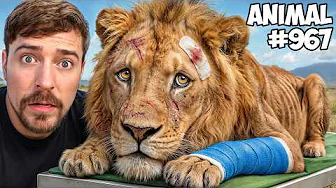
  • MrBeast reported saving 1,000 animals through a combination of rescues, medical treatment, adoption, vaccination, and sanctuary funding. The total included animals already released or rehomed alongside others still receiving treatment, and the video did not provide a complete reconciliation of individual rescues.

  • Three rhinoceroses were relocated because anti-poaching fences had trapped weaker animals in potentially deadly territorial conflicts. The team fitted one rhino with a tracking collar to help detect poaching activity and inserted a microchip into its horn to aid tracing, while a separate operation vaccinated 70 giraffes against dangerous diseases.

“But since the reservation is surrounded by anti-poaching fences, the weaker rhinos have nowhere to go.” — MrBeast

  • Three lions were evacuated from war-damaged zoos in Ukraine and transported more than 7,000 miles to South Africa. Wildlife conservationist Anthony Peniston helped relocate them to his Lion Watch sanctuary, where they were released into an environment offering more than 14 acres of open land.

  • MrBeast arranged adoptions for 100 shelter dogs while covering their adoption fees and medical bills. The project addressed overcrowding and euthanasia risks, including the difficulty older dogs face finding homes; Blue, a 10-year-old dog, was matched with adopters specifically seeking a calmer, older companion.

“All the medical bills are covered and he's free.” — MrBeast

  • MrBeast purchased an entire group of miniature horses reportedly destined for slaughter and arranged homes for them. The horses had been offered at an auction for meat production just two weeks earlier, and the project also rescued four donkeys that were allowed to remain together.

  • Lowe's partnered with MrBeast to build a protected emu enclosure at Maya's Animal Sanctuary, while a separate $50,000 donation was announced for a planned wolf sanctuary. The Texas sanctuary had suffered extensive flood damage, and Lowe's connected its participation to a corporate commitment to deliver 10 million square feet of community impact.

“We wanted to give you a $50,000 donation to help bring it together.” — MrBeast

  • Several animals received specialized medical interventions that would otherwise leave them vulnerable to death or permanent disability. A lion underwent a root canal, a duck named Marjorie received a prosthetic beak, and MrBeast offered to fund treatment for Rocky, a sea lion shot in the head; another sea lion, Gertrude, was released after rehabilitation.

  • The project's largest rescue numbers came through established wildlife organizations rather than individual interventions by MrBeast. Minga Lodge & Sanctuary helped release more than 200 animals into the Amazon, four additional organizations received support for 212 animals, and other rescues included 20 foxes destined for fur production, 70 native birds, and 42 injured or orphaned deer.

Gathered content

I Saved 1,000 Animals From Dying

  • MrBeast set out to save 1,000 animals through medical treatment, relocation, adoption, rehabilitation, and financial support for rescue organizations. The project covered wildlife, domestic animals, and sanctuary residents across several countries, with some animals receiving direct interventions and others benefiting from funded care.

  • A female lion faced a potentially fatal dental infection requiring a root canal. Veterinarian Dr. Alex explained that an untreated infection could spread to the lion's heart valves, creating a life-threatening condition.

  • Dr. Alex successfully completed the lion's dental procedure. The team removed infected material from her teeth while she was sedated and reported that she was healthy following treatment. This was the project's first animal saved.

  • Three rhinoceroses needed relocation because territorial competition had become dangerous inside a fenced reserve. Stronger rhinos were driving weaker animals away from food and water, but anti-poaching fences prevented the weaker animals from escaping. The team said the resulting confrontations could become fatal.

  • The rhino rescue aimed to give smaller animals separate territory where they could survive without being dominated. The plan involved tranquilizing them, transporting them to safer land, and allowing them to establish themselves without competing against larger rhinos.

  • Chandler searched for the rhinoceroses from a helicopter while MrBeast's team searched on the ground. After locating the animals, Chandler used a tranquilizer gun to sedate one for transportation.

  • The first rescued rhino received an anti-poaching tracking collar. The collar monitored the animal's speed and proximity to other wildlife. Sudden running in an open area without nearby animals could indicate that poachers were pursuing it.

  • The team inserted a microchip into the rhino's horn to improve traceability if it was poached. The chip was placed inside a small hole and sealed with glue. Conservation workers explained that this could help investigators connect illegally traded horns to the animal and potentially identify poachers.

  • The first rhino was transported to a protected area away from stronger competitors. The team named him Hippo and presented the relocation as an intervention that could add years to his life.

  • Two additional smaller rhinoceroses were relocated by MrBeast's friends. Together with Hippo, this brought the rhino rescue total to three animals.

  • The next operation involved vaccinating giraffes against potentially fatal diseases. The team used high-powered air rifles to deliver medication through large darts rather than tranquilizing the animals as they had done with the rhinos.

  • A conservation worker claimed that the diseases being prevented could have a 100% mortality rate in infected giraffes. The transcript did not identify the diseases or provide supporting medical data, but this risk was the stated justification for the vaccination effort.

  • The giraffe vaccination operation required aerial assistance because the animals occupied an extensive territory. The giraffes repeatedly moved away from the team, prompting the use of a helicopter and additional helpers to locate and vaccinate them.

  • The team reported successfully vaccinating 70 giraffes. Combined with the first lion and three rhinoceroses, this brought the running total to 74 animals saved.

  • The group later observed one of the relocated rhinoceroses while conducting the giraffe operation. They identified the animal as one they had previously transported and described it as appearing healthy and comfortable in its new environment.

  • MrBeast's next operation involved evacuating three lions from Ukraine because of the continuing war. The video explained that years of fighting had damaged zoos and left rescued lions living in temporary shelters, where they remained exposed to danger.

  • A cargo aircraft was used to transport the three lions from Ukraine to South Africa. The plane had been stripped of passenger seats to accommodate the animals, and the journey was described as exceeding 7,000 miles.

  • Wildlife conservationist Anthony Peniston helped arrange the lions' relocation to Lion Watch, his animal sanctuary in South Africa. The destination offered more than 14 acres of open land, giving the lions substantially more space and removing them from the dangers of the war.

  • Anthony released the first lion at Lion Watch, while team member Majd helped release the remaining two. The operation concluded with all three lions outside their transport enclosures and free to roam the sanctuary.

  • MrBeast organized an adoption effort for 100 shelter dogs facing overcrowding and potential euthanasia. He explained that shelters sometimes euthanize animals when capacity becomes insufficient and claimed that one shelter dog is killed every five minutes.

  • The project covered adoption fees and medical bills for all 100 dogs. Families were told they could take their selected animals home without paying adoption fees, removing an immediate financial barrier to adoption.

  • The adoption process involved matching dogs with families according to their preferences and circumstances. One family sought a small dog, while another prospective adopter reported searching for a suitable dog for two to three months before finding a match.

  • The team highlighted the lower adoption prospects of older shelter dogs. Puppies were described as more likely to find homes, leaving senior animals at greater risk of remaining in shelters.

  • Blue, a 10-year-old dog, was matched with adopters specifically seeking an older, calmer companion. The prospective owners explained that they preferred a low-energy animal, making Blue a suitable choice.

  • A shelter dog named Brianna was also successfully adopted. Her adoption formed part of the larger effort to place animals with families rather than leave them in overcrowded facilities.

  • The dog adoption event concluded with 100 dogs placed in homes. MrBeast reported that all 100 had been adopted by families committed to caring for them.

  • MrBeast purchased an entire group of miniature horses that were reportedly being sold at an auction for slaughter. The horses had faced the prospect of being killed for food, and he bought them to arrange new homes.

  • The miniature horses were subsequently offered to prospective adopters. One family already owned a full-sized horse and wanted a miniature horse for their daughter, while another adoption interaction resulted in a family preparing to take two horses instead of the one originally planned.

  • All the miniature horses were eventually placed in homes, including the final three shown in the video. MrBeast contrasted their new circumstances with their reported situation two weeks earlier, when they had been destined for slaughter. The transcript did not specify the total number of miniature horses purchased or their acquisition cost.

  • Four donkeys were also rescued and placed together. Keeping the animals as a group was an explicit part of the outcome.

  • The project visited Maya's Animal Sanctuary, where Maya rehabilitates exotic animals. The sanctuary was described as nonprofit-owned, and Maya was presented as having devoted much of her life to caring for and rehabilitating animals.

  • Maya helps finance the sanctuary through a continuous Twitch livestream. Viewers can donate money to activate feeders and provide treats to animals, creating a direct connection between online donations and animal care.

  • A sanctuary animal named Winnie-the-Moo demonstrated the donation-funded feeding system. MrBeast made a donation, which activated an automated feeder that dispensed treats. The video presented this arrangement as a source of revenue supporting the sanctuary's operations and expansion.

  • The sanctuary also housed a marmoset named Momo, which was described as particularly interested in phone screens. The encounter illustrated the variety of exotic animals cared for at Maya's facility.

  • An emu named Stompy was living alongside horses, a cow, and a donkey, creating a risk of accidental injury. Maya explained that Stompy behaved as though he were a horse, but the much larger animals could potentially trample him.

  • MrBeast partnered with Maya and Lowe's to construct a separate enclosure for Stompy. The project involved installing fencing and planting vegetation, including trees, to create a safer environment suited to the emu.

  • The new emu enclosure was designed to accommodate two birds rather than one. After Stompy entered his new home, the team introduced a second emu as a companion.

  • The second emu was named Nolan's Mom by MrBeast. Both emus were released into the completed enclosure, which was intended to protect Stompy from accidents involving the larger animals.

  • Lowe's was the named commercial partner supporting the sanctuary construction project. The company was credited with providing practical assistance, including work connected to fencing and restoration.

  • Lowe's connected its participation to a wider corporate commitment to deliver 10 million square feet of community impact that year. The emu sanctuary was presented as one project contributing to that initiative, although the video did not specify the enclosure's area or the financial value of Lowe's contribution.

  • Maya's sanctuary had suffered extensive damage during floods in Texas earlier that year. The damage had disrupted operations and delayed the sanctuary's development, creating an additional need for reconstruction and financial assistance.

  • MrBeast's team presented Maya with a $50,000 donation to help build a wolf sanctuary. The announcement took place at the proposed sanctuary site, where Maya was surprised with the contribution.

  • Lowe's was credited with helping make the planned wolf sanctuary possible. The project was presented as support for future construction rather than a completed facility. The transcript records the $50,000 donation announcement and Maya's acceptance but does not document the subsequent transfer or expenditure of the funds.

  • The next operation involved two sea lions requiring different forms of assistance. One needed medical treatment following a gunshot injury, while the other had recovered sufficiently from a serious entanglement injury to return to the ocean.

  • Rocky, a sea lion with a bullet lodged in his head, required surgery and recovery time. MrBeast offered to cover the expenses associated with Rocky's care, and the offer was gratefully received by the people treating him.

  • Rocky's recovery remained ongoing when the video covered his case. The team explained that recovery from surgery would take time, so the animal was not presented as ready for release.

  • Gertrude, the second sea lion, had nearly died after becoming severely entangled in a net. Following rehabilitation, she was considered healthy enough to return to the wild.

  • Gertrude was successfully released into the ocean. The team watched her move from the release area into the water, marking a completed return to her natural environment.

  • With more than 800 animals still remaining toward the target, the project shifted to larger groups of rescues. The remaining operations concentrated on sanctuaries and rehabilitation organizations capable of helping many animals through established programs.

  • More than 200 animals were released into the Amazon rainforest through a collaboration with Minga Lodge & Sanctuary. The organization rehabilitated animals before returning them to their natural environments.

  • A silky anteater was among the animals released in the Amazon. A sanctuary representative described it as one of the rarest animal species found in the area.

  • A tortoise was also returned to its natural habitat during the Amazon operation. The video emphasized that sanctuaries such as Minga provide rehabilitation that can prevent vulnerable animals from dying before they can safely return to the wild.

  • Wildlife Critters Circle of Life received funding to care for 47 injured or abandoned animals. The group included animals requiring specialized medical treatment and extended rehabilitation rather than immediate release.

  • Draco, a black wolf treated at Wildlife Critters Circle of Life, had been shot in Louisiana. When he first arrived, his injuries prevented him from standing, but the video later showed him moving around independently.

  • Twenty foxes destined to be slaughtered for fur were rescued. Instead of being killed and turned into fur coats, the animals were placed in conditions where they could move around and receive food, toys, and other care.

  • A large bird sanctuary received support for 70 native birds. The animals included birds injured in accidents and requiring medical intervention before they could potentially return to the wild.

  • One of the rescued birds was a screech owl injured after being struck by a car. The owl suffered eye damage, and its caregivers were uncertain whether full vision would return in one eye.

  • The owl's rehabilitation prospects remained positive despite the possible permanent eye injury. A caregiver explained that an owl can survive in the wild with only one functioning eye, meaning incomplete visual recovery would not necessarily prevent its release.

  • The team supported treatment for 42 injured or orphaned white-tailed deer. One recovered deer was shown healthy enough to walk and graze freely again.

  • A rescue organization in Georgia received help for 85 animals. Among them was a Mississippi kite, a bird of prey that had recovered sufficiently to fly again.

  • A turtle rescue organization in New York received assistance for 48 turtles. One rehabilitated turtle was described as healthy enough to return to its habitat, demonstrating the intended outcome of the rescue work.

  • Wildlife Critters Circle of Life also cared for an orphaned kangaroo named Bodie. Because Bodie had lost his mother, caregivers used specialized feeding equipment and physical comforts to compensate for the absence of maternal care.

  • Bodie's caregivers used artificial nipples designed to resemble those of a mother kangaroo. They also provided specially designed pouches intended to offer security and recreate some of the movement a young kangaroo would experience while being carried by its mother.

  • A duck named Marjorie required a prosthetic beak after losing her original beak to a snapping turtle. Without a functioning beak, Marjorie could not eat properly, making the injury a serious threat to her survival.

  • Veterinarian Dr. Chester fitted Marjorie with a prosthetic beak. The intervention was intended to restore her ability to feed herself and improve her prospects for survival.

  • Marjorie was treated through the animal rescue organization Waddle On Inn. In addition to helping her, MrBeast's project paid for the care of 46 other birds receiving assistance at the facility.

  • Four additional animal welfare organizations received financial assistance for another 212 animals. The funds were intended to cover costly medical treatment and rehabilitation. The organizations were not identified individually, and the transcript did not provide a breakdown of their expenses.

  • The project used several different definitions of an animal being saved. Some animals received direct lifesaving treatment, others were vaccinated against future disease, moved out of dangerous environments, adopted into homes, released after rehabilitation, or supported financially while their treatment continued.

  • Not every animal counted as saved had fully recovered or returned to the wild by the end of the video. Rocky still needed recovery time, the rescued screech owl faced uncertain vision recovery, and several organizations were receiving financial support for animals undergoing treatment.

  • The video distinguished between completed rescue outcomes and commitments supporting future work. Completed outcomes included the 70 giraffe vaccinations, 100 dog adoptions, three lion relocations, and more than 200 Amazon wildlife releases. Other interventions involved promised medical funding, ongoing rehabilitation, or construction projects that had not yet been completed.

  • The project's principal disclosed cash contribution was the $50,000 donation presented to Maya for the wolf sanctuary. Other significant expenses included the chartered animal transport, animal purchases, vaccinations, veterinary procedures, adoption costs, rehabilitation support, and sanctuary construction, but their individual prices were not disclosed.

  • The reported rescue total reached 1,000 animals. MrBeast concluded by declaring that the team had saved 1,000 animals, although the video did not provide a fully reconciled animal-by-animal accounting of the total.

  • MrBeast credited his audience with making the rescue project possible. He connected the channel's reach and viewer support to its ability to fund and organize conservation, medical, and adoption initiatives.

  • The video ended with an appeal to help another 1,000 animals. MrBeast directed viewers to a website where they could support continued rescue efforts, presenting the completed project as the beginning of a broader effort rather than the end of the work.

Read Facts →
...

August 1, 2025

2,000,000 People Get Clean Water For The First Time!

Facts

2,000,000 People Get Clean Water For The First Time!

- Team Water aims to raise $40 million to provide clean water to more than 2 million people for decades. The campaign brings together over 3,000 creators with a combined audience exceeding 3 billion followers, and the projects shown are only a sample of the intended global effort.

- In Malawi, a newly installed pump replaces a village’s dependence on dirty puddle water. Residents previously carried water by hand every day, and the pump is expected to serve more than 1,000 people, with Team Water committing to maintain the infrastructure.

“This entire community used to survive on water collected from puddles like this.” — MrBeast

- In Colombia, Team Water adds a three-stage filtration system to a contaminated well serving over 1,000 people. Christo, who built the original pump from recycled bicycle parts without formal training, receives a system that removes dirt, bacteria and saline, powered by a newly installed solar farm.

“You built this with recycled bicycle parts.” — MrBeast

- In Zambia, three 10,000-liter tanks are intended to provide clean water to 9,000 people and replace unsafe shallow wells. The existing uncovered wells become contaminated when rainfall causes flooding, so the new water stations allow residents to abandon those unreliable sources.

“they can finally fill those old, unsafe wells.” — MrBeast

- In Ecuador, reverse-osmosis filtration targets a contaminated river linked to serious health problems among young children. The video reports that 34% of children under five in the nearby village experience malnutrition and stomach issues, while Team Water installs filtration for three storage tanks and distributes portable filtration bags.

“34% of kids under 5, they got malnutrition and stomach issues.” — MrBeast

- In Nepal, three water tanks are planned to supply 71 households, approximately 300 people, with clean drinking water. One tank will hold 15,000 liters and is expected to last 15–20 years, while WaterAid works with local governments to support repairs and long-term maintenance.

- In Mississippi, an atmospheric water generator provides an alternative supply after flooding crippled Jackson’s water system in 2022. Mark Rober explains how the machine extracts moisture from cooled air and purifies it, supplying an assisted-living facility and potentially other people in the surrounding community.

“This machine generates enough water for the entire assisted living facility” — MrBeast

- Shopify contributed $500,000, and YouTube pledged to match the next $2 million donated to Team Water. During the matching period, MrBeast says each dollar donated would effectively provide two years of clean water for one person on average, although the video does not establish how much of the matching commitment was ultimately used.

“you'll actually be giving them 2.” — MrBeast

Gathered content

2,000,000 People Get Clean Water For The First Time!

- Team Water’s central goal is to raise $40 million to provide clean water to more than 2 million people. MrBeast presents the campaign as a global creator collaboration intended to deliver clean drinking water that can last for decades, with the projects shown in the video described as only a sample of the wider initiative.

- Team Water brings together more than 3,000 creators with a combined audience exceeding 3 billion followers. MrBeast describes it as the largest creator collaboration in history and says the initiative will expand through additional projects around the world.

- The campaign begins in Malawi, where a newly installed water pump gives a village access to clean water. The village previously depended on dirty water collected from puddles, with residents carrying every container by hand each day. The first cup from the new pump goes to the village chief.

- The new Malawi pump is expected to benefit more than 1,000 people. MrBeast says the project was developed with local leaders and that clean water should no longer be a daily concern for the community.

- The longevity of the Malawi water project depends on maintenance. When asked whether the well would last forever, MrBeast says it could practically do so as long as it is properly maintained, committing Team Water to that responsibility.

- Creators Orkun and Ben participate in the Malawi project. Together, they are described as having 55 million subscribers, illustrating the scale of the audience participating in Team Water.

- In Colombia, a locally constructed well serves more than 1,000 people but supplies contaminated water. A man named Christo built the pump using recycled bicycle parts despite having no formal training. The water contains dirt and bacteria and is described as repeatedly making community members sick.

- Team Water installs a three-stage filtration system beside Christo’s well. The first stage removes dirt, sand and larger particles; the second removes bacteria and smaller particles; and the third removes saline from the water to produce fresh drinking water.

- Christo receives the first glass of water from the new filtration system. He drinks it and approves of the result. Creator Yolo, who is described as having more than 33 million subscribers, also tastes the water and says it is better than the water at his home.

- The Colombian filtration project receives solar power and substantial water-storage capacity. Team Water installs a solar farm to power the system and builds a storage container capable of holding the equivalent of 20,000 water bottles. Reusable bottles are also distributed so residents can collect and carry clean water.

- The Colombian community receives a new playground alongside its water infrastructure. MrBeast presents the playground as an additional benefit for local children, who respond enthusiastically to the new facility.

- An existing clean-water project in Colombia still leaves a problem of distance. More than 100 children attend a school partly to obtain clean water, while residents from more than four communities must walk long distances to reach a central water source.

- Team Water adds three nearby water tanks to reduce the distance residents must travel. MrBeast demonstrates the physical difficulty of moving heavy water containers, using the demonstration to show why bringing water closer to households matters even when a central source already exists.

- The Nepal project is designed to provide clean drinking water to 71 households, or approximately 300 people. Local residents currently hike along a winding trail to reach a water tap and rely on a piece of cloth to filter their water.

- Nepal’s three planned water tanks include a 15,000-liter tank equipped with water-cleaning and disinfection mechanisms. The system is intended to make the stored water safe to drink, with the featured tank expected to serve the community for at least 15–20 years.

- Completing the Nepal tank requires more than 2,700 kilograms of concrete. During construction, a speaker says they have worked for approximately 18 hours that day and would work 24 hours if doing so meant residents received clean water even one day earlier.

- WaterAid is Team Water’s lead global partner and supports long-term maintenance. The partnership includes helping local governments manage repairs and keep water systems operational. Team Water presents maintenance as part of its commitment to providing clean water for decades, rather than merely financing construction.

- Team Water’s work also addresses water insecurity in the United States. MrBeast and science creator Mark Rober point to the 2022 flooding that caused Jackson, Mississippi’s water system to fail, leaving an assisted-living facility struggling with basic needs such as brushing teeth, preparing meals and bathing.

- An atmospheric water generator is used to produce water from the air for the Mississippi facility. Mark Rober explains that the machine cools air so its moisture condenses, collects the resulting water and purifies it. MrBeast says the machine can supply enough water for the entire assisted-living facility, with additional water intended for other people in the community who also struggle to obtain clean water.

- The video explains the atmospheric water generator as an alternative source when conventional water infrastructure fails. Rather than depending entirely on a functioning municipal supply, the machine extracts moisture from the atmosphere. Mark Rober describes the resulting water as extremely pure, comparing its quality to water suitable for use in an operating room.

- Team Water partners with Dig Deep to improve the water system in Rhodell, West Virginia. The community has experienced problems caused by deteriorating infrastructure, and the planned upgrade is presented as a way to address those longstanding difficulties. The video does not specify the project's final cost or completion date.

- In Ecuador, a contaminated river is the only water source for a nearby village and its children. Creator Ricky Limon and four friends, collectively described as having more than 120 million subscribers, participate in efforts to make the water safer. The river is identified as containing E. coli and Giardia.

- The Ecuador project links unsafe water to serious health problems among young children. The video states that 34% of children under five in the affected community experience malnutrition and stomach issues, presenting water contamination as a significant local health concern.

- Team Water is building filtration systems for three water-storage tanks in Ecuador using reverse osmosis. The systems are intended to remove contamination and make the water safe to drink. The video shows water emerging clear after filtration, although it does not provide independent water-quality test results.

- Ecuadorian residents also receive portable water-filtration bags. The bags are distributed throughout the community so residents can filter water and carry access to cleaner drinking water wherever they go, supplementing the fixed filtration systems.

- The Amazon Rainforest Investor Coalition is acknowledged as a supporter of the Ecuador work featured in the video. Its support is explicitly credited, although the video does not disclose the amount of its contribution or the precise terms of its involvement.

- Zambia is presented as the largest community featured in the video, with 9,000 people lacking access to clean water. Residents have been relying on shallow, uncovered wells that can become contaminated when rainfall causes flooding.

- Team Water installs three 10,000-liter water tanks in Zambia. These tanks supply new water stations distributed around the community, with the stated objective of giving all 9,000 residents access to clean water and allowing the old, unsafe wells to be filled in.

- The Zambia project addresses contamination at its source rather than simply distributing water temporarily. By establishing alternative water stations, the project is intended to reduce dependence on exposed shallow wells that repeatedly become polluted during rainfall.

- Team Water follows two earlier large-scale environmental fundraising campaigns. MrBeast says Team Trees raised $20 million to plant 20 million trees five years earlier, while Team Seas raised $30 million three years earlier to remove 30 million pounds of trash from the ocean. Team Water raises the fundraising ambition to $40 million, with the goal of providing clean water to more than 2 million people for decades.

- MrBeast says nearly one in ten people worldwide lack access to clean water. This statistic is used to explain why the campaign seeks support from a global audience rather than treating the featured communities as isolated cases.

- The campaign presents each donated dollar as funding one person's access to clean water for one year, on average. This is the fundraising equivalence given in the video, not a claim that every individual donation can be traced to a particular person or household.

- Shopify contributes $500,000 to Team Water. Shopify is identified as the company powering the Team Water merchandise store, and MrBeast explains that its donation is why the campaign's initial fundraising counter starts at $500,000 rather than zero.

- YouTube announces a matching commitment for the next $2 million donated to Team Water. MrBeast says that, during the matching period, each dollar donated would effectively provide two years of clean water for one person on average, because YouTube would match eligible donations. The video announces the match but does not establish how much of it is ultimately claimed.

- Team Water relies on coordinated promotion across social platforms as well as direct donations. MrBeast and Mark Rober say they cannot raise $40 million alone and expect thousands of creators to publish videos, TikToks, YouTube Shorts, Instagram Reels and photos supporting the campaign.

- Viewers are asked to amplify the campaign's reach, not just contribute money. MrBeast encourages people to engage with creators' Team Water content, share it, spread awareness and urge their favorite creators to participate.

- The campaign directs donors to TeamWater.org and the donation button beneath the video. The website is described as allowing visitors to view individual donations, leave messages when contributing and see the leading donors, making fundraising activity publicly visible.

- Team Water is presented as a long-term international program rather than a one-video charitable effort. The campaign's stated ambition is to deliver clean water to more than 2 million people worldwide, while the featured examples range from wells and filtration systems to storage tanks, infrastructure upgrades and atmospheric water generation.

Read Facts →
...

June 21, 2025

Lose 100 LBs, Win $250,000!

Facts

Lose 100 LBs, Win $250,000!

- Jimmy offered Majd $250,000 to lose 100 pounds within a year, supplying a dedicated home, gym and unlimited healthy food. If Majd crossed the red line before hitting the target, the challenge ended and he received nothing.

“If you step on this red line before you lose 100 pounds, the challenge ends, and you get nothing.” — Jimmy

- Majd linked his weight regain to his father’s death. He had previously reached nearly 270 pounds before returning to 324 within months, and framed the new attempt around living longer for his family, especially his niece and nephew, and making his father proud.

“Went from almost 270 back to 324 in a matter of months.” — Majd

- Coach Wall became Majd’s trainer, mentor and close friend before dying during the challenge. Jimmy offered to stop filming, but Majd chose to continue without another trainer, dedicating his progress to Coach.

“I'm doing this for myself, and now it’s for Coach, too.” — Majd

- Majd’s early plan paired up to 18,000 daily steps and weights five days a week with about 2,500 calories, rest days and weekly doctor checkups. Later he reported eating 1,800 calories, a 700-calorie reduction, although the closing narration describes the reduction as 600.

- By day 130, Majd had lost 71 pounds, falling from 324 to about 253 pounds, and dropped from 3XL to XL. He cut his mile time from 17:01 to 8:04, beating the 8:30 cutoff for $25,000, and said he was showing up for Coach Wall.

“Thanks Jimmy! You show up for me, I show up for you!” — Majd

- The announced prize pool grew from $250,000 to $417,000, although the transcript never confirms the total payout. The video added $31,000 for 31 push-ups, $40,000 after a cash-carrying lap without dropping anything, and $71,000 for a 61-second dead hang plus a pull-up.

“I wanted to do a pull-up my whole entire life.” — Majd

- At day 161, Majd weighed 234 pounds, down 90 pounds from his starting weight and just 10 pounds short of the target. Fitness expert Jeff Nippard helped him improve his dead hang from six to 45 seconds in three days, after which Majd trained alone for the remaining 27 days.

- Near the final weigh-in, Majd was reported half a pound short of 224 pounds, but the transcript skips the exact scale reading before revealing his transformation after 178 days. The video reports fat mass down over 50%, 3,950 push-ups and 17,600 basketball shots; his doctor estimated that maintaining the changes could add about five years to his life.

“The real journey starts on the outside.” — Narration

Gathered content

Lose 100 LBs, Win $250,000!

- Jimmy offered Majd $250,000 to lose 100 pounds within one year. Majd would live in a dedicated home with a personal gym, unlimited healthy food and the resources needed to complete the transformation. The strict condition was that stepping on the red line before losing 100 pounds would end the challenge, leaving him with nothing.

Pasted text.txt

- The challenge was designed to remove the practical obstacles to weight loss. Majd had his own gym and a controlled living environment, while Jimmy described the project as the longest challenge the channel had attempted. Majd initially expected to remain there for a full year, with 364 days still remaining after the opening day.

Pasted text.txt

- Majd began at 324 pounds and wanted to improve his health, happiness and longevity. He specifically wanted to live longer and remain present for his family, particularly his niece and nephew. At the outset, he lacked basic exercise experience and did not know how to perform a squat correctly.

Pasted text.txt

- Coach Wall became Majd's personal trainer and taught him fitness and nutrition from the beginning. Early meals replaced his previous habits of eating peanut-butter-and-jelly sandwiches and drinking energy drinks. Coach taught him to prepare healthy food, including grilled meals, while Majd experimented with making his first smoothie and decided he preferred fruit bowls.

Pasted text.txt

Pasted text.txt

Pasted text.txt

- The initial training plan combined substantial daily activity with a controlled diet. Majd reached as many as 18,000 steps a day, lifted weights five days a week and ate approximately 2,500 calories daily. His routine included walking, basketball, strength training and other exercises prescribed by Coach.

Pasted text.txt

- The production incorporated medical supervision and rest days. Rather than pushing Majd at maximum intensity every day, the team arranged weekly doctor checkups and made sure he rested. His doctor reported that he was healthy, his stamina had improved and he could continue his weight-loss program.

Pasted text.txt

- Majd made a strong start during his first month. He followed Coach's meal plan and completed the prescribed workouts consistently. At the first monthly weigh-in, Jimmy announced that Majd had lost 20 pounds, although a later recap listed his day-30 weight as 303 pounds, compared with his starting weight of 324—a difference of 21 pounds.

Pasted text.txt

Pasted text.txt

- Jimmy introduced additional cash challenges to reward measurable improvements. The plan was to introduce new challenges approximately every 30 days, with successful performances adding money to Majd's prize pool. The first major test was scheduled for day 60: Jimmy would add $1,000 for every push-up Majd could complete, meaning 100 push-ups would generate another $100,000.

Pasted text.txt

- Majd's best friend Chandler helped him train and stay motivated. Chandler worked out alongside him, and the two encouraged each other to improve their push-ups. Majd also developed a consistent daily routine involving breakfast, walking and basketball; by around day 50, he was walking more than five miles a day and had recorded a 15,000-step day.

Pasted text.txt

Pasted text.txt

Pasted text.txt

- Smaller clothes provided an early, visible measure of Majd's progress. Around day 50, Jimmy gave him clothes one size smaller than his previous size. Majd was excited that the new clothes fit, and the milestone boosted his confidence, although his motivation appeared to dip during the following days.

Pasted text.txt

- Majd revealed that his father's death had contributed to a major weight regain. About a year earlier, he had been close to 270 pounds, and his father had congratulated him on his progress during a FaceTime call. After his father died, Majd returned to 324 pounds within a matter of months. He explained that losing a parent had taken a heavy emotional toll and said he wanted to make his father proud.

Pasted text.txt

- The day-60 weigh-in showed Majd at 286 pounds. He had lost 38 pounds from his starting weight, completing 38% of his 100-pound goal. He then performed 31 push-ups, prompting Jimmy to announce an additional $31,000 for the prize pool; his push-up ability had more than doubled since the beginning of the challenge.

Pasted text.txt

- The next major challenge rewarded Majd for carrying cash around the building. Jimmy made up to $100,000 available, allowing Majd to choose how much money to carry for a complete lap. If even one bag or dollar touched the pavement, he would lose the entire amount he had chosen to carry.

Pasted text.txt

Pasted text.txt

- Majd's family came to stay with him and help prepare for the money-carrying challenge. His mother, sister and brother-in-law Dani were allowed to remain as long as they wanted. They cleaned the gym, prepared meals and supported his training, which focused on grip strength, endurance, shoulders and upper-back strength for carrying heavy duffel bags.

Pasted text.txt

- Coach Wall developed a close personal bond with Majd. While Jimmy was abroad filming another video, Coach and Majd's relationship grew stronger. Coach sent Majd a message describing him as kind, caring and compassionate and predicting that he could positively influence millions of people. Coach also became close to Majd's family and participated in a birthday celebration where people sang in Arabic.

Pasted text.txt

- Coach Wall's sudden death nearly brought the entire project to an end. A producer informed Majd that Coach had been found dead in his apartment the previous day; the transcript gives no cause of death. Majd was devastated, and visitors came to support him while he considered whether he could continue the challenge without his trainer and friend.

Pasted text.txt

- Jimmy gave Majd permission to stop after Coach's death, but Majd chose to continue. When Jimmy returned to the United States, he explained that Majd's grief was real and that the video could end immediately if he wished. Majd refused to abandon the challenge, saying he was doing it for himself and now for Coach as well. He also declined to take on another trainer.

Pasted text.txt

- Jimmy gave Majd a plaque honoring Coach Wall. Majd chose to place it beside the door so that he could see it regularly and use it as motivation. The gesture connected his continued training with his desire to honor the person who had guided his transformation.

Pasted text.txt

- At day 100, Majd weighed 271 pounds, having lost 53 pounds. He was more than halfway toward the 100-pound target. He then completed the money-carrying challenge with $40,000 in bags, crossed the finish line without dropping the money and added $40,000 to his prize pool, bringing it to $321,000.

Pasted text.txt

- Jimmy set a new $25,000 challenge: run one mile in under eight minutes and 30 seconds. Majd's original mile time had been 17 minutes and one second. His first training attempt produced a time of 12 minutes and 50 seconds, leaving him with roughly five minutes to shave off his initial performance; he explained that he normally did cardio only twice a week.

Pasted text.txt

- Shopify supplied equipment to support Majd's running training. Jimmy said Shopify had sent running shoes, supplements, a tracksuit, clothes and other equipment from businesses built on its platform. The video incorporated a Shopify promotion, including Shopify.com/MrBeast, and Jimmy said Shopify had helped him launch Feastables online and that the business had sold millions of bars. The transcript does not specify any sponsorship payment or other financial terms.

Pasted text.txt

- Majd beat the mile challenge on day 130. He completed the mile in eight minutes and four seconds, beating the eight-minute-30-second cutoff by 26 seconds and qualifying for the $25,000 prize-pool addition. He credited Jimmy's support and said he was showing up for Coach Wall, who had supported him every day.

Pasted text.txt

- By day 130, Majd had lost 71 pounds and was down to approximately 253 pounds. The recap listed his earlier weights as 324 pounds on day one, 303 on day 30, 286 on day 60 and 271 on day 100. His clothing had progressed from 3XL to XL, reflecting the physical changes, and he was following his diet and workouts consistently.

Pasted text.txt

Pasted text.txt

- The next challenge offered $1,000 for every second Majd could hold a dead hang, plus $10,000 for completing a pull-up. His original dead-hang time was only six seconds. Jimmy brought in fitness influencer Jeff Nippard, who was described as having a biochemistry degree and experience training bodybuilders, to help Majd develop upper-body strength.

Pasted text.txt

- Jeff Nippard helped Majd improve his dead-hang performance rapidly. Within three days, Majd reached 45 seconds. Jeff then left him to prepare independently for the remaining 27 days, and Majd focused on upper-body training, three daily sets of dead hangs lasting 10–20 seconds, 10,000 steps a day and a stricter routine.

Pasted text.txt

Pasted text.txt

- Majd's training diet was later reduced to 1,800 calories a day. He set a 10 p.m. food cutoff and aimed to sleep by midnight. The training was increasingly focused on building the grip strength and upper-body endurance needed for the dead-hang challenge and a possible pull-up.

Pasted text.txt

- On day 161, Majd weighed 234 pounds and had only 10 pounds left to lose. He was 90 pounds below his starting weight of 324 pounds and 10 pounds above the target of 224. Jimmy told him that reaching the target would end the video and suggested he could finish within the next 30 days.

Pasted text.txt

- Majd completed the dead-hang challenge 100 feet in the air. Suspended from a crane, he held on for one minute and one second, earning $61,000 for the prize pool. This was ten times his original six-second performance; his hands and arms were visibly struggling by the end.

Pasted text.txt

- Majd also completed the pull-up challenge, qualifying for another $10,000. The dialogue indicates that he managed the movement without assistance and appears to count up to three repetitions, although the exact count is not clearly explained. The dead-hang and pull-up additions totalled $71,000, and the video subsequently stated that the overall prize pool had grown from $250,000 to $417,000. These were announced prize-pool amounts; the transcript does not explicitly confirm that the entire sum was paid out.

Pasted text.txt

- After the final micro-challenge, Jimmy switched to daily weigh-ins. He clarified that losing 100 pounds remained the main challenge and that the video would end when Majd officially lost the final 10 pounds. Majd described the experience as bittersweet, reflecting on how much he had changed in less than six months and how isolated he had been inside the red circle.

Pasted text.txt

- Majd credited Coach Wall with having the greatest impact on his transformation. He said he was grateful for the experience and believed Coach would be proud of him. The video also stressed that, once Majd left the controlled environment, maintaining his progress would depend on applying what he had learned to ordinary life.

Pasted text.txt

- Jimmy used Majd's old clothes and a custom bodysuit to demonstrate the physical change. The clothes Majd had worn on day one had become baggy. The production scanned his starting body and created a one-to-one replica bodysuit weighing exactly 97 pounds; Majd wore it and attempted a lap to experience the burden of his former weight, comparing it with footage of his day-one performance. He preferred his day-175 body.

Pasted text.txt

- By the final phase, Majd was only half a pound away from the 224-pound target. The video reported that he had reduced his daily calorie intake by 600 calories, decreased his fat mass by more than 50%, completed 3,950 push-ups and made 17,600 basketball shots. His doctor estimated that maintaining the changes could add around five years to his lifespan.

Pasted text.txt

- The transcript contains a discrepancy in its calorie figures. It initially described Majd's intake as 2,500 calories a day and later stated that he was eating 1,800, a reduction of 700 calories. The final narration instead reported a reduction of 600 calories without explaining the difference.

Pasted text.txt

Pasted text.txt

Pasted text.txt

- Majd recorded a message to his future self on the first day of the challenge. He reminded himself not to return to how he felt at the beginning and said that the changes needed to become lifelong habits. He promised himself that he would not let his progress disappear.

Pasted text.txt

- The final weigh-in was presented as the culmination of the challenge. Jimmy said he had gathered Majd's best friends, including David Letterman, before the weigh-in and then jumped forward to show the transformation after half a year. The supplied transcript does not state the final scale reading, so it does not independently document the exact finishing weight.

Pasted text.txt

- After 178 days in the circle, Majd was reunited with his family. His mother and family were brought out for the reveal, and Majd expressed his love for his mother. He said he could not have completed the journey without Coach Wall and recalled Coach's wish that they could experience the transformation together.

Pasted text.txt

Read Facts →
...

April 12, 2025

Click This Video To Feed 1 Person

Facts

Click This Video To Feed 1 Person

- The campaign converts audience attention into meal funding at a stated rate of 20 views per meal. MrBeast presented Sharing Excess with a commitment for 600,000 meals and a blank check tied to post-publication views; Tony Robbins separately committed 10 million meals and offered matching funds to others.

“every 20 views equals a meal to someone in need.” — MrBeast

- Sharing Excess’s main constraint was transport, not a shortage of potential donations. Philadelphia’s market has up to 10 million pounds of food at risk annually; the new truck could rescue up to seven million additional pounds a year, and its first day helped feed 600 people and distribute thousands of pounds of produce.

“with just one more truck, they could rescue up to seven million pounds of additional food, every year.” — MrBeast

- In Ghana, free school meals are helping bring children from cocoa-farming families into education. A school representative confirmed that four in five students had worked on cocoa farms before enrolling; MrBeast cited illegal child labor affecting 45% of children in cocoa-farming households, and Feastables is working on monitoring and remediation systems with farmers.

“Four out of five of your students, before they enrolled to this school, worked on a cacao farm.” — MrBeast

- Livestock gifts were designed to give Ghanaian families income so children would not need to work on farms. The team bought dozens of pairs of animals for families, expecting the additional income to help parents send children to school; the transcript describes this as the intended benefit, not a measured long-term outcome.

“with that extra income, they'll be able to send their kids to school” — MrBeast

- The Ghanaian school also received infrastructure intended to make feeding students more self-sufficient. MrBeast’s team funded a kitchen, water tank and school farm, where cabbage was expected to mature in about two and a half months and help feed the students.

“We can feed the students just from this small cabbage farm.”

- In Kenya, rising attendance after school meals exposed wider shortages in school infrastructure. The team supplied desks, a kitchen, a well and water storage, a greenhouse and a farm, plus a tractor said to cut a task from 45 minutes to 45 seconds and a community truck carrying food for over 100,000 meals.

“What previously took 45 minutes will now just take 45 seconds.” — MrBeast

- Oleleshiva farm combines direct school supply with sales that help sustain the nonprofit. Manager Justice says one part of production goes to schools while another is grown for nearby communities to buy, creating an income stream alongside direct food provision.

“which helps to keep the nonprofit going.” — Justice

- DoorDash’s role combined a retail promotion with a branded meal-donation campaign. The video advertised 100 meals per limited-time hoodie purchase and credited Project DASH with over 100 million meals delivered; MrBeast also paused a food drive after noticing Evan placing Sharing Excess branding over the DoorDash hoodies.

“I'm noticing Evan's putting his Sharing Excess branding over the... DoorDash hoodies.” — MrBeast

Gathered content

Click This Video To Feed 1 Person

- The video turns audience views into funding for hunger relief. MrBeast explains that watching the entire video generates money for meal programs, including for viewers watching at that moment. He says the funding grows as the video accumulates views, although the initial explanation does not specify a dollar amount per view.

Pasted text.txt

- The meal program reportedly fed 1,500 people and dramatically increased school attendance in Kenya. The increased attendance created a need for better classrooms and equipment, showing how providing food can increase demand for other educational resources.

Pasted text.txt

- A school in Kenya received enough new desks to give every student a seat. Previously, some children had to sit on rocks, while four students squeezed onto desks designed for two. MrBeast arranged new desks for everyone, and the school could accommodate its growing student population with proper seating.

Pasted text.txt

- The Kenyan school received infrastructure intended to support a continuing meal program. MrBeast's team built a new kitchen because the existing facility could not support breakfast and lunch for all students every school day. They also provided a well with water storage, a greenhouse and a farm.

Pasted text.txt

- Oleleshiva farm combines direct food production for schools with commercial sales. Justice, who manages the Kenyan farm, explains that one part of its production goes directly to schools, while another is grown for sale to nearby communities. The commercial portion helps sustain the nonprofit financially, creating a revenue stream alongside donations.

Pasted text.txt

- A new tractor was intended to increase the farm's productivity and food supply. The farm had relied on manual labor that could not produce enough food efficiently for the schools. MrBeast says a task that previously took 45 minutes would take 45 seconds with the tractor, connecting investment in agricultural equipment to the ability to supply more meals.

Pasted text.txt

- A new community truck was supplied with food equivalent to more than 100,000 meals. MrBeast handed over the keys and asked the recipients to use the truck to feed the wider community, allowing surplus meals to reach families beyond the school. The community's food-distribution capacity was therefore intended to extend beyond enrolled students.

Pasted text.txt

- The video initially sets a target of one million meals funded through audience views. During the Kenya segment, MrBeast says the campaign will provide one million meals by the end of the video because of viewers' participation. This is a stated campaign target, distinct from the more specific commitments and additional funding arrangements announced later.

Pasted text.txt

- A school in Ghana received a kitchen, water storage and a new farm. The team planted cabbage that was expected to mature in approximately two and a half months. The farm was presented as a practical way to help feed the school's students through locally produced food.

Pasted text.txt

- Free school meals were presented as a way to reduce children's involvement in cocoa farming. In the Ghanaian farming community, many parents work on cocoa farms, and children had been contributing to their families' income. A school representative says four out of five students had worked on a cocoa farm before enrolling; the meal program was helping bring children into school and keep them there.

Pasted text.txt

- Livestock gifts were intended to help families afford schooling without relying on children's farm labor. The team bought dozens of pairs of animals for families, including cows and goats. The stated rationale was that additional income from the animals would help parents send their children to school instead of having them work on farms. The video describes this as the intended benefit, rather than reporting measured long-term results.

Pasted text.txt

- Feastables is working with farmers on systems to identify and address child labor in Ghana's cocoa supply chain. MrBeast cites a figure of 45% of children living in cocoa-farming households in Ghana being involved in illegal child labor. He says Feastables is working with farmers to establish child-labor monitoring and remediation systems intended to move children out of labor and into school.

Pasted text.txt

- The Ghanaian school community hopes the meal program will continue for years. A representative thanks the team for providing school feeding, describing it as something the community had long hoped to obtain. MrBeast says he hopes it will continue forever, although the transcript does not establish a permanent funding guarantee.

Pasted text.txt

- The video argues that American food waste represents a major opportunity to address hunger. MrBeast states that almost 40% of food produced in the United States is thrown away and suggests that preserving just 10% of it could theoretically end hunger in the country. These figures and the proposed outcome are presented as the video's argument, not independently demonstrated calculations in the transcript.

Pasted text.txt

- The Philadelphia Wholesale Produce Market has up to 10 million pounds of unsold food at risk of going to waste each year. The video introduces Evan and his nonprofit, Sharing Excess, which collects millions of pounds of food that would otherwise be discarded. One example is produce that retailers reject because it is within a month of its expiration date, even when it could still be distributed to people in need.

Pasted text.txt

- Sharing Excess uses a deliberately simple process to recover usable food. Staff sort produce into food that is still good and food that should be discarded. Evan explains that keeping the process straightforward makes participation easier; adding complexity could discourage people from helping. The operation focuses on recovering usable surplus rather than distributing everything indiscriminately.

Pasted text.txt

- Sharing Excess lacks enough transport capacity to recover all the food available to it. The Philadelphia market and similar suppliers have more surplus food than the nonprofit can distribute before it spoils. The video estimates that one additional truck could allow the organization to rescue up to seven million more pounds of food annually.

Pasted text.txt

- MrBeast gave Sharing Excess a new truck to expand its food-rescue operations. Evan was shown the vehicle as a surprise, and MrBeast explains that revenue generated by the video's views will also help provide funding so the organization can continue filling the truck with food in the years ahead. The gift addresses a logistical bottleneck rather than simply supplying another one-time food donation.

Pasted text.txt

- The truck's first-day activities demonstrate several ways recovered food can reach people. Sharing Excess supplied the Double Trellis Food kitchen, which prepares gourmet meals for people in need; the meals prepared during the segment fed 600 people. The truck still carried thousands of pounds of fresh produce for multiple community fridges, direct distribution to people on the streets and a food drive in North Carolina serving hundreds of people who needed nutritious food.

Pasted text.txt

- DoorDash supported the meal initiative through funding and a limited-time merchandise promotion. The video advertises a hoodie available exclusively through DashMarts on DoorDash, with each purchase helping donate 100 meals. It also states that DoorDash's Project DASH had delivered more than 100 million meals over a period of several years.

Pasted text.txt

Pasted text.txt

- The DoorDash merchandise activation included a brief branding dispute. MrBeast notices that Evan is placing Sharing Excess branding over the DoorDash hoodies and pauses the food drive to address the issue. The transcript does not explain how the matter was resolved or identify any formal sponsorship restrictions.

Pasted text.txt

- Sharing Excess received a commitment to fund 600,000 meals toward the original one-million-meal target. MrBeast presents Evan with a check designated for 600,000 meals, explaining that the team had committed to providing one million meals before the video went live. The transcript specifies the number of meals associated with the check, not its dollar value.

Pasted text.txt

- MrBeast also presented a blank check whose eventual value would depend on the video's performance. He says he will fill in the amount after the video is published, based on how many people watch it, so Sharing Excess can continue feeding people in need. Unlike the specified 600,000-meal commitment, this additional contribution has no fixed amount announced in the transcript.

Pasted text.txt

- Tony Robbins announced a commitment of 10 million meals and offered matching funds for others who wanted to participate. Robbins directly addresses viewers, saying that every view will help generate more meals and inviting others to join him through matching funds. The transcript does not specify a dollar amount or provide further terms for the matching arrangement.

Pasted text.txt

- The video gives viewers a specific conversion rate for their participation: 20 views per meal. MrBeast attributes this arrangement to the involvement of Tony Robbins and DoorDash, explaining that every 20 views equates to one meal for someone in need. The campaign encourages viewers to share the video, making distribution and audience growth part of its fundraising strategy.

Pasted text.txt

Read Facts →
...

March 22, 2025

I Survived The 5 Deadliest Places On Earth

Facts

I Survived The 5 Deadliest Places On Earth

- The safari challenge deliberately baits lions toward a cage occupied by the group. Jimmy spreads meat around it, and after dark the participants report lions circling roughly 20 feet away.

“These lions will not stop circling us.” — Jimmy

- Nolan abandons the frozen-waterfall climb, but Jimmy pushes through and reaches the top. As the ascent steepens, Jimmy admits he is fighting the urge to cry, showing how the challenge tests psychological endurance as much as physical ability.

“I'm out. I'm out.” — Nolan

- Jimmy says he secured government permission to reopen Bolivia’s Death Road specifically for filming. He claims the road had caused nearly 300 deaths annually before closure, and the group subsequently drives within an estimated seven inches of a ravine edge.

“This road was causing nearly 300 deaths per year.” — Jimmy\
“But I got the government's permission to reopen it just for us.” — Jimmy

- The bonus shark challenge puts Karl and Nolan into shark-infested water without the cage the team would normally use. The participants encounter large sharks at close range, and Nolan eventually declares that he has had enough.

- A sudden downpour at Gocta Cataracts turns the Amazon excursion into an emergency evacuation. Flash flooding blocks the route, mud pours down a rope line, and the group spends hours escaping over steep, slippery terrain.

“So we're literally getting flooded out of the Amazon right now. We gotta go!” — Jimmy

- The final challenge requires the group to spend the night on Snake Island wearing specialized shin guards against venomous bites. Jimmy admits he does not know whether their tents are snake-proof, and the group leaves the following morning without anyone dying.

“Full disclosure, I have no idea if these tents are snake proof.” — Jimmy

- The Snake Island expedition also helps scientists locate venomous snakes for antivenom research. The video claims the resulting antivenom can treat 90% of snakebites in Brazil and potentially save thousands of lives, giving the dangerous expedition a scientific purpose beyond entertainment.

“can be used to treat 90 percent of all snake bites in Brazil”

- Feastables’ Creamy Peanut Butter Cup doubles as a commercial campaign about chocolate sourcing. Jimmy promotes the product alongside claims about farmer wages, Fair Trade-certified beans and child-labor remediation, then directs viewers to a packaging QR code to learn how to enter for one of 50 contestant spots on Beast Games Season 2.

“at Feastables, we pay all our farmers living wages.” — Jimmy

Gathered content

I Survived The 5 Deadliest Places On Earth

- The video follows a journey through five locations presented as some of the deadliest on Earth. Jimmy and his companions encounter dangerous wildlife, climb a frozen waterfall, drive Bolivia’s Death Road, enter shark-infested waters without a cage, face flash flooding in the Amazon rainforest, and spend a night on Snake Island. The video builds toward the island as the final and most dangerous destination.

- The expedition begins inside a cage in an African safari. The surrounding area contains lions, cheetahs, hippos, and numerous other potentially dangerous species. Jimmy brings meat and spreads it around the cage to attract animals, deliberately increasing the likelihood of close encounters.

- The safari becomes especially dangerous after dark. Jimmy explains that humans lose visibility at night while the animals retain their advantage. The group reports seeing two lions, hearing large animals moving nearby, and being surrounded by lions approximately 20 feet from their cage.

- The first wildlife encounter establishes the video's central risk. The group repeatedly expresses concern that the animals could approach or attack them, while Jimmy acknowledges the possibility that someone could die during filming. The safari serves as the opening demonstration of the escalating danger to come.

- The next challenge is climbing a massive frozen waterfall using specialized equipment. The participants use bladed climbing boots and ice picks to ascend the icy cliff. Jimmy acknowledges uncertainty about whether they can complete the climb, while the others question whether it is possible.

- Nolan abandons the ice-climbing challenge. During the ascent, he announces that he is out and leaves the others to continue. Jimmy reacts with disbelief, but Nolan's decision highlights the psychological difficulty of continuing when the consequences of a mistake could be fatal.

- The remaining climbers face increasingly steep terrain and deteriorating confidence. As they approach halfway, they warn one another not to look down. One participant reports losing his footing and nearly falling, while another describes the climb as the scariest thing he has ever done.

- Jimmy pushes through fear and exhaustion to reach the top of the waterfall. He says he is fighting the urge to cry and feels that he has invested too much effort to quit. Despite questioning whether he should have attempted the climb at all, he ultimately reaches the summit with the others who continued.

- Nolan's decision to quit the climb is treated as a judgment call rather than a permanent withdrawal from the expedition. Jimmy suggests that Nolan may have been right to abandon the waterfall challenge, then introduces the next destination to see whether Nolan can handle it.

- The third major destination is Bolivia's Death Road. Jimmy describes the route as the deadliest road on Earth and points to enormous drops beside narrow stretches of roadway. He claims the road was responsible for nearly 300 deaths annually before it was closed approximately a decade earlier.

- Jimmy says he obtained government permission to reopen Death Road specifically for the group's journey. This turns an ordinarily inaccessible or closed route into a special filming opportunity. The arrangement also means the expedition is deliberately entering a location associated with a substantial history of fatal accidents.

- The road's sheer drops create an immediate driving hazard. The group describes a rock face and ravine with a drop comparable to a skyscraper's height. At one point, a participant estimates that the vehicle is only seven inches from falling over the edge.

- Nolan is asked to guide the driver through the narrowest sections of Death Road. He gets out of the vehicle to help Jimmy judge the distance from the edge. The participants observe that the tires are immediately beside a massive ravine, with steep terrain and a waterfall visible below.

- Nolan struggles to provide useful guidance while standing beside the exposed road. He admits that he feels as though he is running away from the vehicle rather than directing it. Jimmy eventually tells him to get back inside, dismissing his usefulness as a guide.

- The road presents additional hazards beyond its narrow edges. The group encounters slippery sections, uneven terrain, and dense fog that severely reduces visibility. Jimmy explains that Bolivia's extreme elevation changes can cause sudden fog to roll in, making even apparently normal stretches dangerous.

- The participants test a bridge whose reliability they question. Jimmy asks Nolan to check whether it still works, joking that it has been roughly a decade. Nolan crosses it and reports that it is safe, allowing the group to continue.

- The Death Road sequence repeatedly combines genuine danger with humor. The participants exchange anxious comments about the steering wheel jerking, the vehicle approaching the edge, and their lives being in one another's hands. The banter does not change the physical hazards but makes fear and tension central to the scene.

- The Death Road challenge ends with the group surviving the route. Jimmy declares that they have made it through safely. The video then moves from dangerous land travel to a bonus challenge involving sharks.

- Karl and Nolan enter shark-infested water without a protective cage. Jimmy explains that the group would normally use a cage but has chosen not to for this challenge. The video describes the sharks in these waters as notorious for unprovoked attacks and calls the area the most dangerous water in the United States.

- The shark encounter leaves the participants visibly uncomfortable. They react to the size and proximity of the animals, warn one another when sharks approach from behind, and question why they entered the water without a cage. Nolan initially resists getting in and later expresses that he has had enough of the sharks.

- The expedition next enters the Amazon rainforest, where the danger comes from rapidly changing weather. The group visits Gocta Cataracts, a waterfall described as dropping more than 1,000 feet. Jimmy explains that rainfall can trigger flash floods that overwhelm the surrounding terrain with little warning.

- Two experienced participants join the Amazon expedition. Hase previously spent 70 days in the wilderness, while Bailey spent 100 days trapped with another participant in a cube. Jimmy presents their earlier endurance challenges as relevant experience, although the Amazon introduces a different kind of danger.

- The group is told that the chance of death is low but not zero. The warning prompts the participants to question the risk before setting out. They then spend hours trekking through slippery, steep terrain to reach the waterfall.

- A local guide helps the group cross a river safely. Once at the waterfall, the participants are secured to ropes so they can look over the edge. They admire the scenery while acknowledging that a slip near the precipice could be fatal.

- Heavy rain transforms the Amazon excursion into an emergency. The rainfall intensifies, the waterfall grows wider, and the group identifies developing flash-flood conditions. Jimmy announces that they must leave immediately rather than continue treating the trip as an ordinary filming challenge.

- The group considers descending beside the waterfall but rejects the idea. Jimmy suggests using ropes to descend the waterfall's side, but another participant warns that this would be a particularly bad idea. The group also faces mud moving down Jimmy's rope line and the possibility of lightning strikes.

- The normal route out becomes increasingly dangerous as floodwater blocks the path. The participants discover that sections of the trail are impassable and realize they must retrace the same steep, slippery terrain they used to reach the waterfall. They anticipate hours of difficult travel and the need to secure ropes at multiple points.

- Jimmy openly acknowledges his fear during the escape. He recalls laughing while crossing the river earlier but says he is no longer amused. He points out the waterfall beside the route and asks the others to help him climb using the ropes, emphasizing the consequences of a fall.

- The Amazon group escapes after hours of trekking through floodwater and mud. They eventually leave the mountain alive. The episode illustrates how rapidly a scenic destination can become hazardous when weather conditions change, even after the participants have reached their intended destination safely.

- Snake Island is introduced as the expedition's final and most dangerous destination. Jimmy calls it the most dangerous island on the planet and the number-one location on his list. The group is informed that they will be stranded there overnight, rather than making a brief visit.

- The participants wear specialized shin guards to protect themselves against snakebites. Jimmy explains that venomous snakes may be hidden beneath their feet. He warns that a bite could have catastrophic consequences, claiming that venom entering the bloodstream could cause the skin to melt and death to occur in under an hour.

- The island's snakes are not necessarily visible in large numbers on the ground. Jimmy explains that the snakes have killed off the island's ground-dwelling animals and now hunt birds in the trees, described as their remaining prey. This creates a different danger from simply walking through snake-covered ground: the group must also watch overhead.

- The participants enter the jungle knowing that snakes could be concealed in dense vegetation or trees. They describe being unable to see more than a short distance through the thick bushes. One participant discovers a snake extremely close to his face, reinforcing the difficulty of spotting them before approaching.

- Snake Island also has scientific importance because its snakes provide venom for antivenom production. Jimmy explains that scientists capture snakes and extract their venom to create treatments for snakebites. The expedition therefore has a research-related purpose beyond documenting the danger.

- One captured juvenile snake escapes during handling. The participants react when it is dropped, but the handler explains that it has escaped. The incident adds a practical complication to working with venomous animals and underscores the need to maintain control when capturing them.

- The group learns that the antivenom produced from these snakes can save thousands of lives. A scientist or expedition participant explains that the resulting antivenom can be used to treat approximately 90% of snakebites in Brazil. Jimmy uses this information to explain why finding and capturing snakes matters beyond the filming itself.

- The expedition participants assist scientists with snake searches and research. They spend the day locating dangerous snakes and helping the research team. One snake is spotted approximately 15 feet up a tree, and the scientists propose shaking the tree to bring it within reach.

- The researchers' attempt to reach the elevated snake creates another safety concern. A participant refuses the idea of camping beneath the trees because of the risk. As darkness approaches, the group decides that survival and shelter must take priority over continued searching.

- The group establishes a campsite despite uncertainty about the tents' ability to keep snakes out. Jimmy explicitly admits that he does not know whether the tents are snake-proof. The participants prepare to sleep on the island while knowing that venomous snakes may be nearby.

- The overnight stay is one of the expedition's most psychologically uncomfortable moments. The participants express fear about a snake entering their tents while they sleep and repeatedly say that they want to return home. Their immediate objective becomes getting through the night without a bite.

- The group leaves Snake Island the following morning. After surviving the night, the participants' priority is to get off the island as quickly as possible. Jimmy concludes the challenge by announcing that they survived Snake Island and that nobody died.

- The video closes by recapping the expedition's major dangers. Jimmy highlights the ice climb, driving inches from a roughly 1,000-foot drop, swimming among sharks without a cage, and surviving Snake Island. The recap reinforces the escalating-risk structure of the video rather than introducing another challenge.

- Feastables' Creamy Peanut Butter Cup is promoted during the Death Road sequence and again at the end. Jimmy presents the product as a new addition to the Feastables range and describes it as containing peanut butter straight from a jar, packed generously inside the cup, with Feastables chocolate surrounding it.

- Jimmy uses the product promotion to make claims about Feastables' sourcing practices. He states that the company pays its farmers living wages, uses Fair Trade-certified beans, and remediates child labor on its farms. He claims that no major American chocolate company does all three.

- The chocolate promotion includes a broader criticism of the cocoa industry. Jimmy claims that more than one million children are engaged in illegal child labor on cocoa farms in West Africa. He argues that low payments to farmers contribute to the problem and calls on chocolate companies to provide farmers with a living income and do more to eliminate child labor.

- The commercial message links purchasing Feastables to consumer pressure on chocolate manufacturers. Jimmy asks viewers to buy the peanut butter cups not only because he says they taste good, but also to signal that consumers care about how their chocolate is sourced. The transcript presents this as the company's proposed way of encouraging industry-wide change.

- The final Feastables promotion directs viewers to participating retailers and a QR code on the product packaging. Jimmy says scanning the code on the back of the pack allows viewers to learn how to win one of 50 available contestant spots on Season 2 of Beast Games. The transcript announces the opportunity but does not establish that any particular viewer won a place or that any prize was awarded during this video.

Read Facts →
...

February 8, 2025

I Spent 100 Hours Inside The Pyramids!

Facts

I Spent 100 Hours Inside The Pyramids!

- A 100-hour permit gave MrBeast’s team rare access to restricted tombs across the Giza pyramids, the Sphinx, a flooded underground chamber and helicopter flights. For the final climb, only five were chosen by rock-paper-scissors to reach the Great Pyramid’s highest point, which the video says fewer than 50 people had reached in modern history.

“We've only been granted 100 hours to explore.” — Jimmy

- Khufu’s burial location remained unresolved after the expedition. The chamber presented as his final resting place contained no body, and the deepest chamber was described as a decoy; the guide suggested another hidden chamber might exist, but the team found no remains of Khufu.

“Khufu's body could still be in here somewhere in the pyramid.”

- The video’s strongest evidence for Egyptian construction was the combination of workers’ remains and graffiti interpreted as naming Khufu’s crew. Dr. Zahi showed 4,600-year-old skeletons left in place, whose backs showed stress he linked to hard labour; at the pyramid’s highest point, the inscription’s wording was read as referring to Khufu’s team.

“the workers' bodies are literally here.” — Jimmy

“Heber means ‘team’. Simsu means ‘friends’.” — Guide

- The attempt to enter an unknown shaft in the Osiris tomb was abandoned after Karl became nearly stuck. He reported about one inch of clearance, and the crew withdrew when the passage exceeded the safe oxygen limit, so the sequence ended in retreat rather than a discovery.

“I got, like, one inch of clearance, bro.” — Karl

- The Sphinx inspection found no gold in the accessible opening, but Jimmy turned the conspiracy into a promotional stunt. He buried a gold Swarm collectible with a letter, called it worth $10,000, and promoted the final season-one batch, sold at Walmart, Target, Amazon and international toy retailers, including a hyperchrome edition limited to 1,000 units.

“This is worth $10,000.” — Jimmy

- The Iymery tomb’s paintings offered unusually direct evidence of everyday Egyptian life. The 4,600-year-old walls show grape-stomping and wine production, plus offerings of beer and other goods to the high priest; the site is restricted because touching could damage the surviving colours.

“They explain the daily life of Egyptians.” — Dr. Zahi

Gathered content

I Spent 100 Hours Inside The Pyramids!

- MrBeast secures extraordinary access to Egypt’s Great Pyramids. The team is granted 100 hours to explore the pyramids at Giza, including tombs, restricted passages, underground chambers and dangerous areas that ordinary visitors cannot enter. The planned expedition runs from deep beneath the pyramids to the highest point inside the Great Pyramid, with a flooded underground tomb also on the itinerary.

- The Great Pyramid of Khufu dates back approximately 4,500–4,600 years. The team enters the Grand Gallery, a passage associated with the burial complex of Pharaoh Khufu, who is believed to have commissioned the pyramid. An Egyptology guide explains that the structure’s age makes the surviving stonework remarkable.

- Khufu’s actual burial location remains uncertain in the video’s account. The chamber presented to the group as the king’s final resting place may once have contained his mummified body, but no body is found there. When Jimmy questions why Egyptologists cannot be certain, the possibility of another undiscovered chamber is raised.

- The expedition is designed to investigate unanswered questions about the pyramids. Jimmy promises to search from hundreds of feet underground to the highest accessible point inside the Great Pyramid, suggesting that unexplored chambers might reveal more about the pharaohs and their burials.

- The crew establishes a temporary base camp beside the pyramids. It includes tents, a dinner table and lighting arranged to illuminate the pyramids at night. Jimmy plans to begin the next day’s exploration at 5 a.m.

- The video frames the pyramids’ origins as a contest between mainstream Egyptology and alternative theories. Some people attribute the structures to a pre-Egyptian civilization or extraterrestrials, while Egyptologists maintain that ancient Egyptians built them as royal tombs. The video promises to examine the competing explanations through access to archaeological sites and expert testimony.

- The Pyramid of Khafre preserves evidence of the pyramids’ original outer casing. The team is told that surviving casing stones help researchers understand how the pyramids once looked. Jimmy jokes about aliens building them, but the accompanying expert rejects the suggestion.

- Rami leads the team nearly 100 feet below ground into Khafre’s pyramid. The descent takes them into areas the video describes as rarely visited by modern people. The group initially encounters a chamber once believed to be Khafre’s burial chamber, which is now being used to store restoration equipment and tools.

- The team is taken to Khafre’s believed burial chamber. Rami explains that the chamber they enter is thought to have once held the pharaoh’s body. The group examines graffiti associated with the person who claimed to have discovered the tomb, and the discussion highlights the historical significance of the chamber.

- The Khafre visit ends without resolving every archaeological question. When Jimmy asks whether entering or lying in the burial chamber would be disrespectful, the response jokingly raises the possibility of a curse. The group leaves without attempting to test the superstition.

- The expedition descends into the underground tomb associated with Osiris. The site is presented as the tomb of the Egyptian god of the underworld and a place visited by very few people. Reaching it requires navigating a deep ladder and underground passages, with the team repeatedly acknowledging that a fall could be fatal.

- The Osiris expedition exposes the physical dangers of the underground environment. The team encounters what is identified as approximately 3,000-year-old human remains, including a skull. They are also warned that the depth and poor air conditions could cause them to lose consciousness because of insufficient oxygen.

- Chandler enters the flooded underground chamber containing the sarcophagus attributed to Osiris. The sarcophagus is described as the supposed gateway to the underworld, but the claim is presented as a religious or traditional association rather than a demonstrated discovery. The group investigates the chamber while expressing concern about the depth, water and air quality.

- An unexplored shaft leads Karl into a dangerously narrow passage. Jimmy encourages Karl to investigate a tunnel whose destination is unknown. Karl reports that the passage becomes progressively narrower until he is effectively stuck, with approximately one inch of clearance around him.

- Karl’s tunnel exploration is abandoned when the group becomes concerned about oxygen and escape. The team says Karl has exceeded the safe oxygen limit and urges him to return. He eventually gets out, and the group withdraws quickly rather than continuing to explore the shaft.

- The crew claims that fewer people have explored certain Great Pyramid passages in modern times than have travelled to space. This comparison is used to emphasize how unusual the expedition’s access is. The video does not provide a supporting count for the comparison.

- The team rides camels beside the pyramids before continuing its exploration. The camel ride provides a break between underground expeditions. Chandler becomes uncomfortable during the ride and asks to get off, while the group jokes about the possibility of being bitten by a camel.

- The director of the Giza Plateau joins the team at the Pyramid of Menkaure. The pyramid retains some of its original granite casing near the base, dating to approximately 4,600 years ago. The team also sees an illustration reconstructing the pyramid’s former appearance, contrasting its original finish with what survives today.

- Nolan receives permission to climb the exterior of Menkaure’s pyramid. The activity is described as normally illegal, making the permission an unusual opportunity. The others shout at Nolan to get down as a prank, briefly convincing him that he might be arrested before they reveal that they are joking.

- The Menkaure exploration begins with a shaft descending more than 100 feet underground. The team reaches a chamber containing decorative carvings that the guide describes as exceptionally early in the history of Egyptian pyramid interiors. The decoration includes false-door motifs and is dated to approximately 4,600 years ago.

- The team explores Menkaure’s antechamber and questions an expert’s certainty about an adjoining passage. When Jimmy asks what lies in a tunnel, the expert says there is nothing there despite admitting he has not entered it. He argues that the passage can be seen from the current position, prompting Jimmy to emphasize the importance of skepticism.

- Menkaure’s burial chamber demonstrates sophisticated ancient engineering. The chamber has a vaulted ceiling designed to relieve the weight of the structure above it. The team marvels at the engineering knowledge required to construct such a feature thousands of years ago.

- Three smaller pyramids beside Menkaure’s pyramid are identified as tombs for the pharaoh’s queens. The guide explains that the smaller structures were associated with Menkaure’s wives. The team uses the discovery as an opportunity for jokes about relationships, rather than investigating the queens’ identities in further detail.

- Ashraf rejects the theory that aliens built the Egyptian pyramids. During a conversation about their origins, he points out that Egypt has 124 pyramids. He argues that the idea of aliens having to be summoned to build each one makes little sense, insisting that the Egyptians themselves were the builders.

- The Great Sphinx becomes the next target for investigating internet conspiracy theories. Jimmy asks Dr. Zahi about claims that a hidden temple containing gold lies beneath the Sphinx. The purpose of the visit is to compare the claims circulating online with what the archaeological expert can actually show the team.

- The accessible opening inside the Sphinx contains no hidden gold during the team’s inspection. Jimmy enters the opening and finds an empty space rather than the treasure or temple described in online theories. He presses Dr. Zahi for a statement and jokingly declares that there is nothing inside the Sphinx; the inspection does not establish that every possible underground space beneath the monument has been explored.

- MrBeast buries a gold Swarm collectible with a letter intended for the future. After discussing how long paper might survive underground, Jimmy asks to place the collectible alongside the message. The item is said to be worth $10,000, and the burial is framed as leaving a historical time capsule for future people to discover.

- The buried Swarm becomes a joke about conspiracy theories being partly correct. Jimmy remarks that the Sphinx now definitely contains gold because the team has placed it there. He tells the others that he trusts them not to steal the collectible, but the video does not report a later recovery or independent verification of its long-term preservation.

- The rest of the crew secures permission for helicopter flights. While Jimmy and Dr. Zahi explore the Sphinx, the other team members reportedly persuade the Egyptian military and government to let them fly around the area in helicopters. The video presents the flights as another example of the unusually broad access granted to the production.

- Dr. Zahi promises further access to areas inside the Great Pyramid. Jimmy says the guide will show the team things he has never previously shown on camera when they reach the top. The guide declines to reveal details in advance, preserving the discoveries for the later part of the video.

- The team enters the normally restricted tomb of Iymery. Rami identifies it as a place people are ordinarily prohibited from entering. Before the group goes inside, he gives a strict conservation instruction: nobody must touch the walls, whose ancient painted surfaces are vulnerable to damage.

- Iymery’s tomb belonged to a high priest and preserves paintings approximately 4,600 years old. The high priest is compared to the Pope of his time. The guide explains that access is restricted because the colours have survived for millennia and could be damaged by visitors.

- The paintings in Iymery’s tomb document everyday Egyptian life. The guide explains that such tombs can be more informative about ordinary activities than the pyramids themselves. One sequence depicts wine production, including people stomping grapes and processing the wine, which the team compares to an ancient instructional video.

- The tomb’s artwork also depicts offerings to Iymery. Ordinary Egyptians are shown presenting items identified in the transcript as ta and henket, described during the conversation as brandy and beer. The scene gives the team another example of how ancient Egyptian wall art records religious and social practices.

- MrBeast Labs’ Swarms collectibles are promoted during the tomb visit. Jimmy jokes about how Iymery might have reacted if people had offered him Swarms from season two. The product reference is part of a broader promotional presence throughout the expedition.

- By the fourth day, the team has approximately 22 hours remaining in its exploration period. They begin the day at the Workman’s Tomb and join an active archaeological excavation. The crew also switches from camels to faster transport, with Jimmy urging the driver to accelerate.

- Feastables chocolate receives a promotional mention during the journey. Jimmy suggests that chocolate would make the experience even better, referring to Feastables by name. The video does not provide a price, sales figure or separate commercial arrangement for the mention.

- The Workman’s Tomb is presented as a burial site for the people who built the pyramids. Dr. Zahi explains that the workers were buried there approximately 4,600 years ago. Unlike wealthier tombs with elaborate paintings, these burials are described as comparatively modest.

- Jimmy questions whether inscriptions alone prove that pyramid builders were buried at the site. He points out that writing on a tomb wall would not, by itself, establish the identity of the people buried there. The guide then shows the group a skeleton that he says has remained in its original location.

- Dr. Zahi says the skeleton has not been moved since its discovery. The remains are identified as approximately 4,600 years old, and Jimmy is allowed to participate in the excavation. The scene is used to connect the archaeological site directly with the people who lived and worked during pyramid construction.

- The excavated skeletons show physical stress consistent with demanding manual labour. Dr. Zahi explains that the backs of male and female skeletons found at the site show signs of strain. When Jimmy asks whether the strain could be connected to moving two-ton blocks, the guide agrees, presenting the remains as evidence of the workers’ physical labour.

- The Workman’s Tomb strengthens the video’s case against the alien-construction theory. Jimmy argues that the presence of workers’ remains near the pyramids supports the view that humans built them. The video treats the archaeological evidence, rather than speculation about extraterrestrials, as the stronger explanation.

- The team prepares for an ascent to the highest point inside the Great Pyramid. The guide says fewer than 50 people in modern history have reached the area, according to the video’s account. The crew returns to base camp to recharge before attempting the final part of the expedition.

- The break at base camp includes a major Swarms season-one sales pitch. Jimmy says the first season is almost over and displays what he describes as every Swarm currently in existence, calling it the last time the team will see the collection together. Viewers are encouraged to obtain missing collectibles before the remaining stock disappears.

- Swarms are advertised as available through major retailers. The video names Walmart, Target and Amazon in the United States, as well as leading toy retailers internationally. The narrator says the final season-one batch is selling quickly and urges viewers to buy before it is gone.

- The hyperchrome Swarm is described as a limited release of 1,000 units. During the display, Karl takes the collectible, prompting Jimmy to react. The transcript does not report a payment or auction connected to Karl taking it.

- The guide insists that the team visit the Great Pyramid’s lowest point before climbing to the top. This requires travelling through a tunnel described as approximately 300 feet long. The explanation is that the pyramids’ complicated passages were intended to protect royal mummies and treasure.

- The descent is physically difficult for the crew. Jimmy complains that being six feet five inches tall makes the narrow passageways especially uncomfortable, and he mentions knee pain. The group spends nearly an hour struggling through the cramped passages before reaching the bottom.

- The lowest chamber is described as a decoy. Dr. Zahi explains that the large chamber was found empty and is believed to have been deliberately constructed as a false destination. Its existence raises the possibility that another chamber could also be a decoy and that Khufu’s body might remain somewhere else inside the pyramid.

- The team reaches what the guide identifies as the deepest point in the Great Pyramid. Jimmy celebrates the achievement and says he will be the person who has gone deepest into the structure during the expedition. The video presents the location as another step toward exploring parts of the pyramid rarely visited by modern people.

- Only five people are allowed to join the ascent to the top. The group must decide who will accompany the guides, and the participants use rock-paper-scissors to settle the selection. Nolan is left behind, with the others joking about his exclusion.

- The ascent retraces part of the route taken on the first day. From the lowest point, the team returns through the long passage toward the corridor leading to the King’s Chamber. The video deliberately reverses its opening journey: it began by descending into the pyramid and now ends by climbing toward its upper chambers.

- The climb to the upper chambers is difficult and takes place during the final hour of the challenge. The team negotiates ladders, narrow passages and several chambers, including areas identified by the guide as rooms three, four and five. Jimmy admits that the ascent is harder than expected, while another participant reveals a fear of heights.

- The team reaches the highest point inside the Great Pyramid. Jimmy, Chandler and the accompanying crew celebrate reaching the chamber after the difficult climb. They discover a large number of bats inside, creating a new problem just as Jimmy says they have approximately two minutes left.

- Graffiti at the top is presented as evidence of the pyramid builders’ identity. Dr. Zahi identifies an inscription associated with the gangs or work crews who built the pyramid. The transcript interprets Heber as “team” and Simsu as “friends,” alongside a cartouche containing Khufu’s name, and dates the writing to approximately 4,600 years ago.

- The inscription links the pyramid to organised Egyptian work crews. The guide interprets the wording as referring to the group or gang of Khufu’s friends. The video treats the graffiti as especially strong evidence that Egyptians constructed the pyramid, rather than an unknown pre-Egyptian civilisation or extraterrestrials.

- The expedition’s final argument rests on several kinds of archaeological evidence. The closing narration brings together the workers’ tombs, skeletons showing the effects of physical labour, the inscription naming Khufu’s work crew and the inspection of the Sphinx. Together, these are presented as support for the conclusion that ancient Egyptians built the pyramids as tombs for their pharaohs.

- The team ends the adventure by thanking Egypt for granting unusual access. Jimmy says he does not know why the country allowed the crew to undertake so many activities, but expresses gratitude for the opportunity. The video closes with appreciation for the country and its cooperation.
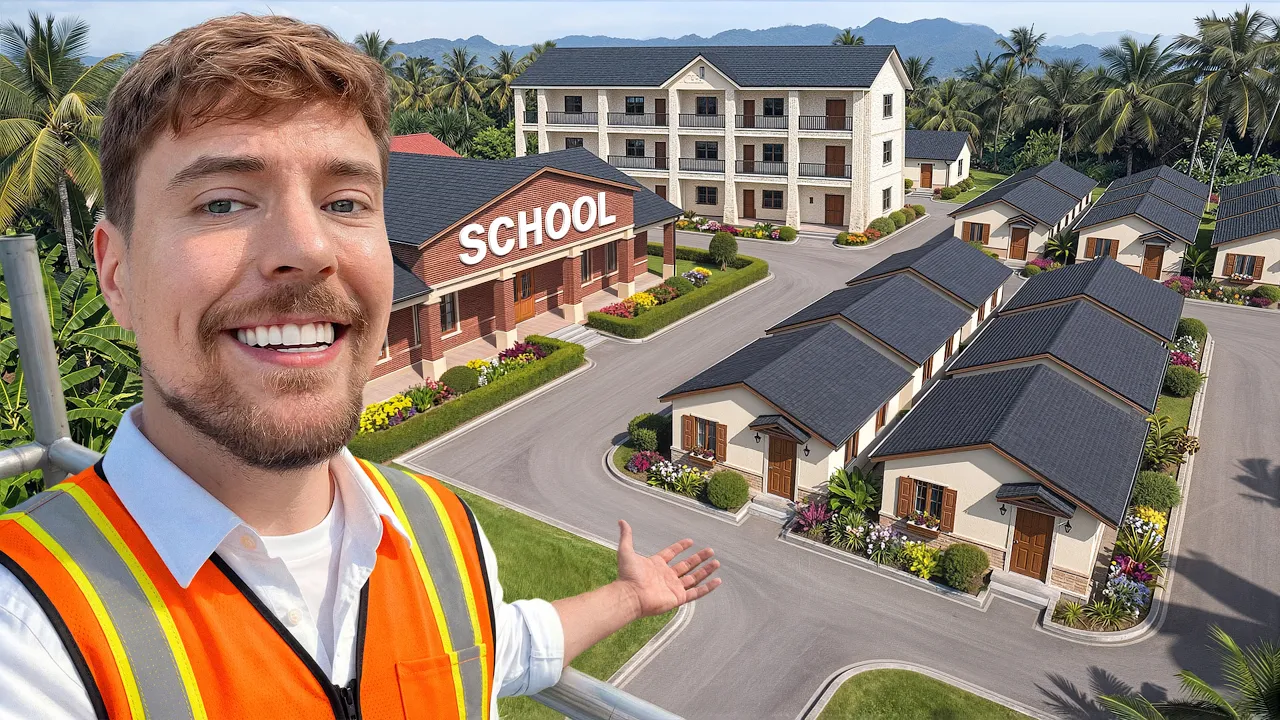
Read Facts →
...