-
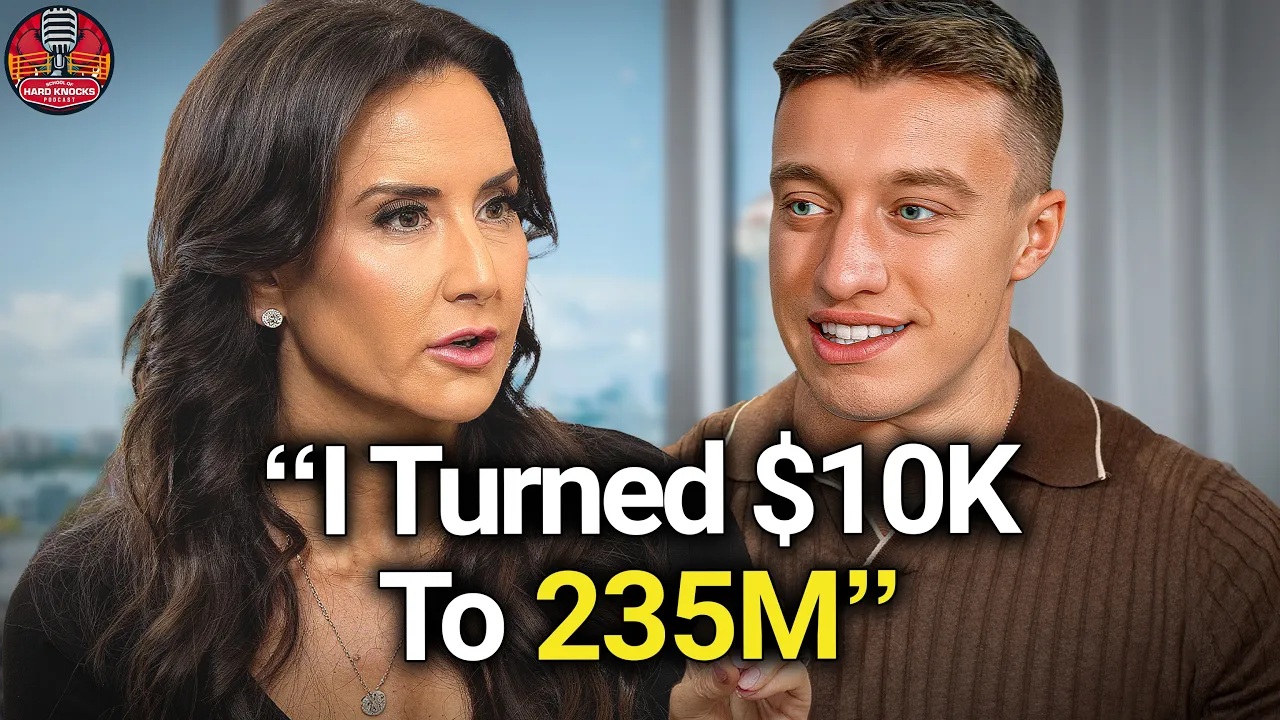
Kim Perell said she turned a $10,000 loan from her 80-year-old grandmother into a company later sold for $235 million. She started after the dot-com crash, worked 16–18-hour days from her kitchen table, maxed out credit cards, and initially paid everyone before herself.
-
Her first customers came largely from relationships built at a previous internet company that raised $120 million and then went bankrupt. After being fired, she carried those trusted relationships into her own internet-marketing business, making an earlier failure an important source of distribution and credibility.
-
Perell said she never planned to sell her first company until a friend sold his and introduced her to KPMG. KPMG then ran a process that produced seven offers, showing how exposure to one peer’s transaction directly changed the strategic path of her business.
-
At the earliest stage, Perell says she invests primarily in founders rather than financial statements because startups inevitably pivot. Across roughly 150 investments, she looks for founders who are focused, resilient and relentless, plus a large market and situations where her introductions, hiring help or operating experience can materially improve the outcome.
-
Perell said she generally tries to buy about 10% of an early-stage company, partly because later financing will dilute her stake. She prefers meaningful ownership and said her biggest investment regret is often not putting substantially more money into the companies that became major winners.
-
For founders hoping to sell, Perell considers predictable, diversified revenue more valuable than dependence on one major customer. She described 52% customer concentration as dangerous and said she would prefer no single client or advertiser to represent more than roughly 20% of revenue.
-
Her scaling framework changes at roughly $1 million, $10 million, $100 million and $1 billion: product-market fit first, then team, systems and increasingly strong leadership. She argues that founders who reach the first million as “lone wolves” eventually need other people, because the skills that create a company are not enough to scale it indefinitely.
-
Perell’s broader operating advantage is a deliberately cultivated network: mentors in each industry, long-term relationships, and a habit of helping before asking for anything. She said some important relationships are 15 years old and treats networking as a decades-long asset rather than a transaction tied to the next deal.
School of Hard Knocks Podcast
Explore the collection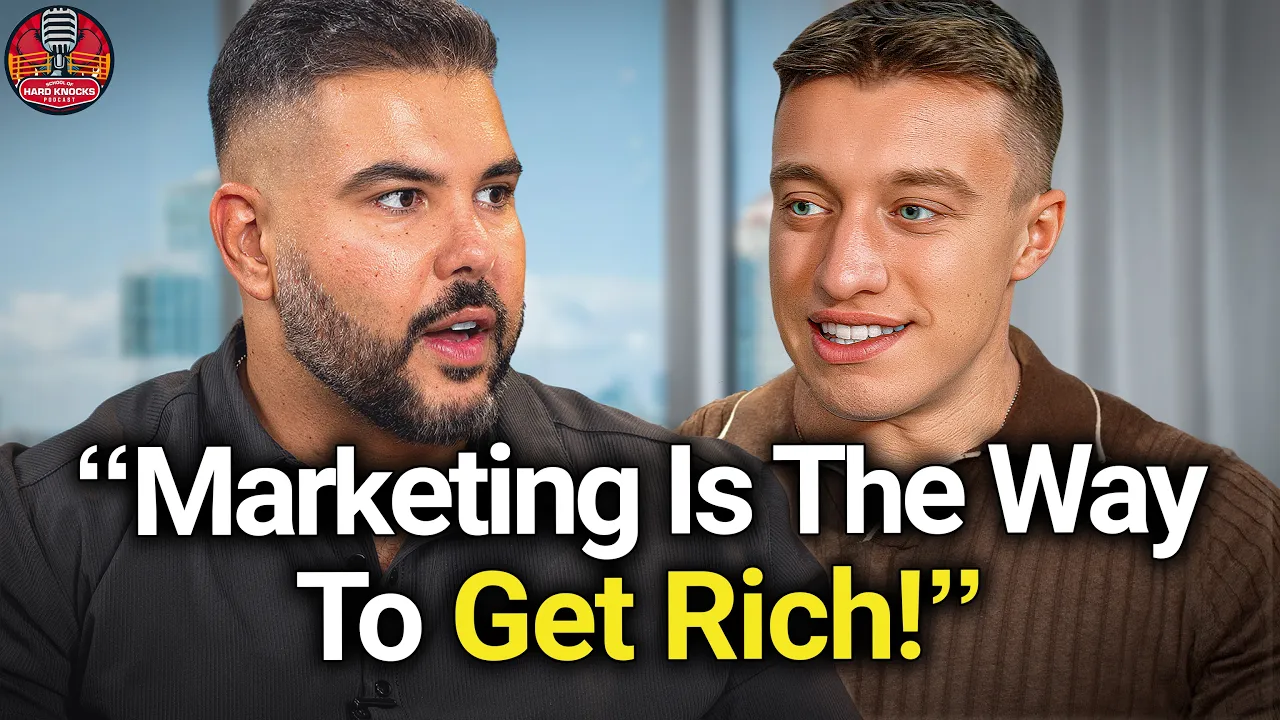
September 9, 2026
He Couldn’t Give Marketing Away For Free… Now His Agency Makes $18 Million/Year | Eddie Maalouf
-
Bad Marketing is on track for about $18 million in annual revenue, and Eddie Maloof says he deliberately stopped pushing growth because agencies become too people-heavy at scale. The company once reached 196 employees, while his other businesses can produce similar or greater revenue with far fewer people.
-
Maloof’s biggest operating lesson is not to delegate the work where the founder has the largest skill advantage. After COVID wiped out the agency’s clients, he personally retook sales and says he restored the company’s revenue within 30 days, proving that role was still too valuable to hand off.
-
His strongest sales principle is to sell only what the buyer actually cares about instead of presenting every feature. At Lifetime Fitness, he focused on two or three relevant benefits and built a referral system that helped him personally produce about 220 memberships against a 300-membership club quota.
-
Maloof says the largest clients come mainly through relationships, referrals and personal brand rather than paid advertising. He cited Yeezy as an example: an online contact introduced him to Kanye West’s team, he advised them on a late-night call, and Bad Marketing took over the account roughly two weeks later.
-
He treats his roughly 120,000 followers as a network of potential advocates rather than merely an audience to monetize directly. A creator with about 22 million followers reportedly checked Maloof with mutual contacts before hiring him, showing how visible relationships can function as a distributed reference system.
-
Maloof bought the struggling Scoville hot-chicken brand for $130,000 after its owners initially asked $1 million. He paid $65,000 upfront, deferred the other $65,000 for three years, and says the business generated more royalties in its first five months under him than his initial cash payment.
-
His Scoville turnaround began with product and economics, not marketing. Maloof cut roughly 80% of the menu, reduced food waste from about 11% to below 1%, renegotiated payment processing from roughly 3.3% to 1.3%, then turned customer acquisition back on.
-
Maloof considers personal brand his most valuable asset because he believes it can recreate the businesses around it. Asked to keep only Bad Marketing, Scoville or his personal brand, he chose the brand immediately, saying he could use it to build another agency or restaurant.
September 2, 2026
She Started With $67… Now Her Soap Company Makes $20 Million/Year | Jhalesa Seymour
-
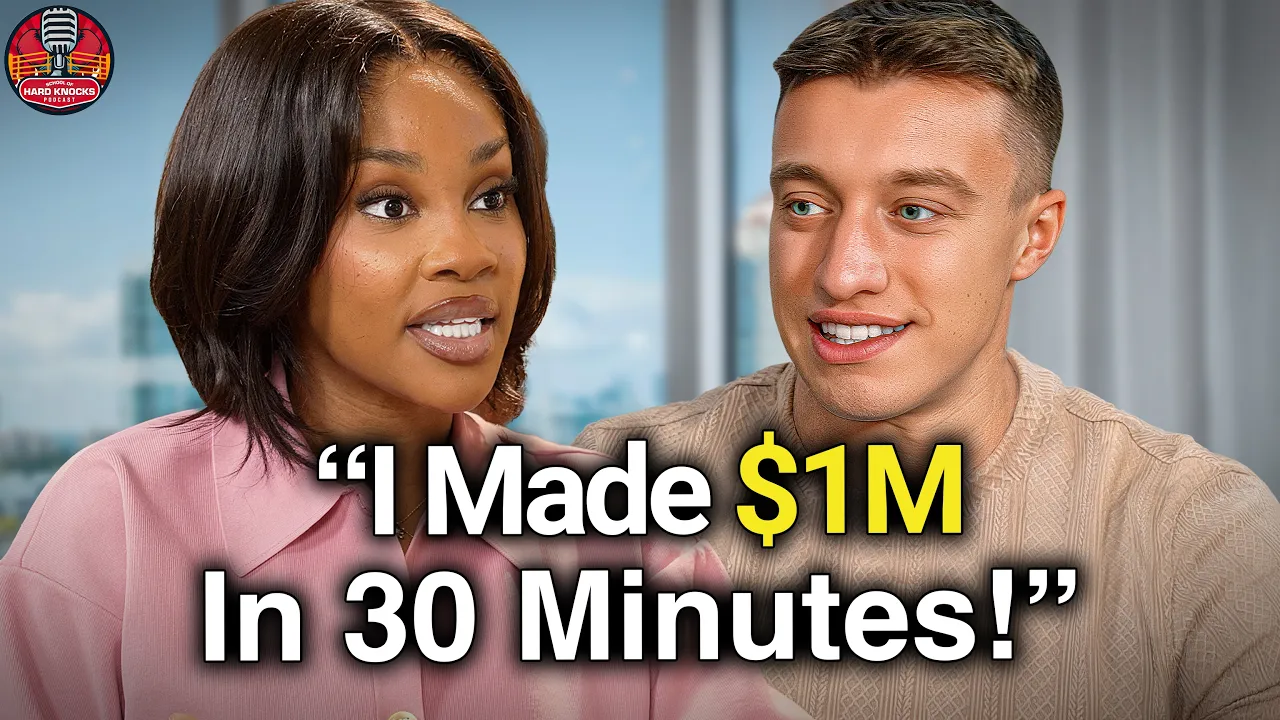
Jalisa Seymour says Salt XO grew from $67 in startup money to more than $20 million in annual revenue, with one launch producing $1 million in 30 minutes. Within about seven months, product drops were selling out in minutes and one noon launch drew roughly 18,000 Shopify visitors by 12:01.
-
Salt XO’s early advantage came from openly selling into a problem customers were embarrassed to discuss. Seymour built products around intimate-hygiene concerns such as odor, BV and yeast infections, then made direct discussion of those problems central to the brand instead of hiding them.
-
For roughly five years, Salt XO grew mainly through organic marketing before paid acquisition accelerated it. Seymour says influencers, UGC, ads, TikTok-style content and live video caused the business to “skyrocket,” but only after the brand had already built trust and understood its customer.
-
A 2020 shipping failure nearly destroyed the company despite strong sales. After Salt XO produced roughly 20,000 orders from a rented-house garage, Seymour says none reached customers; she used nearly all company reserves to remake and reship everything rather than refunding orders.
-
That crisis explains Seymour’s unusually strict separation between business revenue and personal wealth. She argues that money entering a company still belongs to payroll, taxes and operations, and says Salt XO might not exist if she had spent its reserves on her lifestyle.
-
Scaling required Seymour to stop protecting every part of the business personally. Fear of exposing her formula kept manufacturing inside the family early on, but she later accepted outside manufacturing, built a warehouse and internal shipping operation, and delegated logistics to her 24-year-old sister, who manages more than 30 employees.
-
Seymour never had a formal mentor or coach; she built access by deliberately entering rooms with more successful entrepreneurs. She says networking events produced a circle of experienced business owners who supplied knowledge and perspective she could not get from her original environment.
-
Her next strategic objective is global category recognition, not simply more domestic sales. Seymour specifically named Egypt, Dubai, Ghana and China and said she wants Salt XO to become the first brand consumers think of when they think about feminine hygiene.
-
Mike Wisetrack went from bankruptcy, $15 in the bank and a $1 million judgment at 35 to selling Freshly to Nestlé for $1.5 billion in 2020. He says the collapse forced him to rebuild his confidence and taught him entrepreneurship through direct experience rather than theory.
-
Freshly came directly from what he learned in a failed restaurant: he hated customer-facing hospitality but loved finance, logistics, inventory and production. He removed the dining room entirely and built a business around shipping fully prepared meals directly to customers.
-
Freshly’s growth depended heavily on timing the founders did not create. Amazon-driven improvements in two-day shipping made refrigerated delivery practical, while Wisetrack says Facebook produced roughly 90% of growth and gave the company an unusually powerful customer-acquisition engine.
-
By the sale, Freshly was producing about 1.1 million meals a week with roughly 2,500 employees across four facilities totaling more than one million square feet. The company managed that scale through relentless daily measurement, constant operational refinement and a rule that mistakes were acceptable once but not twice.
-
Wisetrack says giving up most of his ownership was worth it because Freshly’s investors became active partners, not passive capital. He owned about 10% at exit, while Brand Project helped build the company and Highland’s Bob Davis became a trusted adviser he still speaks with several times a week.
-
COVID lifted Freshly’s demand about 30% almost overnight and materially improved the exit, but exhaustion drove Wisetrack’s decision to sell. The board wanted to continue investing, yet he says years of intense growth followed by the pandemic had left him without the energy to keep operating at that pace.
-
He is applying Freshly’s mistakes to Petfolk, the veterinary company he now builds with his veterinarian sister and intends to own for decades. At 42 clinics, Petfolk is built around unusually strict customer-satisfaction targets and a clearly defined culture meant to attract the right employees and repel the wrong ones.
-
Despite his wealth, Wisetrack says family, time and helping relatives matter more to him than luxury or public legacy. He funded about $1.8 million in education accounts for nieces and nephews and says being remembered as a good husband, father and friend matters more than being remembered for business success.
- Authentic Brands Group is built around owning valuable IP while licensing products and territories to specialist operators rather than running every business itself. Salter calls ABG operationally “asset-light” but IP-heavy, arguing that brands often fail when they enter categories they do not understand instead of partnering with companies already excellent at them.
- ABG buys brands that are global, undervalued and still have a “heartbeat”—recognition and emotional relevance that can be revived. Salter prefers asking ordinary consumers directly whether they know and care about a brand, and says ABG generally buys fixer-uppers rather than assets trading at their peak.
- Tapout taught ABG that chasing large retailers can destroy the community that originally made a brand valuable. After ABG neglected independent stores, Kohl’s stopped selling Tapout despite roughly $20 million in sales following a complaint about its UFC association; J.C. Penney and other major retailers followed, forcing ABG back to independents.
- A huge prepaid Japanese snowboard order in 1993 changed Salter’s understanding of global business and effectively financed Ride Snowboards’ expansion. Japanese buyers could fund inventory cheaply because local rates were around 2%, while Salter says he faced 10–15% borrowing costs and was borrowing from friends to manufacture boards.
- Salter says his four sons materially shape ABG’s decisions because they challenge him directly rather than behaving like deferential employees. Their experience as young parents helped push ABG into children’s IP, culminating in the Care Bears acquisition—its first kids property in 16 years and a new strategic pillar for the company.
- ABG treats partnerships with living celebrities as lifelong relationships, not endorsement deals, and screens heavily for family orientation, global relevance and willingness to work and travel. Salter said these relationships can take years to develop; he and Shaquille O’Neal pursued Reebok for about five years before ABG finally acquired it.
- ABG walked away from Marc Jacobs because the deal structure failed its financial discipline, even though Salter says the transaction was available to them. G-III and WHP ultimately bought it 50/50; Salter says ABG remains very lightly leveraged because billion-dollar acquisitions still expose substantial family wealth alongside outside investors’ capital.
- Salter says ABG is becoming a major content company because “content drives commerce,” with creators and social influence increasingly shaping purchases that traditional advertising once drove. His broader view is that winning consumer brands now operate partly like entertainment companies, continuously producing content instead of relying mainly on television commercials, billboards or conventional campaigns.
-
Represent is on track for roughly $140 million in annual revenue, despite beginning in George Heaton’s bedroom and later taking over his parents’ house. Heaton said he did not seriously imagine a $100 million business until revenue was already around $50 million, because he had little prior exposure to people operating at that scale.
-
A trademark mistake nearly destroyed Represent after six years of growth and ultimately cost the company multiple millions of dollars. Another European business already controlled the Represent name, leaving Heaton facing potential litigation over past profits until a two-year legal dispute was settled in 2020.
-
Resolving the trademark dispute unlocked Represent’s most dramatic growth period. Heaton said the company had deliberately stayed quiet while the dispute continued, then became far more public through founder-led content and podcasts as revenue moved through roughly $8 million, $12 million, $20 million, $50 million, $80 million and $100 million.
-
One simple “hero product” became powerful enough to generate nearly half of Represent’s business from 2022 through 2025. The Owners Club hoodie and T-shirt helped the company break through what Heaton sees as a common fashion-brand ceiling around $30 million in revenue.
-
Represent was approaching $50 million in revenue with only about 15 employees when Heaton brought in an experienced Puma executive as CEO. Heaton wanted to remain focused on creative work, while the new CEO brought large-company systems, metrics, international expansion experience and organizational structure learned at Nike, Adidas and Puma.
-
Represent deliberately uses about 55 specialist factories rather than owning production. Heaton argued that fashion categories such as shoes, denim, knitwear and hoodies require different equipment and expertise, making ownership of enough factories to manufacture the full range impractical.
-
Heaton protected the brand by refusing to extract much money early: he paid himself nothing from 2012 through 2015 and only minimum wage in 2016. His broader rule is delayed gratification—keep capital inside the business, resist constant discounting and avoid destroying the long-term price perception of the brand for short-term sales.
-
Heaton’s long-term goal is to make Represent independent of its founders and capable of surviving them. Although his visibility helped accelerate growth, he considers dependence on himself a key-person risk and wants Represent to become a legacy brand that continues after both he and his brother Mike eventually step away.
-
David Royce said he built and sold five companies for more than $1 billion, but his first business nearly failed before becoming profitable. He put in all his savings, worked roughly 16-hour days, almost ran out of cash in year one, and sold that first company for about $13 million in year four.
-
Royce’s biggest competitive advantage was not pest control itself but a highly trained door-to-door sales machine. He said his companies grew seven to ten times faster than traditional operators, and salespeople joining from competitors produced about 70% more in their first year with him.
-
His first company grew so quickly that 7,500 new customers created a cash crisis despite strong sales. Because commissions were paid before much of the customer revenue arrived, Royce persuaded some salespeople to wait several months for payment in exchange for 10% interest.
-
Royce repeatedly sold customer books and technicians while keeping the sales force, executives and key operators needed to build the next company. He used the proceeds to finance expansion, repeating the structure three times and eventually growing across multiple states rather than starting from zero after every exit.
-
Royce believes businesses become scalable when the founder’s knowledge is converted into training manuals, checklists and repeatable systems. His own failure to sell anything during his first five days shaped that obsession, and he later recorded salespeople on video to study their delivery before applying the same discipline to operations.
-
A move into solar showed Royce that exceptional sales ability does not compensate for weak operations in an unfamiliar industry. After scaling from roughly 15–20 salespeople to 150–200, outside operators failed, an underqualified replacement COO compounded the damage, and the business improved only after the stronger original operator returned.
-
Royce sees retiring owners of unglamorous businesses as an unusually attractive acquisition opportunity. Their children often do not want the companies, creating room for seller financing, continued mentorship and businesses with strong economics in areas such as pest control, portable toilets or medical waste.
-
After becoming wealthy, Royce concluded that investment access itself becomes a major financial advantage. He said he invested millions in Anthropic through a wealth-management network requiring roughly $100 million to join, after reviewing about three dozen firms and deciding that privileged private-market access mattered more than ordinary portfolio management.
July 29, 2026
They’re Lying To You About Getting RICH! Here’s How He Built A $1B Company! | Blake Johnson
-
Blake Johnson said Bite was his fifth self-founded, self-financed company and sold for a little over $1 billion after roughly three and a half years. He calls it a “15-year-old startup” because its speed came from lessons accumulated through four previous companies, including a $97 million exit.
-
Johnson’s acquisition playbook grew out of nearly going bankrupt during the 2008 financial crisis. He fell to $7,000 with a $43,000 payroll due two weeks later, generated $62,000 before the deadline, and emerged convinced that companies should be deliberately constructed for eventual sale.
-
Johnson has never raised outside capital and believes bootstrapping forces unusually strong financial discipline. He is not against fundraising, but says founders who raise should raise enough to survive failure and iteration; otherwise, spending someone else’s money can weaken the pressure to make every dollar count.
-
His business-selection formula starts with a huge addressable market and then focuses relentlessly on customer-acquisition cost. Johnson wants products capable of a “universal yes,” then reduces the opportunity to basic math: product cost, overhead, infrastructure, acquisition cost and whether revenue ultimately exceeds spending.
-
The idea for Bite emerged from a December 2015 dinner with a USC orthodontics professor who warned that software, clear aligners and remote treatment were transforming orthodontics. Hearing that an Invisalign patent was approaching expiration and patients could increasingly be treated from home convinced Johnson to enter an industry he previously knew little about.
-
Bite’s pandemic growth was enabled by contingency planning before the surge arrived. When acquisition costs fell in 2020, the company had already modeled hiring, customer service and manufacturing needs; Johnson said the team expanded from roughly 100 to 500 while Bite also 3D-printed medical equipment that helped it remain operational during Los Angeles shutdowns.
-
Johnson said his companies convert incoming leads at roughly three times the rate of competitors, making follow-through a major source of profit. Since rivals often pay similar prices for clicks and leads, he argues the overlooked advantage is what happens after someone expresses interest—actively guiding that prospect instead of wasting already-paid-for demand.
-
Johnson builds companies around what future acquirers will want from day one rather than preparing for sale at the end. He says strategic buyers and private equity want strong businesses with “meat on the bone,” while roughly half his core team often follows him into the next venture with meaningful equity and reusable operating expertise.
July 22, 2026
You Don’t Need A Great Idea To Get Rich… You Need A Problem To Solve | Dr. Jason Wersland
-
Jason built the first Theragun after a 2007 motorcycle crash left him in severe pain that his own chiropractic clinic could not adequately relieve. A vibrating treatment table briefly stopped the pain, leading him to experiment with a back-and-forth percussion device and build his first prototype in February 2008.
-
The business began with almost comically primitive manufacturing: 250 Kawasaki jigsaws, borrowed credit, Home Depot bolts and foam balls from Toys “R” Us. Jason initially imagined earning only a few hundred dollars a month, showing how far the eventual company grew beyond his original ambition.
-
Athletes, not Jason’s original clinical customers, revealed the product’s much larger market. Chiropractors and physical therapists bought roughly one unit a day, while athletes at Unbreakable Performance repeatedly emptied his car of inventory, convincing him the product belonged in performance and recovery as well as pain treatment.
-
Jason went through three difficult business partnerships before finding the partner who could actually help him scale. Earlier partners contributed manufacturing connections and even the Theragun name but ended in buyouts or conflict; two NFL players brought capital but lacked the operating structure Jason believed the company needed.
-
Ben Nazarian became Jason’s seed investor after Jason rejected a conventional pitch and insisted on demonstrating the product by treating him. The next morning they worked from 8 a.m. until about 3 a.m., building the business plan together and deciding Jason’s accident and founder story should become part of the brand.
-
Therabody spent more than $400,000 on outside agencies for a new name, rejected their work, and ultimately created the broader brand internally. The shift became necessary as rollers, recovery boots and other products expanded the company beyond Theragun, while the team still wanted to preserve the enormous equity already attached to the original name.
-
Patents became critical only after success attracted an extraordinary wave of imitation. Jason said inexpensive lookalikes flooded Alibaba and retailers, some weeks brought roughly 500 Amazon knockoff sellers, and major companies including Samsung and HoMedics entered the category, forcing Therabody to defend patents and sometimes collect royalties.
-
Therabody treats product development as a continuous scientific pipeline rather than a series of marketing launches. Jason said roughly 20–30 products may be under development at once, unsuccessful concepts are killed after testing, and athletes including investor Aaron Rodgers provide feedback that can directly shape devices before release.

-
David Stout says WebAI is valued at about $2.5 billion, while he still owns roughly half the company. The company began with a $400 loan from his grandfather to buy one shared i3 computer, giving his stake a paper value of roughly $1.25 billion today.
-
WebAI’s core idea came from discovering that sending camera data to distant data centers created too much latency. Stout and co-founder Ethan therefore committed early to running AI directly on phones, laptops and other devices, even after an Andreessen Horowitz meeting where someone argued edge AI was not a large enough market.
-
Stout deliberately waited to raise serious capital until WebAI had working technology rather than merely an idea. Once the team demonstrated an AI model running on an i3 processor, they could show investors a product instead of a pitch deck, which he believes helped preserve founder ownership by reducing investor risk.
-
David Schuman became a pivotal early investor after discovering Stout through an NSA report about noteworthy AI work in the United States. Schuman traveled to Michigan despite Bay Area investors reportedly telling him there were no good AI scientists there; Stout says some of those skeptics later invested in WebAI.
-
Stout believes the major economic opportunity in AI will shift from universal foundation models toward specialized intelligence built from proprietary knowledge. WebAI develops models around expertise such as operating steel foundries or processing food—knowledge competitors cannot simply retrieve from the public internet or reproduce by using the same general model.
-
WebAI is extending that philosophy to a consumer product designed to run entirely on a user’s own computer, including offline. Stout says users will be able to create and share genuine local models, while WebAI automatically selects different specialist “personas” for different tasks instead of routing everything through one centralized model.
-
Stout expects AI ownership itself to become an economic asset rather than users permanently renting intelligence from cloud companies. He imagines individuals preserving their expertise inside personal models, earning money by giving others access to them and potentially passing lifelong models to their children.
-
Stout sees today’s enormous data-center buildout as a potentially temporary and expensive technological detour. He compares it with overbuilding rail infrastructure before aviation changed transportation, arguing that increasingly efficient local computing could eventually make far less centralized AI infrastructure necessary.
July 6, 2026
He Slept In a Dresser Drawer As a Kid… Now He Invests in 130+ Companies | Mike Sherbakov
-
Mike Sherbacov went from a poor Russian immigrant childhood to the Marines, entrepreneurship, and eventually venture capital. His family arrived in California with almost nothing, yet his siblings later reached Stanford, Bain Capital, neuroscience academia, Palantir and OpenAI, reflecting the education-and-discipline culture his parents built.
-
His first business reached roughly $100,000 in annual revenue within about three months using an unusually simple model: 33 members paying $250 a month. Sherbacov personally went door to door around affluent San Diego businesses, then opened additional outdoor boot-camp locations whenever one reached that critical membership level.
-
Sherbacov’s central early-stage investment rule is to back founders who will not quit, because product and market evidence are often still weak at seed stage. Veteran Fund specifically looks for leadership, resilience and purpose, traits he believes veteran founders can bring from military service, while acknowledging that military background is no guarantee of success.
-
His first $25,000 angel investment taught him that a founder’s previous success can be dangerously misleading. He backed a repeat founder who had already made hundreds of millions but failed to examine the new business and the founder’s remaining hunger closely enough, later watching him travel extensively while providing little investor communication.
-
Veteran Fund emerged after Sherbacov and longtime partner Ryan saw veteran-led companies producing successful exits and recognized a specialized investment niche. They built the firm around veterans developing critical technologies, giving it a referral advantage because other investors now send them promising companies whenever a veteran appears on the founding team.
-
Sherbacov says aspiring fund managers should prove themselves with three to ten SPVs before attempting a traditional venture fund. Veteran Fund used that approach with Havoc AI, raising about $2.2 million from investors in one week while demonstrating both access to desirable deals and the ability to attract capital.
-
Some of Sherbacov’s strongest investments came from founders who did not actually need outside money but wanted strategic partners. Veteran Fund was among the earliest investors in Firestorm, founded by a previously successful cybersecurity entrepreneur; Firestorm later raised an $85 million Series B, illustrating why founders often choose investors for connections and capabilities beyond cash.
-
Sherbacov is placing major bets on physical technologies rather than conventional software alone, especially space, nuclear energy, critical minerals and robotics. A 2022 investment backed a company pursuing lunar data infrastructure, while his energy thesis holds that data-center demand will require substantially more generation capacity and make technologies such as small modular nuclear reactors increasingly important.
-
John said he sold two tech companies before turning 16 after teaching himself programming and hacking from childhood. He grew up poor in a Nigerian immigrant family whose parents once slept in a car, yet he owned both companies outright and voluntarily split the sale proceeds equally with the people who helped build them.
-
His corporate career became a deliberate apprenticeship in skills he later reused as a founder. Samsung taught process, Twitch forced him to learn enterprise sales, Meta taught internal politics and networking, and Snapchat connected him more deeply with fashion while reinforcing his attraction to underdog companies.
-
SpreeAI began with customer discovery rather than a finished product idea. Before founding it in 2023, John flew to Europe and questioned fashion executives about returns, sizing and personalization, using their recurring complaints to validate his intuition before assembling a team and building the product.
-
SpreeAI is a B2B fashion-technology company designed to reproduce important parts of physical shopping online. Its tools include photorealistic virtual try-on, sizing prediction John claims is about 99% accurate, and AI styling intended to replicate the guidance consumers receive from an in-store sales associate.
-
SpreeAI initially struggled because it approached fashion companies like a conventional tech startup, then deliberately adopted fashion's culture. John replaced hoodies and ordinary slide decks with brand-specific clothing, models, music and fashion-show-style demonstrations, while creating private sandboxes so luxury brands could test the technology without risking their public image.
-
John's accumulated relationships became a major competitive advantage when launching SpreeAI. He said the company works with major fashion houses, has strategic relationships with MIT and Carnegie Mellon, benefits from connections with Vogue, CFDA and Anna Wintour, and has attracted interest from large venture firms partly because of his own track record.
-
His management philosophy combines strong founder vision with unusually broad employee autonomy. He prioritizes passion over perfect credentials, recruits people from companies such as Google, Netflix and Microsoft, tells experts to determine how their own functions reach the goal, and advises founders to remove clear misfits quickly rather than delaying difficult personnel decisions.
-
John said SpreeAI was valued around $1.5 billion and could eventually expand beyond fashion, go public or be acquired under the right conditions. Despite those ambitions, he tells his team to concentrate on present execution rather than obsess over distant plans, with the longer goal of building a company that can evolve for decades and materially benefit employees.
-
Spin Master’s first product went from a 5,000-unit minimum packaging order to roughly one million sales in its first year. Earth Buddies came from an Israeli newspaper article Harary’s mother translated; he noticed about 300,000 units selling in a 10-million-person market while nobody appeared to be making them in Canada or the U.S.
-
Spin Master’s Kmart breakthrough came because Harary refused to accept a meeting with the wrong buyer as the end of the opportunity. He wandered headquarters until he found Adrian Zaks, waited all day for another meeting, immediately lowered his price after seeing seven competitors, and left with a 48,000-unit order that ultimately expanded dramatically.
-
Spin Master treats failed toys as inventory problems to solve quickly, not creative failures to defend. Harary said sales usually reveal a product’s fate within four to six weeks; weak products are aggressively marked down and cleared, and across thousands of launches only Twisty Petz ever returned successfully after initially failing.
-
Passing on Beyblade became the mistake that directly shaped Spin Master’s billion-dollar Bakugan strategy. After watching Beyblade become a massive Hasbro franchise, Harary backed Bakugan’s Japanese development and a $12 million television production; Spin Master committed $6 million, and company sales rose from about $450 million in 2008 to $1 billion by 2011.
-
Bakugan began not inside Spin Master’s R&D department but with drawings from a 23-year-old first-time inventor named Aldrich. Harary described an industry ecosystem where hundreds of independent inventors supply thousands of ideas, with successful concepts commonly licensed for roughly 5% of wholesale sales in perpetuity.
-
Spin Master built its entertainment business partly because Disney, Warner Bros. and other licensors kept choosing larger competitors. With Harary estimating that 26% of toy sales come from television and movie licenses, Spin Master began creating its own shows—yet eight of its first 10 failed to make children want the characters as toys, clothing or bedding.
-
PAW Patrol emerged after Spin Master lost roughly $450 million in annual sales from its Bakugan peak and then suffered several entertainment failures. Keith Chapman ignored Spin Master’s transformation brief and proposed rescue puppies instead; Spin Master kept his concept, added transformation, and unusually developed the toys and television show together from the beginning.
-
Harary said he made about 10 trips to Japan before Spin Master conducted any meaningful business there, making repeated physical presence a central part of the company’s international strategy. His broader lesson is that travel builds trust, exposes entrepreneurs to ideas unavailable at home, and can produce opportunities that simply do not arise from inside an office.
-
Bibbens says one company grew from $87 million to $250 million without adding a single new customer after he discovered existing clients had $195 million in contracts they could not finance. He worked with Citizens Bank and created joint ventures that financed tier-one transactions outside the company’s ordinary $10 million credit line.
-
ReachTV created a new closed-circuit content-rights window that Bibbens says cost roughly one-thousandth of conventional digital rights. Working with DLA Piper, it covered airports, retail, inflight and hotels; ReachTV began buying these rights before it even had a network and became the category’s leading buyer.
-
ReachTV effectively replaced CNN Airport under a 65-day deadline during the pandemic. Bibbens says the company learned on January 5 that CNN’s network would go dark March 31, then visited every affected airport authority, secured agreements and had ReachTV operating by the deadline.
-
ReachTV’s NFL agreement gives it every game, playoff game and Super Bowl across what Bibbens described as the previous five years and the next five. The broader transformation began in pandemic “dream sessions,” when the company decided to become a year-round live-sports network despite originally being centered on travel programming.
-
ReachTV’s airport television network was deliberately built as a “Trojan horse” into the wider traveler economy, not as the final business. The company is now adding original content, syndication, data and travel services, with Bibbens describing the destination as a cross-platform “traveler network” rather than an airport advertising network.
-
ReachTV found scale by targeting the companies controlling airport concessions rather than negotiating airport by airport from scratch. Bibbens identified roughly 10 dominant players and noted that the largest concessionaire operated in 68 airports, exceeding CNN Airport’s roughly 55-airport footprint at the time.
-
An earlier business taught Bibbens that a company’s greatest strategic value may sit somewhere other than its obvious customer relationship. His $38 million computer business earned only about $1 million, but after a professor suggested testing supplier interest, two major suppliers immediately pursued an acquisition and a deal was on the table within days.
-
Bibbens’s career repeatedly turned long relationships into opportunities years or decades after they began, leading him to favor “relationships over transactions.” People he knew from watching NFL games roughly 20 years earlier later helped with ReachTV’s NFL licensing, while Dick Parsons became a mentor after Bibbens prioritized learning from him over completing an immediate deal.
-
Peter Tuchman’s greatest edge on Wall Street was learning to function when everyone else was overwhelmed. During the 1987 crash, while paper orders flooded an overloaded NYSE and prices collapsed, he discovered that chaos sharpened his focus rather than freezing him—a trait that shaped the next four decades of his career.
-
He now says he executes roughly $500 million to $1 billion of stock a day while trading alongside his son, whom he describes as part of the NYSE’s last father-and-son floor team. That continuity is striking because the floor itself has shrunk from roughly 7,000 workers in 1985 to about 700 as electronic trading replaced entire categories of jobs.
-
Tuchman says Jordan Belfort once tried to recruit NYSE brokers to front-run large customer orders, offering about $1 million for their cooperation. According to Tuchman, roughly eight brokers accepted, were eventually taken from the floor by the FBI, and several served longer prison terms than Belfort—an unusually concrete example of how valuable confidential order flow could be.
-
Technology did not preserve Tuchman’s original profession; he survived by repeatedly changing what he did. Machines can now transmit roughly 1,000 orders in four seconds, eliminating work once done by runners, clerks and brokers, while Tuchman moved toward specialized execution, education, media and mentoring rather than trying to recreate the old trading floor.
-
A near-fatal case of COVID radically expanded the personal meaning of Tuchman’s public career. He says he endured a roughly 103.7°F fever for almost eight weeks, was given three months to live, lost substantial function in his left lung and suffered cervical-spine damage; afterward, financial education and human connection became central to his public identity.
-
His strongest trading lesson is that survival matters more than spectacular wins: take profits, define losses before entering, and never trade money needed for ordinary life. He favors repeated “singles and doubles,” partial profit-taking and stop-losses, arguing that greed, FOMO, hype and hope have destroyed far more traders than a lack of exciting opportunities.
-
Tuchman believes one of the best investing edges available to ordinary people is noticing what sits behind an obvious trend before everyone focuses on it. Rather than stopping at Nvidia or another headline company, he looks for GPUs, electricity, cooling, minerals, data centers and other secondary beneficiaries whose importance grows as the larger technology expands.
-
For Tuchman, money is ultimately a weaker measure of success than the relationships and people left better because of his life. His Holocaust-survivor parents rebuilt their lives in America, and he says his father taught him to value the handshake and human connection above “cash and prizes”—the standard by which Tuchman now says he wants his own legacy judged.
-
Bloom said it had just recorded $23 million in net sales in one week, representing roughly 12 million cans sold. Its energy-drink business was only about 2½ years old, and Greg LaVecchia said the bigger test was sustaining that growth beyond year three and becoming a durable brand like Red Bull or Monster.
-
Greg and Mari bootstrapped Bloom for its first five years to roughly $180 million without partners, advisors or mentors. Rather than own factories, logistics and distribution, they eventually focused on brand, marketing and community while partnering with specialists such as C4 and Dr Pepper for capabilities they did not want to build themselves.
-
The business began with almost no money: Mari’s 90-pound transformation attracted an Instagram audience, then they sold $9.99 workout PDFs manually through PayPal. That evolved into more than one million resistance bands sold from Mari’s father’s attic before they launched Bloom to serve women they felt existing supplement brands largely ignored.
-
Bloom paid Target $1 million to accelerate from about 600 stores to nationwide distribution before the January fitness season. Greg considered it one of Bloom’s best investments because nationwide availability let the company market one simple message everywhere instead of forcing customers to determine which individual Target stores carried the product.
-
Bloom’s beverage expansion was validated unusually quickly: a C4-backed Target test performed strongly within three months, then Dr Pepper backed national distribution toward roughly 70,000 retail doors. Greg’s broader lesson was that a small company can earn access to a huge partner with a short, convincing proof of concept rather than years of history.
-
Bloom had launched roughly 250 products, yet Greg said only three generated about 85% of revenue. That failure rate shaped an unusually aggressive willingness to abandon ideas, including cancelling a protein soda after roughly $1 million of development when earlier competitors reached shelves first and showed weak consumer demand.
-
Bloom’s marketing strategy combines concentrated bursts of attention with deliberate brand credibility rather than relying only on conversion advertising. Its early Black Fridays produced $4–6 million days, while Greg said influencer programs must balance cheap viral reach with trusted personalities who transfer credibility and should generally be allowed to create content in their own voice.
-
A 2023 crisis nearly forced Bloom into layoffs after the company lost a sales channel on which most of its business depended. Greg said the experience—despite already driving his dream McLaren—made him realize success without resilience or freedom was hollow, pushing Bloom toward a far more diversified retail business and changing how he defined entrepreneurial success.
-
Patrick and Kathy Terry built P. Terry’s from a 527-square-foot Austin burger stand after Patrick finally secured the site in his late 40s. He had missed the same lease by one week five years earlier, while Kathy became a true operating co-founder—building accounting systems and designing the second kitchen.
-
The first P. Terry’s opened directly against McDonald’s, Jack in the Box, Wendy’s, Taco Bell, Taco Cabana and Schlotzsky’s; all those nearby locations later disappeared. Patrick says the tiny store’s constraints became advantages: produce arrived almost daily, he personally watched competitors and customers, and customer patterns helped determine the second location.
-
P. Terry’s reached 38 company-owned Texas locations without franchising, and Patrick deliberately resists national expansion despite demand. With only four Houston stores against roughly 185 Whataburgers, he sees ample local opportunity and would rather own 50 excellent restaurants than 150 average ones if faster growth threatens quality or culture.
-
P. Terry’s deliberately chooses affordable prices and lower margins rather than charging whatever customers might tolerate. Prices remain consistent across neighborhoods, the menu stays small to reduce waste and speed service, and Patrick says rising costs have forced the company to accept less profit rather than fully passing increases to customers.
-
Employee treatment is treated as an operating advantage, not merely a benefits program. P. Terry’s gives interest-free emergency loans, provides employees their chosen birthday cake despite having about 1,800 staff, and follows the “Maggie Rule”: office employees must never behave in ways that disrespect the people doing the hardest restaurant work.
-
Patrick came close to selling P. Terry’s after about 10 exhausting years and received a serious offer large enough to retire comfortably, but he and Kathy ultimately refused it. The process nevertheless showed him what the company was worth; until then he had reinvested heavily, barely networked, and did not even know normal restaurant EBITDA benchmarks.
-
Hiring an experienced outsider to lead expansion taught Patrick that cultural alignment mattered more than conventional executive credentials. He felt the company began drifting because much of his own decision-making had become instinctive after decades inside the business, reinforcing his belief that the “mothership” must be protected before growth.
-
A one-take social video Patrick initially refused to make generated about 26.7 million views and roughly 120,000 comments. Instead of performing the usual CEO burger tasting, he invited 10 customers to lunch; Patrick says “P. Terry’s locations” briefly became Google’s top search and the episode completely changed his view of social media’s reach.
-
Frisella says the business paid him just $58,380 total in its first 10 years, while his personal portfolio is now worth more than $1 billion. He and Chris started Supplement Superstore in 1999 with $12,000, made $7, $0 and $23 on their first three days, and needed six years to open a second store.
-
They built the companies without a financial partner or seed-capital investment, leaving the business entirely owned by them. Frisella said self-funding slowed growth and once made him bitter about better-financed rivals, but he became grateful once the businesses worked because “nobody else owns any of this.”
-
The original retail business nearly died after a decade because Frisella and Chris focused on what they could sell rather than what customer problems they could solve. They were preparing to quit—Frisella for carpet cleaning, Chris for military pilot training—before rebuilding around customer outcomes; Frisella said retail grew 100% over the next five years.
-
First Form began when a protein-powder project for Target collapsed after a manufacturer had already invested in production capacity. Frisella, introduced through a cousin and initially asked only to consult, volunteered to take over the opportunity even though he said he was not really in a position to do it.
-
Frisella's long-term strategy was vertical integration inside an industry he already understood, not diversification into unrelated businesses. The operation progressed from retailing other brands to its own products, manufacturing partnerships and ingredient-production facilities, giving it more control, profitability and enterprise value.
-
For roughly the first 12 years, the business had essentially no money in the bank, and First Form began with only a $3,000 credit line. Frisella said he sometimes stopped paying himself for two or three years to fund larger projects and recommends living far below one's means.
-
Most internal meetings and employee awards are deliberately centered on customer results rather than sales numbers. Frisella says only he, his brother Sal—the CEO and a partner—and a small executive group regularly discuss financial numbers; the broader company is pushed to solve customers' problems because satisfied customers become its strongest marketing.
-
75 Hard grew from Frisella's own struggle with discipline and weight, including a moment at about 350 pounds when he became angry that he could not refuse beer and pizza. He announced the 75-day protocol on his MFCEO podcast, invited listeners to join, and says it spread for seven years without paid advertising.
-
Eric Spofford went from heroin addiction, criminal warrants and sleeping on his mother’s couch to selling his company for $115 million. He got sober just before 22, opened a sober-living business at 23, lost money for roughly three years, and said he was a millionaire by 27.
-
The $115 million exit was Spofford’s sixth attempt to take the company to market, not a clean first try. Two earlier deals collapsed within 30 days of closing, each of which he expected to pay him about $40 million, leaving him with millions in professional fees and no sale.
-
By the final transaction, Spofford owned 58% of the operating company and 100% of its real estate. The properties were excluded from the $115 million deal and sold separately in 2022, after he had previously sold minority stakes in the business three times.
-
Spofford forced the 2021 sale against the preference of minority partners because he believed acquisition multiples had temporarily become exceptional. His partners wanted continued growth, but as majority shareholder he concluded the unusually hot M&A market created a window that might disappear and hired an investment bank.
-
The sale process drew more than 100 signed NDAs, roughly 40 initial indications of interest and 20 final bids. Spofford then narrowed the field to nine management meetings, illustrating how competitive the 2021 market was and how extensive a serious company sale becomes even after years of preparation.
-
The biggest operational change before the exit was building a leadership team capable of running the company without Spofford. After professionalizing management, revenue rose from about $25 million to $55 million and annual earnings from roughly $4–5 million to $12–13 million in about 24 months.
-
Spofford’s core operating principle is “macro patience and micro urgency”: execute intensely today while expecting meaningful results to take a decade or longer. He described 12- to 14-hour workdays and 15-minute calendar blocks, but framed entrepreneurship as a 40- to 50-year game rather than a short sprint.
-
Selling the company and becoming extremely wealthy did not produce the lasting satisfaction Spofford expected. Despite tens of millions of dollars, a 92-foot yacht, mansion, airplane and supercars, he became bored, rebuilt another portfolio of businesses, and concluded that purpose and pursuit mattered more to him than possession.

-
Scale AI began as a failed healthcare idea, then an “API for humans,” before customer demand pulled it into data labeling. Guo says repeated requests from YC founders revealed the opportunity, turning Scale into infrastructure for AI companies rather than the application business its founders originally imagined.
-
Guo said 49% of Scale was transacted at roughly a $26 billion company valuation. By then, Scale had become a supplier of labeled data to major AI and autonomous-driving companies, making it a classic “picks and shovels” business serving an entire technological boom.
-
Scale’s earliest enterprise sales were aggressively manual. Guo says the founders scraped Y Combinator’s internal database, contacted founders directly, scattered flyers at conferences, targeted engineering decision-makers on LinkedIn, and personally labeled customer data to deliver near-perfect pilots before trying to win larger contracts.
-
Guo treats fast pivoting as one of her biggest competitive advantages. She says she can abandon an idea within roughly three weeks when the potential scale is insufficient, arguing that sunk-cost attachment keeps founders working on businesses that evidence already says should be changed.
-
The $100,000 Thiel Fellowship made dropping out of college feel low-risk to Guo, despite fierce opposition from her parents. She already had strong job offers, while her parents—Chinese immigrants who viewed education as security—cut off her phone and health insurance and opposed the decision for about a year.
-
Guo ultimately considers college relationships more valuable than much of the coursework. Her first Scale engineers came from people she knew at Carnegie Mellon, and she argues classmates can later become employees, co-founders and investors in ways that become much harder to replicate after graduation.
-
Guo believes creator wealth is shifting from sponsorship income toward ownership, equity and technology-enabled monetization. She is building creator infrastructure and expects AI eventually to let creators license their likenesses to brands, multiplying campaigns without multiplying their time, provided they protect the scarcity of their personal brand.
-
Guo says extreme ambition became normal only after she entered networks where founders were raising tens of millions and billionaires were nearby. That environment reset her expectations so dramatically that becoming a billionaire felt like a minimum benchmark, illustrating how strongly she believes peer groups shape ambition, risk tolerance and outcomes.
-
RJ Jain says Price.com is valued at about $200 million, after his previous mobile-testing startup was sold to Google for nine figures. He built the earlier company after leaving Zynga, where slow QA on FarmVille-era products exposed the Android testing problem.
-
Price.com combines comparison shopping, cashback, coupons and AI-assisted purchasing across more than 100,000 stores. Jain said merchants may pay commissions that Price splits with shoppers, while its $9.99-a-month Pro tier includes “Buy with AI,” designed to find products, prices and coupons and complete checkout.
-
Despite the valuation, Jain said distribution—not technology—is Price.com’s biggest current problem. Paid acquisition costs about $2 per app download, so reaching 10–50 million users would require huge capital; Price is countering that with SEO, partnerships, Tim Tebow and new global ambassador and investor Ashton Hall.
-
Price.com reached roughly 100 investors because Jain spent years raising whatever small checks would keep the company alive. Comparison shopping took years to monetize, investors lost patience, and Jain accepted checks as small as $5,000 and $25,000 until cashback became a major growth inflection point.
-
Jain considers acquiring the Price.com domain itself one of the company’s most consequential deals. He met the domain owner at an event, pitched his vision, and says the name opens partner meetings that an unknown consumer brand would struggle to secure—reinforcing his view that branding matters far more in B2C than B2B.
-
Partnerships are becoming Price.com’s route to cheaper distribution and broader utility. Jain cited Erewhon, Sweatcoin and Deel, while a Kayak partnership added flight and hotel comparison with cashback; Price is already available in about 35 countries, though its marketing remains much more concentrated in the United States.
-
Jain is running Price.com as a solo founder with about 30 employees and three highly involved board members. He described sleepless periods with only months of runway and said solo founding avoids co-founder conflict but can be intensely lonely, making resilience a practical survival requirement rather than a slogan.
-
Jain’s operating doctrine is to solve problems he personally feels, talk constantly to users and execute faster than competitors. He texts and calls users, friends and family for feedback, looks for resilience and risk-taking in founders, and argues that AI is shrinking the gap between idea and execution so quickly that speed now compounds.
-
HomeServe grew from a failed emergency-plumbing business that nearly collapsed before Richard Harpin copied and improved a plumbing-insurance model. With its final £10,000, the company mailed 1,000 customers; 38 bought £50 cover, proving the recurring-revenue model that ultimately transformed the business.
-
Simon Blunt saved the company with a £10,000 loan in 1992 but chose 20% interest instead of 10% equity. Harpin repaid him £13,000 a year later; he says the rejected stake would eventually have been worth about £400 million.
-
HomeServe’s breakthrough came from partnering with water utilities rather than selling emergency repairs one customer at a time. Utilities provided trusted brands and customer lists, HomeServe sold renewable annual cover, and the business moved from losing roughly £500,000 to making about £750,000 the following year.
-
Harpin learned the cost of raising money too early when a water company invested £500,000 for 52% of the business. The capital accelerated monthly losses from about £10,000 to £50,000, shaping his rule to prove the model first and raise outside money only for scaling.
-
Nigel Morris helped reshape HomeServe’s U.S. expansion by telling Harpin to move away from Miami and put an American in charge. Harpin hired Tom Rusin in 2010; he says U.S. annual profit later grew from about $10 million to roughly $300 million.
-
Harpin’s international rule is to keep the core model almost unchanged and use local leadership. He advises avoiding markets requiring more than roughly 10% adaptation, personally proving the operation first, then handing it to strong local executives because customers and partners often prefer dealing with people from their own market.
-
He now argues that buying an established profitable small business can be better than starting from zero. His preferred route is to gain experience first, find a retiring owner, contribute limited upfront capital and use vendor finance to pay the seller over several years from the business’s existing revenue.
-
Harpin’s broader operating philosophy is to copy proven ideas, improve them and stay relentlessly focused. His nine-step framework emphasizes late-stage investment, mentors, direct mail and physical presence, hiring a replacement CEO, local international leadership, continual evolution, a “not-to-do” list and building around personal strengths.
-
Simon’s entrepreneurial life began at 15, after his father died and he became homeless. He won his first gardening job by knocking on a Cambridge door and quoting £200, eventually reaching 126 monthly clients before winter destroyed the business and taught him seasonality, hiring and sales.
-
His next venture, Accommodation Express, turned rejected hotel enquiries into bookings elsewhere for a 15% commission. After selling it, he went to Hong Kong in 1997, where exposure to billionaire families and huge development projects radically expanded his sense of what could be built and financed.
-
Fluid, the Hong Kong strategy and branding company he launched around 2000, eventually attracted a PwC acquisition offer when Simon was 40. He sold for enough to stop working permanently, then described the next two retired years as his worst emotionally because money had removed the mission that structured his life.
-
Simon deliberately gave away a 2-hour-26-minute business video instead of turning it into a paid course. He said it reached about 60 million organic views, generated roughly $850,000 anyway, and had been estimated as capable of making about £20 million if packaged and sold to 4,000 customers.
-
Across 81 investments, Simon says his strongest pattern is founders who solve a problem they personally feel and are not building primarily to sell. He cited Lovable, an early investment he said is now worth $6.6 billion, as a product created to solve a founder’s friend’s repeated need for a CTO.
-
Simon says founders should sell equity only when an investor can materially multiply the company’s value, not merely provide cash. Preparing for Shark Tank, he said only about ten people could currently add enough to his own company, with specialist expertise such as global drinks distribution more valuable than money.
-
The “What’s your dream?” format began after Simon earned $150 from a TikTok livestream and felt compelled to give it away. An unrecorded conversation with a supermarket worker who wanted to open a care home led him to film similar encounters, which dramatically outperformed his earlier talking-head business advice.
-
Simon home-educates his eight-year-old son because he says he cannot call the school system broken and then put his child through it. He follows the boy’s interests—such as sword fighting—into history, engineering and economics, reflecting his broader belief that education should begin with curiosity rather than predetermined careers.
-
Poppi began as Allison’s kitchen experiment to make apple-cider vinegar taste better, not as a planned beverage company. By their third week at the Dallas farmers market, a Whole Foods scout handed them her card, and Allison decided to go all-in despite being three months pregnant and newly owning a house.
-
They took extraordinary personal financial risk before institutional capital arrived. In year one they invested about $90,000, maxed out credit cards, sold both cars and opened their own manufacturing facility, after Allison had previously been earning more than $1,000 a day in oil-and-gas research.
-
At roughly $500,000 in revenue, they rejected a $200,000 investor because he offered money but no network or strategic help, then pursued Shark Tank instead. The process took months, and Allison later said the company was so cash-strapped she was unsure it would have survived without the deal.
-
The Shark Tank partnership triggered a nine-month reinvention from Mother Beverage into a brightly packaged “soda for the next generation.” Poppi launched under the new positioning on March 3, 2020; the founders later confirmed the business reached about $500 million in four and a half years before its $2 billion PepsiCo sale.
-
A raw TikTok founder-story video became a measurable growth inflection point after advisers had questioned the platform. Filmed at home with wet hair and pajamas, it surpassed 250 million views, sold out retail shelves, generated about $100,000, and convinced the company to shift its paid media toward TikTok.
-
A $250,000 Jennifer Lopez promotion taught Poppi that celebrity reach without authentic fit or sufficient distribution could be nearly worthless. The campaign produced zero new followers; later Poppi built longer relationships with creators already using the product, including three years with Alix Earle across paid compensation and equity.
-
Poppi shared substantial exit upside with employees rather than concentrating it entirely among founders and investors. About 99% of staff received equity, generally vesting over four years, and the founders estimated roughly 40 employees became millionaires, with some using proceeds to buy homes, cars or houses for parents.
-
The $2 billion exit did not produce instant emotional closure, and the experience is changing how they build next. When the money arrived they had their biggest fight over failing to make time to celebrate; Stephen now has a 35–40-person org chart before the new venture even has a name, correcting Poppi’s habit of hiring late.
-
Bill Gurley backed Uber because years earlier he had concluded that a digital marketplace built on black-car services could unlock far more efficiency than one layered onto regulated taxis. OpenTable had already taught him how fragmented supply, flexible pricing and network effects could turn an inefficient offline market into a dominant platform.
-
Gurley’s founder test centers on determination, product instinct, sales ability and obsessive curiosity—not a flawless résumé. He noted that Travis Kalanick’s two earlier failures may have strengthened his resolve, while Uber’s exceptional product-market fit gave him the rare opportunity those ventures lacked.
-
Missing Google became one of Gurley’s most important investing lessons. He met Larry Page and Sergey Brin and brought them to his partnership, but Benchmark failed to pursue the deal; John Doerr and Mike Moritz did, teaching Gurley to obsess more over missed winners than failed investments.
-
Venture investing is asymmetric enough that conventional risk avoidance can be dangerously misleading. Losing a $5 million investment costs $5 million, while missing a company like Google can forfeit returns orders of magnitude larger, which is why Benchmark trained itself to ask, “What could go right?”
-
Benchmark was deliberately structured as an equal partnership, with partners receiving the same economics and decision-making power regardless of seniority. Gurley said this removed much of the internal competition found in hierarchical firms, although the trade-off was weak centralized execution and an organization poorly suited to people needing heavy structure.
-
Gurley said venture capital at the time had become overwhelmingly concentrated on AI, estimating that roughly 98% of investors were focused there while non-AI valuations had recently fallen sharply. He saw both the logic of chasing a technological wave and the danger of groupthink, but warned founders that the capital market could not simply be wished away.
-
After leaving new venture investing, Gurley spent roughly five years turning a decade-old idea into Running Down a Dream, drawing on hundreds of biographies, academic research and conversations with thinkers including James Clear, Adam Grant and Angela Duckworth. Its core message is to find the work that creates genuine curiosity and then treat it as a craft worth mastering.
-
Gurley believes ambitious people should “go to the epicenter” of their chosen craft and become unusually differentiated rather than competing as another standard applicant. His broader career advice is to become a “candidate of one”: build expertise, relationships and knowledge so distinctive that employers, founders or investors want you specifically rather than whoever best fits a posted role.
-
John Caudwell built his mobile-phone business from a £2,000-a-month loss in 1986 to a £1.5 billion sale in 2006. After taking personal control, he used handset-supply arbitrage to turn the operation to £20,000 monthly profit within four weeks, establishing the commercial pattern he says drove later growth.
-
Motorola once supplied 95% of Caudwell’s sales, then cancelled his contract virtually overnight, creating an existential crisis. He secretly obtained Motorola stock through service providers, recovered within about two weeks, then backed Nokia as its market share rose from roughly 1% to 21%.
-
Caudwell says finding one successful senior executive could require roughly 3,000 applicants. His recruitment funnel reduced about 1,000 applicants to three finalists, while his broader lesson was to “pay the money” for exceptional talent and prioritize ambition, drive and what he calls commercial intellect.
-
Parts of Caudwell’s wholesale business operated on margins as low as 1%, pushing him toward higher-margin retail despite much greater risk. He opened about 300 stores in five years—sometimes three or four weekly—with roughly £50,000–£100,000 invested in each location before staffing, training and marketing.
-
Caudwell sold partly because he believed the mobile market was becoming saturated, consolidated and less attractive, not simply because someone offered £1.5 billion. The exit still caused an identity crisis: his companies were spending about £50 million annually on television advertising, and he felt the business had become both his “baby” and his public identity.
-
Caudwell says he paid roughly £200 million–£300 million in tax within a few years of the sale rather than relocating to Monaco to avoid it. He has also pledged 70% of his wealth to charitable causes, arguing that wealth should ultimately benefit the society in which it was created.
-
Caudwell Youth pairs vulnerable young people with trained volunteer mentors, and Caudwell says 93% of those considered likely repeat offenders do not reoffend. The charity was serving roughly 400 young people annually, while he estimated around 100,000 could need similar help and wants the program eventually scaled accordingly.
-
Caudwell is still taking enormous personal financial risk through property: he said One Mayfair would cost well over 1 billion to develop, with gross development value around 2 billion, without outside investors. He says creativity and heritage now matter more than simply maximizing profit, while admitting that dealmaking remains something he finds almost addictive.
March 12, 2026
They're Lying To You About How To Get RICH! Here's How To Turn $0 Into $1M! | Robert Croak
-
Silly Bandz went from four cases and four styles to a business Croak says reached roughly 45 countries and hundreds of millions of dollars in sales. Retail triggered the explosion: staffing rose from 17 to more than 3,200 worldwide, while weekly volume climbed from 200 cases to about 3,200 cases within six months.
-
Croak still owns 100% of Silly Bandz because an early investment deal collapsed from $250,000 to $50,000. Rather than sell equity, he sold a classic car to finance the tooling himself; he says he could easily have surrendered roughly 20% of the company for $100,000 before its value became obvious.
-
Croak’s central startup lesson is to prove demand before raising heavily, perfecting the product or chasing retail. He favors bootstrapping, testing quickly and building a direct audience first, warning that major retailers can return tens of thousands of unsold units while leaving the supplier responsible for freight and inventory.
-
Croak says Walmart studied Silly Bandz’s operation, then stores appeared with a closely resembling competing product supplied by another distributor. In mediation, he challenged Walmart to explain why its rainforest pack selected the same six animals from thousands of possibilities; he says Walmart settled 15 minutes after he walked out demanding a deal.
-
As an investor, Croak says he bets primarily on the founder rather than the idea and is wary of founders living comfortably on investor capital. He generally wants a track record, frugal operations and evidence of obsession, arguing that strong founders can pivot while polished presentations cannot compensate for weak execution.
-
Croak’s basic wealth strategy is to build a protected investment base before taking large speculative risks. He recommends working toward roughly the first $100,000 in conventional investments, then diversifying; he argues that repeatedly risking an entire $30,000 savings balance on one venture can leave investors rebuilding the same capital for years.
-
Croak identifies lifestyle inflation, not simply low income, as a major obstacle to wealth. He recommends automatically investing roughly 15–20% instead of upgrading cars, homes and consumption with every raise, and warns that social media often encourages comparison with lifestyles that may themselves be rented or financially fragile.
-
Croak’s larger objective is financial ownership of time rather than permanent frugality or entrepreneurship for its own sake. Raised in a poor East Toledo neighborhood, he says he built enough independence to choose his work freely and ultimately wants to be remembered for treating people well and sharing useful knowledge without hiding it behind paywalls.
-
Ben Pogue took over his family’s construction company at 29, when it had about 90 employees and $180 million in annual volume; today it has roughly 350 employees and $1.5 billion in volume. He says the disproportionate growth came from building a high-performance culture rather than simply adding headcount.
-
The company’s defining crisis became one of its biggest growth catalysts. Problems at Allen Stadium cost roughly two years, about $20 million and years without profit, but clients later hired Pogue specifically because his company faced the controversy publicly, fixed the project and stood behind its work.
-
Pogue bought the company in fall 2016, shortly after the Allen Stadium crisis ended, and within about 60 days it landed its largest project yet—roughly $100 million—followed by a $300 million bond program. He says the business subsequently grew about 800%, with 93% of work now coming from repeat clients.
-
Pogue reports employee turnover of about 3% versus roughly 15% in his industry, which he attributes to coaching every level of the organization rather than concentrating development at the top. Employees receive monthly “truth and love” conversations so problems are addressed continuously instead of being saved for an annual review.
-
Pogue deliberately prioritizes character over competence and removes people who damage the culture, even when firing them is personally difficult. He argues that coworkers usually recognize a destructive employee before leadership acts, and decisive action can increase trust while allowing the departing employee to find somewhere better suited to them.
-
The company’s stated values—God first, family, absolute integrity, service and communication—are tied to unusually concrete operating policies. Employees and families receive confidential counseling, an on-site chaplain and family events, while project assignments and office locations are designed where possible to reduce travel and keep employees near their families.
-
Pogue’s faith became personal before his biggest business and personal upheavals: on October 12, 2008, he says he committed himself seriously to Christianity, and eight months later he was unexpectedly asked to run the company. An unexpected divorce in 2012, with two young children, later became what he called the lowest point of his life and further deepened that faith.
-
Pogue’s central leadership lesson is that the methods producing one stage of growth eventually stop working, while core values should remain fixed. He still uses a coach, surrounds himself with people stronger than he is in specific areas, and argues that leaders must remain teachable enough to change systems before growth outruns them.
February 25, 2026
They’re Lying About Selling... Here’s How She Made $1.2M in One Day | Forbes Riley
-
Forbes Riley’s central pitching rule is to make people want a solution before explaining the product. She starts with the customer’s problem, builds curiosity and proof, then uses a clear offer and urgency—and once the buyer says yes, she says to stop talking.
-
Riley says her pitching career generated more than $2.5 billion in sales across about 1,500 products and 197 half-hour shows. She also cites selling 64,000 units for about $1.2 million in one day and roughly 2.8 million SpinGyms overall.
-
Jake Steinfeld discovered Riley’s commercial talent during an acting audition after she was asked to sell a pen. Instead of listing features, she told a story about her mother’s handwritten letters; Steinfeld chose her from roughly 500 actresses and put her into Fit TV pitching.
-
Riley’s communication obsession grew from a childhood in which severe orthodontic treatment left her difficult to understand for about two years. Her father then spent three years hospitalized after a printing-press accident, leaving the family broke and pushing her toward scholarships, pageants, and self-reliance.
-
A legally blind college professor, David Richmond, gave Riley the lead role of Rosalind after years of minor parts and told her he saw qualities others overlooked. That confidence helped her move to New York, where she landed the lead in her first film audition, Splatter University.
-
Riley’s biggest modern pivot began when her 17-year-old daughter proposed starting a company during COVID and revealed she was already earning money doing digital work for Riley’s network. Their first $1,000 training sold all 25 seats, reached $100,000 in four weeks, and a million-dollar funnel within nine months.
-
Riley says she helped give Kim Kardashian an early television opportunity before Keeping Up with the Kardashians. After meeting the family through Bruce Jenner, she recommended Kim for a steam-iron infomercial with Kevin Harrington; Kim later told Riley the family had secured a Ryan Seacrest reality show.
-
Riley’s career extended far beyond infomercials: she says she helped start ESPN’s X Games, hosted Westwood One’s Off the Record on about 250 stations, and hosted the Laugh Factory for three years. Near 66, she frames her work increasingly around legacy, teaching, and helping others create income and freedom.
-
On November 25, 2014, Vic Tipnis had about $78 available while Blackstone, founded in 2012, was still losing money. With no college degree, trade, mentors or parental safety net, he treated the moment as a reason to double down rather than quit.
-
Before Blackstone, Tipnis built a radiology practice that sold for about $9 million, yet he personally made essentially nothing from the deal. He blamed poor partner selection and excessive personal guarantees, later comparing business-partner selection to choosing a spouse because alignment, ethics and work ethic matter enormously.
-
Blackstone’s decisive breakthrough came in 2019 when a major competitor entered bankruptcy and Tipnis hired roughly 80% of its sales force instead of buying the company. He forced the competitor’s sales chief to accept a same-day offer, and said Blackstone became the country’s largest company in its category the following month.
-
Tipnis says Blackstone differentiated itself primarily through unusually consistent customer service rather than a complicated technological advantage. Calls and emails are expected back within 24 hours, but he argues policies are insufficient: owners must personally inspect calls, correct small failures and repeatedly demonstrate the standard themselves.
-
His operating philosophy favors fast decisions with incomplete information because waiting can cost more than correcting a mistake later. The 2019 hiring move embodied that approach, and the conversation cited Jeff Bezos’s practice of acting around 70% certainty, then course-correcting if necessary.
-
Blackstone expanded rapidly into Colombia after Tipnis decided the company needed another growth engine following its 2019 surge. He sent someone to figure out the market on the ground; the operation reached about 25 employees within a year and nearly 400 in Medellín after roughly four years.
-
Tipnis treats his personal brand as part of Blackstone’s recruiting and competitive infrastructure, not separate from the company. With more than 600 employees, he says people increasingly want to work for identifiable leaders and missions; his social-media presence attracts candidates who already understand his values before applying.
-
Tipnis considers an aligned spouse a genuine business advantage and says six years of marriage to Julie have never produced a fight that disrupted his work. His broader closing philosophy was equally simple: never quit, keep building trusted internal and external teams, and ultimately be remembered as someone who helped people.
-
School of Hard Knocks started in April 2021, reached its first $100,000 month in June 2024, then its first $1 million month in October 2025. The timeline was used to show how growth can remain slow for years before accumulated audience, skill and momentum sharply accelerate results.
-
Golden charges $40,000 an hour for consulting and $375,000 for a VIP day because he prices against client value, not affordability. Australian client Richmond bought a $350,000 VIP day and, with his partner, later closed three $1 million offers plus roughly seven or eight $100,000 offers.
-
Golden says he made more than $10 million before spending money on advertising by combining strong offers with his own and other people’s audiences. His shortcut for someone with an audience but no product is to partner with an existing seller and share revenue rather than build everything from scratch.
-
A golf channel with only 9,000 subscribers was earning about $1,500–$3,000 a month from AdSense, challenging the idea that meaningful media economics require enormous audiences. It also produced free custom golf bags and effectively turned an expensive hobby into something capable of paying for itself.
-
Golden defines persuasion as helping people make decisions they already want to make for their own reasons, rather than convincing them to act for yours. His sales strategy is therefore to become more discoverable to people already seeking what he sells instead of pushing reluctant prospects toward a purchase.
-
Golden took roughly 18 months to make his first financial-services sale before eventually becoming the top salesperson in his office. He entered the field after meeting an ordinary man earning $10,000 a month in 1985, which convinced him that exceptional income did not require exceptional charisma.
-
Golden’s family business puts his daughter in charge as CEO even though he founded the company; his son is a partner and two brothers also work with him. He says the arrangement works because authority follows roles and strengths: he writes and teaches, his daughter runs processes, and his brother Jeff focuses on sales.
-
Golden’s Christian faith has shaped his worldview since he converted at 16, when a friend persuaded him to begin reading the Bible despite barely having read books before. He says he now evaluates business relationships, decisions, wealth, gratitude and personal success through Scripture rather than treating faith as separate from business.

-
7-Eleven’s 1991 bankruptcy became the opening that accelerated Jim Keys from operating roles toward CFO, COO and ultimately CEO. He said a stable company might never have given him those chances, while the turnaround later produced roughly a 10× increase in equity value and reinforced his rule that “change equals opportunity.”
-
The Japanese 7-Eleven partner that helped the company emerge from bankruptcy ultimately bought the company after becoming determined to secure China. Keys said Chinese officials came to Dallas asking 7-Eleven to enter China, but competing regional interests complicated exclusive rights, prompting the Japanese partner to pursue ownership instead.
-
Blockbuster was not simply ignoring streaming: under Keys it bought MovieLink, renamed it Blockbuster On Demand, and gained roughly 3,000 digitized titles while Netflix was still primarily mailing DVDs. Viacom then offered a major streaming-content package for about $100 million annually, while Google proposed distributing paid entertainment through Blockbuster alongside free YouTube content.
-
The 2008 financial crisis broke Blockbuster’s digital strategy just as the Google deal was nearing completion. With roughly $1 billion of debt, Google withdrew, Blockbuster abandoned the $100 million content commitment, studios shortened payment terms from about 90 days to cash, Netflix acquired the content nonexclusively, and Blockbuster entered restructuring.
-
Keys originally wanted to combine Blockbuster and RadioShack into what he called a “technology-agnostic Apple Store.” RadioShack would supply phones and computers, Blockbuster would supply entertainment, and in-store experts would connect customers’ devices; private equity backed the concept before Carl Icahn persuaded Keys to turn around Blockbuster first.
-
A 360-degree exercise showed Keys that years of talking about strategy had not made his own management team understand it. After executives failed to articulate the strategy accurately, he changed his method: employees had to speak and explain the strategy themselves rather than merely listen to him repeat it.
-
One senior executive’s explosive behavior turned out to be fear of being exposed as financially illiterate, not simply a personality problem. After confronting the issue privately, Keys learned that nobody had ever taught the executive budgeting or P&L analysis; the executive calmed down and asked Keys to teach him.
-
Keys rejects blanket advice to skip college, while also saying American higher education needs major reform. He argues that AI makes adaptable skills more valuable, saying he might choose liberal arts today for writing, communication and critical thinking, and recommends combining entrepreneurial ambition with a degree rather than assuming every young person can imitate exceptional founders.
-
Vic Keller has founded 17 companies and sold nine, including three to Berkshire Hathaway, but says his early businesses were never built for exits. His original goal was cash flow and customer value; only later did he begin deliberately designing companies to be durable, founder-independent and attractive to acquirers.
-
At 24, Keller bypassed dealership managers who would not meet him and went directly to the wealthy owner of the dealership group, turning a sales meeting into a life-changing partnership. The experience changed his attitude toward sharing ownership: valuable partners can create opportunities and wealth impossible to produce alone.
-
Keller’s first tire-pressure product nearly destroyed his business after devices he installed on 400 cars caused 1,600 flat tires the next day. He flew back to Asia, re-engineered the failed product, regained the customer’s trust and continued selling it for roughly another decade.
-
Keller learned firsthand that a founder-dependent company can be a bad acquisition even when bought cheaply. After purchasing one that failed without its founder, he concluded that paying a premium for a business capable of operating independently is often safer than buying founder dependence at a discount.
-
Because Keller sees himself as an operator rather than a financial engineer, he is willing to keep businesses instead of accepting weak offers. He recently rejected an offer worth about 70% of what he believed a company was worth because continuing to operate and improve it was preferable.
-
Keller says selling a great company also means separating from the people who helped build it, and the money does not always compensate for that loss. His conclusion is that businesses should be built to be sellable, but becoming sellable does not mean selling is necessarily the right decision.
-
Keller responded to the fragmented car-wash supply chain by vertically integrating it rather than merely operating individual washes. He acquired a 105,000-square-foot North Carolina equipment manufacturer, added chemicals plus national service and parts, and said his organization was building hundreds of car washes.
-
Keller has been married nearly 30 years and describes his two sons as his best friends, despite both of his parents having married three times. He explicitly credits Jesus Christ and a family built around Christian faith as the foundation that held his marriage and family together alongside an intense entrepreneurial career.
January 23, 2026
I Started Knocking Doors at 42… Then Sold My Company for Over $100M | Kirt Linington
-
Kurt Lennington started knocking doors for roofing sales at 42 while already an executive vice president, then kept his corporate job for four more years. He built the roofing company to roughly $62 million in revenue before finally going full-time because remaining part-time no longer matched the commitment expected from employees.
-
The company began with about four people, no elaborate infrastructure and a simple rule: sell first, then build operations around proven demand. Lennington used 20 years of recruiting, training and talent-development experience in a fragmented mom-and-pop roofing market, and says the company surpassed many established competitors within a few years.
-
Lennington deliberately kept the company lean and reinvested heavily instead of extracting profits as revenue grew. After his partner questioned why they were not taking more money out, Lennington eventually handed him a $1 million check to demonstrate the payoff from allowing capital to compound inside the business.
-
Expanding beyond their expertise produced one of the company’s most expensive early mistakes. They improperly installed a high-rise condominium roof in Dallas, the top-floor units flooded after the first major rain, and Lennington says rebuilding them cost a couple hundred thousand dollars that he personally had to finance.
-
Lennington rejected an acquisition offer just below nine figures even though his leadership team wanted to accept it. He spent another seven months improving the company using lessons from the first buyer process, returned to market with multiple offers, and ultimately completed a nine-figure private-equity transaction in 2022.
-
The sale was not a complete exit: Lennington took money off the table, reinvested, and continued building toward a national roofing platform. The group subsequently acquired eight businesses, integrated them onto common CRM and ERP systems, operated across 27 states, and was preparing to eliminate separate acquired brands under one national identity.
-
Lennington says private-equity value depends heavily on proving the business can keep growing without being trapped inside the founder. He emphasizes clean accounting, taxes and contracts, strong leadership, geographic replication, acquisition capability and substantial remaining growth; messy personal expenses, lawsuits and founder dependence can all weaken a future sale.
-
His broader strategy is concentration before diversification: master one economic engine before chasing multiple income streams, investments or fashionable opportunities. He argues that neglected work such as door-to-door sales can be attractive precisely because others avoid it, and that passion can develop through repeated exposure rather than needing to exist before choosing the business.
-
KIND reached about $2 billion in revenue and a $5–7 billion valuation after raising only about $5.2 million. Lubetzky says the financing came after KIND was already roughly a $50 million company and was barely used, because disciplined receivables, supplier terms and positive cash flow funded growth.
-
The decade before KIND was financially brutal but became its operating training ground. At PeaceWorks, Lubetzky paid himself about $24,000, sometimes struggled to meet payroll, and personally sold, delivered and collected invoices; he says those years taught the cash discipline and failure analysis that later powered KIND.
-
KIND turned a 2014 FDA challenge over the word “healthy” into one of its biggest strategic wins. Lubetzky owned about 80% and controlled four of five board seats, rejected his board’s advice to move on, backed a citizen petition with nutrition experts, and says the FDA ultimately reversed course and changed its definition.
-
Lubetzky’s formula for KIND’s breakthrough was product, packaging and people rather than heavy advertising. KIND paired a strong product with transparent wrappers and literal flavor names, while building a culture where employees behaved like owners; early growth relied heavily on sampling, unconventional selling and relentless improvement of retail placement.
-
MrBeast has personally sought Lubetzky’s advice on Feastables, and the two have had repeated conversations about the brand. Lubetzky’s core warning was that fame can secure a first purchase but not a second: Feastables must outperform competing products on its own merits or weakness in the product can damage the larger MrBeast brand.
-
Lubetzky learned at PeaceWorks that one weak product can damage trust in an entire brand. After expanding a strong three-product Mediterranean line to roughly 15 items, he approved a poor “sweet and spicy teriyaki pepper spread”; the experience convinced him that consumer products cannot safely treat “fail fast” like software.
-
Despite his wealth, Lubetzky deliberately preserves ordinary routines because he fears becoming insulated by success. He says he flies commercial whenever practical, often carries roughly 72–100 KIND bars to give passengers, and did not own real estate until roughly age 45–50, believing possessions can consume the attention needed to build.
-
The School of Hard Knocks founders disclosed that their own business now exceeds $1 million in monthly revenue with roughly $600,000–$700,000 in monthly profit. Earlier, when monthly profit was around $30,000, each founder took only about $2,000 and reinvested the remainder; the organization has since grown to more than 60 people.
-
Ari Rastagar went from earning about $2.86 an hour at Johnny Rockets to building a multibillion-dollar real-estate platform across 38 cities, 13 states and seven asset classes. He credits the progression to compounding small steps rather than a master plan, beginning with law school and a single house development.
-
His first real-estate deal started in law school with a $3,000 loan and scholarship money used to buy a Texas lot. He built the neighboring house for about $80,000 and sold it for roughly $115,000, giving him proof that he could turn an idea into a profitable physical asset.
-
Practicing criminal-defense law accidentally led Rastagar into entertainment after he rescued an NBA All-Star party whose original venue lost its liquor license. The replacement event featured a then-little-known Drake and helped launch Capital A Entertainment, which later worked around major events including the Super Bowl and NBA All-Star weekend.
-
After the entertainment business failed, Rastagar entered real estate by raising money for other operators before buying large properties himself. In New York, he paid an Il Mulino bartender $100 whenever a wealthy-looking customer arrived, then rushed over to pitch the prospect and build his investor network.
-
One of Rastagar’s most valuable developments is the Dallas nightclub site that once refused him entry because his white Air Force Ones were covered in mud. Years later he bought the vacant property and spent about eight years changing its permitted height from roughly 20 feet to 400 feet while adding residential use.
-
Rastagar separates short-term execution from long-term ownership: he plans operations only about 12 weeks ahead but evaluates properties as though he could own them forever. His firm still sells assets to generate returns for investors including pension plans and insurance companies.
-
Overwork eventually damaged Rastagar’s health badly enough that an investor who was also his doctor insisted on examining his blood before investing. Rastagar said his testosterone was around 140 alongside high cholesterol and problematic estrogen levels; improving diet, sleep, movement and testing materially changed his energy and decision-making.
-
His capital-raising advice is to build the financial structure before chasing wealthy investors. Rastagar recommends an excellent CPA, knowing valuation, taxes, entity structure and downside “cold,” arguing that relationships may get someone into the room but knowledge determines whether they remain there.
-
Dr. De’s break with conventional medicine began at Cleveland Clinic, where he saw extreme metabolic disease, rejected fasting research and what he considered a desensitized medical culture. Around age 30, his own fatigue and concentration problems pushed him toward Brazil, functional medicine and the approach that eventually became Biohacks.
-
Biohacks grew from roughly $200 blood-work consultations with Dr. Richard Silva into a telehealth operation Dr. D said is licensed across all 50 states. Word of mouth brought celebrities and powerful clients, forcing him to build systems and a medical team instead of remaining the central practitioner.
-
Dr. D said Biohacks’ next major expansion was personalized supplements based on epigenetic testing, planned for a January 15 launch with TruDiagnostic. He described a finger-prick test assessing nearly 2,000 markers, with individualized supplements intended to bring a version of Biohacks’ high-touch service to a mass market for a few dollars.
-
His central medical belief is that chronic care focuses too heavily on drugs and procedures while neglecting sleep, diet, environmental exposures and other possible underlying contributors. He sees epigenetics—the changing expression of otherwise stable genes—as the key tool for understanding how lifestyle and environment may alter health risk.
-
For longevity, Dr. D prioritized roughly 7½–8 hours of sleep, eliminating processed food, incorporating fasting, reducing harmful exposures and correcting micronutrient deficiencies. Despite promoting advanced testing and regenerative treatments, he repeatedly returned to sleep, food and recovery as some of the highest-value interventions available.
-
Dr. D openly distrusts parts of the conventional medical establishment, including the COVID-era mRNA vaccine rollout and institutional messaging that discouraged questioning. He also stressed that COVID infection itself can produce lingering problems, describing his own post-COVID atrial-fibrillation episode as part of what shaped his concern about long-term effects.
-
His access to highly successful entertainers, athletes and entrepreneurs convinced him that extreme performers remain unusually hungry even after achieving wealth or fame. Some clients reportedly asked him to remain secret because they regarded his health work as a competitive “edge,” while he concluded that obsession must still be balanced with sleep and recovery.
-
Dr. D described his wife and Christian faith as foundational to both his ambition and his sense of purpose. After roughly a decade together, he said her expectations pushed him beyond what he could have achieved alone, while his ultimate mission is to use his health work to bring people closer to Jesus Christ.
-
Sudi’s life collapsed after a franchisee joined men who invaded his home, demanded £250,000 and threatened to kill him and his children. Months later he suffered a heart attack, abandoned his UK businesses, paid his creditors instead of declaring bankruptcy and eventually arrived in Dubai with about $750.
-
He believes rapid growth made him ignore warning signs in the franchisee who later betrayed him. The business needed franchise money to keep scaling, while the man discouraged written records and requested unusual transfers; Sudi now slows down, checks values and walks away when similar signals appear.
-
His first Dubai business was built without capital by selling measurable revenue improvement to clinics. He offered to train receptionists for 30% of any additional business generated, charged nothing if results did not improve, and expanded into other services only after customers began asking for them.
-
A failed two-year effort to bring a Muhammad Ali initiative to Dubai unexpectedly created Sudi’s scalable business. A Facebook appeal reached about 50,000 followers in 10 days, Muhammad Ali’s wife contacted him, and Sudi turned the experience into a social-media company that reached roughly 300 clients within a year.
-
Sudi’s expansion strategy was to sell proven demand first, then build delivery around it. After clients requested websites he hired a developer, then added SEO, Google Ads, training and recruitment as new problems appeared; he says the resulting companies became Google Premier Partners in the region’s top 3%.
-
One of Sudi’s biggest pricing lessons came when multiplying his normal fee about 15-fold still cost him a major contract because the proposal was considered too cheap. He later shifted heavily toward premium positioning and says his own pricing rose from roughly $750 a month to $10,000 an hour, with podcast appearances commanding $20,000.
-
His hiring system deliberately tests behavior rather than trusting polished résumés, which he leaves until the seventh stage. Candidates are interviewed in groups, observed while waiting, made to interview each other and initially told they failed to see who challenges the decision; he later commercialized the method through a recruitment agency charging about $2,000 an hour.
-
The heart attack changed Sudi’s measure of success from money alone to control over time, relationships and legacy. He now screens how his time is used, says he would rather remain open-hearted despite betrayal, and ultimately wants his children to inherit principles and remember the effect he had on people rather than merely his businesses.

-
Kiyosaki’s real argument is not “don’t go to school” but “choose your teachers wisely.” He traced that belief to childhood, when his highly educated father remained financially strained while his best friend’s father became the practical money mentor he calls “rich dad.”
-
His definition of an asset is brutally simple: it must put cash into your pocket. He said he owns roughly 15,000 rental properties and is selling a house to buy two Indiana surgery centers expected to generate about $20,000 a month.
-
Kiyosaki warned the hosts against buying a $4.1 million property they expected to lose money for several years. Despite their $1.2 million down payment and value-add plan, he told them not to rely on promised future gains: negotiate until the property produces cash flow now.
-
He treats expertise as a team sport rather than an individual accomplishment. Kiyosaki said he relies on trusted real-estate partners, accountants, lawyers and tax specialists, while his team holds a 7:30 Thursday-morning study call to keep learning together.
-
Kiyosaki said a dishonest attorney once cost him about $30 million, reinforcing that credentials do not guarantee competence or integrity. His lesson was not merely to hire expensive professionals, but to develop enough experience to recognize genuinely excellent advisers and recover when trusted people fail you.
-
After joining Xerox in 1974, Kiyosaki nearly failed as a salesman despite attending the company’s elite sales school. His mentor told him he was “not failing fast enough,” so he practiced making 30 calls nightly for a nonprofit; his Xerox sales subsequently improved dramatically.
-
One of Kiyosaki’s worst early business failures endangered his father’s home. His father mortgaged the house to provide $100,000 for Kiyosaki’s struggling wallet business, but accountant Stanley allegedly cashed the check and disappeared; Kiyosaki later found a way to save the house.
-
Kiyosaki connected his resilience and emphasis on trustworthy teammates to his Marine experience in Vietnam. He said he went down three times, broke his back in the third crash, and brought all 16 men who deployed with him home alive—experiences he described as the kind of “hard knocks” that build character.
-
A1 Garage Door Service grew to more than $300 million in annual revenue while targeting a bottom-line margin above 20%. Mello built it over roughly two decades by staying specialized in garage doors rather than expanding into unrelated services.
-
A1’s EBITDA rose from about $12 million to $27.5 million in 19 months after introducing employee equity incentives. Mello extended ownership-style participation down to technicians and installers, arguing that people clean, recruit, protect customers and control costs differently when they share directly in the outcome.
-
Mello says the main ceiling on $3 million-to-$6 million home-service businesses is usually the founder, not the market. Owners distrust stronger employees, lack enforceable systems and remain the person everyone calls; A1 now sometimes sets records while Mello is traveling because the company can operate without him.
-
Mello believes the first decade of his 20-year career was largely avoidable “practice.” In 2017 he paid mentor Al Levi from his personal home-equity line, then implemented manuals, checklists and SOPs that reduced dependence on him and convinced him the right mentor could have accelerated his progress by years.
-
A1 has repeatedly fired elite producers when their behavior damaged the organization, even when their sales numbers were exceptional. Mello said this has happened more than a dozen times because tolerating disrespect, missed meetings or contempt for managers teaches everyone else that performance matters more than standards.
-
Mello’s personal brand has become a significant recruiting asset: roughly 40 of 50 people in one training group already followed or knew him. After rebranding A1 around $30 million in revenue, he also positioned the company as a premium, trusted provider selling safety, warranty and peace of mind rather than low prices.
-
Mello says his earlier version of success cost him relationships, fitness, friendships and consistency in his faith. A blunt intervention from his cousin about his health made him reassess that tradeoff, and at 42 he was deliberately designing his life at 45 around family, friends, faith, fitness, fun and work.
-
His father’s near-death illness fundamentally changed Mello’s priorities and strengthened his Christian faith. After his father’s oxygen fell below 60, Mello privately promised Jesus he would publicly credit God and become a better son; he later got baptized with Bri and now spends Sunday time with his father shooting pool.
-
Ken now owns about $2 billion of real estate and roughly 10,000 apartments, after acquiring about $3 billion over his career. His turning point came as a young property manager when he calculated the value he had created for an owner and realized he was “on the wrong side of the desk.”
-
He spent seven or eight years managing hundreds of properties before seriously scaling ownership, using operational experience as his competitive advantage. His first major purchase was a 182-unit senior property where raising first-floor rents—not discounting upstairs units—improved occupancy, income and value; he still owns it.
-
Ken’s strategy is cash flow over capital gains: use modest debt, avoid forced sales and hold through market cycles. He traditionally prefers wealthy individual investors over institutional capital because institutions can demand an exit at the wrong time, while private structures allow refinancing, recapitalization or waiting.
-
His team reviews about 100 deals a month and may buy only zero or one, using a non-negotiable acquisition “buy box.” A property needs identifiable forced equity, a clear improvement story and a growing market; Ken wants to buy current performance, not pay sellers for upside he must create himself.
-
Ken discovered billboards through a Phoenix property where a sign earning $5,000 annually could produce roughly $2,000–$4,000 monthly. He bought the land for about $250,000, later sold the land for roughly the same amount, retained the cash-producing billboard, and eventually built a national digital-billboard business.
-
A later billboard conversion showed him how valuable the asset class could become: a project costing a few hundred thousand dollars sold to Clear Channel for a couple of million. He now says some all-cash billboard acquisitions generate 10%–20% cash-on-cash returns, with financing available later to extract or reinvest capital.
-
Ken says he now runs a roughly 300-person organization with about 90 minutes of core business involvement each week, plus investment review and four annual planning days. That freedom followed years when growth pushed him toward 80–90-hour weeks and forced him to learn delegation, hiring and organizational design.
-
At 64, Ken says he would willingly restart at 54 with zero wealth and believes his present knowledge could make him a millionaire again within six months. He would target larger troubled assets with solvable problems and use today’s online capital-raising tools, while defining ultimate success more personally: maintaining relationships, especially with his children.
-
Hartman created The Fairly OddParents under immediate pressure after Johnny Bravo ended and he suddenly had no job, one young daughter and another child coming. He developed Timmy, Wanda, Cosmo and Vicky in roughly 15 minutes, wrote his first solo script, and pitched it within three days.
-
The Nickelodeon opportunity existed because Hartman had spent years becoming useful, versatile and known inside animation. Producer Fred Seibert had invited him to pitch months earlier; Hartman initially refused out of loyalty to Johnny Bravo, then called when that job ended and Seibert had one remaining slot.
-
Nickelodeon initially bought only one Fairly OddParents short, then ordered six half-hours in January 2000; the series ultimately ran about 18 years. Hartman recalls ratings around eight or nine versus roughly five for a strong Nickelodeon show, sometimes beating SpongeBob and generating specials, movies and larger episode orders.
-
The show survived five cancellations because Hartman stopped acting only as an artist and began negotiating directly for reasons to continue it. He proposed specials, new characters and story changes whenever Nickelodeon wanted to stop, turning repeated cancellation threats into lessons in business, leverage and adaptability.
-
Nickelodeon approved Danny Phantom largely because Hartman had already earned institutional credibility, not because executives extensively tested the pitch. When Hartman later asked whether they had bought the idea or him, they told him they were “buying you”; even a management turnover eight months later did not kill the project.
-
Hartman materially improved his economics by hiring agents and lawyers and learning the contract side of entertainment. His agreements included compensation floors, participation in later iterations of his shows and better merchandising percentages than creators typically receive today; his current model is to retain ownership and license rights rather than sell them.
-
Hartman’s biggest management lesson was that a leader cannot remain the person personally doing every task. A coach told him he belonged in the “observation tower” directing the battlefield; Hartman realized his exhaustion came from repeatedly climbing down to solve work his team should handle.
-
Christianity became central to Hartman’s life after he and his wife, both raised in chaotic homes, wanted a different environment for their daughters. He says faith changed how he approached marriage, leadership, money and fear; he and his wife are now pastors, and he measures success increasingly by helping others rather than accumulating possessions.
-
Neil Patel became a millionaire at about 17, lost it all by roughly 20, and repaid his debts within about a year. His first company failed, but being broke forced him to teach himself SEO, the skill that ultimately became the foundation of his career.
-
At 16, Patel was already making about $20,000 a month from four marketing clients. A nighttime college speech about Google led to his first $5,000-a-month client, which then referred three more clients paying the same amount.
-
NP Digital has reached nine-figure annual revenue, but Patel described its three-year global expansion as one of his most expensive business lessons. Building teams across markets such as Singapore, Hong Kong, Australia and Europe created years of pain, yet now helps NP Digital win multinational enterprise work.
-
Patel's enterprise strategy is to land a small contract and expand it across countries and divisions. He described an unnamed $100-billion-plus family company where a roughly $300,000 Latin America test could eventually become a multimillion-dollar global relationship if NP Digital performs well.
-
NP Digital repositioned itself around AI-search visibility after enterprise customers repeatedly asked how to rank in ChatGPT and similar platforms. Changing its homepage to emphasize discovery “from Google to ChatGPT” produced more than 30% more leads, larger opportunities, higher close rates and faster closing.
-
Patel believes AI-agent services offer unusually attractive economics for small entrepreneurs because traditional businesses need automation but often cannot implement it themselves. His example: charge $1,000 monthly for an agent costing about $100, then reach roughly $9,000 monthly profit with ten customers before expanding services.
-
Patel values tightly targeted audiences more than huge follower counts because the smaller audience can generate substantially more revenue. NP Digital deliberately publishes practical charts and data for enterprise marketers; the material may never reach a million views, but executives reuse it internally and it helps generate contracts.
-
Patel's preferred route to mentors is to become useful to accomplished people before asking them for help. He built his own network by giving entrepreneurs advice without demanding anything back; Edward Yim even funded his move and housing in Seattle, where Patel spent six years surrounded by experienced founders.
-
Tony Cuccio says he built roughly $2 billion in career sales across about 90 countries after starting with $200 on Venice Beach in 1981. He says he scaled by reinvesting cash, keeping overhead low, avoiding bank debt and outside investors, and retaining ownership rather than pursuing an IPO.
-
Cuccio’s most effective sales strategy was teaching other people how to make money rather than simply pitching products. For decades he used seminars to educate distributors and customers, arguing that if partners profit because of you, they keep buying—and that ultimately the entrepreneur is selling trust in themselves.
-
Unable to afford a $50,000 Düsseldorf trade-show booth in 1984, Cuccio spent about $1,000 on VIP access and left with distributors in 10 countries. He says nine of those original relationships survived roughly four decades, illustrating how targeted access and performance-based agreements substituted for expensive exhibition space.
-
Cuccio escaped Star Nail’s $5–$6 million brand ceiling by creating an entirely new premium brand rather than trying to rehabilitate the old one. After a consultant explained that perceived value was limiting Star Nail, he launched Cuccio in 1999; he says the new brand now generates roughly $25–$40 million annually.
-
Cuccio believes global commerce has shifted from physical distribution toward attention platforms, with TikTok offering young sellers reach that once required years of international travel. He says a 22-year-old selling his cuticle oil through TikTok Live generated about $1.4 million in the first year and expected roughly $700,000 net.
-
Cuccio eventually concluded that his long-serving people, not he alone, created the company’s durability. One woman hired at 22 was initially promised 5% if the company sold and ultimately owned 14%; his wife and senior employees ran operations while he spent years building international markets.
-
His two favored wealth-building assets became municipal bonds and income-producing industrial real estate. Cuccio says a bond portfolio begun with about $1 million grew to roughly $40 million, while one building bought for about $4 million roughly 22 years earlier became worth around $40 million.
-
By his sixties, Cuccio concluded that treating money as the central purpose of life had been a mistake. After chasing successive wealth targets, he found greater satisfaction mentoring people and helping family; he says he gave his mother about $1.7 million and routinely sent her the difference between coach and first-class airfare.
-
The 2008 recession forced Kendra Scott to abandon a wholesale-dependent model and build direct relationships with customers. Retailers were collapsing, buyers were being laid off, and Scott realized outsiders controlled access to her customer; by 2010 she had opened her first store and strengthened e-commerce.
-
Scott turned a $75,000 Harold’s order into a manufacturing breakthrough by asking former Walmart CEO Bill Fields for help. Fields connected her to a manufacturer that stayed with the company for roughly 12 years, showing how one well-placed relationship solved a problem the young business could not handle alone.
-
Scott bootstrapped for roughly a decade before taking meaningful outside capital, then used investors selectively rather than surrendering control. Her first investor, Steve Hicks, put in about $5 million, which she said became worth nearly $50 million within a few years; later, eight firms competed to invest.
-
Scott has rejected investment offers worth millions more because she trusted the lower bidder’s people and values. She evaluates partners by how they behave during difficult periods, checks references from companies they have backed, and even watches details such as how they treat restaurant staff.
-
The company’s retail expansion followed customer demand rather than prestige. Scott’s early Beverly Hills store failed because she wanted the address, while markets such as Plano succeeded because customers were actually there; wholesale sales and e-commerce data became signals for where new stores should open.
-
Scott deliberately created an advisory board before she had investors because she wanted outside discipline. Three advisers received small earned-equity stakes and reviewed her financials quarterly, challenged her assumptions and reduced the isolation of running the company alone; one adviser, Steve Hicks, later became her first investor.
-
Her most costly hiring lesson was choosing résumé strength over values alignment. Scott said one impressive executive became toxic inside the company because her leadership style conflicted with Scott’s, estimating that the mistake cost roughly two years of progress and leading her to prioritize “heart” in hiring.
-
Scott’s long-term expansion rests on nearly 24 years of customer trust rather than rapid brand stretching. Yellow Rose, eyewear and other categories came only after jewelry had established a durable customer relationship, following the model she admires in Ralph Lauren: build credibility in one category before expanding into a broader lifestyle brand.
-
Kinsman says her operation now produces about 1.3 billion organic views a month, and that scale comes from repeatable systems rather than luck. She says the team has more than 75 videos above 100 million views and reverse-engineers hooks, retention and even desired comment behavior from its best performers.
-
Facebook remains the economic engine of Kinsman’s media business, despite being routinely ignored by creators. She says one video earned more than $250,000 from a single Facebook post after taking under an hour to make; at peak, her company produced 18 Facebook videos daily with 15 full-time actors.
-
Her breakthrough came when a last-minute improvised chicken video generated 19 million Facebook views and more than 100,000 followers overnight. She had been copying other creators unsuccessfully; the accidental success convinced her that distinctive, authentic material could outperform polished imitation and became the reference point she still uses when tempted to follow competitors.
-
Before her creator success, Kinsman signed a record arrangement that she says gave away commercial rights to her name for life and left her owning nothing. The investor was her mother’s college friend, and she later found herself unable to attend meetings without him, shaping her advice to delay management, agencies and all-in partnerships.
-
Kinsman says broadening one client’s personal brand helped move his business from roughly $6 million to $10 million annually in under six months. Brian Mark’s content had been almost entirely aggressive business coaching; showing his humor, marriage, sales systems and finances doubled his following while leaving the underlying business largely unchanged.
-
For creators who cannot choose a niche, Kinsman recommends a 30-day experiment instead of months of planning. Pick five subjects, make six videos in each, post all 30 without deleting or obsessing over results, then use both performance and personal sustainability to decide which categories deserve a second month.
-
Large audiences do not automatically reveal what people will buy, a mistake the School of Hard Knocks founders learned with about $20,000 of their own money. They built a motivational-canvas store because viewers came for inspiration, sold only a handful, and concluded that creators should identify a real audience problem before building the product.
-
Kinsman believes major entertainment capital is increasingly chasing creators and businesses that already control attention, not merely traditional media assets. She described upcoming Madrid discussions with entertainment executives and a Universal-linked São Paulo hotel concept combining stadium suites, exclusive artist merchandise, creator mobilization and physical fan experiences.
-
Greg Pearlman built a real-estate portfolio exceeding 250 apartment complexes and 25,000 units, then sold roughly half for more than $1.2 billion in March 2022. He retained about 8,000 units and said part of the sale’s purpose was converting paper wealth into cash he could give away.
-
Pearlman’s fortune was built largely in regulated affordable housing because complexity kept competitors away. He mastered Section 8 rules, concentrated on senior housing, and spent beyond required standards on theaters, food services and social programs while personally spending time with residents.
-
His decisive financial milestone was reaching enough recurring cash flow to cover roughly $6,000–$7,000 in monthly family expenses. Once that “crossover point” was reached, he no longer needed to sell properties for income and could hold them for decades, which he considers the real source of major real-estate wealth.
-
Pearlman’s worst business mistake was leaving his area of expertise for a heavily leveraged desert resort and housing development before the 2008 crash. The failed diversification exposed him to personal guarantees, nearly threatened his broader business and ultimately cost him about $25 million of net worth.
-
Pearlman built a valuable acquisition advantage by refusing to “retrade” sellers after agreeing on a price. Brokers came to trust that he would close fairly and reliably, and he said that reputation caused them to bring him opportunities that became some of his highest-return investments.
-
Pearlman and his wife intend to give away at least 75% of their wealth, with his philanthropy now operating at substantial scale. The Change Reaction has helped more than 140,000 people, works through 12 Los Angeles hospitals, and Pearlman said wildfire relief alone had already reached roughly $22 million.
-
Pearlman rejects the idea that his fortune came simply from superior intelligence or work ethic, repeatedly crediting luck and favorable circumstances. He cited a supportive upbringing, education, health, falling interest rates and Venice Beach rents rising from roughly $700 to $4,000 as outcomes he could never have confidently predicted.
-
Despite building a multibillion-dollar portfolio, Pearlman said he could count on two hands the times he stayed in the office past 6 p.m. His closing advice was to protect family, health and interests outside work, avoid lifestyle “golden handcuffs,” and pursue wealth for meaningful purposes rather than status alone.
-
Hyliion raised about $700 million and went public in 2020 after conducting its entire investor roadshow virtually. Healy was about 28, the deal was oversubscribed, and he said the company could have raised even more.
-
Hyliion ultimately abandoned electric trucking after watching competitors fail to raise capital, cut staff and enter bankruptcy. The company shut the entire EV division, accepted major layoffs and investor backlash, and redirected itself toward power generation rather than betting on an EV-market recovery.
-
The escape route came from a GE Aerospace technology division Hyliion had acquired after more than a year of negotiation. The cash-and-stock deal transferred the team, IP and technology to Hyliion, made GE a shareholder, and eventually supplied the foundation for the company’s new business.
-
GE’s own restructuring helped make that acquisition possible. GE was reducing future-oriented R&D spending while breaking the company into separate businesses, giving it an incentive to sell technology that Healy believes would have been far more expensive had GE considered it central to its future.
-
Hyliion’s KARNO technology is now being developed for distributed power generation, including an active U.S. Navy unmanned-vessel program. The Navy values extremely low maintenance and even requires testing on diesel contaminated with roughly 20% salt water to simulate harsh operating conditions.
-
Healy funded Hyliion unusually cheaply at the beginning by winning non-dilutive business-plan competitions before selling significant equity. Early awards included roughly $70,000, $100,000 and additional tens of thousands before Hyliion raised about $3.5 million on a convertible note around 2015–2016.
-
A last-minute financing dispute taught Healy that negotiation power comes from having alternatives. When an investor worsened the valuation about 24 hours before closing, Healy flew to Florida, secured another investor to lead the round on the original terms, and replaced the first investor.
-
Hyliion’s public valuation reached roughly $10 billion before its stock fell from above $50 to below $1 as the commercial-EV market collapsed. Healy said his paper net worth sometimes moved about $200 million in a day, reinforcing his lesson that markets can reverse much faster than founders expect.
-
Morgan & Morgan generated about $2 billion in legal fees in 2024, with Morgan describing the firm’s margins as high. He said money no longer drives him as much as winning, which helps explain why he keeps reinvesting instead of treating wealth as an endpoint.
-
Morgan’s decisive growth move was buying out two partners who owned 27% of the firm for under $2 million after they resisted further expansion. They wanted to close Jacksonville and Naples; both later became highly profitable, reinforcing Morgan’s belief that conservative partners were blocking the larger opportunity.
-
Morgan’s “Google of law firms” model turns even cases his firm cannot handle into a high-margin business. Morgan & Morgan refers matters to specialist lawyers while retaining economics, and Morgan said this referral operation can produce margins around 85%.
-
Morgan built Litify so management could monitor roughly 1,300 lawyers in real time, then sold 60% of the software company at about a $600 million valuation while keeping 40%. The system solved his quality-control problem and also turned other law firms into paying customers.
-
Morgan said the firm spent about $400 million on advertising in the prior year and deliberately designs campaigns to be impossible to ignore. His “purple cow” strategy has included sports sponsorships, massive billboard buying and even fake graffiti on his own billboards to trigger photographs and news coverage.
-
Morgan’s entire legal career traces back to his brother Tim becoming quadriplegic at 18 while working at Disney. Morgan believed Tim was treated unfairly afterward, chose personal-injury law to represent people in similar situations, and later said Tim ran the firm’s call center and helped build the business.
-
Morgan’s litigation strategy is built around making defendants believe refusing him can become dramatically more expensive than settling early. He cited a recent case where an offer around $1 million ended in a $100 million jury verdict, arguing that such outcomes increase his leverage in future negotiations.
-
Morgan protects his wealth with an unusually conservative reserve while using outside capital aggressively for new ventures. He keeps a separate pool of tax-free bonds, Treasuries and cash that he says he never touches, while businesses like WonderWorks were originally financed largely with investors’ money.
-
Brent Franklin went from roughneck to multimillionaire real-estate investor, then nearly lost everything on his first major oil-and-gas investment. At 26 he had almost $2 million in the bank, but a failed gas-well deal consumed his cash, forced him to sell rentals, angered friends who invested with him and triggered lawsuits.
-
The failed well taught Franklin that owning an asset without controlling its operator can be disastrous. He says the operator controlled production revenue, charged heavy expenses, damaged the well and failed to deliver promised interests in other projects; Franklin says he later sued the former mentor for about $4.5 million.
-
Franklin rebuilt by treating oil-and-gas assets like distressed real estate: buy underpriced assets, improve them, then sell or develop them. He began targeting producing properties run by credible operators, repeatedly bought and sold interests, then used 3D seismic and existing field data to start drilling wells himself.
-
His current strategy is vertical integration specifically where outside suppliers previously gained leverage over him. Franklin says his businesses now control wells, drilling rigs, crews, equipment and parts of the natural-gas infrastructure, while deliberately avoiding businesses such as fracking where he sees excessive liability relative to profit.
-
Franklin’s preferred investor structure prioritizes returning principal before the sponsor takes a large share of profits. He describes models paying investors 90–100% of cash flow until their capital is recovered, then shifting roughly 20–30% of later economics to the sponsor while investors retain about 70%.
-
He sees stranded natural gas as unusually valuable because it can be monetized without a pipeline. His company runs generators directly from otherwise hard-to-sell gas and uses the electricity for Bitcoin mining; Franklin says this can economically value the gas near $6 versus roughly $2.70–$3 through conventional pipeline sales.
-
Franklin is now using the same distressed-asset logic on oilfield service companies that struggle to finance expensive equipment. His equipment fund buys machinery with cash and leases it to established operators, while Rise Energy Group is being built to acquire aging, often debt-free service businesses using seller financing and equity.
-
The deepest lesson from Franklin’s career is that relationships and operating control mattered more than any single asset class. A mentor introduced him to real-estate wholesaling, lenders funded his first zero-cash property deal, friends backed his oil ventures, and his biggest losses came when trusted people controlled critical parts of the business he did not understand.