School of Hard Knocks Podcast

School of Hard Knocks Podcast

Summary

She Borrowed $10K From Grandma… Then Built a $235 Million Company | Kim Perell

  • Kim Perell said she turned a $10,000 loan from her 80-year-old grandmother into a company later sold for $235 million. She started after the dot-com crash, worked 16–18-hour days from her kitchen table, maxed out credit cards, and initially paid everyone before herself.

  • Her first customers came largely from relationships built at a previous internet company that raised $120 million and then went bankrupt. After being fired, she carried those trusted relationships into her own internet-marketing business, making an earlier failure an important source of distribution and credibility.

  • Perell said she never planned to sell her first company until a friend sold his and introduced her to KPMG. KPMG then ran a process that produced seven offers, showing how exposure to one peer’s transaction directly changed the strategic path of her business.

  • At the earliest stage, Perell says she invests primarily in founders rather than financial statements because startups inevitably pivot. Across roughly 150 investments, she looks for founders who are focused, resilient and relentless, plus a large market and situations where her introductions, hiring help or operating experience can materially improve the outcome.

  • Perell said she generally tries to buy about 10% of an early-stage company, partly because later financing will dilute her stake. She prefers meaningful ownership and said her biggest investment regret is often not putting substantially more money into the companies that became major winners.

  • For founders hoping to sell, Perell considers predictable, diversified revenue more valuable than dependence on one major customer. She described 52% customer concentration as dangerous and said she would prefer no single client or advertiser to represent more than roughly 20% of revenue.

  • Her scaling framework changes at roughly $1 million, $10 million, $100 million and $1 billion: product-market fit first, then team, systems and increasingly strong leadership. She argues that founders who reach the first million as “lone wolves” eventually need other people, because the skills that create a company are not enough to scale it indefinitely.

  • Perell’s broader operating advantage is a deliberately cultivated network: mentors in each industry, long-term relationships, and a habit of helping before asking for anything. She said some important relationships are 15 years old and treats networking as a decades-long asset rather than a transaction tied to the next deal.

Gathered content

She Borrowed $10K From Grandma… Then Built a $235 Million Company | Kim Perell

  • Kim said she has started nine businesses, invested in about 150 companies, and had a company exit worth $235 million. That business began with a $10,000 loan from her 80-year-old grandmother after other potential backers rejected her.

  • Her first company was launched just after the dot-com bubble burst, when many people were telling her the internet was a fad. She believed online business would grow despite that skepticism and used her grandmother’s $10,000 to buy a computer and begin working from her kitchen table.

  • Kim described the early years as an extreme period of work and sacrifice. She said she routinely worked 16–18-hour days, later maxed out her credit cards, ate cheaply, and initially paid employees and other obligations before paying herself.

  • She credits her grandmother’s belief in her with giving her confidence when almost nobody else would back her. Kim said this experience partly explains why she later became an angel investor: she wants to provide founders with the same kind of early belief and financial backing.

  • Her first major business was in internet marketing, selling companies on online advertising when Yellow Pages and billboards still dominated. At the time, Facebook and Instagram did not exist; much of the opportunity involved Google, Yahoo, search advertising and sponsorships.

  • Kim entered entrepreneurship after working for an earlier internet company that had raised about $120 million but eventually went bankrupt. She described it as an early Dropbox-like cloud-storage concept whose economics were undermined by the high cost of cloud computing at the time.

  • The relationships she formed at the failed company became an important source of customers for her new business. Former contacts already trusted her, allowing her to convert an apparent career setback—being fired after the company collapsed—into a sales advantage.

  • A recurring lesson in Kim’s career is that relationships accumulated years earlier can later become commercially valuable. She argued that entrepreneurs often cannot know which colleague, customer, investor or acquaintance will eventually become important to a future company.

  • Kim says she continues to use mentors even after becoming an experienced entrepreneur and investor. She described having separate mentors for her beverage, beauty, AI and predictive-intelligence businesses rather than expecting one adviser to understand everything.

  • She strongly prefers mentors with direct experience in the specific field involved. Someone who has actually scaled a media company, B2B SaaS company or another relevant business can offer mistakes and lessons that a generally successful person from an unrelated industry may not possess.

  • Her broader entrepreneurship philosophy is that she does not need to personally know every industry if she can find the right people. Kim sees the ability to recruit expertise as a transferable entrepreneurial skill.

  • Kim identified waiting to feel ready as one of her biggest entrepreneurial mistakes. Her rule is to act when she has roughly 70% of the information needed and learn the remaining 30% while executing.

  • She agreed with the hosts’ shorthand, “sell it first, figure it out,” as an antidote to perfectionism. Their point was that founders can waste time perfecting websites, merchandise and other secondary details before confirming that customers will actually pay.

  • Kim described perfectionism as a form of analysis paralysis that can prevent market learning. In her view, a founder does not really know whether an idea works until it encounters customers.

  • For a startup going from zero to its first $1 million, Kim believes the founder is the dominant variable. She looks for a clear vision, persistence and a willingness to do whatever is necessary while the company searches for product-market fit.

  • She considers the first $1 million especially difficult because the company is still proving product-market fit. Once a repeatable demand pattern exists, she believes some aspects of growth become easier.

  • Kim thinks company-building changes meaningfully around roughly $1 million, $10 million, $100 million and $1 billion in scale. In her framework, the challenges move from finding product-market fit, to scaling, to installing systems, and eventually to recruiting the people capable of multiplying a much larger organization.

  • Going from roughly $1 million to $10 million requires the founder to stop behaving like a lone wolf. Kim said entrepreneurs who reached the first stage largely alone eventually need a team, mentors, AI tools or other support to continue scaling.

  • She sits on the boards of six companies and described herself as involved in numerous businesses. That workload is one reason she treats mentorship as something she does selectively rather than simply providing advice to anyone who asks.

  • For Kim, genuine mentorship is not merely a paid advisory relationship. She wants to believe in the mentee’s potential, care about the person’s success and possess experience that is actually relevant to the problem being solved.

  • Her experience with financial strain reinforced a founder-first attitude toward sacrifice. Kim said that when resources were scarce, she believed employees and other obligations should be paid before the founder took money out of the company.

  • Kim’s version of Murphy’s Law is that anything capable of going wrong will go wrong “worse than you thought at the worst possible time.” Her practical conclusion is that resilience matters because serious problems tend to arrive when the business is least equipped to absorb them.

  • She believes almost anyone could theoretically become an entrepreneur, but not everyone wants the lifestyle required to succeed at it. She described entrepreneurship as requiring inconvenient travel, very long hours and repeated willingness to do difficult work without resenting it.

  • Kim says she did not diversify early in her career. Before her first exit, she concentrated almost all of her energy on a single company rather than simultaneously starting or investing in many unrelated ventures.

  • Her ability to diversify came only after she had already created substantial wealth. She said her first sale occurred in 2008 and that after making roughly $20 million she felt able to invest in other companies and pursue additional businesses.

  • Her advice to an early founder is therefore focus before diversification. She emphasizes doing the same core work consistently and repeatedly until the first company becomes established enough that divided attention is no longer existentially dangerous.

  • As an angel investor, Kim prefers early-stage companies where she can materially influence the outcome. Her initial screens include the founders, the size of the addressable market, the quality of the team and whether her own network or operating experience can actually help.

  • She wants to provide more than money to portfolio companies. Kim cited introductions to investors and strategic partners, help with hiring, operating advice and being available when founders encounter serious problems.

  • At the earliest stage, she says she is “100%” betting on the founder rather than primarily on the balance sheet. Her reasoning is that young companies frequently change products, models and opportunities, so the founder’s adaptability matters more than the original plan remaining unchanged.

  • Kim described successful founders in her portfolio as focused, relentless, resilient and unwilling to waver when circumstances deteriorate. By contrast, she associates weaker outcomes with founders who drift, lose focus or quit when the original path becomes difficult.

  • She cited one investment in a company that she said grew from about $15 million to $50 billion despite other people telling her the idea had already been done. She attributed her willingness to invest largely to the founder having a clear vision.

  • Kim generally tries to acquire about a 10% stake when making an investment. She said she buys that equity rather than expecting it to be granted for her assistance and prefers a meaningful initial position because later financing rounds will dilute it.

  • Her preference for larger stakes also reflects lessons from previous winners. Looking back at investments that became highly valuable, Kim said she often wished she had invested substantially more.

  • At her current scale, she said investing millions of dollars for a meaningful ownership position makes more sense than spending time on extremely small stakes. The issue is partly the opportunity cost of her involvement across many companies.

  • Kim had not originally intended to sell her first company. The idea became concrete only after a friend hired KPMG and sold his own company for millions of dollars, showing her that an exit was a realistic path available to founders like her.

  • That friend introduced Kim to KPMG, which then ran a sale process for her company. She said the process ultimately produced seven different offers.

  • She used this experience as evidence for the idea that exposure changes what entrepreneurs believe is possible. Without seeing a peer sell his company and learning how the process worked, she believes she might never have considered doing the same.

  • Kim said her company was generating roughly $16 million when it was sold. She later referred to growing a business to roughly $100 million and a subsequent company to about $1 billion, although the transcript does not clearly specify the metric behind those latter figures.

  • For founders trying to maximize the attractiveness of a business to buyers, Kim emphasizes predictable revenue. Buyers need confidence that revenue will continue after ownership changes rather than depending on unusually fragile circumstances.

  • She also considers customer concentration a major acquisition risk. Her example was a business receiving 52% of sponsorship revenue from one customer; losing that account could dramatically damage both revenue and profitability.

  • Kim suggested keeping individual customer exposure below roughly 20% where possible. A diversified base of advertisers, clients or other revenue sources makes future cash flows easier for an acquirer to trust.

  • Her fundraising advice begins with finding a personal connection rather than sending a completely generic investment pitch. Shared geography, schools, hobbies, parenthood or another authentic point of commonality can separate a founder from the thousands of people approaching a busy investor.

  • Kim treats personal connection as the beginning of trust, not a substitute for a viable investment. She also looks for natural relevance—for example, a founder selling a product for children may have an obvious connection with her as a mother of four.

  • Kim has four children and describes family life as another team rather than something she handles alone. She credits a strong support system at home, involves her children in what she is doing and tries to explain where she is going and why.

  • Her broader lesson from both business and family is that sustained success is not a solo undertaking. She repeatedly returned to the mistake of trying to do everything personally rather than building teams and support systems.

  • Kim grew up in what she describes as a financially uncertain household with a scarcity mindset. She said her father was repeatedly pursuing a large dream while the family had little money, creating instability during her childhood.

  • She is deliberately teaching her own children a different relationship with money. Her emphasis is that opportunity and success do not have to be zero-sum and that multiple people or competing companies can prosper simultaneously.

  • She has introduced her children to investing at a young age. Kim said her seven-year-old already has an investment account and is learning about stocks and investing.

  • Looking back, Kim believes she initially thought too small because survival was her main objective. Early in her career she wanted financial security and perhaps $1 million rather than imagining that she might eventually build companies worth hundreds of millions or more.

  • She now considers “thinking bigger” one of the most important mindset changes an entrepreneur can make. The limitation she describes is partly environmental: possibilities become easier to imagine after meeting people who have already achieved them.

  • The hosts reinforced that point from their own experience, saying exposure to founders of nine-, ten- and eleven-figure businesses changed their sense of what was realistically possible for their own eight-figure media company.

  • Among highly successful people, Kim says she repeatedly notices creativity, generosity and careful management of relationships. The generosity she highlighted is not limited to money; she particularly notices people giving their time, introductions and knowledge.

  • She also observes that successful people deliberately surround themselves with people unlike themselves. Exposure to different industries, art, food, music and other perspectives gives them a continuing supply of ideas and opportunities to learn.

  • Kim performs what she calls a “life audit” of the people around her. She assigns a positive mark to people who energize, inspire or challenge her and a negative mark to persistent critics or people she sees as draining her ambition, then reduces contact with the latter group.

  • Her partnership with Jay Shetty on the beverage brand Juny is presented as an example of values-based business selection. She said Juny means “just you and I” and was built around connection, health and wellness.

  • Kim says shared values are one of her most important tests for choosing business partners. She specifically cited alignment around health, wellness, people and growth, arguing that common values become especially important when inevitable business problems arise.

  • She compared this requirement to a long-term marriage: differences can be managed, but fundamentally conflicting values eventually create serious strain.

  • Juny had reached major retail distribution including Costco by the time of the interview. Kim attributed access to large retailers primarily to relationships among the founders, investors and people around the company.

  • She stressed that her present network was built rather than inherited. Kim said she began knowing essentially nobody and developed relationships over many years by helping people before expecting anything in return.

  • Some of her important current relationships date back roughly 15 years. She uses that long time horizon to argue against treating networking as an immediate transaction.

  • Her rule is to treat people well regardless of their current status because careers and fortunes change. She invoked the idea that the person encountered “on the way up” may be encountered again “on the way down.”

  • The hosts agreed that reputational behavior becomes increasingly important as people move into more connected business circles. Their observation was that senior founders, investors and executives often know one another, making bad conduct harder to isolate.

  • Kim thinks in decades rather than asking what a relationship can produce immediately. A useful relationship may lead to a company, investment, partnership or introduction years later rather than within the next quarter.

  • She sees successful investing as potentially creating a compounding network of wealth and opportunity. Her ideal outcome is that founders, investors and later generations of entrepreneurs all make money and eventually finance additional entrepreneurs.

  • For Kim, maintaining a relationship requires active effort after the first meeting. She described checking on people, caring about their lives and proactively asking who she can help rather than resurfacing only when she needs something.

  • “Being generous on every occasion” is one of the core values she says guides that behavior. In practice, she frames relationship-building around regularly asking whom she can help.

  • Kim deliberately protects large blocks of unscheduled time because she considers thinking time necessary for creativity. She sees social media, meetings and other constant input as “noise” that consumes the mental bandwidth needed to generate new ideas.

  • She time-blocks her schedule and sometimes leaves entire days empty. Her objective is not just solving current operating problems but thinking about what she wants her life and businesses to look like 10 or 20 years in the future.

  • One example of this long-range thinking was deciding several years earlier that she wanted a vineyard in Tuscany and then considering how to create that future. For Kim, creativity includes designing a desired future life rather than only producing ideas for existing companies.

  • She believes constant external input can prevent people from deciding what they actually want. Deliberate solitude gives her space to distinguish her own ambitions from what society or other people are telling her to pursue.

  • Kim said she has traveled to more than 80 countries and had been in Rome two days before the interview. Travel appears to be a major personal interest rather than merely part of her business schedule.

  • Her favorite travel destination is Nihiwatu on Sumba, an Indonesian island near Bali. She described the resort, owned by her friend Chris Burch, as a difficult-to-reach wilderness destination with horses on the beach and strong surfing.

  • Kim rejects the idea of strict work-life separation in favor of “work-life integration.” At her current stage, her test is whether she is doing something she loves with people she loves; if either condition fails, she questions whether the activity belongs in her life.

  • She acknowledged that this freedom was not available during the survival stage of her career. Early on she was focused primarily on making a living, whereas accumulated success later gave her much greater freedom to choose projects and collaborators.

  • Disliking the people she works with is now a major warning sign for Kim. Given the limited nature of time, she believes founders should reconsider arrangements that produce commercial success at the cost of spending their lives with people they strongly dislike.

  • Kim would not identify one industry that everyone should enter. Her own interests include health, wellness and biohacking, but she believes attractive companies can still be built across consumer products, healthcare and many other sectors.

  • She said she has significant AI investments and believes every business should be using AI, while rejecting the idea that every founder needs to start an AI company. The more important test in her view is whether the founder sees an opportunity and possesses some genuine competitive advantage.

  • Kim claimed that roughly 93% of capital is currently going toward AI and that only about one in six people has adopted AI. She used those figures to argue simultaneously that AI remains early and that opportunities outside pure AI companies should not be ignored.

  • Her closing message to younger people was that nobody becomes successful alone. She urged people to deliberately find supportive and inspiring individuals who challenge them to reach their potential rather than assuming they must build everything independently.

  • When asked how she wants to be remembered, Kim did not point to the $235 million exit, nine companies or approximately 150 investments. She said she wants her legacy measured by how many lives she was able to affect positively.

Read full article →
...

Summary

He Couldn’t Give Marketing Away For Free… Now His Agency Makes $18 Million/Year | Eddie Maalouf

  • Bad Marketing is on track for about $18 million in annual revenue, and Eddie Maloof says he deliberately stopped pushing growth because agencies become too people-heavy at scale. The company once reached 196 employees, while his other businesses can produce similar or greater revenue with far fewer people.

  • Maloof’s biggest operating lesson is not to delegate the work where the founder has the largest skill advantage. After COVID wiped out the agency’s clients, he personally retook sales and says he restored the company’s revenue within 30 days, proving that role was still too valuable to hand off.

  • His strongest sales principle is to sell only what the buyer actually cares about instead of presenting every feature. At Lifetime Fitness, he focused on two or three relevant benefits and built a referral system that helped him personally produce about 220 memberships against a 300-membership club quota.

  • Maloof says the largest clients come mainly through relationships, referrals and personal brand rather than paid advertising. He cited Yeezy as an example: an online contact introduced him to Kanye West’s team, he advised them on a late-night call, and Bad Marketing took over the account roughly two weeks later.

  • He treats his roughly 120,000 followers as a network of potential advocates rather than merely an audience to monetize directly. A creator with about 22 million followers reportedly checked Maloof with mutual contacts before hiring him, showing how visible relationships can function as a distributed reference system.

  • Maloof bought the struggling Scoville hot-chicken brand for $130,000 after its owners initially asked $1 million. He paid $65,000 upfront, deferred the other $65,000 for three years, and says the business generated more royalties in its first five months under him than his initial cash payment.

  • His Scoville turnaround began with product and economics, not marketing. Maloof cut roughly 80% of the menu, reduced food waste from about 11% to below 1%, renegotiated payment processing from roughly 3.3% to 1.3%, then turned customer acquisition back on.

  • Maloof considers personal brand his most valuable asset because he believes it can recreate the businesses around it. Asked to keep only Bad Marketing, Scoville or his personal brand, he chose the brand immediately, saying he could use it to build another agency or restaurant.

Gathered content

He Couldn’t Give Marketing Away For Free… Now His Agency Makes $18 Million/Year | Eddie Maalouf

  • Eddie Maloof appeared on the School of Hard Knocks podcast in Miami with hosts James, Jack and Josh. The hosts said they first met him at a Denver mastermind in 2023, when they had roughly 10,000 followers and could afford only two plane tickets; they said their audience had since grown to 26 million.

  • Maloof said Bad Marketing, where he is founder and CEO, is on track for about $18 million in annual revenue—and that he deliberately stopped pushing growth beyond that level. His reason is that agencies become increasingly people-heavy and operationally inefficient at scale.

  • At one point Bad Marketing employed 196 people, while Maloof said his other businesses can generate comparable or greater revenue with far fewer employees. He therefore views agencies as relatively low-leverage businesses once they become large, despite considering them excellent businesses to start because they require little capital and can reach meaningful revenue quickly.

  • Maloof estimated that roughly 80% of marketing agencies are poor at what they do, but argued that most are not intentionally scamming clients. He said inexperienced operators often have to sell retainers before their skills have fully developed, creating a gap between what they sell and what they can deliver.

  • He also blamed unrealistic client expectations for many agency failures. He described one client that had lost $600,000 in the previous month and expected Bad Marketing to turn the company around within 60 days; Maloof said his team did make it profitable within that period and that a year later it was doing millions of dollars a month.

  • When Maloof first tried to build a marketing business, he said companies would reject him even when he offered to work for free if they merely paid the ad spend. He spent roughly a year struggling to create demand before the market for agency services became much more crowded.

  • Bad Marketing's growth changed when Maloof began applying the same marketing techniques to his own agency that he was selling to clients. While still working from a bedroom in his mother's house, the company closed 14 clients in one day—previously about a month's worth—and eventually reached roughly 15 booked demos per day.

  • Instead of taking the new revenue out of the business, Maloof said he kept his lifestyle relatively cheap and reinvested heavily in brand-building. He was paying about $1,200 a month for an apartment in Georgia, estimated his basic apartment-and-car expenses at about $2,000, and put money into cameras, content production and the Eddie and Bad Marketing brands.

  • That brand investment eventually reduced Bad Marketing's dependence on paid acquisition. Maloof said the agency had run no ads during six of the previous seven months, yet major prospects still approached it—including a creator with about 5 million Instagram followers and 22 million followers across platforms who specifically wanted his firm.

  • Maloof's broader credibility rule is that advisers should have demonstrated the result they are selling. He argued that personal financial exposure matters, contrasting someone managing $100 million for others with someone who personally owns and manages $22 million.

  • Before Bad Marketing, Maloof said he became Lifetime Fitness's highest-volume salesperson across its U.S. and Canadian locations. He worked there for six months and said he ranked first company-wide in sales volume during his final three months.

  • His first major sales technique was to discover what a buyer actually cared about before presenting the product. Rather than touring prospective gym members through every available feature, he would identify the two or three things they valued—such as children's swimming or yoga—and concentrate almost exclusively on those.

  • He argued that showing customers too many irrelevant features can lower perceived value rather than increase it. A buyer may start thinking about all the expensive facilities they will never use, giving them reasons not to pay the price.

  • He applies the same principle to advertising: one campaign should lead with one strong reason to buy. His example was testing separate ads and landing pages for sleep, energy and gut-health benefits, discovering which message dominates, then concentrating spending on that angle instead of trying to speak to everyone simultaneously.

  • His second major Lifetime tactic was creating his own deal flow instead of waiting for walk-ins or website leads. After a membership sale, he asked the buyer to nominate friends for VIP guest passes, converting each customer into a new source of prospects.

  • The referral system deliberately used scarcity to encourage customers to provide far more names. Maloof initially presented three passes, then implied he could quietly give them unused passes belonging to other customers; people would often open their contacts and provide around 15 names. He also asked why each friend would want to visit, giving him a personalized reason to use when contacting them.

  • Maloof said this referral engine allowed him personally to produce roughly 220 memberships against a 300-membership club quota while the other nine salespeople collectively produced about 80. He estimated that selling five memberships in a day could generate about 50 fresh leads, and said Lifetime later adopted the system more broadly after he left.

  • His desire to move from sales into marketing came partly from wanting to sell at scale rather than one person at a time. He described the shift as wanting to reach a thousand people simultaneously rather than repeatedly conducting one-to-one sales conversations.

  • Maloof had already been experimenting with digital advertising around 2014–2015 while in college. He said spending just $2–$3 per day on Facebook sponsored posts for family businesses sometimes produced thousands of dollars in additional weekly revenue and once put roughly 1,000 people on a family website simultaneously.

  • After college he applied for marketing jobs but repeatedly encountered positions advertised as marketing that turned out to involve selling products such as DirecTV in Costco or door-to-door. He eventually walked into the Lifetime Fitness he already attended, refused to leave until management spoke to him, and persuaded them to create an opportunity for him.

  • At age 22, after six months at Lifetime, Maloof concluded that remaining there would give him little additional experience despite his success. He said he rejected opportunities including a position offering roughly a $150,000 base because he believed sales ability gave him enough financial security to prioritize learning instead.

  • He instead asked his father to employ him full-time marketing the family's businesses for $2,000 a month plus 20% of the year-over-year increase in profit. Maloof said his work added about $1 million in profit that year, producing roughly $200,000 in performance compensation in addition to the monthly pay.

  • Maloof says sales remains his financial fallback even if everything else disappears. He told the hosts that if he lost everything, he believes he could enter something like real-estate sales and earn $40,000–$50,000 a month because selling is a portable skill.

  • Bad Marketing originally operated as Four Media, a name based on the four “M” initials associated with Maloof and his friends. The business later became involved in a dispute with a similarly named UK company, For Media Group, after prospective clients and employees repeatedly confused the two businesses.

  • Maloof said the Four Media dispute ultimately forced a rebrand that he came to view as beneficial. By then his company had established results, staff and offices, giving him confidence that it could carry a more distinctive identity.

  • The name “Bad Marketing” began as a sarcastic suggestion from Maloof's CFO after the team had considered thousands of alternatives. Maloof immediately liked it and subsequently worked backward from “BAD” to the phrase “Bold and Disruptive.”

  • Maloof knowingly pursued the Bad Marketing name despite discovering an earlier user of it. Based on his understanding of U.S. first-use trademark rules, he hoped the apparently inactive owner would not challenge his filing within the appeal period; the rebrand nevertheless improved both paid-ad and organic performance after launch.

  • According to Maloof, the earlier user challenged the trademark immediately before the relevant deadline after a lawyer who followed Maloof alerted him. Maloof said he ultimately paid about $180,000 for the name.

  • Maloof said Bad Marketing's very largest clients usually arrive through relationships and referrals rather than advertising. Ads have produced large accounts, but he described personal networks as the dominant route for the biggest deals.

  • He cited Yeezy as an example: an online contact messaged him late at night saying Kanye West's company needed marketing help after its separation from Adidas. Maloof joined a call with the executive team, advised them on their marketing and said Bad Marketing took over the account roughly two weeks later.

  • Maloof treats his roughly 120,000 followers less as prospective customers than as 120,000 potential referral partners. When someone in a follower's network asks for marketing help, that follower can recommend him, dramatically extending his reach beyond the people who directly transact with him.

  • One important referrer had sent Maloof multiple major accounts despite the two never having met in person. Their relationship existed through Instagram until they accidentally encountered each other in a New York club; Maloof said this happened only about two months before the interview.

  • Maloof's delegation rule is not simply to “fire yourself” from every operating role. He compares how much time a role consumes with how large the skill gap would be if someone else replaced him, and delegates where the time savings are high and the loss of ability is relatively small.

  • He learned that rule after delegating sales too early. When COVID hit and the agency lost its clients, Maloof personally returned to sales and said he restored the company's revenue within 30 days, convincing him that his sales role was then still too difficult to replace.

  • When the company had little money, Maloof hired people with potential and trained them rather than paying for elite talent. He said some media buyers developed this way remain with him seven years later and now run major campaigns; today, because his time is scarcer than cash, he prefers paying top dollar for proven specialists.

  • Early-stage recruiting depended heavily on selling candidates the future rather than the company's current condition. Maloof would tell candidates that modest pay today could lead to running campaigns for brands such as Yeezy or Nike later; he described one important creative hire who accepted about $2,500 a month, stayed roughly four years and later went on to run creative for major e-commerce brands.

  • Maloof says premature hiring is one of the main reasons agency profit margins collapse. When his agency was growing about 20% monthly, it sometimes hired around 60 days ahead of anticipated demand; if acquisition slowed unexpectedly, what looked like a 40% margin could quickly approach zero.

  • Bad Marketing now waits until teams are effectively at capacity before expanding headcount, placing prospective clients on a waiting list if necessary. Maloof contrasted that with months when the company hired 22 employees at once; at an illustrative $5,000 average monthly payroll, that immediately added $110,000 in monthly cost.

  • He also argues agencies frequently overspend on customer acquisition. Maloof said Bad Marketing normally spends only about 5–6% of revenue on marketing and perhaps around 10% when being aggressive, rejecting the idea that spending 30% of revenue on marketing is inherently healthy.

  • Maloof acquired the Scoville hot-chicken concept after watching a strong product deteriorate as it expanded from one location to nine and then contracted to five. He said inconsistent cooking, packaging, menu expansion and corner-cutting had damaged the brand as the founders lost operational control.

  • The original Scoville owners asked $1 million for the brand rights, while Maloof initially offered $250,000. The acquisition concerned the underlying concept and franchise rights rather than direct ownership of each restaurant; existing franchisees would pay him royalties.

  • His negotiation centered on the sellers' long-term reputation rather than only Scoville's immediate value. Maloof argued that selling the failing concept transferred the reputational downside to him while allowing its creators to retain credit if he eventually rebuilt it successfully.

  • After the sellers accepted a $250,000 figure in principle, Maloof conducted franchise-level due diligence and concluded that two weak locations should close. He coached their operators through terminating the leases, then returned to the sellers and argued that a three-location business was no longer worth the previously agreed amount.

  • The final Scoville purchase price was $130,000, structured as $65,000 immediately and another $65,000 three years later. Maloof said the second payment had not yet been made and was due in December; he also said Scoville was then opening 10 locations.

  • Maloof said Scoville generated more royalties during his first five months of ownership than the amount he had actually paid up front for the acquisition. That meant the initial $65,000 cash outlay was recovered quickly, although the deferred payment remained outstanding.

  • His first Scoville priority was fixing the food before increasing customer acquisition. The purchase agreement required the original head chef to spend 48 hours with him, after which Maloof said the team conducted roughly 100 tests involving buns, pickles, breading, seasoning and even different marinade durations between about 16 and 30 hours.

  • He then cut the menu by roughly 80% to restore consistency and reduce waste. Maloof said food waste fell from around 11% to below 1%, and a new “dirty fries” product created from existing ingredients became Scoville's highest-margin item and second-best seller after the chicken sandwich.

  • Maloof attacked small operating costs because restaurant margins are highly sensitive below the break-even point. He said he negotiated payment-processing costs from roughly 3.3% to 1.3% and also renegotiated distributor costs; using an illustrative $80,000 monthly break-even point, he argued that revenue above fixed costs can carry roughly a 70% food contribution margin.

  • Only after rebuilding the product and unit economics did he turn marketing back on. Maloof claimed Scoville's next-month Uber Eats repeat-purchase rate reached 54%, compared with what he described as a 17% Atlanta-market average, reinforcing his view that marketing should not amplify a weak first customer experience.

  • His first strategic question for any business is whether demand should be “pulled” or “pushed.” A car-accident lawyer, for example, needs search-driven pull marketing because customers begin searching only after an accident, whereas a product addressing an ongoing issue such as poor sleep can interrupt potential customers through social ads or content.

  • Maloof strongly prefers businesses where marketing can create new demand rather than merely compete for existing search demand. He regards search-driven demand as finite, while push advertising can educate people who already have a problem but are not yet actively looking for the proposed solution.

  • He gave his staffing business as an example of deliberately creating a new market angle. Rather than compete broadly for searches for remote talent, its ads target employers dissatisfied with existing overseas hiring arrangements and position a different labor market as an alternative at a similar price.

  • His broader recommendation is to create a narrower submarket inside an established category. A chiropractor surrounded by competitors talking about back pain might lead with headaches or knee pain instead; the goal is not necessarily to invent a truly new service, but to become the first provider a particular customer associates with a neglected angle.

  • Maloof's “money as soldiers” philosophy means judging spending by its potential productive return rather than simply preserving cash. He said his recent move to Miami required a $500,000 office build-out deposit, roughly $200,000 paid up front for his residence and substantial relocation costs for his team, leaving cash unusually tight.

  • Despite those constraints, he decided to give away $20,000 during an upcoming Scoville grand opening instead of relying on ordinary free-sandwich promotions. Including videographers and production, he estimated the campaign could cost roughly $23,000–$30,000, but viewed the resulting crowds, content, customers, investors and franchise interest as potentially worth far more.

  • His franchise economics made the promotion easier to justify: one Scoville franchise fee was $40,000. Maloof speculated that highly visible crowds could help sell as many as 10 franchises, and planned to fly from Miami to Atlanta at 5 a.m. personally to film the short-form launch video before returning the same day.

  • Maloof considers the quality of an audience more important than its raw size. The hosts contrasted his roughly 120,000-person audience—containing major business owners and brands—with creators who have millions of followers yet struggle financially.

  • He claimed that a single story post roughly three months earlier generated $10 million, but declined to explain the transaction when the hosts asked for details. The episode therefore does not establish what the $10 million represented.

  • A creator with roughly 22 million followers illustrated how Maloof's personal brand functions as social proof. Before working with him, she contacted mutual Instagram connections and asked what they thought; Maloof said those contacts independently vouched for him, turning his visible network into a distributed reference system.

  • Maloof summarized a recurring mismatch as: people with money want attention, while people with attention want money. In his experience, wealthy operators often want visibility, while major creators frequently have large audiences but weak monetization.

  • He believes many creators become famous accidentally and only think about monetization after the audience already exists. They optimize for views and engagement, then rely mainly on brand deals, promotional posts and platform ad revenue instead of deciding in advance what kind of audience will eventually support a business.

  • Maloof contrasted his deliberately commercial audience with his brother's much broader reach. He said his brother receives roughly 300–500 million cross-platform views per month and offered about 10 places on a Lebanon trip priced around $15,000–$20,000, whereas Maloof believes he could sell 10 places at a $10,000 half-day event at his home within an hour because his followers were intentionally built around business owners.

  • He does not want broad celebrity and increasingly values privacy over maximum reach. Maloof said recognition within a commercially relevant niche is useful because the people approaching him tend to be business owners, whereas mass recognition can permanently sacrifice privacy without creating equivalent economic value.

  • Maloof chose Miami over Dubai after living in Dubai for about three months and then spending most of two months in Miami. He said Dubai can make individual meetings easy when prominent Americans happen to visit, but Miami offers much greater year-round flow from the U.S. business market.

  • After publicly establishing that he lived and worked in Miami, Maloof said he began receiving roughly one to 10 messages every day from people passing through the city. He described proximity to major entrepreneurs and public figures as the core economic justification for living there.

  • He said he was paying roughly $100,000 in combined rent for his Miami office and residence specifically to buy that proximity. As an example of the city's density of influential people, he recalled being near Kevin Hart, Jamie Foxx and LeBron James at a venue; he also emphasized that Miami has far cheaper living options around $2,000–$3,000 a month.

  • Asked to preserve only one asset—the agency, Scoville or his personal brand—Maloof immediately chose the personal brand. His reasoning was that the brand and audience could be used to rebuild another agency or restaurant, whereas keeping one operating company would not recreate the same network and distribution.

  • He would not invest $500,000 in a best friend's business if the numbers were mediocre, regardless of the friendship or his own wealth. His answer was simply zero investment.

  • Asked whether he would sell Bad Marketing for $40 million in cash with no earnout, Maloof said he probably would under his current circumstances. He added that he had previously received an offer somewhere near that figure and said his Miami infrastructure and other companies would make rebuilding easier now.

  • His answer on dishonest but highly productive employees was more nuanced than his initial instinct to fire them immediately. He described a family water-park employee in Lebanon who was known to take company supplies; Maloof's father treated the losses as additional compensation because the employee otherwise created enough value. Maloof's conclusion was that tolerated misconduct becomes unacceptable once it damages the wider business or culture.

  • By contrast, Maloof said he did fire an exceptionally intelligent employee because the person's cultural impact was damaging. With about 50 employees, he privately asked his six senior leaders to name the best and worst culture fits; every one included the same employee among the worst while simultaneously describing him as extraordinarily smart.

  • Maloof fired that employee the following day despite the perceived talent because he believed exceptional ability cannot put someone above team rules. He said company culture improved substantially over the following 12–18 months because employees understood that no individual was indispensable.

  • His final advice was to ignore discouraging opinions when you have both genuine conviction and a concrete plan—especially when the critic has not achieved what you are trying to achieve. Maloof argued that many negative judgments are projections of what the adviser thinks they could accomplish rather than evidence about what someone else can do.

  • He also expects careers and lives to contain repeated resets rather than one uninterrupted climb. Losing everything, starting again and even failed relationships can still produce knowledge that improves the next attempt, so he does not view every failure as wasted effort.

  • Maloof said he ultimately wants his legacy to be the financial improvement of other people's lives rather than his own companies or wealth. He said strangers who have never purchased from him regularly tell him that his free content helped them improve their finances—for example, putting children in private school or allowing a spouse to stop working—and he hopes that effect eventually reaches hundreds of thousands of people.

Read full article →
...

Summary

She Started With $67… Now Her Soap Company Makes $20 Million/Year | Jhalesa Seymour

  • Jalisa Seymour says Salt XO grew from $67 in startup money to more than $20 million in annual revenue, with one launch producing $1 million in 30 minutes. Within about seven months, product drops were selling out in minutes and one noon launch drew roughly 18,000 Shopify visitors by 12:01.

  • Salt XO’s early advantage came from openly selling into a problem customers were embarrassed to discuss. Seymour built products around intimate-hygiene concerns such as odor, BV and yeast infections, then made direct discussion of those problems central to the brand instead of hiding them.

  • For roughly five years, Salt XO grew mainly through organic marketing before paid acquisition accelerated it. Seymour says influencers, UGC, ads, TikTok-style content and live video caused the business to “skyrocket,” but only after the brand had already built trust and understood its customer.

  • A 2020 shipping failure nearly destroyed the company despite strong sales. After Salt XO produced roughly 20,000 orders from a rented-house garage, Seymour says none reached customers; she used nearly all company reserves to remake and reship everything rather than refunding orders.

  • That crisis explains Seymour’s unusually strict separation between business revenue and personal wealth. She argues that money entering a company still belongs to payroll, taxes and operations, and says Salt XO might not exist if she had spent its reserves on her lifestyle.

  • Scaling required Seymour to stop protecting every part of the business personally. Fear of exposing her formula kept manufacturing inside the family early on, but she later accepted outside manufacturing, built a warehouse and internal shipping operation, and delegated logistics to her 24-year-old sister, who manages more than 30 employees.

  • Seymour never had a formal mentor or coach; she built access by deliberately entering rooms with more successful entrepreneurs. She says networking events produced a circle of experienced business owners who supplied knowledge and perspective she could not get from her original environment.

  • Her next strategic objective is global category recognition, not simply more domestic sales. Seymour specifically named Egypt, Dubai, Ghana and China and said she wants Salt XO to become the first brand consumers think of when they think about feminine hygiene.

Gathered content

She Started With $67… Now Her Soap Company Makes $20 Million/Year | Jhalesa Seymour

  • Jalisa Seymour says Salt XO now generates more than $20 million a year, after starting with just $67 while she was a college student. She also said the business has generated as much as $1 million in 30 minutes during a product launch.

  • Salt XO began in Seymour’s dorm room at the University of Central Florida during her senior year. She initially gave handmade soap to roommates and classmates; their positive reactions and repeated requests convinced her there was enough demand to turn it into a business.

  • The original product was built around intimate-hygiene problems Seymour herself wanted to address. She said she selected ingredients around concerns such as odor, recurring BV, yeast infections and UTIs, seeing an opportunity in subjects many women were embarrassed to discuss openly.

  • Seymour says openly discussing intimate-hygiene problems became part of Salt XO’s competitive advantage. Rather than hiding subjects associated with shame, she made direct discussion of them central to the brand and believes that openness helped women identify with it.

  • She did not come from an entrepreneurial family. Her mother was a radiologist, her grandfather a teacher and her grandmother a librarian; Seymour says nobody in her immediate family had previously built the kind of wealth she eventually created.

  • When she started, Seymour gave herself seven years to become a millionaire because even that goal felt unusually large. She says she achieved it in roughly one year.

  • Demand became extreme within roughly seven months of launch. Small product drops sold out within about five minutes, customers argued online over limited inventory, and one monthly noon launch drew roughly 18,000 people to the Shopify site by 12:01 p.m.

  • Early production became a severe bottleneck. After moving production from her dorm to her mother’s house, Seymour spent roughly two weeks producing each batch and heat-sealing every individual bar before launches that could sell out almost immediately.

  • The speed of demand growth convinced Seymour that the company had moved beyond a student side hustle. At that point, the immediate problem was no longer finding customers but hiring enough people to handle the demand.

  • Her hiring philosophy is “hire slow, fire fast.” She says experience taught her not to hire merely for perceived potential, but to look for demonstrated ability and capacity.

  • Her own assistant eventually became chief of staff after demonstrating leadership before receiving the title. Seymour says she noticed that the assistant took initiative, thought ahead and anticipated what needed to happen.

  • Seymour says she has never had a formal mentor or coach, even after eight years in business. Instead, she built an informal network of successful business owners by attending networking events, meeting new people and maintaining those relationships.

  • Family initially served as Seymour’s trusted manufacturing network because she was highly protective of the product formula. She feared giving it to outsiders and kept production close to relatives until the company became too large for that approach.

  • Scaling required Seymour to relinquish some control. Salt XO now has manufacturing infrastructure, its own warehouse and team, in-house shipping and product-making capabilities, with operations based in Florida.

  • Seymour says competitors have copied Salt XO products extremely closely. She cited brands replicating names, ingredients, website descriptions and even a gel product with poppy seeds that she says she originated.

  • Her response to copycats changed as the company matured. What once angered her now receives little attention because she believes Salt XO’s advantage lies in originating ideas and continuing to innovate.

  • Seymour identifies an advertising manager and her younger sister as two of the company’s most important hires. The ads manager helped accelerate growth, while her 24-year-old sister runs warehouse logistics and manages more than 30 employees.

  • Her sister’s logistics operation is what Seymour credits with maintaining two-to-three-day shipping at current scale. She says her sister created the warehouse scheduling and compliance systems needed to support the operation.

  • Seymour deliberately sought proximity to successful entrepreneurs before becoming wealthy herself. She attended networking events, approached millionaires and sought out people whose thinking and experience were beyond what she encountered in her original environment.

  • She continued attending entrepreneur events while eight months pregnant. Seymour presents this as an example of how strongly she prioritized learning, relationships and access while building the company.

  • Salt XO’s marketing strategy is deliberate saturation rather than subtle exposure. Seymour described heavily branding Invest Fest, an event she said attracts more than 30,000 people, including bathrooms, VIP events and the stage.

  • At the Georgia World Congress Center, Salt XO branding covered bathroom approaches, walls, floors and doors. Seymour says the same philosophy applies online: she wants people to encounter the brand repeatedly until they make a decision about it.

  • Despite aggressive customer acquisition, Seymour says Salt XO has strong retention. The strategy depends on converting heavy exposure into trial and then keeping customers once they use the products.

  • Salt XO relied almost entirely on organic marketing for approximately its first five years. Paid advertising came later, partly because organic promotion was initially all Seymour knew.

  • Influencers, user-generated content, paid advertising, short-form videos and live content accelerated the company once added. Seymour says growth increased dramatically after those tools were layered onto the organic audience she had already built.

  • Her preferred sequence is organic trust first and paid amplification second. She recommends spending on advertising once a company understands its customer and can afford it, especially when the product requires substantial consumer trust.

  • Seymour says becoming a young mother accelerated rather than ended her ambitions. She argues that mothers should retain goals for themselves rather than defining every ambition solely around their children.

  • What she most wants to pass to her children is behavior rather than simply wealth or ownership. She specifically names discipline, discernment, respect, kindness and the ability to work for what they have.

  • Salt XO benefited from entering a subject Seymour says few of her college-age peers were willing to discuss publicly in 2018. Talking openly about feminine hygiene, odor and intimacy helped the brand form a connection with women who had previously treated those issues as private or embarrassing.

  • Seymour describes resourcefulness rather than prior expertise as the foundation of the company. She had no background in entrepreneurship or soap making and says she built the operation primarily from persistence and personal experience with the product.

  • She rejects the idea that a market becomes unusable simply because competitors already exist. Her view is that entrepreneurs lose opportunities when they focus too heavily on what others are doing instead of developing their own approach.

  • She also rejects age as a meaningful reason to delay starting. Seymour says she acted while still a broke college senior because testing the idea mattered more to her than whether the circumstances looked ideal.

  • Seymour became the first millionaire in her family at age 25. She says careful money management began much earlier; her grandmother nicknamed her the “family bank” because she would try to make small amounts of money last.

  • One notable early personal expenditure was buying her mother a car roughly three years into the business. Seymour says she could comfortably afford it and otherwise did not respond to sudden wealth with heavy personal spending.

  • She strongly separates company revenue from personal wealth. Seymour warns that $1 million entering a company does not mean its owner personally earned $1 million because payroll, taxes, sales tax and operating expenses still have to be paid.

  • She specifically criticizes entrepreneurs who use business accounts to finance their personal lifestyle. Seymour believes paying personal credit-card bills and other private expenses from company money creates cash pressure and serious problems when taxes or audits arrive.

  • A 2020 fulfillment disaster nearly wiped Salt XO out. Seymour says the company produced roughly 20,000 orders from the garage of a rented house in Orlando during hurricane season, only for none of the packages to reach customers after carrier pickup.

  • The company was still highly makeshift despite handling that volume. Seymour recruited temporary workers through Facebook Marketplace for roughly $10 an hour, often hired college students and brought family from Miami to Orlando to help fulfill the orders.

  • The lost shipment taught Seymour the danger of relying on carriers without sufficient protection such as insurance. It also exposed how vulnerable a fast-growing company can become when fulfillment infrastructure falls behind customer demand.

  • Instead of refunding the affected customers, Seymour used almost all of the company’s reserves to remake and reship every order. She absorbed the financial loss because maintaining customer trust mattered more to her than protecting short-term cash.

  • She says Salt XO might not exist today if she had already spent those reserves personally. The crisis reinforced her commitment to cash reserves, financial discipline and maintaining a team capable of responding when operations fail.

  • Seymour considers a person’s social circle an important influence on ambition and behavior. She deliberately surrounds herself with people who provide ideas, encouragement and examples of achievement rather than relationships she experiences as draining or competitive.

  • Her approach to selling begins with the customer’s pain rather than the number of products offered. Salt XO advertising directly names intimate concerns such as odor, then presents the product as a solution.

  • Salt XO deliberately uses unusually direct language as part of its identity. Seymour cited the phrase “clean coochie club” as an example of saying things other brands might avoid and believes that boldness differentiates the company.

  • Seymour says religious faith is central to her business decisions. Although her father was a pastor, she says she developed her own personal relationship with God in college and now prays before major decisions.

  • She says her faith has also influenced which people she allows into the business. Seymour referred to “sharks” who wanted to influence or take over aspects of the company in ways she believed conflicted with her values, although she did not identify them.

  • One of Seymour’s central personal rules is to learn painful lessons once rather than repeat them. She referred to one particularly difficult lesson that forced her to change previous patterns but did not explain exactly what happened.

  • She described a period involving postpartum difficulties, the death of a close family member and severe emotional distress. Seymour recalled crying in her closet and being unable to see a way forward before eventually coming to regard the period as temporary.

  • Family support mattered during that low period, but Seymour says she ultimately had to take active responsibility for moving forward herself. She relies heavily on faith, determination and deliberate self-talk when dealing with difficult periods.

  • Seymour also argued that mentality can influence physical recovery, using cancer as an example. This was her personal belief in the conversation rather than a medically established conclusion.

  • She wants Salt XO to be remembered as more than a soap company. Seymour sees its larger impact as changing women’s confidence, comfort with intimacy and willingness to discuss feminine hygiene openly.

  • She believes apparently ordinary physical products can support enormous businesses when they solve persistent needs. Her broader lesson is that entrepreneurs do not need to build technology companies or sell courses; recurring-use products that seem “boring” can still create substantial wealth.

  • Seymour’s five-to-ten-year objective is to make Salt XO a global feminine-hygiene brand. She specifically named Egypt, Dubai, Ghana and China and wants Salt XO to become one of the first brands consumers associate with feminine hygiene.

  • The hosts predicted Salt XO could eventually become a billion-dollar company, but Seymour did not provide a revenue forecast or timetable for reaching that level. Her stated plan was global expansion and stronger category recognition rather than a quantified valuation target.

Read full article →
...

Summary

He Had $15 Left… 10 Years Later He Sold For $1.5 Billion | Mike Wystrach

  • Mike Wisetrack went from bankruptcy, $15 in the bank and a $1 million judgment at 35 to selling Freshly to Nestlé for $1.5 billion in 2020. He says the collapse forced him to rebuild his confidence and taught him entrepreneurship through direct experience rather than theory.

  • Freshly came directly from what he learned in a failed restaurant: he hated customer-facing hospitality but loved finance, logistics, inventory and production. He removed the dining room entirely and built a business around shipping fully prepared meals directly to customers.

  • Freshly’s growth depended heavily on timing the founders did not create. Amazon-driven improvements in two-day shipping made refrigerated delivery practical, while Wisetrack says Facebook produced roughly 90% of growth and gave the company an unusually powerful customer-acquisition engine.

  • By the sale, Freshly was producing about 1.1 million meals a week with roughly 2,500 employees across four facilities totaling more than one million square feet. The company managed that scale through relentless daily measurement, constant operational refinement and a rule that mistakes were acceptable once but not twice.

  • Wisetrack says giving up most of his ownership was worth it because Freshly’s investors became active partners, not passive capital. He owned about 10% at exit, while Brand Project helped build the company and Highland’s Bob Davis became a trusted adviser he still speaks with several times a week.

  • COVID lifted Freshly’s demand about 30% almost overnight and materially improved the exit, but exhaustion drove Wisetrack’s decision to sell. The board wanted to continue investing, yet he says years of intense growth followed by the pandemic had left him without the energy to keep operating at that pace.

  • He is applying Freshly’s mistakes to Petfolk, the veterinary company he now builds with his veterinarian sister and intends to own for decades. At 42 clinics, Petfolk is built around unusually strict customer-satisfaction targets and a clearly defined culture meant to attract the right employees and repel the wrong ones.

  • Despite his wealth, Wisetrack says family, time and helping relatives matter more to him than luxury or public legacy. He funded about $1.8 million in education accounts for nieces and nephews and says being remembered as a good husband, father and friend matters more than being remembered for business success.

Gathered content

He Had $15 Left… 10 Years Later He Sold For $1.5 Billion | Mike Wystrach

  • Mike Wisetrack said he sold Freshly to Nestlé for $1.5 billion in October 2020. He later qualified the hosts’ growth claim, saying Freshly was the third-fastest-growing food company to reach $500 million, not simply the third-fastest-growing company overall.

  • At 35, roughly a decade before the interview, Wisetrack said he had only $15 in his bank account, no home, a bankrupt business and a $1 million judgment against him. The judgment followed a lawsuit from a landlord tied to a long-term business lease.

  • His most concrete lesson from that collapse was to avoid personal guarantees where possible. He also said entrepreneurship cannot really be learned from advice alone: people have to start, make mistakes and learn by doing.

  • Wisetrack spent about two years in investment banking before leaving at 24 or 25 to work for himself. His parents were entrepreneurs, and he initially experimented with real estate, side businesses, possible technology ventures and eventually a restaurant.

  • The restaurant failed financially but became the experience from which Freshly’s model emerged. Wisetrack called it his most expensive “MBA,” saying the failure was painful but taught him extensively about operating a business.

  • He left employment because he concluded early that he disliked working for other people and wanted control over his own life. His broader argument was that people should deliberately decide what they want their lives to look like rather than drift into a life accidentally.

  • Wisetrack said the right life is different for different people. Security, work-life balance, family, religion or entrepreneurship can each be legitimate goals; his point was to think seriously about where one wants to be in ten years instead of treating possessions such as a Ferrari as the underlying objective.

  • The failed restaurant taught him that he disliked front-of-house hospitality but loved back-end operations. He enjoyed finance, bookkeeping, inventory, food costs, labor margins, utilization, preparation and production flow, but hated the customer-facing restaurant environment.

  • Freshly was essentially his attempt to build a restaurant with only the part he liked: the back of house. The company prepared complete meals centrally and shipped them directly to customers, eliminating the traditional dining-room operation.

  • He argues that people should build around their natural strengths rather than spend all their energy repairing weaknesses. His own career repeatedly followed work that gave him energy—operations, systems and business building rather than customer-facing service.

  • After Freshly was acquired, Wisetrack stayed at Nestlé for about a year and moved immediately into another business once he left. He said he still works heavily but experiences the work as enjoyable rather than something from which he needs to escape.

  • His lowest period combined business failure, bankruptcy, lack of money and a divorce. He said repeated failures had eroded his confidence and left him feeling that he could not win at anything.

  • A Tony Robbins finance book led him into an old 30-day Robbins audio program that he says materially changed his mindset. He spent a month working on gratitude, mental preparation and a belief that having almost nothing left meant he also had little left to lose.

  • During that period he began an unusually deliberate daily visualization routine. Each morning he sat in front of a mirror in a dark room for about ten minutes, envisioned building a major food company and becoming wealthy, and wrote goals including having $100,000 in his bank account; he says he still writes goals.

  • Wisetrack also embraced ideas from The Secret and what he calls the law of attraction, while acknowledging that some of it sounds like “hocus pocus.” For him, the practical effect was to replace victimhood and envy with gratitude and an expectation that he could change his circumstances.

  • He does not define wealth solely as money. He included family, faith or perspective, friendships, health and especially remaining time, using Warren Buffett’s age and a hypothetical choice between $10 billion and waking up tomorrow to argue that time can be more valuable than financial wealth.

  • Wisetrack attributed part of Freshly’s explosive growth to unusually favorable external timing rather than founder brilliance alone. Amazon Prime pushed UPS and FedEx to extend two-day ground networks, which made refrigerated direct-to-consumer shipping practical across a much broader area.

  • The second major external advantage was the emergence of Facebook advertising as a new customer-acquisition channel. Freshly concentrated heavily on it, and Wisetrack estimated that roughly 90% of the company’s growth came through Facebook while the company did relatively little traditional PR.

  • Freshly exploited Facebook aggressively while the advertising system was still immature. One tactic was to buy extremely cheap traffic in the Philippines—around a penny per click—to establish positive ad signals before opening campaigns to the U.S.; Wisetrack said Meta subsequently closed that opportunity.

  • He believes modern Meta advertising has shifted from targeting tricks toward high-volume creative testing. His description was essentially to produce perhaps 200 pieces of content, identify what the algorithm responds to and quickly create variations around the winners.

  • Freshly treated marketing more like day trading or a sales floor than a conventional brand department. The team had daily benchmarks, monthly targets and restaurant rewards for hitting numbers, while performance was watched continuously and adjusted from data.

  • Wisetrack personally monitored Freshly’s customer data compulsively. He said his CTO noticed how frequently he refreshed Looker, sometimes checking customer numbers every few seconds; he acknowledged it was not a healthy habit but presented that intensity as part of the company’s operating culture.

  • One of his strongest recommendations for first-time founders is to recruit a co-founder. Carter Commtock joined Freshly early, and Wisetrack said having someone inside the company who understood the stress—including periods when payroll was uncertain—was crucial.

  • Freshly’s venture backing came only after extensive rejection. Wisetrack said the founders cold-emailed roughly 100 people, including Tim Ferriss, received essentially 100 rejections or non-responses, and now recognizes that their early pitches were poor.

  • Around their 103rd pitch, Brand Project invested after Freshly sent the firm its food and happened to fit what the investor was seeking. Wisetrack said Brand Project then became deeply operationally involved rather than functioning as passive capital.

  • Brand Project CEO Andrew Black personally helped Freshly prepare and pitch its Series A. Wisetrack described going on the road with Black, including working together on the fundraising deck.

  • Freshly’s Series A was led by Bob Davis at Highland Capital Partners, who became one of Wisetrack’s closest business advisers. Davis told him after investing that he wanted to be the first call when something went wrong; Wisetrack said they still speak three or four times a week and described Davis as a demanding, candid coach.

  • The company deliberately accumulated investors and advisers with different kinds of expertise. Wisetrack specifically mentioned Jason Finger, founder of Seamless, as providing unusually valuable food-tech insight, alongside additional investors connected with Insight, Left Lane and Jeff Lieberman.

  • By the exit, Wisetrack owned only about 10% of Freshly but said he would make the same dilution decisions again. The hosts characterized the outcome as roughly $100 million to him; he emphasized that the investors also made money and that successful shared outcomes create relationships that can follow a founder into later ventures.

  • Freshly had become a major physical logistics and manufacturing operation by the time of the sale. It was producing about 1.1 million meals per week across four facilities totaling more than one million square feet, operating roughly 15 first-mile semitrailers on 24-hour schedules and employing about 2,500 people; it outsourced last-mile delivery.

  • The company managed operational improvement in tiny increments rather than waiting for dramatic breakthroughs. Wisetrack described a “basis points” mentality—improving fractions of percentage points continuously—and a rule that employees could make any mistake once but were expected not to repeat the same mistake.

  • Freshly differentiated itself from early meal-kit companies such as Blue Apron, HelloFresh and Plated by shipping meals that were already fully cooked. Wisetrack created the product because he wanted healthy food without having to become either a cook or a nutrition expert.

  • That convenience made Freshly substantially harder to operate than a meal-kit company. Wisetrack estimated its manufacturing challenge was roughly ten times harder at scale, but said Freshly was about ten times larger than its nearest direct competitor when it sold.

  • Freshly was generating more than $500 million in sales before the Nestlé chapter ultimately ended. Wisetrack said things “didn’t go perfect” after the acquisition and Freshly eventually disappeared, leaving a large base of former customers available to competing meal businesses.

  • Direct-to-consumer prepared meals initially fell into a regulatory gray area because food rules had been built around older grocery and restaurant models. Freshly had to navigate uncertainty over whether the FDA or USDA should be the primary regulator while also dealing with local health codes.

  • Freshly actively argued that the FDA should be its primary federal regulator, partly because Wisetrack considered it easier to work with. The company wrote position material explaining its interpretation and then operated under local health-jurisdiction rules; even senior officials sometimes told the company they did not yet know how the model should be handled.

  • COVID-19 dramatically increased demand rather than damaging Freshly’s core business. Wisetrack said demand jumped roughly 30% almost overnight because consumers wanted meals delivered at home, and the company was operating at maximum capacity by the sale.

  • Freshly also moved earlier than many businesses on workplace COVID precautions. Wisetrack said he was monitoring developments in China and introduced temperature checks and masks while regulators were still uncertain; Freshly already had substantial PPE and food-safety systems in place.

  • Wisetrack believes the pandemic materially improved Freshly’s eventual exit and said they would not have achieved the same outcome without that convergence of circumstances. He described the timing as highly serendipitous rather than something the founders engineered.

  • The decision to sell was driven less by a planned pandemic exit than by Wisetrack’s exhaustion as CEO. He said Freshly remained strong and the board wanted to continue investing, but years of sprinting followed by the pandemic and social unrest had left his “tanks” near empty.

  • Bob Davis and the board gave Wisetrack unusually broad discretion over whether to continue or sell. Davis told him they preferred to keep building and would reinvest, but if Wisetrack no longer wanted to continue they would support a sale; he gave him 24 hours to decide and said no further persuasion was necessary.

  • Wisetrack said he did not choose the exit around a predetermined personal payout. He expected to continue building companies and described a personal goal of reaching $1 billion as primarily an ego milestone rather than something that would materially transform his life.

  • His financial milestones are highly specific: he views roughly $10 million as a major first threshold for a founder and around $300 million as “runaway wealth.” In his view, by approximately $300 million the practical lifestyle changes flatten because someone can already afford things such as private aviation.

  • Despite being a pilot who loves airplanes, Wisetrack considers frequent private flying a poor use of money. By contrast, he considers a primary residence one of the best expensive purchases because it combines daily utility with an asset that can appreciate.

  • He treats luxury items more as markers of accomplishments than as sources of status by themselves. He bought a roughly $6,000 Rolex after reaching $1 million and said he would wear gold after reaching $1 billion, comparing those objects to trophies whose meaning comes from the achievement attached to them.

  • The expensive purchase he considers most worthwhile is the primary home he shares with his wife and four children. He described it as their dream house and argued that regardless of wealth, a person still sleeps in only one bed each night, making the quality of the main home unusually valuable.

  • A 75-hour Flexjet commitment changed his mind about private aviation economics. He said it amounted to roughly $700,000 annually, they did not even use all the hours, and he concluded he was too young to burn that much capital rather than reinvest it.

  • One investment he ranks alongside his house was funding education accounts for his nieces and nephews. He initially put $100,000 into each of 17 529 accounts—$1.7 million—and later brought the total to $1.8 million when there were 18; he wanted them to have the same chance to graduate without debt that his parents had given him.

  • One of his nieces now works for him handling social-media-related work. He framed using wealth to help family as more satisfying than conspicuous consumption.

  • Wisetrack and his wife rapidly redeployed much of their wealth into new ventures instead of treating the Freshly exit as retirement money. He invested heavily in Petfolk and helped start Cutting Horse, a venture-capital firm in which he described himself as the largest investor.

  • He is not a veterinarian and is explicit about staying in his area of competence at Petfolk. His sister is a veterinarian with roughly 30 years of experience; he describes himself as the behind-the-scenes “widget guy,” while she owns the clinical and front-of-house side.

  • At 46, Wisetrack deliberately entered social media despite disliking Instagram because he felt he needed to participate in the public conversation. He wants to use his story—from a $15 bank balance and a state-school background to Freshly—to make entrepreneurship appear more attainable.

  • His stated new mission is to help start 10,000 businesses over ten years. He said he is building a podcast and related work around inspiring and directly connecting with people who start companies, with the intention of tracking how many businesses result.

  • He said people who do not want to found companies can still participate by joining startups. The larger practical point was to place oneself in work that produces energy and development rather than use money alone as the measure of whether one has built a successful life.

  • Wisetrack explained the 529 as an education account that can grow tax-free and be withdrawn tax-free for qualifying education. He emphasized that families need not contribute anything close to $100,000; even opening the account and putting small amounts into it creates useful optionality.

  • For his oldest niece, who had already graduated, he used a different arrangement instead of a 529 benefit. He said he gave her roughly $33,000—the maximum annual gift amount as he described it—and said nieces or nephews who earn scholarships can retain the corresponding money rather than lose the benefit.

  • He is strongly opposed to taking large student loans for degrees with weak financial returns. He said college can be valuable but argued that most people should not incur substantial debt unless pursuing something such as a STEM degree, citing a hypothetical $200,000 debt for a state-school degree as poor economics.

  • Petfolk grew from a problem both Wisetrack and his veterinarian sister saw in veterinary care. After getting a puppy in New York around 2015, he found veterinary care confusing and antiquated; his sister already had the clinical concept, and after gaining liquidity he offered to finance and build it with her.

  • After leaving Freshly, Wisetrack joined Petfolk full-time as a co-CEO so his sister could focus on her clinical strengths. He said she had wanted to be a veterinarian since age seven and regarded veterinary medicine as her lifelong passion.

  • His sister’s thesis is that veterinary work has lost some of its joy, partly through two decades of private-equity consolidation. Petfolk’s response is to make the workplace better for veterinarians on the theory that happier, stronger clinicians provide better service to pet owners.

  • Petfolk had reached 42 clinics at the time of the interview and was growing quickly. Wisetrack described it as a veterinarian-built platform designed to attract excellent clinicians and said he and his sister intend to own it for 30–40 years rather than build it for another sale.

  • One major lesson from Freshly that Wisetrack is applying at Petfolk is much stricter customer obsession. He said Freshly’s rapid growth allowed the company to rationalize misses or blame customers, and those habits compounded as the company scaled.

  • Petfolk therefore set an unusually high Net Promoter Score target of 80 and was running at 87 when he spoke. Wisetrack said the metric is monitored daily and that with several thousand appointments even a single bad review can materially pull the score down.

  • The second lesson is to define company culture early enough that the wrong people can self-select out. Rather than trying to be attractive to everybody, he wants candidates to understand immediately that the organization expects difficult work, continuous improvement and accountability.

  • Petfolk organizes its current culture around the word “BEST.” As Wisetrack explained it, B is “best medicine,” E is “excellence,” S is “stronger as a team,” and T is “transparency”; every role, including marketing and finance, is expected to make decisions consistent with the medical mission.

  • He compares a strong company culture to a professional sports team: individual excellence and teamwork are both required. He contrasted very different successful cultures such as Patagonia and Tesla to argue that no culture fits everyone; the important thing is to define what the company actually is and live by it rather than publish empty values.

  • Wisetrack thinks geography still matters enormously for ambitious young people because proximity determines who they repeatedly encounter. His recommendations depend on the industry rather than identifying one universally best city.

  • For influencers and crypto he pointed primarily to Miami, with Los Angeles as another possibility; for consumer products and services he named Austin, Los Angeles and New York. For technology he said San Francisco remains dominant, with New York a meaningful second center.

  • His exaggerated shorthand for technology was “70% San Francisco, 29% New York, 1% the rest of the country.” The underlying argument was that being physically surrounded by the strongest people in an industry accelerates learning and opportunity.

  • New York had that effect on Wisetrack personally. He grew up in the small Arizona town of Sonoita, attended college in Tucson and said moving to New York exposed him to people reading, training and pursuing difficult goals in ways that continuously pushed him to raise his own standards.

  • He believes a person is heavily shaped by roughly the ten people around them most often. His practical formula is to place oneself near excellent people, accumulate repeated exposure to them, learn from what they are doing and deliberately leave comfortable environments when necessary.

  • Asked for one final principle for younger people, Wisetrack said to stop caring so much about what everyone else thinks and reduce the pressure they place on themselves. He paired that with a second message: do difficult work, because he finds hard work itself deeply fulfilling.

  • The legacy he cares about is almost entirely private rather than public. He wants his wife and children to remember him as a good husband and father and his close friends to remember that he showed up when needed; he said broader historical “legacy” does not matter much to him.

  • Wisetrack identifies as Christian and said he grew up Catholic. He takes his children to Mass and prays with his daughter nightly, describing those practices as opportunities for reflection as much as religious observance.

  • He sees religion as providing perspective, humility, discipline, reflection and a sense that the individual is not the most important thing in existence. He also said faith can provide something to fall back on during difficult periods, invoking the “Footprints” story in which the single set of footprints represents being carried through hardship.

  • Near the end, Wisetrack argued that the influencer economy is reversing the traditional order of product creation and distribution. In the old model, a company created a product and then built marketing; he thinks creators can now build the audience and marketing engine first, then launch many products into that distribution.

Read full article →
...

Summary

Stop Trying To Start a Business! Here’s How To Buy One and Get RICH! | Jamie Salter

  • Authentic Brands Group is built around owning valuable IP while licensing products and territories to specialist operators rather than running every business itself. Salter calls ABG operationally “asset-light” but IP-heavy, arguing that brands often fail when they enter categories they do not understand instead of partnering with companies already excellent at them.
  • ABG buys brands that are global, undervalued and still have a “heartbeat”—recognition and emotional relevance that can be revived. Salter prefers asking ordinary consumers directly whether they know and care about a brand, and says ABG generally buys fixer-uppers rather than assets trading at their peak.
  • Tapout taught ABG that chasing large retailers can destroy the community that originally made a brand valuable. After ABG neglected independent stores, Kohl’s stopped selling Tapout despite roughly $20 million in sales following a complaint about its UFC association; J.C. Penney and other major retailers followed, forcing ABG back to independents.
  • A huge prepaid Japanese snowboard order in 1993 changed Salter’s understanding of global business and effectively financed Ride Snowboards’ expansion. Japanese buyers could fund inventory cheaply because local rates were around 2%, while Salter says he faced 10–15% borrowing costs and was borrowing from friends to manufacture boards.
  • Salter says his four sons materially shape ABG’s decisions because they challenge him directly rather than behaving like deferential employees. Their experience as young parents helped push ABG into children’s IP, culminating in the Care Bears acquisition—its first kids property in 16 years and a new strategic pillar for the company.
  • ABG treats partnerships with living celebrities as lifelong relationships, not endorsement deals, and screens heavily for family orientation, global relevance and willingness to work and travel. Salter said these relationships can take years to develop; he and Shaquille O’Neal pursued Reebok for about five years before ABG finally acquired it.
  • ABG walked away from Marc Jacobs because the deal structure failed its financial discipline, even though Salter says the transaction was available to them. G-III and WHP ultimately bought it 50/50; Salter says ABG remains very lightly leveraged because billion-dollar acquisitions still expose substantial family wealth alongside outside investors’ capital.
  • Salter says ABG is becoming a major content company because “content drives commerce,” with creators and social influence increasingly shaping purchases that traditional advertising once drove. His broader view is that winning consumer brands now operate partly like entertainment companies, continuously producing content instead of relying mainly on television commercials, billboards or conventional campaigns.

Gathered content

Stop Trying To Start a Business! Here’s How To Buy One and Get RICH! | Jamie Salter

  • Jamie Salter founded Authentic Brands Group (ABG) and now serves as chairman, with a portfolio that includes Champion, Reebok, Forever 21 and Quiksilver. ABG also works with major personal brands including Shaquille O’Neal, David Beckham and Kevin Hart, and Salter said it owns the estates of Elvis Presley, Marilyn Monroe and Muhammad Ali.

  • Salter traces his entrepreneurial instincts to a paper route he started around age 10–12. He was getting up around 4:45 a.m., then persuaded his brothers to deliver the papers while he kept collecting the more lucrative customer tips—an early lesson that earning money did not necessarily require doing all the labor himself.

  • His childhood businesses expanded from newspapers into installing door peepholes, selling cassettes and later videotapes. One peephole job went badly enough that he had to replace an entire door, but he says these experiences taught him that consistent hustle could produce meaningful income.

  • At 63, Salter described himself as self-made and said he almost never relied on his parents for spending money. He recalled receiving about $20 a week for a short period but otherwise says he learned early to generate his own income.

  • The paper route also gave Salter relationships that lasted decades. He delivered to members of the Bronfman family, and says those connections eventually extended across generations, with his children becoming friends with their children roughly 50 years later.

  • Salter believes face-to-face relationships remain unusually valuable in business. He contrasts knocking on doors and personally collecting newspaper payments with people now hiding behind phones and computers, arguing that direct human contact creates relationships digital communication often does not.

  • An early windsurfing job taught Salter the danger of depending on suppliers he did not control. His employer sold product that never arrived because the supplier went bankrupt, which helped convince him to build businesses where he could control production and the supply chain himself.

  • That experience helped move him from windsurfing into snowboards, including Kemper Snow. He saw the smaller, more manageable product and greater supply-chain control as a better entrepreneurial opportunity.

  • In 1986, Salter saw a basic product opportunity in the fact that many snowboards lacked metal edges. He learned they were being produced using cross-country ski presses, whose products traditionally lacked edges, and concluded that snowboards should instead adopt the edge technology used on alpine skis.

  • He found an Austrian ski factory capable of producing edged snowboards and bought its entire planned production of 15,000 boards. He then took a small 10-by-10-foot booth at a ski show and began selling to virtually anyone willing to buy.

  • Salter deliberately sold snowboards to large sporting-goods chains that established snowboard brands were reluctant to serve. Buyers included Gart Brothers, Oshman’s, MC Sporting Goods and Big 5; he found these large customers also paid more reliably than many small specialty shops.

  • The entire 15,000-board production sold in three days. The episode reinforced Salter’s willingness to pursue customers competitors considered unfashionable or outside the core culture of a category.

  • Salter eventually concluded that acquiring established brands could be more attractive than creating them from scratch. Building a new brand requires years of advertising, marketing, persistence and capital, whereas an existing brand with residual recognition can sometimes be “dusted off” and rebuilt.

  • His turnaround philosophy puts product ahead of marketing. Salter argues that strong marketing can revive awareness, but it cannot compensate for a bad product; he considers product quality the foundation of any successful brand recovery.

  • He does not believe companies need to invent a completely new business model to create value. He cited Apple improving existing ideas and ABG improving an established licensing model, arguing that executing an existing model better can be enough to build a major company.

  • Salter sees uncontrolled category expansion as a common way strong brands damage themselves. A footwear company may enter clothing without the necessary expertise, or vice versa, allowing a weak new category to hurt the successful core business.

  • ABG’s licensing model is designed to solve that problem by assigning each category to specialists. A company that excels at underwear should make the underwear, while another specialist handles socks; Salter’s principle is that no company should assume it can be excellent at everything.

  • Tapout was ABG’s first brand acquisition. Salter entered the deal despite knowing little about fighting because his sons strongly believed UFC would become enormous, and he also had access to people around the sport, including UFC marketing executive Brian Johnson.

  • The Tapout acquisition occurred in the earlier UFC era around Georges St-Pierre and before Conor McGregor became a major figure. Tapout co-founder Mask had died, and people around the UFC encouraged Salter to acquire what they saw as the sport’s leading apparel brand.

  • ABG’s major early mistake with Tapout was abandoning the independent retailers that had formed the brand’s original base. It licensed the business to Global Brands, later Centric, and concentrated on large department stores because those customers were easier and financially safer to serve; Salter says that move caused Tapout to lose some of its “heartbeat.”

  • Kohl’s dropped Tapout even though Salter says it was doing roughly $20 million of business there. According to Salter, a mother complained that her son had gotten into a school fight and believed he was a UFC fighter because he wore Tapout; Kohl’s concluded the association with a “blood sport” conflicted with its family positioning.

  • Once Kohl’s dropped Tapout, J.C. Penney and other major retailers followed. ABG had to rebuild relationships with the smaller independent stores it had previously neglected; Tapout still exists, and Salter said ABG is currently working on another significant project involving the brand.

  • All four of Salter’s sons now work in the family business, predominantly on ABG’s entertainment side. Corey, who helped start the company with him, is CEO of the entertainment operation, while Salter initially concentrated on lifestyle brands.

  • Salter considers his sons’ willingness to challenge him a major competitive advantage. They will directly tell him when they think an acquisition or strategy is wrong, even in boardrooms or company meetings; that lack of filtering can be uncomfortable, but he says ABG would not be where it is without them.

  • His sons also helped push ABG into children’s intellectual property. Their argument was that children’s products are relatively resilient, while ABG already had experienced licensing employees—average age about 35—who increasingly had children themselves and therefore understood the customer personally.

  • The Care Bears acquisition represents a new strategic pillar for ABG and its first children’s property in 16 years. Salter noted that younger children may not know the property as well as adults, but the adults recognize and love it—and adults are the people actually making children’s purchases.

  • The first major test for a potential ABG acquisition is whether the brand can operate globally. Salter wants to understand exactly where its audience is and treats geographic and demographic data as critical; he said ABG reaches roughly a billion social-media followers and operates across about 150 countries.

  • The second—and, in Salter’s telling, most important—acquisition test is whether a brand still has a “heartbeat.” By that he means durable recognition and emotional relevance among consumers; if people no longer know or care about the brand, ABG generally does not want it.

  • ABG generally sees itself as a buyer of fixer-uppers rather than brands trading at their peak. Salter also investigates why the asset is available: an owner may want liquidity, private equity may need to return capital after roughly five years, the company itself may be distressed, or a seller may need to solve problems elsewhere in its portfolio.

  • Salter prefers direct consumer testing to relying heavily on consultants when judging whether a brand still matters. His rough test is to walk the streets and ask ordinary people whether they recognize something like Care Bears; broad spontaneous recognition is evidence that the brand’s underlying equity remains alive.

  • A 1993 Japanese order for Ride Snowboards fundamentally changed Salter’s view of international business. The buyer offered to prepay a very large snowboard order in exchange for a discount, giving the company badly needed production capital at a time when Salter says he was borrowing from friends to finance manufacturing.

  • Salter recalled the Japanese order as somewhere around 10,000–20,000 boards, though he was uncertain about the exact number. He also cited a roughly $30 million figure and a roughly $600,000 discount; the figures as recounted are not internally consistent, but his central point was that advance payment from Japan transformed Ride’s ability to finance production.

  • The financing advantage was striking because Japanese interest rates were around 2% while Salter described borrowing costs back home as roughly 10–15%. Ride subsequently came to depend on large annual Japanese advance payments, and Salter said the experience opened his eyes to using different economies around the world to offset one another.

  • Global diversification also protects a business from local economic and even weather cycles. Salter’s simple example was that a poor snow season in Europe could coincide with strong snow conditions and demand in Japan.

  • Salter believes younger entrepreneurs have a major structural advantage because information and creation tools are dramatically faster than they were when he started. He specifically uses ChatGPT—nicknamed “Charlie”—and believes that someone with comparable drive starting in their twenties today could build far faster than his generation did.

  • He singled out China as a place young entrepreneurs should study closely. Salter praised its pace in automobiles, robotics and livestream shopping and said he believes Chinese technology is substantially ahead in several areas.

  • ABG treats partnerships with living celebrities as substantially harder than owning conventional brands or estates because the relationship may last for life. Salter compares those arrangements to marriages: the economics matter, but the parties must also be able to survive disagreements and difficult periods together.

  • Family orientation is one of Salter’s filters when choosing celebrity partners such as Shaquille O’Neal, David Beckham and Kevin Hart. He believes stable personal values reduce the risk of building a large commercial partnership around someone whose behavior may later damage the brand.

  • Global relevance and willingness to work are equally important in celebrity partnerships. ABG examines where a person’s followers live and whether the celebrity is prepared to travel, including to markets such as China and India; Salter says global brands are difficult to build when the principal refuses to travel.

  • Major ABG deals can take years of relationship-building rather than being negotiated quickly. Salter said he and Shaq pursued Reebok for about five years before ultimately buying it, and described celebrity partnerships as a long “dating process” in which both parties determine whether the relationship works for them.

  • Salter is concerned that ABG’s increasing size and corporatization could weaken the personal relationships on which its entertainment partnerships depend. He does not want celebrity relationships reduced to transactions, and sees his sons’ continued involvement as one way to preserve personal accountability.

  • The sons have distinct responsibilities inside that relationship structure. Salter said Tyler handles Kevin Hart, Matthew works on collaborations, Dylan handles Shaq, and Corey oversees the broader entertainment operation.

  • David Beckham was offered as an example of the work ethic ABG expects from a major personal-brand partner. Salter described Beckham repeatedly traveling between Atlanta, Miami, New York and England during an eight-week World Cup period and credited that work with strengthening both the sport and Beckham’s commercial brand.

  • ABG nearly acquired Marc Jacobs but walked away because Salter did not accept the proposed transaction structure. G-III and WHP ultimately acquired the business on a 50/50 basis; Salter says ABG could have done the deal, but chose financial discipline instead.

  • Salter does not yet know whether walking away from Marc Jacobs was a mistake. He expects it may take another three or four years to judge the outcome and said some other deals ABG previously declined could still return to the table.

  • Financial discipline is deliberately built into ABG’s acquisition culture. Salter said the company carries very low leverage and will not pursue a deal that does not make financial sense simply because he dislikes losing transactions.

  • Salter still thinks about ABG’s capital as family money rather than anonymous corporate money. Although private-equity firms and sovereign funds are partners, he said his family continues to own a substantial part of ABG, so a billion-dollar acquisition exposes meaningful family wealth as well.

  • ABG is deliberately evolving from primarily a commerce business into a much larger content business because Salter believes “content drives commerce.” His view is that buying decisions are increasingly formed through creators, friends, celebrities and social influence rather than traditional advertising.

  • Salter believes the strongest modern consumer companies increasingly behave like small entertainment companies. Traditional television commercials and outdoor advertising have lost relative power as audiences move to streaming and social platforms, making continuous content and influence part of the selling engine.

  • His core advice for building a brand is still to create a detailed business plan rather than relying on ambition or AI-generated material. He wants teams to specify where they will operate, what they will sell in each market and how the economics work rather than simply claiming they intend to build a billion-dollar company.

  • Salter pushes ABG teams to examine countries individually rather than dismissing whole regions as too small to matter. He used Africa as an example: identify its 54 countries, determine which are commercially viable and map the categories ABG can sell in each instead of treating the continent as one undifferentiated market.

  • He uses AI but warns against outsourcing understanding to it. Salter sees AI systems such as Claude producing polished résumés and business plans, but says the danger appears when the supposed author enters a meeting and cannot explain what the document actually says.

  • Salter does not describe ABG as a conventional private-equity firm; he calls it a platform or ecosystem. The company combines entertainment, lifestyle and services while using its portfolio of intellectual property as the central asset.

  • ABG is asset-light operationally but asset-heavy in intellectual property. Rather than owning every factory, distribution operation or product company itself, it licenses brands such as Reebok to specialist partners by geography and category and supports those partners with services from the wider ABG platform.

  • Salter contrasted that structure with a company such as Nike, which he described as a roughly $45–50 billion, asset-heavy operating business. In his hypothetical ABG model, Nike’s IP could instead be licensed across many categories to specialist operators around the world.

  • His hypothetical “Nike water” example shows how far he is willing to extend a brand when the category reinforces its identity. Salter argued that if a water company paid Nike $100 million a year in royalties, branded water could keep the swoosh constantly visible while strengthening Nike’s association with fitness and wellness.

  • That idea does not contradict his warning against brands entering categories they do not understand: his solution is licensing. The brand supplies the IP while a best-in-class water, footwear, apparel or other specialist supplies the category expertise, avoiding the need for the brand owner to become an operator in every business itself.

  • Salter once registered the Under Armour trademark for deodorant because he thought the name fit the category naturally. He had a deodorant company called Kick prepared to license it and proposed sharing the royalties with Under Armour founder Kevin Plank.

  • Kevin Plank rejected the deodorant idea and asked Salter to sell him the trademark instead. Salter sold the rights back for $1, telling Plank not to forget him; he says he valued preserving the relationship more than extracting immediate value from the trademark.

  • Salter still believes Under Armour deodorant would have made commercial sense even though Plank disagreed. The story illustrates both Salter’s enthusiasm for logical brand extensions and his willingness to sacrifice a small asset when the long-term relationship matters more.

  • His simplest advice to younger entrepreneurs is to maintain a written daily task list and rewrite unfinished tasks for the following day. He attributes a meaningful part of his success not to elite academic training—he contrasts himself with a Harvard MBA—but to being consistently organized.

  • Salter extends that emphasis on organization into ordinary physical habits. He asks job candidates whether they make their bed and argues that keeping the bed, closet, desk and kitchen organized reinforces the discipline needed to run work and life effectively.

  • Salter wants to be remembered primarily as a father and grandfather rather than as a billionaire. He said family is the most important thing in his life and described his real wealth as four children, eight grandchildren with another on the way, his wife, friends, employees and associates.

  • His closing view was that financial wealth is not the only meaningful definition of being rich. Salter said friends with far less money can be just as rich through spouses, children, grandchildren and friendships, and argued that people should remember that life is short and relationships cannot be treated as secondary.

Read full article →
...

Summary

He Started In His Bedroom… Now His Brand Makes $140M/Year | George Heaton

  • Represent is on track for roughly $140 million in annual revenue, despite beginning in George Heaton’s bedroom and later taking over his parents’ house. Heaton said he did not seriously imagine a $100 million business until revenue was already around $50 million, because he had little prior exposure to people operating at that scale.

  • A trademark mistake nearly destroyed Represent after six years of growth and ultimately cost the company multiple millions of dollars. Another European business already controlled the Represent name, leaving Heaton facing potential litigation over past profits until a two-year legal dispute was settled in 2020.

  • Resolving the trademark dispute unlocked Represent’s most dramatic growth period. Heaton said the company had deliberately stayed quiet while the dispute continued, then became far more public through founder-led content and podcasts as revenue moved through roughly $8 million, $12 million, $20 million, $50 million, $80 million and $100 million.

  • One simple “hero product” became powerful enough to generate nearly half of Represent’s business from 2022 through 2025. The Owners Club hoodie and T-shirt helped the company break through what Heaton sees as a common fashion-brand ceiling around $30 million in revenue.

  • Represent was approaching $50 million in revenue with only about 15 employees when Heaton brought in an experienced Puma executive as CEO. Heaton wanted to remain focused on creative work, while the new CEO brought large-company systems, metrics, international expansion experience and organizational structure learned at Nike, Adidas and Puma.

  • Represent deliberately uses about 55 specialist factories rather than owning production. Heaton argued that fashion categories such as shoes, denim, knitwear and hoodies require different equipment and expertise, making ownership of enough factories to manufacture the full range impractical.

  • Heaton protected the brand by refusing to extract much money early: he paid himself nothing from 2012 through 2015 and only minimum wage in 2016. His broader rule is delayed gratification—keep capital inside the business, resist constant discounting and avoid destroying the long-term price perception of the brand for short-term sales.

  • Heaton’s long-term goal is to make Represent independent of its founders and capable of surviving them. Although his visibility helped accelerate growth, he considers dependence on himself a key-person risk and wants Represent to become a legacy brand that continues after both he and his brother Mike eventually step away.

Gathered content

He Started In His Bedroom… Now His Brand Makes $140M/Year | George Heaton

  • George Heaton said Represent is on track to do roughly $140 million in revenue this year. The streetwear company began in his bedroom, moved into his father’s shed, and eventually took over his parents’ house before becoming a global fashion business.

  • Heaton did not seriously imagine Represent becoming a $100 million company until it was already doing about $50 million. He said one early limitation was simply never having met people operating at that scale; as the company passed successive milestones, his sense of what was possible expanded.

  • Early exposure to wealth shaped Heaton’s ambitions before he started Represent. His father ran a small business buying minibuses at auction, converting them for disabled access, and reselling them with about three employees; family trips to Abersoch in Wales exposed Heaton to families earning sums such as $10 million, far beyond what he saw in his hometown.

  • His father’s small-business philosophy initially influenced how Heaton thought about staffing. His father repeatedly told him not to employ too many people, an idea Heaton said he believed for a long time before Represent’s later scale required a much larger organization.

  • A college lecturer telling Heaton that graphic designers earned around $40,000 a year helped push him toward entrepreneurship. He wanted to work creatively but concluded that designing for someone else would not produce the life he wanted.

  • The streetwear boom around 2010–2011 gave Heaton a business model he felt he could reproduce. He watched brands such as Supreme, Obey and Diamond Supply selling relatively simple products like T-shirts and hoodies and thought there was no reason he could not build something similar.

  • Heaton still completed three years of graphic-design university despite deciding almost immediately that he did not want a conventional design career. He said he has difficulty leaving anything unfinished and continued despite paying around $10,000 a year, while building Represent during mornings and nights.

  • In the earliest phase, Heaton personally handled design, graphics, fulfillment and the online store. Represent used Big Cartel with PayPal for payments, and he routinely carried large bags of customer orders to the post office himself.

  • His brother Mike joined during those first three years, followed by Heaton’s best friend. What began largely as Heaton’s personal project gradually became a small operating team.

  • About two years into the business, roughly $150,000 had accumulated in Represent’s PayPal account. An accountant told the founders that if they did not have at least $100,000 saved, the business probably was not worth continuing; discovering that they had already exceeded that amount convinced Heaton and Mike to commit fully, build a team and treat Represent as their long-term career.

  • Represent’s earliest offline selling efforts were largely unsuccessful. Heaton set up clothing stalls around the Welsh beach town he frequented and said they sold virtually nothing.

  • Heaton used artist seeding aggressively because conventional marketing options were limited. At the Wake festival, he threw Represent caps onto the stage so performing artists would wear them, then used the resulting photographs as social proof.

  • Getting Mac Miller into Represent clothing became an important early breakthrough. Around 2013, when Miller toured Manchester, Heaton repeatedly messaged people around him until a manager invited him onto the tour bus; after waiting for hours with a backpack of clothing, he got the clothes to Miller, who wore them and subsequently used an image wearing Represent on his Twitter and Facebook profiles.

  • Heaton now considers ownership of a brand name and its intellectual property a first-principles requirement, even before a business is proven. His view comes directly from a trademark dispute that nearly destroyed Represent.

  • Represent operated for years without realizing another European business already controlled rights to the Represent name. Heaton described the other company as a very small apparel business with little online presence, which led him initially to underestimate its importance.

  • The trademark problem became existential in 2018, when Represent was making roughly $7 million. Heaton said lawyers warned that the other rights holder could sue, pursue profits from the previous six years, jeopardize the company and potentially cost employees their jobs.

  • The trademark dispute lasted roughly two years and gave the existing rights holder enormous negotiating leverage. Heaton said the commercial size of the other company was irrelevant because it legally controlled the name Represent was using; in his view, the owner could effectively demand whatever price it wanted because Represent otherwise faced potentially catastrophic consequences.

  • Represent ultimately paid multiple millions of dollars to resolve the naming dispute. The payment allowed the other business to change its name and enabled Represent to secure its position; Heaton said the bill was finally paid in 2020.

  • The legal dispute suppressed Represent’s public marketing for two years. Heaton deliberately avoided showing the company’s revenue, scale, staff and activity on social media because he believed the other side was watching and did not want to strengthen its negotiating position.

  • Heaton described finally making the multimillion-dollar trademark payment as one of the best moments of his life rather than the worst. Resolving the dispute removed the constraint that had kept the founders quiet and allowed them to publicly push the brand without worrying about revealing its growth.

  • Represent’s explosive expansion followed the end of the trademark dispute. Heaton described the company moving through revenue levels of roughly $8 million, $12 million, $20 million, $50 million, $80 million and then $100 million after the 2020 resolution.

  • Heaton attributes part of that acceleration to making himself and Mike more visible as founders. They began producing more content, showing the people behind Represent and appearing on major podcasts, including Steven Bartlett’s show, after years of intentionally keeping a low profile.

  • Founder visibility is useful to Represent, but Heaton does not want the company to depend on him personally. Some customers recognize him and others simply buy the clothing without knowing who he is; he regards that as healthy because making himself indispensable would create key-person risk.

  • Represent’s core product thesis is premium quality without the extreme premium-brand price. Heaton’s long-standing goal has been to make an exceptional hoodie and T-shirt at a price accessible to a larger market while matching the quality of brands charging many times more.

  • Heaton believes customers buy both the physical product and the identity surrounding Represent. Product quality is the foundation, while content, marketing, language and brand identity provide the cultural glue that makes the products mean something to customers.

  • A 2014 visit to Los Angeles and Beverly Hills expanded Heaton’s sense of the market available to Represent. Seeing large concentrations of wealth made him reason that substantial consumer spending power existed and that his company could eventually participate in it.

  • Heaton says becoming global requires adapting execution to each market rather than exporting one identical playbook. Fashion aesthetics may remain recognizable, but sizing, dimensions, merchandising and the way products are marketed have to account for how consumers in different countries actually shop.

  • He sees a meaningful cultural difference between British and American fashion consumption. In the UK, he said consumers may enjoy seeing many people wearing the same successful brand, while in Los Angeles customers place greater value on appearing individually distinctive.

  • The U.S. retail calendar also affects product strategy differently from the UK. Heaton pointed to the large number of American events and occasions around which brands create products, arguing that companies have to physically experience a market to understand these differences properly.

  • The hosts offered their own global-expansion example: a Nigeria entrepreneur tour reportedly added more than 700,000 Instagram followers within about 30 days of publishing the resulting content. They used the result to illustrate how entering a new geography can dramatically increase audience reach.

  • The conversation cited Authentic Brands Group founder Jamie Salter’s model as another example of the value of intellectual property. The hosts described Authentic as owning brand IP while generally avoiding the inventory burden associated with manufacturing those brands, and said Salter had reduced his branding advice to one word: “global.”

  • Heaton paid himself nothing from Represent from 2012 through 2015 and began paying himself only minimum wage in 2016. He regards keeping money inside the business during its formative years as an important part of its eventual scale.

  • Delayed gratification became one of Heaton’s central operating principles. He was heavily influenced by Andy Frisella’s MFCEO content and the idea of living far below your means until the business is capable of supporting a much higher standard of living.

  • Heaton said he was not seriously tempted to extract money even while seeing wealthy lifestyles around him. His reasoning was that he believed he would eventually be able to afford those things, so there was no need to damage the company to obtain them immediately; by the time success arrived, he also found many of those purchases less necessary than they once seemed.

  • Heaton identifies inventory—not manufacturing itself—as one of fashion’s most dangerous hidden costs. Demand can change rapidly with weather and trends, leaving companies holding obsolete stock that may have looked commercially safe when it was ordered.

  • Represent does not own its manufacturing facilities and instead uses about 55 factories. Heaton believes vertical integration makes little sense for a broad fashion company because shoes, denim, knitwear, hoodies and other categories require different machinery, workers and specialist facilities.

  • Heaton’s ambition has been to build an entire wardrobe for a modern man roughly 25–35 years old rather than remain narrowly focused on streetwear. He wants Represent to cover training, work, nights out, dates and other uses, while also making the company less dependent on any single fashion category.

  • Diversification is partly a risk-management strategy. If demand weakens in one category, Represent can push another rather than having the whole company tied to a single style or product type.

  • New categories are generally selected through Heaton’s own needs, instinct and testing. When he became heavily involved in fitness around 2021 and felt existing activewear did not deliver the experience he wanted from Represent, he created the 247 line.

  • 247 became Represent’s fastest-growing part of the business within roughly three to four years. Heaton sees this as evidence that personal product insight can successfully identify adjacent markets when the new category still carries the parent brand’s DNA.

  • Heaton believes many fashion brands encounter a scaling ceiling at around $30 million in revenue. Based on founders he meets through his office and fashion events, he said companies frequently reach that size and struggle to break through.

  • His proposed solution to that plateau is a true “hero product.” Represent’s Owners Club range—a simple logo hoodie and T-shirt with a small front logo and larger back treatment—generated nearly half of the company’s business from 2022 through 2025.

  • Heaton and Mike have made a family partnership work by maintaining the same long-term destination even when they disagree about how to reach it. Heaton rejects the blanket rule against working with family; because both brothers see the company as something they are building for their families, he believes their shared motivation creates additional energy rather than conflict.

  • Represent eventually outgrew Heaton’s ability and desire to run it operationally. When revenue was around $20 million and moving toward $50 million, he recruited an experienced executive from Puma to become CEO; that executive has remained with the company for nearly five years.

  • At one stage Represent was approaching $50 million in revenue with only about 15 employees. Heaton described the team as overstretched, working nights and barely seeing daylight, making professional operational leadership necessary rather than optional.

  • Heaton deliberately gave up the CEO function because he sees himself primarily as a creative. He said he wants to make art rather than spend his time managing hiring and administrative conversations, and believed continuing to run everything personally would have kept the company from reaching its current scale.

  • The CEO brought experience from Nike, Adidas and Puma into a founder-led company that lacked large-company systems. He introduced metrics, organizational infrastructure, team building and a structured approach to entering new geographic sales channels.

  • Heaton said fashion was unusually difficult to learn from externally because established companies revealed very little about how they scaled. Bringing in an executive who had already worked inside billion-dollar brands gave Represent knowledge that Heaton could not readily obtain from YouTube, Instagram or other public sources.

  • Represent’s “hire fast, fire faster” philosophy came from its CEO. Heaton believes interviews can provide a useful first impression but cannot reliably predict whether someone will succeed once actually inside the organization.

  • Heaton has repeatedly hired people he initially doubted who later became exceptional performers. His standard is whether someone can prove they are better than he is at the job he needs done, which he says requires founders to suppress their ego when hiring.

  • Heaton intentionally employs people with experience beyond Represent’s current scale. He has not personally run a $200 million or billion-dollar company, so he wants executives who have already operated at those levels and can make better decisions when Represent reaches them.

  • Asked what a 19-year-old with only $500 should do to build the next Represent, Heaton’s first advice was to stop expecting a 12-month success story. He said the person should assume the journey may still take another decade despite faster technology because enormous numbers of other founders are competing for the same opportunity.

  • Heaton strongly opposes building a young brand around constant discounting. He argues that founders should choose an intended price position and protect it rather than repeatedly lowering prices whenever sales are weak.

  • His concern is that discounting can permanently reset customers’ perception of what a brand is worth. Once consumers mentally categorize something as a $10 T-shirt or $15 hoodie, Heaton believes moving the same brand back into a premium position becomes extremely difficult.

  • The broader pricing principle was to accept harder short-term decisions in exchange for a stronger long-term brand. Sacrificing immediate sales or cash can be preferable to creating a low-price identity that eventually undermines the company.

  • Represent uses prestigious wholesale retailers partly as marketing and market-validation channels rather than simply as another source of sales. Heaton cited retailers such as Harrods and Selfridges and suggested that a brand entering the U.S. could test something like five Nordstrom locations before committing to wider expansion.

  • Heaton deliberately avoided aggressively pitching major retailers before consumer demand existed. His instruction to the team was to make Represent sufficiently desirable that retailers would eventually approach them, because a premature placement that sells badly can close the door on future business.

  • Selfridges eventually approached Represent rather than the reverse. Heaton recalled receiving the initial buying email while attending a fashion fabric show in Paris; after one influential retailer performs well, he said fashion buyers exchange information at industry events and other stores quickly become interested.

  • Represent also moved into its own physical retail because Heaton did not want it to remain only an online brand. He views flagship stores as part of the footprint required for a genuinely global fashion company.

  • A physical store can still create strategic value even when it is not strongly profitable on its own. Customers can touch, feel and experience the clothes and brand environment in a way a website cannot reproduce, making the store partly a brand-building asset rather than merely a sales outlet.

  • For a new fashion brand in 2026, Heaton puts product ahead of every marketing tactic. A strong image can persuade someone to make an initial purchase, but poor clothing means that customer simply does not return.

  • His standard is to create a product that is clearly superior within its intended market and price point and then make the surrounding brand culturally desirable. Marketing should amplify something genuinely good rather than compensate for an ordinary product.

  • Heaton still recommends direct artist outreach as a low-cost launch tactic. If the product is distinctive enough, he believes founders can directly message rappers, creators or other influential people; the outreach itself costs nothing, and his own early experience demonstrated that one relevant person wearing the product can materially expand awareness.

  • Family remains a major part of Heaton’s definition of success. He described building Represent partly as a way to make his family proud and take care of them, which also helps explain why he views building the company with Mike as an advantage rather than a liability.

  • His father gave him two personal-finance rules that Heaton still follows: do not buy something unless you could afford it twice, and avoid owing people money. Heaton distinguishes this from business finance, where credit terms and cash-flow arrangements may be necessary, but personally he dislikes car leases, mortgages and other debt.

  • The conversation extended that debt principle into lending: never lend someone something you cannot afford to lose. The underlying idea was to avoid financial obligations becoming a persistent source of stress or damaged relationships.

  • When asked for one principle for younger entrepreneurs, Heaton again chose delayed gratification. He argued that life and business careers are longer than social media makes them appear, so founders should build for where they want to be in ten years rather than behave as though everything must happen immediately.

  • Heaton’s ultimate objective is for Represent to outlive both himself and Mike. He wants it to become a genuine legacy brand that continues after the founders die, retire or can no longer run it, and said he expects to keep working on Represent for the rest of his life.

Read full article →
...

Summary

He Nearly Went Bankrupt… Then Built 5 Companies Worth Over $1 Billion | David Royce

  • David Royce said he built and sold five companies for more than $1 billion, but his first business nearly failed before becoming profitable. He put in all his savings, worked roughly 16-hour days, almost ran out of cash in year one, and sold that first company for about $13 million in year four.

  • Royce’s biggest competitive advantage was not pest control itself but a highly trained door-to-door sales machine. He said his companies grew seven to ten times faster than traditional operators, and salespeople joining from competitors produced about 70% more in their first year with him.

  • His first company grew so quickly that 7,500 new customers created a cash crisis despite strong sales. Because commissions were paid before much of the customer revenue arrived, Royce persuaded some salespeople to wait several months for payment in exchange for 10% interest.

  • Royce repeatedly sold customer books and technicians while keeping the sales force, executives and key operators needed to build the next company. He used the proceeds to finance expansion, repeating the structure three times and eventually growing across multiple states rather than starting from zero after every exit.

  • Royce believes businesses become scalable when the founder’s knowledge is converted into training manuals, checklists and repeatable systems. His own failure to sell anything during his first five days shaped that obsession, and he later recorded salespeople on video to study their delivery before applying the same discipline to operations.

  • A move into solar showed Royce that exceptional sales ability does not compensate for weak operations in an unfamiliar industry. After scaling from roughly 15–20 salespeople to 150–200, outside operators failed, an underqualified replacement COO compounded the damage, and the business improved only after the stronger original operator returned.

  • Royce sees retiring owners of unglamorous businesses as an unusually attractive acquisition opportunity. Their children often do not want the companies, creating room for seller financing, continued mentorship and businesses with strong economics in areas such as pest control, portable toilets or medical waste.

  • After becoming wealthy, Royce concluded that investment access itself becomes a major financial advantage. He said he invested millions in Anthropic through a wealth-management network requiring roughly $100 million to join, after reviewing about three dozen firms and deciding that privileged private-market access mattered more than ordinary portfolio management.

Gathered content

He Nearly Went Bankrupt… Then Built 5 Companies Worth Over $1 Billion | David Royce

  • David Royce said he has built and sold five companies for a combined value exceeding $1 billion, although an NDA prevents him from confirming the exact figure. He said calling the figure a “safe assumption” was fair.

  • Royce said his first major business required roughly four years before he personally reached a six-figure income and recovered what he had invested. He put all his savings into the company and worked roughly 16-hour days for almost a decade, deliberately concentrating on building wealth before having children.

  • He entered pest-control sales almost accidentally as a broke college student after a friend said he had earned $25,000 in one summer. Royce initially sold nothing for five days, then became the top rookie by the end of the year, wrote sales-training manuals, oversaw the program and recruited roughly 100 summer salespeople.

  • Royce recommends gaining real experience in an industry before starting a company in it. By the time he launched his own pest-control business, he already knew he could sell, recruit and train people and had studied finance in college.

  • His first company nearly went bankrupt in its first year despite his financial training. Royce nevertheless believed the business itself was already worth more than $1 million and that increasing the customer base would eventually make the model profitable; he said he sold that first company for about $13 million in year four.

  • After failing to make a sale for five straight days, Royce bought roughly half a dozen sales books and began reading for 90 minutes every day. He saw commission sales as unusually valuable because improving his skill directly increased what he could earn.

  • His first major sales breakthrough was learning to close rather than ending a presentation with “What do you think?” One technique was an option close: instead of asking whether someone wanted the service, he would ask whether today or tomorrow worked better.

  • Royce developed what he calls the RACK system: Resolve, Ace, Close. For an objection, he recommends having two or three different rebuttals ready, introducing a new useful fact or “ace,” and then attempting a different close; he typically prepared four aces and four closes.

  • Another close used social proof from nearby customers. Royce would explain that he was already servicing a neighbor and then ask whether the prospect wanted the same work done while he was there.

  • Royce considers delivery and body language at least as important as the sales script itself. He found many new representatives looked frightened or timid at the door, which made an already-uncomfortable cold interaction harder.

  • His preferred sales style is calm rather than stereotypically aggressive. He recommends speaking slowly and conversationally, smiling, nodding and communicating that neither person has anything to fear; if someone is uninterested, simply move on.

  • Royce uses smiling and head nodding to encourage rapport and agreement throughout a pitch. He argued that customers tend to mirror those signals and described each returned head nod as a small indication of agreement before the final close.

  • Royce said the door-to-door sales program became the core competitive advantage of his pest-control companies. He estimated that businesses using his model could grow seven to ten times as fast as traditional operators relying mainly on digital marketing or referrals.

  • He rejects the common “hire a lot of salespeople and see who survives” approach. Royce argues that inadequate training produces weaker sales performance and bad employee experiences; he instead screens candidates for evidence that they have previously done something genuinely difficult, with sales or leadership experience serving as useful signals.

  • For door-to-door closers, Royce strongly prefers commission-only compensation. His reasoning is that high performers want their income directly tied to production and may believe a salary-plus-commission structure lowers their upside.

  • Rapid customer growth nearly created a fatal cash-flow problem in his first company. Royce planned for roughly 4,000–5,000 new customers but acquired about 7,500, while sales representatives were owed commissions based on a full year of customer revenue before much of that revenue had actually arrived.

  • To survive that cash squeeze, he asked some salespeople to accept delayed payment in exchange for 10% interest. They agreed, he said, partly because he had personally trained them and they intended to return the following summer.

  • The episode taught Royce that cash flow can matter more than headline revenue or accounting profit. His lesson was that a growing company can still get into serious trouble if money has to leave before customer revenue arrives.

  • Recurring service was central to the economics of the pest-control model. Customers were placed on preventive monthly or quarterly programs because pests return, and recurring customers could receive additional treatment between scheduled visits without another service charge.

  • Royce said recurring revenue also materially increases the value of a company at sale because buyers can value the predictable stream of future cash flow. If his sole objective were making money in another business, he said he would strongly prefer another recurring-revenue model.

  • Having already made substantial money, Royce said his priorities are shifting toward passion and philanthropy rather than maximizing another business purely for financial return. Recurring revenue would still be a major consideration if he were choosing on economics alone.

  • Royce treated door-to-door rejection as a statistical problem rather than a personal one. His teams averaged roughly 150 doors per day, with only about a third of homeowners opening the door, and he said the long-run conversion rate made persistence more rational than worrying about any single rejection.

  • The company collected detailed data from individual doors. Representatives marked homes on a map and recorded objections, allowing them to track activity and reinforce the idea that enough attempts would eventually produce predictable results.

  • Royce said roughly 150 doors could produce about 2.5 sales on average. His practical lesson was that a bad stretch of doors did not mean the system had stopped working; results tended to average out over enough attempts.

  • Royce described pest control as an essential and recession-resilient service. His teams continued working during the pandemic while standing roughly 10 feet from customers' doors, and he argued that pest activity itself does not decline simply because the economy does.

  • Seasonality was handled by changing the mix of services rather than shutting down during winter. Florida could remain busy year-round, while colder markets could shift toward rodents, spiders, treatments inside walls and other winter-specific work.

  • Royce concluded early that organic growth alone would leave him short of the capital needed to scale quickly. Watching a mentor sell a pest-control business helped him recognize that large industry players were active acquisition buyers and that a smaller operator's customer base could itself be a valuable asset.

  • His repeatable exit model was to sell the customer book and technicians while retaining the machinery required to build another company. He kept the sales force, executive team and key local operators, used the sale proceeds to enter additional markets, and said he repeated that structure three times with three businesses.

  • Each sale gave him more capital to run a larger version of the same play. In the second iteration, the business expanded first into four states and eventually nine while Royce worked out how to manage locations remotely and convert successful practices into written systems.

  • The first company functioned partly as a laboratory for learning how to operate and scale. Royce had not previously been an operator, so he used additional locations to learn remote management, document best practices and build training manuals.

  • By the third major company, Royce deliberately tried to make the business feel unlike a conventional pest-control operator. He studied and visited companies including Google, Meta and Zappos and borrowed ideas such as a basketball court, golf simulator, DJs and bands, an NBA suite and elaborate company retreats.

  • Company retreats eventually included places such as Hawaii, Thailand, Africa and Egypt. Royce used them partly to bring top-performing salespeople and branch managers together to exchange ideas, while the increasing capital available after each exit allowed the experiences to become larger.

  • The unusual perks were also a recruiting and culture strategy. Royce said competitors were not doing anything comparable, and as his organization grew to thousands of people he needed a company identity strong enough to operate without employees personally knowing him.

  • Royce wanted the culture to become larger than himself. As the organization grew, the standard could no longer simply be “What would Dave do?”; employees needed a shared understanding of what the company itself stood for and how it behaved.

  • Royce said one of his businesses became the third-largest residential pest-control company in the United States. He attributed much of its ability to enter established markets to superior sales training and a broader service offering.

  • He estimated that only 60–70 of roughly 20,000 pest-control companies used door-to-door selling, even at the time of the interview. Royce said salespeople joining his organization from competitors sold about 70% more during their first year with his company than they had previously.

  • Royce personally knocked roughly 60,000 doors over four college summers. He said that volume of direct customer contact effectively taught him what consumers disliked about existing pest-control services and gave him a roadmap for product differentiation.

  • One differentiation was solving visible problems competitors ignored, such as removing spider webs from eaves. A salesperson could point to the untreated problem while standing at the door, giving even customers with an existing provider an immediate reason to reconsider their service.

  • The company expanded beyond basic structural pest treatment by obtaining additional licenses and treating yards and more pest categories. Royce cited fire ants, wasps, spiders, snails and slugs among problems customers otherwise still had to handle themselves despite paying another pest-control company.

  • The strategic logic behind adding services was straightforward: a sales-driven company benefits from having more useful things its representatives can sell. Royce repeatedly expanded the service package where he saw gaps left by competitors.

  • Once early cash-flow problems were solved, Royce said the harder scaling challenge became turning best practices into manuals and repeatable training. He believes many small businesses fail to build a second location because too much operational knowledge remains in the owner's head.

  • His emphasis on training began with his own poor first five days in sales. He later wrote training manuals, recruited and trained representatives, recorded salespeople with video cameras and reviewed their body language to improve performance before applying the same system-building mindset to operations.

  • Royce contrasted the early door-to-door pest-control industry with its later scale. He recalled only about three companies and roughly 500 total representatives doing it when he started, versus potentially around 10,000 representatives by the time of the interview, although he explicitly said he did not know the current number precisely.

  • Working at McDonald's as a teenager became an unexpectedly important lesson in operational systems. Royce worked at a small pizza shop at 14, was fired, joined McDonald's at 15 and stayed for about two years.

  • What impressed him at McDonald's was not the food but the systemization. The company had training videos, checklists, standardized best practices and a process for keeping employees productive and consistent.

  • Royce believes small-business owners often stay trapped in daily work because they fail to prioritize and delegate. He divides tasks into A, B and C work: A tasks are important strategic work, B tasks can often be systematized, and C tasks are urgent but low-value activities that should be automated or delegated.

  • His highest-value “A” work includes increasing revenue, adding products or services, improving efficiency, increasing profitability and reducing costs. He sees those activities as the real signal of the business.

  • His rule is that if something does not require him personally, he tries not to do it. The aim is to preserve the founder's time for the small number of decisions that materially move the business rather than allowing routine tasks to consume the day.

  • After roughly 20 years in pest control, Royce decided he had largely exhausted what he wanted to learn from the industry. He felt the business had become larger than its founder and needed a genuinely motivated long-term steward.

  • That led him to seek a private-equity group capable of continuing the company without him. His reasoning was not simply to exit financially, but to place the business with an owner that remained passionate about pushing it forward.

  • His attempt to transfer his sales machine into solar exposed the danger of assuming one capability is enough to enter a new industry. The first year, roughly 15–20 salespeople performed extremely well while third parties handled operations, encouraging Royce's team to scale the next effort to roughly 150–200 salespeople.

  • The scaled solar venture became an expensive mistake because outside operations providers could not keep up or went out of business. Strong sales therefore created obligations that the operating side could not reliably fulfill.

  • Bringing solar operations in-house produced another round of costly mistakes. Their original COO left, a less-qualified replacement was installed, and Royce said they paid substantial “dumb tax.”

  • When the stronger original COO returned the following year, Royce said the operating problems quickly improved. The experience reinforced how much execution can depend on having the right specialist in charge.

  • Royce's conclusion from the solar experience is that entering an unfamiliar industry requires an expert operator, not just transferable sales talent. His advice is to hire the best person available, compensate them extremely well and, if necessary, give them equity so they can run the operation and teach the owners.

  • Royce argued that supposedly “boring” blue-collar businesses can create exceptional wealth. He cited research he said found that 43% of people in the top 0.1% of income earners—described as earning at least $2.3 million annually—own such businesses.

  • He contrasted fashionable businesses such as restaurants with less glamorous operations such as portable toilets. The argument was that attractiveness to entrepreneurs does not necessarily correlate with margins, scalability or financial quality.

  • Royce sees retiring baby-boomer business owners as a major acquisition opportunity. Many own small businesses their children do not want, creating situations where a buyer may be able to negotiate seller financing.

  • A retiring owner can also become part of the value of the acquisition by mentoring the buyer through the transition. Royce described this as a way of gaining “training wheels” in an unfamiliar business rather than taking it over entirely alone.

  • The hosts summarized the broader capital-allocation tension as “concentration builds wealth, diversification keeps it.” Their own media business had benefited from staying concentrated, but growing capital, resources and connections were creating pressure to consider unrelated investments without abandoning the core company.

  • Royce said wealthy buyers often prefer businesses that already have an excellent operator and then structure incentives to keep that operator. He cited his brother-in-law's experience with a private-equity-owned orthodontics group that required orthodontists to remain for five years because continuity helped preserve customer relationships.

  • When an acquired business lacks the right operator, Royce favors bringing one in, paying them very well and giving them a stake rather than personally trying to master the operation. His broader point is that real operating expertise takes years to build.

  • Royce cited medical-waste services as an example of an unattractive-looking industry with strong economics. He said a friend in that business achieves roughly 35% margins, partly because few people want to compete in unpleasant work.

  • Royce said he had written a multimillion-dollar check into Anthropic around the time of an earlier interview and that it was his third investment in the company. He used the example to explain that sufficiently wealthy private investors can obtain access to companies that are not publicly traded.

  • He said access to private deals often comes through elite investment firms rather than directly approaching the company. Royce mentioned Goldman Sachs, Morgan Stanley and the investment firm he uses as examples of institutions capable of getting clients into unusual private opportunities.

  • Royce said the investment firm he uses requires roughly $100 million simply to qualify as a client. He described this as an example of why large pools of capital receive better private-market access.

  • His explanation was that companies raising private capital would rather take large checks from a limited number of sophisticated investors than process many tiny investments. In that sense, wealth itself creates access to a better deal pipeline.

  • Royce evaluated roughly three dozen wealth-management groups before choosing one for the long term. His primary criterion was not ordinary portfolio management but access to unusual private investments that major banks might not consistently provide.

  • Royce said the investment firm's original model was to pool capital from successful technology entrepreneurs so the group could invest more like an institutional endowment. He referenced relationships involving figures such as Mark Zuckerberg, Reid Hoffman and Jack Dorsey.

  • He initially tried sourcing private investments himself but decided it amounted to creating another full-time job. Calling venture-capital and private-equity firms and arranging direct investments was not how he wanted to spend his time, making delegated access itself valuable.

  • Royce has maintained a heavy reading habit for roughly two decades. He said he reads about two books per month, agreed that the total comfortably exceeds 500 and suggested it may be around 800.

  • His early reading concentrated on sales authors including Zig Ziglar, Tom Hopkins and Brian Tracy, then expanded into body language and wealth. He also mentioned books including Rich Dad Poor Dad, Cashflow Quadrant and Think and Grow Rich.

  • For entrepreneurs moving from a small business toward a larger organization, Royce particularly recommended Delivering Happiness and Unreasonable Hospitality. He described the latter as something like a newer version of the lessons he found in Delivering Happiness.

  • The lesson Royce took from Zappos was that rapid growth without deliberate values and culture can produce the wrong organization. He admired its emphasis on core values, hiring people for cultural fit rather than resumes alone, and the resulting employee and customer retention.

  • Royce later toured Zappos headquarters while developing the culture of his own businesses. He saw its willingness to think beyond the norms of a conventional shoe company as evidence that even an ordinary industry can build an unusually strong organization.

  • At 49, Royce said academic performance matters less over a lifetime than a person's willingness to study, persist and become obsessive about developing a useful skill. His guiding ideas were that “persistence is genius in disguise” and that talent is closely tied to desire and the time someone is willing to invest.

  • He believes the internet has radically widened access to self-education and expects AI to strengthen that effect. Royce described AI as his new “business mentor,” saying he uses it constantly to brainstorm and develop ideas.

  • Royce said the part of his career he most valued was training people and helping them acquire economically valuable skills. He remembered entering sales as a broke college student and discovering a path to earning tens or hundreds of thousands of dollars during summers, with a small number of exceptional performers reaching roughly $1 million.

  • If he is remembered for anything, Royce would like it to be developing leaders rather than simply accumulating followers. He said he particularly valued watching people enter his organizations in junior roles and advance into management and executive positions.

Read full article →
...

Summary

They’re Lying To You About Getting RICH! Here’s How He Built A $1B Company! | Blake Johnson

  • Blake Johnson said Bite was his fifth self-founded, self-financed company and sold for a little over $1 billion after roughly three and a half years. He calls it a “15-year-old startup” because its speed came from lessons accumulated through four previous companies, including a $97 million exit.

  • Johnson’s acquisition playbook grew out of nearly going bankrupt during the 2008 financial crisis. He fell to $7,000 with a $43,000 payroll due two weeks later, generated $62,000 before the deadline, and emerged convinced that companies should be deliberately constructed for eventual sale.

  • Johnson has never raised outside capital and believes bootstrapping forces unusually strong financial discipline. He is not against fundraising, but says founders who raise should raise enough to survive failure and iteration; otherwise, spending someone else’s money can weaken the pressure to make every dollar count.

  • His business-selection formula starts with a huge addressable market and then focuses relentlessly on customer-acquisition cost. Johnson wants products capable of a “universal yes,” then reduces the opportunity to basic math: product cost, overhead, infrastructure, acquisition cost and whether revenue ultimately exceeds spending.

  • The idea for Bite emerged from a December 2015 dinner with a USC orthodontics professor who warned that software, clear aligners and remote treatment were transforming orthodontics. Hearing that an Invisalign patent was approaching expiration and patients could increasingly be treated from home convinced Johnson to enter an industry he previously knew little about.

  • Bite’s pandemic growth was enabled by contingency planning before the surge arrived. When acquisition costs fell in 2020, the company had already modeled hiring, customer service and manufacturing needs; Johnson said the team expanded from roughly 100 to 500 while Bite also 3D-printed medical equipment that helped it remain operational during Los Angeles shutdowns.

  • Johnson said his companies convert incoming leads at roughly three times the rate of competitors, making follow-through a major source of profit. Since rivals often pay similar prices for clicks and leads, he argues the overlooked advantage is what happens after someone expresses interest—actively guiding that prospect instead of wasting already-paid-for demand.

  • Johnson builds companies around what future acquirers will want from day one rather than preparing for sale at the end. He says strategic buyers and private equity want strong businesses with “meat on the bone,” while roughly half his core team often follows him into the next venture with meaningful equity and reusable operating expertise.

Gathered content

They’re Lying To You About Getting RICH! Here’s How He Built A $1B Company! | Blake Johnson

  • Blake Johnson said Bite was his fifth self-founded, self-financed company and sold for a little over $1 billion. He said the company was built and sold in roughly three and a half years, with the transaction technically occurring on December 31, 2020.

  • Johnson argues Bite’s rapid success was really the product of about 15 years of accumulated entrepreneurial experience. He had founded and sold four companies before Bite and said each venture carried forward lessons from tens of thousands of correct decisions and far more mistakes.

  • His fourth company sold for $97 million, but it was not his first major financial success. Johnson corrected the hosts by saying his third company had already produced a “life-changing” exit; his first two exits were smaller.

  • Currency, the company immediately before Bite, was an equipment-leasing finance business. It was one of the ventures through which Johnson developed the operating and acquisition playbook he later applied to Bite.

  • Johnson said he was already working on companies six, seven and eight. He expected the sixth venture potentially to conclude within months and acknowledged that he had once intended to stop before reaching an eighth company.

  • Johnson grew up on a cattle ranch in a small California community close to the Mexican border that he described as having extremely high unemployment. He said the local culture involved constant bargaining, bartering and negotiation, which made him comfortable negotiating from an early age.

  • His early work included a feedlot job that required waking at 3:05 a.m. to begin work at 4:00 a.m. Long days in intense summer heat helped create a strong desire to find another path.

  • Trips to Palm Springs and San Diego exposed Johnson to lifestyles dramatically different from the environment where he grew up. He said those glimpses convinced him that another kind of life was possible and increasingly made him determined to leave his hometown.

  • A grade-school principal played an important role in changing Johnson’s trajectory by encouraging him to attend boarding school. The principal was sending his own daughter to a California boarding school and suggested Johnson interview there as well.

  • Johnson was admitted and travelled roughly seven hours by Greyhound to attend the boarding school. He described the contrast between ranch and manual work in Wranglers and suddenly wearing a blazer, tie and school patch as an important early exposure to another world.

  • Johnson graduated college in the late 1990s and spent about five years in his first professional job, working in sales. He became highly successful there and accumulated both money and savings before considering graduate school.

  • He said he gained an enormous sales advantage by privately arranging for the company receptionist to route all inbound sales calls to him. In exchange, she received a continuing cut of his commissions; Johnson said the arrangement moved him from roughly 150th in the company to number one within months.

  • Johnson originally intended to leave his sales career for graduate school, but a Citibank contact instead asked him to consult for a small Los Angeles company. That consulting assignment became his accidental entry into business ownership around 2005.

  • When that company’s CEO repeatedly tried to hire him full time, Johnson demanded 50% of the company largely because he expected the demand to be rejected. The CEO returned a few days later and accepted, causing Johnson to abandon graduate school and become an owner.

  • Johnson said that first business grew from roughly $5 million in revenue to about a $180 million run rate within 18 months. His sales ability helped drive extraordinary top-line growth, but he later concluded that he understood far less about actually operating a business than he believed at the time.

  • The first company’s apparent success concealed weak economics. Johnson described it as looking like a Ferrari powered by “two sick mice in a hamster wheel”: revenues were surging during the strong 2006–07 economy, but the company was spending heavily and producing little real profit.

  • The 2008 financial crisis turned Johnson’s first ownership experience into what he called the real education of his career. Business deteriorated sharply, his partner effectively left him to handle the crisis alone, and the company came close to bankruptcy.

  • At the low point Johnson said he had only $7,000 left while facing a $43,000 payroll two weeks later. He generated $62,000 during those two weeks, bringing available cash to about $69,000; after payroll, roughly $26,000 remained.

  • That near-collapse convinced Johnson to build companies explicitly for eventual acquisition. His working thesis became that, given enough time, companies ultimately either get acquired or disappear, so he began designing businesses around characteristics future buyers would want.

  • Johnson said he has never raised outside investment capital, although he unsuccessfully tried during the 2008 crisis. Surviving without it reinforced his belief that scalable companies could be built and exited through disciplined self-funding.

  • He is not categorically opposed to fundraising, but said that if a founder does raise capital, the amount should be large enough to permit meaningful failure and iteration. His concern is that modest external funding can provide runway without providing enough resources to fundamentally change the company’s odds.

  • Johnson believes using outside investors’ money can weaken spending discipline because the consequences feel less personal than spending one’s own capital. He also said fear of losing another person’s money is personally uncomfortable for him, whereas he can tolerate risking his own.

  • He described bootstrapping as operating without a safety net. When every dollar spent may prevent another bill from being paid, he believes founders become much more sensitive to costs, trade-offs and operational details.

  • The hosts contrasted Johnson’s approach with entrepreneur Mark Lore’s advice to raise as much capital as possible. The hosts cited Lore’s multibillion-dollar Jet.com sale to Walmart and his Diapers.com sale to Amazon while setting up that disagreement over capital strategy.

  • Johnson reduces businesses to a small group of measurable fundamentals: revenue, cost of goods, customer-acquisition cost, overhead and infrastructure. His basic rule is that a company must eventually generate more money than it spends.

  • A very large addressable market is one of Johnson’s first requirements when evaluating a new company. He wants products with what he calls a “universal yes”—needs that can be presented to ordinary people almost anywhere and receive an immediately understandable positive response.

  • His examples of a universal demand included straighter and whiter teeth, easier access to money and looking better in clothing. He deliberately avoids highly narrow products whose potential customer pool is inherently small.

  • Johnson considers customer-acquisition cost the most important and difficult variable in the business equation. The key question is how much must be spent to reach someone who both wants the product and has the ability to purchase it.

  • He said marketing methods constantly change by industry, but the fundamental business questions remain simple enough that he can assess a company through roughly ten core questions. He repeatedly warned against turning straightforward business economics into complicated intellectual “rabbit holes.”

  • Bite reportedly expanded from roughly 100 employees to around 500 during the pandemic. Johnson said that growth worked because the company prepared operational capacity to match changes in customer acquisition rather than treating marketing growth in isolation.

  • Johnson compares rapid company growth to keeping an aircraft balanced. Marketing and efficient customer acquisition provide the thrust, while supply chain, personnel, sales, customer service and accounting must remain balanced or one weak function can destabilize the entire company.

  • He specifically warned that functions such as accounting or supply chain can destroy a company even when its product and marketing are working. Rapid demand therefore requires executives to anticipate which operational constraint will break next.

  • Before the pandemic, Johnson said Bite repeatedly modeled what it would do if customer-acquisition costs rose sharply. His contingency plan included drastic staffing cuts if necessary to preserve the company.

  • Instead, customer-acquisition costs began falling after the COVID shutdowns in March 2020. Johnson partly attributed this to consumers spending large amounts of time on Zoom and becoming more conscious of their teeth and appearance.

  • Johnson said Bite had already run operational “fire drills” for both positive and negative scenarios. When demand accelerated, management already had plans for additional customer-service personnel, sales hiring and expanded manufacturing capacity.

  • He contrasted Bite’s preparation with SmileDirect and Candid, saying he believed their operating behavior showed they were poorly prepared for disruption. He described himself as watching competitors closely and treating their actions as information about how the market was developing.

  • During Los Angeles business shutdowns, Bite found a way to continue operating by combining its existing medical-related production with manufacturing for first responders. Johnson said the company began 3D-printing actual medical equipment, which helped legitimize keeping its facilities open and employees working.

  • The original idea for Bite came from a dinner on December 7, 2015, with a friend who was a USC orthodontics professor. The friend was going through a divorce and told Johnson that technological changes threatened not only his marriage but potentially his orthodontic business.

  • The orthodontist explained that software was becoming capable of predicting tooth movement extremely well and that invisible aligners could outperform conventional brackets and wires for many adults. He also told Johnson that an important Invisalign patent was expected to expire roughly 18 months later.

  • The possibility of treating orthodontic patients remotely was what turned the conversation into a business idea for Johnson. After hearing that technology could potentially serve patients without requiring them to leave home, he called his father from an Uber and announced that he was getting into orthodontics.

  • Johnson’s approach is to identify an opportunity first and then recruit the expertise he lacks. In Bite’s case, that meant bringing orthodontic expertise into the business rather than assuming he personally needed to become the technical expert.

  • Scott Cohen, Johnson’s best friend and best man at his wedding, joined Bite roughly six to eight months into the venture. Johnson described Cohen as a strong marketing thinker whose different temperament, discipline and approach complemented his own.

  • Johnson and Cohen had considerable professional history before Bite. Cohen had consulted for Currency, the two had known each other for years, attended UVA and had previously held equity interests in each other’s businesses.

  • Cohen effectively volunteered to join the orthodontics venture after asking Johnson what he planned to do next. Johnson admitted the prospect of entering business with his best friend initially frightened him, but said the partnership ultimately worked substantially better than he expected.

  • Despite his success with Cohen, Johnson generally advises against doing business with close friends or family. He believes affection and familiarity can prevent founders from judging another person’s abilities with the objectivity required in a professional organization.

  • Johnson argues that business roles require distinct skill sets, just as positions on a professional sports team do. A person who performs exceptionally in one position may fail badly when moved into another, even if management sees promotion as a reward.

  • He acknowledged personally making the mistake of promoting excellent individual performers into roles for which they were not suited. The hosts used the example of a great salesperson being promoted into sales management even though closing and managing are fundamentally different skills.

  • Personal relationships make those personnel mistakes harder to correct. Johnson said historical familiarity can enable inappropriate behavior and make people hesitant to remove someone because they fear damaging the friendship.

  • He said a separate situation he had dealt with the previous night illustrated that problem: an old relationship had created excessive comfort and was enabling bad behavior. His default recommendation is therefore to keep close personal relationships and business separate when possible.

  • Johnson deliberately overlaps companies rather than taking long breaks after exits. He usually begins the next venture about a year before he expects the current company to sell because he fears that stepping off the entrepreneurial “treadmill” would make it difficult to regain momentum.

  • Johnson said he was approaching his 50th birthday in October and believes his own processing speed and ability to sustain his previous work pace have declined. He emphasized that his desire and ambition remain, but said he personally notices a difference in how quickly he can operate.

  • He generalized from older male friends that he had watched through their 40s and 50s, saying some seemed to lose part of their earlier business intensity in their 50s. The point was presented as his personal observation, not as a demonstrated rule about aging.

  • One host connected Johnson’s observation to advice he said he had recently heard from Jesse Itzler. According to the host, Itzler told people in their mid-20s to treat roughly the next 25 years as a particularly important period for intense professional execution.

  • Johnson said he increasingly relies on and promotes younger people as his own pace changes. He suggested that business discussions pay less attention to how male professional performance changes with age than to other forms of aging.

  • Johnson does not wait for a single perfect business idea; he continually investigates several possibilities. By the time he commits to a venture, he said it is often one of roughly six competing ideas he has been evaluating.

  • His current ventures included a competitor to the Oura Ring, which he referred to as Alter. Johnson traced the idea to October 11, 2019, when he was on a beach in Mexico thinking through possible opportunities, and said he hoped the venture would reach a conclusion during the year discussed.

  • If he had not pursued the Oura Ring competitor, Johnson said he likely would have entered hearing aids. He had been thinking about that market for roughly six years and viewed it as unusually attractive because demand continually renews as populations age.

  • Johnson likes hearing aids precisely because he considers them a relatively boring, under-innovated product. He cited global need, relatively simple technology, low return problems compared with size-dependent products and limited innovation as appealing economics.

  • His search process is driven by continual curiosity and conversations rather than waiting for inspiration. The discussion connected this with investor Mike Sherbakov’s argument that curiosity is an important entrepreneurial and investing trait.

  • Johnson also argues that founders should not solve every hypothetical future problem before starting. He prefers choosing a credible direction, moving forward and trusting that capable people and resources can be brought in as real problems appear.

  • Large established competitors do not automatically discourage Johnson; he often prefers markets containing one to three major incumbents. Those companies have already spent heavily teaching consumers what the category is and why they should care.

  • Johnson sees incumbent category education as an asset a new entrant can exploit. He cited Invisalign’s enormous spending to teach consumers about clear aligners as work Bite did not have to repeat from zero.

  • Once a large market and strong category awareness exist, Johnson focuses on whether his company can differentiate at the brand level. His analogy was drafting behind a semi-truck: the incumbent absorbs much of the resistance while the challenger can operate more efficiently behind it.

  • Johnson described successful marketing as the accumulation of hundreds of small tests rather than one breakthrough tactic. After choosing a broad model such as direct-to-consumer or B2B, his teams test channels with different costs and rhythms, identify promising ones and progressively refine them.

  • He compared early marketing experiments to placing multiple bets on a roulette table. The company does not need every channel to work; it needs to identify which channels produce promising economics and then become increasingly precise with those.

  • Johnson said his companies have become particularly strong at converting an acquired lead into a customer. He claimed their lead-conversion rates have reached roughly three times those of competitors across multiple industries.

  • Because competing companies often pay roughly similar market prices for clicks or leads, Johnson believes the major advantage can come after the lead has already been acquired. Better follow-up and customer handling can therefore produce profitability sooner without requiring unusually cheap advertising.

  • He considers poor lead handling one of the most widespread wastes in business. Once someone has explicitly shown interest, Johnson believes the company should actively guide that person through the buying process rather than allowing the prospect to disappear.

  • Johnson worries that enthusiasm around AI can distract companies from the basic job of actually closing customers. He used car dealerships as an example, saying he has struggled to get salespeople to return his calls despite the large amounts those businesses spend generating demand.

  • Johnson builds businesses around the requirements of future acquirers from the beginning rather than preparing for sale only when he wants an exit. Likely buyers include strategic acquirers, private-equity firms and, less commonly, family offices.

  • He says sophisticated buyers follow recognizable underwriting checklists when deciding whether a company is worth purchasing. Repeated exposure to those checklists allowed him to reverse-engineer businesses around attributes acquirers consistently value.

  • Johnson does not believe entrepreneurs should obsess over perfectly timing an exit. His rule is essentially “sell when you can, not when you want to”: build an attractive asset continuously so a transaction is possible when conditions permit.

  • An acquirer should still see substantial upside after buying the business. Johnson described this as leaving “meat on the bone”—the buyer needs to believe its capital, expertise and infrastructure can materially grow the company after acquisition.

  • He attributes his succession of exits less to lucky timing than to satisfying a finite acquisition checklist from day one. In his view, a company designed from inception around buyer requirements is far easier to sell than one retrofitted for an exit.

  • Johnson now tends to build senior teams from the top down and carries a significant core group from one venture into the next. He estimated that roughly 50% of a new company’s team may consist of people who worked with him previously.

  • Those repeat team members receive meaningful equity and, according to Johnson, have made substantial amounts of money through the companies they built together. Their economic participation helps make repeated ventures attractive rather than requiring him to rebuild an organization entirely from scratch.

  • Johnson distinguishes portable business expertise from industry-specific expertise. Accounting, legal work and consumer marketing transfer relatively well between industries; specialized orthodontics, software engineering and similar domain knowledge often require new recruitment.

  • One newer company was a technology-heavy fast-fashion venture. Johnson said it had become so dependent on technology that he viewed it as essentially a technology company whose product happened to be women’s clothing.

  • Johnson has two children: a 14-year-old son and a 17-year-old daughter. During the interview his daughter was having her wisdom teeth removed.

  • Asked for one principle to leave his children and younger people, Johnson emphasized breadth of perspective. He believes exposure to both hardship and privilege gives people context for their own lives and can contribute to happiness.

  • He argued that material comfort alone does not guarantee happiness. Johnson pointed to people raised with considerable privilege who remain unhappy and said a deeper understanding of different ways of living is more valuable than knowing only one environment.

  • Johnson said the personal quality by which he most wants to be remembered is keeping his word. If he commits to doing something, he said he follows through “come hell or high water,” even when he later realizes he should not have made the commitment in the first place.

Read full article →
...

Summary

You Don’t Need A Great Idea To Get Rich… You Need A Problem To Solve | Dr. Jason Wersland

  • Jason built the first Theragun after a 2007 motorcycle crash left him in severe pain that his own chiropractic clinic could not adequately relieve. A vibrating treatment table briefly stopped the pain, leading him to experiment with a back-and-forth percussion device and build his first prototype in February 2008.

  • The business began with almost comically primitive manufacturing: 250 Kawasaki jigsaws, borrowed credit, Home Depot bolts and foam balls from Toys “R” Us. Jason initially imagined earning only a few hundred dollars a month, showing how far the eventual company grew beyond his original ambition.

  • Athletes, not Jason’s original clinical customers, revealed the product’s much larger market. Chiropractors and physical therapists bought roughly one unit a day, while athletes at Unbreakable Performance repeatedly emptied his car of inventory, convincing him the product belonged in performance and recovery as well as pain treatment.

  • Jason went through three difficult business partnerships before finding the partner who could actually help him scale. Earlier partners contributed manufacturing connections and even the Theragun name but ended in buyouts or conflict; two NFL players brought capital but lacked the operating structure Jason believed the company needed.

  • Ben Nazarian became Jason’s seed investor after Jason rejected a conventional pitch and insisted on demonstrating the product by treating him. The next morning they worked from 8 a.m. until about 3 a.m., building the business plan together and deciding Jason’s accident and founder story should become part of the brand.

  • Therabody spent more than $400,000 on outside agencies for a new name, rejected their work, and ultimately created the broader brand internally. The shift became necessary as rollers, recovery boots and other products expanded the company beyond Theragun, while the team still wanted to preserve the enormous equity already attached to the original name.

  • Patents became critical only after success attracted an extraordinary wave of imitation. Jason said inexpensive lookalikes flooded Alibaba and retailers, some weeks brought roughly 500 Amazon knockoff sellers, and major companies including Samsung and HoMedics entered the category, forcing Therabody to defend patents and sometimes collect royalties.

  • Therabody treats product development as a continuous scientific pipeline rather than a series of marketing launches. Jason said roughly 20–30 products may be under development at once, unsuccessful concepts are killed after testing, and athletes including investor Aaron Rodgers provide feedback that can directly shape devices before release.

Gathered content

You Don’t Need A Great Idea To Get Rich… You Need A Problem To Solve | Dr. Jason Wersland

  • Jason’s massage-gun idea came directly from severe pain after a 2007 motorcycle accident. He said he T-boned a car while lane-splitting in Los Angeles, went over the vehicle, landed on the freeway, was unconscious for several minutes, and later found that the treatment options available through his own chiropractic clinic gave him no durable solution.

  • The first breakthrough came from an ordinary vibrating treatment table in his clinic. Resting his painful arm on the running table made the pain disappear for roughly 30 seconds; when it returned, he began thinking about why continuous vibration stopped working and whether a device moving back and forth could keep stimulating the nervous system without the body simply accommodating to it.

  • He built the first massage-gun prototype in his garage in February 2008. Jason had grown up around a farm and tools, so when he could not find what he needed commercially, he tried to build it himself.

  • Jason explicitly distinguishes inventing the massage gun from inventing percussive therapy itself. He said forms of percussive treatment had existed for decades, including equipment dating back to the 1950s and manual percussion used in respiratory care; his claim is that he created the modern gun-based implementation, not the underlying therapeutic concept.

  • A patient with injuries similar to Jason’s convinced him the prototype had value beyond his own recovery. The patient was a bus driver injured in a head-on collision and had limited treatment visits; Jason brought his improvised Makita-jigsaw device into the clinic, used it through phases of pain relief, tension relief and rehabilitation, and watched the patient improve.

  • The patient’s reaction became the moment Jason decided he had to pursue the product seriously. Near the end of treatment, Jason found him using the device and was told, “this thing saved my life and I know it saved yours so you got to do something about this.” Jason dates that turning point to late 2008.

  • Jason began manufacturing extremely primitively and with little money. Around February or March 2009, he wanted to buy roughly $19.99 Kawasaki jigsaws but needed a $2,500 credit-card guarantee to open an account; unable to cover it himself, he borrowed his brother’s card, ordered 250 jigsaws to his house, bought bolts at Home Depot and foam balls at Toys “R” Us, and assembled the devices himself.

  • His expectations grew gradually from side income to a potentially substantial business. At first, “big” meant a few hundred dollars a month, then perhaps a few thousand; he eventually reached the point where he had a real packaged product while still viewing chiropractic as his primary profession.

  • The early target market was chiropractors and physical therapists, but athletes changed his view of the opportunity. He was selling roughly one device a day to practitioners, while athletes at Unbreakable Performance would rapidly empty the inventory in his car, sometimes buying several at once. That behavior showed him the product had a large performance-and-recovery market beyond clinical treatment.

  • Direct product experience was the strongest early validation. Jason repeatedly saw people react strongly after trying the device and immediately ask whether friends could try it; this convinced him that explaining and demonstrating what the product actually did mattered more than simply making it look attractive.

  • His father, brother and friends repeatedly doubted the business. His father told him people would not buy it, his brother called the idea foolish, and friends were still telling him to quit after roughly six years. Jason later reduced his entrepreneurial mentality to “consistency, persistence, and delusion”—continuing despite people close to him believing he was wrong.

  • Jason went through three business partners before reaching the partnership that ultimately helped scale the company. He describes those relationships almost like breakups, with each person contributing something useful while also creating painful ownership or trust problems.

  • His first partner contributed the early “Theragun”-style naming idea but was later bought out after Jason concluded he had been dishonest. Jason then brought in his brother and a woman with manufacturing connections in China; she helped connect him with people who could engineer the device to his specifications, but he said dishonesty again forced him to regain control of the company.

  • Money alone proved insufficient when Jason later worked with two NFL players. He said they had capital but lacked the operational structure and capabilities required to scale the business; after roughly eight years working on the product, Jason believed he finally understood the kind of partner he actually needed.

  • A chance introduction led Jason to Ben Nazarian, who became his business partner and seed investor. People around Jason pushed him to prepare a conventional pitch deck and pro forma, and he spent months trying to build them despite having little experience with that style of business presentation.

  • Instead of relying on the pitch deck, Jason insisted that his first real meeting with Ben revolve around treating him. Gatekeepers warned him against it, but Jason believed demonstrating the experience was his strongest skill and that pretending to be a conventional financier-facing founder would be inauthentic. He secured a 15-minute meeting at Ben’s Beverly Hills office and brought his treatment table.

  • The treatment converted the meeting almost immediately into a business relationship. Afterward, Ben asked Jason what he wanted to accomplish; Jason said he wanted the product in as many hands as possible before imitators confused the market, and Ben asked him to return at 8 a.m. the following morning.

  • Jason and Ben then spent roughly 19 hours building the business plan together. They worked from 8 a.m. Saturday until about 3 a.m. Sunday, mapping the business across the walls, discussing customers, scaling and distribution. When Ben suggested perhaps selling 2,000 units, Jason argued that the underlying pain market made the opportunity far larger than sports alone.

  • That session also established Jason himself as a core part of the brand. Jason initially believed people only cared about the device, but Ben and the team argued that customers needed to understand the accident, invention and founder story; Jason later came to see that personal story as central to the company’s identity.

  • The motorcycle crash affected Jason psychologically much later than it affected him physically. He said the pain did not fully appear for about two months and that he initially responded by simply pushing forward; around 2011 or 2012 he finally had a breakdown in his apartment and confronted how easily he could have died, noting that the crash had even broken his helmet.

  • Jason said his brother’s drowning in 2018 was the worst experience of his life. Comparing that loss with surviving his own crash reinforced his tendency to focus on what came from adversity rather than wishing the accident away. Asked whether he would choose good health and no Theragun instead, he said he would keep his life as it happened.

  • Jason and his brother eventually repaired their relationship despite their business conflict. He credits his brother with making important introductions during the bootstrapping period and says those connections helped him reach later stages of the company, even though his brother ultimately followed his own ambition to become a pilot.

  • The move from Theragun to a broader wellness company grew out of patterns Jason saw while traveling internationally with his wife. While developing distribution in places including Poland, Russia, Australia and Scandinavia, he visited locker rooms across several sports and noticed recovery equipment was fragmented across many brands and locations.

  • Equinox helped push the company beyond massage guns by asking for rollers. Jason initially questioned why the company should make a roller when he considered Theragun superior, but repeated demand convinced the team to create a roller series. Shortly afterward COVID arrived, and the company also acquired a business making recovery boots whose founder Jason already knew from locker rooms.

  • The growing product range made the Theragun name too narrow, yet the company did not want to destroy the equity already attached to it. Jason said the company spent a little over $400,000 on outside agencies trying to solve the renaming problem, rejected their work, then gathered an internal group with Ben, locked themselves in a room with pizza, and developed the broader Therabody identity themselves.

  • Science became the company’s gatekeeper for product expansion. Jason said they would not launch a product without protocols, validated science and evidence that it worked, because one weak product could damage the credibility earned by several strong ones.

  • Jason views patents as both protection and business value, but says he learned that lesson too late. He regretted not filing earlier, noted that prospective investors such as Ben immediately asked about patents, and said even basic patent work cost him roughly $12,000 in the early period—more than he was making at the time.

  • He described patent protection as expensive not merely to obtain but to defend. Once a product succeeds, competitors may cross into protected territory deliberately or accidentally, forcing cease-and-desist letters and other enforcement; Jason therefore sees intellectual property as part of controlling the product’s identity and market narrative.

  • Jason said an attorney had advised him that inventors without immediate filing money should at least create dated documentation of their ideas. He described emailing detailed concepts to oneself or otherwise creating a timestamped record that could later help establish when an idea existed; he presented this as something he wished he had done earlier, not as the patent filing itself.

  • The technical core of the device, as Jason explains it, is frequency, amplitude and torque. He described one model as operating at 40 hertz—40 impacts per second—with about half an inch of amplitude, while the motor must retain enough torque that applying pressure does not destroy those operating characteristics.

  • Ergonomics were treated as part of the engineering, not decoration. Jason specifically wanted the device balanced well enough to rest on one finger so practitioners would not have to create leverage with their wrists while treating patient after patient.

  • An existing patent covering a broad frequency range complicated Theragun’s own protection. Jason said another patent covered approximately 30–120 hertz and expired around 2009, which opened space for the company’s 40-hertz implementation; his larger point was that prior-art searches and the status of older patents materially shape what an inventor can protect.

  • Copycats became a major issue around 2018–2020. Jason said Alibaba was producing visually similar devices without the underlying engineering, inexpensive lookalikes appeared in retailers such as TJ Maxx, and in some weeks the company encountered roughly 500 Amazon sellers offering imitation versions manufactured in China.

  • Jason’s concern about knockoffs was as much about damaged consumer perception as lost sales. A visually similar device without the same performance could give buyers a bad experience that they then associated with the entire category or with Theragun itself, reinforcing his desire to establish the genuine product and its story quickly.

  • Large companies also produced competing massage guns, while Therabody used its patents to generate royalties in some cases. Jason named Samsung and HoMedics among companies that made devices and said manufacturers sometimes copied patented attachments, leading to royalty arrangements—including one case involving substantial sales in Israel.

  • A host’s experience illustrated the difference Jason was trying to protect. As a cash-strapped college student, he bought his father a roughly $40 massage gun from Sports Clips for Christmas; his father barely used it, but later obtained a Theragun and continued using that instead, which the host offered as evidence that small product-quality differences mattered more than superficial similarity.

  • Jason attributes Therabody’s product strength to combining his ideas with strong engineering and scientific execution. He described an engineer who could take experiential requests—what a device should feel like or accomplish—and turn them into mechanical solutions and CAD drawings, making the partnership between intuition and engineering central to innovation.

  • He obsessed over small physical details because the product interacts directly with the body. He wanted attachments to feel like skin, carefully differentiated softness and impact characteristics, and designed the grip and balance so the user felt in control; his stated goal was to reproduce for customers the striking sense of relief he felt with the earliest prototype.

  • The company institutionalized criticism into product development. On the first Thursday of each month, engineers and designers would put current ideas on a wall and deliberately attack them—price, packaging, size and other weaknesses—then send the engineering team back to solve the objections rather than protecting ideas from criticism.

  • Therabody typically has roughly 20–30 products under development rather than betting on one idea at a time. Discoveries made for one project can unlock several others; Jason used a special self-adhering Velcro solution as an example of one small materials breakthrough becoming useful across about seven concepts.

  • Some products remain in development for years because the technology is not yet good enough. Jason said a neck device had been under development for about two years because motors were too noisy when positioned near the ears.

  • Jason disclosed that he was developing a wearable shoulder-therapy device aimed at everyday readiness rather than only post-operative immobilization. His example was someone who had surgery 20 years earlier but wanted to warm up the shoulder before playing basketball with a child; he said fabric, materials and manufacturing limitations were still creating obstacles.

  • Athletes are used as product-development partners, not only endorsers. Jason said Aaron Rodgers is an investor in the company and has watched the product-development process throughout his career; athletes can propose needs, test prototypes and provide detailed feedback that is difficult to obtain through abstract market research.

  • The company is willing to stop products when testing does not support the intended benefit. Jason described concepts tested through USC and IMG that did not produce the result the company wanted, saying there was no point stretching the claims merely because the product had already been developed.

  • Therabody had recently launched a palm-cooling device. Jason described the concept as cooling the palms to cool circulating blood and help manage body heat, and said bringing that product from an early idea to something viable had been technically difficult.

  • High-profile partnerships were primarily intended to transmit the product story through credible users. Jason said Cristiano Ronaldo generated enormous attention when he posted about the product, while Aaron Rodgers and partnerships such as Red Bull Racing worked because the recovery products were helping the actual athlete or driver rather than merely placing a logo around them.

  • Jason argues that buying a celebrity partnership without funding its amplification wastes much of its value. Whatever the company spent securing Ronaldo, he said it also needed substantial additional advertising to tell people about the relationship, create media, and repeatedly distribute the resulting assets rather than letting the endorsement exist “in a vacuum.”

  • His wife played a major role in the company’s early public-relations strategy. Jason said she repeatedly pushed him into interviews he initially considered pointless—including with writers he did not think matched the athletic customer—and he later concluded she had been right because telling his story to media materially expanded awareness.

  • Therabody actively taught journalists how to describe a category consumers did not yet understand. Jason said his wife would meet media teams, explain “percussive therapy,” demonstrate what it did and supply language and links they could use in articles; publishers could earn through the resulting clicks while Therabody gained clearer, more useful coverage.

  • The company sometimes built campaigns around ordinary people inside elite organizations rather than only the stars. Jason recalled a Manchester United kit man with hip problems trying the device, standing up feeling dramatically better, and inspiring a story focused on him rather than Ronaldo; the point was to show what the product actually did for a person.

  • The Ronaldo partnership required significant production work beyond signing the athlete. Jason mentioned traveling to Zurich to shoot a commercial, capturing enough material for future use, and then releasing those assets gradually—another example of partnerships requiring a media system around them rather than functioning automatically.

  • Jason considers media attention and deliberate “seeding” non-negotiable parts of launching a modern brand. His view is that founders must understand who is talking about the product, give the right people firsthand exposure, and plant enough informed stories and experiences that awareness compounds rather than relying on isolated advertising.

  • His closing advice was to “do hard things” and deliberately seek difficult challenges. That echoes his earlier belief that the hardest path and the right path often overlap, and that significant outcomes tend to sit on the far side of discomfort.

  • He also urged younger people to find their “ikigai”—the intersection of what they enjoy, what they are good at, what benefits the world and what can make money. Jason stressed that this purpose is discovered over time rather than instantly and often requires enough courage to continue when other people insist a chosen path will never become financially viable.

  • Jason said he ultimately wants to be remembered for helping people understand themselves better. Asked directly about legacy, his answer was not the company or the massage gun: he said he wanted people to feel that they knew themselves better after meeting him.

Read full article →
...

Summary

He Dropped Out Making $750K/Yr… Now He’s an AI Billionaire on Paper | David Stout

  • David Stout says WebAI is valued at about $2.5 billion, while he still owns roughly half the company. The company began with a $400 loan from his grandfather to buy one shared i3 computer, giving his stake a paper value of roughly $1.25 billion today.

  • WebAI’s core idea came from discovering that sending camera data to distant data centers created too much latency. Stout and co-founder Ethan therefore committed early to running AI directly on phones, laptops and other devices, even after an Andreessen Horowitz meeting where someone argued edge AI was not a large enough market.

  • Stout deliberately waited to raise serious capital until WebAI had working technology rather than merely an idea. Once the team demonstrated an AI model running on an i3 processor, they could show investors a product instead of a pitch deck, which he believes helped preserve founder ownership by reducing investor risk.

  • David Schuman became a pivotal early investor after discovering Stout through an NSA report about noteworthy AI work in the United States. Schuman traveled to Michigan despite Bay Area investors reportedly telling him there were no good AI scientists there; Stout says some of those skeptics later invested in WebAI.

  • Stout believes the major economic opportunity in AI will shift from universal foundation models toward specialized intelligence built from proprietary knowledge. WebAI develops models around expertise such as operating steel foundries or processing food—knowledge competitors cannot simply retrieve from the public internet or reproduce by using the same general model.

  • WebAI is extending that philosophy to a consumer product designed to run entirely on a user’s own computer, including offline. Stout says users will be able to create and share genuine local models, while WebAI automatically selects different specialist “personas” for different tasks instead of routing everything through one centralized model.

  • Stout expects AI ownership itself to become an economic asset rather than users permanently renting intelligence from cloud companies. He imagines individuals preserving their expertise inside personal models, earning money by giving others access to them and potentially passing lifelong models to their children.

  • Stout sees today’s enormous data-center buildout as a potentially temporary and expensive technological detour. He compares it with overbuilding rail infrastructure before aviation changed transportation, arguing that increasingly efficient local computing could eventually make far less centralized AI infrastructure necessary.

Gathered content

He Dropped Out Making $750K/Yr… Now He’s an AI Billionaire on Paper | David Stout

  • David Stout said WebAI is publicly valued at about $2.5 billion and that he owns roughly 50% of the company. That implies a paper stake of about $1.25 billion, which is why the hosts described him as a billionaire on paper.

  • Stout grew up on a ranch in Michigan with little exposure to the technology industry. His family heated its home with an outdoor wood stove, and he described cutting and storing enough wood each summer to survive Michigan winters as an early lesson in planning, persistence and problem-solving.

  • Starting a technology company seemed almost unimaginable where Stout grew up because he knew no one who had done it. He nevertheless sees farming itself as a business and believes the discipline of farm work prepared him for entrepreneurship.

  • Brockway Academy was a turning point because it gave Stout access to computers and introduced him to his future co-founder Ethan. The school let students learn at their own pace, while college was not initially a major priority for him.

  • Stout attended Davenport, a business school in Grand Rapids, Michigan, and launched a web-services business as a freshman with Ethan. They reached about 60 customers in their first year, doing backend web work before modern drag-and-drop website builders became common.

  • The college web-services business was generating more than $750,000 a year, according to Stout. Revenue was irregular, but he recalled the two college students occasionally receiving checks of roughly $60,000 in a single month.

  • Stout did not finish college because the business was already producing substantial income. His view was that continuing school made little sense while he was already making about $750,000 annually.

  • Entrepreneurship had been modeled inside his family even though technology had not. His father farmed, held sales jobs and bought a gas station after a motorcycle accident and coma prevented him from graduating high school; Stout’s maternal grandfather was an engineer who became a successful entrepreneur in his 60s and 70s.

  • Stout is the youngest in a split family, with one full brother and two half-brothers, and believes birth order influenced his personality. He described himself as attracted to difficult problems and unusually motivated to work on things other people were overlooking.

  • Around 2016, Stout became bored with building websites and began studying machine learning and machine intelligence. He and Ethan started adapting what they knew about software and web development to runtime AI systems, at a time when useful information on the subject was still scarce.

  • Stout described Ethan as an exceptionally capable engineer who could code almost anything. Their technical partnership grew naturally out of the earlier web-services company rather than beginning with WebAI.

  • Stout and Ethan had effectively decided in high school that they would build companies together. Stout said difficult family circumstances, poverty and shared hardship made their friendship more like a brotherhood, and he never seriously envisioned them not working together.

  • Stout’s parents supported his decision to leave formal education rather than insisting that he finish college. He believes their trust gave him an unusual advantage and says they assumed he could return to school if the venture failed.

  • His parents provided practical financial help despite not being affluent. When Stout overdrew his bank account while trying to acquire computing equipment, his father wired him money so he could keep working.

  • WebAI began with a $400 loan from Stout’s grandfather, used to buy a single computer that Stout and Ethan shared. The machine had an i3 processor, and they used it to experiment with running computer-vision models locally.

  • A central technical insight came from trying to process camera footage through distant data centers and finding the latency impractical. Moving huge quantities of video to the cloud and back convinced them that many AI applications would need computation close to where the data was generated.

  • That experience produced WebAI’s core early strategy: make AI run directly on phones, laptops and other devices. Stout said they deliberately reduced distractions and concentrated on on-device or “edge” AI, which he also saw as useful in places with weak connectivity such as rural areas.

  • Some investors initially considered edge AI too small a market. Stout recalled a meeting with Andreessen Horowitz in which someone in the room—not Marc Andreessen himself—said they did not think AI running on devices represented a sufficiently large opportunity.

  • Stout believes founder rejection can mean either that the problem is genuinely unimportant or that the market does not understand it yet. In retrospect, he puts WebAI’s original on-device thesis in the second category.

  • In 2017–2018, Stout and Ethan deliberately tried to prove the technology before raising institutional capital. At the time, he said even AI itself was still regarded by many people as speculative, while they were making the additional claim that it could work without cloud compute.

  • Getting their model working successfully on an i3 processor was the point at which Stout believed they had something sellable. He described it as finally having a real technological “SKU,” after which raising money to turn it into a product made sense.

  • Stout strongly prefers raising money after reducing technical and commercial risk rather than raising against an idea alone. His reasoning is that investors demand more ownership when they are taking nearly all the risk, whereas demonstrated execution lets founders preserve more equity and command a higher valuation.

  • Instead of relying primarily on a pitch deck, WebAI could show investors AI actually running on a laptop. Stout regards execution and delivery as much more valuable than the original idea because ideas themselves are abundant.

  • WebAI encountered extensive rejection while fundraising. Stout cited a rough rule of about 20 investor rejections for every successful funding outcome even for a venture-backable startup, and said founders therefore need unusually high tolerance for rejection.

  • He compared an admired investor rejecting a founder’s company to a parent tearing up a child’s drawing. At the same time, he said rejection can be useful because investors are not necessarily wrong given the evidence available at that moment, and their objections can improve a company’s direction.

  • Marc Benioff eventually became an investor in WebAI, according to Stout. He used that example to emphasize that WebAI was not rejected universally and ultimately attracted prominent backers.

  • Before he had institutional credibility, Stout pursued investors through cold email, repeated visits and even waiting in lobbies hoping to secure meetings. He portrayed access to major investors as something initially won through persistence rather than existing status.

  • Investor David Schuman became one of WebAI’s pivotal early supporters. Stout said Schuman discovered his work through a U.S. government/NSA report that identified him as a scientist doing interesting AI work and then traveled from New York to Michigan to meet him.

  • Stout described Schuman as a major early-stage investor whose investments included Oura Ring. Schuman reportedly told Bay Area investor friends that he was traveling to meet an AI scientist in Michigan, only to be told there were no good AI scientists in Michigan.

  • Stout said some of the investors who dismissed Michigan’s AI talent later invested in WebAI. He views Schuman’s early willingness to take him seriously as the kind of break that can change a founder’s trajectory.

  • Customer results became an important route to investment. Stout said successful customer deployments generated word of mouth among capital providers, and that once one strong investor joined, additional investor relationships became easier to compound.

  • His sales philosophy is therefore to lead with results rather than ideas. A founder cannot merely sell the concept; delivery itself has to become part of the sale.

  • Stout believes much of the long-term economic value in AI will move from general foundation models toward specialized models. His argument is that if every competitor can access the same general intelligence, that intelligence stops being a meaningful competitive advantage.

  • He argued that proprietary, specialized knowledge is what can differentiate companies in an AI economy. WebAI therefore works with information that may never appear on the public internet, such as specific techniques for packing chicken or operating a steel foundry.

  • Stout wants specialized AI to be excellent at its assigned domain rather than competent at everything. He illustrated this by saying an industrial model might understand a steel foundry extremely well while being unable to write a poem about frogs.

  • He distinguished WebAI’s approach from applications that place prompts or software layers on top of somebody else’s foundation model. The intended differentiation is the underlying specialized intelligence itself rather than simply different instructions to a common model.

  • Stout rejects the idea that the desirable end state is one universal intelligence shared by everyone. He believes markets and organizations create value through comparative advantage, specialization and different kinds of expertise rather than making everybody’s capabilities identical.

  • He outlined two broad AI futures: extremely capable general AI removes much of the need for employees, or individuals and companies increasingly own their own AI models instead of continuously renting intelligence. He considers the ownership model more likely.

  • Stout compared personal AI ownership with workers owning their own tools. His argument is that ownership creates independence because a person can carry that capability from one employer or situation to another rather than remaining tied to whoever supplies the tool.

  • He claimed Meta was spending about $50,000 per employee per year on AI usage or “tokens.” Stout doubts employers will indefinitely absorb costs at that level and expects pressure toward cheaper, locally owned intelligence.

  • Stout imagines personal AI models becoming durable assets that learn alongside their owners and can eventually be passed to their children. He compared the concept to an “iCloud of AI,” except the intelligence would reside under the user’s ownership rather than being switchable at the discretion of a service provider.

  • Stout believes centralized AI providers have a structural incentive to keep users’ data and intelligence flowing through their infrastructure. His alternative is AI that lives primarily on users’ own devices and collaborates with other specialized models when needed.

  • For people trying to become skilled in AI now, Stout’s advice is to use the available tools heavily while prices remain subsidized. He argued that roughly $20 consumer subscriptions currently provide far more compute and capability than their subscription price would normally justify.

  • At the same time, he recommends preserving and organizing the tacit knowledge that makes an individual or company distinctive. His expectation is that creating personalized models will become easier, making that accumulated expertise valuable training material rather than merely private know-how.

  • WebAI was preparing a consumer product designed to run locally on a MacBook or other personal machine. Its “persona” system would allow different models to access different knowledge bases and files, then automatically combine the appropriate models for the user’s particular task.

  • The product is built around selecting the right specialist intelligence for each problem instead of sending everything to one large general model. Stout said this should lower costs because computation happens locally while also producing more expert-level answers.

  • Stout expects personally owned AI models eventually to become income-producing assets. He described a future in which people or organizations create models based on their expertise and sell subscriptions or access to those models.

  • What worries Stout about AI is not the technology itself but the people and companies deciding how it is developed and controlled. He said technology is morally neutral compared with the decisions of the people steering it and argued that morality itself cannot simply be regulated.

  • He believes the economics of the current centralized AI industry will impose their own limits because leading companies are spending too much money. Stout sees capital markets and customers as mechanisms that may force accountability if those economics remain unsustainable.

  • Stout compared the right to own AI with a Second Amendment-style right to possess one’s own intelligence. He is especially concerned about intelligence becoming disproportionately controlled by one person or institution with enough political influence to determine how others may use it.

  • WebAI has grown from a two-person operation to roughly 200 employees. Despite the multibillion-dollar valuation cited earlier, the company remains relatively small in headcount.

  • Stout’s leadership philosophy centers on coachability, humility and servant leadership. He believes executives have to recognize their own egos and view leadership primarily as serving the people on their team.

  • He does not generally use individual one-on-one meetings at WebAI’s current scale and instead prefers group leadership. One key weekly meeting brings company leaders together for several hours during what he considers peak morning thinking time, roughly 9 a.m. through 11 a.m. or noon.

  • Stout relies heavily on people with specialist expertise rather than expecting himself to master every leadership discipline. He pointed to board member Dave Burn, described in the conversation as a founding Benchmark Capital partner with deep talent expertise, as the person he calls for questions about people and recruiting.

  • Stout said Dave Burn’s experience with Apple and Steve Jobs helped teach him how to identify exceptional talent. He credits that mentorship with improving his own ability to recruit senior people.

  • WebAI recruited Jason Rathg, described as the founder of the Pentagon’s Office of Strategic Capital, along with his team to lead WebAI’s defense operation. Stout credited Jason with rapidly expanding the company’s government business.

  • Stout said WebAI entered the government market less than a year earlier and had already become a prime contractor. He cautiously claimed its public-sector software team might be among the fastest-growing ever, explicitly acknowledging that the comparison could be wrong.

  • WebAI also recruited Dr. PJ Makish from Eric Schmidt’s SCSP to run its laboratory. Stout presented both that hire and the defense-team recruitment as evidence that WebAI can attract highly specialized people.

  • His recruiting approach relies heavily on consistency of belief and behavior over time. Stout believes talented people notice when a founder continues saying and doing the same things a year later, and that this credibility helps attract employees and board members.

  • Henry Ker has also acted as a mentor to Stout, particularly around servant leadership and faith. They were introduced through connections involving Stout’s Washington, D.C. PR firm, although Stout said they had not spent as much time together recently as he would like.

  • Christian faith became more central to Stout through his brother. He said his family cared about faith but had not consistently practiced it, while his brother made it tangible in his own life.

  • Stout said faith is uncommon in the technology industry and that some of his worst business experiences were with people who publicly advertised their faith. That has made him place more weight on living consistently and being “above reproach” than on publicly signaling belief.

  • He has deliberately sought mentors who will hold him accountable not only as a businessman but as a father and person. David Schuman is another mentor he named, while Henry Ker provides an example of how Stout would like to handle success.

  • WebAI’s upcoming consumer release was the product Stout said he was most excited about. He described the larger goal as making AI globally accessible while allowing the user—not WebAI or a cloud platform—to own the intelligence.

  • The consumer product was expected to launch in August and run entirely on the user’s device, including in airplane mode. Stout said users would not face conventional cloud-service usage limits or prompts telling them to wait until later or pay more to continue.

  • The WebAI application downloads a model directly onto the user’s machine. The model resides on disk, activates when the application opens and can operate without depending on a remote data center.

  • Users are intended to be able to build additional models inside the application for purposes such as content or marketing. Stout said those models could be shaped around expertise or ways of thinking that users value.

  • Stout described the product as fundamentally different from configurable GPT-style assistants because it creates actual models rather than merely prompting a shared underlying model to behave differently. He said users would also be able to share the models they create with others.

  • The consumer launch represents an entirely new market for WebAI. Stout said all of the company’s revenue up to that point had come from commercial customers or the public sector.

  • After moving to Austin, Stout initially needed office space for a team of roughly 20 people. He toured a rundown warehouse south of Congress that looked inexpensive but cost about $1 million a year, which he rejected as financially unjustifiable.

  • He instead found office space abandoned by a bankrupt company, complete with furniture, and negotiated a ten-year lease after discussing it with chairman David Schuman. The abandoned furniture itself was valuable because outfitting an office would otherwise have been expensive.

  • Stout negotiated an unusual provision giving WebAI naming rights and a building sign if it eventually occupied enough square footage. He suspects the landlord agreed because it seemed unlikely that the company would ever grow enough to trigger the clause—but it ultimately did.

  • He uses the building-sign story as an argument for making unusually ambitious asks. His reasoning is that people sometimes agree precisely because they believe the requested outcome will never occur, creating upside if the founder later makes it happen.

  • For ordinary businesses adopting AI, Stout recommends buying relatively inexpensive local computing hardware and moving some AI workloads onto equipment they own. His main reasons are avoiding token costs, rate limits and dependence on cloud infrastructure.

  • He specifically suggested equipment such as Apple Studio machines that can remain in an office and run AI tasks around the clock. For a small business, he sees this as a comparatively low-risk experiment because the main costs are the machine and electricity, while the hardware remains useful even if the AI experiment ends.

  • Stout predicted a major near-term shift toward local AI infrastructure and warned that suitable hardware could become difficult to obtain as enterprise demand rises. He said he would secure hardware early rather than wait for that migration to accelerate.

  • He defined a data center as essentially a computer the size of a building: centralized compute requiring enormous amounts of cooling, electricity and power. When someone asks a cloud AI system a question, that processing occurs on machines inside infrastructure of this kind.

  • One host described how his mother’s roughly 40-acre workplace at a garden center was acquired for about $160 million so the land could be redeveloped as a data center. The discussion used Northern Virginia as an example of how aggressively such facilities are consuming land.

  • Stout views the current data-center buildout as a potentially poor long-term infrastructure bet. He objected particularly to facilities consuming farms and other valuable land when the underlying computing technology may become dramatically smaller and more efficient.

  • He compared today’s giant data centers with early computers that occupied whole rooms. His argument is that the present physical scale of computation may be temporary rather than an enduring requirement of AI.

  • Stout also compared the data-center boom with railroad companies investing heavily in rail before aviation changed long-distance transportation. His broader point was that society can overbuild infrastructure optimized for one technological era immediately before a different architecture reduces its importance.

  • His preferred solution is not necessarily to relocate data centers but eventually to make AI efficient enough that far fewer are required. He therefore sees massive centralized infrastructure investment as a significant economic risk.

  • Asked what single message he would leave a younger generation, Stout said people should learn to listen to God and recognize that guidance. He described it not as an audible voice but as learning to recognize moments when one understands clearly what is right or wrong.

  • Stout explicitly identified himself as Christian and described Christianity as a relationship rather than merely a religion. He said it became convincing to him through experience, study and continued examination rather than through comparison-shopping among religions.

  • When asked how he wants to be remembered, Stout focused more on character than wealth or WebAI’s valuation. He said he wants to be remembered as someone who cared deeply about people, treated them with respect, loved his country and worked for a better future for the next generation.

  • Stout said a major personal motivation is wanting the United States and individual people to succeed over the long term. He believes the country is not currently on the right path and wants his work to contribute to a future he considers more compelling for generations beyond his own lifetime.

Read full article →
...

Summary

He Slept In a Dresser Drawer As a Kid… Now He Invests in 130+ Companies | Mike Sherbakov

  • Mike Sherbacov went from a poor Russian immigrant childhood to the Marines, entrepreneurship, and eventually venture capital. His family arrived in California with almost nothing, yet his siblings later reached Stanford, Bain Capital, neuroscience academia, Palantir and OpenAI, reflecting the education-and-discipline culture his parents built.

  • His first business reached roughly $100,000 in annual revenue within about three months using an unusually simple model: 33 members paying $250 a month. Sherbacov personally went door to door around affluent San Diego businesses, then opened additional outdoor boot-camp locations whenever one reached that critical membership level.

  • Sherbacov’s central early-stage investment rule is to back founders who will not quit, because product and market evidence are often still weak at seed stage. Veteran Fund specifically looks for leadership, resilience and purpose, traits he believes veteran founders can bring from military service, while acknowledging that military background is no guarantee of success.

  • His first $25,000 angel investment taught him that a founder’s previous success can be dangerously misleading. He backed a repeat founder who had already made hundreds of millions but failed to examine the new business and the founder’s remaining hunger closely enough, later watching him travel extensively while providing little investor communication.

  • Veteran Fund emerged after Sherbacov and longtime partner Ryan saw veteran-led companies producing successful exits and recognized a specialized investment niche. They built the firm around veterans developing critical technologies, giving it a referral advantage because other investors now send them promising companies whenever a veteran appears on the founding team.

  • Sherbacov says aspiring fund managers should prove themselves with three to ten SPVs before attempting a traditional venture fund. Veteran Fund used that approach with Havoc AI, raising about $2.2 million from investors in one week while demonstrating both access to desirable deals and the ability to attract capital.

  • Some of Sherbacov’s strongest investments came from founders who did not actually need outside money but wanted strategic partners. Veteran Fund was among the earliest investors in Firestorm, founded by a previously successful cybersecurity entrepreneur; Firestorm later raised an $85 million Series B, illustrating why founders often choose investors for connections and capabilities beyond cash.

  • Sherbacov is placing major bets on physical technologies rather than conventional software alone, especially space, nuclear energy, critical minerals and robotics. A 2022 investment backed a company pursuing lunar data infrastructure, while his energy thesis holds that data-center demand will require substantially more generation capacity and make technologies such as small modular nuclear reactors increasingly important.

Gathered content

He Slept In a Dresser Drawer As a Kid… Now He Invests in 130+ Companies | Mike Sherbakov

  • Mike Sherbacov immigrated from Russia to the United States at age five and described freedom, personal agency, and entrepreneurship as the biggest opportunities America gave his family. After later traveling to 66 countries, he said he came to value the U.S. particularly for its willingness to let entrepreneurs fail, recover, and receive backing again.

  • Sherbacov said his family arrived with almost nothing. In Russia, he was so young and poor that he slept in a padded dresser drawer; after arriving in California, the family initially settled in El Cerrito near Berkeley and owned an old red Honda that sometimes could not carry the children up their steep street.

  • Both of Sherbacov’s parents were educated as physicists, while his father developed unusual expertise as a software engineer. Sherbacov said Russian magazines featured his father for work associated with creating the first PC in Russia, which helped attract an American employer that brought him to the United States; Sherbacov also said the company substantially underpaid his father as an immigrant.

  • His mother initially stayed home to raise four children and later spent about 20 years teaching. Sherbacov described her as deeply interested in mentoring and said she handled the family’s heavy schedule of school, sports, music, and other activities while the children were young.

  • Sherbacov portrayed his siblings’ careers as examples of the family’s education-first culture. He said his oldest sister attended Stanford and worked at Bain Capital, another sister received a full scholarship to William & Mary and earned a neuroscience doctorate, and his younger brother earned a Berkeley master’s degree before spending seven years at Palantir and five at OpenAI.

  • The central lessons Sherbacov says he absorbed from his parents were work ethic, discipline, reliability, and making full use of opportunity. He said he never remembers seeing his parents sleep in or promise something they failed to do, arguing that their example mattered more than anything they explicitly taught him.

  • Sherbacov has a 21-year-old son and has tried to teach him through service rather than lectures. He said his son has accompanied him to Mexico to build homes for underserved communities for roughly 14 years, beginning when the boy was seven.

  • The September 11 attacks were the immediate catalyst for Sherbacov joining the Marine Corps at 18. He said he felt personally compelled to defend a country that had given his immigrant family substantial opportunity, while also wanting to test himself through something extremely difficult.

  • He also joined the Marines to become independent from his family and chart his own path. Challenge, camaraderie, patriotism, brotherhood, and adventure all appealed to him, and he did not tell his parents about the enlistment until roughly two weeks before leaving for boot camp.

  • Sherbacov entered the Marines in June 2003, when casualties from the Iraq War were a very real concern for his family and fellow recruits. He recalled a boot-camp platoon of 86 recruits being warned that, realistically, someone among them might not survive the coming years of service.

  • The enduring lesson he took from Marine boot camp was that perceived exhaustion comes well before actual capacity. He described instructors repeatedly demanding “one more” repetition and using responsibility for the rest of the platoon to show recruits that they could continue beyond the point where they believed they were finished.

  • Sherbacov served five years and said he received multiple meritorious promotions, advancing faster than normal time-in-grade rules allowed. The Marines wanted to retain him, but his frustration with institutional limits increasingly pushed him toward entrepreneurship.

  • While running a communications shop at Camp Pendleton and controlling a substantial budget, Sherbacov repeatedly proposed ways to do things “better, faster, cheaper.” He said those ideas were often rejected because the military followed established procedures, convincing him he wanted an environment without an imposed ceiling on what he could build.

  • The Veteran Fund’s investment thesis emphasizes three traits Sherbacov associates with strong veteran founders: leadership, resilience, and purpose. He stressed that military service is not a perfect predictor of entrepreneurial success, but argued that some veterans emerge having learned to lead from the bottom, recover from adversity, and work in service of something larger than themselves.

  • Purpose matters to Sherbacov because he wants founders whose motivation survives difficulty. He said a large market or desire to become wealthy may motivate someone, but he places more weight on founders who feel deeply compelled to solve the problem and keep working when conditions deteriorate.

  • Sherbacov reduces early-stage investing to three main questions: team, product, and market. The product needs differentiation and defensibility, the market must be large enough to support venture-scale outcomes, and at the earliest stages—when the product and market remain uncertain—he gives the greatest weight to the founding team.

  • His most repeated founder criterion is the “no-quit factor.” Because early products may still be rudimentary and early customer numbers small, he would rather back a founder he believes will persist long enough to solve the inevitable problems.

  • Sherbacov distinguished angel-investor economics from venture-capital economics. He said an angel investing personal money may be satisfied with a 5–10× outcome, while an early-stage venture fund often needs to underwrite the possibility of roughly 100× outcomes because many portfolio companies will fail or return too little to move the entire fund.

  • He described startup financing as a progression from bootstrapping to friends-and-family capital, angels, and eventually institutional investors. Founders may initially use savings, credit cards, or loans; the informal early round is sometimes jokingly called “friends, family and fools,” after which outside angels and venture firms enter.

  • At a venture firm, the general partners manage capital supplied by limited partners and owe them fiduciary responsibilities. Sherbacov emphasized that fund managers are stewards of other people’s money rather than simply investors deploying their own wealth.

  • Sherbacov explained venture’s “power law”: one or two exceptional companies can return an entire fund while many others fail or produce modest outcomes. He cited bad timing, poor hires, inappropriate investors, dysfunctional boards, lost contracts, and technological disruption among the reasons otherwise promising startups can collapse.

  • The Veteran Fund generally operates at the pre-seed and seed stages, where uncertainty and potential multiples are highest. Sherbacov contrasted this with later Series D, E, or later-stage investments, where companies are more de-risked and investors therefore accept lower prospective multiples.

  • Sherbacov said an early-stage venture fund might hold roughly 25–30 companies; Veteran Fund’s first fund contains 26. Because each investment represents only part of the portfolio, a 5× return on one company can be insufficient to drive strong overall fund economics.

  • He explained the common “2 and 20” venture model as a 2% management fee plus 20% carried interest on profits. Using a simplified $20 million fund example, he said a $1 million investment returning $100 million could first return the LPs’ original $20 million fund capital, after which the remaining $80 million would be split 80/20—producing $16 million in carry for the general partners in that example.

  • Sherbacov said venture firms commonly raise new funds on roughly two-year “vintage” cycles and then deploy the capital over approximately two years. During that period they make investments, support portfolio companies, and help them reach later financing rounds.

  • He left the Marines in 2008 and immediately entered San Diego State University, studying kinesiology and psychology. The GI Bill covered school, but he had limited capital and wanted both to remain in expensive San Diego and to provide a strong life there for his son.

  • Conventional employment did not appeal to him because it appeared to recreate the ceiling he had disliked in the military. He said he never wanted to work in a cubicle and instead looked for an entrepreneurial opportunity at the intersection of his skills, experience, interests, and desired impact.

  • His first major business was based on the FitBody Boot Camp model and required very little startup capital. He ordered the company’s instructional DVDs, followed the system closely, and built outdoor fitness classes around his existing interest in health, Muay Thai, jiu-jitsu, and physical training.

  • The economics were deliberately simple: roughly $250 per member per month, with 33 recurring members producing about $100,000 in annual revenue for one location. Sherbacov said he hit that target in around three months at his first location in the Del Mar/Carmel Valley area.

  • His early customer-acquisition strategy was almost entirely direct, relationship-based founder sales. He personally went door to door through affluent local businesses, offered owners free fitness classes if they brought a guest, and ran three sessions a day at the Carmel Valley Recreation Center behind Del Mar Highlands.

  • Sherbacov views willingness to talk directly to customers as a basic test of whether someone is suited to entrepreneurship. He argued that founders who are afraid to call, approach, or personally sell to their earliest customers will struggle to build anything from zero.

  • The first boot-camp location grew from the initial 33–34 members to more than 60 and eventually around 70. Whenever a location approached the 33-member threshold, Sherbacov opened another, including one at Liberty Station in Point Loma, and hired trainers to operate existing sites while he expanded.

  • He ultimately scaled the fitness operation across San Diego and Orange County and sold it to the first person he had hired. The exit was not enough to retire permanently, but it gave him the freedom to travel and begin making investments.

  • Sherbacov next started Karuna Towels after completing yoga-teacher training and identifying a market for towels placed over yoga mats; he later sold that company as well. He subsequently joined Wildfire, a venture-backed ClassPass competitor, and concluded that technology businesses offered substantially greater scalability than service or ordinary consumer-product businesses.

  • He made his first angel investment in 2015 and initially invested only his own money because he wanted a track record before assuming responsibility for outside capital. Sherbacov said he invests only when he has high conviction and claimed that he has never had to tell an outside investor that he lost their money.

  • Sherbacov entered cryptocurrency in 2016 after a friend introduced him to it and said he bought Bitcoin at about $800. He said several crypto projects subsequently generated returns in the thousands of times his original investment, alongside successful investments in conventional technology companies.

  • Before launching his venture fund, he also ran the San Diego program of Founder Institute and worked with partners including JPMorgan. He said years of advising, investing across industries, and seeing acquisitions and IPOs eventually gave him confidence that he had developed a repeatable investment process.

  • The immediate catalyst for Veteran Fund came through Sherbacov’s longtime accelerator partner Ryan. After an investment led by Air Force veteran Mike Frasier produced an exit in which Frasier reportedly received $35 million and became the fund’s first LP, Ryan proposed a fund specifically focused on veteran leadership and critical technologies.

  • Sherbacov then recruited his friend Justin Nama and later a fourth partner, Lisa. He described Nama as a former Marine officer and five-year federal prosecutor who helped scale CrossFit from about 10 gyms and helped establish the Honor Foundation, a transition organization for Navy SEALs and other special operators.

  • Sherbacov’s first $25,000 angel investment became an important lesson in inadequate diligence. He backed a founder who had previously sold a company for hundreds of millions of dollars and whom he knew personally, but he relied too heavily on that past success and the impressive people surrounding the new venture rather than rigorously examining the new business model and the founder’s motivation.

  • Seeing that founder repeatedly traveling in places such as Bali, Tulum, and Costa Rica while providing little investor communication sharpened the lesson. Sherbacov said he had failed to establish expectations such as quarterly investor updates and learned that previous entrepreneurial success does not guarantee continuing hunger or suitability for a different business.

  • Despite that experience, Sherbacov said most investors still favor experienced second-time founders because first-time founders carry different execution risks. His conclusion was not that one category always wins, but that a prior exit must be assessed alongside present motivation, market fit, and the founder’s continued willingness to work.

  • He cited Firestorm as a successful example of backing an already wealthy second-time founder. Founder Dan Magy had previously sold a cybersecurity company in a nine-figure transaction, was initially an LP in Veteran Fund, and then returned to entrepreneurship after only a brief retirement to build 3D-printed drones and advanced-manufacturing technology; Sherbacov said Veteran Fund was among Firestorm’s earliest checks and that the company later raised an $85 million Series B.

  • Sherbacov argued that successful founders often raise money they do not strictly need because strategic investors contribute far more than capital. Valuable investors can open doors to customers, contracts, follow-on investors, marketing, talent, or expertise, which means founders should vet investors just as carefully as investors vet founders.

  • In oversubscribed “hot” rounds, the power can shift toward the founder because investors compete for limited allocation. Sherbacov said venture firms must sometimes make a case for why they deserve a place on the cap table and what concrete value they can add beyond writing a check.

  • Sherbacov said Shark Tank helped spark his early fascination with investing but cautioned that it is not representative of how normal venture investing works. He nevertheless used the show’s investor competition and specialization as a simple illustration of why founders sometimes choose one source of capital over another.

  • He believes traditional B2B software is being disrupted by AI and modern cloud tools that let small teams reproduce capabilities that previously took established software companies years to build. Veteran Fund therefore focuses heavily on “AI-adjacent” businesses and particularly likes the intersection of physical systems and software—what Sherbacov called “atoms and bits.”

  • One example was a 2022 investment in a company described as Lonear Lunar, whose ambition was to put data centers on the Moon. Sherbacov said the concept initially sounded implausible, but the team’s case around data sovereignty and off-Earth disaster recovery convinced the fund to invest.

  • Sherbacov said that lunar-data company subsequently completed two successful Moon missions, including a landing near the lunar south pole, and that he attended a Falcon 9 launch carrying the company’s technology. The experience reinforced his conviction that the lunar economy and space infrastructure could become major investment categories.

  • His space thesis goes well beyond data centers. He expects the Moon eventually to become an operating base for deeper-space activity and said he believes humanity will ultimately become interplanetary, with infrastructure being built around launch systems, communications, robotics, and potentially lunar mass drivers.

  • Energy is another major investment theme because Sherbacov expects data-center electricity requirements by 2030 to exceed current supply. He believes nuclear power will be necessary alongside renewables and personally invested in Valor Atomics; among nuclear technologies, he singled out small modular reactors as especially promising.

  • He also identified domestic critical-mineral capacity and reindustrialization as important opportunities. Sherbacov said current critical-mineral supply chains are excessively dependent on China and noted that Veteran Fund had invested in a company working on mineral recapture.

  • Humanoid and service robotics are another area he expects to expand rapidly. He used restaurants as an example, arguing that robots could eventually provide standardized portions and repeatable preparation in jobs currently performed manually.

  • Sherbacov identified “insatiable curiosity” as the trait he sees most consistently among strong professional investors. Investors cannot personally possess decades of expertise in every sector, so his firm combines broad learning by the partners with subject-matter expertise from LPs and other specialists.

  • He views venture investing partly as an attempt to predict—and actively choose—the future. Putting millions of dollars into a startup is, in his framing, a vote that the technology should exist; he expressed optimism about solving housing, energy, and food constraints and about long-term human expansion into space.

  • Veteran Fund uses what Sherbacov described as a European waterfall for distributions. Under the fund’s limited-partner agreement, proceeds from liquidity events such as acquisitions, secondary transactions, or IPOs flow back according to the fund-level distribution rules rather than being treated simply as isolated deal-by-deal profits.

  • Liquidity can sometimes come before or after a conventional exit through secondary or tender transactions, and funds can distribute public shares rather than immediately selling everything for cash. Sherbacov said Veteran Fund generally prefers to distribute shares to LPs and let them decide whether to continue holding them.

  • He contrasted that approach with evergreen funds, which may continue holding companies after they become public because institutional investors want continuing exposure rather than cash distributions. He said large venture managers often represent pensions, endowments, hospitals, and other institutions whose capital is continuously reinvested.

  • Sherbacov said institutional portfolios commonly place roughly 10–15% into alternative or higher-risk assets such as venture capital. Rather than diligence thousands of startups directly, institutions delegate that work to specialist funds whose managers they trust.

  • For anyone trying to start a venture fund, Sherbacov said the two indispensable assets are LP relationships and differentiated deal flow. A manager must continually raise capital while also proving an ability to source, diligence, win, and support unusually strong companies.

  • His recommendation is to prove those capabilities with special-purpose vehicles before launching a conventional fund. An SPV lets a manager assemble investors around a single deal, establish a sourcing and fundraising record, and earn management fees and carried interest without first taking on the complexity of a full multi-company fund.

  • Sherbacov suggested completing roughly three to ten SPVs before raising a full fund. A sequence of successful deal-by-deal investments can show that the manager can obtain scarce allocation, attract other investors, and produce returns that make those investors willing to back future opportunities.

  • He said SPV economics can be structured flexibly—for example, a 1% management fee and 10% carry or the more traditional 2% and 20%. Unlike a fund, where capital is committed before specific investments are chosen, the investors decide whether to participate in each SPV individually.

  • Veteran Fund used that structure for an additional investment in Havoc AI and, according to Sherbacov, raised approximately $2.2 million from its investors in one week. The firm already had exposure to the company through its fund but used the SPV to give interested LPs additional access.

  • Veteran Fund’s distinctive sourcing advantage is its narrow identity: veterans building critical technology. Sherbacov said that once the firm established that niche, other investors began automatically referring veteran-led technology companies to it.

  • Sherbacov said the firm’s network includes major venture figures and firms, with Jack Selby and Tim Draper among its LPs. He said relationships with investors around firms such as Andreessen and Founders Fund create referral flow whenever those investors encounter an attractive company with veteran leadership.

  • The first Veteran Fund raise began with an extremely concentrated relationship strategy. Sherbacov and his partners listed ten people they believed would invest if called directly; he said all ten agreed, after which investment performance and referrals gradually expanded the LP network.

  • Real-estate investors became one source of new LPs because some wanted exposure to higher-risk, potentially higher-return early-stage technology. Sherbacov described one relationship that led through Lisa to a real-estate investor, then onward to Robert Kiyosaki and additional contacts, illustrating how trusted LPs can become distribution channels into their own networks.

  • Sherbacov considers trust and integrity foundational assets in venture capital because investors, founders, and fund managers operate within tightly connected networks. He argued that breaking one commitment or behaving dishonestly can destroy years of reputation, while consistently doing what you promise makes capital and opportunities progressively easier to attract.

  • Sherbacov said tax considerations were one factor in his move from California to Austin, although not the only one. He also cited Austin’s people, food, music, technology community, investors, geographic centrality, and broader personal fit.

  • He criticized California’s tax burden and what he viewed as insufficient transparency and accountability for government spending, particularly around homelessness and nonprofit funding. He framed these as his own views and part of why he felt more aligned with Texas from both a business and personal perspective.

  • Sherbacov said sophisticated tax and estate planning becomes increasingly important before large liquidity events. He wished he had learned earlier about compliant structures that can reduce or defer tax exposure and said his businesses and investments collectively generated more than $1 million in taxes the previous year.

  • He acknowledged that some wealthy founders knowingly remain in higher-tax locations because lifestyle matters more to them than optimization. His own position was that Austin works because he genuinely wants to live there, not merely because of Texas tax treatment.

  • Sherbacov still described California positively on a personal level and said he could imagine its appeal recovering if state policy changed. His broader point was that U.S. states compete for founders, investors, and high-income residents through different policy environments, with Texas, Florida, and Puerto Rico cited as examples attracting some of those people.

  • The principle Sherbacov most wants to leave to younger people is simply: “Do great things.” The phrase became the tagline for Greatness Ventures, his holding company and philanthropic work, and he emphasized the verb “do”: action matters more to him than merely discussing ambitions.

  • His philanthropy remains active rather than symbolic; he said another group trip to Mexico to build homes was scheduled within a few weeks of the interview. These projects also connect back to the service-oriented values he has tried to demonstrate to his son.

  • Sherbacov interprets “great things” individually rather than prescribing entrepreneurship, investing, or any particular career. Drawing on his psychology studies and Maslow’s idea of self-actualization, he said people should identify what they are capable of becoming and at minimum take the first concrete step—contact the person, read the book, join the community, or otherwise begin.

  • Asked how he wants to be remembered, Sherbacov said he wants people to believe he did everything he could while he was alive. He thinks frequently about mortality and said he currently feels aligned with the roles he cares about—as a father, son, investor, man of faith, and friend—while still describing himself as flawed and trying to improve.

Read full article →
...

Summary

He Sold 2 Tech Companies At 16… Now His AI Company Is Worth $1.5 Billion | John Imah

  • John said he sold two tech companies before turning 16 after teaching himself programming and hacking from childhood. He grew up poor in a Nigerian immigrant family whose parents once slept in a car, yet he owned both companies outright and voluntarily split the sale proceeds equally with the people who helped build them.

  • His corporate career became a deliberate apprenticeship in skills he later reused as a founder. Samsung taught process, Twitch forced him to learn enterprise sales, Meta taught internal politics and networking, and Snapchat connected him more deeply with fashion while reinforcing his attraction to underdog companies.

  • SpreeAI began with customer discovery rather than a finished product idea. Before founding it in 2023, John flew to Europe and questioned fashion executives about returns, sizing and personalization, using their recurring complaints to validate his intuition before assembling a team and building the product.

  • SpreeAI is a B2B fashion-technology company designed to reproduce important parts of physical shopping online. Its tools include photorealistic virtual try-on, sizing prediction John claims is about 99% accurate, and AI styling intended to replicate the guidance consumers receive from an in-store sales associate.

  • SpreeAI initially struggled because it approached fashion companies like a conventional tech startup, then deliberately adopted fashion's culture. John replaced hoodies and ordinary slide decks with brand-specific clothing, models, music and fashion-show-style demonstrations, while creating private sandboxes so luxury brands could test the technology without risking their public image.

  • John's accumulated relationships became a major competitive advantage when launching SpreeAI. He said the company works with major fashion houses, has strategic relationships with MIT and Carnegie Mellon, benefits from connections with Vogue, CFDA and Anna Wintour, and has attracted interest from large venture firms partly because of his own track record.

  • His management philosophy combines strong founder vision with unusually broad employee autonomy. He prioritizes passion over perfect credentials, recruits people from companies such as Google, Netflix and Microsoft, tells experts to determine how their own functions reach the goal, and advises founders to remove clear misfits quickly rather than delaying difficult personnel decisions.

  • John said SpreeAI was valued around $1.5 billion and could eventually expand beyond fashion, go public or be acquired under the right conditions. Despite those ambitions, he tells his team to concentrate on present execution rather than obsess over distant plans, with the longer goal of building a company that can evolve for decades and materially benefit employees.

Gathered content

He Sold 2 Tech Companies At 16… Now His AI Company Is Worth $1.5 Billion | John Imah

  • John said he sold two technology companies before turning 16 and became a millionaire while still a teenager. The hosts described him as the youngest millionaire to appear on School of Hard Knocks; John said he is now in his 30s but does not publicly give his exact age.

  • He grew up in severe financial hardship in a Nigerian immigrant family in the United States. His parents slept in a car for several years before affording an apartment, the family used food stamps, the children shared a room, and he and his brother sometimes wore the same clothes because separate wardrobes were unaffordable.

  • His interest in technology began at seven, when he secretly dismantled the family's newly purchased computer and successfully rebuilt it. Afterward, his father contacted a friend at IBM, who suggested testing him further; John was taken to Fry's Electronics, given computer parts, and successfully assembled a computer from scratch.

  • From roughly ages seven to 13, he taught himself programming, hacking and broader computer skills. He described himself as intensely curious and ambitious and said technology quickly became the central interest of his childhood.

  • His first two businesses were a rendering company and a game company called Revenge of the Nerds. The game grew directly out of his experience of being bullied and revolved around nerds fighting bullies, somewhat like an Angry Birds-style concept; both companies were eventually acquired.

  • The internet allowed him to operate professionally without most collaborators knowing how young he was. He said almost all his friends were online—including people who were early Google employees—and they worked together on projects and companies through online forums before services such as GitHub existed.

  • The companies attracted acquisition interest because large-company employees discovered their work on online forums, not because John was actively shopping the businesses. On the first acquisition call, the caller initially asked to speak with the company's owner because John's young voice made it difficult to believe he was the person in charge; his parents were then brought onto the call.

  • John owned 100% of both teenage companies but said he voluntarily divided the acquisition proceeds equally among the people who had helped him build them. His collaborators had largely contributed as side projects rather than as formal co-owners, so the equal distributions were not contractually required.

  • He considers assembling people and identifying talent one of his earliest strengths. Even as a teenager, he said he could recognize who was strong at design, programming or other disciplines and organize those people around a project.

  • John was also a serious high-school athlete, participating in soccer, football and track and saying he became a state high-jump champion. He acknowledged that sports partly helped him fit in socially at a time when being highly technical was less socially accepted.

  • He was frequently mocked for being skinny and nerdy, including being called “ET,” and spent years balancing his technical identity against the desire to fit in. By late senior year he decided to stop hiding it, become a “full-blown nerd,” and pursue technology whether or not other students accepted him.

  • He went to college largely to satisfy his parents rather than because he believed he needed it for his technical career. His two teenage exits had already made local news, and he said his family came from a culture in which conventional success meant becoming a doctor, lawyer or similarly established professional.

  • He described himself as the first entrepreneur—and first millionaire—in his family line. Entrepreneurship was unfamiliar enough to his parents that even after his early exits they still encouraged him to get a conventional good job.

  • Academically, he said college taught him relatively little technical material because he already knew much of it. Some professors reportedly asked him to teach portions of classes because other students were already relying on him for help.

  • The main value he says he received from college was personal rather than technical. Living away from home forced him to become responsible for himself and gave him social, dating and heartbreak experiences he had largely missed while spending his childhood immersed in technology.

  • His mother died while he was in college, and he described her as his best friend and the first person who fully believed he would become someone significant. During periods of self-doubt, he says he still thinks about her sacrifices and uses that memory to push himself forward.

  • John connects much of his drive to hardship: poverty, bullying and the loss of his mother. He said many highly successful people he knows have some form of formative trauma, and he believes those experiences contributed to his refusal to give up.

  • Samsung was his first corporate job, and he joined before the Samsung Galaxy phone had been built. He says he saw the Galaxy evolve from an early internal product into a major consumer line.

  • Samsung taught him process, discipline and scalability. Coming from entrepreneurship, where he had been accustomed to simply moving fast and getting things done, he was struck by the fact that nearly every activity at Samsung had an established process.

  • Working at Take-Two Interactive strengthened his creative and commercial skills. Being inside the company behind franchises such as Grand Theft Auto and NBA 2K exposed him to marketing, digital business and areas in which he felt weaker than in technology.

  • He met Take-Two CEO Strauss Zelnick and particularly noticed Zelnick's commitment to physical fitness. John described him as one of the first senior executives he had seen make personal health such a visible priority.

  • Twitch taught John sales because, in its early days, publishers still had to be convinced that live streaming mattered. YouTube dominated online video, and he had to approach companies such as EA and Activision, explain why Twitch was different, and build KPIs, metrics and presentations capable of winning them over.

  • His corporate-process background was relatively unusual inside early Twitch. He said much of the company came directly from gaming communities, whereas he arrived with experience from larger companies and could combine that structure with an entrepreneurial environment.

  • Twitch was also the first workplace where he felt deeply accepted for being a gamer. Almost everyone around him played games, eliminating much of the identity tension he had experienced earlier in life.

  • At Meta, John struggled with self-doubt despite his previous success because many colleagues had elite academic credentials and advanced degrees. He compared himself with coworkers from Stanford, Harvard and MIT and initially questioned whether he belonged at their level.

  • During his first week at Meta, he announced that he intended to win his division's employee-of-the-year recognition; he said he achieved it two years later. Winning became important personal proof that he could compete successfully with colleagues whose academic backgrounds had intimidated him.

  • Meta also taught him that organizational success depends on relationships and internal support, not intellectual ability alone. He described highly talented workplaces as politically competitive environments in which people must perform well but also build enough trust and support for others to rally behind their ideas.

  • He later joined Snapchat when the company was struggling and its share price was below roughly $5. Instagram had replicated a feature central to Snapchat, and John said he deliberately liked joining the underdog because Snapchat's situation reminded him of his own history of being underestimated.

  • At Snapchat he worked across areas including fashion and gaming, helping create the bridge between his technology career and his later fashion business. He said Snap's stock rose from below roughly $4 during his tenure to about $85 at one stage, and as an employee he benefited from stock compensation.

  • He said almost every major company he joined recruited him rather than receiving an application from him. Friends already working at companies such as Google and Meta had repeatedly encouraged him to enter major technology firms.

  • He always intended eventually to return to entrepreneurship. Corporate America partly satisfied his parents and partly gave him experience in product launches, process, scaling and organizational politics; when founding his own company, he consciously tried to retain the useful lessons while excluding aspects of corporate life he disliked.

  • John said he met Bill Gates when he was young and told Gates that few people in technology looked like him. According to John, Gates replied that he should help change that and repeated the line about being nice to nerds because people may one day work for one.

  • He says he had some degree of contact with the founders or top leadership at nearly every technology company where he worked. Rather than copying one founder, he says he studied their very different approaches and incorporated selected lessons into his own management style.

  • Being one of relatively few Black people in his parts of the technology industry became, in John's view, a networking advantage as well as a diversity challenge. He felt that being distinctive made him memorable to executives, venture capitalists, celebrities and other contacts he met throughout his career.

  • Those accumulated relationships became a major asset when he returned to entrepreneurship. He had developed a substantial network across fashion and technology before starting SpreeAI and could approach senior fashion executives directly rather than beginning entirely cold.

  • SpreeAI was founded in 2023, and John said the company was worth approximately $1.5 billion at the time of the interview. The valuation figure was presented by John in the conversation rather than independently substantiated within it.

  • The company began from John's desire to combine his two major interests: technology and fashion. He traced his love of fashion partly to his mother and said his technology jobs had already helped him form relationships throughout the fashion world.

  • Before building SpreeAI, he flew to Europe and interviewed senior fashion executives about their problems. He already had an intuition about what could be built, but he deliberately tested his thesis against prospective customers rather than assuming his original idea was correct.

  • The executives consistently described online sizing, returns and personalization as major problems. Consumers often do not know their correct size, sizes differ between brands, customers cannot experience garments naturally online, and online stores lack the human guidance provided by an in-store sales associate.

  • SpreeAI was therefore built as a B2B technology company whose products are integrated by fashion brands for consumers. Brands can deploy its tools on websites and in stores rather than consumers purchasing SpreeAI directly.

  • One core product is photorealistic virtual try-on. A shopper can choose a garment and see a representation of themselves wearing it before buying.

  • Another product predicts clothing size, with John claiming approximately 99% accuracy. This is intended to reduce uncertainty caused by different sizing standards across brands and, ultimately, reduce returns and related costs.

  • SpreeAI is also developing AI styling and recommendation systems that attempt to reproduce a store sales associate online. The envisioned system uses information about the shopper to suggest products they are likely to wear and combines recommendations with visualization and sizing.

  • John personally studies physical stores to map the customer journey into AI products. He watches what happens when a sales associate greets someone, how customers learn about products, enter fitting rooms, judge appearance and establish size, then asks how each step can be reproduced digitally.

  • His larger product goal is not simply virtual try-on but recreating much of the physical fashion-shopping experience online. Virtual styling, visualization and sizing are pieces of a broader attempt to make digital shopping feel more like being assisted inside a store.

  • SpreeAI's original market entry relied heavily on free trials and free usage. John offered early fashion contacts an MVP at no cost so they could determine whether it created real value; he explicitly views free initial access as a way to create product “stickiness.”

  • After customers adopt the technology, SpreeAI operates broadly like a SaaS business. Brands pay recurring fees that can vary with traffic, demand and the collection of features they use.

  • Fashion's dependence on brand reputation made adoption more difficult than a conventional software sale. John said luxury houses are particularly cautious because a failed customer-facing technology experiment can damage a carefully built brand.

  • SpreeAI therefore changed its deployment model after learning that asking brands to immediately put experimental technology on live products created too much risk. It built sandbox environments in which a brand can test privately with employees, staff and focus groups before allowing customers to use the technology.

  • The company's large-enterprise sales cycles can be long. John declined to identify many customers because they were still operating in sandbox mode but said SpreeAI was working with some of the world's largest fashion companies.

  • John believes technology companies often fail in fashion because they build technology first and then try to force it into the industry. His strategy was to reverse that process: demonstrate respect for fashion as art and craftsmanship, understand the industry's business practices, and introduce technology only where it improves them.

  • He explicitly positioned SpreeAI's technology as a tool for workers rather than as a program designed primarily to eliminate their jobs. He expects disruption, but described it as helping existing people perform their jobs and grow the business.

  • The team initially made a major sales mistake by showing up to fashion companies like a conventional technology startup. They wore SpreeAI hoodies, delivered normal slide presentations and emphasized technology credentials, but John realized this language did not resonate culturally with fashion executives.

  • After attending a fashion show, he concluded that SpreeAI needed to “download the industry”—understand how its people dress, communicate, behave and experience products. When meeting a luxury brand, he began wearing that brand's products and treating personal presentation as part of the business pitch.

  • SpreeAI also transformed product demonstrations into fashion-style experiences. John said it flew models into conference rooms, used music and presented its technology more like a fashion show than a software demonstration; he believes this dramatically increased engagement and helped establish his reputation inside fashion.

  • He applied the same strategy to industry access, deliberately pursuing events advisers told him would be difficult or impossible to enter. He said that in SpreeAI's second year, Vogue and Anna Wintour invited him to the Met Gala and that he became the first fashion-tech AI CEO to attend; he said he subsequently attended again.

  • John says he has a personal relationship with Anna Wintour and that her support gives SpreeAI credibility within fashion. He also cited relationships or partnerships with Vogue and the CFDA as strategically important.

  • SpreeAI has strategic relationships with MIT and Carnegie Mellon, which John says assist with product development and talent recruitment. He described SpreeAI as the only fashion-technology company with strategic partnerships with both institutions, a claim made in the interview.

  • The company's team includes people with backgrounds at companies such as Netflix, Google and Microsoft. John repeatedly described team quality as one of the foundations supporting the business and investor interest.

  • He said some of the world's largest venture-capital firms were interested in investing in SpreeAI. He attributed that interest not only to the company's products but to his personal track record, senior team, university partnerships and established industry relationships.

  • His basic business framework is “skill, luck and timing.” Skill comes from continuously learning, luck often means unexpectedly meeting the right person through an event, coffee shop or other setting, and timing determines whether the relationship and opportunity can actually work.

  • He believes face-to-face relationships are especially important in traditional industries such as fashion. John said he will fly to Europe to meet brands rather than relying entirely on video calls because relationships need to become personal before remote interaction becomes sufficient.

  • The hosts compared this with a previous interview in which UK entrepreneur Richard Harpin said his company's U.S. expansion improved only after learning that Americans wanted to buy from people who understood and presented themselves appropriately for the American market. The broader point was that a seller must speak the cultural language of the market rather than expecting the market to adapt to the seller.

  • The hosts also cited Spin Master co-founder Ronnen Harary, who had described traveling to Japan to build important business relationships in person. John agreed with the broader principle that entrepreneurs sometimes have to spend money, take the flight and physically show up even when doing so feels risky.

  • John views entrepreneurship as fundamentally much riskier than corporate employment. Established corporations provide a safety structure in which an employee can often succeed by performing a defined job, whereas a startup faces existential battles continuously.

  • He consequently believes entrepreneurs have to accept calculated risk rather than wait for certainty. He compared it with aspiring actors moving to Los Angeles with limited resources because being physically present in the right environment may be necessary for the opportunity to exist.

  • John says he is naturally highly introverted but deliberately becomes extroverted when acting as CEO. He sees the modern founder as a major part of the company's marketing, so his public behavior, clothing and social-media presence are consciously aligned with the fashion industry.

  • For a new company, he believes basic public legitimacy has to be established immediately. A credible website, social-media presence and visible founder matter because potential employees, customers and partners will search online before deciding whether a new company is real.

  • When hiring, he gives passion unusually high weight and says he would sometimes choose a more passionate person over a more technically skilled one. His reasoning is that a passionate employee can learn missing skills, whereas technical competence does not automatically create belief in the mission.

  • His recruiting pitch emphasizes personal belief in the candidate and autonomy rather than merely selling the company. John tells experts that he will establish the vision, but they will control how their own discipline reaches that destination.

  • His management style is intentionally hands-off in areas where he has hired an expert. He believes startup employees often value owning a broad problem because highly ambitious people inside large corporations can become frustrated by narrow roles and internal boundaries.

  • SpreeAI's hiring values are “kind, smart, creative and moving fast,” a framework John said he partly carried over from Snapchat. He described those qualities as the company's desired cultural DNA.

  • He warns teams not to spend too much time mentally living inside five- and ten-year plans. Investors need long-range ambitions, but he believes those visions can distract talented employees from the execution required today.

  • SpreeAI's long-term ambition extends beyond fashion. John expects technology developed for fashion eventually to be adapted to other industries where greater personalization could improve customer experiences or business performance.

  • He believes SpreeAI could eventually become a public company. At the same time, he would consider an acquisition if the price, platform and outcome were right, particularly if it created a life-changing result for employees.

  • His preferred outcome is not simply a quick exit: he believes the company could exist for decades and continually evolve. He wants employees to experiment with side ideas that may become major products, citing the broader technology-industry pattern of internal experiments developing into large businesses.

  • John accepts that the people appropriate for an early startup stage may not necessarily be the people required at $100 million or $1 billion scale. He called personnel changes one of the hardest responsibilities because a founder must sometimes hurt an individual relationship in order to protect the company.

  • When someone clearly is not a fit, his advice is to act quickly rather than repeatedly postponing the decision. He said his experience of giving people extended benefit of the doubt has failed roughly nine times out of ten.

  • He believes a humane termination should still materially support the departing employee. He mentioned packages involving several months—and potentially as much as six months—of severance plus possible bonus compensation as ways to demonstrate appreciation even when separation is necessary.

  • Competition does not frighten him; he says he actively studies it. Employees continuously research companies building similar products, looking for things SpreeAI can learn from or improve rather than pretending competitors do not exist.

  • He distinguishes SpreeAI's overall strategy from individual technologies that competitors may also offer. John acknowledged other companies build similar products while maintaining that his company's broader strategic approach is differentiated.

  • He sees focus as the startup's principal advantage against a giant corporation. Large companies can enter adjacent markets, but those projects may be experiments with limited staffing, while a startup can concentrate the entire company on making one thing work.

  • His prescription for competing with much larger companies combines the right team, motivation, relentless focus and unusually strong self-belief. He went so far as to describe a useful form of “delusional” confidence that the company can become the best.

  • A recurring theme of the discussion was that entrepreneurs should solve an actual market problem rather than build something merely because they personally enjoy it. John argues that passion without a real customer problem frequently produces businesses that cannot scale.

  • The hosts provided their own example: when School of Hard Knocks had only a few hundred thousand followers, they launched motivational canvas art and the business failed. After the audience eventually reached millions, they interviewed roughly 500–1,000 followers about what they actually wanted and developed a product that they said now generates several million dollars annually.

  • John used that example to argue that failure itself is normal; what matters is converting information from losses into better subsequent decisions. He also stressed that even a sophisticated team cannot replace direct listening to customers.

  • He believes fashion and technology historically clash because the industries value different things. Luxury fashion often celebrates slow craftsmanship and the time required to make an object, while technology tends to promise acceleration and efficiency, so a technology company must avoid appearing to disrespect the very process customers value.

  • His parents' experience immigrating to America remains his main model for persistence. He said they arrived with little money and limited English, lived in Texas when their surroundings were not especially diverse, and went door to door seeking work rather than giving up.

  • He warns that social media creates a false picture of entrepreneurial life because people publish accomplishments while hiding rejection, conflict and failure. He tries to interpret repeated “no” answers as part of a process that can eventually produce a “yes.”

  • He considers a strong support system essential because founders suddenly have to deal with far more than their original profession. A programmer can find himself responsible for HR, legal disputes, lawsuits and people problems, requiring both emotional resilience and trusted people around him.

  • He says the startup team itself becomes part of that support system. Although “work-life balance” is often discussed as if work and personal life were cleanly separate, he believes colleagues in an intense startup frequently become more like a family or sports team.

  • John deliberately limits exposure to people who send comparisons with competitors in ways he experiences as discouraging rather than constructive. His approach is to distinguish useful competitive research from personal noise and focus on people who genuinely help him stay motivated.

  • His business mind, by his own account, essentially never switches off. Friends can email or text him at almost any hour, and he noted that many highly successful executives he knows behave similarly, sometimes answering messages within about 20 minutes.

  • He nevertheless places importance on spending time with family and people he loves because losing his mother taught him that those relationships are finite. He candidly admitted that even when physically present, his mind may still be working: “I'm there but I might not always be there.”

  • Christian faith is foundational to John's personal life. He said he grew up believing in God through his parents, particularly his mother, and difficult experiences reinforced his feeling that God was present when he had nobody else.

  • He does not believe religion should be imposed on employees or other people. He treats faith as personal, turns to God during difficult periods, and simultaneously emphasizes that prayer does not replace doing the work himself.

  • When directly asked whether he believes in Jesus, John answered “Absolutely.” He connected faith with humility rather than presenting it as a corporate requirement.

  • Kindness is one of the leadership principles he says he emphasizes in company-wide meetings. His reasoning is that coworkers may be dealing with serious private problems that are invisible during a disagreement, so leaders should remember that professional conflict occurs inside people's larger lives.

  • He believes company culture begins with the CEO's behavior. John wants employees to see him not merely as technically capable and execution-focused but as somebody who treats other people well.

  • His advice to younger people is “aspire to inspire before you expire.” He believes people who possess useful ability have a responsibility to share and teach it rather than treating talent purely as a private advantage.

  • He applied that principle first inside his family by teaching his brother how to build computers and do basic coding. He now also speaks at schools and to entrepreneurs, using his career to educate and motivate people.

  • John ultimately says he cares more about the lasting usefulness of the technology than about personal fame. He compared the ideal to products whose creators are barely remembered even though the products endure, while still hoping to be associated with changing how people shop through scalable technology built with more personality and care than he believes is typical.

Read full article →
...

Summary

Meet The Billionaire Toymaker That Turned 5,000 Toys Into $2 Billion | Ronnen Harary

  • Spin Master’s first product went from a 5,000-unit minimum packaging order to roughly one million sales in its first year. Earth Buddies came from an Israeli newspaper article Harary’s mother translated; he noticed about 300,000 units selling in a 10-million-person market while nobody appeared to be making them in Canada or the U.S.

  • Spin Master’s Kmart breakthrough came because Harary refused to accept a meeting with the wrong buyer as the end of the opportunity. He wandered headquarters until he found Adrian Zaks, waited all day for another meeting, immediately lowered his price after seeing seven competitors, and left with a 48,000-unit order that ultimately expanded dramatically.

  • Spin Master treats failed toys as inventory problems to solve quickly, not creative failures to defend. Harary said sales usually reveal a product’s fate within four to six weeks; weak products are aggressively marked down and cleared, and across thousands of launches only Twisty Petz ever returned successfully after initially failing.

  • Passing on Beyblade became the mistake that directly shaped Spin Master’s billion-dollar Bakugan strategy. After watching Beyblade become a massive Hasbro franchise, Harary backed Bakugan’s Japanese development and a $12 million television production; Spin Master committed $6 million, and company sales rose from about $450 million in 2008 to $1 billion by 2011.

  • Bakugan began not inside Spin Master’s R&D department but with drawings from a 23-year-old first-time inventor named Aldrich. Harary described an industry ecosystem where hundreds of independent inventors supply thousands of ideas, with successful concepts commonly licensed for roughly 5% of wholesale sales in perpetuity.

  • Spin Master built its entertainment business partly because Disney, Warner Bros. and other licensors kept choosing larger competitors. With Harary estimating that 26% of toy sales come from television and movie licenses, Spin Master began creating its own shows—yet eight of its first 10 failed to make children want the characters as toys, clothing or bedding.

  • PAW Patrol emerged after Spin Master lost roughly $450 million in annual sales from its Bakugan peak and then suffered several entertainment failures. Keith Chapman ignored Spin Master’s transformation brief and proposed rescue puppies instead; Spin Master kept his concept, added transformation, and unusually developed the toys and television show together from the beginning.

  • Harary said he made about 10 trips to Japan before Spin Master conducted any meaningful business there, making repeated physical presence a central part of the company’s international strategy. His broader lesson is that travel builds trust, exposes entrepreneurs to ideas unavailable at home, and can produce opportunities that simply do not arise from inside an office.

Gathered content

Meet The Billionaire Toymaker That Turned 5,000 Toys Into $2 Billion | Ronnen Harary

  • Ronen Harary started the company that became Spin Master at 23, straight out of school, and the business later grew into a publicly traded company generating more than $2 billion a year. Harary said he never imagined that scale at the beginning; the founders simply committed to finding ideas globally, partnering widely, building as large as they could, and advancing one product at a time.

  • Spin Master’s first product, Earth Buddies, came from an idea Harary discovered through an Israeli newspaper article his mother translated for him. The article revealed that roughly 300,000 units were being produced in a country of about 10 million people, while nobody appeared to be making them in Canada or the United States.

  • Harary needed about two weeks to persuade his business partner Anton to try Earth Buddies. They initially produced 5,000 units for Mother’s Day—not because of sophisticated demand forecasting, but because 5,000 was the minimum packaging order.

  • The founders used profit sharing to recruit family talent before they had a conventional organization. Harary’s brother-in-law helped engineer the product and received 5% of Earth Buddy profits, while Harary’s sister designed the packaging for another 5%.

  • The first Earth Buddies were sold on the streets of Toronto. They moved only about 700 of their initial 5,000 units at first, leaving 4,300, but the founders kept selling and eventually landed a 26,000-unit order followed by their breakthrough with Kmart.

  • Earth Buddies went from a 5,000-unit experiment to roughly one million units sold in the first year. Spin Master followed it with Devil Sticks, a three-piece juggling product, and ultimately chose to build a toy company rather than pursue the horticultural side of the Earth Buddies concept.

  • Spin Master’s first major retail opening at Kmart came partly through an accidental personal connection. Anton had met Aaron Hermelin while backpacking in Europe; Hermelin’s family had connections strong enough to arrange a Kmart meeting.

  • Harary was originally the operations partner while Anton handled sales, but Harary happened to take the crucial Kmart meeting himself. After pitching for 30 minutes, he was told repeatedly that he was speaking to the wrong buyer; he kept pushing until he was finally given the name of the actual buyer, Adrian Zaks.

  • Rather than leave Kmart headquarters after the failed meeting, Harary walked through the building looking for Adrian Zaks and found her at her desk. She gave him another meeting for 3:30 that afternoon, and he refused to leave the lobby even for lunch while waiting.

  • Harary changed his pricing on the spot after entering Zaks’s office and seeing seven competing products on her shelf. After hearing the company’s story, she placed an initial order for 48,000 units and said that strong performance would lead to an approximately 500,000-unit Christmas order.

  • The Kmart launch produced a 94% sell-through at a $4.99 checkout price. Over roughly two years, Kmart bought about 1.5 million Earth Buddies, including another 250,000 Easter-themed Earth Buddy Bunnies, and Harary emphasized that the company shipped every unit it committed to supply.

  • Spin Master’s ability to scale from handmade production to hundreds of thousands of units depended heavily on people rather than a predetermined operating system. Harary’s brother-in-law helped build machinery, while a third partner, Ben, joined specifically because the company needed someone to run the growing factory.

  • Harary said his agreement with Ben was effectively made in about 45 minutes on a profit-sharing handshake. The anecdote reflects how informally and quickly the early company added key operators when demand outgrew its original structure.

  • Some of Spin Master’s earliest factory workers came from a homeless shelter, and one of them, Bob Wakeland, turned out to have about 20 years of manufacturing experience. After revealing that background, Wakeland created detailed Gantt charts, helped reorganize production flow and effectively became a key manufacturing operator.

  • Harary said two early workers, Bob Wakeland and Granville, eventually left the homeless shelter, obtained apartments and rebuilt their lives. He used their story to illustrate his broader belief that exceptional capability can come from unexpected places.

  • Harary identifies curiosity, rather than conventional management skill, as one of his strongest entrepreneurial traits. He said he loves creation, experimentation and trying things without being overly disturbed by failure; his more business-school-oriented partners helped counterbalance that tendency by pushing the company to stay focused once toys began working.

  • The toy business taught Spin Master that meaningful product testing often occurs only after a finished product reaches the market. Harary said prototypes cannot reliably reproduce children’s reaction to the real object, packaging, commercial and play experience.

  • A failed product called Don’t Feed Freddy gave Harary a vivid example of that reality. He watched a child stare deadpan at its television commercial and immediately felt the product had failed to create an emotional connection.

  • Spin Master developed a disciplined response to failure: mark the product down, clear the inventory, learn from it and move on. Harary warned that excess inventory can “really kill you” in toys and said his partners deliberately avoid becoming emotionally attached to individual brands.

  • The company also developed a culture of avoiding blame when products failed. Harary argued that creative products involve too many people for simplistic blame to be useful and that blaming colleagues slows the organization down instead of helping it learn.

  • Harary considers a roughly 60% success rate exceptionally strong in the toy business. He named Tickle Secret Baby, Don’t Feed Freddy and Key Charm Cuties among early failures, while stressing that even unsuccessful launches taught the company about retailers, advertising, factories, buyers and product categories.

  • One of Spin Master’s most consequential mistakes was passing on Beyblade. In the early 2000s, Takara Tomy showed Harary the spinning-top concept and offered Spin Master the opportunity to bring it to North America, but Harary and his partners concluded that spinning tops did not seem exciting enough.

  • Six months later, Harary learned that Takara Tomy was building a television series around Beyblade and had already signed Hasbro. Beyblade subsequently generated billions of dollars in toy sales, and Harary said the missed opportunity became permanently imprinted on him.

  • Harary believes the Beyblade mistake came from judging an unfinished concept too narrowly and underestimating Takara Tomy’s ability to develop it. The prototype he saw lacked much of the speed, materials, execution and entertainment framework that made the finished product compelling.

  • The Beyblade failure directly influenced Spin Master’s approach to Bakugan. Harary said that without missing Beyblade, the company probably would not have created Bakugan, because the experience taught him to think about toys, television and development as a combined system.

  • Spin Master sourced many inventions from independent toy inventors rather than generating every concept internally. Harary said hundreds of professional inventors show manufacturers thousands of ideas each year; when Spin Master licenses one, the inventor can receive roughly a 5% royalty on wholesale sales in perpetuity.

  • Bakugan began with a 23-year-old first-time inventor named Aldrich who had drawings—but no working prototype—for the idea of putting an action figure inside a marble. Inventor representative Shelly Goldberg brought the concept into Spin Master’s network, where it was licensed.

  • Spin Master’s first internal version of Bakugan was much weaker than the final product. Originally called Battle Brawlers, it involved manually opening a ball and figure, and Harary concluded the company needed outside development expertise.

  • Tomy and Bandai both rejected Harary’s proposal to co-develop the product in Japan before Sega Toys agreed. Sega Toys president Mr. Kokobun accepted the partnership, and three months later the Japanese team returned with the spring-loaded, magnetic, card-based transformation and battle system that became Bakugan.

  • Seeing Sega’s transformed prototype triggered Harary’s “Beyblade moment”: he immediately proposed building a television series around it. Sega estimated the show would cost about $12 million and asked Spin Master to provide $6 million; Harary returned home, secured a Canadian broadcaster and committed the money.

  • Bakugan reached Cartoon Network in 2008 and became a billion-dollar franchise distributed across about 150 countries. Spin Master sold it for roughly four years, and company sales rose from approximately $450 million when Bakugan launched in 2008 to $1 billion by 2011.

  • Harary says blockbuster toys usually contain an intangible “pixie dust”: an unexpected reaction, transformation, surprise or other element that produces an immediate “wow.” He combines that intuition with knowledge of toy-industry history and argues that simply bringing more of what already exists gives a product a low chance of connecting with children.

  • Harary also sees social momentum as important: when children visibly play with the same product, a multiplier effect can develop. Devil Sticks, for example, were not fundamentally new, but caught a cultural moment that helped accelerate adoption.

  • Spin Master looks for acquisitions with extraordinarily high unaided awareness and then tries to add innovation around the existing brand. Harary estimated Rubik’s Cube at roughly 95% unaided awareness—meaning almost anyone knows the product from its name alone.

  • Spin Master had to build many brands itself because it entered toys after Mattel and Hasbro had already accumulated much of the industry’s famous intellectual property. Harary said genuinely iconic brands rarely become available, so Spin Master tries to acquire them when the opportunity and price make sense.

  • The Rubik’s Cube acquisition was built on a relationship lasting more than a decade rather than a sudden approach. Harary said Anton had cultivated the owners for over 10 years through his M&A work, creating enough trust that Spin Master was well positioned when the four owners eventually decided to separate and sell.

  • Spin Master now operates across three distinct businesses: toys, entertainment and digital games. Entertainment creates characters and stories; toys commercialize some of those worlds directly; and successful characters can also be licensed to outside manufacturers for royalties.

  • Entertainment is a high-failure business even for Spin Master: Harary said only two of roughly 10 shows had generated the kind of attachment that made children want the characters in their lives through toys, clothing, bedding and other products. PAW Patrol is the clearest example, with hundreds of companies licensing its characters.

  • Spin Master’s entertainment strategy was partly born from competitive exclusion. Harary said the young company repeatedly lost licenses from Disney, Warner Bros. and other major properties to bigger competitors, despite licensed television and movie properties accounting for roughly 26% of the toy industry, so Spin Master decided to create its own entertainment.

  • The resulting business resembles a hybrid of a toy company and a smaller version of Disney’s character-licensing model. Unlike a pure licensor, Spin Master can both manufacture its own toys and collect royalties from other companies using its entertainment properties.

  • Spin Master’s first major attempt to build digital games internally was expensive and unsuccessful. Around 2010 it assembled a roughly 100-person studio to create a virtual skateboarding world for Tech Deck, spent about $10 million and ultimately shut the project down.

  • Bakugan’s success was followed by a severe correction: Spin Master rose to about $1 billion in sales and then fell back by roughly $450 million. The company nevertheless stayed committed to entertainment and produced several follow-up shows that performed badly.

  • Harary cited Redakai and Tenkai Knights as examples of post-Bakugan entertainment failures. He personally spent about two years on the trading-card-oriented Redakai, while Tenkai Knights was developed with a Japanese partner; neither produced the consumer demand the company hoped for.

  • PAW Patrol was conceived while Spin Master was at one of its lowest entertainment points. The company identified preschool as open territory and believed transformation—already a powerful toy play pattern—had not been fully developed for that age group.

  • The original PAW Patrol brief was extremely simple: create a preschool show built around transformation. Spin Master sent the assignment to five creators around the world, including Bob the Builder creator Keith Chapman.

  • Chapman did not actually follow the transformation brief, but his alternative idea won the company over. He proposed five rescue puppies and a young leader in a concept originally called Robbie and the Rescue Pups; Spin Master liked it enough to adopt the core idea and later add transformation back into the franchise.

  • Harary had wanted to work with Chapman for years and places unusual weight on working with people whose presence and history feel “lucky.” He clarified that by “lucky” he largely means people who are comfortable with themselves, pleasant to work with and surrounded by a sense of ease—not merely people with spectacular résumés.

  • PAW Patrol was assembled largely as a Canadian production. Harary highlighted director Jamie Whitney, two writers and animation studio Guru as core contributors who developed the characters, visual style and archetypes with Spin Master.

  • Spin Master deliberately developed the PAW Patrol toys and television series together rather than treating merchandising as a later extension. Harary said the approach was learned from Japanese companies, where toy designers and animators routinely combine disciplines; the collaboration initially caused friction but ultimately helped create a more coherent property.

  • Nickelodeon bought PAW Patrol in 2013 and also participated in development. Harary recalled pitching it alongside Keith Chapman, Jen Dodge and others to Nickelodeon president Cyma Zarghami, after which the network used its promotional reach to build viewing around the series.

  • Harary credits the franchise’s longevity primarily to the show itself—its pacing, writing, character archetypes and ability to connect with children—rather than a simple advertising funnel into toy purchases. Spin Master then continually refreshed the property with new seasons, themed material, specials and characters such as Everest.

  • Spin Master extended PAW Patrol into feature films despite skepticism that a preschool television property could support a theatrical movie. Harary viewed the larger format as another way to tell bigger stories and prevent the franchise from becoming stale.

  • Harary considers international travel a core business-development tool rather than an occasional expense. He said “the magic happens outside the office” and estimated that he made around 10 trips to Japan before Spin Master conducted any meaningful business there.

  • His lesson from Japan is that repeated physical presence creates trust that cannot be rushed. People need to see you repeatedly, and he believes that once genuine trust has been established in Japanese business relationships, it becomes unusually durable.

  • Harary characterizes Japanese business as collaborative, long-term and strongly oriented toward win-win outcomes. He recalled a Japanese CEO flying from Japan to Toronto solely for the final signing dinner on the Tenkai Knights deal and returning the next morning, because completing the relationship in person mattered.

  • Spin Master’s first Hong Kong experiences reinforced the value of simply showing up. Harary and Ben were about 25 when a vendor collected them in a Rolls-Royce for lunch; Harary came to believe that making the effort to travel signals seriousness and can cause potential partners to treat the encounter as an opportunity worth exploring.

  • He sees European relationship-building as slower and more conversational than the North American push to close quickly. More broadly, he values international business because different cultures expose entrepreneurs to a much richer pool of ideas.

  • When someone wants to start a business but lacks an idea, Harary’s recommendation is straightforward: travel. His view is that entrepreneurs can observe what works elsewhere, meet people who will help them and recombine proven ideas rather than believing every concept must originate entirely from themselves.

  • Harary applied that strategy to a personal bakery venture called Broad Flour in Toronto. He partnered with a woman from the food industry, gave her sweat equity to operate the business and required her to spend two months traveling before they opened.

  • That research trip directly shaped the bakery’s operating model. On the U.S. West Coast she learned about milling flour inside the bakery; in Gothenburg, Sweden, she obtained recipes and a roughly 15-year-old sourdough starter from a leading baker; the business then sourced Canadian farms and combined those practices.

  • Broad Flour survived COVID and remained a single small Toronto bakery that Harary described as something of a cult favorite. He credits its foundation to gathering ideas and relationships internationally rather than trying to invent the entire concept from scratch.

  • Harary’s book is titled No Experience Necessary, and its central thesis is that a person’s 20s can be an unusually favorable decade to bet on themselves and start a business. He cites energy, fewer accumulated constraints, greater willingness from older people to help, resilience and a longer runway for compounding knowledge.

  • He also argues that inexperience can occasionally be an advantage because excessive knowledge can create doubt and paralysis. Harary calls this the “power of not knowing” and describes doubt as an enemy of luck and action.

  • Air Hogs is his clearest example of useful naivety. Harary later learned that Hasbro, Mattel and other major companies had already rejected the flying-toy concept, but Spin Master did not know that when it encountered the prototype; the founders simply loved playing with it and assumed they could solve the practical problems.

  • Harary remembers Hasbro-family leader Alan Hassenfeld taking Spin Master’s calls when the founders were around 25 because he was excited to see young people entering the industry rather than immediately viewing them as competitors. Harary uses this as evidence that youth can open doors that entrepreneurs may underestimate.

  • At 55, Harary said he had never made a PowerPoint presentation. His broader point was that deciding to start and entering the world often matters more than perfect preparation, because action begins creating the people, knowledge and opportunities that shape the eventual business.

  • Harary is more confident about the future of physical toys today than he was a decade earlier. He believes children and parents increasingly value offline, physical experiences and that toys remain unusually powerful tools for imagination and open-ended play.

  • Spin Master’s acquisition of Melissa & Doug reflects that belief in traditional physical play. The hosts referenced a roughly $900 million transaction, but Harary himself did not confirm the exact figure, saying only that it was “a lot of money.”

  • Harary expects screens to remain central to childhood but distinguishes between healthy digital experiences and passive consumption. He pointed to Spin Master properties such as Toca Boca and Sago Mini as attempts to provide engaging, constructive screen experiences rather than undirected scrolling.

  • He expects AI to create substantial uncertainty in entertainment even while remaining confident about physical toys. His view is that increasingly screen-heavy lives may actually strengthen demand for tactile, offline experiences rather than eliminate them.

  • Spin Master can usually tell within the first four to six weeks whether a toy is working. Harary said point-of-sale data can be extrapolated quickly enough that weak sell-through should trigger immediate action rather than months of hope.

  • Failed toys are marked down aggressively until inventory moves. Harary gave a typical progression from $29.99 to $14.99, $9.99 and eventually $4.99, after which remaining goods can move through lower-price retailers and other secondary distribution channels.

  • Late recoveries are exceptionally rare: Harary estimated the early sales signal is right about 99% of the time. Across thousands of Spin Master launches, he said only one discontinued or weak product had ever been successfully brought back—Twisty Petz.

  • Harary’s closing advice was to enjoy the journey, stay present, recognize what is happening while it is happening, avoid obsessing over small problems and keep ego under control. When asked how he wants to be remembered, he said he hopes to have made a little history while making children happy and giving them reasons to smile.

Read full article →
...

Summary

They’re Lying To You About Media… Here’s How To Get Rich | Lynnwood Bibbens

  • Bibbens says one company grew from $87 million to $250 million without adding a single new customer after he discovered existing clients had $195 million in contracts they could not finance. He worked with Citizens Bank and created joint ventures that financed tier-one transactions outside the company’s ordinary $10 million credit line.

  • ReachTV created a new closed-circuit content-rights window that Bibbens says cost roughly one-thousandth of conventional digital rights. Working with DLA Piper, it covered airports, retail, inflight and hotels; ReachTV began buying these rights before it even had a network and became the category’s leading buyer.

  • ReachTV effectively replaced CNN Airport under a 65-day deadline during the pandemic. Bibbens says the company learned on January 5 that CNN’s network would go dark March 31, then visited every affected airport authority, secured agreements and had ReachTV operating by the deadline.

  • ReachTV’s NFL agreement gives it every game, playoff game and Super Bowl across what Bibbens described as the previous five years and the next five. The broader transformation began in pandemic “dream sessions,” when the company decided to become a year-round live-sports network despite originally being centered on travel programming.

  • ReachTV’s airport television network was deliberately built as a “Trojan horse” into the wider traveler economy, not as the final business. The company is now adding original content, syndication, data and travel services, with Bibbens describing the destination as a cross-platform “traveler network” rather than an airport advertising network.

  • ReachTV found scale by targeting the companies controlling airport concessions rather than negotiating airport by airport from scratch. Bibbens identified roughly 10 dominant players and noted that the largest concessionaire operated in 68 airports, exceeding CNN Airport’s roughly 55-airport footprint at the time.

  • An earlier business taught Bibbens that a company’s greatest strategic value may sit somewhere other than its obvious customer relationship. His $38 million computer business earned only about $1 million, but after a professor suggested testing supplier interest, two major suppliers immediately pursued an acquisition and a deal was on the table within days.

  • Bibbens’s career repeatedly turned long relationships into opportunities years or decades after they began, leading him to favor “relationships over transactions.” People he knew from watching NFL games roughly 20 years earlier later helped with ReachTV’s NFL licensing, while Dick Parsons became a mentor after Bibbens prioritized learning from him over completing an immediate deal.

Gathered content

They’re Lying To You About Media… Here’s How To Get Rich | Lynnwood Bibbens

  • Lynnwood Bibbens built ReachTV after a career spanning technology, commerce, finance, media and entertainment. The hosts said he had done roughly $2 billion in business across earlier ventures before ReachTV; later, Bibbens said he had moved from CEO to founder and executive chair.

  • Bibbens says the business principle that has remained constant throughout his career is to “serve your customer” — and preferably overserve them. His broader version is to identify everyone in the ecosystem being served, keep improving the service, and make the system more efficient without losing sight of the customer.

  • His first serious sales experience came from selling Cutco knives in college, where he says he sold about $25,000 worth. The company eventually let him open an office, giving him early experience with leases, hiring and managing people, including fellow students.

  • After college, Bibbens joined friends in a mail-order computer business, initially to help organize the operation. Within about eight months he became its top salesperson; his commissions became expensive enough that the founders instead made him a partner.

  • The early computer company grew to roughly $38 million in annual revenue while earning only about $1 million in profit. Bibbens says the company employed roughly 30 people from his college circle, with the team often working around 90 hours a week and spending weekends at computer shows.

  • Despite reaching $38 million in revenue, the young founders did not understand how unusually valuable their company might be. Bibbens asked a former college professor for an outside assessment because the founders were focused on improving profitability rather than understanding their market value.

  • The professor consulted several people and told Bibbens the company might be worth roughly one to two times revenue. He also told him that few comparable small companies were exceeding $5 million to $10 million in revenue, making their scale unusually significant.

  • A simple test revealed that the company was highly valuable to its suppliers. Acting on the professor's advice, Bibbens told two major suppliers — one in North Jersey and one in Boston — that the company might be sold; within roughly half an hour both wanted meetings, and by that Friday a deal was on the table.

  • That experience taught Bibbens that a company may be creating major value for parties its founders are barely considering. He had thought primarily about customers buying computers, but realized the business was also serving suppliers and helping technology brands reach consumers.

  • His lesson from the sale was to examine the entire supply and delivery chain, not merely the end customer. He recommends asking for outside advice, remaining humble, and determining where others in the ecosystem are receiving value before assuming where the business's real value lies.

  • The partners ultimately chose the North Jersey company as the acquirer. Bibbens says they rebuilt the business inside that organization over roughly two years, sold again, and he then started another company of his own.

  • In the mid-1990s, Bibbens began developing an early online commerce business that launched around 1997. His son was born in 1998, meaning he was launching another company at roughly the same time he was becoming a father.

  • The online company's central idea was to replace enormous product catalogs with just six recommended deals each day. At a time when many websites largely replicated printed magazines or thick electronics catalogs online, Bibbens believed the internet should move from delivering information to enabling transactions.

  • The six daily offers centered on computers and consumer electronics and were packaged around customer needs. A back-to-school offer, for example, might combine a Toshiba laptop, carrying case and other accessories; other bundles were aimed at business users.

  • Bibbens deliberately used stories and humor around these bundles instead of merely listing products. His larger argument is that customers come to a specialist for recommendations: if the seller is supposedly the expert, making the customer navigate a giant catalog transfers the seller's job back to the buyer.

  • Bibbens treats relationships as long-term assets rather than immediate transactions. A phrase he and his friend “Biggs” use is “relationships over transactions” — deals may come and go, while genuine relationships can produce opportunities decades later.

  • He warns against building relationships simply to extract introductions, information or access. Before making an ask, he says he considers whether he has invested enough in the relationship and provided enough value to deserve making that request.

  • Bibbens particularly dislikes unsolicited introductions that expose someone's personal contact information or drop them into a group conversation without care. He says his own friends accept his introductions because they know he treats access seriously and only connects people when he believes there is a meaningful fit.

  • He sometimes makes introductions whose value may not be immediately obvious to either party. In those situations, he explains privately what he sees connecting the two people, even if the opportunity may not materialize for a year or longer.

  • Bibbens says relationships formed in the late 1990s and early 2000s sometimes did not produce business until 2015 or later. He uses this as evidence that expecting every relationship to generate a deal within six months misunderstands the time horizon of business networks.

  • A decades-long relationship eventually helped ReachTV secure its NFL relationship. Bibbens says that when his son was young, he regularly watched NFL games at a Mount Laurel facility through a friend named Rob who worked for NFL Films; people he met there roughly 20 years earlier later became involved in the NFL licensing arrangement for ReachTV.

  • Dick Parsons became an important example and informal mentor for Bibbens after they met around 1997 or 1998. Bibbens was struck by seeing Parsons, a Black executive who looked like him, managing the enormous Time Warner/AOL organization with what he describes as humility, grace and firmness.

  • A business deal initially brought Bibbens into Parsons's orbit, but Bibbens decided learning from him mattered more than the transaction. He asked to spend time observing him and understanding his career; Parsons challenged Bibbens's assumption that he should follow the same path, suggesting his strength might instead be building companies that could sell to executives like Parsons.

  • Bibbens credits his grandfather with giving him his earliest model of entrepreneurship and resilience. His grandfather moved from North Carolina to New Jersey, worked for a garbage company, created his own garbage route and eventually operated about eight trucks.

  • His grandfather's garbage business was severely disrupted when someone put sugar into the trucks' gas tanks. He eventually sold the company, worked for the buyer, and later started a smaller operation he could manage, while maintaining the optimism Bibbens says he inherited from him.

  • The grandfather also taught Bibbens to frame difficulties through gratitude. Bibbens says his grandfather would keep asking how someone was doing until the answer became “good,” emphasizing that other people were often facing worse circumstances.

  • Bibbens originally imagined becoming an accountant because he enjoyed numbers. Selling Cutco changed his direction by exposing him to sales, entrepreneurship and the power of building relationships face-to-face.

  • He says Cutco gave him confidence more than technical sales knowledge. Many presentations to friends' parents became lasting relationships, and he concluded that the personal connection often mattered more than the knives themselves.

  • One lesson Bibbens repeatedly emphasizes is that people should assume they belong in important rooms once they have earned their way into them. In his view, opportunity is often determined less by some enormous intelligence gap than by who does the work, pays attention and remains humble enough to learn what they do not know.

  • When evaluating markets, Bibbens says he begins with large markets and studies how they are currently served. He then looks for an underserved, scalable piece of that market rather than trying to invent demand from nothing, and describes himself as unusually research-heavy before entering a business.

  • One technology business exploited an overlooked problem around excess inventory from major manufacturers such as Toshiba, HP and Acer. Bibbens bought product connected to large manufacturers and distributors and structured transactions that helped manufacturers, retailers and end customers while giving his business better purchasing opportunities.

  • He says this company grew from essentially zero to about $100 million in four years beginning around 2001, then eventually reached approximately $250 million. The opportunity was large enough that he estimated hundreds of millions of dollars in inventory or transactions were moving through the relevant warehouses each month.

  • A conversation with a comparatively small customer exposed another major growth constraint: customers had contracts they could not afford to fulfill. One woman told Bibbens she had roughly a $22 million AT&T contract but could finance only about $4 million of the work.

  • Bibbens tested whether that financing problem was widespread rather than treating it as one customer's issue. At CES/Comdex meetings, he asked customers how much business they were doing, how much contracted business they had available, and whether financing would allow them to fulfill it.

  • About 30 companies reported roughly $195 million in contracted opportunity that financing constraints were preventing them from serving. Bibbens concluded that his next growth opportunity was not acquiring new customers but financing more business for customers he already had.

  • He says the resulting model grew the company from approximately $87 million to $130 million, then $180 million and ultimately $250 million. He emphasizes that this expansion came from unlocking existing customers' demand rather than adding new customers.

  • The company initially had only about a $10 million credit line, so Bibbens asked its Citizens Bank banker for a different financing structure. The solution was for the bank to finance transactions where strong “tier-one” companies were on both ends of a purchase, using a lockbox arrangement so the bank was repaid directly when customer payments arrived.

  • Bibbens then created joint ventures with smaller companies so contracts involving large end customers such as AT&T could fit that financing structure. He says this allowed the company to finance much larger transaction volumes without consuming its ordinary credit facility.

  • After selling his interest in another business, Bibbens spent roughly seven years working in film finance. A friend working at DreamWorks approached him about financing; Bibbens initially flew out simply to understand how the industry worked and concluded that his experience structuring transactions could be useful there.

  • His film-finance experience convinced him that “content is king” was incomplete; his formulation became “content is king, but distribution is emperor.” He saw talented creators struggle because gatekeepers controlled access to audiences.

  • Bibbens experimented with unconventional film-financing structures involving brands, financing arrangements and tax credits. In one example, he proposed that a state buy back tax credits it had issued, reasoning that the structure could create value for both the state and filmmakers.

  • Netflix indirectly influenced Bibbens years before ReachTV. Netflix had previously purchased excess gaming DVDs from one of his businesses, and he later saw the company create what amounted to a new streaming rights window between established digital and television rights.

  • The fact that Netflix could create a new distribution window inside a century-old entertainment industry became a model for ReachTV. Bibbens did not immediately know how to apply the idea, but kept it in mind until he found another distribution environment where a new rights category could be created.

  • Around 2014, Bibbens began investing in and serving on boards of digital-signage companies. He concluded that the industry was fragmented among people who understood hardware, software or content, while very few understood all three together.

  • He became frustrated that signage companies treated additional advertising as “programming.” A friend eventually told him that if he understood the opportunity better than the existing operators, he should build the business himself.

  • Bibbens writes a full business plan for every company he starts, primarily for his own benefit rather than investors. He says the research prepares him for objections and failure scenarios so criticism such as “this will never work” carries less weight because he has already examined the underlying assumptions.

  • ReachTV was built around the idea that travelers were a valuable audience nobody was serving as one connected group at scale. Rather than treating airport screens simply as places to insert generic programming, Bibbens wanted the programming, commerce and advertising to be designed specifically for travelers.

  • He viewed travelers as especially attractive to advertisers because many are business travelers or consumers able to afford leisure travel. His previous experience with retail and co-op marketing also taught him to connect media directly with products being purchased nearby.

  • The commercial insight behind ReachTV was that airports contain enormous transaction volume but historically had little media capable of influencing those purchases in real time. Bibbens describes the opportunity as changing a traveler's purchase decision close to the point of sale.

  • ReachTV was designed to serve not only viewers but an entire airport ecosystem. Bibbens identifies travelers, concessionaires, airports, airlines, content owners and advertisers as interconnected customers or partners whose interests have to work together.

  • His research suggested that a relatively small number of concession companies controlled access to much of the airport market. CNN Airport was then present in roughly 55 airports, while the largest concessionaire Bibbens targeted operated in about 68, meaning one partnership could potentially give ReachTV broader airport reach than CNN Airport.

  • ReachTV deliberately avoided relying on continuous internet streaming in airports when it launched around 2016–2017. Connectivity was unreliable and expensive, so the company used a local set-top device it called a “puck,” which stored programming onsite and played it locally while allowing ReachTV to update the content remotely.

  • Bibbens says a similar technical approach had worked for him on a Budweiser-related project in Delaware around 2004. Reusing a proven idea helped ReachTV avoid the black screens and disconnections common with satellite or continuously connected television feeds inside airports.

  • He describes this technical restraint as an example of avoiding an “ego play.” A more impressive-sounding solution would have streamed everything live, but Bibbens says another company had already attempted that approach, spent heavily on television rights and failed because the economics and connectivity did not fit the market.

  • ReachTV's pitch to HMSHost demonstrated the product instead of merely describing it. Bibbens recalls three ReachTV representatives meeting roughly 27 people from HMSHost while a screen beside him continuously played customized, HMSHost-branded programming without an internet connection; the audience spent much of the meeting watching the screen.

  • ReachTV also created a new content-rights strategy rather than competing directly for expensive conventional streaming rights. Working with law firm DLA Piper, Bibbens says the company developed a closed-circuit rights window covering settings such as retail, airports, inflight environments and hotels.

  • Bibbens says these closed-circuit rights could cost roughly one-thousandth as much as ordinary digital rights. ReachTV's structure also contemplated viewers scanning content they discovered on a ReachTV screen and continuing to watch it digitally for a limited period — roughly up to 10 days — without undermining the main digital rights package.

  • ReachTV began purchasing content for this new rights window before it even had a full network, partly to establish the market itself. By the time competitors understood the strategy, Bibbens says ReachTV had become the leading buyer in that particular rights category.

  • The new rights window allowed ReachTV to treat large media companies as suppliers and partners rather than competitors it had to defeat. Bibbens knew a startup could not outbid YouTube, Netflix, CBS, NBC and other giants in their core markets, but those companies had content ReachTV could distribute in places they did not directly control.

  • During the pandemic, ReachTV acquired the opportunity left by CNN Airport's closure and significantly expanded its airport infrastructure. Bibbens says ReachTV owns or controls physical components such as screens, wiring and fiber and therefore operates in some ways like an old-fashioned cable company with technicians physically installing and servicing equipment.

  • Bibbens had tried to acquire CNN Airport on earlier occasions, but the eventual opportunity emerged from CNN's broader corporate circumstances. He says CNN Airport became a noncore asset as the parent organization was being sold in the transaction involving Discovery, and the existing airport network was scheduled to shut down.

  • ReachTV was given an extraordinarily short window to replace CNN Airport. Bibbens recalls being told on January 5 that the company had about 65 days to persuade the individual airport authorities to move to ReachTV and had to be operating by March 31, when the former screens would otherwise go dark.

  • Bibbens says the team visited every relevant airport authority, secured the necessary agreements and went live by March 31. He describes the episode as validating because it showed that ReachTV's commitment to travel during the pandemic was real rather than rhetorical.

  • The strategic decision during COVID was explicitly framed around whether the team still believed in travel and travelers. Once the answer was yes, Bibbens believed acquiring or replacing CNN Airport's footprint was a logical consequence of that conviction.

  • ReachTV pays for access to parts of its distribution environment but tries to own and operate the infrastructure that follows. Bibbens's goal was to avoid becoming dependent on another operator dictating the network's daily operations; advertising was initially the commercial engine used to establish that infrastructure.

  • Bibbens describes the original airport television network as a “Trojan horse” into a much larger travel economy. Once ReachTV had the screens, infrastructure and relationships, it could add data, commerce, programming and services around travelers rather than remaining only an advertising network.

  • He cited travel and tourism as roughly 10% of U.S. GDP and employment, while arguing that travelers themselves influence a much larger share of economic activity. Bibbens offered his own estimate that people who travel may account for 40–50% of GDP when their wider economic roles are considered; this was presented as his theory rather than a measured statistic.

  • Bibbens also cited roughly $1.8 billion in monthly transactions occurring inside airport walls as evidence of the commercial value of ReachTV's physical position. His strategy is to connect media exposure to purchases occurring only feet away from its screens.

  • ReachTV is expanding beyond advertising into original content, syndication, data and travel services. Bibbens says original programs can be distributed both through ReachTV and other retail-media networks, while the company's data can help understand where travelers came from and what they may want next.

  • One example of the broader product vision is helping travelers arrange something such as an airport restaurant before arriving. The goal is to participate throughout the traveler's journey, rather than interacting with the person only while they are standing near an airport screen.

  • Bibbens ultimately wants ReachTV to become a “traveler network,” not merely an airport TV network. That means maintaining a relationship with travelers across platforms before, during and after the airport experience.

  • ReachTV has accumulated first-party travel-related data for roughly a decade, according to Bibbens. He says the company has spent years acquiring and organizing it without fully exploiting it yet, and expects the company five years from now to look substantially different because of what that data enables.

  • He describes travelers as sharing a broad “connection culture.” Business, entrepreneurship, family, leisure, music, golf, wellness and vacations may look like different categories, but Bibbens sees them as different reasons people move physically in order to connect with other people and experiences.

  • Bibbens believes media and commerce are rapidly merging from “awareness to performance in real time.” Media creates awareness and emotional connection, which can immediately produce consideration and then a transaction through a nearby point-of-sale system or the consumer's phone.

  • He argues that retailers increasingly need content expertise because product listings and QR codes alone cannot create demand. In his framework, content supplies the emotional and awareness layer at the top of the funnel that makes later conversion mechanisms work.

  • Bibbens sees format changes — such as podcasts evolving from audio into video — as evidence that media continually changes while fundamental human motivations remain relatively stable. The enduring function of media, in his view, is to establish connection that can eventually influence behavior.

  • One personal media preference illustrates his emphasis on individual interpretation: Bibbens dislikes music videos despite being passionate about music. He says music creates a personal mental picture for him and he does not want someone else's visual interpretation replacing it.

  • He argues that traditional cable and media companies allowed streaming competitors to become powerful through complacency rather than technological impossibility. His example is that a company such as Comcast already had internet-connected hardware in millions of homes and, in his view, could have integrated or acquired a service such as Netflix much earlier.

  • Bibbens believes established media companies dismissed streaming for too long and responded only after Netflix had amassed enormous scale. He cited Netflix reaching roughly 130 million subscribers as the point by which incumbents had allowed the competitive structure to become much harder to reverse.

  • He argues incumbents then concentrated on controlling broadband rather than redesigning the viewing experience itself. His larger lesson is that established companies can lose markets by defending the existing business model instead of seriously investigating a new one.

  • Bibbens does not regard today's fragmented streaming experience as an unqualified improvement over cable. He dislikes having to decide what to play every time he turns on a television and says streaming services effectively force the viewer to become the programmer.

  • The hosts and Bibbens noted that households once paying roughly $100–$150 for cable can now spend a comparable amount across multiple subscriptions. Services such as HBO, Netflix, Hulu, Prime and Spotify may provide more choice while recreating much of the aggregate subscription cost.

  • During the pandemic, ReachTV created internal “dream sessions” specifically to imagine businesses beyond its existing operations. Participants were forbidden from discussing what the company already did; anyone who returned to current operations was muted so the group would remain focused on possibilities rather than incremental improvements.

  • One dream-session question was whether ReachTV could become a live-sports network. The team believed sports would remain unusually durable because technological change can alter distribution but cannot eliminate the value of a live sporting event.

  • Bibbens says ReachTV subsequently became a year-round live-sports network. He characterized the transformation as something only one other major company, Amazon, had achieved on a comparable scale, while emphasizing that ReachTV accomplished it without Amazon's financial resources.

  • Bibbens says ReachTV's NFL agreement is unusually broad. He described the company as “one of one” with access to every game, the playoffs and the Super Bowl, referring to a period covering the previous five years and the next five years.

  • ReachTV has also undergone a leadership transition intended to support its next stage of scale. A woman Bibbens has known for roughly 30 years, dating back to high school and who later worked at the NBA, became CEO; Bibbens moved to founder and executive chair so he could spend more time with people while she focuses on scaling the company.

  • Bibbens sees ReachTV's closed-circuit rights model as an early form of what is now called retail media. He argues that “retail media” is largely a new label for money that previously existed as co-op marketing dollars, now increasingly managed through advertising agencies.

  • He believes retail media is growing because it sits close to measurable sales performance. Advertising tied directly to products moving through a retailer is easier to justify as spending rises with demonstrated sales.

  • ReachTV's long-term opportunity, in Bibbens's view, is to connect media awareness directly to measurable purchasing behavior. Airport screens sit near point-of-sale systems, while viewers also carry payment-capable phones, creating two immediate routes from viewing something to acting on it.

  • His core advice to younger entrepreneurs is simply: “Do it” — including the mistakes — but do it with humility. He regards action, learning and adjustment as more useful than waiting for certainty.

  • Bibbens says he wants his legacy to be helping other people build themselves up. He described being proud of the people in his professional “tree” and said that developing others matters more to him than being remembered solely for the companies he created.

  • He does not treat unsuccessful outcomes as permanent failures. Even painful experiences become useful once he can identify what they taught him, and he encourages entrepreneurs to treat “no” as “not yet” rather than a final judgment.

  • His interpretation of rejection is that either the argument is not yet compelling enough or the solution has not yet been found. This attitude lets him treat a rejection as information rather than as a reason to stop.

  • Bibbens says his Cutco closing rate was about 93%, which shaped his attitude toward rejection. Because most prospects eventually said yes, he learned to interpret each no as statistically bringing him closer to the next run of successful sales rather than as evidence that selling itself was failing.

  • Another sales principle he uses is that “nobody wants to be the first and nobody wants to be the last.” He uses existing adoption as social proof while also creating urgency that the opportunity will not remain open indefinitely.

  • Bibbens is working on a book titled The Internal Voice. The book is intended to examine the person people speak with more than anyone else — themselves — and how that internal dialogue can be trained to move someone toward their goals; no publication date was given.

Read full article →
...

Summary

He Survived Every Stock Market Crash… Now He Trades $1 Billion/Day | Peter Tuchman

  • Peter Tuchman’s greatest edge on Wall Street was learning to function when everyone else was overwhelmed. During the 1987 crash, while paper orders flooded an overloaded NYSE and prices collapsed, he discovered that chaos sharpened his focus rather than freezing him—a trait that shaped the next four decades of his career.

  • He now says he executes roughly $500 million to $1 billion of stock a day while trading alongside his son, whom he describes as part of the NYSE’s last father-and-son floor team. That continuity is striking because the floor itself has shrunk from roughly 7,000 workers in 1985 to about 700 as electronic trading replaced entire categories of jobs.

  • Tuchman says Jordan Belfort once tried to recruit NYSE brokers to front-run large customer orders, offering about $1 million for their cooperation. According to Tuchman, roughly eight brokers accepted, were eventually taken from the floor by the FBI, and several served longer prison terms than Belfort—an unusually concrete example of how valuable confidential order flow could be.

  • Technology did not preserve Tuchman’s original profession; he survived by repeatedly changing what he did. Machines can now transmit roughly 1,000 orders in four seconds, eliminating work once done by runners, clerks and brokers, while Tuchman moved toward specialized execution, education, media and mentoring rather than trying to recreate the old trading floor.

  • A near-fatal case of COVID radically expanded the personal meaning of Tuchman’s public career. He says he endured a roughly 103.7°F fever for almost eight weeks, was given three months to live, lost substantial function in his left lung and suffered cervical-spine damage; afterward, financial education and human connection became central to his public identity.

  • His strongest trading lesson is that survival matters more than spectacular wins: take profits, define losses before entering, and never trade money needed for ordinary life. He favors repeated “singles and doubles,” partial profit-taking and stop-losses, arguing that greed, FOMO, hype and hope have destroyed far more traders than a lack of exciting opportunities.

  • Tuchman believes one of the best investing edges available to ordinary people is noticing what sits behind an obvious trend before everyone focuses on it. Rather than stopping at Nvidia or another headline company, he looks for GPUs, electricity, cooling, minerals, data centers and other secondary beneficiaries whose importance grows as the larger technology expands.

  • For Tuchman, money is ultimately a weaker measure of success than the relationships and people left better because of his life. His Holocaust-survivor parents rebuilt their lives in America, and he says his father taught him to value the handshake and human connection above “cash and prizes”—the standard by which Tuchman now says he wants his own legacy judged.

Gathered content

He Survived Every Stock Market Crash… Now He Trades $1 Billion/Day | Peter Tuchman

  • Peter Tuchman has spent roughly four decades on the floor of the New York Stock Exchange and is widely known as the “Einstein of Wall Street.” The conversation centers on his experience surviving crashes, executing enormous trades, adapting to technology, and teaching younger traders.

  • Tuchman began at the NYSE on March 28, 1985, when he was 25. He had just returned from roughly a year and a half living in Africa, and an older brother who worked in Wall Street takeovers helped him obtain what was initially only a summer internship.

  • His first day happened to be the day President Ronald Reagan rang the opening bell. The exchange was then an open-outcry market with roughly 7,000 people on the floor, and Tuchman says he immediately loved its noise, chaos and adrenaline.

  • The 1987 crash became Tuchman’s first major test under extreme pressure. He was still a clerk, working with paper orders, more than 100 telephone lines and DOT machines that continuously printed small customer orders.

  • Black Monday overwhelmed the exchange’s manual trading infrastructure. Tuchman recalls orders pouring out faster than they could be processed, while independent “$2 brokers” lined up to receive stacks of orders and carry them into the trading crowds.

  • Tuchman remembers the 1987 crash principally as a scene of desperation and fear. He cites Digital Equipment falling from roughly $168 to $40 in one day and the Dow losing about 608 points, an enormous percentage decline for the market of that era.

  • His response to the crash helped establish the way he would operate for the rest of his career: do not freeze when conditions become chaotic. He believed every order still had to be handled correctly because execution errors could be financially costly, even while everyone around him appeared terrified.

  • Tuchman says adversity tends to sharpen rather than paralyze him. He describes himself as someone who runs toward situations requiring “triage” and says the 1987 crash was an early moment when he discovered that quality in himself.

  • He believes major market collapses often begin from positions of apparent strength rather than after long visible deterioration. He pointed to record highs preceding the 1987 crash, the COVID selloff and later market declines, while emphasizing that the underlying causes of each crash were different.

  • Tuchman distinguishes genuine crashes from ordinary corrections, selloffs and consolidations. In his view, truly historic crashes have been comparatively rare, including 1929, 1987, the dot-com collapse, the 2007–09 financial crisis and COVID.

  • Tuchman moved unusually quickly through the old NYSE hierarchy. He began using a seat on April 17, 1988, only about three and a half years after arriving, although he says it commonly took 13–15 years; a retirement, firing and resignation above him created an unexpected opening.

  • Despite spending his career trading stocks, Tuchman says he personally owned virtually no stocks until recently. Brokerage conflict-of-interest rules restricted him from trading for himself in securities he was handling for customers, and he says keeping his own money out of the market also helped him remain emotionally detached during crashes.

  • He describes himself as an execution broker rather than a financial adviser. His job is not to decide whether the market should rise or fall but to execute customers’ orders properly, so his own profit and loss is not directly tied to the market’s direction.

  • That separation between his personal wealth and customers’ trading is central to his explanation for remaining calm. Instead of watching his retirement savings collapse during a crash, he could focus entirely on executing the customer’s business correctly.

  • After his wife died a couple of years ago and left money, Tuchman arranged a retirement account that he says he does not personally control. He wanted personal investments without creating conflicts with the trading strategy he runs for clients.

  • Tuchman says he currently trades roughly $500 million to $1 billion of stock per day. His trading system uses credit limits to reject potentially erroneous orders that exceed permitted exposure.

  • His son is now his trading partner, and Tuchman describes them as the last father-and-son team on the NYSE floor. When Tuchman arrived in 1985, he says roughly 70 market-making businesses operated there and most were family enterprises involving fathers, sons, brothers and uncles.

  • Tuchman has maintained remarkably long customer relationships. He says his three core customers have been with him for almost 30 years and include a hedge fund, a wealthy Texan and a Texas trading desk, with several smaller hedge funds and proprietary trading firms added later.

  • One of his longest-standing hedge-fund relationships began with a group of mathematically inclined card players. He says they had attended school together, included a highly ranked Magic card player, and found him because he was regularly walking the floor gathering closing-order imbalances.

  • Tuchman says the old exchange rewarded deep specialization in individual stocks. Certain brokers stood in the same stock every day and developed an unusually detailed understanding of the order flow; he cites IBM specialist Brian Yunker as someone who could keep track of what perhaps 100 traders around him were holding.

  • That specialized knowledge made particular brokers trusted execution points. If another broker received an order in a stock such as Philip Morris, Tuchman says they might hand it to the specialist who already understood the crowd and its outstanding orders.

  • Tuchman says Jordan Belfort personally came to the NYSE and tried to recruit floor brokers into front-running customer orders. According to Tuchman, Belfort offered brokers about $1 million to buy the first 5,000 shares for him before executing a large customer purchase, then sell another 5,000 after the customer’s buying had lifted the price.

  • About eight brokers accepted Belfort’s proposal, according to Tuchman. He says the FBI ultimately removed them from the trading floor in handcuffs and that several spent more time in prison than Belfort himself.

  • Tuchman uses the Belfort story to illustrate why customer-order information is heavily protected. Buying for yourself because you know a large customer order is about to move a stock is classic front-running and, as he describes it, one of the clearest conflicts of interest in brokerage.

  • He also warns that modern social-media “pump and dump” schemes are essentially updated versions of older Wall Street frauds. A promoter accumulates cheap shares, persuades followers to buy, then sells into the demand the promoter created.

  • Tuchman believes COVID permanently changed who could participate actively in markets. He describes Robinhood, Webull and similar platforms as opening an industry that had once felt exclusive to virtually anyone with a smartphone and a small amount of money.

  • He links that democratization with stimulus money, lockdowns, Reddit, WallStreetBets, Roaring Kitty and the meme-stock phenomenon. He cites GameStop’s extraordinary rise and collapse as the clearest example of millions of new traders suddenly concentrating on Wall Street.

  • Tuchman believes most of the first wave of inexperienced COVID-era traders lost money, but he also thinks a smaller group became genuinely sophisticated. He argues that a new generation of retail traders has developed enough discipline and skill to become what he calls “smart money.”

  • He works with Apex Trader Funding, which he describes as a simulated proprietary-trading operation that gives aspiring traders access to capital and trading opportunities. He views such platforms as another way traditional barriers to trading have fallen.

  • Tuchman sees particular aptitude among traders now in their late teens and 20s who grew up playing video games. He believes their comfort with screens, keyboards, rapid information processing and repeated decision-making translates naturally into electronic trading.

  • He says some young traders he has mentored now earn hundreds of thousands of dollars per month. He also claims individuals who first encountered his videos at ages 12 or 13 are now in their 20s and earning as much as $20 million annually.

  • His answer to whether an ordinary trader can beat the S&P 500 is qualified rather than categorical. He believes a responsible, disciplined and consistent day trader who follows strict rules can potentially do it, while acknowledging that many retail traders instead destroy their accounts.

  • Tuchman repeatedly warns against trading with money needed for ordinary life. He says someone should not quit a job or risk the last $5,000 needed to support a family in the hope that trading will rescue them financially.

  • His basic investing philosophy is “invest in stocks, not stuff,” although he explicitly says the phrase originated with another NYSE market maker. Tuchman uses his larger public platform to spread the idea but does not claim authorship.

  • He tells young investors to study the products and brands already dominating their own lives. Sneakers, phones, computers, restaurants, entertainment and social platforms can identify businesses worth researching because consumers themselves often see changing habits before professional investors do.

  • His iPhone example is deliberately simple: repeatedly buying the newest phone creates a drawer of depreciating devices, while directing some of that money into ownership of the company could build an asset. He used the same logic with brands such as Nike and other products people repeatedly buy.

  • Tuchman says familiarity with a product should be a starting point, not the entire investment thesis. The company should still be investigated and financially sound; recognizing a popular brand is not a substitute for due diligence.

  • He advocates beginning to invest even with small amounts rather than waiting until someone feels financially sophisticated. He repeatedly cites an illustration in which investing $250 per month in the S&P 500 from age 18 to 60 grows to roughly $1.4 million, and says even $5 or $10 regularly can begin building the habit.

  • The larger point of his S&P example is behavioral: consistency matters more than finding a spectacular trade. He contrasts regular investing with money casually spent on coffee, gadgets and other consumption whose value quickly disappears.

  • Tuchman says impulse buying can often be defeated simply by delaying the purchase. His practical suggestion is to walk around the block, eat some chocolate or otherwise wait for the urge to pass, then consider directing the money toward an investment instead.

  • He believes investors often focus too much on the obvious headline company and overlook the businesses supplying it. His preferred research method examines secondary and tertiary beneficiaries—the chips, minerals, power systems, infrastructure and other components required to make the final product possible.

  • AI is his main example of this “picks and shovels” approach. Instead of looking only at a company such as Nvidia, he suggests studying GPU supply chains, data centers, electricity demand, materials and other businesses that become necessary as AI expands.

  • Tuchman credits technology analyst Dan Ives with influencing this way of thinking. He says Ives identified important technology trends early and helped him understand how secondary and tertiary trades can emerge around a larger theme.

  • Energy is one area Tuchman expects to become increasingly important to AI infrastructure. He argues that expanding data-center capacity requires enormous electricity generation, making power infrastructure a potential constraint as well as an investment theme.

  • Tuchman says he is working with Argentum, which he describes as a marketplace for GPUs founded by entrepreneur Andrew Sopko. He uses the company as an example of businesses emerging around scarcity in computing infrastructure rather than around consumer-facing AI products themselves.

  • He also points to Thomas Healy and Hyliion as an example of a company radically changing direction when its original market weakened. Tuchman says Hyliion’s electric-truck story initially drove its shares from about $10 to $60 before enthusiasm collapsed and the stock fell toward $2.

  • According to Tuchman, Healy then redirected the business toward power generation for data centers. He describes the company acquiring technology for a 3D-printable generator and says the stock subsequently moved from roughly $2 to $8 over several months while the company pursued major contracts.

  • The Hyliion story reinforces one of Tuchman’s strongest personal beliefs: survival often depends on pivoting rather than defending an obsolete plan. He applies that principle both to companies and to his own career as technology transformed floor trading.

  • Tuchman says good market information is widely available, but separating useful sources from promoters requires work. He recommends listening to knowledgeable specialists, reading public filings and independently checking the claims rather than simply following news headlines.

  • He specifically praises analyst Dan Ives, Jim Cramer and the market commentator known as “Liquidity.” He identifies Liquidity as Henry Medina and says Medina’s morning newsletter gives him a quick overview of mergers, acquisitions and other developments.

  • Tuchman also speaks positively about Wall Street Trapper as an example of someone who rebuilt his life through financial education. He recounts Trapper learning about markets while serving a long prison sentence and later building wealth and a large financial-education audience.

  • David Meltzer is another figure Tuchman calls a mentor. He describes Meltzer as having made and lost an enormous fortune in sports management, gone bankrupt, rebuilt his life and later focused heavily on gratitude and service.

  • Tuchman’s own near-death experience during COVID became a major personal turning point. He says he contracted COVID on March 15, 2020, suffered a fever around 103.7°F for almost eight weeks, was told he had three months to live, lost a substantial portion of his left lung and experienced collapse of his cervical spine.

  • During the worst part of the illness, he says he was isolated alone in a sealed apartment with little besides his phone connecting him to other people. Online content and people he encountered through it became part of how he kept himself emotionally engaged while seriously ill.

  • Tuchman’s public profile has since grown far beyond the trading floor. He says people from children to retirees recognize him, describes an audience ranging roughly from ages eight to 80, and says fame has permanently changed his daily life.

  • He recounts five students from an elite Swiss school waiting roughly five hours outside his hotel in Sardinia after learning he was there. He gives the episode as an example of how unexpectedly global interest in markets—and in his own persona—has become.

  • He says even ordinary subway rides now frequently turn into conversations with strangers asking about stocks. Rather than resent the attention, he says he enjoys having the platform because it gives him greater reach for financial education.

  • His advice for gaining an informational edge is to move beyond the headline after it becomes obvious. By the time a dramatic story is everywhere, he argues, much of the market move may already have happened; investors should investigate less obvious suppliers, constraints and related businesses.

  • He summarizes that danger with the market saying “buy the rumor, sell the news.” He says late-arriving retail traders often buy at the moment excitement and volume are greatest, which is why spectacular momentum stories can leave so many people holding losses.

  • GameStop and Rivian are his examples of FOMO turning into permanent losses for late buyers. He says he still encounters investors who bought GameStop around $483 or Rivian around $92 because they assumed the rally would continue indefinitely.

  • His concise rule is that “FOMO, hype and hope” are not sustainable trading strategies. Research, discipline and risk management must replace emotional conviction once real money is involved.

  • Tuchman has personally seen greed destroy traders who were already sitting on enormous profits. His definition of destructive greed is not wanting to make money; it is refusing to lock in gains because every additional dollar begins to feel necessary.

  • He says he was offered a job connected with Ivan Boesky immediately before Boesky was indicted. Tuchman describes Boesky as appearing uncannily able to anticipate takeovers until it emerged that he was receiving inside information.

  • The dot-com bubble provided Tuchman with one of his clearest lessons about taking profits. He recalls Yahoo soaring from only a few dollars into the hundreds while traders around him watched their paper wealth explode and assumed it would continue.

  • When the bubble collapsed, many people who had looked rich on paper were suddenly back where they started. Tuchman remembers trader Frank Murphy being unusually cheerful because Murphy had repeatedly bought and sold Yahoo at progressively higher levels rather than holding everything indefinitely.

  • Tuchman says Murphy told him those repeated realized gains had produced roughly $20 million even though Yahoo eventually collapsed. That episode became the basis for Tuchman’s recurring rule that “nobody went broke taking a profit.”

  • His preferred trading style is deliberately unglamorous: repeatedly hit singles and doubles instead of constantly swinging for home runs. He believes traders seeking spectacular scores may occasionally succeed but are much more likely to eventually surrender their gains.

  • Stop-loss orders are central to his risk-management teaching. In his example, someone buying 100 shares at $50 might place a stop around $49.50 so that an unexpected event costs roughly 50 cents per share instead of allowing a much larger loss.

  • He also teaches taking partial profits quickly and then moving the remaining stop to break-even. The purpose is to transform a winning position into one that can continue higher without putting the original capital at the same degree of risk.

  • Tuchman and longtime colleague David Green run the Wall Street Global Trading Academy. He says they began their Wall Street careers together and now teach thousands of students around the world, emphasizing discipline, consistency and practical risk management.

  • Asked directly about the highly anticipated SpaceX IPO discussed in the episode, Tuchman refused to make a simple buy-or-avoid call. He said the uncertainty was itself the important answer and preferred to explain the forces that could drive the stock in either direction.

  • He described the proposed SpaceX valuation as extraordinarily aggressive relative to conventional public-company multiples. In the figures cited during the conversation, he discussed an indicated price around $135, a valuation around $1.75 trillion and roughly $20 billion in revenue, calling the valuation highly “frothy.”

  • At the same time, he argued that scarcity and extraordinary public demand could overwhelm conventional valuation logic in early trading. He speculated that a limited supply of shares could produce an opening price many times above the indicated IPO price.

  • Tuchman therefore favored observing the stock after it began trading rather than feeling compelled to capture the first possible price. His reasoning was that if the long-term story were genuinely strong, paying somewhat more after gaining useful information could be preferable to blindly chasing an unprecedented launch.

  • He repeatedly warns traders not to “catch a falling knife.” He would rather see momentum and evidence of support before entering than buy solely because a stock has fallen dramatically from an earlier price.

  • Tuchman also discusses IPO lockups as an important source of later supply. Employees and early investors commonly face restrictions on when they can sell, meaning the market can change when previously unavailable insider shares eventually become eligible for sale.

  • The NYSE itself was once structured around approximately 1,300 exchange seats, which Tuchman compares to taxi medallions. The limited number made seats valuable assets whose prices moved with the fortunes of Wall Street.

  • When Tuchman arrived, he remembers a seat costing around $183,000. He says he never owned one himself and always leased, despite twice coming close to buying—once around $187,000 and another time around $1.2 million before being outbid.

  • Being admitted to the floor was once a major social and professional milestone. Brokers were sponsored by firms, their families attended, and new members signed a historic book containing names associated with earlier generations of Wall Street, including J.P. Morgan and Carnegie.

  • Tuchman’s son Benny later went through the same signing ritual. Comedian George Lopez happened to be filming an episode of A&E’s Very Superstitious at the exchange that day, turning the family milestone into part of the program.

  • The traditional route onto the floor started at the very bottom. Tuchman says he began as a runner/teletype worker earning about $47 per week in a blue jacket, then had to establish enough trust to become a clerk before a brokerage would eventually give him a trading opportunity.

  • Tuchman’s exchange badge number is 588, which he says he has carried for roughly 37 years. He considers the number lucky and jokes that the symbolism becomes less convincing whenever headlines show the Dow falling exactly 588 points.

  • Technology has reduced the NYSE floor from roughly 7,000 people in Tuchman’s early career to about 700. Jobs once performed by large numbers of clerks, runners and brokers can now be handled electronically; he says his system can transmit roughly 1,000 orders in four seconds.

  • The old trading floor functioned almost like a self-contained town. Tuchman recalls an on-site hospital, tailor, barber and restaurant alongside the thousands of financial workers needed to operate a paper-based market.

  • Many floor workers disappeared because the work itself disappeared, not simply because individual firms failed. Tuchman says some retired while others struggled to find a new role because they could not adapt their skills to an electronic market.

  • Tuchman sees his own longevity as a product of repeatedly reinventing himself. His attitude is that hitting a wall should trigger a search for another route rather than an attempt to recreate a vanished business model.

  • He does not expect the traditional NYSE floor workforce to return to its former size. New floor brokers and seat holders are now rare, and he says the profession is viable for existing specialists but is no longer a large entry-level career path.

  • Tuchman nevertheless argues that human execution still has value even in an overwhelmingly electronic market. He believes clients sometimes need judgment at the exact point an order is executed, particularly when markets become disorderly or unusual.

  • He recently made that case to senior representatives of brokerage firms in Asia. According to Tuchman, many of them had not fully appreciated the execution advantage a human floor broker could still provide.

  • The disappearance of floor jobs does not mean finance jobs generally are disappearing. Tuchman distinguishes the shrinking trading floor from careers in trading desks, portfolio management, financial advice and other parts of the industry.

  • He says State Street recently told him the United States faces a significant shortage of financial advisers. According to Tuchman, the firm wants to recruit heavily and asked him to help communicate to young people that AI has not eliminated the opportunity to build a career in finance.

  • His final advice to younger people had little to do with stock selection. He said to be kind, practice gratitude, avoid burning bridges, search for joy, find work you love, become extremely good at it and have fun while doing it.

  • Tuchman says his parents were Holocaust survivors who lost their families before rebuilding their lives in America. That family history strongly shapes the way he thinks about success and what ultimately matters.

  • His father, whom Tuchman describes as a humanist, taught him that relationships and direct human connection mattered more than “cash and prizes.” Tuchman says the handshake, the relationship and the effect one person has on another are ultimately more important than accumulated wealth.

  • Tuchman therefore wants his legacy to be measured by people he positively affected rather than by the money he traded. He says that if even one person—and hopefully tens of thousands—can say his example helped them find meaningful work, become better at it and live with more joy, he will consider that enough.

Read full article →
...

Summary

He Had a 2.5 GPA… Now He’s Got a $1 Billion Brand | Greg LaVecchia

  • Bloom said it had just recorded $23 million in net sales in one week, representing roughly 12 million cans sold. Its energy-drink business was only about 2½ years old, and Greg LaVecchia said the bigger test was sustaining that growth beyond year three and becoming a durable brand like Red Bull or Monster.

  • Greg and Mari bootstrapped Bloom for its first five years to roughly $180 million without partners, advisors or mentors. Rather than own factories, logistics and distribution, they eventually focused on brand, marketing and community while partnering with specialists such as C4 and Dr Pepper for capabilities they did not want to build themselves.

  • The business began with almost no money: Mari’s 90-pound transformation attracted an Instagram audience, then they sold $9.99 workout PDFs manually through PayPal. That evolved into more than one million resistance bands sold from Mari’s father’s attic before they launched Bloom to serve women they felt existing supplement brands largely ignored.

  • Bloom paid Target $1 million to accelerate from about 600 stores to nationwide distribution before the January fitness season. Greg considered it one of Bloom’s best investments because nationwide availability let the company market one simple message everywhere instead of forcing customers to determine which individual Target stores carried the product.

  • Bloom’s beverage expansion was validated unusually quickly: a C4-backed Target test performed strongly within three months, then Dr Pepper backed national distribution toward roughly 70,000 retail doors. Greg’s broader lesson was that a small company can earn access to a huge partner with a short, convincing proof of concept rather than years of history.

  • Bloom had launched roughly 250 products, yet Greg said only three generated about 85% of revenue. That failure rate shaped an unusually aggressive willingness to abandon ideas, including cancelling a protein soda after roughly $1 million of development when earlier competitors reached shelves first and showed weak consumer demand.

  • Bloom’s marketing strategy combines concentrated bursts of attention with deliberate brand credibility rather than relying only on conversion advertising. Its early Black Fridays produced $4–6 million days, while Greg said influencer programs must balance cheap viral reach with trusted personalities who transfer credibility and should generally be allowed to create content in their own voice.

  • A 2023 crisis nearly forced Bloom into layoffs after the company lost a sales channel on which most of its business depended. Greg said the experience—despite already driving his dream McLaren—made him realize success without resilience or freedom was hollow, pushing Bloom toward a far more diversified retail business and changing how he defined entrepreneurial success.

Gathered content

He Had a 2.5 GPA… Now He’s Got a $1 Billion Brand | Greg LaVecchia

  • Bloom said it had just posted a record week of $23 million in net sales, equivalent to roughly 12 million cans sold. Greg said recent weeks had repeatedly been setting new records, while the hosts described Bloom as a top-five U.S. energy-drink brand.

  • Despite the scale, Greg said he still feels the business has not fully “made it.” Bloom’s beverage business was only about 2½ years old, and he viewed getting beyond roughly the third year while maintaining growth as an important test of whether it could become a durable, generation-spanning brand like Red Bull or Monster.

  • Greg was 31 at the time of the interview. He argued that younger founders now have an unusual advantage because many important commercial skills—AI, TikTok Shop and newer digital channels—are too recent for traditional résumés or decades of experience to guarantee expertise.

  • He increasingly prefers hiring people who grew up with newer technologies rather than relying heavily on conventional credentials. His broader hiring philosophy favors first-principles thinking, adaptability and practical fluency with current platforms.

  • Greg believes entrepreneurship has become dramatically easier to start because founders can outsource most physical infrastructure. Bloom could use Shopify, outside manufacturers, third-party logistics, outsourced procurement and formulation partners instead of building factories, fleets and supply-chain organizations from scratch.

  • His model is to own the capabilities Bloom is unusually good at and partner for the rest. He identifies Bloom’s strengths as brand, digital marketing, retailer relationships and its consumer community, while companies such as C4 and Dr Pepper brought manufacturing and distribution capabilities.

  • Bloom was bootstrapped for its first five years and reached about $180 million without partners, advisors or mentors, according to Greg. He described the process as learning business “the hard way.”

  • Greg’s personal-development philosophy is that a serious young entrepreneur should change rapidly enough to feel almost unrecognizable every six months. He associates growth with repeatedly taking on harder problems rather than becoming comfortable once a business works.

  • A recurring principle in his career has been “giving up the good for the great.” Before Bloom, Greg and Mari already had a multimillion-dollar fitness operation involving an app, downloadable fitness products and more than one million resistance or “booty” bands sold, but they left that comfortable business to pursue Bloom.

  • Bloom itself repeated that pattern by expanding from nutrition into the much larger energy-drink category. Greg said the company had already launched more than 200 nutrition products before deciding that energy drinks were the next major challenge.

  • Bloom’s eventual national beverage-distribution relationship followed a deliberately small proof of concept. It first partnered with C4 for an energy-drink test in Target; Greg said the first three months performed so strongly that they approached Dr Pepper and argued the product should be carried nationally.

  • Greg said the resulting distribution target was roughly 70,000 retail doors. His lesson was that a young company does not always need years of history before approaching a huge partner; a few months of unusually strong evidence can establish credibility.

  • Greg did not begin with a conventional business or academic pedigree. He attended Drexel in Philadelphia, said he graduated with roughly a 2.5 GPA, described himself as neither particularly academic nor athletic, and said fitness was one of the few areas in which he initially felt competent.

  • The original business opportunity grew out of Mari’s personal transformation. While they were dating in college, she went through physical and mental-health difficulties and gained weight; together they worked on her fitness and she ultimately lost about 90 pounds.

  • Posting Mari’s transformation on Instagram created the first meaningful audience. Greg combined that story with what he was learning from digital marketing, dropshipping and Facebook-ad arbitrage, and people began asking how they could achieve similar results.

  • Their first digital products were extremely simple and started with essentially no capital. Working with laptops at Barnes & Noble, they created eight-week workout and nutrition guides; people would message them, Greg would request $9.99 through PayPal, and he would manually email the PDF.

  • The digital guides evolved into a physical-product business selling resistance bands. Before Greg had graduated, they were fulfilling bands from Mari’s father’s attic and eventually sold more than one million.

  • Greg learned sourcing and fulfillment by doing it rather than through formal training. He recalled spending so much time communicating with suppliers in Pakistan over WhatsApp that he was talking to them more than to people in the United States.

  • He adopted Shopify partly because manually tracking PayPal transactions became unmanageable. The early operation was so unsophisticated that he would withdraw money from his student TD Bank account because he did not understand why money should remain in the bank.

  • At one stage he was keeping tens of thousands of dollars in the glove compartment of a car. He said he did not have a permanent home and used the story to illustrate how amateurish the company’s financial systems initially were.

  • What compensated for the primitive operation, in Greg’s view, was consistently over-delivering to customers. That accumulated trust meant existing customers were willing to try new products whenever the company launched them.

  • Bloom was created partly because Mari’s female audience did not identify with the supplement products then dominating stores such as GNC and Vitamin Shoppe. Greg described shelves filled with aggressive red, black and yellow masculine branding and saw room for a supplement company designed around Mari’s community.

  • Bloom’s first product was a pre-workout. As sales grew beyond what Greg could personally manage, the operation began bringing trusted family and friends into key positions.

  • Greg’s mother, a CPA, became Bloom’s accountant and effectively ran finance through roughly the company’s first $100 million of growth. That illustrates how long Bloom relied on a small trusted inner circle even as revenue became substantial.

  • A personnel breakdown around Bloom’s second year led to another defining hire. After falling out with what Greg described as their only team member at the time, he called Leo, his best friend from high school, because he needed someone he trusted.

  • Leo left a strong Wall Street opportunity to join what was then essentially a three-person company. Greg believed Leo’s experience running a sales room could be adapted into a high-volume influencer-recruitment system for a consumer-products company.

  • Influencer marketing was viewed as Bloom’s essential scaling mechanism from very early on. Mari had already built a following, giving the founders direct experience with how creators develop trust and move consumers.

  • COVID pushed the small team from New York to Los Angeles. They operated from a one-bedroom, one-bathroom Airbnb in Santa Monica that eventually had seven or eight people reporting to it as their effective headquarters.

  • For roughly five years the founders sacrificed major holidays around the company’s selling calendar. Thanksgiving was consumed by Black Friday, while Christmas came immediately before the January 1 fitness-resolution season, which Greg described as their industry’s Super Bowl.

  • Mari and Greg had effectively built businesses together for their entire adult working lives. Greg said he had never held a normal job; Mari’s principal conventional job had been a 4 a.m. front-desk shift at Orangetheory, including cleaning bathrooms, while Greg was still finishing college.

  • Greg and Mari met in college through neighboring fraternity and sorority houses. They later realized they had attended the same high school at different times, and Greg said he finally made a romantic move one Halloween.

  • Greg did not credit fraternity membership as a decisive business network, although several fraternity friends remained close and later became entrepreneurs. Its larger value to him was learning self-discipline while surrounded by constant distractions, with bodybuilding and fitness giving him a structure to maintain.

  • Black Friday shaped Bloom’s approach to concentrated marketing. During its direct-to-consumer years, ordinary November sales could become frighteningly quiet before the promotion, creating real anxiety over payroll and rent.

  • Bloom learned to concentrate marketing firepower instead of spreading budgets evenly across every day. Internally Greg described the strategy as creating a “tsunami” or even a “category six hurricane”: periods of relative quiet followed by a moment when Bloom attempts to dominate feeds and algorithms simultaneously.

  • Those Black Friday bursts produced days of roughly $4 million, $5 million or $6 million in sales. Greg noted that such days could represent most of an otherwise quiet month’s revenue.

  • Greg sees Bloom’s name itself as an unusually valuable strategic asset. “Bloom” represents becoming a better version of oneself but is broad enough to extend into many categories; he contrasted that with product-specific brand names whose meaning could restrict expansion.

  • He considers premium packaging important but argues against novelty for its own sake. An energy drink still needs to work naturally in a conventional can and cup holder; innovation should improve the consumer experience rather than create an awkward package simply to appear different.

  • Bloom deliberately avoids making technical ingredients the primary sales pitch. Greg cited ingredients such as lychee extract, green-tea extract, apple-cider vinegar and prebiotics, but said consumers should experience the benefits rather than need constant explanation from the front label.

  • Greg favors accessible, high-volume consumer products over luxury positioning. He wants Bloom widely visible—in stores, people’s hands and even trash cans—and pointed to an energy-drink price around $2.50 as something accessible to an extremely broad population.

  • Bloom intentionally sacrificed some direct Shopify business to establish itself on Amazon. The company aggressively redirected its own customers there until a Bloom product became the platform’s number-one seller, because Greg believed public Amazon rankings would serve as credible evidence of nationwide demand to major retailers.

  • Getting into Target required reframing Bloom’s existing product around the retailer’s current priorities. When a Target buyer told them “superfoods” were declining and collagen was the next opportunity, Greg emphasized that Bloom’s greens product was also a gut-health product containing plant-based superfoods, adaptogens, ashwagandha and pre/probiotics.

  • The initial Target agreement covered about 600 stores, which Greg estimated at roughly one quarter of the chain. After approximately three months of strong sales, he wanted full-chain placement before the January fitness season rather than waiting through Target’s normal annual planning cycle.

  • Greg offered Target $1 million to place Bloom in every store before January 1. He said he did not care where the product initially sat; the crucial marketing advantage was being able to tell online customers that Bloom was available at every Target rather than making them determine which locations carried it.

  • Target accepted the $1 million arrangement, which Greg called one of the company’s best investments. His lesson was that when conviction matters, founders sometimes need to “put your money where your mouth is.”

  • Retail growth created a cash-flow problem even while Bloom was profitable. Retailers could pay on net-30 through net-90 terms, leaving Bloom financing inventory and growth for as long as three months before receiving its cash.

  • Greg described cash flow—not lack of profitability—as one of Bloom’s biggest problems during its first five years. Rapid growth meant money was continuously being consumed ahead of retailer payments.

  • The decision to bring in an outside strategic investor was tied specifically to the beverage opportunity. Greg wanted not merely capital but a partner with beverage expertise, infrastructure and values he respected.

  • Daz Cunningham stood out partly because Greg viewed him as the kind of businessperson and family man he wanted as a mentor. Greg noticed that Daz could run a highly successful company while still frequently being at his children’s baseball games, which contrasted with some other potential financial partners.

  • At the time Bloom sought a beverage partner, the investment market was skeptical of the category. Greg said beverage acquisitions were not occurring at the pace seen later, citing subsequent deals involving Alani/Celsius and Ghost/Dr Pepper as examples of how the environment changed.

  • The podcast hosts offered Greg several direct industry introductions during the conversation. They said Mike Repole was a friend and client whose social-media content they handled and offered to connect them; Daniel Lubetzky of KIND was another introduction they volunteered to make, while Lance Collins was also raised as a serial beverage entrepreneur Greg should know.

  • Greg rejects the idea that successful beverage brands can simply follow a standard prescription. He believes accepted playbooks become stale quickly because consumer culture and platforms now change faster than conventional business knowledge.

  • Bloom’s beverage team benefited, in his view, from having relatively little traditional beverage experience. Instead, it brought years of brand-building, community knowledge and digital-marketing systems developed before the drink existed.

  • Greg therefore describes Bloom’s apparent beverage “overnight success” as closer to a ten-year process. The energy drink could plug into systems, relationships and knowledge accumulated during the previous eight or more years.

  • Bootstrapping forced Bloom to invent cheaper marketing systems instead of buying elite agencies. Greg said this produced monthly social reach comparable to multiple Super Bowl commercials for a fraction of the cost.

  • Bloom deliberately ignored conventional industry advice when designing its energy-drink can. Large-company experts argued that a female-oriented energy drink needed a white can, based on brands such as Celsius and White Claw; Bloom chose purple instead and Greg said the decision worked.

  • His broader view is that once an opportunity is obvious in historical data, it may already be crowded. Rather than simply following existing data, he wants Bloom to make bets capable of creating new data.

  • Bloom’s hit rate is far lower than its public success might suggest. Greg said the company had reached roughly its 250th product and that only about three products generated approximately 85% of revenue.

  • That failure rate makes the company unusually willing to discard ideas. Greg said Mari and the team reject roughly 19 of every 20 ideas he brings them and argued that founders need people willing to tell them no rather than “yes-men.”

  • Bloom effectively uses its own workforce as a live consumer panel. Greg described a roughly 100-person organization overwhelmingly composed of women who closely resemble the company’s core customer, ranging from young interns to mothers and older professionals.

  • Greg said he is not personally the best judge of what female customers follow, buy or grew up consuming. He deliberately delegates many product and influencer decisions to the women on the team who actually belong to Bloom’s target market.

  • Nostalgia is one important product-development lens. Greg asks what Bloom’s customers happily consumed growing up—such as apple juice or Shirley Temples—and looks for ways to reconnect adult products with those positive childhood associations.

  • Bloom claimed somewhere around 30–50 billion cumulative social-media views. Greg said that exposure had created awareness well beyond markets where the products were initially sold.

  • Bloom was expanding internationally into markets including the UK, Korea, Canada, Mexico and parts of Europe. Greg said products were already selling well in new territories because consumers there had watched Bloom content for years before being able to buy it locally.

  • Greg considers willingness to reverse a decision a major competitive advantage rather than hypocrisy. His view is that new information should change decisions, even after significant money and personal pride have been invested.

  • A protein soda became his clearest example of that principle. Bloom spent roughly $1 million developing a soda with 5 grams of protein, expected a price around $3 per can, and had strategic partners and major retailers preparing for a summer launch.

  • Bloom cancelled the protein soda very late after smaller competitors reached shelves first and their versions performed poorly. Partners initially objected that nobody abandoned a launch so late, but Greg argued that Bloom’s reputation for successful launches and products consumers enjoy was worth more than recovering the sunk development cost.

  • He promised those partners Bloom would replace the abandoned product with something larger rather than force a weak concept into market. The episode illustrates how he weighs reputation and consumer trust above defending an earlier decision.

  • Greg believes small companies can outperform large incumbents by exploiting short-lived cultural moments. A smaller company can create a product around a new album, meme or cultural event within days or weeks, whereas Bloom now moves more like a “cruise ship.”

  • Bloom used that agility during COVID by rapidly emphasizing protein products for consumers suddenly baking at home. Greg said the company effectively turned itself into a protein company overnight to match the changed behavior.

  • He identifies major platform or behavioral shifts—COVID, TikTok, TikTok Shop and GLP-1 adoption—as unusually important openings. His advice is to act before giants such as Nestlé, Coca-Cola or Red Bull can reorganize around the same shift.

  • Bloom also uses calendar culture deliberately, including a special Valentine’s Day energy drink. Greg sees seasonal and cultural moments as underused white space in mature consumer categories.

  • Bloom delegates creative execution to creators rather than attempting to script their content centrally. A brief may identify the product and non-negotiable brand or value boundaries, but Greg believes creators understand their audience and the current algorithm better than the advertiser does.

  • His rule is essentially “let the creators create.” He argued that brands undermine influencer campaigns when they hire someone for that person’s content expertise and then dictate a long, unnatural script.

  • Greg divides influencer marketing into two complementary jobs: reach and validity. Reach can come from inexpensive viral exposure or product placement, while validity comes from respected personalities whose existing credibility transfers some trust to Bloom.

  • Bloom was an early user of formats such as mukbang content largely for inexpensive reach. At the other end of the spectrum, association with respected experts or established personalities was designed to raise the perceived legitimacy of the brand.

  • Greg warns that pure conversion machinery can create sales without creating a durable brand. A company can become highly effective on TikTok Shop or through Facebook-ad arbitrage, yet discover when it enters retail that shoppers do not actually know, trust or seek out the brand.

  • He therefore sees strong marketing as a balance between measurable short-term reach and longer-term credibility. Conversion channels remain necessary, but they need to sit beside activities that give the brand cultural meaning and trust.

  • Bloom’s understanding of brand-building was developed first through Mari’s personal brand. Greg said the company spent roughly its first three years heavily focused on growing her following, giving them an immediate feedback loop on what makes people remain engaged rather than merely click once.

  • Retention—not the first follow or first purchase—is Greg’s definition of whether a real brand exists. The repeated purchase or continued audience relationship comes from repeatedly delivering value rather than merely generating initial attention.

  • Mari’s appearances with neurosurgeons and prominent wellness experts were part of that credibility strategy even when the conversation was not directly about Bloom. Greg believed respected third parties could lend some of their authority to Mari and, indirectly, to the company.

  • The founders intentionally avoided calling the company something like “Mari Supplements.” They wanted to remove dependence on one personality, reduce key-person risk and avoid placing a ceiling on what the brand could become over five or ten years.

  • Greg also believed an independent brand was easier for other women to champion than a product explicitly branded as another influencer’s personal product. At the time, many creators viewed signing deals with companies such as Gymshark or First Form as the conventional status move; Greg and Mari instead chose to build their own company.

  • Bloom has no current ambition to vertically integrate manufacturing, logistics or other infrastructure simply because it is large enough to do so. Greg said those businesses do not interest him, are not essential to brands such as Monster, and would not necessarily create additional value for Bloom’s customer.

  • He increasingly treats personal enjoyment of the mission as a strategic advantage. His argument is that a founder who genuinely enjoys the work can outlast competitors who chose a theoretically optimal business model they dislike.

  • Looking back, Greg’s biggest regret is not a tactical business decision but the extremity of the first several years. He said seven years of near-continuous “monk mode” made him unnecessarily angry and meant he could have called his mother more often or protected more of ordinary life.

  • He now sees absolutism as psychologically easier than true balance. It is simpler to eliminate everything outside work than to remain highly ambitious while still being a good spouse, parent, child and friend.

  • Greg warned that some extremely successful entrepreneurs become “10 out of 10” businesspeople while failing badly as fathers, husbands or sons. He no longer regards commercial excellence by itself as a complete definition of success.

  • Bloom came close to a serious crisis in 2023 because too much of the business depended on one sales channel. While the company was also exploring strategic partners for its beverage move, it lost that major channel and entered what Greg called the most stressful two or three months of his life.

  • The crisis was severe enough that Bloom was probably only days away from layoffs. Greg described weeks of sustained misery rather than a brief setback.

  • A red-light moment in his McLaren 720S changed how he thought about the company. While driving home from Bloom’s Venice Beach office after another stressful day, he saw a Domino’s driver in a cheap car apparently enjoying himself and wondered why achieving his own supposed dream had left him miserable.

  • That experience convinced Greg that financial success inside a fragile business was not enough. Bloom subsequently pushed toward a much more diversified distribution system, ultimately reaching roughly 70,000 retail doors so the company would not again depend so heavily on one channel.

  • Greg’s larger philosophy is that “money without freedom is just paper.” He has seen wealthy people who effectively still have bosses and considers control over one’s time central to the purpose of entrepreneurship.

  • He therefore warns founders against accepting the highest possible valuation or deal terms when those terms materially reduce their freedom. Pride can make someone chase an impressive enterprise value even when the transaction leaves them personally constrained.

  • He applies the same anti-pride principle to failed products and strategies. Greg cited more than 200 products that did not become major successes and believes entrepreneurs are damaged when ego prevents them from quickly admitting a miss, extracting the lesson and moving on.

  • Greg had recently become a father to a six-month-old son named Kai. He described fatherhood as an emotional adjustment because it introduced something he cares about as deeply as the company while he is still operating as an intensely competitive founder.

  • He did not claim to have solved the work-family balance. Greg said he had improved substantially during the first six months but still believed he could be more present and expected the balancing process to remain ongoing.

  • Becoming a father helped motivate Greg to begin documenting his ideas publicly. Some of his videos about lessons learned in his twenties are intended partly as a record Kai can one day use.

  • John D. Rockefeller’s letters to his son are an explicit model for how Greg thinks about inheritance. If he eventually writes a book, he would rather give his son accumulated lessons and wisdom that prevent repeated mistakes than regard money as the most important thing he can pass down.

  • Greg’s final message to younger people was to deliberately choose difficult goals in a world increasingly designed for comfort. Easy food delivery, entertainment, medical access and instant dopamine make life more convenient, but he believes that makes voluntarily pursuing challenges more important rather than less.

  • The legacy Greg wants is tied to teaching while the outcome is still uncertain, not constructing a success story afterward. He intentionally began documenting Bloom before a possible exit because retrospective founder stories feel less useful to him than seeing decisions and mistakes while the company is still being built.

  • His frustration with conventional academia appears to shape that legacy goal. Having felt poorly served by traditional academic measures himself, Greg wants successful builders to pass practical lessons directly to the next generation while they are still in the process of earning them.

Read full article →
...

Summary

I Took Down McDonald's & Wendy's... Now I Make Millions | Patrick Terry

  • Patrick and Kathy Terry built P. Terry’s from a 527-square-foot Austin burger stand after Patrick finally secured the site in his late 40s. He had missed the same lease by one week five years earlier, while Kathy became a true operating co-founder—building accounting systems and designing the second kitchen.

  • The first P. Terry’s opened directly against McDonald’s, Jack in the Box, Wendy’s, Taco Bell, Taco Cabana and Schlotzsky’s; all those nearby locations later disappeared. Patrick says the tiny store’s constraints became advantages: produce arrived almost daily, he personally watched competitors and customers, and customer patterns helped determine the second location.

  • P. Terry’s reached 38 company-owned Texas locations without franchising, and Patrick deliberately resists national expansion despite demand. With only four Houston stores against roughly 185 Whataburgers, he sees ample local opportunity and would rather own 50 excellent restaurants than 150 average ones if faster growth threatens quality or culture.

  • P. Terry’s deliberately chooses affordable prices and lower margins rather than charging whatever customers might tolerate. Prices remain consistent across neighborhoods, the menu stays small to reduce waste and speed service, and Patrick says rising costs have forced the company to accept less profit rather than fully passing increases to customers.

  • Employee treatment is treated as an operating advantage, not merely a benefits program. P. Terry’s gives interest-free emergency loans, provides employees their chosen birthday cake despite having about 1,800 staff, and follows the “Maggie Rule”: office employees must never behave in ways that disrespect the people doing the hardest restaurant work.

  • Patrick came close to selling P. Terry’s after about 10 exhausting years and received a serious offer large enough to retire comfortably, but he and Kathy ultimately refused it. The process nevertheless showed him what the company was worth; until then he had reinvested heavily, barely networked, and did not even know normal restaurant EBITDA benchmarks.

  • Hiring an experienced outsider to lead expansion taught Patrick that cultural alignment mattered more than conventional executive credentials. He felt the company began drifting because much of his own decision-making had become instinctive after decades inside the business, reinforcing his belief that the “mothership” must be protected before growth.

  • A one-take social video Patrick initially refused to make generated about 26.7 million views and roughly 120,000 comments. Instead of performing the usual CEO burger tasting, he invited 10 customers to lunch; Patrick says “P. Terry’s locations” briefly became Google’s top search and the episode completely changed his view of social media’s reach.

Gathered content

I Took Down McDonald's & Wendy's... Now I Make Millions | Patrick Terry

  • Andy Frisella said he never expected to build the scale of business he has today. Growing up in Missouri, he wanted to be successful and knew the conventional path of college, a mortgage and a standard career did not appeal to him, but he initially thought success was largely something people were lucky enough to receive.

  • His view of success eventually shifted from luck to inputs and outputs. He attributes the result to learning while doing, remaining committed for long periods and repeatedly expanding the vision rather than waiting for a breakthrough.

  • Frisella said discipline was not a natural strength for him. He was athletically gifted as a child and could perform well without much practice, which he believes trained him to expect things to come easily when he entered adulthood and business.

  • He came to treat discipline as a trainable skill rather than a fixed personality trait. His analogy is a bank account: doing what you said you would do makes deposits, while repeatedly giving in makes withdrawals.

  • He considers discipline perishable. Like fitness, shooting or playing an instrument, he believes it weakens when it is not deliberately practiced and becomes stronger through repeated execution when things are difficult or inconvenient.

  • His mother's defining lesson was to “do the right thing.” As a child, Frisella stole a packet of Mountain Berry Punch Kool-Aid after she refused to buy it; she punished him, drove him back to the store and made him admit the theft and apologize to the manager.

  • He says the deeper lesson from his mother was that mistakes should be corrected once they are recognized. He described that childhood incident as one of the most important lessons of his life.

  • His father's business lessons were “make friends, not enemies” and “make a friend, make a sale.” Frisella says both became important parts of how he approached business and relationships.

  • His attitude toward competitors softened as he matured. He still describes himself as intensely competitive, but says he now values strong competitors because they force him to improve; some competitors have become close friends.

  • Frisella and business partner Chris opened their first supplement retail store in Springfield, Missouri, in 1999. They were from St. Louis but started the business in Springfield.

  • They funded the first store with about $12,000 they had earned painting parking-lot stripes. Frisella said they put essentially all of that money into obtaining and building out the store rather than raising outside capital.

  • The first store barely sold anything at the beginning. It made $7 on opening day, $0 on the second day and $23 on the third; Frisella said it took eight months before they had a single sales day above $200.

  • It took six years to open their second retail store. The early business was therefore not a rapid expansion story despite the scale Frisella eventually reached.

  • Frisella worked other jobs to keep the company alive. He worked at the store roughly 9 a.m. to 9 p.m., then worked at bars until around 2 or 3 a.m., while also taking concrete and other side jobs.

  • His early living conditions were unstable enough that he sometimes slept at the store. He described alternating between having apartments and living in the business, and occasionally showering at friends' homes.

  • Frisella said his total earnings from the business across its first 10 years were only $58,380. He emphasized that this was cumulative, not annual, and joked that he could have earned more working at McDonald's.

  • He gave a more detailed version of those early earnings: roughly nothing for the first three years and about $695 a month for the following seven. By the later part of that period the business was generating more money, but he and Chris deliberately left the additional cash inside the company.

  • Frisella rejects the retrospective story that he survived simply because he possessed extraordinary grit from the beginning. He says much of that toughness developed because he felt he had no viable alternative and therefore could not retreat.

  • He calls this a “zero-options mentality.” Even after becoming wealthy, he deliberately tries to preserve the feeling that failure remains possible because he believes comfort can cause entrepreneurs to reduce their effort.

  • Frisella said his personal portfolio is worth more than $1 billion, yet he still feels “broke” and fears losing what he has built. He said he continues coming to work daily with the feeling that if he stops performing, he could be “digging ditches next week.”

  • He warned entrepreneurs against using early cash flow to manufacture the appearance of success. He acknowledged that cars, presentation and visible success can affect how people treat someone, but argued that stretching finances to maintain that image can damage the underlying business.

  • He distinguishes cash flow from lasting wealth. In his view, major wealth comes from building enterprise value, portfolio value and assets that can ultimately be sold or compounded, rather than repeatedly finding a new product that produces temporary cash flow.

  • He described funnels and short-lived online products as only one small part of building a serious company. His criticism of internet entrepreneurship is that it can teach people how to sell a product without teaching the much larger system required to create a durable enterprise.

  • He advised younger entrepreneurs to use modern technology to build something that could become extremely valuable over decades. His preferred model is an enterprise that could be worth hundreds of millions by age 35, 40 or 45 rather than continually replacing one temporary product with another.

  • Frisella believes beginning before social media gave him one important advantage: less exposure to constant comparison and instant-gratification imagery. He did not see endless examples of supposedly wealthy young entrepreneurs and therefore did not constantly feel that he was behind.

  • His early business education largely came from accessible entrepreneurs and books. He specifically cited Tony Robbins as an influence in personal development and mentioned studying figures such as Jack Welch and Sam Walton and trying to apply their lessons.

  • About 10 years into the business, Frisella and Chris seriously considered quitting. They were still personally making roughly $695 a month and concluded that the original plan might simply not work.

  • Their exit plans were already taking shape. Frisella planned to start a carpet-cleaning franchise with his father, while Chris planned to attend Officer Candidate School and pursue becoming a military pilot.

  • A carpet-cleaning training trip unexpectedly helped derail Frisella's planned exit. He injured his back badly enough to spend about 30 days largely bedridden and concluded that he strongly did not want to spend his life cleaning carpets.

  • Frisella now believes the central mistake in the first decade was misunderstanding the purpose of a business. He and Chris were focused on what they could sell customers and how much money they could extract rather than first understanding the customer's problem.

  • Occasional customer transformations showed them a different model before they consciously understood it. Frisella recalled overweight customers with whom they spent significant time later returning after losing 50, 60, 70 or even 100 pounds and becoming emotional about the help they had received.

  • Those customer outcomes became the turning point when the company was close to shutting down. Frisella and Chris effectively surrendered their immediate dream of becoming rich and decided instead to restructure the business around reproducing useful customer results as often as possible.

  • Frisella said the retail company grew 100% over the following five years after that change in intent. He identifies the decisive change as moving from “How much money can I make?” to “How can I solve this person's problem?”

  • He considers word of mouth the strongest form of marketing. The logic is that genuinely solving someone's problem creates a customer who voluntarily recommends the business, producing trust that ordinary advertising struggles to replicate.

  • Social media arrived at an unusually favorable time for their customer-first strategy. Frisella argues that traditional word of mouth could take months or years to travel through personal conversations, while social media allowed one satisfied customer to tell everyone they knew almost instantly.

  • He sees his generation of the company as having benefited from learning business both before and after social media. They first learned customer service and physical retail without relying on online reach, then applied those lessons when social platforms made distribution dramatically easier.

  • The original retail business is Supplement Superstore, and First Form was an additional vertical rather than a replacement for it. Frisella says the company moved from selling other manufacturers' products toward owning more of what it sold.

  • Frisella said the companies have never taken an outside investment. He described the organization as unusually large for a business that has never accepted a financial partner or seed-capital investor and said the existing owners therefore still control the equity.

  • He admits that remaining self-funded made growth slower and frustrated him for years. Earlier in the journey he resented competitors who appeared to have financing advantages; once the businesses became successful, he became grateful that outside investors did not own portions of them.

  • The idea for First Form was developed during the long years Frisella and Chris spent inside their retail stores. They continuously discussed what existing supplement brands were doing wrong and had direct access to customer feedback that manufacturers themselves often lacked.

  • They identified product quality as a market opportunity. Frisella believed many supplement companies were optimizing for the cheapest possible formulation and using token quantities of ingredients for marketing purposes rather than building formulas around efficacy.

  • First Form's actual launch came through an unexpected manufacturing opening. A cousin of Frisella's worked with a manufacturer that had prepared to make protein powder for Target and asked him to consult on the product.

  • When the Target arrangement collapsed after the manufacturer had already invested in powder-production capability, Frisella volunteered to take the opportunity himself. He says that became the opening through which First Form began manufacturing products.

  • He frames that event as opportunity created by already being active in the industry rather than pure luck. His broader point is that seemingly lucky opportunities become actionable only when someone has spent enough time in the field to recognize and seize them.

  • First Form deliberately positioned itself toward the premium end of the market. Frisella describes himself as a “best” rather than “cheapest” buyer and says the company accepts higher prices if that is necessary to produce what it believes are better formulations.

  • He said the company will remove and reformulate a product when it believes the product is not good enough. He also openly accepts that First Form's pricing means it is not intended for every consumer.

  • Frisella says most internal company conversations focus on customer results rather than revenue. According to him, detailed financial discussions are largely confined to himself, CEO and partner Sal Frisella—his brother—and a small number of senior executives.

  • He said employee recognition is not based on raw sales numbers. The company instead tries to reward how effectively employees help customers and change customers' lives, reflecting the customer-first shift that rescued the original retail business.

  • He argues that company culture cannot be created by putting values on a wall. Values must become the language used in recruiting, evaluation, correction, promotion, firing and ordinary daily decisions.

  • Frisella illustrated this with the standard of cleanliness inside the headquarters. If he found trash in the warehouse, he said he would clean it himself first and then discuss with employees which stated values had been violated, such as taking initiative or taking responsibility.

  • He considers leadership by example essential to culture. A leader who demands standards from employees while personally ignoring them, in his view, destroys the credibility of the culture.

  • The company's standards deliberately exclude some otherwise talented employees. Frisella prefers hiring for character and cultural fit and then teaching technical skill, even if this produces slower short-term hiring or growth.

  • He compares working at the company to joining a competitive sports team. Because it is a health and athletic company, he expects employees to embody demanding standards rather than simply perform a job and go home.

  • The headquarters itself is designed to reinforce those standards. The hosts remarked on exceptionally orderly facilities, perfectly arranged gym equipment, a very clean warehouse and unusually detailed hospitality for visitors.

  • Frisella rejects the simplistic version of “your network is your net worth.” His position is that valuable people generally will not invest significant time in someone merely because that person asks; the person seeking access first has to become useful, credible or demonstrably committed.

  • He is particularly dismissive of cold requests from inexperienced people offering to “buy you a coffee” in exchange for mentorship. He says he is willing to help younger entrepreneurs but first wants evidence that they are already acting, implementing and creating value themselves.

  • He described a private entrepreneurial coaching community he has been involved with for roughly seven or eight years. Some participants, he said, entered as ordinary early-stage founders and later built companies exceeding $100 million, turning former students into peers from whom he now learns.

  • Frisella described UFC president Dana White as a close friend and an example of how successful people can be generous with serious operators. His point was that top entrepreneurs often want to help people who are visibly climbing on their own, but do not want to drag unwilling or unproven people upward.

  • Frisella says he has not deliberately built his network by attending large numbers of events. The hosts joked that his security staff called him a hermit; Frisella agreed that he mostly stays focused on his own work and says stronger relationships came as the work itself attracted attention.

  • At the time of the interview, Frisella said he was 46 and remained based in St. Louis by choice. Despite having enough resources to relocate, he said he feels loyalty to the city in which he grew up and built his businesses.

  • He sees a business as having obligations to its home community beyond maximizing profit. He mentioned creating careers and jobs, supporting community activities such as youth sports and remembering the local customers and people who supported his companies when they were small.

  • He distinguishes what he calls ethical entrepreneurship from an extreme profit-only version of entrepreneurship. He acknowledged that entrepreneurs willing to care only about the financial number may make more money, but said other responsibilities matter to him.

  • The business gradually became vertically integrated from the bottom up. Frisella described the progression as retailing other companies' products, creating its own products, investing in or partnering with manufacturers, and eventually owning facilities involved in producing ingredients.

  • He sees vertical integration as a long-term strategy rather than a quick-growth tactic. It took many years, but he says it produces greater control, better economics and higher enterprise value while making the company a more complete operation.

  • Frisella argues that entrepreneurs should usually reinvest within areas they already understand before chasing unrelated businesses. He calls the temptation to assume success in one field guarantees success everywhere the “illusion of the Midas touch.”

  • He rejects the popular idea that a beginner should immediately build seven streams of income. His view is that experienced entrepreneurs may eventually own many income streams, but doing so at the beginning often fragments attention before the first business has been mastered.

  • Vertical integration also makes the company more valuable as an acquisition target in Frisella's view. He said a buyer could acquire the operation and immediately own a large portion of the supplement chain from production through the consumer rather than having to assemble those pieces separately.

  • The companies had almost no financial cushion for roughly their first 12 years. When First Form started, Frisella said the business initially received only about a $3,000 line of credit.

  • Frisella was strongly debt-averse during the early years. He feared the businesses could fail and did not want to owe large sums, a decision he now thinks provided safety but also prevented them from growing as quickly as they might have with leverage.

  • His understanding of debt has since become more nuanced. He said he now appreciates why borrowing can be useful, even though his early fear of debt helped force conservative financial behavior.

  • His main cash-management advice is to live well below one's means for as long as possible. Frisella says entrepreneurs often damage themselves by buying cars, houses or lifestyle upgrades the moment money begins coming in rather than protecting capital for future opportunities and downturns.

  • Even after the business became capable of paying him more, he repeatedly chose not to take the money personally. He described periods of two or three years without pay after previously receiving income because the company needed capital for larger projects.

  • Frisella says his current lifestyle is very different from the early years. He acknowledges having substantial wealth now, but says the foundation was a long period of living much more modestly than the business might technically have allowed.

  • 75 Hard originated from Frisella's own longstanding difficulty with discipline and weight. He said he once weighed about 350 pounds and spent years studying why some people could consistently control themselves while he struggled to do so.

  • A drunken moment at a local restaurant became one of the psychological triggers for the program. Sitting with beer and pizza, he became angry that he felt unable to say no to inanimate objects and interpreted that inability as a problem of mental control rather than merely diet.

  • He later announced on his MFCEO podcast that he would follow a strict protocol for 75 days and invited listeners to join him. Large numbers did, and Frisella says 75 Hard subsequently spread without him buying advertising for it.

  • The core 75 Hard requirements described in the conversation are two 45-minute workouts every day, with one outdoors; 10 pages of a nonfiction book; a gallon of water; a daily progress photo; and a diet designed to create physical change, with no cheat meals or alcohol.

  • Frisella insists that 75 Hard is primarily a mental-toughness program rather than a conventional fitness challenge. He says its combined requirements train discipline, grit, perseverance, fortitude, confidence, self-belief and the capacity to continue through discomfort.

  • He argues that altering the program to make it more convenient defeats its central purpose. For him, the key skill is executing at a high level precisely when someone does not feel like doing the work or when circumstances make it inconvenient.

  • He views the end of the 75 days as evidence of whether the intended mental change occurred. In his view, someone who completed it properly usually reaches day 76 with enough momentum that returning immediately to old habits is unattractive.

  • 75 Hard eventually became the first stage of a broader year-long system called Live Hard. Frisella described it as 75 Hard followed by three additional 30-day phases spread across the year, creating repeated periods of deliberate discipline practice.

  • First Form was an early adopter of social-media affiliate and influencer marketing. Frisella said the company was among the first, and possibly the first, to let ordinary people use individual internet links through which followers could buy products; he identified Gymshark as another company doing something similar around that period.

  • The influencer strategy partly developed because First Form could not afford traditional magazine advertising. Instead of relying on bodybuilding celebrities in print, it made ordinary customers with real transformations visible representatives of the brand.

  • Frisella distinguishes those ordinary representatives from what he calls “apex” partnerships with famous athletes. Major athletes and other prominent competitors provide broad awareness, while relatable customers and developing influencers provide the aspirational stories that convert that attention into a community.

  • The hosts noted that Frisella has partnered with elite competitors across multiple sports, including world champions and racing figures. Frisella said those high-profile relationships were extremely important to building brand awareness.

  • Frisella's patriotism is tied closely to his family history. He said being American is among the things he is most proud of and described his own opportunities in business as inseparable from sacrifices made by earlier generations.

  • His paternal grandfather Clarence left for World War II while Frisella's grandmother was pregnant with Frisella's father. Clarence was about 20 years old, landed on Utah Beach during D-Day and, according to Frisella, was killed exactly six months later without ever meeting his son.

  • A wartime friend of Clarence later returned and helped care for the family. Frisella said the man eventually married his grandmother, became the father figure his own father knew and helped form a blended family of 12 children.

  • Frisella's brother Sal was also a high-level athlete before becoming his business partner and CEO. Frisella said Sal played high-level minor-league baseball in the St. Louis Cardinals system until a severe leg injury ended his playing career.

  • Frisella connects his family's wartime sacrifice to a broader idea of obligation. His argument is that opportunities inherited from previous generations create a duty to make productive use of one's own abilities rather than treating those opportunities as automatic entitlements.

  • His final message to younger people was to identify and maximize whatever gifts they possess. He framed individual achievement as something that should ultimately create examples, knowledge or opportunities from which people not yet born can benefit.

  • Frisella said he does not have children and was not able to have them. That appears to shape how he thinks about legacy: he wants his work, words and example to continue affecting people rather than measuring legacy principally through descendants.

  • Asked how he wants to be remembered, Frisella said he wants to change more lives than anyone else living during his lifetime. More personally, he hopes people who build successful lives occasionally remember that something he said or did helped them become better.

Read full article →
...

Summary

He Made $58K In 10 Years… Now His Portfolio Is Worth $1B | Andy Frisella

  • Frisella says the business paid him just $58,380 total in its first 10 years, while his personal portfolio is now worth more than $1 billion. He and Chris started Supplement Superstore in 1999 with $12,000, made $7, $0 and $23 on their first three days, and needed six years to open a second store.

  • They built the companies without a financial partner or seed-capital investment, leaving the business entirely owned by them. Frisella said self-funding slowed growth and once made him bitter about better-financed rivals, but he became grateful once the businesses worked because “nobody else owns any of this.”

  • The original retail business nearly died after a decade because Frisella and Chris focused on what they could sell rather than what customer problems they could solve. They were preparing to quit—Frisella for carpet cleaning, Chris for military pilot training—before rebuilding around customer outcomes; Frisella said retail grew 100% over the next five years.

  • First Form began when a protein-powder project for Target collapsed after a manufacturer had already invested in production capacity. Frisella, introduced through a cousin and initially asked only to consult, volunteered to take over the opportunity even though he said he was not really in a position to do it.

  • Frisella's long-term strategy was vertical integration inside an industry he already understood, not diversification into unrelated businesses. The operation progressed from retailing other brands to its own products, manufacturing partnerships and ingredient-production facilities, giving it more control, profitability and enterprise value.

  • For roughly the first 12 years, the business had essentially no money in the bank, and First Form began with only a $3,000 credit line. Frisella said he sometimes stopped paying himself for two or three years to fund larger projects and recommends living far below one's means.

  • Most internal meetings and employee awards are deliberately centered on customer results rather than sales numbers. Frisella says only he, his brother Sal—the CEO and a partner—and a small executive group regularly discuss financial numbers; the broader company is pushed to solve customers' problems because satisfied customers become its strongest marketing.

  • 75 Hard grew from Frisella's own struggle with discipline and weight, including a moment at about 350 pounds when he became angry that he could not refuse beer and pizza. He announced the 75-day protocol on his MFCEO podcast, invited listeners to join, and says it spread for seven years without paid advertising.

Gathered content

He Made $58K In 10 Years… Now His Portfolio Is Worth $1B | Andy Frisella

  • Andy Frisella said he never expected to build the scale of business he has today. Growing up in Missouri, he wanted to be successful and knew the conventional path of college, a mortgage and a standard career did not appeal to him, but he initially thought success was largely something people were lucky enough to receive.

  • His view of success eventually shifted from luck to inputs and outputs. He attributes the result to learning while doing, remaining committed for long periods and repeatedly expanding the vision rather than waiting for a breakthrough.

  • Frisella said discipline was not a natural strength for him. He was athletically gifted as a child and could perform well without much practice, which he believes trained him to expect things to come easily when he entered adulthood and business.

  • He came to treat discipline as a trainable skill rather than a fixed personality trait. His analogy is a bank account: doing what you said you would do makes deposits, while repeatedly giving in makes withdrawals.

  • He considers discipline perishable. Like fitness, shooting or playing an instrument, he believes it weakens when it is not deliberately practiced and becomes stronger through repeated execution when things are difficult or inconvenient.

  • His mother's defining lesson was to “do the right thing.” As a child, Frisella stole a packet of Mountain Berry Punch Kool-Aid after she refused to buy it; she punished him, drove him back to the store and made him admit the theft and apologize to the manager.

  • He says the deeper lesson from his mother was that mistakes should be corrected once they are recognized. He described that childhood incident as one of the most important lessons of his life.

  • His father's business lessons were “make friends, not enemies” and “make a friend, make a sale.” Frisella says both became important parts of how he approached business and relationships.

  • His attitude toward competitors softened as he matured. He still describes himself as intensely competitive, but says he now values strong competitors because they force him to improve; some competitors have become close friends.

  • Frisella and business partner Chris opened their first supplement retail store in Springfield, Missouri, in 1999. They were from St. Louis but started the business in Springfield.

  • They funded the first store with about $12,000 they had earned painting parking-lot stripes. Frisella said they put essentially all of that money into obtaining and building out the store rather than raising outside capital.

  • The first store barely sold anything at the beginning. It made $7 on opening day, $0 on the second day and $23 on the third; Frisella said it took eight months before they had a single sales day above $200.

  • It took six years to open their second retail store. The early business was therefore not a rapid expansion story despite the scale Frisella eventually reached.

  • Frisella worked other jobs to keep the company alive. He worked at the store roughly 9 a.m. to 9 p.m., then worked at bars until around 2 or 3 a.m., while also taking concrete and other side jobs.

  • His early living conditions were unstable enough that he sometimes slept at the store. He described alternating between having apartments and living in the business, and occasionally showering at friends' homes.

  • Frisella said his total earnings from the business across its first 10 years were only $58,380. He emphasized that this was cumulative, not annual, and joked that he could have earned more working at McDonald's.

  • He gave a more detailed version of those early earnings: roughly nothing for the first three years and about $695 a month for the following seven. By the later part of that period the business was generating more money, but he and Chris deliberately left the additional cash inside the company.

  • Frisella rejects the retrospective story that he survived simply because he possessed extraordinary grit from the beginning. He says much of that toughness developed because he felt he had no viable alternative and therefore could not retreat.

  • He calls this a “zero-options mentality.” Even after becoming wealthy, he deliberately tries to preserve the feeling that failure remains possible because he believes comfort can cause entrepreneurs to reduce their effort.

  • Frisella said his personal portfolio is worth more than $1 billion, yet he still feels “broke” and fears losing what he has built. He said he continues coming to work daily with the feeling that if he stops performing, he could be “digging ditches next week.”

  • He warned entrepreneurs against using early cash flow to manufacture the appearance of success. He acknowledged that cars, presentation and visible success can affect how people treat someone, but argued that stretching finances to maintain that image can damage the underlying business.

  • He distinguishes cash flow from lasting wealth. In his view, major wealth comes from building enterprise value, portfolio value and assets that can ultimately be sold or compounded, rather than repeatedly finding a new product that produces temporary cash flow.

  • He described funnels and short-lived online products as only one small part of building a serious company. His criticism of internet entrepreneurship is that it can teach people how to sell a product without teaching the much larger system required to create a durable enterprise.

  • He advised younger entrepreneurs to use modern technology to build something that could become extremely valuable over decades. His preferred model is an enterprise that could be worth hundreds of millions by age 35, 40 or 45 rather than continually replacing one temporary product with another.

  • Frisella believes beginning before social media gave him one important advantage: less exposure to constant comparison and instant-gratification imagery. He did not see endless examples of supposedly wealthy young entrepreneurs and therefore did not constantly feel that he was behind.

  • His early business education largely came from accessible entrepreneurs and books. He specifically cited Tony Robbins as an influence in personal development and mentioned studying figures such as Jack Welch and Sam Walton and trying to apply their lessons.

  • About 10 years into the business, Frisella and Chris seriously considered quitting. They were still personally making roughly $695 a month and concluded that the original plan might simply not work.

  • Their exit plans were already taking shape. Frisella planned to start a carpet-cleaning franchise with his father, while Chris planned to attend Officer Candidate School and pursue becoming a military pilot.

  • A carpet-cleaning training trip unexpectedly helped derail Frisella's planned exit. He injured his back badly enough to spend about 30 days largely bedridden and concluded that he strongly did not want to spend his life cleaning carpets.

  • Frisella now believes the central mistake in the first decade was misunderstanding the purpose of a business. He and Chris were focused on what they could sell customers and how much money they could extract rather than first understanding the customer's problem.

  • Occasional customer transformations showed them a different model before they consciously understood it. Frisella recalled overweight customers with whom they spent significant time later returning after losing 50, 60, 70 or even 100 pounds and becoming emotional about the help they had received.

  • Those customer outcomes became the turning point when the company was close to shutting down. Frisella and Chris effectively surrendered their immediate dream of becoming rich and decided instead to restructure the business around reproducing useful customer results as often as possible.

  • Frisella said the retail company grew 100% over the following five years after that change in intent. He identifies the decisive change as moving from “How much money can I make?” to “How can I solve this person's problem?”

  • He considers word of mouth the strongest form of marketing. The logic is that genuinely solving someone's problem creates a customer who voluntarily recommends the business, producing trust that ordinary advertising struggles to replicate.

  • Social media arrived at an unusually favorable time for their customer-first strategy. Frisella argues that traditional word of mouth could take months or years to travel through personal conversations, while social media allowed one satisfied customer to tell everyone they knew almost instantly.

  • He sees his generation of the company as having benefited from learning business both before and after social media. They first learned customer service and physical retail without relying on online reach, then applied those lessons when social platforms made distribution dramatically easier.

  • The original retail business is Supplement Superstore, and First Form was an additional vertical rather than a replacement for it. Frisella says the company moved from selling other manufacturers' products toward owning more of what it sold.

  • Frisella said the companies have never taken an outside investment. He described the organization as unusually large for a business that has never accepted a financial partner or seed-capital investor and said the existing owners therefore still control the equity.

  • He admits that remaining self-funded made growth slower and frustrated him for years. Earlier in the journey he resented competitors who appeared to have financing advantages; once the businesses became successful, he became grateful that outside investors did not own portions of them.

  • The idea for First Form was developed during the long years Frisella and Chris spent inside their retail stores. They continuously discussed what existing supplement brands were doing wrong and had direct access to customer feedback that manufacturers themselves often lacked.

  • They identified product quality as a market opportunity. Frisella believed many supplement companies were optimizing for the cheapest possible formulation and using token quantities of ingredients for marketing purposes rather than building formulas around efficacy.

  • First Form's actual launch came through an unexpected manufacturing opening. A cousin of Frisella's worked with a manufacturer that had prepared to make protein powder for Target and asked him to consult on the product.

  • When the Target arrangement collapsed after the manufacturer had already invested in powder-production capability, Frisella volunteered to take the opportunity himself. He says that became the opening through which First Form began manufacturing products.

  • He frames that event as opportunity created by already being active in the industry rather than pure luck. His broader point is that seemingly lucky opportunities become actionable only when someone has spent enough time in the field to recognize and seize them.

  • First Form deliberately positioned itself toward the premium end of the market. Frisella describes himself as a “best” rather than “cheapest” buyer and says the company accepts higher prices if that is necessary to produce what it believes are better formulations.

  • He said the company will remove and reformulate a product when it believes the product is not good enough. He also openly accepts that First Form's pricing means it is not intended for every consumer.

  • Frisella says most internal company conversations focus on customer results rather than revenue. According to him, detailed financial discussions are largely confined to himself, CEO and partner Sal Frisella—his brother—and a small number of senior executives.

  • He said employee recognition is not based on raw sales numbers. The company instead tries to reward how effectively employees help customers and change customers' lives, reflecting the customer-first shift that rescued the original retail business.

  • He argues that company culture cannot be created by putting values on a wall. Values must become the language used in recruiting, evaluation, correction, promotion, firing and ordinary daily decisions.

  • Frisella illustrated this with the standard of cleanliness inside the headquarters. If he found trash in the warehouse, he said he would clean it himself first and then discuss with employees which stated values had been violated, such as taking initiative or taking responsibility.

  • He considers leadership by example essential to culture. A leader who demands standards from employees while personally ignoring them, in his view, destroys the credibility of the culture.

  • The company's standards deliberately exclude some otherwise talented employees. Frisella prefers hiring for character and cultural fit and then teaching technical skill, even if this produces slower short-term hiring or growth.

  • He compares working at the company to joining a competitive sports team. Because it is a health and athletic company, he expects employees to embody demanding standards rather than simply perform a job and go home.

  • The headquarters itself is designed to reinforce those standards. The hosts remarked on exceptionally orderly facilities, perfectly arranged gym equipment, a very clean warehouse and unusually detailed hospitality for visitors.

  • Frisella rejects the simplistic version of “your network is your net worth.” His position is that valuable people generally will not invest significant time in someone merely because that person asks; the person seeking access first has to become useful, credible or demonstrably committed.

  • He is particularly dismissive of cold requests from inexperienced people offering to “buy you a coffee” in exchange for mentorship. He says he is willing to help younger entrepreneurs but first wants evidence that they are already acting, implementing and creating value themselves.

  • He described a private entrepreneurial coaching community he has been involved with for roughly seven or eight years. Some participants, he said, entered as ordinary early-stage founders and later built companies exceeding $100 million, turning former students into peers from whom he now learns.

  • Frisella described UFC president Dana White as a close friend and an example of how successful people can be generous with serious operators. His point was that top entrepreneurs often want to help people who are visibly climbing on their own, but do not want to drag unwilling or unproven people upward.

  • Frisella says he has not deliberately built his network by attending large numbers of events. The hosts joked that his security staff called him a hermit; Frisella agreed that he mostly stays focused on his own work and says stronger relationships came as the work itself attracted attention.

  • At the time of the interview, Frisella said he was 46 and remained based in St. Louis by choice. Despite having enough resources to relocate, he said he feels loyalty to the city in which he grew up and built his businesses.

  • He sees a business as having obligations to its home community beyond maximizing profit. He mentioned creating careers and jobs, supporting community activities such as youth sports and remembering the local customers and people who supported his companies when they were small.

  • He distinguishes what he calls ethical entrepreneurship from an extreme profit-only version of entrepreneurship. He acknowledged that entrepreneurs willing to care only about the financial number may make more money, but said other responsibilities matter to him.

  • The business gradually became vertically integrated from the bottom up. Frisella described the progression as retailing other companies' products, creating its own products, investing in or partnering with manufacturers, and eventually owning facilities involved in producing ingredients.

  • He sees vertical integration as a long-term strategy rather than a quick-growth tactic. It took many years, but he says it produces greater control, better economics and higher enterprise value while making the company a more complete operation.

  • Frisella argues that entrepreneurs should usually reinvest within areas they already understand before chasing unrelated businesses. He calls the temptation to assume success in one field guarantees success everywhere the “illusion of the Midas touch.”

  • He rejects the popular idea that a beginner should immediately build seven streams of income. His view is that experienced entrepreneurs may eventually own many income streams, but doing so at the beginning often fragments attention before the first business has been mastered.

  • Vertical integration also makes the company more valuable as an acquisition target in Frisella's view. He said a buyer could acquire the operation and immediately own a large portion of the supplement chain from production through the consumer rather than having to assemble those pieces separately.

  • The companies had almost no financial cushion for roughly their first 12 years. When First Form started, Frisella said the business initially received only about a $3,000 line of credit.

  • Frisella was strongly debt-averse during the early years. He feared the businesses could fail and did not want to owe large sums, a decision he now thinks provided safety but also prevented them from growing as quickly as they might have with leverage.

  • His understanding of debt has since become more nuanced. He said he now appreciates why borrowing can be useful, even though his early fear of debt helped force conservative financial behavior.

  • His main cash-management advice is to live well below one's means for as long as possible. Frisella says entrepreneurs often damage themselves by buying cars, houses or lifestyle upgrades the moment money begins coming in rather than protecting capital for future opportunities and downturns.

  • Even after the business became capable of paying him more, he repeatedly chose not to take the money personally. He described periods of two or three years without pay after previously receiving income because the company needed capital for larger projects.

  • Frisella says his current lifestyle is very different from the early years. He acknowledges having substantial wealth now, but says the foundation was a long period of living much more modestly than the business might technically have allowed.

  • 75 Hard originated from Frisella's own longstanding difficulty with discipline and weight. He said he once weighed about 350 pounds and spent years studying why some people could consistently control themselves while he struggled to do so.

  • A drunken moment at a local restaurant became one of the psychological triggers for the program. Sitting with beer and pizza, he became angry that he felt unable to say no to inanimate objects and interpreted that inability as a problem of mental control rather than merely diet.

  • He later announced on his MFCEO podcast that he would follow a strict protocol for 75 days and invited listeners to join him. Large numbers did, and Frisella says 75 Hard subsequently spread without him buying advertising for it.

  • The core 75 Hard requirements described in the conversation are two 45-minute workouts every day, with one outdoors; 10 pages of a nonfiction book; a gallon of water; a daily progress photo; and a diet designed to create physical change, with no cheat meals or alcohol.

  • Frisella insists that 75 Hard is primarily a mental-toughness program rather than a conventional fitness challenge. He says its combined requirements train discipline, grit, perseverance, fortitude, confidence, self-belief and the capacity to continue through discomfort.

  • He argues that altering the program to make it more convenient defeats its central purpose. For him, the key skill is executing at a high level precisely when someone does not feel like doing the work or when circumstances make it inconvenient.

  • He views the end of the 75 days as evidence of whether the intended mental change occurred. In his view, someone who completed it properly usually reaches day 76 with enough momentum that returning immediately to old habits is unattractive.

  • 75 Hard eventually became the first stage of a broader year-long system called Live Hard. Frisella described it as 75 Hard followed by three additional 30-day phases spread across the year, creating repeated periods of deliberate discipline practice.

  • First Form was an early adopter of social-media affiliate and influencer marketing. Frisella said the company was among the first, and possibly the first, to let ordinary people use individual internet links through which followers could buy products; he identified Gymshark as another company doing something similar around that period.

  • The influencer strategy partly developed because First Form could not afford traditional magazine advertising. Instead of relying on bodybuilding celebrities in print, it made ordinary customers with real transformations visible representatives of the brand.

  • Frisella distinguishes those ordinary representatives from what he calls “apex” partnerships with famous athletes. Major athletes and other prominent competitors provide broad awareness, while relatable customers and developing influencers provide the aspirational stories that convert that attention into a community.

  • The hosts noted that Frisella has partnered with elite competitors across multiple sports, including world champions and racing figures. Frisella said those high-profile relationships were extremely important to building brand awareness.

  • Frisella's patriotism is tied closely to his family history. He said being American is among the things he is most proud of and described his own opportunities in business as inseparable from sacrifices made by earlier generations.

  • His paternal grandfather Clarence left for World War II while Frisella's grandmother was pregnant with Frisella's father. Clarence was about 20 years old, landed on Utah Beach during D-Day and, according to Frisella, was killed exactly six months later without ever meeting his son.

  • A wartime friend of Clarence later returned and helped care for the family. Frisella said the man eventually married his grandmother, became the father figure his own father knew and helped form a blended family of 12 children.

  • Frisella's brother Sal was also a high-level athlete before becoming his business partner and CEO. Frisella said Sal played high-level minor-league baseball in the St. Louis Cardinals system until a severe leg injury ended his playing career.

  • Frisella connects his family's wartime sacrifice to a broader idea of obligation. His argument is that opportunities inherited from previous generations create a duty to make productive use of one's own abilities rather than treating those opportunities as automatic entitlements.

  • His final message to younger people was to identify and maximize whatever gifts they possess. He framed individual achievement as something that should ultimately create examples, knowledge or opportunities from which people not yet born can benefit.

  • Frisella said he does not have children and was not able to have them. That appears to shape how he thinks about legacy: he wants his work, words and example to continue affecting people rather than measuring legacy principally through descendants.

  • Asked how he wants to be remembered, Frisella said he wants to change more lives than anyone else living during his lifetime. More personally, he hopes people who build successful lives occasionally remember that something he said or did helped them become better.

Read full article →
...

Summary

I Was A Homeless Drug Addict... Now I’ve got $115 Million | Eric Spofford

  • Eric Spofford went from heroin addiction, criminal warrants and sleeping on his mother’s couch to selling his company for $115 million. He got sober just before 22, opened a sober-living business at 23, lost money for roughly three years, and said he was a millionaire by 27.

  • The $115 million exit was Spofford’s sixth attempt to take the company to market, not a clean first try. Two earlier deals collapsed within 30 days of closing, each of which he expected to pay him about $40 million, leaving him with millions in professional fees and no sale.

  • By the final transaction, Spofford owned 58% of the operating company and 100% of its real estate. The properties were excluded from the $115 million deal and sold separately in 2022, after he had previously sold minority stakes in the business three times.

  • Spofford forced the 2021 sale against the preference of minority partners because he believed acquisition multiples had temporarily become exceptional. His partners wanted continued growth, but as majority shareholder he concluded the unusually hot M&A market created a window that might disappear and hired an investment bank.

  • The sale process drew more than 100 signed NDAs, roughly 40 initial indications of interest and 20 final bids. Spofford then narrowed the field to nine management meetings, illustrating how competitive the 2021 market was and how extensive a serious company sale becomes even after years of preparation.

  • The biggest operational change before the exit was building a leadership team capable of running the company without Spofford. After professionalizing management, revenue rose from about $25 million to $55 million and annual earnings from roughly $4–5 million to $12–13 million in about 24 months.

  • Spofford’s core operating principle is “macro patience and micro urgency”: execute intensely today while expecting meaningful results to take a decade or longer. He described 12- to 14-hour workdays and 15-minute calendar blocks, but framed entrepreneurship as a 40- to 50-year game rather than a short sprint.

  • Selling the company and becoming extremely wealthy did not produce the lasting satisfaction Spofford expected. Despite tens of millions of dollars, a 92-foot yacht, mansion, airplane and supercars, he became bored, rebuilt another portfolio of businesses, and concluded that purpose and pursuit mattered more to him than possession.

Gathered content

I Was A Homeless Drug Addict... Now I’ve got $115 Million | Eric Spofford

  • Eric Spofford said his business ultimately sold for $115 million on December 21, 2021. The exit capped a path that began with addiction, criminal problems, and a belief that he might not live past 21.

  • Spofford said he began using and dealing drugs and drinking alcohol at a very young age, just as the U.S. opioid crisis was beginning. He described becoming addicted to OxyContin around 1999 and later heroin, remaining in severe addiction for nearly seven years before getting sober shortly before his 22nd birthday.

  • At roughly 22, Spofford said he owned only a few changes of clothes carried in a trash bag, was coming off heroin, had outstanding criminal warrants, and was sleeping on his mother's couch. He spent his first weeks sober going through withdrawal and cleaning up the legal problems he had accumulated.

  • Spofford considers a person's inner circle one of the most consequential strategic choices they make. He said his closest relationships repeatedly had to change as his ambitions and circumstances changed because people around you influence how you think, behave, and what you consider possible.

  • He acknowledged that outgrowing old relationships can conflict with loyalty. His view is that the people who help someone reach one stage may not be the people equipped to help them reach the next; he argues for making those choices without becoming exploitative or needlessly cruel.

  • The hosts summarized the same idea as sometimes having to “love” old friends from a distance when their standards or direction no longer match yours. Their adopted phrase was essentially that if the person cannot change, the person around you may have to change.

  • Spofford said his entrepreneurial instincts existed even during his destructive years, when he sold drugs and pursued small hustles. After becoming sober, those instincts shifted toward legitimate business and toward helping people facing the same addiction problems he had experienced.

  • In 2008, at age 23, Spofford said he opened what he described as his home state's first sober-living house. His own recovery experience had exposed a gap in local services and gave him a model he believed could be brought home.

  • He had previously needed to leave his home area for rehabilitation because adequate services were unavailable locally despite severe addiction problems there. After returning, he volunteered without pay at state-funded rehabilitation programs serving poor, homeless, and addicted people before building his own operation.

  • Spofford said his original motivation was solving a problem, not building a giant company or becoming extraordinarily rich. His initial ambition was simply to create a useful small business that might supplement his regular income.

  • The business lost money rather than producing it for roughly its first three years. Spofford supported himself through logging, tree removal, and operating excavators and bulldozers, then put earnings from those jobs into keeping the company alive.

  • His central startup lesson is to begin before the entire plan is perfect and “figure it out” in motion. He argues that elaborate business plans, investor requirements, perfect websites, and similar prerequisites can become self-imposed excuses that prevent entrepreneurs from entering the market and learning from real customers.

  • Actually operating the first business exposed opportunities Spofford says he could not have identified from outside the market. He expanded into additional facilities and combined sober-living operations with treatment and therapy services, creating a much larger revenue stream and eventually his first million dollars.

  • Spofford said he lived extremely lean after starting the business at 23, eating cheap food and going without many comforts. By age 27, he said he had become a millionaire.

  • One host said his own early mentor, the CEO of Buc-ee's, similarly described starting without a grand vision: he had bought a gas station for $10,000 after dropping out of college and simply tried to make it work. The hosts also recalled Jimmy John saying his original motivation was merely earning spending money, using both examples to argue that major businesses often begin much more modestly than their later mythology suggests.

  • Spofford's recurring framework is “macro patience and micro urgency.” Micro urgency means executing aggressively every day—he described calendars divided into 15-minute increments and 12- to 14-hour working days—while macro patience means expecting the larger result to require many years.

  • He recommends mentally committing to at least a decade before expecting a meaningful entrepreneurial result, even if success comes sooner. More broadly, he describes entrepreneurship as a decades-long or 40- to 50-year game rather than something measured in months or a few years.

  • That long horizon is also how Spofford thinks entrepreneurs survive inevitable failures, lawsuits, reversals, and periods when they want to quit. A disastrous year matters less, in his framing, when viewed as one episode inside a multi-decade career rather than as the end of the story.

  • Spofford had known host James since relatively early in James's business career; James said he was about 20 when they met and was 23 during this conversation. Spofford used James's rapid early progress to warn that even unusually strong first years remain only the beginning of a much longer career.

  • Spofford attributes much of his persistence to an obsessive temperament that he associates with his past addiction. He believes many entrepreneurs share compulsive traits even without substance-abuse histories, and said his advantage in the early business was simply refusing to stop when two years had passed without meaningful financial success.

  • He dropped out of high school at 15 and said he still has no GED. He argues that the abilities that allowed him to build wealth were learned through experience and from successful businesspeople rather than through formal schooling.

  • Spofford is strongly critical of conventional education as preparation for entrepreneurship, though he does not argue that students should perform poorly while they are there. He said his high-school-freshman son was nearly 15 and that, while he expects his son to work hard, he questions the lifetime relevance of much of what the boy spends his days learning.

  • His position is that college can be worthwhile for the experience, relationships, and network, but should not be treated as a prerequisite for starting a business or becoming wealthy. He emphasized that enormous quantities of useful information can now be learned outside universities.

  • Spofford said building a company and successfully selling one are fundamentally different skills. By the time the $115 million transaction happened, he had already attempted to take the company to market five previous times; the successful transaction was his sixth process.

  • His first two sale processes collapsed less than 30 days before their expected closings. Spofford said he had expected roughly $40 million personally in each transaction, but instead ended up owing millions of dollars in legal, advisory, and consulting bills with no completed sale.

  • Between those failed attempts and the final exit, Spofford sold minority stakes in the company on three separate occasions. At the final $115 million valuation, he said he still owned 58% of the operating company and 100% of its real estate.

  • The real estate was excluded from the $115 million business transaction. Spofford said he separately sold those properties in 2022, the year after the operating-company exit.

  • Spofford decided to sell in early 2021 partly because he believed asset markets were approaching an unsustainable peak. While in Miami he saw extreme crypto and NFT speculation—including digital images changing hands for hundreds of thousands of dollars—and interpreted it as evidence that a correction was coming.

  • He presents the sale decision as an example of trusting instinct even when sophisticated partners disagree. Spofford said his minority partners wanted to keep growing the company, while he believed unusually high acquisition multiples and abundant buyer capital created a temporary window that should be used immediately.

  • Spofford acknowledged that the partners' position was rational because their investment horizon was much longer than his. He said the group could have remained invested for another five to 10 years and later had more than $1 billion in assets under management, whereas he personally wanted liquidity while valuations were unusually favorable.

  • When the disagreement could not be resolved, Spofford invoked his majority ownership and decided the company would be sold. He then retained an investment bank to manage the sale process.

  • Preparing the company for sale required reconstructing records across its entire 13-year history. Spofford's practical advice to owners who may someday sell is to maintain contracts, records, corporate documents, and other important information continuously in one centralized repository rather than trying to rebuild a data room years later.

  • The investment bank also prepared a detailed sale presentation and contacted a couple hundred potential buyers anonymously. More than 100 interested parties signed nondisclosure agreements to receive further information.

  • The process generated roughly 40 initial indications of interest, which Spofford regarded as an extraordinary level of demand. He attributed it to a “perfect storm” of favorable industry conditions, a strong economy for transactions, abundant capital, and an exceptionally hot M&A market.

  • The approximately 40 initial parties were reduced to about 20 serious candidates, who received access to the data room. The next major stage was the letter of intent, representing an actual proposed transaction and normally leading to exclusivity and deeper due diligence with the selected buyer.

  • Spofford emphasizes that signing exclusivity materially reduces a seller's negotiating leverage. His broader deal philosophy is always to preserve credible alternatives—options B, C, and D—and remain genuinely willing to abandon a transaction rather than becoming dependent on one counterparty.

  • He said the process produced 20 letters of intent or final bids. Spofford eliminated roughly half and ultimately conducted nine management meetings with prospective buyer groups before making the final choice.

  • Those buyer meetings were intensive evaluations of the management team, funding sources, strategy, and operating business. Spofford described roughly two weeks of long conference-room sessions and dinners during which private-equity teams and highly credentialed analysts tried to pressure-test the company and find weaknesses.

  • During one management meeting, a younger Harvard-educated private-equity analyst challenged Spofford over his lack of formal education. Spofford responded by proposing that they compare tax returns to see whose education had produced the stronger financial outcome; he later said he declined to transact with that buyer group because he did not want to work with people he disliked.

  • A major requirement for making the company sellable was eliminating “key man risk”—dependence on Spofford personally. His solution was deliberately recruiting people who were more knowledgeable, experienced, or talented than he was within their individual functions.

  • Spofford argues that being the smartest or most indispensable person in your own company can actually reduce its value. If employees constantly need the founder to operate, a buyer is purchasing a fragile organization rather than an independent asset.

  • The leadership team at the business eventually consisted of roughly half a dozen senior people whom Spofford considered better than himself in their respective disciplines. During the successful sale process, the team was strong enough that Spofford said buyers spent comparatively little time relying on him personally.

  • Building that kind of management team requires both ego control and a willingness to accept a temporary financial hit. Spofford said excellent executives must be paid what they are worth and that investing in leadership can suppress earnings for a year or two before the benefits become visible.

  • He attributes a major growth step to professionalizing the company and building that team. In roughly 24 months, revenue rose from about $25 million to $55 million while annual earnings increased from roughly $4–5 million to $12–13 million.

  • The striking change was that Spofford worked less as the business became much larger. At roughly $25 million of revenue he said he was working 12- to 14-hour days; at about $55 million, with approximately $1 million a month in earnings, the team ran the operation while he mainly received updates and attended board meetings.

  • He sees founders' reluctance to spend money on talent and relinquish control as two reasons they become trapped inside their own businesses. A founder may achieve financial freedom while still having no time freedom, and Spofford argues the company can ultimately be substantially more valuable if it functions without its creator.

  • The hosts said Spofford's earlier “pile of money versus river of money” idea had influenced how they think about capital. They recently acted on that philosophy by buying their first commercial building near Ohio State, describing it as a retail-and-office property in a heavily trafficked location.

  • After the exit, Spofford divided capital among three broad uses: liquid investments, real estate, and new operating businesses. He specifically mentioned stocks, bonds, and crypto for investment capital, property purchases, and a separate pool for founding or funding additional companies.

  • Months after becoming vastly wealthier, Spofford said he was bored and dissatisfied rather than permanently fulfilled. He described having tens of millions of dollars, a 92-foot yacht, a mansion, an airplane, supercars, a Miami lifestyle, expensive restaurants, and virtually unrestricted consumption, yet finding that those things did not provide lasting satisfaction.

  • That experience changed his view of what wealth is for. Spofford concluded that he needs purpose, difficult problems, teammates, creation, and something meaningful to work toward even when financial necessity has disappeared.

  • Four years after the exit, Spofford said he had already built another portfolio of businesses and was working as hard as ever. The difference, he said, was that his first run was heavily motivated by becoming rich, whereas the newer work is driven much more by the satisfaction of building and pursuing goals; he described himself as happier as a result.

  • He believes people quickly acclimate even to lifestyles they once considered extraordinary. His analogy was buying a dream car: much of the excitement exists while working toward it, and once it becomes ordinary possession, attention naturally shifts toward the next objective.

  • Spofford therefore considers having a next goal essential after reaching a major one. His conclusion is that the pursuit itself often produces more satisfaction than possession of the eventual prize.

  • Spofford treats relationship-building as a learnable business skill and rejects what he calls the “WIMF” approach—“What's in it for me?” Approaching wealthy or influential people primarily with requests, he argues, is one of the fastest ways to prevent an authentic relationship from developing.

  • His preferred approach is to look first for ways to add value, even when the other person could potentially do something important for him. One recurring tactic is connecting two people who would genuinely benefit from knowing one another, but only after establishing that both sides actually want the introduction.

  • He illustrated the strategy with a chief investment officer who controlled several billion dollars and whose two sons loved the Boston Celtics. While they were at a Miami event, Spofford had his assistant send signed Celtics memorabilia to the man's New York office so it was waiting when he returned.

  • Spofford said gifts or favors are most memorable when they touch something genuinely important to the recipient rather than merely being expensive. As a father of two boys himself, he said something thoughtful for his children would mean more to him than almost anything given directly to him.

  • He strongly dislikes generic requests to “pick your brain” and unsolicited introductions. He distinguishes between selfishly connecting people to display one's own access and thoughtfully asking whether an introduction would actually be valuable before imposing it on either person.

  • Spofford believes extreme wealth and fame can actually create scarcity in one important area: authentic human relationships. People with money and status may have almost every material thing they want while struggling to know whether others genuinely like them or simply want access, attention, or opportunity.

  • His advice around prominent people is to behave normally and avoid exploiting the relationship for social proof. He said many of his most notable relationships never appear on his social media and that he does not ask famous friends to pose for photographs.

  • Spofford's final lesson was to think consciously about mortality every day. He said he personally visualizes his own death daily because recognizing that life ends—and that in roughly a century most people will be forgotten—helps strip away fear of judgment and encourages action rather than permanent caution.

  • He argues that trying and failing is preferable to reaching the end of life wondering what would have happened. He applied that principle broadly—to starting a business, relationships, health, fitness, creative work, and other ambitions—and said playing safe creates a greater risk of eventual regret.

  • Despite the $115 million exit and subsequent wealth, Spofford said money is not how he ultimately wants to be remembered. His desired legacy is being a good father, a good friend, a person who stood on principle, followed his moral compass, and remained true to himself regardless of what happened financially.

Read full article →
...

Summary

Lucy Guo On How She Became The World's Youngest Self Made Woman Billionaire

  • Scale AI began as a failed healthcare idea, then an “API for humans,” before customer demand pulled it into data labeling. Guo says repeated requests from YC founders revealed the opportunity, turning Scale into infrastructure for AI companies rather than the application business its founders originally imagined.

  • Guo said 49% of Scale was transacted at roughly a $26 billion company valuation. By then, Scale had become a supplier of labeled data to major AI and autonomous-driving companies, making it a classic “picks and shovels” business serving an entire technological boom.

  • Scale’s earliest enterprise sales were aggressively manual. Guo says the founders scraped Y Combinator’s internal database, contacted founders directly, scattered flyers at conferences, targeted engineering decision-makers on LinkedIn, and personally labeled customer data to deliver near-perfect pilots before trying to win larger contracts.

  • Guo treats fast pivoting as one of her biggest competitive advantages. She says she can abandon an idea within roughly three weeks when the potential scale is insufficient, arguing that sunk-cost attachment keeps founders working on businesses that evidence already says should be changed.

  • The $100,000 Thiel Fellowship made dropping out of college feel low-risk to Guo, despite fierce opposition from her parents. She already had strong job offers, while her parents—Chinese immigrants who viewed education as security—cut off her phone and health insurance and opposed the decision for about a year.

  • Guo ultimately considers college relationships more valuable than much of the coursework. Her first Scale engineers came from people she knew at Carnegie Mellon, and she argues classmates can later become employees, co-founders and investors in ways that become much harder to replicate after graduation.

  • Guo believes creator wealth is shifting from sponsorship income toward ownership, equity and technology-enabled monetization. She is building creator infrastructure and expects AI eventually to let creators license their likenesses to brands, multiplying campaigns without multiplying their time, provided they protect the scarcity of their personal brand.

  • Guo says extreme ambition became normal only after she entered networks where founders were raising tens of millions and billionaires were nearby. That environment reset her expectations so dramatically that becoming a billionaire felt like a minimum benchmark, illustrating how strongly she believes peer groups shape ambition, risk tolerance and outcomes.

Gathered content

Lucy Guo On How She Became The World's Youngest Self Made Woman Billionaire

  • Scale AI began as a failed healthcare idea, then an “API for humans,” before customer demand pulled it into data labeling. Guo says repeated requests from YC founders revealed the opportunity, turning Scale into infrastructure for AI companies rather than the application business its founders originally imagined.

  • Guo described a transaction involving 49% of Scale at roughly a $26 billion company valuation. By then, Scale had become a supplier of labeled data to major AI and autonomous-driving companies, making it a “picks and shovels” business serving the broader AI boom.

  • Scale’s earliest enterprise sales were extremely manual. The founders scraped Y Combinator’s internal database, contacted founders directly, distributed flyers at conferences, targeted engineering leaders on LinkedIn, and personally labeled customer data to produce strong pilots before pursuing larger contracts.

  • Guo treats fast pivoting as one of her biggest competitive advantages. She says she can abandon an idea within roughly three weeks when the potential scale is insufficient, arguing that sunk-cost thinking traps founders inside businesses that evidence already says should change.

  • The $100,000 Thiel Fellowship made dropping out of college feel low-risk to Guo despite fierce opposition from her parents. She already had strong job offers, while her Chinese immigrant parents cut off her phone and health insurance and opposed the decision for about a year.

  • Guo ultimately considers college relationships more valuable than much of the coursework. Her first Scale engineers came from people she knew at Carnegie Mellon, and she argues classmates can later become employees, co-founders and investors in ways that are much harder to recreate after graduation.

  • Guo believes creator wealth is shifting from sponsorship income toward ownership, equity and technology-enabled monetization. She is building creator infrastructure and expects AI eventually to let creators license their likenesses to brands, multiplying campaigns without multiplying their time.

  • Guo says extreme ambition became normal only after she entered networks where founders were raising tens of millions and billionaires were nearby. That environment reset her expectations so dramatically that becoming a billionaire felt like a minimum benchmark, showing how strongly she believes peer groups shape ambition and risk tolerance.

Read full article →
...

Summary

He Left India With $0… Now He’s Building a $200M Company | RJ Jain

  • RJ Jain says Price.com is valued at about $200 million, after his previous mobile-testing startup was sold to Google for nine figures. He built the earlier company after leaving Zynga, where slow QA on FarmVille-era products exposed the Android testing problem.

  • Price.com combines comparison shopping, cashback, coupons and AI-assisted purchasing across more than 100,000 stores. Jain said merchants may pay commissions that Price splits with shoppers, while its $9.99-a-month Pro tier includes “Buy with AI,” designed to find products, prices and coupons and complete checkout.

  • Despite the valuation, Jain said distribution—not technology—is Price.com’s biggest current problem. Paid acquisition costs about $2 per app download, so reaching 10–50 million users would require huge capital; Price is countering that with SEO, partnerships, Tim Tebow and new global ambassador and investor Ashton Hall.

  • Price.com reached roughly 100 investors because Jain spent years raising whatever small checks would keep the company alive. Comparison shopping took years to monetize, investors lost patience, and Jain accepted checks as small as $5,000 and $25,000 until cashback became a major growth inflection point.

  • Jain considers acquiring the Price.com domain itself one of the company’s most consequential deals. He met the domain owner at an event, pitched his vision, and says the name opens partner meetings that an unknown consumer brand would struggle to secure—reinforcing his view that branding matters far more in B2C than B2B.

  • Partnerships are becoming Price.com’s route to cheaper distribution and broader utility. Jain cited Erewhon, Sweatcoin and Deel, while a Kayak partnership added flight and hotel comparison with cashback; Price is already available in about 35 countries, though its marketing remains much more concentrated in the United States.

  • Jain is running Price.com as a solo founder with about 30 employees and three highly involved board members. He described sleepless periods with only months of runway and said solo founding avoids co-founder conflict but can be intensely lonely, making resilience a practical survival requirement rather than a slogan.

  • Jain’s operating doctrine is to solve problems he personally feels, talk constantly to users and execute faster than competitors. He texts and calls users, friends and family for feedback, looks for resilience and risk-taking in founders, and argues that AI is shrinking the gap between idea and execution so quickly that speed now compounds.

Gathered content

He Left India With $0… Now He’s Building a $200M Company | RJ Jain

  • RJ Jain said Price.com is valued at roughly $200 million, while his previous startup was sold to Google for a nine-figure amount. Price.com is his current consumer-shopping company, and he is its solo founder.

  • Jain grew up in Kanpur, India, near New Delhi, and moved to the United States at about 18 or 19 to attend the University of Michigan. He studied computer science at the Ann Arbor campus and is now in his late 30s.

  • He came from a traditional Indian family with no startup-founder precedent. His mother was a homemaker, his father ran a conventional business and is now retired, and Jain said he was the first person in his family to build a startup.

  • Jain began building software at roughly age 12, starting with a Flash game for his pregnant sister. He designed it around what she might look like with one child, twins, or more; seeing his family enjoy it convinced him that creating technology could produce both joy and opportunity.

  • He continued building games, websites, and software as a student and received recognition from his school. That early recognition reinforced his interest in using technology to solve problems rather than simply treating programming as a technical exercise.

  • At the University of Michigan, he built a career-fair tool after struggling to identify employers relevant to his degree. The university adopted the tool, other students began using it, and Jain said the resulting recognition also helped him socially after arriving in a new country.

  • Solving his own problems and then generalizing the solution became Jain’s recurring startup method. He argued that strong businesses often emerge when a founder experiences a problem personally, solves it, and discovers that many other people share it.

  • Jain’s first job after college was at Zynga, initially working on FarmVille. He later joined a team supporting multiple Zynga game studios rather than remaining solely on FarmVille.

  • Slow quality-assurance cycles at Zynga directly inspired his first startup. Jain wanted features to ship faster, saw that application testing—especially across fragmented Android devices—was cumbersome, and left Zynga to build automated mobile-app testing technology.

  • The mobile-testing company allowed developers to upload builds and automatically test them across devices and scenarios before release. The problem was particularly acute on Android because of the large variety of hardware configurations.

  • Jain initially described leaving Zynga with two peers to form the testing company, but later said he had three co-founders in that business. The transcript therefore contains a small inconsistency about the exact number of founders, although Jain consistently described the company as having multiple co-founders rather than being a solo venture.

  • That testing company was ultimately acquired by Google. Jain said his business-oriented co-founders handled much of the acquisition process and that the company had multiple potential buyers at the time.

  • Jain’s explanation for the Google acquisition centered on strategic fit rather than simply trying to sell a company. Automated Android testing addressed a problem Google itself cared about, and he argued that companies get acquired when a buyer sees clear synergy and believes the product solves an important internal pain point.

  • The podcast interview itself resulted from Jain approaching host James in person at the Maybourne Hotel in Beverly Hills. Jain introduced himself as the founder of Price.com after recognizing the host, providing a practical example of the networking behavior he repeatedly advocated.

  • Jain treats conversations as a form of compressed learning. His phrase was essentially that “every conversation is a shortcut”: paying attention to experienced people can provide years of accumulated lessons in minutes.

  • He deliberately talks to a wide range of people rather than heavily filtering whom he approaches. Jain said he gets energized by meeting people and believes many conversations will lead nowhere, but a small number can produce disproportionately important relationships.

  • Price.com has accumulated roughly 100 investors, many of whom Jain said he met through ordinary social interactions and networking. The unusually large investor count also reflects the company’s difficult fundraising history rather than one large, straightforward financing process.

  • Jain announced that creator Ashton Hall was joining Price.com as a global brand ambassador and had also invested in the company. Jain said they met informally, talked about his startup and personal journey, spent much of a week together, and eventually decided to work together.

  • The strategic reason for bringing in figures such as Ashton Hall and Tim Tebow is distribution. Jain openly described user acquisition as one of Price.com’s biggest current problems and sees recognizable personalities and viral content as alternatives or supplements to expensive paid advertising.

  • Price.com originated from Jain repeatedly experiencing buyer’s remorse after finding used or refurbished versions of products for roughly half what he had paid. His first idea was to compare new products directly against used or refurbished equivalents.

  • Sustainability was part of Price.com’s original motivation as well as saving money. Jain had been involved with sustainability work and discussed the soil-regeneration project Kiss the Ground, along with the impact of fires in Napa and Malibu, as influences on his desire to encourage more responsible consumption.

  • Price.com took years to develop before its public launch in 2022. Jain distinguished between the lengthy period spent building the underlying technology and the company’s more recent public operating history.

  • Price.com evolved from product comparison into a broader AI-powered shopping and savings platform. Jain said it combines price comparison, cashback, coupons, online and in-store savings, and other purchasing tools rather than depending on a single feature.

  • Jain said Price.com covers more than 100,000 stores and extends beyond ordinary retail products. He listed areas including flights, hotels, medicine, restaurants, consumer goods, and fashion.

  • The underlying comparison problem is technically difficult because identical or similar products must be matched across unrelated retailers and resale platforms. Jain gave the example of identifying that an item at Nordstrom corresponds to one listed on Poshmark or Rent the Runway, using text matching and related natural-language technology.

  • Price.com has spent roughly two years developing a multi-agent approach to automated shopping. Jain described separate AI agents finding the appropriate product, identifying the best price, locating a functioning coupon, and ultimately completing the transaction.

  • Its “Buy with AI” concept is intended to let an AI complete purchases on a customer’s behalf. The system can handle information such as shipping and payment details, creating what Jain compared to a one-click checkout experience outside Amazon.

  • Buy with AI is tied to Price.com’s paid Pro membership. Jain said Pro costs $9.99 per month or $99.99 per year and provides additional savings alongside the AI purchasing feature.

  • Price.com’s principal transaction model resembles affiliate marketing with cashback shared with the customer. Jain gave a Nike example in which Price might receive a 12% commission, return 6% to the shopper and retain 6%; for a restaurant transaction he illustrated a possible 10% amount being split 5% to the customer and 5% to Price.

  • The model gives Price.com more revenue when users transact more frequently while merchants receive incremental customers. This creates an incentive for Price to maximize both customer savings and transaction volume rather than charging everyone solely for access.

  • Distribution remains a bigger challenge than Price.com’s valuation might imply. Jain explicitly rejected the idea that the company had already reached effortless network-effect growth, saying it still needs significantly more users and currently spends heavily to acquire them.

  • Price.com is pursuing distribution through embedded partnerships as well as advertising. Jain mentioned its presence through Erewhon, Sweatcoin and Deel as examples of reaching users through other established platforms.

  • Jain views the Price.com domain itself as one of the company’s most important strategic assets. He obtained it after meeting the domain’s owner at an event and explaining his company and vision; the corporate name was Price Technologies Inc.

  • He said the Price.com name materially improves access to potential partners. In a crowded startup market, Jain believes a strong consumer brand and premium domain create credibility, saying people who might ignore an unknown company will take a meeting when they hear “Price.com.”

  • Jain does not believe every startup should spend heavily on a premium domain. His distinction was that B2B software can often be sold directly through conversations and sales calls, whereas consumer companies rely much more heavily on instant brand recognition and mass acquisition.

  • His concern with relying too heavily on paid acquisition is that it can trap a consumer startup in continual fundraising. If growth requires ever-increasing advertising expenditure, founders must repeatedly raise capital and consequently give investors greater influence over the business.

  • Jain said AI is dramatically reducing the distance between an idea and a working implementation. He and his team use tools including Cursor, and he believes software can now be created faster and more cheaply than before.

  • Jain has also been an investor himself, saying he invested in about 10 companies. He later spent time inside a venture-capital firm that had invested in his previous company because he wanted to understand what happened behind the scenes, particularly during VC partner meetings.

  • His VC experience made him especially conscious of how difficult it is for genuine AI companies to distinguish themselves from superficial ones. He observed that nearly every startup now describes itself as an AI company, sometimes on the basis of little more than using an external AI API.

  • When Jain evaluates founders, he focuses heavily on resilience. He wants evidence of how a person responds when conditions deteriorate rather than judging them only while the company is performing well.

  • He also looks for a demonstrated willingness to take meaningful risks. Jain argued that repeatedly doing what everybody else does is incompatible with genuine innovation.

  • Speed of execution is his third major founder criterion. Because AI is accelerating product development and competitive cycles, Jain believes founders increasingly need to learn, adapt and ship quickly.

  • Price.com ended up with around 100 investors partly because fundraising was difficult during its long development period. Comparison shopping took years to build from the ground up, meaningful revenue took time to appear, and some potential investors became impatient.

  • Jain survived that period by accepting relatively small investments wherever he could obtain them. He specifically mentioned checks of $5,000 and $25,000 and described the strategy as doing whatever was necessary to keep the company alive.

  • Adding cashback became an important turning point in Price.com’s growth. The company originally concentrated heavily on technically difficult comparison shopping; Jain said growth improved materially after cashback became a major part of the offering.

  • Jain describes consumer startups as inherently capital-intensive. They require large numbers of commercial relationships while simultaneously being held to very high product and user-experience standards.

  • He believes modern consumers benchmark every digital product against polished services such as ChatGPT, Uber Eats and Instacart. Slow, unreliable or awkward products therefore face little tolerance, making B2C execution expensive even before marketing costs are considered.

  • Price.com initially faced a classic retailer chicken-and-egg problem. Companies such as Walmart and Target could question why they should provide product feeds to a service with no established product or audience, while Price could not build the product properly without those feeds.

  • The company worked around this by starting narrow rather than launching the full vision immediately. Jain said watches were one early niche, followed by a browser toolbar, then the Price.com website, and later native iOS and Android applications.

  • A newer Kayak partnership expanded Price.com into flight and hotel comparison with cashback. Jain said early conversion looked strong, although Price still needed more website traffic, and the team was working closely with Kayak’s head of partnerships.

  • Price.com being a solo-founded company was not originally a deliberate ideological decision. Jain initially imagined bringing other people in as founders but simply kept raising money, hiring employees and building until the company had progressed without needing another co-founder.

  • Jain nevertheless sees a major trade-off between solo and multi-founder companies. Co-founders can share the burden, but his previous experience also involved conflicts; avoiding that friction was one reason he was comfortable continuing Price alone.

  • Solo founding has sometimes been personally overwhelming for him. Jain described sleepless periods, intense anxiety when only a few months of runway remained, and the loneliness of carrying the responsibility himself.

  • Those periods have not disappeared simply because Price.com reached a large valuation. Jain said startup stress still arrives in phases, reinforcing his belief that survival often comes down to continuing through bad periods rather than assuming success eliminates them.

  • His parents initially questioned why he would leave a stable job to pursue a risky startup. Jain’s response is that remaining inside a comfort zone tends to produce predictable outcomes, while unusually large outcomes require accepting uncertainty and risk.

  • Moving from India to the United States was initially socially difficult for Jain. He described being shy, having a stronger accent, and sometimes struggling to understand people, although he ultimately found the environment welcoming.

  • Jain is now overwhelmingly focused on Price.com rather than running separate ventures in India. He described the workload of being a solo founder as essentially nonstop.

  • Price.com was available in approximately 35 countries at the time of the interview. Jain specifically mentioned India, Israel, the United Kingdom, Australia, Canada and European markets and said the company had already generated sales internationally.

  • International availability had moved ahead of international marketing. Jain said Price.com had not yet been spending heavily to acquire customers in many of those markets even though transactions were already occurring there.

  • The United States remains economically attractive despite having higher acquisition costs because Jain believes American customer lifetime value is also substantially higher. His restaurant example contrasted a roughly $200 Beverly Hills transaction with perhaps $20 in India, meaning Price earns more commission from otherwise similar activity in the U.S.

  • Jain nevertheless intends to become much more aggressive internationally. He sees enormous user populations outside America and said his ambition is to turn Price.com into a global household name, potentially increasing overseas marketing over the following year or so.

  • His long-term thesis is built on two behaviors he considers essentially permanent: people will continue shopping, and they will continue wanting to save money. He therefore sees deal discovery and savings as durable consumer needs rather than temporary trends.

  • Jain believes organic distribution can eventually reduce Price.com’s dependence on venture capital and paid advertising. He specifically wants high-intent searches such as “Nike cashback” to rank prominently in Google and said the team works on SEO continuously.

  • Price.com has not yet solved organic social media distribution to Jain’s satisfaction. He has worked with multiple agencies but said the company still struggles to create a repeatable organic-content engine because it does not revolve around one visually obvious consumer product.

  • Tim Tebow and Ashton Hall are also part of the attempt to solve that organic-content problem. Jain is betting that recognizable personalities can generate viral reach and broaden awareness without requiring every new user to come from a paid advertisement.

  • Price.com was simultaneously advertising across Facebook, Google, Snapchat and TikTok. Jain reported an acquisition cost of roughly $2 per app download, which implies about $2 million in media cost for one million paid downloads before accounting for other expenses.

  • The company’s ambitions are much larger than one million downloads. Jain discussed eventually reaching 10 million to 50 million users, which explains why even an apparently efficient $2 acquisition cost creates a substantial capital requirement.

  • For Facebook advertising, Jain emphasized the platform’s match-quality or signal-quality score. He recommended keeping the quality of conversion data sent back to Facebook around eight or nine on the relevant scale because better signals can reduce acquisition costs.

  • His broader paid-marketing rule is not to scale advertising before the product is genuinely working. Spending aggressively before product-market fit can produce high acquisition costs, weak revenue growth and visible evidence to investors that marketing money is being wasted.

  • Jain’s preferred way to establish product-market fit is direct, constant customer contact. He said he repeatedly texts users, asks them for feedback, requests calls, and contacts friends and family whenever the team releases something new.

  • He described himself as “customer obsessed.” Friends and family use Price.com, and Jain said he will even call people while driving to ask what they think of newly launched features; in his view, great products come from sustained contact with the people using them.

  • Jain believes AI will alter employment primarily by increasing the advantage of people who know how to use it. His formulation was that AI itself will not simply “take the jobs”; people using AI will increasingly outperform and replace people who do not adapt.

  • That belief feeds directly into his emphasis on organizational speed. He sees the technological environment changing daily and argues that founders and teams have to adopt new tools and execute continuously rather than operating on slow planning cycles.

  • Price.com had a team of roughly 30 people at the time of the interview. Jain identified the head of engineering, head of DevOps and the person responsible for UI/UX as particularly important hires.

  • His head of engineering had also come from the University of Michigan and was someone Jain already knew. Jain described him as one of the strongest engineers he had encountered.

  • The UI/UX function is heavily tied to retention rather than appearance alone. Jain said the person responsible monitors retention essentially every day and continually looks for ways to improve the overall product.

  • Price.com also has three active board members. Jain said he speaks with them almost weekly and characterized both the board and investors as important sources of operating feedback rather than merely capital providers.

  • Jain believes the economics and distribution environment that created FarmVille are difficult to reproduce today. Zynga benefited from desktop Facebook and a feed that could expose game activity broadly; later algorithm changes and the shift to mobile greatly reduced that viral mechanism.

  • He therefore does not view gaming as an obvious easy-return opportunity despite his background at Zynga. Jain said friends who launched gaming companies later shut them down and argued that major gaming success now requires not only execution but substantial luck.

  • Jain’s first closing lesson for younger people was to develop a narrow skill and become exceptionally good at it. He believes deep expertise compounds over a long period and becomes increasingly valuable.

  • His second lesson was to remain open-minded and talk to people broadly. He sees depth of skill plus curiosity about other people as a powerful combination: expertise creates substance, while conversations provide compressed access to experience.

  • Jain ultimately said he wants his legacy to be “impact on scale.” His stated ambition is not merely to affect millions of people but eventually billions, and he described that ambition as a central motivation behind Price.com and whatever company he may build afterward.

Read full article →
...

Summary

He Was Down to His Last $10K… Now It’s $4.1 Billion | Richard Harpin

  • HomeServe grew from a failed emergency-plumbing business that nearly collapsed before Richard Harpin copied and improved a plumbing-insurance model. With its final £10,000, the company mailed 1,000 customers; 38 bought £50 cover, proving the recurring-revenue model that ultimately transformed the business.

  • Simon Blunt saved the company with a £10,000 loan in 1992 but chose 20% interest instead of 10% equity. Harpin repaid him £13,000 a year later; he says the rejected stake would eventually have been worth about £400 million.

  • HomeServe’s breakthrough came from partnering with water utilities rather than selling emergency repairs one customer at a time. Utilities provided trusted brands and customer lists, HomeServe sold renewable annual cover, and the business moved from losing roughly £500,000 to making about £750,000 the following year.

  • Harpin learned the cost of raising money too early when a water company invested £500,000 for 52% of the business. The capital accelerated monthly losses from about £10,000 to £50,000, shaping his rule to prove the model first and raise outside money only for scaling.

  • Nigel Morris helped reshape HomeServe’s U.S. expansion by telling Harpin to move away from Miami and put an American in charge. Harpin hired Tom Rusin in 2010; he says U.S. annual profit later grew from about $10 million to roughly $300 million.

  • Harpin’s international rule is to keep the core model almost unchanged and use local leadership. He advises avoiding markets requiring more than roughly 10% adaptation, personally proving the operation first, then handing it to strong local executives because customers and partners often prefer dealing with people from their own market.

  • He now argues that buying an established profitable small business can be better than starting from zero. His preferred route is to gain experience first, find a retiring owner, contribute limited upfront capital and use vendor finance to pay the seller over several years from the business’s existing revenue.

  • Harpin’s broader operating philosophy is to copy proven ideas, improve them and stay relentlessly focused. His nine-step framework emphasizes late-stage investment, mentors, direct mail and physical presence, hiring a replacement CEO, local international leadership, continual evolution, a “not-to-do” list and building around personal strengths.

Gathered content

He Was Down to His Last $10K… Now It’s $4.1 Billion | Richard Harpin

  • Richard Harpin was presented as the entrepreneur who built HomeServe from the ground up into a business sold for £4.1 billion. The hosts said he took outside investment only twice during the company’s development.

  • Harpin traces his ambition to become an entrepreneur to age four. Growing up in northern England, he watched industrialist Lord Hanson arrive by helicopter; when Harpin told his father he wanted one someday, his father told him not to follow him into poorly paid civil service work but to run his own business.

  • The helicopter became a personal symbol of achieving that childhood ambition. At the time of the interview, Harpin said he was leaving London by helicopter for a meeting in Yorkshire and then visiting one of his portfolio companies in Exeter.

  • His earliest ventures began with finding ways to monetize whatever was already around him. After receiving a New Zealand white rabbit from his grandfather, he bought another, bred and sold rabbits to school friends, then created a boarding service for the rabbits while their owners went on holiday.

  • He also worked as a children’s magician before building what he considers his first proper business. His pattern from childhood onward was to look for a commercial extension once an initial activity had found customers.

  • At about 12, Harpin turned fly-tying into a mail-order business and used an £8 advertisement as market research before creating the product infrastructure. He placed a 20-word advertisement in Trout and Salmon offering a free catalogue even though no catalogue existed; after roughly 30 people called, he printed one and launched the business.

  • He learned early that direct contact with customers could reveal opportunities that desk-based planning missed. He took a stand at the National Game Fair, attended by around 100,000 fishermen, where women accompanying customers repeatedly suggested that fishing flies would make attractive earrings.

  • That feedback produced a rapid pivot from fishing supplies into fashion jewellery. Harpin removed the hooks, added earring wires and, after initially considering the name “Danglers,” followed a marketing consultant’s suggestion to call the earrings “Hookers.”

  • A £100 publicity budget generated substantial attention for the jewellery business. Harpin printed 100 press releases under the headline “Hookers set to hit UK high streets,” and said tens of thousands of teenage girls bought the earrings through hair salons, although the craze ended after roughly six months.

  • After those early ventures, Harpin spent nearly four years learning marketing at Procter & Gamble while continuing to pursue entrepreneurial opportunities outside work. That corporate experience later informed his approach to building and marketing larger businesses.

  • Property investment indirectly produced the problem that became the foundation for HomeServe. Harpin and a partner owned about 10 houses, renting rooms for roughly £40 a week, and repeatedly struggled to find plumbers when tenants reported blocked drains or leaking radiators, particularly on Friday evenings.

  • The pair responded by creating an emergency plumbing company called A1 Fast Fix. The “A1” name was deliberately chosen to put the business near the front of the Yellow Pages listings.

  • Harpin and his partner put £50,000 of their life savings into A1 Fast Fix and lost essentially all of it within six months. The original emergency-plumbing model proved economically weak rather than immediately becoming the business that later made him wealthy.

  • By the end of 1992, the company was close enough to collapse that bailiffs arrived to seize its computers and office furniture over an unpaid VAT bill. Harpin negotiated a repayment arrangement rather than allowing the equipment to be removed.

  • Friend Simon Blunt then lent Harpin £10,000 and was offered either 20% interest or 10% of the company. Blunt chose the interest; Harpin repaid £13,000 a year later and said that the rejected 10% stake would eventually have been worth about £400 million when HomeServe was sold. They remained friends.

  • The first plumbing model failed because customer acquisition was expensive and individual customers needed emergency plumbing too infrequently. Yellow Pages advertising cost too much, while Harpin estimated a household might experience a relevant emergency only once every five years, leaving little recurring revenue.

  • The decisive pivot came when Harpin found a small water company offering plumbing-insurance cover and adapted its model. He openly says he copied the concept, improved it by adding blocked-drain and internal-plumbing emergency coverage, and partnered with another water company whose brand could be used to sell the service.

  • The company tested the new model with what Harpin says was its last £10,000. A direct-mail offer went to 1,000 customers; 38 sent £50 cheques, a 3.8% response rate, giving Harpin enough evidence that the subscription-style model could work while 23 employees were facing possible job losses.

  • That pivot produced a dramatic financial reversal. Harpin said the company went from losing roughly £500,000 in its first full year to making about £750,000 in the following year.

  • HomeServe’s scalable model was based on affinity partnerships with water utilities. Harpin approached water companies, including brands such as Thames Water, asking to use their brands and customer lists while paying them commissions when customers signed up and again when they renewed annual home-emergency cover.

  • Harpin’s core innovation philosophy is “copy, improve and scale,” not invent something entirely new. His argument is that an existing competitor proves demand; the entrepreneur’s task is to reproduce what works, make it meaningfully better and pursue a larger opportunity.

  • The first of Harpin’s nine rules for building a very large company is “copy and pivot.” Proven ideas are starting points rather than reasons to abandon a market because somebody else arrived first.

  • Rule two is to bootstrap until the business model is proven, then raise capital for scaling rather than experimentation. Raising too early, in his view, forces founders to surrender too much equity before they have demonstrated the business’s value.

  • Rule three is to deliberately obtain experienced coaches and mentors. Harpin recommends both paid business coaches and experienced mentors who have already made the mistakes a founder is likely to encounter; Nigel Morris later played this role during HomeServe’s U.S. expansion.

  • Rule four is “bricks, clicks and paper”: combine digital marketing, physical presence and direct mail rather than assuming everything should be online. Harpin argues that falling direct-mail volumes make physical post more noticeable, while email inboxes are overcrowded and online acquisition has become expensive.

  • A physical presence does not necessarily require owning stores. Harpin suggests displaying products through someone else’s retail network or department store, allowing customers to discover them physically and later buy directly online.

  • Rule five is to hire your replacement once the company needs to scale. Harpin believes idea-heavy founders should bring in a proven chief executive so they can move from working inside everyday operations to working on the direction of the business.

  • Rule six is to “go global with locals.” Once a model works at home, the founder should establish it in the new market but ultimately install strong local leadership; Harpin summarizes the U.S. lesson as “Americans buy from Americans.”

  • Rule seven is “evolution, not revolution.” Harpin cites companies such as Blockbuster and BlackBerry as examples of businesses that failed to keep adapting their models and consequently disappeared or became far less significant.

  • Rule eight is to maintain a “not-to-do” list alongside the normal to-do list. Harpin says entrepreneurs naturally generate too many ideas, making disciplined exclusion essential if one important idea is going to be executed exceptionally well.

  • Rule nine is to “hone your character” by building around strengths rather than obsessing over weaknesses. Harpin concluded from performance reviews that he was excellent at relatively few things and should hire people who were better at the work he disliked or performed badly.

  • Harpin sees service businesses, especially van-based businesses requiring technical skill, as attractive entrepreneurial territory. Rather than search only for novel or glamorous ideas, he suggests studying successful franchise categories for proven demand.

  • His preferred version of the franchise strategy is to copy the proven business concept without buying the actual franchise. The entrepreneur researches the model, employs their own workforce, keeps full ownership and avoids paying franchise fees.

  • He believes services that still require a human being to visit a customer’s property are comparatively resistant to AI displacement. AI may improve efficiency, but he expects continued demand for physical trades; he specifically mentioned electrical work, new heating technologies, solar generation and electric vehicles.

  • Harpin strongly favors buying an existing profitable small business over starting from zero when the opportunity exists. He cited a figure that 97% of newly established UK businesses fail within five years and summarized the acquisition logic as: “It’s easier to buy revenue than create revenue.”

  • He recommends targeting owners who are retiring and financing part of the purchase through the seller. Under this vendor-finance structure, the buyer contributes some capital upfront and asks the seller to accept the rest over three or four years as the new owner continues and grows the business.

  • HomeServe ultimately expanded into 10 countries, but Harpin argues that international expansion should remain founder-led in its validation stage. Before leaving, however, the founder should install a successor capable of continuing to grow the home market.

  • Founders should compare several international markets rather than automatically pursuing the largest one. Harpin says British companies often rush to the United States when a smaller market such as Ireland, France or Spain may offer a simpler first test of international expansion.

  • His internationalization test is a “10% rule”: avoid markets requiring major changes to the underlying model. He says more than roughly 10% adaptation creates dangerous complexity when multiplied across many countries, while something nearer 3% difference is ideal; branding may vary, but the economic and operating model should remain consistent.

  • After the founder establishes that foreign operation personally, local management should take over. The same principle applies whether the business is entering the U.S., France or another market: build the model, prove it locally and then recruit strong people from that country.

  • Harpin’s caution about premature fundraising came directly from losing control early in HomeServe’s development. A water company invested £500,000 but received 52% of the equity, giving Harpin a lasting lesson about selling too much ownership before the business was proven.

  • The £500,000 investment arrived in April 1993, but additional money initially made the losses larger rather than fixing the model. Harpin said monthly losses increased from about £10,000 to £50,000 as the company grew, and within roughly a year it was again down to its last £10,000.

  • His resulting capital rule is to bootstrap through product-market validation, preserve equity and raise significant money only when additional capital can accelerate something already proven. At that point, he prefers founders to give up only a minority stake rather than control.

  • Harpin nevertheless believes a profitable founder can benefit from an outside investor even when the business does not strictly need cash. A well-chosen investor can add advice, experience and psychological support as the company enters a more aggressive stage of growth.

  • He also recommends taking some personal money off the table once the business has proved itself. His sequence is to reduce debts, make sure the founder’s family is financially secure if the company fails, and then use that security to take larger business risks and hire stronger—and more expensive—people.

  • Nigel Morris, British co-founder of Capital One, gave Harpin two important lessons about HomeServe’s American expansion. First, Morris told him Miami was the wrong base for building the kind of U.S. organization HomeServe needed and recommended the Boston–New York–Washington corridor, which also has a smaller time difference from Britain.

  • Morris’s second lesson was to replace the British head of the U.S. operation with an American chief executive. HomeServe was struggling to win major American utility partners, and Morris told Harpin directly that “Americans buy from Americans.”

  • Harpin followed that advice in 2010 by hiring Tom Rusin. He said HomeServe America was then earning roughly $10 million in annual profit and had reached around $300 million in annual profit by the year before the interview; Rusin remained in charge 16 years later.

  • Harpin still uses mentors despite his own long experience. His current mentor runs a large private-equity firm, which Harpin says is useful because he now operates an investment business and is still learning that field.

  • When building Checkatrade as an online marketplace for tradespeople, Harpin deliberately recruited people with relevant platform expertise as advisers. He named TripAdvisor co-founder Steve Kaufer, former Booking.com chief executive and chairman Jeff Boyd, and Rightmove chairman Scott Forbes.

  • His method for finding mentors is problem-specific rather than relationship-specific. Identify the exact challenge, work out who has solved something comparable, pursue them persistently, and change mentors when the business reaches a different problem or opportunity.

  • The company’s branding evolved from A1 Fastfix to Home Service Scheme and then away from the word “scheme” for international use. Harpin said “scheme” sounded suspicious or negative in America, illustrating how even a broadly consistent business may need limited local language changes.

  • Early sales often relied more heavily on the participating utility companies’ brands than on HomeServe’s own name. As HomeServe itself became established in America, the corporate brand became more valuable in its own right.

  • Harpin’s branding principle is to use a short, memorable name that clearly communicates what the company does. In the U.S., chief executive Tom Rusin also became a visible face of the business through its television advertising.

  • Jim Collins’s “hedgehog” concept became central to Harpin’s thinking about entrepreneurial focus. Harpin spent two days studying with Collins in Boulder, Colorado, and contrasts entrepreneurs as “foxes”—constantly producing new ideas—with hedgehogs that continue methodically in one direction.

  • Harpin says founders who cannot personally become disciplined “hedgehogs” should hire one. The point is not to eliminate entrepreneurial creativity but to ensure somebody protects the company from constant distraction and unnecessary strategic changes.

  • Every company should be able to express its “hedgehog strategy” in no more than about 20 words. Harpin says the statement must answer three questions: what the company is passionate about, what it can become the best at, and how it makes money—its economic engine.

  • Harpin now runs Business Leader, a UK growth program for entrepreneurs seeking to scale companies. Its stated strategy is to help founder and CEO members accelerate growth through distinctive content and facilitated learning.

  • Business Leader employs about 35 people, and Harpin uses its strategy statement as an operating filter. Work that does not fit the company’s concise mission is supposed to stop and move onto the organization’s not-to-do list.

  • Despite knowing from childhood that he wanted to become an entrepreneur, Harpin’s advice to young people is not to rush immediately into founding a company. He recommends first deciding whether their natural discipline is areas such as sales and marketing, finance or operations, then working for a large admired company in that discipline.

  • His proposed next step is to move from that large organization into a smaller company to understand both environments. Only after gaining those experiences does he recommend taking control of a business.

  • Even then, Harpin prefers buying a small established company to starting one from scratch. He again recommends vendor finance so the outgoing owner helps fund the purchase, allowing the buyer to enter with comparatively little money and, in his view, lower risk.

  • Harpin says the legacy he now wants is broader than HomeServe: he wants to help double the number of large companies in the UK. He put the current number at about 7,500 and argued that Britain creates many startups but relatively few companies that successfully scale into large enterprises.

  • His current focus is therefore on helping mid-sized British businesses with roughly £3 million to £100 million in turnover scale much further. He particularly wants more of them to become successful in the United States and ultimately develop into the next generation of billion-pound companies.

Read full article →
...

Summary

The System Has LIED to You... Here's How To Get Rich | Simon Squibb

  • Simon’s entrepreneurial life began at 15, after his father died and he became homeless. He won his first gardening job by knocking on a Cambridge door and quoting £200, eventually reaching 126 monthly clients before winter destroyed the business and taught him seasonality, hiring and sales.

  • His next venture, Accommodation Express, turned rejected hotel enquiries into bookings elsewhere for a 15% commission. After selling it, he went to Hong Kong in 1997, where exposure to billionaire families and huge development projects radically expanded his sense of what could be built and financed.

  • Fluid, the Hong Kong strategy and branding company he launched around 2000, eventually attracted a PwC acquisition offer when Simon was 40. He sold for enough to stop working permanently, then described the next two retired years as his worst emotionally because money had removed the mission that structured his life.

  • Simon deliberately gave away a 2-hour-26-minute business video instead of turning it into a paid course. He said it reached about 60 million organic views, generated roughly $850,000 anyway, and had been estimated as capable of making about £20 million if packaged and sold to 4,000 customers.

  • Across 81 investments, Simon says his strongest pattern is founders who solve a problem they personally feel and are not building primarily to sell. He cited Lovable, an early investment he said is now worth $6.6 billion, as a product created to solve a founder’s friend’s repeated need for a CTO.

  • Simon says founders should sell equity only when an investor can materially multiply the company’s value, not merely provide cash. Preparing for Shark Tank, he said only about ten people could currently add enough to his own company, with specialist expertise such as global drinks distribution more valuable than money.

  • The “What’s your dream?” format began after Simon earned $150 from a TikTok livestream and felt compelled to give it away. An unrecorded conversation with a supermarket worker who wanted to open a care home led him to film similar encounters, which dramatically outperformed his earlier talking-head business advice.

  • Simon home-educates his eight-year-old son because he says he cannot call the school system broken and then put his child through it. He follows the boy’s interests—such as sword fighting—into history, engineering and economics, reflecting his broader belief that education should begin with curiosity rather than predetermined careers.

Gathered content

The System Has LIED to You... Here's How To Get Rich | Simon Squibb

  • Simon said he has invested in 81 companies and built multiple multimillion-dollar businesses. He also said he is now worth hundreds of millions of dollars, while stressing that wealth has not removed the need for him to keep working directly on his ventures.

  • His entrepreneurial life began after his father died suddenly from a heart attack when Simon was 15. He went from expecting to become a lawyer and living in a secure family environment to becoming homeless.

  • Simon was homeless for roughly eight weeks. He said the experience abruptly convinced him that his 13 years of schooling had failed to teach him practical skills such as money management, communication, selling, pitching and hiring.

  • He tried to get a conventional job but lacked the qualifications required. He then approached social services for help and said he was effectively told to leave and solve the problem himself.

  • After about a week of sleeping rough and feeling sorry for himself, he decided he had to create his own way out. He describes this as the moment his “entrepreneur muscle” activated and he understood that an idea could be turned into something real.

  • His first business began when he noticed a wealthy household in Cambridge with an untidy garden. He knocked on the door, offered to clean it up and improvised a price of £200 when the owner asked what he would charge.

  • Simon says necessity, rather than a childhood ambition to become an entrepreneur, drove him into business. His distinction was that he did not merely want entrepreneurship; at that point he needed it to survive.

  • He rejects the idea that people normally need £50,000 or £100,000 before they can start something. His example was that someone needing a £350 camera could wash ten cars at £35 each rather than treating lack of capital as an immovable barrier.

  • The School of Hard Knocks hosts made the same point from their own experience: their media business began with an iPhone and eventually grew to more than 21 million followers. Their early customer-acquisition equivalent was simply going out, approaching people and producing content rather than waiting for ideal equipment.

  • Simon says there is no meaningful form of completely passive income. Even with substantial wealth, he argues that somebody still has to perform the work and that founders cannot simply outsource every function that depends specifically on them.

  • His gardening operation eventually reached 126 monthly clients. Because he discovered that he was not particularly good at gardening, he hired other homeless people who were better at the actual work.

  • The gardening business taught him that his strongest early skill was sales rather than service delivery. He concentrated on knocking on doors and winning clients while using other people to perform work in areas where they were stronger.

  • The gardening company collapsed because Simon failed to anticipate seasonality. When winter arrived in England, demand for garden maintenance disappeared; he identifies failure to plan ahead as his first major business mistake.

  • The failed gardening business was nevertheless financially and educationally valuable. Simon said he had accumulated a substantial amount of cash before it failed and had learned how to recruit people, acquire customers, serve them and generate referrals.

  • Simon treats failed ventures as sources of both accumulated skills and, sometimes, accumulated capital. His point was that a business does not have to survive forever for the founder to carry valuable assets and knowledge into the next venture.

  • He considers follow-through one of the main differences between people who merely want something and those who build it. His repeated emphasis was continuing through difficulty rather than expecting an idea alone to produce results.

  • Simon argues that successful businesses are fundamentally team achievements. He described the effect as “1 + 1 = 11” and said his own operation now has 48 full-time employees.

  • The School of Hard Knocks itself is run by three partners—James, Jack and Josh. Simon used their partnership to illustrate his argument that business rewards collaboration more than the individual, closed-book model encouraged by traditional examinations.

  • By age 16 Simon had acquired a UK National Insurance number and an address, making conventional employment possible. He took a hotel job and enjoyed it for roughly eight months because it brought money, colleagues and stability.

  • He eventually became uncomfortable with spending his time increasing somebody else’s business value. That pushed him back toward entrepreneurship even though employment had become comfortable.

  • His next venture, Accommodation Express, originated from a problem he noticed while working at the hotel. When the hotel was full, receptionists simply rejected additional callers even though the hotel had already spent money generating those enquiries.

  • Simon began capturing rejected booking enquiries and finding rooms for them at nearby hotels with spare capacity. Accommodation Express received approximately 15% commission for successful placements.

  • Accommodation Express effectively operated as an offline hotel-booking intermediary before internet booking platforms became dominant. Simon described it as being somewhat like Hotels.com before Hotels.com.

  • He eventually sold Accommodation Express even though he had not originally built it for sale. He regarded the relatively small payout partly as payment for the experience of selling a company.

  • After the sale, a friend invited him to Hong Kong in 1997, around the time of the handover to China. Simon travelled there with little more than that single existing connection.

  • Hong Kong dramatically expanded his sense of what was commercially possible. Sitting on the harbourfront, he saw the city itself as evidence that enormous things could begin as ideas and then be financed, engineered and built.

  • That experience convinced him that exposure changes ambition. He felt he had been living inside a relatively small British frame of reference and decided he wanted to build a significant company in Hong Kong.

  • One of the hosts related this to his own childhood exposure to roughly 20 countries through his father’s military career. His broader point was that people often cannot aspire seriously to possibilities they have never seen.

  • Shortly after arriving in Hong Kong, Simon was invited onto a billionaire family’s boat on a Sunday. Watching the family simultaneously socialize and discuss business changed his assumptions about separating work from personal life.

  • Simon concluded that for some highly successful entrepreneurs, work and life are integrated rather than divided into a rigid “work-life balance.” He does not advocate a fixed 5 a.m. routine; he says he may work all Sunday and stop on Monday if he is tired.

  • The most valuable benefit of entrepreneurship for Simon is control over his own time. Avoiding a situation in which somebody else dictates his hours remains one of his strongest motivations.

  • The billionaire family also exposed Simon to much larger-scale thinking. He recalled hearing plans for Hong Kong’s IFC discussed in straightforward terms—acquire land, design the project, raise capital and build an 88-storey building.

  • His lesson from that environment was that capital can be treated as something to assemble around a sufficiently strong idea rather than merely as a fixed constraint. He contrasted this with aspiring entrepreneurs whose first response to an ambition is that they lack money.

  • Simon said becoming a father changed his relationship with ambition. His son is now eight, and Simon acknowledged the tension between keeping professional commitments and wanting to spend that time with his child.

  • He advises younger people to take major risks before they have children when possible. His reasoning is not that ambition ends with parenthood, but that the personal cost of time and risk becomes substantially more complicated.

  • Simon eventually committed full-time to Hong Kong, partly because he fell in love with the city and partly because he met the woman who became his wife. His wife is Chinese.

  • Living in Asia challenged many assumptions he had absorbed in Britain about the region being backward or merely catching up with the West. He came to believe that parts of Asia were already ahead in areas of technology and business.

  • He argues that high-level business relationships in Hong Kong often develop through years of trust before a major transaction happens. He supported the billionaire family he knew for years before a substantial commercial deal emerged.

  • Simon later concluded that this is less an East-versus-West distinction than a feature of doing business with highly wealthy or sophisticated people. Because Hong Kong concentrates many high-net-worth individuals, he encountered that relationship-driven behaviour unusually early and often.

  • At around 40, after approximately 25 years of intense work, Simon received an offer from PwC to buy his Hong Kong company, Fluid. He initially saw the sale as the culmination of the entrepreneurial dream: enough money to stop working permanently.

  • Fluid was a strategy, branding and creative business launched around 2000. Simon said its work included helping CNN expand outside the United States and helping Estée Lauder introduce products into China.

  • Fluid performed far better than Simon had expected when he founded it. It generated sufficient cash that he was already using company profits to make investments in other businesses before the eventual sale.

  • Simon said the PwC sale produced enough money that, on his calculations, he would never need to work again unless he lived beyond approximately age 104. At the same time, he and his wife had decided to have a child, making retirement initially seem especially attractive.

  • The first six months after the sale felt enjoyable because he had substantial cash and freedom, but retirement became what he calls the worst two years of his life emotionally. He said he experienced a mental-health crisis despite loving his new role as a full-time father.

  • The sale removed an identity Simon had spent decades building. In Asia he had been known as the founder of Fluid; after selling it, he felt he had stopped learning, building and applying his accumulated knowledge.

  • His conclusion is that financial independence and purpose are separate problems. Family mattered enormously to him, but he still needed another mission that made him feel useful and intellectually engaged.

  • This experience also shapes Simon’s main concern about AI. He is less worried about the disappearance of particular jobs than about a future in which technology removes people’s sense of purpose without society replacing it with meaningful activity.

  • Simon believes entrepreneurship can continue compounding long after careers that depend on physical performance would normally end. At 50, he sees little reason to discard approximately 35 years of accumulated entrepreneurial knowledge.

  • He rebuilt his own sense of purpose by focusing on the information he wished someone had given him when he was homeless at 15. At that age, he had asked a business figure for help and was told he would receive it only if he could pay.

  • Simon said the absence of that help forced him to spend four or five years learning things independently that he believes somebody experienced could have taught him far faster. That memory became the foundation of his commitment to making substantial business education freely available.

  • His original content strategy was deliberately small in ambition: help one person each week. Early videos sometimes received zero, one, ten or fifty views, but he considered them worthwhile if one viewer genuinely benefited.

  • That content eventually grew to roughly 21 million followers. Simon described himself as the most-followed UK business influencer across Instagram and TikTok, while emphasizing that enormous audience growth was not his original objective.

  • Simon wants education to begin with the question “What problem will you solve?” rather than “What will you be when you grow up?” He believes asking young children to select a profession prematurely narrows their thinking around a fixed career path.

  • He recalled his son being asked about his future profession at nursery when he was four. Simon felt the child was effectively trying to guess which conventional answer—such as doctor or lawyer—would please the adults.

  • Simon expects AI to transform professions such as medicine and said he would prefer an AI diagnosis if it were demonstrably more accurate than a tired or distracted human doctor. He uses this possibility to argue that educating children around fixed future job titles is increasingly fragile.

  • He has written a children’s workbook built around this problem-solving philosophy, titled What’s Your Dream: The Workbook. He has also written What’s Your Dream? for a broader audience.

  • Simon argued that conventional education leaves many graduates with debt but weak employment prospects. He cited a figure of more than 700,000 university-educated young people in England unable to find work, presenting this as evidence that a degree no longer guarantees the outcome students were promised.

  • He objects to systems that make very large amounts of financing available for university while leaving young people struggling to obtain comparable capital for a business. His broader complaint is that teenagers are encouraged to assume debt before they have been taught enough about money to evaluate it properly.

  • Simon makes a sharp distinction between legitimate paid education and “get rich quick” information businesses. He has no objection to courses whose customers genuinely receive useful training, citing Ali Abdaal’s YouTube education as an example.

  • He strongly criticizes people whose real business is selling a formula for supposedly becoming rich through property, trading, crypto or e-commerce when their own wealth primarily comes from selling the course. His objection is deception about where the seller’s success actually came from.

  • Simon rejects the claim that people necessarily value information only when they pay for it. His view is that urgency and genuine need create attention; free material fails when creators deliberately withhold the useful part and then blame the audience for not valuing it.

  • One of Simon’s long-form business videos runs approximately 2 hours 26 minutes and, he said, accumulated around 60 million organic views. YouTube had told him it was its most popular business video.

  • He said he was advised that the same information could have generated roughly £20 million as an expensive course. Instead he released it freely and said the video itself had nevertheless generated roughly $850,000 while reaching vastly more people.

  • He believes giving substantial information away can itself be a strong business strategy because reach creates other forms of value. He compared this to books, Facebook and Instagram: limiting access with an upfront charge can reduce the network and reputation that later create commercial opportunities.

  • Across the 81 companies he has backed, Simon says one of his strongest investment signals is a founder who is not building primarily for an exit. He prefers people who would willingly keep operating the company indefinitely and would sell only if an exceptional offer appeared.

  • His second major investment pattern is founders solving a problem they personally experienced. He sees personal frustration as a stronger foundation than selecting a market merely because it appears financially attractive.

  • Simon cited Lovable as an example of that pattern and said he invested early. He described it as now valued at about $6.6 billion and claimed it had become the fastest-growing revenue business in history.

  • According to Simon, Lovable originated because its founder, Anton, had a friend repeatedly asking for a CTO to turn an idea into software. The resulting product effectively became a “CTO in your pocket”: users describe an application and the system helps build it.

  • Simon says he did not originally build either Accommodation Express or Fluid in order to sell them. That experience reinforced his belief that companies often obtain their highest valuation precisely when the owner neither needs nor particularly wants an exit.

  • He sees desperation as a major negotiating weakness in fundraising and acquisitions. A profitable, growing company that can continue without a deal can reject unattractive terms and therefore negotiate from a stronger position.

  • Simon expects to appear on Shark Tank and said he warned producers that his investment philosophy may differ from that of some other investors. He believes founders frequently give away equity when increased sales could have supplied the required cash internally.

  • His rule is that equity should generally be given to an investor only when that person can materially multiply the company’s value, not simply because the investor has money. In his language, the investor should be capable of helping “10x” the business.

  • Taking capital from somebody who contributes nothing beyond money can effectively create a new boss. Simon instead wants investors who bring scarce distribution, expertise, access, capabilities or another asset the company cannot easily obtain itself.

  • He said there are only about ten people in the world he would currently consider allowing to invest in his own company. At his present scale, money and media reach are not scarce enough; specialized expertise is more valuable.

  • He gave global beverage distribution as an example of expertise he would still value. Because he is building a coffee/drinks business, a person with deep Starbucks-level supply-chain or distribution experience could contribute something he does not already possess.

  • Simon also prefers investing directly in businesses where he can influence the outcome rather than buying public stocks where he has virtually no operating influence. His investment philosophy is therefore tied heavily to his own ability to add value.

  • The “What’s your dream?” street-video format emerged accidentally from a TikTok livestream. After TikTok introduced gifting, Simon earned about $150 during a live session and initially felt uncomfortable because he had promised himself he would help people without charging them.

  • He decided to give that money away and spontaneously asked a supermarket employee about her dream. She told him she wanted to open a care home after her mother had died alone and remained undiscovered for roughly a week.

  • Simon gave the woman money toward the dream but regretted not recording the conversation because the story was so compelling. He then began recording similar encounters with his phone.

  • The resulting videos performed far better than simply telling viewers what to do. Simon concluded that audiences were more motivated by watching ordinary people attempt their own dreams than by receiving abstract instructions from him.

  • School of Hard Knocks underwent a similar content shift. James, Jack and Josh initially made talking-head business-advice videos as young men in their twenties, then discovered that interviewing other people attracted much more attention.

  • The hosts said they had to suppress their own egos and accept that viewers did not necessarily want business lectures from unknown twenty-somethings. Their role became extracting knowledge from people with stronger experience and credibility.

  • Their early connection to the University of Texas helped them establish enough credibility to approach strangers for interviews. They also mentioned recognizable previous guests such as Mark Cuban when explaining who they were.

  • Simon spent several years trying to reach MrBeast because he saw alignment between MrBeast’s philanthropy and his own mission. At one encounter in Dubai, Simon approached him with “What’s your dream?” and said security pushed him away.

  • He continued trying to reach MrBeast until he eventually got through directly, and the two later agreed to collaborate. Simon uses this as an example of persistence through gatekeepers rather than treating an initial rejection as the decision-maker’s final answer.

  • The School of Hard Knocks hosts said similar gatekeeping delayed their interview with Tom Brady. Their lesson was that access to prominent people often requires navigating people whose specific job is to filter approaches.

  • Simon nevertheless warns that persistence without value is not enough. He said he receives roughly 5,000 direct messages a week, making it impossible to respond simply because somebody repeatedly asks for help.

  • His recommendation is to approach valuable people with something useful to them or to a mission they already care about. Early-stage creators might, for example, help a successful person with social media before expecting that person to provide access or assistance.

  • Simon sees collaboration rather than follower ownership as a major advantage of online media. If his followers also follow another creator, he does not consider that a loss; cross-pollination expands both parties’ networks.

  • He credits collaborations with other creators as a major reason his own audience grew. He told creators struggling for traction that refusing or neglecting to collaborate can significantly slow growth.

  • Simon believes many wealthy people are more willing to help than popular stereotypes suggest. His experience has been that self-made wealthy people frequently want to “put the ladder down,” particularly when another person’s project advances a mission they already care about.

  • Mission alignment can therefore matter as much as immediate commercial value when approaching a wealthy person. Simon said an education venture aligned with his goal of changing education is far more likely to attract his interest than an unrelated pitch.

  • Simon home-educates his eight-year-old son because he believes sending him through a system Simon publicly calls broken would be hypocritical. His experience of home education strengthened his preference for personalized, interest-led learning.

  • He uses his son’s current fascination with sword fighting as an example of interest-led education. Questions about swords naturally lead into Henry VIII, history, warfare, engineering, manufacturing and economics without requiring those subjects to be imposed as disconnected lessons.

  • His central educational argument is that curiosity should be the entry point into subjects. He believes forcing children to learn the same material at the same age regardless of interest or development is structurally inferior to following what genuinely engages them.

  • Simon does not believe wealthy people are morally obligated to give money or help away, but he says giving has become one of his strongest sources of satisfaction. His point is that providing something without expecting an immediate return can itself be rewarding.

  • A personal failure shaped that belief: Simon once lent money to his brother, was not repaid and then fell out with him for roughly 15 years. Looking back, he believes he should either have given the money freely or not provided it at all rather than attaching an expectation that poisoned the relationship.

  • He describes his preferred principle as “give without take.” He contrasts it with helping somebody only because an equivalent repayment is expected.

  • Simon argues that happiness is too temporary to serve as a useful lifelong objective. A late train can make somebody unhappy minutes after a joyful family moment; purpose, in his view, remains meaningful through both good and bad days.

  • He illustrated this with Fluid: on one occasion the cleaner failed to appear before an important client visit, so Simon cleaned the toilets himself. The task made for an unpleasant moment, but the company subsequently won work that he said generated roughly £1 million in profit.

  • For Simon, how money is earned matters more than the amount alone. He says he knows wealthy people who remain deeply unhappy and argues that income generated through work a person despises can leave them materially rich but personally trapped.

  • Early in his career he envied university-educated friends buying cars and homes while he had fewer visible possessions. Later, he concluded that many had financed lifestyles requiring them to remain in jobs they did not enjoy, whereas his less visible asset was control over his time.

  • After selling Fluid, Simon bought a home outright in Hampstead, North London, near Ricky Gervais. Having no mortgage made the contrast with a neighbouring banker especially striking to him.

  • Simon described that banker as leaving around 6 a.m. and returning close to midnight despite being in his forties with a family. Simon interpreted the neighbour’s expensive, debt-supported lifestyle as evidence that a high salary does not necessarily produce freedom.

  • Simon takes an unusually hard line against debt and says he does not believe even supposedly “good debt” is harmless. He connected this view personally to his father, saying debt that was considered good ultimately contributed to trapping or destroying his father’s life.

  • His broader prescription is to accept the harder path early if it produces control later. He contrasts entrepreneurship’s early uncertainty with the risk of choosing easy salaried consumption early and finding oneself financially locked into that lifestyle decades later.

  • Asked for one final message to younger people, Simon answered: “The purpose of life is a life with purpose.” That idea ties together his experience of homelessness, entrepreneurship, retirement, fatherhood, content creation and investing.

  • Asked how he wants to be remembered, Simon focused first on his son rather than his wealth or companies. He wants his son to know that nobody matters more to him and to understand that children imitate what parents do more than what parents tell them.

  • Simon said he left his son that morning to honour the podcast commitment after a livestream on which his team helped 24 people pursue their dreams. He views that work as both improving the world his son will inherit and modelling the “give without take” behaviour he hopes his son adopts.

  • Simon and the School of Hard Knocks hosts jokingly raised the possibility of eventually combining their businesses because their missions overlap. No actual merger agreement was announced.

  • Simon is launching a drinks brand called Dream Brew. He said 10% of profits will be used to fund people’s dreams, with individual dreams also featured on the cans.

  • He said Dream Brew is intended for broad online distribution and positioned it as part commercial product, part funding mechanism for the dream-support mission. He also indicated he would soon be spending more time in the United States.

Read full article →
...

Summary

Meet The Couple That Built Poppi Into a Billion-Dollar Brand | Allison Ellsworth

  • Poppi began as Allison’s kitchen experiment to make apple-cider vinegar taste better, not as a planned beverage company. By their third week at the Dallas farmers market, a Whole Foods scout handed them her card, and Allison decided to go all-in despite being three months pregnant and newly owning a house.

  • They took extraordinary personal financial risk before institutional capital arrived. In year one they invested about $90,000, maxed out credit cards, sold both cars and opened their own manufacturing facility, after Allison had previously been earning more than $1,000 a day in oil-and-gas research.

  • At roughly $500,000 in revenue, they rejected a $200,000 investor because he offered money but no network or strategic help, then pursued Shark Tank instead. The process took months, and Allison later said the company was so cash-strapped she was unsure it would have survived without the deal.

  • The Shark Tank partnership triggered a nine-month reinvention from Mother Beverage into a brightly packaged “soda for the next generation.” Poppi launched under the new positioning on March 3, 2020; the founders later confirmed the business reached about $500 million in four and a half years before its $2 billion PepsiCo sale.

  • A raw TikTok founder-story video became a measurable growth inflection point after advisers had questioned the platform. Filmed at home with wet hair and pajamas, it surpassed 250 million views, sold out retail shelves, generated about $100,000, and convinced the company to shift its paid media toward TikTok.

  • A $250,000 Jennifer Lopez promotion taught Poppi that celebrity reach without authentic fit or sufficient distribution could be nearly worthless. The campaign produced zero new followers; later Poppi built longer relationships with creators already using the product, including three years with Alix Earle across paid compensation and equity.

  • Poppi shared substantial exit upside with employees rather than concentrating it entirely among founders and investors. About 99% of staff received equity, generally vesting over four years, and the founders estimated roughly 40 employees became millionaires, with some using proceeds to buy homes, cars or houses for parents.

  • The $2 billion exit did not produce instant emotional closure, and the experience is changing how they build next. When the money arrived they had their biggest fight over failing to make time to celebrate; Stephen now has a 35–40-person org chart before the new venture even has a name, correcting Poppi’s habit of hiring late.

Gathered content

Meet The Couple That Built Poppi Into a Billion-Dollar Brand | Allison Ellsworth

  • Allison and Stephen built Poppi as a married co-founder team and ultimately sold the beverage company to PepsiCo for about $2 billion. They said the transaction had been signed roughly a year before the interview and described it as a life-changing financial outcome, though not in the way they had expected.

  • The immediate emotional result of the exit was freedom, but that freedom also created a problem of purpose. Allison said suddenly being able to do whatever they wanted was overwhelming, and much of the following year was spent deciding what they wanted their lives and next project to be about.

  • Receiving the acquisition money did not produce the cinematic celebration they had imagined. When the funds arrived in May, Allison and Stephen had what they described as the biggest fight of their marriage, largely because neither had cleared their meetings so they could celebrate together.

  • Their ordinary family life continued despite the enormous exit. Meetings remained on the calendar, their children still had to be taken to school, and they said the emotional significance of the sale took considerable time to settle in.

  • Their post-exit goal is not retirement but another business built on their own terms. They want something they can become deeply engaged in while having more control over whom they work with, when they work and how they structure their lives.

  • Allison and Stephen described themselves as naturally complementary founders. Allison is the more impulsive risk-taker who wants to jump into opportunities; Stephen is the planner who builds the structure around those decisions.

  • Their complementary attitudes toward money predated Poppi. Allison said she was earning upward of $1,000 a day doing oil-and-gas research before meeting Stephen but had no savings account because she spent freely on travel and experiences, while Stephen was already thinking about retirement and financial planning.

  • Poppi began as Allison's attempt to solve her own problem with apple-cider vinegar. She had stomach and skin problems, began drinking apple-cider vinegar, hated the taste and started experimenting in her kitchen with ways to make it enjoyable.

  • The original drink was genuinely bad by the founders' own account. Stephen remembered early consumers tasting it and questioning whether they were really expected to drink an entire bottle because the apple-cider-vinegar flavor was so strong.

  • Stephen did not instantly commit the family to Allison's idea. He supported her experimenting with it but said it took roughly six to eight weeks before he was comfortable committing their savings and treating it as the business they were going to pursue seriously.

  • They went financially all-in very early. During the first year they invested about $90,000, maxed out credit cards and sold both of their cars so they could buy bottles and establish their own manufacturing operation.

  • The founders believed they were creating a new form of soda rather than merely selling an apple-cider-vinegar drink. That belief became important both to surviving the financially difficult early period and to how the product was eventually positioned.

  • Friends and family were not considered adequate proof of product-market fit. The founders deliberately took the drink to the Dallas farmers market because they wanted reactions from consumers who had no personal reason to be encouraging.

  • The Dallas farmers market became their first meaningful testing ground. They repeatedly changed the product and their pitch based on direct consumer reactions rather than assuming their original formulation or explanation was correct.

  • A Whole Foods representative discovered them only three weeks into selling at the farmers market. She visited their busy booth while apparently there for personal reasons, tasted the product without initially identifying herself, heard Allison's story and gave them her card, saying they belonged in Whole Foods.

  • The Whole Foods encounter came only about three or four months after their kitchen experiments began. At that point the company was still closer to a hobby than an established business.

  • Allison was approximately three months pregnant when the Whole Foods opportunity appeared. She and Stephen had also just purchased a house, and she did not want to return to traveling for oil-and-gas work.

  • The Whole Foods card became the moment Allison decided they were going all-in. Stephen reminded her that they had just bought a house and that she was pregnant; her response was essentially that the opportunity proved they should commit anyway.

  • Retail interest arrived before ordinary consumers fully understood the product. Allison said shoppers often looked confused after tasting it, and that confusion initially felt like rejection or failure because she understood the idea much more clearly than they did.

  • Consumer rejection forced Allison to change the language around the product. Instead of leading with “apple-cider-vinegar drink,” she began framing the company as reinventing soda for the next generation, which made the proposition easier for consumers to understand.

  • The founders treat early customer confusion as useful information rather than something to argue against. Their process was to absorb rejection, refine the product and message, gain clarity and eventually develop confidence from repeated exposure to actual buyers.

  • When the company had reached roughly $500,000 in revenue, someone offered around $200,000 to invest. The founders seriously considered it because they needed money, but the prospective investor brought no relevant network, operating resources or strategic expertise.

  • They rejected the $200,000 offer because they wanted strategic capital rather than money alone. Allison summarized the lesson as avoiding “dumb money”: equity should ideally buy more than cash when a young company needs expertise, relationships and further financing.

  • Shark Tank became their alternative path to strategic investment. After learning the show was holding auditions locally, they stood in line for roughly eight hours and pitched the business.

  • The Shark Tank process was slow despite how quickly television makes it appear. Roughly six months passed between the initial audition process and appearing on the program and receiving a deal.

  • Allison was nine months pregnant by the time the Shark Tank process reached its critical stage. She recalled worrying that she might give birth before the opportunity was completed.

  • The company was badly cash-constrained when the Shark Tank investment arrived. Allison said she is unsure whether the business would have survived without the deal; Stephen thought they possibly could have continued but expected several more years of difficult struggle with no guarantee of success.

  • Their experience convinced them that beverage businesses can require enormous amounts of capital. Stephen noted that many beverage companies raise hundreds of millions of dollars and still never achieve the distribution and consumer adoption needed to become household brands.

  • The strategic value of their Shark Tank partner mattered more than the televised check alone. They wanted a partner who had built businesses before, could provide access to capable people and ultimately had far greater financial resources available as the company scaled.

  • Closing the Shark Tank investment involved another lengthy diligence process. They said Rohan Oza spent roughly six months verifying the business and its representations before the transaction actually closed and was funded.

  • Allison later experienced Shark Tank from the investor's side as a guest Shark. She said that experience increased her empathy for founders because she had previously stood in exactly the same position pitching her own company.

  • Her investment philosophy is that taking a large equity stake is unjustified unless the investor can materially help the founder. She specifically questioned taking 10%, 20% or 30% of somebody's business without being able to add corresponding value.

  • She said Shark Tank's producers spend months trying to create productive founder-investor combinations. Neither side necessarily knows in advance whom they will meet, while the production team is working behind the scenes on possible matches.

  • Allison and Stephen compare choosing a business partner to entering a marriage. They believe investors and founders must investigate not only whether the product and claims are real but whether they can actually trust and work with one another over time.

  • Their own marriage-and-business partnership rests heavily on trust and follow-through. Stephen said the arrangement fails if one person cannot trust the other to do what they said they would do.

  • They reject the idea that each partner should merely contribute “50%.” Their view is that both people need to be fully committed because one partner will inevitably be carrying more of the load on particular days or during difficult periods.

  • Healthy conflict was a deliberate part of their partnership. They had difficult conversations that one or the other did not want to hear, but tried to approach them assuming the other person intended to improve the company rather than attack them personally.

  • They have found surprisingly few married founder couples whom they view as models for surviving a major exit together. They said extreme business pressure, wealth, public attention and family responsibilities can place unusual strain on a marriage, and they hope their own experience can become an example for others.

  • The couple had been married for about 12 years and had three children at the time of the conversation. Pregnancy, childcare and building the company overlapped throughout important stages of Poppi's growth rather than occurring in separate chapters of their lives.

  • The company reached roughly $500 million in about four and a half years, according to the conversation. The hosts described it as the fastest-growing beverage company during that period, and the founders attributed the pace to product, brand, distribution, marketing and team rather than one isolated tactic.

  • Poppi formally launched under that brand on March 3, 2020. The brand had previously operated as Mother Beverage.

  • The Shark Tank investment triggered a major nine-month rebranding effort. Their investor's feedback was essentially that the founding story and product were strong but the existing brand was weak.

  • Only about four people were deeply involved in the initial rebrand. The process helped move the business from an apple-cider-vinegar identity toward a much broader “soda for the next generation” position.

  • The Poppi packaging was designed deliberately to compete visually with conventional soda. They selected colorful 12-ounce cans, illustrated fruit and a bright, flavor-driven appearance rather than the minimal white packaging common among many wellness products.

  • The 12-ounce format was chosen partly because they wanted to challenge major soda companies on familiar territory. The packaging was intended to feel recognizable as soda while remaining distinctive from established competitors.

  • They physically mocked up different package designs and tested how they looked on store shelves. The brand work was tied to a defined consumer target that included millennial mothers, Gen Z and what Allison informally called the “Poppi girlies.”

  • The founders believe brands must continue changing even after finding an identity that works. They rejected the idea that an early product, package or strategy becomes untouchable simply because the company has already invested heavily in it.

  • Poppi's root beer became one example of deliberately admitting a product was not good enough. Consumers disliked the formulation and compared it unfavorably with competitors, and Stephen became determined to change it.

  • Instead of quietly replacing the root beer, the company publicly acknowledged the failure. It created content highlighting criticism of the old version, mocked its own previous product and packaging, and then launched the replacement as a response to what customers had told them.

  • The root-beer episode reinforced their belief that founders must separate their ego from the product. They repeatedly returned to the principle that the company exists for the customer, not to protect a founder from hearing that an idea or product is bad.

  • Stephen encourages teams to “let people call your baby ugly.” He wants employees and advisers willing to criticize products, strategies and processes rather than surrounding founders with people who automatically agree.

  • They admitted that checking their egos was something they learned rather than something they naturally possessed from the beginning. They argued that a degree of confidence or even “delusion” helps someone start a company, while growth later requires accepting boards, employees and outside criticism.

  • They also had to learn leadership while already running the company. Allison said entrepreneurs do not automatically know how to lead; the skill develops through actually leading people, reading, using mentors and learning from other operators.

  • TikTok became one of Poppi's defining growth decisions despite internal opposition. Board members initially told Allison the platform was mostly dancing, recipes and similar lightweight content and that Instagram was the serious place for a brand.

  • Allison deliberately ignored that advice and began experimenting heavily on TikTok. She danced, made recipes and transitions, involved Stephen and their children, and was willing to make content that looked awkward rather than maintain a polished corporate image.

  • A casual founder-story TikTok became the breakthrough piece of content. Allison filmed it at home after a shower, with wet hair, pajamas and no high-production presentation; she said it ultimately accumulated more than 250 million views.

  • The viral TikTok produced a dramatic commercial response. Allison said Poppi sold out across retail shelves and generated about $100,000 during the surge, convincing previously skeptical colleagues that TikTok could materially affect the business.

  • After that success, the company shifted its paid-media attention toward TikTok. Allison described the platform as a discovery engine for reaching people who did not already follow the company, while viewing Instagram more like a brand's established storefront.

  • Poppi's social strategy intentionally favored raw, relatable content over high-gloss advertising. Allison believes the messiness and awkwardness made the founders and brand more accessible and helped create unusually strong community loyalty.

  • Marketing was only one component of the growth formula. The founders repeatedly stressed that an effective brand still needs a strong product, distribution and experienced operators capable of handling functions the founders themselves have never done.

  • Allison originally ran the marketing organization herself but eventually recognized the job had outgrown her experience. Once the business was considering things such as Super Bowl advertising, they hired a CMO who could manage traditional media, retail planning and other specialized functions.

  • Hiring that CMO allowed Allison to move toward the work where she believed she was strongest. She concentrated more heavily on brand and creative direction rather than attempting to personally control every part of marketing.

  • One of their early hiring errors was selecting people primarily because they felt like startup people. They overvalued personality, grit and similarity to themselves without always identifying the precise capability missing from the organization.

  • Their later hiring philosophy distinguishes shared values from shared personalities. Employees do not need to behave like the founders or even initially be people the founders naturally socialize with, but they need compatible values and the specific skills the company lacks.

  • Stephen used a senior operations hire as an example of changing his own bias. He initially resisted the candidate because the man seemed quiet, dry and somewhat standoffish, but hired him for the needed expertise; the hire worked well, and they later became good friends.

  • They consider cultural damage grounds for removing even a highly capable employee. A person can be strategic, hardworking and productive yet still become a net liability if colleagues cannot work effectively with them.

  • Their rule was generally not to hire friends or relatives, despite being married co-founders themselves. They felt pre-existing personal relationships make it harder to dismiss somebody who is clearly not working out because the founders keep wanting to offer another chance.

  • Rapid growth repeatedly required replacing or redefining jobs held by people who had helped build the company. Someone excellent from zero to $10 million or $10 million to $25 million might no longer have the capabilities required at $200 million.

  • They sometimes retained valuable early employees while reducing their titles rather than simply firing them. In some cases compensation stayed unchanged because those employees still provided hard-to-measure value through culture, relationships or institutional knowledge.

  • About 99% of Poppi employees received equity, according to the founders. Grants generally vested over four years, and employees could receive additional equity as they were promoted.

  • The founders said the acquisition made roughly 40 employees millionaires. They recalled employees calling after the sale to say they had bought homes, cars or houses for their parents.

  • They deliberately avoid describing employees as “family.” Their view is that a company remains a business, but people can still develop genuine friendships, loyalty, respect and camaraderie while working together.

  • Good relationships survived some painful personnel decisions. They described encountering several former employees and warmly embracing them later, saying those people often understood that the business had simply grown beyond the roles they once held.

  • Stephen is approaching their next company much more systematically than Poppi. Rather than waiting for needs to become emergencies, he is planning expected capital requirements, dilution, board structure, advisers and staffing before the business is fully underway.

  • He built an organizational chart containing roughly 35–40 future positions before the new venture even had a name. The purpose is to understand what the mature organization will need instead of assembling it reactively as individual problems appear.

  • Their preferred future hires are “player-coaches.” They want people capable of strategic thinking who are also willing to perform hands-on work during an early stage.

  • Stephen believes Poppi often made important hires about six months too late. For the new company, he wants to anticipate staffing needs six to twelve months ahead and ideally hire people who can remain appropriate for at least the following 18 months.

  • The lead time involved in executive hiring changed his planning philosophy. Finding a candidate, recruiting them, bringing them into the company, onboarding them and waiting for them to begin adding meaningful value can consume months.

  • Poppi learned an expensive lesson about celebrity marketing through Jennifer Lopez. Early in the company's life, it paid approximately $250,000 for a social post plus roughly a year of usage rights.

  • The Jennifer Lopez campaign produced essentially no audience growth, according to the founders. Poppi had only around 20,000–30,000 followers and was not yet broadly distributed nationally, so the enormous difference in scale made the endorsement feel transactional rather than natural.

  • The founders concluded that a famous face cannot compensate for a brand that is not ready for the attention. They stopped doing major celebrity deals until Poppi itself had become a much larger company.

  • Their preferred influencer model became finding emerging creators who already genuinely used the product. The goal was to grow alongside those people instead of approaching them only after they became famous and buying access to their audience.

  • Alix Earle was cited as one of their strongest examples of this model. Poppi began working with her while she was still in college and before she had reached her later level of fame; the relationship ultimately lasted roughly three years and included both paid compensation and equity.

  • The Alix Earle relationship worked because Poppi was already organically present in her life, according to Allison. She had been posting the product before becoming a major creator, making the eventual commercial partnership feel like an extension of genuine behavior rather than a sudden endorsement.

  • Jake Shane was another example of identifying a creator early. Allison recalled him repeatedly featuring Poppi when he had only about 90,000 followers.

  • The founders believe brands should continue rewarding creators after those creators become more valuable. Poppi renewed and updated relationships rather than using an emerging influencer cheaply and abandoning them once their audience became expensive.

  • A later Post Malone partnership worked much better than the Jennifer Lopez campaign. The founders already knew his manager, Post Malone was genuinely drinking Poppi, and he was organically discussing the product publicly before the larger formal partnership.

  • The Post Malone deal also occurred when Poppi itself was already large enough to capitalize on the attention. It happened around the year before the company was sold, when distribution, retailer relationships and consumer awareness were much stronger.

  • Their broader conclusion is that celebrity-backed companies still require serious operators behind the celebrity. Fame can generate attention, but somebody still has to build distribution, manage retailers, execute operations and create repeat consumer demand.

  • Allison used celebrity businesses that lack operating infrastructure as examples of why fame alone can fail. Conversely, she cited businesses such as SKIMS as examples where a highly visible creative figure is paired with experienced operating leadership.

  • They believe incentives also have to make the celebrity genuinely engaged in the company's success. A famous person with many unrelated ventures may not provide the focus a business needs merely because their name appears on the product.

  • Allison considers embarrassment an underappreciated part of entrepreneurship. Her view is that founders often have to look foolish, hear rejection and repeatedly put themselves in uncomfortable situations before they have enough information and practice to become effective.

  • She said her confidence was built rather than innate. Repeated moments of awkwardness, failure and embarrassment gradually produced refinement, clarity and confidence.

  • Her willingness to look “cringey” came from wanting the company to win more than she wanted to protect her image. Getting more people to try Poppi mattered enough that embarrassment became an acceptable cost of pursuing the goal.

  • She now views feeling embarrassed as evidence that a person may still be stretching beyond what is comfortable. Becoming completely comfortable can, in her view, indicate that somebody has stopped pushing themselves into new situations.

  • The founders reject the popular assumption that entrepreneurship initially creates freedom. During the building stage they felt married to the company, and the financial freedom usually associated with entrepreneurship arrived only after an unusually successful exit.

  • They endured periods when they could not comfortably afford their mortgage. Stephen also recalled driving a 1995 Chevrolet pickup with no air conditioning during Texas summers reaching roughly 105°F.

  • Their conclusion from those difficult periods is that money alone is insufficient motivation. Stephen contrasted work a person hates, which he called stress, with hard work on something the person loves, which he described as passion.

  • Allison compared building a company with childbirth in the sense that people can later forget much of the pain. She believes enjoying the underlying work makes founders remember the good parts more strongly, whereas persistent misery may indicate that the person is pursuing the wrong business.

  • Allison said there was effectively no conventional work-life balance during Poppi's rapid-growth years. She nevertheless enjoyed the intensity and chaos rather than experiencing the workload simply as an unwanted sacrifice.

  • Three days after giving birth to her third child, Allison voluntarily joined a work call with Poppi's PR agency. The agency warned her that appearing on a call so soon after childbirth might be viewed as a poor example, but she responded that she genuinely wanted to participate and was comfortable caring for the baby while doing so.

  • That conversation later had an unexpected effect on the PR-agency owner. Allison said the woman, then pregnant with her first child at 42, told her she had not previously believed motherhood and that level of professional involvement could coexist; Allison said the woman eventually had three children.

  • Allison argues that people should define balance individually rather than impose one formula on everyone. Someone who needs exercise, rest or strict boundaries should have them, while someone who genuinely enjoys intense work should not automatically be treated as unhealthy for choosing it.

  • She nevertheless expects the next company to involve substantially more balance than Poppi did. The successful exit gives them financial security and leverage they did not possess when they were fighting to keep the first company alive.

  • Time with their children has become a clearer non-negotiable. Allison said that when she is home, phones and tablets go down and she tries to be fully present with the children rather than being physically home while mentally working.

  • Stephen framed balance as a means rather than an objective in itself. He questioned the assumption that balance automatically produces happiness, arguing that different seasons of life and different people derive fulfillment from different combinations of work, challenge and family.

  • Financial freedom has changed what the couple now optimizes for. They still want demanding work and ambitious projects, but they also want to improve how they show up for each other and for their children inside the home.

  • Both founders openly associate extraordinary entrepreneurial outcomes with periods of unusually intense work. Allison recounted meeting a founder who stopped work at 4 p.m. for longevity routines and said she and Stephen were skeptical that such an approach would produce the kind of exit they had pursued; this was their opinion, not evidence that one work style guarantees an outcome.

  • Stephen's broader philosophy is that people seeking outcomes most others do not achieve should expect to do work most others will not do. He associates some of his greatest personal growth, confidence and pride with difficult periods that temporarily provided little conventional balance.

  • At the same time, Allison believes “fun is fuel for business.” Even during the hardest Poppi years, they attended ACL and other festivals, laughed in meetings and deliberately built an element of fun into the company culture.

  • They saw employees as people with meaningful lives outside the company. Activities such as training for a marathon or starting a family were openly discussed and supported rather than treated as distractions from work.

  • Stephen's retrospective advice to his younger founder-self would be to become more comfortable failing and asking for help. He felt pressure to know everything and solve everything himself and now regards that reluctance to seek assistance as a significant early weakness.

  • Their closing advice to younger people centered on acting on ambitions rather than waiting for certainty. They spoke about pursuing dreams, showing up repeatedly and accepting the discomfort required to make something happen.

  • Allison described the Poppi transaction as the largest exit by a female founder in beverage history. She said an important part of the legacy for her is demonstrating to other women that building a company to that scale is possible.

  • She does not want business success to become an excuse for bad personal behavior. Her preferred legacy is to be remembered both for building major businesses and for being a generous, decent person rather than believing wealth or achievement gives someone permission to mistreat others.

  • Allison and Stephen already had another project under development during the interview, but had not publicly named it. They teased an announcement connected with September 2026, while Stephen's detailed staffing and capital planning showed that the project had moved well beyond a casual idea.

Read full article →
...

Summary

If I Started Investing In 2026, This Is What I Would Do! | Bill Gurley

  • Bill Gurley backed Uber because years earlier he had concluded that a digital marketplace built on black-car services could unlock far more efficiency than one layered onto regulated taxis. OpenTable had already taught him how fragmented supply, flexible pricing and network effects could turn an inefficient offline market into a dominant platform.

  • Gurley’s founder test centers on determination, product instinct, sales ability and obsessive curiosity—not a flawless résumé. He noted that Travis Kalanick’s two earlier failures may have strengthened his resolve, while Uber’s exceptional product-market fit gave him the rare opportunity those ventures lacked.

  • Missing Google became one of Gurley’s most important investing lessons. He met Larry Page and Sergey Brin and brought them to his partnership, but Benchmark failed to pursue the deal; John Doerr and Mike Moritz did, teaching Gurley to obsess more over missed winners than failed investments.

  • Venture investing is asymmetric enough that conventional risk avoidance can be dangerously misleading. Losing a $5 million investment costs $5 million, while missing a company like Google can forfeit returns orders of magnitude larger, which is why Benchmark trained itself to ask, “What could go right?”

  • Benchmark was deliberately structured as an equal partnership, with partners receiving the same economics and decision-making power regardless of seniority. Gurley said this removed much of the internal competition found in hierarchical firms, although the trade-off was weak centralized execution and an organization poorly suited to people needing heavy structure.

  • Gurley said venture capital at the time had become overwhelmingly concentrated on AI, estimating that roughly 98% of investors were focused there while non-AI valuations had recently fallen sharply. He saw both the logic of chasing a technological wave and the danger of groupthink, but warned founders that the capital market could not simply be wished away.

  • After leaving new venture investing, Gurley spent roughly five years turning a decade-old idea into Running Down a Dream, drawing on hundreds of biographies, academic research and conversations with thinkers including James Clear, Adam Grant and Angela Duckworth. Its core message is to find the work that creates genuine curiosity and then treat it as a craft worth mastering.

  • Gurley believes ambitious people should “go to the epicenter” of their chosen craft and become unusually differentiated rather than competing as another standard applicant. His broader career advice is to become a “candidate of one”: build expertise, relationships and knowledge so distinctive that employers, founders or investors want you specifically rather than whoever best fits a posted role.

Gathered content

If I Started Investing In 2026, This Is What I Would Do! | Bill Gurley

  • Bill Gurley’s 2011 Uber investment grew out of work he had already done on OpenTable and marketplace network effects. OpenTable showed him that adding digital infrastructure to an offline industry could create new consumer value and a reinforcing loop in which more consumers attracted more suppliers and vice versa. :chatgpt-content-reference{index="0"}

  • OpenTable challenged the conventional view that selling technology to restaurants was economically unattractive. Gurley’s counterargument was that if the network effect became strong enough, customer acquisition would become easier as the network grew.

  • OpenTable also demonstrated that digitization could create capabilities that had not existed offline. Instead of calling restaurants individually, a consumer could search parametrically for something like a Mexican restaurant for eight people at 8 p.m. on Thursday.

  • Gurley had independently become interested in digitally transforming ground transportation before Uber reached him. His years of business travel had exposed the inefficiency of traditional black-car service: the car could cost roughly as much as the flight while the driver spent much of the day waiting outside meetings.

  • He examined many transportation startups but disliked those built on top of existing taxi systems. Taxis were often monopolies or duopolies, heavily regulated, unable to use flexible pricing effectively, and saddled with a poor customer experience that a software layer alone would not fix.

  • Dynamic pricing was particularly important to Gurley’s marketplace thesis. He believed a digital transportation marketplace needed price as a tool for creating liquidity and encouraging enough drivers to appear when demand increased.

  • Before seeing Uber, Gurley told his Benchmark partners that they should aggressively pursue any company building a digital marketplace on top of black cars rather than taxis. When that opportunity appeared, Benchmark actively chased it.

  • Gurley did not claim that his transportation insight was uniquely original. He noted that Uber co-founder Garrett Camp had probably reached similar conclusions and argued that startup ideas frequently occur to multiple people at roughly the same time.

  • His broader conclusion is that execution matters far more than having the idea first. Founders who complain that somebody copied their concept often overestimate the uniqueness of the idea itself; what separates companies is how well they execute.

  • One of Gurley’s primary founder tests came from Jeff Bezos: “determinism.” Bezos told Gurley he wanted founders who were going to pursue the mission “come hell or high water,” regardless of whether Bezos invested.

  • Gurley considers sales ability fundamental to the founder role. Founders must sell customers, investors and recruits while simultaneously selling the internal culture and representing the company to the outside world through public relations.

  • He does not believe effective salesmanship requires one personality type. A quiet, understated founder can sell effectively just as a table-pounding personality can; timidity and an inability to persuade are the larger problems.

  • Gurley eventually came to believe that exceptional founders also have to be unusually good at product. Technology companies often emerge from a technological discontinuity, and product instinct helps a founder understand and exploit that change before others do.

  • Hyper-curiosity is another recurring founder trait in Gurley’s experience. The strongest founders immerse themselves in emerging technology every day rather than treating new tools—currently AI—as something they can understand from a distance.

  • Prior entrepreneurial success is not a prerequisite in his framework. Gurley pushed back on using a previous exit as a simple screening criterion and said investors should instead examine why previous attempts failed.

  • Travis Kalanick’s earlier failed companies became an example of failure potentially increasing determination rather than disqualifying a founder. Gurley borrowed Josh Wolfe’s phrase, “Chips on shoulders put chips in pockets,” to describe how setbacks can produce additional drive.

  • Gurley believed Kalanick understood that Uber had a kind of product-market fit his earlier ventures never possessed. He thought Kalanick recognized that even a brilliant operator could not have rescued the earlier businesses if their underlying opportunity was weak.

  • That recognition may have intensified Kalanick’s commitment to Uber. Gurley described him as understanding that truly exceptional entrepreneurial opportunities do not appear repeatedly and therefore giving the opportunity everything he had.

  • One of the hosts said his own failed ventures before School of Hard Knocks had likewise produced skills and lessons that later contributed to the business that succeeded. The exchange reinforced the distinction between failure that teaches and failure caused by unwillingness to execute.

  • Gurley says investors also need an instinct for whether the underlying business structure can scale. His four years on Wall Street before venture capital helped him think about which economic structures could realistically become very large businesses.

  • He qualified his advice about scaling a podcast or other service business because it was not a category in which he had invested heavily. His broader lesson was that even services have a craft, and the strongest operators study the mechanics of winning that craft.

  • Gurley cited MrBeast as an unusually strong example of treating a new medium as a craft to master. Jimmy Donaldson approached YouTube almost as a game whose rules could be discovered through obsessive study and experimentation.

  • Gurley added a structural go-to-market advantage to his list of traits found in many exceptional companies. The best founders often discover a meaningfully better method of acquiring customers than the traditional approach used by competitors.

  • His own recent Instagram growth became an example of specialized go-to-market knowledge. A stranger cold-called him, offered to manage the account free for 30 days, and, according to Gurley, helped move it from roughly 50 followers to about 15,000 in four weeks.

  • That experience reinforced his belief that every emerging medium develops techniques that outsiders may not know. In a service business especially, product, distribution, reputation and self-promotion can become difficult to separate.

  • Gurley had two careers before venture capital. With an undergraduate computer-science background, he worked about two years as an engineer at Compaq Computer in Houston, earned an MBA, and then spent roughly four years as a sell-side analyst.

  • He had considered venture capital while studying for his MBA at the University of Texas but could not see a practical route into it at the time. His interest in public technology-company research instead led him into Wall Street analysis.

  • In both engineering and equity research, Gurley eventually asked himself whether he wanted to be doing the same work 30 years later. When the answer became clearly no, he began looking for the next career rather than remaining because the existing one was successful.

  • He later connected that instinct with Jeff Bezos’s “regret minimization” framework. Gurley framed major decisions around what an older version of himself would wish he had done rather than only optimizing the immediate situation.

  • A timely phone call gave Gurley an opportunity to move to the Bay Area just as he had decided to leave his previous career, and he took it. Venture capital had remained in the back of his mind throughout his earlier careers.

  • The hosts reframed the same idea as asking whether a decision would make both their eight-year-old and 80-year-old selves proud. Gurley connected it with Stephen Covey’s principle of beginning with the end in mind.

  • One of Gurley’s most consequential misses was Google when the company had roughly 25 employees. Early in his venture career, he met Larry Page and Sergey Brin, brought them in to present to his partnership, but the firm failed to pursue the investment aggressively enough.

  • Gurley deliberately says Benchmark “failed to lay chase” rather than simply saying it passed on Google. He does not know whether the firm actually could have won the investment, only that it failed to keep pursuing the opportunity.

  • John Doerr and Mike Moritz subsequently invested in Google. Seeing two investors Gurley deeply respected aggressively pursue something his own partnership had stepped away from became an important moment of self-examination.

  • Gurley eventually learned that great venture investors often have spectacular “miss lists” precisely because they consistently put themselves in position to encounter exceptional companies. No investor can convert every opportunity, so the presence of major misses is not automatically evidence of poor investing.

  • There were understandable signals working against Google at the time. Yahoo’s stock had reportedly fallen from roughly 82 to 10 during the dot-com collapse, Excite was failing, and Page and Brin were PhD students who wanted to act as co-CEOs—both characteristics Gurley then regarded as warning signs.

  • He nevertheless regards the Google decision as wrong and potentially useful fuel for the rest of his career. It taught him how dangerous apparently sensible pattern-recognition rules can become when they screen out an extreme winner.

  • Venture mistakes are asymmetric. Gurley illustrated that losing a $5 million investment costs the original $5 million, whereas failing to invest $5 million in a company such as Google can forfeit returns orders of magnitude larger.

  • That asymmetry led Benchmark toward the question “What could go right?” rather than concentrating only on downside risk. Gurley credited partner Bruce Dunlevie with the phrase.

  • Benchmark spent considerably more energy studying winners it had missed than investments it had made that failed. Gurley said the partnership periodically reviewed deals completed by competing venture firms—roughly four times a year—to understand what it had overlooked.

  • Gurley was not a founder of Benchmark; he was among its first non-founder partners. He gives the original partners credit for designing the firm's unusual organizational model.

  • Benchmark was deliberately built as an equal partnership rather than a conventional professional-services hierarchy. Partners received the same economics and the same formal decision-making power instead of dividing people into junior, senior and managing-partner tiers.

  • The founders saw hierarchical partnerships as structurally unfair because younger people could perform much of the work while senior partners captured disproportionate economics. Gurley also clarified that venture firms generally invest mostly outside limited-partner capital rather than money personally supplied by senior partners.

  • Benchmark’s structure was especially attractive to Gurley because he had just spent about a year and a half as a junior employee inside a hierarchical venture firm. Joining Benchmark immediately placed him economically alongside four much more experienced investors.

  • Equal economics aligned those senior partners with Gurley’s success. If he discovered an exceptional company, everybody benefited, giving experienced colleagues a direct incentive to help him instead of viewing him as an internal competitor.

  • Gurley contrasts this with “up or out” environments, where younger partners may become sharp-elbowed because one person’s advancement can come at another’s expense. Benchmark’s model reduced the need to “look over your shoulder.”

  • The important downside was that Benchmark was poor at scaling internal organizational projects. With no conventional boss or hierarchy, nobody could simply order the partnership to build an elaborate internal operation.

  • Its minimalist website became an example. Matt Cohler volunteered to improve it, eventually discovered that no other partners wanted to devote significant time to it, and later proposed taking the full site down; the partnership accepted a simple splash page instead.

  • Gurley ultimately regarded that lack of overhead as an advantage because venture capital is a service business. Less time administering Benchmark meant more time outside meeting founders, sourcing investments and helping portfolio companies.

  • The environment suited highly independent self-starters more than people who required extensive training, management or structure. Partners met together on Monday and otherwise spent most of their time independently in the market.

  • Industry structure is one of the most overlooked variables in Gurley’s investment analysis. He recommends the opening chapters of Michael Porter’s Competitive Strategy because a good product can still face brutal economics if it sells into the wrong market structure.

  • Gurley generally prefers fragmented supply to consolidated supply when building marketplaces. Fragmentation gives a new platform many independent suppliers to recruit, whereas a small number of entrenched suppliers can block entry.

  • He used Ticketmaster and Live Nation as an example of why concentrated supply makes marketplace disruption difficult. If key venues are already contractually or structurally tied to an incumbent, a challenger cannot easily create the supply side required for a competing network.

  • OpenTable and Uber benefited from forms of fragmented supply that could support network effects. This made them fundamentally different from markets where access to a handful of powerful suppliers determined whether the platform could exist.

  • Success in one investment category can itself create a secondary network effect for a venture capitalist. Founders begin approaching investors who have relevant expertise because those investors may both understand the business better and confer credibility by backing it.

  • Gurley believes the spread of smartphones helped create the particular opportunity set in which he developed marketplace expertise. His reputation therefore reflected both deliberate specialization and unusually favorable technological timing.

  • Gurley stopped making new investments roughly four years before the interview and shifted much of his attention to writing his book. He consequently resisted pretending that he still had the best answer about which specific industries would be disrupted next.

  • He nevertheless described venture capital at the time of the interview as overwhelmingly focused on AI. He estimated that roughly 98% of venture investors were concentrating on AI and said non-AI company valuations had been cut sharply—by about half in the preceding five weeks.

  • His practical message to non-AI founders was not to pretend the capital environment could simply be sold around. Whether or not the concentration on AI was rational, he said it represented the actual “game on the field.”

  • Gurley could see arguments both for and against the AI concentration. Historically, venture fortunes are often made by getting ahead of a major technological wave, but excessive groupthink can also create openings for contrarian investors elsewhere.

  • He even suggested that private-equity investors might find opportunities rolling up overlooked older businesses while venture capital is concentrating elsewhere. This was presented as a consequence of capital leaving non-AI categories, not as a prediction that every such strategy would work.

  • Writing has been one of Gurley’s professional differentiators for most of his career. He believes putting an argument into writing forces intellectual consistency while simultaneously building reputation, relationships and inbound deal flow.

  • He describes public writing as “flypaper” for opportunities. In the current media environment, he believes many venture investors use podcasts for essentially the same reason he once used blogging.

  • Gurley developed a habit of recording ideas long before he knew whether they would become published work. His idea folders contained roughly three or four times as many concepts as ultimately became blog posts.

  • The seed for Running Down a Dream began roughly a decade before publication while Gurley was intensely reading biographies. Three very different biographies revealed a common pattern to him, which he recorded as a possible blog-post idea and then left dormant.

  • The concept returned when the University of Texas business-school dean invited Gurley to address MBA students. Gurley developed the idea into a presentation called Running Down a Dream, centered on succeeding and thriving in a dream career.

  • The university posted the presentation to YouTube, where the response persuaded Gurley that the idea had broader potential. People began telling him it should become a book, and James Clear shared the presentation on his own site.

  • After leaving active venture investing, Gurley spent roughly five years expanding the presentation into the book. He said he studied hundreds of biographies and academic literature dealing with careers, happiness and professional success.

  • His research also included conversations with Adam Grant, James Clear, Angela Duckworth, Daniel Pink and Jonathan Haidt. Gurley presented the book as a deeply researched project rather than a collection of venture-capital anecdotes.

  • The book was scheduled for release on February 24. Gurley also narrated the audiobook himself, saying the recording took about 17 hours.

  • Gurley’s central ambition for the book is to encourage people who discover the work they truly care about to commit fully to it. He illustrated this with Matthew McConaughey’s story of telling his father that he wanted to leave pre-law for film and receiving the response, “don’t half-ass it.”

  • Gurley sees that parental response as unusually powerful because it gave McConaughey permission to choose his own craft while still demanding complete commitment. Gurley wants the book to provide readers with a similar push.

  • He is critical of what he calls the “college industrial complex” or educational “conveyor belt.” In his view, increasingly standardized competition produces highly credentialed but less differentiated young people without giving them enough room to discover a craft they genuinely love.

  • One host connected the point with an interview he had conducted with NFL player Myles Garrett. The host said Garrett’s high-school coach and athletic director pushed him to choose between his exceptional basketball and football paths with the advice to go “all in or all out.”

  • The discussion emphasized that parents often push children toward economically safe careers for understandable rather than malicious reasons. Gurley, who has three children in their twenties, said the instinct to protect a child’s financial stability is extremely strong.

  • He nevertheless believes parental anxiety combined with the hyper-competitive U.S. education system can suppress experimentation, creativity and career discovery. The problem, in his framing, is not that parents do not care but that safety can crowd out exploration.

  • Gurley described a father who had seen the original Running Down a Dream presentation and reconsidered his son’s career path. The son was formally on a finance track but spent nearly every free moment studying basketball, athlete valuation and the emerging economics of NIL payments.

  • According to Gurley, the father moved from anxiety toward acceptance and then active support for a basketball-related career. Once he became supportive, he reported a major increase in his son’s confidence and an improvement in their relationship.

  • Gurley said he personally grew up without strong parental pressure to follow a predetermined career. He contrasted his childhood—when children could roam, play and explore independently—with what Jonathan Haidt and others have described as today’s highly managed “resume arms race.”

  • He criticized the practice of programming children from an early age with endless résumé-building activities. His examples included music, sports, chess, foreign languages and volunteering, with less unstructured time left for simple play and self-directed discovery.

  • Gurley’s father provided a concrete model of taking career risks. Fascinated by model airplanes as a child in rural North Carolina, he became an aeronautical engineer at NC State and worked in a wind tunnel at Langley.

  • Gurley said his father and roughly 40–50 colleagues were later invited to move to Houston and help start NASA, and his father immediately took the opportunity. That decision is why Gurley grew up in Houston and identifies strongly as a Texan.

  • Knowing his father had made such a leap helped normalize major geographic moves for Gurley. He attended the University of Florida, later moved to New York on his own, and ultimately moved again to Silicon Valley.

  • Gurley is 6 feet 8 inches tall and said he practiced with the basketball program at the University of Florida. The personal detail arose while discussing his college years rather than as part of his business career.

  • The hosts said moving away from Northern Virginia to Austin was one of their own most important decisions. They described growing up in military families in a highly structured Washington-area environment and finding Austin more collaborative and entrepreneurial.

  • Gurley’s related principle is not simply “follow the money” but “go to the epicenter.” He argues that ambitious people should place themselves where the best practitioners of their chosen craft are concentrated so they can learn faster.

  • His own move to New York was motivated by wanting to become an elite sell-side analyst, not just by New York’s financial wealth. The strongest analysts, relevant clients and learning opportunities were concentrated there.

  • He gave similarly specific examples for other crafts: songwriters should seriously consider Nashville, while someone pursuing Hollywood filmmaking should be in Hollywood. Geographic concentration accelerates learning, relationships and exposure to the highest standard of work.

  • The book alternates two chapter types: “profiles” and “principles.” Profiles tell the stories of unusually successful people, while principles extract Gurley’s broader lessons about how excellence develops.

  • He believes alternating narrative profiles with practical principles makes the ideas easier to read and remember. MrBeast is among the people profiled.

  • “Go to the epicenter” is one of those principles, alongside ideas such as honing your craft, continuous learning, embracing peers and mentorship. Gurley argues that being physically or socially close to a field’s strongest practitioners accelerates all of those activities.

  • MrBeast’s early peer group became a powerful example of learning through competitors rather than hiding information from them. Donaldson and a small group of other YouTubers repeatedly exchanged discoveries about what worked even while competing for the same audience.

  • Gurley repeated Donaldson’s claim that an additional person simply sitting in on those early calls could have made a million dollars from the knowledge being discovered. The point was that the group was uncovering platform mechanics while YouTube was still poorly understood.

  • Their experiments reached extremely small details, including elements such as thumbnail colors. Running many experiments across several creators let the group learn much faster than each member could have learned alone.

  • The broader lesson is that education cannot stop when formal schooling ends. Gurley argues that people who want to remain elite must continuously study the changing “edge” of their field rather than simply showing up to work.

  • AI is now creating a new competitive edge across many professions, not only inside AI companies. Gurley’s argument is that anybody who wants to remain among the best in a field must understand whichever new technologies are changing how that field operates.

  • The first principle Gurley identified from the book is “chase your curiosity.” People should notice what they voluntarily obsess over because that curiosity can identify the craft in which they are willing to perform the continuous learning required for excellence.

  • That principle is paired with “hone your craft.” Gurley suggested that an aspiring podcaster should eagerly study the dozen most successful podcasters and understand what makes each one effective; if that work sounds unbearably boring, podcasting may not be the right obsession.

  • Gurley cited Bret Taylor and Shopify’s Tobi Lütke as examples of leaders whose obsessive curiosity remains obvious even after major success. He listens closely to people like them because they continue studying where technology and business are heading.

  • He described Sierra, Bret Taylor’s AI customer-service company, as an example of a leader pursuing the newest technological frontier after having already reached the top of a major established company. Taylor had previously served as co-CEO of Salesforce.

  • Differentiated deal flow is essential for venture-capital success. Investors cannot simply wait for great companies to appear; they need a reason founders or intermediaries will consistently bring unusual opportunities to them.

  • Different investors build that advantage differently. Gurley used blogging, said he would probably use a podcast today, hosted BG2 for a period, and noted that Jack Altman’s Uncapped serves a similar inbound function.

  • Other investors create deal flow through obsessive networking, deep vertical expertise or geographic dominance. Gurley regards the old “geographic king” model as less common today but cited Austin Ventures as an example of the approach.

  • Gurley believes venture capital structurally favors youth, although youth by itself is nowhere near sufficient. Young investors can be closer in age and culture to emerging founders and can sometimes absorb new platforms and technologies faster than established investors.

  • Age can also make the intensity required for frontier investing harder to sustain. Gurley noted that successful older investors often accumulate wealth, homes, children and other commitments that make 16-hour days of obsessive specialization less realistic.

  • There are far more people who want venture-capital jobs than there are good roles available. Gurley therefore warned that simply being young or enthusiastic does not create an advantage; an aspiring investor still needs genuine expertise and differentiation.

  • A young investor can compete with an experienced generalist by going extraordinarily deep on a narrow emerging field. Gurley gave new interfaces for AI as an example: know the key people, build relationships, document best practices and understand the subject more deeply than a veteran who divides attention across many industries.

  • That edge is about information as much as relationships. A founder may value a young specialist because the investor possesses current knowledge the founder actually needs, not simply because they belong to the same social circle.

  • Startup financing is not necessarily zero-sum for individual investors. Since founders may place several people on the cap table, a new investor does not always need to defeat an established investor; the immediate objective can simply be to become useful and distinctive enough to earn a place.

  • Gurley said the average age of a new Benchmark partner entering as a full equal partner is about 30. He also pointed to the recent addition of Jack Altman, likewise around 30, as evidence that the firm's structure continues to favor relatively young investors.

  • For a young person trying to enter venture, Gurley recommends finding a firm for which their specific expertise fills a missing piece. An aging partnership that knows an emerging technical area matters but lacks anyone immersed in it may find such a candidate unusually attractive.

  • He does not see the conventional “get an MBA and apply to posted VC vacancies” route as representative of how most venture investors enter the profession. The better approach is to become so relevant to a specific need that a firm wants you even if it was not formally recruiting.

  • Gurley calls this becoming a “candidate of one.” Rather than competing as one interchangeable applicant among hundreds, create enough unique value that an organization effectively creates a position around what you can contribute.

  • He sees an irony in highly standardized education producing people who are harder rather than easier to protect from AI disruption. If everybody acquires nearly identical credentials and skills, they become easier to substitute; obsessive learners with unusual expertise remain more differentiated.

  • Gurley’s final advice to younger people was: “Do the work you can’t ignore.” His test is to notice what you independently yearn to understand and then run toward it rather than choosing solely on prestige or conventional security.

  • Four years earlier, Gurley says he would have defined his desired legacy mainly through venture capital. He wanted to be remembered for doing the job independently, publicly challenging industry thinking when he disagreed, and contributing knowledge through his writing rather than simply making money.

  • He now thinks Running Down a Dream could become part of that legacy as well. Jason Calacanis had told him the book might ultimately be what he is remembered for, an idea Gurley said he would not have seriously considered five years earlier.

Read full article →
...

Summary

UK Billionaire Breaks Down Every Step in His Wealth Journey | John Caudwell

  • John Caudwell built his mobile-phone business from a £2,000-a-month loss in 1986 to a £1.5 billion sale in 2006. After taking personal control, he used handset-supply arbitrage to turn the operation to £20,000 monthly profit within four weeks, establishing the commercial pattern he says drove later growth.

  • Motorola once supplied 95% of Caudwell’s sales, then cancelled his contract virtually overnight, creating an existential crisis. He secretly obtained Motorola stock through service providers, recovered within about two weeks, then backed Nokia as its market share rose from roughly 1% to 21%.

  • Caudwell says finding one successful senior executive could require roughly 3,000 applicants. His recruitment funnel reduced about 1,000 applicants to three finalists, while his broader lesson was to “pay the money” for exceptional talent and prioritize ambition, drive and what he calls commercial intellect.

  • Parts of Caudwell’s wholesale business operated on margins as low as 1%, pushing him toward higher-margin retail despite much greater risk. He opened about 300 stores in five years—sometimes three or four weekly—with roughly £50,000–£100,000 invested in each location before staffing, training and marketing.

  • Caudwell sold partly because he believed the mobile market was becoming saturated, consolidated and less attractive, not simply because someone offered £1.5 billion. The exit still caused an identity crisis: his companies were spending about £50 million annually on television advertising, and he felt the business had become both his “baby” and his public identity.

  • Caudwell says he paid roughly £200 million–£300 million in tax within a few years of the sale rather than relocating to Monaco to avoid it. He has also pledged 70% of his wealth to charitable causes, arguing that wealth should ultimately benefit the society in which it was created.

  • Caudwell Youth pairs vulnerable young people with trained volunteer mentors, and Caudwell says 93% of those considered likely repeat offenders do not reoffend. The charity was serving roughly 400 young people annually, while he estimated around 100,000 could need similar help and wants the program eventually scaled accordingly.

  • Caudwell is still taking enormous personal financial risk through property: he said One Mayfair would cost well over 1 billion to develop, with gross development value around 2 billion, without outside investors. He says creativity and heritage now matter more than simply maximizing profit, while admitting that dealmaking remains something he finds almost addictive.

Gathered content

UK Billionaire Breaks Down Every Step in His Wealth Journey | John Caudwell

  • John Caudwell said he sold his mobile-phone business in 2006 for £1.5 billion, after roughly 20 years of building it from scratch. He started the business in 1986 and said a billion-pound outcome would have seemed absurd at the beginning.

  • The business began with Caudwell alone, then two or three employees, and lost about £2,000 every month for its first two years. He could afford the losses, but said £2,000 a month was substantial money to him in 1986.

  • A staffing crisis pushed Caudwell into personally taking control of the mobile-phone operation. Its manager left for Motorola, his main supplier, while two important employees in his separate car-sales business joined a competitor, leaving Caudwell and his brother to deal with the situation.

  • Within about four weeks of taking direct control, Caudwell says he turned the mobile business from a £2,000 monthly loss into £20,000 profit in a single month. He attributed the turnaround primarily to spotting arbitrage opportunities.

  • Caudwell calls the ability to recognize and construct profitable opportunities “commercial intellect.” He describes it as seeing how to structure circumstances so the competitive field naturally favors you, rather than merely working harder within an existing structure.

  • His first major arbitrage exploited a pricing and supply mismatch around Motorola’s early transportable phones. Motorola charged Caudwell roughly £50 more per handset than it charged service providers, but because Caudwell paid more, Motorola gave him scarce inventory that the service providers could not obtain.

  • Caudwell then sold those scarce phones back to service providers at roughly his own purchase price. Paying the extra £50 made sense to them because a new network connection could be worth roughly £1,000.

  • His profit came from volume-based retrospective discounts rather than a markup on each handset. He says a 4% retrospective discount generated approximately £20,000 profit after the first month.

  • Caudwell says this became a repeatable pattern: finding gaps between pricing, supply, incentives and customer economics, then creating volume around them. He believes he identified hundreds or perhaps thousands of similar arbitrage opportunities during his career.

  • He remained convinced mobile phones would become mass-market products even when they were extremely expensive and few people wanted them. His reasoning came from watching home telephones go from rare during his childhood to nearly universal by his teenage years; he expected personal mobile devices to follow the same path.

  • One of the most consequential pieces of management advice he received was simply: “How do you get good people? Pay the money.” He concluded that his existing pay levels could not consistently attract the caliber of executives required to build a much larger company.

  • Caudwell dramatically increased salaries to recruit stronger people rather than trying to build a major business with inexpensive talent. He told existing employees they would be rewarded if they outperformed the new hires, but that outside expertise had to be brought in.

  • The stronger recruits did outperform many of his original employees. He retained good existing staff but concluded that some were not capable of leading the next stage of growth.

  • Caudwell argues that underpaying can create a worse problem than merely attracting weaker employees. In his experience, some highly problematic hires were simultaneously expensive, incompetent, political, devious or disloyal.

  • The organization eventually grew from Caudwell himself to roughly 12,000 people. He described finding managers capable of leading that scale as an enduring difficulty.

  • He found good managers unusually difficult to identify because leaders often became either too soft or too aggressive and ego-driven. Achieving the right balance between accountability and people management was, in his view, rare.

  • Caudwell’s preferred form of diversification was tightly connected to the core company rather than unrelated expansion. He combined vertical integration with businesses that could also sell their services externally.

  • When Phones 4u needed hundreds of retail salespeople, Caudwell created his own recruitment company. It initially existed to recruit internally at scale, including hundreds of hires per month.

  • He then turned that internal recruitment operation into an external commercial business. This became his broader model: a group company should solve an internal need while also becoming a standalone profit center selling to outside customers.

  • Caudwell came to regard powerful suppliers as a greater strategic threat than competitors. Competitors could be beaten in the market, he said, whereas a dominant supplier could control whether he had a business at all.

  • That danger became acute when Motorola supplied approximately 95% of his sales. Caudwell says this concentration was not voluntary; Motorola held more than 90% of the relevant market and was effectively his only critical manufacturer.

  • By that stage the company had reached about 50 employees in roughly two years and was targeting £1 million profit on £13 million turnover. Its rapid growth therefore remained extraordinarily exposed to one supplier.

  • Motorola’s general manager warned Caudwell that he did not believe there was room for Caudwell’s distribution business in the market. Soon afterward, Motorola cancelled Caudwell’s contract, effectively removing 95% of his supply overnight.

  • At margins of roughly 5%, losing 95% of turnover was potentially terminal. Caudwell describes the episode as one of the most dangerous moments in the company's history.

  • The situation became more contentious because, according to Caudwell, the Motorola general manager subsequently left Motorola and started his own competing business with the former Caudwell supply arrangement.

  • Caudwell escaped the crisis within roughly two weeks by secretly arranging supply through service providers that already received advantageous Motorola pricing. He combined his purchasing volume with theirs so they could earn larger discounts while quietly supplying his company.

  • The workaround actually produced cheaper equipment than he had received directly from Motorola. It converted what initially appeared to be a fatal supply cutoff into another arbitrage opportunity.

  • After the Motorola dispute, Caudwell deliberately cultivated Nokia as an alternative manufacturer. He says Nokia's market share subsequently rose from roughly 1% to 21%, while Motorola's position deteriorated.

  • The episode reinforced what Caudwell describes as his “10% rule”: avoiding dangerous dependence on any single counterparty whenever possible. Motorola was an exception forced by its overwhelming market dominance.

  • He describes the mobile-phone industry of the period as extraordinarily aggressive and unstable. Customers and competitors mattered, but he believed manufacturer and network relationships determined survival because suppliers could alter terms or cut access.

  • Caudwell viewed supplier negotiations like a chess game requiring him to anticipate several moves ahead. He says the company was constantly being manipulated by manufacturers and networks and had to counter those moves strategically.

  • His executive recruitment funnel was intentionally severe. A major Sunday Times advertisement for a managing director or sales director could attract about 1,000 applicants.

  • Those roughly 1,000 applicants might be cut to 50, then 10, then three finalists who met Caudwell personally. Even among the final three, sometimes nobody was hired.

  • A person who was hired still had only about a 30% chance of ultimately succeeding in the role, according to Caudwell. On that arithmetic, he says the company effectively needed around 3,000 applicants to find one successful senior executive.

  • He believed actual job performance was the final test because interviews could not reliably identify the eventual winners. Candidates had to be placed in demanding roles and observed under real commercial pressure.

  • The attributes he sought included extreme ambition, drive, passion and unusually strong commercial judgment. Academic intelligence alone was insufficient.

  • Caudwell specifically argues that an Oxbridge or Harvard education does not necessarily indicate commercial intellect. He sees commercial ability as a distinct form of intelligence centered on opportunities, arbitrage, incentives and wealth creation.

  • He believes exceptional commercial ability is partly innate, although it can be developed considerably. Someone without exceptional natural aptitude can still become successful, he says, but may not reach the same extreme level as someone who combines innate talent with intense effort.

  • He compares this to elite athletics or music: training matters enormously, but natural ability helps determine the ultimate ceiling. His argument is not that effort is irrelevant, but that effort does not make everyone's maximum potential identical.

  • Parts of Caudwell's distribution business operated on margins as low as about 1%. Other parts earned more, but the thin wholesale margins made scale and supplier terms exceptionally important.

  • He moved aggressively into retail partly to improve the “quality of earnings.” Retail offered substantially higher margins, although it also brought far greater fixed costs and execution risk.

  • Caudwell says he opened approximately 300 prime-location stores in five years. At peak expansion, the company sometimes opened three or four shops in a single week.

  • Each new shop could require roughly £50,000–£100,000 of infrastructure investment before adding staffing, training and marketing costs. The higher margins therefore came with major capital exposure.

  • He said the business sold at a multiple of about nine, which he considered disappointing for a technology-related company. He attributed the restrained valuation partly to the market's recognition that mobile distributors were dangerously dependent on a small number of manufacturers and networks.

  • Caudwell says he paid roughly £200 million–£300 million in tax within two or three years around the period of the sale. He could have relocated to a lower-tax jurisdiction such as Monaco but chose not to.

  • He says that decision came from a mixture of patriotism, humanitarian concerns and obligation. His stated principle is that people should generally pay taxes in the country where they made their money because society and poorer citizens depend on those revenues.

  • Caudwell has committed 70% of his wealth to charitable causes through his estate. This charitable pledge became an important part of how he thinks about both accumulated wealth and legacy.

  • He believes extremely wealthy people are often less philanthropic than people with considerably less money. He described repeatedly urging wealthy peers both to give more and to pay their taxes.

  • He used Jeff Bezos as an example of someone who, in Caudwell's view, could give away nearly all his wealth and remain extraordinarily rich. His larger argument was that accumulating ever-larger fortunes eventually raises the question of what the additional money is for.

  • He praised Michael Dell's generosity in supporting investment accounts for others but thought the approach could have been more precisely targeted. Caudwell favors directing resources toward people with the greatest unmet needs.

  • Selling the business created a genuine identity problem for Caudwell. He says the group was spending approximately £50 million a year on television advertising and that he had become one of Britain's most recognizable people associated with mobile phones.

  • He regarded the company as both his “baby” and a central part of his identity, so he initially panicked about what selling it would mean personally.

  • He nevertheless had several reasons to exit: mobile phones were becoming a mature and consolidated market, he wanted more time for charity, family and enjoyment, and he doubted another five or ten years of operating would necessarily produce proportionate increases in value.

  • He also believed industry saturation and pressure on service providers to reduce costs would constrain the business's future economics. Timing the exit therefore mattered as much as simply continuing to grow.

  • Caudwell expected a severe UK recession and incorporated that risk into his thinking about selling. The eventual 2008 financial crisis happened later than he expected and became global rather than merely British.

  • His charitable ambitions date, in his telling, to childhood. At about seven years old, he imagined being driven through his poor hometown in a Rolls-Royce while handing £5 notes to poor people.

  • He later interpreted that childhood image as combining two ambitions: the Rolls-Royce represented business success and the money being handed out represented helping others.

  • Despite that childhood ambition, Caudwell says he did not begin making significant money until his thirties.

  • Caudwell Children focuses on children with illnesses or disabilities who cannot obtain the required help through government health services or another charity. He describes the qualifying principle as filling gaps rather than duplicating assistance already available elsewhere.

  • Caudwell Youth was created roughly three years before the interview to work with young people identified by social services as particularly vulnerable. Risks mentioned include sexual exploitation, criminality, drug abuse and abuse within the family.

  • The youth program matches a vulnerable young person with a trained volunteer mentor. Mentors build trust through regular contact and activities such as cinema trips or bowling so the young person has a dependable adult to approach when problems arise.

  • Caudwell says many participants have few or no other dependable adults offering constructive guidance. The one-to-one relationship is therefore the central intervention rather than simply financial support.

  • He reports that 93% of participants considered at risk of repeat offending do not go on to reoffend. At the time of the interview, he said the charity expected to work with roughly 400 young people that year.

  • He believes the unmet need is closer to 100,000 vulnerable young people and wants the organization eventually capable of serving that scale. He argues that doing so could materially reduce crime and other downstream social harms.

  • Caudwell places British business culture somewhere between highly transactional American relationships and the more relationship-centered style the hosts said they experienced in the Middle East. He described British business as warmer than a purely transactional model, but less relationship-intensive than their Middle Eastern experience.

  • Caudwell was 73 at the time of the interview; he clarified that his birthday was October 7 rather than the day of recording.

  • At 73, he was preparing to ride L'Étape du Tour, a public event following a Tour de France stage. He described the route as roughly 110 miles with about 18,000 feet of climbing and called it the hardest physical challenge of his life.

  • Health was not a priority while he was building his fortune; success was. Caudwell says he worked such excessive hours and carried so much stress that he may have come close to seriously damaging himself.

  • His attitude changed after achieving financial success and considering his family history. His father had suffered a stroke at 48, prompting Caudwell to become much more health-conscious in his forties.

  • Cycling became a major part of his life, alongside substantial changes to diet and an interest in nutrition. He now regards preserving health as especially important because he has two young children, aged three and five at the time of the interview.

  • Caudwell still considers creating wealth worthwhile, but emphasizes how demanding it is. He singles out relentless attention to detail and recruiting people who are better than you in important disciplines as essential to scaling successfully.

  • His definition of success for his children is intentionally different from the standard he imposed on himself. He wants them, first, to be happy and, second, to leave the world better than they found it.

  • Exceptional professional achievement comes only after those two goals in his hierarchy for his children. He cited his partner's career as an Olympian and elite female cyclist as an example of extraordinary achievement rather than a requirement for a worthwhile life.

  • Caudwell consciously tries to remove pressure from his children to compete with their billionaire father. He believes replicating his path from nothing is so unusual that making it the family benchmark would be unfair.

  • One of his daughters became a psychotherapist because she wanted to help people. Caudwell noted that the career is unlikely to make her extremely wealthy but regards her happiness and sense of purpose as more important.

  • If one of his children independently developed an intense appetite for commercial success, he says he would not discourage it. He hopes, however, that the family's humanitarian values would shape what they eventually did with any wealth they created.

  • When investing in another entrepreneur, Caudwell focuses heavily on the person and how much of their own money is committed. He wants founders to have substantial “skin in the game,” leaving them strongly tied to the success or failure of the venture.

  • His property investments are built around exceptional locations rather than ordinary real-estate diversification. He identifies Cap d'Antibes and Mayfair as his two main examples.

  • At Cap d'Antibes, he took an old property and redeveloped it into approximately 40 luxury apartments. He sees the project as both a commercial development and a creative restoration.

  • His One Mayfair project was intended to become what he describes as the world's most prestigious apartment building. He consciously placed his reputation behind that claim while acknowledging that the final judgment belongs to buyers and the public.

  • He said One Mayfair was expected to be completed early the following year. His goal was not merely extravagance but a combination of location, prestige, design and taste that would make comparisons with any competing property credible.

  • The scale of the Mayfair project is enormous: Caudwell said total development cost was well above 1 billion and gross development value around 2 billion. The transcript does not clearly establish the currency for those figures.

  • He said he had not brought outside investors into the project. The exposure was therefore directly tied to his own capital rather than being primarily financed by third-party equity partners.

  • Caudwell acknowledged weak luxury-property conditions in several markets, including Los Angeles and the UK. He nevertheless expected the project's uniqueness to support sales when it launched.

  • He does not want to return to business merely for the purpose of earning more money. His post-exit projects must also give him a sense of creativity, heritage or personal pride.

  • He describes both Cap d'Antibes and One Mayfair as works of art rather than purely financial developments. Profit matters, but he says the creative achievement is now at least as important.

  • At the same time, Caudwell admits he remains compulsively attracted to deals. He compares dealmaking to an addiction: the excitement draws him back even after he has accumulated more money than he needs.

  • His father was a traveling technical salesman, and Caudwell believes selling is unavoidable for anyone trying to build a large company. To him, sales means relating to people in a way that makes them willing to buy, supported by ethics, credibility, morality and likeability.

  • Caudwell's central sales rule is to tell the truth, including truths that appear likely to hurt the sale. He believes being caught lying destroys credibility.

  • When selling early mobile phones, he openly told prospective customers that the products were terrible in important ways and could become intensely frustrating. He then explained the genuine benefits—mobility, emergencies and business use—and advised buyers to accept the limitations if they needed the advantages.

  • He says this blunt honesty never cost him a sale and prevented customer complaints. It also had the practical benefit that he never needed to remember a fabricated story.

  • Caudwell's personal style is intensely competitive and perfection-oriented far beyond ordinary business targets. He says that when he undertakes something, he wants the best achievable outcome rather than merely a satisfactory one.

  • He distinguishes perfection from “commercial perfection.” In business, pursuing absolute quality beyond what customers will pay for can destroy the economics, so the optimum result must still account for price and market demand.

  • He says he could probably have made more money developing conventional student accommodation or large apartment towers. He rejected that route because it would have provided less creative satisfaction and less lasting pride than projects such as One Mayfair.

  • His final advice centers more on humanitarian responsibility than on business technique. He urges people with resources to look after others and use what they have to improve lives.

  • Caudwell attributes his relative indifference to status symbols partly to growing up poor. He says he still has a “pauper's mind” even though he now lives among extraordinary luxury.

  • He claims that losing his fortune would trouble him less than most people expect, apart from the blow to his pride. He believes he could remain happy cycling through the Alps, staying in inexpensive accommodation, provided he retained his health and his bicycle.

  • He says he likes his yacht and expensive properties but does not believe he needs them. By contrast, he describes health and cycling as things he feels he genuinely needs.

  • He has deliberately turned luxury assets into working assets. His London home is used for charitable events, while the yacht is chartered commercially and contributes toward his charitable commitments.

  • Caudwell's desired epitaph changed as his priorities changed. He once wanted to be remembered as “Britain's most successful businessman,” but eventually found that ambition hollow.

  • He now regards money as largely meaningless if it is not used to change lives. He still wants his business achievements recognized because they consumed much of his life, but would rather be remembered for helping improve the world.

  • His closing message to other billionaires was explicit: pay taxes, give more to charity and use wealth to help people. He argues that the satisfaction of materially improving another person's life can be more meaningful than acquiring another luxury possession.

Read full article →
...

Summary

They're Lying To You About How To Get RICH! Here's How To Turn $0 Into $1M! | Robert Croak

  • Silly Bandz went from four cases and four styles to a business Croak says reached roughly 45 countries and hundreds of millions of dollars in sales. Retail triggered the explosion: staffing rose from 17 to more than 3,200 worldwide, while weekly volume climbed from 200 cases to about 3,200 cases within six months.

  • Croak still owns 100% of Silly Bandz because an early investment deal collapsed from $250,000 to $50,000. Rather than sell equity, he sold a classic car to finance the tooling himself; he says he could easily have surrendered roughly 20% of the company for $100,000 before its value became obvious.

  • Croak’s central startup lesson is to prove demand before raising heavily, perfecting the product or chasing retail. He favors bootstrapping, testing quickly and building a direct audience first, warning that major retailers can return tens of thousands of unsold units while leaving the supplier responsible for freight and inventory.

  • Croak says Walmart studied Silly Bandz’s operation, then stores appeared with a closely resembling competing product supplied by another distributor. In mediation, he challenged Walmart to explain why its rainforest pack selected the same six animals from thousands of possibilities; he says Walmart settled 15 minutes after he walked out demanding a deal.

  • As an investor, Croak says he bets primarily on the founder rather than the idea and is wary of founders living comfortably on investor capital. He generally wants a track record, frugal operations and evidence of obsession, arguing that strong founders can pivot while polished presentations cannot compensate for weak execution.

  • Croak’s basic wealth strategy is to build a protected investment base before taking large speculative risks. He recommends working toward roughly the first $100,000 in conventional investments, then diversifying; he argues that repeatedly risking an entire $30,000 savings balance on one venture can leave investors rebuilding the same capital for years.

  • Croak identifies lifestyle inflation, not simply low income, as a major obstacle to wealth. He recommends automatically investing roughly 15–20% instead of upgrading cars, homes and consumption with every raise, and warns that social media often encourages comparison with lifestyles that may themselves be rented or financially fragile.

  • Croak’s larger objective is financial ownership of time rather than permanent frugality or entrepreneurship for its own sake. Raised in a poor East Toledo neighborhood, he says he built enough independence to choose his work freely and ultimately wants to be remembered for treating people well and sharing useful knowledge without hiding it behind paywalls.

Gathered content

They're Lying To You About How To Get RICH! Here's How To Turn $0 Into $1M! | Robert Croak

  • Robert Croak said Silly Bandz grew out of an earlier silicone-bracelet business that was already doing several million dollars a year. During the 2002–2004 Livestrong-bracelet boom, his company became a major supplier of silicone bracelets for charities and companies beyond the Livestrong Foundation.

  • The Silly Bandz idea came from a small shaped rubber band Croak found at a trade show in China. He took a sample home—he says he still owns it—and imagined making the bands bigger and thicker so children could wear, collect and trade them as bracelets.

  • Silly Bandz launched extremely small and did not immediately take off. Croak said the company began with a website, four cases of inventory and only four styles, and the products initially “collected dust.”

  • Early online activity showed the first signs that demand was building. Croak watched geographic activity through Facebook’s old heat-map tools before the product began gaining enough momentum to move beyond online sales.

  • Retail distribution was the point at which Silly Bandz’s growth became explosive. Croak said the company went from 17 employees to more than 3,200 employees worldwide as it tried to keep up with demand.

  • Weekly volume increased far beyond Croak’s own expectations. At one stage the company was shipping about 200 cases a week, with 576 packs in each case; when an employee predicted 1,000 cases a week, Croak thought that was unrealistic, but roughly six months later volume had reached about 3,200 cases a week.

  • Croak said Silly Bandz eventually reached about 45 countries and generated hundreds of millions of dollars in sales. Billions of bands entered the market, and he described the operational growth as something the company never completely had under control rather than a smooth, carefully planned expansion.

  • Rapid growth forced Croak to solve infrastructure problems immediately rather than elegantly. When he ran out of warehouse space, he approached the family business in the building directly behind his own and negotiated to rent part of its warehouse, only for one of its owners to reverse the agreement.

  • Croak responded to the warehouse refusal by buying the building itself. He located the landlord, learned the existing tenants were about 10 months behind on rent, made a cash offer and said he had the keys about three days later; he then gave the occupants 30 days to leave and moved Silly Bandz operations into the property.

  • At peak demand, Silly Bandz was hiring people almost on the spot. Before a Katie Couric television crew arrived to document the company, Croak posted on Facebook asking 50 people to show up at 8 a.m. and said he hired applicants largely through brief conversations and handshakes.

  • The Silly Bandz operation became so congested that police and fire crews appeared. Croak said semi-trucks filled the alley, while employees were packing orders and assembling boxes outdoors because there was no remaining indoor space.

  • Croak does not attribute Silly Bandz’s success to a single clever marketing maneuver. He described it as a combination of repeated entrepreneurial attempts, timing, product-market fit, pricing and being willing to take risks until something worked.

  • The economic environment of 2010 helped make Silly Bandz unusually well positioned. Croak argued that parents could spend roughly $15 on several packs and make their children happy during a weak economy instead of buying something such as a $300 game console.

  • The product combined three characteristics that Croak believes mattered: it was affordable, collectible and tradable. He also said nostalgia has helped preserve the brand because children who bought Silly Bandz around ages 10–12 later introduced them to younger siblings; the products have sometimes been jokingly described as the “original NFTs.”

  • Croak considers execution and iteration more important than beginning with a perfect invention. His preferred approach is to get a product into the market, test demand, use customer and social-media feedback, improve it quickly and determine whether genuine product-market fit exists.

  • He sees perfectionism before launch as a common founder mistake. In his consulting work, Croak said he repeatedly encounters companies trying to perfect products before establishing that anyone actually wants them.

  • Silly Bandz itself was an example of improvisation rather than perfect execution. Croak cited buying a building to solve warehouse capacity and hiring roughly 50 people a month at one stage simply to keep pace.

  • Croak argues that enormous businesses can come from modest improvements to existing products. He used the Snuggie as an example and said founders do not need to invent the next iPhone if they understand sourcing, marketing and how to make something already familiar meaningfully better.

  • He said he currently has about eight simple physical products in development. His point was that valuable product ideas can appear obvious in retrospect and do not necessarily require breakthrough technology.

  • Croak advises founders to prove a product before constructing the trappings of a large company. He criticized raising millions, establishing boards and building elaborate organizations before a business has demonstrated market demand, instead favoring bootstrapping or limited friends-and-family capital first.

  • Silly Bandz nearly gave up substantial equity before launch. A local investment group initially proposed investing $250,000, then reduced the proposed commitment to $100,000 and finally $50,000; Croak decided that for $50,000 he would finance the business himself.

  • Croak sold one of his classic cars to fund the Silly Bandz tooling. He said the decision to bootstrap ultimately allowed him to retain 100% ownership of Silly Bandz.

  • He said he could easily have sold roughly 20% of Silly Bandz for $100,000 during its formation. In retrospect, retaining that ownership became extraordinarily valuable once the brand grew.

  • Croak believes too much early investment capital can weaken founder discipline. He criticized founders paying themselves $10,000–$20,000 a month from investor money before building a real business, arguing that abundant capital can remove urgency and financial accountability.

  • One of Croak’s startup investments reinforced his belief that the founder matters more than the initial idea. He backed a former employee building a sports-industry app and used his own reputation to bring a prominent multibillionaire investor into the round.

  • Croak became alarmed when the sports startup immediately spent money on an elaborate office. He found new desks, computers, gaming chairs and other expensive equipment, while saying he would rather see a young company operating from inexpensive tables and laptops.

  • His concern deepened when employees told him the founder was rarely in the office. They reportedly described the founder as frequently walking his dog, skiing or biking instead of being present building the company.

  • Croak’s central venture-investing principle is to “bet on the jockey.” He believes an exceptional founder can change direction repeatedly and still find a viable business, while a weak founder can waste even a strong initial idea.

  • He generally avoids inexperienced first-time founders unless they have convincing evidence of execution ability. He is particularly skeptical when a founder immediately demands a large salary rather than demonstrating willingness to sacrifice financially while establishing the company.

  • The School of Hard Knocks hosts described their own business as an example of a necessary pivot. They originally made business content featuring themselves, concluded audiences would not take the format seriously enough, and shifted toward interviewing established entrepreneurs.

  • Croak believes founders often stay with failed ideas far too long. He compared it to holding a stock after a 70% decline simply because the owner hopes it eventually returns to the original price.

  • He said opportunity cost should determine when to abandon or radically change a struggling business. Founders who spend seven or eight years raising money, taking on debt or leveraging their homes without producing results may be sacrificing better opportunities elsewhere.

  • Croak openly said he has failed far more often than he has succeeded. He views those failures as experience that made him better at judging products, businesses and people rather than as evidence that every unsuccessful project should have been prolonged.

  • He rejected the first 1,000-unit production run of an unnamed product because the packaging failed to match the approved sample. Even though roughly 100 units were intended for influencers and the company could have launched anyway, he sent the shipment back and demanded the agreed quality.

  • Croak distinguished fast iteration from knowingly launching a weak product. In categories such as food, health, cosmetics and consumer goods, he believes poor quality can permanently damage trust in ways that are harder to reverse than a failed software feature.

  • He criticized consumer brands that establish themselves around quality and later compromise the product after acquisition or large-scale manufacturing changes. His view is that founders should build something they genuinely believe fills a market need rather than treating the brand purely as an exit vehicle.

  • Croak recommends testing physical products with a broader audience before committing heavily to inventory. Waitlists, small customer groups, influencers and early users can provide feedback before a full launch, giving physical-product companies more testing options than they once had.

  • He believes founders should build demand before pursuing major retail distribution. His preferred sequence is to establish a story, audience and customer base through direct-to-consumer channels before approaching large retailers.

  • Croak warned that trade shows can become an expensive substitute for proving demand. He described founders spending around $10,000 on a booth while having little existing sales history or audience for retailers to evaluate.

  • Retail can create serious inventory risk when a product underperforms. Croak said a retailer such as Target may expect roughly two units per store per week and can return unsold merchandise, potentially leaving the supplier paying freight on tens of thousands of returned units and then trying to resell them.

  • He therefore sees direct-to-consumer sales and channels such as TikTok Shop as a better starting point for many new brands. Retail, in his view, becomes easier once consumer demand already gives retailers a reason to carry the product.

  • Previous success did not guarantee Croak automatic access to retailers after Silly Bandz. He said buyers who had sold enormous quantities of Silly Bandz still questioned whether his subsequent products belonged in their stores.

  • Croak evaluates senior hires and potential partners partly through informal social situations. He likes taking important candidates golfing and then to dinner because he believes cheating at golf, ignoring etiquette, becoming excessively drunk or treating restaurant and valet staff badly reveals behavior that will eventually appear in business.

  • He also treats aggressive criticism of spouses, employers or former business associates as a warning sign. The School of Hard Knocks hosts said they had adopted a similar approach when candidates disparaged previous employers during interviews.

  • Croak once rejected an investor during a capital-raising dinner because of the investor’s behavior toward his wife. At a dinner involving Dan Fleyshman and several others, the man repeatedly complained about his wife damaging a Mercedes wheel; Croak texted Fleyshman that he did not want the man on the cap table and later declined his investment.

  • Croak said Silly Bandz ultimately appeared in an enormous number of retail outlets, possibly hundreds of thousands. He cited chains including 7-Eleven, Speedway, Target and Walmart, while saying he no longer knows the exact store count.

  • One of Croak’s costliest early branding mistakes was failing to secure similar domain names and social-media identities. When establishing Silly Bandz, he had names such as Zany Bandz and Crazy Bandz available to buy but did not spend roughly another $100 to secure them.

  • He considers that small saving a multimillion-dollar mistake because imitators could adopt confusingly similar names. His advice is to secure obvious name variations, URLs and social handles when a brand name is established.

  • Croak accused Walmart of using information from Silly Bandz negotiations before selling a competing imitation product. He said Walmart representatives toured Silly Bandz factories and conducted due diligence, then negotiations stopped; roughly two months later, a similarly named competing band supplied through another distributor appeared broadly in Walmart stores.

  • The dispute eventually went to mediation. Croak said Walmart arrived with a large legal team while he had only one trademark lawyer whom he believed was performing badly.

  • Croak said he personally changed the course of the mediation with a product-design comparison. He asked how many creatures existed in the world’s rainforests, supplied a figure of roughly 47,000, and then asked why Walmart’s competing rainforest pack had selected the same six animals as Silly Bandz if it had been developed independently.

  • Croak walked out of the mediation after demanding a settlement within 15 minutes. He said Walmart settled shortly afterward, and he fired his own lawyer in the elevator because he believed the lawyer had mishandled the case.

  • The Walmart experience strengthened Croak’s view that brands need defensive intellectual-property and naming preparation before becoming successful. It also made him particularly cautious about allowing powerful retailers or distributors too much access before protections are in place.

  • Croak believes launching a consumer brand has become dramatically cheaper. He recalled that building an ecommerce shopping cart around 2003–2004 could cost roughly $15,000, whereas Shopify and AI tools now allow a basic brand and store to be tested for around $100.

  • He would generally discourage inexperienced founders from entering vodka, energy drinks or undifferentiated cosmetics. He considers those categories exceptionally crowded unless the product has a clear and genuine distinction.

  • Croak nevertheless said he was preparing to launch a cosmetics-related product because he believes it produces a demonstrably different result. He said he would not put his name or capital behind it without believing the product genuinely worked.

  • He views consumer products and technology as faster paths to entrepreneurial wealth than real estate. Croak said he owns substantial real estate and likes the asset class, but considers it a slower wealth-building vehicle that often requires much more capital.

  • He specifically disagreed with advice that a beginner’s first real-estate purchase should be something like a 32-unit apartment building. His objection was that a novice may lack the capital, underwriting ability and operational experience required to handle a property of that size.

  • Croak pointed to TikTok Shop as evidence that physical products can now be tested with very little infrastructure. He said he knows sellers generating six figures a month from white-labeled products using little more than a phone, ring light and the platform.

  • Croak strongly rejects the argument that small daily expenses are irrelevant to long-term wealth. He claimed that for someone investing in their early 20s, every dollar not spent could potentially compound into roughly $77 by retirement, making recurring $6 or $7 purchases meaningful over decades.

  • His broader argument is that repeated small expenses create the financial damage, not one isolated latte. Coffee, snacks, lunches and similar spending repeated for 20 or 30 years can absorb capital that otherwise could have compounded.

  • Croak summarizes the behavioral difference as “wealthy people forecast; broke people react.” He said financially successful people often budget more carefully than outsiders assume and automate their investments rather than simply spending freely.

  • He favors using inexpensive debt when invested capital can reasonably earn substantially more than the borrowing cost. As an example, he argued that borrowing at roughly 4–6% can make sense if the same capital can earn 12–15% elsewhere; he contrasted this with advice that people should always pay cash.

  • His first core “rich habit” is to think like an investor rather than a consumer. He believes every dollar should have a purpose instead of sitting unused in a checking account.

  • Croak uses a simple spending test for discretionary purchases. If someone wants new shoes, a phone or another luxury, he suggests asking whether they can invest the same amount that day; if not, he believes they should reconsider the purchase.

  • He stressed that meaningful wealth building can begin with only $100–$200 a month. His central concern is getting people invested consistently rather than waiting until they believe they have substantial money.

  • His second major financial principle is to build a protected investment base before taking speculative risks. Croak recommends working toward roughly the first $100,000 in straightforward investments such as broad U.S. stock indexes, international exposure and possibly bonds.

  • Only after that base exists does he favor substantial diversification into riskier opportunities. He used the example of someone saving $30,000, putting all of it into a friend’s house flip, losing it and then spending another year or more rebuilding the same savings.

  • Croak rejects the current trend of telling ordinary employees that they should automatically buy a small business. He said many people with good careers are not prepared for entrepreneurship and may be better served first by conventional investing.

  • He is particularly skeptical of “passive” laundromat and car-wash pitches promoted by people selling business-acquisition courses. His objection is that supposedly passive operations still involve broken equipment, staffing problems, security issues and countless unexpected responsibilities.

  • Croak said wealthy people he knows generally do not build their fortunes by personally operating individual laundromats. He would rather see inexperienced investors build financial reserves and, if they want business exposure, back operators with established records.

  • His own pizza restaurant illustrates the hidden operational risk he believes business-course marketing ignores. Croak said his store in Parrish, Florida was performing well until two hurricanes forced it to close for about two months and replace drywall, flooring, toilets and other damaged infrastructure.

  • Croak said successful operators often attract investment because other wealthy people trust their execution record. He contrasted this with inexperienced buyers trying to learn an operational business while risking most of their available capital.

  • For venture investing, Croak expects most individual investments to fail. In a hypothetical portfolio of 10 private companies, he said five or six may go to zero, perhaps two may perform reasonably well, and the portfolio depends on one or two exceptional outcomes.

  • He therefore places heavy weight on founder history when evaluating venture opportunities. A founder’s previous failures can still be valuable if they demonstrate learning, execution and resilience; he cited Ashton Kutcher as someone he regards as unusually skilled at backing promising founders.

  • Croak advised younger wealthy entrepreneurs to diversify rather than concentrate their entire fortune in whatever asset recently worked for them. He pointed toward areas including energy, space, space-based data infrastructure, blockchain and AI as sectors he believes may offer future opportunity.

  • He also said he has spent years encouraging exposure to precious and industrial metals such as gold, silver and copper. His larger point was not to rely exclusively on a single asset class.

  • Croak cited the 2008–2010 real-estate collapse as a lesson in concentration risk. He said acquaintances who appeared extremely wealthy while almost entirely exposed to real estate later lost their luxury lifestyles and came to him seeking loans.

  • His preferred response to a period of high earnings is to move money quickly into diversified assets rather than leave it available for consumption. The objective is to make a downturn in one business or market survivable rather than financially catastrophic.

  • Croak considers lifestyle inflation one of the biggest barriers to long-term wealth. He cited an approximate statistic—he could not remember whether it was 57% or 67%—that a large share of U.S. households earning more than $100,000 still live paycheck to paycheck.

  • He recommends permanently directing roughly 15–20% of income toward future wealth instead of automatically upgrading consumption after every raise. Cars, watches, clothes, apartments and houses can otherwise rise in cost at the same rate as income, leaving the person no financially freer than before.

  • Croak warned that social-media lifestyles are particularly misleading benchmarks. He described an unnamed influencer who allegedly rents an Airbnb and Lamborghini for a week, films enough material to make both appear personally owned, sells courses using that image and then returns to an ordinary apartment.

  • That example supports Croak’s broader warning to verify who is actually qualified to give financial advice. Online appearances can conceal weak finances, rented status symbols or business models based primarily on selling the appearance of wealth.

  • Croak grew up in East Toledo in what he described as a very poor neighborhood with few role models. He emphasized that his generation did not have today’s internet access, educational content or inexpensive business-building tools.

  • His mother continued suggesting that he get a conventional job even as Silly Bandz began gaining traction around 2009. Croak later took her into Target, showed her a prominent Silly Bandz display near the registers and told her, “This is why you never quit.”

  • Croak said his last conventional job ended when he was approximately 21 or 22. While working at a car dealership, a manager poked him in the chest during an argument; Croak warned him not to do it again, the manager did, and Croak was fired.

  • He says skepticism from people around him continued long after his early entrepreneurial years. Roughly three and a half years before the interview, business partners mocked him for making TikTok videos because they viewed the platform as a place for children and dancing.

  • Croak said that social strategy has since produced more than 4 million followers across platforms and a major business-and-finance podcast audience. He also mentioned invitations connected with the White House and the New York Stock Exchange as examples of opportunities that followed his online presence.

  • He uses those experiences to argue that advice should be weighed against whether the adviser understands the path being pursued. Croak repeatedly returned to the idea that family, friends or partners can care deeply about someone while still being unable to judge an unconventional goal accurately.

  • He illustrated the same point with his appearance on High Stakes Poker. Before Croak left to risk roughly $500,000 in a game, his father-in-law questioned whether gambling at that scale could eventually leave Croak needing family financial support; Croak viewed the concern as sincere but rooted in a different understanding of risk.

  • Croak deliberately keeps his online content tactically focused rather than chasing trends. He said roughly 20 agencies a week approach him promising better editing or faster growth, but he rejects them because he does not want clickbait or algorithm-driven presentation to undermine audience trust.

  • He accepts that this approach may produce slower audience growth. Croak said views and engagement fluctuate, but he prefers controlling the usefulness and consistency of his material rather than constantly changing strategy in response to platform algorithms.

  • Croak believes wealth should eventually improve a person’s life rather than becoming an excuse for permanent deprivation. He endorsed a framework used by his Rich Habits podcast partner Austin Hankwitz: after each $100,000 saved or invested, allow a reward worth perhaps around 10% of that milestone.

  • He contrasted disciplined rewards with extreme frugality through a longtime friend who has millions of dollars but refuses to upgrade an old truck, house or furniture. Croak said he actively encourages that friend to spend enough to enjoy the wealth he accumulated.

  • Croak argues that many adults pay far more attention to entertainment statistics than their own financial position. He criticized people who can recall extensive sports statistics but cannot explain concepts such as a Roth IRA or the S&P 500.

  • He personally said he pays very little attention to professional sports results. He could not recall recent Super Bowl or World Series winners and said he would rather focus on his family, businesses and helping people improve their finances.

  • His objection is not to sports itself but to consuming large amounts of it while neglecting personal finances. Croak enjoys activities such as tennis, cycling and running but questions spending multiple days each week watching games, especially for someone already living paycheck to paycheck.

  • Croak described everyday wealth destruction as a repeating consumption cycle rather than one dramatic mistake. A paycheck arrives, unallocated cash is spent on farmers markets, meals, drinks and entertainment, then wedding season and holiday spending land on credit cards, leaving the following months devoted to paying down past consumption.

  • Automation is his preferred way to break that cycle. Investing immediately when income arrives reduces the amount of money available to be casually spent and forces current consumption to fit around long-term priorities.

  • His final advice to younger people was to prioritize earning and investing before insisting that early work fulfill a personal dream. Croak rejects the idea that every first job or business must be a passion project; he believes early income can create the financial independence needed to pursue meaningful work later.

  • He specifically encouraged using evenings and weekends to increase income if a normal job is not enough. Even a side business generating an additional $500 a month can matter if that money is consistently invested rather than absorbed into lifestyle spending.

  • For Croak, the eventual objective of wealth is ownership of time. He said he built his finances so that no employer or financial necessity determines how he spends each day, allowing him to do activities such as long unpaid podcast conversations simply because he chooses to.

  • Croak said he ultimately wants to be remembered for treating people well and giving useful knowledge away. He described his preferred legacy as someone who remained mindful of others, treated people as he wanted to be treated and provided as much practical value as possible.

  • He deliberately contrasts that goal with get-rich-quick information hidden behind expensive paywalls. Croak said many people lack the experience to distinguish good financial information from bad, so he wants as much of what he has learned as possible to remain openly available.

Read full article →
...

Summary

Private Jet Billionaire Exposes How to Make $1 Million in 2026 | Ben Pogue

  • Ben Pogue took over his family’s construction company at 29, when it had about 90 employees and $180 million in annual volume; today it has roughly 350 employees and $1.5 billion in volume. He says the disproportionate growth came from building a high-performance culture rather than simply adding headcount.

  • The company’s defining crisis became one of its biggest growth catalysts. Problems at Allen Stadium cost roughly two years, about $20 million and years without profit, but clients later hired Pogue specifically because his company faced the controversy publicly, fixed the project and stood behind its work.

  • Pogue bought the company in fall 2016, shortly after the Allen Stadium crisis ended, and within about 60 days it landed its largest project yet—roughly $100 million—followed by a $300 million bond program. He says the business subsequently grew about 800%, with 93% of work now coming from repeat clients.

  • Pogue reports employee turnover of about 3% versus roughly 15% in his industry, which he attributes to coaching every level of the organization rather than concentrating development at the top. Employees receive monthly “truth and love” conversations so problems are addressed continuously instead of being saved for an annual review.

  • Pogue deliberately prioritizes character over competence and removes people who damage the culture, even when firing them is personally difficult. He argues that coworkers usually recognize a destructive employee before leadership acts, and decisive action can increase trust while allowing the departing employee to find somewhere better suited to them.

  • The company’s stated values—God first, family, absolute integrity, service and communication—are tied to unusually concrete operating policies. Employees and families receive confidential counseling, an on-site chaplain and family events, while project assignments and office locations are designed where possible to reduce travel and keep employees near their families.

  • Pogue’s faith became personal before his biggest business and personal upheavals: on October 12, 2008, he says he committed himself seriously to Christianity, and eight months later he was unexpectedly asked to run the company. An unexpected divorce in 2012, with two young children, later became what he called the lowest point of his life and further deepened that faith.

  • Pogue’s central leadership lesson is that the methods producing one stage of growth eventually stop working, while core values should remain fixed. He still uses a coach, surrounds himself with people stronger than he is in specific areas, and argues that leaders must remain teachable enough to change systems before growth outruns them.

Gathered content

Private Jet Billionaire Exposes How to Make $1 Million in 2026 | Ben Pogue

  • Ben Pogue said the private jet used for the interview is his and cost about $20 million in total. The School of Hard Knocks hosts described it as their first interview aboard a private jet owned by the guest himself.

  • Pogue said his commercial construction business generated about $1.5 billion in volume in the previous year. He said reaching that scale was not a goal he had originally imagined and credited doing basic things well rather than pursuing a complicated growth formula.

  • He described employees, not outside customers, as the company's most important clients. His operating theory is that taking care of employees, holding them to high standards and creating a strong culture ultimately produces better results for customers.

  • Pogue took control of the company in 2009 at age 29 after his father unexpectedly needed to step away for a personal matter. Before that, he had worked in operations, assistant project management, project management and pre-construction estimating.

  • His exposure to construction began much earlier, with field work from around age 15. He said working alongside field employees gave him an appreciation for what they actually did before he moved into leadership.

  • When Pogue took over, the company had roughly 90 employees and about $180 million in annual volume; he said it now has about 350 employees and $1.5 billion in volume. The figures show that headcount increased far less rapidly than revenue.

  • Pogue said some longtime employees were willing to follow his father but were unwilling to follow him. Over time, he removed people who could not operate under the new leadership, while saying he tried to handle those departures with grace.

  • He faced a credibility problem because he was both young and the founder's son. Pogue said some employees viewed him as the "lucky child" who inherited responsibility rather than someone who had earned it.

  • Pogue said he did not respond to that skepticism by developing a chip on his shoulder. He saw it more as a need to grow and prove himself to himself rather than to critics.

  • His strongest leadership skill, by his own account, is not technical construction knowledge but dealing with people. He said others inside his company know far more about construction itself, while his strengths are bringing people together, encouraging them and creating culture.

  • Pogue concluded that hiring, retaining and developing the right people was the most important leadership function. He said the company deliberately prioritizes character over competency because technical skill cannot compensate for low character.

  • He believes leaders usually wait too long to remove a damaging employee. In his experience, coworkers often already know who the "culture killer" is before leadership acts, and finally addressing the problem can materially increase trust in management.

  • Pogue rejected the idea that firing someone is "just business." He called losing a job intensely personal, while arguing that a person who is unhappy or consistently failing despite receiving tools and feedback may ultimately be better served by finding a place where they can thrive.

  • In spring 2012, Pogue's wife of six years unexpectedly filed for divorce. They had two children, a two-year-old and a four-year-old, and he described the experience as the lowest point of his life.

  • Pogue said his relationship with his former wife later improved substantially. He described them as good friends who now share great children, contrasting that outcome with the devastation he felt during the divorce itself.

  • The divorce deepened Pogue's religious faith from something inherited from his parents into something personally held. He said losing the family life he believed he needed convinced him that his relationship with God had to stand independently of his circumstances.

  • His more deliberate personal commitment to Christianity had actually begun several years earlier, during a marital crisis in 2008. Pogue specifically recalled getting on his knees on October 12, 2008, and asking God for a personal relationship rather than continuing what he described as "playing around."

  • About eight months after that 2008 turning point, Pogue was unexpectedly asked to run the company. He interprets the timing as evidence that his faith was preparing him for responsibilities he did not yet know were coming.

  • Pogue said he was raised in a strong Christian household but went through a much wilder period in college and early adulthood. He described those experiences as ultimately empty and associated them with regret and shame, though he believes experiencing them before becoming wealthy prevented potentially more damaging mistakes later.

  • Two years after the divorce, Pogue faced what he called the hardest professional crisis of his life: problems at Allen Stadium in Texas. His company had built the unusually large high-school football stadium, which the hosts compared in appearance to an NFL facility.

  • The stadium developed concrete cracking and other problems and was ultimately closed. Pogue also alluded to political issues surrounding the controversy but did not explain them in detail.

  • His company was required to work with architects and engineers to repair the stadium. Pogue said there was extensive blame, public scrutiny and press coverage surrounding the situation.

  • Pogue deliberately faced the media rather than avoiding the controversy. He participated in press conferences and met news organizations because communication was one of the company's stated core values, even though he personally did not want to be in that position.

  • The Allen Stadium response took roughly two years and about $20 million, according to Pogue. He said the company went through a couple of years without making a profit while resolving the problems.

  • Kyler Murray's senior season at Allen High School coincided with the reconstruction, forcing the team to play away from its home stadium. Pogue jokingly noted that Murray spent that season winning on the road.

  • For roughly two years, the stadium controversy made Pogue's company commercially "too hot to touch." He said potential clients later admitted that they had avoided the firm while the situation remained unresolved.

  • Once the stadium reopened, the way the company handled the crisis became a source of new business rather than permanent reputational damage. Pogue said clients began approaching the firm specifically because they had watched it take responsibility and stand behind its work.

  • Pogue said the company finished the stadium matter in 2016 and he bought the company in the fall of that year. He had therefore been leading the business since 2009 but did not acquire ownership until several years later.

  • About 60 days after buying the company, it won what Pogue described as its largest single project to that point, a roughly $100 million high-school project, followed closely by a $300 million bond program. He presented those wins as a major inflection point after the stadium crisis.

  • Pogue said the business has grown about 800% since that period. It moved from a few hundred million dollars in annual volume to roughly $1.5 billion.

  • Repeat business is unusually important to the company's economics. Pogue put repeat work at 93% of total business; an interviewer later paraphrased the figure as 95%, creating a small numerical inconsistency in the conversation.

  • The company deliberately treats each project as the start of a long relationship rather than a single transaction. Pogue said the aim is not to perform one job for a client but potentially ten.

  • Pogue said the Allen Stadium crisis demonstrated the commercial value of standing behind a product even when doing so is extremely expensive. It became a public demonstration of the company's character, communication and willingness to accept responsibility.

  • The stadium client had been with the company for roughly 34 years, and Pogue said preserving that relationship mattered more than the immediate financial cost. His position was that the firm should stand beside the client even before every question of blame had been resolved.

  • His principal lesson from Allen Stadium was to do what the company believed was right regardless of the short-term outcome. He acknowledged that during the crisis he was unsure whether he would even remain in construction afterward.

  • Pogue repeatedly framed integrity as valuable precisely when doing the right thing is inconvenient or expensive. He said the company could live with an uncertain commercial future because management believed it had acted according to its values.

  • He links exceptional customer service with humility. In his view, poor service often appears when employees make an interaction about themselves rather than about the person they are supposed to be serving.

  • The conversation emphasized that a bad service experience can outweigh an otherwise satisfactory product. One host described deciding never to return to a bowling alley because of how staff treated him even though there was nothing wrong with the lanes, equipment or presumed food.

  • Pogue accepts premium pricing when it produces genuinely premium service, but distinguishes that from gouging. He said customers are willing to pay more when they see excellent service and efficient use of their money.

  • The hosts argued that companies sometimes need to charge more in order to afford better people, materials and outcomes. Pogue agreed with that reasoning while stressing that higher prices still have to produce visible value.

  • Pogue said his company operates with roughly one-third fewer employees than many businesses handling comparable construction volume. He attributes that productivity to deliberately building a high-performance workforce.

  • Employees who cannot operate at that level are not necessarily bad people, in his view, but belong somewhere else. He characterized the company as a particular environment rather than a place that should fit everybody.

  • Pogue considers every company to be in both the people business and the service business, whether management recognizes it or not. Construction is simply the product category in which his own people-and-service system operates.

  • He believes service and culture are more durable competitive advantages than specific methods or technologies. Customers will always seek lower prices and faster delivery, he argued, while a strong culture allows a company to keep attracting and retaining exceptional people.

  • Pogue said leadership methods have to change as a business grows even when its underlying values remain fixed. What gets a business to $10 million will not necessarily get it to $100 million, because clients, technology, workforce expectations and demographics all change.

  • He prefers describing organizational change as "modification" and continuous improvement. The wording reflects his belief that people often resist the word "change" even when adaptation is necessary.

  • Pogue still uses a business coach despite already running a billion-dollar enterprise, and he said members of his team also have coaches. He recommends having mentors while simultaneously mentoring other people.

  • His leadership philosophy begins with acknowledging what he does not know. When he took over at 29, he deliberately partnered with people who were better than him in particular areas and learned to listen rather than pretending to have every answer.

  • Pogue connects many of his business principles directly to biblical teachings. He cited keeping promises, treating people well, following the Golden Rule, giving back, remaining teachable and serving others as principles that he believes repeatedly appear in successful organizations.

  • One phrase discussed in the interview was "change equals opportunity." The hosts attributed the formulation to Jim Key as an alternative meaning for "CEO."

  • Pogue's father taught him, "Never sweat the small things, and everything is small." Pogue linked that lesson to perspective, particularly the idea that health or mortality can instantly make ordinary problems seem trivial.

  • He illustrated the value of time by asking whether someone would accept $1 billion if it meant dying that night. When the hosts rejected the money, Pogue's point was that a single day of life can rationally be valued above an enormous financial sum.

  • Another lesson from his father was: "Never explain. Your friends don't need it and your enemies won't listen." Pogue uses that principle to avoid wasting energy trying to justify every decision to people whose opinion will not change the outcome.

  • Pogue believes successful people eventually have to accept that only a limited number of people will genuinely root for them. He connects that acceptance with protecting energy rather than trying to win universal approval.

  • He favors what he calls an "unreasonable" life built around calculated optimism rather than conventional caution. His feared outcome is reaching ten years into the future and wondering what might have happened if he had fully pursued an opportunity.

  • That willingness to take risk is not presented as recklessness. Pogue explicitly paired his "all in" attitude with evaluating challenges and taking educated risks.

  • One of the hosts, Josh, recalled attending a business mastermind in Las Vegas in 2019 after dropping out of college while nearly broke. He said he had about $14 in his bank account and could not afford dinner with the group at Ruth's Chris, prompting a mentor to tell him that he did not owe the waiter or others an elaborate explanation.

  • Pogue's advice on building a personal board of advisers is that great relationships must be pursued rather than passively "found." Highly successful people are busy and already being pursued by others, so maintaining those relationships requires deliberate investment of time.

  • He said his personal circle has become smaller with age and success. Fewer people can relate to his circumstances or genuinely support his ambitions, which he treats as normal rather than something to resist.

  • The conversation emphasized advisers who will say what someone needs to hear rather than merely what they want to hear. Pogue framed this through the biblical idea of combining "truth and love."

  • His formula for a difficult conversation is essentially: because I care about you, I will continue loving you, and because I care about you, I will tell you the truth. He added that candor requires enough relational trust or "equity" to make that honesty legitimate.

  • The hosts cited Shark Tank investor Robert Herjavec for a qualification to the cliché that business success is about "who you know." Their account of Herjavec's argument was that influential people usually will not give someone meaningful access until that person has built enough credibility or accomplishment to be worth engaging.

  • Pogue agreed that accomplishment creates credibility but warned against confusing visible success with happiness. He openly enjoys material things but said additional money, possessions and status cannot satisfy someone indefinitely.

  • He sees wealth as useful primarily when it expands a person's ability to influence, help or create opportunities for others. He argued that the journey, relationships, purpose and one's broader "assignment" matter more than accumulating another financial milestone.

  • Pogue described instant gratification as both a strength and weakness of younger generations. He cited a conversation with Dave Ramsey in which Ramsey praised younger people for growing up with powerful technology, becoming strong multitaskers and expecting things to move quickly.

  • When Pogue took over as a second-generation leader, he ultimately concluded that his transferable advantage was culture rather than construction expertise. He said the ability to lead, encourage and unite people can work across industries.

  • Pogue said employee turnover in his construction sector is around 15%, while his company operates at roughly 3%. He attributes much of the difference to systematic coaching, mentoring and ongoing communication.

  • Coaching is extended throughout the organization rather than reserved for senior executives. Pogue said development reaches all the way to positions such as the receptionist.

  • The company holds monthly employee touch points rather than waiting for an annual performance review to reveal accumulated problems. Pogue criticized what he called a "wait and zap" approach in which an employee hears about failures only at year-end.

  • Management considers itself responsible for creating an environment in which employees feel safe communicating problems. Pogue said a lack of communication is initially a leadership failure if leaders have not created that environment; once a safe environment exists, employees also carry responsibility for speaking up.

  • Pogue described business relationships as genuinely personal rather than something separate from personal life. His approach to coaching, accountability, firing and communication all follows from that premise.

  • The company has five explicit core values: God first, family, absolute integrity, service and communication. Pogue divides the first three into fundamental non-negotiables and the final two into behaviors that have to be demonstrated daily.

  • "God first" is expressed organizationally as stewardship rather than simply a religious slogan. Pogue said management believes it will ultimately be accountable for how it treats the people entrusted to it.

  • The company's "family" value includes free counseling for employees and their families. Pogue said roughly five or six families are using counseling at any given time, while management does not know their identities.

  • Employees can access those counseling services privately by presenting a company business card to the counselors. The arrangement is designed to make support available without requiring employees to disclose personal problems to management.

  • The company also provides an on-site chaplain and organizes several events each year that include spouses and children. Pogue said those practices are intended to make the company's stated support for families concrete.

  • Pogue said the company refuses to normalize seven-day construction workweeks. Six-day periods can occur, but teams are cycled off work because he sees constant work as incompatible with the family value.

  • Office and project-location strategy is also shaped by family considerations. The company avoids major metropolitan hubs, locates offices in suburbs and tries to assign people to jobs near their homes so they can get back for activities such as their children's soccer practices.

  • Pogue contrasted that approach with construction firms that routinely require employees to spend hours commuting or live away from home. He argued that a company cannot credibly claim "family" as a value while structuring work in a way that routinely removes employees from their families.

  • "Absolute integrity" is treated as binary rather than situational. Pogue said integrity either exists or it does not, making it one of the company's entrance-level non-negotiables.

  • "Service" begins internally before it reaches customers. His view is that employees who practice servant-minded humility toward one another will naturally reproduce that behavior externally.

  • The communication value is summarized as open, honest, early and often. Pogue's practical argument is simple: management cannot fix a problem that people are afraid or unwilling to disclose.

  • Outside business, Pogue recommends having someone who provides spiritual accountability. His broader advisory circle includes people focused on faith, health, nutrition and physical training rather than only financial or business advisers.

  • Pogue said he would personally hire a private chef before a personal trainer if someone had the resources for only one. He attributed an 80/20 importance split to nutrition versus exercise and emphasized the chef's value in controlling food quality and freeing family time; that percentage was his personal claim, not established within the conversation by independent evidence.

  • He said having a chef has significantly changed life for his wife and four children. Instead of one family member spending large amounts of time shopping, preparing food, serving and cleaning, the family can spend mealtimes together while a team manages sourcing and preparation.

  • Pogue said the people handling his food source high-quality produce, meat and fish wherever the family happens to be staying. For him, the benefit is as much about knowing what the family eats and reclaiming time as it is about luxury.

  • He also identified personal training and structured medical or wellness oversight as worthwhile investments for wealthy high performers. He described working with his friend Clint Phillips through a wellness system associated with Medici and said both he and company executives receive regular wellness evaluations.

  • Pogue said he is attracted to that health model because, as he described it, clinicians are rewarded for improving patient health rather than for prescribing more treatment. That was Pogue's characterization of the model, not independently established medical evidence in the interview.

  • His broader philosophy of faith emphasizes obedience and the present moment rather than perfection. He said people become trapped when they live primarily in regret about the past or anxiety about the future.

  • Pogue compared life to individual grains passing through an hourglass: a person gets the current day and cannot live tomorrow in advance. He believes concentrating on each day can make life feel fuller rather than allowing years to pass in a blur.

  • Italy is one of Pogue's favorite travel destinations, with Capri singled out as especially memorable. He also said he has spent substantial time in the south of France and compared Capri's atmosphere to a mixture of St. Barts and Disneyland.

  • Pogue said he and his family had recently become acquainted with Andrea Bocelli and Veronica Berti and spent time with them at their home. He cited their warmth and hospitality as part of what he enjoys about Italy.

  • He also mentioned a favorite Capri experience involving a hotel with a small basement nightclub offering traditional Italian-style evenings. He could not recall the hotel's name during the interview.

  • Pogue is skeptical of treating conventional diversification as the only sensible way to preserve wealth. He did not reject diversification outright, but said excessive focus on it can reflect "playing not to lose" rather than concentrating on assets or businesses where an owner has a real advantage.

  • He pointed to highly wealthy founders whose fortunes remain concentrated in the businesses that created their wealth. His argument was descriptive rather than a claim that every investor should follow the same strategy.

  • Pogue disclosed that he owns Bitcoin as well as other investments. Despite those holdings, his legacy thinking is centered more on teaching his children to own and steward businesses well than on handing them a diversified portfolio.

  • He wants his four children to learn how to be good owners rather than assuming they must become day-to-day operators. His model of ownership is recruiting highly capable people, treating them well and creating workplaces where they want to stay.

  • Pogue is deliberately trying to prevent his children from viewing the family's wealth as their entitlement. He told them that the jets and other privileges belong to their parents, not automatically to them.

  • His children are expected to work. Pogue was unequivocal that they will hold jobs rather than simply live from family wealth.

  • He is not convinced that college will be the right path for every one of his children. He connected that uncertainty to rapid technological change and the possibility that traditional professional career paths may look very different by the time young people complete lengthy degrees.

  • As an example, Pogue cited Elon Musk's claim that Tesla-related robots could outperform doctors in some tasks within several years. He used the claim to illustrate uncertainty around future careers; the interview did not independently evaluate whether that prediction will occur.

  • The hosts extended that concern to coding, graphic design, engineering and other fields once promoted as secure career paths. Their broader point was that rapid technological change makes it harder to assume today's prestigious professions will remain unchanged.

  • Pogue deliberately gives his children repeated opportunities to speak and lead in public. He sometimes lets his younger children help conduct company meetings because he wants them to acquire confidence through practice rather than confronting public speaking for the first time as adults.

  • The company holds a roughly 15-minute Monday morning meeting containing a devotion and business updates. Pogue said it is transmitted to job trailers across the state, giving a widely dispersed workforce common information at the start of the week.

  • A business coach helped Pogue distinguish among natural competencies, learned competencies, weaknesses and a person's "unique contribution." Pogue treats that final category as more important than merely listing conventional strengths.

  • His natural strengths are networking, encouraging people, strategic relationships and winning people over. He said he is comfortable talking to anyone from a CEO to a janitor.

  • Financial management was a learned skill rather than a natural strength for him. He specifically mentioned P&L management, accounting and back-office knowledge as competencies he had to develop.

  • Planning is one of the areas Pogue openly considers a weakness. He said he dislikes it and would rather have someone else handle detailed planning while he focuses on execution and relationships.

  • Pogue identifies one of his highest-value contributions as building excellent places for people to work. He sees that purpose as more motivating than simply reaching another revenue or wealth target.

  • His suggested exercise for identifying a unique contribution is to ask what you can do in a room of 500 people that almost nobody else can do as well. He also recommends asking people who know you what distinctive value they consistently see you provide.

  • Pogue was 45 at the time of the interview.

  • Asked what message he would leave younger people if he died the next day, Pogue said to live without regret, love people, call people they care about, encourage others and be genuinely happy when other people win.

  • Asked how he wants to be remembered, Pogue answered that he loved Jesus, loved his family and loved people. His preferred legacy is relational and spiritual rather than financial.

  • He ended with the idea that the most important person at any particular moment may be the person directly in front of you. Whether that relationship lasts ten minutes or ten years, he said the meaningful question is what effect you had on that person's life.

Read full article →
...

Summary

They’re Lying About Selling... Here’s How She Made $1.2M in One Day | Forbes Riley

  • Forbes Riley’s central pitching rule is to make people want a solution before explaining the product. She starts with the customer’s problem, builds curiosity and proof, then uses a clear offer and urgency—and once the buyer says yes, she says to stop talking.

  • Riley says her pitching career generated more than $2.5 billion in sales across about 1,500 products and 197 half-hour shows. She also cites selling 64,000 units for about $1.2 million in one day and roughly 2.8 million SpinGyms overall.

  • Jake Steinfeld discovered Riley’s commercial talent during an acting audition after she was asked to sell a pen. Instead of listing features, she told a story about her mother’s handwritten letters; Steinfeld chose her from roughly 500 actresses and put her into Fit TV pitching.

  • Riley’s communication obsession grew from a childhood in which severe orthodontic treatment left her difficult to understand for about two years. Her father then spent three years hospitalized after a printing-press accident, leaving the family broke and pushing her toward scholarships, pageants, and self-reliance.

  • A legally blind college professor, David Richmond, gave Riley the lead role of Rosalind after years of minor parts and told her he saw qualities others overlooked. That confidence helped her move to New York, where she landed the lead in her first film audition, Splatter University.

  • Riley’s biggest modern pivot began when her 17-year-old daughter proposed starting a company during COVID and revealed she was already earning money doing digital work for Riley’s network. Their first $1,000 training sold all 25 seats, reached $100,000 in four weeks, and a million-dollar funnel within nine months.

  • Riley says she helped give Kim Kardashian an early television opportunity before Keeping Up with the Kardashians. After meeting the family through Bruce Jenner, she recommended Kim for a steam-iron infomercial with Kevin Harrington; Kim later told Riley the family had secured a Ryan Seacrest reality show.

  • Riley’s career extended far beyond infomercials: she says she helped start ESPN’s X Games, hosted Westwood One’s Off the Record on about 250 stations, and hosted the Laugh Factory for three years. Near 66, she frames her work increasingly around legacy, teaching, and helping others create income and freedom.

Gathered content

They’re Lying About Selling... Here’s How She Made $1.2M in One Day | Forbes Riley

  • Forbes Riley rejects the label “sales mogul” and calls herself the “Pitch Queen.” Her distinction is that selling tends to focus on explaining a product, while pitching is about creating enough interest, desire, and relevance to get a person to say “yes” or “tell me more.”

  • Riley says she has generated more than $2.5 billion in product sales over her career. She stopped counting at roughly that level and says she has worked across television, infomercials, home shopping, fitness products, entertainment, digital marketing, and training.

  • One of Riley’s biggest single-day results was 64,000 units sold in 24 hours, producing about $1.2 million in sales. She uses results like this to argue that pitching is a repeatable commercial skill rather than simply charisma.

  • Her central definition of a successful pitch is extremely simple: it gets a “yes.” The immediate goal is not to explain everything; it is to earn permission for the conversation to continue.

  • Riley argues that most pitches fail because people talk too much, talk too little, babble, or list features without establishing relevance. She repeatedly coaches the hosts to shorten what they say and make the listener curious.

  • A strong answer to “What do you do?” should create interest rather than provide a résumé. She praises “I interview billionaires for a living” because it is short, unusual, and naturally prompts another question.

  • Riley challenges the hosts’ description of their company because achievement alone does not tell a listener why it matters to them. Her preferred reframing is essentially: explain what your position, network, knowledge, or access can do for the person standing in front of you.

  • Her rule is that people care less about what you do than about what you can do for them. When one host says he can provide access to wealthy people, his network, and industry know-how, Riley identifies those benefits as a stronger basis for his pitch.

  • Riley’s most repeated sales principle is: stop telling people what they need and get them to want what you have. She says people dislike feeling sold to but enjoy choosing to buy.

  • She teaches students to stop thinking of themselves as having a “product” or “service” and instead think of themselves as having a solution. The first task is identifying the specific problem that solution removes.

  • Riley demonstrates the approach with a stain remover by refusing to start with the product. She first reminds viewers of ruined carpets, stained clothing, spilled wine, ink, and other familiar frustrations so the audience recognizes the problem before seeing the solution.

  • Curiosity should be built before the product is fully revealed. Riley argues that showing or explaining the solution too early kills the audience’s desire to discover what solves the problem.

  • Third-party testimony is a major part of her selling structure. Rather than personally claiming a product is wonderful, she would introduce someone who can describe a concrete result—such as avoiding an $800 carpet replacement—which gives the product outside validation.

  • Her traditional infomercial sequence combines problem recognition, curiosity, proof, solution, a stronger-than-expected offer, and urgency. Examples include two-for-one offers, deadlines, limited availability, and other mechanisms that make a person act rather than postpone.

  • Riley believes one-to-many selling is inherently more scalable than one-to-one selling. Television, webinars, and similar formats allow a single pitch to influence many buyers simultaneously.

  • She says a television presenter has to structure a pitch differently because viewers cannot answer questions in real time. The presenter therefore has to anticipate the viewers’ circumstances and internal responses.

  • Riley says she has had to generate roughly $2,000–$5,000 in sales for every minute of some home-shopping appearances. That pressure forced her to think carefully about exactly who might be watching at a particular hour and why they might buy.

  • She deliberately forms hypotheses about the audience before speaking to them. A QVC viewer at 9 a.m. may be home because of illness, children, caregiving, unemployment, or another circumstance, while a 2 a.m. viewer may have an entirely different situation.

  • Her point about audience assumptions is not that the assumptions must always be right, but that a pitcher should begin by thinking about the other person rather than themselves. Once real information becomes available, those assumptions can be adjusted.

  • Riley demonstrates a “question flip” by identifying the problem first and reversing the usual product-first pitch. For a coaster, the relevant starting problem is water damaging a table; for dog walking, problems include lack of time, inconvenience, energy, and trust.

  • Her dog-walking example turns “we walk dogs” into a statement about solving the owner’s problem. Rather than describing hours, breeds, or logistics first, she would speak to the owner who lacks time but still wants the dog exercised and cared for.

  • Riley repeatedly tells the hosts that their answers are often correct but presented in the wrong order. The useful information already exists; the improvement comes from putting the customer’s problem before the provider’s capabilities.

  • She teaches the concept of an “open door”: wait until a person has given you a reason to proceed before dumping information on them. A salesperson who keeps talking after the prospect is already interested risks talking themselves out of the sale.

  • Her rule after receiving the desired “yes” is effectively to stop talking and advance the transaction. She compares it to a marriage proposal: once the answer is yes, there is little value in continuing to justify the proposal.

  • Riley criticizes network marketers for frequently making their product, ingredients, experience, or business opportunity the center of the conversation. She recommends instead noticing a specific problem, offering the person an experience with the solution, and allowing that experience to create interest.

  • She uses her SpinGym fitness device to demonstrate selling through experience rather than explanation. She gets the hosts physically using it before giving them a long product presentation, allowing them to describe the muscular effort and benefits themselves.

  • Riley describes commands such as “give me your thumbs” as part of getting the prospect physically engaged. Her broader lesson is to ask for the next action rather than hoping the customer eventually volunteers it.

  • During the demonstration, Riley turns the hosts’ own reactions into the sales argument. They report immediately feeling the exercise, discuss where their muscles are working, and begin imagining when they could use the device.

  • Riley then asks questions that assume movement toward purchase—such as whether someone wants silver or gold. When the answer is “gold,” she treats the decision as made and moves on rather than reopening the sale.

  • She also demonstrates scarcity by withholding the product after creating demand. The hosts become more interested precisely because access is temporarily constrained.

  • Riley says about 2.8 million SpinGyms had been sold by the time of the interview. She also says she is in the National Fitness Hall of Fame, while joking that her inclusion owes more to the amount she sold than to having been exceptionally fit herself.

  • Her own early attempts to demonstrate SpinGym at booths taught her that expertise can become a liability when it produces too much explanation. She would explain exercises and credentials until people walked away, despite knowing the product extremely well.

  • Riley’s pitching ability was discovered almost accidentally during an acting audition. Asked to “sell this pen” to a camera, she avoided describing its clicker, ink, feel, or price and instead told a personal story about handwritten letters from her mother and the emotional power of a pen.

  • Jake Steinfeld of Body by Jake saw that audition and told Riley she was going to make him a lot of money. He had created the 24-hour Fit TV cable channel and identified her as someone who could pitch fitness and wellness products.

  • Steinfeld selected Riley from roughly 500 actresses even though she says she did not understand at the time what special ability he had seen. She credits him as the first person to recognize that her instinct for storytelling could be commercially valuable.

  • Riley says Steinfeld did not formally teach her how to pitch; he put her on air and let experience teach her. She eventually worked with about 1,500 different products, writing pitches, rehearsing them, appearing on television, and selling them.

  • Products associated with figures including Suzanne Somers and Richard Simmons passed through Riley’s pitching work. She says repeated exposure to radically different products helped her discover that the underlying persuasion structure remained similar.

  • Riley says she appeared in 197 half-hour sales shows and was one of relatively few women in a pitching field dominated by men. Her natural speed, energy, and performance background fit the emerging television format.

  • Her rise coincided with the expansion of cable television and the development of overnight infomercials. She openly acknowledges that being in the right place during the creation of these new commercial formats contributed significantly to her career.

  • Riley says successful pitching is a learnable skill, even though she initially believed her own ability was largely innate. Only much later did she break down what she had been doing unconsciously into a teachable system.

  • Her father was a printer, inventor, and amateur magician whose influence appears repeatedly in her approach to persuasion. He built unusual inventions—including a homemade “Batmobile”—and constantly encouraged her to think differently.

  • Riley says watching her father’s inventions and ideas being discarded after his death profoundly affected her. She concluded that ideas that are never acted upon effectively disappear with their creators.

  • She connects that experience to the idea that graveyards contain enormous unrealized value because people die with businesses, inventions, books, and other ideas they never executed. For Riley, execution is therefore more important than endlessly preparing.

  • Her father also made her perform magic tricks as a child, which Riley now sees as early training in pitching. A successful magic performance requires setup, attention, sequencing, and getting someone to believe something initially seems impossible—the same psychological movement she tries to create in a pitch.

  • Riley grew up with severe insecurity rather than as a naturally confident communicator. She says her family were second-generation immigrants from Ukraine and that she was an awkward, isolated child who struggled intensely with her appearance and speech.

  • She underwent roughly eight years of orthodontic treatment, including braces, headgear, rubber bands, and a device she calls a tongue stretcher. For about two years she says people could barely understand her speech, forcing her to point or write notes to communicate.

  • Riley later connected that childhood inability to be understood with her adult obsession with clear communication. She says she does not speak simply to express herself; she wants to know that the listener actually received the intended message.

  • Her father suffered a catastrophic printing-press accident and lost the front portion of his hand. He spent about three years in the hospital during Riley’s high-school years, devastating the family financially.

  • Riley says the family exhausted its resources during her father’s hospitalization and that she was frequently hungry. Her mother eventually told her there was no money available for college.

  • A scholarship attached to the Miss Teenage America pageant became an unexpected possible route to education. Riley did not see herself as a beauty-pageant candidate and describes having braces-related issues, a broken nose, frizzy hair, excess weight, and very little confidence.

  • A doctor treating Riley’s father overheard the family discussing the problem and offered to repair Riley’s nose without charging them. Riley interprets the event as an example of how speaking a possibility aloud can unexpectedly create an opportunity.

  • Riley entered the pageant in a hand-me-down bridesmaid’s dress because the family could not afford something new. She says her real motivation was the possibility of financially helping her parents.

  • She won the local pageant and advanced to the televised Miss Teenage America nationals with Bob Hope. She did not win nationally, but describes the experience as one of the first moments that dramatically changed how she saw herself.

  • Riley summarizes her action philosophy as “dream it, believe it, achieve it,” but says the crucial final ingredient is massive action. Merely visualizing or discussing an ambition is insufficient.

  • She was academically advanced and says she first went away to college at about 15½ after skipping a grade. Despite being academically capable, she describes herself at that time as extremely lonely and insecure.

  • Her mother regularly sent handwritten letters while she was away, and those letters later became the emotional story behind Riley’s famous pen audition. The experience taught her that an ordinary object can be pitched through what it enables emotionally rather than through its physical specifications.

  • Riley originally considered a conventional professional route such as law because acting seemed financially unrealistic. She nevertheless could not abandon her desire to perform.

  • She had rarely received meaningful acting roles in school and was accustomed to being cast in the chorus or as minor characters. During her senior year of college, however, she unexpectedly received the major role of Rosalind in Shakespeare’s As You Like It.

  • Professor David Richmond’s decision to cast her became another pivotal moment in Riley’s life. She says Richmond was legally blind and therefore was not judging the physical characteristics about which she was insecure; he told her he saw the personality and complexity needed for Rosalind.

  • The success of that production gave Riley enough confidence to move to New York and pursue acting despite having little family financial support. She auditioned for her first film and landed the lead role in the 1980s horror film Splatter University.

  • Riley later worked as a Broadway actress and on soap operas before moving to Los Angeles. Her career subsequently expanded well beyond acting into hosting, sales television, fitness, radio, sports, and entrepreneurship.

  • Despite performing comfortably on stage and television, Riley describes herself as fundamentally introverted and happy staying home. She says she can command a room when she has a role or purpose but has often struggled with unstructured social situations.

  • A Hollywood party at the Beverly Wilshire became a lesson in how insecurity can destroy access. Riley arrived in a Camaro she was proud to own, compared herself with the wealthy and famous people around her, decided she was the least attractive and successful person there, and left.

  • She later realized leaving the party may have cost her relationships, agents, friendships, romantic opportunities, and career connections. That regret pushed her to create deliberate systems for introducing herself and networking instead of depending on confidence.

  • Even her unusual first name became part of that system. Instead of spending several minutes explaining it, she began saying, “Forbes Riley—Forbes as in the magazine,” creating an immediate association people could remember.

  • Riley uses a “rule of three” and personal associations to remember other people’s names. She links new names to people or concepts already familiar to her and says remembering someone later communicates attention and respect.

  • She argues that people frequently forget names because they are preoccupied with how they themselves are being perceived. Remembering another person requires deliberately shifting attention away from oneself.

  • Riley says she graduated from college at age 20 with two degrees completed in three years. She describes herself as academically strong but socially limited, with few friends and a strong desire to see a larger world.

  • Rather than pursue the stable 30-year-career-and-pension model common around her on Long Island, Riley says she wanted freedom, travel, success, and adventure. She has generally structured her career around independent opportunities rather than traditional employment.

  • At about 20 she used a book called Europe on $20 a Day and a few thousand dollars from her first movie to travel through Europe. She says she consciously wanted to accumulate experiences that would someday make her life worth telling as a story.

  • That desire for a life worth recounting became an informal decision filter. Riley says she has repeatedly asked herself whether an opportunity might become a meaningful story later.

  • Riley says she helped start the X Games for ESPN. She also hosted Westwood One’s syndicated Off the Record on roughly 250 stations alongside the era of Howard Stern’s radio prominence.

  • She says she hosted Los Angeles’ Laugh Factory for about three years. The hosts express surprise at the number of apparently unrelated media careers she managed alongside infomercials and fitness.

  • Riley also refers to work on a dog game show and other television projects, reinforcing how varied her media career became. Her career was not a single progression from acting to sales but a series of overlapping opportunities.

  • Riley says she deliberately avoids using luxury possessions as evidence of success. Despite billions in attributed sales, she says she drove a Prius for a long period, avoids expensive labels and showy purchases, and does not feel a need to prove her worth through cars or possessions.

  • Her explanation for repeatedly adapting across industries is that change is constant and comfort is dangerous. She moved from acting to cable television, infomercials, home shopping, fitness products, digital marketing, webinars, and online education as distribution channels changed.

  • Kevin Harrington is cited by the hosts as someone who has praised Riley’s ability to recognize and adapt early to media trends. Harrington was also directly involved with Riley in infomercial work.

  • Riley’s personal philosophy includes the belief that “life happens for you, not to you.” She tries to interpret painful events as experiences from which something useful can eventually be extracted.

  • One of the deepest tragedies Riley describes is the murder of a boy she says she had raised for 12 years. She presents surviving severe loss as part of the reason she feels strongly about extracting meaning from difficult experiences.

  • Both of Riley’s parents died around age 70 shortly before 9/11, according to her account. Their deaths caused her to question what gave her own life meaning and strengthened her desire to have children.

  • Riley subsequently had boy-and-girl twins and devoted significant time to raising them. She describes motherhood as a major change in what “mattering” meant to her.

  • Her daughter was exposed to Riley’s business world from childhood. Riley says the girl accompanied her to HSN, traveled with her, watched and participated in negotiations, and met many of Riley’s professional contacts from around age eight.

  • During the COVID shutdown, Riley experienced an unusual period in which she felt she had nothing professionally to do. At the same time, the man who is now her husband was recovering from a serious motorcycle accident.

  • Riley’s 17-year-old daughter responded to that period by proposing that they start a company together. Riley initially dismissed the idea because of her daughter’s age.

  • Riley then discovered that her daughter had quietly been earning money by doing digital work for Riley’s contacts. She had been coding, building websites, managing YouTube channels, and helping figures in Riley’s network while developing relationships independently.

  • The daughter confronted Riley with the fact that Riley herself was the one person who had underestimated her. After showing her mother the money she had already earned, she proposed that together they move into the digital business world.

  • The daughter told Riley she could make them $1 million within a year if Riley allowed her to lead the effort. The two began working on webinars, online programs, funnels, and converting Riley’s instinctive pitching ability into something teachable.

  • Riley says it initially took roughly three weeks simply to identify what she could teach because pitching had become automatic to her. Her daughter helped her analyze years of performances until they could identify recurring patterns and turn them into a system.

  • Their first test put 25 people into a Zoom-based training offer priced at $1,000 each. Riley says every person bought, creating $25,000 overnight in an account that had previously produced no revenue for roughly three years.

  • They repeated the 25-person offer for four weeks and reached approximately $100,000 in a month. The result convinced Riley that her offline pitching expertise could be successfully transferred into digital education.

  • About nine months later, Riley says the business qualified for a Two Comma Club award for generating a million-dollar funnel. She says this occurred about six years before the interview and that the online business continued growing afterward.

  • Riley says she has now taught more than 100,000 students through her pitch programs. Her daughter’s suggestion to document Riley’s method ultimately contributed to the creation of her book and training system.

  • Riley says some of her students are women in their late 80s who are now earning money online. She uses them as evidence for her belief that entrepreneurship and digital business are not limited to young founders.

  • At the time of the interview, Riley said she was approaching her 66th birthday on April 25. She describes her current stage of life less in terms of proving success and more in terms of creating a legacy.

  • Her deepest stated personal value is “I want to matter.” She says that feeling originated in childhood, when she often felt insignificant, and later evolved into a desire to help other people change their lives.

  • The hosts identify their own guiding values during the discussion. One names integrity; another says he avoids doing business with people he dislikes or does not trust; another answers “God first.”

  • The School of Hard Knocks founders say their eventual business was not an obvious or predetermined career path. They recall believing when younger that they would eventually do something significant, regularly discussing their plans, and later turning street interviews and business content into the School of Hard Knocks.

  • Two of the hosts used to meet at IHOP roughly once a year to discuss their lives and future plans before the eventual company existed. Looking backward, they see those conversations as early evidence of the entrepreneurial direction they later took.

  • The discussion repeatedly contrasts education with execution. One phrase used is that many people become “addicted to education” but “allergic to execution,” meaning information has little commercial value unless someone actually acts on it.

  • Riley says other people’s judgments frequently stop people before external circumstances do. One of her recurring principles is not allowing another person’s opinion to become your reality.

  • Riley says one person believing in someone at the right moment can redirect an entire life. She identifies the doctor who helped her, Professor Richmond, Jake Steinfeld, and later her daughter as examples of people whose interventions altered her direction.

  • She also describes herself as having long carried unusually large ambitions despite deep insecurity. As a young person she imagined becoming an actress, attending the Oscars, traveling, and living a life dramatically different from the one she saw around her.

  • Riley says she was involved in Kim Kardashian’s early television exposure before Keeping Up with the Kardashians. Her account begins while Riley was filming a vitamin infomercial with Kardashian’s then-stepfather, Bruce Jenner, who invited her to meet the family.

  • Riley says this meeting occurred roughly eight months before Keeping Up with the Kardashians launched. She remembers meeting Kim, Kendall, Kylie, and the rest of the family before their reality television fame.

  • While producing a steam-iron infomercial with Kevin Harrington, Riley suggested using Kim Kardashian on the program. Riley says Kardashian had not previously appeared on television, was then known partly as Paris Hilton’s friend and as a closet organizer, and performed well on the infomercial.

  • Riley recalls Kardashian subsequently telling her while they were driving together in Florida that the family had obtained a reality show with Ryan Seacrest. Riley remembers responding casually because neither of them yet knew what the show would become.

  • Riley later came to regard the Kardashian family’s rise as an extraordinary example of marketing and brand development. She particularly credits the family’s ability to turn appearance, style, personality, and constant visibility into commercial value.

  • Her upcoming book is identified as Pitch Secrets A to Z. Riley says the finished edition is intended to include color and many photographs from the people, products, and experiences accumulated throughout her career.

  • Riley’s final advice to younger people is that nobody else gets to define who they are. She tells people to believe in themselves and find at least one genuine advocate rather than waiting for universal approval.

  • She illustrates that advice with her own daughter, who at 16 rejected a relative’s suggestion that she take a $16-an-hour clothing-store job and instead said she wanted to own the store. When the daughter later said she did not want to attend college, relatives predicted she would become broke and homeless, but Riley supported her entrepreneurial direction.

  • Riley believes one committed supporter can be enough during the period when an ambition still looks unrealistic to everyone else. She describes that person as someone who can listen, encourage, laugh and cry with you, and tell you to continue.

  • Riley says she ultimately wants to be remembered as someone who had a difficult childhood, chose to survive and thrive, and then used what she learned to help others. She says messages from students who attribute greater income, freedom, or family time to learning how to pitch have become more important to her than the sales totals themselves.

Read full article →
...

Summary

I Had $78 in My Bank Account… Now I Own a Private Jet | Vick Tipnes

  • On November 25, 2014, Vic Tipnis had about $78 available while Blackstone, founded in 2012, was still losing money. With no college degree, trade, mentors or parental safety net, he treated the moment as a reason to double down rather than quit.

  • Before Blackstone, Tipnis built a radiology practice that sold for about $9 million, yet he personally made essentially nothing from the deal. He blamed poor partner selection and excessive personal guarantees, later comparing business-partner selection to choosing a spouse because alignment, ethics and work ethic matter enormously.

  • Blackstone’s decisive breakthrough came in 2019 when a major competitor entered bankruptcy and Tipnis hired roughly 80% of its sales force instead of buying the company. He forced the competitor’s sales chief to accept a same-day offer, and said Blackstone became the country’s largest company in its category the following month.

  • Tipnis says Blackstone differentiated itself primarily through unusually consistent customer service rather than a complicated technological advantage. Calls and emails are expected back within 24 hours, but he argues policies are insufficient: owners must personally inspect calls, correct small failures and repeatedly demonstrate the standard themselves.

  • His operating philosophy favors fast decisions with incomplete information because waiting can cost more than correcting a mistake later. The 2019 hiring move embodied that approach, and the conversation cited Jeff Bezos’s practice of acting around 70% certainty, then course-correcting if necessary.

  • Blackstone expanded rapidly into Colombia after Tipnis decided the company needed another growth engine following its 2019 surge. He sent someone to figure out the market on the ground; the operation reached about 25 employees within a year and nearly 400 in Medellín after roughly four years.

  • Tipnis treats his personal brand as part of Blackstone’s recruiting and competitive infrastructure, not separate from the company. With more than 600 employees, he says people increasingly want to work for identifiable leaders and missions; his social-media presence attracts candidates who already understand his values before applying.

  • Tipnis considers an aligned spouse a genuine business advantage and says six years of marriage to Julie have never produced a fight that disrupted his work. His broader closing philosophy was equally simple: never quit, keep building trusted internal and external teams, and ultimately be remembered as someone who helped people.

Gathered content

I Had $78 in My Bank Account… Now I Own a Private Jet | Vick Tipnes

  • Vic Tipnis said Blackstone grew from a struggling startup into what the hosts described as the largest sleep-medical-device testing company in the United States. At the time of the interview, he said the company had more than 600 employees across North and South America.

  • On November 25, 2014, Tipnis had an available bank balance of about $78 while Blackstone was already two years old and losing money. He photographed the balance while at what he described as one of his lowest points and decided that, rather than quit, he would double down because he felt there was little further to fall.

  • The $78 screenshot became a permanent reminder of his lowest financial point. His conclusion was that entrepreneurship often reaches a stage where no single catastrophe has ended the company, but nearly every surrounding signal says to quit; he regards that as the moment when an entrepreneur must choose whether to continue.

  • Tipnis said he entered 2015 with virtually no conventional safety net. He had no social-media presence, personal brand, mentors, college degree or trade, and only a high-school diploma; both parents had died while he was in his early 20s, leaving him without the option of simply returning to family if the business failed.

  • Blackstone was losing money every month during those early years, forcing Tipnis to become highly resourceful with limited cash. He described constantly moving small amounts of money around to keep obligations paid and joked that he became skilled at turning "$8,000 into $80."

  • Tipnis believes having a fallback can weaken the commitment required to survive a difficult startup. He and the hosts described the approach as "burning the boats": removing the assumption that another comfortable option will remain available if the business fails.

  • The deaths of Tipnis's parents from cancer introduced him to healthcare and strongly influenced the kind of company he wanted to build. He believed patients facing frightening diagnoses were too often treated impersonally, and saw better service and human compassion as a business opportunity.

  • Before Blackstone, Tipnis had built a radiology business and said he became the youngest owner of a radiology practice in the country. The company sold for about $9 million, but he said he personally made essentially no money from the sale.

  • His main lessons from the radiology deal were that he had chosen the wrong partners and accepted personal guarantees he should not have taken. He stressed that the partners were not necessarily bad people; they were simply poorly matched to the business.

  • Tipnis warned that early success can create the dangerous belief that everything an entrepreneur touches will continue working. He said businesses inevitably encounter bad periods, so founders should evaluate partners for philosophy, ethics, work ethic and business values rather than entering collaborations simply because current conditions are good.

  • He compared choosing a business partner to choosing a spouse because the consequences of misalignment can be enormous. His broader point was that success can conceal bad decisions for a while, whereas difficult periods expose them.

  • Blackstone began after Tipnis learned there was demand for patients to perform certain testing at home instead of visiting a hospital or facility. He left the company that had acquired his radiology operation and asked its owner for six months of severance because he had no other money with which to start the new business; the owner agreed.

  • Tipnis remained friends with that former owner and later viewed their reversed circumstances as symbolic of his progress. He recalled that the man had once given him his first ride on a private jet; roughly two decades later, Tipnis flew him on his own jet to his home in Colombia.

  • Tipnis repeatedly argued that difficult operating experience teaches more than business-school theory. Hiring and firing people, carrying debt to keep a company alive, surviving failures and dealing with painful decisions were, in his view, lessons that cannot be fully acquired from textbooks.

  • His recurring principle was that "suffering is your best teacher." He said success teaches comparatively little and that entrepreneurs sometimes endure two, three or four years of difficulty before their situation materially changes.

  • The hosts used Jimmy John's early delivery strategy as an example of turning a disadvantage into an advantage. Unable to afford a prime location or substantial advertising, the founder was described as taking a weaker location, introducing himself to nearby businesses and emphasizing delivery when competitors were not doing it.

  • Tipnis said Blackstone's principal competitive advantage was not a complicated innovation but unusually consistent customer service. He emphasized answering calls, taking concerns seriously and following through rather than allowing customers to feel like numbers.

  • He believes service deteriorates in many businesses because organizations fail to execute consistently after the initial enthusiasm wears off. His restaurant analogy was that a newly opened business may initially provide exceptional attention, only for basic details and staff attitudes to deteriorate six months later.

  • One small practice Tipnis considers important is not automatically putting a caller on hold before learning why the person called. The caller may need only an address, phone number or other quick answer; he sees handling such details intelligently as evidence that management genuinely cares about service.

  • Blackstone formally requires phone calls and emails to be returned within 24 hours, but Tipnis said written policies alone do not create service culture. Owners and managers must personally observe work, listen to calls, explain mistakes and demonstrate the desired behavior.

  • Tipnis said maintaining standards requires founders to keep doing work that is repetitive, unglamorous and difficult to scale. He described strong leadership as partly an obsessive refusal to let small service failures become normal simply because the company is already profitable.

  • As Blackstone grew beyond 600 employees, Tipnis concluded that employees develop stronger loyalty to identifiable people than to abstract corporations. He argued that even employees who never interact directly with the founder may identify with what that founder symbolizes or publicly stands for.

  • He considers a founder's personal brand enormously important to recruiting, culture and business growth. Using figures such as Richard Branson and Steve Jobs as examples, he argued that people can form an emotional connection with a visible founder in a way they cannot with a faceless corporate entity.

  • Tipnis does not draw a sharp boundary between personal reputation and company brand. He said the two increasingly merge, particularly when a founder becomes a symbol around which employees, customers and partners organize their expectations.

  • Blackstone's decisive growth event came in 2019 when a major competitor filed for bankruptcy. The competitor's CEO reportedly told salespeople the company had roughly two months of financing left and advised them to find other jobs, effectively freeing a large sales organization to move elsewhere.

  • While other companies were trying to buy the bankrupt competitor, Tipnis decided he did not need the corporation itself; he wanted its salespeople. He had his vice president of sales contact the competitor's VP of sales and fly him to Tampa for a meeting.

  • Tipnis made the competitor's sales VP a same-day offer rather than allowing an open-ended negotiation. He offered to preserve the executive's pay and location but required him to bring the strongest salespeople with him; when the executive wanted to return home and discuss it with his wife, Tipnis told him the agreement had to be decided that day.

  • The deadline was deliberately concrete: a driver would collect the executive at 5:30 p.m., and Tipnis expected a screenshot of the signed agreement before then. If it arrived, the executive would join Tipnis for dinner at Capital Grille; if not, the driver would take him to Chick-fil-A and he would fly home.

  • The executive signed, and Tipnis said Blackstone hired roughly 80% of the failed competitor's nationwide sales force within a month. He said the move made Blackstone the country's largest company in its category the following month.

  • Tipnis attributes part of that 2019 breakthrough to speed and decisiveness rather than prolonged analysis. His view is that highly successful operators respond quickly with a yes, no or clear rejection rather than allowing decisions to remain unresolved.

  • To demonstrate that point, Tipnis FaceTimed a billionaire acquaintance named Frank during the interview, and the man answered despite saying his organization had more than 20,000 employees. Frank's advice was persistence: there is no quick route to wealth, failure is temporary, and sustained effort over years is required.

  • The hosts said their own company had reached roughly $1.5 million in monthly revenue and around 60 employees, creating a new problem: decision-making had become a bottleneck. With multiple business verticals and prospective partnerships operating at once, they concluded that the organization could grow only as quickly as its leaders could close decisions and move to the next issue.

  • Tipnis's decision principle was that being an optimist who is sometimes wrong is preferable to becoming immobilized by pessimism or fear of error. The discussion cited Jeff Bezos's reported practice of acting with roughly 70% of the desired information and correcting course later rather than waiting for certainty.

  • Tipnis said he prepares for business downturns by behaving every day as if someone is trying to take his market away. Rather than becoming comfortable after success, he deliberately maintains the mentality of a threatened competitor.

  • The discussion cited entrepreneur Mike Repole's warning that a comfortable market leader can eventually have its business taken by a hungry challenger. The hosts connected that warning directly to Tipnis's own experience of overtaking an incumbent competitor.

  • Tipnis said financial success has not eliminated his feeling that he needs to keep pushing. Even with a paid-off Gulfstream, he said he still frequently feels as though his back is against the wall and someone could take what he has built.

  • He interprets that persistent anxiety partly as competitive entrepreneurial drive rather than something he expects wealth to remove. He said truly relaxed periods remain relatively rare because the activity itself involves constant problems, pressure and competition.

  • Tipnis believes some luxury purchases can function as motivational commitments rather than merely consumption. Around 2017–2018, he said he financially stretched himself to buy a McLaren; the following morning he was at the office at 7 a.m. and concluded the purchase had raised the minimum lifestyle standard he was willing to fall below.

  • He described his Rolls-Royce similarly: once accustomed to a certain standard, the possibility of visibly falling below it motivates him to work harder. He acknowledged this psychology is personal and did not claim everyone should make the same purchases.

  • Tipnis also sees his private jet as a networking and attention asset. A host recalled taking his first private flight on Tipnis's jet, and Tipnis said the aircraft makes it easier to invite people he wants to know on trips or dinners, creating access that ordinary meeting requests may not produce.

  • His broader financial view is that not every expenditure should be judged only by resale value, tax treatment or a directly measurable return. If an acquisition materially increases someone's motivation, confidence or access, he believes that psychological and strategic effect can also have value.

  • The hosts cited Authentic Brands founder Jamie Salter as another example of thinking globally. They said Salter's businesses represented brands including Reebok, Champion and Forever 21 and quoted his one-word branding advice as "global."

  • Tipnis's own expansion philosophy is that a business is either growing or deteriorating; he does not believe companies remain truly static. After Blackstone's 2019 surge, his immediate question was what the company should do next rather than treating national leadership as an endpoint.

  • He regards creating momentum as one of an entrepreneur's major responsibilities. Once a milestone is achieved, management must deliberately create the next objective or risk having momentum reverse.

  • Blackstone expanded into Colombia because Tipnis believed the country had one of the world's largest sleep-apnea populations. Instead of completing a long central planning exercise, he sent someone into the market to determine the operational requirements on the ground.

  • The Colombia operation scaled quickly: Tipnis said it had about 25 employees after its first year and almost 400 employees in Medellín after roughly four years. That means a large portion of Blackstone's total workforce is now based there.

  • Tipnis said his experience operating in South America had been similar to, and in some respects better than, operating in the United States. He encouraged the hosts to think globally because international labor markets can provide strong talent at substantially lower cost.

  • The hosts said one of their current challenges was recruiting excellent people who were already successfully employed elsewhere rather than simply choosing among active applicants. Tipnis's answer was to sell those candidates a better opportunity, not merely higher compensation.

  • Tipnis cited a study he attributed to Harvard in arguing that compensation is not usually the strongest reason good employees change companies. He identified purpose, mission, achievement and the ability to make a difference as stronger motivations.

  • A smaller growth company can recruit experienced talent by offering influence that a mature corporation cannot. The hosts noted that someone buried inside a 500- or 2,000-person organization may have little opportunity to redesign systems, while joining a 60-person growth company can provide a realistic path to leadership and visible impact.

  • Tipnis said simply paying someone another $10 an hour is unlikely to create the strongest recruiting advantage. Candidates need to believe in their manager, leadership, company purpose and the effect their work can have.

  • His social-media presence doubles as a recruiting filter. People who contact Blackstone after following Tipnis's content already have some understanding of his values and leadership style, allowing the company to attract candidates who have voluntarily bought into the founder's public identity.

  • The discussion argued that large companies are increasingly trying to humanize themselves through their CEOs. PayPal was cited as an example of a company hiring content talent around executive visibility because employees and customers increasingly want to know the people behind an organization.

  • Tipnis drew a distinction between wealth and purpose. He said he knows wealthy people who are miserable and recalled that, even when he had only $78, knowing he could eat covered the most basic requirement; earning $1 million versus $10 million a year does not proportionately transform ordinary human needs.

  • The hosts said many older wealthy entrepreneurs they interview would exchange substantial wealth either to be ten years younger or simply to have the opportunity to play the entrepreneurial "game" again. Their conclusion was that time and purpose can eventually become more valuable than additional money.

  • They cited Loom's post-acquisition leadership experience as an example of wealth without purpose. According to the discussion, after Loom sold for roughly $700 million, its CTO publicly described not knowing what to do next despite being financially secure.

  • Tipnis rejected social-media definitions of success based solely on luxury goods. He said a person with an ordinary job, a happy family and well-adjusted, productive children can reasonably be considered successful even without conspicuous wealth.

  • He considers choosing a spouse one of the most consequential decisions affecting long-term success. His reasoning is practical: the person at home can either restore an entrepreneur's energy after difficult days or consume additional emotional energy through constant conflict.

  • Tipnis acknowledged that he had pursued incompatible romantic partners many times before concluding that alignment matters more than the idea that "opposites attract." He believes major differences in life direction, expectations and priorities eventually create friction rather than useful complementarity.

  • His preferred relationship model is a home that functions as a place of recovery from the pressures of business. He said an entrepreneur who spends the day dealing with rejection, lawsuits, criticism and operational problems is disadvantaged if home becomes another arena of conflict.

  • He described the ideal partner as someone aligned with the entrepreneur's ambitions who protects and adds to the household's peace. Support, understanding and emotional stability matter to him because they preserve the energy needed to continue operating at a high level.

  • Tipnis said he and his wife Julie had been married for six years and had never had what he considers a real fight. They disagree respectfully, but he said he has never arrived at work unable to function because of conflict at home; he views that stability as a competitive advantage.

  • Tipnis does not believe young men need to rush into marriage before establishing themselves. His stated view was that a man's prime often arrives around 45–50 after years spent developing professional capability, trusted relationships and financial stability.

  • He expects early business teams to shrink substantially as years pass. A group of 10–15 people who initially seem permanently loyal may, in his experience, become only four or five truly enduring relationships five or ten years later.

  • The hosts agreed that even a star employee who says they will remain forever may eventually leave, and Tipnis considered that painful turnover normal rather than exceptional. His advice was to expect it rather than structuring the company around the assumption that every early relationship is permanent.

  • Building an "external team" is as important as building the internal company team. Tipnis described gradually assembling trusted specialists—the particular attorney, adviser or operator he knows to call for a specific problem, including people he can reliably reach in an emergency at 1 a.m.

  • He believes that trusted external network generally takes until a founder's mid-30s or early 40s to develop because people must be tested over time. His phrase for the sequence was essentially to build the castle before finding the queen: establish capability, networks and financial stability before adding family responsibilities.

  • Tipnis's final message to younger entrepreneurs was simple persistence: do not quit. He argued that almost any business path will contain periods that make stopping seem rational, but throwing in the towel is the one decision that guarantees the entrepreneur will never reach the later opportunity.

  • Asked how he ultimately wanted to be remembered, Tipnis did not choose wealth, company size or possessions. He said he wanted people to remember encountering someone who helped them.

Read full article →
...

Summary

You’re 60 Minutes Away From NEVER Being Broke Again | Myron Golden

  • School of Hard Knocks started in April 2021, reached its first $100,000 month in June 2024, then its first $1 million month in October 2025. The timeline was used to show how growth can remain slow for years before accumulated audience, skill and momentum sharply accelerate results.

  • Golden charges $40,000 an hour for consulting and $375,000 for a VIP day because he prices against client value, not affordability. Australian client Richmond bought a $350,000 VIP day and, with his partner, later closed three $1 million offers plus roughly seven or eight $100,000 offers.

  • Golden says he made more than $10 million before spending money on advertising by combining strong offers with his own and other people’s audiences. His shortcut for someone with an audience but no product is to partner with an existing seller and share revenue rather than build everything from scratch.

  • A golf channel with only 9,000 subscribers was earning about $1,500–$3,000 a month from AdSense, challenging the idea that meaningful media economics require enormous audiences. It also produced free custom golf bags and effectively turned an expensive hobby into something capable of paying for itself.

  • Golden defines persuasion as helping people make decisions they already want to make for their own reasons, rather than convincing them to act for yours. His sales strategy is therefore to become more discoverable to people already seeking what he sells instead of pushing reluctant prospects toward a purchase.

  • Golden took roughly 18 months to make his first financial-services sale before eventually becoming the top salesperson in his office. He entered the field after meeting an ordinary man earning $10,000 a month in 1985, which convinced him that exceptional income did not require exceptional charisma.

  • Golden’s family business puts his daughter in charge as CEO even though he founded the company; his son is a partner and two brothers also work with him. He says the arrangement works because authority follows roles and strengths: he writes and teaches, his daughter runs processes, and his brother Jeff focuses on sales.

  • Golden’s Christian faith has shaped his worldview since he converted at 16, when a friend persuaded him to begin reading the Bible despite barely having read books before. He says he now evaluates business relationships, decisions, wealth, gratitude and personal success through Scripture rather than treating faith as separate from business.

Gathered content

You’re 60 Minutes Away From NEVER Being Broke Again | Myron Golden

  • The episode featured business consultant Myron Golden with School of Hard Knocks hosts James, Jack and Josh in Tampa, Florida, in what the hosts described as their first live podcast. They said they had interviewed more than 40 billionaires and more than 1,000 millionaires over four years, and that Golden’s previous appearance was their most-viewed video, with more than 100 million views on one platform.

  • Golden’s central wealth principle is that income follows value created, not effort expended. He recalled being influenced by the idea that “profits are better than wages” and that working on yourself can create greater economic leverage than simply working harder at a job.

  • He said exposure to people who know things you do not know can radically change what you believe is possible. He treats “proximity” broadly: it can come from personal relationships, books, podcasts, events or other forms of access to people and ideas.

  • Golden argued that access to knowledge and successful people is more available in 2026 than at any previous point, but people often fail to recognize the access already available to them. His formulation was that many people do not lack access to abundance; they lack awareness of that access.

  • The hosts contrasted this with advice they attributed to Shark Tank’s Robert Herjavec: knowing important people is not enough if you offer them nothing of value. Golden’s answer was that the best way to gain access is to seek to serve people rather than primarily seeking something from them.

  • Golden sees genuine concern for the other person as the foundation of both networking and selling. He argued that people can sense when someone is trying to “work” them for personal gain versus genuinely trying to improve their life.

  • He rejected the familiar saying that people “love to buy but hate to be sold,” replacing it with the idea that people hate being convinced. He defined convincing as trying to make someone do what you want for your reasons, while persuasion means helping someone make a decision they already want to make for their own reasons.

  • His preferred sales strategy is therefore not to pressure reluctant buyers but to become easier to discover by people who already want the thing he sells. He said the market may contain thousands or millions of suitable buyers who simply do not yet know you exist.

  • The discussion treated visibility as part of the product’s value: having the “best burger” means little if nobody knows it exists. Marketing, distribution and discoverability are therefore not separate from commercial success.

  • Golden argued that “time is money” is a damaging belief because time is far more scarce than money. Money can be replaced; time cannot, so he believes people should spend money when appropriate to reclaim hours of their life rather than waste large amounts of time merely to save small amounts of money.

  • He described a major difference between wage thinking and entrepreneurial thinking as the ability to create offers. Instead of mentally funding purchases from hours already worked, he asks what valuable thing he can create and sell to generate the needed money.

  • Golden extended the offer concept even to employment. An employee effectively offers labor for a stated amount, while an employer offers compensation in exchange; in his view, everyone participates in offers whether they consciously recognize it or not.

  • Golden’s first exposure to self-employment came through his father, a plumber with seven children. As a teenager, Golden watched his father stop working for other people, become self-employed, earn substantially more money and work fewer hours; it was the first time Golden realized that having a conventional job was not mandatory.

  • The possibility of becoming wealthy through entrepreneurship became concrete for him at about age 25, shortly after marrying, when he attended an A.L. Williams opportunity meeting in 1985. He met an apparently ordinary man earning about $10,000 a month, which was enough to convince him that substantial income was attainable without extraordinary charisma or celebrity.

  • Golden initially failed badly at sales. He said it took roughly a year and a half to make his first sale in financial services, but he eventually became the top salesperson in his office.

  • That experience changed how he viewed economic work: a conversation could create cash flow without physical labor. Having done difficult physical work, he said he does not regard talking to prospective buyers as inherently difficult by comparison.

  • Golden learned to depersonalize rejection through what he calls the law of averages and the law of large numbers, concepts he associated with A.L. Williams top earner Hubert Humphrey. Every salesperson has some conversion rate; the practical problem is that many people never make enough attempts to discover what theirs is.

  • His numerical example was that a weaker closer can still outperform a stronger closer through sufficient volume. Someone converting 1 in 10 conversations could produce 50 sales from 500 attempts while someone converting 4 in 10 produces only 40 sales from 100 attempts.

  • The hosts connected this to the principle that rejected prospects are rejecting an offer, not necessarily the person presenting it. Golden’s broader lesson was to treat sales performance statistically rather than turning every “no” into a judgment about personal worth.

  • Golden said he became a Christian at 16 after a friend one year ahead of him in school shared his faith with him. Before then, he said he had essentially never read books other than karate books and comic books.

  • That friend told him to begin reading the Bible, which Golden initially found intimidating because of its size, small print and lack of pictures. Once he began reading it, he concluded that it contained practical principles that could be applied to everyday life rather than being merely a book about religious ritual.

  • Golden said applying biblical principles improved his relationships with his brothers, his parents, money and other parts of his life. This experience became the basis for what he distinguishes as trusting God rather than merely believing in God.

  • He described himself as taking the Bible literally and seriously rather than viewing his faith mainly as religion or ritual. He said he attempts to apply Scripture directly to his decisions and behavior.

  • Golden said he checks ideas from books, proposed business deals and potential collaborators against Scripture. He is particularly cautious about whose name he attaches his own reputation to.

  • At 17 he attended a small Christian school of roughly 40–50 students, where students repeatedly read the same passage of Scripture each day for a month. The first passage he recalled was Psalm 1, especially the promise that the person described there would prosper in what he did.

  • Golden said that promise made a powerful impression on him as a teenager and that he has spent the period from age 16 to age 64 trying to live according to biblical principles. He presented the results he has experienced as confirmation of his trust in those principles.

  • Golden rejects the idea that an entrepreneur should maintain equal “balance” at every stage of life. He instead describes focus and balance as alternating seasons: intense focus necessarily creates temporary imbalance, while genuine balance means temporarily reducing focus.

  • He said his early entrepreneurial years consisted of very long periods of focus and very small periods of balance, whereas at 64 the proportions have largely reversed. A mature business, strong team and accumulated momentum allow him to enjoy much longer periods of balance than would have been viable at the beginning.

  • He used biblical cycles as a model for this rhythm: six days of work followed by rest, longer multi-year cycles and eventually Jubilee. His practical warning was that a new entrepreneur who copies the relaxed schedule of a mature, established entrepreneur may destroy the business.

  • The hosts described their own unusual family-and-friend business structure: two are brothers and Josh is a childhood friend, they shared a Boy Scout troop and became Eagle Scouts together, and their families had long-standing connections. They raised the common warning that familiarity among relatives or friends can create complacency or conflict.

  • Golden disagreed that family involvement itself causes business failure. Some families work well together and others do not; in his view, poor character or dysfunctional relationships would create problems whether or not the people were jointly operating a company.

  • Golden’s own company employs several relatives in major roles. His daughter is CEO, his son is a business partner, and two of his brothers work with him.

  • He said the key is respecting roles rather than insisting that the founder control everything. Although Golden founded the business, he said that when his daughter makes an operational decision as CEO, he accepts that decision.

  • Golden deliberately concentrates on the work he enjoys and is strongest at—writing, reading, teaching and broadcasting—while allowing others to run processes and operations. His brother Jeff, for example, is strong in sales; Golden said he is capable at sales himself but does not want sales execution to be his primary role.

  • The broader management principle was to put strong people in the right positions and allow them to operate without constant second-guessing. The hosts said this was also important during School of Hard Knocks’ early years, when the team allowed the person strongest at acquiring content to keep traveling and filming.

  • Golden said he does not always agree with his son or daughter, but disagreement does not threaten their underlying relationships or responsibilities. Both sides distinguished constructive disagreement from personal disloyalty.

  • The conversation strongly rejected “yes men.” The hosts and Golden agreed that people hired for specialized ability should be expected to challenge the leader when their expertise indicates a better course.

  • Golden said that if he hires someone because that person is better than he is at a particular function, it would make little sense to then demand unquestioning obedience in that area. Their expertise is precisely why they were hired.

  • When asked why poor people remain poor, Golden identified identity as the central problem rather than simply circumstances. His argument was that people can mistake where they currently are for who they inherently are, then behave consistently with that identity.

  • He expressed this as a chain: identity produces activity, and activity produces property. Someone who permanently identifies as poor is therefore more likely, in his framework, to repeat behaviors that reproduce poor financial outcomes.

  • Golden used the biblical story of Moses to argue that authority is fundamentally connected to identity and the source one represents. His analogy was that even a low-ranking soldier acting under a general’s direct orders can possess greater situational authority than someone who normally outranks him.

  • Another barrier to improvement, in Golden’s view, is believing you already know enough. He and the hosts joked that financially unsuccessful people can have a “pocket full of yeah-buts”—constant objections that prevent new information from being accepted.

  • Golden interpreted the biblical phrase about people being destroyed for lack of knowledge as also involving the rejection of available knowledge. His conclusion was that believing you already know is one of the greatest obstacles to actually learning.

  • A substantial part of the interview addressed whether Christianity condemns wealth, particularly Jesus’ teaching about the rich man and the eye of a needle. Golden explicitly presented his answer as a biblical interpretation rather than merely a personal opinion.

  • Golden argued that the “rich young ruler” passage must be read together with the immediately preceding episode involving children. He believes the man’s deeper error was self-righteousness—claiming to have perfectly kept the commandments—rather than simply possessing money.

  • In Golden’s interpretation, Jesus instructed the man to sell his possessions to expose the contradiction between claiming to love his neighbor as himself and being unwilling to share what he possessed. Golden therefore rejected the reading that possessions themselves were the core problem.

  • He also said he believes Jesus literally meant a camel and the eye of an actual needle, rejecting explanations involving a supposed small gate in Jerusalem. He said he had visited Jerusalem and was unable to find anyone who could show him such a gate.

  • Golden pointed to wealthy biblical figures such as Abraham, Isaac, Jacob, David and Solomon to explain why the disciples themselves were astonished by Jesus’ statement. His ultimate interpretation was that being “rich” in self-righteousness makes salvation impossible through human merit, rather than that monetary wealth itself prevents salvation.

  • The hosts said access to high-level entrepreneurs has given them more than content: it lets them observe habits, implement ideas, create relationships and encounter deal flow. At ages 23, 25 and 27, they described the channel as a form of accelerated real-world business education.

  • Golden attributed his ability to remain grounded to the belief that everything good in his life is ultimately a gift from God. Even achievements earned through work are, in his view, dependent on abilities, opportunities and judgment that he did not independently create.

  • He therefore called control an illusion and gratitude a choice available to everyone. His argument was that people who regard achievements solely as self-created have more reason for pride than people who understand ability and opportunity as gifts.

  • Golden illustrated that attitude with his Rolex, saying someone else gave it to him and therefore there was little basis for personal pride in possessing it. He extended the same thinking to abilities, family, business opportunities, people who love you and even difficult people or unwanted circumstances.

  • He described mentorship as essential to virtually every major breakthrough in his life. His first mentors were his parents, whom he credits with knowing and teaching things that surprised him given their own background and circumstances.

  • Golden recalled asking businessman David Mitchell how he could be comfortable having roughly 60–70 employees while Golden himself was earning roughly $30,000–$40,000 a month and still worried about whether he could afford employees. Mitchell answered that he and his wife Charlotte had prayed for a business capable of employing Christian people so those workers could support their children.

  • That conversation changed Golden’s view of employment from primarily a cost question to a service opportunity. He cited it as an example of mentorship expanding the underlying frame through which someone sees business.

  • Another mentor, Ben Ginder, was Golden’s upline in a multilevel-marketing company during the 1990s. Golden said he was making only about $4,000–$5,000 a month while Ginder was making millions, yet Ginder repeatedly traveled to places such as St. Thomas, Texas and Florida to help Golden’s team.

  • Ginder’s willingness to help when Golden appeared to have little to offer in return reinforced Golden’s belief that real influence comes from caring before there is an obvious transaction.

  • Golden also described a formative relationship with Christian teacher Johnny Pope, whom he first met around age 17. Pope repeatedly remembered Golden personally even after years apart and in crowds containing hundreds or thousands of people.

  • The enduring lesson Golden took from Pope was not financial: he wanted to learn to make people feel as important and remembered as Pope had made him feel. Golden described that standard of human attention as part of what it means to have lived a good life.

  • Golden summarized fulfillment as coming from three things: creation, connection and contribution. Building or creating something provides one part, relationships provide another, and giving to others—especially people who cannot repay you—provides another.

  • He said he feels more fulfilled by seeing his children or students succeed than by his own success. Money, awards and trophies were described as secondary bonuses rather than the primary source of fulfillment.

  • Golden treats much of his free social-media content as “community service.” He said he deliberately publishes material on YouTube that he could have charged for because free content allows him to contribute to people from whom he may never receive anything.

  • That free-content approach exists alongside extremely high paid pricing. Golden said he charges about $40,000 an hour for consulting and, at the time of the interview, about $375,000 for a VIP day.

  • Golden said his willingness to charge high prices came partly from realizing he had previously underpriced results. He recalled selling training for roughly $500 and then seeing customers generate about $500,000, causing him to reconsider the relationship between his fee and the economic value created.

  • He described an Australian client named Richmond who initially struggled to understand how anyone could sell a $100,000 offer. Richmond later bought Golden’s roughly $350,000 VIP day before a price increase.

  • According to Golden, Richmond and his business partner created a $1 million offer on their flight back to Australia after training, presented it to someone and immediately sold it. Golden said they subsequently closed three $1 million offers and approximately seven or eight $100,000 offers while Richmond had been in his coaching program for less than a year.

  • Golden uses results like that to judge whether a price is expensive relative to value rather than expensive in isolation. He said he is unwilling to teach someone how to make millions for fees such as $1,500, $5,000 or $10,000 merely to make the offer easier to buy.

  • He is also comfortable with the possibility that a high-priced offer does not sell. His position was that if nobody buys, he does not have to perform the work, and he does not need to reduce the price simply for cash flow.

  • The hosts said School of Hard Knocks had accumulated roughly 4–5 billion organic views and more than 20 million followers, but admitted that learning the business of media was separate from learning how to make popular content. Building an audience and monetizing that audience are different skills.

  • Golden said a creator does not need a huge following to build a real business. At the time, he said he had about 1.3 million YouTube subscribers and around 1 million Instagram followers, but emphasized that meaningful economics can work with audiences numbering only in the hundreds or thousands.

  • He used his friend Paul’s golf channel as a concrete small-audience example. Paul began posting approximately one golf video per week in January of the prior year and reached around 9,000 subscribers.

  • Golden said Paul was generating roughly $1,500–$3,000 a month from YouTube AdSense alone, had received free custom golf bags through industry relationships and was effectively allowing the channel to pay for an activity that previously cost him money. The broader lesson was that media can turn an expense or hobby into a revenue-producing asset.

  • The hosts connected that idea to vertical integration through one of their agency clients, which operated roughly 300 Glow Tanning locations. After spending hundreds of thousands of dollars externally on plumbing, HVAC and real-estate commissions, the owner began acquiring those service businesses so more of that expenditure remained inside his own economic system.

  • The hosts also said they had purchased an Ohio shopping center with that same business owner. Their broader point was that an entrepreneur can look beyond the obvious operating company and identify adjacent activities currently generating profits for suppliers.

  • Golden and the hosts argued that entrepreneurs should increasingly think of themselves as being in the media business regardless of the underlying product. Media creates demand; once demand exists, supplying a product or service becomes much easier.

  • Golden referenced Daniel Priestley’s book The Lifestyle Business Playbook and its demand-first idea: do not begin by building supply before proving demand. The discussion distilled this into a willingness to sell or validate demand before building every part of the delivery system.

  • For independent salespeople representing somebody else’s product—such as insurance, real estate or network-marketing offers—Golden believes the strongest position is becoming someone customers trust before they even know the specific offer. He recommends books and media as powerful ways to build that authority.

  • The hosts emphasized that niche relevance can matter more than huge reach. A creator serving a specialized or local market can generate only hundreds or a few thousand views per video and still build a strong business if those viewers closely match the desired customer.

  • Content also lets prospects spend time with a person without requiring that person to spend equivalent one-to-one time with every prospect. Golden presented this asynchronous familiarity as one reason media is so effective at building know-like-trust relationships at scale.

  • For someone who already has an audience but no product, Golden recommended partnering with someone who already has a suitable offer rather than immediately building one from scratch. His simple model was to introduce the offer to the audience and negotiate a revenue share, even suggesting a 50/50 split as an example.

  • Golden said he began from the opposite position: he had offers but lacked an audience, so he partnered with people who already had audiences. He claimed his business made more than $10 million before he began spending money on advertising, largely through offers presented to his own and partners’ audiences.

  • The hosts used their own early social-media experience to show how long results can remain unimpressive before compounding. One host said he had posted roughly 400 times on Instagram while having only about 50 followers; moments later Golden repeated the number as 40, creating a minor numerical inconsistency in the conversation.

  • The same account later reached roughly 3,000 posts and more than 8.5 million followers on a single platform. The hosts said their early content was repeatedly mocked in private group chats and sent back to them by people questioning who they thought they were.

  • Their response was to keep publishing rather than let embarrassment determine strategy. They argued that fear of what friends from home will say prevents many creators from producing enough work to discover whether it can succeed.

  • School of Hard Knocks said it began in April 2021. The business did not record its first $100,000 month until June 2024, then reached its first $1 million month in October 2025.

  • Golden used those dates to illustrate compounding momentum: the first major revenue milestone required roughly three years, while the jump from a $100,000 month to a $1 million month came much faster. He advised mentally committing to pursuits for as long as ten years because the decade will pass regardless.

  • They described momentum as something that initially works against a new entrant but eventually makes progress easier once accumulated. Losing established momentum can then be costly because recreating it requires renewed effort.

  • The hosts said they had reached roughly 21 million followers across platforms by the time of the conversation. One host said he and his videographer had taken at least 150 flights in the previous year to maintain the pace of content production.

  • Despite the larger audience, the hosts said they felt more pressure to keep producing, not less. They cited the broader entrepreneurial idea that established leaders become vulnerable when comfort allows hungrier competitors to outwork them.

  • Golden said his own YouTube effort began in April 2022, roughly one year after School of Hard Knocks began. He contrasted his smaller total view count with the hosts’ billions of views while arguing that raw reach is less important than knowing how to convert attention into valuable offers.

  • Golden’s final advice to younger people came from Ecclesiastes 12. His takeaway was to remember one’s Creator while young and never forget that, in his belief system, human life is ultimately for pleasing God and serving other people.

  • Asked how he wanted to be remembered, Golden initially said he had never seriously considered the question. He eventually answered that he would want to be remembered as someone who sought to please God and serve people, loved his family and walked in integrity.

Read full article →
...

Summary

This is What “Always” Happens Before a Company Crash | Jim Keyes

  • 7-Eleven’s 1991 bankruptcy became the opening that accelerated Jim Keys from operating roles toward CFO, COO and ultimately CEO. He said a stable company might never have given him those chances, while the turnaround later produced roughly a 10× increase in equity value and reinforced his rule that “change equals opportunity.”

  • The Japanese 7-Eleven partner that helped the company emerge from bankruptcy ultimately bought the company after becoming determined to secure China. Keys said Chinese officials came to Dallas asking 7-Eleven to enter China, but competing regional interests complicated exclusive rights, prompting the Japanese partner to pursue ownership instead.

  • Blockbuster was not simply ignoring streaming: under Keys it bought MovieLink, renamed it Blockbuster On Demand, and gained roughly 3,000 digitized titles while Netflix was still primarily mailing DVDs. Viacom then offered a major streaming-content package for about $100 million annually, while Google proposed distributing paid entertainment through Blockbuster alongside free YouTube content.

  • The 2008 financial crisis broke Blockbuster’s digital strategy just as the Google deal was nearing completion. With roughly $1 billion of debt, Google withdrew, Blockbuster abandoned the $100 million content commitment, studios shortened payment terms from about 90 days to cash, Netflix acquired the content nonexclusively, and Blockbuster entered restructuring.

  • Keys originally wanted to combine Blockbuster and RadioShack into what he called a “technology-agnostic Apple Store.” RadioShack would supply phones and computers, Blockbuster would supply entertainment, and in-store experts would connect customers’ devices; private equity backed the concept before Carl Icahn persuaded Keys to turn around Blockbuster first.

  • A 360-degree exercise showed Keys that years of talking about strategy had not made his own management team understand it. After executives failed to articulate the strategy accurately, he changed his method: employees had to speak and explain the strategy themselves rather than merely listen to him repeat it.

  • One senior executive’s explosive behavior turned out to be fear of being exposed as financially illiterate, not simply a personality problem. After confronting the issue privately, Keys learned that nobody had ever taught the executive budgeting or P&L analysis; the executive calmed down and asked Keys to teach him.

  • Keys rejects blanket advice to skip college, while also saying American higher education needs major reform. He argues that AI makes adaptable skills more valuable, saying he might choose liberal arts today for writing, communication and critical thinking, and recommends combining entrepreneurial ambition with a degree rather than assuming every young person can imitate exceptional founders.

Gathered content

This is What “Always” Happens Before a Company Crash | Jim Keyes

  • Jim Keys described 7-Eleven as roughly a $12–13 billion company when he was CEO around 2005. He said the business later became worth roughly $60–70 billion and grew to about 90,000 stores worldwide.

  • Keys spent about 20 years at 7-Eleven and worked through much of the organization before becoming CEO. His roles included running the gasoline operation, strategy, CFO, COO and ultimately chief executive.

  • 7-Eleven’s earlier leveraged buyout loaded the company with too much debt, contributing to its 1991 bankruptcy. Keys said the company nearly disappeared, but he regarded the crisis as both a corporate challenge and an unusual career opportunity.

  • The 1991 crisis accelerated Keys’s rise because difficult companies create openings that stable companies often do not. He argued that in a flourishing business he might have worked another 20 years without becoming CFO or CEO; in the troubled company, people willing to take responsibility could advance quickly.

  • “Change equals opportunity” became one of Keys’s central operating principles. He repeatedly argued that people and companies often retreat from disruption precisely when it offers the greatest chance to advance.

  • 7-Eleven eventually produced roughly a decade of improving same-store sales along with stronger profitability. Keys presented that sustained recovery as the foundation for the company becoming attractive enough to sell.

  • A Japanese 7-Eleven partner that had helped the company emerge from bankruptcy became especially interested in expanding into China. Keys said representatives of the Chinese government came to Dallas and asked him to bring 7-Eleven into China.

  • 7-Eleven could not simply hand China to one Japanese partner because it operated as a public global company with other successful regional partners. Keys cited existing operations or partners in Hong Kong, Taiwan, Thailand and Korea, making the China rights a broader corporate issue rather than a simple bilateral deal.

  • Keys said the Japanese partner ultimately chose to buy 7-Eleven rather than merely compete for the China opportunity. In his telling, its desire to secure the strategic opportunity helped produce an acquisition offer for the entire company.

  • Keys credits an adolescent year studying in London with teaching him “cultural literacy.” He arrived as an American who initially struggled socially, while Pakistani and Indian friends helped him understand the local culture; Indian friends also taught him cricket, and he eventually made the cricket team.

  • That early experience influenced how Keys later operated in Japan, China and other international markets. Instead of assuming American business practices should travel unchanged, he believed executives should enter another country with enough humility to understand how people there actually work and build trust.

  • Keys argued that successful international expansion requires cultural understanding, not merely identifying a large market. His definition of cultural literacy combines finding the commercial opportunity with learning how the people in that market expect relationships and business to work.

  • The hosts said their experience in Saudi Arabia reinforced the same lesson. On an investment delegation, they found that a fast American networking pitch could make people feel they were simply being sold something; spending time building genuine relationships made potential partners far more receptive.

  • Keys said relationship-building is fundamental in many cultures and often requires more patience than Americans are accustomed to. People may want to eat together, talk and develop personal trust before discussing the actual transaction.

  • Keys believes technology has made international business dramatically easier and enlarged the opportunity for globally minded companies. He contrasted the slow communications of his early dealings with Japan with the ability to speak to someone in China over Zoom almost instantly.

  • He viewed the contemporary turn toward nationalism as partly a fear response to rapid technological change. His broader argument was that technology continues shrinking the practical distance between countries even while some people react by looking inward.

  • Keys said the hardest transition into a CEO role is learning to see the entire landscape rather than remaining trapped in one operational or financial specialty. He compared it to looking at the world from 45,000 feet: the CEO needs perspective, not a conclusion formed from one isolated piece of information.

  • A CEO’s job is not merely to develop strategy but to teach and communicate it. Keys said even an excellent strategy cannot be executed if the organization does not understand what it is trying to accomplish.

  • Keys considers people—not equipment or financial assets—the most valuable resource in a company. He said CEOs often delegate “people issues” mentally to HR even though the quality and placement of people ultimately determine whether the enterprise succeeds.

  • He believes leaders must make difficult personnel decisions when someone is in the wrong role, even if that person is loyal or long-tenured. Keeping a likable employee in a position where they are hurting the team can damage everyone; moving or releasing them may ultimately be better for both sides.

  • Keys considers a strong HR leader especially important beside the CEO of a large company. He treats human-resource decisions as core executive work rather than administrative support.

  • Keys joked that he was “not humble,” particularly while the interview was being conducted beside his jet, but he traced his grounded perspective to growing up “dirt poor.” He said his family and brothers still remind him where he came from and that he knows he could survive losing his wealth because he has lived without it before.

  • His preferred definition of humility is being smart enough to know what you do not know. Drawing on Norman Vincent Peale, Keys said confidence and humility can coexist: he considers himself capable while assuming that every person he meets—from a hotel janitor to another CEO—knows something he can learn.

  • One of the most influential pieces of advice Keys received came from an ordinary worker rather than a senior executive. The worker told him he had already accomplished more than most people and needed to stop relentlessly chasing “more”; the real objective was greater freedom, not simply greater wealth.

  • The hosts argued that college can still have substantial value even when the classroom material is not directly useful in business. One host said cheap access through his father’s GI Bill exposed him to thousands of people, like-minded peers and life outside his hometown, while also arguing that taking on tens of thousands of dollars of debt can change the economics considerably.

  • Keys strongly rejected the blanket advice that ambitious young people should skip college. He said he lacked entrepreneurial role models and did not believe he had the disposition to become a self-made entrepreneur at that age; his degree instead got him into a corporate environment where he could continue earning larger opportunities.

  • Keys argued that exceptional entrepreneurs such as Peter Thiel or Elon Musk are poor templates for telling the average young person that education is unnecessary. He compared it to Michael Jordan telling everyone to pursue professional basketball simply because the path worked for him.

  • Keys cited China and India’s expansion of higher education as a reason Americans should not casually dismiss degrees. He claimed the share of Chinese 18–24-year-olds attending college rose from roughly 10% in 1998 to about 61%, and said China produces roughly 20 million graduates annually and India about 15 million, versus roughly 4 million in the United States.

  • His practical argument for a degree is partly that employers need a fast way to distinguish among large applicant pools. When a CEO has 100 résumés, Keys believes the degree often becomes an initial filter before experience and other differentiators are considered.

  • Keys simultaneously said American education is “broken” and needs significant reform. He said he was actively lobbying for change, so his support for obtaining an education was not an endorsement of the existing higher-education system in every respect.

  • Keys thinks AI makes adaptable education more important because nobody knows exactly which occupations will disappear. He used coding and piloting as examples: specializing narrowly may be risky if automation later absorbs that work, whereas a broader education can make a career pivot easier.

  • He said he might choose liberal arts if he were starting college again today. In an AI-heavy world, he expects communication, writing, thinking and critical-reasoning skills to become more valuable rather than less.

  • Keys believes individuals have to differentiate themselves just as companies differentiate brands. Inside a corporation, many capable people may compete for the same advancement, so an employee’s personal “brand” has to become recognizably valuable.

  • He summarized the qualities that drove his own career as “change, confidence and clarity.” A clip in which he discusses those ideas had, according to Keys, accumulated roughly 50–60 million views.

  • Keys said he never joined 7-Eleven with a serious expectation of someday becoming CEO. Looking back, he believes he outworked roughly 90% of the people around him and consistently volunteered to take responsibility when opportunities appeared.

  • He calls his attitude “relentless positivity.” His version is essentially “give me the ball”—believing that a difficult assignment can be handled instead of beginning with reasons it will fail.

  • The hosts connected that attitude to the “radical optimism” required of founders and CEOs during crises. Their point was that a frightened or openly defeated leader transfers that uncertainty to the organization, whereas confidence combined with a credible response gives the team something to follow.

  • The conversation rejected the idea that someone must be the founder or number-one executive to become wealthy. Senior employees who become outstanding number-twos or number-threes at the right company can create enormous value and participate in the upside; the essential choice is backing the right organization and behaving with an owner’s commitment.

  • Keys said knowledge can solve many crises because people can “learn their way out” of problems. For uncertainty that cannot be eliminated through knowledge, he adds personal belief or faith—using the “Force” from Star Wars as a metaphor for the inner conviction needed to act without complete information.

  • His fear framework mixes secular and religious references. He cited repeated injunctions against fear in the Bible, Quran and Torah and interpreted George Lucas’s “Force” as a metaphor for faith rather than one particular religion.

  • Keys did build personal wealth through corporate employment partly because he owned equity in 7-Eleven. The discussion used his experience to argue that salary alone and ownership economics are fundamentally different.

  • For employees in large corporations, Keys advised reaching the management level where equity compensation becomes available as quickly as possible. That may require disproportionate effort early in a career—being first in and last out—because remaining below the equity threshold can leave someone dependent on salary indefinitely.

  • At a smaller private company, Keys recommends directly discussing ownership participation with the founders or owners. Even when there is no formal stock plan, structures such as phantom stock or stock-equivalent incentives can sometimes be created for employees who demonstrate that they want to think and perform like owners.

  • Keys said 7-Eleven sometimes had 10–15 layers of management between the CEO and a store operator. He regarded every layer as another chance for the company’s strategy to be altered, diluted or misunderstood like a long game of telephone.

  • To bypass those layers, 7-Eleven became an early national user of teleconferencing. Keys would speak directly to the wider organization every Monday or Tuesday and give roughly three immediate priorities—such as store cleanliness or execution of a Slurpee promotion—so the field heard directly what mattered that week.

  • A 360-degree leadership exercise exposed a major failure in Keys’s own communication. He believed he had communicated the company strategy constantly, but when members of his management team were asked to write and explain it themselves, their versions showed that many did not truly understand it.

  • Keys changed his approach after realizing that listening to a strategy is not the same as owning it. He began making teammates actually speak and articulate the strategy themselves, comparing it to learning a language by using it rather than simply hearing someone else speak it.

  • Keys said a high-performing employee who is toxic to colleagues cannot be protected merely because of their results. His immediate prescription was to “cut the cancer out,” while still trying to understand what is causing the behavior before deciding what corrective action is possible.

  • He believes fear is behind much destructive workplace behavior. He divides fearful employees into “fighters,” who openly resist and disrupt change, and “flighters,” who agree in meetings but quietly refuse to execute afterward.

  • Keys’s proposed antidote to organizational fear is knowledge and data. He contrasts a primitive “caveman brain” driven by fear, anger and resistance with an “aviator brain” that examines information, understands the situation and develops confidence from facts.

  • An episode from Keys’s time as CFO illustrated why he tries to investigate the fear beneath an executive conflict. During a budget meeting, another executive erupted, insulted the CEO and threatened to quit if someone was not fired; instead of escalating, Keys met privately with him.

  • The executive eventually admitted that he did not understand budgets, finance or a P&L and feared being exposed. Nobody had taught him those skills as he rose through the company, so his apparent aggression was partly a defensive response to a knowledge gap; once that was identified, he asked Keys to teach him.

  • Keys rejected the simplified story that Blockbuster failed merely because its executives ignored Netflix or refused to understand streaming. He presented the company as actively assembling a streaming strategy before Netflix had a comparable content offering.

  • Blockbuster acquired MovieLink, a streaming business created by major studios including Paramount, Sony and Warner. Keys said approximately 3,000 titles had already been digitized, and Blockbuster renamed the service Blockbuster On Demand while Netflix was still primarily mailing DVDs.

  • Keys said Netflix was simultaneously developing streaming technology—including work associated with what became Roku—but lacked enough content at that stage. In his account, Blockbuster initially possessed the stronger combination of studio relationships and digital rights.

  • Viacom proposed giving Blockbuster a major package of older streaming content for roughly $100 million per year. Keys said Blockbuster already enjoyed important access to new releases; adding the long-tail catalog could have left very little mainstream streaming content available to rivals apart from content controlled by companies such as HBO and Disney.

  • Google then approached Blockbuster after buying YouTube about a distribution partnership. The proposed division was essentially free video through YouTube and paid television, movies and games through Blockbuster.

  • Keys said Blockbuster’s board approved the proposed Google agreement and it reached Google for final approval. He believed the combination of Blockbuster On Demand, strong content rights and Google/YouTube distribution would have put Netflix in an extremely difficult competitive position.

  • The 2008 financial crisis broke that strategy apart before those elements could be completed. After Lehman Brothers collapsed and reports appeared suggesting Blockbuster might file for bankruptcy, Keys said Google called off its distribution deal.

  • Once the Google deal disappeared, Blockbuster could no longer justify the roughly $100 million annual content commitment. Netflix subsequently obtained access to that content on a nonexclusive basis, giving it the programming it needed to accelerate streaming.

  • Keys said Blockbuster then had to change its objective from transforming the company to saving it. It entered restructuring and was ultimately sold to Dish Network.

  • Keys said Blockbuster’s roughly $1 billion debt did not originate from runaway store expansion under his leadership. He traced it to the company’s previous ownership structure: Wayne Huizenga had built Blockbuster and sold it to Viacom for roughly $8 billion, and Viacom later spun Blockbuster back into a public company in 2004 with approximately $1 billion of debt.

  • The timing of the debt maturities became disastrous when credit markets froze. Keys said roughly one-third of a billion dollars needed refinancing around the period of the financial crisis, when normal financing channels had abruptly become unavailable.

  • The studios’ reaction to Blockbuster’s perceived credit risk was more damaging than the debt itself. Keys said suppliers that had previously allowed roughly 90 days to pay shifted Blockbuster to cash terms because they feared a bankruptcy, putting immediate pressure on liquidity and effectively forcing the company’s hand.

  • Keys originally became involved with Blockbuster because private-equity firms wanted him to repeat the turnaround he had achieved at 7-Eleven. He said 7-Eleven had produced roughly a tenfold increase in equity value, making him attractive as an operator who could acquire and transform another large troubled company.

  • His two acquisition targets were Blockbuster and RadioShack. RadioShack interested him because it was then a huge mobile-phone retailer and also sold computers and electronics, giving it the hardware side of a broader technology strategy.

  • Keys originally envisioned combining RadioShack’s hardware distribution with Blockbuster’s entertainment content. A phone sold through the stores could come with Blockbuster streaming, while new releases could be sold on a pay-per-view basis.

  • His proposed combined business was essentially a “technology-agnostic Apple Store.” Whether a customer owned a BlackBerry, Dell computer, Sony television or another brand, store employees would make the devices work together; Keys envisioned a small Genius-Bar-like expert presence in each location.

  • Private-equity investors liked the RadioShack/Blockbuster concept and took Keys on a fundraising roadshow. During that process, an investor contacted Carl Icahn, who was already a Blockbuster investor.

  • Icahn persuaded Keys to focus on turning around Blockbuster first and consider acquiring RadioShack afterward. Keys recalled Icahn positioning himself as the financial partner while Keys was the operator—then added that Icahn “had my back…until he didn’t.”

  • Keys does not believe there is inherently such a thing as a “bad industry” for an acquisition. His real question is whether the business and its culture are capable of changing—or whether their failure to change creates an opportunity for a new owner.

  • He calls entrenched corporate inertia “big-company disease.” In his account, 7-Eleven, Blockbuster and RadioShack all suffered versions of it: successful organizations become fearful, stop adapting and eventually allow their existing model to turn from an advantage into a liability.

  • A strong brand that has failed to adopt new technology can therefore be an especially attractive turnaround target. Keys cited Apple’s reinvention as evidence that a company’s current condition does not necessarily determine what its brand can become.

  • The hosts connected that thesis to the current interest in acquiring “boring” home-service businesses. Their argument was that an older, traditionally run operator can sometimes become far more valuable simply by introducing modern technology and more efficient systems.

  • For an owner who realizes today’s business model may not work five years from now, Keys’s advice is to bring in people willing to challenge them. Recognition by the leader is not enough if everyone surrounding that leader is afraid of change.

  • Keys strongly warned against building an executive team of yes-men. People who simply confirm the leader’s existing beliefs can “yes you to death”; he wants colleagues who push back, create discomfort and force continued learning.

  • Asked for one final message to younger people, Keys answered: “Be fearless.” He described fear as one of the largest destroyers of careers, companies and even societies, while arguing that knowledge should address what can be known and personal faith or conviction must carry people through what cannot.

  • Keys wants his legacy to be helping other people achieve more of their potential rather than simply being remembered for running large companies. He said it took most of his career to recognize that mission, which he now pursues through speaking, podcasts and his book Education Is Freedom.

  • His closing view was that humanity faces a choice between retreating through fear and advancing through knowledge. He sees teaching people how to keep learning—and therefore adapt—as the larger purpose behind the business and education lessons he now promotes.

Read full article →
...

Summary

If I Had to Start From Scratch Again, I’d Do This | Vic Keller

  • Vic Keller has founded 17 companies and sold nine, including three to Berkshire Hathaway, but says his early businesses were never built for exits. His original goal was cash flow and customer value; only later did he begin deliberately designing companies to be durable, founder-independent and attractive to acquirers.

  • At 24, Keller bypassed dealership managers who would not meet him and went directly to the wealthy owner of the dealership group, turning a sales meeting into a life-changing partnership. The experience changed his attitude toward sharing ownership: valuable partners can create opportunities and wealth impossible to produce alone.

  • Keller’s first tire-pressure product nearly destroyed his business after devices he installed on 400 cars caused 1,600 flat tires the next day. He flew back to Asia, re-engineered the failed product, regained the customer’s trust and continued selling it for roughly another decade.

  • Keller learned firsthand that a founder-dependent company can be a bad acquisition even when bought cheaply. After purchasing one that failed without its founder, he concluded that paying a premium for a business capable of operating independently is often safer than buying founder dependence at a discount.

  • Because Keller sees himself as an operator rather than a financial engineer, he is willing to keep businesses instead of accepting weak offers. He recently rejected an offer worth about 70% of what he believed a company was worth because continuing to operate and improve it was preferable.

  • Keller says selling a great company also means separating from the people who helped build it, and the money does not always compensate for that loss. His conclusion is that businesses should be built to be sellable, but becoming sellable does not mean selling is necessarily the right decision.

  • Keller responded to the fragmented car-wash supply chain by vertically integrating it rather than merely operating individual washes. He acquired a 105,000-square-foot North Carolina equipment manufacturer, added chemicals plus national service and parts, and said his organization was building hundreds of car washes.

  • Keller has been married nearly 30 years and describes his two sons as his best friends, despite both of his parents having married three times. He explicitly credits Jesus Christ and a family built around Christian faith as the foundation that held his marriage and family together alongside an intense entrepreneurial career.

Gathered content

If I Had to Start From Scratch Again, I’d Do This | Vic Keller

  • Vic Keller said he has founded 17 companies and sold nine of them, including three acquired by Berkshire Hathaway. He also said he still owns additional businesses he would potentially sell.

  • Keller did not build his early companies with exits in mind. Coming from a blue-collar family without significant financial means, his original goal was to create cash flow, serve customers well, retain them and provide a strong quality of life for his young family.

  • His approach has changed: he now deliberately designs businesses to be durable, long-lived and attractive to strong acquirers. He sees sellability as a consequence of building a structurally sound company rather than simply chasing an exit.

  • Keller regards Dallas as an unusually strong environment for entrepreneurship, capital and economic growth. He specifically pointed to Old Parkland and the concentration of wealthy entrepreneurs, billionaires and family offices operating quietly around Dallas, while acknowledging he spends less time there than he once did.

  • His first exposure to structured business came from working at McDonald’s as a teenager. At 14, he says he convinced the restaurant he was 15 so he could work there; rather than seeing only the job, he became interested in the franchise owner, the systems, processes and economics that kept customers flowing through the restaurant.

  • Keller initially wanted to own a McDonald’s but was discouraged when told it could require several million dollars. The experience nevertheless shifted his attention from merely working inside businesses toward understanding and eventually owning them.

  • Working summers in his father’s HVAC business showed him the difficult operational side of service businesses. He installed air-conditioning equipment, ductwork and thermostats and accompanied his father on emergency refrigeration calls in the middle of the night.

  • The HVAC work also convinced him that he preferred owning such businesses to personally performing the trade. Decades later, he has come full circle and says he is interested in buying multiple HVAC businesses because home services have become highly marketable and attractive to private equity.

  • Keller does not believe an entrepreneur needs prior expertise in an industry before entering it. He said he was not initially an expert in the businesses he entered; the requirement is to focus deeply enough to develop mastery and surround yourself with people who already possess the missing knowledge.

  • He sees lack of focus, rather than lack of industry expertise, as a major reason ventures fail. Businesses in which he underperformed generally suffered because he did not devote sufficient time, energy and sustained attention to them.

  • Keller warned against simultaneously chasing unrelated opportunities such as self-storage, car washes and multifamily property. His argument is that spreading attention across too many categories prevents the depth of understanding required to build a durable company.

  • His model is to go all-in on a business during the period when it needs him, without assuming he must remain all-in forever. Once the company and team become capable, the founder should progressively reduce the company's dependence on himself.

  • Keller spends much of his effort finding and empowering people rather than becoming the technical expert himself. He looks for subject-matter experts and strong operators, gives them substantial opportunity and tries to make everyone around him excellent at the business.

  • His view of partnerships changed dramatically with experience. As a young founder he wanted exclusivity and disliked surrendering ownership; later he concluded that including capable, value-producing partners can create far more wealth and opportunity than preserving a larger percentage of a smaller enterprise.

  • His first major business partner was already a multibillionaire, although Keller says he did not initially know the man's wealth. Keller was approximately 23 or 24, initially questioned whether he wanted a partner at all, and later concluded that the relationship increased his success exponentially and exposed him to opportunities he could never have created alone.

  • Keller's test for a worthwhile partnership is whether the partner provides genuine leverage. Equity dilution is not the central issue; a partnership becomes problematic when a person consumes ownership without contributing sufficient capability, access or value.

  • The relationship with his first billionaire partner began because Keller went directly to the owner of a large collection of car dealerships after repeatedly failing to sell to individual dealerships. The owner was based in Kansas City, Missouri; Keller found a path through his assistant and discovered it was easier to reach the ultimate owner than the operating people below him.

  • Keller entered that meeting trying to make a sale and left with a partnership. He says he approached the owner with humility and explained the value he believed he could bring to the dealer group; he regards the meeting as one that changed the course of his life.

  • The principal product Keller was selling at the time was an imported tire-pressure device attached to a vehicle's valve stems. He had sourced it overseas and brought it to the United States during a period of heightened concern over tire failures and inflation.

  • That product nearly destroyed his first business immediately after a large installation. Keller personally installed the devices on 1,600 tires—400 vehicles—in Phoenix during August; heat caused internal seals to melt, and the customer reported 1,600 flat tires the following day.

  • Rather than abandon the failed product, Keller flew back to Asia, worked with the manufacturer to re-engineer it and asked the customer for forgiveness. The business survived, and he says he continued selling the product for roughly another 10 years.

  • He considers that tire failure one of his most important lessons in handling business crises. With little money and effectively everything at risk, he concluded that failure itself was inevitable and that the decisive variable was the founder's response.

  • A separate automotive-chemical company produced another serious operational crisis when a warehouse manager improperly shipped flammable products by air. A bottle leaked aboard a Southwest Airlines flight from Dallas to Phoenix, forcing the aircraft to stop because of the resulting odor and hazardous-material problem.

  • FAA officials arrived at Keller's business within roughly 24 hours of the airline incident. Keller says he had not known about the employee's shipping decision beforehand, but as the owner he still had to deal with the consequences.

  • The warehouse manager offered to resign, but Keller refused to let him leave and kept him employed. Keller's reasoning was that the company had just paid an extremely expensive price for the employee's education and should benefit from the lesson rather than lose him; Keller says the employee remains with the company.

  • That incident became part of Keller's argument against automatically firing otherwise valuable people after mistakes. He believes supporting someone through a serious but recoverable error can create exceptional mutual loyalty.

  • Keller is comfortable moving strong people into industries they have not previously worked in, provided the underlying business is understandable. He distinguishes ordinary, comprehensible businesses from highly specialized or technically opaque areas where he would lack the ability to judge what is happening.

  • He deliberately prefers businesses that can be reduced to understandable economics rather than ones requiring complicated explanations. He invoked Warren Buffett's general preference for understandable companies and argued that most conventional businesses become approachable once unnecessary complexity is removed.

  • Professional development has been central to Keller's operating model since his first company. He says he focused not merely on the product but on developing his own employees and helping customers' people grow, believing that doing so improved both employee and customer retention.

  • After an acquisition a few years ago, one of Keller's first actions was to install a formal professional-development system. He regards curiosity, intellectual growth and willingness to learn as core qualities when evaluating talent.

  • His hiring framework is the “three Cs”: character, competency and chemistry. Competence alone is insufficient; someone who is exceptionally talented but damages the team's ability to work together is not worth keeping, in his view.

  • Keller said he adopted the three-C framework after learning that Chick-fil-A used a similar hiring philosophy. He cited Chick-fil-A's operating performance—including roughly $9 million in annual sales per location and approximately 137 seconds from order to delivery—as evidence, in his telling, that disciplined people systems can produce unusual performance.

  • He later hired a former Delta Force soldier named Brad and found that the soldier described elite-team selection in strikingly similar terms: character, intelligence/capability and the ability to work with others. Keller took the similarity between the military and Chick-fil-A approaches as reinforcement for his own hiring model.

  • Keller rejects the fashionable distinction between “boring businesses,” technology businesses and AI businesses as the main strategic question. He argues that the meaningful target is a durable business—one capable of surviving economic pressure and continuing to serve a persistent customer need.

  • He described the present period as one of the best times in history to start or build a company. Technology, mentorship and especially AI allow entrepreneurs to compress learning time and accomplish things that previously required much more money or organizational infrastructure.

  • Keller treats AI as leverage rather than a replacement for people. In his view, it reduces time requirements and gives underfunded entrepreneurs capabilities that historically required significantly more capital.

  • He illustrated his tendency to miss emerging technology initially with Bitcoin. His oldest son, now 29, urged him roughly 10–15 years earlier to buy Bitcoin; Keller dismissed the idea and told him to focus on school, only for his son later to send him the old exchange together with a calculation of what the investment would have become. Keller says he subsequently bought Bitcoin.

  • A durable company, in Keller's definition, sells something customers strongly resist going without even during difficult economic conditions. He described the ideal not merely as recession-resistant but, borrowing Buffett's framing, potentially “depression-proof.”

  • Cash matters to durability, but Keller does not regard cash reserves alone as the answer. He said he evaluates durability across roughly seven attributes, with people first and cash among them; customer value, differentiation and an exceptional value proposition are also central.

  • Commodity businesses are harder to make durable because differentiation is limited. Keller considers the ability to establish a meaningful difference in the customer's mind one of the core foundations of long-term staying power.

  • Systems and processes are essential because emotion, adrenaline and founder passion do not scale. Keller used flying an airplane in bad weather as his analogy: when a pilot loses the horizon, he must trust instruments rather than his body's misleading sensations; a business likewise needs dependable operating systems when conditions become difficult.

  • A durable company's systems should make success understandable and repeatable for employees rather than dependent on a founder's judgment or emotional energy. Keller also emphasized continuous feedback from both customers and employees so that management understands how the market and organization are responding.

  • “Deleveraging the founder” is one of Keller's most important principles for both durability and enterprise value. The company must eventually operate without being dependent on the founder's personal sales, relationships, judgment, energy or daily presence.

  • Keller said the ultimate test of whether a founder can step away is the quality of the people left behind. His billionaire mentor summarized business priorities to him as “people, people and people,” a formulation Keller says he came to appreciate more deeply with experience.

  • Founder dependence is a material acquisition risk in Keller's own experience. He bought a highly founder-centric company that subsequently performed poorly because the business had never been separated from its founder.

  • He therefore prefers paying a premium for a company that operates independently rather than accepting a discount on one built around a single person. A founder-centric business may appear cheaper at acquisition, but Keller concluded from experience that the discount is often not worth the resulting risk.

  • He believes many businesses stall around $2–5 million in revenue because the founder has not professionalized the organization or created enough leverage to step away. The next growth stage requires systems, better people, stronger execution and a company capable of attracting excellent talent as well as customers.

  • Keller's phrase for this transition is that founders should not merely “think big” but “act bigger.” Professionalization means behaving like the organization the company hopes to become—building the processes, management capabilities and talent infrastructure before scale forces the issue.

  • Casting a sufficiently large vision is part of attracting and retaining high-performing people. Comparing partners who created tens of billions of dollars in wealth with those who struggled, Keller said the difference repeatedly came back to people and the scale of leadership's thinking.

  • Keller has been married for almost 30 years despite both of his parents each having been married three times. He describes his parents positively but acknowledges that his own family history did not provide an obvious model for a decades-long marriage.

  • He and his wife began their family unexpectedly while dating in college. His wife became pregnant, and Keller says they subsequently built their marriage and family around their Christian faith.

  • Keller identifies Jesus Christ, rather than a business or relationship technique, as the foundation of his marriage and family life. He credits his wife's faith and the family's shared religious grounding as the central reason the relationship endured.

  • His two adult sons are among his closest relationships, and Keller says they are his best friends. He emphasizes that they are independent men with their own opinions and paths and that maintaining closeness did not require them to think exactly as he does.

  • Despite an intense appetite for work, Keller tried to remain physically present for his sons' activities. Both competed seriously in sports through high school and one continued into college; Keller says he almost never missed their games or events, although he jokes that he skipped a few track meets.

  • That presence did not mean business stopped when family events occurred. Keller recalls standing on sidelines conducting deals by phone while watching his son play, reflecting an attempt to integrate work and family rather than treating them as completely separate worlds.

  • He believes children's respect, like a customer's trust, must continually be earned rather than demanded by status. He rejects the idea that children automatically owe a parent lasting respect simply because of the parental relationship.

  • Keller described entrepreneurship as frightening and lonely and said his Christian faith provides stability when facing risk and his own mistakes. His advice to people interested in that foundation was practical and explicitly religious: visit a church, find a Christian community and learn from pastors and Christian authors.

  • He offered to personally speak with people who contact him about Christianity, saying he would make time without trying to sell them anything. He named Matt Chandler, whom he described as his church pastor and one of his closest friends, as someone whose sermons and books people could explore.

  • Keller's first business sale was not one of his later large industrial exits but a trade magazine he had created as a marketing solution. When advertising in existing B2B publications was too expensive, he started his own industry magazine and used much of its advertising inventory to promote his own products and services.

  • The magazine worked until the industry increasingly recognized that Keller himself owned the publication. After several years he sold it, describing the transaction as relatively simple but financially successful and his first real exit.

  • Before later major exits, Keller was highly reluctant to sell because his businesses were already generating more income than he had imagined possible. He recalled saying around 2012 or 2013 that perhaps he would sell only if Warren Buffett called.

  • Although Buffett did not personally telephone him, one of Keller's businesses subsequently became part of a Berkshire Hathaway acquisition. Keller described that transaction as the first of a series of significant exits involving Berkshire.

  • Keller believes enormous amounts of acquisition capital are currently seeking quality companies, so the scarcity is not simply buyers or money. In his telling, sophisticated acquirers will pay substantially more for durable companies that are not dependent on their founders; he suggested founder deleveraging can materially increase the valuation multiple.

  • He vividly remembers receiving the wire transfer from a major exit and acknowledges celebrating with expensive purchases, including a blue McLaren. But he says the emotional consequences of selling were more complicated than the money suggests.

  • A major downside of an exit, in Keller's experience, is effectively leaving the people with whom the enterprise was built. Because great businesses depend on strong relationships and teams, he says the financial payout does not necessarily compensate for the distance created when those relationships move with the sold company.

  • He therefore distinguishes between making a company sellable and actually deciding to sell it. Every company should ideally be durable enough that a buyer would want it, he argues, but an available exit does not automatically mean selling is the correct personal or strategic decision.

  • Keller owns a private-equity firm in addition to operating and building companies. He nevertheless identifies himself primarily as an operator rather than a “financial engineer,” which affects his negotiating leverage because he is willing to continue owning and improving a business instead of needing to sell.

  • That willingness to keep operating allows him to walk away from inadequate offers. He described a recent buyer offering roughly 70% of what Keller believed a company was worth; he rejected the offer rather than accepting a discounted valuation.

  • Keller suggested owners often sell in weak markets because they lack confidence in the business, whereas an operator who understands and believes in the company can continue improving it. He sees intimate operating knowledge as an advantage in taking a company from good to great rather than accepting an unattractive transaction.

  • His central advice to younger people was to become “ferocious” about acquiring knowledge. Podcasts, YouTube, audiobooks, experienced mentors and modern technology have made high-level learning unusually accessible, and he distinguishes temporary inspiration from genuine transformation produced by combining inspiration with knowledge.

  • He specifically warned against dismissing AI as a passing fad. His Bitcoin experience is the example he uses for the cost of confidently ignoring an unfamiliar technology that later becomes significant.

  • Car washes are one of Keller's current major operating interests, not just a hypothetical “boring business.” He said he initially became frustrated by the fragmented supplier base involved in developing car washes and responded by vertically integrating the supply chain.

  • Keller acquired a car-wash equipment manufacturer that converts raw 304-grade stainless steel into robotic car-wash systems. He described a 105,000-square-foot automated manufacturing facility in North Carolina capable of turning raw material into a robotic car wash in about seven days.

  • He then added businesses covering car-wash chemicals and nationwide service and replacement parts. The purpose was to create a more integrated offering rather than forcing car-wash developers to coordinate equipment, chemistry, servicing and other components across separate vendors.

  • Keller said his organization is currently building hundreds of car washes. He characterizes the category as unusually simple and understandable and says the vertically integrated business now effectively owns the supply chain needed to create and maintain the facilities.

  • The hosts and Keller made an on-air commitment to explore building car washes together. What began as joking about buying car washes became an apparent handshake-level expression of interest, with Keller saying he was serious and welcoming them as partners; no detailed economics or binding agreement were stated.

  • Keller was 51 at the time of the interview. Asked how he would want to be remembered if his life ended immediately, he did not mention his exits or wealth: he said he wanted to be remembered as an authentic person who loved people and, above all, loved God.

Read full article →
...

Summary

I Started Knocking Doors at 42… Then Sold My Company for Over $100M | Kirt Linington

  • Kurt Lennington started knocking doors for roofing sales at 42 while already an executive vice president, then kept his corporate job for four more years. He built the roofing company to roughly $62 million in revenue before finally going full-time because remaining part-time no longer matched the commitment expected from employees.

  • The company began with about four people, no elaborate infrastructure and a simple rule: sell first, then build operations around proven demand. Lennington used 20 years of recruiting, training and talent-development experience in a fragmented mom-and-pop roofing market, and says the company surpassed many established competitors within a few years.

  • Lennington deliberately kept the company lean and reinvested heavily instead of extracting profits as revenue grew. After his partner questioned why they were not taking more money out, Lennington eventually handed him a $1 million check to demonstrate the payoff from allowing capital to compound inside the business.

  • Expanding beyond their expertise produced one of the company’s most expensive early mistakes. They improperly installed a high-rise condominium roof in Dallas, the top-floor units flooded after the first major rain, and Lennington says rebuilding them cost a couple hundred thousand dollars that he personally had to finance.

  • Lennington rejected an acquisition offer just below nine figures even though his leadership team wanted to accept it. He spent another seven months improving the company using lessons from the first buyer process, returned to market with multiple offers, and ultimately completed a nine-figure private-equity transaction in 2022.

  • The sale was not a complete exit: Lennington took money off the table, reinvested, and continued building toward a national roofing platform. The group subsequently acquired eight businesses, integrated them onto common CRM and ERP systems, operated across 27 states, and was preparing to eliminate separate acquired brands under one national identity.

  • Lennington says private-equity value depends heavily on proving the business can keep growing without being trapped inside the founder. He emphasizes clean accounting, taxes and contracts, strong leadership, geographic replication, acquisition capability and substantial remaining growth; messy personal expenses, lawsuits and founder dependence can all weaken a future sale.

  • His broader strategy is concentration before diversification: master one economic engine before chasing multiple income streams, investments or fashionable opportunities. He argues that neglected work such as door-to-door sales can be attractive precisely because others avoid it, and that passion can develop through repeated exposure rather than needing to exist before choosing the business.

Gathered content

I Started Knocking Doors at 42… Then Sold My Company for Over $100M | Kirt Linington

  • Kurt Lennington was born and raised in South Africa, did not come from a wealthy family, spent roughly 20 years in corporate America, and later built a roofing business that was sold in 2022 for nine figures. He was 52 at the time of the interview.

  • Lennington did not become an entrepreneur until relatively late: he began knocking doors for roofing sales at 42 while already serving as an executive vice president. He said the humiliation of homeowners sometimes looking down on him mattered less than succeeding, and he deliberately put pride aside.

  • He argues that age, money, background and perceived disadvantages become limitations largely when people accept them as such. He even suggested that a difficult upbringing can provide a useful “road map” of what not to do.

  • His childhood in South Africa was financially difficult and sometimes turbulent. He played rugby, got into fights and trouble, and described himself as a difficult young person.

  • Mandatory military service immediately after high school gave him discipline that he believes materially changed his life. He was deployed during political unrest in South Africa and said he and other young soldiers encountered situations they were too young and insufficiently trained to experience.

  • Coming to the United States had been a distant dream rather than part of a detailed career plan. Lennington said he had not even flown on an airplane until his twenties.

  • A friend first proposed moving to America, but Lennington initially declined because he did not want to leave his girlfriend, who was a ballerina. About a year later, after the relationship ended, he called the friend back and agreed to go.

  • Lennington and his friend sold what they owned and arrived in the United States with about $700 remaining and their bags. He presents that starting point as the contrast to the wealth created later.

  • His experience moving countries convinced him that changing location alone does not transform a person. He concluded that people and opportunities exist everywhere and that someone can become highly capable wherever they are if they apply themselves.

  • Roofing was not selected through a grand entrepreneurial thesis. Lennington’s broader principle is to “get in flight” first, receive real-world feedback and then decide whether to continue, change direction or abandon the idea.

  • The roofing opportunity came through a colleague from his fitness-industry career who had roofing experience. After that colleague left the company they both worked for and joined a roofing business, Lennington proposed supplying the capital so they could start something together.

  • His original ambition was modest: earning perhaps an additional $10,000–$20,000 per month alongside his corporate income. The roofing company began as a side business rather than an intended nine-figure enterprise.

  • They quickly saw that roofing was highly fragmented and dominated by relatively small owner-operators. Lennington believed the recruiting, training, talent development and management skills he had accumulated over two decades could provide an unusually strong advantage in that environment.

  • Within a few years, he says the company had surpassed many competitors by applying professional recruiting and people-development methods to roofing. Human capital, rather than a novel roofing product, became one of its core competitive advantages.

  • The original team consisted of roughly four people and had little elaborate infrastructure. The operating philosophy was essentially: form the business, understand the product and presentation, knock doors and generate sales first.

  • Lennington intentionally built demand before building a sophisticated backend. His view was that operations and production could be added rapidly in response to sales, whereas flawless systems were worthless without customers and revenue.

  • He later hired specialists for functions he did not enjoy or perform particularly well. He first learned many jobs himself, then brought in expertise as the organization became large enough to justify it.

  • Choosing people became one of the harder parts of scaling. Lennington said entrepreneurs will repeatedly be disappointed by employees and partners, sometimes by people closest to them, but have to learn from those mistakes and continue.

  • Texas offered unusually favorable economics for the roofing model because large homes and frequent hail create recurring roof damage. Lennington also stressed that treating customers properly can lead to repeat roof replacements over the lifetime of the relationship.

  • He kept his corporate job for four years while simultaneously building the roofing company to roughly $62 million in revenue. He acknowledged that describing this as “part-time” understates the workload because he was effectively doing two full-time jobs.

  • His weekends were spent knocking doors, inspecting roofs and giving sales presentations while maintaining his executive career during the week. His wife was directly exposed to the sacrifice, sometimes waiting in the car while he completed roof inspections and presentations.

  • His corporate career had already conditioned him to an extreme workload. He recalled that after leaving it, the first New Year’s Day he did not work was his first such day off in 19 years; previously he routinely worked six days a week while traveling extensively.

  • The economics of roofing made the extra workload rational to him. He calculated that a roofing commission earned on a Saturday could equal what some fitness-industry employees might take weeks or months to earn.

  • Lennington did not immediately resign from his secure career because he expected to remain in corporate America indefinitely. He finally went full-time when the roofing company became so successful that he felt remaining a part-time leader undermined the commitment he was asking from employees.

  • The company was deliberately run lean even as revenue grew. It began in a living room, moved into an office barely large enough for a desk and two chairs, and expanded gradually rather than immediately buying fleets of vehicles or conspicuous assets.

  • A substantial share of early profits was reinvested rather than distributed to the owners. When his business partner questioned why they were not taking more money out, Lennington later presented him with a $1 million check to demonstrate the payoff from allowing capital to compound inside the business.

  • The lesson Lennington drew from that experience was to invest in the company and its people for the long term rather than extracting every dollar as soon as it is earned. He believed larger eventual distributions justified foregoing smaller ones along the way.

  • Labor availability became one of the company’s earliest major constraints because sales initially grew faster than installation capacity. At one point Lennington told his partner to drive around looking for roofing crews working on other jobs and recruit them directly.

  • The quality of available crews improved as the company’s reputation improved. Early on they often had access only to crews that lacked other work; later, reliable subcontractors became loyal because the company kept them busy consistently.

  • Lennington says the company treated subcontractors as important partners rather than disposable labor. It paid fairly and on time, kept crews working throughout the year and used small gestures such as bringing water and breakfast to job sites.

  • Those contractor relationships eventually became portable across a much larger footprint. At the time of the conversation, Lennington said the organization was doing work in 27 states.

  • The company remained overwhelmingly a residential roofing business, with more than 80% of its work in residential and the remainder in multifamily and commercial projects. Lennington deliberately kept residential roofing at the center of the model.

  • He considers commercial roofing a materially different and more technical business. Projects can be larger, but sophisticated owners and property managers often negotiate more aggressively, compress margins and require salespeople who understand more complex roofing systems.

  • An early attempt to move into complex commercial work produced an expensive failure. The company won a high-rise condominium project in downtown Dallas despite lacking the required expertise and relied too heavily on an experienced installation crew.

  • The high-rise roof was installed incorrectly and the first major rain allowed water into top-floor condominiums. Lennington said rebuilding the damaged units cost the company a couple hundred thousand dollars, which he personally had to finance.

  • That failure created one of his strongest operating rules: stay within an area of competence until the company is genuinely good enough to expand. Trying to become a major player too quickly can turn a prestigious-looking project into an expensive lesson.

  • Lennington’s earlier corporate experience had taught him to operate with very small marketing budgets. He recalled working in an organization that grew from roughly 40–50 locations to 820 while his marketing allowance was only about $500 per month per location.

  • Because of that background, his roofing company initially spent essentially nothing on conventional marketing. Growth came through door knocking, grassroots activity and relationship-building rather than paid digital lead generation.

  • He explicitly gave salespeople a choice between company-generated leads with lower compensation and generating their own opportunities through door knocking while retaining more of the economics. The successful sales culture preferred the latter.

  • The sales model sought to compress prospecting, inspection and closing into the same interaction whenever possible. A salesperson could knock a door, inspect the roof and, where legitimate storm damage existed, begin the appropriate retail or insurance process rather than merely setting an appointment for someone else.

  • Lennington emphasizes that insurance work should be based on genuine qualifying damage rather than manufacturing a claim. His explanation was that replacement makes sense when sufficient damage creates a future loss risk that the insurer recognizes under the policy.

  • His central sales reframing is that prospects are rejecting an offer, not rejecting the salesperson personally. Removing personal ego from rejection makes sustained prospecting easier.

  • He also teaches salespeople to think of themselves as promoters or facilitators rather than people desperately trying to “sell” something. In roofing, that means explaining genuine damage and facilitating a repair process instead of projecting the pressure associated with a stereotypical salesperson.

  • Desperation is particularly damaging because customers can sense when a salesperson badly needs a single appointment to close. Lennington argues that insufficient pipeline causes people to squeeze individual prospects too aggressively, damaging the customer experience and often the economics of the deal.

  • Repeated exposure is his primary solution to fear of rejection and weak sales ability. He invoked the 10,000-hour idea and argued that sufficient repetitions can make someone competent even when the skill initially feels unnatural.

  • He considers persuasion a normal part of ordinary life rather than something unique to professional sales. People continually persuade parents, partners, spouses and others, so the underlying ability already exists even in people who do not identify as salespeople.

  • Natural charisma is not necessarily an advantage in sales. Lennington believes naturally smooth salespeople can acquire bad habits or appear contrived, while less polished people may outperform them through work ethic and persistence.

  • He cited a quiet salesperson who had never previously knocked doors and later won one of the company’s awards. The employee summarized his success by saying, in effect, that he was not good at door knocking but simply refused to give up.

  • The company’s hiring principle became “hire the attitude, teach the rest.” Lennington agreed with the distinction that competency can be taught much more readily than character.

  • After generating substantial wealth, Lennington diversified into a landscaping company, a swimming-pool company, a land-development company and personal investments. He described allocating capital into investments as a way of making the money unavailable for casual spending.

  • He strongly rejects the popular idea that an aspiring entrepreneur immediately needs seven streams of income. His argument is that someone who has not mastered one business will turn every additional activity into a distraction.

  • He likewise disputes the idea that individually owning rental properties is automatically “passive income.” Tenants, maintenance and property-management problems still consume time, and every hour diverted to a secondary activity is an hour not invested in making the primary business stronger.

  • His preferred sequence is concentration first and diversification later. Build one genuinely successful engine, accumulate enough capital, and only then put that capital to work in other businesses or assets.

  • Lennington believes unfashionable industries can offer exceptional opportunities precisely because fewer people want to do the work. Door-to-door sales, plumbing and similar unglamorous activities may provide an open lane while competitors chase whatever currently appears exciting.

  • The possibility of a private-equity exit entered his thinking after a roofing convention in Florida. A supplier introduced him to someone who had sold a company to private equity, prompting Lennington to begin researching how valuation multiples and institutional acquisitions worked.

  • He came to view a large exit multiple as a form of accelerated future earnings. His simplified example was that a 10× multiple effectively realizes roughly ten years of earnings at once.

  • Once he understood the model, he told the leadership team they would deliberately build the company to take it to market and create a payday for the broader group. He gave key leaders economic participation because he wanted management incentives aligned with the owners’ outcome.

  • Lennington sought advisers with direct sector experience rather than attempting to learn an unfamiliar transaction process alone. He contacted the broker involved in another large roofing-company sale and brought in someone who had already successfully sold a major roofing operation.

  • Preparation for sale included repeatedly rehearsing buyer conversations, analyzing the business and identifying areas that needed tightening before due diligence. Roofing had particular accounting and revenue-recognition nuances that generalist buyers did not always understand well.

  • The company’s first serious offer was below nine figures but, according to Lennington, not far below that threshold. Members of his team favored accepting because of the excitement around joining a large private-equity platform, but Lennington believed the business was materially undervalued.

  • His argument for a higher valuation rested on the company’s growth rate, recruiting system, training platform and demonstrated ability to reproduce its operating model. He believed those capabilities made it more valuable than roofing companies being purchased at standard sector multiples.

  • He rejected that initial offer and spent another seven months improving the business. The first sale process became a source of intelligence about what buyers cared about and which details could materially increase enterprise value.

  • The company then returned to market, received multiple offers and ultimately completed a nine-figure transaction in 2022. The sequence shows that Lennington deliberately delayed liquidity to improve both the company and its negotiating position.

  • He describes selling to private equity as entering a marriage rather than simply collecting a check. An owner accustomed to making every decision must become comfortable sharing or surrendering control for the larger strategy.

  • The strategic reason for choosing private equity was acceleration. Lennington and his team wanted to build what he described as the first truly national American roofing company and believed institutional capital could get them there faster.

  • He took money off the table in the transaction but also reinvested into the combined business. That preserved his participation in the value created by the larger platform rather than making the transaction a complete exit.

  • The platform subsequently acquired eight businesses and moved toward extensive centralization. Lennington said the businesses had been integrated onto common CRM and ERP systems.

  • At the time of the interview, the group was preparing to eliminate the acquired companies’ separate brand names within roughly 30 days and operate under a single national identity. The objective was to present future buyers with one integrated enterprise rather than a collection of loosely connected acquisitions.

  • Lennington said larger private-equity buyers increasingly expect substantial integration before paying the highest valuations. In his account, changing debt markets and greater diligence mean an assortment of separately run brands is less attractive than one centralized company operating cohesively.

  • He framed the ultimate institutional goal as building a platform capable of attracting funds prepared to pay more than $1 billion. In that market, he said buyers expect standardized systems, integrated operations and demonstrable scalability.

  • For an eventual sale, he says buyers want substantial growth still available after the transaction—the “meat left on the bone.” A company is more attractive when existing systems, leadership and processes can keep expanding revenue without relying entirely on the founder.

  • Founder dependence materially affects the structure of an exit. Some businesses can sell with a successor already in place and allow the owner to leave immediately; others require the founder to remain because too much operational knowledge still sits with that person.

  • His practical exit-preparation advice is unusually basic: pay for strong accountants and attorneys, use proper contracts, file taxes correctly and keep financial records clean. He warned that shortcuts that seem harmless in a small owner-operated company become liabilities during institutional due diligence.

  • Personal and company finances should not be casually mixed if a future sale is the objective. Cars, personal expenses, questionable write-offs and other blurred transactions create accounting ambiguity that a sophisticated buyer must untangle.

  • A history of avoidable lawsuits can likewise lower a company’s attractiveness. Lennington argues that treating customers and employees properly is not only an ethical issue but also helps preserve future enterprise value.

  • Geographic replication is another important proof point for private equity. Showing that the operating model works outside the original market reduces the risk that success depended on one geography or one founder’s local relationships.

  • Demonstrated acquisition capability can add another layer of value. A business that has successfully bought and integrated one or two companies gives an investor evidence that additional acquisitions can be folded into the same operating system.

  • In the private-equity structure Lennington described, the strongest initial company becomes the “platform,” while subsequent businesses are bolt-on acquisitions. The platform may command a higher valuation multiple, while lower-multiple acquisitions can be improved using its management systems and ultimately sold as part of a more valuable consolidated enterprise.

  • His simplified private-equity example was buying businesses around 5× earnings and eventually selling the combined operation at perhaps 10×, 12× or 14×, with debt repaid from the transaction. He explicitly presented this as a simplified illustration rather than a complete description of the economics.

  • The 2022 closing took place while Lennington and his partner were in Las Vegas. Banks, lawyers, accountants and transaction participants joined the final closing call and told them the funds should arrive within roughly one or two hours.

  • While waiting for millions of dollars to reach their accounts, Lennington and his partner went downstairs, played blackjack and repeatedly refreshed their banking apps. Once the money arrived, they had tequila; Lennington said the experience was surreal but that he generally remained emotionally even-keeled.

  • One of Lennington’s strongest non-business beliefs is that “there’s no such thing as business problems, just personal problems that roll into the business.” His point is that character, habits, relationships and personal instability eventually appear in someone’s professional behavior.

  • He rejects the idea that leaders can successfully maintain one identity at home and another at work indefinitely. Talented employees eventually recognize the inconsistency, and the leader’s real character begins affecting trust and organizational performance.

  • Because of that belief, Lennington spends significant time coaching high-performing people through personal challenges created by success rather than focusing only on professional failure. He thinks improving employees’ home lives, discipline and judgment ultimately produces a stronger business.

  • He also believes leaders gain credibility when employees see them living by the principles they teach. Advice about discipline, family, physical health and character has more force when the leader visibly follows it.

  • Lennington does not think money has a single predictable effect on character. It can amplify existing traits, but he also believes receiving too much money before developing sufficient maturity can inflate ego and produce destructive decisions.

  • He therefore places greater importance on the person someone becomes while building wealth than on the wealth itself. Respect, trust, loyalty and work ethic can continue compounding after money disappears and, in his view, make it possible to rebuild.

  • His principal advice to younger people is to eliminate distractions and develop extreme focus. He compares this to the blinders placed on a racehorse so attention remains on the path directly ahead.

  • That focus should often be directed toward neglected, difficult work rather than whatever appears fashionable. Lennington believes crowded “cool” opportunities can be less attractive than unpleasant problems that few people are willing to solve.

  • He explicitly rejects “follow your passion” as universal career advice. His theory is that passion itself is often created by repeated exposure during childhood or adulthood rather than being a fixed calling someone must discover.

  • Because exposure can create interest, Lennington believes adults can deliberately immerse themselves in an area and eventually become passionate about it. He sees no requirement that the business generating wealth must also be the founder’s deepest personal passion.

  • He sees passion projects as something a financially secure person can pursue later without forcing them to carry the economics of the primary business. In his view, financial opportunity and personal fascination do not have to be the same thing.

  • Despite repeated encouragement, Lennington has never written a book because he believes public authority should be earned through demonstrated achievement. He is skeptical of people using ghostwritten books to establish themselves as experts before producing results that justify the status.

  • He said he may never write a book, partly because some of the questions that interest him most remain unresolved in his own mind. One example is why many people who begin poor remain poor despite access to instruction or opportunities.

  • The discussion produced several proposed explanations for persistent poverty, but no single answer was treated as conclusive. Suggestions included excessive consumption of educational content without execution, weak belief systems, damaging childhood examples, fear of taking the first step, self-sabotage and resistance to advice.

  • Lennington repeatedly returned to teachability as a possible part of the answer. He has tried to coach people who ask for help but respond to every recommendation by insisting they have already tried it or explaining why it cannot work.

  • A former employer taught him to ask, “Do you want to be right or do you want to be rich?” Lennington uses “rich” broadly to include family, friendships and quality of life rather than only financial wealth.

  • The point of that question is that defending one’s existing beliefs can prevent learning from someone with better evidence or experience. Lennington finds it contradictory when people seek his help but are primarily interested in proving his recommendations wrong.

  • One interviewer distilled that problem into the provocative claim that broke people often behave as if they already know everything. Lennington considered resistance to being taught an important clue, though he still said he did not believe they had fully “cracked the code” of why poverty persists.

  • Lennington connected that pattern to his own stepfather, who worked for the railways and repeatedly lost or changed jobs. The family lived in a small railway-provided house with a tin roof, and Lennington recalls his stepfather consistently blaming other people rather than examining his own role.

  • That experience reinforced Lennington’s preference for “looking in the mirror” rather than repeatedly looking outside for someone to blame. The interviewers compared the pattern to someone whose every failed relationship is supposedly always the other person’s fault.

  • Lennington believes outsiders routinely mistake accumulated experience for overnight success. People saw a corporate executive open a roofing company and scale quickly, but he attributes many of the decisions behind that growth to the 20 years of lessons he had already accumulated.

  • For that reason, he does not wish he had started the roofing company much earlier. In his view, beginning sooner might also have meant beginning without the management experience necessary to build it as effectively.

  • The podcast hosts said their own experience supported the same point. They had built their channel and related businesses over about five years to more than $1 million per month, but acknowledged that during the first year or two they were strong content creators and weak business operators.

  • The hosts said improvement came from accepting guidance from people with expertise rather than assuming they already knew how to run the business. Their conclusion matched Lennington’s: some lessons cannot simply be transferred backward because the person has to accumulate the experience that makes the lesson usable.

  • At 52, Lennington said he wants his life to be measured more by the people he helps than by a formal legacy project. He speaks with young people, shares advice with people who approach him at events and car shows, and says he has traveled to companies to help them without charging.

  • He deliberately avoids becoming preoccupied with “leaving a legacy” because he thinks legacy-building itself can become an ego exercise. His preferred approach is to continue doing useful things for other people and allow whatever legacy results to emerge naturally.

Read full article →
...

Summary

He Had a $24,000 Salary… Then Built a $5 Billion Company | Daniel Lubetzky

  • KIND reached about $2 billion in revenue and a $5–7 billion valuation after raising only about $5.2 million. Lubetzky says the financing came after KIND was already roughly a $50 million company and was barely used, because disciplined receivables, supplier terms and positive cash flow funded growth.

  • The decade before KIND was financially brutal but became its operating training ground. At PeaceWorks, Lubetzky paid himself about $24,000, sometimes struggled to meet payroll, and personally sold, delivered and collected invoices; he says those years taught the cash discipline and failure analysis that later powered KIND.

  • KIND turned a 2014 FDA challenge over the word “healthy” into one of its biggest strategic wins. Lubetzky owned about 80% and controlled four of five board seats, rejected his board’s advice to move on, backed a citizen petition with nutrition experts, and says the FDA ultimately reversed course and changed its definition.

  • Lubetzky’s formula for KIND’s breakthrough was product, packaging and people rather than heavy advertising. KIND paired a strong product with transparent wrappers and literal flavor names, while building a culture where employees behaved like owners; early growth relied heavily on sampling, unconventional selling and relentless improvement of retail placement.

  • MrBeast has personally sought Lubetzky’s advice on Feastables, and the two have had repeated conversations about the brand. Lubetzky’s core warning was that fame can secure a first purchase but not a second: Feastables must outperform competing products on its own merits or weakness in the product can damage the larger MrBeast brand.

  • Lubetzky learned at PeaceWorks that one weak product can damage trust in an entire brand. After expanding a strong three-product Mediterranean line to roughly 15 items, he approved a poor “sweet and spicy teriyaki pepper spread”; the experience convinced him that consumer products cannot safely treat “fail fast” like software.

  • Despite his wealth, Lubetzky deliberately preserves ordinary routines because he fears becoming insulated by success. He says he flies commercial whenever practical, often carries roughly 72–100 KIND bars to give passengers, and did not own real estate until roughly age 45–50, believing possessions can consume the attention needed to build.

  • The School of Hard Knocks founders disclosed that their own business now exceeds $1 million in monthly revenue with roughly $600,000–$700,000 in monthly profit. Earlier, when monthly profit was around $30,000, each founder took only about $2,000 and reinvested the remainder; the organization has since grown to more than 60 people.

Gathered content

He Had a $24,000 Salary… Then Built a $5 Billion Company | Daniel Lubetzky

  • Daniel Lubetzky never expected to build a food company; he originally imagined a career in diplomacy. He attended Trinity University in San Antonio and later Stanford Law School, saying that running a major snack business was nowhere in his plans when he was a student.

  • Lubetzky came from a family with little formal education. His father had only a third-grade education, his mother barely finished high school, and he said neither his parents nor he initially understood the college system; he barely got into college before becoming intensely intellectually curious.

  • He had nevertheless been entrepreneurial since childhood. Lubetzky said he had run businesses from about age eight through college, later setting up booths at San Antonio flea markets at 6 a.m. to sell trinkets and eventually operating mall kiosks selling watches.

  • Lubetzky initially wanted to go into business with his father rather than attend Stanford Law. He wanted to expand the watch business with him, but his father—precisely because he had lacked educational opportunities himself—insisted that Daniel continue his studies.

  • His intended diplomatic career was tied directly to his father's experience as a Holocaust survivor. Lubetzky wanted to prevent similar hatred by bringing people together, first imagining he would do that through law and diplomacy before deciding business could be a more effective vehicle.

  • PeaceWorks became his first attempt to use commerce as a bridge between hostile communities. He built ventures involving Palestinians, Israelis, Jordanians, Egyptians and Turks, trying to create economic interdependence among neighbors.

  • PeaceWorks' early branding was itself unfocused and unconventional. Lubetzky recalled using the name “Moshe Poopik and Ali Mishmookinz World Famous Gourmet Foods,” joking that he still could not understand why such branding failed.

  • Lubetzky says his father's strongest lessons came through behavior rather than instruction. His father treated people equally and kindly, reinforcing Lubetzky's later belief that employees copy what leaders actually do rather than what leaders merely tell them to do.

  • His father was an extreme example of self-education. Despite stopping formal schooling after third grade, Lubetzky said he spoke nine languages, read thousands of books, became a trusted source of advice in his community and would systematically read entire encyclopedia volumes during spare time.

  • Lubetzky carried that example into his approach to company culture. He argues that CEOs create culture through their own conduct: leaders who communicate openly and behave transparently make it more likely that employees will do the same.

  • Lubetzky describes his decade at PeaceWorks as “lost years” that ultimately made KIND possible. For roughly ten years he lived modestly, sometimes struggled to cover employee payroll, and said his post-Stanford salary was only about $24,000 a year.

  • Those financially difficult years taught him unusually strong cash discipline. At PeaceWorks he personally sold products, delivered them and collected receivables because failure to collect could put the company out of business.

  • His central lesson from failure is to investigate it rather than merely endure it. He argues that when everything is working, founders may not see their mistakes; setbacks force them to ask what went wrong and what should change.

  • Lubetzky even suggested—explicitly as a guess rather than a researched statistic—that more than 90% of entrepreneurs probably have to pivot. His broader point was that early failures can produce humility, grit and realism, whereas very fast success can encourage arrogance and later collapse.

  • KIND emerged only after roughly ten years of PeaceWorks experience. Lubetzky said KIND was conceived in 2003 and launched in 2004, although at one point he briefly said “launched 2003” before clarifying the 2004 launch.

  • Once launched, KIND grew extraordinarily quickly for roughly a decade. Lubetzky said revenue repeatedly doubled, producing triple-digit annual growth while the company remained cash-flow positive and profitable.

  • He said KIND ultimately reached roughly $2 billion in revenue and a valuation in the $5–7 billion range with exceptionally little outside financing. His stated total lifetime capital raised was only about $5.2 million.

  • KIND began with roughly $100,000, and the approximately $5 million financing came only after it was already around a $50 million company. Lubetzky said most of that money effectively remained in the bank because operating cash flow was already funding growth.

  • KIND financed expansion largely through working-capital management. The company negotiated favorable supplier payment terms, aggressively collected receivables and tried to ensure that money was not unnecessarily trapped anywhere in the system.

  • Lubetzky believes founders should reinvest in growth rather than allow early success to inflate their lifestyle. He warned against reaching profitability, buying expensive luxuries and then discovering that the company lacks the capital required to keep expanding.

  • He attributes KIND's consumer success to three factors: product, packaging and people. A genuinely strong product came first; distinctive presentation got consumers to notice it; and an unusually committed internal culture made the system work at scale.

  • KIND deliberately broke category conventions with transparent packaging. While competitors generally used opaque wrappers and fanciful flavor language, KIND let shoppers physically see the nuts and ingredients inside the bar.

  • The company also chose unusually literal product names. Rather than elaborate marketing concepts, it used straightforward descriptions such as caramel, nuts and sea salt, reinforcing the idea that what shoppers saw was what they were actually buying.

  • Lubetzky described KIND's strongest organizational advantage as a culture in which people behaved like owners and put the company ahead of individual ego. He credited that shared commitment with making the organization unusually difficult to compete against.

  • KIND's early sales efforts relied heavily on guerrilla marketing rather than large advertising budgets. Lubetzky sampled products personally, handed out free bites and found unconventional ways to get retail buyers' attention.

  • One of his more unusual sales tactics was offering reluctant retail buyers a free car wash if they tried his products and were disappointed. The joke finally got at least one buyer who had ignored repeated calls to phone him back; the product subsequently sold well, so Lubetzky never actually had to wash the car.

  • His selling behavior extended into his personal life. Lubetzky recalled interrupting a date with his future wife, Michelle, to enter a store and ask permission to rearrange KIND's shelf placement because he thought the merchandising could be improved.

  • Michelle's willingness to tolerate and eventually participate in that behavior became important to him. Lubetzky said he realized he had found a partner who understood his entrepreneurial obsession; after they had children, he also involved the children in product sampling.

  • Even after becoming a billionaire and selling KIND, Lubetzky says he still carries boxes of KIND bars onto commercial flights and gives them to passengers. Depending on what he can carry, he estimated roughly 72–100 bars; what began as product sampling is now partly a ritual for staying grounded.

  • He said he deliberately flies commercially whenever practical and uses private aviation only when necessary. He fears developing the attitude that ordinary experiences are “beneath” him and treats continuing contact with everyday consumers as protection against that.

  • Lubetzky remained personally frugal for much of KIND's growth. He said he had no car for a period, owned no real estate even after marrying and having children, rented his home and did not buy his first apartment until somewhere around age 45–50.

  • His objection to possessions is partly operational rather than moral. Property, staff and belongings all create things that must be managed, and he believes those obligations consume time and attention that younger founders could otherwise devote to building a company.

  • KIND trained salespeople to continually ask “what else can we do?” rather than treating the first placement as success. One SKU could become three, eight or twelve; bottom-shelf placement could become eye level; one department could become several; another placement could be added at checkout.

  • The same mentality extended beyond shelf position into promotions, partnerships and personal sampling. Lubetzky wanted employees to treat each success as the starting point for another opportunity rather than the end of the job.

  • He cited an extreme retail display internally known as the “Great Wall of KIND.” A salesperson identified as Sandy Cabins arranged roughly 800 cases into a display he described as approximately 30–40 feet across and as high as 12 feet, after which the company sought to repeat and extend the concept.

  • The hosts compared this retail hustle with Sara Blakely's early Spanx tactics. They recounted Blakely moving her own merchandise from the back of Nordstrom or Neiman Marcus stores toward more visible areas to generate sales; Lubetzky said Blakely and her husband Jesse are close friends he considers genuine entrepreneurs.

  • Lubetzky defines a brand as a promise, and a great brand as a promise consistently kept. For KIND, he said consumers needed to know they would receive something healthy, tasty, transparent and produced by a company trying to behave responsibly.

  • He strongly warns against repeatedly changing a brand merely to chase current trends. A brand that jumps from high-protein to low-calorie, indulgent, organic or whatever else happens to be fashionable eventually stops giving consumers a clear reason to trust or remember it.

  • Balance Bar was his example of a company losing its meaning through proliferation. He recalled it once having a clear functional positioning before an acquisition led to multiple sub-lines such as organic, indulgent and other variants; in his recollection, the brand later changed hands at a dramatic loss and largely disappeared.

  • His lesson from the Balance Bar example was that new management can damage an established brand merely to leave its own mark. Innovation and expansion are legitimate, he said, but should preserve the core expectation that caused customers to choose the brand in the first place.

  • The School of Hard Knocks hosts said their original advantage was audience growth, not business operations. They knew how to produce viral content and millions of views but found that converting a successful media audience into a properly monetized company required a very different skill set.

  • They said outside advice became a danger once the audience grew. By around 2023, they could ask ten internet or media entrepreneurs what to do next and receive ten different answers, reinforcing Lubetzky's warning that indiscriminately following advice can destroy what originally worked.

  • The hosts described continuing momentum as one of their core competitive principles. Even after reaching roughly 20 million followers, they said they were more motivated to grow than when they began because success creates a market opportunity that competitors will fill if the incumbent becomes complacent.

  • One host called this the “law of oxygen”: an unfilled market vacuum will eventually be occupied by someone. Their conclusion was that momentum should generally be exploited rather than treated as permission to coast.

  • The School of Hard Knocks founders said they deliberately kept their personal compensation very low while reinvesting profits. When the businesses were making about $30,000 in monthly profit, they said each founder took roughly $2,000 a month and left the rest inside the company.

  • They said their businesses had since grown to more than $1 million in monthly revenue and roughly $600,000–$700,000 in monthly profit while they continued paying themselves relatively little. Their stated ambition is to build a much larger media conglomerate rather than maximize near-term personal distributions.

  • Lubetzky reacted by saying he would enjoy investing in or working with them, while simultaneously telling them they did not appear to need the money. The exchange reinforced his later argument that attractive capital is still unnecessary when a company can fund its own growth.

  • The hosts said the founding relationship works despite combining family and friendship because of unusually high trust. They described confidence that promised work will get done and that no one will misuse company finances as foundational to their partnership.

  • They also reject a “yes-man” culture. Disagreement among the founders is considered healthy, and they said the company would not have become what it is if the leadership group had simply agreed on everything.

  • The School of Hard Knocks organization had grown to more than 60 people, according to the hosts. They tell employees that leadership is not automatically right and that employees were hired specifically because their expertise should add something leadership does not already possess.

  • Lubetzky uses a practical “asterisk” rule when giving instructions. Every directive from him should effectively read: do this as long as you believe it makes sense; employees on the front line are expected to override an instruction when facts they can see make it a bad decision.

  • He makes a similar point when onboarding new employees. Newcomers should be explicitly told that their unfamiliarity with existing routines is an advantage because they can notice problems that established employees have stopped questioning.

  • At KIND, unity was built around serving the company rather than individual personalities. Lubetzky said his president, John Leahy, knew Lubetzky had his back and vice versa; that mutual trust was supposed to extend throughout the organization.

  • Lubetzky sees ego as an incentive that must be managed alongside money. He cited a lesson from his friend Fred Chappel that ego can be even more powerful than greed, and argued that companies fail if they assume financial compensation alone satisfies people.

  • Recognition, credit and respect therefore formed part of his incentive system. Employees who do meaningful work need to be publicly acknowledged and treated with dignity; otherwise even financially attractive jobs can become intolerable.

  • On Shark Tank, Lubetzky says he evaluates investments through three “it factors”: grit, fit and wit. Grit is resilience and work ethic; fit is whether the product solves a genuine need better than alternatives; wit is creativity, strategic judgment and the ability to find another route when the obvious one fails.

  • His own PeaceWorks experience taught him that grit without wit can waste enormous effort. He once forced himself to remain on a New York block until he sold a particular store, only later realizing that spending hours conquering the wrong retail account was not intelligent persistence.

  • That realization led him to think in terms of a sequencing or “migration” strategy. A founder must decide which customers or stores to win first, which follow naturally from them and where limited time produces the greatest leverage.

  • Lubetzky identified KIND's hardest episode as the 2014 FDA dispute over use of the word “healthy.” Four KIND products were challenged because their fat content exceeded the regulatory definition, striking directly at a brand Lubetzky had built around being healthy, tasty and socially responsible.

  • The timing made the dispute especially painful. KIND was about ten years into rapid growth, Lubetzky was promoting his book Do the KIND Thing, and he described entering the office after the FDA letter and feeling that the staff had been emotionally flattened by the implication that the company's health claims lacked integrity.

  • KIND initially complied and stopped using the disputed wording. Lubetzky said the company then investigated the regulation rather than simply accepting the underlying nutritional logic.

  • Lubetzky said that investigation convinced KIND the old definition treated all fat too simplistically while doing too little to distinguish added sugar. He argued that the rule could exclude nutrient-rich foods such as nuts, avocado or salmon while allowing heavily sugared products fortified with vitamins to qualify.

  • He further said KIND's research uncovered historical influence by the sugar industry on scientific discussion of sugar versus fat. This was Lubetzky's explanation for why he believed the old regulatory framework had focused too heavily on fat; the conversation did not independently verify that historical account.

  • Lubetzky had overwhelming corporate control during the FDA dispute but still sought outside judgment. He said he owned about 80% of KIND and controlled four of five board seats, yet treated the board as a genuine sounding board rather than simply overriding it.

  • His board advised him to comply, absorb the loss and move on; Lubetzky chose the opposite course after further research. Believing the regulation itself harmed consumers, KIND worked with doctors and nutrition specialists to file a citizen petition challenging the definition.

  • Lubetzky said the campaign generated billions of media impressions and eventually produced a reversal. According to his account, the FDA allowed KIND to resume using “healthy,” apologized, subsequently proposed a revised definition and ultimately changed the standard.

  • He views the FDA episode as the clearest example of turning a crisis into an advantage. What initially looked like a devastating attack on KIND's credibility ultimately gave the company a larger public platform and reinforced its positioning around nutrition.

  • KIND used customer complaints in a similar way. Lubetzky said unhappy consumers were often sent very large gift baskets of KIND products, with the explicit goal of turning vocal detractors into enthusiastic advocates.

  • He believes the most emotional complainers can become especially valuable customers if treated properly. Their willingness to complain often indicates that they care enough to talk about the product, so converting them can produce unusually active word-of-mouth support.

  • Lubetzky has advised MrBeast personally about Feastables. He said he and Jimmy Donaldson are friendly and have had multiple conversations about the brand.

  • His central warning to celebrity and creator-led consumer brands is that fame buys only the first trial. Feastables, Prime or any similar product must ultimately beat competitors on its own merits; a weak product can damage not only the product brand but the creator's larger reputation.

  • Lubetzky said MrBeast initially encountered product issues and then repeatedly improved Feastables. He used that evolution to reinforce the principle that a creator's existing audience cannot substitute for delivering a genuinely strong consumer experience.

  • PeaceWorks provided Lubetzky with his own painful example of violating that rule. The company's first three Mediterranean products—olive spread, basil pesto and sun-dried tomato spread—were products he considered exceptionally good.

  • Expansion gradually weakened the line. Moving from three products to six and then eight still produced acceptable items, but pressure to occupy more shelf space eventually pushed the range to about 15 products without the same quality or brand logic.

  • The worst example was a “sweet and spicy teriyaki pepper spread.” Lubetzky said it made little sense for a Mediterranean cooperation brand and was physically unpleasant, yet his younger self rationalized that consumers who disliked it could simply purchase another product.

  • He later concluded that the bad product damaged trust in the entire PeaceWorks brand, not just that one SKU. Consumers who trusted him because of the excellent original products could interpret one terrible purchase as evidence that the company itself could no longer be trusted.

  • That experience made him reject “fail fast” as a universal rule for consumer packaged goods. Software can often be released, tested and corrected quickly; he argues that products people ingest require a much higher standard at launch because a bad experience may permanently destroy trust.

  • Lubetzky says the source of investment capital matters almost as much as the capital itself. He has seen founders harmed by investors with poor integrity and said entrepreneurs should investigate reputation before accepting money.

  • His preferred investor combines integrity, expertise and enough time to help. “Smart money” that provides strategic guidance and mentorship is substantially more useful than a person who contributes only a check.

  • Founders should also ask whether giving up equity is necessary at all. Some of the strategic benefit of an investor may instead be obtained from advisers, mentors or experienced friends without selling a major part of the company.

  • His financing rule depends heavily on the business model. Capital-intensive companies may have no realistic choice but to raise money, while companies capable of financing themselves organically are generally better off bootstrapping unless a prospective investor brings unusually valuable strategic advantages.

  • Lubetzky believes early-stage founders should raise either nothing or the minimum required while the product is still being proven. Equity is most expensive when the business is uncertain and its valuation is low, so unnecessary early financing produces disproportionately large dilution.

  • The better time to raise is after the “mousetrap” works and capital can accelerate an already proven system. If a company has established product-market demand but working-capital constraints prevent it from scaling, outside money can then serve a clear purpose.

  • KIND itself illustrates that distinction. Lubetzky said that once its product and sales engine were proven, additional capital could theoretically have accelerated growth—but because the company had become cash-flow positive and mastered working capital, it did not actually require it.

  • He identified personal diversification as a separate legitimate reason for selling some equity later. Once a founder has created substantial value, reducing the risk of having virtually all personal wealth tied to one company can make sense even if the business itself does not need new capital.

  • Lubetzky's closing message returned to the purpose that preceded both PeaceWorks and KIND: building bridges between people. He argued that societies benefit when people replace “us versus them” behavior with building enterprises, jobs, opportunities and relationships together.

  • He described this idea as a broader “builders movement.” The desired identity is not merely entrepreneur or investor, but a person who creates things and connections rather than tearing other people down.

  • His preferred personal legacy mirrors his father's. Citing the idea that people ultimately remember how someone made them feel, Lubetzky said he still encounters people at the San Antonio airport who recognize his surname and fondly remember his father for making them smile and feel valued.

  • Beyond being remembered personally, Lubetzky hopes his work contributes to overcoming social divisions. His stated aspiration is to help ordinary citizens recover a shared agenda centered on cooperating, creating opportunities and building things together.

Read full article →
...

Summary

They’re Lying To You About Buying Property… Here’s How To Get Rich | Ari Rastegar

  • Ari Rastagar went from earning about $2.86 an hour at Johnny Rockets to building a multibillion-dollar real-estate platform across 38 cities, 13 states and seven asset classes. He credits the progression to compounding small steps rather than a master plan, beginning with law school and a single house development.

  • His first real-estate deal started in law school with a $3,000 loan and scholarship money used to buy a Texas lot. He built the neighboring house for about $80,000 and sold it for roughly $115,000, giving him proof that he could turn an idea into a profitable physical asset.

  • Practicing criminal-defense law accidentally led Rastagar into entertainment after he rescued an NBA All-Star party whose original venue lost its liquor license. The replacement event featured a then-little-known Drake and helped launch Capital A Entertainment, which later worked around major events including the Super Bowl and NBA All-Star weekend.

  • After the entertainment business failed, Rastagar entered real estate by raising money for other operators before buying large properties himself. In New York, he paid an Il Mulino bartender $100 whenever a wealthy-looking customer arrived, then rushed over to pitch the prospect and build his investor network.

  • One of Rastagar’s most valuable developments is the Dallas nightclub site that once refused him entry because his white Air Force Ones were covered in mud. Years later he bought the vacant property and spent about eight years changing its permitted height from roughly 20 feet to 400 feet while adding residential use.

  • Rastagar separates short-term execution from long-term ownership: he plans operations only about 12 weeks ahead but evaluates properties as though he could own them forever. His firm still sells assets to generate returns for investors including pension plans and insurance companies.

  • Overwork eventually damaged Rastagar’s health badly enough that an investor who was also his doctor insisted on examining his blood before investing. Rastagar said his testosterone was around 140 alongside high cholesterol and problematic estrogen levels; improving diet, sleep, movement and testing materially changed his energy and decision-making.

  • His capital-raising advice is to build the financial structure before chasing wealthy investors. Rastagar recommends an excellent CPA, knowing valuation, taxes, entity structure and downside “cold,” arguing that relationships may get someone into the room but knowledge determines whether they remain there.

Gathered content

They’re Lying To You About Buying Property… Here’s How To Get Rich | Ari Rastegar

  • Ari Rastagar said his real-estate firm has grown into a multibillion-dollar platform, with investments spanning 38 cities, 13 states and seven asset classes. The hosts introduced him as one of the country’s largest real-estate operators; when they described his Dallas project as the city’s tallest building, he qualified that it was “pretty close,” particularly within Uptown.

  • Rastagar’s current Dallas development sits in Uptown near the emerging financial district around Goldman Sachs and the planned stock-exchange operations. The project became one of the clearest examples in the conversation of his strategy of creating value through zoning and entitlement changes rather than simply buying existing buildings.

  • His ambition to own buildings traces back to a childhood conversation with his grandfather in downtown Dallas. Rastagar wanted to become a doctor like his grandfather, who he said had been a physician in Iran under the Shah, but his grandfather told him that in America he would become a businessman and, pointing at the skyline, told him he would someday own those buildings.

  • Rastagar described his family as Iranian immigrants who left behind their former position and wealth because they were not aligned with Iran’s post-Shah regime. He grew up hearing stories about the wealth, culture and status his family had known in Iran while experiencing much more limited means in the United States.

  • He grew up with a single father and experienced the unusual position of being relatively poor while living around extreme wealth in Highland Park, Dallas. He described himself as effectively “the poorest kid in the richest neighborhood,” giving him intimate exposure to wealth without possessing it himself.

  • His father deliberately placed him near opportunity by arranging for the family to live within the Highland Park school district. Rastagar said his father, who attended law school later in life, had a student-housing arrangement near SMU that made this possible, and he now considers that exposure one of his father’s greatest gifts.

  • That proximity to wealth created both ambition and feelings of inadequacy. Rastagar said seeing what other families had showed him what was possible, but as a child he lacked the emotional resilience to process the gap between his surroundings and his own circumstances.

  • Rastagar had a severe speech impediment and underwent roughly seven years of speech therapy. He said he stuttered and had a lisp, initially experiencing the condition as a curse and a source of deep self-consciousness before eventually viewing the struggle as something that strengthened him.

  • He described years of anger, sadness and outside labels, including suggestions that he had ADD or depression, before reframing his difficulties as potential sources of growth. His broader conclusion was that painful circumstances can contain useful qualities that may only become apparent much later.

  • He distinguishes conventional success from fulfillment: success, in his view, follows repeatable principles, while a meaningful life is less formulaic. He described success as closer to a science or mathematical process and fulfillment as an art.

  • Rastagar’s father gave him Think and Grow Rich when he was about 13 or 14, and the book became a lasting framework for his approach to goals. He initially resisted reading it but became absorbed by ideas such as “thoughts are things” and continues to return to the book.

  • He says a person needs a specific destination before progress can be measured. His analogy was that telling a GPS “I want to go eat” is useless without identifying an actual destination; for him, writing down a goal turns a vague dream into something closer to a blueprint.

  • His Iranian cultural identity remained influential even after growing up in the United States. Rastagar said he speaks several languages fluently and still finds himself thinking in Farsi.

  • The firm was about 11 years old at the time of the conversation, not 20 years old as one host initially suggested. Rastagar corrected the host immediately.

  • Rastagar worked at Johnny Rockets in NorthPark Mall while in high school for about $2.86 an hour plus tips. Serving wealthier Highland Park teenagers while having little money himself intensified what he calls “hunger,” which he considers one of the most important drivers of achievement.

  • He later worked at DoubleDave’s Pizza during college partly because the job supplied free food as well as tips. He and his college roommate, who had also been his high-school wrestling partner, effectively lived on the pizza he received through the job.

  • He was a poor high-school student and attended two community colleges before reaching Texas A&M. He said he later graduated at the top of his class, studied abroad in Mexico and ultimately attended law school.

  • Law school was the first major long-term target his father helped establish for him. Rastagar argues that achievable goals are more useful than distant grandiose ones because completing one stage changes the person who will eventually identify the next stage.

  • He believes oversized goals can become a disguised form of procrastination when they are too remote from present action. His preferred approach is to identify the next meaningful destination, reach it and allow the next opportunity to reveal itself afterward.

  • While attending law school in 2007, Rastagar made his first real-estate development investment. He borrowed about $3,000 for a lot in Spring Branch outside San Antonio and said he also used scholarship money, acknowledging that using it for the property may not have been entirely permitted.

  • He became interested in the area after repeatedly seeing houses move from “for sale” to “sold” during his commute. The same builder’s name, Dugan Construction, kept appearing, and Rastagar approached Mitch Dugan, who helped him develop the property and remained his friend years later.

  • Rastagar deliberately built the first house next to where he was living so he could supervise construction before law-school classes. He said he could be on the site around 5 a.m. and still make it to school.

  • His first house cost roughly $80,000 to build and sold for approximately $115,000. He described the transaction as the first time he had experienced an idea moving from his imagination to a blueprint and then into a physical, profitable asset.

  • A host later referred to the first house as having sold for $15,000, contradicting Rastagar’s earlier $115,000 figure. The detailed account given by Rastagar himself was an $80,000 build and $115,000 sale.

  • Real estate initially attracted him partly because he simplistically associated property ownership with wealth. He admitted that at the time he knew so little about finance that “Wall Street” meant rich people to him before he fully understood what Wall Street actually was.

  • A New York finance professional introduced through Rastagar’s wrestling network became one of his early mentors and helped expose him to larger business opportunities. This network later connected with his move into entertainment and eventually real-estate capital raising.

  • After the first house succeeded, Rastagar began mentally scaling the model from one house to 10, then potentially 1,000, and eventually to larger buildings. The progression reconnected him with his grandfather’s childhood prediction that he would someday own buildings.

  • At age 23, Rastagar wrote himself a personal check for $1 billion and carried it with him almost every day for nearly 15 years. He used it as a physical reminder of a destination rather than claiming that a billion-dollar company valuation would equal $1 billion of personal cash.

  • He explicitly warned against confusing enterprise value with liquid personal wealth. A billion-dollar platform or valuation, he said, is very different from having a billion dollars in a checking account.

  • Rastagar credits long time horizons and compounding rather than rapid transformation for much of his progress. He cited the idea, associated in the conversation with Bill Gates, that people often overestimate what can be achieved in one year while underestimating what consistent effort can produce over decades.

  • Although he maintains enormous long-term ambitions, Rastagar runs much of his actual planning on a 12-week horizon. He said budgets, scheduling, time allocation and core objectives generally are not planned beyond 12 weeks because the environment changes too quickly.

  • His investment horizon is much longer than his operational-planning horizon. He said the firm evaluates properties as though it would be comfortable owning them forever, even though assets are eventually sold to generate returns for investors such as public pension plans and insurance companies.

  • Meditation became a major part of Rastagar’s routine after a direct encounter with Ray Dalio. Rastagar had read Dalio’s Principles when it was still distributed online, saved money to attend a conference, reached the front row and asked Dalio what an aspiring entrepreneur should learn; Dalio’s answer was simply to meditate.

  • Rastagar immediately enrolled in transcendental meditation and said he later completed advanced programs and made meditation a daily practice. About three years after the original encounter, he waited in line at another event specifically to thank Dalio for the advice.

  • He has also attended roughly a dozen Tony Robbins seminars and numerous meditation retreats associated with Joe Dispenza. He portrays personal development as an ongoing discipline rather than something completed after business success.

  • Rastagar practiced criminal-defense law after passing the bar. During law school he had clerked for his father and another prominent Dallas lawyer, giving him unusually heavy courtroom exposure before becoming a fully practicing attorney.

  • He nearly failed to submit his bar examination because he forgot that the computerized exam had to be uploaded by a 5 p.m. deadline. While eating afterward with his longtime friend Major, he realized the omission shortly before the cutoff, rushed back and uploaded it just before the deadline.

  • Major played an important role during this period, including letting Rastagar live on his couch and paying for his bar-preparation course. Major had been Rastagar’s best friend since seventh grade and later became chief of staff at Rastagar’s firm.

  • Dallas County allowed Rastagar onto its court-appointed criminal-defense rotation despite the usual experience requirement because he had already participated in so many felony jury trials. He said he handled about 70 felony cases during his first year as an attorney, with court-appointed work sometimes paying only around $500 per case.

  • Rastagar was formally sworn into the bar inside a courtroom only days after passing, during a major cocaine case. A judge learned he had not yet gone through the swearing-in ceremony, administered the oath on the spot, and Rastagar immediately sat second chair, questioned witnesses and helped secure an acquittal.

  • A legal matter unexpectedly led Rastagar into the entertainment business. During NBA All-Star festivities in Dallas, clients arrived wanting to sue after a planned party venue lost its liquor license; Rastagar instead proposed solving the problem by finding another venue.

  • The replacement party featured a then-little-known Canadian rapper named Drake. Rastagar said he initially had no idea who Drake was, paid him as part of the event arrangement, and heard his music becoming widely popular only a few months later.

  • That event helped launch Rastagar’s entertainment operation, which later became involved with parties surrounding events such as the Super Bowl and NBA All-Star weekend. He therefore traces one of his first substantial businesses directly to an opportunity that arose through practicing law.

  • His first attempt at building a major entertainment business ultimately failed. Rastagar cited uncontrollable events—including an ice storm affecting a Dallas event and a Legionnaires’ disease outbreak associated with the Playboy Mansion—as examples of circumstances that damaged the business.

  • The failure of the entertainment venture pushed him toward real estate more from necessity than from a perfectly designed career plan. He had already built relationships with real-estate investors and mentors, needed work and began pursuing the industry that was closest to his existing network.

  • While living in New York, Rastagar initially raised capital for other people’s real-estate deals rather than immediately becoming a large developer himself. He used LLC structures to aggregate money and invest alongside operators in multiple markets and asset classes.

  • Because he did not know enough wealthy people, he created an unusually direct prospecting system at the New York restaurant Il Mulino. He befriended a bartender named Elvis and paid him $100 whenever a wealthy-looking customer arrived, then rushed to the restaurant to try to start a conversation with the prospect.

  • The firm's early geographic and asset-class expansion came from investing with operators Rastagar considered especially strong rather than operating everything directly. As investments began selling profitably and generating capital, Rastagar shifted toward acquiring and operating properties himself, including in Austin.

  • Rastagar said he was born and raised in Austin and entered that market while its growth was accelerating. An Austin-based real-estate group with which he worked helped pull him further into the industry.

  • He initially made the mistake of trying to perform too many functions himself instead of delegating. The workload became extreme enough that he believes it materially damaged his health.

  • One of Rastagar’s clients, Dallas spinal neurosurgeon Dr. Jacob Rosenstein, offered to invest with him but first insisted that Rastagar have his blood tested. Rosenstein became both a medical influence and investor; Rastagar later wrote the prologue to Rosenstein’s book Defy Aging.

  • The resulting tests showed serious health markers despite Rastagar appearing relatively thin and functional. He said his testosterone measured around 140 and that he also had very high cholesterol and problematic estrogen levels.

  • Rastagar attributed much of the deterioration to poor diet, inadequate sleep and neglect of basic health maintenance while working excessively. He said improvements in diet, movement, testing and supplementation substantially improved his energy, mood, decision-making and work performance.

  • He reports taking roughly 200 supplements per day, although he simultaneously describes the foundation of his health routine as deliberately simple. His regular foods include items such as salmon, sweet potatoes, egg whites and chicken, with meal preparation and reducing sugar emphasized more than exotic interventions.

  • Rastagar uses physical routines partly as a way of controlling something tangible when business conditions are uncontrollable. He pointed to the pandemic and roughly 500 basis points of interest-rate increases as examples of recent stresses in real estate, arguing that diet, exercise and meditation remained within his control even when markets were not.

  • His broader health thesis is that entrepreneurs themselves are part of the operating system of their companies. When his physical condition improved, he said he had more energy, made better decisions and treated people better, making personal health an operating issue rather than merely a lifestyle concern.

  • Rastagar’s legal training became a direct competitive advantage in real estate because much of the business is governed by contracts, consideration, zoning and entitlement law. He framed every commercial relationship as some form of covenant in which parties exchange promises, actions or value.

  • He sees a useful tension between legal and entrepreneurial thinking. Lawyers are trained to anticipate what may go wrong, while entrepreneurs naturally focus on what may go right; Rastagar believes combining the two produces better decisions.

  • Zoning and entitlements became one of Rastagar’s firm’s principal specialties. Instead of accepting a property’s existing legal use as fixed, the firm looks for places where population growth and changing community needs could justify different density, height or uses.

  • A 318-acre development in Kyle, Texas, illustrates that strategy. Rastagar said the land originally carried agricultural zoning; rather than viewing that as permanent, his team argued that a rapidly growing city would eventually need housing, apartments, schools and other uses on the site.

  • His development philosophy is to anticipate where a community’s needs are going rather than merely respond to current demand. By the time a need is obvious to everyone, he argues, an investor seeking exceptional value creation is often already late.

  • He treats real estate fundamentally as a people business rather than simply a bricks-and-mortar business. Population movement, psychology, household needs and community formation are central to how he evaluates property opportunities.

  • Rastagar believes changing consumer priorities may eventually alter real estate’s historic role as the dominant store of family wealth. He suggested that people increasingly invest attention and money in digital identity, cameras and online social worlds, while attitudes toward homeownership may continue to evolve.

  • The firm is expanding beyond a pure real-estate company toward what Rastagar describes as a broader full-service investment platform. He compared the long-term direction to firms such as KKR or Blackstone, where one foundational investment vertical eventually supports additional strategies.

  • The Dallas tower project began with a personal experience roughly two decades before Rastagar bought the property. As a young man, he went to the nightclub Glass on McKinney Avenue with Major and another close friend, Dallas residential broker TJ Frank.

  • Rastagar was refused entry to Glass after a torrential rainstorm covered his white Air Force Ones in mud. He remembered standing outside devastated because he had spent scarce money getting there; he kept the shoes as a physical reminder of that experience.

  • Years later he was unexpectedly offered the vacant former nightclub property itself. The building had been empty, another restaurant concept had failed there, and the existing zoning permitted only about 20 feet of height—roughly two stories—and did not allow residential development.

  • Rastagar said he decided to buy the former nightclub almost immediately and completed the acquisition within roughly two weeks. The personal connection to the site was striking to him: a property from which he had once been rejected became one he could control.

  • Over approximately eight years, his team secured a dramatic rezoning of the property from about 20 feet of allowable height to roughly 400 feet and added residential use. Rastagar described it as the most comprehensive zoning change in Dallas history, a characterization presented as his claim.

  • The rezoned site is directly across from major new financial development, including Goldman Sachs’ new Dallas presence. That change in permissible use and height is the core economic value Rastagar says his team created before construction.

  • Rastagar planned to wear white Air Force Ones to the project’s groundbreaking and eventually display them in the completed building’s lobby. The shoes are intended to mark the transformation from being excluded from the former nightclub to owning and redeveloping its site.

  • He views Dallas’s growth as part of a much larger shift of finance and business activity toward Texas. He cited the state’s business environment, lack of state income tax, central U.S. location, comparatively affordable major-city living costs, warm climate and young educated workforce as important advantages.

  • Rastagar also emphasized Dallas’s infrastructure as a competitive advantage over faster-growing cities that were not originally planned for their current scale. He highlighted DFW Airport, American Airlines’ headquarters, highways, utilities and the metroplex’s ability to expand geographically.

  • He pointed to long-established operations from major financial institutions as evidence that Dallas’s financial rise did not begin recently. He mentioned Goldman Sachs, JPMorgan and Bank of America while arguing that newer exchange and corporate developments are building on a foundation created over decades.

  • For someone starting in real estate, Rastagar’s first recommendation was not to immediately chase a transaction but to strengthen personal capacity. He advised developing health, emotional stability, disciplined routines, reading habits and clear goals so the person is prepared when an opportunity appears.

  • His personal routine is intentionally repetitive rather than glamorous. He described reading constantly, doing posture work, controlling his diet, meditating, working and repeating the same practices day after day—summarized by his phrase that “boring is beautiful.”

  • He consumes large amounts of educational material from books, conferences and online videos. Rather than treating access to famous mentors as essential, he argues that people can now study high-level investors and business leaders directly through publicly available material.

  • Tony Robbins’ daily priming exercise is one of Rastagar’s regular practices. He specifically described using a roughly 20-minute version involving breathing, gratitude, visualizing three desired outcomes and physically generating an energetic state, sometimes doing it twice in a day.

  • When asked which relationships matter most to a new entrepreneur, Rastagar said the underlying objective is leverage. Banks provide financial leverage, investors provide capital leverage and advisers provide specialized knowledge that a founder does not personally possess.

  • His first recommended professional relationship is an excellent accountant or CPA. He considers accounting the language of business and sees a conservative, precise accountant as a useful counterweight to the optimism and aggression common among entrepreneurs.

  • He argues that founders should know their numbers intimately before seeking outside capital. That includes valuation, taxes, entity structure, deal economics and especially downside scenarios rather than using spreadsheets to manufacture unrealistically attractive returns.

  • For Rastagar, understanding downside is what separates investing from gambling. He says an entrepreneur should first build a sound structure capable of receiving and managing capital and only then aggressively pursue people with money.

  • Relationships alone may get someone into an important room, but knowledge determines whether that person remains there. His sequence is therefore: understand the business and numbers, establish the appropriate accounting and legal structure, then approach capital sources.

  • Rastagar’s contrarian-investing philosophy begins with learning to trust his own judgment. He identified one of his biggest historical mistakes as assuming other people had better answers, repeatedly following advice and trusting people who later proved unreliable.

  • He tells his children that “God doesn’t tease,” meaning he believes a persistent ambition may indicate that the person has some capacity to pursue it. He stressed that different people naturally want different things and that wealth need not be everyone’s objective.

  • He distinguishes solitude from loneliness and uses solitude to identify what he actually thinks before seeking outside advice. He recommends developing an early idea privately before exposing it to criticism, because a casual negative remark can destroy confidence in an idea that has not yet matured.

  • Only after an idea has been internally developed does Rastagar recommend bringing it to mentors and advisers. What looks “contrarian,” in his framing, is often simply something new that has not yet become conventional.

  • Rastagar’s book is titled The Gift of Failure, and he rejects the assumption that failure is inherently negative. He openly describes himself as a failure in the sense that repeated failures are evidence that he has continued attempting difficult things.

  • Failure becomes useful only when followed by introspection. His process is to stop after a setback, identify the misstep, extract the useful lesson and then attempt the next iteration rather than merely repeating the same behavior.

  • He compares entrepreneurial failure to a toddler learning to walk. Falling is treated as a normal part of learning at that age; Rastagar argues adults would be more resilient if they treated business and life setbacks with the same expectation of repeated attempts.

  • He considers value creation the central purpose of business and money a possible by-product rather than the sole objective. His view is that business is powerful because its logistics allow one person or organization to deliver value to large numbers of people.

  • The guiding principle Rastagar said he would leave to younger people is that they should see themselves as creators of their lives rather than passive managers of circumstances. He invoked the closing idea of William Ernest Henley’s Invictus—being the master of one’s fate and captain of one’s soul—and connected it with similar spiritual ideas about personal agency.

  • Rastagar said he ultimately wants to be remembered as someone who understood that failure could contain success. His preferred legacy is a life built around experimentation, experience, learning and repeatedly trying again.

Read full article →
...

Summary

Everything You’ve Been Told About “Being Healthy” Is Wrong… | Dr. De

  • Dr. De’s break with conventional medicine began at Cleveland Clinic, where he saw extreme metabolic disease, rejected fasting research and what he considered a desensitized medical culture. Around age 30, his own fatigue and concentration problems pushed him toward Brazil, functional medicine and the approach that eventually became Biohacks.

  • Biohacks grew from roughly $200 blood-work consultations with Dr. Richard Silva into a telehealth operation Dr. D said is licensed across all 50 states. Word of mouth brought celebrities and powerful clients, forcing him to build systems and a medical team instead of remaining the central practitioner.

  • Dr. D said Biohacks’ next major expansion was personalized supplements based on epigenetic testing, planned for a January 15 launch with TruDiagnostic. He described a finger-prick test assessing nearly 2,000 markers, with individualized supplements intended to bring a version of Biohacks’ high-touch service to a mass market for a few dollars.

  • His central medical belief is that chronic care focuses too heavily on drugs and procedures while neglecting sleep, diet, environmental exposures and other possible underlying contributors. He sees epigenetics—the changing expression of otherwise stable genes—as the key tool for understanding how lifestyle and environment may alter health risk.

  • For longevity, Dr. D prioritized roughly 7½–8 hours of sleep, eliminating processed food, incorporating fasting, reducing harmful exposures and correcting micronutrient deficiencies. Despite promoting advanced testing and regenerative treatments, he repeatedly returned to sleep, food and recovery as some of the highest-value interventions available.

  • Dr. D openly distrusts parts of the conventional medical establishment, including the COVID-era mRNA vaccine rollout and institutional messaging that discouraged questioning. He also stressed that COVID infection itself can produce lingering problems, describing his own post-COVID atrial-fibrillation episode as part of what shaped his concern about long-term effects.

  • His access to highly successful entertainers, athletes and entrepreneurs convinced him that extreme performers remain unusually hungry even after achieving wealth or fame. Some clients reportedly asked him to remain secret because they regarded his health work as a competitive “edge,” while he concluded that obsession must still be balanced with sleep and recovery.

  • Dr. D described his wife and Christian faith as foundational to both his ambition and his sense of purpose. After roughly a decade together, he said her expectations pushed him beyond what he could have achieved alone, while his ultimate mission is to use his health work to bring people closer to Jesus Christ.

Gathered content

Everything You’ve Been Told About “Being Healthy” Is Wrong… | Dr. De

  • The interview took place in Miami on the School of Hard Knocks podcast, hosted by James, Jack and Josh, with Dr. D as the guest. The conversation moved between his medical views, personal health history, Biohacks, entrepreneurship, longevity, family and faith.

  • The hosts opened with the claim that roughly 80–90% of Americans are metabolically unhealthy and asked how poor health became normalized. Dr. D’s answer was that modern society has adopted what he called the “wrong technologies,” creating environmental and dietary conditions the human body was not built around.

  • Dr. D specifically blamed the rise of pesticides, GMOs, highly engineered foods, 3D-printed food and other modern interventions for increasing people’s exposure to what he considers harmful substances. He argued that the problem is increasingly the environment surrounding people rather than simply individual bodies.

  • He summarized his environmental view with a “fish tank” analogy: the fish are becoming sick because the tank itself is dirty. In his framing, improving individual health therefore requires changing exposures and surroundings as well as treating symptoms.

  • The hosts contrasted American and European food, saying they felt able to eat similar foods in Europe without the same physical effects. Dr. D agreed that food regulations and permitted ingredients differ between the United States and Europe.

  • Dr. D strongly criticized highly processed breakfast cereals, comparing products such as Froot Loops to “dog food” rather than real food. He argued that consumers become desensitized to processed products because familiar packaging and health-oriented marketing make them appear normal.

  • He cited titanium dioxide in products such as Skittles as an example of an ingredient treated differently across jurisdictions. He also said it had appeared in products such as Centrum vitamins, using the comparison to argue that American consumers routinely encounter ingredients restricted elsewhere.

  • Dr. D did not portray Europe as healthy overall. He jokingly graded European health a “D+” and American health an “F minus,” arguing that Europe may perform relatively better without solving the underlying problem.

  • His break from conventional medicine resulted from two developments happening at once: dissatisfaction with what he saw professionally and deterioration in how he personally felt. Those two experiences pushed him toward functional medicine and eventually biohacking.

  • After medical school, Dr. D conducted research at Cleveland Clinic in Florida, including work around its metabolic program. He described encountering extremely obese patients weighing roughly 800–1,000 pounds, which deeply affected his view of America’s metabolic-health problem.

  • One roughly 1,000-pound patient died during surgery, and Dr. D recalled a senior doctor jokingly responding to the difficulty of handling the body by saying, “Chop them up.” Dr. D said he did not know what ultimately happened, but the remark disturbed him and illustrated how repeated exposure to severe cases can desensitize medical professionals.

  • At the same institution, Dr. D said his attempts to pursue research into fasting were repeatedly rejected. He contrasted this with meetings where leading metabolic physicians discussed national metabolic health while drinking Coca-Cola, eating hamburgers and, in his view, neglecting their own fitness.

  • Those experiences made him decide he did not want his own life or medical career to resemble the physicians he was observing. His dissatisfaction was therefore as much cultural and philosophical as it was about particular treatments.

  • Around age 30, Dr. D was also experiencing fatigue, poor energy, reduced focus and concentration problems. He said he eventually stepped away from the conventional medical path and began investigating his own health more aggressively.

  • His mother is Brazilian, and his personal health search took him to Brazil, where he became interested in natural remedies and physicians working outside the conventional American approach. His mother was also the person who first asked him whether he had heard of functional medicine.

  • After learning the term “functional medicine,” he began researching it and became particularly interested in doctors he encountered in South America. He described that period as the beginning of the “rabbit hole” that eventually shaped his current approach.

  • Dr. D’s central criticism of conventional healthcare is that chronic disease is handled poorly while medicine excels more visibly at acute intervention. He argued that many emergency-room crises, including heart and metabolic events, are exacerbations of chronic problems that were never adequately addressed upstream.

  • He distinguished technological sophistication from genuine improvement in population health. Robotic surgery systems such as Da Vinci may be technically impressive, he said, but their existence does not prove that medicine is succeeding at preventing chronic illness.

  • Dr. D said his discussions with conventional physicians sometimes become heated because he believes they are working from fundamentally different models of disease. He described the disagreement as sufficiently basic that it can feel like one side saying the world is square and the other saying it is round.

  • He went so far as to say the conventional chronic-care model appears either profoundly misguided or knowingly dysfunctional. His stated concern is that it costs the country heavily while managing downstream symptoms rather than the causes he believes produce disease.

  • Dr. D cited a dramatic change in autism figures as evidence that something important has changed environmentally or biologically across generations. He claimed a figure of about 1 in 10,000 children around 1970 versus 1 in 31 now, with roughly 1 in 52 several years earlier, and said he was drawing the figures from CDC material.

  • He connected those autism figures to a broader argument that parents’ environmental and dietary exposures may influence future generations. He presented epigenetics as one mechanism through which lifestyle and exposures could affect biological expression beyond the immediately exposed person.

  • The hosts contrasted a medication-first doctor visit with an investigation of sleep, food, habits, hormones and other underlying factors. Dr. D agreed, arguing that conventional treatment often moves too quickly toward a drug or procedure.

  • Dr. D said his approach considers exposures such as tick-borne illnesses, mycotoxins, infections, food additives and other environmental inputs alongside standard medical variables. He also placed long COVID and persistent spike-protein exposure within this broader framework.

  • He specifically mentioned food dyes such as Yellow 6 and Red 40 as examples of substances he worries can add to an individual’s total biological burden. He argued that a person can appear normal on routine assessment while more detailed molecular testing tells a different story.

  • His team uses epigenetic information, including patterns of gene expression and methylation, as part of its effort to understand patients beyond conventional laboratory results. He regards those measurements as a way to investigate biological effects that ordinary testing may miss.

  • Dr. D argued that the financial model of medicine rewards pills and procedures while solving root causes can remove the need for continuing treatment. He invoked pharmaceutical and medical-industry incentives while stopping short of claiming he could prove whether participants were ignorant of the problem or deliberately preserving it.

  • One of Dr. D’s most unconventional beliefs is that the body is best suited to substances it biologically “recognizes.” He claimed repeated exposure to unfamiliar chemicals can provoke immune activity, chronic inflammation and eventually autoimmune problems or cancer, while acknowledging that many physicians would reject that explanation.

  • The conversation repeatedly contrasted modern processed diets with the whole foods consumed through most of human history. Dr. D and the hosts used that historical comparison to question whether newer ingredients and industrial food systems contribute to contemporary chronic disease.

  • Dr. D said there are roughly 10,000 monogenic diseases and used genetics to distinguish inherited sequence from environmentally influenced gene expression. His larger argument was that having a genetic predisposition should not automatically be treated as having an unavoidable outcome.

  • He used Alzheimer’s disease, first described in the early 20th century, as part of an argument that the modern disease landscape differs from that of earlier societies. He contrasted historical deaths from infection with today’s metabolic and chronic conditions, attributing much of the shift to modern exposures.

  • Dr. D encouraged comparing maps of industrial development with cancer incidence, arguing that less industrialized communities eating more whole foods often show different disease patterns. This was presented as part of his environmental-health argument rather than as a formally demonstrated causal analysis within the interview.

  • He advised looking at processed-food ingredient lists as if every listed chemical were physically placed on a table in front of the consumer. His point was that many people would be reluctant to ingest those substances individually even though they routinely consume them inside packaged foods.

  • “Natural flavors” was singled out as an especially broad labeling category. Dr. D said the term can cover dozens of underlying designations and argued that consumers may not appreciate how much can sit behind those two words.

  • Dr. D strongly rejected the idea that patients should simply be told a serious illness is “in your DNA” and therefore unavoidable. He argued that this can create helplessness and that epigenetic and environmental interventions can alter at least some risks even though the underlying genetic sequence remains unchanged.

  • He specifically asserted that cancer should not be reduced to a single gene that directly determines the disease. His broader message was that gene expression, exposures and biological context matter and that patients retain more influence over their health than deterministic language suggests.

  • Dr. D described fasting as one of the highest-value health interventions he knows. He pointed to the prevalence of fasting across ancient cultures and religious traditions as evidence that the practice long predates modern wellness culture.

  • He linked fasting to autophagy, describing it as the body consuming or recycling its own material, and cited Nobel-recognized work around that process. He also referred to calorie-restriction research and epigenetic aging clocks while arguing that restricted eating and fasting are associated with longevity.

  • He said different biological-aging algorithms vary widely in quality and that some are unreliable. Nevertheless, he believes the general ability to measure biological rather than chronological aging is becoming increasingly useful.

  • When asked which deficiency he sees frequently, Dr. D singled out magnesium. He associated low magnesium with issues including headaches and blood pressure and discussed magnesium’s established medical use in conditions such as torsades de pointes while making broader claims about its importance.

  • The hosts raised Dr. D’s own episode of atrial fibrillation, which he said lasted roughly two to three hours while he was sitting in his office. It occurred a few months after he had COVID.

  • Dr. D said he ultimately viewed his atrial-fibrillation episode less as a simple magnesium deficiency and more through the lens of lingering post-infectious effects. At that time, roughly four years before the interview, he was also highly stressed, sleeping little, studying for a board examination and adjusting to having his first son.

  • He said he has personally undergone interventions including plasma exchange, stem-cell treatments and peptides. These experiences form part of his own intensive approach to tracking and modifying health.

  • Dr. D said he had discussed his cardiovascular experience with Dr. Thomas Levy, whom he described as an established figure in metabolic cardiology. According to Dr. D, Levy immediately recognized his story as resembling cases he had seen before.

  • On the day of the interview, Dr. D said he had also spoken with a prominent person who had experienced atrial fibrillation twice and was being advised to undergo an ablation. Dr. D instead helped connect the person with a Johns Hopkins-trained, triple-board-certified metabolic cardiologist he knows before the person made that decision.

  • Dr. D considers long COVID a genuine and underappreciated medical problem. He argued that persistent viral or spike-protein effects can contribute to neurological and cardiovascular symptoms even after the obvious acute infection has resolved.

  • He also claimed that parts of the SARS-CoV-2 virus show similarities to parts of HIV and described COVID as an unusually significant pathogen. He connected persistent spike protein to continuing nervous-system and cardiovascular injury; these claims were presented as his medical interpretation in the interview.

  • His interest in infection-related neurological problems predates COVID. At age 26, while in medical school, he woke up with half of his face paralyzed and was diagnosed with Bell’s palsy; he said his face later returned to normal.

  • That experience reinforced his belief that infections can produce neurological effects that are easy to overlook once the obvious infection has passed. He argued that clinicians should investigate such mechanisms before automatically proceeding to interventions such as cardiac ablation.

  • The conversation then shifted from disease treatment to the health cost of entrepreneurial “hustle culture.” Dr. D rejected the idea that sleeping four hours while remaining constantly busy is evidence of discipline or high performance.

  • He drew a strong distinction between being busy and being productive. Long emails, constant social-media use, endless networking and low-value conversations can consume an entire day, he said, while creating very little genuine output.

  • Sleep and fasting were the two interventions he repeatedly described as providing unusually large returns relative to effort. He associated adequate sleep with mental clarity, energy, productivity and long-term health rather than viewing it as time taken away from work.

  • Dr. D said his access to highly successful athletes, entertainers and entrepreneurs has shown him that sustained performance requires recovery. People can remain intensely driven, he argued, but years of continuous exhaustion eventually produce burnout.

  • He described burnout as the end of a performance curve in which greater effort eventually stops creating greater output. His point was that long-term ambition requires deliberately alternating high-intensity performance with genuine rest.

  • Dr. D monitors his own sleep physiology and said nighttime heart rate and heart-rate variability are particularly useful to him. He has also been sparring before work consistently for about three years and uses his recovery data to judge how hard he should train.

  • He explained heart-rate variability as variation between heartbeats and said he generally wants his resting heart rate lower and HRV higher. He associated better HRV with the parasympathetic, recovery-oriented side of the nervous system.

  • Dr. D framed the autonomic nervous system as having two broad gears: sympathetic “fight or flight” and parasympathetic “rest and digest.” His criticism of entrepreneurial culture is that people are encouraged to remain in the first state almost continuously.

  • He described modern America as “wired and tired.” He cited insomnia, prescription stimulants such as Adderall and Ritalin, heavy caffeine use and energy drinks as examples of people forcing themselves into alertness without adequate restoration.

  • His preferred performance model is a limited period of genuinely intense work followed by genuine disengagement. He suggested that eight to ten very productive hours can be more valuable than a much longer day spent distracted, exhausted and half-working.

  • One host described a personal experiment in which he woke up, avoided his phone, went outside for a walk and then began work. He noticed that the usual 5–6 p.m. energy crash did not occur and that he still felt capable of several more hours of productive work.

  • Dr. D used that anecdote to argue that immediate exposure to notifications and problems puts people into a stress state from the moment they wake up. He compared modern electronic communication with the far simpler set of immediate concerns humans would historically have faced.

  • For people unable to disengage, he proposed having two phones: a private number known only to close family and another for work, social media and outside communication. His example was to leave the work device alone until about 9 a.m. and put it away around 6 p.m. for several months to see the effect.

  • Dr. D linked relaxation and social connection to longevity, pointing to communities known for unusually high numbers of very old residents. He named Okinawa in Japan, Sardinia in Italy, Costa Rica and Loma Linda in California.

  • He argued that the valuable behavior in such communities is not necessarily formal meditation but ordinary relaxation and social life. Sitting with people, talking, eating slowly and spending time together were presented as meaningful health behaviors.

  • The hosts singled out Italy as an example of a culture where meals remain substantial social events rather than quick refueling stops. They described meals lasting two or three hours and being integrated into daily life.

  • Dr. D said Biohacks was expanding into Europe with help from a prominent Italian family whose name he did not disclose. He described a New York meeting with them that lasted about 12 hours and included extended meals and relationship-building before anything resembling an American-style business meeting occurred.

  • An American business partner accompanying him found the Italian meeting style unusually slow and kept wondering when the “meeting” would start. Dr. D interpreted the conversation and eating themselves as the relationship-building that made the business possible.

  • Dr. D’s father is from Portugal and his mother is from Brazil. He said his grandparents raised him around a culture of sitting together at the table, which made the Italian approach more familiar to him than it was to his American partner.

  • Despite being highly driven himself, Dr. D said he has deliberately become more protective of time with no phone, fresh air and simple inactivity. He believes constant communication, environmental exposures, electromagnetic exposure and psychological stress combine into an unhealthy modern environment.

  • Biohacks began after Dr. D abandoned his conventional residency trajectory and decided he wanted to build a different kind of medical organization. Rather than personally remaining the sole practitioner, he assembled a medical team and developed the operation into what he described as a telehealth company licensed across all 50 states.

  • He said there was no sophisticated business plan behind the earliest version of Biohacks. He was simply intensely interested in the medicine, reviewing cases with clinicians and enthusiastically explaining possibilities to patients.

  • Early patients repeatedly told him he was a good salesperson, which initially bothered him. He later noticed that an even more common description was “passionate,” and he concluded that people were responding to his genuine excitement rather than a conventional sales technique.

  • Word of mouth eventually began bringing him unusually prominent clients. Managers and intermediaries would contact him saying they had a “special person” to bring in, and the clients increasingly included celebrities and powerful figures.

  • The rapid rise in demand forced Dr. D to become a business operator rather than simply an enthusiastic medical founder. Scaling required him to introduce systems, processes, procedures and organizational structure so the company was not dependent on him seeing every person.

  • Although Dr. D has an MBA, he does not credit formal business education with teaching him how to build Biohacks. He recalled questioning why he was learning business from professors who did not themselves operate businesses.

  • He said he had no single business mentor. Instead, he learned through books, organizations, podcasts, trial and error and courses, including attending Tony Robbins’ Business Mastery more than once.

  • Tony Robbins’ program was particularly useful in helping Dr. D connect his passion to the mechanics of operating an organization. He joked that early on he barely understood what “operations” meant outside the medical meaning of an operation.

  • The hosts referred back to a February 2024 interview with Dr. D aboard his yacht, where he had identified obsession as a common trait among unusually successful people. One phrase from that earlier interview—successful people are “always scheming”—had stuck with them.

  • The School of Hard Knocks hosts used their own company as an example of obsession producing scale, saying the brand had reached about 18 million followers and more than $1 million a month in revenue. They attributed much of that growth to constant focus on improving interviews and maximizing distribution.

  • Dr. D said the same extreme hunger remains visible even among people who already possess enormous wealth, fame or accomplishment. He recalled speaking with a major musician who seemingly had everything yet was still intensely focused on figuring out the next move.

  • That pattern helped Dr. D understand why so many elite performers sought him out: they were looking for an additional edge. Some clients explicitly told him they did not want him publicly identifying them because they did not want others to know where that edge came from.

  • The hosts referred to Dr. D having a joint venture with John Matson, which Dr. D acknowledged. The point arose during discussion of the widening set of businesses and verticals around Biohacks.

  • The earliest Biohacks offering was essentially a relatively simple blood-based evaluation. Dr. D traced its beginnings to Dr. Richard Silva in Fort Lauderdale, whose door he said he knocked on when he was 23.

  • Dr. D described Richard Silva as a deeply important early supporter who backed him when the concept was still small. Early consultations were inexpensive by the standards of what Biohacks later became—he recalled roughly $200 including blood work, though he was uncertain of the exact amount.

  • His early office reflected how little infrastructure he had. Because he could not afford the writing boards he wanted, he stood on his desk and covered the glass windows with marker notes; one woman recognized him as “the crazy guy that writes on the windows.”

  • A major engine of Biohacks’ expansion was Dr. D’s appetite for new forms of measurement. Whenever a new test became available, he wanted to try it on himself first, validate the laboratory and methodology, and then consider whether it should be offered to patients.

  • That process gradually produced a much larger data operation rather than a simple medical consultation service. Environmental exposures, blood measurements and eventually epigenetic information became central to the company’s approach.

  • Dr. D regards epigenetics as one of the most important emerging fields in medicine. His basic distinction is that the underlying DNA sequence remains largely fixed while the expression of those genes changes in response to biological and environmental conditions.

  • He used the comparison between humans and rice to dramatize the importance of gene expression. He said humans have roughly 22,000–25,000 genes while a grain of rice has about 52,000, arguing that the complexity of a human cannot therefore be explained simply by raw gene count.

  • Dr. D also referred to the Human Genome Project and said the surprising human gene count became clear around its early-2000s completion. For him, that finding strengthened the case that regulation and expression of genes are at least as interesting as the number of genes themselves.

  • He explained epigenetic regulation with a light-switch or volume-control analogy. Methylation and acetylation were described as mechanisms that can reduce or increase expression, allowing one underlying genetic structure to produce many different biological outcomes.

  • Dr. D said the unusual amount of biological data Biohacks collected began attracting attention from established laboratory and pharmaceutical figures. He recalled the president of what he described as the country’s largest peptide pharmacy asking who he was, where his high-profile patients were coming from and who was backing him.

  • His answer was that there was no hidden sponsor producing the growth: the reputation was emerging from the work and data itself. Recognition from more senior people in the field became an important stage in Biohacks’ development.

  • Dr. D said the next major Biohacks product was scheduled to launch on January 15: supplements individualized using epigenetic information. He described the initiative as a way to make something resembling the company’s high-touch medical value available to a much larger population.

  • The testing component was being developed with TruDiagnostic, which Dr. D described as the leading epigenetic-testing company and holder of an exceptionally large epigenetic database. He said his work had led to a relationship with the company’s principal scientific personnel.

  • According to Dr. D, a finger-prick sample can produce information on nearly 2,000 markers without a conventional full blood draw. He said the technology can infer patterns associated with lifetime smoking and alcohol exposure and may eventually help identify geographic exposure through toxins associated with ZIP codes.

  • The planned individualized supplements would be packaged in small espresso-pod-like containers, though not actual coffee capsules. Dr. D said the goal was to deliver a personalized product for only a few dollars, making this his primary global expansion initiative.

  • When asked what health test every American should obtain, Dr. D’s first answer was a measurement of biological aging. He wants to know how quickly a person is aging and how much biological damage appears to be accumulating rather than relying only on conventional markers such as glucose or vitamin D.

  • He argued that the biological-aging industry contains many weak algorithms but that newer generations of epigenetic clocks are much more sophisticated. He specifically praised TruDiagnostic’s academic work and cited collaborations or published research involving institutions such as Harvard, Yale and Duke.

  • Dr. D claimed that advanced epigenetic measurements can estimate mortality timing with roughly 92% accuracy within a window of about five years if a person continues the same lifestyle. He presented that capability as evidence that biological aging can now be measured in ways that are much more actionable than chronological age.

  • He also emphasized that interventions should become increasingly individualized. While some habits such as routinely eating highly processed fast food are broadly unhealthy in his view, he argued that even particular vegetables or other foods may be more beneficial for one person than another.

  • Asked to choose a single major longevity intervention, Dr. D said sleep would probably be near the top. He repeatedly returned to sleep throughout the interview despite his enthusiasm for much more technologically advanced testing.

  • When a 23-year-old host asked for five pillars that could maximize his chances of reaching 100, Dr. D’s first recommendation was roughly eight hours of sleep. He later described the useful range as approximately 7½–8 hours.

  • His second pillar was eliminating processed food. The hosts translated that jokingly into giving up McDonald’s and similar fast food, which Dr. D broadly endorsed.

  • His third pillar was fasting, including periods longer than ordinary intermittent fasting. He mentioned physiological changes associated with roughly 72- and 96-hour periods but explicitly acknowledged that he did not know of evidence establishing one universally perfect fasting schedule.

  • His fourth pillar was taking a detailed inventory of toxin exposure. He pointed to food, water, plastics and compounds such as BPA and other endocrine disruptors as exposures he believes can alter hormones and contribute to falling testosterone levels.

  • Dr. D specifically did not recommend giving testosterone to a healthy 23-year-old simply because testosterone is fashionable. He instead said a young person with problems might need evaluation for environmental exposures and what he called detoxification before hormone replacement was even considered.

  • His fifth pillar was measuring and correcting micronutrients—vitamins, minerals and antioxidants. He highlighted vitamin D3 and magnesium and emphasized what he considers high-quality supplementation.

  • Dr. D disclosed that he has never consumed alcohol. Although this came up during the five-pillar discussion, he did not formally make alcohol avoidance one of the numbered five items.

  • Despite criticizing ingredients that have appeared in Centrum, he also cited research suggesting multivitamin supplementation can modestly affect measures associated with aging. This illustrated that his criticism is directed at formulation and exposure rather than a blanket rejection of supplements.

  • The conversation then turned explicitly to COVID vaccination after one host described visiting a cardiologist for exercise-related chest discomfort. The host said this doctor was unusually willing to discuss possible vaccine-related health effects, unlike other conventional physicians the hosts had encountered.

  • The host referred to research he had heard about from Japan suggesting worse long-term outcomes among vaccinated people and asked Dr. D how he approaches new vaccines. The anecdote was presented by the host rather than established or examined in detail during the interview.

  • Dr. D said he personally did not support the COVID-vaccine approach and believed its development and approval occurred without the level of study he would normally want. He also criticized what he sees as a medical culture in which physicians accept institutional guidance without asking enough questions.

  • He was particularly wary of mRNA technology because he regards it as a relatively new platform whose long-term effects deserve more scrutiny. He said his instinct is to “pump the brakes” whenever a medical narrative discourages questioning.

  • Dr. D argued that COVID vaccines did not ultimately prevent or mitigate problems to the degree initially expected. He also said alternative approaches were used in other countries, citing Bolivia without naming the particular treatment he had in mind.

  • He criticized Anthony Fauci’s public rhetoric, particularly the idea that questioning him amounted to questioning science. Dr. D viewed that style of institutional messaging as a reason for greater skepticism rather than greater trust.

  • He also made a distinction between possible vaccine effects and effects from infection itself. Whatever his objections to vaccination, he said the spike protein from SARS-CoV-2 itself can also create continuing problems and should not be ignored.

  • A host then asked about regenerative medicine because he has a bucket-handle meniscus tear that remains functional enough for walking, running and sport. He wanted to know whether stem cells might eventually replace surgery for injuries of that type.

  • Dr. D described stem cells and exosomes as among the most exciting advances in medicine and said he expects regenerative medicine to play a major future role. His enthusiasm extended to peptides and other techniques he believes can reduce the need for some conventional procedures.

  • He cited Dr. Joshua Hare as a close friend and major scientific figure in stem-cell medicine. Dr. D said Hare had been cited roughly 67,000 times on Google Scholar and helped pioneer work involving stem cells injected into the heart for cardiac regeneration.

  • Dr. D said Florida had begun permitting certain stem-cell treatments under defined conditions. He contrasted this with the earlier situation in which American patients often traveled to countries such as Costa Rica for treatments unavailable domestically.

  • For a localized orthopedic injury, Dr. D said a physician experienced with regenerative treatment would generally inject the cells near the damaged tissue. Intravenous treatment also exists, but he said a local injection makes more sense when a clearly defined structure such as a meniscus is being targeted.

  • He cautioned that he is not a meniscus specialist and noted that parts of the meniscus have limited blood supply. Even with that limitation, he believes the regenerative capacity of stem cells, exosomes and peptides may eventually prevent some surgeries he regards as unnecessary.

  • The discussion of success then moved to Dr. D’s marriage and family. The interview occurred just after his wife’s birthday, and he said he had become emotional while writing a birthday post for her while simultaneously caring for and showering their son.

  • Dr. D said he had deliberately imagined and prayed for the kind of woman he wanted to marry before meeting his wife. He believes people waste substantial emotional energy by remaining with the wrong partners rather than waiting for a genuinely compatible one.

  • He said his wife ultimately exceeded the person he had imagined, and they had been together for about a decade. The most important benefit of the marriage, in his view, is not simply what she does for him but the person her expectations push him to become.

  • Dr. D sometimes tells his wife that she behaves like “the wife of a billionaire,” while immediately acknowledging that he himself is nowhere near being a billionaire. He meant that her standards, confidence in him and way of moving through life continually challenge him to live up to a bigger version of himself.

  • He said the unspoken expectations and energy between them have enabled achievements he does not believe he would have reached alone. He called his wife “the elixir to the formula” and said he could not imagine having built the same life without her.

  • The hosts returned to an earlier interview in which Dr. D had named the Bible as the book that most changed his life. They asked how faith influences his medicine, business decisions and overall worldview.

  • Dr. D said Christianity is playing an increasingly important role in his life and work. He believes he can remain at the forefront of medicine by continuing to examine what he calls the Creator’s blueprint in nature.

  • His fascination with epigenetics is partly religious rather than merely scientific. He interprets changes in gene expression associated with lifestyle as evidence that what he calls a “holy” life aligned with God can improve health, quality of life and longevity.

  • Dr. D said he mentally filters scientific ideas through whether they appear consistent with his understanding of God and nature. He described trying to live through Christ and relying on spiritual guidance rather than treating published science as the only source of direction.

  • Personal reputation has also become increasingly important to him as his public profile grows. He expects some people to reject him because of his medical and cultural views but said he wants his underlying motive to remain service to other people.

  • He summarized his values as “God, family and country.” He believes people are beginning to reconsider modern cultural assumptions and return toward older values that he associates explicitly with Christianity.

  • Dr. D deliberately specified Jesus Christ rather than using the more ambiguous word “God.” He said his faith in the Creator and Christ sustains, fulfills and guides him.

  • He views earthly achievement as temporary and the afterlife as the more important destination. He described life on Earth as a passage and his efforts here as, in effect, an investment in eternity and the Kingdom of Heaven.

  • Dr. D was 40 at the time of the interview. Asked what he would tell younger people if he were to die the next day, he said each person has a God-given design and desire that can be obscured by the noise of ordinary life.

  • His final advice was to quiet the mind and life enough to recognize that underlying calling and then pursue it intensely. He described God as whispering rather than competing with the constant noise surrounding people.

  • Asked how he wanted to be remembered, Dr. D invoked the idea that a person dies once physically and a second time when their name is spoken for the last time. He said he wants his own name and work to continue echoing long after his physical death.

  • His stated life mission is ultimately religious rather than merely medical or commercial. He wants his health message to lead people toward Christ, reasoning that serious illness often makes people search for God, and said helping them see that connection would make him feel his life had fulfilled its purpose.**

Read full article →
...

Summary

I Lost Everything… Then Got Rich in Dubai | Dariush Soudi

  • Sudi’s life collapsed after a franchisee joined men who invaded his home, demanded £250,000 and threatened to kill him and his children. Months later he suffered a heart attack, abandoned his UK businesses, paid his creditors instead of declaring bankruptcy and eventually arrived in Dubai with about $750.

  • He believes rapid growth made him ignore warning signs in the franchisee who later betrayed him. The business needed franchise money to keep scaling, while the man discouraged written records and requested unusual transfers; Sudi now slows down, checks values and walks away when similar signals appear.

  • His first Dubai business was built without capital by selling measurable revenue improvement to clinics. He offered to train receptionists for 30% of any additional business generated, charged nothing if results did not improve, and expanded into other services only after customers began asking for them.

  • A failed two-year effort to bring a Muhammad Ali initiative to Dubai unexpectedly created Sudi’s scalable business. A Facebook appeal reached about 50,000 followers in 10 days, Muhammad Ali’s wife contacted him, and Sudi turned the experience into a social-media company that reached roughly 300 clients within a year.

  • Sudi’s expansion strategy was to sell proven demand first, then build delivery around it. After clients requested websites he hired a developer, then added SEO, Google Ads, training and recruitment as new problems appeared; he says the resulting companies became Google Premier Partners in the region’s top 3%.

  • One of Sudi’s biggest pricing lessons came when multiplying his normal fee about 15-fold still cost him a major contract because the proposal was considered too cheap. He later shifted heavily toward premium positioning and says his own pricing rose from roughly $750 a month to $10,000 an hour, with podcast appearances commanding $20,000.

  • His hiring system deliberately tests behavior rather than trusting polished résumés, which he leaves until the seventh stage. Candidates are interviewed in groups, observed while waiting, made to interview each other and initially told they failed to see who challenges the decision; he later commercialized the method through a recruitment agency charging about $2,000 an hour.

  • The heart attack changed Sudi’s measure of success from money alone to control over time, relationships and legacy. He now screens how his time is used, says he would rather remain open-hearted despite betrayal, and ultimately wants his children to inherit principles and remember the effect he had on people rather than merely his businesses.

Gathered content

I Lost Everything… Then Got Rich in Dubai | Dariush Soudi

  • The guest described rebuilding a multimillion-dollar business life in Dubai after losing his earlier UK fortune following a violent home invasion. The interview focused on how the attack, a subsequent heart attack, financial collapse and relocation changed the way he approaches business, people, health, money and time.

  • At the time of the home invasion, he was recently divorced and raising his children as a single father in England. His ex-wife had met someone in Dubai and was living there, while he remained with the children in a townhouse in the Manchester area.

  • The home invasion began at about 9 p.m. when several men entered after he answered the door, and he recognized one of them as one of his franchisees. The attackers pinned him against a wall and demanded £250,000.

  • One attacker held a knife to his neck and repeatedly asked to cut his throat. His main concern was that his daughter, whom he could hear singing elsewhere in the house, would open the door and witness what was happening.

  • The attackers appeared to have been watching him beforehand. He said they knew his office and home address and threatened to kill him and his children if he did not produce the money the following day.

  • The men were arrested within roughly 20 minutes after his business partner told him to call the police. Police found his address in their vehicle and fingerprints on the doorbell.

  • He sent his children to Dubai the same night because he feared other associates of the attackers might target them. The next day, with a police escort, he packed his four-wheel-drive vehicle and left.

  • He drove from Manchester through France to Spain in roughly 48 hours without sleeping and never returned to the house where the attack occurred. He had three apartments in Spain and initially went there after fleeing England.

  • A few months later he suffered a heart attack. In hospital, he said he cried not because he feared dying, but because he was alone and his children were not with him.

  • The heart attack forced him to confront how unhappy he was with the life he had built. He disliked living in England, disliked the weather, disliked his business partner and did not enjoy the health-club industry; he concluded that he had largely been doing it for money.

  • While in hospital, he wrote down what he wanted his life to look like if he survived. Being with his children in Dubai came first, followed by living according to values including honesty, communication and loyalty.

  • He decided to “burn his boats” and build a new life rather than preserve his old one. The experience became the basis for his later insistence that business relationships must match his personal values rather than merely offer money.

  • His attempt to dispose of his UK businesses contributed to his financial collapse. He said a buyer paid roughly 10% of the agreed amount, withheld the remaining 90% and effectively told him to sue, knowing litigation could take years.

  • He chose to walk away, while banks and government authorities pursued what was owed. He said he paid everyone rather than declaring bankruptcy and later concluded that pride had cost him money because bankruptcy would have preserved more of his assets.

  • He arrived in Dubai with about $750 in his pocket. From that low point, he eventually rebuilt multimillion-dollar businesses.

  • Even when he had little money, he says he refused to choose business partners solely from desperation. He believes mismatched values create problems that money cannot compensate for and says he now deliberately chooses whom he works with.

  • He accepts personal responsibility for allowing the franchisee involved in the attack into his business. Although he still condemns the man's conduct, he believes he ignored warning signs because he was too focused on rapid growth.

  • The earlier business had been expanding so quickly that it needed franchise fees to finance continued growth. That need for cash made him more willing to overlook behavior that should have concerned him.

  • Warning signs included the franchisee discouraging written records and directing money through unusual accounts. In hindsight, he believes the clues were visible and that financial pressure caused him to disregard them.

  • His current approach is to slow down before entering important relationships, compare the person against his values and actively look for warning signs. He regards this as one of the central lessons from the collapse of his earlier business life.

  • He had left Iran and eventually moved to London before building his career through sales. He said he lacked formal education and had lost both his father and grandfather while young, leaving him with a strong sense that he had to provide for his family.

  • Sales appeared to him to be one of the few ways to make money without academic credentials. He took jobs selling products such as Kirby vacuum cleaners and went through repeated firings, rejections and job changes.

  • He says those failures became his practical sales education. His central lesson was that genuine enthusiasm for other people and for what is being offered, combined with personal likability, often creates opportunities to do business.

  • He does not consider himself a naturally brilliant salesperson despite building his career around selling. He credits enthusiasm, persistence and accumulated experience more than formal technique or exceptional intelligence.

  • He believes long-term stress was always present in his entrepreneurial life, but the sudden shock surrounding the attack precipitated his heart attack. He noted that entrepreneurs can become accustomed to carrying unusually high levels of stress until something forces them to confront it.

  • He thinks people respond more readily to existing pain than to preventative warnings. He used health as the example: younger people may understand that sleeplessness and overwork are dangerous while still behaving as though the consequences will never reach them.

  • He remembers believing when younger that he could work without adequate sleep and continue indefinitely. His conclusion now is that sustained overwork eventually catches up with people even when they initially feel physically invulnerable.

  • He says he does not regret his earlier choices because he treats them as lessons, but he would have surrounded himself with better people. In particular, he wishes he had chosen people who added energy and value rather than people who repeatedly drained it.

  • He rejects the idea that financial success necessarily requires sacrificing health. His stated goal is balance: strong finances, health and personal relationships rather than maximizing one at the expense of the others.

  • His Dubai comeback began with door-to-door prospecting because sales was the skill he knew best. He had no car and targeted streets containing clinics, beauty salons and other health businesses because he understood that industry.

  • He identified receptionists and front-line staff as an overlooked source of lost revenue for clinics. His argument was that owners might close effectively once prospects reached them, but weak front-desk communication prevented enough people from reaching that stage.

  • He offered clients a performance-based arrangement built around improving front-desk conversion. His pitch was that if training produced roughly 30% additional business, he would receive about 30% of that increase; if it produced nothing, he would not charge them.

  • The front-desk training worked well enough that customers began asking him to provide additional services. Requests expanded from sales and receptionist training into social media and websites.

  • For roughly his first three and a half years in Dubai, he was essentially selling his own consulting time. He moved between clients, often working half-days at different businesses while continuing to prospect.

  • For about two of those years, he said he was making visa runs to Oman because he lacked enough money to establish a proper company. Clients sometimes paid him by cash or cheque, and he characterized that period as an improvised, under-the-radar response to financial desperation.

  • Local business rules created a circular problem for him: without a proper company and location he could not employ staff or arrange visas, but without staff he could not easily scale beyond himself. This led him to obsess over finding a business model that was not tied directly to his own hours.

  • A childhood admiration for Muhammad Ali unexpectedly became the catalyst for his scalable business model. After discovering the Muhammad Ali Center in Louisville, Kentucky, he conceived a plan to bring an Ali-related center or initiative to Dubai.

  • He believed Muhammad Ali's principles closely matched his own and connected the concept to health problems such as diabetes and insufficient exercise in the UAE. His vision included meeting Ali, gaining local support and creating something around those principles in Dubai.

  • He spent about two years pitching the Muhammad Ali idea without getting the institutional backing he wanted. He recalled one sheikh dismissing the commercial potential and telling him people would not care about an old boxer.

  • A friend then suggested using Facebook to build public support. He posted an emotional message saying that if 50 friends followed the effort by the following morning he would continue pursuing the dream; about 100 did so.

  • The campaign then grew dramatically, according to him, reaching roughly 50,000 followers in around 10 days. About three weeks later, he received a call from Muhammad Ali's wife saying Ali had heard about the campaign and wanted to support and meet him.

  • He borrowed money to travel to Louisville for the opportunity. While waiting there, he posted another update to the community and said roughly 7,000 people responded.

  • During that trip he sketched a social-media-company business plan on the back of a handkerchief. The concept was deliberately inexpensive at first—he described the proposed charge as less than the cost of a cleaner—in order to acquire clients rapidly.

  • Within about a year he says the social-media business had roughly 300 clients. The audience he had learned to build around the Muhammad Ali campaign became practical proof that he could provide social-media services commercially.

  • When clients began asking whether he could build websites, he accepted the work before knowing how to deliver it himself. He researched what was required, took the customer's money and hired his first web developer.

  • His operating principle became “sell first, figure out delivery second,” but only if the promised result is actually delivered. He stresses that taking the sale without delivering would destroy reputation, so the second half of the model is rapidly finding capable people to execute.

  • He considers excessive perfectionism a major beginner mistake. Entrepreneurs, in his view, spend too much time on logos, colors, infrastructure and ideal products before proving that real customers will pay.

  • His preferred sequence is to find a problem, sell a solution, receive money and then build the people and systems required to deliver it well. Customer demand is the proof of the business; the supporting structure comes afterward.

  • The agency expanded by following problems its existing customers brought to it. When customers complained that their new websites could not be found, he entered search-engine optimization.

  • He said his son now runs one of the largest SEO businesses in the UAE. When customers subsequently needed more traffic, the group added Google advertising.

  • The businesses became Google Premier Partners and, according to him, ranked within the top 3% in their region. Training and recruitment operations were subsequently added as customers presented further adjacent needs.

  • The resulting businesses were vertically related rather than a collection of unrelated ventures. Each new company addressed a problem created by or discovered through the previous service.

  • He formalized his personal principles into a values document used with employees. New team members are shown the values and asked whether they can genuinely adhere to them before progressing.

  • He says the values framework also makes dismissals clearer. Employees who violate principles they previously accepted understand that the separation is based on an agreed standard rather than a suddenly invented rule.

  • His first major UK business arose largely because his former wife was already involved in beauty services rather than because health clubs were his personal passion. He saw an opportunity to move beyond small beauty salons and create larger out-of-town health clubs.

  • His concept brought multiple services under one roof, including tennis, swimming, beauty services, spas, squash, food and other leisure facilities. The initial lease was expensive, but the first location attracted thousands of customers.

  • His former wife was initially more cautious about taking the risk, but joined after the concept began working. The business eventually had roughly 17,000 members.

  • The health-club operation expanded to seven locations and was run for approximately 17 years. He said that around the period when his banking situation collapsed he had roughly £3 million in cash in his account.

  • He describes successful business partnerships through a “hunter and farmer” model. The hunter develops ideas, takes risks and expands; the farmer stabilizes what has been created through systems, operations and cultivation.

  • He regarded himself as the hunter and his former wife as the farmer in the health-club business. He later said his son also has more of the stabilizing, farmer-type temperament.

  • He considers lack of founder accountability and fear of delegation major reasons businesses become constrained. Owners frequently insist that every important decision pass through them because they fear what will happen if someone else chooses incorrectly.

  • His preferred response is to empower employees from the beginning rather than waiting until the company is large. When someone brings him a problem, he asks for the proposed solution and the reasoning behind it instead of immediately supplying the answer.

  • He tells employees that an incorrect decision will produce feedback rather than automatic punishment. He believes this encourages calculated risk-taking in people whose natural workplace instinct is often to protect their jobs.

  • He argues that founders themselves become the bottleneck when decisions repeatedly wait for their approval. Scaling therefore requires the owner to move from personally controlling every action to building people and systems capable of acting without them.

  • He strongly favors personal responsibility over blaming governments, economies or outside actors for individual outcomes. He contrasted this with what he views as a tendency in parts of the UK and Europe to attribute personal problems to institutions.

  • The hosts echoed that view during a discussion of U.S. elections, arguing that financially struggling people can spend too much attention on which politician wins while ignoring actions they can personally control. The discussion mentioned Joe Biden, Donald Trump and Kamala Harris as examples, but did not develop into a substantive comparison of their policies.

  • On taxation, he argued for comparatively low taxes within a capitalist system while also saying wealthy people should contribute to the wider society that helps make large fortunes possible. His objection was less to all taxation than to money being badly used or taxpayers feeling disrespected.

  • He said people are more willing to comply with institutions when they believe they are treated with dignity and respect. He connected this idea to attitudes toward police, emergency services, taxation and authority.

  • He contrasted his experience of public safety in Dubai with England, saying he feels comfortable leaving valuables unattended in Dubai but worries about theft when displaying a phone in parts of England. These were presented as personal observations rather than independently established comparisons.

  • He rejected immigration itself as his explanation for the social problems he perceives in Britain. He pointed out that Dubai has an overwhelmingly expatriate population and argued that treatment, dignity and social expectations matter more than immigrant status.

  • When he was rebuilding in Dubai, necessity made extreme work discipline relatively easy because he believed he had no fallback. He described getting up around 5 a.m., working seven days a week and having no meaningful savings.

  • His three children had been out of school for roughly six months during that period. He also described his living circumstances as embarrassing, which added to the urgency to rebuild.

  • He believes the harder leadership challenge begins after money returns. Once survival pressure recedes, he says entrepreneurs must avoid complacency and deliberately continue developing themselves.

  • The speakers used an anecdote attributed to Jordan Belfort to illustrate how income targets shape behavior before work even starts. In the story, Belfort sold ice cream on New York beaches as a teenager, then trained five friends to do the same.

  • Although each seller supposedly had the same opportunity, four stopped after earning about $200 because that amount satisfied their goal, while one kept restocking until reaching roughly $2,000. The lesson drawn was that people often decide in advance what level of success is “enough” and then unconsciously stop at that level.

  • The guest says abundance and self-worth are two of his central mindset principles. He believes people behave in ways consistent with what they think they deserve and controversially uses a person's bank balance as one indication of perceived marketplace self-worth.

  • His own pricing changed dramatically as his confidence and reputation grew. He said he initially charged around $750 per month to manage client accounts and now charges as much as $10,000 per hour for his time.

  • He said appearances on his podcast can command around $20,000 per hour and that he has considered raising that amount further. He attributes the enormous difference primarily to mindset, positioning and perceived value rather than to having more energy or raw ability than he possessed when he arrived in Dubai.

  • He rejects “my industry is competitive” as a useful excuse for weak pricing. His response is that almost every attractive industry is competitive, so the real questions are what makes the offer distinct, how large a problem it solves and what that problem costs the customer.

  • He favors pricing in relation to economic value created rather than hours worked or the seller's subjective idea of personal worth. If a $10,000 service can reasonably address a $100,000 problem, he sees that value gap as more relevant than a competitor's cheaper price.

  • A major pricing lesson came when he pursued a marketing contract connected to one of Dubai's ruling families. Believing the customer had substantial resources, he multiplied his normal pricing by roughly 15.

  • Even at 15 times his normal rate, the proposal was rejected for being too cheap rather than too expensive. He said the customer liked the proposal but considered the low price a signal that choosing his firm might be risky.

  • The contract instead went to an Italian company with stronger perceived branding despite not initially having a Dubai office. The contract was valuable enough for that company to establish a local presence; he said it was dismissed about a year later.

  • That loss convinced him that premium buyers may interpret low pricing as evidence of low quality or higher decision risk. It also pushed him to invest much more seriously in branding and public perception.

  • He began using social media to demonstrate client results and make his capabilities easier to understand before a sales conversation began. His goal was to make the buyer arrive already convinced that he belonged in the premium category.

  • He says this changed prospect conversations from “How much do you charge?” to “Can I afford you?” He considers that shift evidence that strong positioning reduces the need to defend or justify one's value during the sales process.

  • The speakers described social-media presence as the modern replacement for the traditional business card. In their view, a prospect now investigates how a person or company presents itself online before deciding how seriously to take them.

  • He believes premium pricing also enables a company to hire stronger people. A business that charges too little and produces weak margins limits the salaries, careers and resources it can offer talented employees.

  • He has repeatedly terminated relationships with low-paying clients even when he still needed revenue. His reasoning is that difficult, underfunded clients can consume disproportionate attention and prevent the company from serving larger customers.

  • He says larger clients often interfere less despite paying dramatically more. A $50,000 customer may give an expert space to execute, while a $500 customer may treat the expenditure as critical to survival and scrutinize every action.

  • His rule is not to make long-term business decisions solely from the pressure of the current bank balance. He prefers decisions based on values, positioning and the kind of business he wants to build.

  • The hosts said their own company had grown from roughly 10 employees at the beginning of the year to more than 50. This prompted an extended discussion about how quickly founders must learn delegation as headcount expands.

  • He advises founders to accept that a delegated employee may perform a task at roughly 80% of the founder's level rather than demanding identical execution. Systems should compensate for that difference; otherwise the founder becomes permanently trapped doing the work personally.

  • He also argued that someone genuinely equal or superior to the founder in every entrepreneurial dimension may ultimately become a competitor. The hosts challenged this, pointing out that repeatedly hiring people at 80% of each manager's level could gradually dilute organizational quality.

  • His response to that dilution risk is to separate recruitment from the hiring manager wherever possible. He prefers an independent HR person or function to maintain a consistent hiring standard rather than letting each successive manager lower the bar.

  • He places motivation, optimism, drive and general attitude ahead of résumé credentials. His recruitment system contains seven stages, with the CV or résumé deliberately left until the seventh.

  • He regards résumés as unreliable because candidates naturally present only favorable information. A résumé rarely says that somebody was fired, stole from an employer or failed badly, so he does not treat it as a complete representation of character or ability.

  • The hosts added that technical testing is critical because candidates who interview smoothly may still be unable to perform the actual job. Practical tasks expose the difference between polished presentation and real competence.

  • His job advertisements are written around values and emotions rather than long lists of responsibilities. Instead of leading with technical duties, he advertises for “superstars” who are honest, driven, hardworking and positive, then mentions the required role.

  • He claims this style has produced roughly 20 times more incoming interest than conventional responsibility-based advertisements. Applicants calling in are immediately asked what makes them a superstar, forcing them to explain their own value rather than repeat the advertisement.

  • Candidates who cannot answer that first question convincingly are screened out immediately. He wants people who show initiative, confidence and preparation from their first interaction.

  • He deliberately schedules many candidates for the same interview time rather than conducting conventional back-to-back one-on-one interviews. His reasoning is that candidates can rehearse predictable interview questions, while an unusual group environment reveals less rehearsed behavior.

  • He uses both reception staff and someone among the applicants as observers of candidate behavior. The interview is intentionally started roughly 15–20 minutes late to see how applicants react when events do not proceed as expected.

  • No-shows, impatience and difficulty adapting to the unexpected become part of the assessment before the formal interview even starts. He says the method eliminates a substantial share of candidates based on attitude rather than credentials.

  • Applicants are then made to interview one another. He watches whether they can ask interesting, spontaneous questions instead of relying on rehearsed answers.

  • At the end, candidates are asked to write down whom they themselves would hire from the group. He particularly values the applicant confident enough to nominate themselves rather than automatically choosing someone else.

  • He promises to contact candidates within an hour because he believes prompt communication shows respect. Even whether an applicant answers the expected call becomes another small signal of seriousness.

  • He initially tells every remaining candidate that they have been rejected. The person he especially wants is the one who challenges the decision, asks why and argues that they performed well; he then reveals that the pushback was itself part of the test and advances them.

  • The recruitment method became a separate commercial business. He said he built a recruitment agency around these ideas, had agents operating in multiple places and charged around $2,000 for an hour of his involvement.

  • He substantially downsized that recruitment operation during COVID because he no longer wanted the burden of managing so many people. The underlying hiring system remained part of how he thinks about building teams.

  • He says technical excellence cannot compensate indefinitely for a destructive cultural fit. He has repeatedly dismissed people who were good at their jobs but violated the standards or atmosphere he wanted in the organization.

  • He finds firing emotionally difficult and has lost sleep over such decisions, but sees a responsibility to coworkers, shareholders and his children's inheritance as larger than one employee's feelings. His rule is essentially to hire slowly and remove damaging people quickly.

  • He believes founders make a mistake when they repeatedly try to motivate employees who fundamentally lack internal drive. In his view, persistent motivational effort is evidence that the wrong person was hired rather than a leadership task that should continue forever.

  • He connected exceptional entrepreneurial success with the ability to see a much larger picture rather than simply being academically “smart.” His theory is that many highly successful founders think in terms of scale, numbers and systems that others mentally limit too early.

  • He illustrated this with a UK call-center prospect selling kitchens in Scotland. The company had already called households repeatedly, leading him to assume the market must be exhausted.

  • The kitchen company was later sold for about £350 million, according to him. He concluded that the owner had understood scale and repeated probability better than he had: where he saw saturation, the owner saw enough numbers to continue producing sales.

  • The heart attack fundamentally changed how he values time. He says he previously wasted it and made himself available to almost everyone, whereas he now checks the purpose of a meeting or opportunity before agreeing.

  • Knowing there is no guarantee of another day made him more willing to rearrange less meaningful commitments for something he considers important. He sees the distinction between successful and unsuccessful use of time as the size and importance of the problems a person chooses to address within the same 24 hours.

  • His preferred final legacy is not primarily the size of his businesses or fortune but the effect he had on people. He said one measure of success would be how many people genuinely came to his funeral and what that showed his children about the life he had lived.

  • He hopes his children will see that legacy as something they are responsible for continuing through good principles and conduct. The point, for him, is to leave standards behind rather than merely assets.

  • He wants to be remembered above all as somebody with a “big heart.” Despite heart attacks, betrayal, financial loss, being cheated and being taken advantage of, he says he would rather remain open to people and risk being hurt than close himself off and avoid fully living.

  • The interview ended by returning to action as a core principle. He told the hosts that opportunities like their meeting in Dubai happen because people leave their comfort zones and physically pursue possibilities rather than merely thinking about them.

  • He said roughly 75% of his social-media followers are women. He contrasted that with his perception that some men allow ego to convince them that they do not need instruction.

  • His closing advice was to reduce ego and learn from people who have already experienced the problems one is facing. He believes doing so can save years of avoidable mistakes, financial pain and health consequences.

  • His “modern-day gladiator” idea serves as the larger framework for these lessons. The interview referenced his book on the principles of a modern-day gladiator, connecting the metaphor to discipline, resilience, values, learning, action and rebuilding after adversity.

Read full article →
...

Summary

They’re Lying To You About Debt... Here's How To Get Rich | Robert Kiyosaki

  • Kiyosaki’s real argument is not “don’t go to school” but “choose your teachers wisely.” He traced that belief to childhood, when his highly educated father remained financially strained while his best friend’s father became the practical money mentor he calls “rich dad.”

  • His definition of an asset is brutally simple: it must put cash into your pocket. He said he owns roughly 15,000 rental properties and is selling a house to buy two Indiana surgery centers expected to generate about $20,000 a month.

  • Kiyosaki warned the hosts against buying a $4.1 million property they expected to lose money for several years. Despite their $1.2 million down payment and value-add plan, he told them not to rely on promised future gains: negotiate until the property produces cash flow now.

  • He treats expertise as a team sport rather than an individual accomplishment. Kiyosaki said he relies on trusted real-estate partners, accountants, lawyers and tax specialists, while his team holds a 7:30 Thursday-morning study call to keep learning together.

  • Kiyosaki said a dishonest attorney once cost him about $30 million, reinforcing that credentials do not guarantee competence or integrity. His lesson was not merely to hire expensive professionals, but to develop enough experience to recognize genuinely excellent advisers and recover when trusted people fail you.

  • After joining Xerox in 1974, Kiyosaki nearly failed as a salesman despite attending the company’s elite sales school. His mentor told him he was “not failing fast enough,” so he practiced making 30 calls nightly for a nonprofit; his Xerox sales subsequently improved dramatically.

  • One of Kiyosaki’s worst early business failures endangered his father’s home. His father mortgaged the house to provide $100,000 for Kiyosaki’s struggling wallet business, but accountant Stanley allegedly cashed the check and disappeared; Kiyosaki later found a way to save the house.

  • Kiyosaki connected his resilience and emphasis on trustworthy teammates to his Marine experience in Vietnam. He said he went down three times, broke his back in the third crash, and brought all 16 men who deployed with him home alive—experiences he described as the kind of “hard knocks” that build character.

Gathered content

They’re Lying To You About Debt... Here's How To Get Rich | Robert Kiyosaki

  • The School of Hard Knocks hosts said Robert Kiyosaki’s Rich Dad Poor Dad directly influenced them to become entrepreneurs. James, Jack and Josh said the book helped change the lives of three founders aged 23, 25 and 27 who went on to build a multimillion-dollar business and an audience of about 18 million followers. :chatgpt-content-reference{index="0"}

  • Kiyosaki said his message is not literally “don’t go to school”; it is “choose your teachers wisely.” His first book was titled If You Want to Be Rich and Happy, Don’t Go to School, which he joked did not sell very well, but he said the real argument was that people should carefully choose whose thinking they absorb.

  • He argued that teachers’ own economic circumstances inevitably shape the advice they give. He described most schoolteachers as well-meaning employees who value job security and pensions, and argued that this naturally produces a different outlook from that of entrepreneurs and investors.

  • Kiyosaki traced his “choose your teachers” philosophy to a Sunday-school lesson when he was about seven. Asked why the biblical wise men were wise, he first answered that they were rich because they carried gold, frankincense and myrrh; the teacher’s intended answer was that they sought the best teacher, Jesus Christ, which made a lasting impression on him.

  • His biological father—the “poor dad” of his framework—was highly educated but, according to Kiyosaki, financially unsuccessful. Kiyosaki described him as having studied at institutions including Stanford, Chicago and Northwestern and holding a PhD, yet recalled his family repeatedly struggling for money.

  • Kiyosaki said the contradiction between his father’s education and financial condition made him distrust the standard education-to-employment formula at an early age. His father encouraged him to stay in school and obtain a PhD, while Kiyosaki remembered his mother crying because the family did not have enough money.

  • Around age 10, Kiyosaki’s father directed him to learn from his best friend’s father, who became the “rich dad.” Kiyosaki presents this as the moment he deliberately selected a different financial teacher rather than simply adopting his own father’s beliefs.

  • He described the mind as a person’s greatest asset because teachers determine much of what enters it. His broader point was that education is not merely about attending an institution; choosing whose ideas and habits to absorb can shape an entire life.

  • Kiyosaki said a change in U.S. coinage in 1965 helped trigger his interest in money. At about 18, he noticed that a half-dollar no longer contained the silver he associated with the previous year and later connected the experience to Gresham’s law—the idea that “bad” money drives “good” money out of circulation.

  • As a young golf caddy, Kiyosaki began converting his small earnings into older silver coins. He said he earned roughly $1 for nine holes, went to the bank, exchanged his earnings for coins and kept those that appeared to contain silver rather than copper.

  • His mother later spent the bag of silver coins he had accumulated, which Kiyosaki interpreted as another lesson about financial literacy. He emphasized that both his mother, a registered nurse, and his highly educated father were intelligent people but, in his view, knew little about money.

  • Kiyosaki attributes a fundamental change in the monetary system to President Richard Nixon ending dollar convertibility into gold in 1971. He characterizes the post-1971 dollar as fiat or debt-based money and argues that this change helped widen the economic divide between asset owners and people dependent on wages and savings.

  • His core “Rich Dad” rules reject several conventional personal-finance assumptions. He repeatedly said the rich do not work primarily for money, should not simply save currency, and should not automatically regard their own home as an asset.

  • For Kiyosaki, whether something is an asset depends principally on cash flow rather than its conventional label. His argument that “your house is not an asset” means that an asset should put money into the owner’s pocket rather than continuously consume it.

  • Kiyosaki said he created the Cashflow board game because he believes financial concepts are learned better through action than lectures. He linked the approach to his childhood experience playing Monopoly with his “rich dad.”

  • Monopoly gave Kiyosaki a simple model for scaling real estate: acquire smaller properties and trade upward into larger ones. He repeatedly invoked the game’s “four green houses, one red hotel” progression and connected it with tax-deferred real-estate exchanges.

  • His “rich dad” reinforced the Monopoly lesson by showing him actual properties. Kiyosaki said his mentor explained that small houses could ultimately become a hotel and described a Waikiki property where, in his telling, the family eventually retained ownership of the underlying land rather than the hotel itself.

  • Kiyosaki sees ownership of land and other enduring cash-producing assets as a route to intergenerational wealth. He described such property being held for descendants through a trust, although he added that he did not agree with children simply being able to live without working.

  • He cited Maria Montessori’s idea that “what the hand does, the mind remembers” to support experiential learning. His recurring argument was that a person becomes competent by performing a task repeatedly rather than merely hearing someone explain it.

  • Kiyosaki considers mistakes essential to learning and says conventional schooling trains people to fear them. Using Tiger Woods as an example, he argued that elite performers become skilled partly by making enormous numbers of mistakes during actual practice.

  • He deliberately reframed what schools call “cheating” as collaboration in real life. Kiyosaki said he surrounds himself with accountants, attorneys and specialists and approaches investing as a team activity rather than trying to solve every problem alone.

  • One host said he had been a straight-A college freshman headed toward a conventional corporate career until reading Rich Dad Poor Dad. He said the book changed his view of cash flow, employment and wealth and convinced him that he needed different teachers.

  • Kiyosaki said people should examine whether the voices directing their financial lives are simply repeating inherited advice. He listed parents and financial planners as common sources of the conventional formula: study, obtain a job, work hard, save, eliminate debt and buy a diversified portfolio.

  • He did not argue that everyone should use debt. Kiyosaki explicitly said that someone unable to manage debt should remain debt-free; his alternative for financially skilled investors is to learn how debt and outside capital can be used to purchase productive assets.

  • He said aspiring real-estate investors should learn real estate itself, capital raising and how to deal with bankers. In his model, borrowed money is justified when it helps acquire property that produces reliable cash flow.

  • Kiyosaki claimed to own roughly 15,000 rental properties. Using a hypothetical $200 of monthly cash flow from each, he illustrated approximately $3 million in monthly cash flow rather than focusing on salary or earned income.

  • He said he was selling a nearby house and planned to redeploy the proceeds into two surgery centers in Indiana. He estimated that the centers would collectively put about $20,000 per month into his pocket, presenting the transaction as an example of continuously converting capital into additional cash-producing assets.

  • Kiyosaki repeatedly presented his own academic weakness as evidence that financial success does not require exceptional classroom performance. He described struggling badly in high school while emphasizing that his advantage is building a team containing people more technically skilled than he is.

  • He defined “hard knocks” as learning by falling, recovering and understanding what the failure taught you. In his view, avoiding failure altogether deprives a person of the experience needed to improve.

  • The three hosts said they had begun investing in real estate and were in the process of acquiring their second property. They described a purchase price of about $4.1 million, a $1.2 million down payment and roughly $3 million of financing; Kiyosaki initially called the debt-to-equity relationship a good ratio.

  • Kiyosaki’s reaction changed when the hosts said the property would probably lose money for its first few years. They described it as a value-add project requiring work such as facade improvements, but Kiyosaki warned them strongly against relying on future appreciation or improvements to justify present negative cash flow.

  • His real-estate rule was simple: if the property does not make money, do not buy it yet. He advised negotiating until the transaction produces acceptable cash flow instead of accepting an agent’s assurance that losses will eventually be recovered.

  • Kiyosaki suggested challenging optimistic real-estate projections by asking whether the person making them will guarantee them in writing. His point was that the investor ultimately bears the economic risk, not the broker promising that a weak deal will improve later.

  • He said the fundamentals of borrowing and negotiating with banks have not changed as much as his own capabilities have. He attributed his improvement primarily to greater experience and surrounding himself with more knowledgeable people.

  • Kiyosaki identified a trusted real-estate partner named Ken as one of the smartest real-estate people he knows. He used that relationship to reinforce his broader principle that investors should operate alongside specialists who understand the same “game.”

  • He used rugby and soccer as an analogy for choosing partners and advisers who understand the rules you intend to play by. His argument was not that one game is universally superior, but that combining people operating under incompatible assumptions can create problems.

  • Kiyosaki described Donald Trump as a real-estate colleague and partner and said one difficulty with Trump is that he can “open his mouth and put his foot in it.” At the same time, he said he values Trump’s willingness to tell people things directly to their faces.

  • Kiyosaki connected his preference for directness with his military background. He said his father attended West Point, while he attended Kings Point and later served as a U.S. Marine, experiences he believes produced a more confrontational and direct communication style.

  • The central military lesson Kiyosaki carried into business was knowing and trusting his “wingmen.” He said that under fire a pilot cannot simply abandon course; survival depends on the surrounding team performing its assigned role.

  • Kiyosaki said he spoke with Trump in Milwaukee shortly after Trump had been shot in Pennsylvania. He recalled Trump asking what being shot at in Vietnam had been like, and Kiyosaki said his answer was essentially that incoming fire cannot be theatrically dodged—you must hold course and depend on the people around you.

  • He described combat flying as an intensely coordinated team exercise. Kiyosaki recalled aircraft and gunners protecting one another during turns and attacks, contrasting that with educational environments where receiving help may be treated as cheating.

  • Kiyosaki made sweeping and strongly political claims about education and Marxism. He asserted that many teachers are Marxists and said that when he and Charlie Kirk spoke at Arizona State University, 39 professors threatened students with failing grades if they listened to them; the transcript supplies Kiyosaki’s account but no independent evidence for the allegation.

  • Trust and relevant experience are Kiyosaki’s first tests for a business partner. He said he trusted his real-estate partner “with my life” and similarly described his tax specialists and accountants as highly capable people with whom he operates as a team.

  • His professional team holds a regular Thursday-morning study session at about 7:30. Kiyosaki said they examine a different subject together each week, suggesting that he views continuing group education as part of running the business rather than something that ends with formal schooling.

  • He criticized professors who continue teaching material learned decades earlier without current practical exposure. He used calculus as a personal example: he did not claim it was inherently useless, only that he had never needed it in his own career.

  • Asked what he learned from his “poor dad,” Kiyosaki focused first on the damage financial difficulty caused his family. He described his father as a very tall Japanese man who was professorial, intelligent and good-hearted but also, in Kiyosaki’s view, arrogant about education.

  • One of Kiyosaki’s strongest childhood memories was watching his mother cry over deteriorating bank balances. He remembered old paper bank statements showing progressively less black and more red, while his father continued recommending the education-and-employment path.

  • Kiyosaki said his father eventually became the head of education in Hawaii and also led a teachers union. Rather than making him trust his father’s educational advice more, those credentials reinforced Kiyosaki’s belief that institutional authority and practical financial competence are separate things.

  • He connected teachers unions with Marxist ideas about organized labor and blamed them for problems in American education. These were Kiyosaki’s political interpretations rather than conclusions established by evidence presented during the interview.

  • Kiyosaki suggested that practical vocational education may be better for many people than conventional academic education. He specifically mentioned becoming a mechanic or electrician, while acknowledging that strong academic students may pursue professions such as medicine or law.

  • He warned against selecting accountants, lawyers or other professional advisers mainly because they are inexpensive. His broader principle is that excellent advisers can create more value than their fees cost, although he acknowledged that inexperienced clients may not yet know how to identify who is genuinely excellent.

  • Kiyosaki said one apparently prominent Phoenix attorney betrayed him badly enough to cost him roughly $30 million. He said he discovered misconduct, the attorney subsequently sued him, and the episode taught him that professional credentials do not guarantee honesty.

  • The hosts raised Kiyosaki’s period of severe financial hardship in the 1980s, including homelessness and living from his car. Asked how he recovered, Kiyosaki said resilience may partly be something a person either has or does not, but he also credited the standards imposed by his military-academy peers and environment.

  • He strongly rejected what he calls a “victim mentality.” His position was that accepting a permanent identity as a victim makes recovery less likely, while demanding environments and strong peers can push someone to stand up again.

  • Kiyosaki then moved into explicit political criticism of socialist policies. Referring to a New York political figure he called Mamdani, he attacked proposals such as free buses and groceries and argued that promised government benefits would ultimately fail; those were his political claims and predictions.

  • His formal education at Kings Point included studying Marxism under an economics instructor he identified as Dr. Norton. Kiyosaki said Norton was a West Point graduate and former B-17 pilot who had been shot down, captured during World War II and escaped.

  • Norton’s war experience helped inspire Kiyosaki to seek direct experience rather than simply hearing about it. Kiyosaki recalled returning to ask what being shot down and captured was like and being told, in effect, to go find out for himself.

  • Kiyosaki said he graduated from Kings Point in 1969 at age 22 and had access to a starting job paying about $120,000 a year. He emphasized how large that income was at the time, then said he gave it up to join the Marine Corps and fly in Vietnam.

  • He said he went down three times while flying, with the third crash breaking his back. The first crash terrified him, the second was even more frightening, and after the third he said other people became reluctant to fly with him.

  • Kiyosaki said all 16 men he took with him to Vietnam ultimately returned home alive. He presented that outcome as central to his responsibility as a Marine lieutenant and to his lifelong emphasis on team loyalty.

  • For someone leaving a salaried job for entrepreneurship, Kiyosaki identified four core abilities: sell, use debt intelligently, raise capital and keep getting back up while maintaining integrity. He treated those practical capabilities as more important than simply acquiring another academic credential.

  • Kiyosaki said he was court-martialed three times during his military career and admitted that dishonesty was part of the problem. His most detailed account involved misconduct after returning from Vietnam while stationed in Hawaii.

  • He admitted using his military helicopter to take women on unauthorized trips to a deserted island. He described this as happening during a period when returning servicemen faced hostility in Hawaii and said he was eventually caught.

  • Kiyosaki also admitted stealing goods from a military retail facility by exploiting its entry-and-exit procedures. He said he took items without being properly checked and also confessed to falsifying government records and other misconduct.

  • Rather than continue lying, Kiyosaki eventually telephoned Marine prosecutor Captain Abrams and said he was coming in to confess. He said he then disclosed everything rather than limiting his admission to the offense investigators already knew about.

  • Kiyosaki said he expected that confession to send him to jail but instead received an honorable discharge. According to his account, Captain Abrams thanked him for finally telling the truth and told him to leave; Kiyosaki says the experience cemented his belief that “the truth will set you free.”

  • He said that episode produced a lasting personal commitment to remain as close to the truth as possible. It is notable because he placed integrity alongside sales, capital raising, debt management and resilience as a core entrepreneurial requirement.

  • The hosts introduced Kiyosaki as someone who eventually became a leading Xerox salesman and sold very large amounts of products, but Kiyosaki emphasized that he initially could barely sell anything. After leaving the Marine Corps and joining Xerox in 1974, he was sent from Hawaii to the company’s sales school in Virginia but still struggled badly when he returned.

  • After roughly three months at Xerox, Kiyosaki believed he was close to being fired because he was producing almost no sales. When his “rich dad” asked how many calls he made, Kiyosaki said that on a good day he made only about two.

  • His mentor told him he was failing because he was not “failing fast enough.” Rather than trying to avoid rejection, Kiyosaki was told to deliberately increase the number of attempts and therefore the number of failures.

  • Kiyosaki responded by volunteering for a nonprofit in downtown Honolulu where he could practice telephone solicitation after work. His nightly target was 30 conversations, and he said he remained at the phones until he had actually spoken with 30 people.

  • His Xerox sales subsequently rose, reinforcing his belief that deliberate exposure to rejection develops selling ability. Kiyosaki’s sales lesson was therefore not a script or closing technique but increasing the volume of attempts until failure itself becomes training.

  • He said fear of failure is one of the main reasons people never become successful. In his interpretation, school conditions people to avoid mistakes, while entrepreneurship rewards people capable of making mistakes, learning quickly and trying again.

  • Kiyosaki estimated that he has lost everything about 10 times. He described those experiences as horrifying rather than romanticizing failure, while insisting that recovery from them provided some of his most valuable education.

  • One early nylon-wallet business nearly collapsed while Kiyosaki was still employed by Xerox. His accountant told him the company needed approximately $100,000 to survive—a very large amount in the 1970s.

  • His “rich dad” refused to rescue the failing company financially, while his biological father mortgaged his own house to provide the $100,000. This complicates Kiyosaki’s harsh portrait of his “poor dad”: despite their differences, his father personally put his home at risk to help him.

  • The $100,000 rescue immediately became another disaster when the company accountant, Stanley, allegedly cashed the check and disappeared with the money. Kiyosaki was left with the failing business and the possibility that his father could lose his mortgaged home.

  • Kiyosaki said he then had to find a way to save his father’s house, and ultimately succeeded. He added that his father retained the house, turning what he described as one of his most devastating business failures into another example of recovering from a “hard knock.”

  • Asked what single message he would leave younger people, Kiyosaki recommended playing his Cashflow board game. He said its value is that people physically practice financial decisions and accounting concepts instead of passively listening to them.

  • Kiyosaki contrasted the board game with his experience in an MBA program at the University of Hawaii, which he found extremely boring. He recalled falling asleep in accounting classes and said the instructor was an accounting teacher rather than a practicing accountant.

  • That MBA experience returned the interview to its opening idea: choose teachers who actually practice what they teach. Kiyosaki framed the lesson not as an absolute rejection of school but as a warning against surrendering judgment merely because someone occupies an academic position.

  • By the end of the conversation, Kiyosaki broadened his definition of personal assets beyond money to the body, mind and spirit. He warned that allowing another person or institution to destroy one’s spirit can be more damaging than a financial setback.

  • Asked how he wanted to be remembered, Kiyosaki said he does not spend much time thinking about his legacy. He instead returned to the importance of the people he chooses to associate and work with.

  • He said some members of his family and organization dislike Donald Trump even though Kiyosaki has worked and written with him. Kiyosaki said he continues valuing that relationship because he admires what he sees as Trump’s willingness to take risks and confront people directly.

  • Kiyosaki ended with a broader criticism of young men, saying too many retreat into video games rather than developing courage, careers and responsibility. He cited an unnamed friend who became a Michigan congressman and who, according to Kiyosaki, said the Marine Corps was struggling to find suitable men.

  • The closing section also included disparaging political remarks about Joe Biden and Kamala Harris. Kiyosaki made an unsupported sexualized claim about Harris’s rise to prominence; no evidence for that allegation was presented in the conversation.

  • At the same time, Kiyosaki said he encounters increasing numbers of successful female entrepreneurs and thinks women are generally “doing a pretty good job.” His criticism in this section was aimed primarily at men whom he believes are failing to keep pace economically and personally.

  • Kiyosaki invoked “hypergamy” to claim that women generally seek male partners who earn or rank above them. His example was a woman earning $100,000 being unlikely to date a man earning $80,000; he presented the idea as a reason men need to improve their economic position, although the conversation offered no evidence establishing the generalization.

  • He jokingly connected his own wealth in old age with receiving more attention from younger women than he did when he was young. He ended the subject by describing women as wonderful and beautiful while warning men not to underestimate them.

Read full article →
...

Summary

Meet The Blue Collar Billionaire Who Got Rich From A Normal Job

  • A1 Garage Door Service grew to more than $300 million in annual revenue while targeting a bottom-line margin above 20%. Mello built it over roughly two decades by staying specialized in garage doors rather than expanding into unrelated services.

  • A1’s EBITDA rose from about $12 million to $27.5 million in 19 months after introducing employee equity incentives. Mello extended ownership-style participation down to technicians and installers, arguing that people clean, recruit, protect customers and control costs differently when they share directly in the outcome.

  • Mello says the main ceiling on $3 million-to-$6 million home-service businesses is usually the founder, not the market. Owners distrust stronger employees, lack enforceable systems and remain the person everyone calls; A1 now sometimes sets records while Mello is traveling because the company can operate without him.

  • Mello believes the first decade of his 20-year career was largely avoidable “practice.” In 2017 he paid mentor Al Levi from his personal home-equity line, then implemented manuals, checklists and SOPs that reduced dependence on him and convinced him the right mentor could have accelerated his progress by years.

  • A1 has repeatedly fired elite producers when their behavior damaged the organization, even when their sales numbers were exceptional. Mello said this has happened more than a dozen times because tolerating disrespect, missed meetings or contempt for managers teaches everyone else that performance matters more than standards.

  • Mello’s personal brand has become a significant recruiting asset: roughly 40 of 50 people in one training group already followed or knew him. After rebranding A1 around $30 million in revenue, he also positioned the company as a premium, trusted provider selling safety, warranty and peace of mind rather than low prices.

  • Mello says his earlier version of success cost him relationships, fitness, friendships and consistency in his faith. A blunt intervention from his cousin about his health made him reassess that tradeoff, and at 42 he was deliberately designing his life at 45 around family, friends, faith, fitness, fun and work.

  • His father’s near-death illness fundamentally changed Mello’s priorities and strengthened his Christian faith. After his father’s oxygen fell below 60, Mello privately promised Jesus he would publicly credit God and become a better son; he later got baptized with Bri and now spends Sunday time with his father shooting pool.

Gathered content

Meet The Blue Collar Billionaire Who Got Rich From A Normal Job

  • A1 Garage Door Service generated a little more than $300 million in revenue in the prior year, according to founder Tommy Mello. He emphasized that revenue is less important than profit and said the company targets a bottom-line margin above 20%, which it was exceeding.

  • Mello built A1 over roughly two decades rather than through a quick breakthrough. He described repeated failures, funding payroll with money drawn from his home-equity line, employees stealing from him, police incidents, vehicle accidents and even a company vehicle catching fire after a cigarette was thrown from it.

  • His mother moved from Michigan in 2010 to help the business, while his stepfather handled payroll. The company was still sufficiently small and financially fragile that family members were directly involved in keeping it operating.

  • Mello originally planned to become a dentist and completed substantial pre-dental coursework, including biochemistry, anatomy, physiology, organic chemistry and advanced calculus. A dentist he interned with changed his direction by pointing out that the dentist still had substantial debt at age 47 while the practice owner was succeeding through business expertise.

  • That conversation convinced Mello to study business rather than pursue another eight years of dental training. He began looking at garage doors not merely as a trade but as an industry in which a specialist could build systems, grow organically and acquire other companies.

  • A1 deliberately remained a garage-door specialist rather than becoming a broad home-services company. Mello argued that large fortunes can be built in seemingly ordinary trades once an operator masters systems, software, hiring and scale.

  • Mello initially struggled with distraction because he liked pursuing many opportunities at once. A friend challenged him to put all his eggs into one basket for three years and let that success eventually create opportunities elsewhere; Mello said that advice changed his life.

  • He describes the transition from entrepreneur-doing-everything to scalable leader as “the hustler had to die for the leader to be born.” Early founders may perform payroll, inventory, cleaning and fieldwork themselves, but growth requires eventually hiring specialists who are better than the founder in their functions.

  • Mello believes the first business normally has to be built from the bottom up before the founder can later build organizations from the top down. His model is to hire excellent senior people who can then recruit and manage their own teams.

  • Delegation became central to A1’s growth. Mello repeatedly described the founder’s job as getting out of lower-value operational work and using stronger people to take over tasks and decisions.

  • A1’s scale gives it substantial purchasing leverage. Mello said the company spends about $70 million with one manufacturer, giving it buying power and making vendor negotiation a meaningful competitive advantage.

  • At A1’s current scale, Mello sees talent and vendor economics as more important than obsessing over small expenses. His focus has moved from basic operational problems to recruiting stronger people, negotiating better terms and entering additional markets.

  • Integrity is Mello’s first hiring criterion. His informal tests include whether he would work for the person, buy from the person, trust his grandmother to buy from the person, and enjoy spending time with the person.

  • He also favors confident, competitive people who enjoy practicing and improving. Former athletes appeal to him because competitive sports teach repetition, preparation and the idea that performance is produced before the actual game.

  • Mello looks for unusually proactive behavior that is difficult to train. Examples included recruiting on days off, contacting neighbors and HOA presidents, asking customers for multiple reviews instead of one and sitting at the front during training.

  • A1 says it does not primarily recruit “salespeople”; it tries to recruit personable people who smile, behave ethically and represent the company well. Mello wants technicians to treat customers as they would treat their own mothers and to understand the person before merely diagnosing the mechanical problem.

  • A1 was receiving roughly 600 job applicants per week at the time of the interview. About 50 technicians and installers were being trained that month, another roughly 50 were expected the following month, and the company planned to increase training capacity to about 80 per month.

  • The technician and installer hiring numbers do not include the management, customer-service, dispatch and warehouse personnel required to support them. The interviewers described A1 as having grown beyond 700 employees, while Mello was already discussing a path toward 2,000 and eventually 4,000 people.

  • Mello traces his interest in negotiation to an experience at about five years old in Royal Oak, Michigan. His father gave him $5 and told him to offer it for a garage-sale CB radio priced at $20; the seller accepted, teaching him that prices and outcomes could be negotiated rather than simply accepted.

  • His mother’s work ethic was another major early influence. She worked three jobs—as a realtor, bartender and server—to keep the family in its home, maintain the children’s school situation and allow them to participate in sports.

  • Seeing his mother return home with blisters on her feet made Mello decide he did not want to ask her for spending money. He began shoveling snow and mowing lawns and, at age 12, worked washing dishes even though the normal minimum age was 13.

  • Making his own money at a young age gave him an early sense of economic independence. He now worries about how to give future children opportunities without removing the pressure that helped him learn to provide for himself.

  • Mello credits his father with instilling extreme competitiveness. Losing did not bring participation trophies, poor preparation led to serious conversations, and even a seventh-grade bowling average of about 140 led his father to say they could do better and seek lessons.

  • He says losing taught him more than winning, but he dislikes losing even more than he enjoys winning. That competitive attitude remains a major part of how he describes both himself and A1.

  • A1 has fired high-producing employees when their behavior damaged the culture. Mello said this has happened more than a dozen times when strong performers became disrespectful, ignored managers, talked down to colleagues, skipped meetings or behaved as though results exempted them from team standards.

  • He regards tolerating a toxic top producer as a leadership failure because everyone else notices the double standard. Protecting team respect and discipline is more important, in his view, than retaining an individual merely because the person produces exceptional sales.

  • Mello treats business like a team sport in which preparation matters as much as natural talent. He repeatedly used elite athletes as examples of people whose visible performance is supported by much larger volumes of unseen practice.

  • Continuous personal improvement is part of his management philosophy. He describes himself as the best he has ever been today but the worst he should ever be again because he expects to improve incrementally each day.

  • He applies the “law of the lid” to himself: if the leader stops growing, the organization eventually stops growing. That belief drives his reading, seminars, coaching and personal-development spending.

  • Mello recommends Michael Gerber’s The E-Myth to founders who remain trapped as technicians inside their businesses. His broader point is that owners must deliberately create time to work on the business rather than continually doing work inside it.

  • He tells owners to audit how they spend their time for two weeks and identify tasks that could be performed by someone earning far less per hour. He specifically cited email as something he no longer personally manages because an executive assistant can handle it.

  • His executive assistant had become sufficiently leveraged that she was hiring an assistant of her own. For Mello, that illustrates delegation extending through layers of the organization instead of every task eventually flowing back to the founder.

  • He time-blocks and evaluates work against the economic value of his time. Tasks that can be bought for less than his own effective hourly value should generally be delegated.

  • Some founder responsibilities remain deliberately personal. Mello continues to run important meetings and orientation, participate in senior-level interviews and speak directly with owners during acquisitions because he believes the founder’s presence changes those interactions.

  • He regards encouraging and developing employees as one of the highest-value uses of his time. He wants people to hear directly that he appreciates them, sees their potential and wants them to succeed.

  • A1 uses technology to preserve personal employee relationships despite its size. Mello said the company built software that tracks birthdays, anniversaries and work anniversaries, as well as scorecards for positions with more than five people.

  • When an employee is underperforming, Mello sometimes records a personal video with his assistant Ashley rather than relying only on the management chain. His framing is that he is “calling them up,” not merely calling them out, and reminding them that help is available if they ask.

  • “ASK” is one of Mello’s favorite operating principles. He urges employees and entrepreneurs to ask for what they need, become comfortable hearing no and avoid letting fear of rejection stop them from seeking opportunities.

  • Mello believes strong leadership requires loyalty in both directions. Employees may become extraordinarily committed to a leader, but he argues that the leader must show equally visible commitment to their lives and development.

  • Coaches were important in Mello’s own childhood because they combined support with accountability. Some made sure he had food while also insisting that poor grades, missed classes or lack of preparation would keep him out of games.

  • His cousin Rachel confronted him about his declining health roughly two and a half years before the interview. After praising his success, she asked why he did not appear to love himself, told him to look at himself shirtless in a mirror and challenged his weight and apparent drinking.

  • Mello said that confrontation made him cry and admit that he could do better. He concluded that caring for himself was part of being a credible role model to the people around him.

  • He increasingly chooses relationships based on a “common future” rather than merely a “common past.” He contrasted people pushing him toward growth with old relationships that might pull him back toward previous habits.

  • Mello says his earlier obsession with work damaged other parts of his life. He sacrificed relationships, gained weight, became less engaged with church and prayer and watched friendships deteriorate, leading him to conclude that business success can carry a substantial personal cost.

  • He now thinks about life across several dimensions rather than money alone. He discussed family, friends, faith, fitness, fun and investment in his future self as areas that require deliberate attention.

  • His childhood included financial hardship despite having loving parents. He said his family sometimes received assistance from their church and that Bibles were frequent Christmas and birthday gifts; he estimates he accumulated about 27 of them.

  • His definition of future success has changed as he considers becoming a father. Rather than wanting his grave to identify him primarily with building the world’s best garage-door company, he wants to be remembered as an exceptional father.

  • Mello still describes himself as essentially the same kid from Sterling Heights, Michigan. He says money has allowed him to enjoy childhood interests he previously could not, including acquiring the Knight Rider car and arranging to obtain an original Adam West-era Batmobile.

  • He connected his current highly social household to a lonely childhood. At the time of the interview, he said eight people were staying at his house, and he described enjoying the communal life he lacked while growing up.

  • Mello said an earlier transaction created about $24 million for people around the company and suggested the next transaction could create roughly $100 million. He described watching colleagues’ lives change as more meaningful than simply adding more money to his own wealth.

  • His ambition has not diminished with financial success. He describes himself as a “hunter” whose goalposts continue moving and acknowledges that this relentless drive can be both productive and unhealthy.

  • Mello also argues that aggressive entrepreneurial “hunters” need operational “farmers” around them. His broader organizational point is that the personality that creates opportunities is not necessarily the personality best suited to maintaining systems and executing consistently.

  • He now willingly spends very large amounts on coaching and personal development. He said he does not mind investing millions of dollars per year in himself if it lets him learn directly from people who already possess the skills he needs.

  • Dan Martell was one of the coaches Mello highlighted, and A1’s COO works with Cameron Herold. Mello’s objective is not to learn everything from each expert but to extract the most useful knowledge, build a lasting relationship and then move to the next area of development.

  • His development efforts extend beyond finance and management into confidence, breathing, journaling, physical conditioning and mental discipline. He uses cold plunges roughly four days per week precisely because he dislikes them and sees voluntarily doing difficult things as a way of strengthening discipline.

  • Mello’s recommended reading includes Go for No!, which he gives to people in the company, and Dale Carnegie’s How to Win Friends and Influence People. He also highlighted Dan Martell’s Buy Back Your Time, Napoleon Hill’s Think and Grow Rich, Chet Holmes’s The Ultimate Sales Machine and The Richest Man in Babylon.

  • His reading philosophy is repetition rather than volume. He argues that people should reread excellent books at different stages of life, extract one or two useful ideas, apply them and later return to the same material with greater experience.

  • The discussion also highlighted Stephen Covey’s The 7 Habits of Highly Effective People. Mello connected Covey’s exercise of imagining what people will say at your funeral with the idea of designing a life intentionally rather than drifting into it.

  • At age 42, Mello was designing what he wanted his life to look like at 45. He treats that future life as a three-year construction project involving who he spends time with, where he travels, what makes him happy and what family life should look like.

  • He is deliberately scheduling enjoyment instead of assuming it will happen automatically. Examples included twice-yearly trips with small groups of friends involving golf, bowling and boating, time in Phoenix and Idaho, and a desire to spend extended periods in Italy with relatives.

  • Mello challenges entrepreneurs to decide what they actually want money for before pursuing extreme wealth. His example was that someone imagining a $100 million fortune may discover that the houses, cars and support they want for their parents account for only a small portion of that sum.

  • Transactions and equity creation are a deliberate part of A1’s wealth strategy for employees. Mello contrasted continually extracting cash from a lifestyle business with giving employees ownership and creating larger liquidity events.

  • He said A1’s EBITDA increased from roughly $12 million to $27.5 million in 19 months after the company introduced an equity-incentive program. He attributed part of the change to employees behaving more like owners once their personal economics were tied to the company’s value.

  • A1 extends ownership-style incentives much further down the organization than Mello says is typical in private equity. He said profit-unit or equity participation reaches technicians and installers rather than being limited to senior executives.

  • Mello believes ownership changes everyday behavior. He expects employee-owners to protect the property, clean vehicles, recruit, ask for referrals and reviews, build local relationships and protect the company’s reputation because those actions now affect their own economic outcome.

  • He described some A1 employees as earning well into six figures while also accumulating retirement savings and potential future transaction proceeds. His pitch is that entrepreneurial people can create meaningful wealth inside an existing company without assuming the full risk of starting one themselves.

  • Mello does not think most people are suited to entrepreneurship. He distinguishes wanting the visible rewards from accepting the long, uncertain work required to build something.

  • For young people who eventually want to become entrepreneurs, he recommends learning inside a strong company first. He would rather see them acquire management, recruiting, finance, insurance and operating knowledge on someone else’s payroll than immediately start a business knowing only the technical trade.

  • He strongly favors apprenticeships and mentorship as accelerators. His advice is to work around people already doing the job well, study their systems, earn and save enough capital, and intentionally duplicate proven practices instead of relearning every lesson independently.

  • Mello warned that competent tradespeople often underestimate how much business knowledge exists outside the trade itself. He cited call handling, booking and conversion, workers’ compensation and insurance metrics, taxes, depreciation, add-backs, EBITDA, valuation multiples, leadership and recruiting as examples.

  • He said many new businesses begin underfunded and immediately accumulate debt. In his view, gaining industry experience and capital before launching can materially reduce that risk.

  • A young A1 employee was offered as an example of the economic potential of the trades. At 23, according to Mello, the employee owned a home, had two paid-off cars, had no college debt, was preparing to buy an Airbnb rental property and held equity in A1.

  • Mello is highly optimistic about home services over the next five to seven years. He argued that AI could reduce demand for some entry-level programming work while infrastructure such as data centers will continue creating demand for electricians, HVAC technicians and other skilled trades.

  • He claimed the home-services market could roughly quadruple over the following five years. This was presented as his outlook for the sector, not as independently established evidence within the conversation.

  • Although Mello has a master’s degree, he said that, knowing what he knows now, he would have entered home services earlier instead of relying on graduate education. Another degree-holder he had recently spoken with expressed a similar view.

  • Before garage doors, Mello operated other small service businesses, including water-conservation analysis and drip-system installation. He said one of those businesses produced about $30,000 per month.

  • He views the first decade of his roughly 20-year business career largely as practice. In hindsight, he believes access to the right mentor could have shortened that learning curve by as much as a decade.

  • Al Levi became Mello’s first major business mentor in 2017 outside his parents. At the time, Mello was paying Levi with checks drawn against his personal home-equity line, increasing the pressure to implement what he was being taught.

  • Levi pushed him to stop endlessly consuming information and build concrete manuals, checklists and standard operating procedures. Mello credits that work with eventually freeing him from dependence on day-to-day operational decisions.

  • Mello identifies the typical $3 million-to-$6 million home-service company’s main scaling problem as founder dependence. Owners often distrust others, hire people less capable than themselves, retain too much control and become the person everyone calls whenever something goes wrong.

  • Lack of systems is another major scaling barrier in his view. A business may have no system, the wrong system or, worst of all, a good system that employees do not consistently follow.

  • He recommends manuals, SOPs, checklists and clearly defined expected outcomes. The objective is to make correct behavior repeatable without requiring the founder to solve the same categories of problem personally.

  • A1 sometimes performs better when Mello is away. He said the company has set records while he was traveling, and employees have told him they enjoy proving that they can succeed without him—a result he views as evidence that the founder is no longer the operational bottleneck.

  • Trust is therefore a prerequisite for scale in Mello’s model. A founder who cannot trust capable people with meaningful authority will eventually cap the organization at the founder’s own personal capacity.

  • Mello believes a visionary founder should add operational integration very early. His suggested sequence is first hiring an excellent executive assistant to remove unnecessary work and then finding an integrator capable of turning the founder’s vision into specific actions.

  • He cited Gino Wickman and Mark C. Winters’s Rocket Fuel as a key explanation of the visionary-integrator relationship. Mello says he had to perform both roles early in A1 but does not regard himself as a strong natural integrator.

  • A1 now uses a COO and project-management structure to stop new ideas from distracting the organization. Mello said he had a backlog of roughly 287 projects, but leadership continually forces attention back to the top 10 priorities most directly connected to the company’s “North Star.”

  • The system is designed partly to protect the company from Mello’s own tendency to chase new ideas. When he introduces another project, the COO and project manager challenge whether it belongs among the current highest priorities.

  • Mello’s ambitions remain extremely large. He compares his trajectory at age 42 with entrepreneurs such as Jeff Bezos and Elon Musk and repeatedly asks himself, “Why not me?” while acknowledging that continued acceleration will require another level of execution.

  • At the same time, he rejects the idea that money and fame automatically create happiness. He discussed wealthy people becoming suspicious of others’ motives and argued that learning how to keep money and preserve real relationships can be harder than learning how to make money.

  • A1 made a major branding change when the business was at roughly $30 million in revenue. Mello worked with branding company KickCharge and replaced earlier branding built heavily around his own image with a more systematic visual identity.

  • The rebrand extended across trucks, yard signs, billboards and physical company environments. Mello came to see the brand as a promise of reliability, safety, warranty support and peace of mind rather than merely a logo.

  • A1 deliberately avoids positioning itself as the cheapest garage-door provider. Its promise is that the work will be done correctly, the technician will be trustworthy, problems will be addressed and the company will respond nights, weekends and holidays when necessary.

  • Mello believes discount branding attracts price-sensitive customers who will continue negotiating every charge. He instead wants customers who value safety, durability, a real warranty and confidence that the contractor will fix problems.

  • He views the garage door as a meaningful home investment rather than a commodity repair. A1 markets it as a major contributor to curb appeal and has used the phrase “the smile of your home” in its branding.

  • Mello also invests heavily in his own public profile because it now functions as a recruiting channel. He said roughly 40 of every 50 people entering one recent training class already knew or followed him through his content.

  • His conclusion is that many employees increasingly choose leaders as much as companies. He sees the public reputations of himself, the COO, CFO and other senior leaders as tools for attracting people who want to join their mission.

  • A1 employs a full-time “dream manager” whose job is to understand employees’ personal goals and help them reach those goals faster. This supports Mello’s broader belief that the company should visibly invest in what employees want from their own lives.

  • Mello has built a content team around himself so content creation does not depend on him manually producing every post. Team members can capture meetings and other activity, although sensitive material must be cleared before publication.

  • The discussion treated an executive’s personal visibility as a business asset for recruiting, customer trust and deal flow. PayPal was cited as an example of a major company investing specifically in keeping its CEO publicly visible.

  • Mello’s customer philosophy was shaped by years working personally inside customers’ garages. He sees the garage as a place where technicians can learn about customers’ interests and lives, making human connection part of the service rather than an optional extra.

  • One customer introduced him to political ideas he had not previously studied, and Mello listened despite disagreeing with the customer’s politics. His point was that genuine curiosity could create connection even when the technician and customer did not share the same views.

  • Another memorable customer was a World War II veteran who showed Mello his Purple Heart. Mello stopped working for the rest of the day and spent about four hours talking with him on the porch, an example he uses to distinguish memorable relationships from routine service calls.

  • Some customer relationships became personal enough that Mello was invited to Thanksgiving dinners or introduced to customers’ daughters when he was a young technician. He interpreted those invitations as evidence that trust had gone far beyond the immediate garage-door transaction.

  • Mello moved to Arizona and attended a school with a large Mormon population, later working frequently around Gilbert and Mesa. He recalled customers and acquaintances repeatedly inviting him to their churches even though he already considered himself religious.

  • At the time of the interview, Mello was engaged to Bri, whom he described as the love of his life. Their relationship is also connected to a later recommitment to his Christian faith.

  • Mello was baptized as an adult after uncertainty over whether he had been baptized as a child. He said he had long believed in the Bible but that a severe health crisis involving his father turned his faith into a more explicit commitment.

  • During his father’s serious illness, Mello was moving him between hospitals and eventually received a call from his sister saying their father might die that day. His father’s oxygen reportedly fell below 60 and doctors were preparing more intensive respiratory support.

  • Mello said the possibility of losing his father hit particularly hard because his father had been his childhood hero. In second grade, when other children wanted to be superheroes, Mello said he wanted to become his dad.

  • While rushing to the hospital, Mello prayed that if Jesus allowed his father to live, he would publicly credit God for his success and become a better son. He also admitted during the prayer that business had consumed too much of the time he should have spent with his father.

  • Mello spent extensive time around the ICU and deliberately befriended hospital staff. He bought breakfast, lunch and dinner for staff and spent hours with nurses and doctors because he wanted every possible opportunity to remain near his father.

  • His father initially required portable oxygen after leaving the hospital but later stopped using it. Mello recalled asking where the oxygen tank was and his father answering that God had healed him.

  • About a year and a half later, a man unexpectedly called Mello and asked whether he had “made a deal with Jesus.” Mello said he had never told anyone about the private prayer, so the caller’s statement deeply affected him.

  • According to Mello, the caller said he had experienced a message or vision of Mello praying and warned him to keep whatever promise he had made to God. Mello interpreted the event as confirmation that he should speak openly about his faith.

  • After that experience, Mello began discussing Jesus publicly from business stages rather than treating faith as private. He attends Impact Church, spoke positively about Pastor Travis and said he has donated to the church while believing he could eventually do more.

  • Mello and Bri were baptized together, which he described as a rebirth in Jesus’s name. He connected his faith with a longer-term perspective in which even the homes he is building now matter less than his belief in an eternal home.

  • His relationship with his father also changed after the health crisis. Mello said they now shoot pool every Sunday, deliberately creating the quality time he previously sacrificed to the business.

  • One of Mello’s strongest pieces of advice to younger people is not to let adulthood and success separate them from the people who raised them. He recommends contacting parents regularly—even simply a couple of times each week—to let them know they are healthy, doing well and still care.

  • He also emphasizes gratitude as a counterweight to relentless ambition. Although he routinely feels that the next goal is not enough, he tries to remember his health, relationships, travel, opportunities and the large number of people working to support him.

  • Mello explicitly recognizes tension between his permanent desire for more and his belief that he already has an extraordinary life. Gratitude is his mechanism for periodically stopping the moving goalposts and appreciating what already exists.

  • His two dogs, Finnegan and Huckleberry, were among the relationships he spontaneously cited when describing the life he is grateful for. He described them as his closest canine companions.

  • Mello wants his eventual reputation to center on reliability, curiosity, humility and generosity rather than company revenue. He hopes people will say that when he shook hands and promised something, he did it; that he kept learning; that he was confident without being arrogant; and that he gave more than he took.

  • His most important desired legacy is still prospective: becoming an exceptional father. He wants to be hard but fair, treat his future children with respect, teach them what he has learned and help them become “10 times better” than he was.

Read full article →
...

Summary

They’re Lying To You About Buying a House… Here’s How To Get Rich | Ken McElroy

  • Ken now owns about $2 billion of real estate and roughly 10,000 apartments, after acquiring about $3 billion over his career. His turning point came as a young property manager when he calculated the value he had created for an owner and realized he was “on the wrong side of the desk.”

  • He spent seven or eight years managing hundreds of properties before seriously scaling ownership, using operational experience as his competitive advantage. His first major purchase was a 182-unit senior property where raising first-floor rents—not discounting upstairs units—improved occupancy, income and value; he still owns it.

  • Ken’s strategy is cash flow over capital gains: use modest debt, avoid forced sales and hold through market cycles. He traditionally prefers wealthy individual investors over institutional capital because institutions can demand an exit at the wrong time, while private structures allow refinancing, recapitalization or waiting.

  • His team reviews about 100 deals a month and may buy only zero or one, using a non-negotiable acquisition “buy box.” A property needs identifiable forced equity, a clear improvement story and a growing market; Ken wants to buy current performance, not pay sellers for upside he must create himself.

  • Ken discovered billboards through a Phoenix property where a sign earning $5,000 annually could produce roughly $2,000–$4,000 monthly. He bought the land for about $250,000, later sold the land for roughly the same amount, retained the cash-producing billboard, and eventually built a national digital-billboard business.

  • A later billboard conversion showed him how valuable the asset class could become: a project costing a few hundred thousand dollars sold to Clear Channel for a couple of million. He now says some all-cash billboard acquisitions generate 10%–20% cash-on-cash returns, with financing available later to extract or reinvest capital.

  • Ken says he now runs a roughly 300-person organization with about 90 minutes of core business involvement each week, plus investment review and four annual planning days. That freedom followed years when growth pushed him toward 80–90-hour weeks and forced him to learn delegation, hiring and organizational design.

  • At 64, Ken says he would willingly restart at 54 with zero wealth and believes his present knowledge could make him a millionaire again within six months. He would target larger troubled assets with solvable problems and use today’s online capital-raising tools, while defining ultimate success more personally: maintaining relationships, especially with his children.

Gathered content

They’re Lying To You About Buying a House… Here’s How To Get Rich | Ken McElroy

  • Ken said his real-estate portfolio currently totals about $2 billion and roughly 10,000 apartments, after acquiring about $3 billion of real estate over his career. He said he never imagined reaching that scale when he was younger because his early assumptions centered on having a conventional W-2 job.

  • His parents taught him a strong work ethic, and he grew up around construction. He attended college on a wrestling scholarship and began working as an apartment manager while finishing school and deciding what to do next.

  • His shift from employee to owner began while managing and physically improving someone else’s apartment property. He cleaned, painted, repaired and rented units himself, stabilized the building and watched the property’s income rise.

  • The decisive realization came when he calculated how much additional value his work had created for the owner. After questioning the owner about purchase price and debt, he concluded that he was “on the wrong side of the desk” and needed to become the person who owned the properties rather than merely improving them for others.

  • Ken deliberately spent roughly seven or eight years in property management before seriously scaling ownership. He wanted to understand how properties, ownership structures, syndications and deals actually worked before committing heavily as an investor.

  • That property-management period exposed him to hundreds of properties in many locations and conditions. He dealt with vacancies, poorly controlled expenses, tenant problems, partially occupied buildings and other operational failures, which he describes as his real education in the business.

  • He became known for turning troubled buildings around. Repeatedly fixing other owners’ operational problems gave him the skill and credibility to recognize opportunities that sellers and brokers often failed to see.

  • His eventual ownership strategy was built directly from that turnaround experience. He questioned why he should keep repairing broken assets for clients when he could buy distressed or underperforming properties, improve them and create the value for himself and his investors.

  • Ken tested ownership first with smaller properties, including individual units, duplexes and four-unit projects, before buying a large apartment complex.

  • His first major property was a 182-unit building that he still owns. The property was in a senior community and struggled to rent its upstairs apartments because older residents preferred not to climb stairs.

  • Instead of discounting the unpopular upstairs units, he raised rents on the more desirable first-floor units. The resulting price difference made the upstairs apartments comparatively attractive, increased occupancy and raised the property’s income and value.

  • He said credibility with investors ultimately comes from performance, especially regular distributions. Once investors began receiving quarterly checks from properties he had improved, raising subsequent capital became easier.

  • His investment philosophy separates risks into things he can control and things he cannot. He believes real estate provides significant control because an owner can choose the market, property, purchase price, debt level, tenants, financing structure and, to a large extent, expenses and cash flow.

  • Ken considers conventional employment and passive stock-market investing risky partly because the individual has relatively little control over the outcome. He does not regard carefully financed real estate the same way because so many operational decisions remain under the owner’s control.

  • He generally prefers larger down payments and less leverage rather than maximizing debt. His central philosophy is cash flow over capital gains.

  • He does not build his strategy around selling properties at the right moment. He expects markets to rise and fall and wants enough cash flow and financing flexibility that he is never forced to sell during a downturn.

  • That desire for flexibility is one reason he has traditionally avoided relying heavily on institutional Wall Street capital. Institutional investors may eventually demand their money back even when market conditions make an asset sale unattractive.

  • He has instead traditionally raised money from wealthy individual limited partners and accredited investors. That structure can allow more flexibility to hold, refinance, recapitalize or eventually sell an asset when conditions make sense.

  • Ken believes selecting the right teachers and professional advisers is a major part of investing successfully. He said he previously made mistakes because accountants or attorneys advising him did not actually understand or own real estate.

  • His lesson from those mistakes was not simply to hire an accountant or lawyer, but to find professionals with direct expertise in the specific business involved. Before entering billboards, for example, he asked both his attorney and CPA whether they understood that industry and was referred to specialists when they did not.

  • His primary real-estate mentor was Charlie Dunlap, whom he met through a YPO meeting. Dunlap was presenting a personal “business plan” for his family, including how he and his wife maintained their marriage and relationships with their six children.

  • The idea of creating a plan for life rather than only for business strongly affected Ken. He adopted the practice himself and later discovered that Dunlap was also a major real-estate operator.

  • Ken asked Dunlap to meet with him once a month and received that mentorship free for about 10 years. Dunlap eventually challenged him for arriving insufficiently prepared, after which Ken began bringing extensive questions covering business, finance and life.

  • Ken sees preparation as part of respecting access to an experienced mentor. His experience with Dunlap taught him that obtaining access is not enough; the person receiving the mentorship has to arrive ready to extract value from it.

  • He also argues that financial advice should come from people with genuine operating or transaction experience rather than merely online authority. In his view, successful operators are also useful gateways to finding attorneys, CPAs and other specialists who truly understand the relevant industry.

  • Ken discovered the billboard business almost accidentally while examining a roughly two-acre property on a major road in Phoenix. An existing billboard on the site was earning only about $5,000 a year.

  • After contacting a billboard-management company, he learned that the sign might generate roughly $2,000–$4,000 a month rather than $5,000 a year. That gap revealed an under-managed asset hidden inside the land purchase.

  • He bought the property for approximately $250,000, moved the billboard, created an easement around it and had a specialist company rent the advertising space. The billboard began producing roughly $2,000–$3,000 a month, with some stronger months.

  • He then sold the underlying land for roughly the same $250,000 he had paid, effectively leaving him with the billboard at no net land cost. That transaction gave him a cash-producing advertising asset and introduced him to the economics of billboards.

  • His next notable billboard was near the Arizona Diamondbacks’ stadium. It was a two-sided static billboard, and someone knowledgeable in the industry showed him that it could potentially be converted to digital.

  • The digital conversion required dealing with permits, zoning and other regulatory requirements. Ken said his total investment was only a few hundred thousand dollars before the billboard was ultimately sold to Clear Channel for a couple of million dollars.

  • The billboard transaction also produced substantial tax deductions, which increased Ken’s interest in the asset class.

  • He later began exiting some real-estate investments and faced increasing taxable gains, giving him another reason to expand into billboards. He has since created a media company intended to acquire and operate digital billboards across the United States, a rollout he said is underway.

  • For people beginning to earn their first $1 million or $2 million, Ken emphasized building passive income rather than focusing only on earned income.

  • Real estate is central to his own tax strategy because of tools such as cost segregation, bonus depreciation and straight-line depreciation. Properties requiring major improvements or capital expenditures can produce substantial deductions in the year those expenditures are made.

  • He also favors real estate because it can be purchased partly with other people’s capital while the owner controls and improves the underlying asset.

  • Refinancing is an important part of his long-term approach because borrowed proceeds are debt rather than sale proceeds. He said some properties he has owned for 10–15 years have been refinanced three times, allowing cash to be taken out without selling the asset.

  • Ken said he is currently buying billboards entirely with cash and seeing roughly 10%–20% cash-on-cash returns on some acquisitions. He may later add financing, potentially taking out $10 million–$20 million in debt and either distributing that capital or using it to acquire additional assets.

  • His approach to raising other people’s money begins with recognizing that investors appropriately protect their capital. He believes a compelling opportunity must therefore be simple enough for investors to understand and clearly better than leaving the money idle or earning a low return elsewhere.

  • The easiest deals to finance, in his experience, are those with an obvious and easily explained path to value creation. He does not regard capital raising primarily as a sales exercise; he sees strong mathematics and transparent risk analysis as more important.

  • One of his preferred due-diligence questions is essentially, “How could I lose all my money?” He wants the downside and failure points identified explicitly rather than hidden behind an optimistic investment presentation.

  • He illustrated forced equity with an apartment building in Houston that had suffered flooding after a dike failure. Insurance reportedly spent almost $45 million repairing and renovating the damaged first-floor units, allowing those apartments to command substantially higher rents.

  • The upstairs units had not received the same insurance-funded renovation because they were not damaged. Ken saw a straightforward opportunity: renovate the upstairs apartments to the same standard and bring their rents closer to those achieved downstairs.

  • He believes an investor can sometimes reduce acquisition risk by solving the operating problem before the purchase closes. One example he gave was controlling a vacant building while already having a prospective tenant ready to occupy it.

  • From his property-management experience, Ken considers overpaying one of the most common investor mistakes. His rule is to buy based on how a property is actually operating today rather than pay the seller for improvements, higher rents or occupancy that have not yet occurred.

  • He describes this as buying at “wholesale” and operating the property to “retail.” Sellers and brokers naturally try to price a property according to its potential; his job as the buyer is to value its present performance and capture the upside himself.

  • Ken actively dislikes buying properties that are already operating perfectly. A fully optimized building leaves little operational upside, while a mismanaged property may be acquired at a discount and improved.

  • One of his practical sourcing tactics is to identify poor property-management companies and examine the buildings they manage. Visible signs such as neglected maintenance, broken windows, poor exterior condition or other operating failures can point to properties where ownership may be leaving value unrealized.

  • His ideal transaction is therefore often an underperforming property bought from an owner or operator who has failed to maximize it, followed by replacing the existing management and correcting the problems.

  • Despite controlling a large company, Ken said he now runs his core business with very little direct weekly involvement. The organization has roughly 300 employees, and he said he no longer maintains a conventional office routine.

  • He said his principal operating involvement is about 90 minutes a week, plus roughly another hour each week on an investment-committee call reviewing deals. He also participates in four full-day planning meetings each year.

  • Reaching that level of independence required building an organization capable of operating without him being involved in every decision. His view is that one of the main purposes of money is to “buy time” and recover control over one’s life.

  • Passive income was therefore a priority for him before lifestyle spending. Once recurring income exceeds personal expenses, he believes a person gains the freedom to decide how to use their time without having to continually exchange labor for income.

  • He explicitly distinguished financial freedom from happiness. Greater wealth creates choices and time, but he said life can actually become more complicated as businesses and responsibilities grow.

  • Scaling the company to roughly 300 people was painful, and Ken identified people as the hardest part of building the organization. He initially underestimated how difficult it would be to find genuinely capable accountants, managers and other employees.

  • He warned that interviews can be misleading because candidates are naturally on their best behavior. The real test comes after someone joins the company, when poor hires can cost clients and create operational problems.

  • The transition from doing everything himself to managing people nearly drove him toward burnout. His workload climbed from roughly 40 hours to 50, 60, 80 and even 90 hours a week before he accepted that personal effort could no longer solve the company’s scaling problems.

  • Delegation itself produced another learning curve because simply handing work to employees did not guarantee it would be handled correctly. Ken described bringing people in, delegating responsibilities and then discovering that mistakes could cost the company clients.

  • He considers partnerships another major way to expand a business or personal reach. The right partner can provide leverage and capabilities that are difficult to build alone.

  • Ken believes the strongest potential hires are usually already employed. High performers generally do not circulate continuously through the job market unless something unusual has happened at their employer.

  • His hiring strategy therefore includes actively identifying strong people in the industry rather than relying only on applicants. Economic downturns can create especially good recruiting opportunities because talented employees become available when companies struggle, merge or restructure.

  • His company still uses conventional onboarding and training systems, but he does not believe those processes alone produce the most important hires. For critical roles, he emphasizes proactively finding proven performers.

  • Ken likes capital to remain productive but does not advocate operating without liquidity. Because his lenders monitor his financial statements and liquidity, he maintains significant cash and reserves even though he would otherwise prefer to have money invested.

  • He said his various properties collectively held roughly $20 million–$21 million in cash reserves the last time he checked. He treats those reserves as an insurance policy against unexpected problems and wants to avoid ever reaching a position where financial pressure forces a bad decision.

  • His approach was far more aggressive when he was starting out. He said he had hardly any cash left after his earliest acquisitions and used essentially all of his savings for his first deal.

  • Those early investments included two-bedroom, two-bath properties that barely produced positive cash flow. What attracted him was the combined effect of tax benefits, cash flow, appreciation and the possibility that long-term passive income could eventually cover his living expenses.

  • Ken stressed that building wealth through property does not require creating a multibillion-dollar company. He used his sister as an example of a much slower and simpler version of the same principle.

  • His sister worked as a bookkeeper at a medical clinic in Washington and gradually bought five houses over approximately 20 years. She and her husband handled much of the maintenance themselves while tenants steadily paid down the mortgages.

  • By retirement, those five houses were collectively worth roughly $3 million–$4 million, with individual values around $500,000–$700,000. Her preference was to eliminate debt completely, which differed from Ken’s use of leverage but still produced substantial wealth.

  • The broader principle Ken draws from his sister’s experience is to buy assets that other people ultimately pay for. Tenants serviced the debt while inflation increased the nominal value of the houses.

  • Ken is 64 and said he did not buy his first property until his mid-30s. He therefore rejects the idea that someone must begin investing in their teens or twenties to build meaningful wealth.

  • Asked whether he would give up his current fortune to return to age 54 with his present knowledge but zero wealth, he said he would do it without hesitation.

  • If rebuilding from zero, he said he would now skip very small deals and immediately search for larger assets with obvious problems and strong demand. Examples included troubled shopping centers and vacant office buildings.

  • He would specifically seek opportunities where the asset could be transformed, such as converting an office building into apartments or self-storage. His advantage would be identifying a clear operational solution rather than merely buying an asset and hoping the market appreciates.

  • He said modern technology has dramatically shortened the process of finding investors compared with the early part of his career. He previously printed business plans and traveled around the country or world to raise capital in person; today he believes an experienced operator can reach investors, arrange calls and distribute opportunities online much faster.

  • With his current knowledge and network, Ken claimed he could become a millionaire again within six months. The statement reflected his confidence that experience in identifying, controlling and financing mispriced assets would matter more than starting capital.

  • His company examines roughly 100 potential deals per month and may buy only zero or one. That rejection rate reflects a deliberately narrow and non-negotiable acquisition standard.

  • A qualifying deal must have a clear “story” explaining why value can be created and must provide an opportunity for forced equity. He also wants the property located in a market that is expanding rather than contracting.

  • His market analysis includes incoming supply, operating expenses, school quality, walkability and other characteristics that matter to prospective renters. He argues that investors should evaluate the property from the customer’s perspective, not merely through financial spreadsheets.

  • For every potential acquisition, his team establishes low, middle and maximum prices before negotiations develop. They may increase an offer as a deal advances, but Ken says they will not violate the underlying economic limits simply to win a bidding process.

  • Cash flow remains the ultimate filter in his buy box. If an investor could earn roughly 4% in a short-term Treasury instrument, Ken believes a real-estate investment carrying more risk must provide a meaningfully higher return.

  • He criticizes investors who treat real estate like a stock. In his view, a property is an operating business requiring people, management, maintenance and continuous execution rather than something that can simply be purchased and forgotten.

  • He also distinguishes his strategy from investors whose primary objective is buying for one price and selling later at a higher one. His preference is an asset capable of generating cash while he continues owning it.

  • Ken said whether a personal residence is an asset depends heavily on what it does financially. With substantial debt and no income, he views the house largely as collateral supporting the bank’s asset; when it generates positive cash flow, its economic role changes.

  • He illustrated that distinction with his mother’s longtime family home, originally purchased for about $10,700 in the 1960s. Around the same period his father bought a $10,000 life-insurance policy, meaning the house and policy initially had roughly similar nominal values.

  • Decades later, the insurance policy was still worth about $10,000 while the house had risen to roughly $700,000. Ken used the contrast to demonstrate the long-term effect of inflation and asset appreciation.

  • His mother, a hairdresser who is now in her 90s, eventually decided to move into assisted living. Ken and his siblings initially considered selling the house to fund her care.

  • Instead, because his mother had an emotional attachment to the home, they retained it and rented it out. The rental income now pays for her assisted-living expenses, which Ken said transformed the house into a genuine cash-producing asset.

  • Outside business, Ken said his understanding of success has shifted toward family and relationships as he has aged. He described life as moving through “learning years,” “earning years” and eventually “returning years.”

  • He has seen wealthy people sacrifice relationships with spouses, children and others who care about them while pursuing money. At 64, he regards that tradeoff very differently than he did when younger.

  • His personal shorthand for success is receiving a text from his son. He said reaching financial success means little if a person eventually looks around and has nobody close left in their life.

  • His final advice to younger people was that their circle of friends matters more than their paycheck. He summarized the principle by saying that environment is stronger than willpower.

  • Ken wants his legacy to include both the company he built and what it gives back. He employs a full-time director of philanthropy and said the organization is substantially increasing its charitable activity.

  • One recent effort involved spending a weekend with Navy SEALs and contributing about $300,000 to Beyond the Brotherhood. He described the purpose as helping SEALs transition after leaving military service.

  • Both of Ken’s children work in his business. Beyond financial or corporate achievements, he said he wants to provide them with an example they can respect.**

Read full article →
...

Summary

I Left Nickelodeon After 20 Years... Now I'm Worth $50 Million | Butch Hartman

  • Hartman created The Fairly OddParents under immediate pressure after Johnny Bravo ended and he suddenly had no job, one young daughter and another child coming. He developed Timmy, Wanda, Cosmo and Vicky in roughly 15 minutes, wrote his first solo script, and pitched it within three days.

  • The Nickelodeon opportunity existed because Hartman had spent years becoming useful, versatile and known inside animation. Producer Fred Seibert had invited him to pitch months earlier; Hartman initially refused out of loyalty to Johnny Bravo, then called when that job ended and Seibert had one remaining slot.

  • Nickelodeon initially bought only one Fairly OddParents short, then ordered six half-hours in January 2000; the series ultimately ran about 18 years. Hartman recalls ratings around eight or nine versus roughly five for a strong Nickelodeon show, sometimes beating SpongeBob and generating specials, movies and larger episode orders.

  • The show survived five cancellations because Hartman stopped acting only as an artist and began negotiating directly for reasons to continue it. He proposed specials, new characters and story changes whenever Nickelodeon wanted to stop, turning repeated cancellation threats into lessons in business, leverage and adaptability.

  • Nickelodeon approved Danny Phantom largely because Hartman had already earned institutional credibility, not because executives extensively tested the pitch. When Hartman later asked whether they had bought the idea or him, they told him they were “buying you”; even a management turnover eight months later did not kill the project.

  • Hartman materially improved his economics by hiring agents and lawyers and learning the contract side of entertainment. His agreements included compensation floors, participation in later iterations of his shows and better merchandising percentages than creators typically receive today; his current model is to retain ownership and license rights rather than sell them.

  • Hartman’s biggest management lesson was that a leader cannot remain the person personally doing every task. A coach told him he belonged in the “observation tower” directing the battlefield; Hartman realized his exhaustion came from repeatedly climbing down to solve work his team should handle.

  • Christianity became central to Hartman’s life after he and his wife, both raised in chaotic homes, wanted a different environment for their daughters. He says faith changed how he approached marriage, leadership, money and fear; he and his wife are now pastors, and he measures success increasingly by helping others rather than accumulating possessions.

Gathered content

I Left Nickelodeon After 20 Years... Now I'm Worth $50 Million | Butch Hartman

  • Butch Hartman created four Nickelodeon series: The Fairly OddParents, Danny Phantom, T.U.F.F. Puppy, and Bunsen Is a Beast. He later moved into running his own animation production company, Butch Hartman Studios.

  • Hartman can perform and imitate character voices, but deliberately hired professional voice actors when he became a show creator. He viewed specialized performers as better suited to carrying the characters than trying to voice everything himself.

  • Hartman was about 35 when The Fairly OddParents received its series green light, after roughly 11 years working professionally in animation. His success came after a long period inside the industry rather than from immediately entering television as a creator.

  • He grew up in Michigan wanting to draw cartoons but had little idea how to turn that interest into a career. With no internet and only limited television and print information available, the path from Michigan to professional animation was far less visible than it is today.

  • Hartman moved to California and attended CalArts because it gave him a route into animation. Being surrounded by exceptionally talented students quickly showed him that being considered talented in his hometown was different from competing professionally, forcing him to improve substantially.

  • He arrived in California at 18 in 1983 with no established entertainment-industry support system. A friend who was supposed to meet him at Los Angeles International Airport failed to appear, so Hartman found transportation to the school himself in an era without cell phones.

  • No one in Hartman’s family had previously pursued art, television, movies, or entertainment. His Michigan family background was largely blue-collar and tied to industries such as automobiles, and even Hartman did not initially know precisely how his planned career would work.

  • Hartman says money was not his original motivation for entering animation. His initial ambition was simply to work professionally at something he loved and remain in the industry as long as possible.

  • Walt Disney, Disney animators, Chuck Jones, and comic-book artists were major early influences on Hartman. Because Walt Disney founded CalArts, Hartman once imagined he might eventually work for Disney, although he says he ultimately worked throughout the industry without ever working for Disney itself.

  • Hartman eventually reached Nickelodeon through years of different animation jobs and accumulated relationships. His career progression depended as much on becoming known as a reliable professional as on having a single breakthrough idea.

  • He deliberately learned multiple animation disciplines instead of specializing narrowly. His jobs included character design, backgrounds, props, storyboarding, and other parts of production, leaving him unusually well-rounded by the time he created his own series.

  • Hartman believes professional relationships are built by becoming useful before asking for opportunities. His advice is to arrive early, stay late, volunteer to help, and become the person executives notice because problems get solved without repeatedly being assigned.

  • His route to pitching Nickelodeon came through producer Fred Seibert, whom Hartman knew from Hanna-Barbera. Hartman had worked on projects including Dexter’s Laboratory and Johnny Bravo while the studio environment was evolving into Cartoon Network.

  • Seibert invited Hartman to pitch him a show after leaving Hanna-Barbera for Nickelodeon, but Hartman initially refused. Hartman was still working on Johnny Bravo and says he declined because he felt loyal to the production rather than abandoning it for another opportunity.

  • Nine months later, Johnny Bravo ended and Hartman contacted Seibert about the earlier invitation. Seibert told him there was one pitch slot remaining; Hartman agreed on a Tuesday to present something that Friday despite having no actual show idea yet.

  • The basic concept for The Fairly OddParents emerged under immediate financial and family pressure. Hartman had lost his job, already had one young daughter, his wife was pregnant with their second daughter, and he urgently needed another source of employment.

  • Timmy Turner was named after Hartman’s brother Timmy. Hartman initially considered making the character interested in science but rejected that direction because Dexter’s Laboratory already occupied similar territory, reinforcing his belief that creators should research what already exists before developing an idea.

  • The concept shifted from science to magic, producing Wanda and then the idea of a male “fairy godfather.” Hartman says Cosmo’s name came after Seinfeld revealed Kramer’s first name as Cosmo, which struck him as a funny name.

  • Vicky emerged as Timmy’s antagonist because Hartman thought an evil babysitter gave the premise an immediate conflict. He describes the name as essentially “icky with a V.”

  • Hartman says the earliest character concept and drawings for The Fairly OddParents came together in roughly 15 minutes. The speed of the breakthrough contrasts sharply with the many years of professional experience that allowed him to recognize and develop the idea.

  • Hartman had never written an entire script alone when he prepared the pitch. He decided the project had to succeed or fail on his own creative decisions, wrote the script himself, and presented the concept to Seibert by Friday.

  • Seibert liked the pitch and Nickelodeon first purchased a single Fairly OddParents cartoon rather than immediately ordering a full series. Hartman concentrated his available experience and effort into making that initial short work.

  • In January 2000, Nickelodeon expanded the project into an order for six half-hours. Hartman says his immediate reaction was not that he had created a future worldwide franchise but that he now had approximately another year of paid work.

  • The initial six half-hours were produced by a relatively small crew handling writing, drawing, and production. Hartman understood that strong characters and repeatable stories would be necessary if the concept was going to extend beyond its first order.

  • Creators had far less direct control over distribution and promotion in that era. With no social media available to Hartman, the show's exposure depended heavily on Nickelodeon actually scheduling, promoting, and repeatedly airing it.

  • Hartman recalls that a strong Nickelodeon program at the time might receive a rating around five, while The Fairly OddParents was producing ratings around eight or nine. He estimated that those numbers could correspond to roughly 10 million viewers, while acknowledging that the network’s ratings methodology involved audience estimates and data to which he did not have complete access.

  • Successful ratings progressively enlarged Nickelodeon’s orders. A six-half-hour commitment could become 10 and then 20 half-hours, turning a one-year job into three, four, or five years of employment and requiring a substantially larger production team.

  • Hartman says The Fairly OddParents sometimes beat SpongeBob SquarePants in the ratings despite SpongeBob being Nickelodeon’s dominant franchise. He compared SpongeBob to Mickey Mouse and his own show to Donald Duck: not the flagship, but still an enormously successful property.

  • The show's popularity generated demand beyond ordinary episodes. Nickelodeon began asking for Christmas and Halloween specials, additional stories, movies, and other extensions that most television shows never receive.

  • New episodes of The Fairly OddParents were produced for roughly 18 years. Hartman presents that longevity as exceptionally unusual in an industry where many programs disappear after one or two seasons.

  • Hartman explains animation as a process of assembling a production piece by piece, much like live-action filmmaking. Animators create sequential drawings, but scripts, character design, voice casting, storyboards, and other elements have to exist around those drawings.

  • Character design is comparable to casting an actor. Artists may spend hours producing versions of a character from a written description until the production settles on a design that fits the role.

  • Hartman sees himself fundamentally as a storyteller rather than merely a cartoonist. Whether the medium is animation, television drama, or another format, his central problem is moving audiences through a narrative without allowing their interest to collapse.

  • His writers’ room generally began an episode by identifying the protagonist’s problem. For The Fairly OddParents, the question was often simply: “What is Timmy’s problem?” The writers could then escalate an ordinary childhood frustration into an absurd magical consequence.

  • One example began with Timmy disliking haircuts and wishing for indestructible hair. The writers escalated the idea until the hair overwhelmed the city and Timmy’s father ultimately had to fly through it in a helicopter, illustrating how a simple relatable problem could be expanded into a cartoon-scale story.

  • Hartman says finding genuinely funny writers is one of the difficult parts of producing comedy. Once a premise exists, the team still has to determine how each established character would react and what each would say.

  • Cartoons ultimately made Hartman a millionaire. He emphasizes, however, that financial success emerged long after he chose animation because he enjoyed the work rather than because he had identified it as an obvious route to wealth.

  • Hartman rejects the idea that successful careers necessarily begin with a grand master plan. His experience was closer to repeatedly taking the next available step, with the size of the vision increasing only as his opportunities and capabilities grew.

  • He summarizes long-term career survival with “passion, patience, and persistence.” Passion supplies the reason to work, patience accepts that results may take years, and persistence keeps a person moving after the first attempt fails.

  • Hartman believes ambition was one of the major factors separating him from talented peers who never became creators. Once an opportunity appeared, he wanted to use it immediately rather than assume another chance would arrive later.

  • An earlier Cartoon Network initiative helped Hartman learn that he could create rather than merely execute other people’s ideas. Artists in the building were invited to pitch cartoons, but Hartman initially resisted because creating an entire project felt intimidating.

  • A friend persuaded Hartman to help pitch a short called Shake and Flick, and the project sold. Hartman says they later learned that almost nobody else had submitted anything, illustrating how simply participating can provide an advantage when others are intimidated by an opportunity.

  • Hartman then helped create another one-off cartoon called Fish and Chip, about a shark and a lynx working with a bomb squad. Repeatedly constructing characters, stories, and fictional worlds gave him a taste for becoming a creator.

  • He describes this transition as moving from being “a cog in the machine” to wanting to create the machine itself. That shift from skilled worker to creator and owner became central to his later business philosophy.

  • Nickelodeon attempted to end The Fairly OddParents repeatedly despite its success. Hartman says the series was effectively canceled five times and even had five separate wrap parties.

  • The threat of cancellation forced Hartman to evolve from an artist into a negotiator and business operator. He began speaking directly with executives and studio leadership rather than treating programming decisions as something entirely outside his sphere.

  • Hartman repeatedly proposed ways to make another season commercially or creatively interesting. Suggestions included longer specials, new characters, giving Cosmo and Wanda a baby, and introducing a magical pet.

  • He also credits prayer with helping him remain convinced the show would continue during each cancellation. Rather than treating a cancellation announcement as necessarily final, he continued looking for a reason and opportunity to restart production.

  • The Jimmy Timmy Power Hour originated because the Jimmy Neutron and Fairly OddParents teams worked near one another and noticed the obvious contrast between their protagonists. Jimmy was a 10-year-old whose world revolved around science, while Timmy was a 10-year-old whose world revolved around magic.

  • The crossover was designed to exploit the shows’ radically different visual styles rather than hide them. Timmy entered Jimmy’s CG world and became three-dimensional, while Jimmy entered Timmy’s world and became two-dimensional.

  • Hartman says the first Jimmy Timmy Power Hour became Nickelodeon’s highest-rated special of that year. Its success led the network to request more, and three crossover specials were ultimately produced.

  • Hartman does not describe his creative process as waiting for inspiration. He says he would draw and invent material even without being paid, while contracts and production deadlines forced that natural interest into a dependable professional output.

  • A network order might require roughly 20 half-hours within 18 months, leaving no option to wait indefinitely for ideas. Hartman relied on teams of writers and artists while accepting that he still had to provide leadership and maintain momentum.

  • Ideas could begin with extremely small observations or one-sentence premises. One writer suggested “Timmy goes to work with his dad,” which led the team to turn Timmy’s father being a “pencil pusher” into a literal pencil factory called Pencil Nexus, imagined like a pencil-themed Willy Wonka factory.

  • Hartman argues that the product matters more than status, titles, or having one's name on the door. He uses the Biblical idea that “to whom much is given, much is required” to describe the responsibility that accompanies success and leadership.

  • His basic formula for a successful show begins with characters, followed by concept. A commonplace environment such as the office in The Office can support a major hit if viewers care about the people inhabiting it.

  • He uses Star Wars and Rocky to make the same point. Space adventures and boxing stories were not new concepts, but memorable characters such as Luke Skywalker, Han Solo, Chewbacca, and Rocky Balboa gave audiences emotional reasons to remain invested.

  • Hartman describes a basic narrative pattern as following a character from point A to point B through partial success, failure, and eventual resolution. The audience needs to want something for the character strongly enough to continue watching.

  • He intentionally designed his cartoons so the characters themselves could carry scenes even without an elaborate background or premise. Over time, familiarity with individual voice actors also influenced which jokes and lines were written for particular characters.

  • Hartman compares repeatable entertainment success to consistent virality: accidental success can happen once, but sustained success requires discovering a repeatable formula. That formula is refined over multiple seasons as creators discover the strongest traits of their characters and performers.

  • He stresses that every creative work is also a product for a particular audience. A creator eventually has to ask who the work is for, who will consume it, and how well the form fits that audience.

  • Hartman also recognizes the danger of becoming trapped by a successful creative identity. The interview discusses Matthew McConaughey refusing lucrative romantic-comedy roles to escape typecasting and Jim Carrey moving from comedy toward drama as examples of artists deliberately changing direction.

  • Hartman considers comedy one of his strongest areas but remains interested in more dramatic animation. He mentions anime-influenced work and films such as How to Train Your Dragon as examples of broader storytelling territory he would like to explore.

  • At his own studio, Hartman now thinks across different audience age groups rather than making only the type of children's comedy that established his reputation. Running a company requires viewing each story as part of a wider slate rather than as an isolated creative exercise.

  • Hartman describes opportunities as “comets”: valuable precisely because they may not return for a long time. His lesson is to prepare before the rare moment arrives and move quickly when it does.

  • The opportunity for Danny Phantom appeared about a year and a half into the success of The Fairly OddParents. Nickelodeon executives took Hartman to dinner, told him they wanted more Fairly OddParents, and asked whether he had anything else.

  • Hartman already had the beginnings of Danny Phantom because he knew Nickelodeon wanted a boys’ action series. The idea had developed during roughly a five-hour drive from Las Vegas to Los Angeles while he was moving his mother.

  • The title came before much of the Danny Phantom concept. Hartman wanted a strong name in the tradition of Jonny Quest, experimented with different combinations, and decided “Danny Phantom” immediately sounded like a character audiences could remember.

  • The earliest version was closer to a Ghostbusters or Scooby-Doo premise before evolving into a superhero story. Hartman and his collaborators moved toward powers and action resembling the territory of properties such as Teen Titans or X-Men.

  • Nickelodeon approved Danny Phantom at that dinner with almost no normal development resistance. Hartman later asked the executives whether they had bought the idea or bought him; he says their answer was essentially that his established credibility was what they were investing in.

  • The executives who originally approved Danny Phantom were gone roughly eight months later. Hartman says new Hollywood management often tries to eliminate projects inherited from a previous regime so it will not be blamed if those projects fail.

  • The new Nickelodeon leadership nevertheless kept Danny Phantom because Hartman retained credibility with them as well. He consequently found himself managing two full productions, each with separate writers, artists, performers, and daily demands.

  • Running multiple shows convinced Hartman that creatives need to understand business instead of assuming creative talent alone will protect them. A talented artist can be replaced; the person who controls the business, intellectual property, contracts, and commercial relationships occupies a different position.

  • Hartman deliberately began spending less time isolated at his drawing desk and more time meeting executives. He wanted to understand what the company needed, what opportunities were developing, and how decisions were actually made upstairs.

  • He hired agents and lawyers because entertainment contracts contained issues he was not equipped to negotiate alone. Instead of simply signing agreements, he put specialists around him who could identify unfavorable clauses and demand better terms.

  • His contracts eventually contained financial “floors” preventing his compensation from falling below specified levels. Hartman says one such protection became materially valuable when circumstances might otherwise have reduced his pay.

  • He also negotiated continuing participation in his properties rather than compensation tied only to his immediate production work. He describes being contractually connected to later iterations of his shows so that subsequent exploitation could still generate income for him.

  • Hartman says the merchandising percentage available to him roughly 25 years ago was much better than the percentages creators are typically offered now. Studios learned from earlier entertainment deals and became more aggressive about retaining the economics of potential breakout properties.

  • He accepts that studios traditionally receive the largest share because they finance development and production and absorb the loss if a project fails. Under the traditional model, however, creators often surrender rights in exchange for that financing and distribution.

  • Hartman says his own current model is different: he tries not to sell ownership of his intellectual property. He prefers retaining the underlying rights and licensing specific uses to outside companies.

  • Learning every stage of animation later helped Hartman delegate because he understood what he was asking other people to do. Even so, the transition from artist to manager required an entirely separate set of skills.

  • Becoming the boss changed Hartman’s relationships with coworkers. People who had once treated him like another artist became more cautious because he could now hire, fire, and make decisions affecting their employment.

  • Hiring friends created particularly difficult problems. Hartman sometimes hired people despite already knowing they were unreliable, then had to fire them when the predictable performance problem occurred, damaging the friendship as well as the working relationship.

  • Leadership required Hartman to stop assuming he personally had to perform every creative task. Human-resources problems, staffing, contracts, and strategic decisions increasingly mattered more than keeping his own pencil moving all day.

  • A business coach gave Hartman and his wife an “observation tower” analogy that changed how they viewed leadership. The coach drew a battlefield and explained that they belonged in the tower directing the operation, but they kept climbing down onto the battlefield to personally solve individual problems.

  • Hartman connected chronic exhaustion to repeatedly abandoning the leadership position and doing subordinates’ work himself. The lesson was to remain close enough to understand operations without constantly becoming another frontline worker.

  • The same coach asked Hartman to imagine what his life should look like at age 80. Hartman was about 58 then and is 60 in the interview, giving him roughly a 20-year horizon for deciding what he wants to have built and what people should eventually be celebrating.

  • Hartman uses the “dash” between birth and death dates on a tombstone as a way of describing a life. His question is whether someone spends that span merely wanting to attempt something or actually gives it a serious try.

  • As the owner of a studio, Hartman now evaluates pitches from the opposite side of the table. His first questions include whether he could trust the creator with $1 million or $5 million, whether that person can run the production, and whether the promised product will actually be delivered.

  • Initiative before the meeting substantially increases a creator’s credibility with Hartman. He gives the example of a talented man around 29 who had already attracted investors and started moving his project forward before approaching Hartman.

  • Hartman says creators should not treat rejection as a universal judgment on their talent. A project or actor can be rejected simply because it does not match what the buyer currently needs; a “no” can therefore mean “not this, here, now” rather than permanent failure.

  • Hartman describes a major personal shift as stopping his effort to “answer to Hollywood” and beginning to answer to Jesus. Christianity became central to how he interprets success, money, relationships, fear, leadership, and legacy.

  • He says his earlier worldview centered much more heavily on himself and what he could acquire. His Christian faith redirected his attention toward helping, giving to, praying for, and considering other people.

  • Hartman sees wealth as temporary and therefore inadequate as a final measure of success. His emphasis is on what someone does with money while alive and what kind of effect that wealth has on other people.

  • One of the hosts described suffering significant anxiety while a junior at the University of Texas. His mind became consumed by the idea that work, education, and business achievement would eventually end with death.

  • That host sought relief by going late at night to the university’s Catholic center and talking to God. Raised Catholic, he said he had since become more comfortable attending a more non-denominational Christian church.

  • The host said his anxiety eased when he began thinking of his life as serving something larger than himself and believing that earthly life is temporary while life with God is eternal. This became his personal answer to the fear that achievement would otherwise be meaningless.

  • Hartman characterizes fear as a form of “negative faith”: believing strongly in a bad event that has not actually happened. His example is fear of flying, where a person mentally invests in the possibility of a crash even though the overwhelming majority of flights do not crash.

  • Hartman grew up in what he describes as a chaotic and broken home. His parents divorced, he had three younger brothers, and instability at home shaped the way he later approached marriage and parenting.

  • His wife came from a similarly chaotic background. Hartman describes both of them as having developed survival-oriented attitudes, creating the potential for a marriage in which each person instinctively insisted on his or her own way.

  • Hartman says his wife began attending church before he did and he initially had little interest in joining her. His desire to create a calmer home for their two daughters eventually made him willing to try something different from the environment in which he had been raised.

  • Hartman and his wife eventually found a church that emphasized applying Biblical teachings to relationships and daily conduct. He says they came to Christian faith at roughly the same time and were therefore able to develop that part of their lives together.

  • He frames pride as one of the forces that prolongs conflicts unnecessarily. Someone has to be willing to initiate a conversation, forgive an offense, or soften first rather than waiting forever for the other person to surrender.

  • Hartman says prayer became his principal response when The Fairly OddParents faced cancellation. He believed the show still had a future and preferred giving the uncertainty to God rather than remaining consumed by fear about losing it.

  • He explicitly says his religious approach is what works for him rather than something he wants to force on everybody else. Belief, in his account, remains an individual choice.

  • Hartman explains his belief in Jesus through both Biblical testimony and personal experience. He points to early witnesses who maintained their claims despite persecution and says he has also seen what he considers evidence of God through changes in his own heart, career, finances, and life.

  • Hartman sees a fundamental conflict between Hollywood’s emphasis on individual status and Christianity’s emphasis on denying oneself for other people. That contrast explains, in his view, why open Christian commitment can sit awkwardly within entertainment culture.

  • The interview uses the Biblical story of the rich young ruler to discuss the danger of possessions becoming more important than purpose or faith. Hartman’s broader argument is not that earning money is inherently bad but that wealth should not become the thing directing a person’s life.

  • Hartman teaches that wealth should enable generosity rather than merely accumulation. He wrote a book called Christian Creativity about Christians earning money in the marketplace and then using their resources constructively.

  • Hartman and his wife have bought cars for other people and say those gifts gave them more satisfaction than buying cars for themselves. He particularly values being able to meet a need that the recipient believed was financially impossible.

  • He uses a vessel analogy to explain personal influence: whatever a person repeatedly allows into his mind and life eventually changes what comes out. Harmful influences can gradually darken the whole “container,” while replacing them with healthier influences can reverse that process.

  • Hartman and his wife had been married for 33 years at the time of the interview. They have two adult daughters, approximately 30 and 27, and a granddaughter who was nine months old.

  • Hartman says he deliberately raised his daughters differently from the way he was raised. He tried to reduce chaos, keep them away from Hollywood environments he considered harmful, and resist allowing parties or popularity to determine family rules.

  • The daughters were told they could begin having boyfriends at 16, although Hartman says they did not rush into relationships. His eldest daughter ultimately married without having previously had another boyfriend.

  • Hartman taught his daughters to view dating seriously because any dating relationship ultimately ends either in marriage or separation. He says his own experience convinced him that casually moving through relationships unnecessarily creates broken hearts.

  • Hartman and his wife are now pastors and regularly counsel people dealing with damaged families and relationships. His own experience of divorce in childhood strongly shapes his conviction that family breakdown can be survived but still leaves real emotional wounds.

  • Forgiveness is one of the main lessons Hartman says he had to learn and teach his daughters. He describes prolonged bitterness as comparable to drinking poison while hoping the other person will suffer from it.

  • Hartman’s final message to younger people is not to let fear determine their lives. He acknowledges that pursuing meaningful opportunities will be difficult, uncertain, and full of mistakes, but argues that fear can cause people to miss opportunities entirely.

  • He compares beginning a career or calling to his infant granddaughter learning to walk. Falling on the first step is evidence of learning rather than evidence that walking is impossible; repeated action eventually makes what was initially difficult feel natural.

  • Hartman has also created The Garden Cartoon, a project intended to teach children about the Bible. It reflects the increasing overlap between his animation work and his Christian ministry.

  • Hartman wants his legacy to be measured by whether other people were better off after encountering him. He hopes his work made people laugh, feel better, or live better rather than merely proving that he built successful television properties.

  • The fan description that means the most to Hartman is “you made my childhood.” He says people repeatedly tell him this at conventions, and he continues to value it because it connects his creative work to a lasting personal memory in viewers’ lives.

Read full article →
...

Summary

He Became a Millionaire At 17, Lost It All.. & Made It All Back | Neil Patel

  • Neil Patel became a millionaire at about 17, lost it all by roughly 20, and repaid his debts within about a year. His first company failed, but being broke forced him to teach himself SEO, the skill that ultimately became the foundation of his career.

  • At 16, Patel was already making about $20,000 a month from four marketing clients. A nighttime college speech about Google led to his first $5,000-a-month client, which then referred three more clients paying the same amount.

  • NP Digital has reached nine-figure annual revenue, but Patel described its three-year global expansion as one of his most expensive business lessons. Building teams across markets such as Singapore, Hong Kong, Australia and Europe created years of pain, yet now helps NP Digital win multinational enterprise work.

  • Patel's enterprise strategy is to land a small contract and expand it across countries and divisions. He described an unnamed $100-billion-plus family company where a roughly $300,000 Latin America test could eventually become a multimillion-dollar global relationship if NP Digital performs well.

  • NP Digital repositioned itself around AI-search visibility after enterprise customers repeatedly asked how to rank in ChatGPT and similar platforms. Changing its homepage to emphasize discovery “from Google to ChatGPT” produced more than 30% more leads, larger opportunities, higher close rates and faster closing.

  • Patel believes AI-agent services offer unusually attractive economics for small entrepreneurs because traditional businesses need automation but often cannot implement it themselves. His example: charge $1,000 monthly for an agent costing about $100, then reach roughly $9,000 monthly profit with ten customers before expanding services.

  • Patel values tightly targeted audiences more than huge follower counts because the smaller audience can generate substantially more revenue. NP Digital deliberately publishes practical charts and data for enterprise marketers; the material may never reach a million views, but executives reuse it internally and it helps generate contracts.

  • Patel's preferred route to mentors is to become useful to accomplished people before asking them for help. He built his own network by giving entrepreneurs advice without demanding anything back; Edward Yim even funded his move and housing in Seattle, where Patel spent six years surrounded by experienced founders.

Gathered content

He Became a Millionaire At 17, Lost It All.. & Made It All Back | Neil Patel

  • The interview was recorded in Beverly Hills in 2025, with School of Hard Knocks hosts James, Jack and Josh interviewing Neil Patel. The hosts introduced Patel as a longtime internet marketer who had built multiple multimillion-dollar businesses and a major marketing agency; the substantive discussion centered on NP Digital, entrepreneurship, global expansion, AI, marketing and business building.

  • Patel became a millionaire extremely young—identified by the hosts as age 17—but had lost the money by roughly 20 or 21. He said he had reinvested and spent the cash while also borrowing money, then repaid everything he owed within about a year.

  • Patel does not think paper net worth is the most meaningful definition of being a millionaire; he pays more attention to actual cash. He noted that homes, retirement accounts and stocks can make someone a millionaire on paper without giving them equivalent liquid wealth.

  • Patel cited an angel investor in major AI companies whose best investment was reportedly Apple stock bought roughly 20–24 years earlier. The investor told Patel that the Apple position had produced a return Patel remembered as perhaps 600–800 times the original investment, exceeding the investor's much more fashionable AI bets.

  • Patel started his first company, Advice Monkey, at 16, and the business failed. Its failure nevertheless forced him to learn SEO and digital marketing, which became the skill set on which much of his later career was built.

  • Patel described NP Digital's aggressive international expansion over the previous three years as one of his most expensive business mistakes or lessons. The company expanded in many markets around roughly the same time, including Malaysia, Singapore, Hong Kong, Australia, Germany, Italy and France, requiring teams and substantial spending in each region.

  • The simultaneous international expansion cost far more than a few million dollars and created roughly three years of financial pain, but Patel now believes it built an important competitive advantage. He said 2025 would be among the last years in which he would spend such a large percentage of the company's resources expanding overseas, although absolute international spending could still increase as the business grows.

  • Patel believed the broader business environment had been difficult since roughly mid-2022, when higher interest rates began slowing economic activity. He contrasted strong AI-related companies with many conventional private businesses that, in his view, had struggled during that period.

  • NP Digital's costly global footprint is now attracting multinational corporations that specifically want one agency capable of serving multiple countries. Patel said global prospects increasingly approach the firm because it can operate across regions rather than functioning only as a U.S. agency.

  • Patel used an unnamed U.S.-founded, family-owned company with more than $100 billion in annual revenue to illustrate NP Digital's enterprise expansion strategy. The company was considering testing NP Digital in Latin America, and Patel declined to identify its sector because doing so would make the company obvious.

  • Patel described enterprise growth as a “land and expand” process rather than trying to win an enormous contract immediately. In his example, an initial roughly $300,000-a-year engagement could expand to about $1 million across Latin America, approximately $3 million as additional continents were added, and potentially around $10 million once NP Digital handled more divisions; the figures were explicitly rough illustrations.

  • Patel said this land-and-expand mechanism is central to building an enterprise B2B company. A small successful test reduces the customer's perceived risk and can lead the client to grant additional countries, divisions and budgets.

  • Patel sees globalization as an important future direction for content as well as service businesses. The hosts recalled that he had previously identified globalization of content as a major opportunity, including localized production and AI-enabled dubbing into languages such as Spanish and Arabic.

  • School of Hard Knocks said some of its strongest audience growth came after a partnership with the UAE government led it to interview business owners in Dubai and elsewhere in the UAE. The hosts said producing content inside another geography helped expose them to a new Middle Eastern audience because social platforms often distribute content geographically.

  • Patel's signal for entering a new country is existing organic traction there, not merely management enthusiasm. He recommended watching social and other platform analytics for meaningful increases in viewers from a particular country before committing significant resources.

  • A company entering a new international market should, in Patel's view, have enough capital to support the operation for two or three years before it may break even. He urged founders to think globally from the beginning even if they do not physically expand internationally on day one.

  • Patel argued that no single country contains the majority of the world's potential audience, making the collective “long tail” of international markets strategically important. He pointed to global companies such as Google, Microsoft and Walmart as businesses that may have originated in one place but ultimately built worldwide operations.

  • School of Hard Knocks was experiencing enough growth that one host said he was spending roughly 50–60% of his week hiring and interviewing. The company did not yet have a conventional HR department capable of taking founder involvement out of recruiting.

  • NP Digital uses a mixture of acquisitions and greenfield expansion, but Patel said most international expansion has been built from the ground up with people on the ground. Acquired businesses are subsequently given NP Digital's systems and procedures.

  • For a new country, Patel likes recruiting someone who has already succeeded at a competitor in that market and has been promoted repeatedly. Ideally that person has worked for several competitors, giving them relationships with customers and a broad network of local talent as well as an understanding of the market's culture and nuances.

  • Patel cautioned against automatically hiring executives accustomed only to enormous organizations when the job is to build a small operation from scratch. Someone experienced in managing a thousand-person organization may be highly capable but still lack the scrappy skills required to launch a new regional office.

  • Patel gave NP Digital's APAC managing director, Dan, as an example of the profile he wants. Patel recalled Dan having worked for competitors in Canada, Europe and APAC and being repeatedly promoted; importantly, the operations he had managed were still small enough that he knew how to launch and scale regional teams.

  • Patel noted that a successful regional business does not need to match U.S. revenue to be worthwhile. Markets such as India may naturally generate less dollar revenue because of currency exchange rates and GDP per capita, so regional performance should be judged in context.

  • Patel does not fully subscribe to the conventional idea that entirely different leaders are always needed at each stage from zero to one, one to ten and ten to one hundred. His alternative is to create many regional or divisional businesses capable of producing perhaps $10–20 million each and aggregate them into a much larger company.

  • He considers building several medium-sized regional revenue engines easier than forcing one operation to grow from zero to hundreds of millions or billions. His hypothetical example combined a $20 million U.S. operation with $5 million in Australia, $5 million in India, $10 million in the UK and many other countries until the total could approach $200 million.

  • NP Digital uses several tools to attract experienced executives away from established competitors: competitive salaries, potential equity or equity-like bonuses, and operating freedom. Patel emphasized that the company has no outside investors, which he believes reduces bureaucracy and permits more flexible executive compensation than many public or private-equity-controlled businesses can offer.

  • Patel argued that startup equity alone is not automatically attractive because most startups fail and their equity becomes worthless. NP Digital therefore tries to combine upside with cash compensation comparable to what established competitors already pay.

  • Patel sees AI agents as a major near-term entrepreneurial opportunity because many conventional businesses want automation but do not know how to implement it. He mentioned use cases including websites, marketing, spreadsheets and other repetitive manual work for HVAC companies, roofers, technology companies and larger corporations.

  • His simple AI-agent business model was charging a company roughly $1,000 per month for something that might cost only about $100 per month in technology once configured. At roughly $900 gross profit per customer, ten customers could produce about $9,000 per month for a solo operator, with broader services potentially taking the business to $20,000–$30,000 in monthly profit.

  • The hosts framed AI as potentially affecting both entrepreneurship and employment, citing a previous interview with Thomas Healey and discussion of Amazon's aggressive AI adoption. A rumored figure of 30,000 Amazon job cuts was corrected during the discussion to what Patel believed was roughly 13,000–17,000, illustrating the uncertainty around the breaking-news figure rather than establishing a firm number.

  • Patel does not think the most important AI skill is simply coding, prompt engineering or mastery of a particular application. He believes the durable skill is rapid experimentation because tools and techniques are changing so quickly that something valuable today may be obsolete shortly afterward.

  • He used Jasper as an example of how rapidly AI products can be displaced or forced to change positioning when broader platforms gain similar capabilities. His conclusion was that businesses that continuously test new tools are more likely to understand what is working and how to integrate it before they fall behind.

  • Patel said ranking in AI answer engines such as ChatGPT and Perplexity has substantial overlap with traditional SEO but also meaningful differences. Factors he identified included brand mentions across the web, topical relevance, reviews, review sentiment, the content of a company's own site, structured data and schema markup.

  • Brand mentions play a role in AI visibility somewhat analogous to backlinks in traditional search, according to Patel. He also said AI systems consider sentiment around a brand to a greater degree than conventional SEO historically has, including whether reviews and discussion are positive or negative relative to competitors.

  • Patel emphasized making a website's information structurally easy for machines to interpret. Structured data and schema markup help systems index and understand what a page contains rather than relying only on unstructured prose.

  • NP Digital's testing led Patel to believe AI systems disproportionately cite and surface genuinely human-created content. Although generative AI can produce content itself, he said the firm's observations suggested that human-written material still receives stronger citation and recommendation behavior.

  • Patel became an entrepreneur partly because, when he was 16, the high-paying career paths he saw generally required credentials he did not yet have. He said that if the current environment had offered him a straightforward six-figure job at 16, he might have chosen the corporate route instead of entrepreneurship.

  • Entrepreneurship was already common on Patel's mother's side of the family. He described relatives operating traditional businesses including elderly-care and retirement facilities, gas stations, hotels or motels, self-storage businesses and pharmacies.

  • Patel's first serious website came from his own failed attempt to find a job. After noticing that Monster.com was publicly traded and generated enormous revenue, he reasoned that capturing even 1% of that business could make him rich and built a competing job site.

  • The job-board business was essentially a poor Monster.com copy and initially got no traction. Patel paid a marketing firm using money he had earned doing jobs such as picking up trash, cleaning restrooms and selling car parts to other students, but the firm failed to produce results.

  • Being broke and unable to afford another solution forced Patel to teach himself online marketing. He eventually became good enough to generate substantial traffic, although he still had not figured out how to monetize his own site.

  • Patel's first major commercial breakthrough came from a nighttime college speech he gave while still attending high school at 16. In a Speech 101 class he explained how Google's algorithm worked; someone in the room introduced him to a boss who hired Patel part-time for $5,000 per month.

  • Patel said that first client ultimately generated roughly $25 million in annual revenue from the work he helped perform and referred three additional clients. Each of the referrals also paid about $5,000 per month, taking Patel to roughly $20,000 in monthly income at age 16.

  • NP Digital had been generating nine figures of annual revenue for some time by the interview. Patel said 2025 was nevertheless shaping up to be its first year of negative organic growth, at roughly a 1% decline; acquisitions meant total revenue still grew, but he did not like counting acquired growth as organic performance.

  • Before the recent slowdown, NP Digital had continued growing at roughly 40–60% a year even after reaching substantial scale. Patel attributed much of the latest deceleration to tariffs and their effects on clients selling physical goods.

  • Patel resisted using political leaders as an excuse for business performance even while acknowledging that tariffs hurt his company. He said external conditions are real, but management still has to decide how to respond rather than treating a president, economy or policy environment as an explanation that removes responsibility from the business.

  • He described the mechanism by which tariffs affected NP Digital as clients facing higher product costs and responding by trimming marketing budgets before cutting employees. Marketing is easier for a corporation to increase or decrease quickly than its workforce.

  • Patel said the tariff-related revenue impact became visible around April, but NP Digital recovered much of the earlier loss by creating a new AI-search offering. Rather than relying solely on conventional SEO, the company began selling services specifically around visibility in ChatGPT, Perplexity and similar systems.

  • Customer demand, rather than an internal terminology debate, convinced Patel that AI-search optimization deserved its own commercial offering. At conferences, customers repeatedly told him they already understood ordinary SEO and specifically wanted help appearing in ChatGPT.

  • Patel said this demand appeared even at enterprise conferences in Hong Kong, where attendees were discussing ChatGPT despite access restrictions and, according to him, using VPNs to reach it. The audiences included large publicly traded corporations, and AI-search visibility was repeatedly one of their primary questions.

  • He described receiving questions from enormous companies about how to make their products appear when consumers ask AI systems relevant questions. He took the intensity of that enterprise demand as evidence that NP Digital should push the service aggressively rather than treat AI search as a minor SEO add-on.

  • NP Digital repositioned its homepage around discovery across both conventional and AI search. Patel gave the headline as: “We make sure customers find you everywhere from Google to ChatGPT,” followed by messaging about appearing wherever customers are searching, swiping, scrolling, streaming and shopping.

  • The first service highlighted in the revised homepage messaging became “AI SEO.” Patel acknowledged that the industry uses competing labels such as GEO and ChatGPT marketing but said NP Digital chose language customers could easily understand.

  • The messaging change produced more than a 30% increase in leads, according to Patel, along with larger opportunities, a higher close rate and faster closing. He saw this as evidence that the company had matched its positioning to an urgent customer problem rather than merely changing marketing terminology.

  • Patel expects short-form video to become even more important over the next five to ten years. He called it the most heavily consumed form of internet content at the time and described its appeal as highly addictive, while noting indications that some Gen Z users may be reducing consumption because of fatigue with AI-generated material.

  • Patel rejected the idea that short-form content is useful only for consumer businesses. He said NP Digital works with both B2B and B2C companies and cited research indicating that roughly 4% of Instagram users were interested in B2B content; that smaller audience can still be commercially valuable because each viewer may be worth more.

  • Patel openly said he does not think he has the personality or interest needed to build a gigantic mass-consumer following. He also considers virality partly unpredictable, pointing out that his School of Hard Knocks appearance outperformed interviews with much larger celebrities even though their names should theoretically have drawn more attention.

  • His preferred content strategy is education and useful tactical information aimed at a clearly defined vertical rather than chasing mass fame. He believes this creates a higher probability of attracting followers for a specific reason and makes monetization much easier.

  • Patel summarized the philosophy bluntly: a large following that generates no revenue has little business value. Unless someone reaches the extraordinary scale of figures with hundreds of millions of followers, he believes a focused niche audience is generally more commercially useful than a large undifferentiated one.

  • Patel's first core marketing principle is to identify the ideal customer with precision. Although NP Digital serves smaller companies too, he said its ideal customer is a publicly traded global corporation operating in at least 20 countries.

  • Large multinational clients take longer to win but are unusually sticky once secured. Patel described financial clients whose security requirements put NP Digital employees on the client's own corporate laptops after background and security checks, making switching providers operationally difficult.

  • Patel deliberately produces marketing material that may never become viral but is highly useful to his ideal enterprise buyer. He frequently publishes charts and data graphics that executives can reuse in meetings and presentations; as those materials circulate internally and internationally, NP Digital's brand spreads through organizations and generates contracts.

  • This leads Patel to favor revenue-producing “boring” marketing over content optimized merely for view counts. A chart seen by fewer relevant executives can be far more valuable than entertainment seen by a million people who will never buy.

  • Patel agreed that social-media followers are essentially a borrowed audience because the platform controls access to them. He therefore recommended moving relevant followers into channels the business controls.

  • His preferred owned-audience strategy is to collect email addresses and, ideally, phone numbers as well. He considers SMS especially attractive because of higher open rates, although his preferred setup captures both email and phone contact information.

  • Patel's third major audience-building principle is real-world interaction at industry events. He believes social media can create awareness, but personal brands and high-value commercial relationships are difficult to monetize fully without meeting people face to face.

  • NP Digital makes relatively little money directly from the size of Patel's social following, while his in-person conference interactions can produce extremely high close rates. Many prospects first discover him online, but he said some deals would never have closed without the later real-world meeting.

  • Patel and his co-founder have repeatedly done labor-intensive work that does not scale cleanly because it improves performance. One example is recording sales calls with permission and personally reviewing them, critiquing reps and having the reps practice revised pitches until their performance improves.

  • Patel still reviews some recorded sales calls himself, while his co-founder does even more of this hands-on coaching. He prefers personally understanding what went wrong over automatically delegating every diagnostic task to AI.

  • NP Digital discovered that simply giving international teams the successful U.S. sales scripts did not make those teams perform at U.S. levels. Patel's co-founder traveled to regional offices to conduct sales training; Patel also trained teams in person and sometimes joined live prospect calls to intervene and explain missed opportunities.

  • In one sales call immediately before the interview, Patel identified three specific weaknesses in a rep's pitch. The rep had not used enough case studies from the prospect's industry, had failed to quantify and dramatize the customer's problem, and had not tied the analysis together into a concrete decision and implementation path.

  • Patel wants salespeople to “paint the picture” rather than merely list services or findings. For a local-business prospect, he suggested showing the overall search opportunity, comparing the prospect with competitors, demonstrating missed reviews and visibility, translating those gaps into lost revenue, and then explaining what needs fixing first.

  • Patel cited figures of roughly 13.7 billion Google searches per day and about 5 trillion per year, with approximately 40% being local searches. He used the resulting roughly 2 trillion annual local searches as an example of the type of quantitative story a salesperson should present to a local-business prospect.

  • A strong sales presentation should move from problem to economic cost to solution, price, timing and next action, rather than ending with “let us know what you think.” Patel recommended giving the prospect a staged roadmap—solve A, then B, then C—while explicitly scheduling the next follow-up.

  • Patel opposed delaying marketing while waiting months for a perfect website redesign. His preference is to improve pages incrementally, begin generating additional traffic and revenue immediately, and end up with the redesigned site over time rather than sacrificing months of commercial results.

  • NP Digital is already paid by publicly traded companies to optimize visibility inside social-media search systems, not just Google. Patel said social SEO considers captions, hashtags, the actual spoken content that platforms transcribe, comments, sentiment and engagement signals.

  • Patel used luxury handbags as an example of why social-search visibility has value beyond an immediate transaction. A consumer who cannot afford Louis Vuitton today may repeatedly encounter the brand, aspire to it and eventually become a customer.

  • Patel cited Instagram as processing roughly 6.5 billion searches a day, compared with roughly 13.7 billion for Google. While many Instagram searches are social rather than commercial, he stressed that product discovery, services and shopping still represent a large opportunity, as they do on TikTok.

  • Patel sees performance advertising and branding as overlapping rather than separate disciplines. Search ads may produce measurable clicks and sales while simultaneously exposing users to a brand, just as television or connected-TV advertising can create awareness that later results in direct website visits.

  • He used Airbnb's historical Google advertising as an example of performance spending also creating brand recognition. Conversely, advertising on channels such as connected television, Netflix-style environments or YouTube can eventually produce purchases that appear to come from a later direct visit.

  • Modern marketing budgets are increasingly fragmented across channels rather than concentrated in one platform. Patel cited consumers using more than six social networks per month and noted that people simultaneously use Google, ChatGPT, Bing and multiple social platforms, so companies need visibility across the broader customer journey.

  • Earlier in his career, Patel spent more than $100,000 on luxury clothing to test whether appearance changed how prospects treated him. The host remembered the experiment as roughly $160,000; Patel himself described it more cautiously as “a hundred and something thousand.”

  • The appearance experiment worked: Patel said people perceived him as more successful and were more willing to do business with him when he wore expensive brands such as Tom Ford, Burberry and Loro Piana. He also wore expensive watches, jewelry and carried high-end accessories that reinforced that perception.

  • Patel's attitude toward appearance has changed substantially with age and established credibility. At 40, he said he often wears comfortable Vuori clothing—even sweatpants—to stages and meetings with senior public-company executives because his demonstrated ability to produce results now matters more than signaling success through clothes.

  • Patel currently drives a Honda Odyssey and recounted being mistaken for a ride-share driver when arriving at the Waldorf Astoria Beverly Hills. He used the story to illustrate that visible status still affects initial perception, even though he personally no longer considers the trade-off worth changing his lifestyle.

  • Patel had previously lived in Las Vegas but chose his current location partly for his children's education. He said he had a six-year-old and a four-year-old and was willing to tolerate higher taxes because he considered the local school system academically better and wanted to improve their educational opportunities.

  • Patel strongly questioned the value of expensive business coaching because enormous amounts of instructional information are now available free through sources such as YouTube and ChatGPT. He distinguished paying for genuine community and peer support from paying thousands of dollars merely to hear information or wealth advice from an individual.

  • He cited a friend who spent more than $10,000 on travel and accommodations to visit Richard Branson's island as an example of an experience that produced networking but apparently no measurable business return. Afterward, the friend reportedly agreed that it probably would not create additional revenue.

  • Patel distinguished traditional consulting from the kind of business coaching he criticizes. Firms such as Deloitte are paid to identify problems, send teams into departments and actually execute solutions; many coaches instead sell the promise that they will turn a $1 million business into a $10 million business.

  • His principal objection is not coaching itself but wealth promises. Patel said coaching can be legitimate when it helps someone improve a defined skill, comparing it with athletic or management coaching, but he views much entrepreneurship and marketing coaching as problematic because the coach's commercial pitch is essentially “I will make you rich.”

  • Patel believes many highly profitable coaching businesses exist primarily because coaching is the seller's easiest monetization model. His preferred model is to earn by solving real problems or creating value alongside other people rather than charging people for promises of increased wealth.

  • He endorsed joint ventures and aligned-upside structures as an alternative where appropriate. Instead of selling someone a $10,000 weekend promising doubled revenue, partners can build or invest together and make money when the underlying business creates value.

  • Patel and his business partner had worked together for eight years at the time of the interview. He strongly favors having co-founders because early companies lack both time and money, making division of responsibilities valuable.

  • Patel recommends founding teams of two or three people and considers four, five or six founders increasingly unwieldy. His concern is not partnership itself but having too many decision-makers and overlapping responsibilities.

  • School of Hard Knocks explained its own three-founder division of labor during this discussion. James was described as the channel's public face, connector and front-end engine; Jack handled much of the community product and front-end agency sales; Josh ran the marketing agency, brand partnerships and part of hiring and operations, with Jack and Josh broadly dividing backend responsibilities.

  • NP Digital's leadership structure evolved as the company outgrew what its founders were personally best at doing. Patel's co-founder initially served as CEO; Patel recalled roughly $5 million in first-year revenue, approximately $18 million in the second year, and somewhere below $40 million in the third as the company roughly doubled for a period.

  • The company brought in a president around year two and later a new CEO, perhaps around year four, to professionalize and scale the organization. Patel said he and his co-founder recognized that they did not have the experience required for enterprise politics, procurement, red tape, churn management and the sales expectations of very large corporations.

  • Patel identified that outside executive as Mike Gullixson, who had previously run a much larger competitor. Patel recalled the competitor having roughly 7,000 employees when Gullixson was there and perhaps 13,000–14,000 later.

  • Gullixson rapidly helped NP Digital grow beyond 1,000 employees, win more contracts and revenue, and reduce churn. Patel's lesson was to hire someone who has already solved the next class of organizational problem rather than forcing founders to master every stage themselves.

  • Patel and his co-founder consequently concentrated on their strongest functions. Patel focused primarily on marketing, while his co-founder concentrated on sales and recruiting.

  • Patel deliberately moved to Seattle earlier in his career to be around entrepreneurs and mentors, living there for six straight years. He had already been traveling there to help business owners and eventually relocated in order to deepen those relationships.

  • Edward Yim materially helped Patel make that move by paying his relocation costs and housing. Patel estimated the one-bedroom rent at roughly $2,000 per month at the time; in return Patel advised Yim on his company, while Yim and others also gave Patel business guidance.

  • Another important adviser was Andy Liu, whom Patel described as having sold one company to a business that was later acquired by Microsoft and another to Vizio before becoming a venture capitalist. Liu regularly gave Patel feedback when he encountered business problems.

  • Patel's method for obtaining mentors is to create value for them before asking for anything. A young person good at social media, for example, should help an accomplished entrepreneur with social media if that is an area where the entrepreneur needs assistance.

  • He stressed that the help should be given without a hidden transaction in mind. In his experience, people who have genuinely been helped often become willing to return far more value later, whereas generosity designed around a predetermined payoff tends not to create the same relationship.

  • Patel strongly prefers businesses with very large total addressable markets. He thinks in terms of the number of potential buyers multiplied by what each can spend and prefers markets worth tens of billions of dollars rather than one worth only about $1 billion.

  • His reasoning is that capturing even a fraction of a percent of a huge market can create a large business, while capturing the same fraction of a $100 million market cannot. He also believes the sales and marketing effort required to pursue a small market may not be dramatically lower.

  • Patel said he learned this “big market” thinking partly from Michael Delaney of the private-equity firm Court Square. Delaney described marketing as a large “punch bowl” with enough opportunity for many competitors to prosper simultaneously, an analogy Patel adopted.

  • Along with a huge market, Patel actually prefers businesses that do not require radical innovation. He considers creating an entirely new category much riskier because the entrepreneur must educate customers as well as sell the product.

  • He contrasted category-creating products such as 5-hour Energy with basic products such as lumber. Wood is not novel, but persistent demand exists for buildings, furniture and other uses; Patel thinks selling something people already understand and need is generally easier and less risky.

  • Patel does not believe an ordinary company must be revolutionary to succeed. It can outperform competitors in only one or two meaningful areas, accept that competitors may beat it elsewhere, and still capture enough of a large market to build a valuable business.

  • If forced to start again and make money quickly, Patel would seriously consider buying an existing “boring” business rather than building an innovative startup from scratch. He views mature service businesses as especially attractive when their economics, customers and demand are already proven.

  • NP Digital itself acquires what Patel considers boring businesses inside marketing rather than diversifying into unrelated operating companies. He said the group has invested in businesses such as HVAC and plumbing companies but does not generally acquire and operate them because they are outside its core focus.

  • The financing structure is a major reason Patel likes traditional businesses for a new entrepreneur. A plumbing or HVAC company may have vehicles, machinery, equipment and other tangible assets that make bank financing easier, while the seller may finance another portion of the purchase.

  • Combining seller financing with a bank loan can sharply reduce the buyer's required cash contribution. Patel contrasted this with acquiring an asset-light marketing agency, where a lender has much less tangible collateral supporting the loan.

  • Patel's final advice to younger people was not to make becoming rich at 16 or 20 the center of their lives. He believes younger generations may have very long lives ahead and should spend meaningful time enjoying life, experiencing the world and not treating early entrepreneurship as an obligation.

  • His desired personal legacy is almost entirely family-centered rather than financial or public. Patel wants his wife to know he loved her and his children to remember that he was present and shared good experiences with them; he does not care whether the public remembers his house, cars, wealth or professional status.

  • Patel also does not want his children to remain preoccupied with him after his death. He wants them to remember him positively, then continue living peacefully, enjoying their own lives and experiences rather than organizing their identity around his legacy.

  • The conversation unexpectedly produced a potential business-development opportunity between NP Digital and School of Hard Knocks. Patel said he had not known that the podcast team also created content for corporations, praised the quality of its work and said he probably had customers he could send them.

  • School of Hard Knocks said its corporate-content operation had roughly 20 clients and was actively trying to scale. The parties indicated they would continue that discussion after Patel suggested there could be referral opportunities.

Read full article →
...

Summary

He Slept In Motels... Now He Makes $100M/Yr | Tony Cuccio

  • Tony Cuccio says he built roughly $2 billion in career sales across about 90 countries after starting with $200 on Venice Beach in 1981. He says he scaled by reinvesting cash, keeping overhead low, avoiding bank debt and outside investors, and retaining ownership rather than pursuing an IPO.

  • Cuccio’s most effective sales strategy was teaching other people how to make money rather than simply pitching products. For decades he used seminars to educate distributors and customers, arguing that if partners profit because of you, they keep buying—and that ultimately the entrepreneur is selling trust in themselves.

  • Unable to afford a $50,000 Düsseldorf trade-show booth in 1984, Cuccio spent about $1,000 on VIP access and left with distributors in 10 countries. He says nine of those original relationships survived roughly four decades, illustrating how targeted access and performance-based agreements substituted for expensive exhibition space.

  • Cuccio escaped Star Nail’s $5–$6 million brand ceiling by creating an entirely new premium brand rather than trying to rehabilitate the old one. After a consultant explained that perceived value was limiting Star Nail, he launched Cuccio in 1999; he says the new brand now generates roughly $25–$40 million annually.

  • Cuccio believes global commerce has shifted from physical distribution toward attention platforms, with TikTok offering young sellers reach that once required years of international travel. He says a 22-year-old selling his cuticle oil through TikTok Live generated about $1.4 million in the first year and expected roughly $700,000 net.

  • Cuccio eventually concluded that his long-serving people, not he alone, created the company’s durability. One woman hired at 22 was initially promised 5% if the company sold and ultimately owned 14%; his wife and senior employees ran operations while he spent years building international markets.

  • His two favored wealth-building assets became municipal bonds and income-producing industrial real estate. Cuccio says a bond portfolio begun with about $1 million grew to roughly $40 million, while one building bought for about $4 million roughly 22 years earlier became worth around $40 million.

  • By his sixties, Cuccio concluded that treating money as the central purpose of life had been a mistake. After chasing successive wealth targets, he found greater satisfaction mentoring people and helping family; he says he gave his mother about $1.7 million and routinely sent her the difference between coach and first-class airfare.

Gathered content

He Slept In Motels... Now He Makes $100M/Yr | Tony Cuccio

  • Tony Cuccio said he has generated about $2 billion in career sales across roughly 90 countries. He was 71 at the time of the interview and described a business career spanning more than four decades. :chatgpt-content-reference{index="0"}

  • The transcript gives conflicting figures for Cuccio’s gel-nail sales. Cuccio himself said he made “hundreds of millions of dollars” from gel nails, while a host later described the figure as $100 billion—far above Cuccio’s stated $2 billion in total career sales—so the larger number should not be treated as established.

  • Cuccio grew up Sicilian-American in Brooklyn and was not raised in an entrepreneurial household. His father was a plumber, and Cuccio credited his parents’ love with giving him such confidence that he “never thought I could fail.”

  • His first two businesses failed before he entered beauty. He tried a candy store and a beer-and-beverage business, neither of which made money.

  • Cuccio moved to California with about $200 and began selling on Venice Beach in 1981. Seeing extraordinary pedestrian traffic, he and his brother asked a landlord to rent them about five square feet of selling space; Cuccio said he was the first person selling there at the time.

  • The beauty business was Cuccio’s third entrepreneurial attempt, and he entered it at about 25. He described finding the industry partly through circumstance rather than through a long-planned career strategy.

  • Cuccio explicitly corrected the claim that he literally invented gel nails. He said gel technology existed earlier, but his company added calcium and fiberglass to improve durability, popularized the product commercially in the early 1980s and built a large business around it.

  • His early selling was driven by products that visibly attracted attention. One early product was glittering eye shadow made using colored fish scales, which he said was novel enough in California to stop customers and create immediate demand.

  • Cuccio said the Venice Beach operation could make roughly $500–$600 during the day and another $500–$600 at night. After Venice Beach, the group would move to Westwood Boulevard and sell from private property outside a men’s clothing store, partly to avoid police enforcement against sidewalk selling.

  • Wholesale demand forced the informal operation to become a real company. When a bank asked for the business name and ownership, Cuccio said the owners were Steven, Tony and Roberta, leading to the name Star Nail.

  • Cuccio began aggressively pursuing international distribution around 1984. His reasoning was that a nail trend beginning in California would eventually reach Europe, Africa, Japan and other markets, so he wanted to establish relationships before competitors arrived.

  • He built the company without conventional outside capital and said he never wanted to take the company public. His preference was to retain ownership and profits rather than share them with public investors unless the business absolutely required huge amounts of capital for rapid expansion.

  • His early scaling strategy was extreme reinvestment and low overhead. He said he repeatedly turned small amounts of cash into larger inventory positions, took almost nothing from the business beyond apartment rent during the first two years and kept putting money back into stock.

  • Cuccio said he has never relied on a bank line of credit, mortgage or ordinary borrowing to build his businesses. His philosophy was that consistent sales and cash flow should finance operations.

  • He argued that having a website is meaningless without distribution or attention. His broader sales principle was later summarized in the interview as: where attention goes, revenue follows.

  • Cuccio sees social platforms as allowing a young entrepreneur to achieve global reach that once required years of flying between countries. He said that if he were 25 again, he would use platforms such as TikTok to reach 90 or 100 countries instead of physically traveling to build each market.

  • Cuccio said his businesses already do millions of dollars on Amazon and that Cuccio cuticle oil has sold about 8 million bottles there. He cited roughly 130,000–140,000 customer comments or reviews as evidence of the product’s large online footprint.

  • He is exceptionally bullish on TikTok and predicted that its commercial impact could become far larger than Amazon’s. His reasoning centered on TikTok’s ability to own attention, distribute content globally, reach very young future customers, support live interaction and commerce without Amazon’s warehouse-heavy physical infrastructure.

  • Cuccio claimed he met a woman with a major ownership interest in ByteDance and discussed an influencer co-branding strategy with her. He said the conversation led to discussion of joining ByteDance’s board, but that a roughly $50 million minimum investment and uncertainty surrounding U.S.–China politics made the opportunity too risky for him.

  • A TikTok experiment with Cuccio products in Singapore became one of his strongest examples of the platform’s commercial potential. He said the young partner of his distributor’s daughter sold Cuccio cuticle oil through TikTok Live, generated about $1.4 million in the first year and expected roughly $700,000 in net income.

  • Cuccio also recounted a TikTok Live case involving 30 Zulu women as evidence that online attention can monetize almost anywhere. He claimed their broadcasts generated roughly $10 million in virtual gifts, with about 70% going to TikTok and approximately $3 million reaching the women; the figures were presented as Cuccio’s account rather than independently established in the interview.

  • He spends about three hours a day on TikTok and said he recruits people through it. What particularly interests him is live interaction: sellers can answer questions, teach customers and close sales in the same conversation.

  • Cuccio described “vertical integration” less as owning every part of production and more as lateral thinking around adjacent opportunities. His businesses expanded from gels into nail care, nail art, body care, luxury products and ultimately several companies.

  • A 1984 Düsseldorf beauty show became an early example of his unconventional international-sales approach. Unable to afford a booth he said cost about $50,000, he spent roughly $1,000 on VIP access, identified promising prospects and came away with distribution agreements covering 10 countries.

  • Cuccio said nine of those original international distributors remained with him roughly four decades later. He structured the arrangements with performance requirements so distributors who failed to produce could be replaced.

  • The economics of gel products made them especially attractive to him. He said a gel product costing about $1 could retail for around $25, giving the category unusually large gross margins.

  • Star Nail eventually reached a brand ceiling that Cuccio could not solve merely by selling harder. He said the private-label-oriented brand remained stuck around $5–$6 million while competitors such as OPI and Creative had built much larger businesses.

  • A consultant who had worked with Nike gave Cuccio the insight that the problem was perceived value, not simply execution. The consultant reportedly wanted about $200,000 for a month of work; rather than hire him, Cuccio invited him to dinner, questioned him and received the crucial advice informally.

  • That advice led Cuccio to launch the Cuccio luxury brand in 1999. He said Star Nail remained around $5 million while Cuccio grew into a business producing roughly $25–$40 million annually, demonstrating to him that a new brand can escape pricing and perception limits attached to an old one.

  • Cuccio believes frequent changes of direction became an advantage as markets accelerated. His brother once called him a “chameleon” for changing his mind monthly; Cuccio now says entrepreneurs may need to change their minds daily as platforms and customer behavior evolve.

  • He said remaining dependent on professional salons would have eventually destroyed his business. Amazon, Temu and direct-to-consumer platforms changed where customers wanted to buy, forcing his companies to move beyond their original distribution model.

  • Brazil was deliberately chosen as one of Cuccio’s first major international challenges. He described the country’s protectionism and heavy import duties as barriers that made imported American products difficult to sell, but saw its enormous population as an opportunity if he could establish local production.

  • Cuccio said he established a Brazilian factory roughly 24 years before the interview. He estimated the operation would do about $15 million that year and said building the market took approximately 15 years of sustained work and continued annual visits.

  • He contrasted Brazilian beauty-industry scale with the United States. He said major U.S. events might attract around 40,000 people while a Brazilian event he had recently attended drew roughly 220,000.

  • Cuccio said his mother recognized his relentless curiosity from childhood. Near the end of her life, when he asked whether she had expected him to become successful, she reportedly reminded him that from about age two he constantly asked “why.”

  • His core sales philosophy is that he does not really sell products—he sells himself and teaches other people how to make money. He spent decades giving seminars framed around making money in the nail business, believing distributors and customers become loyal when the relationship improves their economics rather than merely supplies merchandise.

  • Cuccio’s medical background helped shape that group-selling model. Before beauty, he worked as a neonatal respiratory therapist and said he was involved with Healthdyne and an early infant-monitoring system around 1979.

  • Presenting medical seminars taught him that one presentation could persuade hundreds or thousands of people at once. He also recalled audiences initially underestimating him because of his Brooklyn accent, reinforcing his belief that appearance and presentation can distort judgments about ability.

  • His international-distribution visits follow a deliberate sequence. He spends time with the local owners, then their distributors and finally large groups of end customers, sometimes speaking to roughly 2,000 people for two hours about how they can make money rather than delivering a conventional product pitch.

  • Cuccio finances some overseas distributors himself and jokingly calls the arrangement the “Bank of Cuccio.” Because his capital is supporting them, he views helping those businesses scale successfully as part of his own job.

  • Cuccio eventually concluded that people, rather than himself, were the company’s essential asset. He said that when he was young he thought success was “me,” but later understood that it was “us.”

  • One employee he hired at about 22 was originally promised 5% if the company were ever sold. Cuccio admitted he did not expect to sell and viewed the promise as “golden handcuffs”; she stayed despite outside offers and, according to him, eventually owned 14% of the company.

  • Long employee tenure became a defining feature of the business. Cuccio said dozens of people had been with him for decades and specifically credited Christina Yan, Rob Novak and other long-serving colleagues with making his success possible.

  • His wife was operationally crucial to the international expansion. Cuccio said they had known each other since childhood, had been married for roughly 48 years and that she and Christina could run the company while he traveled, allowing him to spend years establishing overseas markets.

  • Cuccio also treats personnel mistakes aggressively. After hiring roughly 2,000 people over his lifetime, he said interviews can be deceptive and that people who prove unwilling to work, perform or remain loyal should be removed quickly.

  • He uses willingness to accept commission as a sales-hiring filter. Applicants who immediately choose salary over commission are rejected because, in his view, they are signaling preference for security rather than upside without even asking how large the commission could be.

  • Cuccio’s broader rule after betrayal is to leave rather than offer repeated chances. He said competitors and business associates have hurt him, but his guiding principle is that someone who takes advantage of him once will not be allowed the same opportunity twice.

  • Outside his operating businesses, Cuccio identified municipal bonds and industrial real estate as two of his most successful investment categories. He moved toward bonds after becoming uncomfortable with stock-market volatility when he began accumulating significant wealth in his late twenties.

  • Cuccio said a municipal-bond portfolio that began around $1 million eventually grew to roughly $40 million through reinvestment. He emphasized tax-exempt income, holding bonds through maturity and staggering maturity dates rather than trying to trade short-term price movements.

  • He views temporary bond-price declines as irrelevant if he intends to hold until maturity. His strategy is to ladder maturities so he is less likely to be forced to sell during an unfavorable interest-rate environment, while also benefiting when falling rates increase the market value of older higher-yielding bonds.

  • Cuccio argued that earning more should make a person happy to pay more tax, not obsessed with avoiding all tax. For him, a larger tax bill is evidence that income itself has grown, although he simultaneously uses tax-advantaged investments aggressively.

  • He strongly dislikes seeing substantial idle balances in checking or ordinary savings accounts. His view is that capital should be producing a return rather than being effectively lent to a bank for free.

  • Cuccio believes personal finance should be taught systematically to teenagers. He said he works with groups of roughly 30–60 students in Inglewood, teaching basic financial habits, and would be willing to provide more such education in exchange for a tax incentive rather than a government payment.

  • He said he employs about 200 people and has personally helped establish roughly 90 retirement accounts for employees. His practice is to lend participating employees about $7,000 near the beginning of the year and recover the loan gradually through payroll deductions.

  • He pointed to one employee who had accumulated roughly $200,000 after decades of retirement saving as proof of the value of forcing an early start. He repeatedly encouraged IRAs and Roth IRAs, although several tax details in his spoken explanation were simplified and should be treated as his account rather than formal tax guidance.

  • Cuccio entered commercial real estate after an older businessman asked why his own company was paying rent to somebody else. The question reframed rent for him: by owning the building, his operating company could effectively help build his own property equity instead of a landlord’s.

  • One building Cuccio said he bought for about $4 million roughly 22 years earlier was worth approximately $40 million by the time of the interview. This appreciation reinforced his preference for owning rather than renting business premises.

  • A businessman named Mitch Schlossberg gave Cuccio the real-estate framework he says guided him thereafter. The advice was to buy income-producing, investment-grade property, put substantial equity down, avoid excessive secondary leverage and hold the property rather than repeatedly selling.

  • Cuccio’s real-estate philosophy is intergenerational. As rents rise and debt falls, he prefers to keep the asset producing income and ultimately pass it to children rather than realize a one-time sale.

  • He applied that philosophy when his daughter considered selling newly developed accessory dwelling units. Cuccio urged her to retain the original house and the additional units as three income streams that could eventually be passed to her sons rather than selling units merely to recover the initial investment.

  • Cuccio told an unusual story about meeting “Sergey” and Google and trying to manufacture search visibility by distributing a million cards telling people to Google his name. He dated parts of this account to 1987; because the interview provides no corroboration and the chronology as told is questionable, it is best preserved as Cuccio’s anecdote rather than treated as an independently established historical fact.

  • Cuccio did not identify one formal mentor who shaped his career. Instead, he said he constantly questioned successful older businesspeople and extracted lessons from many of them whenever he encountered someone who knew more than he did.

  • He said older Jewish businesspeople in New York and within his wife’s family were particularly influential on him. He also made broad generalizations about Jewish and Black communities while discussing money and business; those generalizations were his personal characterizations, not evidence established by the interview.

  • At 15, Cuccio was caught stealing frankfurters from a restaurant where he worked. His boss noted that Cuccio had worked 284 days without taking a day off, gave him another chance instead of firing him, and Cuccio said he never stole from the restaurant again.

  • Another older relative taught him to manage rather than fantasize about completely eliminating employee dishonesty. The man’s blunt advice was that some losses are inevitable; the owner’s job is to ensure they remain small relative to what the business keeps.

  • Cuccio later became a mentor himself to a struggling musician he called Diamond. The young man approached Cuccio in Beverly Hills asking for advice rather than cash, saying he was nearly homeless and failing in the music business; Cuccio said he worked with him for about two months.

  • A TikTok clip featuring Diamond and Cuccio later went viral, according to their account. Cuccio said Jay-Z’s business manager saw it and Diamond subsequently became a drummer for Beyoncé and began touring internationally.

  • Cuccio refused to take credit for Diamond’s professional success. His interpretation was that mentoring merely “opened the door”; Diamond still needed enough talent to earn the job once the opportunity appeared.

  • That experience altered Cuccio’s view of philanthropy. He now finds direct personal help—opening opportunities, teaching and mentoring—more satisfying than simply writing large charitable checks, because he feels he can see exactly how the intervention changes a life.

  • Cuccio said his relationship with money changed substantially after about age 60. Earlier in life he effectively treated money as “God,” lived cheaply even as he became wealthy and moved from one financial target to another—first imagining $50 million would be enough and then wanting $100 million.

  • He now believes money is most important when a person lacks enough for basic needs. His example was his mother crying because a refrigerator broke and she did not have roughly $300 to replace it.

  • Despite preaching more balance, Cuccio remains intensely work-focused. He said he had not taken a conventional vacation in roughly 25 years and described business travel itself as vacation because he enjoys the work.

  • He expected an upcoming Dominican Republic trip to combine teaching, hospitality and a major order. He anticipated speaking to a large audience, having his expenses covered and returning with a roughly $500,000 product order.

  • Cuccio starts work extremely early and regards enjoyable work as fundamentally different from labor endured only for income. He invoked his grandmother’s lesson that someone who loves what they do “will never work a day” in the ordinary sense.

  • He deliberately refused to purchase privileged access to college for one daughter. When she said friends’ families were spending about $100,000 to help secure admission to USC, he told her she would have to earn her own path.

  • That daughter attended Santa Monica College for two years before being admitted to both UCLA and USC. Cuccio said she chose UCLA in part because USC had previously rejected her.

  • Cuccio also stopped that daughter from joining reality television programs centered on wealthy young people. After seeing a proposed segment displaying his wife’s luxury possessions, he threatened to disinherit her if she participated because he did not want the family publicly flaunting wealth to people struggling to afford basic necessities.

  • The same daughter briefly became an aesthetician but quit after about three weeks when the job required tasks such as cleaning a bathroom. She concluded that beauty depended more on diet, yoga, breathing and lifestyle than simply applying cosmetic chemicals.

  • She then taught yoga to wealthy and celebrity clients for about $300 an hour but still earned only around $80,000 annually. Cuccio used this to teach her his distinction between selling time and owning a scalable product.

  • Cuccio believes service businesses are structurally constrained because one person has a finite number of billable hours. He provocatively compared a nail technician, a surgeon and a sex worker as occupations where income is tied to performing one service at a time, arguing that intellectual property, products and systems can scale beyond the individual’s physical time.

  • A chance conversation with a South African-trained “somatologist” inspired another branding move. Cuccio liked the term because it sounded more advanced than “aesthetician,” said he quickly sought global trademark protection and positioned his daughter’s venture as Cuccio Somatology to create higher perceived value.

  • Another daughter followed a very different path and became a gynecologist after attending Columbia medical school. Cuccio said her career was motivated by becoming a doctor rather than making money because she grew up financially secure.

  • Her move across the country left Cuccio regretting that he had not encouraged his children to remain geographically closer. He said he now sees that distance as a family cost because he gets relatively little time with that daughter and his grandchildren.

  • Cuccio pushed his initially unemployed son-in-law toward entrepreneurship after learning that he genuinely loved dogs. He told him to form a pet-spa-products company and suggested the tagline “tested on humans.”

  • Cuccio supplied the new pet business with product ideas drawn from his nail-industry experience. One early item adapted a water-based nail-art pen so it would be more appropriate around dogs; Cuccio said the company generated approximately $2 million in its first year and had been operating for about 12 years.

  • He continues giving his son-in-law new product ideas and is now pushing him to buy commercial property. Cuccio sees owning the building as the next wealth-building layer beyond merely operating a successful product company.

  • One recent pet-product idea combined a nail-filing device with a distraction system involving peanut butter. Cuccio said the product was being sold to veterinarians and pet spas as a way to make nail care easier for dogs.

  • Cuccio repeatedly emphasized that youth itself is an enormous real-estate advantage because time allows an investor to survive multiple cycles. He described property cycles as historically around seven to ten years, with the post-2008 expansion lasting longer, and advised younger investors to buy conservatively and hold through downturns.

  • Industrial property is his preferred real-estate category. He said he owns about 200,000 square feet and believes e-commerce permanently supports demand for high-ceiling warehouses and distribution buildings.

  • He cited major appreciation in his California industrial holdings after Amazon and e-commerce expanded. He said values in his market roughly doubled from around $200 to $400 per square foot and contrasted that with much cheaper opportunities he believes remain available in Texas.

  • Cuccio scaled his own industrial footprint gradually before making one frightening leap. He described moving from roughly 5,000 square feet to 13,000 and then to approximately 100,000 square feet in a deal costing around $4.5 million; he initially expected to rent excess space but eventually grew the operating business into it.

  • For international expansion, Cuccio prefers emerging markets where established competition is weaker. He argued that a new brand may struggle to make an impression in places such as New York or Rome but can sometimes scale much faster through a strong distributor in markets such as Costa Rica, Guatemala or Brazil.

  • Costa Rica, Brazil and South Africa were among the countries he singled out positively after doing business around the world. He also praised Africa more broadly and Sicily for their beauty.

  • Cuccio claimed that in South Africa in 1994 he deliberately brought Black and white workers together during the Mandela period despite being warned it could be dangerous. He described apartheid-era educational discrimination as appalling and said he instructed partners that he wanted Black employees represented throughout the operation; the historical claims were presented from his own recollection.

  • Cuccio identified himself as Sicilian and also said he considers himself “part Black.” He raised that identity while explaining why racial discrimination in South Africa affected him personally.

  • For leisure travel, Cuccio particularly recommended Roatán, Honduras. He described inexpensive oceanfront accommodation, warm Caribbean water, exceptional reef diving and relatively cheap private cooking, while noting its accessibility by air from Texas.

  • Cuccio described religion primarily as an ethical framework rather than strict institutional observance. He said he does not regularly attend church and cares less about a person’s denomination or even certainty about God than whether they treat other people as they themselves would want to be treated.

  • His personal spiritual outlook centers on conduct and karma. He believes doing good, helping people and behaving properly tends to bring good back, regardless of formal religious identity.

  • He used an ancestry thought experiment to argue that people carry capacities inherited from huge numbers of unknown predecessors. He cited a calculation involving tens of millions of ancestors over 25 generations; the interview used the example philosophically rather than establishing the genealogy calculation scientifically.

  • Cuccio said he wants his legacy to be that of someone who grew up poor, became successful and then materially improved other people’s lives. He estimated that roughly 1,000 people and their families around the world ultimately make a living through businesses connected to him, including families whose children later reached college.

  • His mother was a major beneficiary of his success. Cuccio said she lived to 92, while his father died at 46, and that he gave his mother approximately $1.7 million over the years.

  • Cuccio said he deliberately avoided first-class air travel because of a promise he had made to his mother. Instead of spending the fare difference on himself, he would send her the extra money—sometimes $5,000 or $6,000 after a trip—and said helping her gave him more satisfaction than flying comfortably.

  • The interview’s mentorship theme mirrored Cuccio’s own habit of learning directly from experienced people. The hosts promoted a paid School of Mentors community offering regular access to successful entrepreneurs for under roughly $50, while Cuccio said that despite valuing his own time at about $20,000 an hour, he enjoys making his experience accessible to younger people.

  • Cuccio urged his 36-year-old daughter, who works with him, to extract as much knowledge from him as possible while he is alive. He told her she should be asking him far more questions because once he dies, decades of accumulated experience that was never transferred will disappear.

  • At the end of the interview, Cuccio even offered to cover the mentorship membership for someone who genuinely could not afford it. That gesture was consistent with the broader shift he described from accumulating money for its own sake toward using access, knowledge and resources to open opportunities for others.

Read full article →
...

Summary

From a Single Mom With $500 Left.. To $1 Billion | Kendra Scott

  • The 2008 recession forced Kendra Scott to abandon a wholesale-dependent model and build direct relationships with customers. Retailers were collapsing, buyers were being laid off, and Scott realized outsiders controlled access to her customer; by 2010 she had opened her first store and strengthened e-commerce.

  • Scott turned a $75,000 Harold’s order into a manufacturing breakthrough by asking former Walmart CEO Bill Fields for help. Fields connected her to a manufacturer that stayed with the company for roughly 12 years, showing how one well-placed relationship solved a problem the young business could not handle alone.

  • Scott bootstrapped for roughly a decade before taking meaningful outside capital, then used investors selectively rather than surrendering control. Her first investor, Steve Hicks, put in about $5 million, which she said became worth nearly $50 million within a few years; later, eight firms competed to invest.

  • Scott has rejected investment offers worth millions more because she trusted the lower bidder’s people and values. She evaluates partners by how they behave during difficult periods, checks references from companies they have backed, and even watches details such as how they treat restaurant staff.

  • The company’s retail expansion followed customer demand rather than prestige. Scott’s early Beverly Hills store failed because she wanted the address, while markets such as Plano succeeded because customers were actually there; wholesale sales and e-commerce data became signals for where new stores should open.

  • Scott deliberately created an advisory board before she had investors because she wanted outside discipline. Three advisers received small earned-equity stakes and reviewed her financials quarterly, challenged her assumptions and reduced the isolation of running the company alone; one adviser, Steve Hicks, later became her first investor.

  • Her most costly hiring lesson was choosing résumé strength over values alignment. Scott said one impressive executive became toxic inside the company because her leadership style conflicted with Scott’s, estimating that the mistake cost roughly two years of progress and leading her to prioritize “heart” in hiring.

  • Scott’s long-term expansion rests on nearly 24 years of customer trust rather than rapid brand stretching. Yellow Rose, eyewear and other categories came only after jewelry had established a durable customer relationship, following the model she admires in Ralph Lauren: build credibility in one category before expanding into a broader lifestyle brand.

Gathered content

From a Single Mom With $500 Left.. To $1 Billion | Kendra Scott

  • Kendra Scott built her jewelry company from an extra bedroom and a card table into a brand valued at more than $1 billion. She said the scale still feels unreal because she remembers repeated periods when the business was close to being lost.

  • The company was expected to reach about 170 retail stores by the end of the year discussed in the interview. Scott described the growth as the result of more than two decades of gradual learning rather than a master plan conceived at the beginning.

  • Scott started Kendra Scott in Austin in 2002 with about $500, shortly after having her first son. Her original ambition was not to create a billion-dollar company; she wanted work that could support her family while allowing her to remain a mother first.

  • Motherhood directly shaped the original business model. Scott wanted a company where she could take her son on sales calls, keep him beside her while she designed jewelry, and avoid returning to a conventional job that would separate her from him all day.

  • Scott had already failed at an earlier retail business before starting the jewelry company. At 19 she started a hat company, later called the Hat Box, and ran it for about five years before it closed.

  • The failed hat business nevertheless revealed demand for Scott's jewelry. She had been making jewelry in the store, and after the store closed customers called looking for the jewelry rather than the hats; jewelry then became a side business while she held a regular job.

  • Starting again after the hat business failed was psychologically difficult for Scott. She initially kept the new venture quiet because she feared people would mock her for trying another business after the first one had failed.

  • Scott built confidence through small commercial wins rather than beginning with grand expectations. Each new order gave her more evidence that the jewelry could become a viable business.

  • Purpose was part of Scott's entrepreneurial identity before Kendra Scott existed. Her first company made headwear for men and women undergoing chemotherapy, an idea connected to her experience losing her stepfather to brain cancer when she was young.

  • The company's foundational values became “family, fashion and philanthropy.” Scott said she wanted to use her creative abilities for something beyond profit and gave jewelry whenever charities or silent auctions approached the young business.

  • Scott explicitly puts family ahead of her CEO or chairwoman role. She said employees should likewise be able to put their families first rather than treating the company as the most important obligation in their lives.

  • Kendra Scott designed its workplace to make family participation practical rather than merely rhetorical. Its headquarters includes children's play areas, tents, games, snacks and nursing rooms where mothers can bring babies or pump.

  • Scott believes employees who feel stable and happy at home will perform better at work. She rejects the idea that successful entrepreneurship necessarily requires employees or founders to sacrifice family life completely.

  • The earliest jewelry production was highly improvised. Scott handmade products herself, hired a part-time babysitter, taught the babysitter to wire-wrap jewelry and worked with her while the baby slept.

  • Scott quickly realized handmade production from her card table could not support a growing wholesale business. The need to outsource manufacturing became one of the company's first major scaling problems.

  • The first Nordstrom order was fulfilled from Scott's dining room without Nordstrom realizing how small the operation was. The assortment was roughly 50 SKUs offered in three or four colorways, and friends helped ticket and prepare the order.

  • One early phone call captured how improvised the operation was. When Nordstrom asked for “shipping and receiving,” Scott called downstairs to her mother, who answered another phone as “Janet, Kendra Scott, shipping and receiving”; the shipping operation was actually their kitchen.

  • Scott distinguishes that early scrappiness from lying about the company's capabilities. She said she never falsely claimed to have a distribution center; she simply did not volunteer that the order was leaving from her dining room.

  • A roughly $75,000 order from the now-defunct retailer Harold's became Scott's first major production test. Previous orders had typically been only about $500–$700, while Harold's wanted more than 1,500 units delivered within eight weeks.

  • The Harold's order came after Scott ignored advice that the buyer would only take free samples and never purchase. Scott packaged the samples carefully with tissue, ribbon, perfume and a handwritten note, and the buyer subsequently placed the large order.

  • Scott accepted the Harold's order before knowing how she would manufacture it. The commitment forced her to solve a problem larger than the capabilities of her existing operation.

  • Former Walmart CEO Bill Fields helped Scott solve that manufacturing problem. Scott described Fields as a good friend who had experience establishing Walmart's overseas production; he used his relationships to connect her with manufacturing capacity.

  • The manufacturer secured through Fields remained associated with Kendra Scott for roughly 12 years. What began as emergency help fulfilling one large order became a long-term part of the supply chain.

  • Scott regards asking for help as a strength rather than evidence that a founder is incapable. Her approach is to recognize what she cannot solve herself and call people with relevant experience or access.

  • Scott recommends approaching successful people with a precise, small request rather than a vague demand on their time. She suggests asking for five minutes to discuss one strategic question instead of proposing an open-ended lunch or expecting someone to help construct an entire business plan.

  • Relationship-building, in Scott's view, should involve giving as well as receiving. She believes thoughtful, respectful requests work because many accomplished people genuinely enjoy being useful to someone else.

  • Austin became part of the identity of Kendra Scott rather than merely its headquarters. When Scott founded the company in 2002, fashion was strongly associated with New York and Los Angeles, and people sometimes assumed an Austin jewelry company must be making stereotypical Western turquoise products.

  • Scott believes being outside the conventional fashion centers helped the company develop a distinctive point of view. Austin's creative culture influenced the brand while competitors concentrated in New York and Los Angeles were, in her view, more likely to imitate one another.

  • Scott also credits Texas's entrepreneurial community with helping her company grow. She described Texas founders as unusually willing to support one another and said she doubts Kendra Scott would have developed the same way had she begun on the coasts.

  • The company deliberately expanded into markets such as Texas, the Midwest, the South and Florida where Scott believed national coastal brands often understood consumers poorly. She saw geographic and cultural proximity to those customers as an advantage.

  • Scott's first retail experience made her initially determined never to own stores again. Running the Hat Box seven days a week with limited ability to hire help convinced her that retail was an exceptionally difficult business.

  • The 2008 financial crisis reversed Scott's position on owning stores and became a defining strategic event for the company. Wholesale customers, including Harold's, were failing or closing, while department-store buyers Scott depended upon were losing their jobs.

  • The recession exposed the danger of letting outside retailers control the relationship with Kendra Scott's customers. Scott realized she knew buyers and boutique owners but lacked a direct relationship with the people actually wearing the jewelry.

  • Scott responded by making direct-to-consumer relationships central to the company's strategy. She concluded that the brand needed both its own physical stores and a stronger e-commerce operation instead of relying predominantly on wholesale partners.

  • The company developed its online Color Bar as part of that direct relationship. Customers could select stones and settings, after which pieces were handmade in Austin and shipped the same day.

  • Kendra Scott opened its first company-owned jewelry store in 2010 on South Congress in Austin. Scott said the business experienced extraordinarily rapid growth after the shift toward direct retail.

  • The first South Congress store was intentionally designed as a customer-learning laboratory. The company's offices were directly above it, forcing the roughly 10-person team to pass through the store and interact continuously with customers.

  • Scott used the store to observe not only what shoppers liked but also what they rejected. Those observations directly influenced product development and helped the small team improve its assortment.

  • The first store challenged conventional jewelry retail practices. Customers could touch products rather than viewing everything behind glass, sit at a Color Bar, eat cupcakes, drink champagne and design personalized pieces.

  • Demand at the first store was far stronger than Scott initially expected. Customers lined up outside, convincing the company that its “laboratory” could become a scalable retail model.

  • Opening during the recession gave Scott access to favorable South Congress real estate. Businesses were closing and few tenants were signing leases, allowing her to secure terms that would have been harder to obtain during stronger economic conditions.

  • The company used the recession to expand its wholesale infrastructure as well. While other fashion businesses were leaving Manhattan's garment district, Kendra Scott opened its own New York showroom; Scott said the company remained there at the time of the interview.

  • The recession also convinced Scott that she did not want outside sales representatives to become the voice of the brand. She sought direct contact with department-store buyers, boutique owners and end consumers alike.

  • Scott's experience as both manufacturer and retailer transformed the economics compared with her original hat store. The Hat Box operated around conventional retail margins of roughly 50%, whereas controlling design, manufacturing and retail gave the jewelry company substantially greater margin to reinvest.

  • Kendra Scott's second company-owned jewelry store was a roughly 600-square-foot location in Dallas. Existing awareness from years of Texas wholesale distribution helped produce another opening with lines extending outside.

  • Scott does not believe in rigid 10-year strategic plans and is skeptical even of five-year plans. She prefers rolling three-year planning because events such as the 2020 pandemic demonstrate how quickly long-range assumptions can become obsolete.

  • The company's expansion strategy evolved into an omnichannel model. Scott described wholesale as the broad base, company-owned stores as the middle layer and e-commerce as the most attractive layer at the top.

  • Wholesale and e-commerce data helped determine where new stores should open. Strong department-store sales and growing online demand in a particular city acted as evidence that a physical Kendra Scott store could succeed there.

  • Scott learned not to open stores for prestige alone. An early Beverly Hills store failed after she assumed the brand needed a glamorous California address; she concluded that a location such as Plano, Texas, where customers actually lived and shopped, was more valuable.

  • Because Scott initially had no outside investment capital, location decisions had to produce direct financial returns. She said every dollar needed to come back multiplied rather than being spent merely to create the appearance of a prestigious brand.

  • Scott bootstrapped the company for roughly a decade before accepting her first major outside investment. She said years of operating with limited money created spending discipline that remains part of how she evaluates businesses.

  • Even without investors, Scott created an advisory board to impose outside discipline on herself as a founder. Three advisers received small earned equity positions because she could not afford to compensate them normally.

  • Scott held quarterly advisory-board meetings and openly showed the advisers her financial statements. She specifically wanted them to challenge her assumptions, identify problems and reduce the isolation of making every decision alone.

  • Steve Hicks became Scott's first investor after first serving as an adviser and mentor. Hicks concluded that the company was approaching a major growth stage and asked to invest after Scott had previously been rejected repeatedly by prospective investors.

  • Scott said Hicks invested about $5 million and that the investment became worth close to $50 million within a few years. She described Hicks as being like a second father and said their friendship and mentorship became far more significant than the original transaction.

  • The first outside investment gave Scott enough capital to accelerate store openings and relieved some of the pressure of financing growth alone. Within roughly a year, additional successful stores began attracting wider investor attention.

  • Strong retail performance eventually caused private-equity firms to approach the company rather than Scott having to pursue them. Scott recalled reaching a point where eight firms were competing for an opportunity to invest after years when virtually nobody wanted to back her.

  • Scott refused to maximize the amount of money raised or sold if doing so threatened control of the company. Because the brand carries her name and she wants it to outlive her, she prioritized product integrity, customer experience, philanthropy and family stewardship.

  • Scott said she has chosen investment offers worth millions less because she trusted the people behind the lower offer more. She considers the behavior and values of investors at least as important as their financial terms.

  • Her diligence on prospective partners focuses heavily on what happens when circumstances deteriorate. She recommends asking companies already backed by an investor how that investor behaved during their worst periods, not merely during successful ones.

  • Scott also studies prospective partners as people outside formal business meetings. She pays attention to physical discomfort or intuition during conversations, meets people repeatedly and observes details such as how they treat restaurant staff.

  • Scott applies the same values test to investors, employees, vendors and other partners. If people do not share the company's basic values, she does not believe they should work with the brand regardless of their money, credentials or expertise.

  • As an investor herself, Scott wants evidence rather than an idea and polished presentation alone. She looks for proven results, real customer response, clear understanding of the target customer and a defensible explanation of what makes the product different.

  • Scott also wants founders to explain a purpose larger than becoming rich or building a billion-dollar company. She believes founders without a deeper motivation are less likely to endure the severe setbacks that accompany entrepreneurship.

  • She is wary of businesses that raise huge amounts of venture capital before learning financial discipline. Scott argued that founders accustomed to bootstrapping generally understand budgeting and capital efficiency better than founders who receive tens of millions of dollars immediately.

  • For Scott, the founder matters enormously but cannot compensate for a bad product. She looks for determination, energy and a near-obsessive will to make the company work, but the product must still solve a genuine problem or satisfy a real demand.

  • The founders Scott most wants to back combine conviction with coachability. She is less interested in entrepreneurs who believe they already know every answer than in those willing to hear criticism, collaborate and continue learning.

  • Scott considers vulnerability and authenticity powerful business traits. She encourages founders and management teams to disclose genuine weaknesses and ask investors or colleagues for help solving them rather than pretending every part of the company is performing perfectly.

  • She therefore rejects the literal interpretation of “fake it till you make it.” Her early business may have looked larger than it was, but she distinguishes presenting professionally from inventing nonexistent capabilities.

  • One of the interviewers admitted that an earlier business suffered because he asked mentors for help while giving them only a partial version of the truth. By pretending the company was doing better than it was, he received advice for a situation that did not actually exist.

  • Scott traced part of her confidence in authenticity to a three-year Entrepreneurial Masters course run through Entrepreneurs' Organization at MIT. The program selected about 65 entrepreneurs from around the world, and Scott recalled being one of only four women in her class.

  • Scott entered that program feeling inferior to participants with Harvard, Stanford and other elite credentials. She described herself instead as a college dropout and single mother who had built a company from a card table.

  • When a teacher said someone in the room occupied a future “billion-dollar seat,” Scott assumed it must be one of the more formally credentialed entrepreneurs. She later returned to teach the program after discovering that she had been the participant whose company reached that scale.

  • Scott said openly describing her real background caused other entrepreneurs in the room to abandon their polished facades. Once she admitted her insecurities and unconventional path, others began discussing failing businesses and real operational problems.

  • The experience reinforced Scott's belief that bad news should be stated clearly rather than hidden. Transparency creates the possibility of receiving useful help and, in her view, produces stronger long-term relationships.

  • Scott describes Kendra Scott as a collective achievement rather than a founder-only success. The company had more than 3,000 employees at the time discussed, and she said every person who touches the brand contributes to its DNA.

  • She actively wants employees to challenge her rather than agree reflexively with the founder. Scott sees candid disagreement as essential and says a leader must remain humble enough to listen more than speak.

  • The three core values function as a decision-making filter throughout the organization. They influence hiring, investors, outside consultants, vendors, partnerships and the culture customers ultimately experience.

  • Philanthropy is a non-negotiable component of that values test. Scott said someone who sees the company as nothing more than a vehicle for making money would not be an appropriate employee, investor or partner.

  • “Fashion” likewise means employees should genuinely care about and enjoy the products. Scott believes credentials alone cannot compensate for a lack of enthusiasm for what the company creates.

  • Scott's ambitions now extend beyond growing her own company. About five years before the interview, she founded the Kendra Scott Women's Entrepreneurial Leadership Institute at the University of Texas and also began teaching entrepreneurship there.

  • Scott highlighted the irony that a college dropout now teaches at and has an institute within a major university. She uses her own path to argue that unconventional educational backgrounds do not prevent someone from becoming a significant entrepreneur.

  • The institute was deliberately located in the fine-arts environment because Scott wants creative people to see themselves as potential entrepreneurs. She rejects the assumption that artists lack the business aptitude needed to build companies.

  • The Women's Entrepreneurial Leadership Institute is not restricted to women. Scott said men also attend, although its larger mission includes improving opportunities for women entrepreneurs.

  • Scott said only about 17% of venture funding was going to female-founded companies and cited the historically low number of female CEOs as evidence that more work remains. She sees helping women start and scale businesses as part of her purpose beyond operating the jewelry company.

  • Scott believes the larger Kendra Scott becomes, the more resources and influence she can devote to that broader mission. Continued company growth is therefore connected in her mind to philanthropy, education and supporting future founders.

  • Her central business-school lesson is that entrepreneurship must be learned partly through direct experience. She tells students to “get your hands dirty,” work inside industries that interest them and learn operations firsthand rather than relying exclusively on classrooms and books.

  • Scott illustrated that principle through her 21-year-old son, who wants to own restaurants. He began as a prep chef and planned to wait tables and work through other restaurant roles so he would understand the business from the ground up.

  • Scott tells her son that even a terrible boss can provide valuable management education. Observing bad leadership teaches a future founder what not to reproduce when running an organization.

  • Internships, summer jobs and operational experience are therefore central to Scott's advice for aspiring founders. Information becomes useful only when it is implemented in real situations.

  • Scott also educated herself aggressively through peer networks and books. In the early 2000s, before today's abundance of online entrepreneurial content, she regularly read titles such as Good to Great and The Tipping Point, highlighted passages and took notes.

  • Entrepreneurs' Organization provided an important peer-learning network during the company's early years. Scott recalled sharing problems with founders such as Clayton Christopher, who was simultaneously building Sweet Leaf Tea from his garage.

  • Scott believes entrepreneurs in entirely different industries often face the same underlying problems. Jewelry, beverages and software may differ operationally, but founders still confront common questions involving customers, funding, hiring, margins, leadership and growth.

  • Scott's strongest advice to her younger self would be to “hire on heart” rather than résumé prestige. She once hired a highly credentialed leader whose values and management style conflicted badly with Scott's own.

  • Scott described that executive as poisonous to the organization and estimated the hiring mistake cost the business roughly two years of progress. The experience taught her that the strongest candidate on paper may be the wrong person for the company.

  • Scott later launched Yellow Rose by Kendra Scott as an expansion beyond the core jewelry business. The concept grew from her desire to create a broader lifestyle brand only after the original company had spent decades earning customer trust.

  • Yellow Rose is rooted in Scott's personal life in Texas rather than being an arbitrary brand extension. Her ranch is called Yellow Rose Ranch, and she described spending non-work time with horses, gardening and driving a John Deere tractor there.

  • Scott characterized Yellow Rose as a modern “love letter” to Texas. Its aesthetic draws on Western influences but aims for a chic, vintage-1970s, festival-friendly interpretation rather than conventional rodeo clothing.

  • The brand was deliberately designed around the cowgirl rather than treating women as a secondary extension of a cowboy-focused business. Scott felt many traditional Western brands designed primarily for men and adapted products poorly for women.

  • Yellow Rose was beginning to introduce products for men as well, but its original differentiation remained female-first Western fashion.

  • Scott cites Ralph Lauren as an important model for how a focused brand can eventually become a lifestyle company. She noted that Lauren spent decades building credibility in an initial category before expanding into additional products and sub-brands.

  • Kendra Scott followed a similar sequencing logic. After nearly 24 years building recognition and trust in jewelry, Scott believed customers were giving the company permission to move into additional categories and brands.

  • The company was also expanding into eyewear and sunglasses at the time of the interview. Scott said additional categories were under development but had not yet been publicly announced.

  • Additional Yellow Rose store locations were planned. Scott presented the physical store experience as part of the strategy for growing the newer brand.

  • The company's philanthropic work includes a “Yellow Libraries” initiative serving Title I schools. Scott said the program was expanding and directed attention to the Kendra Scott Foundation's broader charitable activities.

  • The podcast hosts were themselves considering a women-focused expansion of their media company. They described plans for a channel focused on women entrepreneurs with a female host as part of a strategy to widen distribution and reach new audiences.

  • Scott's final life principle was to identify one's purpose and use limited time to make a positive contribution. She said a fulfilling life would allow someone to reach the end believing they had been kind, thoughtful and had made the world better through their contribution.

  • Scott said she ultimately wants to be remembered more for relationships and example than financial scale. She hopes to be remembered as a good mother and friend and as a woman who gave younger girls confidence that rejection, background or lack of conventional credentials need not determine what they can achieve.

Read full article →
...

October 15, 2025

Meet The Consultant That Makes Anyone Go Viral

Summary

Meet The Consultant That Makes Anyone Go Viral

  • Kinsman says her operation now produces about 1.3 billion organic views a month, and that scale comes from repeatable systems rather than luck. She says the team has more than 75 videos above 100 million views and reverse-engineers hooks, retention and even desired comment behavior from its best performers.

  • Facebook remains the economic engine of Kinsman’s media business, despite being routinely ignored by creators. She says one video earned more than $250,000 from a single Facebook post after taking under an hour to make; at peak, her company produced 18 Facebook videos daily with 15 full-time actors.

  • Her breakthrough came when a last-minute improvised chicken video generated 19 million Facebook views and more than 100,000 followers overnight. She had been copying other creators unsuccessfully; the accidental success convinced her that distinctive, authentic material could outperform polished imitation and became the reference point she still uses when tempted to follow competitors.

  • Before her creator success, Kinsman signed a record arrangement that she says gave away commercial rights to her name for life and left her owning nothing. The investor was her mother’s college friend, and she later found herself unable to attend meetings without him, shaping her advice to delay management, agencies and all-in partnerships.

  • Kinsman says broadening one client’s personal brand helped move his business from roughly $6 million to $10 million annually in under six months. Brian Mark’s content had been almost entirely aggressive business coaching; showing his humor, marriage, sales systems and finances doubled his following while leaving the underlying business largely unchanged.

  • For creators who cannot choose a niche, Kinsman recommends a 30-day experiment instead of months of planning. Pick five subjects, make six videos in each, post all 30 without deleting or obsessing over results, then use both performance and personal sustainability to decide which categories deserve a second month.

  • Large audiences do not automatically reveal what people will buy, a mistake the School of Hard Knocks founders learned with about $20,000 of their own money. They built a motivational-canvas store because viewers came for inspiration, sold only a handful, and concluded that creators should identify a real audience problem before building the product.

  • Kinsman believes major entertainment capital is increasingly chasing creators and businesses that already control attention, not merely traditional media assets. She described upcoming Madrid discussions with entertainment executives and a Universal-linked São Paulo hotel concept combining stadium suites, exclusive artist merchandise, creator mobilization and physical fan experiences.

Gathered content

Meet The Consultant That Makes Anyone Go Viral

  • Addy Kinsman said her content operation is generating about 1.3 billion organic views per month, and she described that figure as conservative. The School of Hard Knocks hosts, James, Jack and Josh, also described her as making millions of dollars and having built a major creator-media business.

  • Kinsman argues that virality can be deliberately engineered rather than treated as luck. Her teams plan videos around hooks, retention, suspense, audience reactions and even the comments they want viewers to leave.

  • Her career began in music rather than social media. She started playing guitar around age 10, loved writing lyrics and entertaining people, but did not initially consider herself much of a singer or musician.

  • While attending Oklahoma State University in Stillwater, she mostly performed through Wednesday-night karaoke before her sorority sisters dared her to audition for The Voice. She drove through the night on energy drinks to take the audition because she loved music, wanted to visit Nashville and was inclined to accept the dare.

  • Appearing on The Voice unexpectedly changed the direction of her life. Before that opportunity, she had envisioned working for the nonprofit To Write Love on Her Arms, which works with people dealing with depression, addiction, self-injury and suicide.

  • Her interest in that nonprofit was deeply personal because her father was struggling with those problems. She said she was trying to replace anger toward what he was experiencing with empathy and hoped to encourage other people facing similar struggles.

  • Kinsman attributes part of her confidence to receiving encouragement when she was young and discovering things she genuinely enjoyed doing. She believes early validation can give people enough belief in their abilities to withstand later setbacks.

  • She also deliberately controls the people and information influencing her because she considers mindset highly malleable. She said she is more susceptible to outside influence than she would like, so she tries to surround herself with constructive conversations and inputs.

  • Her central response to repeated failure has been unusually strong self-belief. She described entrepreneurship as sometimes requiring a degree of “delusion”: continuing to believe the future will work despite long periods when circumstances provide little evidence for that belief.

  • After The Voice, Kinsman entered what was presented as a record deal but which she now characterizes primarily as an investment arrangement. The investor had a record label and was a college friend of her mother, which made the relationship initially feel familiar and trustworthy.

  • She signed the agreement before she understood the music business or believed she had meaningful negotiating leverage. Moving to Nashville appeared to be an opportunity, and she did not then appreciate how restrictive the agreement could become.

  • Kinsman said the contract gave away the commercial rights to her name for life and left her owning essentially nothing. She characterized the agreement as extraordinarily one-sided and said she believes it would not have survived a court challenge.

  • As her career gained momentum, the contract became a practical barrier rather than merely a bad financial arrangement. She said she could not attend important meetings without the investor and eventually realized that her future depended heavily on maintaining a relationship with him and his family.

  • The experience contributed to Kinsman going bankrupt, but she does not say she wishes it had never happened. She believes it forced her to become resourceful quickly and taught her how business actually works.

  • Her main lesson for creators is to delay giving away ownership or control when they already have a viable path forward. She recommends holding off on management, agencies and major partnerships for as long as practical and avoiding all-or-nothing arrangements.

  • When partnerships are necessary, she believes contracts should contain reasonable ways to leave. Her experience made her skeptical of arrangements in which another person controls a creator’s access, decision-making or future.

  • The School of Hard Knocks hosts said they have themselves declined or resisted approaches from major agencies because of the ownership and decision rights involved. They see early outside validation as potentially intoxicating when a creator still has substantial room to grow independently.

  • Kinsman warned specifically against making major business agreements emotionally when success and outside attention first arrive. Early recognition can make an offer feel more valuable than its actual terms.

  • Both Kinsman and the hosts regard painful failures as unusually valuable business education. Their view was that some mistakes cannot be adequately learned from theory because the consequences themselves teach judgment.

  • Kinsman does not consider college necessary for many modern entrepreneurial paths. She valued Oklahoma State partly as a protected transition from living with parents to adult independence, but questioned the cost of using college primarily as social training.

  • The hosts argued that the city surrounding a university can sometimes be more valuable than the institution itself. They cited places such as Austin and Nashville because proximity to ambitious people, industries and opportunities can create education outside the classroom.

  • Kinsman also questioned taking on large student debt before someone knows what career they actually want. She noted that many people will not be doing at 25 what they imagined doing at 18 or 19 and said she knows people whose student debt became extremely difficult to escape.

  • The group concluded that entrepreneurial ability is partly innate or developed early, but can also be strengthened later. Consistent action, learning from mistakes, adapting and becoming better at spotting opportunities were treated as trainable skills.

  • Kinsman described herself as having gone through roughly eight very different versions of herself before reaching her current position. Looking backward, she sees a consistent thread: trying to create her own opportunities rather than waiting for permission.

  • She views opportunity recognition as a muscle that improves through deliberate practice. Her recommendation is to repeatedly ask what opportunity exists in the situation immediately in front of you and become a student of identifying it.

  • Her decisive move from music toward digital media came after a bizarre Facebook video involving chickens went massively viral. The video emerged during a period when she was bankrupt and working with a Nashville meme network.

  • Jonathan Burden, who ran Be Viral and became a close friend, encouraged Kinsman to stop waiting for traditional music-industry gatekeepers to decide whether she was allowed to succeed. That appealed directly to her frustration with labels and publishers controlling access to opportunity.

  • Kinsman initially tried to learn internet video by studying and copying successful Vine-style content, but those attempts performed badly. She concluded that viewers could sense that the material was derivative and did not reflect her actual personality.

  • The breakthrough happened after an entire day's footage became corrupted shortly before a 6 a.m. deadline. At about 1 a.m., exhausted and upset, she took her boyfriend’s suggestion to make something with the chickens in their backyard because the animals made her happy.

  • She improvised a comedy sketch involving chickens with names such as Ellen DeHeneres, Oprah Henfrey, Chick Norris and Bruce Henner. The production was simple and born from desperation rather than a sophisticated viral strategy.

  • The resulting Facebook video generated about 19 million views overnight and more than 100,000 new followers. Kinsman considers that moment one of the most important lessons of her career because success arrived when circumstances finally forced her to stop imitating other creators and act like herself.

  • That experience remains her reference point whenever she starts comparing herself with competitors or thinking she should copy another successful format. She believes her strongest results come when she protects her own distinctive lane rather than becoming a weaker version of someone else's work.

  • Kinsman believes many current creators prioritize appearances and quick wins over developing a real craft. She contrasted apparently effortless viral content with the roughly 10 years she has spent refining the ability to entertain and hold attention.

  • Facebook remains central to her business even though many creators treat it as obsolete. She called Facebook her operation’s “bread and butter” and argued that creators routinely underestimate its reach and monetization potential.

  • During the interview, she said a four-minute Facebook video posted four days earlier had already accumulated roughly 8 million views.

  • Kinsman said she had been told she was the most-viewed female producer in Facebook/Meta and Snapchat history. She clarified that much of this reach does not depend on her personally appearing on camera; her company commissions, directs and circulates content through a network built over about seven years.

  • She said one Facebook video alone generated more than $250,000 according to a screenshot from Facebook Business Manager, despite taking less than an hour to produce. She believes its true lifetime revenue is higher because the same content was reposted more than 40 times, distributed elsewhere including Snapchat, and continued earning.

  • At its peak, her operation was producing roughly 18 Facebook videos per day with about 15 actors employed full time. This illustrates the industrial scale her company eventually applied to formats that had initially begun as individual experiments.

  • Kinsman does not interpret a single viral hit as a sustainable career by itself. Its real value, in her view, is showing the creator what is possible; lasting results still require repeated execution and improvement afterward.

  • Her advice to new creators is to assume they have at least 100 bad videos that must be made before their skills become reliable. A breakthrough could happen on video 17, 76, 100 or 712, so the more important requirement is staying in the game long enough to discover what works.

  • For creators who do not know their niche, Kinsman recommends what she calls the “5-6-30 method.” Pick five subjects you could genuinely enjoy covering, make six videos in each category, and publish the resulting 30 videos over 30 days without becoming emotionally attached to individual results.

  • During that first 30-day test, she advises creators not to delete weak posts or obsess over their analytics. At the end of the month, they can compare both performance and how sustainable each category felt, then concentrate the next month on the strongest combinations.

  • The method is intended to replace prolonged niche-selection anxiety with actual market evidence. A creator may discover that the topic they expected to love is exhausting, while a less obvious category both performs better and is more enjoyable to produce.

  • The School of Hard Knocks hosts said their interview format emerged through exactly this kind of experimentation. They tried roughly 30 types of business content before an interview generated about 100,000 views and showed that viewers preferred hearing from experienced businesspeople rather than from the young hosts themselves.

  • The hosts said their Instagram account once published approximately 400 times while remaining below 50 followers. It later grew to about 7.3 million followers, which they offered as evidence that poor early performance need not predict the eventual ceiling.

  • One host had previously grown a personal TikTok account from zero to roughly 800,000 followers in about 10 months during 2019–2020. That experience convinced him that short-form content could achieve enormous distribution if the creator continued experimenting.

  • Their shared principle is that quantity initially produces the repetitions needed for quality. Early creators need enough volume to gather data, identify winning patterns and discard approaches that consistently fail.

  • Kinsman recommends making personal brands multidimensional rather than reducing a person to a single professional identity. People can remain anchored in an area of expertise while also showing humor, relationships, beliefs, finances, mistakes and other aspects that broaden their relevance.

  • She used fitness-business coach Brian Mark as a case study. She said he was producing about $6 million annually, with roughly 95% of sales coming from Instagram, but his content had become narrowly associated with aggressively yelling business advice at the camera.

  • Kinsman’s team focused mainly on changing Brian Mark’s top-of-funnel content rather than rebuilding his underlying business. By showing his humor, marriage, sales systems, finances and other parts of his personality, she said they doubled his following and increased annual revenue from roughly $6 million to $10 million in under six months.

  • Kinsman says the COVID period dramatically expanded the reach of her media operation. She said weekly views climbed from roughly 20 million before the surge to more than 200 million per week, after which the organization built systems that eventually sustained more than 1 billion monthly views.

  • A mentor advised her not to niche down too early but instead to become broadly known first and specialize later. Kinsman now repeatedly encourages experts to identify the larger human issue behind their narrow professional expertise.

  • One of her early content mentors was Rick Lax, a magician who operated a large Facebook network. She credits his background in magic with teaching her practical lessons about directing attention, withholding information, creating engagement and keeping an audience focused while something else is happening.

  • Kinsman believes tiny details can separate a one-million-view video from a ten-million-view video. Animals, background activity, a visual object, movement or another seemingly minor element may materially affect curiosity, comments or retention.

  • Her team deliberately “designs the comment section in reverse.” Before producing a video, they try to predict what viewers will notice, debate or comment on and plant elements that increase the probability of those reactions.

  • She said her operation has produced more than 75 individual videos exceeding 100 million views. Studying this unusually large sample of extreme performers allowed the team to identify recurring features and turn intuitive production knowledge into a teachable system.

  • For Kinsman, the hook is the first indispensable component of viral storytelling because everything else is irrelevant if viewers never stop scrolling. The opening should create curiosity, emotion or an unresolved question strong enough to make the viewer continue.

  • She uses “anchors” to connect the beginning of a video to a later payoff. An object, claim or glimpse of something in the opening seconds can promise a future reveal, creating an unresolved loop that encourages viewers to stay.

  • Kinsman sees these tactics as old storytelling principles rather than inventions of social media. She compared them with television and film: if central conflicts were resolved halfway through Friends or Taken, the audience would have little reason to continue watching.

  • She studies other creators for roughly an hour a day because platform behavior and winning formats change quickly. She said tactics that worked four or six months ago may already be weaker today, making continuous observation necessary.

  • Her approach is to understand existing rules before trying to break them. She encourages creators to study proven formats, understand why they work and then alter them with their own perspective rather than merely copying the visible surface.

  • One early technique Kinsman used was taking ordinary, relatable relationship situations and exaggerating them dramatically. If she wanted a dog and her husband did not, she might transform the apartment into a barnyard; if they could not take a vacation, she might put a hot tub in the living room.

  • The purpose of that exaggeration was to preserve relatability while increasing spectacle. Viewers could recognize their own relationships in the underlying situation while the outsized execution made the story more entertaining and shareable.

  • Kinsman considers relatability one of the strongest foundations of a durable personal brand. Creators often become less relatable as they gain wealth and access, even though the audience originally connected with them because they seemed familiar and accessible.

  • She argues that creators should evolve without abandoning the audience responsible for their growth. Her principle is essentially that “how you get somebody is how you have to keep them”: growth is possible, but the audience needs to be carried through that evolution rather than discarded.

  • Taylor Swift was cited as a model for maintaining audience participation while becoming enormously successful. Kinsman pointed to longstanding fan interaction and hidden “Easter eggs” as mechanisms that make followers feel they participated in the journey rather than merely observing a distant celebrity.

  • The School of Hard Knocks hosts face the same tension as their own access improves. They said viewers sometimes object when the channel features increasingly famous guests because many followers originally came for interviews with unknown people encountered in everyday settings.

  • Their solution is not to let every negative comment dictate strategy, but to distinguish isolated criticism from a broad recurring audience signal. If feedback is overwhelmingly consistent, they regard it as evidence worth testing; criticism of something essential to the brand does not automatically justify removing it.

  • Kinsman rejects “shadow banning” and algorithm changes as the default explanation for declining performance. Her first question is whether the content itself has become less compelling.

  • Her strongest distribution principle is that creators cannot simply make what they personally want to watch. If the objective is mass distribution, they need to learn what the intended audience actually wants to consume.

  • Kinsman acknowledged spending roughly three and a half years making Facebook formats she personally would not choose to watch because audience data showed that those formats held attention. Some included deliberately provocative or “rage bait” material and attracted hostile reactions, including death threats.

  • She treats willingness to be disliked as part of the creator’s apprenticeship. The objective is not to make work the creator hates, but to stop making personal approval or fear of criticism the main measure of whether content should exist.

  • A useful test proposed in the discussion is whether a complete stranger, with no existing knowledge of the creator, would care enough to watch, save or share the video. Personal attachment to a clip is irrelevant if the viewer has no reason to care.

  • Kinsman and the hosts insist that creators should assume almost nobody knows who they are. Even with millions of followers, every post should function as a self-contained “hero” video rather than requiring viewers to understand last week’s episode, an inside joke or an unfamiliar person's name.

  • Suspense is one of Kinsman’s highest-priority retention tools because viewers can leave within a fraction of a second. Every production decision is intended to remove opportunities for that moment of disinterest.

  • Her apparent instinct for ideas is the result of large numbers of repetitions and analytical study rather than spontaneous genius. She said she has broken successful videos down shot by shot, studied opening-frame details and repeatedly altered edits after examining retention graphs.

  • Watch time is the metric Kinsman considers most important across social platforms. TikTok, Instagram, Facebook and YouTube all benefit when creators keep users consuming content, so creators who reliably increase time on platform have a structural advantage.

  • She said her content generated about 52 million views during one recent week even while she was posting relatively little. Her current approach is to publish fewer pieces she believes are strong enough to keep the account “hot,” whereas an early-stage creator may need multiple daily posts to accumulate the same learning and watch time.

  • The School of Hard Knocks account similarly moved from quota-driven posting to fewer, more dependable releases as its audience matured. The hosts said their last Instagram post below one million views was in April 2024.

  • The hosts said the channel now generates roughly 250 million views per month across platforms. At their current scale, videos attracting only one to three million views may add relatively few new followers.

  • In the early phase, the three School of Hard Knocks founders rotated responsibility for publishing three different content ideas per day. If the person responsible failed to post all three, that person had to Venmo each of the other two $25, a system designed to force consistency and experimentation.

  • Kinsman describes successful social media as a marriage of art and science. Craft matters, but creators cannot declare their own work successful when audience behavior says otherwise.

  • She also separates commercial performance from artistic or social value. A video can generate hundreds of millions of views and substantial revenue while still not being something she considers particularly meaningful or beneficial.

  • Kinsman said she did not begin as a strong business operator; her early strengths were entertainment, people and sales. She believes she became better at business by finding her strongest skill, serving people well, protecting her reputation, delivering promised value and consistently solving problems.

  • She now spends substantial time doing the less glamorous operational work required to turn attention into a company. She joked that successful content creation eventually talked her into a desk job because building systems and a business around the content can be harder than making the videos themselves.

  • The School of Hard Knocks founders learned the danger of assuming that audience attention automatically reveals what people will buy. Roughly a year to a year and a half into the business, they invested about $20,000 in a motivational canvas-art store because viewers came to them for inspiration, but sold only a handful of canvases.

  • Their lesson was to ask an audience what problem it actually wants solved before building a product. A fitness audience, for example, may follow workouts but actually be far more willing to pay for meal or diet guidance.

  • Kinsman believes creators should often build the audience before deciding exactly how it will be monetized. Starting with a product and turning every interaction into a sales pitch risks creating the online equivalent of a friend who constantly tries to sell something.

  • Her preferred model is to create an entertaining world in which the product exists naturally rather than continually interrupting the audience with pitches.

  • Hot Ones was used as an example of content creating a world around a commercial product. Kinsman cited its reported $86.5 million exit and argued that the show made its hot sauces integral to an entertaining interview format without repeatedly having to advertise them directly.

  • The discussion concluded that entertainment can earn the right to educate and eventually sell. The product becomes much easier to monetize when people already value the surrounding media experience.

  • The hosts advised a creator with roughly 4,000 followers not to rush into manufacturing a product. Their preference would be to build a recognizable brand and a group of genuine fans first, even if that requires years.

  • Kinsman acknowledged important exceptions to the audience-first rule. She had recently met a creator who reportedly earned about $40,000 in one month from only 2,000 followers because that creator served a highly valuable market and communicated closely with a concentrated audience.

  • She distinguishes narrow “contextual relevance” from broader cultural relevance. Experts can use the knowledge underneath their profession to discuss larger problems relevant to far more people.

  • Texas trial lawyer Jefferson Fisher was her example of this approach. Rather than limiting his content to legal procedure, he discusses communication problems—such as what to say when somebody gaslights you—which Kinsman said helped him reach roughly 6 million Instagram followers while also supporting his book and law practice.

  • Realtors were another recurring example of experts thinking too narrowly about potential audiences. Kinsman argued that a realtor who posts only property tours reaches people mainly when they are actively house hunting.

  • A broader realtor content strategy could cover restaurants, family activities, neighborhoods, local humor and other reasons people care about a city. Someone might follow because of a restaurant video years before eventually needing the creator’s real-estate services.

  • Kinsman describes today's organic platforms as an unprecedented supply of effectively free advertising. Her analogy was that if a business were offered one free billboard or 100 free billboards, it would obviously choose 100; broad organic distribution should be treated similarly.

  • She believes the competition for attention is intensifying because creators and businesses now have AI, mass clipping, synthetic content and other tools for dramatically increasing output. Remaining narrowly known while competitors use those tools can become a commercial disadvantage.

  • The School of Hard Knocks hosts said Facebook's Reels bonus program once paid them approximately $30,000–$35,000 per month during the 2021 period. The money helped fund the business, but they ultimately concluded that platform ad revenue alone was too unstable to be the foundation of a company.

  • Kinsman sees private communities and direct ownership of the audience as one promising monetization route for early creators. Her recommendation is to become genuinely useful at something and serve people a few steps behind where the creator already has expertise.

  • She is considerably less confident about the long-term economics of ordinary user-generated-content work because AI can increasingly replicate generic UGC. She estimated that only a small minority of creators produce work differentiated enough to resist that substitution easily.

  • Her alternative recommendation is for talented creators to become the recognizable face of established companies. Many businesses know they need creator-style content but do not have an executive or founder suited to being the on-camera personality.

  • An in-house creator can gain a reliable paycheck, production support and leverage while developing a personal brand and improving their skills. Kinsman expects demand for these creator-employees to grow as conventional companies learn that their social accounts must behave more like creators than corporations.

  • The conversation identified globalization as another major growth opportunity. Neil Patel was cited as arguing that the future includes translating and localizing successful content into multiple languages and markets, a strategy already used by MrBeast and other large creators.

  • The School of Hard Knocks hosts have seen geographic expansion happen directly. When they produced interviews in Dubai, their content began reaching millions of viewers in the Middle East, encouraging them to consider producing content across many more countries.

  • Kinsman expects creator-owned products to expand, but not only through celebrity-scale launches. She sees significant opportunity for smaller creators with strong relationships inside specialized communities to build products tailored to those audiences.

  • She said some creators her business works with are earning multiple six figures or seven figures annually after several years of becoming highly skilled at content. Her point was that creators do not necessarily need tens of millions of followers if the relationship and commercial fit are strong.

  • Even so, she generally recommends choosing the largest reasonable total addressable market around an expertise rather than unnecessarily restricting the audience. The product sold in year one will probably differ from what the creator sells in year four, whereas the trusted relationship with the audience can survive those changes.

  • Kinsman also expects greater “verticalization” and multi-channel brand structures. Instead of putting every interest into one feed, creators can build separate channels for different formats, languages and audiences.

  • Her own plans include an “en Español” operation, separate reels and long-form/education channels, and a creator-competition reality format. Keeping those audiences separated can reduce algorithmic confusion while allowing a multidimensional creator to pursue several interests.

  • Kinsman expects acquisitions of creator-led media brands to continue because attention itself has become a valuable asset. The hosts cited acquisitions involving Hot Ones, meme networks and companies such as Barstool as examples of media businesses being valued partly for their audiences.

  • She said she was flying to Madrid the following day for discussions with a major music-and-entertainment organization about where large pools of entertainment capital should be deployed. According to her, executives with substantial budgets increasingly want access to people and businesses already commanding significant attention.

  • One emerging model discussed was the blending of entertainment, creators, hospitality and physical experiences. Kinsman described a hotel concept in São Paulo adjacent to a soccer stadium in which some rooms function as box suites and contain exclusive merchandise and experiences connected with Universal Music artists.

  • The larger strategy is to make fans feel closer to artists through limited drops, pop-up appearances, creator-driven mobilization and exclusive physical experiences. Kinsman believes the historical distance between major stars and their audiences will continue shrinking.

  • She therefore expects artists who insist on remaining remote and inaccessible to face increasing pressure on their relevance. The emerging model rewards participation, community and the feeling that fans have some connection to the world around the creator.

  • The hosts argued that traditional media distribution is already being displaced by creator-led and social platforms. They pointed to audiences increasingly receiving news through Twitter/X and Instagram and buying products because a trusted creator introduced them.

  • Kinsman’s longer-term prediction is “shoppable media,” where the distinction between consuming content and purchasing products becomes increasingly thin. QR codes, visual search tools such as Google Lens and wearable devices can turn objects appearing naturally inside media into immediate purchase opportunities.

  • She expects devices such as Meta smart glasses to make commerce even more continuous and personalized. In her scenario, systems could eventually learn from where someone looks, what captures attention and other behavioral signals to recommend products with extreme precision.

  • When asked for one principle to leave younger people, Kinsman said current ability matters less than how good someone genuinely wants to become. Her emphasis was on maintaining a vision larger than present circumstances and refusing to treat today's skill level or difficulties as a permanent limit.

  • She credits her mother with teaching her to look beyond temporary circumstances. Even during difficult periods, Kinsman tries to treat the present condition as temporary and align her actions with the person she intends to become.

  • Her interpretation of the “law of attraction” emphasizes behavior rather than wishful thinking. In her formulation, a person first becomes the kind of person capable of the desired future, begins acting and “resonating” accordingly, and only then attracts compatible opportunities.

  • Asked about legacy, Kinsman said she wants people who watched her or spent time around her to leave feeling more confident. That includes confidence in their silliness, unusual qualities and whatever makes them different rather than pressure to become a polished imitation of someone else.

  • She ultimately wants her own life to serve as evidence of what can happen through faith, authenticity, persistence and not taking oneself too seriously. Her preferred legacy is having created a path that made other people believe more was possible for them.

Read full article →
...

Summary

He Built a $2.5B Real Estate Empire... Now He’s Giving it All Away | Greg Perlman

  • Greg Pearlman built a real-estate portfolio exceeding 250 apartment complexes and 25,000 units, then sold roughly half for more than $1.2 billion in March 2022. He retained about 8,000 units and said part of the sale’s purpose was converting paper wealth into cash he could give away.

  • Pearlman’s fortune was built largely in regulated affordable housing because complexity kept competitors away. He mastered Section 8 rules, concentrated on senior housing, and spent beyond required standards on theaters, food services and social programs while personally spending time with residents.

  • His decisive financial milestone was reaching enough recurring cash flow to cover roughly $6,000–$7,000 in monthly family expenses. Once that “crossover point” was reached, he no longer needed to sell properties for income and could hold them for decades, which he considers the real source of major real-estate wealth.

  • Pearlman’s worst business mistake was leaving his area of expertise for a heavily leveraged desert resort and housing development before the 2008 crash. The failed diversification exposed him to personal guarantees, nearly threatened his broader business and ultimately cost him about $25 million of net worth.

  • Pearlman built a valuable acquisition advantage by refusing to “retrade” sellers after agreeing on a price. Brokers came to trust that he would close fairly and reliably, and he said that reputation caused them to bring him opportunities that became some of his highest-return investments.

  • Pearlman and his wife intend to give away at least 75% of their wealth, with his philanthropy now operating at substantial scale. The Change Reaction has helped more than 140,000 people, works through 12 Los Angeles hospitals, and Pearlman said wildfire relief alone had already reached roughly $22 million.

  • Pearlman rejects the idea that his fortune came simply from superior intelligence or work ethic, repeatedly crediting luck and favorable circumstances. He cited a supportive upbringing, education, health, falling interest rates and Venice Beach rents rising from roughly $700 to $4,000 as outcomes he could never have confidently predicted.

  • Despite building a multibillion-dollar portfolio, Pearlman said he could count on two hands the times he stayed in the office past 6 p.m. His closing advice was to protect family, health and interests outside work, avoid lifestyle “golden handcuffs,” and pursue wealth for meaningful purposes rather than status alone.

Gathered content

He Built a $2.5B Real Estate Empire... Now He’s Giving it All Away | Greg Perlman

  • Greg Pearlman said his real-estate portfolio peaked at more than 250 apartment complexes and 25,000 units. The hosts estimated it had been worth at least $2.5 billion, and Pearlman said the value had been higher.

  • Pearlman sold roughly half of his portfolio for a little over $1.2 billion. The major transaction occurred in March 2022 and substantially reduced the number of units he continued to own.

  • After those sales, Pearlman said he still owned about 8,000 apartment units. His remaining portfolio was roughly evenly divided between market-rate apartments and affordable housing.

  • Affordable housing once dominated his business much more heavily. Until about 2019, he estimated roughly 90% of his units were affordable housing and only 10% were market-rate.

  • Pearlman and his wife intend to give away at least 75% of their wealth, potentially more, during their lifetimes. He said their children are already financially secure and that he wants to experience the enjoyment of giving rather than leaving most of the philanthropy until after death.

  • Pearlman’s first experience of real-estate cash flow came through his family. His grandfather had owned property, and his grandmother gave Pearlman and his two sisters an interest in a Los Angeles retail property whose distributions helped support them through college.

  • The inherited retail property paid Pearlman roughly $400 a month while he was in college, and he said the family still owns it. Receiving a dependable monthly check made him interested in building a life around recurring real-estate income.

  • Pearlman graduated from Boston University’s undergraduate business school in 1987; he did not attend law school. He decided immediately after college that he wanted a career in real estate.

  • His first development opportunity came from persuading an established Los Angeles real-estate broker to back him. Pearlman found land, developed a 26-unit apartment building in Hollywood, and the backer ultimately bought the building from him.

  • Pearlman made his first roughly $100,000 in 1989, about two years after graduating. At the time, he considered it an enormous amount of money.

  • A second, wealthier backer later offered to finance Pearlman’s acquisitions. Early in his career Pearlman frequently bought and sold properties because he had little personal capital and needed transaction profits to live.

  • Affordable-housing cash flow eventually brought Pearlman to what he calls the “crossover point.” This occurs when recurring investment income becomes sufficient to cover all personal living expenses, removing the need to sell assets simply to survive.

  • Pearlman estimated his crossover requirement at the time was roughly $6,000–$7,000 per month. He had married young, had a wife and two children, and needed enough recurring income to cover his mortgage, cars and household expenses.

  • Reaching the crossover point changed Pearlman from a trader of real estate into a long-term owner. Once his lifestyle was funded by cash flow, he could hold properties for decades, which he considers the central mechanism through which major real-estate wealth is built.

  • Pearlman openly acknowledged that his original motivation for becoming wealthy was highly materialistic. As a young man in 1980s Los Angeles, he wanted the Porsche, clothes, watches, apartment and other status symbols associated with success.

  • He met his future wife during his senior year of college, and she remains his wife. As his family grew, providing for his wife and children became another reason to accumulate wealth.

  • Pearlman believes the slow pace of real-estate wealth helped keep him grounded. His fortune accumulated incrementally over decades rather than arriving suddenly through a young founder’s billion-dollar technology exit.

  • He gradually acquired the expensive lifestyle he once wanted, including a better primary home, a beach home and a mountain home. Eventually reaching the point where he already had everything materially important forced him to ask what further accumulation was for.

  • Even Pearlman’s personal luxury purchases tended to happen slowly. He rented in the beach community for eight years before buying there and rented in the mountains for roughly a decade before purchasing a home.

  • Pearlman chose affordable housing partly because its regulatory complexity kept competitors away. He described Section 8 rules as approaching 500 pages and believed understanding those rules gave knowledgeable operators an advantage.

  • He viewed strict compliance as essential when doing business with government housing programs. His experience was that government could be a dependable partner when an operator stayed carefully inside the rules, but problems escalated quickly when an operator violated them.

  • Affordable housing was still relatively uncrowded when Pearlman expanded aggressively in the late 1990s. He said institutional interest accelerated around 2010–2012, eventually bringing firms such as Blackstone, Starwood and major REITs into the sector.

  • The arrival of large institutional buyers helped persuade Pearlman that it was time to sell. By 2022, the niche he had entered when few investors understood it had become heavily sought after.

  • Pearlman particularly liked the senior segment of Section 8 housing. He described many residents as older women living primarily on Social Security, with stable housing subsidies and relatively few operating problems.

  • He spent money improving subsidized senior properties beyond what the rent structure required. His buildings included movie theaters, social programs, food services and interiors he compared with W Hotels.

  • Pearlman personally spent time with residents, including having breakfast or lunch with them when visiting properties. He said many elderly tenants appreciated simply having someone visit and talk with them.

  • He acknowledged that close contact with tenants can also produce constant complaints about maintenance problems. He was comfortable being accessible because he believed his buildings were well operated and he could address legitimate problems rather than avoid residents.

  • Pearlman owned roughly 12,000–13,000 units when the 2008 financial crisis hit. His affordable-housing concentration insulated him better than many conventional apartment owners because Section 8 rents remained comparatively stable and buildings maintained waiting lists.

  • Under the Section 8 structure Pearlman described, government pays part of the rent while tenants contribute an income-based portion. That recurring structure gave his properties more predictable cash flow during the financial crisis.

  • Pearlman said the long period after the financial crisis was unusually favorable for property owners. From roughly 2010 through the early 2020s, he experienced rising rents combined with falling interest rates, culminating in extremely cheap financing during the pandemic period.

  • He considers the timing of his 2022 sale partly luck rather than evidence that he perfectly predicted the market. Interest rates subsequently rose sharply, making financing substantially more expensive.

  • Pearlman’s main advice to first-time real-estate investors is patience and specialization. Information is now so widely available that obvious bargains are harder to find, making a defensible niche or unusually strong local conviction more important.

  • He contrasted today’s information-rich market with the effort required when he began. Finding a building owner once required physically researching records and microfiche, whereas he now receives roughly 25 unsolicited real-estate calls a day.

  • Venice Beach was one of Pearlman’s early conviction investments. In the late 1990s he believed the neighborhood would improve and was willing to hold through the long period required for that thesis to develop.

  • Pearlman sees short investment horizons as a major constraint on long-term wealth creation. Private-equity and real-estate funds often operate on five- to seven-year cycles, while he said his largest gains accumulated over 20–25 years.

  • He cited Austin as an example of how quickly a fashionable real-estate market can reverse. Pearlman said apartment values had fallen around 30% from their highs as extensive construction created more units than the market could readily absorb.

  • Pearlman described aggressive rent concessions as evidence of Austin’s oversupply. Properties were offering two, three or even four months of free rent; he noted that two free months on a 12-month lease effectively cuts annual rent by roughly 16%.

  • Pearlman prefers assets or markets where supply is inherently constrained. Project-based Section 8 housing was attractive because the original stock was created decades ago and little or no comparable new supply was being added.

  • He applied the same supply logic geographically. He contrasted difficult-to-build markets such as Los Angeles, Manhattan and San Francisco with places such as Austin, Atlanta, Nashville and parts of Florida where developers can add inventory much more easily.

  • Pearlman argued that cheap post-pandemic financing helped produce excessive apartment construction in easier-to-build markets. As projects became uneconomic and lenders pulled back, new construction slowed, which he expects eventually to tighten supply again.

  • The podcast hosts said they had recently invested together in their first major apartment deal in Texas. After one or two profitable years in their operating business, they were increasingly interested in real estate for long-term wealth building and tax benefits.

  • Pearlman advised them to choose investment partners who have actually survived difficult markets. He distrusts experience built entirely during periods when rents rose, asset prices climbed and interest rates fell.

  • Pearlman practices what he calls managed risk rather than risking everything. Once he had reached the crossover point, he would not endanger the assets needed to permanently support his family and lifestyle.

  • Earlier in his career he was nevertheless willing to invest virtually every available dollar into properties he deeply understood and controlled. He distinguished that concentrated conviction from taking risks in businesses or assets where he lacked operating expertise.

  • Pearlman says his current fortune is sufficient to support his extended family for multiple generations. He specifically mentioned children, nieces, nephews, cousins and descendants several generations into the future.

  • Because that financial security is already established, Pearlman no longer sees a reason to take major financial risks simply to become richer. He expressed disbelief at elderly billionaires who continue personally guaranteeing large construction loans despite already possessing multibillion-dollar fortunes.

  • Pearlman’s most painful business mistake came from moving outside his real-estate specialty and believing his own success made him capable of anything. He acquired a bankrupt California desert development containing a golf course, homes and vacant lots and planned to transform it into a major wellness resort.

  • He personally guaranteed substantial debt and combined investor capital with large amounts of his own money in the desert project. The venture was heavily leveraged and dependent on continued demand for second homes and residential lots.

  • The 2008–2009 crash destroyed the assumptions behind that project. Second-home demand collapsed, speculative lot buyers disappeared, and the bank financing the venture failed.

  • Pearlman realized many buyers had not actually believed in his resort concept; they were speculating because financing was extraordinarily easy. At the time, buyers could sometimes finance 100% of a vacant lot and hoped to resell it for a profit.

  • When another bank inherited the failed lender’s portfolio, Pearlman faced severe pressure on his personally guaranteed loans. He described the experience as one of the most dangerous periods of his career and said the failed diversification nearly brought him down despite his core affordable-housing business remaining healthy.

  • Pearlman responded to the troubled lender by cooperating rather than immediately attacking it through lawyers. He supplied documents, remained unusually courteous and eventually earned enough goodwill from the head of special assets to receive more time to work toward repayment.

  • Pearlman ultimately negotiated his way out of the failed development, but said it cost roughly $25 million of his net worth. His central lesson was that ego had pushed him into golf-course and resort development far outside the business in which he had genuine expertise.

  • Pearlman does not trust any single bank enough to become dependent on it. His experience in both the late 1980s and 2008 convinced him that banks can appear supportive in good markets and rapidly withdraw when conditions deteriorate.

  • He recommends maintaining relationships with several lenders and choosing banks where your business actually matters. Even at his scale he said he could be insignificant to a giant institution while becoming one of the most important customers of a smaller bank.

  • Pearlman recently applied that principle to a young entrepreneur in whom he invested. After the entrepreneur acquired a paving company in Bakersfield, Pearlman pushed him toward a smaller relationship bank rather than Chase so future lenders would actually know the business and its owner.

  • Pearlman’s negotiation strategy begins with controlling the first contract whenever possible. He prefers having his own side produce the initial document so negotiations begin from his structure rather than the counterparty’s.

  • Long-term in-house legal support gave Pearlman an advantage in negotiations. A woman who began working for him as an assistant in 1993 later attended law school and became his principal counsel, allowing contracts to be produced and revised much faster than through outside firms.

  • Pearlman sometimes accepted highly one-sided legal terms when the underlying economics were compelling. In one large series of affordable-housing acquisitions, his lawyer advised him not to sign the seller’s contract, but Pearlman concluded the properties were good enough to justify accepting it.

  • A critical part of Pearlman’s reputation was his refusal to “retrade” sellers. A retrade occurs when a buyer agrees to one price and then, shortly before closing, tries to force the seller to accept a lower price.

  • Pearlman said brokers came to trust that he would pay the agreed price, close and behave fairly. That reputation caused brokers to bring him opportunities they were less willing to give unreliable buyers and contributed to some of his highest-return investments.

  • Pearlman believes relationships with the people who control transactions are more important than simply having capital. His view is that if an investor can secure a strong deal, money is comparatively abundant today and can usually be found.

  • He contrasted that with earlier downturns, when attractive buildings were plentiful but financing was scarce. Today he sees the opposite problem: abundant investment capital competing for a limited supply of compelling deals.

  • Pearlman’s philanthropy developed gradually rather than from one sudden conversion. He and his wife began giving while his fortune was still growing and involved their children in the process from an early stage.

  • The family created the Always Up Foundation and funded more than 600 scholarships, primarily for first-generation college students. Pearlman emphasized developing personal relationships with recipients rather than treating the scholarships as anonymous transactions.

  • His wife has been his partner throughout the family’s philanthropic work, and the children have participated as well. Pearlman said there was broad family agreement that the children would be secure and most remaining wealth could be given away.

  • Pearlman’s daughter now works with him at The Change Reaction, his Los Angeles direct-giving platform. His two sons live in New York, and he said he believes they may eventually become involved in his work too.

  • The Change Reaction focuses on stabilizing people facing specific emergencies rather than simply making broad institutional donations. Pearlman described assistance for families dealing with serious illnesses, domestic-violence survivors, foster youth who have aged out, veterans, elderly people and working families.

  • The organization works with 12 major Los Angeles hospitals. Among other assistance, it pays rent for parents who must remain with children undergoing cancer treatment or other life-threatening medical care.

  • Pearlman said The Change Reaction has helped more than 140,000 people and approves roughly 99% of requests presented through its system. Its emphasis is rapid intervention rather than lengthy grant processes.

  • More than 2,000 nonprofit workers, teachers, social workers and other community professionals feed cases into Pearlman’s giving network. The idea is to solve emergencies—a broken car, overdue rent or similar crisis—before a working person loses a job, is evicted or falls into deeper instability.

  • Pearlman said his experience in subsidized housing pushed him to think particularly about struggling people who are working but still financially fragile. He used the example of a single mother earning $15 an hour who can be pushed toward job loss by something as ordinary as a car breakdown.

  • One reason Pearlman sold so much real estate in 2022 was to convert paper wealth into liquid money he could give away. He said philanthropy had become so fulfilling that he wanted substantially more capital immediately available for direct assistance.

  • Pearlman also brought younger partners into his remaining businesses as his own priorities shifted toward philanthropy. The sale therefore reflected both market timing and a deliberate change in how he wanted to spend his time and money.

  • Pearlman said he never experienced a dramatic personal collapse after becoming wealthy because both his wealth and lifestyle grew slowly. His family, interests and charitable work expanded alongside the money rather than being displaced by it.

  • Around 2002 or 2003, Pearlman made what he remembers as his first truly large charitable gift: $100,000. His previous largest donation had been around $5,000.

  • A fundraiser told Pearlman that if a cause really matters, he should “give so it hurts,” and the idea stayed with him. Writing the $100,000 check initially frightened him, but he regarded that discomfort as proof that the gift meant something.

  • Pearlman says he has continued increasing his giving until it meaningfully affects him financially. He said he was on pace to give approximately $30 million in the current year, driven heavily by his response to Los Angeles-area wildfires.

  • Pearlman considered making a major institutional gift connected to naming a children’s hospital but ultimately rejected the naming opportunity. He and his family decided putting his name on a building felt too much like purchasing personal branding rather than simply helping people.

  • He distinguishes “heart-based” philanthropy from giving done for recognition, gala invitations or institutional status. His stated rule is that when a situation emotionally affects him deeply, he is willing to commit substantial resources to it.

  • The wildfires triggered one of Pearlman’s largest direct-response efforts. He made an early major contribution to a wildfire fund and hired 11 additional full-time employees to work directly with displaced families.

  • Pearlman said the wildfire operation had already committed roughly $22 million. His team had distributed checks to thousands of families and was also helping underinsured homeowners cover the financial gaps required to rebuild.

  • The wildfire response went far beyond cash grants. Pearlman said the team purchased roughly 1,000 sets of furniture, more than 80 cars, work trucks, tools and other essentials for people who had lost homes or livelihoods.

  • Pearlman personally visits affected communities and described his team working in churches and other local settings with people who had lost virtually everything. He presented the direct human contact as central to why this form of philanthropy feels different from conventional institutional giving.

  • Another issue that triggered Pearlman’s direct involvement was the treatment of Iraqi and Afghan interpreters who had assisted the U.S. military. He said he helped furnish apartments, obtain housing and provide vehicles for people resettling with few resources.

  • Pearlman said his program created roughly 1,000 zero-interest car loans for those families and that borrowers had not missed payments. He also said he financed about 800 tickets for people trying to leave Kabul.

  • The 2022 liquidity event did not lead Pearlman to substantially expand his personal lifestyle. He said he bought a few mountain bikes but did not respond to the sale by purchasing another home, car, watch or other major luxury.

  • Pearlman said he has received roughly 30,000–40,000 thank-you notes from people affected by his philanthropy. He described messages saying relatively small emergency gifts had restored recipients’ hope, faith in other people and, in one case, interest in religion.

  • Pearlman believes wealthy people have a responsibility to give back, but he prefers voluntary giving to compulsory mandates. His argument was that generosity works best when driven by genuine concern for people rather than recognition, pressure or personal branding.

  • He pointed to MacKenzie Scott as an example of the kind of large-scale philanthropy he admires. What interested him was the willingness to move enormous amounts of wealth into outside organizations rather than continually accumulating it.

  • Pearlman rejects the idea that his wealth can be explained simply by intelligence and hard work. He repeatedly described himself as extraordinarily lucky and said many people who work harder and are smarter never become rich.

  • He identified advantages present before his career even started: a supportive family, good health, being born in the United States and access to excellent education. He described himself as having been born on “second or third base.”

  • Pearlman also credits favorable economic changes he could never have predicted. He recalled buying Venice Beach apartments when rents were around $700 that later rented for roughly $4,000 and watching borrowing rates fall to levels he once would have considered impossible.

  • He said interest rates were around 8%–10% when he began and had reached roughly 18% during the 1980s, making later 3% financing unimaginable to him. For Pearlman, those changes are evidence that successful investors should acknowledge luck rather than retrospectively claim they foresaw everything.

  • That belief in luck is central to Pearlman’s philosophy of giving. If wealthy people convince themselves that success came entirely from superior effort, he argues, they can easily conclude that anyone struggling simply failed to work hard enough.

  • Pearlman believes direct support for ordinary community needs is more meaningful than philanthropy focused primarily on prestige. He contrasted putting a name on an institution with paying rent, preventing a job loss or helping someone obtain childcare or transportation.

  • Pearlman argues that generosity does not require billionaire-level wealth. He encouraged people to deliberately look each day for opportunities to help someone, whether that means giving money, paying a bill, thanking a worker or simply showing up for a person in difficulty.

  • The hosts connected that philosophy with the Boy Scout idea of doing a good turn daily; all three hosts said they are Eagle Scouts, and Pearlman said he had also been a Boy Scout. Pearlman’s point was that the habit can scale from small daily assistance to much larger giving as someone acquires greater resources.

  • Pearlman strongly rejects the idea that entrepreneurs must spend their lives in the office. He estimated that across his career he could count on two hands the number of times he stayed at work past 6 p.m.

  • Fitness and competition were genuine priorities alongside Pearlman’s business career. During the 1990s he trained seriously for weekend tennis tournaments rather than remaining in the office, and today mountain biking occupies a similar role.

  • Pearlman believes people should identify pursuits outside work that generate genuine energy and happiness. Athletics and fitness provide that feeling for him, but he said another person’s equivalent could be writing, collecting or almost any meaningful interest.

  • About 15–20 years ago Pearlman consciously recognized giving as his “north star.” Once he had already acquired everything he personally needed, building a larger pool of wealth for philanthropy gave him a reason to continue working hard and even taking additional calculated risks.

  • His final advice to younger people was to preserve balance rather than endlessly expand their lifestyle. He warned that larger houses, private-school expenses and other escalating commitments can create “golden handcuffs” even for someone earning $1 million a year.

  • Pearlman distinguishes ambition serving a purpose from ambition driven mainly by ego. If someone wants to work extraordinarily hard to create wealth that will be used for something meaningful, he supports it; he sees much less value in exhausting oneself merely to own bigger things than everyone else.

  • Pearlman said he wants to be remembered primarily as someone who cared and “showed up” for people. His definition of generosity includes money but also time, energy, mentorship, personal attention and being physically present when someone needs help.

Read full article →
...

Summary

I Became the Youngest Billionaire Ever… Here’s How To Get Rich | Tom Healy

  • Hyliion raised about $700 million and went public in 2020 after conducting its entire investor roadshow virtually. Healy was about 28, the deal was oversubscribed, and he said the company could have raised even more.

  • Hyliion ultimately abandoned electric trucking after watching competitors fail to raise capital, cut staff and enter bankruptcy. The company shut the entire EV division, accepted major layoffs and investor backlash, and redirected itself toward power generation rather than betting on an EV-market recovery.

  • The escape route came from a GE Aerospace technology division Hyliion had acquired after more than a year of negotiation. The cash-and-stock deal transferred the team, IP and technology to Hyliion, made GE a shareholder, and eventually supplied the foundation for the company’s new business.

  • GE’s own restructuring helped make that acquisition possible. GE was reducing future-oriented R&D spending while breaking the company into separate businesses, giving it an incentive to sell technology that Healy believes would have been far more expensive had GE considered it central to its future.

  • Hyliion’s KARNO technology is now being developed for distributed power generation, including an active U.S. Navy unmanned-vessel program. The Navy values extremely low maintenance and even requires testing on diesel contaminated with roughly 20% salt water to simulate harsh operating conditions.

  • Healy funded Hyliion unusually cheaply at the beginning by winning non-dilutive business-plan competitions before selling significant equity. Early awards included roughly $70,000, $100,000 and additional tens of thousands before Hyliion raised about $3.5 million on a convertible note around 2015–2016.

  • A last-minute financing dispute taught Healy that negotiation power comes from having alternatives. When an investor worsened the valuation about 24 hours before closing, Healy flew to Florida, secured another investor to lead the round on the original terms, and replaced the first investor.

  • Hyliion’s public valuation reached roughly $10 billion before its stock fell from above $50 to below $1 as the commercial-EV market collapsed. Healy said his paper net worth sometimes moved about $200 million in a day, reinforcing his lesson that markets can reverse much faster than founders expect.

Gathered content

I Became the Youngest Billionaire Ever… Here’s How To Get Rich | Tom Healy

  • The hosts introduced Thomas Healy as the founder of Hyliion and said he became the world’s youngest self-made billionaire and youngest public-company CEO after taking the company public in 2020. Hyliion began in electric trucking but later abandoned that business and moved into power generation.

  • Hyliion went public during the COVID-era disruption, when conventional public-market activity had largely frozen. Rather than remain private, the company used the SPAC route and conducted its entire investor roadshow virtually through Zoom and phone calls without meeting investors in person.

  • The public transaction raised about $700 million and was oversubscribed. Healy said Hyliion could have raised more, but the company stopped at roughly $700 million.

  • Healy was about 28 when Hyliion went public. He recalled signing his name at the New York Stock Exchange and standing on the platform to open the markets as one of the defining experiences of the period.

  • Healy described taking outside capital as accepting a serious obligation to make the company succeed. He said that responsibility exists even when raising a few million dollars and becomes far greater when hundreds of millions of dollars have been entrusted to the company.

  • Hyliion originally raised its large pool of capital to electrify semi-trucks. That was the company’s core mission when it went public.

  • The commercial electric-truck market subsequently deteriorated badly. Healy watched competing companies fail to raise new capital, conduct layoffs and eventually enter bankruptcy, leading Hyliion to question whether continuing in the sector was defensible.

  • A prior acquisition from GE Aerospace gave Hyliion a credible escape route from the collapsing EV market. Roughly a year or two before the full pivot, Hyliion had acquired a GE division developing an advanced electricity-generation technology based on an old underlying concept that had been modernized.

  • Hyliion ultimately abandoned the electric-vehicle business and went all-in on power generation. Healy said the decision moved the company into a completely different industry and, in his view, saved it.

  • The power-generation opportunity was driven partly by rapidly increasing electricity constraints. Healy cited data centers, commercial buildings, California brownouts and situations such as Ireland restricting new data centers from simply connecting to an overloaded grid.

  • Hyliion’s new thesis is that large power users increasingly need to produce electricity where they consume it. Data centers and other facilities may therefore need to bring their own generation rather than depend entirely on the electrical grid.

  • The original Hyliion idea grew out of a Carnegie Mellon class focused on businesses that could be both economically viable and environmentally beneficial. Healy had already wondered why passenger vehicles were becoming electric while commercial semi-trucks were not, and he turned that question into his class project.

  • Healy had already attempted two ventures before Hyliion. One involved sales and promotional products; another involved concussion research and testing athletic helmets.

  • Hyliion did not begin by immediately raising a conventional seed round. Healy entered programs and competitions including the Rice Business Plan Competition, MassChallenge and Department of Energy opportunities, using non-dilutive capital to build the company before selling significant equity.

  • Using grants and competition winnings first materially reduced Hyliion’s early dilution. The company was able to prove more of the business before negotiating with equity investors.

  • Healy came from an entrepreneurial family; both of his parents were entrepreneurs. His family nevertheless initially encouraged him to complete school rather than leave immediately for the startup.

  • Healy studied engineering at both the undergraduate and graduate levels at Carnegie Mellon and dropped out during graduate school. He emphasized that he did not leave with merely an untested idea: Hyliion had already entered competitions, attracted capital and begun showing traction.

  • Dropping out became a commitment decision once Hyliion had real momentum. Healy concluded that raising capital and building the business seriously could not remain a side project alongside graduate classes.

  • Healy sees college as an unusually safe period in which to experiment with entrepreneurship. A student can try a company while retaining the fallback of finishing a degree and pursuing conventional employment if the venture fails.

  • Healy does not believe everyone needs college. He questioned taking on heavy debt for a degree when some graduates ultimately enter jobs that did not require one.

  • His own experience with college was strongly positive despite dropping out. He credited Carnegie Mellon with education, lasting relationships and important mentors, and said he now serves on the university’s board of trustees.

  • His advice is not that entrepreneurs need college, but that people already in college should take advantage of the opportunity to experiment. Someone ready to start directly after high school should likewise begin learning through action rather than attend college merely because they think entrepreneurship requires it.

  • Business-plan competitions served as both funding sources and intense business validation. At the Rice competition, Healy’s team repeatedly pitched to groups of roughly 20–30 investors and entrepreneurs over three days, ultimately facing hundreds of people and extensive questioning.

  • The questioning exposed weaknesses the founders had not considered. Examples included how the company would service its products and how much capital would actually be required over time.

  • Early Hyliion effectively survived from one competition to the next. Healy recalled winning approximately $70,000 in one competition, $100,000 in another and tens of thousands more elsewhere, then using each tranche to reach the next milestone.

  • By roughly 2015–2016, Hyliion had enough validation to raise about $3.5 million in a seed financing. The round was structured as a convertible note.

  • Healy favors financing structures such as convertible notes or SAFEs when appropriate because they can postpone immediate equity pricing and dilution. Investors receive conversion economics later rather than forcing the founder to establish a full equity valuation at the earliest stage.

  • Healy said the company could never have been built as a one-person operation. Engineering, sales, marketing and other capabilities were all necessary, and the earliest recruiting relied heavily on friends, students and summer interns.

  • The early operation was extremely scrappy. Hyliion began in Healy’s dorm room and later rented only a few hundred square feet inside an old locomotive factory with dirt floors, no heat and no air conditioning.

  • Healy used the rough first workspace to illustrate how aggressively the company conserved capital. The founders were working there at 2 a.m. and once discovered that a homeless man had been living in the rafters above them; the point, he said, was that early money went toward building rather than comfortable offices.

  • Healy said one of the most valuable ways Hyliion found investors was through the business-plan competitions themselves. Audience members who liked the company sometimes developed into financial relationships.

  • Those relationships produced several different kinds of investors. Healy mentioned a family office, a side fund associated with a large Boston private-equity firm and an industry strategic investor that watched Hyliion for a period before joining a later round.

  • Warm introductions were even more valuable than cold investor outreach. A mentor who had previously been a partner at Austin Ventures introduced Healy to investors with whom the mentor had successfully worked, and some subsequently invested in Hyliion.

  • Healy believes venture investing is highly relationship-driven. A cold message claiming to have a great idea is easy for a VC to ignore; an introduction from someone the investor trusts and has previously made money with carries substantially more weight.

  • Healy’s hiring philosophy is to recruit for what the company needs during the next 12–18 months, not for an imagined organization several years away. A marketing leader appropriate for a 10-person startup may be very different from one needed at 100 or 1,000 employees.

  • Hiring someone who is optimized for a much larger future company can fail because early-stage jobs require hands-on work. A senior executive accustomed to large organizations may struggle when the role still includes tasks such as personally creating social-media posts.

  • Founders should expect roles and teams to evolve as the company scales. An early employee can remain valuable while moving into a different or smaller role; the person who gets a company through one stage may not be the right person to lead the next.

  • Healy’s first entrepreneurial venture was a promotional-products sales business run from his dorm room. He sold items such as branded mugs, lanyards and T-shirts and grew the operation to nearly $500,000 in annual business.

  • That first venture convinced Healy that sales is one of the most important entrepreneurial skills. He said the selling ability he developed there remained useful throughout his career.

  • His second venture tested athletic helmets as part of concussion research and published performance data. A helmet manufacturer threatened to sue him for defamation if the research continued to be published.

  • The legal threat arrived around the same time Hyliion gained acceptance into the Rice business-plan competition. Healy concluded that continuing the concussion company could mean spending years defending research in court, while the electric-vehicle opportunity offered a more attractive path, helping push him toward Hyliion.

  • Healy sees earlier ventures as cumulative training rather than wasted attempts. Skills and judgment acquired in one company make later ventures easier to build.

  • For a technology founder choosing a city, Healy continues to favor Austin. He cited its existing startup talent and, importantly, its ability to persuade experienced people to relocate there.

  • His experience in Pittsburgh showed how location can directly hinder recruiting. Hyliion would make offers even to candidates in nearby cities such as Detroit and hear that they simply did not want to move to Pittsburgh.

  • Austin also benefits from being a city many recruits are willing to consider voluntarily. Healy contrasted this with California, which he said some potential employees now resist moving to.

  • Healy nevertheless said nothing compares with California’s Sand Hill Road for concentrated venture capital. At the same time, he said Austin’s VC ecosystem has grown dramatically and now attracts capital from places including New York and Boston.

  • Startup ecosystems matter to investors because investors often want several portfolio companies in one place. During Hyliion’s Series A fundraising in Pittsburgh, one investor told Healy he liked the company but did not want to fly to Pittsburgh every quarter for a single board meeting.

  • The Pittsburgh experience reinforced the value of locating within a dense startup cluster. An investor can visit a major ecosystem, meet five or more portfolio companies on one trip and return home, making investment and board participation more efficient.

  • Acquiring the GE operation required more than a year of negotiation. Hyliion’s board understood from the beginning that the deal might take that long or fail entirely because GE was a formidable negotiating counterparty.

  • The GE transaction was structured using both cash and Hyliion stock. As a result, GE became a Hyliion shareholder.

  • Hyliion acquired the GE division’s intellectual property, technology and team. The assets became the foundation of Hyliion’s present power-generation business.

  • The acquired technology also benefited indirectly from billions of dollars of prior GE engineering work. Healy gave fuel injection as an example: the KARNO generator uses technology similar to systems developed for jet engines, an area in which GE had already invested enormous amounts.

  • The generator technology initially complemented rather than replaced Hyliion’s truck program. The original concept was to use the generator to charge batteries on electric semi-trucks and commercialize both technologies.

  • The eventual pivot produced direct shareholder resistance. Some investors contacted the company saying they had invested specifically in an electric-vehicle business and did not expect Hyliion to become something else.

  • The pivot also created a structural problem for institutional shareholders with sector mandates. A fund authorized to own EV companies might no longer be permitted to hold Hyliion after it moved into power generation, regardless of the fund manager’s personal opinion of the new strategy.

  • The decisive evidence came from what was happening to Hyliion’s EV competitors. Companies were struggling to raise money, cutting staff and entering bankruptcy, and Healy increasingly saw no reason to assume Hyliion would be immune.

  • Healy rejected a strategy that depended on waiting for public-market sentiment toward EV companies to recover. He viewed a business plan based on hoping the market would eventually change its mind as dangerously outside management’s control.

  • Hyliion explored alternatives before completely exiting EVs, including industry consolidation. Healy spoke with leaders of other public EV companies and at one point discussed whether combining electric-vehicle operations could make sense.

  • Other EV executives remained optimistic and generally preferred to keep going. Healy recalled a Las Vegas conversation with the CEO and chairman of another EV company who believed investor support for the sector would return.

  • Hyliion instead shut down its entire electric-vehicle division. The decision produced substantial layoffs and was, according to Healy, one of the most difficult periods in the company’s history.

  • Healy said Hyliion was unusual among its peers in choosing to exit rather than continue waiting for the EV market to recover. Looking back several years later, he said he could not think of comparable companies from that group that had survived, although he acknowledged that the decision felt far less certain when it was made.

  • Hyliion’s present business centers on distributed power generation: producing electricity directly at the customer’s site. Healy envisions commercial buildings having generators outside much as they currently have HVAC equipment, with the generator supplying the building’s electricity.

  • Distributed generation is not a new concept; Hyliion’s claimed innovation is improving its economics and performance. Healy said previous on-site systems struggled to match large power plants on cost, cleanliness and efficiency, while Hyliion aims to deliver large-plant benefits directly at the facility.

  • Healy also connected distributed generation with grid resilience and national-security benefits. A system with many local generating assets is less dependent on centralized infrastructure.

  • Hyliion is participating in an active U.S. Navy program involving autonomous unmanned vessels. Healy said a vessel a few hundred feet long is expected to use multiple KARNO generators, effectively making Hyliion’s system the onboard power plant.

  • The Navy relationship originated during the technology’s GE period. GE already had extensive military-contracting relationships, and the Navy was seeking a generation system suited to unmanned ships.

  • Low maintenance is particularly important to an unmanned vessel because no crew is present to perform routine engine work. The Navy wants ships that may remain deployed for six months, a year or another extended period without conventional oil changes and servicing.

  • The KARNO system’s fuel flexibility is another military advantage. Healy said the Navy requires testing with diesel contaminated by roughly 20% salt water to simulate damage and fuel contamination that could occur at sea.

  • Healy sees AI as one of the largest current entrepreneurial shifts. His broad advice was either to build directly in AI, use AI to transform an existing industry or provide infrastructure needed by the AI economy.

  • Hyliion’s own AI exposure is through electricity demand rather than AI software. The company is positioning its generators as power infrastructure for data centers supporting AI workloads.

  • The single biggest lesson Healy would give his younger self is that markets can change far faster than founders expect. Hyliion went public at roughly a $10 billion valuation, while its stock later moved from above $50 per share to below $1 as enthusiasm for the commercial EV sector collapsed.

  • A market willing to finance an idea today may refuse to finance the same idea two years later. Conversely, Healy said power generation might have been a less attractive business at an earlier moment but has become far more compelling because of AI-driven electricity demand.

  • During Hyliion’s public-market highs and lows, Healy said his paper net worth could move by hundreds of millions of dollars in a single day. He described days ending roughly $200 million above or below where they began.

  • Healy learned to distinguish stock-based net worth from liquid wealth. A founder cannot simply liquidate a controlling or major public-company position overnight, so dramatic changes in quoted net worth do not mean the cash in the founder’s bank account is changing by the same amount.

  • The company’s mission remained more stable than its share price. Healy said the volatility, billionaire label and attention around being a very young public-company CEO did not materially change the underlying objective of building the company.

  • His method for handling extreme swings is to remain emotionally level. He tries to enjoy highs without assuming they will last and endure lows without assuming those will last either.

  • Mentors, advisers and the board have been important sources of stability. Healy said he has board members he can call to test ideas and receive candid feedback.

  • At 33, Healy said he still views himself as early in his career and needing to learn aggressively. His approach is to remain a “sponge,” learning from people whose experiences may differ from his own but still contain applicable lessons.

  • One of Healy’s first investors, a billionaire member of the family behind Publix, gave him the principle that “winning is the only option.” Healy interpreted it as refusing to spend excessive mental energy contemplating failure and instead focusing relentlessly on whatever changes are required to make the company work.

  • That mindset does not mean refusing to change direction. Healy said treating success as the objective can actually justify radical pivots, because preserving an original plan matters less than finding a path that keeps the company alive and successful.

  • Healy believes young founders often impose an age stigma on themselves before others do. His own approach in rooms where he is the youngest person is to focus on what he can contribute and achieve rather than on age.

  • One host described facing the same concern when selling digital marketing services at 19. His mentor told him that older business owners may possess more experience, but some of that experience may simply be experience doing things incorrectly; value and problem-solving ability matter more than age alone.

  • The discussion also endorsed “reverse mentorship.” Older executives can teach younger founders from decades of experience while deliberately learning newer technologies, markets and behaviors from younger people.

  • Healy found that accomplished people are often more willing to mentor younger founders than those founders expect. A mentor who played an important role in his own journey was pleased rather than burdened when Healy explicitly asked for mentorship.

  • A fundraising episode taught Healy that negotiation depends heavily on leverage and alternatives. An investor changed the agreed valuation and other terms only about 24 hours before a planned closing, knowing Hyliion’s cash balance was low and the company needed the financing.

  • Healy avoided accepting the last-minute terms because another investor was available. He flew to Florida, arrived around midnight and met the alternative investor for breakfast the next morning.

  • He offered the replacement investor the lead position on the original terms and the opportunity to invest as much as it wanted in the round. The investor agreed, allowing Hyliion to replace the original lead instead of accepting a worse valuation.

  • The lesson from that financing was to preserve options before a negotiation becomes critical. Without a credible backup source of capital, Hyliion would have had little practical choice but to accept the changed terms.

  • The same leverage principle applied to the GE acquisition. Healy emphasized understanding not only what your own side needs, but also what pressures are affecting the counterparty.

  • GE was in the middle of restructuring and separating its businesses, which created an unusual opportunity for Hyliion. GE was attempting to reduce future-oriented R&D spending and improve the economics of its core operations, making it more willing to sell the technology division than it might otherwise have been.

  • Healy believes Hyliion acquired the GE assets on terms that would not have been available if GE had viewed that division as central to its own future. The seller’s strategic circumstances therefore mattered as much as Hyliion’s desire to buy.

  • Despite numerous individual mistakes, Healy said he would not fundamentally redo the company’s journey. Hyliion remained alive, publicly listed on NYSE American, had meaningful capital on its balance sheet and possessed technology it could continue commercializing.

  • Healy believes several of the decisions that looked most dangerous at the time were probably necessary for the company’s survival. The EV exit and other major strategic changes are examples of choices he sees as difficult but ultimately essential.

  • He distinguished Hyliion’s GE acquisition from the popular model of buying an already-profitable small business and improving it. Hyliion acquired technology that still required major commercialization work rather than a mature operation that simply needed better management.

  • That distinction matters because technology acquisitions can require enormous additional development capital. Healy said Hyliion could support the necessary R&D, while many individual buyers could not afford the tens or hundreds of millions of dollars that such commercialization may require.

  • Timing was central to the GE deal. Healy said the acquisition likely would not have made sense a few years earlier or later; the opportunity existed because GE’s strategic needs and Hyliion’s needs happened to align at that particular moment.

  • Healy’s first mentoring advice to a new founder would be to diagnose what that particular founder actually needs. He does not see good mentorship as forcing generic rules onto every entrepreneur, because different companies face very different constraints.

  • He recommends comparing startup ideas by their economic profiles before choosing one. Founders should estimate required starting capital, time to first revenue, time to positive cash flow and the ultimate scale the business would need.

  • Different business models create radically different entrepreneurial lives. Software can sometimes achieve explosive user growth with relatively little capital, while a service business such as lawn care may scale one customer or property at a time; capital-intensive hardware lies at another extreme.

  • The right company also depends on the founder’s personal objective. One entrepreneur may genuinely want to raise hundreds of millions of dollars and pursue a billion-dollar company, while another may be delighted owning a business producing roughly $1 million a year in revenue.

  • A founder seeking venture-scale financing needs an opportunity large enough to justify venture-scale outcomes. Healy said investors will not fund a billion-dollar ambition if the underlying market is obviously too small.

  • Hyliion’s current venture-scale vision is widespread deployment of KARNO generators at facilities such as Walmart stores, Home Depot locations, commercial buildings and data centers. Because essentially every business uses electricity, Healy argues that the addressable market can support a very large company.

  • Healy still expects transportation to move toward electrification, but far more slowly than earlier forecasts suggested. He does not know whether the transition takes one decade or five.

  • His long-term household model is one electric vehicle and one hybrid. The EV handles ordinary commuting, while the hybrid provides convenient long-distance travel without dependence on charging stops.

  • Charging friction remains a major barrier to EV adoption. Healy drives a Tesla regularly but said he has chosen a gasoline-powered vehicle for trips such as Austin to Dallas because he did not want to stop and recharge along the way.

  • New automotive entrants also face extraordinary capital requirements. Healy cited Rivian as having raised more than $10 billion in its effort to establish another large EV manufacturer.

  • Much faster charging could itself become an enormous opportunity. The discussion suggested that reducing a roughly 30-minute charging stop to perhaps three to five minutes could remove one of the strongest objections consumers still have to electric vehicles.

  • Healy’s closing principle came from Andrew Carnegie’s phrase, “My heart is in the work.” He interprets it as choosing work worthy of full commitment and then making it central to one’s life rather than approaching entrepreneurship casually.

  • Healy said his own life largely revolves around Hyliion because he genuinely enjoys building it. In his view, the level of commitment required to create a major company is incompatible with treating the effort as merely a side interest.

  • His long-term legacy goal is not a short-term valuation or personal wealth milestone. He wants Hyliion to become a durable, multi-decade company that fundamentally changes how electricity is produced.

Read full article →
...

Summary

I Took Down Disney & Coca-Cola... Now I Make $2 Billion/Yr | John Morgan

  • Morgan & Morgan generated about $2 billion in legal fees in 2024, with Morgan describing the firm’s margins as high. He said money no longer drives him as much as winning, which helps explain why he keeps reinvesting instead of treating wealth as an endpoint.

  • Morgan’s decisive growth move was buying out two partners who owned 27% of the firm for under $2 million after they resisted further expansion. They wanted to close Jacksonville and Naples; both later became highly profitable, reinforcing Morgan’s belief that conservative partners were blocking the larger opportunity.

  • Morgan’s “Google of law firms” model turns even cases his firm cannot handle into a high-margin business. Morgan & Morgan refers matters to specialist lawyers while retaining economics, and Morgan said this referral operation can produce margins around 85%.

  • Morgan built Litify so management could monitor roughly 1,300 lawyers in real time, then sold 60% of the software company at about a $600 million valuation while keeping 40%. The system solved his quality-control problem and also turned other law firms into paying customers.

  • Morgan said the firm spent about $400 million on advertising in the prior year and deliberately designs campaigns to be impossible to ignore. His “purple cow” strategy has included sports sponsorships, massive billboard buying and even fake graffiti on his own billboards to trigger photographs and news coverage.

  • Morgan’s entire legal career traces back to his brother Tim becoming quadriplegic at 18 while working at Disney. Morgan believed Tim was treated unfairly afterward, chose personal-injury law to represent people in similar situations, and later said Tim ran the firm’s call center and helped build the business.

  • Morgan’s litigation strategy is built around making defendants believe refusing him can become dramatically more expensive than settling early. He cited a recent case where an offer around $1 million ended in a $100 million jury verdict, arguing that such outcomes increase his leverage in future negotiations.

  • Morgan protects his wealth with an unusually conservative reserve while using outside capital aggressively for new ventures. He keeps a separate pool of tax-free bonds, Treasuries and cash that he says he never touches, while businesses like WonderWorks were originally financed largely with investors’ money.

Gathered content

I Took Down Disney & Coca-Cola... Now I Make $2 Billion/Yr | John Morgan

  • John Morgan was presented as the founder of Morgan & Morgan, one of North America’s largest personal-injury law firms, with roughly 1,300 lawyers. The School of Hard Knocks hosts said a previous interview clip with him had been seen by more than 60 million people.

  • Morgan said Morgan & Morgan generated about $2 billion in legal fees in 2024 and operates at high margins. He declined to state his own 2024 income precisely, saying it included capital gains and that publicly reciting the number felt overly boastful.

  • Morgan described winning, rather than accumulating money, as his deepest competitive motivation. He argued that most people eventually become satisfied with “enough,” whereas he continually wants to clear the next bar.

  • A decisive turning point came when Morgan bought out two partners who opposed continued expansion. In 2003, when the firm was Morgan, Colling & Gilbert, the partners wanted to close Jacksonville and Naples and concentrate profits in Orlando and Tampa; Morgan wanted to keep reinvesting and expanding.

  • The two partners together owned about 27% of the firm, and Morgan said he bought them out for less than $2 million. They continued working there temporarily and their names remained on the firm until they left in 2005 to establish their own practice.

  • Morgan now uses the former partners as an example of what he calls “vision blockers.” He said Jacksonville and Naples later became highly profitable, reinforcing his belief that their desire to shut those offices would have constrained the firm.

  • Morgan did not actually formulate his “Google of law firms” concept in 2005, despite the interviewers remembering it that way. He dates the concept to about 2009, when he wrote a speech about what a 21st-century law firm should become.

  • His “Google” vision was to create a law firm that was “everywhere for everyone” and functioned as a one-stop entry point for legal problems. When Morgan & Morgan does not handle a matter or lacks geographic coverage, it can send the case to a specialist rather than lose the client entirely.

  • Morgan said referred-out cases can produce margins of roughly 85%. He argues that referrals also benefit clients because cases go to lawyers with the right specialization while Morgan & Morgan retains economic participation.

  • He also compares the referral model to Uber: Morgan & Morgan can originate the customer relationship without personally supplying every legal service. Instead of owning every capability, it builds relationships with what Morgan described as premier lawyers around the country.

  • Morgan’s decision to become a personal-injury lawyer originated in the catastrophic injury of his younger brother Tim. Morgan was 19 and attending the University of Florida when his father called to say Tim, then an 18-year-old Disney employee, had been paralyzed.

  • Tim suffered a C6-C7 spinal injury and initially could move virtually nothing. Morgan said Tim had been trying to rescue a girl believed to be drowning in Disney’s Polynesian lagoon when he dove from a floating raft, struck an underwater structure and was immediately paralyzed.

  • Morgan and his brother Mike rushed home after the accident, and Morgan effectively took charge of Tim’s affairs. Their mother had left the family years earlier, and Morgan described the family as poor and their father as loving but not equipped to manage the crisis.

  • The family pursued both medical treatment and a compensation claim connected to Disney, but Morgan believes they hired the wrong lawyer because they lacked knowledge and connections. The legal question included whether there was a third-party liability claim or only a workers’ compensation claim.

  • Morgan said Disney fought Tim’s claim aggressively despite the injury having occurred while Tim was working. He particularly remembered Disney proposing an overnight operator job for the teenage quadriplegic, which Morgan interpreted as an attempt to satisfy workers’ compensation obligations.

  • Tim eventually recovered enough function to become what Morgan called a “super quad” and could drive a vehicle. A doctor originally told the family that Tim probably would not live to 30; Tim ultimately lived to 65 and died the year before this interview.

  • Morgan said anger over Tim’s treatment by Disney determined his professional mission. He decided he would represent “the Tims of the world” against corporations and insurers, before he had any idea that personal-injury law could make him wealthy.

  • Despite receiving numerous legal job opportunities, Morgan applied only to personal-injury firms. He had been president of Florida Blue Key at the University of Florida and said his connections created other opportunities, but he deliberately rejected them.

  • Morgan says he has maintained a lifelong rule against representing corporations or insurance companies. He recalled defeating Coca-Cola in litigation and subsequently rejecting an attempt by the company to hire him.

  • Tim later became directly involved in building Morgan & Morgan. Morgan said Tim ran the firm's call center and became a daily presence in the business, often arriving with his German Shepherd, Sam.

  • Morgan says he has never been intimidated by taking on much larger corporate defendants. He invokes David and Goliath and says having strong facts, preparation and a sense that the case is righteous removes much of the fear.

  • Morgan believes major corporations respond primarily to financial consequences rather than moral arguments. His negotiating lesson was that a plaintiff’s firm needs enough capital and trial capability to make refusing a settlement genuinely dangerous for the other side.

  • He cited a recent wrongful-death case in which he said the defense had offered about $1 million before a jury ultimately returned a $100 million verdict. Morgan believes verdicts of that scale affect how insurers value his future cases because they demonstrate a credible willingness to try them.

  • Morgan said his firm had spent roughly a decade involved in opioid litigation representing states and municipalities, including major proceedings in Cleveland. He used that experience as another example of defendants conceding money only under sustained legal pressure.

  • His colorful summary of litigation strategy was: do not bring a knife to a gunfight; bring overwhelming firepower. For Morgan, the underlying principle is financial strength, willingness to go to trial and a demonstrated record of large verdicts.

  • Morgan once addressed about 2,000 insurance-industry employees and told them the way to put him out of business was simply to treat claimants fairly. He then told the audience he was not worried because, in his view, their employers were structurally driven by profits rather than doing what he regarded as right.

  • That insurance-industry speech also became a recruiting opportunity. Morgan invited unhappy attendees to work for him and said four people ultimately joined his organization.

  • Morgan revealed at the end of that speech that he owned the hotel hosting the insurance event. He joked that the industry had effectively helped him acquire the property.

  • Maintaining quality as Morgan & Morgan expanded became a technology and management problem. Morgan said his requirement was “transparency and automation”: he wanted to see what lawyers were doing across the organization in real time.

  • That requirement led Morgan to build the legal software company Litify. The system gave management visibility into cases and enabled operations personnel to monitor roughly 1,300 lawyers for compliance with the firm’s processes and standards.

  • Morgan said he sold 60% of Litify at a valuation of roughly $600 million and retained approximately 40%. Litify subsequently became a product used by other law firms, turning firms that could be viewed as competitors into software customers.

  • Morgan was initially reluctant to build another legal-software platform because an earlier project, Smart Advocate, had gone badly. He said he repeatedly invested money without achieving what he wanted; Jerry Parker eventually acknowledged the project had failed and returned Morgan’s money.

  • Morgan does not generally frame competing lawyers as enemies. He says strong competitors force him to move faster and that competitors can simultaneously become referral partners, advertising customers, conference attendees, software customers and sources of business.

  • Morgan says the national scale of his firm was not the product of a fully formed master plan. He compares growth to pole-vaulting: clear one height, raise the bar and determine only then whether you want to attempt the next one.

  • Before becoming a lawyer, Morgan sold Yellow Pages advertising for AT&T and says he became its top salesman. Daily sales rankings displayed the leading sellers’ photographs, and Morgan recalls caring more about keeping his picture at No. 1 than about the commissions.

  • The Yellow Pages experience reinforced his view that competition can create the financial result indirectly. His argument is that pursuing first place caused the money to follow, whereas money itself was not enough to sustain the same drive.

  • Morgan says he has few conventional hobbies and channels much of his recreational energy into business. He does not golf, fish or hunt and jokingly says he “hunts money and fun.”

  • He emphasizes that he could not have imagined his current scale at the start of his career. Morgan said that, as a young man, an assured $100,000 annual income indexed for inflation might once have seemed sufficient.

  • Morgan credits much of his early advantage to timing rather than personal brilliance. When he began aggressively advertising legal services, many competitors either lacked the money to advertise or regarded lawyer advertising as beneath them.

  • He believes reproducing that same rise from scratch would be significantly harder today because the advertising opportunity is no longer uncontested. “Timing is everything” is one of the reasons he resists attributing all of his success to talent.

  • Morgan visualizes market expansion through a “teacup” model. He pours money into one market until incremental returns begin diminishing, then uses the profits from that established market to fill a new “teacup.”

  • That reinvestment approach took the firm from Orlando into Tampa, Jacksonville, Naples and eventually far beyond Florida. His original partners became uncomfortable because each new market delayed the amount of profit they could personally take out of the company.

  • Morgan’s enduring business slogan is “grow or die.” He says that if a company is not expanding, it is beginning to decline, and he deliberately sets goals far beyond what appears realistically achievable.

  • He believes ambitious targets should remain useful even if they are impossible in literal form. Morgan once told an audience of lawyers that his goal was not to get some of the legal business but eventually to have all of it, while acknowledging that total market ownership could never actually occur.

  • Morgan cited former Coca-Cola chief Roberto Goizueta as an example of extreme competitive thinking. He repeated a story that Goizueta began his days focused on defeating Pepsi, using it to illustrate the intensity Morgan believes large goals require.

  • Morgan even links his “sky is the beginning” philosophy to an unusual early job: he said he once performed as Pluto at Walt Disney World.

  • Morgan & Morgan has pursued deliberate advertising omnipresence across billboards, buses, airports, sports and television. The interviewers said the firm spent approximately $400 million on advertising in the previous year.

  • Morgan said he is the largest billboard buyer in the United States and was scheduled to keynote a national billboard convention in Dallas. His firm also sponsors the New York Yankees and advertises in properties including UFC and WWE programming.

  • His first advertising rule is to locate the customer “bullseye” before expanding outward through concentric circles. For his WonderWorks attractions, that means nearby brochures, street-level marketing and billboards approaching the destination; for legal advertising, it means buying programs his likely clients actually watch.

  • Morgan deliberately rejects media that may have prestige but weak customer fit. He contrasted programs such as PBS or Martha Stewart with mass-market programming he believes better overlaps his personal-injury audience.

  • His second major advertising concept is the “purple cow”: become so visibly different that people cannot forget you. Morgan holds a weekly Tuesday “purple cow” meeting devoted to finding unusual promotional ideas.

  • One of Morgan’s most aggressive “purple cow” campaigns involved placing fake graffiti on his own billboards. The markings were designed to look like vandalism; people photographed the boards and news outlets discussed them, giving the campaign secondary publicity that Morgan had planned from the beginning.

  • Morgan also vertically integrated advertising through an agency called Practice Made Perfect. The agency wrote and bought advertisements for other personal-injury lawyers and charged roughly 15%.

  • Practice Made Perfect had a strategic purpose beyond agency fees: Morgan hoped its lawyer-clients would send him mass-tort cases. He later formed Mass Torts Made Perfect and held two major gatherings annually in Las Vegas where plaintiff lawyers—including competitors—networked and made deals.

  • Morgan accepted that some competitors at his own events made deals that excluded him because he still controlled a valuable gathering point for the industry. His broader view is that a larger plaintiff-law ecosystem can benefit his firm even when it does not capture every transaction.

  • Morgan originally promised Practice Made Perfect clients that he would not directly enter their markets while serving them. He also avoided long-term contracts, telling clients he wanted to earn their business continuously rather than lock them in legally.

  • That noncompetition commitment eventually conflicted with Morgan & Morgan’s geographic expansion. A West Palm Beach agency client repeatedly resisted allowing Morgan into the market, so Morgan ultimately sold the advertising company to free himself from the restriction.

  • Morgan said he opened Morgan & Morgan in West Palm Beach immediately after selling the agency and now earns several times more there each year than he made from Practice Made Perfect. The episode illustrates his willingness to abandon one profitable business when it constrains the larger one.

  • Morgan has completed two business books and said his third would be his final one. The earlier books are You Can’t Teach Hungry and You Can’t Teach Vision; the new manuscript, then with editors, was described as Life Is Luck: The Paper Boy.

  • The central argument of Morgan’s new book is that luck matters enormously, but people can increase their exposure to it. His advice is to keep looking for opportunities, meet people, accept invitations and generate more “lottery balls” rather than waiting passively for luck.

  • “Never eat alone” is part of Morgan’s opportunity philosophy. He contrasted active networking and agreeing to interviews or meetings with people who decide such efforts are not worth the inconvenience.

  • Morgan also argues that successful people should be humble enough to acknowledge luck. He rejects the idea that every outcome can be attributed entirely to superior intelligence, effort or planning.

  • Morgan openly says conventional academic ability was never his strength and wonders whether he may have been dyslexic. After transferring schools in sixth grade, testing placed him at approximately a fourth-grade reading level, an experience he remembers as humiliating.

  • That academic setback became a motivation to read. Morgan says he responded by forcing himself to improve and has rarely been without a book since.

  • He also struggled with algebra and standardized testing and jokes that he might still be in high school without help from a classmate. His larger conclusion is that knowing his limitations was more valuable than pretending they did not exist.

  • Morgan regards the ability to identify and recruit people smarter than himself as one of his strongest capabilities. He summarized a lesson from the Rockefeller biography Titan with the idea that Rockefeller did not need to be a scientist because he could hire scientists.

  • He strongly recommended both Titan and collections of John D. Rockefeller’s letters to his son. Morgan sees the latter as unusually useful because it captures direct, unvarnished advice from a highly successful father to his child.

  • Morgan warns against the organizational pattern in which “A players hire B players, B players hire C players,” progressively weakening the company. He wants employees who challenge him and may outperform him rather than subordinates chosen to protect the boss’s status.

  • Morgan says strong performers who earn genuine leverage inside his firm can receive partnership points and substantial compensation. He believes sharing economics with deserving people is one reason senior people remain with him for long periods.

  • He uses horse racing to explain the relationship between a great company and great operators. Morgan owns racehorses, including a mare he said has been bred with American Pharoah, and compares Morgan & Morgan to an elite horse that still requires elite “jockeys” to win.

  • Morgan says that when he evaluates horse races, he pays unusually close attention to the jockey rather than simply the horse. In business, the analogy means a superior operator can outperform with imperfect assets while a poor operator can squander an exceptional one.

  • Morgan admits to remembering perceived betrayals for years and sometimes responding only much later. He used The Godfather character Fredo as a metaphor and said some employees do not realize he knows about things they previously attempted against him.

  • His litigation version of “fighting back” is refusing what he considers strategically inadequate early offers. He said insurers sometimes offer policy limits only after litigation has progressed far enough to create a potential bad-faith claim, at which point he may demand far more.

  • Morgan gave an example in which a $100,000 insurance limit could, in his account, become a multimillion-dollar bad-faith exposure if the insurer mishandled an opportunity to resolve the claim. He said his firm is prepared to push such cases through jury selection or verdict rather than automatically taking the late offer.

  • In one recent case, Morgan said a jury returned approximately $100 million and that there was roughly $60 million in available coverage. He said the underlying dispute might once have settled for around $5 million, illustrating the leverage he believes defendants risk by forcing cases to trial.

  • Although law created Morgan’s wealth, he has diversified extensively into attractions, restaurants, real estate, banking and other assets. The interview referenced major downtown property holdings and attraction businesses producing tens of millions of dollars annually.

  • Morgan recently acquired a mall in Myrtle Beach and said he was developing a more futuristic, 21st-century concept for the property. He treats such businesses both as investments and as outlets for ideas he would otherwise pursue as hobbies.

  • His desire for diversification is partly rooted in childhood financial insecurity. Morgan remembers family houses being lost and picking up a telephone with no dial tone because the bill had not been paid.

  • Morgan separates his finances mentally into an aggressive “A side” and an extremely conservative “B side.” The B side contains tax-free bonds, Treasuries and cash that he says he does not touch.

  • He repeatedly increased the amount of safe capital he believed was necessary to guarantee his lifestyle. At one point his target was roughly $10 million in tax-free bonds to generate around $400,000 annually; when his assumed spending rose to about $1.2 million, the safety target became roughly $30 million.

  • Morgan favors municipal or tax-free bonds because he regards basic public-service revenue as unusually durable. He cited their historical resilience during the Great Depression as part of his reasoning for treating them as his financial safety net.

  • Morgan said he spent millions backing a Florida constitutional initiative that moved the state minimum wage toward $15 an hour. He connected the campaign to his memories of being poor and framed it as an issue of economic fairness rather than an investment.

  • Morgan calls his more speculative ventures “moonshots” and sometimes embraces a “burn the boats” mentality. WonderWorks, whose buildings are famously designed to appear upside down, was one example of a venture he entered without an easy retreat.

  • Morgan started investing in banks when he was about 26 despite having little personal capital. He described several institutions eventually being rolled into CenterState Bank, which became publicly traded and was later acquired by SouthState; he said he never sold his shares along the way.

  • Those early bank deals helped form his enthusiasm for “OPM”—other people’s money. Morgan’s view is that lack of personal capital should force an entrepreneur to create an attractive structure for investors rather than abandon a viable idea.

  • WonderWorks, which opened in 1997, was initially financed largely with outside investors because Morgan could not afford to build it himself. His early pitch offered investors a roughly 10% return and return of their capital, after which the remaining economics would be split about 50/50.

  • As WonderWorks proved itself, Morgan negotiated increasingly favorable terms for himself. He described later deals closer to an 8% investor return followed by a 70/30 split, while saying long-term investors still regarded the attraction as one of their strongest investments.

  • Morgan’s first major personal-injury breakthrough was the David Vega case against Key Capital Leasing. A nurse named Trish Gomez, whose husband had sold Yellow Pages with Morgan, called him at about 4 a.m. to tell him a newly paralyzed teenager needed a lawyer.

  • Morgan immediately left to sign the Vega case rather than waiting until morning. He calls this “fish first and fish fast”: when a valuable opportunity appears, act before assuming it will still be available later.

  • David Vega was 18 and had been helping push a disabled car on UCF Boulevard at night when another vehicle struck him and left him paralyzed. The boys pushing the car had no lights, creating a difficult liability problem.

  • The vehicle that struck Vega was leased, and the applicable insurance had lapsed. Morgan developed a legal theory that the absence of coverage exposed the leasing company and its bank owner beyond what otherwise would have been a roughly $100,000 insurance limit.

  • Morgan had little money or trial infrastructure at the time and personally filmed a “day in the life” presentation showing Vega preparing for graduation. He described the case as apparently unwinnable but refused to let it go.

  • The Vega matter settled for what Morgan described only as an enormous amount shortly before trial. Defense representatives told him they did not know whether he could actually try a case; Morgan admitted that, at that early stage of his career, he did not know either.

  • Roughly three decades later, Vega returned to Morgan over an unrelated dispute involving damage to a city bus. Morgan initially feared Vega had spent his settlement, but Vega said his money had been well managed, he no longer needed to work and he had bought his father a home in Panama.

  • Morgan said Vega owed roughly $36,000 for the bus damage but simply did not want to pay it. Morgan called a mayor he knew and managed to get the obligation resolved.

  • The emotional payoff came when Morgan asked why Vega had called him after so many decades. Vega replied, “Because you’re my lawyer,” and told Morgan he had referred numerous cases to him over the years; Morgan said he returned to his office and cried.

  • If Morgan wrote a page of advice to his children, he said it would focus far more on character than money. His priorities were compassion, humility, avoiding arrogance and judgment, treating vulnerable people humanely and ultimately being “good.”

  • Morgan frequently reminded his children that homeless people had once been ordinary children with families and hopes. He wanted them to see hardship as something that happened to human beings rather than as proof of inferior character.

  • Morgan has four children and described them as highly successful, but said their accomplishments matter less to him than whether they developed compassion. One daughter runs a structured-settlement business and is the family member he calls his “shrink” because she tells him things he does not necessarily want to hear.

  • Morgan sees his personal-injury work as morally justified because clients have lost health, mobility, relationships or enjoyment of life through events they did not cause. He regards the lawyer’s role as attempting to restore, through compensation, something that cannot literally be returned.

  • Morgan & Morgan has a dedicated client-satisfaction department for complaints. A complaint is routed back to the responsible lawyer, who is expected to resolve it within 24 hours; unresolved complaints can escalate directly to Morgan.

  • The client-service standard Morgan wants is essentially the Golden Rule: treat every client as he would want to be treated. Despite the firm’s scale, he says individual dissatisfaction should not disappear inside the organization.

  • Tim remained Morgan’s personal model for resilience long after the original accident. Morgan described the difficulty Tim faced simply getting dressed while also remembering him as exceptionally positive and usually the source of laughter in a room.

  • Morgan’s parenting philosophy includes actively intervening when he believes a child’s friends are dangerous influences. He credits former Holland & Knight chairman Bill McBride with telling him that a child can be “one friend away from total disaster.”

  • McBride, who later ran unsuccessfully for Florida governor, and his wife Alex Sink, who later served as Florida’s CFO, were friends of Morgan. Morgan said McBride’s warning about peer influence became one of the pieces of advice he never forgot.

  • Morgan said he barred two teenagers from spending time at his home because he considered them bad influences on his children. One boy repeatedly appeared intoxicated and belligerent; Morgan also objected to a girl whose behavior he considered excessively focused on partying.

  • When one boy’s mother challenged the restriction, Morgan refused to reverse it even when she said his own son was equally problematic. Morgan responded that separating the two might therefore be best for both.

  • Morgan later learned that the boy was arrested for selling drugs and that the girl became pregnant while still in high school, though he emphasized that both eventually appeared to turn out reasonably well. He used the episode to defend aggressive parental intervention without claiming their later problems were permanent.

  • Morgan also regularly drug-tested his own children when they were young. In one incident, he told his son Dan that admitting marijuana use immediately would cost him car keys for one month, while lying and then failing the test would cost him the keys for an entire semester; Dan handed over the keys and admitted it.

  • Morgan said he subsequently appeared unexpectedly in Gainesville to test Dan again. His broader parenting view is that parents should seek uncomfortable information rather than avoid discovering what their children are doing.

  • Morgan distinguishes his concerns about adolescent marijuana use from his political support for medical marijuana. He said he worries about drug use in developing brains even though he personally uses cannabis gummies as an older adult.

  • Tim’s experience was Morgan’s central reason for heavily funding Florida’s medical-marijuana campaign. Morgan said prescription pain medication left Tim heavily impaired, while cannabis, in his observation, substantially reduced Tim’s pain and muscle spasms.

  • Morgan alleged that pharmaceutical interests fought medical-marijuana legalization because cannabis could reduce demand for opioid products. He presented this as his interpretation of the industry's incentives.

  • Morgan and Tim personally traveled around Florida campaigning for medical marijuana in a Willie Nelson-style bus. Morgan repeatedly said the effort was fundamentally “for Tim” and connected much of his later public activity back to his brother’s accident.

  • Morgan also recounted playing poker with Willie Nelson in Maui while Paul Simon was nearby. The anecdote came while describing his connections to the marijuana campaign and the culture surrounding it.

  • Morgan said large numbers of Floridians later thanked him personally for either medical marijuana, the minimum-wage initiative, his legal work or his willingness to confront powerful institutions. He described strangers approaching him in stores and even one man offering to buy a tank of gasoline for him.

  • Morgan and the hosts criticized the scale of prescription-drug marketing in the United States. Morgan claimed pharmaceutical companies dominate advertising around television news and described modern America as a culture where a medication is marketed for nearly every problem.

  • Morgan nevertheless framed his marijuana argument from personal experience rather than scientific expertise. He repeatedly said he did not know why cannabis appeared to relieve Tim’s symptoms; he only knew what he believed he had observed.

  • Morgan told a striking story about his daughter Kate being stopped on suspicion of DUI in Gainesville. The officer recognized her surname, said Morgan had represented his family and that the resulting settlement helped buy the house he grew up in, then drove Kate home rather than arresting her.

  • Morgan said he did not approve of the possibility that his daughter had been drinking and driving, but the encounter affected him because the officer remembered what Morgan’s legal work had done for his family.

  • Morgan says faith has become increasingly important as he has grown older, but he does not claim complete religious certainty. Asked to rate his certainty that God exists from one to ten, he put himself around six or seven rather than nine or ten.

  • Despite that uncertainty, Morgan says he prays every night. His routine includes an Act of Contrition, the Lord’s Prayer, prayers for several sick people and a specific prayer asking for stronger faith.

  • Morgan summarized the tension by saying that he may believe at only six or seven but “prays at a ten.” He also said he speaks to God throughout the day, which makes him suspect his practical belief is stronger than the number he gives intellectually.

  • Morgan’s wife gave him a formulation he adopted: “I choose to believe.” He says he tries to live exactly as though God is real and as though he will eventually have to account for the choices he made.

  • His strongest personal argument for Christianity is what he understands to have happened to Jesus’ early followers after the crucifixion. Morgan reasons that people who previously doubted or denied Jesus later accepted extraordinary hardship and martyrdom, which he takes as evidence that they believed they had witnessed the resurrection.

  • Asked for one final principle for younger people, Morgan chose the Golden Rule: “Do unto others as you would have them do unto you.” After a conversation dominated by growth, money and competition, his final advice returned to personal conduct rather than business tactics.

  • Asked how he wanted to be remembered, Morgan answered: “He kept his word.” He said people repeatedly do business with him because a handshake is enough and he does not believe every relationship requires a written contract.

Read full article →
...

Summary

I Slept In a Garage... Now I'm Worth $100 Million | Brent Franklin

  • Brent Franklin went from roughneck to multimillionaire real-estate investor, then nearly lost everything on his first major oil-and-gas investment. At 26 he had almost $2 million in the bank, but a failed gas-well deal consumed his cash, forced him to sell rentals, angered friends who invested with him and triggered lawsuits.

  • The failed well taught Franklin that owning an asset without controlling its operator can be disastrous. He says the operator controlled production revenue, charged heavy expenses, damaged the well and failed to deliver promised interests in other projects; Franklin says he later sued the former mentor for about $4.5 million.

  • Franklin rebuilt by treating oil-and-gas assets like distressed real estate: buy underpriced assets, improve them, then sell or develop them. He began targeting producing properties run by credible operators, repeatedly bought and sold interests, then used 3D seismic and existing field data to start drilling wells himself.

  • His current strategy is vertical integration specifically where outside suppliers previously gained leverage over him. Franklin says his businesses now control wells, drilling rigs, crews, equipment and parts of the natural-gas infrastructure, while deliberately avoiding businesses such as fracking where he sees excessive liability relative to profit.

  • Franklin’s preferred investor structure prioritizes returning principal before the sponsor takes a large share of profits. He describes models paying investors 90–100% of cash flow until their capital is recovered, then shifting roughly 20–30% of later economics to the sponsor while investors retain about 70%.

  • He sees stranded natural gas as unusually valuable because it can be monetized without a pipeline. His company runs generators directly from otherwise hard-to-sell gas and uses the electricity for Bitcoin mining; Franklin says this can economically value the gas near $6 versus roughly $2.70–$3 through conventional pipeline sales.

  • Franklin is now using the same distressed-asset logic on oilfield service companies that struggle to finance expensive equipment. His equipment fund buys machinery with cash and leases it to established operators, while Rise Energy Group is being built to acquire aging, often debt-free service businesses using seller financing and equity.

  • The deepest lesson from Franklin’s career is that relationships and operating control mattered more than any single asset class. A mentor introduced him to real-estate wholesaling, lenders funded his first zero-cash property deal, friends backed his oil ventures, and his biggest losses came when trusted people controlled critical parts of the business he did not understand.

Gathered content

I Slept In a Garage... Now I'm Worth $100 Million | Brent Franklin

  • The School of Hard Knocks hosts James, Jack and Josh traveled to Houston to interview Brent Franklin after visiting his drilling operations. The episode centers on how Franklin moved from oilfield labor into landscaping, construction, real estate, oil-and-gas investing, drilling, service businesses and vertically integrated energy operations.

  • Franklin describes oil and gas as a trillion-dollar industry whose economics remain poorly understood outside the industry. The hosts frame it as an industry that has quietly created enormous fortunes despite receiving less entrepreneurial attention than technology, real estate or crypto.

  • Franklin says the most he has personally made in a year is “tens of millions,” while his businesses were “pushing nine figures” for the current year. His original entrepreneurial goal had been only about $150,000 a year; at age 35 he says he was making more than that in a week.

  • Franklin distinguishes revenue from actual wealth by saying he does not care how much a business grosses as much as how much he keeps. He argues that large headline revenue means little if expenses, liabilities or poor capital allocation consume it.

  • Franklin left school early and describes himself as a high-school dropout who learned primarily through work and self-education. Before business success he worked jobs including Buffalo Wild Wings, Wings and More and Olive Garden, where he particularly enjoyed interacting with people.

  • He says he generally advanced quickly in jobs because he aggressively pursued opportunities rather than focusing only on wages. He presents that pattern—learning fast, looking for leverage and moving on when opportunity appeared—as a recurring feature of his career.

  • Franklin joined the U.S. Navy and served as a Master-at-Arms, a military law-enforcement role. His military background later became useful credibility when he was selling lawn-care and contracting services.

  • After leaving the Navy, Franklin was poor enough to live in a friend’s garage. He recalls cutting a hole in the side of the house to install a window air conditioner because the garage was so hot, which caused trouble with the homeowners.

  • A friend unexpectedly found Franklin a job on a drilling rig in West Texas. Franklin says he initially did not even understand what a derrick was when told he would be working around one.

  • Around 2011, Franklin began as a roughneck in Carlsbad, New Mexico, on a super-single drilling rig. He was earning about $23 an hour plus well bonuses of roughly $300–$500.

  • The oilfield paycheck initially convinced him he had found his future. Compared with side jobs paying roughly $150 a day, he could work a long shift and sometimes approach $500 in total earnings, leading him to embrace the “dirty hands, clean money” nature of the work.

  • His first stint as a roughneck lasted only about six months before burnout and conflict ended it. He says he got into a literal fistfight with his driller and walked off the location.

  • Franklin describes the old-school oilfield environment he entered as abusive and intensely negative. He recalls constant yelling, cursing and insults and says his own companies now try to treat employees and partners with more respect.

  • The physical demands of roughneck work also convinced him it was not sustainable for him. He describes 12-, 14- and 16-hour days in extreme heat, often working repeated seven-day stretches, and says the work battered his body even when he was young and fit.

  • Franklin says the public often underestimates how many ordinary products depend on petroleum. He points to fuel, vehicles, paints, clothing materials, cosmetics, plastics, cameras and electronics as examples of products or materials connected to oil and gas.

  • He strongly disputes the idea that oil and gas can simply disappear from modern life. Franklin characterizes hydrocarbons as a long-term necessity and argues that public criticism often ignores their industrial uses beyond gasoline.

  • Franklin says the modern industry is less about blindly searching for oil than outsiders imagine. Seismic data, historical wells, logs and other technology can provide substantial information about where hydrocarbons are likely to exist before drilling begins.

  • The television series Landman noticeably increased public curiosity about Franklin’s business. He says friends began contacting him after watching it and telling him they finally understood that he operated in the same world portrayed on the show.

  • Franklin repeatedly encounters elderly oil-and-gas owners selling assets after building substantial generational wealth. He says some have accumulated real estate and enough assets that their children may never need to earn a conventional living.

  • He calls oil and gas a “dying industry” primarily in reference to its aging workforce and lack of younger entrants, not the disappearance of demand. He contrasts older career operators with younger people chasing social-media fame, crypto and other perceived shortcuts.

  • Franklin’s broad business thesis is that money follows unsolved problems. He believes oil and gas offers unusual entrepreneurial opportunity because many practices have remained unchanged for decades and therefore contain inefficiencies.

  • After leaving the rig, Franklin returned home with some savings and moved into a friend’s apartment. He was dating a woman he describes as a trust-fund beneficiary receiving roughly $10,000–$12,000 a month, an amount he then considered extraordinary.

  • He started a landscaping company despite knowing almost nothing about landscaping. His logic was simple: he could already tolerate outdoor labor, and mowing lawns for roughly $35–$50 each could produce a few hundred dollars a day.

  • Franklin initially tried to acquire lawn customers by knocking directly on doors and pointing out visible problems. He would identify things such as broken sprinkler heads and offer homeowners a more convenient, comprehensive service.

  • He learned quickly that simply competing on mowing quality was not enough. One homeowner already had someone doing excellent work for about $20, forcing Franklin to think about convenience, guarantees and bundled value rather than just the basic service.

  • One of his offers was roughly $99 for two lawn cuts with grass bagging and other convenience included. His guiding question became how to create so much perceived value that saying no became difficult.

  • Franklin taught himself direct-response marketing through YouTube. He discovered Every Door Direct Mail and began distributing offers designed to make prospects call him rather than relying entirely on door knocking.

  • His Navy background became one of his earliest examples of competitive leverage. When homeowners learned he was a veteran, some became more willing to give him a chance, and he consciously incorporated that credibility into his pitch.

  • He reduced customer risk by offering to perform work before demanding commitment. In one example he offered to mow immediately for free and let the homeowner decide afterward whether to continue.

  • Landscaping expanded naturally into other services as customers exposed adjacent problems. Lawn work led to gutter cleaning; gutter cleaning led to gutter repairs; those repairs contributed to his move into broader construction.

  • Franklin describes YouTube as an important substitute for formal training during this period. He would accept work and then learn how to execute it, although he acknowledges some early workmanship was crude because he was figuring things out in real time.

  • He rejects “fake it till you make it” and prefers what he calls “make it till you make it.” His distinction is that entrepreneurs should actually do the work and learn rather than merely project an image of competence.

  • Franklin explicitly says entrepreneurship is not appropriate for everyone. Someone with a good-paying job who enjoys it should not feel compelled to become an entrepreneur, because the financial and emotional demands of building businesses are unusually severe.

  • He describes entrepreneurship as a path for a very small minority willing to tolerate repeated uncertainty, failure and discomfort. Early success can be especially dangerous because it can leave a founder unprepared for the first major downturn.

  • Franklin initially resisted business books and paid education but later concluded that this cost him time and money. He came to view books and audiobooks as access to solutions already discovered by people who had faced similar problems.

  • The book Who Not How materially changed how Franklin thinks about solving problems. Instead of asking how he personally can perform every task, he now asks who already possesses the ability to produce the desired result.

  • He applies the “who” principle to hiring, partnerships and acquisitions rather than micromanaging specialists. His job, as he describes it, is increasingly to define the result, find the right operator and align incentives.

  • Franklin also cites Rocket Fuel as useful for understanding the relationship between visionary founders and operational integrators. He believes businesses improve when high-energy visionaries are paired with people who can organize and execute their ideas.

  • One of Franklin’s earlier hiring mistakes was choosing friends or people with good energy rather than people suited to a specific role. He says cultural compatibility matters, but it cannot substitute for capability and role fit.

  • He became a strong advocate for personality testing, including DISC, when building teams. Franklin describes himself as extremely dominant, highly influential, high-energy and naturally disorganized, making complementary operational personalities especially important.

  • His COO became valuable precisely because she compensated for characteristics Franklin lacked. He describes needing someone organized, intelligent and influential enough to handle operational fires without competing with him for the same dominant role.

  • Franklin argues that one exceptional employee can outperform a large group of average ones. He says spending heavily to acquire and retain “A players” can create more value than cutting payroll through mediocre hiring.

  • He ranks talent acquisition alongside marketing as one of the highest-return investments a company can make. Equipment and ideas are replicable; the right operators, in his view, are what turn them into functioning businesses.

  • A successful mentor helped Franklin rethink the value of access to experienced people. Franklin offered what he describes as an “open checkbook” to learn from mentor Tom, but the mentor instead asked him to send business and pointed him toward books, systems and better hiring practices.

  • Franklin’s lesson from wealthy mentors is that business education always costs either time or money. People with capital increasingly choose to spend money to avoid losing years learning everything through mistakes.

  • He says successful wealthy people eventually begin using money primarily to buy back time. His phrase is that “there’s no harder worker in the world than a dollar,” meaning capital should be deployed as a tool rather than treated only as something to accumulate.

  • Franklin’s move from construction into real estate began while he was doing a water-heater job. He met a real-estate investor connected to the “We Buy Ugly Houses” model and became fascinated by the economics of distressed properties.

  • Franklin aggressively offered himself as an always-available contractor to that investor. He effectively said he would handle anything, including emergency work at 3 a.m., because access to the investor mattered more than maximizing the first invoice.

  • Working with the investor revealed how badly Franklin had sometimes underpriced construction. The investor’s software might budget roughly $80,000 for work Franklin believed he could complete for $20,000–$30,000.

  • Franklin became more valuable to the investor as a negotiator than merely as a contractor. On property inspections he could explain how a seemingly small defect would trigger siding, wood, paint and other costs, strengthening the investor’s argument for a lower purchase price.

  • The investor began paying Franklin about $500 simply to accompany him on seller appointments. They effectively played “good cop, bad cop,” with Franklin acting as the contractor identifying expensive problems.

  • Those appointments exposed Franklin to the enormous spreads sometimes available in distressed real estate. He describes seeing a house worth roughly $200,000 acquired for about $60,000 despite needing only around $20,000 of work.

  • The biggest revelation was real-estate wholesaling. Franklin watched the investor place a property under contract and then sell or assign that contract to another buyer without ever funding the full purchase himself.

  • Franklin says the proper way to gain access to successful people is to make their lives easier before asking them for anything. He rejects the generic “can I pick your brain?” approach in favor of carrying some burden, solving a problem or producing money for them.

  • He learned the mechanics of property evaluation by watching his mentor inspect MLS data, comparable sales and buyer behavior. Rather than asking for formal lessons, Franklin listened to calls and observed decisions.

  • Franklin proposed reversing the mentor’s acquisition process: identify the buyer first, then find exactly what that buyer wants. They began targeting marketing toward known demand instead of acquiring random properties and hoping to find purchasers afterward.

  • One of Franklin’s first memorable acquisitions was 7 Holly Lane in Huntsville, Texas. He negotiated with an older woman who wanted to sell and prepared the contract for his mentor to sign.

  • When his mentor decided to wholesale the deal rather than let Franklin remodel it, Franklin pushed to take the property himself. The obstacle was that he did not have roughly $100,000 available to fund the transaction.

  • That problem introduced Franklin to hard-money lending. He learned that some lenders would finance acquisitions against the asset and its after-repair value rather than relying primarily on the borrower’s conventional income documentation.

  • Franklin contacted Jet Lending in Houston and met Eddie Gant. Because the property had been acquired at a sufficiently low price, the lender agreed, according to Franklin, to fund 100% of the acquisition, require essentially nothing at closing and advance some renovation money.

  • Franklin still paid his mentor a $20,000 assignment fee to take over the property. He considers that transaction one of the decisive turning points in his financial life.

  • His relationship with the seller was strong enough that she allowed him to begin construction before the purchase formally closed. Franklin argued that if he failed to close, she would simply receive the improvements for free.

  • A friend at the title company helped structure a small second lien while the transaction was completed. Franklin says he effectively acquired his first property through the strength of the deal rather than through his own cash.

  • By only two days after closing, Franklin was already asking the lender for the final construction draw. The lender arrived to find a full renovation—including new floors and granite counters—already completed.

  • Franklin sold that house for about $152,000 and made a large spread. The experience convinced him to move seriously into real estate.

  • Construction then became a deliberate lead-generation channel for buying houses. Franklin advertised himself as an investor-friendly remodeler, inspected properties for owners and sometimes proposed buying them for cash rather than charging for renovations.

  • His reputation spread through the hard-money community as the contractor who could execute extremely fast renovations while finding deeply discounted deals. That reputation generated additional acquisition and financing opportunities.

  • By around 2016, Franklin says he had accumulated nearly $2 million in the bank at age 26. Yet he was exhausted because the business lacked systems and processes and depended too heavily on his personal effort.

  • That period taught him that brute-force entrepreneurship eventually reaches a physical limit. Repeatedly trading more hours for more money worked until his energy became the bottleneck.

  • A large tax bill helped push Franklin from active flipping toward lending his capital. Having learned how hard-money worked, he began trying to make money from financing transactions rather than personally executing every project.

  • One borrower in McAllen, Texas caught Franklin’s attention because his bank balances swung wildly. Franklin recalls seeing about $3 million in one period, negative $56 in another and roughly $500,000 in another.

  • The borrower explained that he made money buying and rehabilitating oil-and-gas wells. Franklin was especially struck by a statement showing roughly $86,000 a month from a well the borrower said had cost about $100,000 to buy and another $100,000 to improve.

  • That cash-flow example was what first made Franklin see oil wells as investment assets rather than merely places where roughnecks worked. He told the borrower to contact him whenever another oil-and-gas deal appeared.

  • The next opportunity involved a well that the borrower said had previously sold for roughly $1.2 million but could now be repurchased for about $500,000. The explanation was that the new owner did not know how to manage it, wanted out and supposedly needed only about $56,000 of corrective work.

  • Franklin brought his real-estate acquisition mentality into the oil deal by asking, “If it’s so good, why is it for sale?” He says that remains one of the first questions an investor should ask about any supposedly exceptional opportunity.

  • He also carried over the negotiation principle that whoever can genuinely walk away has leverage. Franklin recalls doing this even in real estate deals when his bank account was negative and he desperately needed a profitable closing.

  • The seller provided production statements showing amounts around $56,000, $86,000 and $64,000. Franklin was internally excited but told the seller he was not interested at the $500,000 asking price.

  • Franklin deliberately uses unusually precise offer numbers rather than round figures. He says a strange number in the low-$160,000 range on that deal was essentially invented, but its precision made it appear as though every dollar had been carefully calculated.

  • He says he once walked away from a real-estate negotiation while roughly $800 overdrawn even though the deal could have produced $30,000–$40,000. The anecdote illustrates how strongly he believes apparent willingness to lose a deal can improve bargaining power.

  • Despite having worked on rigs, Franklin knew little about actually owning an oil or gas well when he made his first investment. He had to learn about purchase-and-sale agreements, working interests, leases and state ownership/operator filings while executing the transaction.

  • Franklin describes a Texas P-4 as part of the documentation associated with ownership or transfer of a well and a P-5 as associated with an operator’s state registration and bonding. These are presented as his explanation of Texas operating mechanics.

  • The first asset was a gas well that also produced a small amount of oil in Duval County, South Texas. Franklin says he still owns it despite eventually losing nearly $2 million through the overall project.

  • Oil-and-gas ownership taught Franklin that buying the physical well is not enough; the underlying lease rights are critical. Without valid rights to extract the minerals, he says a well can become a liability instead of an asset.

  • He emphasizes the difference between the surface estate and mineral ownership. One party may own the land while completely different people—sometimes hundreds or thousands of fractional owners—control the hydrocarbons underneath it.

  • A mineral owner can lease extraction rights without personally assuming the operational risks of drilling. The mineral owner may receive an upfront bonus and royalties while the operator or working-interest owners fund development.

  • A working-interest owner participates more directly in the economics and liabilities. Franklin explains that a fractional owner pays their share of drilling and operating expenses, receives their share of profits and can be required to contribute additional money when costs exceed revenue.

  • The operator of record functions somewhat like the property manager of the well. The operator manages compliance, receives production revenue, pays royalties and taxes, deducts operating expenses and distributes the remaining proceeds to working-interest owners.

  • If a well generates positive net cash flow, the working-interest owner receives money; if it loses money, that owner may receive a bill instead. Franklin identifies these expense statements as joint-interest billings, or JIBs.

  • Franklin says oil-and-gas acquisitions differ dangerously from conventional real estate because there is no comparable title-insurance safety net. A purchaser can discover lease, lien or ownership defects after closing and may have much less recourse than a homeowner with title insurance.

  • He therefore used a transactional attorney to review his early well purchase, but still underestimated operating risk. His experience convinced him that legal ownership diligence alone does not protect an investor from bad management.

  • Oil-and-gas leases can contain bonuses, royalties, shut-in payments, expiration dates and operational obligations. Franklin says a breach can terminate the lease even while expensive physical well equipment remains in place.

  • A terminated or abandoned lease can sometimes create a new acquisition opportunity. Franklin says another operator may negotiate fresh rights from the mineral owners and reuse an existing well, although the well’s mere existence does not make the opportunity profitable.

  • Plugging liability remains important after a well stops producing. Franklin notes that someone remains responsible to the state for properly abandoning and plugging the well rather than simply walking away from the equipment.

  • The first well continued producing, but the operator controlled the incoming revenue. Franklin alleges that the operator charged excessive expenses and continually told him revenue was being reinvested instead of distributing the cash Franklin expected.

  • Franklin also alleges that work intended to clean out the first well instead damaged it. He says the relationship deteriorated into litigation.

  • At the time of the interview, Franklin says he was suing that former operator and mentor for about $4.5 million and that settlement discussions were underway. He nevertheless says the same person taught him a great deal about oil and gas before the relationship collapsed.

  • Several of Franklin’s friends from real estate invested alongside him in the troubled well. Their decision was driven substantially by trust in Franklin rather than independent expertise in petroleum assets.

  • The tax treatment was another major attraction for those investors. Franklin says direct working interests can provide deductions against active income under certain structures, which made oil and gas appealing to people earning taxable income elsewhere.

  • Franklin says some entity structures can preserve favorable oil-and-gas deductions while keeping passive investors out of direct operational control. He repeatedly warns, however, that the tax and legal details require professional structuring.

  • The failed investment taught Franklin that the person raising money owns the reputational consequences even when somebody else operates the asset. His friends had effectively invested in his judgment, so they viewed him as responsible when the well failed.

  • As costs mounted, Franklin began selling rental properties he had worked years to acquire in order to pay oilfield bills and JIBs. The well still did not return to the production level he had expected.

  • Franklin says the operator persuaded him to put additional money into other wells by promising him interests in those assets. Franklin alleges those interests were not delivered and that the operator then approached Franklin’s own investors directly for more capital.

  • The collapse erased the financial security Franklin had built by age 26. He describes going from being a multimillionaire to depleted cash, angry investors, unpaid vendors, liabilities and lawsuits.

  • Franklin says he considered himself to be losing faith rather than simply deciding to quit. The pressure was intensified by knowing that some investors had worked their whole lives to accumulate money they had entrusted to him.

  • He says there were periods when he owed roughly $1 million without seeing a realistic way to earn it back through ordinary $20,000 or $30,000 transactions. That scale mismatch made the crisis feel fundamentally different from earlier business problems.

  • Many of the people attracted to Franklin’s wealthy lifestyle disappeared when the money disappeared. He specifically contrasts the former Rolex and Louis Vuitton image with the silence of friends who had been interested in the lifestyle rather than him.

  • His central question during the crisis became how to repay his partners rather than how to make himself richer. Franklin presents that obligation as the motivation for staying in oil and gas instead of retreating permanently to real estate.

  • He says he did not cope primarily through partying or drinking but by obsessively researching ways out of the problem. His religious faith also became part of how he interpreted the setback and continued moving.

  • Franklin first tried to renegotiate risk by asking established owners to guarantee that he would recover his capital within 24 months while he retained upside. The companies rejected that structure, but the attempt clarified what he wanted from future deals.

  • His investment checklist became centered on capital recovery rather than headline cash flow. He asks what backs the investment, what tangible asset exists, what lien or leverage protects him and whether too much debt is being used.

  • He then began contacting more established oil companies and making aggressive offers on producing assets managed by credible operators. This allowed him to participate without trusting the same failed operator again.

  • Franklin rebuilt financially by repeatedly buying and reselling oil-and-gas interests much as he had wholesaled houses. He describes “flipping” his way back through the industry while becoming progressively more knowledgeable.

  • One acquired lease came with prospective drilling locations supported by 3D seismic. Franklin describes 3D seismic as a subsurface imaging tool analogous to radar or sonar that helps map likely hydrocarbon structures.

  • Rather than merely flipping that lease, Franklin decided to drill it himself. He called drilling contractors, hired dozers, negotiated costs and sought technical help from people who knew pieces of the process he did not.

  • Franklin says a particular series of wells he drilled in Lavaca County all succeeded. He later qualifies the broader record by acknowledging that his companies have not successfully hit every well they have ever drilled.

  • The successful drilling campaign moved him from being an investor in other people’s operations toward controlling development himself. It became the foundation for his later vertical-integration strategy.

  • Franklin says virtually every business vertical he now owns was acquired because dependence on an outside party had previously hurt him. His guiding objective became reducing the ability of operators, drilling contractors and other vendors to hold critical leverage over his projects.

  • The hosts describe Franklin as controlling drilling rigs, wells, natural-gas facilities and multiple other parts of the production chain. Franklin agrees that control across key stages is now a defining part of his model.

  • His management analogy is that an excellent property with a terrible manager can become a terrible investment. Conversely, skilled management can sometimes turn a mediocre asset into a profitable operation.

  • Commodity prices create both opportunity and cost inflation. When oil or gas prices rise, operators can earn far more from production, but drilling rigs, pipe, labor and related services often become dramatically more expensive at the same time.

  • Franklin says operators with known reserves can moderate production when commodity prices are weak rather than draining a reservoir at poor prices. A field may be kept producing enough to cover overhead and preserve lease rights until economics improve.

  • He characterizes roughly $50–$70 oil as a middle portion of the market and says some large operators need around $60–$65 oil to break even because of their development costs. These figures are Franklin’s own industry estimates.

  • Natural gas became Franklin’s preferred commodity because he believes he understands it better and can control production rates more easily. A well can be choked back or opened at the wellhead to change its flow.

  • Well logs are one of the central tools Franklin uses to identify gas opportunities. He describes wireline surveys measuring properties such as density, porosity, permeability and formation type after drilling.

  • An old deep well may have penetrated several shallower gas-bearing zones on the way to its original target. Franklin sees opportunity in zones that were too small to interest major companies but can be economically recompleted by a smaller operator.

  • That strategy can avoid the multimillion-dollar cost of drilling an entirely new well. In Franklin’s description, an existing borehole can sometimes be reworked into an economical gas producer for a fraction of new-drill costs.

  • Franklin expects long-term natural-gas demand from electricity generation, LNG, industrial uses and data-center growth. He also considers it the cleaner-burning major fossil fuel, although these are his investment arguments rather than guarantees about future demand.

  • One of his more unusual strategies is monetizing “stranded” natural gas that lacks pipeline access. A gas reservoir may be physically productive but commercially unattractive if there is no infrastructure to move the gas to a buyer.

  • Franklin’s company connects such gas to Caterpillar generators and turns it into electricity on site. That electricity can power Bitcoin-mining equipment using Starlink or mobile connectivity instead of selling the raw gas through a pipeline.

  • The mining operation creates a second market for gas that might otherwise have little value. Franklin says mined Bitcoin can later be converted into fiat currency and that the company launched a fund around this strategy.

  • Franklin says conventional pipeline gas may sell for roughly $2.70–$3 before transport costs, while his mining economics can value the same gas at nearly $6. He characterizes that as approximately 300% more profit than selling it conventionally.

  • A natural-gas price move from roughly $3 to $7 dramatically changed one project’s economics. Franklin says cash flow on that property moved from about $20,000 to about $88,000 during the price increase.

  • COVID-era volatility provided another major lesson in commodity economics. Franklin recalls oil briefly trading at negative prices while shortages drove pipe, casing, tubing and drilling-service costs sharply higher.

  • He says wells that might previously have cost roughly $250,000–$350,000 to drill could suddenly cost around $700,000. High commodity prices encouraged more development at exactly the same time scarce contractors and materials became more expensive.

  • A field Franklin was developing during that cycle reportedly went from about $20,000 to as much as $130,000 a month in cash flow. He initially tolerated inflated service costs because the production revenue appeared strong enough to cover them.

  • The mistake was assuming the peak cash flow would persist while the increased cost structure did. Gas prices later normalized, the wells naturally declined, and the property reached roughly breakeven within a few years.

  • Partners who had not fully understood depletion and commodity cycles became alarmed as distributions collapsed. Franklin ultimately bought the property back from them and says the experience convinced him never to structure a project that way again.

  • Rising contractor prices directly motivated him to acquire drilling equipment. He asked workers on one rig what they earned and was shocked that some reported only about $12–$13 an hour while working in roughly 103-degree heat.

  • Franklin proposed partnering with those experienced workers rather than merely hiring them. His pitch was that he would acquire the rig and they could receive half the company in exchange for running the operation.

  • He saw depressed markets as the ideal time to build drilling capacity. His analogy is that builders who constructed cheaply during a real-estate crash could own valuable inventory when demand eventually recovered.

  • A friend, Nick Perry, helped finance Franklin’s first rig because Perry faced what Franklin describes as a roughly $500,000–$600,000 tax bill. Franklin proposed that Perry buy the equipment, receive its available tax treatment and earn a royalty from the operation.

  • That first rig was nicknamed “Sharky.” Franklin’s team refurbished it and initially struggled to find enough work despite believing they had a strong rig and good crews.

  • The bottleneck turned out to be awareness rather than capability. Franklin told his sales team that nobody knew the company existed, increased marketing and says jobs began to follow.

  • This experience produced one of Franklin’s strongest business beliefs: sales can make someone millions, but marketing can create far larger scale. A good product is not enough if prospective customers never encounter it.

  • He rejects arbitrary limits on marketing expenditure when the unit economics are profitable. If a product or service is worth $50,000–$100,000 and a new customer can reliably be acquired for $3,000–$5,000, he believes the correct response is to measure and scale the channel.

  • Franklin emphasizes tracking KPIs and cash-on-cash acquisition economics rather than judging marketing emotionally. A failed Facebook ad does not prove advertising is ineffective; it may simply mean the offer, audience or execution was wrong.

  • He criticizes businesses that rely excessively on paying referral fees instead of building direct acquisition systems. His preference is to reach sellers or customers directly and control the lead source.

  • Franklin compares effective marketing to fishing with the correct lure for the correct species. The audience, message and offer must match the exact person being pursued rather than broadcasting a generic pitch.

  • Franklin ultimately rejects the description of himself as merely being in “sales and marketing.” He says his real business is problem solving and connecting—linking people who have capital with opportunities they cannot easily understand or access.

  • He sees a structural gap between traditional oilfield expertise and investment expertise. Many operators know how to find and produce hydrocarbons but, in his view, do not know how to package an opportunity, raise capital, communicate with investors or comply with securities requirements.

  • Franklin claims his advantage is understanding both the investment side and the operating side. He says he knows capital raising, investor communication, required filings and enough oilfield operations to recognize when technical partners are performing.

  • He also believes investors themselves must be vetted, not merely accepted because they have money. Their finances, risk tolerance, temperament and expectations must fit a volatile oil-and-gas investment.

  • His preferred model lets partners select which assets and risk profiles they want without making them responsible for day-to-day management. Terms, expected timelines, potential returns and risks are supposed to be set clearly before investment.

  • Franklin says the largest financial risk in oil and gas is straightforward: the investor can lose all of the capital and never recover principal. His stated objective is not to pretend risk can be eliminated but to reduce the probability and scale of permanent loss.

  • Once an investor’s money leaves their account, Franklin views the sponsor as “on the clock.” The project should deploy that money productively while providing clear and accurate information about what is happening.

  • One of his most important diligence questions is how much of the sponsor’s own capital is invested alongside everyone else. Franklin distrusts promoters who earn large fees while having little personal exposure to a failed project.

  • He illustrates oilfield volatility with a hypothetical $100,000 investor receiving $23,000–$24,000 one month, $21,000 the next and $27,000 after that—then suddenly receiving a bill. A repair, operating problem or commodity-price move can reverse distributions quickly.

  • That is why Franklin rejects comparing an oil well with a fixed-rent property. Production changes, commodity prices move and mechanical failures can turn a profitable month into a loss.

  • Reserve reports are the oilfield equivalent of an appraisal in Franklin’s explanation. Engineers and geologists estimate the hydrocarbons in place and what percentage is likely recoverable, but the resulting figures remain estimates rather than guaranteed production.

  • He argues that non-expert investors should have technical experts aligned with them rather than relying exclusively on the promoter selling the investment. The better alignment comes from people who also have capital and reputation at risk.

  • Franklin prefers proven fields and existing development plans to purely speculative stories. His strategy often continues work where prior geological, seismic and production data already exist.

  • His company can act as a single capital partner to an oil operator instead of forcing that operator to manage dozens of individual investors. Franklin says the company brings money, rigs, crews, systems, software and industry relationships as one coordinated counterparty.

  • If Franklin likes an asset but distrusts the existing operator, he says the project can be moved to an independent operator working under his company’s terms. This allows control over management without necessarily owning every service company directly.

  • The company tries to control acquisition price, operator selection, equipment, development decisions and capital structure. Franklin sees that control as the practical lesson from his first catastrophic investment.

  • Vertical integration, in Franklin’s view, is primarily about acquiring the right people rather than merely buying machinery. Anyone can purchase an old drilling rig; the difficult part is finding trustworthy, hungry operators who know how to make it productive.

  • He favors giving key operating partners meaningful upside instead of paying only wages. His expression is that “50% of a watermelon” can be more valuable than “100% of a grape.”

  • Franklin does not believe every adjacent business should be vertically integrated. Some activities carry too much liability or too little profitability to justify ownership.

  • Fracking is one activity he specifically says he does not intend to own. His reason is the combination of operational liability and unattractive economics relative to the parts of the value chain he already controls.

  • Franklin explains fracking as pumping fluid at high pressure into low-permeability formations to create or extend fractures. Sand is then pumped into those fractures to hold them open so oil and gas can flow more easily toward the wellbore.

  • Horizontal shale wells can be perforated and fractured in many stages, creating enormous initial production but often rapid depletion. Franklin contrasts that profile with slower conventional wells that may produce for decades.

  • He acknowledges environmental and operational risks from badly executed fracking. Franklin says poor cement integrity or excessive fractures can create pathways into other formations or freshwater zones, while also noting that naturally shallow gas can complicate the picture.

  • Franklin considers 10–16% a strong return for a relatively stable conventional investment, but says oil-and-gas returns can vary far beyond that range. He rejects presenting one standard expected return for all wells.

  • His illustrative oil-well economics show why the upside can appear extraordinary. A $1 million well producing 100 barrels a day at $50 oil creates $5,000 daily gross revenue; after a hypothetical 20% mineral royalty and $1,000 daily operating cost, the example produces about $90,000 monthly net cash flow.

  • Franklin immediately qualifies such examples by emphasizing decline curves, depletion, reservoir quality and operating technique. A well that initially produces strongly may not maintain that rate, and some wells fail altogether.

  • Mineral ownership offers a fundamentally different return profile from operating a well. Buying minerals before development can produce bonuses, royalties and appreciation if drilling succeeds while leaving most drilling expenditure and operating liability to somebody else.

  • The hosts cite another entrepreneur, Steve Hooton, as an example of the mineral strategy, saying he made about $40 million in the Delaware Basin around 2015 by selling oil-mineral interests. Franklin uses the example to distinguish mineral ownership from his own heavier emphasis on extraction.

  • Franklin prefers the extraction side partly because of the tax treatment he says is available to drilling expenditures. An existing mineral or lease acquisition, by contrast, may have to be depreciated over a longer period rather than immediately deducted.

  • He distinguishes intangible drilling costs from tangible drilling costs. Intangible drilling costs include labor and services that cannot be recovered and resold, while tangible costs include pipe, casing, wellheads and other physical equipment with salvage value.

  • Franklin says roughly 70–80% of a new well’s cost can be intangible, depending on the project. The remaining portion is generally associated with tangible drilling equipment and materials.

  • He says current bonus-depreciation rules can allow qualifying tangible assets to receive accelerated deductions and describes some drilling investments as potentially approaching a 100% first-year deduction. Franklin explicitly says he is not a CPA or tax adviser and refers listeners to tax specialist Carlton Dennis for professional guidance.

  • His tax illustration assumes a high-income accredited investor puts $100,000 into a qualifying well and receives roughly $33,000–$37,000 of tax savings. Franklin counts those savings alongside cash distributions when discussing the investment’s overall economic return.

  • In another example, roughly $40,000 of annual cash flow plus $33,000–$37,000 of tax savings would create what Franklin calls a roughly 70% “technical” first-year benefit on a $100,000 investment. This is not the same as receiving a 70% cash distribution.

  • Franklin says a drilling investor should generally be thinking about recovering principal in roughly 24 months, although he later gives longer timelines for some of his own conventional projects. The central metric is return of investment before focusing on return on investment.

  • He contrasts fast-declining unconventional shale wells with slower conventional wells. A shale investment might recover capital in roughly two years but take much longer to double, while one of his conventional wells might take three or four years to return principal yet keep producing for 20–30 years.

  • Franklin views long-lived production after principal has been recovered as the true wealth-creation phase. At that point, in his framing, the family owns an asset capable of continuing to generate cash for many years.

  • His preferred sponsor structure heavily favors the investor during the capital-recovery period. He gives examples of allocating 90% or even 100% of cash flow to investors until their original money is returned.

  • After investors receive their principal back, the sponsor can take a larger share of the continuing economics. Franklin describes taking roughly 20–30% on the back end while investors retain around 70%, including on a later asset sale.

  • Franklin divides wealthy investors into people still aggressively building wealth and people primarily trying to preserve it. He believes the former can tolerate more active risk, while truly passive investments are more appropriate once preservation becomes the priority.

  • He rejects the idea that any investment is genuinely “safe.” Even conventional real estate and supposedly conservative assets remain exposed to markets, financing conditions and unexpected events.

  • Franklin explicitly acknowledges that oil and gas is not suitable for everyone. It requires capital, tolerance for volatility, careful partner selection and a willingness to accept that some wells will fail.

  • He also acknowledges that his own company does not have a perfect drilling record. Although he says it has a strong history of returning capital and making partners money, he states clearly that they have not hit successfully on every well.

  • A newer opportunity Franklin sees is the financing crisis among oilfield service companies. Drilling contractors, workover companies and other service providers often own aging equipment but struggle to obtain ordinary bank financing.

  • He gives the example of a $5 million rig financed for five years at roughly 18%. A monthly payment of roughly $200,000–$300,000 can make the equipment economically impossible for a service company to carry through an industry downturn.

  • Franklin created an equipment fund to address that gap. The fund buys machinery with cash, owns the hard asset, leases it to operating companies and provides investors a fixed return plus a share of profit.

  • The fund focuses on established, often debt-free service companies whose main weakness is old equipment rather than poor operations. Franklin supplies better equipment while avoiding the debt burdens those companies might incur through conventional financing.

  • He applies the real-estate “fix and flip” mentality to industrial equipment rather than buying only brand-new rigs. Refurbishing undervalued machinery can create equity before the equipment generates lease revenue.

  • Franklin says Rise Energy Group is being built to combine these service-company interests under a broader corporate structure. Instead of buying one well or one rig, investors would be able to own units or common stock representing exposure to multiple operating businesses.

  • Aging oilfield entrepreneurs are central to Rise’s acquisition strategy. Franklin says many baby-boomer owners have spent decades building service companies but lack an attractive exit plan.

  • Many of those owners historically hoped a major oil company would eventually buy them. Franklin believes consolidation among majors and rising cost structures have reduced that path for smaller service businesses.

  • Rise’s proposed acquisition structure includes seller financing and equity in the combined company. Older owners can receive liquidity while retaining upside that may ultimately benefit their families.

  • Franklin also wants Rise to inherit the acquired companies’ customer contracts, equipment and operating relationships. The strategy is therefore as much about buying distribution and cash flow as buying machinery.

  • Franklin predicts Rise will become a major controlling force among smaller Texas exploration, production and service companies. He says the industry will see the strategy unfold by the end of the year, making this a forward-looking claim rather than an established outcome.

  • Across every business, Franklin returns to the principle “make a friend, not a deal.” Strong relationships, keeping promises and helping people before asking for something are presented as more valuable over time than maximizing a single transaction.

  • He believes reputation compounds similarly to capital. The lender who trusted his first flip, the mentor who brought him on appointments and later energy partners all became opportunities because Franklin had first created value for someone else.

  • Franklin now considers avoiding expensive rooms and peer groups one of his biggest earlier mistakes. He once saw $5,000–$10,000 event tickets and refused to pay because he believed he could already out-sell everyone there.

  • He later concluded that the real value of expensive events is often the people in the room rather than the formal education. Someone willing and able to spend $10,000 to attend may become a valuable partner, investor, customer or mentor.

  • His “pay to play” philosophy is that money can compress the learning curve. An entrepreneur will pay for knowledge either through tuition and access or through years of expensive mistakes.

  • Franklin warns against expecting courses or masterminds to provide a complete done-for-you formula. The point is access, relationships, perspective and accelerated learning, not automatic success.

  • He says a single relationship can materially change an entrepreneur’s life. For someone with limited resources, he recommends saving enough to enter useful communities and then aggressively building relationships rather than passively consuming content.

  • Franklin warns younger people not to confuse social-media presentation with reality. Successful people tend to show cars, watches and wins while hiding failures, loneliness, debt and bad decisions.

  • He advises removing people who continually drain energy, even when doing so means being alone. Franklin says entrepreneurship can be intensely lonely and that learning to tolerate solitude was personally difficult.

  • He also argues for ending failing strategies quickly rather than protecting ego or sunk costs. The faster an entrepreneur admits something is not working, the less money and time are destroyed.

  • His preferred learning model is repeated trial and error combined with studying other people’s failures. A smart person learns from personal mistakes, he says, while a brilliant person learns before making the same mistake.

  • Franklin encourages entrepreneurs to identify someone who has already achieved the desired result, understand that person’s process and then adapt it. Reinventing every method from scratch wastes time.

  • He compares investing to planting many seeds rather than becoming emotionally attached to money. Some investments will fail, some will barely survive and a small number can produce disproportionate returns.

  • His risk philosophy changes as wealth grows. People starting near zero may need to accept significant calculated risk, while someone with very large capital can preserve wealth through smaller risks applied to larger sums.

  • Franklin says status spending should wait until cash flow can comfortably pay for it. Buying luxury goods too early not only drains capital but can attract people interested in the appearance of wealth rather than the person.

  • He contrasts his former designer-heavy lifestyle with his current indifference to appearances. Although he still likes watches, he jokes that he now wears roughly $30 shirts from Target and cares much less about impressing people.

  • Franklin calls investment in oneself the best investment available. Skills, relationships, judgment and reputation remain even after a specific deal or asset fails.

  • His faith is inseparable from how he interprets his career setbacks. He says difficult events can redirect someone toward the path God intends and that failures which initially look catastrophic can later become catalysts.

  • The first oil collapse is Franklin’s own example of that idea. Losing nearly everything forced him to understand the industry deeply, build operating control and create businesses far larger than the modest income target he originally imagined.

  • Franklin distinguishes being “rich” from being “wealthy.” To him, riches mean abundant money or possessions; wealth means an abundance of money, health, peace, love, relationships and other parts of life simultaneously.

  • He believes chasing money alone can produce destructive incentives. People can begin lying, manipulating others or measuring success through Ferraris and Rolexes while failing to build a satisfying life.

  • Franklin says money amplifies a person’s existing character rather than transforming it. Someone generous gains more capacity to give, while someone selfish simply gains more resources with which to behave selfishly.

  • Although Franklin says he could already retire, he intends eventually to sell or exit his company and spend more time on work he finds personally fulfilling. Financial independence is valuable to him because it creates freedom rather than because it ends all productive activity.

  • Giving is what Franklin describes as his “love language.” He says some of his most fulfilling experiences come from spending time in other countries and helping people improve their circumstances.

  • He prefers giving people skills over simply giving them cash. His desired legacy is to “teach people to fish” so they can change the trajectory of their own lives.

  • Franklin wants to be remembered as someone who helped people who genuinely wanted to improve rather than as someone known primarily for his financial success. The money, companies and oil assets are presented as tools rather than the final measure of his life.

  • He deliberately leaves old, unflattering material on his social-media history rather than erasing it. People can see earlier landscaping work and even embarrassing lifestyle moments because he wants the account to document the entire journey instead of presenting a manufactured success story.

  • Franklin sees social media as both a business card and a public record of personal development. His purpose, he says, is to show that someone’s current circumstances do not determine what they can build next.
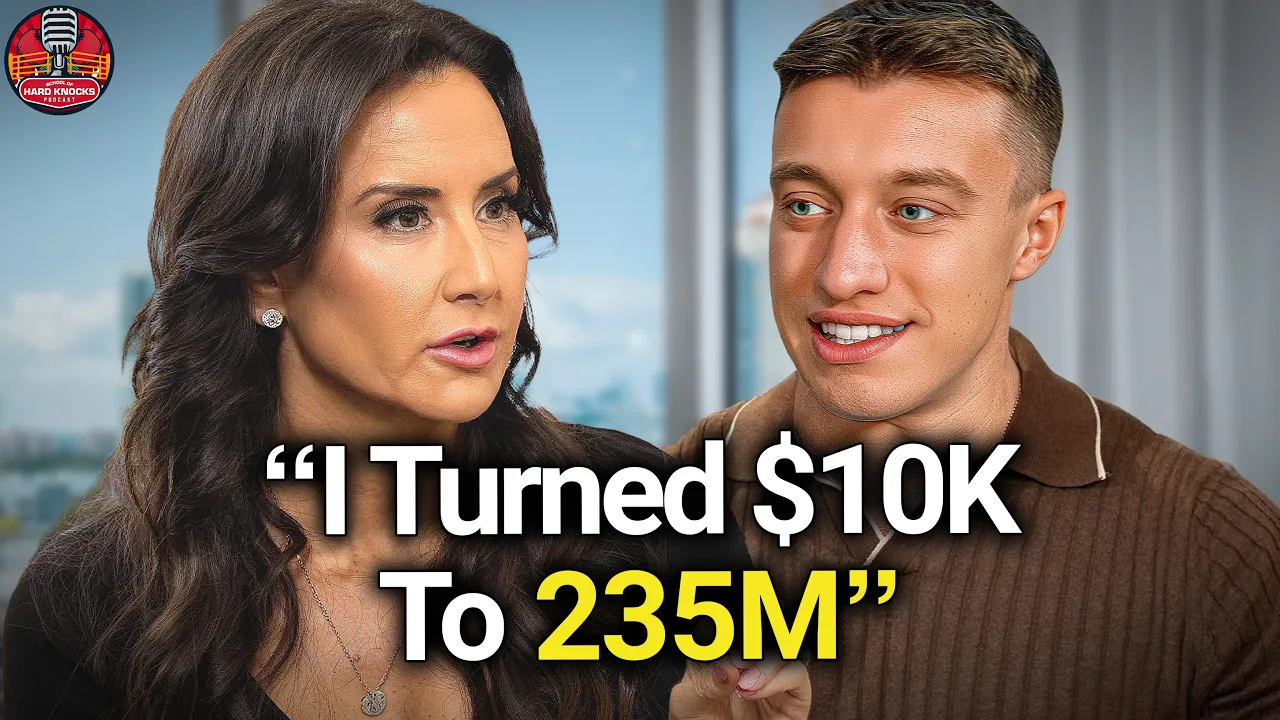

Read full article →
...