-
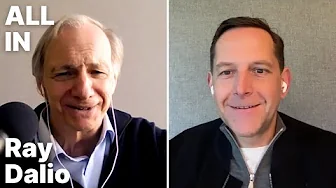
Dalio’s historical case is stark: of roughly 750 currency-and-debt markets since 1700, only about 20% still exist, and every survivor has devalued. He uses that record to reject the idea that reserve-currency status makes the United States exempt from debt-cycle mechanics.
-
For Dalio, the key crisis signal is forced selling: bondholders dump existing debt, long rates rise despite easier short rates, and money weakens against hard assets. He says recent U.S. bonds, gold and Bitcoin behavior resembles that warning pattern, although the full crisis dynamic is not yet underway.
-
Dalio’s “3% solution” is to cut the federal deficit from an expected roughly 7.5% of GDP to 3%, an improvement of about $900 billion a year. He says doing it while the economy is strong matters because compounding interest makes delay increasingly expensive.
-
Dalio says governments ultimately have four debt-crisis levers: taxes, spending cuts, restructuring, or central-bank debt purchases. None is painless; monetization relieves the immediate funding squeeze by creating money but shifts losses to bondholders and savers through inflation and currency depreciation.
-
Dalio owns Bitcoin, but far less than gold; gold is his preferred monetary diversifier, while he also favors productive businesses. He notes central banks and sovereign funds have reduced bond exposure and accumulated gold, which he sees as internationally accepted and harder to target than digital assets.
-
Dalio treats the U.S.-China AI contest as strategic, not merely commercial: losing the technology race could mean losing military power. He says China trails in advanced chips but leads in many applications and manufacturing scale, predicting cheap chips embedded in goods and robotics.
-
Dalio does not expect AI productivity to repair the budget soon enough; job displacement and transition costs may arrive before the revenue gains. That creates a sequencing problem: government may face new support demands while already trying to shrink deficits, even if AI eventually expands output.
-
Friedberg says he spent inauguration weekend meeting many members of Congress and most of the new cabinet, and came away convinced the debt issue was not getting serious attention. That matters because Dalio’s proposed fix requires coordinated, near-term political commitment rather than relying on the Fed alone.

All-In Podcast
January 24, 2025
Trump's First Week: Inauguration Recap, Executive Actions, TikTok, Stargate + Sacks is Back!
-
Friedberg’s strongest Washington takeaway was that DOGE’s real obstacle is political incentives, not identifying waste. Officials and lawmakers are rewarded for bringing jobs and spending home—he cited Mitch McConnell pressing for a delayed $60 million Kentucky agriculture lab—so meaningful cuts collide directly with reelection incentives.
-
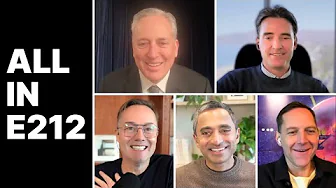
Thomas Laffont said TikTok’s breakthrough was simple: every uploaded post gets an audience before follower count matters. He described content being shown to one user and then progressively distributed according to engagement, and estimated the U.S. business could plausibly be worth about $100 billion despite its regulatory uncertainty.
-
Laffont said China stopped being the straightforward technology-investment opportunity his firm had exploited for two decades once technology became a national-security issue. U.S. and Chinese regulatory regimes changed, innovation and new listings slowed, and he described the Chinese policy environment as a “black box” whose ultimate motives he would not pretend to know.
-
As an OpenAI investor, Laffont argued that Stargate’s proposed $500 billion cost is less important than whether the infrastructure can earn an adequate return. If the economics work, he said, equity, debt and facility-level financing can supply the capital; OpenAI itself announced a four-year, $500 billion infrastructure plan led by OpenAI and SoftBank. (OpenAI)
-
The group identified electricity—not simply better chips—as a potential binding constraint on America’s AI ambitions. Laffont and Friedberg argued that China’s rapid power buildout and America’s long-stagnant nuclear expansion could overwhelm a U.S. chip advantage unless permitting accelerates and substantial new nuclear generation is built.
-
Chamath proposed that taxpayers should receive equity or royalties when government grants, land or permitting create large private gains. He cited Tesla’s $465 million federal loan and his own battery-materials company’s $150 million grant; Laffont agreed upside-sharing can make sense but warned that government ownership could distort competition by effectively choosing winners.
-
David Sacks joined directly from the White House and explained that he had been given formal responsibilities across crypto, AI and presidential science advice—but was still constrained by ethics onboarding. He would chair the digital-assets working group, help develop the AI action plan and co-chair PCAST, while saying he could listen but not yet fully shape policy. (The White House)
-
Laffont offered a revealing example of Broadcom CEO Hock Tan’s negotiating discipline: Tan allegedly received a price concession for retaining the Broadcom name, while the sellers forgot to negotiate the stock ticker. The combined company therefore kept Avago’s “AVGO” symbol—a tiny detail Laffont used to illustrate the mindset behind one of technology’s most successful acquisition machines.
January 19, 2025
Inauguration Interviews: Trump's Talent, Dem Rebrand & more w/ Whip Emmer, Reps Swalwell & Khanna
-
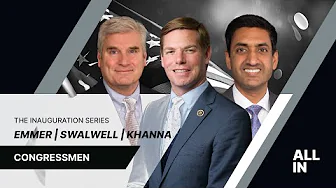
House Majority Whip Tom Emmer said Republicans had privately assembled possible savings and offsets he described as reaching $5–$7 trillion on a ten-year horizon. He outlined an aggressive reconciliation schedule culminating, if everything held, in a bill reaching Trump by Memorial Day.
-
Emmer said only about 40% of House Republicans would simply follow Speaker Mike Johnson, leaving roughly 60% who had to be actively brought into the process. His whip operation privately mixed hard-right and swing-district members so each could explain what it could and could not accept.
-
Emmer said one Social Security idea under discussion was a voluntary, federally constrained private option for younger entrants, loosely modeled on Australia’s superannuation system. He simultaneously stressed honoring existing promises and Trump’s pledge not to cut Social Security, Medicare, or Medicaid.
-
Emmer said he had “no problem” with Trump launching a meme coin immediately before taking office, despite the hosts raising ownership and influence risks. Jason Calacanis argued buyers should know who controlled the coins and warned that foreign adversaries could potentially use purchases to seek influence.
-
Eric Swalwell said Democrats had developed a “purity” problem: voters felt they had to check ideological boxes, while Republicans welcomed people who agreed only partly with Trump. He also called Mark Cuban one of the party’s best thought leaders and said he personally consults Cuban frequently.
-
Swalwell said he opposed the TikTok ban because he had not seen evidence convincing him that TikTok itself posed the asserted national-security threat. He said Intelligence Committee ranking Democrat Jim Himes, who had Gang of Eight access, also opposed the ban, which influenced Swalwell’s judgment.
-
Ro Khanna said he personally asked Bob Iger about running for mayor of Los Angeles but would not disclose what Iger told him privately. Khanna later said Los Angeles needed a new mayor and that he could support someone like Iger.
-
Khanna said 1.3 million people signed his petition to keep TikTok operating, including creators who depend on it for income. Instead of banning the platform, he proposed criminalizing foreign-government interference in recommendation algorithms and restricting American data from reaching the Chinese government.
-
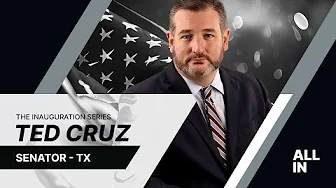
Ted Cruz said Elon Musk was already calling him periodically for help understanding how the federal government works, giving Cruz a direct advisory channel into DOGE. Cruz backed the project but warned that real cuts anger beneficiaries and ultimately require Trump himself to embrace spending restraint.
-
Cruz said White House officials once sent him onto Air Force One to persuade Trump not to enlarge COVID stimulus checks, but he failed. According to Cruz, Trump brushed him off with the argument that “no one ever lost an election by spending too much money,” illustrating why Cruz doubts fiscal restraint comes naturally to him.
-
Cruz said serious spending cuts face a bipartisan congressional obstacle, with essentially all Democrats and roughly half of Republicans supporting major spending bills. He estimated only about 20 senators regularly oppose trillion-dollar packages and said meaningful restraint therefore requires unusually strong presidential pressure.
-
Cruz treated acquiring Greenland as a serious policy project, not Trump trolling, and said he had personally raised it with Denmark’s ambassador. When the ambassador told him Greenland was not for sale, Cruz replied that “everything’s for sale”; he also discussed the idea with incoming Denmark ambassador Ken Howery and planned to push negotiations from the Senate.
-
Cruz said Trump spent part of a two-and-a-half-hour breakfast with Republican senators, the day before inauguration, discussing the Panama Canal and alleged disadvantages facing American shipping. Cruz interpreted Trump’s posture less as a realistic attempt to retake the canal than as leverage for lower U.S. transit costs and reduced Chinese influence.
-
Cruz said Matt Gaetz’s attorney-general nomination was withdrawn because multiple Republican senators were prepared to vote against him. He regarded Gaetz as the major confirmation failure but expected the remaining Trump nominees to survive, with figures such as Marco Rubio receiving substantial Democratic support.
-
Cruz said he discussed with Robert F. Kennedy Jr. a proposal that could dramatically shorten U.S. drug and medical-device approvals. His “RESULTS Act” would give the FDA 60 days to approve products already cleared in Canada, Japan or the EU, after which approval would become automatic; Cruz said Kennedy agreed with the approach.
-
Chamath Palihapitiya disclosed that he donated to Cruz’s first Senate campaign in 2012 even though he considered himself a Democratic donor at the time. He said the decision followed an encounter around a Peter Thiel event where Cruz impressed a largely Democratic group, showing their relationship predates Palihapitiya’s later political realignment.

-
Mark says his political break began with stories he initially dismissed as implausible later appearing in mainstream reporting, then hardened after he rewatched Trump’s Charlottesville remarks in 2024. He concluded he should rely more on primary sources and original speeches than on media framing.
-
The practical turning point was personal: Mark’s chief of staff of nine years left in April 2024, removing the person who routinely stopped him from posting political opinions. He began tweeting more freely, found a new techno-optimist audience, and publicly backed Trump two days before the election after his daughters urged him to say what he believed.
-
Reid Hoffman was already receiving worried messages that Mark was “becoming a Trumper,” but he did not treat the disagreement as a rupture. He opened a FaceTime call with “I’m team Mark,” then spent four hours at dinner trying to understand Mark’s principles and persuade him otherwise.
-
One host said his Philippines-based assistant from Athena costs about $3,000 a month and is the most effective administrative support he has ever had. His larger point was that chiefs of staff can become opinionated gatekeepers, filtering a founder’s real views instead of merely handling logistics.
-
Mark now sees direct communication as a strategic defense against being defined by press, competitors, or internal handlers. He recalls Reid warning that unless he chose a simple public narrative, others would create one for him, and credits social media and long-form podcasts with making that constraint easier to escape.
January 17, 2025
Red-pilled Billionaires, LA Fire Update, Newsom's Price Caps, TikTok Ban, Jobless MBAs
-
Mark Pincus said he wrote Napster’s first $100,000 check, helped fund Friendster, and joined the first financing rounds of Facebook and Twitter. He and Reid Hoffman also bought SixDegrees patents for $750,000 to prevent their use against the industry; Pincus says he still owns half, with Microsoft owning the rest.
-
Pincus said he and Reid Hoffman both met Biden and donated in December 2023, before Pincus publicly backed Trump two days before the 2024 election. Despite their political split, Hoffman opened a FaceTime call with “I’m Team Mark,” then spent four hours over dinner trying to understand and persuade him.
-
The central Los Angeles rebuild dispute was the separate price cap on rebuilding goods and services, not merely the 90-day restriction on unsolicited below-market property offers. Friedberg argued the cap could deter scarce contractors from relocating to Los Angeles, while Chamath acknowledged that disincentive even as he defended temporary protections for distressed homeowners.
-
The episode’s sharpest reconstruction example was the Northridge earthquake: I-10 was rebuilt in 66 days, with contractors offered $200,000 for each day they beat a 144-day deadline. The hosts used it to argue that disaster recovery can be accelerated dramatically when regulation, deadlines and financial incentives are aligned.
-
CoreLogic figures cited on the show put roughly 1.26 million California homes at moderate-or-greater wildfire risk, representing about $750 billion in value. Comparable exposure cited for Colorado, Texas, Oregon and Arizona framed the Los Angeles fires as part of a much larger western property-risk problem.
-
Pincus argued that banning TikTok outright could push some of its roughly 170 million American users toward other Chinese apps rather than solve the underlying problem. He favored American divestiture, while Chamath highlighted ByteDance’s Monolith recommendation paper as evidence of unusually sophisticated engineering inside the company.
-
Pincus argued elite MBAs were built as a career “risk-off” trade just as the safest corporate paths are shrinking. Chamath connected that shift to AI, arguing that middle managers built around enterprise-software workflows may be disrupted before frontline engineers or designers, leaving graduates trained for roles companies increasingly need fewer of.
-
Pincus described an unverified encounter with a former Defense Department contractor who claimed certain war-game conditions repeatedly “summoned” UAP-like drones and sought $1.5 million to recreate the phenomenon on film. Pincus did not fund it; after meetings involving him and Reid Hoffman, the contractor stopped responding, leaving the claim unsupported.

-
California’s wildfire-insurance system emerged as the episode’s clearest structural problem. Friedberg argued that rate controls pushed carriers out, citing roughly 1,600 State Farm non-renewals in Pacific Palisades and a FAIR Plan carrying billions in concentrated exposure that could ultimately shift losses toward taxpayers. (Los Angeles Times)
-
The wildfire discussion became personal when Friedberg’s parents were ordered to evacuate his childhood home as the Kenneth Fire approached. He left the recording to call them, then returned describing his mother packing jewelry while he repeatedly urged her to save the family photographs.
-
The panel explicitly rejected DEI as the cause of the Los Angeles fires, despite criticizing government priorities elsewhere. Their discussion instead centered on extreme dryness, Santa Ana winds, preparedness, land management, building standards and insurance, with Chamath arguing that similar fires in 2018 made the danger foreseeable.
-
Meta’s retreat from third-party fact-checking was interpreted mainly as adaptation to a changed political environment, not a proven ideological conversion by Zuckerberg. Chamath called it shareholder-value maximization, while Calacanis argued the timing after Trump’s victory and threats toward Zuckerberg reflected political expediency. (About Facebook)
-
Cyan Banister disclosed that she discovered Thumbtack, Density and Uber through Jason Calacanis’s early startup events. The episode also places her among early investors in SpaceX, Anduril, Postmates and Niantic, illustrating how a small Silicon Valley network produced several unusually valuable deals.
-
Banister said AI is making seed investing harder because dozens of startups can now attack the same idea almost simultaneously. She is reconsidering the old rule against backing competitors and has favored underlying infrastructure such as compute, power and lithography while application markets remain difficult to distinguish.
-
Nvidia’s $3,000 Project DIGITS was treated as potentially more important for local industrial AI than ordinary desktop computing. Friedberg argued that low-latency edge compute could power warehouse robots, machine vision, biotech research, cars and farm equipment without constantly sending data to distant cloud servers. (NVIDIA Newsroom)
-
Years earlier, Calacanis, Chamath and Banister filmed an approximately $500,000 NBC accelerator pilot connected to Harvey Weinstein’s production operation. Producers later approached Chamath and Banister about proceeding without Calacanis; they declined, and the entire project disappeared after the Weinstein scandal erupted.

-
Chamath’s strongest payments thesis was that dollar stablecoins had already crossed from crypto speculation into business infrastructure. He cited roughly 1.1 billion Q2 2024 transactions worth $8.5 trillion—more than double Visa’s volume—and said switching his own payment rails could save hundreds of thousands of dollars.
-
Freeberg’s “year of the robot” call rested on hardware already cheap enough to deploy, not distant prototypes. His group had just ordered China’s Unitree Go2, a $1,600 API-enabled robot they wanted on test farms for imaging and data collection; the humanoid G1 was discussed at about $16,000.
-
Gavin Baker argued that reasoning AI will increasingly reward companies rich enough to own compute, widening the gap between large and small businesses. He imagined a firm spending $1 million to let an AI reason for six weeks, and separately argued that renters of cloud compute cannot beat providers’ internal services on cost.
-
Baker’s clearest picks-and-shovels AI bet was high-bandwidth memory, which he viewed as a tighter bottleneck than the headline GPU makers. He said HBM represented more GPU cost than TSMC fabrication, named Hynix and Micron as the two current producers, and noted the category had been sold out for two years.
-
Gavin and Chamath converged on enterprise application software as a major AI casualty because agents attack both labor and software economics. Chamath said his roughly 30-person engineering team did the work of 300 and could profitably bid $10 against a legacy vendor’s $100 because AI-native costs were about an order of magnitude lower.
-
The autonomy discussion contained one unusually concrete adoption signal: Waymo was said to have reached 22% of San Francisco rides only 15 months after launch, matching Lyft. The investor making the case expected major financing, an IPO or tie-up as expansion broadened, while explicitly disclosing significant exposure to almost all the companies discussed.
-
Chamath treated a major-bank failure as unlikely but serious enough to justify buying credit-default-swap protection. His rationale was that roughly $70 trillion of combined government, corporate and mortgage debt makes 5% rates economically much heavier than they look; he described the hedge as usually losing but potentially paying 100–1,000 times.
-
Jason Calacanis’s most persuasive AI demo was a research task that assembled a bank-risk report from 162 websites using a $20 product. He compared the output to weeks of expensive consulting work, while also admitting he was not qualified to judge whether its conclusions were correct.

-
David Sacks said he recruited Chamath Palihapitiya to co-host a June 6 Trump fundraiser after being told they needed at least $5 million, with the pair prepared to cover any shortfall themselves. Chamath had never supported Republicans before; Sacks said commitments ultimately reached $13 million.
-
Palantir’s 2024 surge was tied not just to AI enthusiasm but to a customer-heavy operating model that had previously been mocked. Sacks cited a roughly fivefold stock rise from $16 to $76 and a market value surpassing Lockheed Martin, while Chamath emphasized how deeply Palantir worked alongside customers.
-
Two separate arguments pointed toward cheaper AI and greater pressure on OpenAI: Meta can subsidize models with advertising, while competitors controlling proprietary data and enormous compute may gain an edge. Aaron Levie highlighted Meta’s ability to give AI away; Chamath specifically cited X’s data and Musk’s massive Nvidia purchases.
-
Friedberg’s friends disclosed that none of them had managed to invest in his agriculture startup Ohalo except Founders Fund. They complained that Friedberg offers them opportunities only after a financing round closes and a new valuation has been established, an unusually candid glimpse into allocation even inside a close billionaire-investor circle.
-
The group sees Anduril benefiting from a possible reshaping of U.S. defense procurement, particularly as people connected to the company move closer to the incoming administration. Jason Calacanis linked Boeing’s troubles, China’s military development and pressure for more merit-based purchasing to his view that Anduril could become a major defense incumbent.
-
Chamath described MicroStrategy as essentially a highly leveraged Bitcoin investment vehicle under Michael Saylor. He said Saylor is focused on the company’s Bitcoin position rather than daily operations and has been borrowing at extremely low cost to amplify its exposure, producing extraordinary returns while obviously increasing risk.
-
The friendship behind All-In has come much closer to breaking than its public chemistry suggests. Sacks said he had become so annoyed with Jason Calacanis that he questioned continuing, while Friedberg separately admitted considering quitting many times because he disliked Calacanis; both nevertheless said the friendship had become deeply important to them.

-
Chamath Palihapitiya said SpaceX already uses stablecoins to move Starlink revenue out of smaller foreign markets without taking wire or currency-exchange friction. He argued that the same rails could eventually challenge card networks charging roughly 3%, making payments—not speculative tokens—the clearest near-term crypto use case.
-
The episode framed DOGE’s first real source of power as public pressure rather than formal government authority. Aaron Levie said Musk and Ramaswamy demonstrated that exposing disputed provisions online could make congressional support uncomfortable, while AI tools now let ordinary readers digest enormous bills far faster than before.
-
Levie described a government rule that forced one unnamed agency to use contractors costing roughly 2.5 times what comparable employees would cost. He said the arrangement also reduced accountability, offering a concrete example of how procurement rules can increase spending while producing worse operational control.
-
OpenAI’s latest financing created a major structural deadline: the episode says its $6.6 billion round at a $157 billion valuation requires a for-profit conversion within two years or investors can seek their money back. Musk is challenging the conversion in court, while Meta separately asked California’s attorney general to oppose it.
-
Palihapitiya and Levie expect foundation models to become increasingly interchangeable, with companies routing different tasks across several providers instead of committing to one. Levie argued that research spreads rapidly and open-source models cap pricing, eventually pushing token economics toward compute cost plus a modest margin.
-
Their deeper disagreement was over whether AI destroys the existing software market or expands it into work previously performed by people. Palihapitiya predicted today’s roughly $5 trillion software-and-IT economy could shrink toward $500 billion; Levie countered that AI agents could absorb service budgets and create entirely new software categories.
-
Friedberg said Ohalo already trained non-programmers with Cursor and ChatGPT to build internal software, but deploying it safely remains the harder problem. The group agreed that production integration, permissions, security, testing and regulatory approval—not generating interfaces or code—remain major barriers to companies replacing established enterprise systems themselves.
-
Google emerged as the episode’s strongest competitive threat to OpenAI because its AI progress now combines models, infrastructure, browser control and visual data. Friedberg argued Google’s long-built infrastructure and data advantages are compounding, while Levie said the company has shifted from protecting its existing business to launching aggressively because losing the AI race became the greater risk.

-
Rabois contrasted Khosla Ventures with Founders Fund: Khosla invests mostly at seed or Series A and helps build companies, while Founders Fund usually enters later and expects founders to run independently. He said almost every successful Founders Fund investment across eight funds entered at valuations above $500 million.
-
His ideal investment is a founder with only a deck, no product and no metrics, because he believes founder judgment matters most before data exists. When consulting experts, he asks only what makes the idea “metaphysically impossible”; absent a concrete constraint, he ignores the objections and invests.
-
Rabois said he would stay in venture because a two-to-five-year government stint could permanently damage his network, even as his husband Jacob Helberg was nominated as a State Department undersecretary. From his limited time with Trump, Rabois said he had watched him solicit views individually around a roughly 28-person dinner table before deciding. (The American Presidency Project)
-
Google’s Willow milestone was not the “10 septillion years” benchmark but error correction improving as qubit arrays grew from 3×3 to 5×5 to 7×7, a prerequisite for useful logical qubits. Friedberg saw cryptographic risk within years, while Rabois argued commercial quantum computing could still be a decade away.
-
The panel’s strongest Apple diagnosis was organizational: vertical integration still creates a formidable moat, but quality can decay when elite “taste” disappears and the company also resists data-driven UX measurement. Rabois argued that without Jobs/Ive-level judgment, Apple lacks the analytical backstop Meta or Google would use to catch obvious failures.
-
Rabois’s strongest TikTok case was about data access, not proven feed manipulation: he cited ByteDance’s 2022 misuse of journalists’ data and acknowledged he did not know whether TikTok’s content was being manipulated. His claim that TikTok might contain a Pegasus-like spying backdoor was explicitly an inference from congressional behavior, not public evidence. (Reuters)
-
Friedberg argued the venture exit drought is mainly a valuation-overhang problem, not a lack of public-market demand: investors who funded 2021–23 rounds resist IPOs that would crystallize 60–70% losses. Rabois agreed and added that billion-dollar venture funds generally need IPOs, because ordinary acquisitions are too small to return them.
-
Rabois said Stripe’s founders invert the normal IPO question: instead of asking why they should stay private, they ask what going public would actually give them. He believes they have recreated many public-company advantages privately, but public stock would still provide superior acquisition currency and strategic flexibility.
December 6, 2024
New SEC Chair, Bitcoin, xAI Supercomputer, UnitedHealth CEO murder, with Gavin Baker & Joe Lonsdale
-
David Sacks was named Trump’s White House AI and crypto czar, giving an All-In co-host direct influence over two industries the podcast regularly covers. Trump’s announcement said Sacks would guide AI and cryptocurrency policy and lead the President’s Council of Advisors on Science and Technology.
-
xAI’s Colossus reportedly linked more than 100,000 Nvidia GPUs into one coherent training cluster, far beyond the roughly 30,000-GPU limit many engineers had assumed. Investor Gavin Baker called Grok 3 the first meaningful test of whether training-scale gains were stalling, while disclosing that his firm owns xAI.
-
Baker argued that AI already has measurable economic returns, especially where it replaces labor rather than merely adding software features. He said some foundation-model “wrappers” rapidly reached profitability and estimated comparable startups now employ roughly 50% fewer people than three years earlier.
-
Friedberg said non-programmers at his company used Cursor to build and deploy working internal applications during a hackathon. He estimated AI-assisted development had improved from roughly 60% complete to 70–80% in two months, with debugging and production work still requiring humans.
-
Joe Lonsdale expects defense-tech consolidation around roughly seven to ten new major contractors rather than hundreds of lasting startups. He said about 95% of current defense spending still goes toward legacy systems, while disclosing that he founded three and backed three of what he described as nine defense-tech unicorns.
-
Baker warned that MicroStrategy’s debt-funded Bitcoin strategy eventually collides with the earning power of its underlying business. He estimated roughly $75 million in convertible-note interest against about $400 million of company revenue, arguing that heavy overcollateralization would ultimately destroy the strategy’s apparent “magic money” economics.
-
The sharpest regulatory disagreement concerned whether wealth should determine who may invest in private funds. Atkins had questioned a proposed $2.5 million threshold; Baker and Lonsdale favored broader access with stronger safeguards, while Friedberg warned that private markets’ weaker disclosure could expose ordinary investors to serious fraud.
-
Friedberg framed electricity generation—not merely chips—as a central constraint on American AI, manufacturing and strategic competitiveness. He cited projections of U.S. capacity rising from roughly one to two terawatts while China rises from about two to eight, and argued that accelerated nuclear construction should be a national priority.
-
Musk and Ramaswamy’s DOGE strategy was framed as an 18-month attempt to bypass congressional gridlock, not wait for new legislation. The plan discussed combines executive action, court rulings, procurement audits, temporary payment suspensions and scrutiny of roughly $500 billion in spending not specifically authorized by Congress.
-
The hosts thought DOGE’s most achievable early victory was radical transparency rather than abolishing entire federal departments. They proposed publicly exposing waste, auditing payments and using leaderboards to reward savings, while Sacks explicitly rejected Milton Friedman–scale expectations and argued that merely bending federal finances toward sustainability would matter.
-
Musk’s political machinery was presented as a potential enforcement arm for DOGE inside the Republican Party. Chamath proposed combining public transparency with a well-funded PAC and primary challengers against resistant incumbents, while Sacks argued that old-guard Republicans protecting existing arrangements could prove a larger obstacle than Democrats.
-
The group disagreed over whether DOGE should first build public consensus or simply exploit its short political window and act. Calacanis wanted obvious waste targeted first and savings visibly connected to ordinary taxpayers; Chamath and Sacks argued opposition was inevitable and implementation should not be constrained by attempts to satisfy everyone.
-
The Ukraine discussion centered on Biden’s late-term decision allowing U.S.-supplied long-range weapons to strike inside Russia and the resulting escalation risk. Sacks connected it to Russia’s subsequent use of the hypersonic, multiple-warhead-capable Oreshnik missile, while stressing that Trump would inherit the conflict without owning the preceding policy. (Reuters)
-
A Nature study supplied the episode’s strongest scientific finding: adipose tissue can retain a biological “memory” of obesity after substantial weight loss. Human and mouse tissue retained transcriptional changes, while mice showed persistent epigenetic alterations and faster rebound weight gain, providing a plausible biological mechanism for why maintaining weight loss can be difficult. (nature.com)

November 16, 2024
Trump's market impact: Bitcoin, M&A, IPOs + transition picks; Polymarket CEO raided by FBI
-
Chamath said selling Bitcoin in his funds became a $3–4 billion opportunity-cost mistake, driven by partners who wanted to distribute the holdings. He still views Bitcoin today as a dollar-denominated, correlated risk asset rather than an independent store of value, making macro conditions crucial for risk management.
-
The post-election rally carries a warning: credit spreads collapsed while the 10-year Treasury stayed near 4.5% despite 75 basis points of Fed cuts. Friedberg saw aggressive risk-taking or declining Treasury confidence, while Chamath said persistent 8%-of-GDP deficits could ultimately push the 10-year toward 7–8%.
-
Sacks argued Republicans were close to giving crypto the regulatory line the industry wanted: decentralized networks treated as commodities under the CFTC, non-decentralized ones as securities. He pointed to FIT21’s House passage with 71 Democratic votes and said Republican Senate control materially improved its prospects.
-
Despite hopes for an IPO and M&A boom, Chamath expects major deals and listings to remain subdued through at least early 2025 because safe yields remain unusually competitive. Jason added that private SaaS secondary discounts he sees narrowed from 70–90% last year to 20–30%, indicating materially firmer valuations.
-
Sacks expects Google, rather than Meta, to face the more serious breakup threat under the incoming administration. He described search, advertising and YouTube as three monopolies and considered investigation or similar action highly likely, while arguing Meta’s speech controversies should be addressed without breaking up the company.
-
The FBI raided Polymarket CEO Shane Copeland’s home at 6 a.m. and seized his phone eight days after the election, amid an investigation into alleged U.S. trading. Polymarket remained bound by its 2022 CFTC settlement restricting U.S. users even as Kalshi had separately won a court fight enabling election markets.
-
Freeberg’s most revealing reading of Trump’s cabinet was that the controversial picks are meant to stress-test agencies, not simply administer them. He called the approach an “extinction event” for bureaucracy, while Chamath noted DOGE’s stated 2026 deadline; both expected government to look materially different afterward.
-
Sacks described Trump’s appointments as a coalition rather than a single ideological faction, combining health, libertarian, populist and hawkish constituencies. He singled out Tulsi Gabbard as a dovish counterweight because he regarded an unnecessary war as the largest risk of a second Trump term.
-
David Sacks said election-night insiders at Mar-a-Lago had no secret result; they were watching returns like everyone else, while Trump appeared unusually calm. Confidence hardened only after Pennsylvania was called, after which Sacks joined the larger gathering for Trump’s victory speech.
-
The panel’s clearest campaign-operations contrast was money versus direct reach: they cited roughly $900 million in Harris campaign spending against about $350 million for Trump, alongside a much larger Democratic super-PAC spend. They argued Trump’s podcasts and other “earned media” reduced his dependence on paid advertising.
-
The most concrete Musk story was his narrow focus on Pennsylvania and young male voters, backed by a PAC that built turnout and transportation operations in only a month or two. The hosts described his $1 million sweepstakes primarily as a way to acquire supporter information for subsequent outreach.
-
Sacks said a 53- or 54-seat Republican Senate would materially widen Trump’s freedom on appointments, including a possible Robert F. Kennedy Jr. confirmation. On spending, he treated Musk’s proposed $2 trillion cut as an opening target rather than a likely outcome because major reductions would require Congress.
-
The transition fight, in Sacks’s telling, was already shifting from campaigning to personnel control: he feared establishment figures would flood Mar-a-Lago once Trump had won. He wanted reform-minded outsiders and said he would consider a part-time advisory role, but not leave Craft Ventures for full-time government service.
-
A proposed governing strategy was “radical transparency”: mass declassification, faster FOIA access, and a government-wide “Twitter Files” exercise before deeper bureaucratic reform. Chamath and Sacks framed RFK Jr. as useful to that agenda, while Friedberg explicitly warned that Kennedy has made statements he considers factually wrong.
-
Chamath gave a revealing personal reason for reassessing Trump: among major politicians he had known, he said Democrats contacted him mainly for money, while Trump alone had called simply to talk and thank him. He described that private treatment as one reason he reconsidered his previous assumptions.
-
The hosts did not treat Trump’s largest promises uniformly literally: Sacks said “day one” on Ukraine meant urgent effort and viewed deporting 500,000–1 million serious offenders as meaningful even without removing 15 million people. Calacanis, by contrast, said mass removal of the broader population could be disastrous.

November 1, 2024
Inflated GDP?, Google earnings, How the media lost trust, Rogan/Trump search controversy, Election!
-
All-In said it planned to spend about $1 million on its December 7 San Francisco holiday event even though it expected to lose money. Athena had already bought VIP tickets for top employees and customers, effectively turning the show’s event into its own company holiday party.
-
The panel’s biggest economic concern was the failure of long-term rates to fall after Fed cuts, creating refinancing pressure across households, commercial property, banks and federal debt. They cited 10-year Treasuries near 4.3%, large bank unrealized losses and nearly $10 trillion of federal debt needing refinancing.
-
Google’s quarter showed how far YouTube and Cloud have become standalone-scale businesses inside Alphabet. The hosts calculated roughly $15 billion of YouTube’s trailing $50 billion revenue came from non-ad products, while Google Cloud posted $11.4 billion revenue, 35% growth and $1.9 billion operating profit.
-
Chamath argued Alphabet’s breakup value could exceed its conglomerate valuation, while Jason countered that YouTube, Cloud and Waymo were built with years of cash generated by search. Their disagreement boiled down to whether public capital markets could have financed those businesses independently at comparable scale.
-
Sacks proposed ending free legacy broadcast-spectrum licenses for local TV stations and auctioning the frequencies instead. He argued the spectrum is unusually valuable and preserved by broadcasters’ lobbying; Chamath said private-equity-backed bidders could include Rogan or even All-In.
-
All-In described itself as an unusually early access point for 2024 candidates, saying Trump was its second presidential podcast guest and it was first to host RFK Jr., Dean Phillips and Vivek Ramaswamy. The hosts said Harris was the one major candidate they sought but never secured.
-
The most revealing Google discussion came from Friedberg, who said he contacted several Google employees about the missing Trump–Rogan episode and received no clear answer. He heard mass user flagging may have automatically hidden it, while also saying people inside Google were actively concerned about perceptions of political bias.
-
The voter-fraud segment produced an unusual agreement: Jason argued documented fraud was far too rare to swing a presidential election, while Sacks rejected that certainty if verification rules weaken. Despite that dispute, the panel converged on early voting plus voter ID and proof of citizenship as preferred safeguards.
October 25, 2024
Markets turn Trump, Long rates spike, Election home stretch, Influencer mania, Saving Starbucks
-
The panel’s clearest macro point was that markets were simultaneously pricing inflation risk, strong nominal growth and expensive money: 10-year yields had jumped above 4.25%, gold to about $2,750 and equities remained near records. Chamath tied part of that move to election positioning; Sacks instead emphasized the Fed’s 50-basis-point cut and fiscal deterioration.
-
Freeberg framed the deeper problem as leverage: roughly $68 trillion across U.S. household, corporate and government debt, with about $4 trillion a year in interest under his assumptions. He also noted China had sharply reduced Treasury holdings from their peak while buying gold, increasing concern that the Fed may ultimately absorb more debt.
-
The investors were unusually cautious about conventional fixed income but not eager to trade the macro story aggressively. Paul Tudor Jones was cited as long gold, Bitcoin and commodities with “zero fixed income,” Druckenmiller as short Treasuries, while Chamath said election-driven trading creates false precision and he would mostly keep building.
-
The most revealing labor discussion was that some younger workers no longer see a job as their primary route to financial independence. Jason described side hustles, creator income and trading as protection against layoffs and return-to-office mandates; Chamath countered that an easy escape hatch can prevent people from enduring the difficulty that produces mastery.
-
Private-company liquidity still looked brutally uneven: Sacks said he was trying to sell SaaS holdings in secondary markets and finding essentially no bids. Jason, by contrast, said he had received three or four recent secondary offers, with discounts improving from roughly 80% below prior marks to about 25%.
-
Chamath said his view of January 6 had changed after he personally got to know Trump, and he no longer believed Trump had incited much of it. Jason pushed back by recalling their strongly condemnatory Episode 16 discussion, making the exchange a rare on-air record of how personal access accompanied a major change in one host’s interpretation.
-
Starbucks CEO Brian Niccol suspended 2025 guidance after same-store sales fell 7% and EPS fell 25%, then promised a simpler menu, better staffing, less mobile-order congestion and a return to the “community coffee house.” The hosts split on diagnosis: experience decay, business maturity, and possible GLP-1-driven changes in sugary-drink consumption.

October 18, 2024
Dueling Presidential interviews, SpaceX’s big catch, Robotaxis, Uber buying Expedia?, Nuclear NIMBY
-
SpaceX’s booster catch matters less as spectacle than as a step toward radically cheaper launch economics. Freeberg cited estimates of ~$90 million current hardware cost, a path toward ~$35 million, ~$1 million propellant and 200-ton payloads, arguing repeated reuse could eventually approach $10 per kilogram.
-
The proposed Uber–Expedia tie-up can be justified financially even if its product logic is weak. Freeberg modeled roughly $22 billion enterprise value and Expedia EBITDA potentially rising from ~$3 billion to ~$6 billion through cost cuts, while Sacks argued Uber users are unlikely to cross-shop planned travel.
-
Chamath’s stronger objection is that AI agents could make Expedia’s interface—and similar travel aggregators—far less valuable. He described Perplexity testing agentic checkout that can compare flights and transact directly, arguing Uber could spend $20–30 billion on a front end whose underlying data may eventually be accessed far more cheaply.
-
The headline that Big Tech is “funding nuclear” is less advanced than it sounds. Chamath said many announced SMR arrangements remain conditional on technology and regulatory approvals, signaling future customers without yet supplying the billions in risk capital required to prove and build the reactors.
-
The nuclear debate identified local consent as a bottleneck potentially as important as reactor technology. Sacks argued communities may block plants despite economic benefits, while Freeberg argued rising electricity demand will eventually force countries to choose between expanding nuclear capacity and accepting weaker energy-cost competitiveness.
-
Chamath said Tesla’s self-driving software finally converted him after years of being unimpressed by the company’s cars. After a two-week test he bought a Model S Plaid, said he now uses FSD daily, and identified the software rather than the car’s traditional quality as the decisive selling point.
October 11, 2024
Hurricane fallout, AlphaFold, Google breakup, Trump surge, VC giveback, TikTok survey
-
Florida’s housing problem is becoming an insurance-and-balance-sheet problem, not just a storm problem. Friedberg contrasted a $17 billion state reinsurance cap with a then-estimated $40–50 billion Milton loss and $454 billion in Florida mortgages, arguing that repeated disasters could force repricing, federal support, or major household-equity losses.
-
Cleaner shipping fuel may have removed an unintended brake on ocean warming. Friedberg cited research arguing that sulfur-dioxide cuts since 2020 reduced reflective ship-track clouds, allowing more solar energy into the ocean and potentially accelerating warming alongside broader atmospheric warming and climate cycles.
-
AlphaFold has already moved from scientific breakthrough to an investable industry. Friedberg said DeepMind’s work led to AlphaFold 3 and Isomorphic Labs, while dozens of companies and several billion dollars have pursued AI-designed drugs and industrial biotech—the shift is from predicting proteins toward designing useful molecules.
-
The Google breakup debate is partly a fight over whether monopoly-scale profits subsidize valuable long-term research. Friedberg pointed to DeepMind and Waymo as projects sustained by Google’s scale, while proposed DOJ remedies discussed included ending default-search agreements and separating Chrome or Android—the same integration funding moonshots can also reinforce distribution power.
-
A private ad-tech anecdote explains why smaller consumer platforms struggle to challenge dominant advertising systems even with cheaper inventory. Chamath said three major public-company CEOs had spent years building ad tools, yet CMOs still preferred incumbents for superior tooling, scale and breadth, creating a self-reinforcing barrier to competition.
-
CRV’s move to return or not call about $275 million may say more about fund structure than a blanket retreat from growth investing. The firm cited high late-stage valuations and weak exits, but Sacks noted that an opportunity fund might simply have lacked enough existing portfolio winners requiring additional capital.
-
Venture fund size now creates a brutal arithmetic problem for managers and LPs. The panel calculated that a $1 billion fund owning 10% of its best company needs roughly a $30 billion outcome to return 3×, while LPs are increasingly concentrating capital in fewer managers rather than spreading it broadly.
-
TikTok has become a major news-distribution layer for young adults without becoming primarily a political-content app. Pew data cited on the show said 40% of U.S. adults aged 18–29 regularly get news there and 52% of users do, yet 95% use TikTok for entertainment and only 10% of followed accounts post political or social issues.
-
Adyen sees Stripe less as its principal enemy than banks and legacy payment processors, where co-CEO Ingo Uytdehaage says most new volume is actually won. Adyen’s single global platform is designed to lower merchants’ payment costs while improving authorization rates, attacking incumbents on both economics and performance.
-
Adyen is deliberately moving beyond payment processing toward owning more of the financial infrastructure itself. In the U.S. it has direct infrastructure access and a banking license, reducing dependence on commercial banks while positioning the company to provide broader financial products through software platforms.
-
Adyen has no intention of sacrificing its unusually high profitability simply to become the cheapest processor. Uytdehaage argues that merchants willingly pay premium prices for measurable value and that aggressive price-cutting would destroy economics; the company will instead reinvest selectively when credible growth opportunities appear.
-
The U.S. has become more than one-third of Adyen’s revenue after the company learned that serving America remotely from Amsterdam was insufficient. It now employs more than 800 people there, and Uytdehaage says traction improved materially once product and engineering teams were placed close to U.S. customers.
-
Adyen seriously considered a U.S. listing in 2018 but concluded Europe could deliver equal or better economics. Roughly 60–65% of its investors at listing were American, while scarcity as a major European technology stock helped Adyen command a premium rather than the valuation penalty management had feared.
-
Entering India required roughly six years of infrastructure and regulatory work rather than a conventional market launch. Adyen rebuilt its data architecture around localization rules, established Indian data centers and obtained licenses, leaving it among very few international providers able to serve both domestic and cross-border needs there.
-
Adyen already has commercially meaningful AI in production: its U.S. debit-routing system can cut merchant costs by more than 20%. The system dynamically chooses payment rails while balancing authorization performance, has been deployed with customers including eBay and Microsoft, and reflects Adyen’s preference for proven production applications over speculative AI spending.
-
Adyen sees stablecoins as potentially useful for cross-border payments and reducing dependence on aging systems such as SWIFT, but not as necessary for ordinary domestic payments in developed markets. Uytdehaage said Adyen would more likely integrate with stablecoin providers than issue its own coin.
-
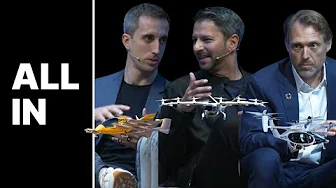
At the time of the panel, executives expected the first real eVTOL passenger services to launch abroad before the United States, with Archer targeting Abu Dhabi and Joby Dubai. Goldstein said U.S. regulation made domestic launch harder; both firms were meeting UAE aviation officials, while Joby planned four Dubai vertiports and 2025 commercial service.
-
The near-term product is airport transport on a few dense routes, not thousands of flying cars over cities. Airports were described as the easiest initial operating bases, Archer designed around 20–50-mile “hero routes” such as Manhattan-to-airport trips, and Brian Yutko said even bullish deployment would not soon replace existing helicopters.
-
eVTOL became financeable largely because the 2021 public-market window supplied capital traditional venture investors would not. Goldstein said roughly $1 billion upfront scared off most VCs; Archer said it raised nearly $1.5 billion, Stellantis invested almost $300 million, and United ordered up to $1.5 billion of aircraft.
-
No battery breakthrough is required for initial service. Archer uses commercial Molicel lithium-ion cells and designed Midnight mainly for repeated 20–50-mile trips, while Joby said its certification cells are about 300 Wh/kg, nearly double the roughly 170 Wh/kg available when it began in 2009.
-
Joby’s core urban-acceptance claim is that its aircraft can be quieter than ordinary city background noise while adding redundancy unavailable in conventional helicopters. JoeBen Bevirt said Joby achieved below 65 dB around takeoff and landing and 45 dB in overflight, with six propellers driven by separate motors, inverters and battery packs.
-
Initial service will still have real weather limits: Joby does not plan to certify its first aircraft for known icing. Bevirt said the fleet would simply be grounded in certain icing conditions, meaning service in colder northeastern markets could be unavailable a few percent of the time.
-
Wisk is taking the slower but more radical path: certifying passenger flight without an onboard pilot. Brian Yutko traced its lineage from Larry Page through Kitty Hawk and a joint venture to Boeing ownership, while acknowledging Joby and Archer would launch first because piloted certification comes sooner.
-
The hardest regulatory problem is not simply “approval”; autonomous aircraft force aviation rules themselves to be rewritten. Yutko noted existing rules repeatedly specify what “the pilot shall” do, while retired FAA expertise and frontier technologies leave regulators and manufacturers learning the safety case together rather than applying a ready-made standard.
-
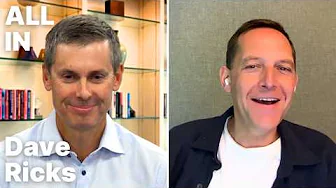
Lilly is betting that tirzepatide can become far more than an obesity drug. Ricks said Lilly has 105 studies underway across other chronic diseases, while a three-year study in overweight adults with prediabetes produced 94% fewer new diabetes diagnoses.
-
The biggest constraint on GLP-1 growth is increasingly manufacturing, not demand. Lilly has approvals in more than 40 countries where it has not launched because it cannot supply enough injectable drug, making its phase-three oral GLP-1 orforglipron potentially crucial for mass-market scale.
-
For most patients, today’s obesity drugs remain long-term treatments rather than temporary cures. Ricks said weight typically returns after stopping therapy, although Lilly is researching mechanisms that might reset the body’s defended weight and studying easier maintenance approaches after initial weight loss.
-
Insurance coverage remains the main barrier between GLP-1 demand and widespread use. Ricks estimated only about half of employer plans cover obesity drugs; Lilly Direct now combines telehealth with mail fulfillment, while discounted Zepbound options cited in the interview ranged from roughly $399 to $600 monthly.
-
Lilly’s economics depend on reinvesting unusually large profits into unusually large scientific bets. Ricks said the company would spend more than $11 billion on R&D that year and expects mature net GLP-1 pricing around $3,000–$4,000 annually, despite much higher headline prices.
-
Lilly is building its future through many small external bets rather than a few giant acquisitions. Ricks said its venture arm makes hundreds of investments and Lilly bought roughly 24 companies for about $3 billion in one year, aiming to buy promising science before major de-risking events sharply increase valuations.
-
Ricks has made development speed a measurable competitive advantage. Lilly cut its average first-human-dose-to-FDA timeline from about 11 years to 6.1, while work that once took 120 days between receiving trial data and submitting to the FDA can now routinely be completed within two weeks.
-
Ricks does not expect AI to replace experimental drug development anytime soon. Lilly works with OpenAI, Microsoft, Amazon, Google and others, but he sees near-term value mainly in optimizing specific steps and killing low-probability ideas early, with wet-lab and clinical feedback remaining essential.
-
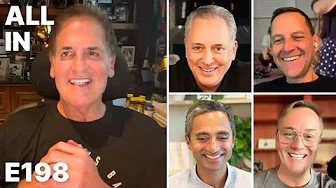
Cuban said his opposition to Trump came after unusually direct access: Trump called him roughly 10–15 times during the 2015–16 campaign, but Cuban said attempts to discuss policy rarely became substantive. Even after criticizing him publicly, Cuban later advised the Trump White House on healthcare and worked with Peter Navarro on pandemic PPE production.
-
Cuban said he has discussed crypto regulation directly with Kamala Harris, including his complaint that Gary Gensler’s SEC relies on “regulation through litigation.” His practical example was Lazy.com: he said a roughly $100,000-revenue NFT business found the SEC process too expensive and unworkable to register a token.
-
Cuban sold three-quarters of the Mavericks but kept 27.7%, largely because future growth required real-estate and casino expertise he did not want to learn and because he wanted to spare his children succession pressure. He said a Venetian-style Dallas casino around the American Airlines Center could push the franchise valuation to $20 billion.
-
During the NBA’s lean years, Cuban exploited other teams’ financial stress by buying first-round picks for $3 million and acquiring players from clubs that could not afford them. He credited that spending advantage with the Mavericks’ 15-year run without a losing season and roughly a decade of 50-win seasons.
-
Cost Plus Drugs’ clearest pricing example was droxidopa: Cuban said a friend losing insurance was quoted $110,000 per quarter elsewhere, while Cost Plus initially charged $64 per month and later about $20. He said falling acquisition costs are passed directly through rather than preserved as margin.
-
Cost Plus is still losing money, Cuban said, largely because he funded a robotics-driven factory for scarce sterile injectables, but he expects rapid growth. Its deeper weapon is transparency: the company publishes weekly prices for about 2,500 drugs, letting employers compare costs that Cuban says PBM contracts obscure.
-
Cuban has slowed his AI investing despite owning Groq and indirect OpenAI exposure, because he sees foundational models as an expensive race with uncertain winners. He expects tens of millions of specialized models and believes many standalone AI “agents” will become features that smarter models can create for users themselves.
-
Cuban flatly rejected a presidential run, saying his wife and children hated the idea because their lives are already difficult to keep normal. That concern also fits his Mavericks decision: reducing pressure on his children, not simply cashing out, was one of his stated reasons for selling control.
-
Juan Carlos Belmonte’s central result is that short pulses of Yamanaka factors rejuvenated accelerated-aging mice without correcting the mutation causing their disease. The intervention changed the epigenome instead, producing healthier animals that lived longer despite retaining the underlying genetic defect.
-
The effect was not confined to one disease model. In leptin-mutant mice, treatment reduced liver fat and restored youthful glucose responses despite continued overeating, while Belmonte reported similar results in laboratory models of kidney, skin, liver and muscle disease.
-
The crucial safety distinction is partial reprogramming: prolonged Yamanaka-factor exposure can erase a cell’s identity, impair organ function and permit cancer, while brief pulses preserve identity. Belmonte described the pulse as a temporary chromatin “shock” after which cells retain their type but function better.
-
Belmonte’s team says it can restrict reprogramming to unhealthy cells instead of exposing healthy tissue. Using markers associated with dysfunctional cells, the researchers targeted Yamanaka factors selectively and reported longer lifespan, prevention of gray hair and dramatically improved wound healing in very old mice.
-
Rejuvenating organs outside the body may be the safest first bridge to human medicine. Belmonte described treating old donor kidneys with a short ex-vivo pulse before transplantation, which improved recipient survival and could eventually make some currently discarded organs usable.
-
Human rejuvenation has not yet been demonstrated in whole people; Belmonte said the work has reached isolated human cells, with animal-to-human translation still requiring caution and replication. He identified severe acute diseases and organ transplantation as plausible early targets because the risk-benefit case is clearer than treating ordinary aging.
-
Belmonte said exercise produces surprisingly similar gene-expression changes to short Yamanaka-factor pulses, linking ordinary lifestyle interventions to the same cellular-resilience pathways under study. He nevertheless offered no precise exercise prescription, saying much of this biology remains unresolved and human translation is only beginning.
-
Altos Labs is pursuing this as both fundamental science and drug development, backed by billions of dollars and searching beyond the original Yamanaka proteins. The longer-term goal is to find proteins, peptides or small molecules capable of producing comparable epigenetic effects safely enough to become an ordinary medicine, potentially even a pill.
-
Gecko began because a power-plant manager told Jake his best friend had died doing a rope inspection in the exact spot where Jake stood. The same boiler reportedly lost 40% uptime to tube explosions at $2 million per day, and Jake says his first wall-climbing ultrasonic robot saved the plant $30 million that year.
-
Gecko turned inspection from a shutdown expense into an operating tool. At one Georgia facility, robots gathered terabytes of tank data in 12 hours instead of about a month offline; across 50 assets, Gecko says it extended useful life by ten years on average, created $15 million in value, and lifted margin about 4%.
-
The commercial upside is now large enough to support enterprise-scale contracts. Jake said the world’s 12th-largest oil-and-gas company identified 100,000 tanks and about $122,000 of ROI per tank, leading to an initial $30 million contract that he expects to grow to $100 million.
-
Gecko’s defense work has moved from pilots into meaningful programs. Jake said its Navy work is now worth tens of millions after cutting flight-deck inspection labor 85% and turnaround by about a month; Gecko is also helping scope Air Force missile-silo modernization and the Columbia-class submarine program.
-
The company deliberately sells software, not robots, even though robots collect the data. Customers buy a software implementation and recurring license, with robots treated as the data-gathering layer; the sales conversation has moved from plant managers toward CTOs and CFOs because the product affects depreciation, throughput, and capital allocation.
-
Jake rejected advice to build the robots in a lab and instead developed them inside customer facilities, sometimes soldering on site. That forward-deployed approach let Gecko sell directly to plant managers, fail and repair in real conditions, and become profitable in 2017, one year after its 2016 YC launch.
-
Gecko’s strategic moat is the first-party industrial data, not ownership of every robot. Jake said third-party machines such as ANYbotics can plug into Gecko’s API, and he would happily buy Optimus robots; the company wants whatever machines can collect useful data for its operating platform.
-
Jake’s broader bet is that first-party data companies will beat standalone SaaS as software becomes commoditized. Gecko’s robots, sensors, and fixed monitors create proprietary datasets from infrastructure that often still relies on paper records or missing asset lists, giving its software information competitors cannot simply license.
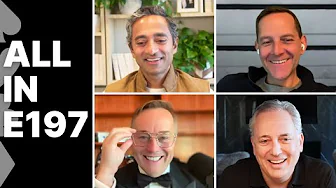
September 27, 2024
OpenAI's $150B conversion, Meta's AR glasses, Blue-collar boom, Risk of nuclear war
-
OpenAI’s proposed restructuring would remove the 100× investor profit cap, leave the nonprofit as a minority shareholder, and reportedly give Sam Altman 7% equity—about $10.5 billion at a $150 billion valuation. The round was described as roughly $6–7 billion and contingent on completing the corporate conversion, with the exact structure still under negotiation.
-
The OpenAI conversion also reopens a founder-money dispute: Sacks said Elon Musk put in the first $50 million as a nonprofit cofounder yet would receive nothing in the reported restructuring. Reid Hoffman’s counterargument, as relayed by Sacks, was that Musk later had the chance to invest in the for-profit entity and declined.
-
The hardest question around OpenAI is not growth but durability: the company had lost multiple senior figures while open-source rivals and platform giants were closing in. Chamath’s bear case combined model commoditization, Meta and Google distribution, the cost of synthetic training data, and executive churn—an unusual mix for a company priced for dominance.
-
Friedberg said o1 was already eliminating analyst work inside his company, turning projects that took days into answers produced in minutes. Calacanis described his investment team using AI across 20,000 annual applications and legal documents, while OpenAI had told investors that reasoning models would be followed by agents able to execute multi-step work.
-
Marc Benioff personally called David Sacks to push back on claims AI will make systems of record obsolete, arguing enterprises still need exact records, security, compliance and integration. Chamath countered that agents can increasingly work directly on raw data, which he expects to weaken per-seat pricing and force cheaper renewals or usage-based models.
-
Meta’s Orion prototype was presented as a serious step toward post-phone computing: about 1,000 pairs existed, with a wristband reading finger and wrist movements while the glasses overlaid information on the real world. The panel agreed voice, eye tracking and gesture control are converging, but disagreed that glasses will be the final mass-market form.
-
The labor-market discussion focused on which skills will command value: developer postings were cited as down more than 30% from February 2020, while teens increasingly favored trades and work experience. Friedberg argued that as AI cheapens standardized output, human service and craftsmanship may become premium products rather than residual jobs.
-
The episode’s most specific geopolitical call was Friedberg’s estimate of greater than 30–40% odds of a multinational Middle East war before the 2024 U.S. election if Israel’s Lebanon operation widened. Sacks separately argued that a deteriorating Ukraine war could increase pressure for direct Western intervention, making escalation—not battlefield outcomes—the central risk.
-
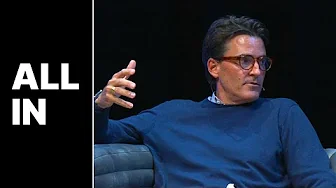
Venture capital has a liquidity crisis despite healthy fundraising, with distributions to LPs near financial-crisis lows. Coatue counts roughly 1,500 private companies last valued above $1 billion, leaving an enormous backlog of unicorns still waiting for exits.
-
The IPO drought is historically extreme, not merely slow. Coatue said 2022, 2023 and 2024 each produced fewer IPOs than 2008–09 or 2001–02, while post-2020 IPOs destroyed about $225 billion in value against only $84 billion created.
-
Weak companies are increasingly surviving through defensive financings rather than clean new rounds or exits. Bridge and down rounds have risen from roughly 30% to almost 63% of financings, while the 2021 cohort’s refinancing-or-exit rate fell nearly by half versus 2016 and 2022 is tracking worse.
-
The venture model’s holding period has effectively doubled, sharply damaging returns even when eventual outcomes remain similar. Thomas described the old expectation as seven-to-ten-year liquidity; a leading Series A firm told him comparable fund performance stretched over twice the time cuts the resulting IRR roughly in half.
-
Bill Gurley privately told Thomas that investors themselves helped create the IPO blockage, and Thomas agreed. Their critique was that private capital and founder secondaries let mature companies remain private longer, while venture-backed boards also tolerated the behavior instead of forcing companies toward public-market discipline.
-
Late-stage startups now compete for capital against investments that can offer far better liquidity and proven economics. Thomas noted public investors could take roughly 5% risk-free, buy trillion-dollar technology companies growing above 15%, or choose AI companies growing 50–100%, forcing new listings to deliver profitability, growth and scale simultaneously.
-
Databricks CEO Ali Ghodsi privately gave Thomas a striking operating number: a cloud business at roughly $500 million ARR that was near zero only a few years earlier. Ghodsi also asked him to emphasize that Databricks was growing above 60% while becoming more efficient despite continuing to burn cash.
-
One panelist said mishandling his Slack direct-listing exit cost him roughly $1.2–$1.24 billion. His lesson was painfully specific: he distributed his shares too late and, knowing the eventual price path, would have sold every share immediately rather than assuming waiting would produce a better outcome.
-
NASA’s Artemis strategy is to build a sustained human presence at the Moon’s south pole, not repeat Apollo-style visits. The plan includes rovers, bases and nuclear power, with the Moon explicitly treated as a proving ground for Mars under NASA’s dedicated Moon to Mars directorate.
-
SpaceX’s Starship was central to NASA’s first planned Artemis lunar landing, serving as the human landing system from lunar orbit to the surface. NASA required an uncrewed demonstration first; its SpaceX contract covered the Moon, while Elon Musk’s proposed near-term Mars missions remained separate.
-
A storm damaged a Guam ground station shortly before Woody Hoburg’s spacewalks, creating long periods when he could not talk directly to Mission Control. Frank Rubio and Sultan Al Neyadi created an onboard command post, operated the robotic arm and relayed procedures through the communications gaps.
-
ISS researchers exploit microgravity because heart tissue ages much faster there, turning orbit into an accelerated model for studying heart disease. Hoburg’s mission also biofabricated a section of human meniscus, illustrating the station’s unusual value for biomedical experimentation.
-
Polaris Dawn’s planned spacewalk required depressurizing the entire Crew Dragon because it had no airlock, forcing every occupant into a spacesuit. Hoburg had months to acclimate to weightlessness before his first EVA; the Polaris crew would face that experience after only days in orbit.
-
The Space Shuttle’s retirement left Russian Soyuz as NASA’s only crew transport to the ISS until SpaceX restored a U.S. launch option in May 2020. Hoburg later piloted Crew Dragon Endeavour, the same capsule used by Bob Behnken and Doug Hurley on that breakthrough test flight.
-
Life aboard the ISS is dominated by maintenance and physical countermeasures almost as much as science. Crew members exercise about 2½ hours daily, repair toilets, CO₂ scrubbers and spacesuits, and dispose of trash by loading cargo vehicles that burn up during atmospheric re-entry.
-
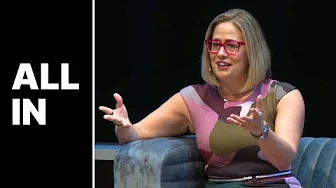
Sinema says party discipline collided with her immediately: on her first Senate vote, Chuck Schumer personally asked her to oppose an Israel measure for party unity, and she refused. She presents that call as an early example of why she ultimately left Democrats and became an independent. (U.S. Senate)
-
Sinema describes campaign money as a practical enforcement mechanism: follow the party line and “the machine” helps line up funding; dissent and you must build your own network. After her filibuster stand, she says regular political money sources stopped calling; she estimated a competitive Arizona Senate race costs about $150 million.
-
Sinema says the bipartisan infrastructure law began with her and Republican Rob Portman quietly building a plan before assembling five Democrats and five Republicans. That ten-senator group was real and the Senate passed the bill 69–30, making it a concrete example of her coalition-first approach. (Susan Collins)
-
On Build Back Better, Sinema says she tried to remove ambiguity early: she publicly declared she would not support it, then gave the White House a spreadsheet of tax policies she would consider. She says it took roughly 14 months for party leaders to accept that her stated limits were fixed.
-
A small bipartisan group including Sinema, Bill Cassidy and Angus King tried to address Social Security and Medicare finances, but colleagues on both sides told them to wait until after the election. Sinema’s explanation was blunt: fixes require short-term sacrifice, while incumbents focused on reelection avoid immediate costs.
-
Sinema says a viable third party is not yet realistic despite her close relationship with No Labels. Her explanation is strategic: voters may dislike both parties, but fear of the other side winning keeps them inside the two-party system; No Labels ultimately abandoned its 2024 presidential bid. (Reuters)
-
Sinema says she is leaving electoral politics for private industry because she expects Washington gridlock to worsen and sees more room to solve problems outside government. That followed her March 2024 decision not to seek reelection, closing a Senate career marked by repeated breaks with party leadership. (Reuters)
-
Sinema says she has taught at Arizona State University for 21 years and studied genocide academically, including Rwanda. ASU confirms she began teaching there in 2003 and earned a PhD in Justice Studies, giving useful context to her unusually detailed discussion of universities, ideological conformity and uncomfortable debate. (search.asu.edu)
-
Arora says his rise at Google followed a measurable result: Europe grew from 24% to 49% of global revenue and briefly exceeded the U.S. Eric Schmidt then called him while he was in Russia opening an office and asked him to move to America to replace his retiring boss.
-
At SoftBank, Masayoshi Son taught Arora to stop spending time rescuing a bad investment and put that effort into the winner. Son’s logic was that helping a company grow from 3x to 6x could repay the mistake far better than dragging a laggard from 0.5x to 1x.
-
Arora joined Palo Alto Networks because cybersecurity was a roughly $180 billion market whose leader had only about 1.5% share, leaving room for a true platform. He says it then bought 19 companies to build for cloud and AI; the host noted market value rose from about $20 billion to $110 billion.
-
Palo Alto’s acquisition rule is to buy the best product, not the cheapest company or a customer base it already reaches. Arora says paying 8–10 times revenue for customers makes little sense when Palo Alto can buy technology and use its own enterprise sales engine to distribute it.
-
Palo Alto deliberately pays acquired founders to stay: Arora says it can give them 1.5 times their cashed-out equity if they remain for three years. After an early integration dispute, he also made a jointly agreed product strategy with the founder a condition before any acquisition closes.
-
Arora describes ransomware as an industrial supply chain, with separate specialists finding access, running “ransomware as a service,” negotiating, and clearing payments. He said about $2 billion had been paid over the previous year and that demands often cluster at $30 million or less because insurance can cover that range.
-
Arora expects AI agents to reorder the app economy by controlling the customer interface while existing services are reduced to APIs. He predicts roughly five million apps will be redesigned over the next decade, with new agent-native companies willing to take smaller margins in exchange for owning the transaction.
-
The near-term AI security problem, in Arora’s view, is employees feeding proprietary data into external tools while companies deploy internal models vulnerable to prompt injection. He estimated 20–30% of companies already have younger employees using AI apps for work, and said Palo Alto has products designed to police both risks.

September 20, 2024
Big Fed rate cuts, AI killing call centers, $50B govt boondoggle, VC's rough years, Trump/Kamala
-
Chamath Palihapitiya said one 8090 AI deployment had reached 100% accuracy for about ten days in a highly regulated public-company workflow, after improving from the mid-80s to the high-90s. He treated that short production run as evidence that carefully engineered AI can begin matching deterministic software even in system-of-record work.
-
David Sacks expects customer support to be the first major white-collar function disrupted by voice AI, starting with level-one agents and moving upward as models improve. Support is unusually exposed because companies already have escalation layers and large training sets of documentation, emails and recorded calls, letting imperfect models fail over to humans.
-
Sacks and Palihapitiya warned that customer-support AI may be a poor place for startups to build durable value because rapidly improving foundation models could commoditize the application. Palihapitiya said his team deliberately targets harder regulated workflows where customization and near-zero error rates create a stronger moat.
-
Palihapitiya argued AI agents can recreate narrow enterprise-software workflows by observing inputs and outputs, building a digital twin, and eventually replacing expensive systems. Sacks was skeptical that this generalizes into an easy product, but agreed companies using only a few features may increasingly replace Salesforce- or Workday-like software with bespoke internal code.
-
The episode’s clearest venture-capital problem was liquidity: Palihapitiya said successful investments often return cash only in years 11–13, not five to seven. He sells winners through secondary markets—even when founders dislike it—because institutional LPs need distributions, while Sacks said some early-stage bets may effectively require 15-year holding periods.
-
The 2020–2021 venture boom damaged later returns by flooding the market with capital: Sacks cited roughly $200 billion of annual deployment versus a normal $60–100 billion. His arithmetic was simple: if entry valuations roughly doubled while the average fund historically returned about 2×, valuation inflation alone can erase that return.
-
Palihapitiya expects AI to force another reset in venture financing because highly productive companies may need far fewer employees and much less capital. He argued that hundreds of millions could be counterproductive, while the share of first-time managers raising second funds falling from above 50% to roughly 12–15% already points toward contraction.
-
The hosts treated the Federal Reserve’s 50-basis-point cut as a possible warning about hidden economic weakness, not simply good news for markets. Sacks noted that comparable 50-point cycle starts in 2001 and 2007 preceded recessions, while Palihapitiya expected coming earnings and GDP data to reveal whether the economy was actually under pressure.
-
Weiss argued that subscription journalism replaced advertiser pressure with audience pressure, creating “audience capture” that can shape coverage without any conspiracy. She cited her wife’s reporting on uninsured minority businesses devastated in the Kenosha riots, which editors allegedly chose to hold until after the election.
-
Her strategy for changing legacy institutions has shifted from reforming them internally to building competitors that force them to respond. Weiss said her New York Times experience convinced her that donations, board seats and internal advocacy matter less than creating credible alternatives outside the institution.
-
Weiss sees independent media’s greatest danger as replacing establishment conformity with indiscriminate distrust. She described people who correctly challenged one institutional failure and then concluded that nearly everything mainstream institutions say must be false, producing a media environment where rigorous journalism and conspiracy claims sit side by side.
-
The Free Press is explicitly trying to combine old-media verification with the editorial freedom of independent media. Weiss said its work is rigorously fact-checked and publicly corrected when wrong, positioning the publication between legacy gatekeeping and what she called the independent-media “Wild West.”
-
The Free Press now rejects most submissions and commissions reporting around stories Weiss believes established outlets overlook. She cited sending reporter Leighton Woodhouse to interview roughly two dozen Minneapolis police officers and small-business owners about Tim Walz and the Third Precinct after his vice-presidential selection.
-
Weiss went from having never managed anyone or raised money to running a company with 50 full-time employees. She credited technology with making that path possible, saying that a journalist leaving a major newspaper 20 or 30 years earlier would have had far fewer realistic ways to build a competing institution.
-
She says the Free Press is deliberately sacrificing some short-term revenue to build an institution whose core asset is audience trust. The test, in her description, is whether it can publish work that angers or challenges subscribers rather than allowing subscriber preferences to dictate what gets published.
-
Waymo says it has crossed 100,000 paid rides a week, about 2 million paid rides overall, and 22 million fully autonomous miles. Its June safety data showed 83% fewer airbag deployments and roughly 73–74% fewer injury-causing crashes than comparable human driving in the same areas.
-
Waymo deliberately rejected supervised autonomy because it concluded humans cannot be trusted to stay attentive while automation drives. In 2015–17 employee tests, riders repeatedly disengaged despite takeover warnings; Waymo therefore targets Level 4+, requiring no fallback driver, and uses lidar, radar and cameras.
-
Waymo trains first in dense urban environments because complexity produces more useful learning than repetitive highway miles. Its expansion is cumulative: Phoenix and Los Angeles build experience, San Francisco informs harder markets such as Manhattan or Washington, while highways are tested separately before broad deployment.
-
Waymo’s strategy is to become the autonomous “driver,” not a vertically integrated carmaker or fleet operator. It partners with Uber and expects automakers, networks and fleet operators to specialize around it; long term, Waymo says its technology could appear in cars sold on showroom floors and placed into outside fleets.
-
Waymo says San Francisco usage is already shifting from novelty to routine transportation. A recent UX study found about one-third of riders used it for doctor appointments and 36% for trips to local businesses, signals the company uses to judge whether autonomous rides are becoming part of ordinary life.
-
Waymo wants autonomous-vehicle operators required to prove a safety case before deployment, partly because one weak entrant could damage the entire industry. It also works with Mothers Against Drunk Driving and the National Safety Council to make the case that imperfect-but-safer autonomy can still produce major public-health gains.
-
Cruise’s San Francisco incident and subsequent transparency controversy increased regulatory scrutiny for Waymo as well. Waymo’s co-CEO said the company responded with more engagement and data disclosure, while arguing that credibility depends on transparency rather than pretending autonomous technology will be perfect.
-
Weather remains a real boundary, but not a blanket one: Waymo says it can operate through heavy rain, flooding, fog and Phoenix sandstorms. It has tested across 25 cities, yet still has no commercial deployment in snow and ice, where the system remains in a learning phase.
-
Peter Thiel brought Ovitz into Palantir to build a commercial business, and Ovitz says a JPMorgan mortgage project saved $150 million in 55 days. After rejecting JPMorgan’s roughly $2 million license offer, he says Palantir secured many multiples more and its first commercial foothold.
-
In 1992, Ovitz cold-called Bill Gates, then carried Microsoft CTO Nathan Myhrvold’s warning that music would go digital back to the major record labels. One label fired him and the others rejected the idea, an early example of the industry dismissing the shift that later dismantled physical distribution.
-
CAA’s core disruption was organizational: Ovitz built a team-based agency that represented talent collectively rather than through isolated agents. He says CAA captured about 75% of the talent within eight years, gaining enough leverage to tell studios what talent packages were available rather than simply accept studio terms.
-
Ovitz says Michael Crichton handed him Jurassic Park, and he immediately pushed Steven Spielberg to read it overnight before a script existed. Spielberg called at 6 a.m. to commit, showing how Ovitz’s packaging model could combine decisive IP access with elite creative talent before the normal development process.
-
On a Netflix project, a production designer told Ovitz AI had reduced three weeks of work to three days. The designer asked whether his job disappears when three days becomes an hour and “anybody can do it”; Ovitz had no clear answer and expects both displacement and continued human roles.
-
Ovitz’s clearest explanation for Hollywood’s economic break is that streaming replaced “upfront plus profit participation” with upfront pay and effectively no backend profits. He says that change destroyed the legacy business he knew and was a reason he wanted to leave entertainment before the transition fully arrived.
-
A 1999 four-and-a-half-hour lunch with Marc Andreessen pulled Ovitz from Hollywood into Silicon Valley for the next 25 years. Andreessen invited him onto Loudcloud’s board and later introduced him to Peter Thiel, Reid Hoffman and Mark Zuckerberg, creating the network through which Ovitz eventually reached Palantir.
-
Portnoy says Barstool’s 2016 Chernin deal was cheap but still worth doing: Chernin bought 51% at a $12.5 million valuation, about $3.5 million went to him, and he had informally promised 10–12% to four longtime employees. There was no bidding war; Chernin’s biggest contribution was credibility and staying out of operations.
-
Barstool’s explosive growth came after Erica Nardini built a real business operation around an audience Portnoy believed advertisers had badly undervalued. The original five-year plan envisioned a $50 million sale, but Portnoy said the company cleared that mark in roughly six months once it seriously built sales and technology.
-
Barstool runs talent like a record label: it hires unusual, self-directed people, gives little formal coaching, and lets the internet decide who hits. McAfee and Cooper were hits, but Portnoy says the model creates millionaires who can later leave; since regaining ownership, he is using more equity-style brand deals to keep creators aligned.
-
The Penn deal was a distribution bet: Penn had gambling licenses but no national consumer brand, while Barstool had the audience to acquire bettors without massive advertising. Portnoy said he and Erika Nardini negotiated mainly with CEO Jay Snowden, with the acquisition staged partly to reduce regulatory friction.
-
The Penn partnership unraveled after Barstool waited on delayed betting technology and Penn then struck its ESPN deal without Portnoy’s involvement. Penn ultimately returned a money-losing Barstool to him for $1 amid regulatory headaches; Portnoy said he contributed no personal cash and immediately refocused the company on profitability.
-
Portnoy says his direct audience made him unusually hard for even corporate owners to discipline or “cancel”: if Penn failed to back him, he could turn his own megaphone against them. He credits 20 years of audience familiarity and an open-book style with giving him leverage that people dependent on networks or advertisers lack.
-
Barstool’s product experiments taught Portnoy that a loyal audience can create a huge launch but cannot rescue a weak product. His One Bite frozen pizza had what he called Walmart’s biggest frozen-pizza launch, then largely disappeared because it tasted bad; he contrasted that with successful products such as Pink Whitney and High Noon.
-
Portnoy is no longer trying to maximize Barstool’s valuation or chase hypergrowth; he wants a company that breaks even or makes money and remains a stable, enjoyable workplace. He says he has already made his money, does not expect Barstool to make him a billionaire, and will pursue growth without obsession.
September 16, 2024
Deep State, Hegemony & U.S. Foreign Policy: John Mearsheimer vs. Jeffrey Sachs | All-In Summit
-
Mearsheimer and Sachs agreed that U.S. foreign policy changes far less between Republican and Democratic administrations than partisan politics suggests. Mearsheimer blamed an entrenched administrative state whose officials share establishment policy preferences; Sachs described a decades-long drive to maximize American power.
-
Both rejected Washington’s Ukraine strategy: Sachs blamed NATO’s push toward Russia, while Mearsheimer argued Russia should have been kept on the U.S. side against China. Mearsheimer said Washington instead drove Moscow toward Beijing and got bogged down in Ukraine and the Middle East, weakening its focus on Asia.
-
China produced the panel’s deepest disagreement: Mearsheimer sees U.S.-China security competition as structurally unavoidable, while Sachs thinks treating China as a threat is itself the danger. Mearsheimer prioritizes preventing Chinese regional hegemony; Sachs prioritizes trade, strategic distance, and avoiding a confrontation that could become nuclear.
-
Mearsheimer said the South China Sea, not Taiwan, was the likeliest near-term trigger for a U.S.-China war. He still emphasized that any such conflict could escalate to nuclear use, while arguing that war can be avoided even if the underlying security competition cannot.
-
India exposed another sharp split over how much alignment Washington can expect from rising powers. Mearsheimer treated India as a natural U.S. partner against China, especially as Chinese naval power reaches the Indian Ocean; Sachs said India will pursue its own interests and should not be mistaken for an American ally.
-
On Israel-Palestine, Sachs argued for enforcing a two-state settlement based on the pre-1967 lines, with East Jerusalem as Palestine’s capital. He said Israeli political opposition and U.S. backing are the central barriers, making outside enforcement—not another negotiation dependent on Israeli consent—his proposed route to peace.
-
Mearsheimer judged a direct Arab-state intervention over the West Bank unlikely; he identified an Israel-Iran war as the region’s more dangerous escalation path. He argued Israel, especially Netanyahu, wants U.S. military involvement against Iran, while Washington and Tehran themselves have strong reasons to avoid a direct war.
-
Sachs rejected the idea that China’s recent economic difficulties are mainly self-inflicted, arguing that Washington has deliberately pursued containment since roughly 2014. He said Biden preserved Trump-era restrictions and added more, while predicting decoupling would shift production and reduce efficiency rather than restore American manufacturing jobs.
-
Salesforce is reorganizing its attention around Agentforce, with Benioff saying the $38 billion, 75,000-person company now has “one focus.” He explicitly ties that discipline to Steve Jobs’s 2010 advice that Apple had only one “A team” and would never pursue more products than fit on his coffee table.
-
Disney is already using Salesforce’s Atlas/Agentforce stack, which Benioff says solves complex employee problems at more than 90% accuracy and sometimes 95%, with almost no hallucinations. Salesforce also sits across Disney Store, park guides, Disney+, cruises and real estate, giving the agent system unusually broad customer data.
-
Kaiser is the strongest operating example Benioff gave: he said Agentforce and Atlas handle more than 90% of patient inquiries and scheduling requests across a 20 million-patient system. That includes doctor appointments, CT scans and MRIs, using Kaiser’s Epic data inside an autonomous-agent workflow.
-
Human-sounding AI customer support is not a future demo in Benioff’s account; Salesforce already has it live. He said callers can interact with an AI they cannot distinguish from a person, and that the capability should be live with thousands of customers before year-end.
-
Benioff’s main warning is that enterprise AI fails when accuracy, security and trust are treated as secondary. He called Microsoft-era copilots a “complete disaster” and said one homegrown telecom model achieved only about 25% accuracy, arguing that enterprise customers need benchmarked systems rather than internal AI science projects.
-
Salesforce’s 1-1-1 philanthropy model has become financially material, not symbolic. Benioff said it has produced nearly 10 million volunteer hours, almost $1 billion in grants and free service for nearly 100,000 nonprofits, while the foundation still holds roughly $500 million and was preparing another $25 million for Bay Area public schools.
-
Benioff’s regenerative-medicine interest is personal as well as philanthropic: he funds Shinya Yamanaka’s research and says he has given nearly $1 billion to UCSF. He described an Achilles procedure using his own plasma, PRP and PF4 that, in his telling, regenerated the damaged tendon, while acknowledging he is not a doctor.
-
Benioff said Yamanaka once stopped growing brain organoids because he feared they might feel pain, then shifted to growing intestinal tissue for disease research. The story matters less as a verified scientific claim than as evidence of Benioff’s unusually direct access to researchers whose work he funds and discusses privately.
-
Thiel remained strongly pro-Trump and pro-JD Vance in 2024, but said he would give no political money while supporting them in other ways. He framed the decision as skepticism that campaign spending would matter enough to justify the headaches, making this a withdrawal from financing rather than political alignment. (Yahoo)
-
Thiel said he advised TikTok’s CEO to move operations and staff out of China and fully separate from ByteDance before a Taiwan crisis. He predicted a US ban within 24 hours of an invasion; the CEO said they had run simulations and cited companies that managed to sell to both sides in past wars.
-
Thiel expects US-China economic decoupling and thinks manufacturing will shift mainly to lower-cost countries such as Vietnam or Mexico, not back to America. His Foxconn visit explained the lock-in: workers earned roughly $1.50–$2 an hour, worked 12-hour days and shared crowded dorm rooms, making straightforward US reshoring economically unrealistic.
-
Thiel compares the 2023–24 AI boom to the internet in 1999: genuinely transformative, but with the eventual winners and profit pools still unclear. He says Nvidia is effectively earning more than 100% of sector profits because others lose money, while his group has invested relatively little because the market feels bubble-like.
-
After talking with Elon Musk, Thiel initially found Musk’s argument that OpenAI’s nonprofit-to-profit conversion was an unacceptable “scam” highly persuasive, then reconsidered within half an hour. He concluded OpenAI’s nonprofit board had been so dysfunctional that few organizations would copy the structure, reducing the broader moral-hazard concern.
-
Thiel suspected the US was near recession but said heavy federal spending was masking it; the fiscal-2024 deficit was running about $400 billion above an already $1.5–$1.6 trillion projection. His larger argument was that debt is rising while past one-off growth levers—tax cuts, deregulation and globalization—cannot simply be repeated.
-
Thiel favors broad student-debt forgiveness even while calling higher education a bubble, but wants universities and bondholders—not taxpayers alone—to absorb part of the loss. He cited debt rising from about $300 billion in 2000 to nearly $2 trillion, with the median 2009 graduate owing more twelve years later than at graduation.
-
Thiel’s stagnation thesis is narrower than “technology stopped”: he says software, internet, crypto and AI advanced while physical-world “atoms” industries slowed for decades. He sees serious innovation concentrated in small US companies rather than universities or government, and still regards America as unusually capable of producing new things.
-
Kelly said her six-producer independent show reached roughly two-thirds of CNN’s YouTube audience in July and beat CBS and NBC there. She contrasted that with about 15 producers on her Fox show and roughly 100 staffers on Anderson Cooper’s CNN program, arguing that digital independents can compete with far larger newsrooms.
-
Kelly said NBC ended her show, but she was free to take another job and chose not to return to network news for several years. She described that period as dark and depressing, then said pandemic mandates and the George Floyd-era protests pushed her to restart as a podcast despite fearing no one would listen.
-
Leaving network television changed Kelly’s view of cancellation: she now sees it as a forced separation when a person and institution no longer fit. She said she could not imagine working under NBC or Fox rules today and believed another cancellation would eventually be inevitable.
-
Kelly’s editorial system depends heavily on a small circle of producers who have worked with her for 10 to 15 years or more. Rather than choosing stories solely for outrage or clicks, she said they know which subjects create her “fire in the belly,” with free speech and perceived unfair treatment recurring themes.
-
Two personal facts explain much of Kelly’s recurring focus on policing and due process: her brother is a retired police lieutenant, and she practiced law for a decade. She linked those experiences to her anger at media judgments made before formal process and to stories where she believes people are being unfairly railroaded.
-
After years of public friction with Donald Trump, Kelly said she approached him at a Turning Point event and he agreed to a sit-down interview the following month. She deliberately warmed him up first, then pressed him on legal issues—her example of how a strong interview should build before turning confrontational.
-
Kelly said she moved her family out of New York City because she believed schools were adopting policies that could conceal a child’s gender-identity changes from parents. That personal decision helps explain why transgender issues became one of her defining subjects: she frames them chiefly as questions of parental authority and child protection.
-
Kelly said she supported Citizens United yet believes big money has distorted political incentives by making politicians answer mainly to donors and ideologically safe constituencies. Her broader conclusion was that reelection rewards fame and polarization more than compromise, leaving her more hopeful about leadership and community outside Washington.
-
CloudKitchens is not merely a ghost-kitchen landlord; Kalanick described an integrated real-estate, software and robotics company operating facilities in major cities across 30 countries. He said hundreds of thousands of restaurants use its software, touching 18% of U.S. online delivery and helping identify distressed properties for 30-kitchen conversions.
-
Kalanick’s endgame is to make prepared food approach grocery-store economics by automating both production and delivery. CloudKitchens’ in-house robots can run for hours after human prep, and former Uber ATG engineers are advancing the automation while he argues autonomous vehicles must eventually drive delivery costs toward zero.
-
Uber’s early city-expansion model paired extreme local autonomy with one hard central gate: pricing. Kalanick sought creative, analytical GMs, then personally joined pricing reviews for the first 30 cities; a market could not launch until its team had integrated supply, transit, labor costs, alternatives and regulation into the fare.
-
Uber initially refused Lyft-style peer-to-peer rides for nine months because Kalanick considered the model legally dubious, then reversed once California allowed it. Thereafter Uber often waited for a rival to launch, gave regulators 30 days to enforce against it, and entered if they did not—a playbook Kalanick said went international.
-
Kalanick viewed surge pricing as a reliability mechanism, not simply a higher fare: raise prices enough to attract drivers and ration demand until rides remain available. He said Uber gained share whenever it surged and competitors did not because customers could still get cars; at peak, roughly 150 PhDs worked on the pricing problem.
-
During Uber’s final China negotiations with Didi, Kalanick said the company deliberately burned about $75 million a week to increase market share and keep Didi scared at the table. Uber accepted 20% of the merged entity; he estimated $1–1.5 billion invested became a stake worth roughly $8–9 billion within two years.
-
Kalanick described his Uber ouster as the culmination of an investor’s six-month “political oppo campaign” that generated a fresh crisis every week. He said the sustained pressure wore him down and, when investors “went in for the kill,” he “just couldn’t hang,” calling the period dark before saying CloudKitchens helped him move on.
-
Kalanick gave no commitment to returning to Uber or merging CloudKitchens with it. Asked directly whether he would retake the CEO seat, he deflected with a joke about knowing his future communications chief; separately, he said Uber is now in a strong place and autonomy is its next major challenge.
-
Sergey Brin has returned to Google almost every day because AI has pulled him back into hands-on technical work. He said the field is the most exciting development he has seen as a computer scientist and that he does not want to miss it.
-
AI has already changed how Brin personally programs: he increasingly asks models to write the code instead of starting from scratch. For a Sudoku experiment, an AI built the puzzle-generation and scoring system in about half an hour, faster than engineers expected, and Brin thinks Google developers still underuse coding models.
-
Brin expects AI to converge toward more unified models rather than remain a collection of entirely separate specialists. Google’s recent math-Olympiad system used three models—a formal theorem prover, a geometry specialist and a general language model—and Google is now trying to transfer the specialist reasoning abilities into general models.
-
Google is currently constrained by compute supply, but Brin doubts today’s scaling curves can simply be extrapolated indefinitely. He said Google must turn away Cloud customers seeking TPUs and GPUs, while algorithmic improvements may be advancing as fast as—or faster than—the growth in raw compute.
-
Google’s earlier robotics push was probably premature because the underlying AI was not capable enough. Brin said Alphabet had roughly five or six robotics businesses, including Boston Dynamics, but modern multimodal models can now understand scenes and instructions in ways those systems lacked; reliable everyday operation remains the missing step.
-
The hardest gap in AI is increasingly between an impressive demo and a dependable product. Brin described systems that work correctly roughly 90% of the time but require enormous engineering effort to eliminate the remaining errors, latency and availability problems before they become genuinely useful.
-
Brin believes Google’s biggest strategic mistake in generative AI was excessive caution, not lack of technical invention. He noted Google produced the Transformer work underlying modern language models but was “too timid” to deploy them; his preferred approach is to release powerful systems with clear warnings that they will sometimes fail.
-
Google was materially behind when ChatGPT launched, and Brin now watches the competitive rankings closely. He said Google has closed much of that gap and recently reached the top of some model evaluations, illustrating how seriously the company now treats competition from OpenAI, Anthropic and other AI labs.
-
Musk described X’s Brazil dispute as a legal conflict: X believed it was being ordered to violate Brazilian law and stay silent. He said X removes speech illegal locally; Reuters reported the platform was suspended for defying court orders and lacking a local representative. (Reuters)
-
Musk’s government-cutting idea was more concrete than a generic “efficiency” drive: he proposed moving workers into the private sector while continuing payments for roughly one or two years. He also said Trump was “very serious” about the effort; Trump had already publicly pledged a Musk-led federal efficiency commission. (Reuters)
-
Musk said Starship Flight 5 was ready to fly but awaiting regulatory approval; the discussion also referenced his announced two-year uncrewed and four-year crewed Mars windows. He argued full reusability is the key breakthrough and said SpaceX cannot simply relocate abroad because rocket technology is treated as advanced weapons technology.
-
Musk put his own AI-risk estimate at 80% for an “age of abundance” and 20% for annihilation. More interesting than the headline risk number, he said the likelier human problem is meaning: AI may eventually do everything people can do, only better.
-
Musk said Dojo 2 should reach volume the following year and roughly match an Nvidia B200-class training system, but he does not expect Dojo to prove excellent until version three. He floated Dojo as a possible external service and placed the third major iteration around late 2026.
-
Musk said Optimus could cost about $10,000 in labor and materials once production exceeds one million units a year after three major design iterations. He put that scale roughly five to six years away and predicted humanoid robots eventually outnumber humans by at least two or three to one.
-
The next Optimus hand is being redesigned around human anatomy: actuators move from the hand into the forearm, pulling the fingers through cables like tendons. Musk said the prototype rises from 11 to 22 degrees of freedom, close enough to a human hand’s roughly 25 to perform almost any human task.
-
Musk said Tesla’s in-car inference computer is still better than anything available from suppliers, while Dojo handles training. He framed autonomy as a compression problem: seven-camera video creates gigabytes of context that must be reduced across space and time and processed inside a few-hundred-watt computer.
-
Vance said he would not have handled January 6 as Mike Pence did: he would have asked states to submit alternative slates of electors. He argued this was meant to force debate over procedures in Pennsylvania and Georgia, while saying it did not necessarily mean the election result would change.
-
Vance described the vice presidency as an enforcement role for Trump’s agenda, with a premium on staffing an administration actually aligned with the president. As a transition co-chair, he said the team was already planning early executive orders, while acknowledging that budgets and appropriations still require Congress.
-
Vance argued that defense procurement could be cut and improved at the same time, chiefly by reducing cost-plus contracting and confronting major contractors. He also disclosed that he had been a seed investor in Anduril, a company founded around the premise that Pentagon procurement was broken.
-
Vance defended Lina Khan’s challenge to Big Tech but said her anti-monopoly approach becomes harmful when it blocks ordinary startup acquisitions. He explicitly distinguished deals such as Google buying YouTube from a midsize company buying a smaller one, and said he would keep pressing Khan privately and publicly.
-
Vance’s mass-deportation plan was incremental rather than a single nationwide sweep. He said he would begin with roughly one million migrants he described as violent criminals, stop new crossings, tax remittances, and make illegal hiring harder so some undocumented immigrants would leave voluntarily before broader deportations continued.
-
On China, Vance rejected war but argued that the U.S. must deliberately rebuild domestic manufacturing and rebalance both trade and capital flows. His core mechanism was abundant U.S. energy for manufacturing, AI and crypto, coupled with the view that design expertise eventually follows production and cannot be permanently separated from it.
-
Vance’s economic thesis was that political conflict intensifies when growth is weak, so innovation must spread beyond software into transport, energy and physical industry. He tied higher growth to aggressive deregulation of transportation, energy and homebuilding, while presenting AI, crypto and domestic manufacturing as complementary sources of expansion.
-
Vance presented his conversion from Trump critic to running mate as a genuine change of judgment rather than a transactional reconciliation. He cited his reading of first-term wage trends and said Trump’s selection of a former critic reflected a willingness to prioritize what someone can do now over past attacks.
September 6, 2024
"Founder Mode," DOJ alleges Russian podcast op, Kamala flips proposals, Tech loses Section 230?
-
The panel’s strongest conclusion was that “founder mode” is mostly new branding for an old management problem, not a new operating system. They pointed to Andy Grove’s decades-old rule—maximize team output—and argued CEOs must micromanage broken areas, delegate strong ones, and keep learning rather than assume founders are always right.
-
Chamath said Zuckerberg’s key contribution to his early Facebook growth team was not micromanagement but “air cover.” Zuckerberg and Sheryl Sandberg let Chamath’s “lone wolf” team chase 100 million users while absorbing internal resentment over special treatment, a concrete example of selective autonomy rather than a universal management formula.
-
Eric Schmidt joined Google because John Doerr believed first-time founders Larry Page and Sergey Brin needed an experienced scaling partner, not a replacement. Friedberg said they chose Schmidt after a long courtship because his technical depth beat other professional-manager candidates; he later handed control back to Page.
-
Chamath is building an 8090 transpiler intended to free AI code from Nvidia’s CUDA lock-in by compiling CUDA-dependent workloads onto other hardware without losing performance. He said Eric Schmidt spent roughly 60–90 minutes drilling into the compiler problem, offered two technical directions, and Chamath’s team is now testing both.
-
Bolt was reportedly seeking $450 million at a $14 billion valuation despite about $28 million in annual revenue, with existing investors facing pay-to-play dilution. The round would restore Ryan Breslow as CEO and depended on $200 million from Silver Bear plus $250 million from The London Fund in marketing capital and venture-platform credits.
-
A Third Circuit ruling treated TikTok’s recommendation algorithm as its own expressive activity in the death of a 10-year-old who saw the “blackout challenge,” weakening Section 230 protection in that case. Chamath saw algorithmic amplification as editorial responsibility; Sacks argued publisher liability would drive over-censorship and preferred transparency. (Third Circuit Court of Appeals)
-
The Justice Department alleged two RT employees routed nearly $10 million into a Tennessee media company that published almost 2,000 videos without telling its American commentators about the Russian connection. The panel’s takeaway was incentive-based: ad-free media gives sponsors or hidden funders fewer levers to pressure editorial output. (Department of Justice)
-
Harris’s September 2024 economic pitch included a $50,000 startup-expense deduction, a 28% capital-gains rate for high earners, and a goal of 25 million small-business applications. The hosts agreed the policy mix had shifted but disputed whether it reflected genuine moderation or election tactics, which the transcript could not establish. (reuters.com)
-
Elon Musk flipped on X.com CEO Bill Harris almost immediately after the PayPal merger. Hoffman recalled Musk praising Harris before closing to justify X.com’s share, then demanding his removal before the first board meeting; plans were later formed at Antonio’s Nuthouse, giving the episode its “Nuthouse Coup” nickname.
-
Hoffman led OpenAI’s first $600 million commercial round before GPT-3, despite seeing no product, market, or business plan. He invested through his foundation as a bet on scaling, and said Sam Altman later offered Elon Musk as much of that round as he wanted; Musk declined because he lacked control and expected failure.
-
Inflection AI’s Microsoft deal was a rescue-and-pivot structure, not a conventional acquisition. Hoffman said Pi lost the consumer-agent race after ChatGPT, so Inflection licensed IP non-exclusively, allowed selective hiring, returned investors roughly 1× their money, and preserved their stake in a B2B business.
-
Hoffman expects AI agents to become networks of models rather than one dominant “God model.” He said Microsoft and OpenAI already sometimes substitute cheaper models for tasks, and expects routing, escalation, and specialized small models—often trained with larger ones—to become standard architecture for controlling compute costs.
-
Hoffman expects publishers’ leverage over AI training data to weaken as synthetic data improves. His advice to news organizations is not to hold out for training fees, but to monetize what models cannot cheaply replace—freshness, brand, and ongoing access—through durable commercial arrangements.
-
Hoffman confirmed that he helped finance E. Jean Carroll’s civil litigation against Donald Trump. He said his purpose was to give a less powerful accuser her day in court and let a jury decide; outside reporting confirms a Hoffman-linked nonprofit funded part of Carroll’s case. (CBS News)
-
RFK Jr. said Trump’s camp raised a vice-presidential alliance within hours of the Butler assassination attempt, and he initially refused. Calley Means brokered contact; Kennedy later spoke with Trump and met him repeatedly, saying their alliance formed around ending the Ukraine war, opposing censorship, and confronting chronic disease. (theguardian.com)
-
Kennedy said there was no promised administration job, but Trump had placed him on the transition team and invited him to help choose personnel. Kennedy also recounted Trump admitting he made bad appointments in his first term and privately dismissing Project 2025 as the work of a “right-wing asshole,” while emphasizing legacy. (reuters.com)
August 23, 2024
Massive jobs revision, Kamala wealth tax, polls vs prediction markets, end of race-based admissions
-
The Labor Department revised payroll growth down by 818,000 jobs for the year through March 2024, the largest benchmark reduction since 2009. Professional and business services lost 358,000 of the estimate; Chamath said the weaker picture strengthened the case for rate cuts and exposed how bad labor data can mislead markets.
-
The panel’s strongest education point was that elite-school branding matters less than demonstrated ability and hands-on work. Calacanis said his seven-person venture team, recruited heavily from Waterloo and similar schools, used a 13-quality/25-red-flag framework and handled 110–120 founder meetings in a recent week.
-
MIT’s first admissions data after the Supreme Court’s affirmative-action ruling showed Asian-American enrollment rising from 41% to 47%. The panel used the shift to argue for socioeconomic context rather than race in admissions, while emphasizing co-ops, research access and technical portfolios as better signals than institutional prestige.
-
The panel treated election prediction markets as useful mainly for changing sentiment, not as deterministic forecasts. Chamath called them partly entertainment and gambling, Sacks warned thin markets can move on little money, and Friedberg stressed that polls and markets only estimate probability distributions as conditions change.
-
The episode described Harris’s campaign as continuing to support Biden’s 2025 revenue proposals, including a 25% minimum tax on unrealized gains for households above $100 million. Friedberg said the plan allows initial payments over nine years and special deferral treatment for illiquid wealth, but requires annual asset-value reporting.
-
The startup-specific concern was ownership dilution, not just the headline tax rate. Sacks argued founders whose private-company stakes rise sharply could be forced to sell equity to fund tax bills; Chamath separately predicted higher taxes would push some entrepreneurs and companies toward lower-tax jurisdictions.
-
Friedberg went further, predicting a new market in which sovereign wealth funds finance wealthy founders’ U.S. exit taxes in exchange for relocating jobs, know-how and future investment. He argued this would turn expatriation into an investable transaction, with host countries underwriting relocation costs to capture the founder’s future economic activity.
-
Calacanis nearly pursued law enforcement instead of technology: he attended Fordham at night while working, planned on criminal justice and the FBI, then changed course when the internet arrived. He said starting an internet magazine redirected his career, a rare personal detail that explains how accidental his path into tech and venture capital was.
August 16, 2024
Break up Google, Starbucks CEO out, Kamala’s price controls, Boeing disaster, Kursk offensive
-
Google’s biggest breakup risk is the distribution infrastructure protecting Search, not YouTube alone. Friedberg said Android and Chrome were built to prevent handset makers and browsers from steering users elsewhere, while YouTube shares Google’s cloud and advertising systems, making clean separation harder.
-
If breakup pressure became serious, Chamath and Sacks argued Google should design the split itself rather than let the government dictate it. Their logic was that a self-directed separation could preserve economic relationships and unlock a sum-of-the-parts premium; Chamath still put the probability of an actual breakup in the single digits.
-
Brian Niccol’s appointment was immediately treated as unusually valuable: Starbucks jumped 25% while Chipotle fell 8%. Friedberg expects the former Taco Bell and Chipotle chief to attack costs, simplify Starbucks’ enormous menu complexity, and introduce more automation rather than rely primarily on new products.
-
Starbucks’ personalization strategy may have quietly turned coffee into a business increasingly dependent on sugar. The panel traced customization toward drinks containing roughly 50–60 grams of sugar and argued that health awareness and GLP-1 adoption could threaten demand even if management fixes labor costs and execution.
-
Calacanis described a Google engineer earning about $400,000 who sought a second startup job for $150,000 while claiming Google required only 10–20 hours weekly. He told the young founders not to hire him, judging the arrangement unethical and likely to create legal risk—a concrete example behind the panel’s broader complaints about organizational slack.
-
Friedberg estimated restaurant automation could add roughly 20 percentage points of margin to businesses capable of about 30% EBITDA margins at peak. He said removing labor could finance lower prices, higher throughput and shorter waits, making automation a potentially much larger economic lever for Starbucks and similar chains than ordinary menu changes.
-
NASA’s decision to fund two crew-transport systems created precisely the redundancy Boeing’s Starliner problems made valuable. Boeing received $4.2 billion versus SpaceX’s $2.6 billion and later absorbed $1.6 billion in losses; Starliner’s first crewed mission suffered thruster failures and helium leaks after years of delays, while Crew Dragon had already flown 13 ISS missions.
August 9, 2024
Yen Carry Trade, Recession odds grow, Buffett cash pile, Google ruled monopoly, Kamala picks Walz
-
The market shock was less about Japan’s tiny rate increase than about leverage buried inside the yen carry trade. Chamath said traders magnified thin spreads 5–10×; Goldman data he cited showed systematic strategies sold about $41 billion of equities and could sell another $160 billion if conditions stayed similar.
-
Japan is trapped between defending the yen and keeping its public debt affordable. Friedberg cited debt at 263% of GDP and BOJ ownership of 53% of government bonds; Sacks argued higher rates strengthen the yen but destabilize carry trades, while low rates keep eroding Japanese purchasing power.
-
The panel’s recession call was unusually broad: Chamath, Friedberg and Sacks all leaned toward a US recession within a year. They cited unemployment at 4.3%, repeated downward data revisions, Airbnb’s demand warning and weak industrial sectors, while noting stocks could still rise if rate cuts and government spending support asset prices.
-
Chamath’s larger warning was that post-2008 risk did not disappear; much of it moved from bank balance sheets into highly leveraged hedge funds. He cited firms operating around 15–20× leverage and argued future blowups may revive calls to regulate leverage ratios rather than investment strategies.
-
Berkshire’s Apple sale was enormous: Friedberg said it had cut 55% of a position that had been worth about $174 billion. The panel saw concentration, China exposure, regulatory risk and Berkshire’s nearly $300 billion cash pile as plausible factors, but repeatedly acknowledged Buffett’s actual motive was unknown.
-
The Google antitrust ruling threatened the economics of both Google and Apple by attacking payments used to secure default-search distribution. The panel focused on Apple’s roughly $20 billion annual Google payment and judged a Microsoft-style consent decree more plausible than a breakup, potentially creating room for AI-search competitors.
-
The sharpest Google discussion was technical: Friedberg said news ranking is largely algorithmic but opaque, while Chamath argued quality failures still require human correction. Chamath’s concrete example was that two of Google’s top three yacht-finder results sent him to spyware despite the company’s scale and resources.
-
Friedberg said he had personally heard closed-door discussions in which senior people were passed over for leadership because they were Jewish amid distrust linked to the Gaza war. He explicitly said he did not know Harris’s decision process and would not connect those anecdotes to her choice of Tim Walz over finalist Josh Shapiro. (reuters.com)

August 2, 2024
Kamala surges, Trump at NABJ, recession fears, Middle East escalation, Ackman postpones IPO
-
The panel’s clearest election insight was that Harris’s early polling rebound came largely from voters who had been moving toward Trump because Biden was the alternative. Freeberg and Chamath said Biden’s exit reopened that bloc, while the Electoral College still hinged on a few closely divided states and issues.
-
Freeberg described a two-speed economy: high-margin, low-debt companies were holding up while agriculture, food and industrial businesses were already hurting badly. He said contacts were seeing capital-equipment orders fall “off a cliff,” oversupply, weak purchasing and higher interest costs that could erase thin margins.
-
Chamath’s firsthand conclusion from building 8090 was that AI is deflationary: modest spending can produce large efficiency gains, and startups can pass those savings to customers. He doubted today’s huge infrastructure spending will earn proportionate returns, predicting many smaller, extremely high-margin companies and an eventual capex reset.
-
The episode’s most concrete geopolitical detail was the reported method used to kill Hamas leader Ismail Haniyeh in Tehran: a remotely detonated bomb allegedly planted months earlier inside an IRGC-protected guesthouse. The hosts treated it as evidence of deep Israeli intelligence penetration and a serious Iranian security failure.
-
Chamath said an unnamed party proposed an October 8, 2023 meeting of senior Israeli, U.S. and Middle Eastern leaders around a structured solution for Palestinians, but it was rejected. He framed it as a missed chance to combine targeted action against Hamas leaders with diplomacy instead of a broad Gaza war.
-
Bill Ackman’s proposed Pershing Square fund IPO collapsed after a $25 billion ambition was cut to about $2 billion and reported demand fell below roughly $1 billion. Chamath argued that giant asset managers can be valued on recurring fees, while a hedge fund centered on one manager’s bets is harder to value as equity.
July 26, 2024
Mag 7 sell-off, Wiz rejects Google, UBI, Kamala in, China's nuclear buildout, Sacks responds to PG
-
Wiz rejected Google’s $23 billion acquisition offer even though its last valuation was $12 billion and annual recurring revenue was about $500 million. With management reportedly targeting roughly $1 billion ARR next year, the episode framed the decision as a bet that remaining independent could create far more value than selling now.
-
The Sam Altman-backed cash experiment produced surprisingly little durable change despite giving 1,000 low-income adults $1,000 a month for three years. The episode cited short-lived gains in stress and food security, no lasting health improvement, a 2% labor-participation decline, and a 5% increase in business formation by year three.
-
CrowdStrike’s faulty Windows update became a vivid example of how one security vendor can create system-wide operational risk. The episode said 8.5 million machines were affected, Delta canceled more than 6,000 flights, the Transportation Department opened an investigation, and CrowdStrike lost roughly $24 billion in market value.
-
David Sacks rejected Parker Conrad’s claim that he engineered a coup at Zenefits, saying the founder’s departure followed a widening regulatory crisis. Sacks said regulators examined company emails and sworn testimony and sanctioned Conrad; he said his cleanup took one year and ended with $200 million cash and $60 million ARR.
-
David Friedberg said he had learned of a board that blocked a Jewish member from becoming chairman because leaders feared protests and controversy. He said the decision was explicitly tied to the climate around Gaza, giving the episode its most concrete example of political tension changing a real institutional leadership choice.
-
China’s commercial pebble-bed nuclear reactor passed a full loss-of-cooling safety test without melting down, according to the episode’s science segment. The 210-megawatt reactor began construction in 2012, entered commercial operation in December 2023, and uses uranium-filled graphite pebbles plus helium cooling to prevent runaway temperatures.
-
The episode’s larger nuclear argument was that cheap electricity is becoming a decisive industrial advantage for China, especially for AI and manufacturing. Friedberg said China has about 3 terawatts of capacity versus roughly 1 in the U.S., while its 2050 plan reaches 8.7 terawatts and includes an enormous nuclear buildout.
-
At the time of the episode, Rupert Murdoch was trying to rewrite his family trust so Lachlan would control the media empire instead of sharing power with three siblings. The dispute was headed to court under a good-faith requirement, making control of Fox and News Corp inseparable from a family succession battle. (reuters.com)