60 Minutes

60 Minutes

Watch Facts Elle's

Facts

Data center opposition a rare issue uniting Americans across the political divide | 60 Minutes

- Amazon Web Services sought up to 90% in property-tax rebates from Hood County for 30 years, after initially concealing its identity. Commissioner Dave Eagle rejected the deal, but AWS moved to the neighbouring county, which granted the requested concession.

“They wouldn't tell us exactly what they wanted to do.”

— Dave Eagle

“I can't do that. There's no way I'd do that.”

— Dave Eagle

- AI data centers are approximately 200 times larger than major facilities built just two years earlier. University of Texas professor Michael Webber contrasts 5-megawatt facilities with new 1,000-megawatt installations, while Meta, Amazon, Google and Microsoft are expected to spend $1.5 trillion on data centers through next year.

“A new data center for AI might be 1,000 MW. It's like 200 times larger.”

- Seven proposed data-center campuses could cover more than a quarter of Red Oak, Texas. The town has approximately 20,000 residents, and Compass alone proposes ten two-story buildings on agricultural land comparable in size to Manhattan's Central Park.

“We need to know what feasibility studies the city of Red Oak has done before inviting the data centers in.”

- Rural America is becoming the principal destination for the data-center expansion. Approximately two-thirds of proposed American facilities are planned for rural areas, while Hood County alone faces nine proposals covering roughly 8,000–10,000 acres, threatening traditional ranching and agricultural land.

“We're stewards of this land. We're here to take care of it and pass it on to the next generation of Texans.”

— Blake O'Quinn, third-generation rancher

- Texas Governor Greg Abbott has shifted from aggressively courting data centers to restricting their expansion. Democratic challenger Gina Irizarry called for a moratorium and alleged Abbott received $20 million in donations from data-center executives and companies; in August, Abbott paused approvals for new facilities drawing from the state's electricity grid pending an audit.

“Abbott took 20 million in campaign donations from data center executives and companies.”

— Gina Irizarry

- Opposition to data centers is crossing America's traditional political divide. More than 60% of Republicans, independents and Democrats reportedly oppose having one in their neighbourhood, while lifelong Republican Dave Lowe says the issue has changed how he will vote.

“I'm not going to vote red or blue. I'm going to vote for the candidate that is willing to speak up and put up and do something to help us with this issue.”

— Dave Lowe

- The environmental and infrastructure costs are already becoming local political issues, although the evidence requires context. Electricity bills have surged in data-center-heavy Loudoun County, partly because of growing demand, while Arizona residents worry about cooling-water consumption; CBS found golf courses nationwide use more than twice as much water as data centers.

Gathered content

Data center opposition a rare issue uniting Americans across the political divide | 60 Minutes

- Data centers are the physical infrastructure behind the AI revolution. These enormous industrial buildings contain powerful computer chips and consume vast amounts of electricity. They are described as the factories of the AI age, supporting technology expected to transform how people live and work.

- The United States already has more than 3,000 data centers, with another 1,500 proposed. Their rapid expansion has made data-center development one of the major issues entering the midterm elections.

- Texas has become a major battleground over data-center expansion. The state is attracting enormous investment, but rural communities are increasingly resisting developments they believe threaten their land, water, electricity supply and quality of life.

- Jasmine Villegas has become a leading opponent of data-center development near Red Oak, Texas. She lives on a quiet farm outside Dallas, is a mother of five and a Marine veteran. A proposed data-center campus a few miles away is described as almost three times the size of the facility being shown.

- Villegas sees her opposition as an extension of her military service. Asked why she became central to the campaign, she explained that wearing no uniform does not mean her service to the country has ended. She continues to identify with the oath she took to protect and defend the Constitution.

- Villegas is concerned about potential environmental and health consequences. She questions whether chemicals, pollution, water consumption, air quality and noise from nearby data centers could affect her family and community. She does not claim to know that the facilities are enemies; her concern is that residents do not know what consequences to expect.

- Data centers have become symbols of wider public anxiety about economic and technological change. Opposition at town halls and on social media reflects concerns about rising household costs, the influence of powerful technology companies, congestion, overcrowding and the possibility that artificial intelligence will threaten people's livelihoods and futures.

- Electricity prices have become a significant concern in Loudoun County, Virginia. The county has the world's highest concentration of data centers, and residents have experienced substantial electricity-bill increases over the past year. Growing electricity demand from data centers is identified as at least one contributing factor.

- Water consumption is a major source of opposition in Arizona. Residents of Chandler worry that data centers will use substantial quantities of water for cooling in a desert state already experiencing a shrinking water supply.

- Traffic and construction activity are disrupting communities around Red Oak. Construction workers' vehicles reportedly clog local roads for miles before dawn, adding to residents' concerns about congestion and the practical consequences of large developments.

- Red Oak residents accuse their city council of approving data-center development without sufficient transparency. At one meeting, residents said nobody in the room supported the project, yet the council proceeded with approval. They believe important decisions were made without adequately consulting the affected community.

- Villegas responded to the council's decision with anger rather than resignation. She described the situation as a challenge that strengthened her determination to oppose the development.

- Michael Webber, a University of Texas professor specialising in the relationship between water and energy, advises technology companies on data-center development. Companies considering construction in Texas consult him about the practical requirements and responsibilities associated with their projects.

- Webber believes technology companies must contribute meaningfully to the communities where they operate. His recommendations are that companies pay their taxes, hire people, remain flexible in their electricity consumption, become water-positive and achieve carbon-negative operations.

- Webber's basic message to technology companies is not to damage the communities hosting them. He summarises his advice as: don't be a jerk, don't take the water, don't break the electricity grid and don't ruin the land.

- The scale of AI data centers is dramatically different from that of traditional facilities. Data centers have existed for decades, but their recent construction speed and size are unprecedented. Webber explains that a large facility roughly two years ago might have required 5 megawatts of electricity, whereas a new AI data center could require 1,000 megawatts — approximately 200 times as much.

- Major technology companies are preparing enormous investments in data-center infrastructure. Meta, Amazon, Google and Microsoft are expected to spend approximately $1.5 trillion building data centers through the following year.

- There is disagreement over whether demand for AI infrastructure will eventually level off. Some experts believe the current expansion will eventually satisfy demand. Others argue that demand for intelligence will never be satisfied, meaning companies will continually seek additional computing capacity and build more data centers.

- Supporters believe the expansion could lead to artificial general intelligence. AGI refers to artificial intelligence capable of matching or surpassing human capabilities. The additional computing capacity being built today is considered an important potential foundation for achieving it.

- The anticipated benefits of AI infrastructure extend beyond commercial applications. Supporters point to autonomous vehicles, robotic factories and potentially groundbreaking scientific discoveries, including the possibility of curing cancer. These are presented as potential benefits rather than guaranteed outcomes.

- Data-center construction also has organised labour support. Building trade unions favour additional development because constructing these facilities requires substantial amounts of skilled labour.

- Claims about data-center water consumption require qualification. A CBS News analysis found that golf courses across the United States consume more than twice as much water as data centers collectively. This challenges the assumption that data centers are necessarily among the country's largest water consumers, although it does not eliminate concerns about their effects on water supplies in particular locations.

- The AI infrastructure expansion is increasingly being treated as an international competition. Technology companies are racing to secure electricity and train increasingly capable AI models before their competitors. The competition is frequently described as an AI arms race.

- National security is one of the arguments supporting rapid American investment in AI infrastructure. Supporters believe the United States must develop advanced AI before potentially hostile competitors, including China, because the outcome could have major national-security and economic consequences.

- Texas Governor Greg Abbott initially made attracting major technology companies a central development objective. He publicly promoted Texas as Google's worldwide centerpiece for AI data centers, positioning the state as a major destination for the industry's expansion.

- Gina Irizarry, the Democratic candidate challenging Abbott in November, has made data centers a central campaign issue. She is calling for a temporary moratorium on further development and has criticised the governor's relationship with the industry.

- Irizarry alleges that Abbott received $20 million in campaign donations from data-center executives and companies. The allegation raises questions about the relationship between political contributions, government support for development and decisions affecting local communities.

- Abbott subsequently changed his public position on data-center expansion. He began pushing back against AI facilities attempting to establish themselves in residential communities.

- In August, Abbott paused approval of new data centers that would draw electricity from the state's power grid pending completion of an audit. The decision represented a shift from his earlier efforts to attract the industry and acknowledged concerns about the consequences of additional electricity demand.

- Opposition to a proposed Red Oak development has crossed traditional political boundaries. Dave Lowe, who lives next to the proposed facility, describes himself as a lifelong conservative Republican. His concerns include traffic, congestion, noise and environmental effects on the place where he lives.

- Lowe says the data-center controversy has changed how he approaches voting. He describes it as the first issue in his adult life that he believes will directly affect him. He has decided not to vote automatically for either Republicans or Democrats, but instead to support whichever candidate is prepared to speak up and take meaningful action on the issue.

- Opposition to nearby data centers is unusually widespread across political affiliations. More than 60% of Republicans, independents and Democrats reportedly agree that they do not want a data center located where they live.

- A few dozen Red Oak residents from across the political spectrum have organised regular opposition meetings. Lowe and Villegas are among the participants. The group meets twice a month and focuses primarily on preventing a development proposed by a company called Compass.

- Compass proposes building ten two-story data centers on agricultural land in Red Oak. The proposed development occupies an area comparable in size to Manhattan's Central Park, transforming rural agricultural property into a large industrial complex.

- The Compass development is only one part of a much larger expansion planned around Red Oak. Seven data-center campuses are proposed across the town, and their combined footprint could cover more than a quarter of the entire municipality.

- Red Oak has a population of approximately 20,000. Residents fear that the scale of the proposed developments could fundamentally change the character of their community, particularly because the projects are being introduced into areas traditionally used for agriculture.

- Residents want to know whether the city properly investigated the consequences before encouraging data-center development. At their meetings, they specifically asked what feasibility studies Red Oak had conducted before inviting these facilities into the community.

- Compass and Red Oak's local leaders declined to speak to 60 Minutes. The refusal prevented the programme from obtaining direct explanations from those responsible for the proposed development and its local approval.

- Compass CEO Chris Crosby previously described the company's intentions in positive terms. Speaking in July, he said Compass wanted to become part of the communities where it operates, create jobs over the long term and generate continued investment and growth.

- Rural Hood County, approximately 70 miles west of Red Oak, is facing another major wave of proposed data-center construction. Nine proposals have emerged, with the potential development involving approximately 10,000 acres of land.

- Dave Eagle is one of five elected officials serving on Hood County's Commissioners Court. The court is responsible for voting on the proposed developments, placing him in a position to influence whether major projects proceed.

- Eagle believes developers may underestimate rural communities and their elected representatives. He suspects some companies approach rural officials assuming they are poorly informed or unsophisticated, making it easier to secure favourable development arrangements.

- Some proposed Hood County developments have been identified through coded project names rather than transparent public identities. Eagle listed Project Yellow, Project Red, Project Lion and Project Panther. He believes these names make it harder for officials and residents to identify and track the companies behind the proposals.

- Eagle says developers have a history of withholding information from local officials. He describes having to extract details from companies rather than receiving straightforward explanations of what they intend to build and what arrangements they are seeking.

- An out-of-state company approached Hood County officials the previous year without initially identifying itself. The company presented its proposal as a major opportunity, promising jobs, good neighbourly relations and improvements to the community, but refused to explain exactly what it intended to develop or disclose who was behind the proposal.

- Eagle believes the unidentified company's presentation was designed to impress officials without providing meaningful information. He described the approach as an attempt to razzle-dazzle the county, creating the impression that officials were being offered an exceptionally large opportunity.

- Two months after the initial approach, Eagle discovered that Amazon Web Services was behind the proposal. The revelation identified one of the world's largest technology companies as the organisation seeking to develop in Hood County.

- Amazon Web Services requested exceptionally large property-tax concessions from Hood County. Documents obtained by 60 Minutes showed that AWS sought up to 90% in property-tax rebates for a period of 30 years.

- Eagle rejected the proposed AWS tax arrangement. He acknowledged that attracting a major company such as Amazon could generate additional tax revenue and benefit the community, but argued that the county should not surrender 90% of the resulting tax revenue back to the company.

- Eagle voted against the AWS development in Hood County. His objection centred on the scale and duration of the requested tax concessions, rather than simply opposing the possibility of attracting a major technology company.

- AWS proceeded with development in the neighbouring county after failing to secure its Hood County proposal. The neighbouring county granted the company the tax rebate it had requested, demonstrating that the proposed investment could move to another jurisdiction offering more favourable financial terms.

- Amazon said it ultimately decided not to build in Hood County. In its statement, the company said that wherever it invests, it works with local leaders to create jobs and generate revenue for public services. Its statement defended its approach to local investment without addressing the broader concerns about the original tax-rebate negotiations in detail.

- Third-generation Texas rancher Blake O'Quinn fears data-center development will undermine traditional ranching. He is concerned that agricultural land will disappear, leaving insufficient space for cattle to graze and potentially reducing the water available for his herd.

- O'Quinn believes rural communities must explain the importance of agriculture before development permanently changes their way of life. He argues that if ranchers fail to stand up and educate the public about what they do, their livelihoods and traditions could be threatened.

- Rural opposition is not necessarily opposition to technological progress itself. O'Quinn stresses that his community is not against all change. Its concern is that development should respect the land, the values and traditions of rural Texans, and the responsibility to preserve agricultural resources for future generations.

- O'Quinn sees land stewardship as a responsibility extending beyond the current generation. He describes rural Texans as custodians of their land, with an obligation to care for it and pass it on to the next generation rather than allow it to be irreversibly transformed.

- Approximately two-thirds of proposed American data centers are planned for rural areas. This means communities traditionally characterised by farms and rural housing are likely to experience a disproportionate share of the physical transformation associated with AI infrastructure expansion.

- Rural Texans are preparing for prolonged resistance against large technology companies. O'Quinn says they intend to continue fighting because protecting their land, agricultural livelihoods and established way of life is fundamental to their communities.

Read Facts →
...

Facts

Brokers are offering felons a path to Trump pardons — at a steep price with no guarantees

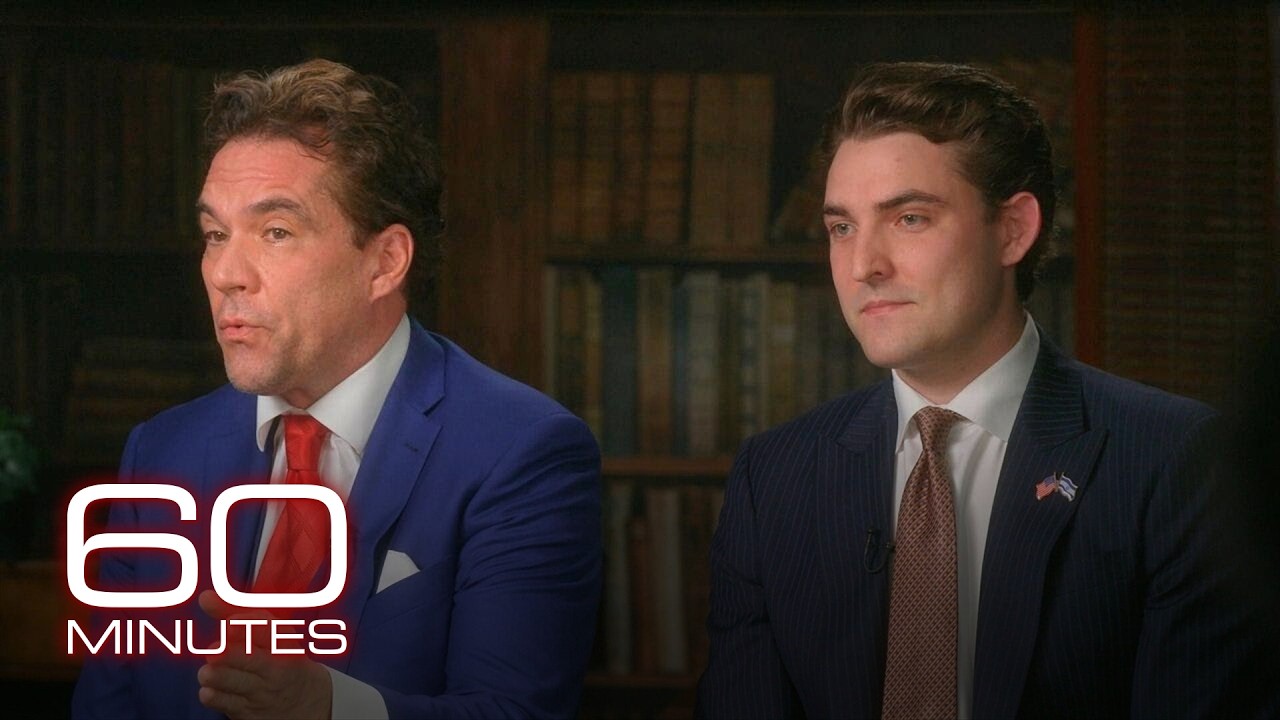
- Pardon brokers charge up to $3 million for claimed access to Trump. Jack Burkman and Jacob Wohl offered Ammon Covino a $300,000 campaign involving Mar-a-Lago events and congressional pressure; his rejected DOJ application had cost a postage stamp, yet he said he would pay if he could afford it.

“We literally want to put the pen in his hand and get him to sign it because he's tired of hearing about it.” — The brokers

- Rapper Boosie Badazz paid Burkman and Wohl $600,000 upfront and received no pardon. His contract promised half back if unsuccessful, but they dispute its validity and deny sending messages naming Laura Loomer, Erica Kirk, Mike Johnson and Natalie Harp; the four denied involvement, and Boosie is suing.

“If you come with this money, you will get a pardon.” — Boosie, describing what he had been led to believe

- Most of Trump's second-term clemencies bypassed the Department of Justice. The investigation found approximately 70% had not gone through the department, rising to 92% when January 6 rioters were included, while 16,000 applications awaited decisions.

“He relies very little on DOJ. So with Trump DOJ is an afterthought.” — The brokers

- Several pardons followed major financial benefits involving Trump-related interests. Examples included nearly $2 million in re-election donations before a fraudster's pardon, Binance backing a Trump family cryptocurrency venture before its founder's pardon, and a $1 million Mar-a-Lago fundraiser payment before a healthcare executive's pardon; the report did not establish a quid pro quo.

- The brokers coached Covino to present his conviction as political persecution rather than seek mercy through remorse. They urged him to describe his illegal wildlife-trafficking prosecution as an Obama-era weaponised prosecution, matching Mark Osler's observation that blaming prosecutors has become a potentially successful pardon strategy.

“The people who were wrong were the people who accused me.” — Mark Osler, describing the strategy

- Mark Osler says the pardon market is shutting out applicants without money or connections. After 15 years helping indigent felons, he says applicants increasingly believe they need million-dollar intermediaries, although conventional clemency petitions once cost lawyers only a few thousand dollars.

“That's not a system. That's something different entirely. It's anarchy.” — Mark Osler

- The administration disputes the brokers' claims that paid lobbying can secure pardons. Former DOJ pardon-office head Ed Martin said he had seen no evidence of a broker-driven system, while the White House insisted Trump acts ethically and dismissed paid pardon lobbying as a waste of money.

“Anyone spending money to lobby for pardons is foolishly wasting their money.” — White House statement

Gathered content

Brokers are offering felons a path to Trump pardons — at a steep price with no guarantees

- The presidential pardon power has existed since George Washington. It is a constitutional power that does not require the president to provide an explanation. The Department of Justice (DOJ) normally screens applicants and recommends those who demonstrate remorse and seek mercy, although presidents have historically departed from that process.

- Previous presidents have issued controversial pardons outside the typical remorse-based process. The report cites President Gerald Ford's pardon of Richard Nixon, President Bill Clinton's pardon of Marc Rich following donations, and President Joe Biden's pardons of his son Hunter Biden and Anthony Fauci.

- President Donald Trump is described as operating a different approach to pardons. His administration has pardoned political allies, including all January 6 rioters, as well as financial fraudsters who maintain that they were wrongly prosecuted. Some of these recipients have shown little remorse and have portrayed themselves as victims of political persecution.

- A commercial market has developed around access to presidential pardons. Donations appear to help some applicants, while brokers, lawyers, and lobbyists charge substantial fees for their claimed connections to the president and his inner circle. The report describes an economy in which money can purchase access to the people who might influence a pardon decision.

- Ammon Covino became the central participant in an investigation into pardon brokers. He and his wife, Crystal, operate several zoos and aquariums. About a decade earlier, Ammon was convicted of illegal wildlife trafficking and served 23 months in prison.

- Covino's original attempt to obtain a pardon through the DOJ failed. He submitted the regular application form and waited for a decision, but when the pardons were announced, his application appeared on the rejection list. His attempt through the official process had cost him little more than a postage stamp.

- Journalists arranged a covert investigation because pardon brokers refused to speak openly. They wanted to investigate people promising applicants that they could circumvent the DOJ and secure access to the president for substantial fees. After brokers declined interviews, the journalists asked Ammon to approach them as though he were reapplying for a pardon and allow hidden cameras to record the encounters.

- Twelve pardon brokers responded quickly to Covino's initial emails. Some replied almost immediately, while others responded within a day. Several represented themselves as people who could help him secure a pardon. Covino said he repeatedly questioned whether the arrangements were illegal and consulted AI about the practice, but came away believing this was how the process worked.

- Pardon brokers repeatedly claimed close relationships with Trump's inner circle. During telephone conversations, several promoted their political connections and suggested they could get applications in front of people capable of influencing the president.

- Jack Burkman and Jacob Wohl responded to Covino within seven minutes. Both are Trump loyalists with histories of political stunts. Their 2020 robocall scheme, which sought to suppress Black voter participation, resulted in a criminal conviction.

- Burkman and Wohl claimed to have previously secured a pardon for a wealthy nursing-home operator convicted of massive tax fraud. They said the individual had paid them nearly $1 million for their promise to reach the president. The investigation also found that some pardon brokers charge as much as $3 million.

- Burkman and Wohl offered to arrange a pardon for Covino for approximately $300,000. They said they would put his application directly into the president's hands and apply sustained pressure from multiple directions until Trump signed it. They described their objective as making the president sufficiently tired of hearing about the case that he would grant the pardon.

- The brokers explained that their $300,000 fee would finance an extensive access campaign. They mentioned purchasing tickets to Mar-a-Lago events, attending functions where Trump would be present, potentially buying a $10,000 fundraising ticket, hiring contractors, and employing influencers with connections to politically influential people. Their proposed approach involved spending money to get close to people who could influence the president.

- Burkman and Wohl proposed mobilising politicians and influencers to pressure the White House. They said they would arrange for members of Congress and influential personalities to contact the administration repeatedly. They described this coordinated pressure strategy as a pincer movement intended to force the president's hand.

- The contrast between official and commercial pardon applications was stark. Covino's original DOJ application had cost him a postage stamp. The brokers wanted approximately $300,000 to pursue the same objective through their network of political connections and access.

- Rapper Boosie Badazz was another client approached by Burkman and Wohl. Boosie has a lengthy criminal record and had been convicted on a gun charge. He said he had been led to believe that paying the brokers would secure a presidential pardon and that he paid them $600,000 upfront.

- Burkman and Wohl allegedly used prominent political connections to reassure Boosie. Text messages sent to his lawyer listed people they supposedly recruited, including Laura Loomer, Erica Kirk, and House Speaker Mike Johnson. Another message mentioned Natalie Harp, an executive assistant close to Trump, and suggested she would personally deliver Boosie's application to the president.

- Boosie believed the brokers would deliver the promised result because he had paid them. He explained that he thought this was simply how the process worked and that the money would make the pardon happen. It did not.

- The four people identified in the brokers' messages denied involvement in Boosie's pardon application. Boosie's contract stipulated that he would receive half his money back if he did not obtain a pardon. Burkman and Wohl have refused to return the money, arguing that the contract is invalid and denying that they sent the messages. Boosie is suing them.

- Law professor Mark Osler believes the new pardon economy disadvantages ordinary applicants. Osler, from the University of St. Thomas in Minnesota, has spent approximately 15 years helping indigent felons apply for presidential pardons. He says people without money or influential connections are now effectively locked out of the process.

- Osler distinguishes legitimate access to legal assistance from a market selling political influence. He describes a situation in which applicants believe they need to pay a million dollars to someone connected to White House counsel or find someone who can reach Trump at Mar-a-Lago to have a realistic chance. He argues that this is no longer a functioning clemency system but something closer to anarchy.

- Demonstrating remorse may no longer be the most effective approach for some pardon applicants. Osler says that an apparently successful tactic is to claim that the people who prosecuted the applicant were wrong and that the applicant was the victim of a weaponised Department of Justice. This reverses the traditional expectation that someone seeking mercy should acknowledge wrongdoing.

- Burkman and Wohl specifically encouraged Covino to exploit Trump's grievances against the previous administration. They advised him to present his prosecution as an example of the weaponisation of the DOJ and remind Trump that it was an Obama-era prosecution that should never have happened.

- The brokers portrayed Trump's pardon process as largely independent of the DOJ. They told Covino that Trump makes his own decisions and relies very little on the Justice Department, which they described as an afterthought in the process. Their sales pitch depended on the idea that direct political access was more important than the official application system.

- The DOJ pardon office had approximately 16,000 applications awaiting decisions. Until nine days before the report, the office was run by Trump appointee Ed Martin. The backlog illustrates the contrast between ordinary applicants waiting for official decisions and wealthy applicants paying brokers hundreds of thousands or millions of dollars to pursue direct access to the president.

- Ed Martin rejected the suggestion that the pardon system was operating as the investigation described. When questioned about wealthy applicants paying brokers to bypass the DOJ, he said he had not seen or heard evidence supporting that characterisation. He said he had personally met approximately 1,000 people in his office during the previous year, some of whom subsequently received clemency or pardons.

- The investigation found that most of Trump's second-term clemency decisions bypassed the DOJ. Approximately 70% of the clemencies examined had not gone through the department. When January 6 rioters were included, that proportion rose to 92%.

- The investigation identified several pardons that followed substantial donations or business dealings involving Trump's interests. It found patterns that raised questions about whether financial contributions and commercial relationships could help applicants obtain presidential mercy. The report presents these as circumstances warranting scrutiny rather than establishing that every transaction was an explicit agreement to exchange money for a pardon.

- A businessman convicted of fraud received a pardon after he and his wife donated almost $2 million to support Trump's re-election. He had deceived investors with a video purporting to show the first zero-emission truck driving. The vehicle was actually rolling downhill, creating the false impression that it was operating under its own power.

- A cryptocurrency-related pardon followed a business relationship involving Binance and a Trump family venture. The individual had been convicted for failing to prevent money laundering on his cryptocurrency exchange. He received a pardon after his company, Binance, boosted a Trump family cryptocurrency venture. Both sides deny that the business relationship had any connection to the pardon.

- A healthcare executive convicted of tax crimes received a pardon after his mother paid $1 million to attend a Mar-a-Lago fundraiser. The timing raised questions because the fundraiser required a substantial financial contribution and was followed by presidential clemency for a family member of the attendee.

- The investigation questioned whether these financial relationships amounted to pay-to-play politics. It specifically challenged Martin over the circumstances in which individuals or their relatives made substantial financial contributions and subsequently received pardons. Martin said he did not know enough about the examples to comment on them.

- Martin defended the president's constitutional authority as complete and plenary. He argued that the president has broad discretion over pardons and said he had never personally seen or heard evidence of brokers arranging quid pro quo agreements or selling presidential clemency.

- The interviewer confronted Martin with the brokers' explicit claims that they could bypass the DOJ. Martin said he saw no evidence of any special or magical brokers and suggested that people were simply trying to make money. He described the brokers as "snake oil salesmen" and "swamp salesmen."

- Burkman and Wohl agreed to an interview after being informed about the hidden-camera investigation. They challenged the journalists over the operation, describing Covino as a fake client in a sting arranged by the reporters. They nevertheless agreed to discuss their pardon business and defend their practices.

- Burkman and Wohl denied that their pardon business was corrupt or improper. They argued that they provide a legitimate paid service, just as journalists receive payment for their work, and that they should not be expected to work for free.

- The brokers defended their fees by arguing that navigating Washington requires specialist access. They claimed that both ordinary people and wealthy individuals need assistance getting their cases noticed by the president. Their argument was that without intermediaries, there would be no reliable way to ensure the president became aware of individual pardon applications.

- The brokers argued that political lobbying for presidential attention is not a new practice. They pointed out that lobbyists have been hired for centuries to influence government decisions and questioned whether lobbyists had also worked on pardon applications during the Obama and Biden administrations.

- The historical existence of paid clemency assistance does not explain the dramatic increase in fees. The discussion acknowledged that lawyers have long prepared clemency petitions, often for a few thousand dollars. The significant change identified in the report was the amount intermediaries are now charging, with some pardon brokers demanding hundreds of thousands or millions.

- The White House had become sensitive to the perception that Trump was selling pardons. The report noted this concern while examining the growing public scrutiny of financial relationships surrounding presidential clemency.

- All the brokers warned the Covinos against making political donations. This advice contrasts with the report's examples of pardons following substantial donations or business dealings, although the transcript does not establish why the brokers advised against donating.

- Osler argues that people seeking freedom should not be blamed for following advice they believe will work. He says the greater responsibility belongs to the people who create and profit from a system in which applicants are told that political connections and enormous payments are necessary to obtain mercy.

- Osler ultimately places responsibility on the presidential administration. Although brokers, lobbyists, and lawyers participate in the business, he argues that the administration is responsible for the conditions that allow this market to operate.

- The Covinos regarded the new pardon economy as fundamentally unfair. They felt that obtaining a pardon had become a matter of who someone knew and how much money they could spend, rather than the merits of their application.

- Ammon Covino admitted that he would still pay the $300,000 if money were no obstacle. Although he disliked the enormous fee and the importance of personal connections, he said that if this was how the game worked, he would play it. His response illustrates how applicants can feel compelled to participate in a system they themselves consider unfair.

- The White House explicitly rejected allegations that presidential pardons were being sold. Its statement said that anyone spending money to lobby for pardons was "foolishly wasting their money." It added that President Trump performs his constitutional duties ethically and that suggestions otherwise were either ill-informed or malicious.

Read Facts →
...

Facts

The 28 pages of 9/11 intelligence that were in a secret vault | 60 Minutes Archive

- Omar al-Bayoumi became al-Hazmi and al-Mihdhar's principal benefactor after a supposedly chance meeting in Los Angeles on February 1, 2000. Bob Graham considered him a Saudi agent; FBI files reportedly identified him that way before 9/11, and he held a no-show job with a Saudi aviation contractor while drawing a Saudi-government paycheck.

- Bayoumi provided the two hijackers with substantial assistance establishing themselves in San Diego. He found them housing in his apartment complex, advanced their deposit, co-signed their lease, hosted a party and connected them to people who helped obtain IDs, English lessons and flight training; investigators found no proof he knew their plans.

- The hijackers' California contacts included Saudi diplomat Fahad al-Thumairy and imam Anwar al-Awlaki. Witnesses placed them with Thumairy at a Los Angeles mosque; Bayoumi was in regular contact with the diplomat and made four calls to al-Awlaki on the day he welcomed the hijackers to San Diego, before they later joined al-Awlaki in Virginia.

“I don't believe in coincidences.” — Bob Kerrey

- The 28 pages are preliminary investigative leads, not a definitive finding of Saudi government complicity. Former officials described a working draft containing evidence both verified and unverified, including possible official Saudi assistance to two hijackers; the material went to the 9/11 Commission, which resolved some questions but not all.

- The 9/11 Commission did not exhaust the Saudi line of inquiry. Commissioner Bob Kerrey said it lacked time and resources and did not pursue every lead, leaving unresolved questions that its published report cannot be assumed to have settled.

“We didn't have the time. We didn't have the resources.” — Bob Kerrey

- The commission's finding did not rule out lower-level Saudi assistance, central to the victims' lawsuit. It found no evidence that the Saudi government as an institution or senior officials individually funded al-Qaeda; families allege Saudi institutions knowingly financed the group while it waged war on the US, and Washington backed Riyadh's sovereign-immunity defense.

“That is the essence of the family's lawsuit.” — Sean Carter

- Former investigators and a solid majority of 9/11 commissioners wanted the 28 pages released after 13 years of secrecy. Graham and Porter Goss asked FBI Director Robert Mueller to declassify them, but he gave no substantive reason for refusing; John Lehman said the material did not warrant continued secrecy.

“because we said so and it needs to be classified.” — Porter Goss, recalling the FBI's response.

“those 28 pages in no way fall into that category.” — John Lehman

- The programme distinguishes assistance by Saudi-linked individuals from formally authorised Saudi state policy. The commission identified wealthy citizens and charities as a primary al-Qaeda funding source, with significant government sponsorship; Lehman believed some senior officials knew of assistance but not that it was official policy, citing Wahhabi outreach and the fact that 15 of the 19 hijackers were Saudis.

Gathered content

The 28 pages of 9/11 intelligence that were in a secret vault | 60 Minutes Archive

- The Obama administration was reviewing whether to declassify the 28 pages concerning 9/11 as tensions with Saudi Arabia deepened. The review came 10 days before President Barack Obama's planned visit to Saudi Arabia, amid growing mistrust between the two allies and questions about Saudi Arabia's commitment to fighting violent Islamic extremism.

- The 28 pages concern a possible Saudi support network for the 9/11 hijackers while they were in the United States. They had remained classified for 13 years in a secure government vault, and only a small number of former government officials and investigators had been allowed to read them. Former officials and families of 9/11 victims were demanding their release.

- One argument for declassification was that the hijackers could not reasonably have operated without assistance inside the United States. Nineteen men, most of whom spoke little English, had never visited the country and lacked substantial formal education, nevertheless managed to execute a complicated operation. Former officials argued that the 28 pages could help explain who assisted them.

- Former Senator Bob Graham led the congressional investigation that produced the classified material. As chairman of the Senate Select Committee on Intelligence, he co-chaired the bipartisan Joint Congressional Inquiry into intelligence failures surrounding 9/11. The inquiry reviewed approximately 500,000 documents, interviewed hundreds of witnesses and produced an 838-page report.

- The Bush administration removed the report's final chapter, leaving it blank in the published version. The chapter was withheld on national security grounds. The redacted material became known as the 28 pages, and Graham had been campaigning for its release since its classification in 2003.

- Graham believes the 28 pages describe a network of individuals who supported the hijackers after they arrived in the United States. He believes the assistance had substantial Saudi connections, involving the Saudi government, wealthy individuals and charities. He argues that the Saudi role was played down to protect a strategically important relationship with a kingdom where political authority, royalty, wealth and religion are closely intertwined.

- Former Congressman Porter Goss also supported publishing the uncensored material. Goss was Graham's Republican co-chairman on the House side of the inquiry and subsequently became CIA director. He believed the 28 pages should have been included in the original public report.

- Graham and Goss personally challenged FBI Director Robert Mueller over the continued classification. During a face-to-face meeting, they pressed for the material to be declassified. The FBI strongly resisted, with the explanation effectively amounting to: the documents needed to remain classified because the FBI said so.

- Goss says he was never given a convincing explanation for the classification. He knew of no reason at the time, and knows of no reason now, why the 28 pages must remain secret.

- The documents were kept in highly restricted government facilities beneath the Capitol. These sensitive compartmented information facilities, known as SCIFs, allow appropriately cleared members of Congress to examine classified material under supervision. Readers cannot take notes and must rely on their memory of what they have seen.

- Former Congressman and US Ambassador to India Tim Roemer had read the 28 pages several times. He first encountered them as a member of the congressional inquiry and later reviewed them as a member of the independent 9/11 Commission, which continued the investigation after Congress.

- Roemer describes the 28 pages as a preliminary investigative document rather than a definitive finding of guilt. He compares them to a working police or grand jury report containing provocative evidence, some verified and some unverified. They raise the possibility that Saudi officials assisted two hijackers who established themselves in Southern California.

- Information from the 28 pages was passed to the 9/11 Commission for further investigation. The commission answered some of the questions raised by the original inquiry but did not resolve all of them. Roemer believes the eventual commission report contains surprising information about Saudi involvement in Los Angeles and San Diego, much of it buried in footnotes and appendices that ordinary readers rarely examine.

- The early movements of two Saudi hijackers in California became a central focus of the investigation. In January 2000, Nawaf al-Hazmi and Khalid al-Mihdhar arrived in Los Angeles after attending an al-Qaeda summit in Kuala Lumpur, Malaysia. Despite limited English and little familiarity with Western culture, they managed to obtain accommodation, government identification, English lessons and flight training.

- Witnesses placed the two hijackers at the King Fahd Mosque in Los Angeles alongside Fahad al-Thumairy. Thumairy was a diplomat at the Saudi consulate and was described as holding extremist views. Investigators subsequently considered him deceptive and suspicious. In 2003, US authorities denied him re-entry because of suspected connections to terrorist activity.

- Phone records connected Thumairy to Omar al-Bayoumi, the Saudi man who became the hijackers' principal benefactor. Bayoumi worked at a Saudi aviation contractor outside Los Angeles in what was described as a no-show position, while receiving a salary from the Saudi government. Graham believes Bayoumi was a Saudi agent and points to FBI files that had reportedly identified him as one even before 9/11.

- Bayoumi's first documented encounter with the two hijackers occurred on February 1, 2000, following a visit to the Saudi consulate. He went to the consulate office where Thumairy worked and subsequently had lunch at a Middle Eastern restaurant on Venice Boulevard. He claimed that he happened to meet al-Hazmi and al-Mihdhar there by chance. The investigators questioned the plausibility of this coincidence in a city as large as Los Angeles.

- Bayoumi provided substantial practical and financial assistance after meeting the hijackers. He befriended them, helped them relocate to San Diego, found them accommodation in his own apartment complex, advanced their security deposit and co-signed their lease. He also organised a welcome party and introduced them to other Muslims who helped them obtain government identification, enrol in English classes and access flight schools.

- Investigators acknowledged that there was no evidence proving Bayoumi or Thumairy knew the hijackers intended to carry out terrorist attacks. It remained possible that the two Saudis were simply helping fellow Muslims settle in a new country. Nevertheless, the extent of their assistance and their connections to Saudi institutions raised questions that investigators believed deserved further examination.

- Bayoumi's telephone records revealed four calls to a San Diego mosque imam on the day he welcomed the hijackers to the city. The imam was Anwar al-Awlaki, an American-born cleric who later became a prominent al-Qaeda propagandist and senior operative in Yemen.

- Anwar al-Awlaki's subsequent movements added another connection to the investigation. After becoming a spiritual adviser to the hijackers in San Diego, he left for Falls Church, Virginia, in January 2001. Several months later, al-Hazmi, al-Mihdhar and three other hijackers joined him there. Al-Awlaki eventually became one of al-Qaeda's most prominent figures before being killed in a CIA drone strike.

- The accumulated connections between Bayoumi, Thumairy, al-Awlaki and the hijackers strengthened calls for further investigation. The interviewees argued that the pattern of meetings, telephone calls, assistance and institutional connections was sufficiently troubling to justify releasing the 28 pages, even if the material did not establish a complete conspiracy.

- Attorneys Jim Kreindler and Sean Carter represent families of 9/11 victims in a lawsuit against Saudi Arabia. The families allege that Saudi institutions provided financial assistance to al-Qaeda while knowing that the organisation was conducting a war against the United States.

- The families' legal investigation has been hindered by a lack of government transparency and cooperation. Their attorneys argue that the US government owes the victims' families openness about what happened and have complained that they have not received the cooperation necessary to develop their case fully.

- The US government supported Saudi Arabia's claim of sovereign immunity in the litigation. This position held that the kingdom could not be sued in American courts because of its sovereign status, creating an additional obstacle for the families seeking accountability.

- The 9/11 Commission report identified Saudi Arabia as a longstanding major source of al-Qaeda funding. It described wealthy Saudi citizens and charities as important sources of money, with significant government sponsorship. However, the report also stated that investigators had found no evidence that the Saudi government as an institution, or senior Saudi officials individually, funded al-Qaeda.

- Attorney Sean Carter argues that the commission's wording was carefully constructed and has been misunderstood. The statement refers specifically to the Saudi government as an institution and senior officials individually. Carter argues that it leaves open the possibility that less senior government officials or other individuals within government structures provided assistance.

- The families' lawsuit focuses on possible assistance from lower-level Saudi officials and elements of government sympathetic to Osama bin Laden. Carter argues that these individuals may have helped al-Qaeda carry out the attacks and maintain its operational network, even if the senior Saudi leadership did not formally authorise the attacks.

- Saudi Arabia has used the commission's finding to argue that it was exonerated from responsibility for 9/11. The programme challenges that interpretation, emphasising that the commission's statement was not a blanket declaration that no Saudi individuals or institutions had assisted al-Qaeda.

- Former Senator Bob Kerrey, a member of the ten-person 9/11 Commission, supports declassification and the victims' lawsuit. Having read the 28 pages, he filed an affidavit supporting the families' legal case. He argues that people who provide money to terrorists cannot simply deny responsibility for what those organisations subsequently do.

- Kerrey acknowledges that the 9/11 Commission did not uncover every detail of the conspiracy. He explains that the commission lacked sufficient time and resources to investigate every lead and did not pursue the entire Saudi line of inquiry. He therefore rejects the suggestion that all the questions raised by the original congressional investigation were resolved.

- Kerrey considers the circumstances surrounding the hijackers' activities in San Diego too significant to dismiss as coincidence. When asked whether the various connections could all be explained away, he responded that he did not believe in coincidences.

- Former Secretary of the Navy John Lehman says a solid majority of former 9/11 commissioners favour releasing the 28 pages. He argues that the commissioners were experienced national security officials familiar with classified intelligence and compartmentalised information. In their judgment, these particular pages do not contain material that genuinely needs to remain secret.

- Lehman believes some senior Saudi officials knew that assistance was being provided to al-Qaeda. However, he does not believe the assistance necessarily represented official Saudi government policy. He also stresses that the absence of a formal government policy would not absolve Saudi Arabia of responsibility for assistance provided by people within its institutions.

- Fifteen of the nineteen 9/11 hijackers were Saudi nationals. Lehman highlights that they had attended Saudi schools and were exposed to an intolerant interpretation of Islam from an early age. The programme connects this discussion to the influence of Wahhabism within Saudi society.

- Wahhabism is presented as an ultra-conservative and puritanical interpretation of Islam deeply embedded in Saudi institutions. The programme describes Saudi Arabia as having no meaningful separation between religious and political authority, allowing religious institutions and clerics considerable influence over society.

- Saudi religious institutions possess substantial financial resources and international influence. Clerics entrusted with the kingdom's holiest Islamic sites have access to billions of dollars used to spread their religious interpretation internationally through mosques and religious schools.

- The international spread of Saudi religious influence raises concerns about the promotion of extremist ideology. The programme argues that some mosques and religious schools established through Saudi-funded religious outreach have become recruiting environments for violent extremists. Wahhabism is described as one of Saudi Arabia's most significant exports after oil.

- Lehman does not describe the 28 pages as a definitive smoking gun. He believes their value is that they provide a concentrated illustration of the circumstances, relationships and assistance that helped explain how individuals became involved in international jihadist movements.

- The programme argues that releasing the documents could improve public understanding without necessarily producing a dramatic new revelation. Their importance lies in making previously hidden investigative material accessible and allowing the American public to understand the possible connections between Saudi individuals, institutions and the 9/11 hijackers.

- Saudi Arabia had also publicly expressed support for declassifying the material, according to the programme. This weakened the argument that continued secrecy was necessary to protect the bilateral relationship.

- The central policy question was whether protecting the relationship with Saudi Arabia justified withholding information from the American public and victims' families. Declassification could expose uncomfortable historical connections and complicate diplomatic relations, but the interviewees argued that transparency was necessary for accountability and a more honest counterterrorism partnership.

- The programme concludes that the United States needs a relationship with Saudi Arabia in which both countries genuinely cooperate against terrorism. That cooperation has not always existed. Understanding and publicly examining the unresolved questions surrounding Saudi assistance to the 9/11 hijackers was presented as an important step towards addressing that problem.

Read Facts →
...

Facts

Former Federal Reserve chairman Alan Greenspan | 60 Minutes Archive

- Greenspan admitted he did not understand the scale of subprime mortgage abuse until late 2005 or 2006. He knew questionable lending practices existed but had rejected former Fed governor Ed Gramlich’s proposal to investigate, arguing that the Federal Reserve was not capable of the suggested intervention.

“I had no notion of how significant they had become until very late.”

- Greenspan kept interest rates historically low for roughly three years while the housing bubble formed. The Fed made 13 rate cuts during that period, earning him Wall Street's nickname “Easy Al” for making credit cheaper whenever markets weakened.

“We raised interest rates at every meeting from June of 2004 till I got out of office.”

- Greenspan defended Federal Reserve independence against presidential pressure but accepted an unusually close advisory relationship with Bill Clinton. He condemned George H. W. Bush's public demands for lower interest rates, yet visited Clinton's White House as often as monthly and hoped his private advice would influence government policy.

“We are one government. The Federal Reserve is not the foreign enemy.”

- Greenspan deliberately used complicated language to avoid giving clear answers during congressional hearings. He called the technique “Fedspeak,” acknowledging that he engineered statements that sounded responsive while revealing little, sometimes producing opposing newspaper headlines from the same hearing.

“Syntax destruction, which sounded as though I were answering the question, but in fact had not.”

- Greenspan's testimony was interpreted as support for George W. Bush's tax cuts, although he denied explicitly endorsing them. He favoured a reduction because he feared the projected budget surplus would become excessive, but after the surplus disappeared and deficits returned, the administration ignored his recommendation to trim the cuts.

“I would not change a word of it.”

- Greenspan's intellectual allegiance to Ayn Rand's unfettered capitalism preceded his appointment as America's leading banking regulator. Rand considered him one of her prominent disciples, nicknamed him “The Undertaker,” and criticised his ambition for social approval.

“The undertaker.”

- Greenspan expected the immediate credit crunch to pass but predicted further housing-price declines. He considered resurgent inflation the greater long-term economic threat and anticipated higher interest rates even while maintaining that the broader economy remained resilient.

“Our problem over the long run is the reemergence of inflation.”

- Greenspan's economic predictions continued moving markets after his retirement. His warning of a one-in-three chance of recession rattled investors and forced Ben Bernanke to reassure markets, while Greenspan rejected calls to restrict his public economic commentary.

“How am I going to pursue my profession without doing precisely that?”

Gathered content

Former Federal Reserve chairman Alan Greenspan | 60 Minutes Archive

- Alan Greenspan's 18-year tenure as Federal Reserve chairman was widely regarded as exceptionally successful. He presided over unprecedented economic growth, federal budget surpluses and a booming stock market. He also received widespread praise for guiding the American economy through the shock of September 11, 2001.

- Greenspan's reputation came under serious criticism during the housing and subprime lending crisis. His memoir, The Age of Turbulence, was published as critics questioned whether his policies and regulatory decisions had helped create the conditions for the crisis.

- Greenspan admitted that he had underestimated the scale of abusive subprime mortgage lending. He acknowledged knowing that questionable lending practices existed but said he did not understand their significance until very late in 2005 and 2006.

- The interviewer challenged Greenspan's failure to use his public influence to warn Americans about questionable mortgage practices. She pointed out that he possessed an enormous public platform and that people listened to him. Despite this influence, he had not publicly raised an effective warning about the emerging problem.

- Subprime mortgage lending had expanded to millions of homebuyers and property speculators, including people with poor credit histories. Banks and mortgage companies offered complicated mortgages with interest-rate adjustments that contributed to record defaults. Some lending practices were fraudulent.

- Former Federal Reserve governor Ed Gramlich had reportedly identified the problem earlier and proposed investigating questionable mortgage lending. The interviewer confronted Greenspan with Gramlich's claim that he had proposed a Federal Reserve examination and that Greenspan had rejected it.

- Greenspan defended rejecting Gramlich's proposal by arguing that the Federal Reserve was not capable of carrying out the suggested intervention. He also argued that banking regulators found these practices difficult to address and maintained that there was little to investigate, even though he acknowledged that such practices were increasing.

- The housing crisis had already caused substantial damage to American families. The interviewer cited approximately one million families who had lost their homes, with many more potentially facing foreclosure. Greenspan insisted that there was little he could have done to prevent falling home prices.

- Some economists blamed Greenspan for helping create the housing bubble and subsequent credit crunch. Their central criticism was that he had maintained interest rates at historically low levels for approximately three years while the housing market was overheating.

- The Federal Reserve had made 13 interest-rate cuts during the period of exceptionally low rates. Critics argued that this prolonged cheap borrowing and encouraged the expansion of the housing bubble.

- Greenspan defended the low-interest-rate policy as necessary to restore the American banking system after financial disruption. He said the Federal Reserve needed to unfreeze banking activity so the broader economy could function, which required keeping interest rates modestly low.

- Greenspan rejected criticism from former Federal Reserve colleagues that rates had remained too low for too long. He maintained that those colleagues were mistaken.

- The Federal Reserve began raising interest rates in June 2004 and continued increasing them at every meeting until Greenspan left office. He used this record to defend his management of monetary policy, although critics argued that the tightening began too late to prevent the housing bubble.

- Greenspan rejected the suggestion that he would necessarily have responded more aggressively than his successor, Ben Bernanke. Investors believed Greenspan would have injected liquidity into the financial system earlier, more rapidly and more dramatically.

- Greenspan argued that the economic conditions facing Bernanke were fundamentally different from those during his own chairmanship. Inflation had been easing when Greenspan previously lowered rates, allowing him to act without the same concern about creating additional inflationary pressure. He said the current environment did not offer that freedom.

- Greenspan explicitly praised Bernanke's handling of the crisis. When asked whether he disagreed with his successor's decisions, he said Bernanke was doing an excellent job.

- Greenspan dismissed appeals from Ford and Chrysler executives for Federal Reserve interest-rate reductions. Rather than supporting their demands for cheaper financing, he suggested that the automobile companies should concentrate on producing better cars and selling them to customers.

- Greenspan retired in 2006 at the age of 79, after an extended period of extraordinary public prestige. He had guided the economy through the September 11 shock and presided over an unprecedented ten-year stretch without a recession. At retirement, he was widely treated as almost infallible.

- Greenspan refused to disclose how he personally invested his money after leaving government. Asked whether he invested in real estate or the stock market, he declined to answer, saying these were questions he had anticipated but would not discuss.

- The interviewer raised reports that Greenspan had received an $8 million advance for his memoir. Rather than directly discussing the reported payment, he responded to questions about preferred payment currencies by explaining that currency could be converted through foreign-exchange markets.

- Greenspan disclosed that he diversified his personal assets across different currencies. He would not identify the currencies he held, even when pressed about whether he maintained investments in several denominations.

- Greenspan described The Age of Turbulence as a personal examination of himself. The interviewer noted that the book was unusually conversational and revealing compared with his traditionally guarded public persona.

- Greenspan wrote approximately 80% of his memoir in the bathtub. He confirmed this unusual writing arrangement during the interview.

- His memoir openly discussed his relationship with NBC journalist Andrea Mitchell, who was 21 years younger than him. Greenspan used the story to poke fun at himself and his unconventional approach to romance.

- Greenspan and Mitchell's first date took place in 1984. After dinner, he invited her to his apartment to show her an essay he had written about monopolies and the Sherman Antitrust Act of 1890, rather than offering conventional romantic entertainment.

- Greenspan and Mitchell dated for 13 years before marrying. He said he had hinted at proposing several times, but Mitchell joked that his indirect, highly technical way of communicating made it difficult to recognize that he was actually proposing.

- Their honeymoon involved attending an international monetary conference. The choice illustrated how closely Greenspan's personal interests and professional life were intertwined.

- Greenspan's fascination with statistics and technical information began during his childhood in Depression-era New York City. He collected railroad timetables, learned Morse code and memorized baseball statistics.

- His first major ambition was to become a professional baseball player. He said he had been able to hit curveballs when he was 12 or younger and retained his interest in baseball throughout his life.

- Greenspan continued to complete baseball scorecards personally. During a visit to a Washington baseball game, he demonstrated the practice. Spectators recognized him, and some lined up to obtain his autograph on dollar bills.

- Greenspan's popularity extended beyond financial circles. One baseball spectator told the interviewer that without Greenspan, he would not have a house, illustrating the public gratitude that had accompanied the chairman's association with economic growth and rising wealth.

- Before becoming an economist, Greenspan seriously considered a career as a professional musician. He was a sufficiently accomplished saxophonist in high school to be hired by the Henry Jerome Orchestra instead of immediately proceeding to college.

- At approximately 17, Greenspan travelled around the country playing bebop jazz with the Henry Jerome Orchestra. While other band members drank alcohol and smoked marijuana between performances, he preferred reading books about the British stock market.

- Greenspan became the unofficial accountant for his fellow musicians. He confirmed that he prepared the other orchestra members' income-tax returns while they were travelling and performing.

- Greenspan eventually established his own economic forecasting business in New York during the 1950s. This marked his transition from his early ambitions in baseball and music into professional economics.

- Greenspan became friends with philosopher Ayn Rand during his early economic career. She personally gave him a copy of Atlas Shrugged when it was newly published, and he recalled reading it while the book was still warm.

- Rand advocated unfettered, largely unregulated capitalism, and Greenspan became one of her most prominent intellectual disciples. His later appointment as America's leading banking regulator created an apparent contradiction between his philosophical associations and his responsibility for overseeing financial institutions.

- Ayn Rand nicknamed Greenspan 'The Undertaker' because she thought he radiated gloom. She also considered him excessively interested in social advancement and approval from influential people.

- Greenspan admitted that Rand's criticism of his social ambition had some truth. He argued that the desire for other people's approval was inherent in human nature and that social climbing was one expression of that desire. He joked that practically nobody could claim innocence.

- Greenspan's memoir broke years of relative silence about the six American presidents he had known and worked with. He offered personal assessments of Richard Nixon, Gerald Ford, Ronald Reagan, George H. W. Bush, Bill Clinton and George W. Bush.

- Greenspan described Richard Nixon as extraordinarily profane. He recalled that Nixon could use more four-letter words within the first 30 seconds of a meeting than Greenspan had heard during his time in the music business.

- Greenspan believed there were two sides to Nixon's personality. His memoir also described Nixon as anti-Semitic and prejudiced against Italians, Greeks and Slovaks. The interviewer joked that it was difficult to identify anyone Nixon actually supported.

- Greenspan regarded Gerald Ford as an extraordinary human being despite considering him intellectually less impressive than the other presidents. He described Ford as the most normal president he had encountered.

- Greenspan particularly admired Ford's ethical judgment. He recalled discussions in which Ford was prepared to set aside certain facts and concentrate on doing what was right for the economy. Greenspan considered this ethical foundation an important presidential quality.

- Greenspan described Ronald Reagan as possessing an unusual form of intelligence. He believed Reagan used that intelligence to improve America's image of itself rather than necessarily demonstrating conventional analytical ability.

- Greenspan had a deeply strained relationship with the first President George Bush. His memoir described their relationship as terrible, partly because Bush publicly pressured the Federal Reserve to reduce interest rates.

- Greenspan considered public presidential pressure on Federal Reserve interest-rate decisions improper. He argued that the Federal Reserve's statutory independence existed for a specific purpose and that publicly demanding monetary-policy changes contradicted the spirit of the law.

- George H. W. Bush later blamed Greenspan for his defeat in the 1992 presidential election to Bill Clinton. This added to the history of tension between the two men.

- Greenspan considered Bill Clinton the smartest president he had worked with. Although Greenspan identified politically as a Republican, he acknowledged that Clinton was an extraordinarily effective president.

- Greenspan said he got along better with Clinton than with any of the other presidents. Clinton described their relationship as that of an unusual pair, calling them the 'odd couple'.

- Greenspan considered Hillary Clinton very intelligent and unquestionably capable of becoming president. However, when asked whether she was the best person for the position, he declined to endorse her and said his political tendency would be to vote Republican.

- Greenspan developed an unusually close working relationship with Bill Clinton and his economic team. He visited the White House as frequently as once a month, a level of access that the interviewer noted was unusual compared with previous Federal Reserve chairmen.

- Greenspan acknowledged acting as an economic consultant to the Clinton administration. When challenged about whether this compromised the appearance of Federal Reserve independence, he defended the arrangement by saying that the Federal Reserve and the administration were part of the same government, not opposing institutions.

- Greenspan openly acknowledged that he hoped his private advice influenced government policy. When the interviewer pointed out that he was influencing administration decisions, he replied that he hoped he was.

- Greenspan's public communication style became known as 'Fedspeak'. During congressional hearings, he frequently used complicated, ambiguous language when answering questions about interest rates and monetary policy.

- Greenspan admitted that his deliberately complicated language was sometimes designed to sound like an answer without actually answering the question. He described the technique as a form of 'syntax destruction'.

- Greenspan deliberately worked on making his public statements difficult to interpret. When shown a recording of one of his congressional appearances, he acknowledged that he had refined the technique.

- His ambiguous statements frequently produced contradictory newspaper coverage. Two newspapers could publish opposing headlines about what Greenspan had said during the same congressional hearing. He considered this evidence that his communication strategy had succeeded.

- Greenspan became known as 'Saint Alan' during the prosperous Clinton years. The booming economy, federal budget surpluses and rising financial markets generated enormous public admiration, with much of the credit directed toward the Federal Reserve chairman.

- Greenspan became a celebrity figure among ordinary Americans and investors. People reportedly approached him in the street to thank him for the growth in their retirement accounts, particularly their 401(k) investments.

- Wall Street strongly supported Greenspan because financial-market profits increased during his chairmanship. Investors nicknamed him 'Easy Al' because he had a reputation for cutting interest rates and making money cheaper whenever financial markets weakened.

- Greenspan's relationship with the George W. Bush administration became controversial over federal tax reductions. His testimony before Congress was interpreted by many newspapers and political observers as an endorsement of the administration's substantial tax cuts.

- Greenspan had previously argued that federal budget surpluses should be used to strengthen Social Security and Medicare. However, he later came to support a tax reduction because he believed that, without one, the projected surplus could become excessively large.

- Greenspan argued that a sufficiently large surplus could remain even after Congress allocated money to other priorities. The interviewer questioned why he had not expected lawmakers to spend the additional funds on education, infrastructure and other public programmes.

- Greenspan denied explicitly endorsing the Bush administration's particular tax-cut legislation. He maintained that the administration had interpreted his testimony as support, but said he had never directly stated that he favoured the Bush tax cut.

- Greenspan rejected allegations that he supported the tax cuts to gain political favour with the Bush administration. He said White House officials had never approached him about the matter and insisted that he had simply expressed his genuine economic views.

- Greenspan stood by his congressional testimony even after seeing the consequences of the tax reductions. Asked whether he would change anything knowing what happened afterward, he said he would not change a word.

- The projected federal budget surplus eventually disappeared and substantial deficits returned. Greenspan said he had proposed that the Bush administration adjust and reduce the tax cuts if the fiscal situation changed, but those recommendations were not implemented.

- The Bush administration continued pursuing its original campaign economic policies despite the deterioration in the federal budget outlook. Greenspan said the administration maintained its original proposals even after the assumptions supporting them, particularly the expectation of a very large surplus, had changed.

- Greenspan ultimately described the administration's failure to adjust its policies as wrong. Although the interviewer called the approach rigid, he agreed that the policies had been wrong.

- Greenspan was particularly disappointed in former friend Dick Cheney. He believed Cheney had shown considerably less interest in restraining government spending than Greenspan expected.

- Greenspan disagreed with Cheney's public position that federal deficits did not matter. He explicitly said Cheney was mistaken.

- After leaving government, Greenspan established an economic forecasting company called Greenspan Associates. He described this as his first time outside government in approximately 20 years and returned to his earlier professional role as an independent economic forecaster.

- Greenspan predicted that the immediate financial-market panic would eventually subside. He believed the American economy retained underlying strength and that the international economy was also holding up despite the extraordinary credit problems.

- Greenspan identified the flattening of American home prices as the original trigger of the financial crisis. He warned that the housing-price decline was only beginning and expected property prices to fall further.

- Greenspan acknowledged that falling housing prices were already spreading into employment and related industries. The damage extended beyond real estate to businesses selling appliances and furniture, demonstrating how a housing downturn could affect a much wider part of the economy.

- Despite the worsening housing situation, Greenspan did not expect the credit crunch to develop into a deeper economic collapse. He believed the United States and other economies possessed sufficient underlying strength to withstand the immediate disruption.

- Greenspan viewed the credit crunch as a temporary human-behaviour phenomenon. He predicted that the panic would pass, the economic fever would break and investor confidence and market euphoria would eventually return.

- Greenspan distinguished the immediate credit crisis from what he considered the more serious long-term economic threat. He believed the re-emergence of inflation would become America's greater problem over time.

- Greenspan's long-term economic outlook was considerably more pessimistic than his short-term assessment of the credit crisis. He expected inflation and interest rates to rise and acknowledged that his memoir contained a deliberately gloomy assessment of the economic future.

- Greenspan's public comments continued to influence financial markets after his retirement. In February, he predicted a one-in-three chance of a recession that year, causing market anxiety and forcing current Federal Reserve chairman Ben Bernanke to make efforts to calm investors.

- Greenspan's recession prediction raised questions about whether a former Federal Reserve chairman should publicly comment on economic developments. The interviewer argued that his statements carried unusual influence and could affect markets and complicate the work of his successor.

- Greenspan rejected the suggestion that he should remain silent about economic developments because of his former position. He argued that forecasting recessions, inflation and global economic conditions was essential to continuing his professional career.

- Greenspan maintained that his public comments were about broader economic conditions rather than Federal Reserve monetary policy. He therefore saw no reason to restrict his professional commentary.

- Greenspan disclosed that he had faced a one-year restriction on lobbying the Federal Reserve after leaving office. He said he had never lobbied the institution before and had not done so afterward.

- Greenspan rejected the idea of extending post-government restrictions to his public economic commentary. He said there was no prohibition on speaking and saw no reason to impose a voluntary restriction on himself.

- Greenspan continued to spend his leisure time studying government economic reports. His morning routine included reading the Bureau of Labor Statistics' productivity and cost publications over coffee.

- Greenspan's fascination with economic statistics extended to extremely specific technical details. He described examining the protein content of hard red winter wheat because differences in that measurement affected commodity prices.

- Greenspan specifically followed the price differences between Kansas City and Chicago. He found the relationship between wheat quality, regional pricing and economic data genuinely enjoyable, describing this kind of technical investigation as almost romantic.

- Greenspan's retirement did not diminish his underlying intellectual habits. Despite leaving the Federal Reserve, establishing a private forecasting firm and receiving considerable criticism over the financial crisis, he remained deeply interested in statistics, market behaviour and detailed economic information.

Pasted text.txt
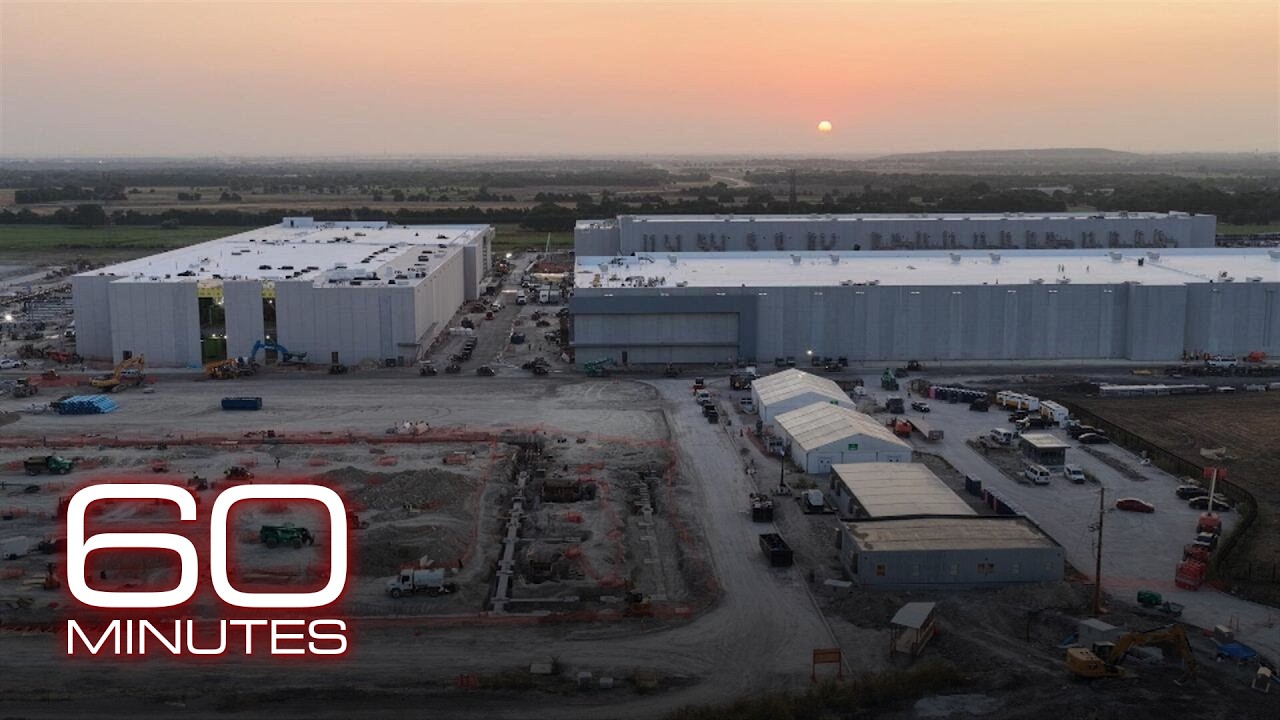
Read Facts →
...