60 Minutes

60 Minutes

Watch Facts Elle's

Facts

Prediction market bets on war defy odds

- More than $1 billion has been wagered this year on military decisions and outcomes. Prediction markets now offer bets on attack dates, airspace closures and leadership changes, making advance military information potentially profitable to people outside the armed forces.

- A US soldier allegedly used classified access to the Maduro raid to win more than $400,000. Army Master Sergeant Gannon Van Dyke allegedly staked approximately $34,000, including six bets the day before the January 3 operation, withdrew his winnings and tried to delete his Polymarket account; he pleaded not guilty.

“There is nothing to compare that to.” — Rob Schwartz, former CFTC lawyer.

- Nine linked Polymarket accounts allegedly made $2.4 million betting almost exclusively on US military operations. Bubble Maps investigator Deeds said they won 98% of the time, including bets on the first US strikes in Iran, the removal of Iran's supreme leader and the ceasefire announcement.

“Luck alone cannot explain those numbers.” — Deeds.

- The Van Dyke case may be only one part of a much larger insider network. A Defense Department source reportedly told Deeds there were dozens more cases; former military officer Deeb identified government officials, military planners, intelligence analysts and even spouses as potential recipients of advance information.

“Van Dyke was just a small fish.” — Defense Department source, as relayed by Deeds.

- An $800 million position on falling oil prices appeared 15 minutes before Trump announced talks with Iran on March 23. Oil subsequently fell more than 10%, potentially generating profits of up to $80 million; federal investigators are probing the trades, although the trading pattern alone cannot establish insider trading.

“You see this graph and you think insider trading. That's a natural conclusion to draw. I can't know it without knowing what happened.” — David Covel.

- A Polymarket wager prompted death threats against a journalist whose reporting threatened bettors' positions. Times of Israel correspondent Emmanuel Fabian received a $900,000-loss warning and threats referencing his family; the related March 10 market reached $22 million, he refused to change his story, reported the threats to police, and Polymarket banned the accounts.

“You're going to make us lose $900,000.”

“I know how often you visit your family.” — Messages sent to Fabian.

- The CFTC's enforcement capacity has contracted while war betting has expanded. Enforcement actions have fallen by more than two-thirds since 2024, staffing has dropped sharply, and the historically five-member commission is now run by 36-year-old chairman Michael Selig, who declined an interview; the agency says it is hiring and using AI.

- Suspicious betting could become a national-security vulnerability, not just a financial crime. Trading patterns are visible to analysts and potentially foreign adversaries, who could use them to anticipate US military plans; a March White House memo warned staff that trading on non-public information is criminal.

“This could be putting people's lives at risk.” — Source interviewed by 60 Minutes.

Gathered content

Prediction market bets on war defy odds

- War has become a major category of online gambling. More than US$1 billion has been wagered this year on military decisions and outcomes, including the war with Iran and the US operation to capture Venezuelan President Nicolás Maduro. Bettors worldwide have placed wagers on attack dates, military operations and the fate of political leaders, sometimes with suspicious timing and information unusually specific for outsiders.

- The capture of Nicolás Maduro created an alleged insider-trading case involving a US soldier. On January 3, US special operations forces captured the Venezuelan president in a nighttime operation and transported him to the United States to face drug-trafficking and narco-terrorism charges. The operation subsequently became the subject of a criminal investigation involving someone who had helped plan and execute it.

- Army Master Sergeant Gannon Ken Van Dyke allegedly used classified military intelligence to bet on the Maduro operation. The US Justice Department charged the 38-year-old soldier with using confidential information about the mission to place wagers on when the surprise raid would occur. He pleaded not guilty.

- Van Dyke allegedly turned approximately US$34,000 in wagers into more than US$400,000. His bets included approximately half a dozen placed the day before the raid. According to the indictment, he withdrew his winnings immediately and subsequently attempted to delete his Polymarket betting account.

- Former CFTC lawyer Rob Schwartz considers the alleged conduct an unprecedented form of insider trading. Schwartz, now a private lawyer in Washington, worked for the Commodity Futures Trading Commission until the previous year. He argued that trading on classified intelligence obtained through participation in a military operation is fundamentally comparable to a corporate executive trading on confidential business information. The difference is the source of the privileged information, not the underlying misconduct.

- Polymarket has become a major platform for betting on future events, including military operations. Its markets cover everything from sporting results and political statements to unusual predictions, including whether Jesus will return in 2026. One example involved whether President Trump would say the word "trillion" more than ten times during a 60 Minutes interview; that wager did not pay off. More recently, military contracts have included predictions about attack dates, airspace closures and the transfer of enriched uranium.

- US restrictions on military betting have not prevented Americans from participating. Wagering on military outcomes through platforms such as Polymarket is prohibited in the United States, but digital workarounds remain readily available. Van Dyke allegedly used such a workaround to place his bets.

- Researchers have identified unusually high success rates among supposedly unlikely military bets. Michelle Kendler Kratch and her team at the Anti-Corruption Data Collective examined Polymarket wagers on military outcomes, concentrating on long-shot bets with less than 35% implied odds. These supposedly unlikely wagers won more often than they lost, which Kratch identified as a possible indication of systemic insider trading.

- Military betting reportedly produces a 52% success rate among the examined wagers, compared with 7% for sports betting. The comparison, presented by Kratch, suggests that military bets are performing extraordinarily well relative to conventional probability expectations. The disparity raises questions about whether some participants possess advance information unavailable to ordinary bettors.

- A Paris-based analytics firm identified nine interconnected Polymarket accounts that allegedly generated US$2.4 million from military betting. Nicolas Vaiman's company, Bubble Maps, uses visualisations of trading activity to identify suspicious clusters of accounts. Its head of investigations, known by the online pseudonym Deeds, presented the findings to 60 Minutes and described the pattern as potentially more serious than the Van Dyke case.

- The nine accounts reportedly achieved a 98% winning rate. They wagered almost exclusively on US military operations, collectively making approximately US$2.4 million. By comparison, Van Dyke allegedly earned more than US$400,000. Deeds described the success rate as comparable to winning the lottery repeatedly.

- The interconnected accounts allegedly predicted specific turning points in the Iran war, including events when the betting odds were low. Their successful wagers included the dates of the first US strikes, the removal of Iran's supreme leader and the announcement of a ceasefire. Deeds argued that luck alone could not reasonably explain the pattern.

- Bubble Maps believes the suspicious trading deserves federal investigation. Although the firm's findings were publicly available through its analysis of Polymarket transactions, Deeds questioned whether federal prosecutors were aware of the accounts. He hoped the television investigation would bring the evidence to their attention.

- A Defense Department source reportedly suggested that Van Dyke was only a small part of a much larger problem. According to Deeds, a source familiar with the Van Dyke matter told him there were dozens more people involved in similar activity. The source reportedly described Van Dyke as a small fish.

- Military operations create a much larger pool of potential insiders than the soldiers executing them. Former US military officer Deeb explained that sensitive information can reach government officials, military planners, intelligence analysts and even their spouses. People involved in planning or supporting an operation may learn its timing and objectives before the public does, creating multiple opportunities for confidential information to reach betting markets.

- Suspicious war-related trading is also appearing in traditional commodities markets. The investigation identified concerns about oil futures trading, showing that potential exploitation of military information is not limited to relatively new prediction-market platforms. Traditional commodities exchanges are already subject to financial regulation, but suspicious transactions can still occur.

- Former commodities trader David Covel identified a particularly suspicious oil-market transaction on March 23. Covel, now a New York lawyer representing victims of commodities-market fraud, previously secured the largest whistleblower award for commodities-market manipulation in US history in 2021. He examined trading activity during a period when fighting had already been underway for more than three weeks.

- More than US$800 million was suddenly wagered on falling oil prices approximately 15 minutes before a major Trump announcement. According to trading data supplied to 60 Minutes by financial firm LSEG, oil futures activity had been unusually quiet. At 6:50 a.m., more than US$800 million was positioned around the possibility of oil prices declining.

- Trump's subsequent announcement caused oil prices to fall by more than 10%. Fifteen minutes after the unusual trading activity, Trump posted on Truth Social that the White House and Iran had held "very good and productive conversations" about ending hostilities. The announcement sent oil prices sharply downward, potentially producing profits worth tens of millions of dollars.

- The potential profit from the oil transaction was estimated at as much as US$80 million. Covel described the timing and scale of the transaction as highly suspicious. However, he acknowledged that the trading pattern alone could not establish insider trading without identifying the traders and understanding what information they possessed.

- Federal investigators are examining the suspicious oil trades. 60 Minutes reported that investigators were probing the transactions. Covel explained that regulators could identify the traders by obtaining information from the exchanges. Establishing whether the participants were based in the United States, overseas or connected to a foreign adversary would be essential to determining what happened.

- War betting can create incentives to manipulate journalism and public information. The investigation showed that financial interests can extend beyond trading on confidential military information. When large wagers depend on whether a particular military event is publicly reported, bettors may have a financial incentive to pressure journalists into changing or suppressing accurate reporting.

- Times of Israel military correspondent Emmanuel Fabian was threatened after reporting an Iranian missile strike near Jerusalem. Fabian had written in March about an Iranian missile striking an empty forest. He initially considered the story relatively insignificant, but shortly after publication began receiving messages demanding that he change his reporting.

- The threats against Fabian were explicitly connected to financial losses from Polymarket wagers. One message warned him: "You're going to make us lose $900,000," and threatened to invest even more money to "finish" him. The sender also mentioned details about Fabian's siblings and claimed to know how often he visited his family. Fabian said the threats frightened him.

- The threats concerned a Polymarket contract about whether an Iranian missile would enter Israel on March 10. Fabian investigated the messages and discovered the associated betting market. His report about the missile strike undermined the position of bettors who had wagered that no missile would enter Israel.

- Approximately US$22 million was ultimately wagered on the missile-related market. The initial figure discussed was US$14 million, but Fabian said the total had increased to approximately US$22 million by the time the market closed. He acknowledged some uncertainty about the final figure.

- The person threatening Fabian offered him money to change his reporting. The sender suggested that if Fabian followed instructions and amended the story, he could end up with money in his pocket and the threats would stop. This demonstrated how a betting market could create direct financial pressure on a journalist to alter an accurate account of a military event.

- Fabian refused to change his reporting despite the threats. He expressed concern that other journalists might not withstand similar pressure when substantial sums were involved. In his view, a US$22 million betting market could create powerful incentives for people to compromise their integrity for personal financial gain.

- Fabian reported the threats to police and Polymarket. Polymarket said threatening a journalist was unacceptable and banned the accounts involved. The company also stated that it proactively monitors suspicious activity behind the scenes.

- The Commodity Futures Trading Commission is responsible for policing financial misconduct in these markets. The CFTC, established in the 1970s, oversees commodities and futures trading and is now also central to questions about prediction-market manipulation and insider trading. It is a relatively little-known federal agency with significant responsibilities.

- The CFTC has undergone a substantial reduction in enforcement activity and staffing. Its enforcement actions have fallen by more than two-thirds since 2024, while staffing has also declined sharply. These reductions raise questions about the agency's capacity to investigate increasingly sophisticated forms of market misconduct.

- The CFTC is now led by Michael Selig, a 36-year-old appointed chairman under President Trump. Historically, the agency was led by a five-member commission, but the investigation described it as currently operating under a single leader. Selig had been nominated by Trump the previous autumn.

- Selig publicly promised accountability for fraudulent and manipulative trading. He stated that anyone engaging in fraudulent, manipulative or insider-trading activity would be held accountable to the American people. He declined 60 Minutes' interview request.

- The CFTC says it is rebuilding its enforcement capacity and using artificial intelligence. In response to questions about its reduced staffing and enforcement record, the agency said it was hiring additional employees and deploying AI to identify and pursue bad actors.

- The White House has formally warned government employees against exploiting confidential information on prediction markets. A March memorandum to staffers stated that using non-public information to trade on prediction markets is a criminal offence. This indicates that the administration recognises the potential for government personnel to misuse privileged information for financial gain.

- The investigation raises unresolved questions about where legitimate political or military forecasting ends and illegal insider trading begins. The discussion acknowledged that reasonable people may disagree about precisely where the boundary should be drawn. However, trading on confidential information obtained through privileged government or military access presents a more direct and serious problem than ordinary speculation.

- Insider trading involving military operations could develop into a national security threat. Sources warned that today's financial misconduct could become tomorrow's national security scandal. Suspicious trading patterns are visible to market analysts, but they can also be monitored by foreign governments and hostile intelligence services.

- Foreign adversaries could use betting activity to anticipate American military decisions. If unusual wagers reveal advance knowledge of an impending strike, ceasefire or leadership operation, hostile actors could potentially use those signals to adjust their own military strategies. The same information that creates profits for bettors could expose American plans to adversaries.

- The potential consequences extend beyond financial losses to the safety of military personnel. Information revealed through suspicious betting could compromise operations, help adversaries anticipate military movements and put people's lives at risk. The investigation therefore presents insider trading as more than a financial-regulatory problem.

- The number of insider-trading investigations and prosecutions involving military betting is expected to grow. When asked whether Van Dyke would remain the only person charged a year later, an interviewee predicted that the problem would multiply. The nine connected accounts, the reported existence of dozens of additional potential insiders and the suspicious oil transactions all point to a problem potentially much larger than the first criminal case.

Read Facts →
...

Facts

Robotaxis coming to London pose threat to cabbies who memorize 25,000 streets to earn licenses

- Waymo and Wayve are preparing to challenge London's black-cab industry, although autonomous taxis are not yet approved to carry passengers in the city. Waymo is building detailed 3D maps of London, while British startup Wayve is testing an alternative AI system designed to navigate unfamiliar cities without pre-existing maps.

- Waymo claims its autonomous vehicles are five times safer than human drivers, but its operational record includes serious failures. Vehicles have driven through an active police scene, obstructed emergency responders and illegally passed stopped school buses, resulting in a software recall and federal investigation.

"we're five times safer than a human driver."

- Waymo's competitive advantage is the enormous amount of collective driving experience accumulated by its fleet. Its vehicles travel more than two million miles weekly across 11 American cities, while billions of additional simulated miles train its AI for unusual road situations.

"We travel over 2 million miles a week."

- Wayve is pursuing a fundamentally different approach to autonomous driving. CEO Alex Kendall says its AI learns general driving concepts from millions of hours of global experience rather than memorizing individual city maps, and demonstrated the technology controlling a vehicle around Westminster with a human safety operator present.

"We train it on millions of hours of experience driving all around the world."

- London's traditional black-cab industry has already lost approximately 36% of its drivers in a decade. Numbers have fallen from 25,000 to 16,000 as Uber and other ride-hailing services take business away and driver incomes decline, meaning autonomous taxis would enter an industry already under substantial economic pressure.

- The Knowledge gives London's cabbies a demanding professional advantage rooted in human memory. Drivers must memorize 25,000 streets and thousands of landmarks, including approximately 6,000 points of interest; University College London research found that their memory-associated posterior hippocampi grew throughout their careers.

"You're never going to beat the knowledge."

- Obtaining a black-cab licence can require years of repeated examinations. Steven Fairbrass failed his twentieth attempt after eight years of studying, while another candidate finally passed after five years and 41 attempts, describing the profession as inseparable from London's cultural identity.

"You can't have London without a black cab."

Gathered content

Robotaxis coming to London pose threat to cabbies who memorize 25,000 streets to earn licenses

- London’s black-cab industry faces a new technological competitor. Artificial intelligence-powered autonomous taxis are preparing to compete with traditional London black cabs. Companies argue that their vehicles are safer and smarter than human drivers, but London's cabbies remain determined to defend their profession.

- Black cabs are deeply connected to London's identity and history. One driver describes them as icons of the city and claims they predate buses and trains. Their importance extends beyond transportation: generations of Londoners associate them with the character and heritage of the capital.

- The Knowledge examination dates back to 1865. Originally introduced for London's horse-drawn cabmen, the examination requires aspiring drivers to memorize approximately 25,000 streets, thousands of landmarks and businesses, and the shortest routes between destinations. It has remained a defining qualification for London's licensed black-cab drivers for 161 years.

- Black-cab drivers build an unusual level of trust with passengers. Tom Scullion, who has driven a London black cab for 34 years, describes customers who send their children to school with drivers they have never met before. He also recalls a regular customer who sends an Irish wolfhound to travel alone in his cab, with instructions identifying where the dog lives. He regards this trust as one of the distinctive features of the profession.

- Passengers routinely test cabbies' geographical knowledge. Scullion says customers frequently question which route he intends to take, sometimes comparing his decisions with Google Maps. He believes a trained London cabbie's knowledge can outperform directions supplied by Google.

- The Knowledge is tested through demanding oral examinations. At Transport for London, aspiring cabbies attend formal examinations called appearances, dressed in their best clothes. Examiners give candidates two randomly selected destinations and require them to describe the shortest route between them, while measuring the distance to determine whether the answer is correct.

- The examination tests detailed route knowledge rather than general familiarity with London. One candidate was asked to travel from Soho House, 40 Greek Street, to the Chancery Rosewood. He had to identify the streets and turns in sequence, including Greek Street, Shaftesbury Avenue, Great Windmill Street and Haymarket. He failed that examination.

- The Knowledge can physically change the structure of the brain. Research from University College London found that black-cab drivers' posterior hippocampi, a brain region associated with memory, increased in size during their careers. The findings demonstrate the neurological effects of years of intensive geographical memorization.

- The official study guide contains approximately 6,000 points of interest. Aspiring drivers must learn the locations of hotels, restaurants, pubs, businesses, cultural institutions and other destinations that paying passengers might request. The material includes places such as the National Gallery, Law Society Hall and Londoner Hotel.

- The Knowledge requires continuous updating as London's businesses change. Candidates must learn individual restaurant and pub locations, remember new business names when establishments change ownership or branding, and adapt when businesses close or new ones appear on the official list. The task therefore extends beyond memorizing a fixed collection of streets.

- Some candidates spend many years attempting to qualify. Steven Fairbrass had been studying for eight years, while Anshu Morjaria had spent five years preparing. Their experience illustrates the extraordinary time commitment required to obtain a London black-cab licence.

- Steven Fairbrass failed his twentieth examination attempt. During his appearance, he was asked to provide a route to Wadenhoe Cafe on Great Titchfield Street. He successfully began describing the journey but lost track of a street name after Portland Place. Despite being encouraged to calm down and continue, he could not complete the route and had to try again.

- An aspiring cabbie named Anshuman Johnny expressed uncertainty about the future of the profession. He acknowledged that artificial intelligence is affecting professions across the economy and admitted that entering a career without knowing what it might become in the near future weighs on his mind.

- Autonomous taxis have not yet been approved to carry passengers in London. Nevertheless, several companies are already testing their vehicles on London's streets in preparation for potential commercial operations.

- Wayve and Waymo are the two principal autonomous-driving competitors featured in the investigation. Wayve is a British startup backed by Nvidia and Microsoft. Waymo belongs to Alphabet, Google's parent company. Both companies hope to begin operating their autonomous taxi services in London later in the year.

- Waymo claims its autonomous vehicles are five times safer than human drivers. Co-CEO Tekedra Mawakana says the company has data supporting that comparison. She argues that autonomous vehicles could help reduce traffic fatalities, noting that approximately one million people die in road accidents worldwide each year.

- Waymo has already established a substantial commercial presence in the United States. It began offering customer rides in a Phoenix suburb in 2020. By the time of the interview, millions of passengers were taking rides in its vehicles across 11 major American cities each month.

- Waymo presents autonomous transportation as a way to give passengers back their time. Mawakana argues that people frequently struggle to complete everyday tasks while driving, such as sending emails or checking on their children. Driverless transportation would allow passengers to handle those activities while the vehicle takes them to their destination.

- Waymo describes its artificial intelligence as an experienced driver despite having no human behind the wheel. Mawakana says its fleet travels more than two million miles each week. She compares that with approximately 700,000 miles driven by a human over an entire lifetime, arguing that the fleet accumulates nearly three human lifetimes of driving experience every week.

- Waymo's vehicles learn collectively from the experiences of its entire fleet. Mawakana confirms that information gathered from one vehicle's journeys contributes to the broader system's experience. This allows the company's AI to benefit from driving encounters across its vehicles rather than relying exclusively on an individual car's experience.

- Waymo also trains its AI through billions of simulated driving miles. These simulations expose the system to unusual and potentially dangerous situations that may rarely occur in real life, including snow on the Golden Gate Bridge and an elephant blocking traffic.

- A demonstration in San Francisco showed how Waymo's autonomous vehicles operate without a human driver. The investigation's reporter travelled in one of the company's taxis with product manager Chris Ludwig. The reporter initially found the experience unsettling, particularly because there was nobody behind the steering wheel, but the journey began to feel surprisingly ordinary after several minutes.

- Waymo's stated objective is to make autonomous journeys feel uneventful. Ludwig describes the company's goal as making the experience "blissfully boring," meaning passengers should feel comfortable rather than constantly aware that an AI system is driving.

- Waymo vehicles use an extensive array of sensors. The demonstrated car contained 29 cameras, six radars, five microphones and five lidar sensors. These systems continuously collect information about distances, surrounding objects and people, with detection capabilities extending as far as three football fields.

- Passengers can see what the autonomous vehicle is detecting. An internal display presents the car's interpretation of its surroundings, including intersections and vehicles that may not be visible to the passenger. During the demonstration, the reporter noticed that the system could identify an intersection approximately 300 feet ahead despite other vehicles obstructing the human view.

- Waymo argues that sensor placement gives its vehicles superior awareness compared with human drivers. The company's sensors can observe areas beyond a driver's normal field of vision, including through gaps and around surrounding traffic. Ludwig says this expanded awareness is one reason the system can outperform human perception in certain situations.

- The demonstration showed the vehicle responding to a pedestrian crossing unexpectedly. A woman talking on her phone walked directly in front of the car. The reporter observed how quickly the vehicle reacted to subtle changes in her movements, including when she appeared to change her mind about crossing. Ludwig explained that the AI had learned to recognize these small behavioral signals and respond accordingly.

- Waymo's autonomous vehicles have also made serious mistakes. In Los Angeles, one vehicle drove through an active police scene. Other incidents involved vehicles obstructing emergency responders and illegally passing stopped school buses.

- Waymo's safety problems have resulted in a software recall and a federal investigation. These incidents demonstrate that extensive training, sophisticated sensors and claims of superior safety do not eliminate operational failures. The company must still address situations in which its vehicles behave inappropriately around emergency services and school buses.

- Waymo uses detailed three-dimensional mapping when entering new cities. Its vehicles have been driving around London to construct a detailed 3D map of the city before commercial operations begin. The company treats this mapping process as a standard part of preparing to operate in a new geographical area.

- Wayve follows a different approach to autonomous driving. CEO Alex Kendall says his company does not need to map an entire city before its vehicles can drive autonomously there. Instead, its AI learns general driving concepts from millions of hours of experience across different parts of the world.

- Wayve compares its AI training process with how humans learn to drive. Kendall explains that a person does not need to memorize every traffic light in the world. Learning how traffic lights work in a few locations allows a human to understand them elsewhere. Wayve applies a similar principle, training its AI to recognize and interpret situations rather than depend on a complete map of every destination.

- Wayve believes its approach will allow autonomous vehicles to adapt to unfamiliar environments. The company says its AI can understand what is happening around it and make decisions in real time, even when travelling somewhere it has never encountered or mapped. Its vehicles use built-in sensors to interpret their surroundings.

- Wayve's autonomous taxis were still undergoing testing and were not available to the public. Kendall demonstrated the technology in London, where the company had been training its fleet since 2019.

- A Wayve demonstration took place around Westminster, one of London's most challenging driving environments. The area contains historic landmarks, tourists, busy roads, multiple vehicle types and complicated intersections. Kendall used the demonstration to show how the AI responds to unpredictable traffic conditions.

- Wayve's AI controlled the vehicle during the Westminster demonstration. It operated the steering, speed, indicators and brakes while Kendall sat in the driver's seat without touching the pedals or controls. However, a human safety driver must remain present until the government approves autonomous taxis for passenger operations.

- The Westminster demonstration exposed the variety of situations an autonomous system must handle. The vehicle encountered a driver moving into its lane, changing lanes again and a cyclist whom it needed to wait for before making its own lane change. Kendall argued that roads contain an enormous range of unpredictable events and that AI could have an advantage in processing them.

- Wayve's central argument is that AI can learn to handle situations humans may never anticipate. Kendall believes the technology's ability to interpret its surroundings and make real-time decisions will be particularly valuable in complex urban environments.

- Steven Fairbrass remained confident that human drivers would always be necessary. He rejected concerns about autonomous vehicles replacing cabbies, arguing that the human brain would remain the strongest tool. He imagined a passenger standing in the rain trying to hail a driverless vehicle that simply passes because its sensors fail to recognize the request.

- Fairbrass believes autonomous vehicles cannot fully replace the judgment and flexibility of human cabbies. His concern is not simply whether a vehicle can follow roads safely, but whether it can understand unusual human requests and respond appropriately to circumstances outside its programmed expectations.

- London's black-cab industry has suffered a substantial decline over the previous decade. The number of licensed black-cab drivers has fallen from approximately 25,000 to 16,000, a reduction of 9,000 drivers, or roughly 36%.

- Black-cab drivers' incomes have also declined. The transcript attributes growing pressure on the industry to Uber and other ride-hailing companies, which have taken business away from traditional taxis. The economic difficulties therefore predate the potential arrival of autonomous taxis.

- Hundreds of people still register to study The Knowledge every year despite the industry's decline. The continued interest shows that the qualification retains considerable appeal, even as established drivers face falling numbers and reduced earnings.

- Steven Fairbrass's twentieth failed attempt illustrates the personal cost of pursuing the profession. After eight years of study, he was still trying to obtain his licence, demonstrating how demanding the qualification remains even for determined candidates.

- Anshu Morjaria finally passed The Knowledge after five years and 41 attempts. During his successful examination, he was asked to describe a route to Ladywell Station, beginning on Brockley Road and continuing through Adelaide Avenue, Ladywell Road and Railway Terrace. The examiner eventually confirmed that he had passed, allowing him to obtain his black-cab licence.

- Passing The Knowledge was a significant personal achievement for Morjaria. His reaction included thanking the examiner repeatedly and celebrating the successful completion of five years of preparation and 41 examination attempts.

- The attraction of becoming a black-cab driver goes beyond finding a quicker route into employment. When asked why someone would spend years studying instead of becoming an Uber driver more quickly, Morjaria pointed to the history and cultural significance of London's black cabs.

- Black-cab ownership and driving are associated with a sense of London identity. Morjaria compared the idea of London without black cabs to London without a king or queen, arguing that the city would lose something essential to its character. His remarks explain why aspiring drivers continue pursuing The Knowledge despite the profession's economic challenges and uncertain future.

Read Facts →
...

Facts

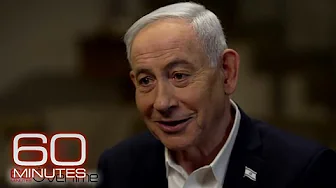
Extended interview: Israeli Prime Minister Benjamin Netanyahu

- Netanyahu says the military campaign has delayed Iran's nuclear programme but has not eliminated the threat. He claimed 20 leading nuclear scientists were killed—12 in the opening minute and eight later—yet enriched uranium, enrichment sites, missile production and Iranian proxies remain unresolved, with renewed military action still possible.

“But it sets them back.”

- Netanyahu said the February 11 decision with Trump was driven by the nuclear threat, not a guarantee of regime change. He disputed the New York Times account of a hard sell, saying both leaders understood that overthrowing the Islamic Republic was uncertain and military action carried risks.

“There was no certainty there. There was no guarantee.”

- The Strait of Hormuz crisis exposed a risk Netanyahu said became clearer as the fighting progressed. He acknowledged that Iran could disrupt global markets, but said Trump's blockade reversed the pressure and was now collapsing Iran's economy.

“I don't claim perfect foresight, and nobody had perfect foresight.”

- Israel claims to have destroyed more than 90% of Hezbollah's prewar arsenal of 150,000 rockets and missiles, but thousands remain. Netanyahu said 5,000 Radwan fighters had been ready to invade the Galilee and ruled out accepting a Lebanon ceasefire simply because the war with Iran ends.

“But that still leaves them with thousands of rockets.”

- Two of Netanyahu's four Gaza security conditions remain unmet: Hamas has not disarmed or demilitarised. He said weapons factories were largely reduced and smuggling curtailed, but warned that Israel may have to seize Hamas's remaining weapons if no international force is willing to do so.

“If it comes down to us, then we'll have to do it.”

- Netanyahu accepted that responsibility for the October 7 security failure extends from the prime minister down. He proposed an independent bipartisan commission with access to every witness and piece of evidence, promising to be its first witness.

“Everybody bears some responsibility. From the top, from the prime minister down.”

- Netanyahu proposed ending Israel's $3.8 billion annual US military assistance over the next decade. He wants both countries to contribute equal amounts to joint intelligence, weapons and missile-defence projects, replacing financial aid with a formal strategic partnership.

“Move from aid to partnership.”

- Netanyahu acknowledged Chinese military assistance to Iran's missile manufacturing, while describing Russia's direct military support as limited. He confirmed Chinese assistance with particular components but refused further details, and declined to disclose whether Russia was providing intelligence support.

“China gave certain amount of support on particular components of missile manufacturing but I can't say more than that.”

Gathered content

Extended interview: Israeli Prime Minister Benjamin Netanyahu

- The war with Iran remains unfinished. Netanyahu said Iran's enriched uranium must be removed, enrichment facilities dismantled, its proxy network addressed, and its ballistic missile capabilities prevented from being rebuilt. Although Israeli and American military operations have degraded these capabilities, he acknowledged that the underlying threats remain.

Pasted text.txt

- Israel and the United States prefer economic pressure but retain the option of renewed military action. Netanyahu said an agreement must cover nuclear material, enrichment facilities, missile production and Iranian proxies. He supports President Trump's blockade and economic pressure if they achieve those objectives, but said both countries agree military action may be necessary again.

Pasted text.txt

- Netanyahu refused to explain how enriched uranium might be seized by force. Asked whether Israeli and American special forces could work together under international supervision, he said physically removing the material was possible, particularly under an agreement. He repeatedly declined to discuss military plans or whether the operation could proceed without Iranian agreement, and provided no timetable.

Pasted text.txt

- Netanyahu presented preventing an Iranian nuclear weapon as the central justification for the war. He claimed Iran was very close to producing a bomb and would have achieved it within a month or two without the two military operations. He described Iran as committed to destroying Israel and America, citing attacks on American personnel and interests and alleged assassination attempts against US officials.

Pasted text.txt

- Trump's opposition to Iranian nuclear weapons predates his current military cooperation with Israel. Netanyahu recalled meeting Hillary Clinton and Donald Trump before the 2016 election, when Trump told him he would withdraw from the Iran nuclear agreement. In 2024, after meeting Joe Biden and Kamala Harris in Washington, Netanyahu met Trump at Mar-a-Lago and heard the same commitment again.

Pasted text.txt

- Trump's first-term sanctions slowed Iran's nuclear programme but did not stop it. Netanyahu said sanctions sharply reduced Iranian oil exports and brought significant economic pressure, but Iran eventually resumed enrichment and renewed its efforts to develop nuclear weapons. He identified Iran's approaching nuclear capability as the reason military action eventually replaced reliance on sanctions.

Pasted text.txt

- Netanyahu described the Iranian regime as its weakest since the 1979 revolution. He said the hardliners remain committed to their ideology, but Israeli-American strikes destroyed important parts of Iran's economic infrastructure, including petrochemical and steel plants supplying materials for rockets and ballistic missiles. He described an internal disagreement between officials wanting to continue the confrontation and those fearing economic collapse and another popular uprising.

Pasted text.txt

- Khamenei's physical condition and authority remain uncertain. Netanyahu believes the Supreme Leader is alive and hiding in a bunker or another secret location, but cannot establish his condition. He suggested Khamenei no longer exercises the authority his father once held, contributing to the regime's internal instability.

Pasted text.txt

- Netanyahu withheld his assessment of who could negotiate a durable Iranian agreement. He said he had formed opinions about potential Iranian negotiators and had shared them with President Trump, but refused to disclose them publicly.

Pasted text.txt

- Hezbollah entered the conflict with an estimated 150,000 rockets and ballistic missiles. Netanyahu described this as the world's densest concentration of projectiles, intended to threaten Israeli cities including Tel Aviv, Jerusalem and Haifa. He claimed Israel destroyed more than 90% of that arsenal, but acknowledged that thousands of rockets and some ballistic missiles remain.

Pasted text.txt

- Netanyahu distinguishes Lebanon's government from Hezbollah, which he describes as an Iranian occupation by proxy. He said Israel has no quarrel with Lebanon and would welcome peace immediately, but argued that Hezbollah has effectively hijacked the country and that Lebanon's government has historically been unable to confront it.

Pasted text.txt

- Israel entered Lebanon to prevent a repeat of the October 7 invasion. Netanyahu claimed Hezbollah had prepared approximately 5,000 Radwan force fighters to invade Israel's Galilee region. Israel pushed them back and established a security belt intended to prevent incursions and anti-tank missile attacks on Israeli homes, although rockets and armed drones remain a threat.

Pasted text.txt

- Israel wants cooperation with Lebanon to dismantle Hezbollah but questions the Lebanese government's ability to do so. Netanyahu said many Lebanese people want freedom from Hezbollah but have not demonstrated the capacity to defeat it. Discussions with Lebanese officials involve potentially dividing the military and political responsibilities for removing the organisation.

Pasted text.txt

- Israel will not accept an Iran ceasefire that allows Hezbollah to continue threatening Israeli communities. Netanyahu said Iran would prefer to extend any agreement to Lebanon so Hezbollah could remain intact. He rejected that outcome, even when asked whether he would accept it if President Trump requested it, arguing that Hezbollah's remaining rockets and drones still threaten Israeli cities.

Pasted text.txt

- Netanyahu believes the collapse of Iran's regime would seriously weaken its regional proxy network. He predicted that Hamas and the Houthis would also suffer if the Iranian regime collapsed because their wider support structure would be damaged. He acknowledged that this outcome is not guaranteed and would require sustained pressure.

Pasted text.txt

- He considers the overthrow of Iran's government possible but impossible to guarantee or predict. He compared the potential collapse with the unexpected falls of the Soviet Union, Romania's Ceausescu dictatorship and Syria's government. His argument was that authoritarian regimes can weaken gradually before collapsing suddenly.

Pasted text.txt

- Netanyahu linked Iranian street protests to the earlier Israeli and American military operations. He said demonstrations followed Operation Rising Lion and the American Operation Midnight Hammer, as economic conditions deteriorated and Iranians witnessed Israeli aircraft operating over Tehran. He claimed security forces subsequently killed, wounded and maimed protesters by the tens of thousands.

Pasted text.txt

- He believes the Iranian regime has lost much of its legitimacy and survives through repression. Netanyahu argued that Iranians now understand their government is not invincible and that brute force is keeping it in power. He believes another uprising could occur, although he cannot guarantee when or whether it will happen.

Pasted text.txt

- Israeli intelligence's ability to locate Iranian leaders does not automatically give it the ability to produce a revolution. Netanyahu agreed that intelligence can identify senior figures with remarkable precision but described that capability as necessary rather than sufficient for regime change. He said Iran's security apparatus is extensive, estimating that one in every 100 Iranians belongs to the secret police, which he accused of being prepared to massacre protesters.

Pasted text.txt

- Netanyahu defended Israel's targeted operations as exceptionally precise. He cited the pager and beeper operation, claiming approximately 2,500 people were incapacitated rather than killed and that the operation caused no collateral damage. He also cited attacks against Iranian nuclear scientists, military commanders and political leaders, while acknowledging that such operations cannot guarantee a popular revolution.

Pasted text.txt

- Netanyahu disputed the New York Times account of his February 11 White House meeting with Trump. The newspaper reported that Netanyahu had argued Iran was ripe for regime change and that a joint US-Israeli operation could end the Islamic Republic. Netanyahu denied presenting regime change as guaranteed, insisting that both governments understood the uncertainty and risks involved.

Pasted text.txt

- He said the urgency of military action was connected to Iran moving its nuclear and missile industries underground. Netanyahu claimed Iran intended to relocate missile factories and nuclear facilities beneath heavily protected mountains beyond the reach of American B-2 bombers. Removing Iranian leadership was part of the proposed military action, but he said its ultimate success remained uncertain.

Pasted text.txt

- The Strait of Hormuz became a major strategic risk during the conflict. Netanyahu said the scale of the danger became clearer as fighting progressed and that Iran underestimated the international response to disrupting a critical maritime route. He argued that Iran could cause global market disruption but that the resulting blockade and economic pressure were now contributing to the collapse of its economy.

Pasted text.txt

- Netanyahu rejected the suggestion that the original military planning treated regional risks as minimal. He said he did not remember using that language and acknowledged that neither side possessed perfect foresight. He identified the Iranian nuclear threat, rather than the intelligence opportunity to locate Khamenei, as the primary reason for military action.

Pasted text.txt

- Netanyahu believes Israel has fundamentally changed its position in the Middle East. He said Israel has broken the Iranian-led terrorist axis and emerged as the region's most powerful country, although Iran, Hamas and other hostile organisations have not disappeared. He argued that they no longer present the same existential threat they did before the military campaigns.

Pasted text.txt

- He described the US-Israel relationship as stronger than ever. Netanyahu cited a recent American national security memorandum that reportedly described Israel as the United States' model ally. He portrayed Israel's transformation as a move from facing possible annihilation to possessing substantial regional military and strategic influence.

Pasted text.txt

- Netanyahu expects the Abraham Accords to expand. He credited himself and President Trump with establishing peace agreements with four Arab countries and believes the changing balance of power against Iran has created opportunities for deeper relationships with additional Arab states.

Pasted text.txt

- Gulf states may simultaneously fear Iran's survival and Israel's growing regional dominance. The interviewer cited a Wall Street Journal report warning that an agreement addressing only nuclear weapons and ballistic missiles could leave Iran's shorter-range missiles and allied militias intact. The report also suggested Gulf monarchies were concerned about Israel exercising strategic dominance over the Middle East.

Pasted text.txt

- Netanyahu claimed some Arab governments privately want stronger alliances with Israel. He said certain countries see Israeli cooperation as a way to deter Iran, improve their defences and gain access to Israeli capabilities. He suggested the extent of this cooperation is greater than publicly understood.

Pasted text.txt

- Regional cooperation is expanding beyond security into energy, AI and quantum technology. Netanyahu described Israel as a small country of approximately 10 million people with exceptional technological talent. He said Arab governments increasingly recognise the economic and strategic benefits of sharing these capabilities with Israel.

Pasted text.txt

- Netanyahu believes overwhelming strength can eventually change the calculations of hostile governments. Referring to his October 2025 discussion about destroying the hope of fanatical movements, he said successive wars had convinced much of the Arab world that Israel could not be eliminated. However, he argued that Iran's hardliners are not easily persuaded and require sustained pressure and resolve.

Pasted text.txt

- He warned that Iran's missile capabilities could eventually threaten the United States. Netanyahu cited an Iranian missile reportedly capable of reaching Diego Garcia, approximately 2,400–2,600 miles away, and compared that with the distance to the continental United States of more than 6,000 miles. He argued that allowing Iran to develop nuclear weapons and suitable delivery systems would eventually put American cities at risk.

Pasted text.txt

- Netanyahu's political philosophy centres on the willingness of free societies to defend themselves. He argued that survival and freedom are not guaranteed by good intentions or hope, but by determination and, when necessary, military force. He cited Will Durant's The Lessons of History and criticised elements of Western Europe and American society for treating resistance to evil as inherently unacceptable.

Pasted text.txt

- He used personal experiences of war to explain his position. Netanyahu said a fellow soldier died in his arms at age 18, his brother died rescuing hostages, and he himself was wounded during a hostage-release operation. He described the grief experienced by his parents and other families, insisted that war is horrific, and argued that civilian casualties must be avoided even when military action becomes unavoidable.

Pasted text.txt

- Netanyahu claimed Israel has made extensive efforts to protect civilians in Gaza and Lebanon. He cited millions of text messages, telephone calls, pamphlets and leaflets warning civilians to leave dangerous areas. He accused Hamas and Hezbollah of deliberately keeping civilians in harm's way and claimed Hamas had shot civilians attempting to evacuate.

Pasted text.txt

- He claimed Israel's civilian-to-combatant casualty ratio is among the lowest in modern urban warfare. Netanyahu used this argument to reject accusations of genocide and said Israel's civilian protection efforts were being misrepresented. These were his claims about the conduct of the war, rather than independently established findings presented during the interview.

Pasted text.txt

- Netanyahu attributed much of the deterioration in American support for Israel to foreign manipulation of social media. He alleged that several countries operated bot farms and fake accounts designed to undermine American sympathy for Israel and weaken the US-Israel alliance. He gave the example of an apparently pro-Israel Texan social media voice that he claimed could be traced to an address in Pakistan.

Pasted text.txt

- He described social media as Israel's neglected eighth front. While Israel was fighting on seven military fronts, Netanyahu said it had failed to prepare for the digital information war. He compared opponents' social-media capabilities to F-35 aircraft and Israel's response to Polish cavalry, arguing that Israel must develop democratic methods of reaching younger Americans without resorting to censorship.

Pasted text.txt

- Netanyahu denied personal responsibility for declining American support but acknowledged that Israel's messaging had failed. He argued that foreign operations were also attempting to divide Americans internally, including through universities and academic curricula. When challenged about whether Americans might have changed their views organically, he said the Gaza war had damaged Israel's image but had intensified a decline that was already underway before October 7.

Pasted text.txt

- He connected the information war to America's broader understanding of itself. Netanyahu argued that foreign campaigns were not simply attacking Israel or the bilateral relationship but were attempting to weaken American unity and confidence in the country's own history and democratic values. He said younger Americans should remain proud of the United States and its contribution to free societies.

Pasted text.txt

- Netanyahu wants American military financial assistance to Israel eventually reduced to zero. He said Israel currently receives approximately $3.8 billion annually and wants to end that financial component of military cooperation. He argued that Israel's economy has become sufficiently strong after three years of war, citing its currency, stock market and high-technology industries.

Pasted text.txt

- He proposes replacing military aid with equally funded US-Israeli projects. Netanyahu wants joint programmes covering intelligence, weapons development and missile defence, with both countries contributing the same amount and sharing the resulting capabilities. He said the transition should begin immediately and take approximately ten years, although it could happen faster.

Pasted text.txt

- Netanyahu presented Israel's economic transformation as a precedent for ending military aid. He recalled addressing the US Congress in 1996 and promising to turn Israel into a free-market, high-technology economy that could eventually stop relying on financial assistance. He said his advisers opposed the idea because of the economic importance of aid, but maintained that the transformation succeeded and that the same approach should now apply to military assistance.

Pasted text.txt

- He argued that Israel contributes substantial intelligence and technology to the United States. Netanyahu cited General Keane's reported assessment that Israeli intelligence was worth five CIAs, although he qualified the comparison and said he respected the CIA. He emphasised Israel's intelligence sharing, technological contributions and appreciation of American support.

Pasted text.txt

- Netanyahu agreed that Israel has become America's most important special relationship. The interviewer cited a British ambassador's private assessment that the traditional US-UK special relationship had effectively shifted to the US-Israel relationship. Netanyahu said he agreed with that assessment.

Pasted text.txt

- He confirmed that China had provided Iran with some assistance for missile manufacturing. Netanyahu acknowledged Chinese support involving particular components but refused to disclose further details. He said he disliked the assistance and argued that China should prefer secure international waterways for its energy supplies rather than allowing Iran to control them.

Pasted text.txt

- Netanyahu called for US-China cooperation to manage artificial intelligence risks. He argued that international relations are not always zero-sum and suggested Trump and Xi should discuss how to maximise AI's benefits while jointly controlling its dangers. He also questioned whether China really wanted a nuclear-armed Iranian regime committed to exporting Islamist revolution.

Pasted text.txt

- He described Russia's current military support for Iran as limited. Netanyahu acknowledged earlier cooperation between Russia and Iran, particularly Iranian drone supplies during the initial stages of the Ukraine war. He said Russia was providing little direct military assistance to Iran in the current conflict, possibly because their interests sometimes diverge, but declined to discuss intelligence cooperation.

Pasted text.txt

- Hamas has failed to meet two of the four conditions Netanyahu identified for Gaza. He said Hamas has neither disarmed nor demilitarised. Weapons factories have been substantially reduced, while weapons smuggling has been curtailed through Israel's encirclement of Hamas and control of the Philadelphia corridor connecting Gaza's supply routes to Sinai.

Pasted text.txt

- Hamas was supposed to disarm and demilitarise voluntarily under the 20-point agreement but reneged. Netanyahu said those first two conditions remain unfulfilled, while the other two have been largely achieved. He added a third requirement: Gaza must also be deradicalised.

Pasted text.txt

- Netanyahu questioned whether international forces would actually enter Gaza to disarm Hamas. He challenged the interviewer to identify countries willing to send troops to confront Hamas fighters and seize their AK-47 rifles. He claimed Hamas uses these weapons to terrorise Gazans and extort money through inflated prices for goods, rather than relying only on conventional military equipment.

Pasted text.txt

- Israel may ultimately have to disarm Hamas itself. Netanyahu said that if no other country is willing to do the job, Israel will have to consider doing it, choosing its own timing and circumstances. He acknowledged that Hamas's threat from Gaza has been reduced but insisted that disarmament and demilitarisation remain unfinished and that Hamas must never again threaten Israel.

Pasted text.txt

- Netanyahu rejected the accusation that he has an appetite for war. He said he had been regarded as one of Israel's most militarily restrained prime ministers before October 7, despite conducting three major Gaza operations. He claimed he avoided sending ground forces into Gaza apart from operations involving tunnels because he understood the human cost of ground warfare.

Pasted text.txt

- He described October 7 as an attack by the wider Iranian axis, not simply Hamas. Netanyahu said he believed Israel was facing an organised attempt to annihilate the Jewish state through simultaneous threats. He identified subsequent campaigns against Hamas, the Assad regime—which he said Israel helped bring down—Iran and later the Houthis as parts of a broader strategy to change the Middle East.

Pasted text.txt

- Netanyahu credited Israeli national unity and historical determination for the country's military resilience. He said Jewish and non-Jewish Israeli citizens put aside their internal divisions and stood together after October 7. He invoked Jewish history, expulsions, massacres and the Holocaust to explain why Israelis would not accept another existential threat.

Pasted text.txt

- He claimed some Iranians regard Israel as fighting for their freedom. Netanyahu said streets and public squares in Iran had been named after him and Trump, although Revolutionary Guards reportedly removed the signs. He said the name used for him was "BB Jun" and argued that Iranians understand Israel is fighting not only for itself but also against their government.

Pasted text.txt

- Netanyahu framed the conflict as a wider struggle against militant Islam. He argued that European leaders fail to understand that confronting Iran and its proxies also prevents militant Islam from expanding into their own countries. He described Israel's campaign as a defence of civilisation against extremist organisations that disregard human rights.

Pasted text.txt

- He cited violence against Druze people in Syria to explain why he considers the fight necessary. Netanyahu described an alleged incident in which Islamists removed and ate a Druze man's heart while the victim was still alive, calling it pure evil. He accepted that he is militant in opposing such violence but rejected the idea that this means he seeks war for its own sake.

Pasted text.txt

- Netanyahu denied that Israel conducts indiscriminate military operations and claimed approximately 2,000 terrorists had been killed. He said Israeli forces take particular care when targeting militants in Iran, Lebanon and Gaza, while accusing their opponents of embedding themselves among civilians and using resulting deaths as propaganda. He described every civilian death as a tragedy for Israel but a deliberate strategy for its enemies.

Pasted text.txt

- He compared criticism of his military policy with the treatment of Winston Churchill before the Second World War. Netanyahu said Churchill was called a warmonger for insisting that Hitler had to be confronted, despite ultimately winning the war. He acknowledged that military leadership carries electoral consequences and joked that supporters calling him a king forget that he must still win elections.

Pasted text.txt

- Netanyahu described antisemitism as a recurring historical pattern of vilification followed by violence. He cited two millennia of Jewish expulsions and massacres, preceded by accusations that Jews spread disease, poisoned wells or threatened society. He said antisemitism became socially unacceptable for roughly 80 years after the Holocaust but has now returned.

Pasted text.txt

- He pointed to recent attacks on Jewish people in America, Europe and Australia. Netanyahu referred to an incident involving a Jewish couple working for Israel's embassy in Washington near the Holocaust Museum. He presented such incidents as evidence of the renewed hostility directed towards Jewish communities.

Pasted text.txt

- The interviewer challenged Netanyahu over the weakening of bipartisan American support for Israel. Major Garrett said that since his career began in Washington in 1990, support for Israel had generally been the default position of both Republicans and Democrats, but that this was now less reliable. Netanyahu responded that antisemitism moves through historical cycles and pointed to its presence in 1930s America, including the influence of Father Coughlin.

Pasted text.txt

- Netanyahu suggested jealousy of Israel's success as one explanation for antisemitism. He argued that a successful and powerful country can provoke envy, although he explicitly acknowledged that this does not explain the entire phenomenon. He also referred to his father's historical work on antisemitism and said the subject has several possible explanations.

Pasted text.txt

- He argued that Israel's military strength prevents historical vilification from becoming another massacre of Jewish people. Netanyahu said the Jewish state now possesses the military capability to defend itself, unlike Jewish communities throughout much of their previous history. He suggested that strength can generate respect, including among some Arab neighbours.

Pasted text.txt

- Netanyahu claimed Israel remains popular in India and parts of the Arab world. He said many Americans continue to support Israel and singled out India as particularly favourable, describing Prime Minister Narendra Modi's visit to Israel and his own visit with his wife Sarah as exceptionally positive experiences. He also claimed that some Arab countries increasingly respect Israel and want closer relations.

Pasted text.txt

- He accused major media organisations of overlooking developments favourable to Israel. Using a play on the New York Times slogan, Netanyahu suggested that the newspaper publishes only news that fits its preferred narrative. He said Israel must counter propaganda, maintain confidence in its cause, continue developing its economy, pursue peace through strength and cooperate with Trump on ending the Iranian conflict.

Pasted text.txt

- Netanyahu accepted that responsibility for October 7 extends from the prime minister down through the security establishment. The interviewer listed the defence minister, military chief, intelligence leadership, Israeli Secret Service chief and Air Force leadership as officials who had left or been dismissed, with the Mossad chief also approaching departure. Netanyahu said some departures reflected the end of appointments, but insisted that everybody bears some responsibility, including himself.

Pasted text.txt

- He proposed an independent bipartisan investigation into the October 7 security failure. Netanyahu suggested a commission modelled on the American investigation following September 11, with authority to obtain any witness or evidence. He said this would establish the truth outside partisan politics and promised to be the first person to appear before it.

Pasted text.txt

- Netanyahu distinguished responsibility for the October 7 failure from his responsibility for the subsequent war. He said that after October 7 his responsibility was to remove Israel from the Iranian-backed network of threats surrounding it. He described a systematic campaign across seven fronts to reverse the regional balance of power.

Pasted text.txt

- He identified the degradation of Iran's nuclear programme as one of Israel's greatest military achievements. Netanyahu highlighted the killing of 20 leading nuclear scientists, claiming that 12 were killed in the first minute of Operation Rising Lion and another eight in the current operation. He acknowledged that removing scientists does not eliminate all technical knowledge but argued that it substantially delays Iran's ability to develop a nuclear arsenal.

Pasted text.txt

- Netanyahu described preventing Iran from obtaining a nuclear arsenal as Israel's greatest achievement. He referred to Israel's population of approximately 10 million and an Iranian leader's description of the country as a "one-bomb country." His argument was that a single Iranian nuclear weapon could threaten Israel's existence and that the military operations prevented that immediate danger.

Pasted text.txt

- He said Israel had broken the assumption that Iran could never be attacked on its own territory. Netanyahu argued that for 47 years Iran had intimidated neighbouring countries while operating with apparent impunity. The sight of Israeli and American aircraft operating over Tehran and Iranian territory, he said, destroyed the regime's image of invulnerability and made its eventual collapse more likely.

Pasted text.txt

- Netanyahu expects the war to be shorter than years but would not commit to a timetable. He said the conflict should not take years and hoped it would not take months, although the timing depends on achieving the remaining mission objectives. He maintained that an enormous amount had already been accomplished in a relatively short period.

Pasted text.txt

- Netanyahu rejected the suggestion that Israel has an institutional hostility towards Christians. Asked about Cardinal Pizzaballa's Easter access, the defacement of a crucifix in Lebanon and an assault on a nun in Jerusalem, he said these incidents contradicted Israel's values. He argued that Christianity has survived and prospered in Israel while Christian communities have suffered persecution elsewhere in the Middle East.

Pasted text.txt

- He said the individuals responsible for the incidents involving Christians were facing consequences. Netanyahu stated that the Israeli soldier who tore down a crucifix was in jail and the man who attacked a nun was on trial. He presented these cases as misconduct rather than government policy.

Pasted text.txt

- Netanyahu personally intervened when Cardinal Pizzaballa was prevented from accessing a holy site. He explained that a policeman had closed Jewish, Christian and Muslim holy sites during Iranian missile attacks near the Temple Mount to prevent casualties. Netanyahu said he immediately ordered an exception for the third-ranking figure in the Catholic Church and reopened access.

Pasted text.txt

- He cited Christian soldiers serving voluntarily in the Israeli military as evidence of Israel's relationship with Christianity. Netanyahu said he had recently met approximately 50 young Christian men and women serving alongside Jewish soldiers. He also claimed Bethlehem's Christian population declined from approximately 80% to 20% after the Oslo Accords transferred the town to Palestinian Authority control.

Pasted text.txt

- Netanyahu acknowledged that Israeli forces have made mistakes in Gaza and the West Bank. He accepted that armies sometimes miss their targets and civilians die, describing these incidents as mistakes rather than deliberate policy. He compared Israeli operations with American experiences in Fallujah and Afghanistan, arguing that other forces have sometimes suffered greater civilian casualties in proportion.

Pasted text.txt

- He maintained that minimising civilian casualties is part of Israeli military training and doctrine. Netanyahu said the Israeli military makes extraordinary efforts to conduct surgical operations, but acknowledged that those efforts do not always succeed. He insisted that protecting civilians is part of the army's values and convictions.

Pasted text.txt

- Netanyahu conceded that Israel has performed poorly in the propaganda and information war. He argued that social media allows repeated allegations and selected images to shape public perceptions, even when those portrayals are misleading. He said Israel had effectively left this battlefield to its opponents and must now respond more forcefully through evidence and truth rather than censorship.

Pasted text.txt

Read Facts →
...

Facts

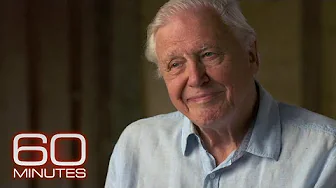
Sir David Attenborough | 60 Minutes Archive

- David Attenborough has witnessed the destruction of the natural world across his own lifetime. At 28, he began travelling for the BBC in 1954, when vast forests, grasslands and coastal wilderness remained largely untouched; at 94, he described the environmental destruction he had witnessed as a crime.

“I was able to see it beginning.” — David Attenborough

- Attenborough acknowledged his earlier skepticism about climate change and explained what changed his position. He now bases his warnings on scientific observations collected worldwide, including measurements of temperature, humidity, radioactivity and ecological conditions.

“You better make sure this isn't just your own personal reaction.” — David Attenborough

- The Great Barrier Reef provided him with a devastating example of environmental collapse. During a return visit, he found familiar coral formations dead, describing the reef as a cemetery and attributing the destruction to rising temperatures and ocean acidity.

“It was like a cemetery because all the corals had died.” — David Attenborough

- Two-thirds of Earth's wildlife has disappeared over 50 years, according to the World Wildlife Fund figure he cited. Attenborough advocated rewilding and argued that ocean populations could recover within a decade if humanity committed to restoring them.

“Repopulation of the oceans can happen like that in a decade. If we had the will to do it.” — David Attenborough

- Attenborough's proposed solution to the energy crisis is to abandon fossil fuels completely in favour of renewable energy. He argued that sunlight provides more than enough energy, identifying storage and transmission as obstacles while acknowledging that the fossil fuel industry opposes the transition.

“If we could solve the problems of storage and transmission.” — David Attenborough

- He argued that humanity's survival depends on international cooperation rather than competing national ambitions. Asked what he would tell Donald Trump, Xi Jinping and Narendra Modi, he urged them to prioritize collective survival over national interests and warned that inward-looking politics could sink humanity.

“Look for an international ambition of survival.” — David Attenborough

- Attenborough accepted that his own generation had failed to protect the planet and placed his greatest hope in younger generations. He described a worldwide movement of young people demanding environmental action from their governments and regarded their involvement as his strongest reason for optimism.

“My generation failed. We've allowed it to happen.” — David Attenborough

- He argued that protecting nature is ultimately about protecting human life. Food, breathable air and human well-being depend on natural systems, while the pandemic had helped people rediscover the emotional importance of the living world.

“They are not apart from it, they are part of it.” — David Attenborough

Gathered content

Sir David Attenborough | 60 Minutes Archive

- David Attenborough described his new film, A Life on Our Planet, as a witness statement. The film, accompanied by a new book, was scheduled to premiere on Netflix the following week. He presented both as a first-hand account of what he had witnessed happening to Earth during his lifetime and a warning about what could happen if humanity failed to act quickly.

- Attenborough argued that humanity has committed a crime against the natural world. When asked why he called the film a witness statement, a term associated with crimes, he replied that a crime had indeed been committed. His age allowed him to witness the beginning of the environmental destruction and observe how dramatically the planet had changed.

- At 94, Attenborough remained professionally active despite the pandemic. He was living in isolation near London and gave the interview through Zoom. He acknowledged that he preferred celebrating the natural world through excitement, pleasure and joy rather than repeatedly delivering warnings of disaster, but believed responsibility required him to speak honestly about what was happening.

- Attenborough's personal collection reflects his lifelong interest in geology and natural history. He described having a cellar full of rocks collected during his travels, some of which he could no longer remember why he had picked up. He studied geology and zoology at university.

- His broadcasting career began with an opportunity to travel the world for the BBC in 1954. At 28, he was working as a BBC producer when he persuaded his employers to let him travel and document wildlife. He remembered encountering enormous wilderness areas, including sparkling coastal seas, vast forests and immense grasslands. At the time, he could fly for hours over apparently untouched landscapes and described that period as the best time of his life.

- The 1979 BBC series Life on Earth made Attenborough internationally famous. The groundbreaking series was watched by an estimated 500 million people worldwide. He described its subject—the development of life on Earth and the emergence of human beings—as the greatest story ever told.

- His success came from making natural history accessible through storytelling and a sense of wonder. Audiences were introduced to unfamiliar species and ecosystems through his enthusiasm, explanations and memorable narration. His programmes gave animals and the natural world characters, complexity and stories that viewers could understand and enjoy.

- His encounter with endangered mountain gorillas in Rwanda became one of his most memorable experiences. During filming, two baby gorillas sat on him. He said he was neither frightened nor concerned that their mother might attack, describing their acceptance of him as an extraordinary compliment. He also challenged the association of gorillas with aggression and violence, arguing that humans better deserved that description.

- Attenborough regarded natural history narration as relatively easy because the animals themselves were extraordinary. When the interviewer questioned his description of the work as a piece of cake, he explained that the remarkable behaviour and appearance of animals provided much of the excitement.

- Attenborough had been involved in wildlife conservation long before making his current environmental warnings. He was a founding member of the World Wildlife Fund in the early 1960s. However, his earlier films rarely concentrated on habitat destruction or climate change, generally emphasizing the beauty and diversity of wildlife instead.

- He acknowledged that he had previously been skeptical about climate change. The interviewer suggested that his change in position made his present warnings more powerful. Attenborough agreed and explained that environmental claims should not be based simply on personal reactions or observations.

- Attenborough said scientific evidence was essential to establishing the reality of environmental change. He pointed to scientists around the world collecting observations of temperature, humidity, radioactivity and ecological conditions. He believed responsible public statements about the planet needed to be grounded in this wider body of scientific research.

- He identified climate change as an exceptionally serious threat to the planet. When asked whether he considered it the greatest threat facing the planet for thousands of years, he agreed. He argued that even the worst historical actions of supposedly civilized human societies could pale in comparison with the potential consequences of environmental destruction.

- Attenborough warned that expanding deserts could make entire regions uninhabitable. He cited the spread of deserts in Africa and the possibility that people would eventually be unable to live safely in some parts of the world.

- He criticized society's tendency to dismiss record-breaking temperatures as isolated events. He referred to the highest temperatures recorded in Death Valley and described how people often react with surprise before returning to normal life, assuming the event was exceptional. He warned that new records could follow within months or another year, making it dangerous to treat each extreme temperature as an isolated occurrence.

- His experience visiting the Great Barrier Reef revealed the scale of ecological destruction. Having visited the reef repeatedly over the years, Attenborough was shocked by its condition during his latest trip. He described a familiar reef that had become like a cemetery because its corals had died, attributing the destruction to rising water temperatures and increasing acidity.

- He rejected the argument that future technological breakthroughs would automatically solve environmental problems. When confronted with the suggestion that technology might eventually produce an unforeseen solution, he emphasized that humanity lives in a finite world and cannot assume technological progress will eliminate the consequences of environmental destruction.

- Attenborough argued that human survival depends directly on the natural world. Every mouthful of food and every lungful of air ultimately depends on natural systems. He stressed the importance of trees and other elements of the living environment, arguing that without the natural world the atmosphere could lose its oxygen supply.

- The COVID-19 pandemic had made many people more aware of their dependence on nature. Attenborough observed that people who previously paid little attention to birdsong were suddenly finding comfort, excitement and inspiration in it. He believed the experience was helping people recognize that humans are not separate from nature but are part of it.

- He considered protecting nature inseparable from protecting humanity. When asked whether saving nature meant saving ourselves, he answered unequivocally that it did. His argument was that environmental conservation is not simply about protecting attractive landscapes or endangered animals; it is about preserving the conditions that make human life possible.

- Despite his description of the damage as catastrophic, Attenborough did not believe the planet was beyond redemption. He argued that recovery remained possible, but would require a fundamental transformation in humanity's energy systems and relationship with the natural world.

- His central energy proposal was a complete transition to renewable energy and an end to dependence on fossil fuels. He acknowledged that the fossil fuel industry did not want the world to move away from its products. Nevertheless, he believed renewable alternatives could supply humanity with sufficient energy.

- Attenborough identified energy storage and transmission as important obstacles to expanding solar power. He argued that even a tiny fraction of the sunlight reaching Earth could provide enormous amounts of energy, available continuously and without the fuel costs associated with conventional energy sources. However, he acknowledged that storage and transmission problems needed to be solved to make the transition work.

- He questioned why humanity should continue poisoning the planet when alternative energy was available. His position was that the world already received more than enough energy from the sun, and the challenge was to develop the infrastructure and systems necessary to use it effectively.

- Attenborough advocated the rewilding of the planet. He wanted land and ocean ecosystems to be given sufficient time and space for plants and animals to recover. The objective was not simply to preserve surviving wildlife but to allow damaged ecosystems to regenerate.

- He cited a World Wildlife Fund estimate that two-thirds of Earth's wildlife had disappeared over the preceding 50 years. This figure illustrated the scale of biodiversity loss that he believed required urgent intervention.

- He believed ocean ecosystems could recover remarkably quickly if governments and societies committed to restoration. He suggested that marine populations could be replenished within approximately a decade if humanity had the determination to make it happen. He emphasized that achieving this required widespread agreement and collective action.

- Attenborough wanted world leaders to prioritize humanity's collective survival over national ambitions. Asked what he would tell US President Donald Trump, Chinese President Xi Jinping and Indian Prime Minister Narendra Modi, he said the time had come to put national ambitions aside and pursue an international ambition of survival.

- He identified growing political nationalism and inward-looking government policies as serious obstacles to environmental cooperation. The interviewer observed that political developments appeared to be moving away from international collaboration. Attenborough agreed, warning that the failure to recognize humanity's shared interests could ultimately destroy its chances of survival.

- He considered optimism a necessity rather than a prediction that everything would turn out well. When asked whether he could remain optimistic, he said humanity had no alternative. Giving up and declaring indifference was unacceptable, particularly for people who loved their children and cared about the rest of humanity.

- Attenborough placed considerable hope in younger generations. He described a worldwide movement of young people from different countries who understood what was happening to the planet and were demanding action from their governments.

- A public appearance at Britain's largest music festival demonstrated the enthusiasm younger audiences had for Attenborough. He had appeared on stage the previous year and received an enthusiastic reception from the crowd. He regarded the support of younger people as his greatest source of hope.

- He openly accepted responsibility for the failures of his own generation. Attenborough said his generation had failed because it had allowed environmental destruction to happen. Rather than presenting the crisis as a problem created exclusively by current governments or future generations, he acknowledged the responsibility of those who had witnessed the deterioration over decades.

- He argued that human intelligence alone had not prevented environmental disaster. Although human beings might be the smartest creatures ever to have lived, intelligence had not been enough to protect the planet. Humanity now needed wisdom to make responsible decisions about its future.

- Attenborough emphasized that Earth was humanity's only practical home. He warned that there was nowhere else to go if the planet became uninhabitable. His argument directly challenged the idea that humanity could simply escape environmental destruction by moving elsewhere.

- He expressed little belief in the possibility of extraterrestrial life. When asked whether he believed life existed elsewhere, he answered that he did not really think so, describing the question as theoretically interesting but not particularly relevant to humanity's immediate responsibilities.

- He rejected the idea of abandoning Earth for the Moon. Attenborough questioned why he would want to live on the Moon when Earth offered an extraordinary living world filled with badgers, thrushes, jellyfish, corals and hummingbirds. He contrasted Earth's biodiversity with the Moon's barren dust and made clear that he would rather remain on Earth observing its wildlife.

Read Facts →
...

Facts

J. Craig Venter: "Designing Life" | 60 Minutes Archive

  • Venter's synthetic bacterium was a US$40 million proof of concept, not a useful product. His team spent approximately 15 years creating a self-replicating organism using computer-designed, laboratory-manufactured DNA, demonstrating that synthetic genetic instructions could produce life.

“We designed this just to see if we could do this whole experiment using synthetic DNA.”

  • Venter's breakthrough was designing an organism's genetic instructions rather than modifying a few existing genes. DuPont, Amyris and LS9 were already engineering microorganisms for industrial chemicals, antimalarial drugs and fuel, but Venter's ambition was to design the entire genetic system.

“DNA is the software of life.”

  • Major corporations were financing Venter's commercial ambitions, but the applications remained experimental. ExxonMobil committed US$300 million to algae intended to convert carbon dioxide into gasoline-producing oil, BP funded coal-consuming microbes, and a pharmaceutical contract explored 24-hour flu-vaccine production; Venter said algae facilities could be San Francisco-sized.

“facilities the size of San Francisco.”

  • Venter's scientific career depended on private investors financing experiments that government institutions rejected. After the NIH declined to fund some unconventional ideas, private money enabled his initial research, while government funding often became available only after experiments succeeded.

“we could never get the money to do the initial experiment.”

  • Celera's genome race ended with Venter fired despite his claimed scientific victory. He said Celera finished in nine months versus 15 years for the government project; the Clinton administration declared a tie despite perceptions Celera was ahead, and corporate conflicts cost him his job 18 months later, while his institute had received a US$100 million stock endowment.

“We ended up doing it in 9 months instead of 15 years.”

  • Venter's safety argument relies on biological containment, not guarantees against misuse. He said his team designed algae cells unable to survive outside controlled facilities, but admitted he could not guarantee other scientists would use the technology safely; President Obama subsequently requested bioethics hearings.

“There's no way that I can guarantee that other people that use these tools will do intelligent safe experiments with it.”

  • Venter defends synthetic biology as informed biological design rather than an unprecedented violation of nature. He compares it with animal domestication and crop crossbreeding, arguing that deliberately designing organisms using scientific knowledge is healthier than changing genetic material blindly.

“We're understanding the rules of life.”

  • Venter's journey into science began with his military service in Vietnam. After nearly failing high school and declining a swimming scholarship to pursue surfing, he was drafted in 1965, served as a Navy medic in Da Nang, and returned to education determined to pursue medical research.

“I almost flunked out of high school.”

Gathered content

J. Craig Venter: "Designing Life" | 60 Minutes Archive

- J. Craig Venter announced the creation of a synthetic bacterium using laboratory-manufactured DNA. The breakthrough was announced during the summer covered by the programme. His team designed the organism on a computer, manufactured its genetic material and used it to create a living, self-replicating bacterium. The announcement attracted praise, skepticism and considerable controversy.

- Venter is one of the world's best-known but most controversial scientists. He became famous for pioneering work in deciphering the human genetic code. He is portrayed as an iconoclast with an extraordinary intellect, an outsized ego and a history of challenging conventional scientific thinking and antagonising the established scientific community.

- Venter openly ranks his scientific achievements among the greatest in modern genomics. He cites completing the first genome in history, producing the first draft of the human genome, completing the first full version of the human genome and creating the first synthetic cells. He acknowledges that assessing his own standing is difficult but considers the achievements of his teams among the biggest discoveries in modern science.

- His appetite for risk extends beyond the laboratory. Venter describes himself as an adrenaline junkie who likes to move quickly and take substantial risks. He has scuba-dived with sharks to collect microorganisms in the Pacific Ocean and spent much of the summer sailing through the Greek Isles aboard his 95-foot research vessel, collecting genetic material from seawater.

- Venter's personal life includes his wife Heather and their dog Darwin. He says he rarely travels without them. Their home in La Jolla, California, overlooking the Pacific Ocean, reflects the considerable financial success he has achieved through commercialising scientific research.

- Venter describes himself as an accidental millionaire. He attributes his wealth to investors repeatedly providing money to establish companies capable of exploiting scientific discoveries commercially.

- He operates two major scientific organisations. These are Synthetic Genomics, a privately held biotechnology company, and the nonprofit J. Craig Venter Institute. Together, they employ more than 500 people across two coasts and include Nobel laureate Hamilton Smith among their scientific personnel.

- Venter sees himself as an organiser of scientific talent rather than an individual laboratory researcher. He compares his role to conducting an orchestra rather than playing the violin. He describes his thinking as unusually conceptual and says he has virtually no visual memory, believing that his ability to see problems differently contributes to his scientific achievements.

- Creating the first synthetic species took approximately 15 years and US$40 million. Venter gives these figures when describing the entire project, from its original conception to the completed organism. The interviewer observes that the bacterium has almost no immediate practical value, comparing its usefulness to refrigerator mould, but recognises its importance as a scientific milestone.

- The synthetic bacterium was based on an organism similar to bacteria found in goat intestines. Its design originated on a computer, its DNA was manufactured in a laboratory, and its genetic instructions came from a synthetic chromosome created by humans rather than naturally occurring DNA.

- The synthetic organism is alive and capable of self-replication. It can grow and reproduce by making copies of itself. This demonstrated that scientists could use artificially manufactured genetic instructions to produce a functioning biological organism.

- The initial experiment was designed to prove that synthetic DNA could create life, not to produce a commercially useful organism. Venter explicitly says the team did not design the bacterium to perform a particular function. Having demonstrated that the process works, he wants subsequent experiments to create organisms with practical value.

- Venter believes synthetic biology could eventually allow scientists to programme living organisms for specific purposes. Potential applications include manufacturing medicines, producing food and developing clean energy. He compares DNA to computer software and argues that understanding how to write genetic instructions is central to understanding and directing life.

- He predicts that useful synthetic biology products could begin appearing within a few years. One possibility he raises is producing the following year's influenza vaccine using synthetic DNA technology rather than conventional manufacturing processes.

- Venter claims synthetic DNA could dramatically accelerate vaccine production. He suggests that a new flu vaccine could potentially be manufactured in 24 hours or less, compared with the months traditionally required to produce a new annual vaccine. He says he has already signed a contract with a major pharmaceutical company to pursue this work. The pharmaceutical company is not named.

- BP is funding research into underground microorganisms that consume coal and produce natural gas. The project explores whether genetically directed microbes could convert underground coal deposits into usable natural gas.

- ExxonMobil committed US$300 million to Venter's company to develop genetically enhanced algae. The algae consume carbon dioxide and produce an oil that can subsequently be refined into gasoline. The proposed technology therefore combines carbon utilisation with the production of transport fuel.

- Venter acknowledges that industrial-scale algae production would require enormous facilities. When asked whether the required installations could be the size of San Francisco, he confirms that this is the scale being contemplated.

- Synthetic biology was already attracting commercial investment from several competing companies. DuPont had been using genetically modified bacteria to manufacture a compound used in clothing and carpets. Amyris had engineered yeast to produce an antimalarial drug, while LS9 had modified E. coli bacteria to produce fuel.

- Venter distinguishes his work from the existing synthetic biology industry by the extent of genetic engineering involved. The other companies were modifying a relatively small number of genes, whereas his ambition was to design an organism's entire genetic system rather than simply alter selected existing genes.

- Venter's competitors question whether his approach is commercially practical. His method is viewed by rivals as potentially too complicated or expensive to deliver viable commercial products. The programme does not establish whether those concerns are justified.

- His confrontational personality has created enemies within the scientific community. The programme attributes much of the hostility towards him to his brash behaviour, aggressive pursuit of research funding and ability to attract media attention. His achievements have also made him a prominent figure in scientific disputes.

- Venter identifies impatience as his greatest personal weakness. He admits that he does not tolerate people he considers foolish particularly well and says he is unlikely ever to win a political contest.

- He responds ambiguously to accusations that he is an egomaniac and self-promoter. When challenged about his reputation, he gives a mixed response rather than completely rejecting the criticism. He argues that when his company holds a press conference, it is labelled self-promotion, whereas similar publicity organised by a university is not judged in the same way.

- Venter acknowledges that he is probably guilty of excessive ambition. He does not attempt to deny the accusation when directly asked whether he is overly ambitious.

- His early academic performance was exceptionally poor. Growing up in the suburbs of San Francisco, he describes himself as a stereotypical surfer who underachieved at school. He hated studying, performed badly in mathematics and science, and nearly failed to graduate from high school.

- Venter declined a college swimming scholarship and chose surfing instead. At approximately 17, he moved to Southern California to pursue surfing rather than immediately continuing his education.

- Military conscription interrupted his surfing life in 1965. Venter was drafted, joined the US Navy as a medic and was sent to Vietnam, where he worked in a field hospital in Da Nang.

- His experience in Vietnam fundamentally changed his ambitions. Working in a field hospital motivated him to return to education and pursue medical research. The programme presents this experience as the turning point that transformed an academically unsuccessful young surfer into a scientist.

- Venter became a rising scientist at the National Institutes of Health (NIH). However, he subsequently became frustrated with government science, particularly its bureaucracy, institutional politics and reluctance to fund unconventional research.

- He left the NIH after failing to obtain funding for some of his unorthodox scientific ideas. Instead of abandoning the experiments, he sought private investors willing to finance research that government institutions had declined to support.

- Venter argues that the American scientific funding system makes it unnecessarily difficult to finance initial breakthroughs. He says almost every major breakthrough associated with his career depended on independent funding. According to his account, government money often becomes available once an experiment succeeds, but researchers struggle to obtain public funding for the initial experiment that might produce the breakthrough.

- In 1998, a biotechnology company hired Venter to challenge the federally funded Human Genome Project. The company, Celera Genomics, possessed advanced technology for analysing DNA. The government-backed project had already been working for years to identify the genetic material contained in the human body.

- Venter challenged the Human Genome Project because he believed its approach was unnecessarily slow. He argues that the established method did not make scientific or practical sense. He claims Celera completed its work in nine months, compared with the 15 years he says the government project would have required.

- The competition between Celera Genomics and the Human Genome Project created serious hostility within the scientific community. The rivalry generated negative publicity and personal conflict over scientific credit and the relative achievements of the two competing efforts.

- The Clinton administration intervened to arrange a joint announcement declaring a truce and a tie. This settlement presented the competing efforts as shared achievements, although many observers believed Venter's company had actually moved ahead of the government project.

- Venter was dismissed by the company that had recruited him to challenge the government. Approximately a year and a half after the genome competition, tensions between scientific research and commercial interests, together with personality conflicts involving corporate executives, resulted in his departure.

- Venter describes his dismissal as abrupt and humiliating. He recalls that the company locked the doors and sent him away, despite the major scientific achievements he had delivered.

- The dismissal left Venter deeply depressed. Nevertheless, he remained financially secure and continued operating in the biotechnology industry.

- Venter had endowed his research institute with US$100 million in company stock. The endowment was made when biotechnology valuations were at the height of the boom. This provided substantial financial support for his continuing scientific work even after his departure from Celera.

- Within a few years, Venter returned to the centre of scientific controversy with a more ambitious objective. At age 64, his work had progressed beyond deciphering existing genetic codes to creating new ones. The synthetic organism represented a shift from reading the instructions of life to deliberately writing them.

- Critics accuse Venter of attempting to bypass millions of years of natural evolution. One criticism describes his work as an attempt to create a second Genesis, portraying the project as an expression of scientific arrogance and irresponsibility. Critics also question whether he can guarantee that synthetic organisms will be safe.

- Venter considers his own experiments safe but acknowledges that he cannot guarantee responsible behaviour by everyone using the technology. He distinguishes the safety of his team's particular research from the broader risks associated with other scientists potentially conducting unsafe experiments.

- He argues that deliberately using synthetic biology for malicious purposes would be difficult because of the complexity of biological systems. He believes that creating something harmful is not as straightforward as critics might imagine.

- Venter says his research is not working with human pathogens. He specifically identifies algae cells as the organisms involved in the relevant work and explains that part of the design strategy is to ensure that engineered cells cannot survive outside controlled laboratory or industrial facilities.

- He expects other scientists to adopt similar biological containment measures. His safety argument depends partly on designing organisms that are unable to survive independently in the outside environment.

- Despite defending his experiments, Venter accepts that synthetic biology is powerful technology requiring oversight. He explicitly agrees that the field must be monitored.

- President Barack Obama asked the Presidential Commission for the Study of Bioethical Issues to examine the technology. The hearings followed publication of Venter's synthetic biology results in the scientific journal Science. The intervention reflected concerns extending beyond scientific feasibility to questions of public safety, law and regulation.

- The synthetic biology debate involves both regulatory and moral questions. Beyond determining what scientists should legally be permitted to do, society must consider whether deliberately redesigning living organisms is ethically acceptable. The programme identifies opposition from people who believe humanity should not interfere with nature in this way.

- Venter argues that modern society has become completely dependent on science. He describes society as 100% dependent on scientific progress and points to anticipated population growth over the following 40 years as a reason humanity will need new technological solutions.

- He argues that existing ways of supporting human populations place the environment under unsustainable pressure. His position is that scientific advances are necessary to address the demands of a growing population without continuing to damage the natural environment.

- Venter rejects the accusation that synthetic biology amounts to playing God. He argues that scientists are learning the rules governing life rather than assuming divine authority over it. The interviewer challenges this distinction, pointing out that deliberately changing living organisms goes beyond simply studying them.

- Venter compares synthetic biology with the historical domestication of animals and crops. He argues that humans have already changed life through animal domestication, selective breeding of corn and crossbreeding plants.

- He describes conventional crossbreeding as a largely blind biological experiment. Traditional breeding mixes genetic material from different organisms and observes the resulting characteristics, without necessarily understanding precisely which genetic changes will occur.

- Venter acknowledges that synthetic biology represents a further step because it involves deliberate genetic design. However, he argues that consciously designing tiny bacteria using scientific knowledge is healthier and more responsible than making biological changes through blind or random experimentation.

- Venter explicitly states that he does not believe in God. He says the universe is more wonderful than the assumption that it was created by a higher power.

- His understanding of life is fundamentally based on DNA as biological software. He describes cells as software-driven machines and identifies DNA as the instructions controlling their operation. For him, learning to write that software is the central secret of life.

- Venter regards the ability to understand and programme living systems as extraordinary in itself. He describes witnessing these biological processes, even in their simplest forms, as miraculous and stunning, despite rejecting a religious explanation for their existence.

Read Facts →
...

Facts

Break-in at a nuclear power plant in South Africa | 60 Minutes Archive

- The attackers deliberately dismantled Pelindaba’s first line of security before entering the facility. One man crawled beneath the 10,000-volt fence using plastic clips, disabled its alarm and communications cable, and switched off the electricity; camera monitors failed to alert guards.

“They knew what they were doing, yeah. Definitely.” — Arrie van der Bijl

- Two armed teams attacked opposite sides of Pelindaba at roughly the same time. One entered the emergency control centre and assaulted staff; the other cut the perimeter fence and exchanged gunfire with a guard, but officials could not establish whether the groups were connected.

- Pelindaba held more than 1,000 pounds of HEU, enough for roughly a dozen atomic bombs. Matthew Bunn said a crude nuclear weapon could require only a six-pack-sized quantity, while the material could fetch millions on the black market and be handled with bare hands.

“The amount of highly enriched uranium metal would basically fit into the cans of a six-pack.” — Matthew Bunn

- The attackers never reached the uranium storage areas. They penetrated the first perimeter and reached the emergency control centre, but additional fences, cameras and locks remained between them and the HEU; no uranium theft was established.

- Security arrived 24 minutes after Gerber's emergency call, although the office was about three minutes away. Phone records supported the delay; Rob Adam initially said “a couple of minutes” and later could not give an exact figure, while Bunn suspected possible insider assistance, a possibility management had considered without finding proof.

“And it took 24.” — Anton Gerber

“It does suggest that they had someone inside...” — Matthew Bunn

- The two principal eyewitnesses were in the control room because of an unusual staffing accident. The scheduled employee had become drunk at the holiday party, Mering filled in, and Gerber stayed with his fiancée; he was shot through the chest and repeatedly beaten after falling.

“I start fighting.” — Anton Gerber

- Police waited 10 months before interviewing the control-room eyewitnesses. Gerber said neither he nor Mering was questioned until the 60 Minutes team arrived; two camera operators who failed to report the intruders were fired, while the wider investigation stalled.

- South African officials characterised the assault as random criminality or attempted burglary, not a nuclear operation. Minty cited a laptop left behind but admitted the motive was unknown, while resisting a U.S. offer to improve security and convert the HEU into a non-weapons-usable form.

“Why are we less secure than others?” — Abdul Minty

Gathered content

Break-in at a nuclear power plant in South Africa | 60 Minutes Archive

- South Africa retained weapons-grade uranium after dismantling its nuclear weapons. The former apartheid government secretly developed nuclear weapons at Pelindaba, near the country's capital. South Africa chose to disarm in the 1990s and dismantled its bombs, but retained the highly enriched uranium (HEU) used to make them.

- Pelindaba held more than 1,000 pounds of highly enriched uranium. The stockpile was sufficient to manufacture approximately a dozen atomic bombs. Some of the uranium was used to manufacture medical products. South Africa classified Pelindaba as a national key point, meaning a facility requiring the highest level of security.

- Four armed men attacked Pelindaba on November 7, shortly after 1 a.m. The raid took place at a facility officially presented as a heavily protected nuclear installation. The programme described it as an unprecedented assault on a site holding weapons-grade uranium.

- The first group penetrated the perimeter and reached the emergency control centre. The four masked men breached a 10,000-volt electric fence, passed security cameras and travelled approximately three-quarters of a mile to the building. The control centre monitored security alarms and coordinated emergency responses.

- Anton Gerber was the principal eyewitness to the first group's attack. Gerber had worked at Pelindaba for 30 years and was chief of the plant's emergency control centre. When he saw the four armed men entering, he immediately telephoned the security office, approximately three minutes away, reporting that the building was under attack.

- The attackers reacted aggressively when Gerber attempted to summon help. Gerber recalled one of the men shouting, repeatedly, "Why do you phone?" He was surprised by the intrusion and initially wondered whether the incident was a joke.

- Ria Mering was dragged from the control room and held at gunpoint. She was the only other employee present. One attacker grabbed her by the ear, pulled her out and placed a gun against her head while the other three men fought with Gerber.

- A second armed group attacked the plant from another direction. On the opposite side of the facility, another group cut through the perimeter fence and opened fire on a security guard. The existence of two groups operating around the same time raised questions about whether the attacks were coordinated.

- Highly enriched uranium represented an extraordinary potential prize for criminals or terrorists. Harvard Kennedy School's Matthew Bunn, an expert on nuclear security who had studied the attack and written a classified government report, explained that HEU could be worth millions of dollars on the black market.

- Bunn warned that a relatively small quantity of HEU could enable terrorists to construct a crude nuclear weapon. He illustrated the quantity required as slightly more than the amount of uranium metal that would fit inside a six-pack of cans. He also explained that HEU is only weakly radioactive and can be handled with bare hands, making its theft particularly concerning from a security perspective.

- The attackers exploited a concealed weakness in the perimeter fence. General manager Arrie van der Bijl showed the investigators where the intruders entered, at the bottom of a ravine below the perimeter road. Security guards travelling along the road could not see the men working there.

- The intruders deliberately disabled the electric fence's security systems. One man used plastic clips to raise the bottom of the fence several inches and spent approximately 20 minutes crawling underneath the electrical wire. Once inside, he went directly to the electricity control box, disabled its alarm, cut the communications cable that would alert the security office and switched off the fence.

- Plant management acknowledged that the attackers knew what they were doing. When van der Bijl was shown how the intruders had disabled the fence and its warning systems, he agreed that they had demonstrated technical knowledge and appeared familiar with the security arrangements.

- The presence of Gerber and Mering in the control room resulted from an unusual staffing accident. The attack occurred on the night of a plant holiday party. The employee originally scheduled to work had become drunk, so Mering filled in at the last moment. Gerber was her fiancé and decided to stay with her, placing both eventual eyewitnesses in the control room when the attackers arrived.

- Gerber fought the attackers rather than surrendering. He initially considered raising his hands and asking what they wanted, but began fighting after one of the men struck him with an iron bar. He said he knocked two attackers down before confronting a third.

- Gerber was shot through the chest during the struggle. He did not immediately realise he had been shot and continued fighting. After he fell to the floor, the attackers repeatedly beat him while he was seriously wounded.

- The security response took approximately 24 minutes, despite an expected response time of three minutes. Gerber and Mering both described waiting for help while the attackers were inside. Mering said she wondered throughout the ordeal why security had not arrived. The delay gave the attackers time to escape.

- Both groups of attackers disappeared. The first group fled after shooting Gerber, while the second group also vanished. The programme questioned how two groups of armed men could operate at the facility at roughly the same time without the authorities establishing whether they were connected.

- South African nuclear officials disputed the possibility of a coordinated nuclear attack. Rob Adam, chief executive of the Nuclear Energy Corporation of South Africa and the person responsible for Pelindaba, described the incident as random criminality rather than a concerted nuclear operation. He suggested that one technically sophisticated individual had acted with several associates, but admitted that he did not know what they wanted.

- Ambassador Abdul Minty presented the government's burglary explanation. Minty, one of South Africa's senior nuclear policy officials, said the available evidence suggested an attempted burglary. He pointed to an attempt to take a notebook computer from a facility, which the intruders subsequently left behind.

- The government's burglary explanation left an important question unanswered: why attack a nuclear facility? The interviewer challenged Minty's suggestion that office equipment could explain the intrusion, arguing that the radiological materials were the most valuable assets at Pelindaba. Minty maintained that the motivation was unknown and suggested that the facility's position beside a busy road, combined with its gates and security arrangements, might have attracted criminals looking for something valuable.

- Security cameras recorded the intruders, but the monitoring staff failed to report them. Footage from a perimeter camera showed the attackers, yet the guards responsible for watching the monitors did not raise the alarm. This exposed a serious gap between the facility's physical security infrastructure and the people responsible for operating it.

- Gerber's telephone records became central to the dispute over the security response. Records examined by the programme showed 24 minutes between his call for assistance and the arrival of security personnel. Gerber was also pursuing a lawsuit against Pelindaba and suspected that someone within the security operation had helped the attackers.

- Rob Adam gave inconsistent answers about how long security took to arrive. Initially, he said he understood that personnel had arrived within a couple of minutes. When confronted with the 24-minute allegation in Gerber's lawsuit, he said the facility's own calculations suggested a shorter delay. He then referred to an analysis of telephone records but could not provide an exact figure or explain the difference between the two accounts.

- The possibility of insider assistance was one of the most troubling aspects of the attack. Bunn questioned why the attackers appeared so confident that they could penetrate the facility without triggering alarms or receiving an effective security response. He suggested that someone inside might have helped them by ensuring the alarm systems failed and security personnel did not respond in time. This remained a hypothesis, not an established finding.

- Pelindaba management acknowledged considering the possibility of insider involvement. When asked whether anyone inside might have assisted the attackers, management said the possibility had crossed their minds. A financial reward was offered for information, but nobody had claimed it at the time of the programme.

- The attackers had not reached the uranium itself. Although they penetrated the first perimeter fence and reached the emergency control centre, accessing the HEU would have required overcoming additional fences, cameras, locks and security layers. The programme therefore established a serious breach without establishing that the attackers had reached or removed nuclear material.

- The attackers' technical competence and their failure to reach the uranium created an unresolved contradiction. They demonstrated knowledge of the perimeter's electrical and communications systems, yet their actual penetration stopped well short of the uranium storage areas. Their precise objective and level of preparation remained uncertain.

- The police took approximately 10 months to interview the principal eyewitness. Despite multiple investigations, Gerber said the police had not spoken to him until the 60 Minutes team arrived. He confirmed that neither he nor Mering had been interviewed during that period. He found the delay particularly strange because they were the only direct eyewitnesses to the attack.

- The United States government was sufficiently concerned to offer assistance with Pelindaba's security. Washington also offered to help convert South Africa's highly enriched uranium into a form that could not be used to produce an explosive nuclear weapon. The proposal addressed both the physical vulnerability of the facility and the danger posed by its weapons-grade material.

- South Africa questioned why it should surrender its uranium when other countries retained theirs. Minty challenged the proposal by asking why South Africa should be less secure than other countries and why it should give up its material when others did not. The interviewer responded that the attack had demonstrated a real vulnerability: armed men had reached the emergency control centre, shot an employee and operated alongside a second armed group elsewhere on the site.

- Minty acknowledged concern about the intrusion but defended the government's response. He said South Africa was concerned that anyone had managed to enter the facility and had taken steps to prevent a recurrence. However, he resisted the argument that the incident demonstrated a need to eliminate the country's HEU stockpile.

- Two camera operators were dismissed following the incident. They were the personnel responsible for monitoring the cameras that had recorded the intruders without prompting an effective response.

- The investigation ultimately remained unresolved. Despite the security failures, eyewitness accounts, CCTV footage, telephone records, multiple investigations and an offered reward, authorities had not identified who organised the assault or established whether the attackers intended to obtain uranium for a nuclear weapon.

Read Facts →
...

Facts

What it would take for the U.S. to secure Iran's highly enriched uranium | 60 Minutes

- Iran is believed to retain approximately 970 pounds of uranium enriched to 60%, enough for 10–11 nuclear bombs after modest further enrichment. International inspectors have been unable to verify the stockpile since the United States and Israel struck three Iranian nuclear sites last June.

“for 10 to 11 nuclear bombs” — Matthew Bunn

- Project Sapphire removed more than 1,300 pounds of 90%-enriched uranium from Kazakhstan in 1994. Andrew Weber uncovered the 600-kilogram cache after months of building trust with the factory director, including a moose-hunting trip; 31 specialists, three C-5 aircraft and 450 transport drums completed the covert operation in six weeks.

“U-235, 90%, 600 kg.” — The note handed to Andrew Weber

- The Kazakhstan precedent depended on the host country's consent, not an American military raid. Former NNSA official Scott Roecker said every removal operation he knew required a willing partner; the agency has nevertheless removed more than 16,000 pounds of HEU from countries worldwide.

“I've never seen it done without that.” — Scott Roecker

- Trump's claim that Iran had agreed to surrender its uranium was contradicted by Tehran within hours. Iranian officials insisted the material was not going anywhere, while the fragile ceasefire was due to expire Wednesday and Trump maintained Washington would obtain the stockpile through agreement or force.

“We'll get it back from them or we'll take it.” — Donald Trump

- A seizure at Isfahan would be a prolonged military operation, not a repeat of Kazakhstan's airlift. The uranium is believed buried in scuba-tank-sized containers deep beneath a mountain; satellite images showed blocked tunnel entrances and nearby roadblocks, while estimates point to thousands of troops, a secure perimeter and weeks of work involving multiple military branches.

“You have to occupy territory.” — Robert Harward

- Iran's remaining drones and missiles would expose an American extraction force to serious battlefield risks. Harward identified them as the principal threats, acknowledged that American casualties should be expected, and said military planners would have to prepare accordingly.

“Sure. You have to plan for that.” — Robert Harward

- The American and Israeli strikes damaged Iran's nuclear programme but did not eliminate its capabilities. Bunn rejected Trump's claim that the programme was completely obliterated, explaining that scientific knowledge survives bombing, satellite imagery cannot reveal underground activity, and Pickaxe Mountain is another suspected deep-underground nuclear facility.

“You can't bomb away their knowledge.” — Matthew Bunn

- A lasting nuclear agreement requires eliminating highly enriched uranium and establishing extensive international monitoring. Bunn said Iran had lied to inspectors for more than 20 years, while Trump's repeated withdrawals from negotiations to launch further strikes have deepened distrust, leaving him pessimistic about America's realistic options for years.

“no highly enriched uranium and some in-depth monitoring” — Matthew Bunn

Gathered content

What it would take for the U.S. to secure Iran's highly enriched uranium | 60 Minutes

- Iran's remaining highly enriched uranium (HEU) is central to the conflict with the United States. Iran is believed to possess enough material to eventually produce approximately 10 atomic bombs. International inspectors have been unable to verify the stockpile since June, when the United States and Israel struck three Iranian nuclear sites.

Pasted text.txt

- Trump has repeatedly demanded that the United States take possession of Iran's remaining nuclear material. Over the seven weeks of war described in the report, he has presented two possibilities: sending American troops to seize it or negotiating an agreement allowing scientists to secure the material and transport it to the United States.

Pasted text.txt

- Project Sapphire in Kazakhstan provides a historical precedent for removing an entire stockpile of weapons-grade uranium through cooperation. In 1994, following the collapse of the Soviet Union, Kazakhstan inherited the world's fourth-largest nuclear arsenal. Some Soviet nuclear material remained inside the country, including at an industrial factory.

Pasted text.txt

- American officials discovered an undisclosed cache of weapons-usable uranium inside a factory they already knew about. Andrew Weber, then a young American foreign service officer in Kazakhstan, said officials understood the factory's connection to the nuclear power sector but did not know it contained highly enriched uranium suitable for weapons.

Pasted text.txt

- Personal diplomacy helped uncover the uranium stockpile. Weber spent several months building trust with the factory director through traditional diplomacy and even a moose-hunting trip. Eventually, the director approached him with a note reportedly carrying a message from someone named Batali.

Pasted text.txt

- The handwritten note revealed 600 kilograms of uranium enriched to 90%. It read: "U-235, 90%, 600 kg." Weber immediately understood that the material could support dozens of nuclear weapons. Uranium enriched to 90% is essentially weapons-grade and can be used to manufacture a nuclear bomb.

Pasted text.txt

- The discovery reached President Bill Clinton and led to an agreement between the United States and Kazakhstan. Washington wanted to remove the stockpile to prevent countries such as Iran and North Korea from acquiring it. Officials warned that obtaining 90%-enriched uranium metal would allow a country to fabricate nuclear weapons very quickly.

Pasted text.txt

- Andrew Weber became the American point person for Project Sapphire. He personally photographed the canisters containing more than 1,300 pounds of bomb-grade uranium, documenting the stockpile and its storage conditions.

Pasted text.txt

- The uranium was surprisingly poorly protected before the American operation. Weber described its protection as a militia woman carrying a sidearm and an ordinary padlock resembling something from an antique shop. The material's vulnerability made securing it an urgent priority.

Pasted text.txt

- Project Sapphire required three enormous C-5 Galaxy cargo aircraft and 31 American specialists. Personnel from the Departments of Defense and Energy travelled to Kazakhstan with 450 specialized nuclear-transport drums, designed to protect their contents even in a plane crash.

Pasted text.txt

- The operation was concealed under the appearance of a humanitarian mission. More than 30 specialists spent approximately five or six weeks packaging the uranium. The operation remained completely secret, with no leaks and no public awareness that the Americans were there.

Pasted text.txt

- Moving the uranium from the factory to the aircraft was one of the most dangerous stages. After packaging, every gram was secured and loaded onto ageing Soviet-era trucks. The vehicles encountered black ice during the nighttime journey and began sliding on the roads.

Pasted text.txt

- Secrecy during transportation was essential to preventing an interception. American officials were particularly concerned that Iranian operatives or organized criminal groups might discover the movement and attempt to obtain the material. The team deliberately kept the timing and route secret.

Pasted text.txt

- Project Sapphire successfully transferred more than 1,300 pounds of weapons-grade uranium to the United States. The material was flown to a Department of Energy complex in Oak Ridge, Tennessee, for safekeeping. The entire operation, from the aircraft's arrival to its departure, took approximately six weeks.

Pasted text.txt

- Weber subsequently became an assistant secretary of defense responsible for nuclear deterrence. His involvement in Project Sapphire gave him direct experience with the diplomatic and logistical challenges of securing dangerous nuclear material from another country.

Pasted text.txt

- Repeating Project Sapphire in Iran would be considerably more difficult. One assessment in the report is that American specialists could not enter Iran unilaterally without facing enormous risks. A successful extraction would require establishing a secure perimeter in the middle of the country, potentially involving thousands of American troops while nuclear experts excavated the material.

Pasted text.txt

- Much of Iran's remaining uranium is believed to be buried inside deep underground tunnels at Isfahan. International inspectors believe the material is stored in containers roughly the size of scuba-diving tanks, beneath a mountain. The tunnels may be so deep that even American bunker-busting bombs cannot reach the stockpile.

Pasted text.txt

- Iran has apparently taken defensive measures around the Isfahan facility. Satellite images from the weeks before the current war showed dirt blocking the tunnel entrances. Images from two weeks before the report also showed roadblocks. Nuclear analysts interpret these preparations as evidence that Iran is concerned about a possible American or Israeli raid.

Pasted text.txt

- American special forces have spent years preparing for operations involving underground facilities. The report notes that US forces have trained for missions involving deep underground installations for a long time, suggesting that such an operation is not entirely outside their capabilities.

Pasted text.txt

- Satellite imagery cannot establish what is happening inside Iran's underground nuclear facilities. Dr. Matthew Bunn, a former White House nuclear adviser and longtime nuclear-security specialist at Harvard's Belfer Center, explained that satellite images reveal surface activity but cannot show what is happening inside buildings or underground installations. This creates substantial uncertainty about Iran's actual remaining nuclear capabilities.

Pasted text.txt

- Bunn directly rejected Trump's claim that Iran's nuclear programme had been completely obliterated. He argued that a programme cannot reasonably be described as destroyed when the country still possesses enough nuclear material for multiple weapons.

Pasted text.txt

- The American and Israeli strikes have damaged Iran's nuclear capabilities without eliminating the underlying threat. Bunn acknowledged that the strikes in June of the previous year and the continuing war had seriously set back Iran's capabilities. However, he stressed that substantial capabilities remain and that bombing cannot eliminate the scientific knowledge Iran has already acquired.

Pasted text.txt

- International inspectors estimate that Iran has approximately 970 pounds of uranium enriched to 60%. This material is close to weapons-grade enrichment. Bunn explained that enriching it only a little further would provide enough material for approximately 10 to 11 nuclear bombs.

Pasted text.txt

- Pickaxe Mountain has emerged as another significant nuclear concern. Nuclear analysts have become increasingly interested in the site after satellite images from February showed what appears to be an entrance to a massive nuclear facility constructed deep beneath solid rock.

Pasted text.txt

- Military destruction alone is unlikely to provide a lasting solution to Iran's nuclear programme. Scott Roecker, a former senior official at the National Nuclear Security Administration (NNSA), argued that there is no durable solution through military means alone.

Pasted text.txt

- The NNSA would lead an American operation to take possession of Iran's uranium if a negotiated agreement were reached. Roecker explained that the agency, a roughly $24 billion organization within the Department of Energy, would be responsible for coordinating such an effort. He left the agency in 2021.

Pasted text.txt

- The United States has considerable experience removing nuclear material from other countries. Roecker said the NNSA had applied lessons from Project Sapphire to operations around the world, transporting nuclear material to the United States for safekeeping. The agency has removed more than 16,000 pounds of highly enriched uranium through these efforts.

Pasted text.txt

- International cooperation is a critical requirement for successful nuclear-material removal. Roecker emphasized that previous operations depended on agreements with the countries holding the material. A willing partner working alongside American specialists is essential. He said he had never seen such an operation successfully carried out without that cooperation.

Pasted text.txt

- An interviewee expressed immediate willingness to participate in an Isfahan extraction mission. Asked whether he would return if a former colleague called and requested that he join a team entering the facility to package and remove the uranium, he answered: "I would go in a heartbeat."

Pasted text.txt

- Trump and the Iranian government publicly contradicted each other over the stockpile's future. Trump said Iran had agreed to hand over its uranium as part of a deal to end the war, referring to the material as "nuclear dust." Within hours, Iranian officials insisted that the uranium was not going anywhere.

Pasted text.txt

- Trump maintained that the United States would obtain the uranium regardless of Iran's position. He said America would get the material either through an agreement with Iran or by taking it. This left military seizure as an explicit alternative to diplomatic cooperation in his public position.

Pasted text.txt

- Retired Vice Admiral Robert Harward supported the possibility of a military extraction, even if American lives were at risk. Harward is a former Navy SEAL and former deputy director of US Central Command who led elite special operations in the Middle East. Asked whether such an operation would be worth the risk, he answered yes.

Pasted text.txt

- Harward estimated that a military extraction could take many weeks and involve every branch of the American military. He described the operation as high-risk because American forces would have to occupy territory, confront resistance and force their way into the facility. Nevertheless, he believed the military could accomplish it.

Pasted text.txt

- Securing an Iranian nuclear facility could require a substantial military engineering operation. American forces might need to establish a complete security perimeter, deploy bulldozers to clear rubble and potentially construct their own landing strip to bring in aircraft and supplies.

Pasted text.txt

- Harward cited the American operation in Afghanistan as an example of the military's logistical capabilities. He recalled that American forces built a runway in the desert and brought in C-17 aircraft. His point was that the military could construct the infrastructure needed to support a difficult operation in hostile territory.

Pasted text.txt

- Iran's remaining drones and missiles represent a major threat to American troops during an extraction. Harward identified kinetic drones and whatever missiles remain in Iran's inventory as the most immediate battlefield dangers. These weapons could threaten troops throughout the time they remain on the ground.

Pasted text.txt

- American casualties would have to be anticipated in a military operation inside Iran. Harward acknowledged that casualties were possible and said the military would have to plan for them rather than assume the operation could be conducted without losses.

Pasted text.txt

- The ceasefire between the United States and Iran was described as fragile and due to expire on Wednesday. Its approaching expiration added urgency to the unresolved question of how Iran's remaining nuclear material would be secured.

Pasted text.txt

- Bunn argued that any future nuclear agreement must depend on verification rather than trust. He said Iran had spent more than 20 years claiming that its nuclear programme was entirely peaceful and that it was not pursuing nuclear weapons. In his assessment, those claims were false, and Iran continued lying after international inspectors entered the country and began discovering evidence.

Pasted text.txt

- Bunn identified two essential conditions for resolving the nuclear issue: no highly enriched uranium and extensive international monitoring. He considered both the removal or elimination of HEU and meaningful international verification essential to preventing Iran from developing nuclear weapons.

Pasted text.txt

- Distrust created by the war and Trump's repeated withdrawal from negotiations makes a new agreement harder to achieve. The report identifies Trump's repeated departures from talks to launch further strikes as part of the problem. Even if Iran and the United States eventually return to negotiations, rebuilding the confidence needed for international cooperation will be difficult.

Pasted text.txt

- Bunn is pessimistic about the long-term prospects for resolving Iran's nuclear programme. He believes the United States will have very few realistic tools available for dealing with the programme for a long time. The remaining uranium, uncertainty about underground facilities, lack of international verification and deteriorating diplomatic trust leave Washington with no straightforward solution.

Pasted text.txt

Read Facts →
...

Facts

Trucking fleets shed old identities in scheme to evade federal enforcement | 60 Minutes

- Chameleon carriers can erase their safety records simply by changing company names and DOT numbers. Rob Carpenter estimates that 10–20% of approximately 700,000 US trucking companies operate somewhere within this system, while the same trucks and drivers continue working under supposedly clean identities.

“Just dissolve that company and slap a new name on the truck and move on.”

- Super Ego Holding has grown into a network connecting more than two dozen US trucking carriers. Founded by Serbian entrepreneur Aleksandar Mehanic, it coordinates brokers, dispatchers and truck leasing across Serbia and the US, while more than 800 truckers are suing the company and affiliates for fraud and breach of contract.

- Super Ego-connected carriers accumulated almost 15,000 safety violations and 500 accidents in two years. One affiliated truck travelling at 72 mph struck a school bus, critically injuring two children, while Fusable data found chameleon carriers four times more likely to be involved in crashes.

- Seven drivers described a system of financial exploitation that could leave them working for nothing. They alleged excessive deductions for leases, insurance and repairs, alongside altered freight contracts, including one documented rate confirmation reduced by $700.

“I was coming home with negative negative amounts on my check. Negative money.”

- A former employee described financial incentives for dispatchers to extract money from American drivers. Rankings were displayed inside the Belgrade office, with one dispatcher allegedly deducting nearly $24,000, or 32% of drivers' pay, in a pay period; the whistleblower estimated weekly earnings from this practice at $1–2 million.

“You squeeze as much money out of this driver as you can.”

- Managers allegedly manipulated electronic driving records to bypass mandatory rest requirements. Drivers said managers remotely reset their clocks after the legal 11-hour driving limit, with Daniel Sanchez describing one occasion when he drove 18 hours.

“They're not paying for you to do anything but use the restroom and drive.”

- Daniel Sanchez lost $35,000 and his truck after joining Super Ego on promises of substantial earnings. Recruited in 2025 after eight years of trucking, he said the company advertised $8,000–$12,000 weekly earnings, but following a compliance dispute in January he lost his job and the money invested toward truck ownership.

“They promise you the world. They say you can make 8 to 10, 12,000 dollars a week.”

- Federal regulators have approximately 350 investigators overseeing 700,000 trucking companies. FMCSA administrator Derek Bars acknowledged that its registration system was roughly 40 years old, announced plans to hire 40 additional investigators and promised a replacement system to prevent unsafe operators entering the industry.

“The system we have currently is like 40 years old.”

Gathered content

Trucking fleets shed old identities in scheme to evade federal enforcement | 60 Minutes

- The investigation examined an eight-month trucking safety investigation. CBS News travelled to truck stops in Florida and interviewed sources in Europe to investigate so-called chameleon carriers, focusing on Super Ego Holding, a network of Serbian and US-based trucking and leasing companies facing a federal investigation and a class-action lawsuit.

Pasted text.txt

- Chameleon carriers evade safety enforcement by repeatedly changing their corporate identities. When a trucking company accumulates serious safety violations, its operators dissolve or abandon the existing company, establish another carrier under a different name and Department of Transportation (DOT) number, and continue operating with substantially the same trucks and drivers.

- Rob Carpenter has tracked the growth of chameleon carriers since the pandemic. A former trucker with 25 years of experience who now works as a trucking safety consultant, Carpenter described the business model as deliberately operating a carrier until its safety record becomes too damaging, then abandoning that identity and starting another.

- Changing a carrier's DOT number can effectively erase its visible safety history from prospective customers' checks. Undercover footage recorded by another trucker showed the same drivers and trucks continuing operations after a carrier identity change, with hundreds of previous violations no longer appearing under the new carrier's record.

- The scheme can be established through a relatively inexpensive and straightforward registration process. The investigation described networks, often operated from Eastern Europe, India and Central Asia, establishing US companies under different names and ownership structures, registering with the DOT and obtaining minimal insurance. The reported process can produce a registered trucking company within 21 days.

- Foreign ownership does not prevent someone from establishing a US trucking company. The investigation explained that there is no requirement for the owner to be American and that a company can reportedly be established remotely, with approximately $1,000 and an online application.

- Carpenter estimated that 10–20% of approximately 700,000 US trucking companies operate somewhere within the chameleon-carrier spectrum. That percentage would imply approximately 70,000–140,000 companies if applied directly to the total, although the segment did not provide the methodology behind the estimate.

- The reported violations extend beyond corporate identity changes. They include poor vehicle maintenance, excessive driving hours, drug and alcohol use, and other safety violations, with companies allegedly avoiding meaningful federal enforcement by continually changing their identities.

- The scale of the trucking industry makes the problem particularly consequential. Carpenter contrasted approximately 700,000 trucking companies with 260 million other Americans sharing the country's highways, arguing that trucking operators have an ethical responsibility to protect everyone using the roads.

- The investigation cited more than 5,300 truck-related deaths in 2024. Data gathered by risk assessment firm Fusable indicated that chameleon carriers were four times more likely to be involved in a crash than other carriers.

- A Super Ego-connected truck was involved in a serious school bus collision. The tractor-trailer was travelling at 72 miles per hour when it struck a school bus, critically injuring two children.

- Super Ego-connected carriers accumulated almost 15,000 safety violations and 500 accidents over two years. These figures were attributed to Department of Transportation data covering carriers connected to the Super Ego network.

- Federal trucking safety enforcement has a substantial personnel shortage. The Federal Motor Carrier Safety Administration (FMCSA) had approximately 350 investigators responsible for overseeing all 700,000 trucking companies operating on US roads.

- The FMCSA acknowledged that its enforcement systems need substantial improvement. Administrator Derek Bars, who took over the agency in October, said regulators were seeking more efficient and effective ways to conduct investigations.

- The FMCSA was attempting to recruit another 40 investigators. Bars said the agency was actively trying to hire these additional personnel while preparing to introduce a new registration system later that year.

- The existing federal registration system was approximately 40 years old. Bars acknowledged that the agency had a problem at the point where new trucking companies enter the regulatory system, describing the need to prevent problematic operators from entering in the first place rather than relying exclusively on enforcement afterward.

- Regulators had already increased scrutiny of other parts of the commercial trucking industry. The administrator cited recent crackdowns on foreign commercial truck drivers and fraudulent commercial driving schools, while promising that chameleon carriers would also receive attention.

- Super Ego was already part of an ongoing federal investigation. When asked whether the company was on the FMCSA's radar, Bars confirmed that it was under investigation. He also said the agency had identified ten priority companies through its data-gathering work, although he did not explicitly establish that Super Ego was among those ten.

- Super Ego's lawyers disputed the company's responsibility for affiliated trucking operations. They told CBS News that Super Ego Holding was a leasing company rather than a trucking firm and should not be held responsible for the actions of affiliated carriers and their drivers.

- The investigation and court documents presented a more extensive picture of Super Ego's business structure. The network allegedly consisted of separate but coordinated companies operating between Serbia and the United States, including freight brokers, dispatchers and businesses leasing tractors and trailers.

- Super Ego's affiliated subsidiaries operated trucks and recruited drivers through lease-to-own agreements. This structure allowed different companies within the wider network to perform different functions, while drivers worked under arrangements that required them to make payments toward obtaining ownership of their trucks.

- Super Ego was founded by Serbian entrepreneur Aleksandar Mehanic. Its branded trucks began hauling freight across America approximately seven years before the investigation, and the enterprise had grown to include connections with more than two dozen US-based trucking carriers.

- The network had important US operational hubs and major commercial customers. The investigation identified Elmhurst, Illinois, and Jacksonville, Florida, as locations associated with the business. Customers included major companies such as Amazon, Walmart, Costco and the United States Postal Service. The report did not suggest that these customers were involved in the alleged misconduct.

- Super Ego used aggressive recruitment campaigns to attract American truck drivers. Its advertisements promoted the opportunity to obtain a favourable deal and encouraged drivers to join its trucking operation.

- Drivers were reportedly promised earnings of $8,000–$12,000 per week. Daniel Sanchez, one of the recruited drivers, said the company promised substantial weekly earnings but failed to deliver on those assurances.

- CBS News interviewed seven drivers who described systematic deductions from their earnings. They alleged that Serbia-based managers deducted hundreds or thousands of dollars through excessive charges for truck leases, insurance and repairs.

- Some drivers finished their work with negative paychecks despite driving hundreds of miles daily. One driver described travelling approximately 600–800 miles per day and returning home with no earnings or even a negative balance after company deductions.

- The drivers' allegations form part of a class-action lawsuit accusing Super Ego and affiliated companies of defrauding truckers. The lawsuit describes a scheme in which drivers were allegedly deprived of money through excessive charges and other contractual practices.

- Drivers alleged that dispatchers altered freight delivery contracts to reduce their compensation. These documents, commonly called rate confirmations or rate cons, establish how much a freight broker has agreed to pay for transporting a shipment. Drivers receive an agreed percentage of that amount.

- Court documents showed an allegedly fraudulent rate confirmation with a $700 reduction from the original payment. The investigation displayed an original document alongside an altered version that reduced the amount payable, resulting in lower compensation for the driver.

- A recorded conversation illustrated how drivers questioned discrepancies between broker payments and their own compensation. One driver said the broker had agreed to pay $1,500, but a dispatcher subsequently told him he would receive only $300. He asked the dispatcher to provide the original document so he could understand the discrepancy.

- Daniel Sanchez said he was personally instructed to help conceal carrier identity changes. He described receiving documentation showing a new company name and DOT number, printing it, purchasing duct tape and physically attaching the new information to the truck.

- The identity-changing process was sufficiently informal to involve physically covering the old company information. Sanchez explained that the truck would then appear to belong to a new carrier, despite continuing to operate within the same wider business arrangement.

- Drivers alleged that managers in Serbia manipulated federally mandated driving-hour records. After drivers had already completed the legal maximum of 11 hours behind the wheel, managers allegedly reset their electronic timekeeping systems to make it appear that the drivers had additional hours available.

- Managers allegedly controlled the application used to monitor drivers' working hours. In a recorded conversation, a dispatcher discussed fixing a driver's clock to accommodate a delivery deadline, suggesting that the system could be reset remotely.

- Sanchez described being pressured to drive far beyond safe working limits. He recalled one occasion when he had driven approximately 18 hours and told management he needed to park and sleep. The response, according to Sanchez, was that the company was not paying him to do anything other than use the restroom and drive.

- The investigation interviewed a protected whistleblower who had previously worked for a Super Ego-affiliated company in Serbia. CBS News met him in an undisclosed European city and altered his appearance to protect his identity.

- The former employee said managers and dispatchers were trained to prioritise extracting money from American drivers rather than maintaining safety standards. He described the practices as normalised within the organisation and said employees were instructed to overwork and financially exploit drivers.

- The whistleblower described severe financial consequences for drivers and their families. He said drivers frequently lacked sufficient money to pay their bills, buy food or cover their rent because of the deductions imposed on their earnings.

- The whistleblower described a workplace culture in which drivers were treated primarily as revenue sources. He said dispatchers were encouraged to extract as much money as possible from each driver and that management's financial interests took priority over drivers' welfare.

- Taking money from drivers allegedly became a competition among dispatchers. According to the former employee, lists displaying the amounts taken from drivers were posted inside the company's Belgrade office, creating a visible ranking of employees based on how much money they extracted.

- Dispatcher bonuses were reportedly tied to the amount deducted from drivers' pay. The whistleblower said employees received larger bonuses when they took more money from drivers.

- One dispatcher allegedly deducted nearly $24,000, representing approximately 32% of drivers' pay during a particular pay period. The figure was presented as an example of the scale of deductions encouraged by the internal incentive system.

- The whistleblower estimated that the company generated $1 million–$2 million per week through this financial extraction. When asked how much of the company's profit was earned this way, he gave those weekly figures. The investigation did not independently establish or audit the estimate.

- Daniel Sanchez had eight years of commercial trucking experience before joining Super Ego in 2025. He said the company recruited him with promises of improved earnings and the opportunity to achieve his ambition of owning his own truck.

- Sanchez said management encouraged him to take risks regardless of the potential consequences. He alleged that managers were indifferent to whether a driver received violations or went to jail because another driver could simply be assigned to the same truck and operations would continue.

- Sanchez believed the company's approach endangered both its drivers and other road users. He said management appeared prepared to continue operating regardless of the consequences for individual drivers.

- Sanchez lost his job and truck in January following a compliance dispute. He also lost the $35,000 he had contributed toward owning the vehicle, undermining his ambition of becoming an independent truck owner.

- The financial loss had a significant personal impact on Sanchez. He described the experience as devastating because he had believed the company would help him achieve his dream of owning a truck. He said he ultimately felt treated as a number rather than a human being.

- Super Ego Holding denied wrongdoing. Despite the company's denial, more than 800 truckers were suing Super Ego and affiliated companies for alleged fraud and breach of contract.

- The investigation was part of a continuing CBS News reporting series. The programme announced that additional coverage of chameleon carriers would appear on Sunday Morning.

Read Facts →
...

Facts

Doctors volunteer to help Americans cut off from health care by the cost | 60 Minutes

- America's health-care affordability crisis is pushing millions toward medical insecurity. Gallup found roughly one-third of Americans had skipped meals, borrowed money or cut utility spending to pay for care; the report cites 3 million people already losing coverage and 10 million projected within three years.

- Patients travel hundreds of miles and sleep in cars to obtain basic dental treatment. Sandra Talent drove 200 miles from Alabama and spent two nights in her car waiting for RAM; Dave Bird, whose teeth were destroyed in two accidents, could not afford to repair them.

“I can be a normal human again.”

- Health insurance frequently leaves patients without access to the services they need most. RAM says approximately half its patients are uninsured, while the remainder cannot afford deductibles and co-payments; 65% request dental care, 30% vision services and only 5% general medical care.

“No insurance needed. You don't even have to give me your real name.”

- Poverty can force patients to surrender teeth that dentists believe could be saved. Volunteer dentist Glenn Goldstein described young patients requesting complete extractions because they cannot afford repairs or future maintenance.

“I don't have any money. I don't have any way to get these fixed, so please, please take them out.”

- RAM operates an expensive national charity largely through small individual donations and volunteer labour. A weekend clinic costs $100,000–$500,000; more than 81% of supporters are individual donors, while Knoxville attracted 887 volunteers, with medical professionals travelling from 30 states at their own expense.

- A 2008 television report helped transform RAM's national reach. It generated $4 million in donations and thousands of volunteers, helping annual clinics grow from 12 to approximately 90; founder Stan Brock took no salary, lived in RAM's donated office and died there in 2018.

“It was really hard to ask for a day off when your boss hadn't had a day off in 20 years.”

- RAM produces dentures in approximately an hour using mobile 3D printing. Twenty-two-year-old engineer Connor Gibson helped build the system and slept in the trailer to keep printers running; he calls patients' emotional first look at their restored smiles the mirror moment.

“When you give them that mirror, you just see all that stress melt away.”

- One Knoxville weekend delivered hundreds of meaningful health-care outcomes. RAM reported helping more than 500 patients see, enabling 700 people to live without pain and restoring the smiles of 24 patients.

Gathered content

Doctors volunteer to help Americans cut off from health care by the cost | 60 Minutes

- Roughly one-third of Americans are struggling to afford health care. A Gallup poll released in March found that about one-third of Americans had skipped meals, borrowed money, or reduced utility spending to pay medical expenses.

- The Trump administration's health-care policies are presented as a worsening financial burden. The report says the administration lowered prices on more than 50 drugs but allowed Affordable Care Act Marketplace premiums to increase, in some cases doubling, while making the largest cuts to Medicaid in its history.

- Millions of Americans have already lost health insurance, with further losses expected. The report states that 3 million people had already lost coverage and estimates that the number could reach 10 million within three years.

- Remote Area Medical (RAM) redirected its mission from remote South American communities to uninsured Americans. Originally established to parachute doctors into South American jungles, the charity began focusing on Americans cut off from health care by its cost during the 1990s.

- RAM operates free, temporary medical clinics across the United States. The report returned to the organization, first featured in 2008, to examine how its services help people who cannot afford conventional health care.

- Patients travel hundreds of miles and wait days for access to RAM clinics. At a February clinic in Knoxville, Tennessee, people began arriving in the parking lot before the weekend opening. Because RAM can treat only a limited number of patients, some joined the queue several days in advance.

- Sandra Talent travelled approximately 200 miles from Hanceville, Alabama, because she could not afford dental care. She arrived at 4:30 p.m. on Wednesday and was still waiting at 5 a.m. Friday, having spent two nights sleeping in her car. Without RAM, she said, she would have no way to get her teeth treated.

- Dave Bird's dental problems followed two serious accidents and left him unable to afford treatment. An uninsured drunk driver ran a red light at approximately 80 mph and hit him head-on, nearly killing him. Bird said he underwent two years of rehabilitation and three surgeries, with $140,000 involved in his recovery, before returning to work.

- A second workplace accident destroyed Bird's dental recovery. While drilling through a basement wall on a construction job, his drill caught on a piece of rebar, swung around and struck his mouth, cracking his jaw and breaking his teeth. Having little money left, he continued working without repairing the damage.

- Bird faced employment stigma because of his missing teeth. He said construction employers assumed he had lost them through methamphetamine addiction. He maintained that his only habits were nicotine and caffeine.

- Bird's dental condition affected his ability to eat, drink and feel normal. Waiting in his truck in 27-degree weather, wearing four layers of clothing, he described dentures as life-changing. He said they would allow him to eat and drink properly and feel like a normal human being again.

- The Knoxville clinic's queue reached approximately 1,200 patients over three days. It operated from Friday through Sunday, and Bird was fortunate to be near the front of the line when receiving treatment.

- RAM does not require patients to prove their identity, insurance status or financial circumstances. Brad Sands, a former paramedic and RAM clinic coordinator, explained that anyone can receive assistance without insurance and patients do not even have to provide their real names.

- Sands sees RAM's patients as ordinary members of the surrounding community. He described them as neighbors, parents, friends and people from every part of society. He also said RAM establishes clinics somewhere in America almost every weekend.

- RAM deliberately removes the shame associated with seeking free medical assistance. Sands recalled a woman who appreciated the treatment she received but felt uncomfortable asking for help. He stressed that volunteers do not judge patients or demand explanations for their circumstances.

- Having health insurance does not necessarily mean patients can afford treatment. Sands estimated that approximately half of RAM's patients have no insurance. The remainder have coverage but cannot afford the co-payments and deductibles needed to use it.

- Dental, vision and hearing services are frequently missing from conventional insurance coverage. Sands confirmed that many health insurance plans exclude dental care, vision care and hearing care, leaving patients without access even when they technically have insurance.

- Dental treatment accounts for nearly two-thirds of RAM's patient requests. CEO Chris Paul said 65% of patients request dental services, 30% seek eye examinations and glasses, and only 5% request general medical care.

- Dental and vision care represent particularly serious gaps in America's health-care system. Paul explained that these services are frequently inaccessible or unaffordable. Their absence can leave people with untreated dental problems and deteriorating eyesight despite having access to other medical services.

- RAM provides preventive medical screenings alongside dental and vision treatment. Services include blood-sugar and blood-pressure checks, breast-cancer screening, skin-cancer screening and other examinations.

- Operating a RAM clinic can cost between $100,000 and $500,000 over a single weekend. The amount depends on the size of the operation, making the organization's ability to sustain frequent clinics heavily dependent on donations and donated resources.

- Individual donors provide the foundation of RAM's funding. Paul said more than 81% of the organization's supporters are individual donors, many contributing relatively small recurring amounts of $5, $10 or $20 each month.

- Donations are supplemented by substantial in-kind contributions. RAM combines individual financial support with donated clinic space, medical supplies and volunteer labour to make its operations possible.

- The Knoxville clinic attracted 887 volunteers. Medical professionals travelled from 30 states, paid their own expenses and brought medical students with them. The scale of participation demonstrates how much of RAM's operating capacity comes from people contributing their own time and money.

- RAM's leadership places particular emphasis on treating patients with dignity. Paul urged volunteers to treat everyone respectfully and speak to patients as human beings. He described the clinic as a place where people can witness hundreds of volunteers giving their time and personal resources to help strangers.

- The desperation experienced by some patients extends to attempting dangerous do-it-yourself dental procedures. Paul recalled a man with a broken tooth who had tried to remove it using a screwdriver. He offered the incident as an illustration of how far people may go when professional treatment is financially inaccessible.

- Volunteer dentist Glenn Goldstein travelled from New Jersey to treat patients. He described seeing people with loose and broken teeth who urgently needed treatment but had no realistic means of paying for it.

- Some patients ask dentists to remove all their teeth, even when individual teeth could potentially be saved. Goldstein said younger patients sometimes reject attempts to preserve their teeth because they cannot afford the necessary treatment. They request extraction instead, knowing they will not be able to maintain or repair their remaining teeth in the future.

- Financial insecurity can therefore determine whether patients receive tooth-preserving treatment or lose their teeth entirely. Goldstein found it heartbreaking to remove teeth that might otherwise have been saved. The problem is not necessarily the absence of available dental procedures, but the inability to afford the continuing care those procedures require.

- RAM's founder, Stan Brock, built the organization around relieving suffering. An eccentric English adventurer, daredevil pilot and former Amazon cowboy, Brock had once walked for 26 days through the Amazon to obtain medical treatment for an injury.

- Brock established RAM's airborne medical operation using a surplus military aircraft. The organization began with an Army-surplus C-47 aircraft that had flown during the D-Day operations of the Second World War.

- Brock's personal commitment to RAM was extraordinary. When the reporters met him in 2008, he was 72, had no family, took no salary, lived in an office donated to the organization and showered using a garden hose.

- Brock died in RAM's office in 2018. Those who worked with him remembered him as humble, dedicated and an exceptional leader. One colleague joked that taking a day off was difficult when the boss himself had supposedly not taken one in 20 years.

- RAM was operating approximately 12 clinics annually when the original report aired in 2008. The organization subsequently expanded to approximately 90 clinics per year.

- The 2008 television report generated approximately $4 million in donations and thousands of additional volunteers. RAM's leadership explicitly credited the broadcast with helping transform the organization's scale and reach.

- The original report also directly inspired people to volunteer. One volunteer from New Jersey said he had watched the 2008 segment, was moved almost to tears, immediately searched for RAM online and registered to participate.

- RAM volunteering has become a recurring family activity for some participants. The New Jersey volunteer said his wife, son, daughter, daughter-in-law and another son had all participated repeatedly. His son was volunteering alongside him during the Knoxville clinic.

- RAM's dental service uses mobile technology to provide dentures much faster than conventional arrangements. Without the mobile production facility, obtaining dentures could take weeks. The clinic's specialised trailer can produce them in approximately an hour.

- Connor Gibson, a 22-year-old engineer, helped develop the mobile denture-production operation. He uses computer-aided design and 3D printers to create dentures directly at the clinic.

- Gibson sleeps inside the mobile production trailer to keep the printers operating continuously. His work allows patients to receive dentures during the same clinic visit rather than waiting weeks for an outside provider.

- The moment patients see their restored smiles in a mirror has become a defining part of RAM's work. Gibson calls it the mirror moment. He said the stress visibly disappears when patients see their new teeth, and even adults aged 18 to 80 sometimes cry with emotion.

- Dave Bird received his dentures and experienced the transformation he had hoped for. The report showed him with his new teeth, describing him as a new man after previously explaining that he wanted to feel like a normal human being again.

- Sandra Talent also received dentures and became visibly emotional. Looking at her restored smile, she cried happy tears and said she did not know what she would have done otherwise. She credited God with making a way for her through RAM.

- The Knoxville operation delivered substantial results over one weekend. The report's closing figures state that RAM helped more than 500 patients see, enabled 700 people to live without pain and restored the smiles of 24 patients.

- RAM's operating model combines charitable donations, volunteer medical expertise and mobile technology to address gaps left by conventional health care. Its services are especially important for dental and vision patients who may technically have insurance or employment but cannot afford the treatment they need.

- RAM continues moving from one American city to another as the need for affordable health care grows. The report concludes that, with insurance increasingly out of reach for millions, the organization will continue providing temporary access to treatment for people otherwise left without it.

Read Facts →
...

Facts

The state of high-speed rail in the U.S.

- California's high-speed rail project has grown from a $33 billion promise into a $126 billion undertaking. Approved by voters in 2008 for completion in 2020, the original Los Angeles–San Francisco railway now faces an estimated $90 billion funding shortfall.

“The entire amount of money we need, not there today.”

— California rail authority leadership

- The immediate project has been reduced to a Bakersfield–Merced railway, roughly one-third of the original distance. The authority is preparing to lay its first tracks, with service potentially beginning in 2033, while the original ambition of connecting Northern and Southern California remains unfunded.

“There simply isn't a path to get from Sacramento to San Diego, let alone from, you know, San Francisco to LA.”

— Gavin Newsom, 2019

- California began construction without securing the money or resolving the practical requirements needed to complete the railway. Approximately 3,000 property parcels required negotiations, while environmental reviews, lawsuits and expensive American construction added further delays and costs.

“When construction started, was the financing there to complete this rail? It wasn't.”

— California transportation leadership

- Brightline West is attempting to build America's first true high-speed passenger railway between Los Angeles and Las Vegas. Its proposed 200-mph trains would complete the journey in just over two hours, with construction underway on station structures and service targeted for 2029 using the Interstate 15 median to avoid extensive land acquisition.

- Brightline's private railway business is financially vulnerable despite growing passenger numbers. Its debt has been downgraded to junk, passenger growth has fallen behind original expectations, and its western expansion is seeking a $6 billion federal loan.

“We thought we would be carrying more passengers today than we are.”

— Mike Reininger, Brightline managing director

- Brightline's Florida railway has recorded more than 200 fatalities involving people struck by its trains. Figures compiled by the Miami Herald and local public radio cover nearly a decade of operations, although Brightline argues its western desert route will be safer because it will not have the same street-level crossings.

- American high-speed rail is caught in a political funding cycle that threatens long-term infrastructure projects. Newsom moved from questioning California's railway to championing it, while Trump canceled $4 billion in federal grants in 2025; California acknowledges that federal participation is essential to completing the entire network.

“Not only can't it be done, it shouldn't be done.”

— California rail authority leadership, discussing completion without federal funding

- The central obstacle to American high-speed rail is sustained political and financial commitment, not the absence of international examples or engineering capability. More than 20 countries operate high-speed rail, while the United States has no other comparable project under construction beyond California and Brightline West.

“Failure is always an option.”

— Lou Thompson, former California high-speed rail peer review group member

Gathered content

The state of high-speed rail in the U.S.

- Morocco demonstrates that high-speed rail is achievable outside the traditional industrial powers. Its trains reach approximately 200 mph, illustrating the contrast with the United States, where the first high-speed rail network remains unfinished.

- California voters approved the state's high-speed rail project in 2008. The original promise was a train connecting Los Angeles and San Francisco in under three hours, with an estimated cost of $33 billion and a completion date of 2020. Expected benefits included reduced pollution, revitalized local economies and less road congestion.

- The project has been dramatically reduced without delivering its original objective. By 2026, the California High-Speed Rail Authority was preparing to lay its first tracks at roughly the original $33 billion price, but the immediate route had shrunk to approximately one-third of the intended distance: Bakersfield to Merced. Merced has a population of approximately 96,000, and the projected opening is 2033, possibly later.

- Congressman Vince Fong describes the California project as government waste and mismanagement. The Republican representative from Bakersfield, who sits on the House Transportation Committee, argues that the original promises and price estimates were more like a marketing campaign than a realistic engineering and financial plan. He says that, in 2026, there are still no trains and no track laid.

- Fong considers the reduction in scope a bait-and-switch. He compares voting for a Malibu mansion promised within a year and receiving a doghouse in Modesto five years later. His central criticism is that the original business plan was theoretical and lacked the practical details necessary to deliver the project.

- California's current transportation leadership acknowledges that the original planning was inadequate. Transportation Secretary Toks Omishakin and rail authority board member Anthony Williams, both relatively new to their positions, acknowledge that mistakes were made and that some criticism is justified. They say neither voters nor the public sector fully understood what delivering the project would require.

- Political compromise produced a route through the Central Valley before the land requirements were properly resolved. To secure statewide political support, the original plan routed the train through agricultural communities. However, the authority had not established precisely where it could acquire the land needed for construction, known as right-of-way.

- Land acquisition became a major source of delay. Approximately 3,000 parcels had to be negotiated just for the Central Valley sections currently being developed. Even a single farmer refusing access to a property could hold up construction for an extended period.

- California's environmental regulations contributed to delays and escalating costs. Extensive environmental reviews and lawsuits complicated construction. The longer the project takes, the more expensive it becomes.

- American construction and labor costs create an additional financial disadvantage. Building infrastructure in the United States is substantially more expensive than in many other countries, adding to the project's difficulties.

- The original financing was never secured before construction began. Federal contributions under the Obama and Biden administrations were relatively modest, leaving California responsible for most of the financial burden. Project leadership acknowledges that sufficient funding to complete the entire railway was not available when construction started.

- Political pressure intensified in 2019 as costs increased and deadlines slipped by years. Newly elected Governor Gavin Newsom publicly acknowledged that there was no realistic path to completing the original San Francisco-to-Los Angeles route, let alone extending the system from Sacramento to San Diego.

- Newsom's administration narrowed the immediate objective to the Central Valley section. The decision preserved construction activity but abandoned the original timetable and geographical ambition as immediate priorities. The remaining objective of connecting Northern and Southern California was retained, even though relatively few people were demanding the Bakersfield–Merced connection or were expected to use it.

- Former Amtrak founder Lou Thompson warns that reducing a project's ambitions does not eliminate the possibility of failure. Thompson helped establish Amtrak in the 1970s and served on California's high-speed rail peer review group until 2024. He recalls arguments for abandoning the project and others insisting that failure was not an option, responding that failure is always an option.

- Thompson expects further reductions rather than an immediate cancellation. His assessment is that California will probably scale back its ambitions in the short term and attempt to accomplish as much as possible with the funding available.

- California's construction sites contain substantial infrastructure but no operating railway. Outside Fresno, bridges and viaducts have been built in anticipation of future high-speed trains. Local residents jokingly call the structures their own Stonehenge. For now, they remain isolated monuments to a project whose promises have not been fulfilled.

- America was once a global leader in railway construction. In the 1800s, the federal government oversaw the transcontinental railroad, connecting the country as it expanded westward. The episode contrasts that achievement with the present difficulty of building a modern national rail network.

- The United States subsequently made a different transportation investment priority. During the 1950s, the Eisenhower administration established and continuously funded the Interstate Highway System. This helped create the country's deeply entrenched car culture and made private automobiles central to American transportation.

- Japan opened its famous bullet train in 1964, while high-speed rail subsequently spread across the world. More than 20 countries now have high-speed rail, generally defined as trains operating at 150 mph or faster. Examples include Germany, France, China, Turkey and Indonesia, while Egypt has also broken ground on its project.

- Brightline believes private investment can deliver what California's public project has struggled to achieve. Managing director Mike Reininger argues that high-speed rail can become an economic engine and that America already possesses the capability to build it.

- Brightline's Florida operation provides an existing demonstration of its business model. Its Miami–Orlando service opened in 2018 and reaches approximately 125 mph. Although it does not qualify as true high-speed rail, the company views it as a practical foundation for its next project.

- Brightline West plans to connect Los Angeles and Las Vegas in just over two hours. The same journey can take approximately five hours by car. The proposed service would operate at maximum speeds of around 200 mph and become the first true high-speed rail service in the United States.

- Brightline West is avoiding one of California's biggest construction obstacles by using existing highway infrastructure. Its railway will run along the median of Interstate 15, reducing the need to negotiate thousands of separate property rights. Construction has already begun on some station structures, and the company plans to start passenger service in 2029.

- Brightline is selling convenience and reliability rather than simply speed. Reininger says the train should be more enjoyable, safer and more reliable than driving or flying. He believes American car culture can change if passengers are given a sufficiently attractive alternative.

- Brightline's Florida operations have experienced a serious safety problem. According to figures compiled by the Miami Herald and local public radio, more than 200 people have been struck and killed by Brightline trains during the nearly decade since operations began. Florida's trains operate at street level through densely populated neighbourhoods.

- Brightline argues that its western railway will have a different safety profile. The Los Angeles–Las Vegas route will run through the desert without the same street-level crossings found in Florida. The company maintains that this will make the western operation safer.

- Brightline's financial performance raises questions about whether privately operated passenger rail can become commercially sustainable. Building and operating rail infrastructure is extremely expensive, and costs substantially exceed current revenues. Analysts have downgraded Brightline's debt to junk status, increasing concerns about its financial position.

- Brightline acknowledges that passenger growth has been slower than originally forecast. Reininger admits that the company expected to carry more passengers by this stage. However, he says passenger numbers and the business are growing month over month and year over year, which strengthens management's confidence in the business model.

- Brightline West is also dependent on public financial support. The project has already received some federal funding and is seeking a $6 billion loan from the Trump administration. Reininger explicitly welcomes government involvement, acknowledging that infrastructure systems around the world are generally financed by the public sector.

- California's rail authority says existing state funding can cover the Central Valley section. However, officials acknowledge that the money required to complete the entire Los Angeles–San Francisco railway is not currently available. They remain confident that the missing funding can eventually be secured.

- The estimated cost of completing California's original railway has reached approximately $126 billion. The authority says this figure reflects what the project would cost with the right optimization. That is dramatically higher than the original $33 billion estimate.

- California faces an estimated $90 billion funding shortfall. The amount required to complete the railway exceeds the total funding Amtrak has received throughout its history. Although the authority acknowledges the size of the gap, it maintains that it understands how to secure the necessary money.

- The authority's proposed financial strategy involves reducing costs and attracting private investment. It also wants to connect larger cities sooner, potentially making the system more useful and commercially attractive before the entire original network is completed.

- Political polarization has become another obstacle to American infrastructure projects. The episode describes a recurring pattern in which one political party advances a project and the other reverses or obstructs it, making long-term infrastructure planning vulnerable to changes in administration.

- Gavin Newsom has moved from publicly questioning the project's feasibility to actively championing it. In recent months, he has described high-speed rail as more than a transportation project, presenting it as a way to reimagine the future of the region.

- President Donald Trump canceled $4 billion in federal grants for California's railway in 2025. His decision was accompanied by criticism of Newsom, whom Trump described as responsible for an exceptionally expensive cost-overrun project.

- Transportation Secretary Sean Duffy defended the administration's position while distinguishing support for high-speed rail from support for California's project. In a statement to 60 Minutes, he said the administration supports high-speed rail but believes California's project has wasted billions of taxpayer dollars without delivering anything.

- California's ability to complete the entire railway without federal assistance is highly doubtful. Project representatives believe the initial section can be completed using state resources, but acknowledge that building the ultimate 494-mile system without federal funding would be extremely challenging.

- Federal participation is also defended on the grounds that the railway delivers public benefits beyond ticket revenue. These include reduced pollution, less congestion, improved safety, passenger comfort and greater reliability. The argument is that taxpayers across the country should help finance infrastructure whose benefits extend beyond the communities immediately served.

- Dallas–Houston is another proposed American high-speed rail connection, but it has not reached the construction stage. California and Brightline West therefore remain the central practical tests of whether the United States can establish modern high-speed rail.

- The episode's central explanation for America's lack of high-speed rail is political and financial rather than technological. When asked why countries such as Morocco, Serbia, China, Japan and those in Western Europe have built these systems while America has not, the answer offered is that those countries decided they wanted the infrastructure and were willing to pay for it.

- The prospects for a nationwide American high-speed rail system remain uncertain. The closing assessment is that meaningful progress requires sustained national political will and cooperation between the federal government and individual states. Without that commitment, one interviewee is doubtful that the United States will establish such a system within his lifetime.

Read Facts →
...

Facts

Boston's Big Dig | 60 Minutes Archive

- Boston’s Big Dig grew from a $2.5 billion proposal into a $10 billion, 7.5-mile highway project. Its estimated cost doubled under Democratic Governor Michael Dukakis and doubled again under Republican William Weld, while federal taxpayers financed 85% of the bill.

“The project is too big. It's driving itself.”

— Robert Saracole, Massachusetts Inspector General

- Keeping businesses, institutions and neighborhood groups satisfied became a major spending priority. Harvard professor Alan Altshuler explained that federal funding created enormous incentives to accommodate groups that might sue to stop construction, while journalist Jon Stranix described institutions seeking their share of the available money.

“Everyone's got a piece of this. Everyone's endorsed the thing. Everyone signed on.”

— Jon Stranix, Boston Magazine

“The most important thing has been to make sure that nothing interrupted the flow of federal dollars.”

— Alan Altshuler, Harvard professor

- The report attributed more than $3 billion to keeping local interests happy. Its named examples included a $130 million park, $66 million in police overtime, $15 million for Boston Garden storage and a $500,000 Science Museum exhibition; the listed expenditures total approximately $2.02 billion, leaving the remainder unexplained.

- Protecting Gillette's parking lot potentially cost taxpayers an additional $500 million. Engineers estimated that a bridge near the company's manufacturing plant would have been substantially cheaper than the tunnel ultimately selected, partly because officials feared angering the business by taking away parking spaces.

- Local opposition to the Charles River bridge design produced a $1.3 billion redesign. Scheme Z was abandoned after residents, environmentalists and businesses objected, forcing another three years of design work; its replacement, Son of Scheme Z, was reportedly unpopular too, but officials proceeded.

- Bechtel and its construction partner earned nearly $1 billion managing a project already six years behind schedule. Until recently, their contracts imposed no penalties for delays or cost overruns, and the report said completion remained another seven years away.

“I disagree that there have been an exceptional amount of cost overruns.”

— Bechtel partnership representative

- Poor procurement and construction changes transferred substantial costs to taxpayers. A $231,000 fireboat was reportedly $100,000 overpriced, included a $70,000 contractor commission and had dangerous design flaws, while a sewer relocation escalated from $20 million to $39 million after approximately 100 changes before being negotiated down to $34 million.

- Congressional reductions in federal funding threatened to leave Massachusetts taxpayers with a much larger bill. State officials were already concerned that Washington might scale back its contribution, potentially making the extensive community concessions that had helped sustain the project financially and politically much harder to maintain.

Gathered content

Boston's Big Dig | 60 Minutes Archive

- Boston’s Big Dig became the most expensive road project ever built. The 7.5-mile highway project in downtown Boston was estimated to cost $10 billion, equivalent to more than $1 billion per mile. The report argues that approximately one-third of the expenditure had little or nothing to do with actually building the road.

- American federal taxpayers were financing 85% of the project. The enormous federal contribution made the Big Dig a national financial concern rather than simply a Massachusetts infrastructure project.

- The original purpose was to replace Boston’s congested Central Artery. The existing elevated highway was notorious for perpetual traffic jams and was considered an eyesore. The plan was to remove it, construct a wider underground highway and build a new tunnel connecting downtown Boston with the airport.

- Critics questioned whether the project would actually solve Boston’s traffic problems. They argued that the Big Dig had increasingly become a beautification and urban redevelopment project rather than a straightforward transportation improvement.

- Massachusetts Inspector General Robert Saracole warned that the project had become too large to control. He predicted that people could eventually find themselves sitting in traffic inside the new tunnels, breathing fumes and wondering what the enormous expenditure had accomplished. He argued that the project had effectively become self-perpetuating.

- The Big Dig had powerful political sponsors in Congress. Former House Speaker Tip O’Neill and Massachusetts Senator Ted Kennedy had pushed the project approximately a decade earlier. Senators recalled that it was widely regarded as Tip O’Neill’s project, making support for it politically attractive.

- The original $2.5 billion estimate doubled under Democratic Governor Michael Dukakis. After Republican William Weld took office in 1991, the projected cost doubled again. The project consequently became a bipartisan undertaking, with politicians from both parties sharing responsibility for its escalating price.

- Boston Magazine journalist Jon Stranix described a culture of widespread political and institutional participation. Stranix, executive editor and co-author of critical articles about the Big Dig, said virtually everybody had endorsed the project or secured some benefit from it. He described a local grab-bag mentality and a Santa Claus mentality within the project itself.

- Stranix argued that many cost increases came from satisfying businesses and community groups rather than conventional construction problems. He distinguished these expenditures from corruption, inflation and technical difficulties, suggesting that money was distributed to prevent influential local interests from opposing the project.

- The availability of federal funding attracted demands from major Boston institutions. Once organizations realized that the project had access to substantial federal money, they approached the project seeking compensation, facilities or other benefits.

- The Boston Garden received $15 million for replacement storage arrangements. The project displaced storage space used by the Boston Celtics for their parquet basketball floor and other equipment. Independent appraisers reportedly estimated that replacing the storage space would have cost only $3 million.

- Boston's Science Museum received $500,000 for an exhibition about the Big Dig. The expenditure was presented as another example of project money being used for purposes extending beyond highway construction.

- The project contributed $750,000 toward a Holocaust victims' memorial. When questioned about its connection to the highway, Massachusetts Big Dig director Peter Zuk explained that construction would disrupt the surrounding area for years. He said the memorial provided an opportunity to demonstrate that the project would deliver public amenities alongside the inconvenience of construction.

- Public parks became another major component of the project's community benefits. One example was a former rubbish dump on an island that was being converted into a picnic park for $130 million. The project was transporting excavated Big Dig soil to the island for the development.

- Harvard Professor Alan Altshuler explained why public infrastructure projects incur substantial community-related expenditure. He argued that federal funding arrangements create powerful incentives to satisfy people and institutions that might otherwise sue to stop construction. Achieving local consensus becomes so important that project officials spend considerable sums maintaining public and institutional support.

- Maintaining uninterrupted federal funding became a central project priority. Altshuler agreed that preventing interruptions to federal money was one of the most important considerations. This created an incentive to accommodate local interests rather than risk opposition that could delay construction or threaten funding.

- Harvard itself received federal money through a study of the Big Dig. Altshuler and his colleagues produced a history of the project costing approximately $267,000. When asked who financed it, Altshuler explained that the study was predominantly funded by the state using federal money.

- Boston police officers received $66 million in overtime payments. Police officers were working as flagmen at construction sites, with the project covering their additional working hours.

- The Boston Fire Department requested its own project benefit: a fireboat. Officials described the department's demand as essentially asking where its share of the available money was. The state agreed to a contract for purchasing a boat, with the Big Dig paying approximately $231,000.

- The fireboat became an example of expensive procurement mistakes being transferred to taxpayers. The state Inspector General estimated that the purchase cost approximately $100,000 too much, partly because the contractor received a $70,000 commission and the boat was incorrectly designed.

- The fireboat's design created serious operational and safety problems. Firefighters wearing their equipment could not properly enter the cabins. Its fuel tanks were exposed externally, creating a potential explosion hazard when operating near fires. The vessel had to be redesigned and could not safely approach fires as originally intended.

- A project official acknowledged that taxpayers were paying for mistakes. When asked whether state and federal taxpayers had to absorb the costs of procurement errors, the official agreed that they did. The fireboat illustrated how poor purchasing decisions could generate additional public expenditure.

- Business interests influenced major engineering decisions. One example involved a proposed crossing near the Gillette manufacturing plant. Engineers estimated that constructing a bridge instead of the planned tunnel could have saved approximately $500 million.

- Concern about Gillette losing part of its parking lot helped justify the more expensive tunnel. Project officials were worried that building the bridge would take away some of the company's parking facilities and provoke opposition. The report presented the tunnel as an example of business accommodation potentially overriding substantial construction savings.

- Community objections caused the redesign of a major Charles River bridge system. The original arrangement, known as Scheme Z, included four ramps intended to carry traffic across the Charles River into downtown Boston. One of the ramps shown in the report was among four costing approximately $18 million to build.

- Scheme Z had been selected from 31 design possibilities. After considering 30 alternatives, officials selected the design that became Scheme Z. Local residents subsequently objected that they had not been adequately consulted and disliked its appearance, comparing the elevated structure to a giant vertical Slinky.

- Environmentalists, neighborhood groups and businesses also opposed Scheme Z. The combined opposition resulted in the original design being abandoned. One partially completed structure was left standing and described in the report as a ramp to nowhere.

- Replacing Scheme Z created another three years of design work. Officials developed a replacement known as Son of Scheme Z. Residents disliked that design too, but by then the process had advanced too far for another major change. The replacement was associated with an additional cost of approximately $1 billion, while the report's later expenditure breakdown listed $1.3 billion for the Scheme Z redesign.

- The report identified more than $3 billion in expenses associated with keeping businesses and communities satisfied. Its itemized list included:

  • Scheme Z redesign: $1.3 billion.
  • Boston Garden storage compensation: $15 million.
  • Science Museum exhibition: $500,000.
  • Holocaust memorial: $750,000.
  • Picnic Island park: $130 million.
  • Harvard study: $267,000.
  • Police overtime: $66 million.
  • Fireboat: $231,000.
  • Gillette Channel tunnel cost addition: $500 million.
  • New ferry terminal: $3 million.
  • Fish protection system: $1 million.

- The report's stated total does not reconcile with its itemized figures. Adding the listed amounts produces approximately $2.017 billion, not more than $3 billion. The report says the list continues beyond the examples provided, but it does not identify the additional approximately $1 billion needed to reconcile the stated total.

- Peter Zuk rejected the suggestion that project officials were excessively sensitive to local objections. He argued that the expenditures addressed genuine needs and added value to the project. He maintained that modern urban infrastructure construction must account for the interests of neighborhoods and businesses rather than simply impose an engineering solution.

- Zuk defended the decision to keep the existing highway operational during construction. He compared the Big Dig to performing bypass surgery on a patient who insists on continuing to work and play tennis. His point was that the project was constructing a replacement highway underneath an existing road while keeping the existing transportation system functioning.

- The effort to maintain traffic and accommodate surrounding interests contributed to construction complexity. Rather than shutting down the existing highway and rebuilding the area directly, officials attempted to maintain normal city activity while undertaking a massive underground construction project.

- The Big Dig was already six years behind its original schedule. The report attributed the delays partly to accommodating local interests and partly to the construction management arrangement involving Bechtel and its partner.

- Bechtel and its partner had earned nearly $1 billion managing the project. The state had hired the construction giant and its partner to manage the Big Dig. Until recently, their contracts contained no penalties for delays or cost overruns, leaving them with relatively few contractual incentives to complete the work on time and within budget.

- The construction management representative resisted describing the project's financial performance as exceptional cost overruns. During questioning, the representative distinguished between general cost growth and an actual overrun, arguing that an overrun occurred when a particular activity exceeded its allocated cost.

- The representative accepted responsibility for what happened but defended the overall management process. When pressed about mistakes, the representative acknowledged that mistakes had occurred while maintaining that the design and construction process had been managed reasonably well given the project's extraordinary complexity and urban location.

- A sewer relocation contract demonstrated how individual construction costs escalated. A contractor was originally hired to move a sewer pipe for $20 million. The project subsequently increased to $39 million because of approximately 100 changes, overtime and repeated alterations to the work.

- The state negotiated the sewer relocation bill down from $39 million to $34 million. Officials presented the $5 million reduction as taxpayer savings. The report questioned whether this represented meaningful financial control when the original $20 million estimate had already increased by $14 million.

- The project's enormous community expenditures helped explain the limited public complaints about construction disruption. The reporter said the team had initially been surprised by how little Boston residents complained about noise, inconvenience and disruption. After investigating the financial arrangements and community benefits, the reporter suggested that the reason had become clearer.

- Massachusetts officials feared Congress might reduce federal funding. With approximately 85% of the project financed federally, any reduction would leave Massachusetts residents and taxpayers facing a substantially larger financial burden.

- A reduction in federal funding threatened the project's entire accommodation strategy. If Massachusetts had to finance a greater share itself, maintaining the extensive community benefits and institutional concessions would become considerably more difficult.

Read Facts →
...

Facts

The American rare earths company seeking to topple China's dominance | 60 Minutes

- China still makes over 90% of the world's rare-earth magnets, leaving American industry and defence exposed to Beijing's decisions. China's retaliation to Trump's Liberation Day tariffs cut supplies and temporarily stopped Ford Explorer production; an F-35 contains about 100 pounds of rare earths, and the trade truce was due to expire in eight months.

“We need permission from the Chinese government to make military things.”\
— Doug Burgum

- MP Materials has rebuilt Mountain Pass, the only active US rare-earth mine, into a domestic mine-to-magnet operation. It has refined neodymium and praseodymium to 99.9% purity; 300 bags of powder were valued at roughly $36 million, and a Fort Worth plant makes finished magnets.

- The Pentagon invested $400 million in MP Materials for a 15% ownership stake and a ten-year price floor. It also required a tenfold increase in magnet production, with a larger Texas factory intended to meet US demand scheduled for completion in 2028.

“Manhattan Project or Operation Warp Speed.”\
— James Litinsky, describing the Pentagon's instructions.

- Burgum said China can make rival rare-earth producers unprofitable by flooding the market and crashing prices. He argued that a guaranteed price floor was necessary because Beijing, rather than competition, effectively sets the price.

“China setting the price.”\
— Doug Burgum

- A 1990s radioactive-water leak, Chinese competition and Molycorp's failed revival drove Mountain Pass into decline. After Molycorp's 2015 bankruptcy, hedge-fund investors James Litinsky and childhood friend Michael Rosenthal bought it in 2017, when the mine held 30 million gallons of water and had eight employees; it now employs more than 700.

“I was just blown away by the scale of the assets.”\
— James Litinsky

- Rare earths are not geologically rare; economically useful concentrations and the ability to separate individual elements are the real bottlenecks. The hardest work comes after extraction, when processors must separate the metals from rock and from one another.

“The mining is really the easiest part.”\
— Michael Rosenthal

Gathered content

The American rare earths company seeking to topple China's dominance | 60 Minutes

- Trump postponed his planned summit with Chinese President Xi Jinping because of the war with Iran. The report identifies rare earth elements as a likely major subject when the two leaders eventually meet, given China's dominance over the materials and their importance to American industry and military capabilities.

- China holds a near-monopoly over the rare earth supply chain. These materials are essential to smartphones, robotics, electric vehicles, fighter jets, drones, radar systems and other modern technologies. China's control therefore extends beyond commercial manufacturing to America's ability to produce military equipment.

- Mountain Pass, California, is the only active rare earth mine in the United States. Located in the Mojave Desert, approximately an hour southwest of Las Vegas, the enormous mining operation is presented as a central battleground in America's effort to reduce its dependence on China.

- MP Materials controls the Mountain Pass operation and has expanded into refining and magnet manufacturing. The company is unusual because the US federal government now owns a minority stake, making American taxpayers part-owners of a domestic rare earth business.

- MP Materials' leaders, James Litinsky and Michael Rosenthal, came from finance rather than mining. Both were hedge fund professionals with no previous geological or mining background. They entered the industry because they believed America's dependence on Chinese rare earth production represented a strategic vulnerability that somebody needed to address.

- Interior Secretary Doug Burgum describes rare earths as essential to everyday life and national defence. Smartphones, laptops and automobiles all depend on rare earth metals and magnets, as do aerospace, telecommunications and military systems.

- An F-35 fighter jet contains approximately 100 pounds of rare earth materials. The military's dependence on these materials illustrates why Chinese control of the supply chain creates a direct vulnerability for American defence production.

- The Trump administration established the National Energy Dominance Council partly to secure critical mineral supply chains. Burgum acknowledged that the United States does not currently have secure rare earth supply chains because China has cornered the market.

- China can use its market dominance to make competing rare earth operations financially unviable. Burgum explained that when foreign companies attempt to establish mining or refining operations, China can flood the market with a particular mineral, drive its price down and turn previously profitable competitors into loss-making businesses.

- Rare earth elements are not actually rare. The real difficulty is finding deposits with sufficiently high concentrations in locations accessible enough to make extraction economically worthwhile.

- Rare earths are elemental metals rather than simply unusual types of rock. The group includes elements numbered 57 through 71 on the periodic table, along with two additional elements. Examples named in the report include lanthanum, cerium, praseodymium, neodymium and samarium.

- Rare earth elements have distinctive magnetic, conductive and optical properties. University of Wisconsin-Madison environmental studies professor Julie Klinger explained that even small quantities of particular rare earth elements can dramatically improve other materials. Adding a small amount to a magnet, for example, can make it considerably smaller and more powerful.

- Mountain Pass's rare earth deposits were discovered in 1949. By the 1960s, individual elements were being mined, separated and used commercially. Europium became important for improving the red colour displayed by early colour television sets.

- The discovery of neodymium's magnet-strengthening properties in 1982 transformed the commercial importance of rare earths. Neodymium-enabled powerful magnets subsequently became important in mobile phones, drone navigation, smart bombs, high-speed rail and electric vehicles.

- Mountain Pass was once the world's leading rare earth mine. Over subsequent decades, mining, refining and magnet manufacturing increasingly moved to China, where production could be conducted more cheaply. The United States gradually disinvested from the industry.

- Rare earth production became unattractive to American businesses because of its economics and environmental risks. Klinger described the industry as dirty, risky and difficult to operate profitably, helping explain why production migrated overseas.

- Mountain Pass suffered a major environmental setback during the 1990s. Radioactive water leaked into the surrounding desert, bringing additional regulatory pressure. Combined with unfavourable economics, this contributed to the mine's decline.

- Molycorp attempted to revive Mountain Pass but ultimately failed to compete with China. The mine remained largely dormant for approximately a decade before Molycorp's unsuccessful attempt to rebuild the American rare earth business.

- James Litinsky became interested in Mountain Pass through distressed-company investing. While running a Chicago hedge fund, he looked for undervalued businesses. When Molycorp filed for bankruptcy in 2015, he saw an opportunity to acquire the assets.

- Seeing the mine in person changed Litinsky's understanding of the investment. He explained that hedge fund investing usually involved moving numbers on a screen, but visiting Mountain Pass revealed the extraordinary physical scale of the operation and its underlying assets.

- Mountain Pass contains a substantial open-pit mine and exceptionally rich deposits. The pit measures approximately 3,000 feet across and 600 feet deep, with enormous concentric excavation levels.

- Litinsky recruited his childhood friend Michael Rosenthal to partner in the venture. Rosenthal was then working for a New York hedge fund. The two decided to acquire and rebuild the operation together.

- The acquisition was completed in 2017, when Mountain Pass was in extremely poor condition. The business was financially distressed and physically flooded, with approximately 30 million gallons of water accumulated at the bottom of the mine. Only eight employees remained.

- The partners established MP Materials and restarted mining operations. The production process involved blasting the earth, crushing extracted rock into gravel and milling it into fine powder.

- Litinsky became CEO while Rosenthal took responsibility for the operational side. Rosenthal spent extensive time at the site learning rare earth mining and refining. He described their division of labour humorously: he got dirty while Jim explained what they were doing.

- Mountain Pass grew from eight employees to more than 700. Rosenthal now manages the operation, demonstrating the scale of the company's expansion since the 2017 acquisition.

- Mining is comparatively straightforward; separating rare earth elements is the difficult part. Rosenthal explained that the real technical challenge comes after extraction: separating the valuable elements from the surrounding rock and then separating the individual elements from one another.

- MP Materials invested hundreds of millions of dollars in developing its refining capabilities. Approximately two years before the interview, the company achieved 99.9% purity in refining neodymium and praseodymium, an important milestone in establishing domestic processing capacity.

- The refined neodymium and praseodymium powder represents a valuable inventory. During the visit, the company showed approximately 300 bags of refined material, each worth around $120,000. Together, the inventory was valued at approximately $36 million.

- The refined material can eventually become part of ordinary consumer products. The powder produced at Mountain Pass can be used in products such as smartphones, demonstrating the connection between the mine and everyday technology.

- MP Materials needed to manufacture finished magnets to complete its domestic supply chain. Producing refined rare earth powder was not enough; the company also needed to manufacture the powerful magnets that downstream manufacturers actually use.

- MP Materials built a rare earth magnet manufacturing facility in Fort Worth, Texas. The process involves melting, cooling, compressing and cutting the refined material into finished magnets.

- The company expected its magnets to enter General Motors vehicles and Apple products. The report stated that millions of units would be going into GM cars within months and into Apple products starting the following year.

- MP Materials was pursuing a vertically integrated business model. Its strategy was to control the process from extracting rare earth materials at Mountain Pass through refining them and manufacturing finished magnets, reducing reliance on Chinese suppliers at each stage.

- China's retaliation against American tariffs exposed the vulnerability of the American supply chain. Last April, President Trump announced his global tariff programme, known as Liberation Day. China responded by restricting rare earth supplies to the United States.

- Ford temporarily stopped producing Explorer SUVs because it could not obtain sufficient rare earth magnets. The disruption demonstrated that even major American manufacturers could be vulnerable to Chinese restrictions on relatively specialised components.

- A series of trade truces between the United States and China eventually restored the rare earth supply. However, the interruption exposed how quickly restrictions could affect American manufacturing.

- Litinsky believes the United States came dangerously close to an economic shutdown during the supply disruption. He said major manufacturers had not even realised how extensively rare earth magnets were embedded in their supply chains. The resulting shortages threatened production across multiple industries.

- The supply crisis prompted senior Trump administration officials to summon MP Materials' leadership to Washington. Litinsky and Rosenthal were called into the Pentagon after the president directed officials to resolve the problem as quickly as possible.

- The Pentagon wanted a Manhattan Project-style effort to rebuild the American rare earth magnet supply chain. Officials compared the proposed programme to the Manhattan Project or Operation Warp Speed, emphasising the urgency of rapidly expanding domestic production across the entire industry.

- The federal government agreed to invest $400 million in MP Materials. In exchange, the Pentagon received a 15% ownership stake, making the American government a significant shareholder in the private company.

- The government investment included a guaranteed ten-year price floor for rare earth materials. This provision protects MP Materials against another Chinese strategy of flooding the market and depressing prices to make competing American production uneconomical.

- The agreement represents an unusual level of direct government involvement in a private company. The federal government acquired equity, guaranteed minimum prices and imposed ambitious production requirements rather than relying entirely on conventional market incentives.

- Burgum acknowledged that the arrangement was unusual but placed it within a longer American tradition of government support for strategically important industries. He cited the development of railroads, the use of aluminium for aviation before the Second World War and the semiconductor industry as historical examples of government intervention to establish critical infrastructure.

- The Pentagon imposed a requirement that MP Materials increase rare earth magnet production tenfold. The government investment was therefore tied to a specific expansion target rather than simply providing financial support.

- MP Materials is constructing a much larger rare earth magnet factory in Texas. The company says the facility could eventually produce enough magnets to meet American national requirements. Completion is expected in 2028.

- Despite America's investment in MP Materials, China still manufactures more than 90% of the world's rare earth magnets. Litinsky acknowledged that China currently retains the ability to hold the global economy hostage through its control of production.

- Burgum supports building American stockpiles of critical minerals. He considers secure domestic supplies and strategic reserves important protections against future disruptions or geopolitical pressure.

- Burgum rejected the suggestion that the MP Materials agreement amounted to socialism. Although the government took an ownership position, guaranteed prices and demanded increased production, he characterised the arrangement as pragmatism in response to a strategic threat.

- Burgum argued that conventional free-market competition cannot work properly when an adversary controls the market and determines prices. In his view, China's ability to manipulate supply and pricing prevents American companies from competing on ordinary commercial terms.

- Government intervention is intended to restart private investment in an industry that had become commercially unattractive. Burgum said measures such as price guarantees and direct investment are necessary to kick-start private capital and rebuild domestic production capacity.

- Burgum identified China's retaliation against American tariffs as the catalyst for the government's aggressive industrial policy. Asked whether the programme would have happened without that crisis, he suggested that the United States probably needed a major disruption to recognise the scale of its vulnerability.

- The rare earth crisis revealed that economic dependence can quickly become a geopolitical security problem. The interviewer raised the possibility of China threatening to cut off rare earth magnets if the United States intervened in a Chinese invasion of Taiwan.

- Burgum acknowledged that this is a genuine national security risk. He said the United States currently needs permission from the Chinese government to manufacture certain things, including military equipment, describing that situation as unacceptable.

- The administration's objective is to eliminate China's ability to dictate whether America can manufacture essential civilian and military products. Burgum argued that the existing dependency must change.

- The current US-China trade truce was expected to expire in eight months. Without a new agreement, American rare earth supplies would remain vulnerable in the short term, even as MP Materials expanded its domestic mining, refining and magnet manufacturing capabilities.

Read Facts →
...

Facts

Collapse of U.S. shipbuilding poses national and economic security risks | 60 Minutes

- The US builds perhaps three cargo ships annually, versus roughly 1,000 in China. Philadelphia is one of only two remaining US yards for large commercial cargo ships; Hanwha bought it for $100 million in 2024, invested another $100 million, and aims to lift output from 1–1.5 ships annually to 20.

“One to one and a half ships a year” in Philadelphia; “one a week” in Korea. — David Kim

- American shipbuilding costs five times as much as production in Asia and takes about twice as long. Philadelphia must import critical components, including propellers and engines, while Hanwha argues that higher production volume would sharply lower unit costs.

- Philadelphia's labour pipeline is far too small for Hanwha's expansion target. Its programme trains about 20 hires at a time over three years, versus 400 simultaneously at Hanwha's 26,000-worker Korean yard; Philadelphia aims to add 7,000–10,000 workers.

“Instead of paying out of pocket to go to a trade school, you're getting paid while you learn here the entire time.” — Philadelphia apprentice

- The Jones Act requires US-built ships for domestic cargo, but America builds no LNG carriers. Asian tankers cost $260 million versus $1 billion in the US, leaving New England importing overseas gas despite nearby US supply; Puerto Rico imported Russian gas during Ukraine's invasion, and Hanwha wants to build LNG carriers in Philadelphia.

“Not a single one.” — Michael Coulter, on US-built LNG carriers.

- The administration's shipbuilding agenda conflicts with its steel tariffs and immigration enforcement. A 50% tariff on imported steel raises domestic ship costs while US steel is already about twice China's price; an ICE raid in Georgia detained 300 Korean technicians and engineers, provoking a backlash in South Korea.

- South Korea's president offered $150 billion in US investment after Trump threatened tariffs on Korean imports, with reviving American shipbuilding as a major purpose. Hanwha separately plans a $5 billion investment in Philadelphia, which was described as the starting point.

- Hanwha says buying Korean ships would not solve America's maritime-security problem. The US needs domestic capacity to secure commerce and energy exports; Hanwha, whose Korean yard builds submarines, has offered to build them in Philadelphia as the US fleet ages.

“That doesn't solve the problem.” — Michael Coulter, on buying ships from Korea.

- Trump suspended the Jones Act for 60 days as gas prices rose. The White House said the waiver would ease domestic oil and gas transport, but it does not create the American-built vessels the country lacks.

Gathered content

Collapse of U.S. shipbuilding poses national and economic security risks | 60 Minutes

- The war in Iran has exposed the strategic importance of commercial shipping. The disruption around the Strait of Hormuz highlights the vulnerability of cargo vessels carrying oil and natural gas, not just military warships.

- American shipbuilding has suffered decades of decline. The transcript attributes the deterioration to short-sighted policies and neglect. The US submarine construction programme is sluggish, while commercial shipbuilding has nearly disappeared.

- The production gap between the US and China is enormous. China produces approximately 1,000 cargo ships annually, compared with perhaps three in the United States. The Trump administration has characterized this weakness as a national security crisis.

- Philadelphia Shipyard is one of only two remaining American facilities building large commercial cargo ships. The yard once represented American industrial strength. Ships built there contributed to the country's independence in the 18th century and its victory in World War II.

- Philadelphia Shipyard has become a symbol of industrial decline. It is described as a money-losing operation operating decades behind international competitors. One particularly striking example of its outdated infrastructure is a crane dating from 1942. Much of the equipment and surrounding infrastructure is similarly old.

- South Korean company Hanwha acquired Philadelphia Shipyard in 2024 for $100 million. It subsequently invested another $100 million and appointed David Kim to modernize the operation. Kim is Korean-American, born and raised in Texas, and became the new head of the shipyard.

- Philadelphia's production capacity is dramatically below Hanwha's Korean operations. Kim said the Philadelphia facility delivers approximately one to one-and-a-half ships annually. Hanwha's Korean shipyard delivers approximately one ship per week.

- Dependence on foreign-built merchant vessels creates a national security vulnerability. In a conflict with China, Beijing could potentially use its substantial commercial fleet to disrupt American access to international goods and shipping routes. The United States needs sufficient domestic shipbuilding capacity to protect its commercial supply chains.

- Hanwha has announced a $5 billion investment ambition for Philadelphia Shipyard. It has already dispatched 50 trainers from South Korea to help train American workers. The company hopes to increase production to as many as 20 ships annually.

- Hanwha expects substantial technological modernization at Philadelphia. Kim said that returning in two years should reveal robots and automated equipment. The company also anticipates growing the workforce by approximately 7,000–10,000 people.

- The American shipbuilding industry faces a serious shortage of skilled workers. Welders and pipe fitters are particularly difficult to recruit. Shipyard work is physically demanding, dangerous, freezing in winter and extremely hot in summer.

- Philadelphia's existing apprenticeship programme cannot train workers quickly enough to meet the expansion target. It accommodates approximately 20 new hires at a time and takes three years to complete. This creates a major bottleneck between Hanwha's ambitious production plans and the available skilled workforce.

- Apprentices Justin, Jeff and Meg described shipyard employment as an attractive alternative to their previous jobs. Their backgrounds included grocery picking at Amazon, cake decorating and nannying. They particularly valued receiving wages and healthcare while learning a trade, rather than paying out of pocket for trade school.

- The apprentices acknowledged the difficult working conditions but found the work more fulfilling. One described returning home more tired but feeling part of something bigger. The opportunity to contribute to a major industrial undertaking was an important attraction.

- American shipyards remain dependent on foreign suppliers for essential components. Philadelphia must import important equipment, including propellers and even ship engines. This dependence adds complexity and expense to domestic production.

- Building ships in the United States takes considerably longer and costs substantially more than in Asia. Ships that can be completed in approximately six months in South Korea or China may take twice as long in the United States and cost five times as much.

- Hanwha believes increasing production volume is the key to reducing American shipbuilding costs. Michael Coulter, the company's senior executive responsible for US operations, argued that expanding production would significantly reduce the cost per ship through economies of scale.

- Hanwha's South Korean shipyard demonstrates the scale of industrial capacity that the United States lacks. During the visit, nine ships were under construction simultaneously, including four enormous vessels arranged in a row. Large sections of steel, some bigger than buildings, were moved and assembled using extensive cranes and specialized equipment.

- Automation is central to Hanwha's Korean manufacturing operation. The facility has extensive robotic equipment and advanced production systems. However, automation has not eliminated the need for workers; the workforce continues to expand alongside technological investment.

- Hanwha's Korean shipyard employs more than 26,000 people. Its size requires workers to use various forms of transportation to move around the extensive site. The company can train approximately 400 workers simultaneously, compared with Philadelphia's capacity of around 20.

- Hanwha uses virtual reality to train shipyard employees. The technology allows workers to practise specialized tasks, including painting, as part of the training process. This demonstrates a significant difference between the Korean facility's training infrastructure and Philadelphia's existing capabilities.

- Hanwha's Korean operations also build military vessels, including submarines. This is relevant because the US Navy has an aging submarine fleet and faces serious difficulties producing replacement vessels at the required pace.

- Hanwha has offered to build submarines for the United States in Philadelphia. The company told the US government that it could bring its submarine-building expertise to American facilities. Coulter said the American submarine programme was heading in the wrong direction and that Hanwha believed it could help. The discussion also raised the possibility of eventually building nuclear-powered submarines for the US Navy.

- Hanwha also wants to establish liquefied natural gas tanker production in Philadelphia. The United States is the world's largest natural gas producer but does not manufacture any LNG carriers domestically. Hanwha sees this as another opportunity to expand American shipbuilding while addressing an energy transportation problem.

- The United States exports LNG to more than 30 countries using foreign-built vessels. However, the country cannot use those same foreign carriers to transport LNG between American ports under the existing domestic shipping restrictions. This creates an unusual situation in which American-produced energy cannot easily be transported by sea to other parts of the United States.

- The Jones Act is central to the domestic shipping restriction. Colin Grabow, a trade expert at the libertarian Cato Institute, explained that the century-old law requires cargo transported between American ports to travel on American-built ships. A shipment from Baltimore to Boston or Seattle to Juneau must therefore use a vessel built in the United States.

- The absence of American-built LNG carriers makes domestic LNG transportation economically impractical. Even though the Jones Act requires American-built ships for domestic transportation, the United States currently has no domestically manufactured LNG carriers available for this purpose.

- Building LNG tankers in the United States is dramatically more expensive than building them in Asia. Grabow estimated that an LNG carrier costs approximately $260 million to construct in Asia, compared with around $1 billion in the United States. The resulting cost difference makes domestic construction commercially unattractive without substantial changes in costs or policy.

- New England faces higher natural gas costs partly because of domestic transportation restrictions. During winter, the region imports more expensive natural gas from overseas despite American natural gas being extracted only a few states away. The shipping restrictions prevent straightforward transportation of domestic LNG by sea.

- Puerto Rico imported Russian natural gas during the same month Russia invaded Ukraine. The example illustrates the contradiction of American energy dependence: the United States possesses abundant natural gas resources but can still rely on foreign energy suppliers in circumstances where domestic transportation is constrained.

- President Trump made restoring American shipbuilding a national priority. He signed an executive order establishing a multi-agency action plan and creating a White House Office of Shipbuilding. The administration presented the initiative as a response to the country's declining maritime industrial capacity.

- Trump contrasted America's historic shipbuilding strength with its present weakness. He recalled that the United States once built a ship every day, whereas it now produces practically fewer than one ship annually. This was a rhetorical description of the decline, distinct from the report's estimate of approximately three American-built cargo ships annually.

- The administration's steel tariffs create a contradiction with its shipbuilding ambitions. While attempting to revive domestic ship production, the government has imposed tariffs of approximately 50% on imported steel, a major component of ship construction. These tariffs increase the cost of building ships in America.

- Tariffs on imported steel can also allow American steel producers to raise domestic prices. Although American-made steel is not directly subject to import tariffs, restricting foreign competition can give domestic manufacturers room to increase prices. Grabow explained that American steel is already approximately twice as expensive as Chinese steel and that domestic producers are profit-oriented businesses.

- The administration's immigration restrictions create another obstacle to shipbuilding expansion. Grabow argued that skilled immigrants have traditionally been willing to undertake industrial work, yet the government is making skilled-worker visas harder to obtain. This conflicts with the industry's need to recruit welders, engineers, technicians and other specialized workers.

- The ICE raid on a Korean battery plant in Georgia damaged confidence in American industrial cooperation. In September, immigration agents raided the facility over alleged visa violations and detained approximately 300 Korean technicians and engineers. They were taken away in handcuffs and chains despite having come to the United States to train American workers.

- The Georgia raid caused a backlash in South Korea. Hanwha executive Michael Coulter acknowledged that the incident generated negative reactions in Korea and raised concerns about whether Korean employees could safely work in the United States.

- Hanwha said it had received assurances that its Philadelphia workforce would not face the same immigration problems. Coulter said the company's visas were appropriate and that its team was not expected to be affected. This reassurance was important because the Philadelphia expansion depends partly on Korean specialists transferring their expertise to American workers.

- South Korea offered a major investment package to revive American shipbuilding. After President Trump threatened tariffs on Korean imports, South Korea's president offered to invest $150 billion in the United States, with revitalizing American shipbuilding forming part of the broader commitment. Philadelphia was presented as only the beginning of the proposed cooperation.

- Hanwha views South Korea as particularly well positioned to help rebuild American shipbuilding. The company recognizes that the United States has lost much of its industrial capacity while South Korea has developed advanced shipyards, technology, skilled labour and large-scale production systems. Coulter characterized the assistance as a form of support for the United States.

- Buying ships from South Korea would not, by itself, resolve America's national security problem. When asked whether purchasing vessels from an allied country would be more profitable and sensible than building them domestically, Coulter argued that foreign purchases would not address the underlying strategic weakness. The United States needs the ability to build and maintain its own commercial fleet, secure its commerce and export its own energy.

- Hanwha rejected the suggestion that America should feel ashamed or weak for relying on Korean expertise. Coulter argued that the shipbuilding crisis should be recognized openly but is not insurmountable. The company believes the United States can rebuild its industrial capacity with the right investment, technology and workforce development.

- The relationship between the United States and South Korea has undergone a striking reversal. America once deployed ships to help save South Korea. Now it is turning to South Korea for the expertise and investment needed to restore an industry that America considers essential to its own national security.

- The White House defended Trump's maritime policies in a statement to 60 Minutes. It said that no president had done more to strengthen American maritime power.

- The Trump administration temporarily suspended the Jones Act for 60 days as gas prices rose. The administration said the suspension would make it easier to transport oil and natural gas within the United States. This temporary measure addressed immediate transportation pressures without establishing that the underlying century-old shipping restrictions had been permanently changed.

Read Facts →
...

Facts

Comparative Oncology | 60 Minutes Archive

- Comparative oncology is turning naturally occurring cancer in pet dogs into a research pathway for human treatments. Approximately four million U.S. dogs are diagnosed with cancer annually, and their shared genetics, diseases and environmental exposures make them valuable clinical research patients rather than laboratory animals with artificially induced cancer.

“We are studying human disease and we're doing it through dogs.” — NIH geneticist Elaine Ostrander.

- Dog genetics offers researchers an unusually efficient way to identify disease-associated genes. Elaine Ostrander's NIH team has collected approximately 40,000 DNA samples over nearly 30 years; Scottish terriers have about 20 times the bladder-cancer risk of mixed-breed dogs, while the MSRB3 gene connects canine ear shape with human deafness.

- Osteosarcoma has seen approximately 60 years without meaningful advances in conventional chemotherapy. More than 10,000 American dogs and approximately 1,000 Americans, mostly children and young adults, develop it annually, while limited patient numbers and research funding have hindered human clinical trials.

“We've been using the same chemotherapy for about the last 60 years or so.” — Dr. Alyssa Rubin.

- An experimental Listeria immunotherapy progressed from canine trials to FDA-approved human research. Developed through trials beginning in 2012, the treatment uses weakened, genetically modified bacteria carrying HER2 to stimulate cancer-fighting immune cells; encouraging canine results showed increased survival and acceptable treatment tolerance.

“These are naturally occurring cancers.” — Dr. Nicola Mason.

- A golden retriever named Sandy survived approximately four years without detectable cancer after receiving the experimental treatment. Her initial expected survival with standard amputation and chemotherapy was around one year, making her outcome particularly encouraging, although an individual case cannot establish treatment effectiveness.

- The FDA approved a Phase II human trial targeting children and young adults with recurrent osteosarcoma that has spread to the lungs. Christie Gomes, diagnosed at 11 and subsequently experiencing a lung recurrence, received her third Listeria infusion; despite headaches and nausea after treatment, her latest scan showed no cancer and she continued immunotherapy every three weeks.

“And then when I wake up, it hits like a truck.” — Christie Gomes.

- The National Cancer Institute is investing more than $20 million in comparative oncology. The funding supports nationwide analysis of canine cancer samples and clinical trials, including research into brain cancer and treatments that could benefit human patients with glioblastoma.

- A University of Minnesota collaboration treated a dog and a human with virtually the same experimental brain-cancer treatment. Boxer Otto's cancer appeared to return, while Julie, a 59-year-old woman with glioblastoma, deteriorated and withdrew from the trial; the veterinary and human medical teams had shared surgical, safety and dosing information.

“I helped fight cancer.” — Julie.

Gathered content

Comparative Oncology | 60 Minutes Archive

- Approximately four million dogs in the United States are diagnosed with cancer every year. Dogs develop many of the same cancers as humans, including lymphoma, melanoma, brain cancer, breast cancer and osteosarcoma. Their shared genetics and exposure to similar environments make canine cancer valuable for human medical research.

- Comparative oncology uses naturally occurring cancer in dogs to accelerate medical research for both species. Scientists study pet dogs with cancer, identify promising treatments and investigate whether those treatments can also work in humans. The research is supported in part by the White House's Cancer Moonshot Initiative.

- The National Institutes of Health has collected approximately 40,000 canine DNA samples over nearly 30 years. Senior NIH geneticist Elaine Ostrander leads a research programme that regularly visits dog shows to collect DNA samples from different breeds. At a summer dog show in Norwalk, Connecticut, researchers were seen swabbing dogs and collecting genetic material.

- Dog breeding has created unusually useful genetic research populations. Although dogs had some natural physical variation historically, most of the striking differences between modern breeds developed during approximately the last 200 years. Selective breeding concentrated particular genetic traits, making it easier to identify genes associated with physical characteristics and diseases.

- Some major physical differences between dogs are controlled by individual genes. Ostrander explained that one gene can determine whether a dog has cream-coloured or black hair, while other genes influence long or short hair. These relatively simple genetic relationships can help scientists identify genes responsible for more complicated diseases.

- Research into dog ear shapes uncovered a connection to human deafness. A mutation in the MSRB3 gene influences whether dogs have upright or floppy ears. More substantial disruption of the same gene in humans can cause a form of deafness, demonstrating how research into apparently unrelated canine traits can reveal human disease mechanisms.

- Certain dog breeds have dramatically higher risks of particular cancers. Scottish terriers are approximately 20 times more likely to develop bladder cancer than the average mixed-breed dog. Studying a genetically concentrated population makes it easier to identify cancer-associated genes than studying humans, where genetic backgrounds, mutations and environmental exposures vary considerably.

- Osteosarcoma provides a particularly strong case for comparative cancer research. More than 10,000 dogs in the United States are estimated to develop this aggressive bone cancer annually, compared with approximately 1,000 people, mostly children and young adults. Cancerous tissue from dogs and humans looks so similar under a microscope that even a professional may be unable to distinguish the species.

- Veterinarian and University of Pennsylvania professor Nicola Mason oversees a national comparative oncology clinical-trial network. The network receives support from the White House's Cancer Moonshot Initiative and investigates treatments using naturally occurring cancers in pet dogs.

- Osteosarcoma treatment has changed remarkably little in approximately 60 years. Pediatric oncologist Dr. Alyssa Rubin explained that the same chemotherapy approaches have been used for decades. The disease is difficult to study because relatively few human patients are available for large clinical trials, and its rarity attracts less research funding.

- Recurring osteosarcoma is particularly dangerous. According to Rubin, approximately 80% of patients whose cancer returns are likely to develop additional tumours. Cancer that spreads to the lungs presents a particularly difficult treatment challenge.

- Christie Gomes was diagnosed with osteosarcoma in 2020, aged 11. Initially, she and her mother, Kathy Fedder, believed the pain in her left thigh was a sports injury caused by playing soccer. Months of physical therapy passed before doctors discovered a cancerous tumour that had destroyed much of her femur.

- Christie's initial treatment required extensive surgery and chemotherapy. Doctors removed the remaining damaged bone and replaced it with a nine-inch metal rod. Chemotherapy left her weighing just 72 pounds, but the cancer subsequently returned and spread to her lungs.

- Scientists began investigating modified Listeria bacteria as an experimental osteosarcoma treatment in pet dogs in 2012. Dr. Nicola Mason led the research. The approach was designed to stimulate the immune system to attack cancer cells rather than relying exclusively on conventional chemotherapy.

- The experimental treatment uses genetically modified Listeria containing a specific cancer-associated protein. The bacteria are made substantially less harmful than ordinary Listeria, which causes food poisoning, and engineered to carry HER2, a protein found on some osteosarcoma cells. Following injection into the bloodstream, the bacteria stimulate an immune response and activate killer immune cells intended to locate and destroy cancerous cells.

- A golden retriever named Sandy provided an encouraging early example of the treatment's potential. Sandy, aged nine, entered a nationwide trial in 2018 after osteosarcoma required the amputation of her front leg. Her owner, Matt Olson, was told that standard treatment involving amputation and chemotherapy generally offered an expected survival of approximately one year.

- Sandy's immune response provided evidence that the experimental treatment was activating the intended biological mechanism. Her body temperature increased, peaked approximately four hours after treatment and then declined. Mason considered this reaction encouraging because it indicated that the immunotherapy was stimulating Sandy's immune system.

- Sandy remained alive and without detectable cancer approximately four years after entering the trial. Her outcome substantially exceeded the roughly one-year life expectancy initially associated with standard treatment. The programme presented her case as an encouraging result, although it did not establish that the treatment alone accounted for her survival.

- Comparative oncology trials offer an alternative to relying exclusively on laboratory mice. Mason argued that pet dogs develop cancer naturally and live in the same environments as humans. Their clinical trials therefore allow researchers to investigate treatments against real cancers rather than artificially inducing cancer in laboratory animals.

- Veterinary cancer trials follow clinical-trial principles similar to those used in human medicine. Dogs are patients receiving treatment for naturally developing diseases, not animals deliberately given cancer for experimentation. Researchers use the results to determine which treatments are sufficiently promising to advance into human clinical trials.

- The first Listeria trial in pet dogs produced encouraging results. Researchers reported that the dogs tolerated the immunotherapy and that treatment significantly increased survival duration. The findings were submitted to the US Food and Drug Administration.

- The FDA subsequently approved a Phase II human clinical trial using modified Listeria. Approved the previous year, the trial targets children and young adults with recurrent osteosarcoma that has spread to their lungs. The treatment is being investigated in patients facing a particularly difficult prognosis after conventional treatment.

- Christie became one of the young patients receiving the experimental Listeria treatment. In August, she was undergoing her third infusion at Children's Hospital of Orange County. The treatment involved administering the modified bacteria intravenously while she received medication to make her sleepy.

- Christie experienced significant but apparently temporary side effects after her Listeria infusions. She described waking from the treatment with severe headaches and nausea, saying the effects hit her like a truck. Approximately an hour after the infusion, her symptoms became particularly uncomfortable, but her headache improved after around ten minutes and she was able to leave hospital a few hours later.

- The similarities between Sandy's and Christie's immune responses reinforced the rationale for comparative oncology. Both experienced an immune reaction following Listeria treatment. Their experiences provided researchers with an opportunity to study similar biological responses in different species.

- The National Cancer Institute is committing more than $20 million to comparative oncology research. The funding supports analysis of cancer samples collected from pet dogs across the United States and oversight of clinical trials intended to improve cancer treatments for both dogs and humans.

- Brain cancer is another major target of the comparative oncology programme. The research includes dogs with brain tumours and human patients with glioblastoma, an aggressive and nearly incurable form of brain cancer.

- A seven-year-old boxer named Otto and a 59-year-old woman named Julie were enrolled in related experimental brain-cancer trials at the University of Minnesota. Otto belonged to Dan Heffron and was diagnosed with a deadly brain tumour in 2021. Julie was diagnosed with glioblastoma in 2020 and had already undergone surgery, radiation and chemotherapy before her cancer returned.

- Veterinary and human specialists collaborated to develop treatments across species. A neurosurgeon and veterinary surgeon worked together to treat and operate on Otto and other dogs with brain cancer. They shared information about treatment safety and dosing with a neuro-oncologist treating Julie and other human patients.

- Otto and Julie received virtually the same experimental treatment despite being different species. Their cases allowed researchers to investigate similar cancers using coordinated veterinary and human medical research. The collaboration also gave both patients and their families a direct connection to the wider research effort.

- Julie and Otto met for the first time in the spring, alongside Julie's husband Doug and daughter Kelly. Julie was visibly emotional about meeting a dog undergoing similar treatment. She explained that she had never imagined sharing a cancer-treatment experience with an animal.

- Otto's cancer appeared to return approximately two months after the meeting. His symptoms worsened, and his owner took him for a final swim in his favourite river before saying goodbye. Dan described Otto as his best friend and a medical pioneer whose participation had the potential to help other dogs and humans.

- Julie's condition also deteriorated, forcing her to leave the clinical trial. Inflammation in her brain had already made speaking difficult. As her symptoms worsened, she stopped participating in the experimental treatment and began spending time with her family.

- Julie regarded her participation as meaningful despite her deteriorating health. She said that helping fight cancer gave her satisfaction. She also explained that two of her own dogs had suffered from cancer, making the possibility of research benefiting both animals and humans particularly important to her.

- The experiences of Otto and Julie demonstrate that research participation can have value beyond an individual patient's outcome. Neither case produced the positive personal outcome hoped for, but the information gathered through coordinated treatment and observation could contribute to future research. Their experiences also illustrate the limitations and uncertainty of experimental cancer treatments.

- Christie's latest scan showed no detectable cancer. By the time of the programme, she had progressed into her freshman year of high school and continued receiving immunotherapy every three weeks.

- Christie's recovery has included a new companion animal. Between schoolwork and hospital treatments, she spends time with Benny, her Yorkshire terrier, whom her mother gave her. Her experience reflects the close relationship between dogs and humans that underpins the comparative oncology research programme.

Read Facts →
...

Facts

Cargo and tanker ship crews trapped, stranded by Strait of Hormuz closure | 60 Minutes

- The war has nearly halted traffic through the 21-mile-wide Strait of Hormuz, which carries about one-fifth of the world's oil. Daily passages fell from roughly 100–130 ships to one or two, leaving about 700 vessels—including 400 tankers carrying 200 million barrels—waiting in the Gulf.

- Despite US claims that Iran's navy was combat ineffective, the strait remained unsafe for commercial shipping. US officials reported 6,000 targets struck and 30 suspected Iranian mine-laying boats destroyed, yet shipowners continued refusing to send vessels through.

“All navigating through the Strait of Hormuz is forbidden.”

— Iranian Revolutionary Guard radio broadcast.

- Iran continued exporting oil while most other Gulf shipping was immobilised. Kepler analyst Matt Smith reported that Iranian exports had increased by approximately 100,000 barrels daily, mostly to China, with nine Iranian tankers reportedly crossing using disabled tracking transponders.

“The leverage of blocking the Strait of Hormuz must continue.”

— Statement from Iran's new supreme leader, read on state television.

- The shutdown has put seafarers in direct danger, not merely left cargo waiting. There had been 16 confirmed attacks and at least eight deaths; approximately 20,000 crew members were stranded, and a Hapag-Lloyd vessel struck near Dubai caught fire without injuring its crew.

- The oil shock is already reaching American consumers and transportation costs. US gasoline rose more than 65 cents per gallon in the fastest weekly increase in 20 years, while jet fuel and diesel climbed 25%, threatening higher airfares and grocery prices.

- Bob McNally had warned before the war that Iran could make Hormuz unsafe, and said the military campaign should have addressed that risk from day one. He supported weakening Iran's regime but argued that reserve releases, tax holidays and naval escorts cannot substitute for restoring commercial traffic.

“There are no policy solutions to a prolonged closure of the Strait of Hormuz.”

— Bob McNally.

- The US-led response can cushion the economic shock but cannot quickly reopen the route. Trump offered insurance support, floated naval escorts and eased Russian-oil sanctions; 32 countries planned a 400-million-barrel reserve release over at least three months, while Hapag-Lloyd's captain said no American escort had been offered.

“You cannot insure the life of a seafarers.”

— Captain Silke Lena Custer.

- Iran can sustain the blockade without formally closing the strait or defeating every ship attempting to pass. McNally said occasional attacks could deter shipowners even if fighting stopped; Iran's foreign minister claimed its military decides which countries may transit, while Trump urged China and other nations to help secure the route.

“This should have always been a team effort.”

— President Donald Trump.

Gathered content

Cargo and tanker ship crews trapped, stranded by Strait of Hormuz closure | 60 Minutes

- The Strait of Hormuz remains effectively closed despite extensive US military strikes against Iran. As the war entered its third week, US military officials said 6,000 Iranian military targets had been struck, including ballistic missile sites and air-defence systems, and that Iran's navy was “combat ineffective.” Nevertheless, Iran continued to threaten commercial shipping and maintain control over passage through the strait.

- The Strait of Hormuz is one of the world's most important oil chokepoints. The approximately 21-mile-wide waterway is the principal shipping route connecting oil-producing Persian Gulf countries with international markets. Roughly one-fifth of the world's oil passes through it. The report describes normal traffic as approximately 130 commercial vessels daily.

- The closure began on February 28, when Israeli and American aircraft began bombing Iran and Iran retaliated. Commercial shipping rapidly ground to a halt, creating an unprecedented disruption at one of the world's most important maritime chokepoints. An estimated 20,000 seafarers became stranded in and around the Persian Gulf, facing threats from missiles, drones and other attacks.

- A Thai cargo ship was struck by an Iranian projectile while attempting to cross the strait. The vessel caught fire and crew members became trapped. It was among the relatively few commercial ships that had attempted to navigate the waterway since the war began; most others remained stationary in surrounding waters.

- Hapag-Lloyd suspended its ships' movements early in the conflict. Captain Silke Lena Custer, operating from the German shipping company's Hamburg operations centre, oversees a fleet of approximately 300 vessels. Six of her cargo ships, carrying ordinary consumer goods including furniture, electronics and clothing, were approaching the Strait of Hormuz when Iran's Revolutionary Guard broadcast a warning over ship radios declaring navigation through the strait forbidden.

- Custer ordered her six cargo ships not to proceed. Approximately 150 men were trapped aboard the vessels as the conflict intensified. Their crews reported seeing drones flying overhead, explosions near ports and substantial smoke. They were instructed to remain below deck as much as possible to reduce their exposure to attacks.

- Communication with stranded crews became difficult because satellite communications were being interfered with. Custer said her operations team nevertheless maintained regular contact with the vessels. Her staff monitored the locations of their ships around the clock, including overnight.

- Approximately 700 ships were sitting in the Persian Gulf, including 400 oil tankers carrying around 200 million barrels of oil. That quantity was described as sufficient to fuel Japan for approximately two months. The immobilisation of these vessels represents a substantial interruption to the movement of oil through international markets.

- Commercial vessels have suffered repeated attacks, with fatalities among seafarers. Two oil tankers off the Iraqi coast were struck by Iranian explosives and set ablaze; one was American-owned. Their crews were rescued by boat, and the damaged vessels were subsequently seen drifting in the water. Since the war began, 16 confirmed attacks on ships in and around the Persian Gulf had been recorded, with Iran claiming responsibility for several. At least eight crew members had been killed.

- Ship-tracking data shows a dramatic collapse in Strait of Hormuz traffic. Matt Smith, an oil market analyst at Kepler, which monitors international trade and shipping, presented a time-lapse of vessel movements. His figures showed approximately 100 ships passing through on a normal day, falling to around 70 when the bombing began, then dropping into the teens by Sunday. Subsequently, only one or two tankers were passing through daily.

- Hundreds of oil tankers had become effectively stationary assets. Smith's tracking visualisation showed numerous vessels that had not moved for approximately two weeks. He described the situation as an extremely expensive parking lot, with ships and their cargoes unable to reach their intended destinations.

- The few tankers continuing to move through the strait were predominantly Iranian. Smith identified an Iranian tanker called Hilda carrying approximately two million barrels of crude oil. Its cargo was typically destined for China, illustrating that Iranian oil shipments were continuing despite the disruption affecting other international shipping.

- Iran's oil exports had actually increased during the conflict, according to Kepler's analysis. Smith and his team discovered that Iran was exporting approximately 100,000 more barrels of oil per day than before the war, with most of the additional exports going to China. This contrasts with the severe disruption experienced by other oil-producing countries and international shipping companies.

- Nine Iranian oil tankers had reportedly passed through the Strait of Hormuz by switching off their tracking transponders. These devices normally reveal a vessel's location. Their deliberate deactivation allowed the tankers to travel without broadcasting their movements through ordinary tracking systems.

- Iran's new supreme leader publicly endorsed continuing the blockade as a strategic weapon. In his first public statement, read on Iranian state television on Thursday, he declared that the leverage provided by blocking the Strait of Hormuz must continue. The statement indicated that disrupting maritime traffic was being treated as an ongoing instrument of pressure rather than a temporary consequence of the fighting.

- Energy analyst Bob McNally described Hormuz as the world's most consequential oil chokepoint. McNally, a former energy adviser to President George W. Bush during the Iraq war who now advises clients on oil and gas markets, compared the strait to the single artery supplying blood to the human body. He argued that its importance was so great that the term “chokepoint” understated the consequences of its closure.

- McNally had anticipated the possibility of an Iranian blockade before the war. He said his team had published a substantial report the previous year warning that, if left unchallenged, Iran would have the capability to make the Strait of Hormuz unsafe for commercial shipping. He therefore regarded the current disruption as a foreseeable strategic risk.

- McNally supported the objective of weakening Iran's regime but questioned whether the economic consequences had been adequately addressed. He described President Trump's military objective as principled, courageous and correct. However, he argued that any military strategy should have included measures to protect international oil and gas markets from the outset.

- McNally questioned whether the United States had sufficiently targeted Iran's ability to disrupt shipping. He said the military campaign needed to prevent Iran from maintaining the capability it had demonstrated during the preceding 12 days and might continue exercising for an entire month. When asked whether the administration had adequately addressed that threat, he said he did not know. He nevertheless expressed concern about what had happened.

- American gasoline prices had increased by more than 65 cents per gallon since the war began. The increase represented the fastest weekly rise in 20 years. The previous national average record cited in the report was approximately $5 per gallon during the summer of 2022, following Russia's invasion of Ukraine.

- A prolonged closure could push American gasoline prices to unprecedented levels. McNally warned that if the strait did not reopen soon, the United States could establish a new record for gasoline prices. The key condition was restoring the free movement of commercial shipping through Hormuz.

- The disruption was already affecting other major fuel markets. Jet fuel and diesel prices had increased by approximately 25%. Higher airline ticket prices and grocery costs were expected to follow as transportation and production expenses increased.

- The economic consequences extend far beyond countries directly dependent on Persian Gulf oil. Gasoline prices are influenced by the global oil market, meaning that a supply disruption in one region can raise costs for consumers worldwide. Food production and transportation also depend heavily on petroleum products, so farmers, manufacturers and distributors facing higher fuel costs are likely to pass those expenses on to consumers. The report used a family shopping for groceries in Des Moines, Iowa, to illustrate how a distant maritime conflict could affect ordinary household spending.

- President Trump publicly portrayed Iran's maritime capabilities as substantially weakened. He said the strait was in good shape, that American forces had knocked out Iran's boats and that only a limited number of missiles remained. He expressed confidence that the United States was in a strong position.

- The actual behaviour of commercial shipping contradicted the administration's optimistic assessment. Despite Trump's assurances, most shipowners remained unwilling to risk sending their vessels through the strait. The continued standstill demonstrated that destroying military assets did not automatically restore confidence in the safety of international shipping.

- US Central Command had destroyed 30 Iranian vessels described as mine layers. These were boats believed to be used by Iran to deploy naval mines in the Strait of Hormuz's shipping lanes. Their destruction was intended to reduce the threat to commercial vessels attempting to navigate the waterway.

- The Trump administration proposed government-backed insurance assistance to encourage shipping companies to resume operations. Trump said the United States would help cover the cost of risk insurance, attempting to reassure shipowners concerned about potential losses from Iranian attacks.

- Trump also suggested that the US Navy could escort commercial vessels through the strait. However, there was no clear timetable for such protection because the Navy was already occupied with military operations in the war. At the time of the interview, Hapag-Lloyd's Captain Custer confirmed that no US Navy escort had been offered to her ships.

- Custer argued that insurance cannot adequately address the danger facing seafarers. Her response was that financial compensation cannot insure a person's life. She therefore considered naval escorts and actual physical protection more important than additional insurance coverage.

- The United States and 31 other countries planned a major release of emergency oil reserves. Together, 32 countries, including the United States, announced plans to release approximately 400 million barrels from strategic petroleum reserves. These reserves exist to provide emergency supplies during major disruptions, but the release was expected to take at least three months.

- The Trump administration temporarily lifted sanctions on Russian oil to increase available global supply. The sanctions had originally been imposed to punish Moscow following its invasion of Ukraine. Suspending them was intended to allow more Russian oil to enter international markets while Persian Gulf shipments remained disrupted.

- McNally argued that conventional government interventions could not solve a prolonged Hormuz closure. Drawing on his experience working in the White House during an energy crisis, he said there were no meaningful policy solutions to a sustained interruption of the strait. He characterised the available measures as ranging from marginal to symbolic to deeply unwise.

- McNally dismissed naval escorts, strategic reserve releases and a gasoline tax holiday as inadequate solutions to the underlying problem. He described these measures as sideshows because none could restore the volume of oil normally transported through the Strait of Hormuz. His central argument was that reopening the waterway and restoring commercial traffic were essential.

- Ending the military conflict would not necessarily guarantee that Iran reopened the strait. McNally explained that Hormuz was not controlled by a physical gate that Iran could simply unlock. Iran only needed to demonstrate periodically that it retained the ability to attack commercial vessels. Even one attack every day or every other day could be sufficient to discourage shipping companies from returning.

- The threat to shipping continued even as the United States attempted to reassure the market. Another vessel was attacked on Thursday, reinforcing the concern that Iran could continue disrupting maritime traffic regardless of how much of its conventional military infrastructure had been destroyed.

- One of Hapag-Lloyd's six stranded cargo ships was struck shortly after Custer's interview. Two days after the interview, the vessel was attacked near a port outside Dubai and caught fire. No crew members were injured, but the incident directly demonstrated that the company's vessels remained exposed even while stationary in the Persian Gulf.

- Custer established clear conditions before allowing her crews to sail again. She said there would need to be a genuine end to the escalation, with no drones or missiles flying and a clear message from all involved parties that hostilities had stopped. General assurances about military progress or financial protection would not be sufficient.

- President Trump called on other countries, including China, to help secure the Strait of Hormuz. He argued that protecting the waterway should always have been a collective international responsibility rather than an exclusively American undertaking.

- Iran rejected the idea that international countries could independently determine access to the strait. Iran's foreign minister stated that the Iranian military would decide which countries were permitted to pass through. This reinforced the central strategic problem: despite American military operations and international efforts to restore oil supplies, Iran continued to assert control over commercial access to one of the world's most important shipping routes.

Read Facts →
...

Facts

Could lasers help fend off Iran's cheap drones? | 60 Minutes

- Iranian drones have killed six US soldiers in Kuwait, the first American deaths of the war. Their low cost and mass production drain US interceptor stocks and threaten the Strait of Hormuz, while former Pentagon official Mara Karlin said the threat was foreseeable but US planning focused more heavily on missiles.

“They did not go into this war prepared for other threats like drones hitting soft targets.” — Mara Karlin

- The economics of drone defence are driving the push for laser weapons. Iranian Shaheds can cost as little as $20,000, while a Patriot battery costs about $1 billion and each interceptor around $4 million; AV puts a Locust shot near $3 and each unit at $8 million.

“The cost per shot goes from $4 million a shot to less than $5 a shot. In most cases, about $3 a shot.” — AV CEO

- AV's Locust combines radar detection, AI tracking and laser destruction. It detects drones up to seven miles away, engages at roughly two to three miles after operator lock-on, and has reportedly faced Shaheds in earlier Middle East deployments, but not in the current Iran war.

“That ability to track and take that overhead burden off of the operator.” — John Garrity, Locust program director

- The US Army has requested approximately $100 million worth of Locust systems. AV's CEO said the request came that fall, although the interview did not establish that the amount had become a signed contract or completed delivery.

“The United States Army requested from us to deliver about a $100 million worth of Locust laser directed energy systems.” — AV CEO

- The Army is already using Locust against cartel-operated drones along the Mexican border. The reported targets include drones transporting drugs and cash, with AV's CEO believing the Army is cooperating with Customs and Border Protection.

- Locust deployments have already disrupted civilian aviation. After its use near West Texas, the FAA shut down airspace near the border twice, causing flight cancellations and cargo diversions; AV maintains that FAA testing demonstrated its system cannot harm commercial aircraft.

“Cannot and will not defeat or harm a commercial airliner.” — AV CEO

- AV cannot immediately supply Gulf states, even if export approval is granted. Pentagon and State Department approval is required, and the company says it needs guaranteed buyers before investing in production; scaling for a hypothetical 500-unit Bahrain order would take months.

“I cannot go at risk and build a billion dollars' worth of this stuff when I don't have a contract in place.” — AV CEO

- Laser weapons remain technically unproven as an all-weather, long-term defence solution. Testing still raises concerns about accuracy, battery weight, energy requirements and performance in humidity, sand, fog and dust; AV disputes some operational concerns, but Karlin questions how valuable the technology will remain.

“When we are sitting here 6 months from now, I don't know that will be the case.” — Mara Karlin

Gathered content

Could lasers help fend off Iran's cheap drones? | 60 Minutes

- The war has exposed a major economic imbalance in modern air defence. The United States is using sophisticated Patriot and THAAD interceptor missiles against Iranian drones that can be assembled from inexpensive, commercially available materials. The drones may cost as little as $20,000, yet require weapons costing millions of dollars to destroy.

- Iranian drones have already caused the first American military deaths of the war. An Iranian drone attack killed six US soldiers in Kuwait. Although Iranian drone attacks declined during the preceding week, the damage they inflicted shocked US officials and exposed the threat posed by inexpensive aerial weapons.

- Iran's Shahed drones threaten both military resources and critical infrastructure. They have targeted apartment buildings, airports and oil refineries across Gulf states. Their ability to operate in swarms, increase in speed and capability, and be produced in large quantities makes them particularly difficult to counter.

- The drones threaten US weapons reserves and the Strait of Hormuz. Their repeated use forces American forces to expend expensive interceptor missiles against relatively inexpensive targets, creating a potentially unsustainable exchange of resources while threatening an important international shipping route.

- American defence contractor AeroVironment (AV) is promoting laser weapons as a solution to the cost imbalance. CEO Waheed argued that directed-energy weapons could fundamentally change the economics of defending against drone attacks, particularly when adversaries can produce tens of thousands of inexpensive drones.

- The cost difference between missiles and laser shots is extraordinary. AV's CEO cited approximately $1 billion to procure a Patriot missile battery and around $4 million for each Patriot missile. He claimed AV's laser reduces the cost of an engagement to less than $5, typically around $3. These are company-provided figures rather than an independently established comparison of total operating costs.

- AV's Locust laser system costs approximately $8 million per unit. The system is manufactured at the company's facility in Albuquerque, New Mexico. It consists of a beam director mounted above a base containing batteries and cooling equipment. It can operate from a stationary position or be installed on the back of a truck.

- Locust has reportedly already been deployed in multiple military theatres. AV's CEO confirmed that the system had been used in actual battles, including against Shahed-type drones in the Middle East. However, he declined to identify the locations and explicitly said those deployments were not part of the current Iran war.

- The United States entered the current conflict without adequate preparation for inexpensive drone attacks. Mara Karlin, a former Assistant Secretary of Defense for Strategy, Plans, and Capabilities who served under both Democratic and Republican administrations, said the Pentagon had prepared for certain threats, particularly missiles, but was less prepared for drones attacking vulnerable civilian and infrastructure targets.

- Iran's use of inexpensive drones should not have surprised American military planners. Karlin explained that Iran's predictable strategy was to exploit cheap capabilities that are difficult to counter and deploy them across multiple locations. She also cautioned that warfare rarely produces one permanent solution: adversaries develop countermeasures as soon as new defensive technologies emerge.

- AV faces substantial international competition in laser defence. Major American contractors Lockheed Martin and Raytheon are developing competing systems. Israel has its Iron Beam system, which forms part of its Iron Dome defence architecture. Ukraine also has a laser system, while China has publicly displayed its laser capabilities during a major military parade.

- Locust uses radar, human targeting and artificial intelligence to engage drones. Its radar can detect an approaching enemy drone from up to seven miles away. An operator initially identifies and locks onto the target using a standard Xbox-style controller. Once locked, AI takes over tracking and follows the drone without requiring continuous manual control.

- The reported engagement range is approximately two to three miles. As the approaching drone reaches this distance, the laser directs concentrated energy onto it. The system's automatic tracking is designed to reduce the operator's workload and allow the weapon to follow moving targets.

- The laser destroys drones through concentrated heat rather than an explosive projectile. The beam travels at the speed of light and generates enough heat to melt through the plastic and other materials used in drone construction. Because it does not depend on conventional ammunition, the system can continue firing at a target until it is destroyed.

- A controlled demonstration showed Locust penetrating and setting a drone on fire. AV placed a drone inside a secured hangar, with the demonstration observed remotely through monitors. The laser itself was invisible to the naked eye but could be seen using infrared-sensitive cameras. Footage showed the beam penetrating the drone and flames appearing almost immediately.

- AV claims Locust can engage targets rapidly, but the demonstration did not establish simultaneous engagement of 100 drones. When asked whether the system could shoot down 100 drones, the company representative explained that engagements could take approximately one second or less, depending on distance, allowing operators to move rapidly through multiple targets. He did not demonstrate or confirm the ability to destroy 100 drones simultaneously.

- AV says its newer Locust system is specifically designed for the Shahed threat. Its representative reported considerable success against similar drone types and said the new system was directly intended to address the kind of attacks Iran is conducting.

- Laser defence remains a relatively young and experimental military technology. Ongoing testing has raised questions about accuracy, operational performance, battery weight, energy requirements and reliability. These limitations matter because a weapon that works in controlled conditions may perform differently during sustained military operations.

- Weather and atmospheric conditions remain important technical concerns. Rain, humidity, sand, fog and dust can interfere with laser performance. AV's representative declined to discuss specific deployments but claimed its systems had remained at their battle stations through weather events without needing to be brought inside. He also argued that drones traditionally do not fly in rain.

- Mara Karlin considers laser weapons valuable but not a complete defence. She said the technology deserves a place in the American arsenal and has received some investment, although she believes the investment has been insufficient. She stressed that effective defence also requires intelligence about where threats originate and the ability to make the physics of targeting work reliably.

- The long-term military value of lasers remains uncertain. Karlin described them as particularly valuable at the present moment but questioned whether they would retain the same importance six months later. Her warning reflects the likelihood that drone technology and countermeasures will continue evolving together.

- The timing of laser technology's development coincides with an urgent military demand for cheaper defensive weapons. As the war entered its third week, laser systems were becoming more mature at precisely the moment the US military needed alternatives to expensive conventional interceptors.

- The US Army has requested approximately $100 million worth of Locust systems. AV's CEO confirmed that the Army requested delivery of that amount of laser-directed-energy equipment during the autumn. This represents a substantial procurement opportunity for the company, although the transcript does not establish that the full amount had already been contracted or delivered.

- Locust is already being used in a separate American military operation against drug-smuggling drones. The Army has reportedly been shooting down drones operated by drug cartels along the Mexican border since the previous month. These operations are separate from the war against Iran.

- Drug cartels are using drones to transport more than drugs. The discussion highlighted that drones can also carry cash across the border, offering smugglers an alternative to physically transporting money through underground tunnels. The Army is conducting the operations using Locust, with AV's representative believing the military is cooperating with Customs and Border Protection.

- Locust deployments near the Texas border contributed to two FAA airspace shutdowns. Following the system's use near West Texas, the Federal Aviation Administration closed airspace near the border twice. The restrictions caused flight cancellations and cargo diversions, demonstrating that deploying military laser technology can have consequences for civilian aviation operations.

- The FAA's concerns involved possible interference with commercial aircraft. The shutdowns raised questions about whether laser systems could damage or interfere with passenger airplanes operating nearby. The reporter specifically asked whether directing a laser towards a commercial flight could burn through the aircraft and cause a crash.

- AV strongly rejected the suggestion that its system could harm commercial airliners. Its CEO said the FAA had conducted a series of tests during the preceding weekend to demonstrate that the company's technology could not defeat or damage a commercial aircraft. He also claimed the system was designed to prevent targeting mistakes. These assurances were presented by the manufacturer; the transcript does not provide the underlying test results.

- Selling Locust to Gulf governments requires American government approval. Because the technology has national-security implications, exports would require authorisation from both the Pentagon and the State Department. AV cannot independently decide to sell the systems to countries such as Bahrain.

- AV cannot immediately fulfil a large international order, even if export approval is granted. When asked whether it could supply Bahrain with 500 systems to protect hotels and other targets, the CEO said it could not deliver them the following day. The company currently has authorisation to supply the US military, not unrestricted permission to manufacture and sell the technology internationally.

- AV faces a production-financing dilemma when considering international expansion. The CEO described a chicken-and-egg problem: the company cannot responsibly build potentially $1 billion worth of equipment without a contract or financial guarantee that a customer will purchase it. Manufacturing at that scale would expose AV to substantial financial risk.

- Even immediate government approval would not solve the production bottleneck. The CEO estimated that AV would need several months to scale up manufacturing sufficiently to supply a large Gulf-state order. The distinction is important: export authorisation, a commercial contract and actual manufacturing capacity are three separate requirements.

Read Facts →
...

Facts

Source: Havana Syndrome investigation is "a massive CIA cover-up" | 60 Minutes

- Undercover US agents purchased a concealed Russian microwave weapon from a criminal network in 2024. The Pentagon-funded operation cost approximately $15 million, and sources describe a silent, remotely operated device with a range of several hundred feet that penetrates windows and drywall.

- The weapon's software reportedly generates rapidly pulsed microwave energy, matching a mechanism researchers had identified years earlier. Dr. David Relman's 2020 and 2022 government investigations identified radio-frequency or microwave energy as the most plausible explanation for a subset of Havana syndrome cases, drawing on decades of Soviet research.

“The most plausible explanation for a subset of these cases was a form of radio frequency or microwave energy.”\
— Dr. David Relman

- US military testing reportedly produced animal injuries consistent with those suffered by human victims. Sources say rats and sheep were tested for more than a year, although the classified results have not been released and do not establish that this particular weapon caused individual human cases.

- Classified security footage reportedly captures suspected attacks in Istanbul and Vienna. In Istanbul, two FBI agents and their families suddenly clutched their heads in a restaurant; at the US Embassy in Vienna, two people collapsed in a stairwell leading to a secure facility.

- A former CIA officer says the agency's AHI investigation was directed toward reducing concern rather than investigating foreign involvement. He was told to minimize the issue, witnessed a senior colleague mock victims, and eventually resigned after concluding that the investigation had predetermined its environmental and psychological explanations.

“Our job is to bring down the temperature on AHI at headquarters.”\
— Former CIA officer

- The 2023 US intelligence assessment still says foreign attacks are very unlikely, despite subsequent developments. Biden officials met victims and a senior Pentagon doctor apologized; the Trump administration briefed congressional intelligence leaders with a classified weapon image but left the assessment unchanged, while the ODNI promised a new comprehensive review.

“This is the biggest cover-up I've seen in my adult life.”\
— Anonymous senior CIA source

- The suspected attacks have disabled senior intelligence personnel and reached Americans inside their homes. Former CIA executive Mark Polymeropoulos retired after a 2017 Moscow incident, while retired Air Force lieutenant colonel Chris described five incidents at his Virginia home and his wife required surgery for dissolving shoulder bone.

“I've never seen in 30-plus years of practicing military medicine victims treated in such a terrible manner.”\
— Retired Major General Paul Friedrichs

- The weapon may have escaped Russian control and entered a wider criminal market. Sources believe multiple devices exist, while a former CIA officer argued that even limited attacks could create enormous fear and that acknowledging Russian responsibility might force a US response its political leadership was unwilling to make.

“I don't know that the appetite was there to respond to the Russians at that time.”\
— Former CIA officer

Gathered content

Source: Havana Syndrome investigation is "a massive CIA cover-up" | 60 Minutes

- A previously unknown, portable microwave weapon may explain some cases of Havana syndrome. 60 Minutes reports that undercover US agents purchased a weapon overseas in 2024, and that it was subsequently tested on animals at a US military facility. The discovery could explain mysterious injuries suffered by American diplomats, intelligence officers and military personnel since at least 2016.

- The investigation has lasted nine years. This was 60 Minutes' fourth report in its Targeting Americans series. The journalists continued investigating despite years of official government skepticism and repeated suggestions that victims' experiences were psychological or environmental rather than the result of attacks.

- Havana syndrome involves a distinctive pattern of neurological and physical injuries. Victims have reported sudden pressure in the head, severe headaches, hearing problems, tinnitus, vertigo, balance difficulties, disorientation, memory loss, concentration problems and cognitive impairment. Some have suffered permanent disabilities and damage affecting multiple organ systems.

- Chris and Heidi, whose surname was withheld, described repeated incidents inside their Virginia home. The couple met at the Air Force Academy. Chris retired as an Air Force lieutenant colonel after working on highly classified spy satellites.

- Chris experienced five suspected attacks over five months in 2020. The first occurred in August, when he felt as though someone had punched him in the throat, his left ear became clogged, and sharp pains travelled down his left arm. During another incident in his kitchen, he experienced an immediate vice-like pressure in his head, confusion, disorientation and dizziness.

- Chris described increasingly severe physical symptoms during subsequent incidents. In late September, while sitting in his living room, his spinal muscles suddenly cramped, producing intense burning and sharp pain. During the fifth incident in early December, he woke with a full-body convulsion and what he described as the worst pain of his life, feeling as though a vice were gripping his brainstem.

- Heidi developed serious injuries shortly after Chris's incidents. In early January, she woke with widespread joint pain and unexplained pain in her left shoulder. The bones in her shoulder were dissolving, a condition called osteolysis, requiring surgery.

- Heidi continues to suffer significant health consequences. She takes two neurological medications daily and experiences severe symptoms without them. She reported damage to multiple organ systems and said she was close to Chris during his final two suspected attacks.

- Chris and Heidi believe they were deliberately attacked by a foreign adversary while serving their country. Their experiences illustrate how suspected incidents have affected not only government personnel but also their spouses and families.

- Other victims have described remarkably similar experiences in different countries and circumstances. An FBI agent described an extremely painful drilling sensation inside his right ear. A Commerce Department official stationed in China experienced intense pressure in both temples and felt sound inside his head.

- The original Havana syndrome cases in Cuba involved severe ear pain. One early victim compared the sensation to having a sharp pencil repeatedly pushed against the eardrum. The condition subsequently acquired the name Havana syndrome because of these early cases.

- A Justice Department official's wife suffered serious injuries while posted in Europe. She described a piercing sensation entering her left ear through what felt like the window, followed by pressure in her head and a severe headache. Multiple surgeries were required to repair bones in her inner ear and skull.

- Many victims have experienced lifelong disabilities. The government has acknowledged their injuries and frequently paid for medical treatment, while continuing to dispute whether a foreign adversary caused them.

- Government investigations previously proposed several alternative explanations. These included atmospheric or environmental conditions, viruses, pre-existing medical conditions and psychological effects. An early FBI investigation even suggested mass hysteria.

- The 2023 US intelligence assessment concluded that foreign adversary attacks were very unlikely. This remained the government's official assessment at the time of the 60 Minutes report, despite subsequent developments involving the newly acquired weapon.

- Dr. David Relman identified pulsed radio-frequency or microwave energy as the most plausible explanation for a subset of cases. The Stanford University professor of medicine led two government-requested investigations, reporting in 2020 and 2022. His multidisciplinary panels included physicians, physicists, engineers and other specialists.

- Relman's investigations identified extensive historical research into potentially harmful microwave technology in the former Soviet Union. Researchers had explored distinctive microwave patterns capable of producing biological effects. Reported effects included unconsciousness, seizures, memory lapses, difficulty concentrating, headaches, intense pressure, pain, disorientation and balance problems.

- Microwave energy is not inherently unusual, but the proposed weapon uses a different application. Microwaves are present in ordinary technologies including microwave ovens, radar systems, television transmitters, mobile phones, Wi-Fi and Bluetooth. The concern is the possibility of deliberately engineered microwave radiation producing harmful biological effects.

- The US government had previously acknowledged intelligence about a potentially hostile microwave weapon. In 2014, following a lawsuit, the National Security Agency confirmed intelligence concerning a high-powered microwave system associated with a hostile country. The CIA reportedly considered such a weapon impractical because it would require enormous power and equipment approximately the size of a truck.

- Relman's findings were subsequently sidelined by parts of the US government. He said officials dismissed or buried his panels' conclusions without producing convincing new scientific evidence. He specifically objected to the confidence with which officials declared the proposed microwave mechanism impossible or implausible.

- A former CIA officer described an internal effort to minimize the Havana syndrome investigation. He requested anonymity and spoke publicly for the first time. In 2021, he volunteered to join the CIA's anomalous health incidents (AHI) investigation because colleagues, friends and their families were suffering serious injuries.

- The former CIA officer had witnessed extensive personal consequences among intelligence personnel. He described destroyed careers, damaged families, children with lifelong developmental problems and colleagues continuing to experience cognitive and other secondary effects years after their suspected incidents.

- The CIA investigation was officially framed around anomalous health incidents rather than confirmed attacks. The former officer expected to investigate whether a foreign government or other state actor was responsible. Instead, he said one of the first instructions he received was that headquarters wanted to bring down the temperature surrounding AHI.

- Bringing down the temperature meant discouraging the possibility of foreign responsibility. According to the former officer, the investigation increasingly emphasized atmospheric, environmental and psychological explanations rather than seriously pursuing a state actor. He characterized the resulting atmosphere as emotional and almost propagandistic.

- Fear of further incidents changed the behaviour of intelligence personnel and their families. The former officer said his own family left their overseas posting several months early because they feared exposure. Other officers shortened their assignments, sent families home early or selected different locations where suspected incidents had not occurred. He said the problem extended across the US government, not just the CIA.

- A senior member of the CIA's AHI unit allegedly mocked the victims during an internal social gathering. The former officer recalled a senior colleague proposing a happy hour at which employees would simulate AHI symptoms while drinking together. She reportedly imitated having a stroke, which he considered a particularly disturbing example of the agency's attitude toward injured personnel.

- The former officer believed the investigation was intended to establish a predetermined conclusion. He said the objective had become proving that the incidents were psychosomatic, atmospheric or environmental rather than determining what had actually happened.

- The former CIA officer resigned because he considered the treatment of victims a moral failure. He said the agency repeatedly claimed that its personnel were its highest priority, but his experience suggested otherwise. Having witnessed the destruction of colleagues' careers and family lives, he felt unable to continue working in the investigation.

- The CIA's AHI investigation effectively ended in 2022. Around the same period, a separate classified US mission was developing that would eventually acquire a potentially significant piece of evidence.

- US investigators learned that a Russian criminal network was offering a microwave weapon for sale. According to confidential sources, US agents working on illicit arms investigations became aware that a complex Russian criminal network was selling the technology.

- Undercover Department of Homeland Security agents purchased the weapon in 2024. The classified operation reportedly cost approximately US$15 million and was funded by the Pentagon. Three independent sources from different agencies confirmed the acquisition to 60 Minutes.

- The newly acquired weapon is reportedly small, portable and concealable. Unlike the truck-sized system previously imagined by CIA officials, this device is small enough for an individual to carry. It does not resemble a conventional gun, operates silently and does not produce the heat associated with an ordinary microwave oven.

- The weapon reportedly has programmable settings and remote-control capabilities. Sources described a system that can be configured for different scenarios and operated remotely. Its beam reportedly reaches several hundred feet and can penetrate windows and drywall.

- The weapon's critical components were manufactured in Russia. However, sources emphasized that its most important feature is not necessarily the physical hardware but the software controlling the electromagnetic radiation.

- The software reportedly generates a distinctive pulsed microwave signal. The electromagnetic wave rises and falls abruptly, producing rapid pulses rather than continuous radiation. This is the pulsed microwave mechanism that Relman's investigations had previously identified as a potentially plausible explanation.

- Relman explained how pulsed microwave radiation could affect the brain and other electrically active tissue. According to his explanation, rapid pulses can stimulate tissue such as the brain and heart, effectively mimicking some of the electrical activity normally generated by the body. Instead of the brain controlling these signals internally, external pulses could drive the stimulation.

- The proposed technology could operate as a stealth weapon because victims might perceive the effects as originating inside their own heads. Relman considered this an ideal characteristic for a concealed weapon. The absence of an obvious sound or conventional physical impact could also make the source difficult to identify.

- The classified weapon has reportedly undergone more than a year of testing at a US military laboratory. Confidential sources told 60 Minutes that experiments involving rats and sheep produced injuries consistent with those observed in human Havana syndrome cases. The programme's results were not publicly disclosed.

- Classified security-camera footage reportedly documents additional suspected attacks. Sources said investigators had collected recordings showing Americans experiencing sudden symptoms, although the footage itself was not shown publicly.

- One video reportedly came from a restaurant in Istanbul. Two FBI agents were sitting with their families while on vacation when a man carrying a backpack entered. Sources described the entire group suddenly grabbing their heads as though experiencing pain.

- Another video reportedly came from a stairwell at the US Embassy in Vienna. The staircase led to a secure facility. Two people were seen suddenly collapsing in the classified recording.

- Suspected incidents have reportedly occurred at highly sensitive US government locations. Hundreds of possible attacks have been reported, including incidents at CIA headquarters in Virginia and at least two incidents on the grounds of the White House.

- The weapon and newly obtained intelligence contributed to a meeting between Biden administration officials and victims. Approximately two months before President Biden left office, the White House summoned around half a dozen affected individuals. The meeting represented a significant change from years of official skepticism.

- Dr. David Relman participated in the White House response as an advisor. He said officials in the Biden White House believed the victims and rejected the CIA's position that known medical or environmental conditions adequately explained their injuries.

- Relman strongly criticized some of the CIA's previous medical and environmental explanations. He described certain explanations offered to dismiss the injuries as unreasonable and inconsistent with the evidence he had examined.

- A senior CIA source characterized the handling of Havana syndrome as an extraordinary cover-up. The source told 60 Minutes: "This is the biggest cover-up I've seen in my adult life."

- Relman believed the outcome amounted to a cover-up, although he did not necessarily consider it a centrally planned operation. He suggested that different people and institutional processes could have produced the same result without an explicit, coordinated strategy.

- Relman identified institutional resistance and a desire to resume normal operations as possible explanations. He believed officials wanted the controversy to disappear. According to him, some CIA experts had already established their position that non-thermal microwave radiation could not produce the reported effects, even before his investigations began.

- CIA experts reportedly told investigators that scientific literature did not support the proposed microwave mechanism. Relman believed this initial position contributed to officials dismissing later evidence. He suggested institutional consistency had become more important than objective reconsideration.

- Former CIA officer Mark Polymeropoulos attended the White House meeting. He believed the Biden administration was indirectly communicating that new intelligence had changed the government's understanding of the incidents. However, because the meeting was unclassified and he did not hold a security clearance, officials could not explicitly disclose classified intelligence supporting that position.

- Dr. Paul Friedrichs personally apologized to the victims at the White House meeting. Friedrichs was a retired major general and had previously served as one of the Pentagon's senior medical officials. He said that in more than 30 years of military medicine, he had never seen victims treated so badly and wanted to apologize.

- Friedrichs' apology was deeply significant to the victims. Polymeropoulos said the apology gave him the impression that at least some senior members of the Biden administration finally believed them and recognized how badly they had been treated.

- Victims considered their previous treatment as malingerers or people inventing symptoms deeply insulting. Polymeropoulos argued that the country should be embarrassed by how injured government personnel had been dismissed after reporting serious physical harm.

- The Biden White House reportedly prepared a public statement supporting the victims but never released it. The existence of the unpublished statement suggests that officials considered publicly acknowledging their experiences, although the administration ultimately did not make that declaration.

- The Trump administration had not changed the 2023 intelligence assessment. At the time of the report, the official conclusion that foreign adversary attacks were very unlikely remained in place.

- The Trump administration had nevertheless briefed senior congressional intelligence officials about the weapon. Confidential sources said members of Congress received a briefing and were shown a classified photograph of the device.

- Pentagon personnel who had investigated suspected attacks were reportedly transferred to a weapons-development unit. The report did not establish the full reason for the transfers, but the development placed some former investigators within an organisation focused on developing new military weapons.

- Mark Polymeropoulos described his own experience as both a medical injury and a betrayal by the CIA. He served the agency for 26 years, reached an executive position comparable to a three-star general and received one of its highest service decorations. He said he had participated in numerous covert operations in the Middle East and expected the agency to support him if he were injured.

- Polymeropoulos suffered a severe incident in Moscow in 2017. While staying in a hotel, he woke in the middle of the night with extreme vertigo, a spinning room, a blinding headache, tinnitus and nausea. He reported hearing no sound before the symptoms began.

- Polymeropoulos considered the Moscow incident particularly frightening because of his previous operational experience. He had faced physical danger and been shot at in Iraq and Afghanistan, but described the sudden neurological symptoms as a terrifying loss of control.

- His medical problems eventually ended his CIA career. He received treatment for vertigo, migraines, vision loss, memory difficulties and problems concentrating. His condition left him disabled and led to his retirement.

- The CIA subsequently became part of the intelligence community that concluded foreign attacks were very unlikely. Polymeropoulos considered this especially painful because the agency was effectively rejecting the possibility that he had been attacked, despite his years of service.

- Polymeropoulos accused the CIA of a massive cover-up but expressed regret about making the accusation. He said he still loved the organisation, believed in its mission and wanted it to operate effectively. Nevertheless, he felt betrayed because he believed it had failed to support him medically and professionally.

- The former CIA officer who resigned believed the agency had been careless in confronting a potentially ruthless adversary. He argued that if Russia was responsible, the operation would represent an extraordinary intelligence success because even a small number of genuine incidents could generate widespread fear, paranoia and anxiety across the United States and overseas.

- The former officer believed the psychological impact could have exceeded the original operation's objectives. He suggested Russia might not initially have anticipated how extensive the resulting fear would become. In his view, the fear itself may have contributed to suspected incidents continuing over an extended period.

- He identified a political reason why US officials might avoid acknowledging foreign responsibility. If the government concluded that Russia had deliberately attacked American personnel, it would effectively be acknowledging an act of aggression requiring a response from the United States.

- The former officer questioned whether American political leaders were willing to confront Russia over the incidents at that time. He believed the lack of appetite for a potentially serious confrontation could have influenced how officials handled the investigation and communicated their findings.

- A previous 2024 60 Minutes investigation, conducted with Russian dissident publication The Insider, had identified evidence suggesting Russian involvement. One finding concerned the wife of a Justice Department official who suffered serious injuries overseas. A Russian intelligence agent was reportedly in her vicinity when the incident occurred.

- The earlier investigation established a potentially significant connection but did not publicly prove that the Russian agent caused the woman's injuries. The proximity of Russian intelligence personnel was presented as evidence supporting further investigation into possible Russian involvement.

- The Department of Defense declined to comment on the latest investigation. The lack of a public response left important questions about the classified acquisition, testing and intelligence evidence unanswered.

- The Office of the Director of National Intelligence announced a new comprehensive review of anomalous health incidents. The ODNI oversees 18 intelligence agencies, including the CIA. It said the review would be comprehensive and complete and reaffirmed its commitment to delivering the truth.

- The victims are still waiting for official recognition and a definitive explanation. Despite the reported acquisition and testing of the weapon, the government had not publicly revised its 2023 assessment or formally resolved the question of responsibility.

- Chris believes the threat landscape has fundamentally changed. He argued that American adversaries can now reach personnel inside the United States, including people in their own homes, rather than limiting threats to overseas deployments.

- Chris wants injured military personnel to receive the Purple Heart. He described the award as recognition of the sacrifice made by service members whose injuries have affected not only themselves but also their families.

- The newly acquired weapon raises concerns about proliferation beyond the original Russian network. Sources told 60 Minutes that many similar devices may exist. They argued that if undercover American agents could purchase one from criminal dealers, Russia may have lost control of a concealed weapon that could potentially be obtained and used by people anywhere.

- The report leaves a major national-security question unresolved: who now controls these weapons? The alleged Russian manufacture of critical components, the criminal network's involvement in selling the device and the possibility of multiple devices circulating suggest that the threat may extend beyond direct state-sponsored operations.

- The episode closes with the question of whether military victims of Havana syndrome should receive the Purple Heart. One speaker argues that such recognition should not be controversial, reinforcing the report's central concern about acknowledging and supporting personnel who may have suffered injuries while serving their country.

Read Facts →
...