What happened
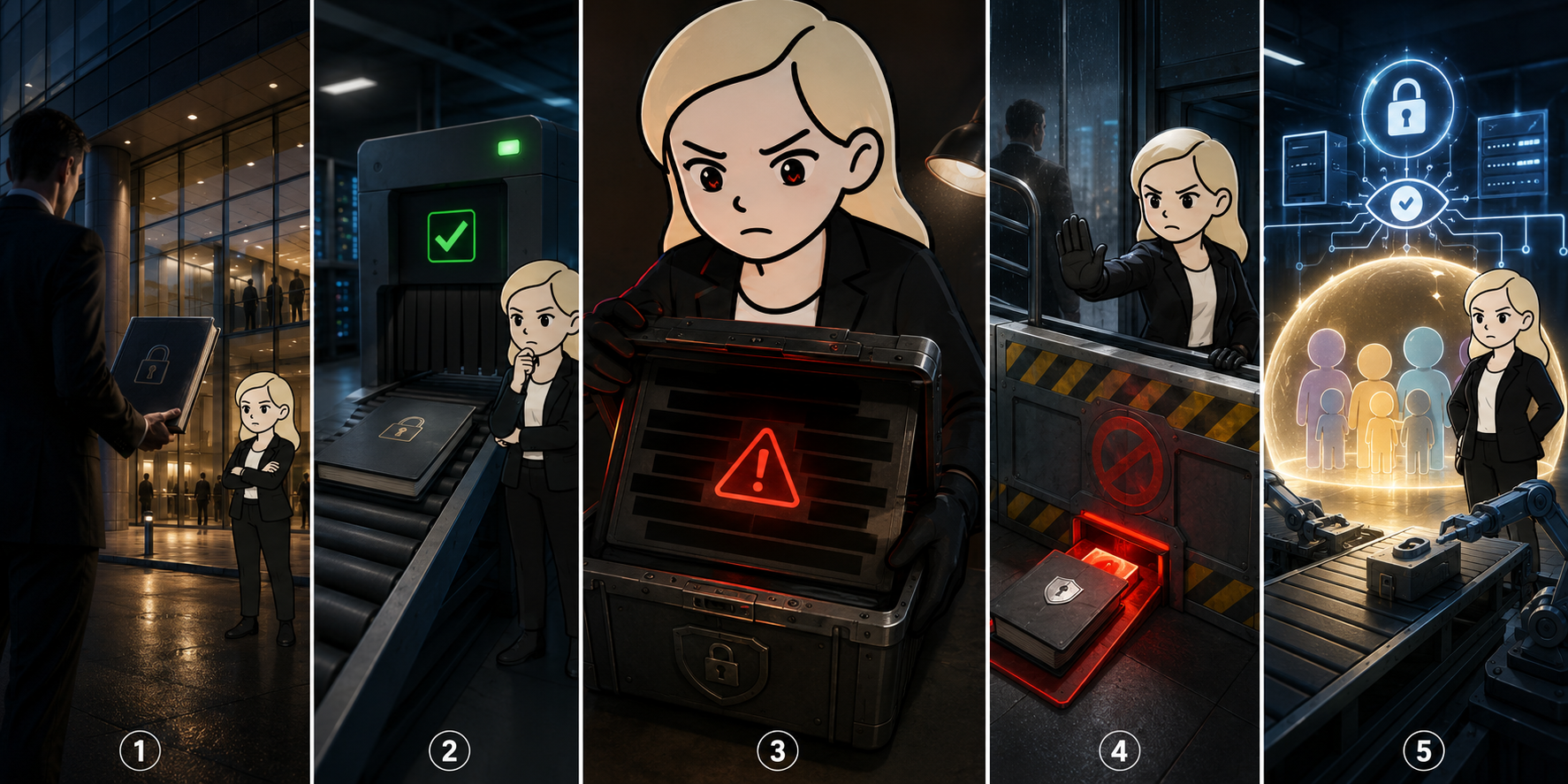
A submitter used the name of a respected Sri Lankan company to enter our publishing system. Inside the ordinary-looking book was CSAM. Our human reviewers found what the automated screening missed. A user approached AngryPages and told us that he had previously worked for a successful Sri Lankan company connected socially to people Lehan knew. That company had nothing to do with his submission. Its name simply helped him appear familiar, respectable and safe enough to enter the conversation. Then he sent us a password-protected book. It initially appeared ordinary, until the full review. When our human reviewers examined the complete work, they found sexualized photographs of children. AngryPages judged the material to be child sexual abuse material. The submitter disagreed. He called it “borderline.” There is no borderline worth negotiating when children are being sexually exploited. We removed it, banned him, documented what we found and sent the material through a specialist reporting channel. He will never publish through AngryPages.
Famous names do not make filth clean
Jeffrey Epstein understood the power of a famous name. A photograph, friendship, introduction or invitation could make him appear protected. Powerful people around him became a wall of implied legitimacy. Victims could be made to wonder whom they were really fighting and whether anybody would believe them. That camouflage works because ordinary people confuse proximity with innocence. This submitter did not arrive claiming to know Epstein. He referred to a respected former employer. But the mechanism disturbed us for the same reason. The company name was not evidence that the submission was safe. It was not a recommendation. It was not permission to lower our standards. People use employers, schools, politicians, relatives and successful friends to walk past doors that might otherwise remain closed. We still examine the submission and the person who sent it, regardless of the name they mention.
We understand disturbing art
AngryPages is not frightened by difficult stories. Lehan’s diary is partly inspired by the unreliable voice of *American Psycho*. We understand why *Lolita* remains culturally important. A work may enter the mind of a monster without asking the audience to become one. Art can be grotesque, offensive, sexual, violent or morally dangerous while still revealing something true about human beings. We know that world. Jeremy Irons, who starred in *Lolita*, later worked on a film connected to Lehan’s extended family. Sri Lankan filmmaker Chandran Rutnam once told Lehan how he had befriended Steven Spielberg while studying in California. Through friends and professional relationships, AngryPages moves around people connected to Hollywood, publicity, film and publishing. We are not provincial people panicking because art became uncomfortable. We know the difference between a fictional narrator exposing depravity and a product exploiting real children. This submission contained CSAM, not a fictional depiction of abuse. We refused to publish or sell it.
“Softcore” is not a defence
The material had been presented in a way that initially avoided the most obvious automated alarms. That did not make it innocent. The submitter’s own defence—that it was “borderline”—made the situation worse, not better. A child does not become less exploited because an adult avoided the most obvious image. There is no respectable, tasteful or softcore version of child sexual abuse material. There is only the adult searching for language that makes the exploitation sound smaller. We were not interested in helping him find that language. AngryPages did not need to prove that every disturbing photograph on Earth belonged in the same category. We needed to decide whether this particular material could become an AngryPages product. The answer was absolute. Fuck no.
The machine missed it
The file was password-protected. The material was not presented in the most easily detectable form. Automated systems also struggle when determining age, context and intent from images that have been deliberately positioned near a boundary. False positives matter. A photograph of a family at a beach is not automatically abuse. A medical image is not pornography. A historical record is not necessarily an endorsement of what it documents. Machines do not understand all of that reliably. That is why AngryPages does not allow an automated scanner to make the final publishing decision. Before an AngryPages product is authorized for sale, a human being reviews it. That human requirement stopped this book. The machine saw a protected file that initially appeared ordinary. A person opened it, understood what the pictures were doing and said no. We need to review what we’re being asked to publish, even when a file uploads successfully.
We reported it even though silence was easier
Once we understood what had been submitted, the easiest path would have been to delete it quietly and pretend AngryPages had never seen it. That would have protected us from association. It would have reduced the chance of retaliation. It would have spared our team from documenting material nobody wanted to see twice. It also would have left the problem for somebody else. We did not know how the photographs had been obtained. We did not know what the children had been told, whether their guardians understood, or who else possessed the material. We did know that AngryPages would not sell it. We documented what we found and used a specialist reporting channel. Identifying details were withheld from the public record because the children mattered more than our desire to display evidence. We were concerned with stopping the material, not publicizing the submitter’s name.
Institutions often protect peace instead of children
This case forced us to confront a wider ugliness. In some environments, reporting a private wrong is treated as a greater betrayal than committing it. People protect the employer, the family, the religious institution, the political party or the socially important man. They say the matter should remain private. They warn that exposure will damage everybody. That is how abuse becomes institutional. The person who reports it is accused of breaking trust. The person who created the danger hides inside the trust everyone else is afraid to break. Lehan has seen how personal relationships can replace rules in Sri Lanka. A friend calls a friend. A relative reaches a politician. Somebody important asks for the matter to disappear. Officials may see ambiguous-looking material and decide it is easier to call it harmless. AngryPages does not accept that bargain. Confidentiality exists to protect legitimate relationships. It does not exist to shelter child exploitation. If keeping somebody’s confidence requires protecting CSAM, the confidence is worthless.
Different cultures understand trust differently
When Justin Trudeau confronted Xi Jinping after details of a private discussion emerged publicly, the disagreement was larger than one leaked conversation. One side emphasized openness and public accountability. The other emphasized the violation of a private exchange. AngryPages understands both instincts. We would not publish the location of a submarine because somebody shouted “transparency.” We would not leak a private commercial fear entrusted to us by an author. Privacy has real moral value. But privacy is not a suicide pact. It ends where a child is being exploited. The child’s protection comes first, regardless of nationality, religion, family status or whether a police officer finds the case convenient.
California is not a decorative address
AngryPages operates internationally, but it is a California publisher. That identity matters when local relationships attempt to overpower standards. We can work with people in countries where institutions function differently. We can use local partners, respect local customs and understand why people make decisions we would not make. But AngryPages does not surrender its own judgment when crossing a border. We do not pay for silence. We do not accept that a prestigious family can decide what is safe. We do not allow a foreign contact, government office or influential relative to convert a prohibited product into a publishable one. America, California and AngryPages all have faults. But when our name is placed on a book, our decision governs it.
Warm introductions do not impress us
Relatives of politicians, famous people and business owners sometimes approach Lehan’s family seeking jobs, deals, publishing opportunities or introductions. We are not flattered by this. Please speak to AngryPages directly. A recommendation may help us understand who somebody is. It does not replace merit. It does not bypass review. It does not turn a dangerous product into art. In-N-Out does not promote somebody because his uncle knows the owner. It promotes people who learned how to run an excellent restaurant. AngryPages needs people who understand publishing. We do not need somebody who knows a person who knows a person who can make an uncomfortable phone call. This submitter’s former employer did not submit the book. The company did not approve the book. Its reputation does not belong to him. We will not punish that company for his conduct, and we will not let him wear its name as armour.
What AngryPages changed
The material never received final publishing approval. But it reached far enough into our process to teach us where the process was weak. We changed it. • Our terms now state more clearly that CSAM is prohibited and may be reported. • Password-protected and difficult-to-inspect submissions receive greater scrutiny. • Uploaded and emailed files are handled more carefully before review. • Automated screening is harder to evade. • Suspicious material cannot reach publication merely because a machine failed to recognize it. • Human approval remains mandatory before an AngryPages product is sold. • People banned for CSAM are not referred or reassigned to other publishers through us. The first system failed to stop this file. We needed to fix that. A human caught it. We stopped publication, banned the user, reported the material and changed the process.
Nobody evil is welcome here
AngryPages believes in free expression. That does not mean everybody receives our machinery. A person can speak without AngryPages packaging the speech, marketing it, selling it and placing our name beside it. We publish difficult memories, political anger, flawed people, unreliable narrators and offensive ideas that frighten cowardly publishers. We won’t publish the sexual exploitation of children. We love children. We believe in God. We treasure the faith readers, parents and authors place in our name. Protecting that trust can be ugly, expensive work. We’ll do it without applause or help from local institutions. A famous name and a clean automated scan aren’t enough for us to approve a book. Our human reviewers caught what the machine missed. We do not tolerate creeps.